






Abstract
Tensile tests with pulse current for AZ31 alloy under room temperature and different voltages were carried out. Pulse current influence on the critical condition of initial dynamic recrystallisation for AZ31 alloy was investigated. The critical value was determined by one-parameter approach and validated by metallographic observation. The results showed that, with current voltage increased, the ultimate strength decreased, and the amount of strain hardening before reaching the ultimate strength decreased. When the voltage increases, high dynamic recrystallisation degree can be obtained, but due to the high electroplastic effect, the dynamic recrystallisation grain grows up and the material mechanical property deteriorates. The microstructure observation proved that the critical condition for initial dynamic recrystallisation can be determined with the one-parameter approach.
Introduction
As an innovative forming method, pulse current assistant forming has attracted more and more attentions. This forming method can be applied for solid and liquid material, which transmits electric current. The outstanding issues in the electropulsing processing have been discussed in the literature. 1 With the help of pulse current, the decrease in flow stress resistance can be obtained, and it can also be used to get the new material microstructure, repair material damage and remove impurities.2–4 For example, in the work of Qin et al., 5 the electropulsing enhanced mobility and electropulsing induced structural evolution have been used to produce novel microstructures for steels. Up to now, the pulse current has been applied in many fields concerning with magnesium and other alloys, such as rolling, tensile testing and electrical pulse treatment.6–9 For pulse current assistant, also named electroplastic (EP) tensile testing, Xu et al. studied the frequency influence on AZ31 property. 10 Lin et al. carried out the tensile tests of AZ31 alloys with pulse current under different temperatures and found that the pulse current can cause the change of the material microstructure and enhance the material mechanical property. 11 Owing to the limited slip system, low stacking fault energy and high grain boundary diffusion speed, dynamic recrystallisation (DRX) is easy to happen for Mg alloys. 12 The mechanism of Mg alloy DRX is relevant to its plastic deformation. 13 For Mg alloys, DRX is the main mechanism to get the grain refinement and the improvement of mechanical performance. In the traditional hot forming process, the DRX temperature for Mg alloy is 423 K. Compared to the traditional forming technique, in the work of Jiang et al., it was found that the pulse current could enhance the atomic flux, which can reduce the recrystallisation incubation period, improve the nucleation rate and accelerate the DRX at low temperature.14,15 Based on the heat balance equation and tensile results carried out with current parameters of 200 HZ/80 A at room temperature, Xu et al. obtained that the DRX temperature for AZ31 alloy is about 376 K. 16 While this method is complex and requires too many physical parameters, what is more is that the temperature measurement during the tests was not convenient.
As the important mechanism for Mg plastic deformation, current research about DRX, especially for its critical condition, is still relatively lacking. In fact, the DRX development can be revealed by the microstructure evolution. According to the metallography observation, the onset of initial DRX can be determined, but the work is too heavy, and it requires too many experiments. Based on the irreversible thermodynamics principle, the one-parameter approach assumes that the DRX critical condition corresponds to the minimum values of the  and
and  plots, where θ is the strain hardening rate.
17
The one-parameter approach on the determination of critical condition for DRX has been successfully applied to stainless steel, copper and magnesium alloy in conventional forming field,18–20 while little work can be found in pulse current assistant forming field. In the present work, the influence of different current voltages on the tensile properties of AZ31 alloys was first studied, and the critical condition for DRX was analysed by the one-parameter approach based on the flow stress curves of AZ31 alloy. The related conclusions are verified by means of metallography observation.
plots, where θ is the strain hardening rate.
17
The one-parameter approach on the determination of critical condition for DRX has been successfully applied to stainless steel, copper and magnesium alloy in conventional forming field,18–20 while little work can be found in pulse current assistant forming field. In the present work, the influence of different current voltages on the tensile properties of AZ31 alloys was first studied, and the critical condition for DRX was analysed by the one-parameter approach based on the flow stress curves of AZ31 alloy. The related conclusions are verified by means of metallography observation.
Experimental
The tested AZ31 material has a thickness of 0.8 mm, and its initial microstructure is shown in Fig. 1. The tested specimen has a gauge length of 10 mm and a width of 6 mm. The tensile tests are carried out in a universal testing machine with a tensile speed of 5 mm min− 1 at room temperature. A pulse generator was used to discharge the applied positive direction multiple pulses, and a Hall current sensor with an oscilloscope was adopted to measure the current parameters. In the present work, the frequency of the current is fixed to 150 Hz, and the adopted current voltages are 50, 70 and 90 V respectively. The temperature increase due to thermal resistance by applied pulse current was measured by a thermocouple connected to the specimen. The microstructure analysis was carried out by means of an optical microscope.
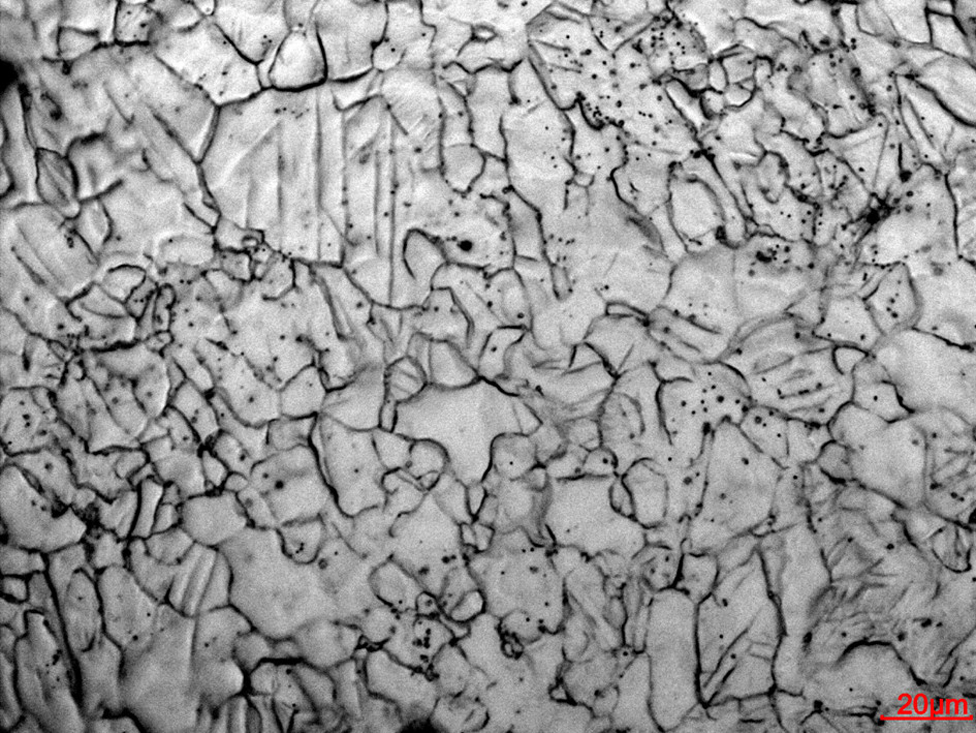
Initial microstructure of AZ31 sheet
Results
Tensile testing results
At room temperature, the measured temperature curves for different voltages are shown in Fig. 2. In the beginning stage, the temperature increases quickly with the applied voltage. The higher the voltage is, the faster the temperature increases. After a certain time, the temperature increase leads to a saturation stage. In the present work, the thermal resistance is highest when the voltage is 90 V. But due to the limited testing time ( < 40 s), the maximum increased temperature is below 100°C, and this will not bring much effect on the tested AZ31 properties.
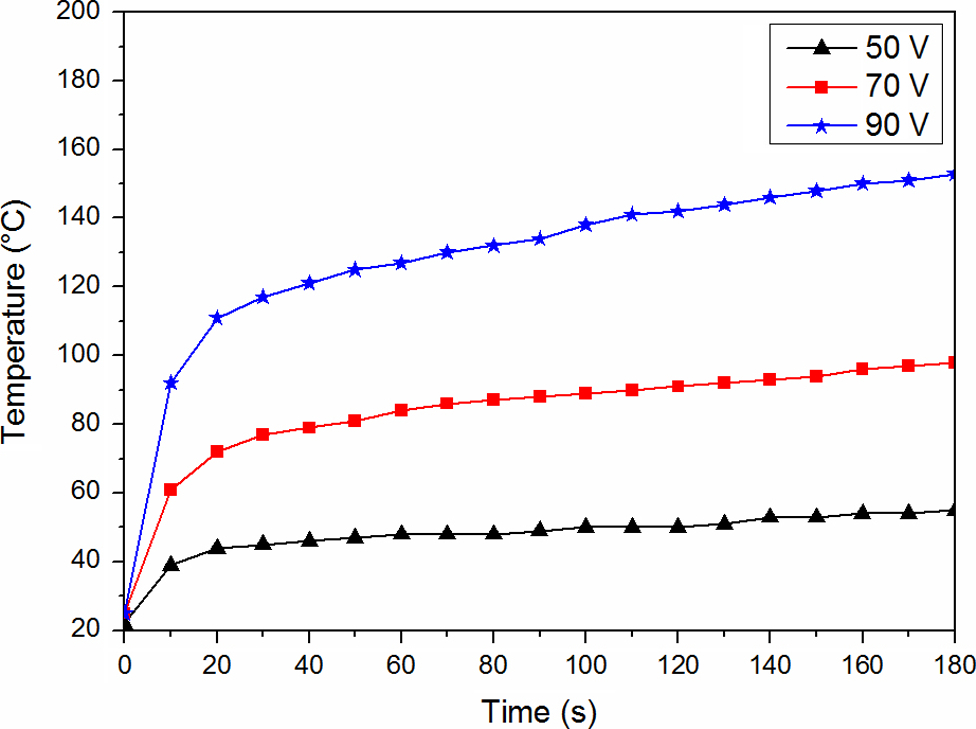
Plot of specimen gauge centre temperature profiles at various voltages
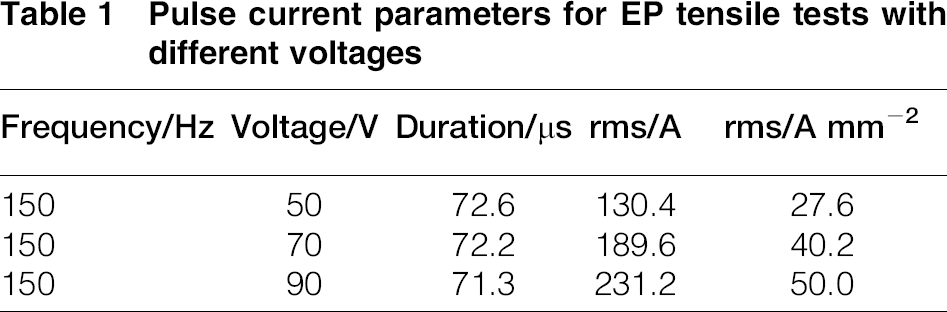
The applied current parameters and the measured parameters by the Hall current sensor, root mean square (rms) current and rms current density, for the EP tensile tests are shown in Table 1. The rms value increases with the increased voltage.
Pulse current parameters for EP tensile tests with different voltages
The obtained engineering stress–strain curves are presented in Fig. 3. It can be observed that, with the increase in the applied current voltage, the ultimate strength decreases and the amount of strain hardening before reaching its ultimate strength decreased. Compared to the condition without pulse current, the elongation is enhanced when the current is applied, while with the increase in the voltage, the elongation remains almost unchanged. It can be concluded from Fig. 3 that the applied pulse current can reduce the material flow stress resistance significantly.
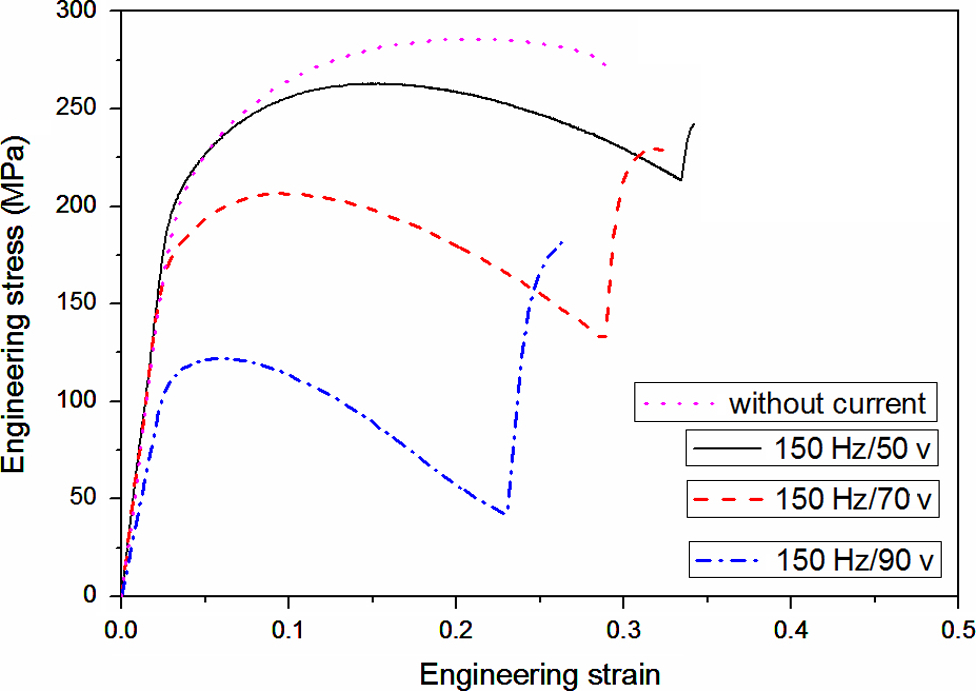
Engineering stress–strain curves of AZ31 alloy obtained under various conditions
The fracture of the tested specimens is shown in Fig.4. Owing to the limited slip system at room temperature, the AZ31 alloy showed poor plasticity without pulse current applied corresponding to a brittle fracture mode. While for the specimen with pulse current applied, different fracture modes were observed. All the tested specimens with current showed a necking phenomenon, and a ductile fracture mode was observed. Hence, it can be concluded that the pulse current can improve the material performance at room temperature.
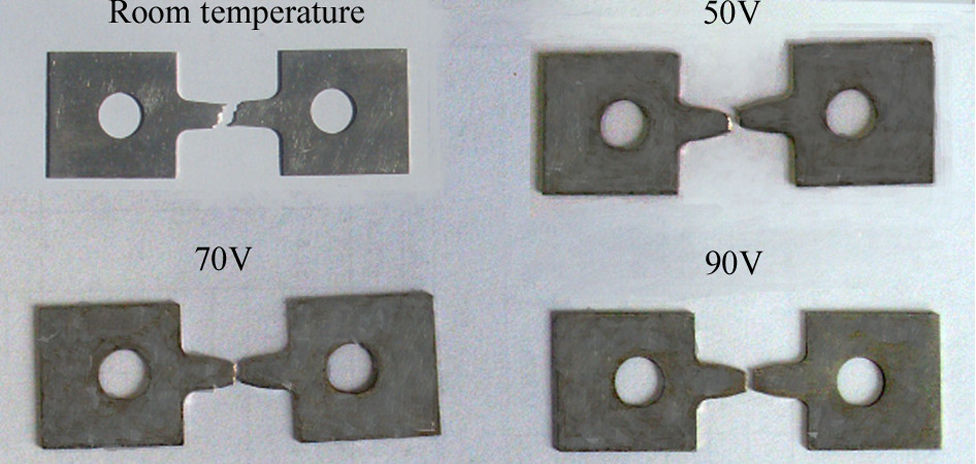
Tensile specimen fracture mode at different forming conditions
Microstructural characterisation
Based on the above results, the microstructures in the fracture zone of the tested specimens without and with pulse current are presented in Fig.5. As shown in Fig.5a, many twins are observed for traditional tensile test at room temperature. This coincides with the deformation mechanism of Mg alloy at low temperature: basal slip and deformation twinning. When the current is applied, different microstructures are found. As shown in Fig.5b, with a 50 V pulse current, the twins in the original grain almost disappeared and large grains are elongated along the deformation direction. Fine equiaxed grains are observed in the grain boundary and in the interior of the large grains, which indicates the occurrence of the DRX. When the pulse current is increased to 70 V, it is found that the deformed specimen microstructure consists mainly of fine grains, which means that the DRX is almost completed as shown in Fig.5c. When the voltage is 90 V, as shown in Fig.5d, fine DRX grains grow up.
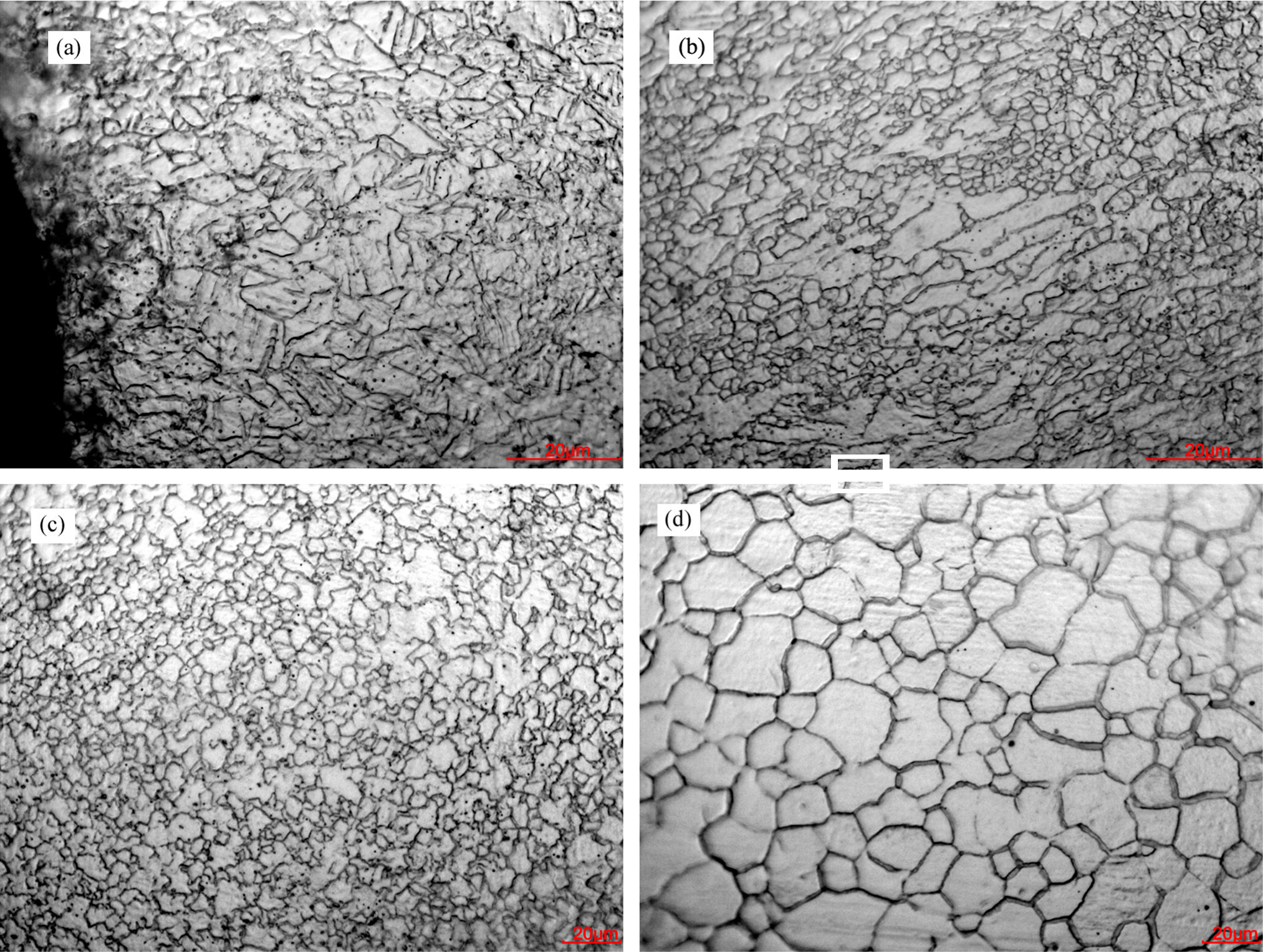
Microstructures of tensile specimens at a room temperature, b 50 V, c 70 V and d 90 V
Based on the above analysis, it can be concluded that the applied pulse current parameter plays a great role in determining AZ31 alloy performance. Studies have shown that, as the current density increases, the role of pulse current is enhanced. 21 At room temperature, the pulse current with 50 V can accelerate the DRX of AZ31 alloy and enhance its mechanical performance. With the applied voltage increases, the degree of DRX increases. At 90 V condition, the high EP effect caused by the high rms current value brings the grain growth, which decreases the material performance. This can explain why the ultimate strength decreases while the elongation remains almost unchanged for different forming conditions with pulse current. It is recommended by the microstructure observation that the voltage value of 70 V is the suitable current parameter for AZ31 alloy in this test.
Discussion
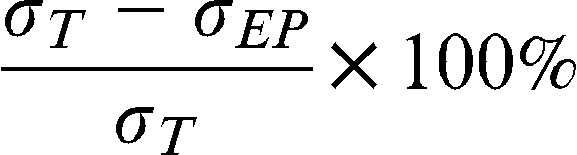
The EP effect can be used to evaluate the role of pulse current;
22
it is presented as follows:
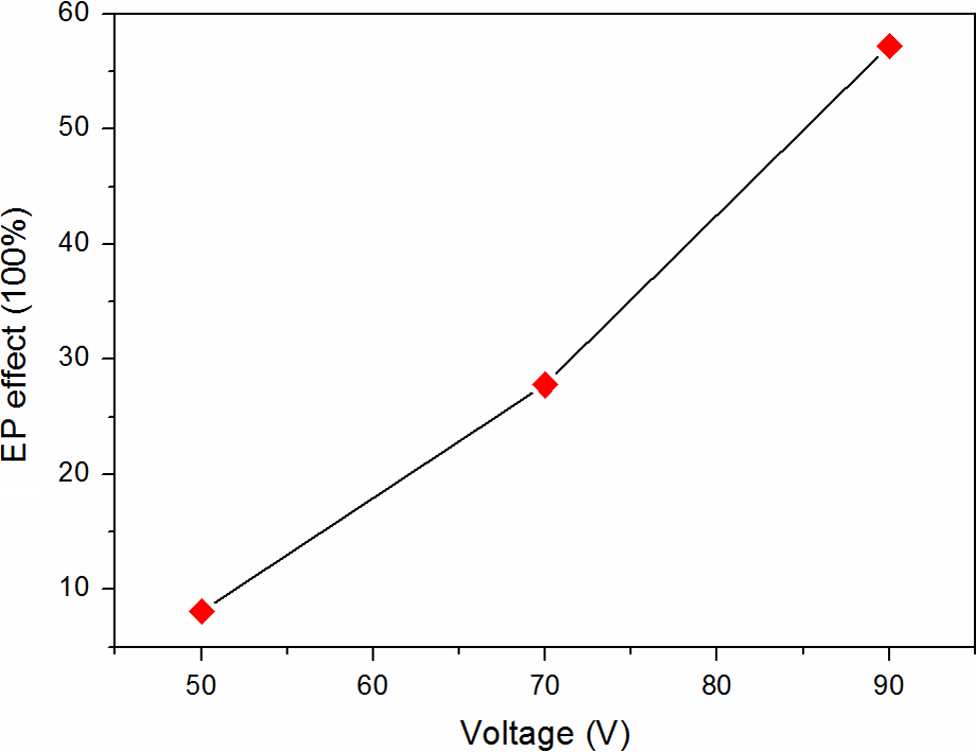
Electroplastic effect at different voltages
According to the engineering stress–strain data, the true stress–strain data can be obtained. In the true stress–strain curve, the peak stress (ultimate strength) is caused by a superposition of the strain hardening by dislocation storage and the softening by DRX.
11
It means that the true onset of DRX occurs before the peak stress. Based on the one-parameter approach and the experimental true stress–strain curves of different voltages at room temperature, the critical stress condition for the occurrence of DRX is determined, as shown in Fig.7. The relationship curve of strain hardening rate θ versus stress σ is presented in Fig.7a, where 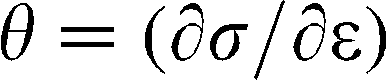 . The inflection point can be observed for each θ–σ curve. The first order partial derivatives of the θ–σ curves can be calculated, and the
  curves are obtained as shown in Fig.7b. According to the one-parameter approach, the minimum value of the curves in Fig.7b corresponds to the critical stress condition of the initial DRX for AZ31.

Relationship curves for strain hardening rate and flow stress at various voltages a θ − σ and b
From the above observation, it can be concluded that the minimum value of the  curve depends significantly on the voltage value. The minimum σ value is close to the peak stress at 50 V, which means that, under this condition, the DRX does not completely occur. For the condition of 70 and 90 V, the minimum values on the curves deviate away from the peak stress corresponding to the fact that the DRX has completed occurred. This conclusion can be validated by the results shown in Fig.5. The critical stresses for DRX of AZ31 with different pulse current voltages determined by the one-parameter approach are shown in Table 2.
Critical stress for DRX under various forming conditions
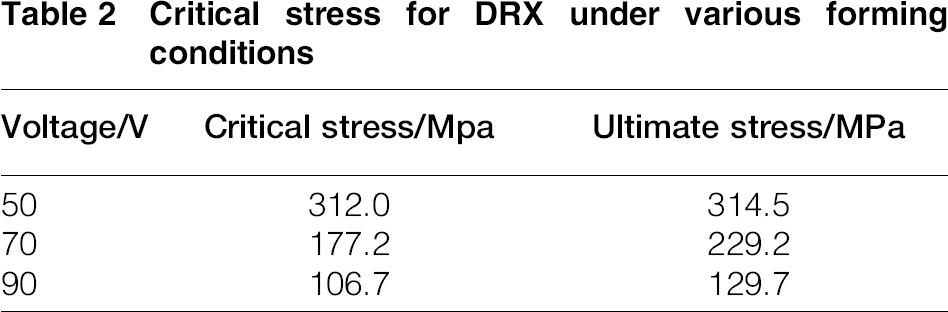
According to the calculated values and the true stress–strain curves, the experimental moment before and after the critical condition was determined. To verify the above conclusion obtained by one-parameter approach, supplementary experiments terminated at the determined moment are carried out. The microstructures of different conditions are obtained. Figure 8 (1) corresponds to the microstructure analysis before the critical stress condition under different voltages, and Fig. 8 (2) corresponds to the microstructure analysis after the critical stress condition and before the peak stress condition. It can be found in Fig.8 (1) that the three specimens have a similar microstructure evolution, composed mainly of coarse grains and mixed with a few small grains, which is similar to the original AZ31 microstructure. Different observations are found as shown in Fig.8 (2); the number of large grain is reduced, and the number of fine equiaxed grains is increased significantly, which proves the occurrence of DRX.
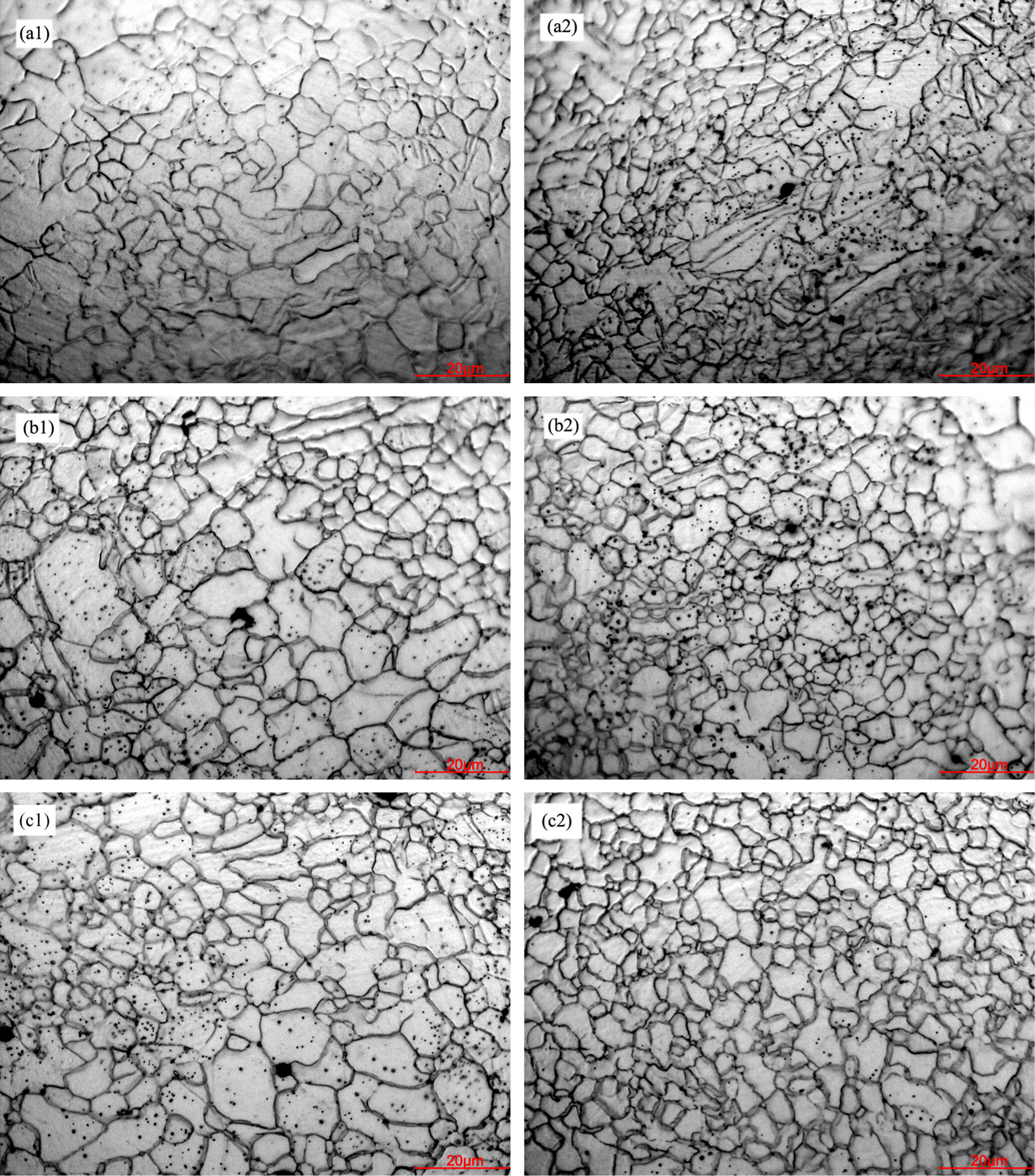
Microstructures of tensile specimens (1) before and (2) after critical stress at a 50 V, b 70 V and c 90 V
The microstructures of the specimens before and after the critical stress determined DRX condition have been compared and discussed, and the results prove that the one-parameter approach can be applied to determine the initial condition for DRX.
Conclusions
Electroplastic tensile tests with different current voltages and a fixed frequency are carried out in the present work; the effect of pulse current on the microstructure and the critical condition of dynamic recrystallisation for AZ31 alloy in EP tensile test are studied and discussed, and several conclusions are obtained.
Pulse current has a great influence on the microstructure evolution. It can accelerate the dynamic recrystallisation for AZ31 alloy even at lower temperature. High current voltage can increase the dynamic recrystallisation degree of AZ31 alloy.
Different current parameters play different roles in EP tensile tests. Electroplastic effect increase with the applied current voltage. Excessive EP effect brings coarse grain, which deteriorates the material mechanical performance.
The critical condition of initial dynamic recrystallisation for AZ31 in electroplastic test was determined by the one-parameter approach, and this method was validated by the metallography observation.
Acknowledgements
The authors would like to acknowledge financial support from the National Natural Science Foundation of China (grant no. 51405266), China Postdoctoral Science Foundation (grant no. 2014M560551) and Fund of the State Key Laboratory of Solidification Processing in NWPU (grant no. SKLSP201303).