







Abstract
The objective of the present work is to get an understanding of the phase relationships in the CaO–MgO–SiO2–Cr2O3 system with a view to control the precipitation of Cr–spinel in the slag phase. The equilibrium phases in CaO–MgO–SiO2–Cr2O3 slag system at 1873 K (1600°C) have been investigated experimentally and compared with the results from thermodynamic calculations. The Cr2O3 and MgO contents in the slag were fixed at 6 and 8 wt-% respectively. The basicity (CaO/SiO2) of slag was varied in the range 1·0–2·0. A gas/slag equilibrium technique was adopted to synthesise the slag at a high temperature in air. The samples were heated to and soaked at 1873 K (1600°C) for 24 h in order to achieve the equilibrium state and subsequently quenched in water. The chromium distribution and phase compositions in the quenched slag were studied using scanning electron microscope wavelength dispersive spectroscopy and X-ray diffraction techniques. FactSage software was used for the phase equilibrium calculations. The experimental results obtained from the present work were compared with the calculation results from FactSage software. It was found that the spinel formation at 1873 K (1600°C) is favoured in the slag basicity range 1·0–1·4.
Introduction
Significant amounts of chromium containing slags are annually produced by the steelmaking companies in Sweden and other countries all over the world. During the past decades of steel production, these slags were generally accumulated in landfill areas. Leaching of chromium from the slag deposits is a significant environmental problem that has to be solved. Magnesiochromite spinel phase (MgCr2O4) in the slag is known to be important for controlling the leaching properties of chromium from the slag (Kilau et al., 1984; Engström et al., 2010). The results of earlier studies are generally in agreement that the activity of chromium is strongly decreased in magnesiochromite spinel because of the strong bonding of chromium in the spinel. MgCr2O4, is thus very stable towards oxidation and is resistant to dissolution in aqueous media (Arredondo-Torres et al., 2006; Wu et al., 2007; García-Ramos et al., 2008; Engström et al., 2010)
It might be possible to ‘anchor’ chromium in the slag by increasing the spinel phase content by means of controlled solidification of the slag. The leaching of chromium from the slag is expected to be low or negligible if the chromium is distributed mainly to the MgCr2O4 or FeCr2O4 spinel phases (Engström et al., 2010). Mineralogical phases present in a slag system are highly dependent on slag composition and heat treatment history. Arredondo-Torres et al. (2006) analysed the effect of MgO content and the slag basicity on the stability of the mineralogical species of the CaO–MgO–SiO2–Cr2O3 system. Experimental and calculated results of their work show that Cr2O3 is mainly found in the MgCr2O4 spinel phase, even at a low MgO content. However, other minerals present in the slag matrix can contain Cr and thus lead to Cr leaching (Kilau et al., 1984; Pillay et al., 2003; Engström et al., 2010).
In slags, chromium can be present in different valence states, the most common ones being Cr2+ and Cr3+. Results from the earlier work by Wang et al. (2009) indicate that the ratio of XCrO/XCrO1·5 in CaO–SiO2–CrOx and CaO–MgO–(FeO–)Al2O3–SiO2–CrOx slags systems increases with the increasing temperature and decreasing oxygen partial pressure, while the slag basicity tends to decrease the ratio up to a certain level beyond which, the ratio is unaffected by basicity. Thus, in order to stabilise the spinel phase in slags, the treatment conditions must be strictly controlled in the terms of temperature and oxygen partial pressure. Lattice enthalpy calculations based on a simple ionic model indicate low activity is due to stable bonds between the ions and thus, low reactivity (Ye et al., 1995).
There are discrepancies in literature regarding the influence of the composition and basicity of slag on the spinel precipitation from Cr containing slags (Wang et al., 2009; Engström et al., 2010; Mostafaee et al., 2011). According to a recent study by Mostafaee et al. (2011), the effect of basicity on the spinel phase precipitation is very low. The results of the study show that, the basicity has almost no effect on the amount of the spinel phase in the slag. Other researchers, Engström et al. (2010) and Wang et al. (2010), have reported that basicity may have a strong impact on the spinel proportions. Discrepancies in these previous studies regarding the effect of slag composition on the phase distribution, as well as a lack of an efficient method of spinel phase precipitation in metallurgical slag requires further investigation. To the knowledge of the present authors, no systematic investigation has been carried out regarding the conditions for the precipitation of spinel phase in the slag. Thus, it is of industrial interest to find a method for spinel phase formation in slag that would be economically and practically applicable. The aim is to study the chromium partition between the spinel phase and silicate matrix and to get an understanding of the phase relationships in the CaO–MgO–SiO2–Cr2O3 slags with a view to control the precipitation of Cr spinel in the slag phase. In order to achieve this aim, the classical gas/slag equilibrium method was adopted in the present study under well defined experimental conditions such as oxygen pressures, slag basicities and temperature. The slags of interest for this work are slags relevant to stainless steel making for both electric arc furnace (EAF) and argon oxygen decarburization (AOD) processes, since these slags can contain relatively large amounts of chromium and other heavy metals. The chromium content as well as basicities (defined as wt-%CaO/wt-%SiO2) of the synthetic slags in this work were thus chosen so that they can cover the composition range of slags from both the above mentioned processes. The chromium distribution and phase composition were studied with synthetic slags at fixed MgO and Cr2O3 contents and used scanning electron microscope wavelength dispersive spectroscopy (SEM-WDS) and X-ray diffraction (XRD) techniques to analyse the phases. The experimental results obtained from the present work are compared with the calculation results from FactSage software (2011).
Experimental
Principle of experimental method
Classical gas/slag equilibrium technique was adopted in this work. The slag samples with targeted compositions were kept in Pt crucibles and were equilibrated with air at the required temperature. The experiments were carried out at 1873 K (1600°C).
Materials and sample preparation
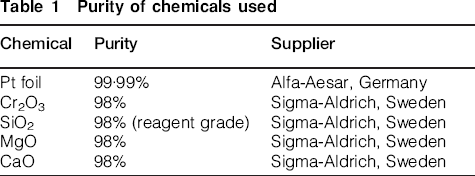
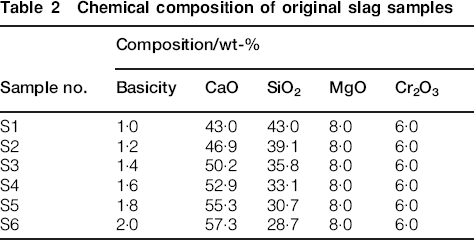
Phase equilibrium studies of a set of synthetic CaO–MgO–SiO2–Cr2O3 slags, each containing 6 wt-%Cr2O3 and 8 wt-%MgO, with basicities (CaO/SiO2) in the rage 1·0–2·0 were conducted. The chemicals employed and their purity grades are given in the Table 1. The slag compositions studied are presented in Table 2. CaO and MgO powders were calcined at 1273 K (1000°C) in a muffle furnace for 12 h in order to decompose any hydroxide and carbonate. SiO2 and Cr2O3 powders were heat treated at 383 K (110°C) for 10 h in order to remove any moisture. After mixing the chemicals in appropriate proportions in an agate mortar, the powder mixtures were pressed into pellets of φ 15 mm. The samples were placed in Pt crucibles, which were pressed out of platinum foil of thickness of 0·127 mm and heat treated at the required temperature in air (technical grade, supplied by AGA, Stockholm). The samples were preserved in a desiccator to minimise re-absorption of water and CO2 from atmosphere.
Purity of chemicals used
Chemical composition of original slag samples
Apparatus
Figure 1 shows the schematic arrangement of the furnace reaction tube. The furnace was equipped with MoSi2 heating elements. The furnace was controlled by a Eurotherm PID controller equipped with PtRh30%/PtRh6% thermocouple as the sensor. The temperature deviation at the even temperature zone of the furnace that extended to ∼80 mm at the centre of the reaction tube was found to be less than ±2K.
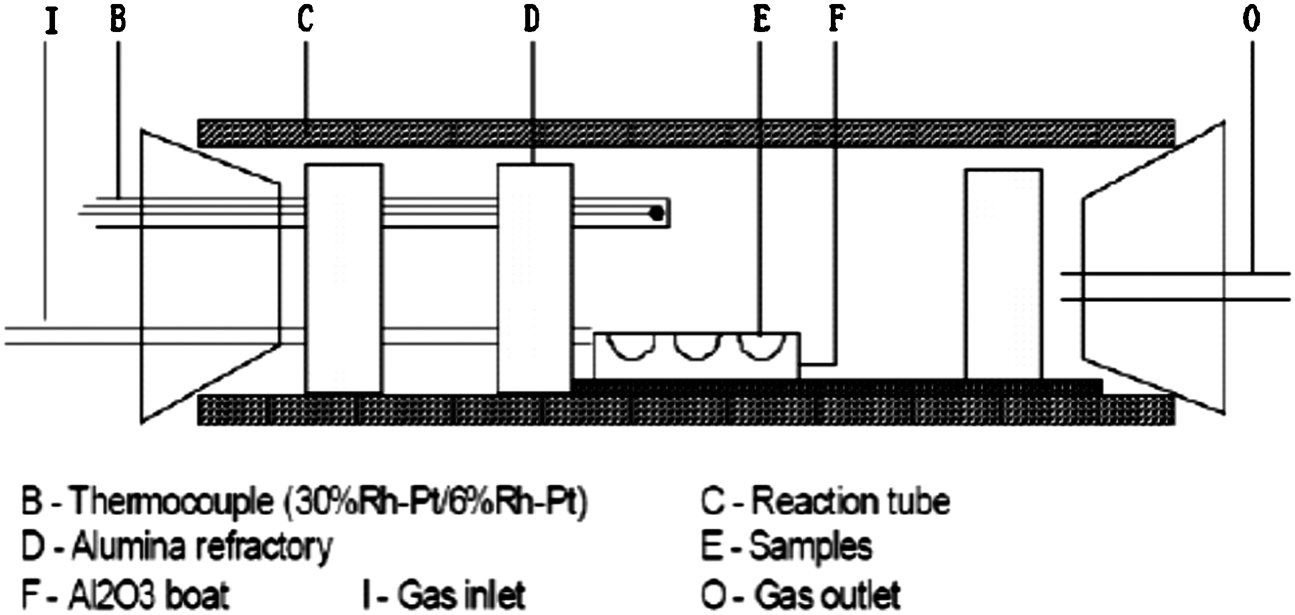
Schematic arrangement of furnace reaction tube (Wang, 2010)
Procedure
The Pt crucibles containing the samples were positioned inside an alumina holder. Before the heating of the furnace, the alumina sample holder was pushed into the furnace and positioned in the even temperature zone. The furnace was heated at a heating rate of 5 K min−1 with air flowing through the reaction tube. The gas flowrate was 100 mL min−1. After the targeted temperature was reached, the samples were equilibrated for 24 h in air. The samples were then quenched by pulling them quickly to the water cooled end of the reaction tube and then dropped into distilled water kept at room temperature. The experiments were carried out at 1873 K (1600°C). The quenched samples were taken out and analysed using SEM-EDS and XRD techniques. The Cr content was analysed by WDS. For the XRD analysis, a Siemens D5000 X-ray diffractometer (Cu Kα) was used. Analyses by SEM were carried out using a Hitachi S3700N SEM unit equipped with Bruker SDD detector for EDS analysis. Selected experiments were repeated and the results were found to be reproducible.
Results
Thermodynamic calculations
The equilibrium phases of CaO–MgO–SiO2–Cr2O3 slag system with various basicities at 1873 K (1600°C) and air as atmosphere (
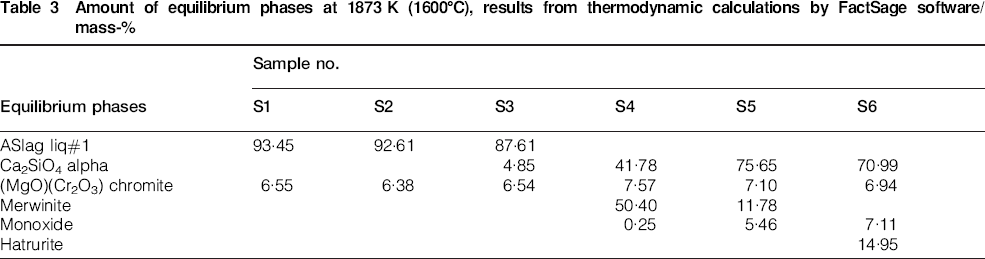
 = 0·21 atm) were calculated by Factsage software (FactSage 6·1), Thermfact Ltd (Montreal, Canada) and GTT-technologies (Aachen, Germany) (2011). Databases chosen were Fact53 and FToxid. The amounts of the equilibrium phase obtained from Factsage are presented in Table 3. Figure 2 shows isotherm in the CaO–MgO–SiO2–Cr2O3 system at 1873 K (1600°C) in air atmosphere, where MgO content is fixed at 8 wt-%. The chromite contents in the slag phase at 1873 K (1600°C) are increasing for samples S1–S4 (see Table 3), then S4–S6, decreasing with the slag basicity. These calculation results will be compared with the current experimental results in the section of discussions.
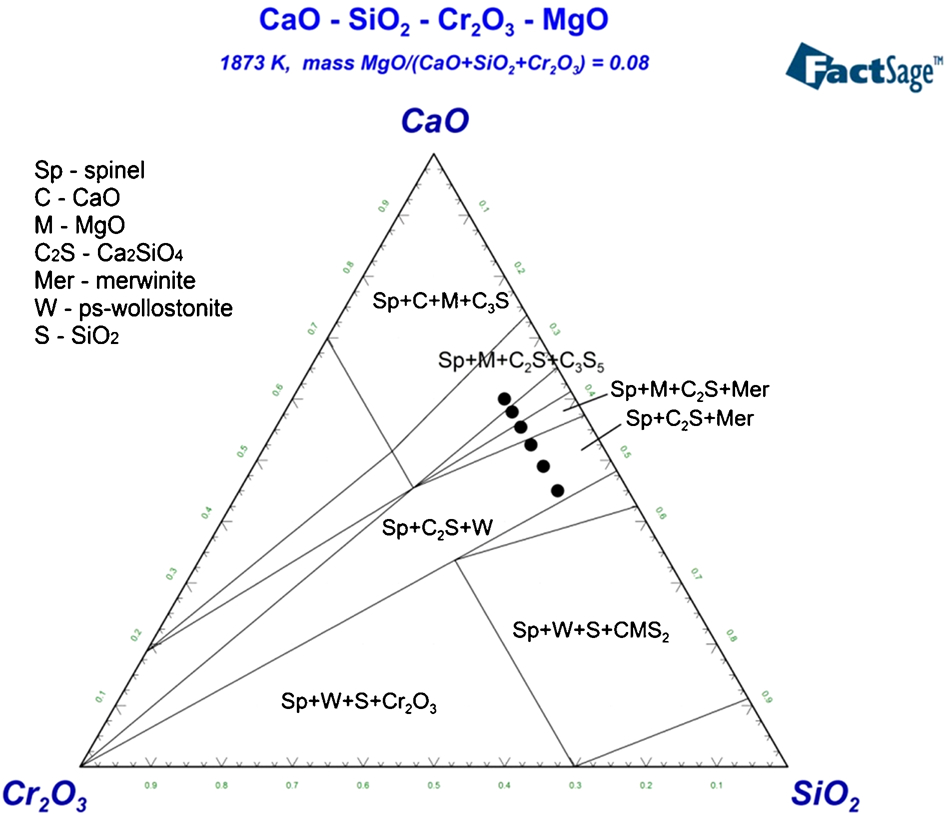
Isotherm in CaO–MgO–SiO2–Cr2O3 system at 1873 K (1600°C) in air atmosphere, where MgO content is fixed to 8 wt-%
Amount of equilibrium phases at 1873 K (1600°C), results from thermodynamic calculations by FactSage software/mass-%
Experimental results
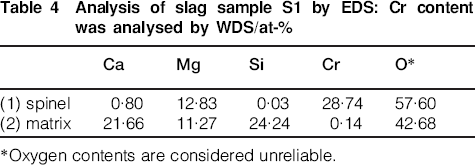
Figure 3 is the SEM micrograph of sample S1 with basicity 1·0 after a heat treatment at 1873 K (1600°C) for 24 h. Sample is mainly consisted of liquid slag quenched from 1873 K (1600°C). Analysis by XRD confirmed that the sample is mainly amorphous. In addition to the amorphous silicate matrix, spinel crystals were found in the sample. The grain size of the spinel phase is max. 20 μm. The phases present and phase compositions in sample S1 are given in Table 4.
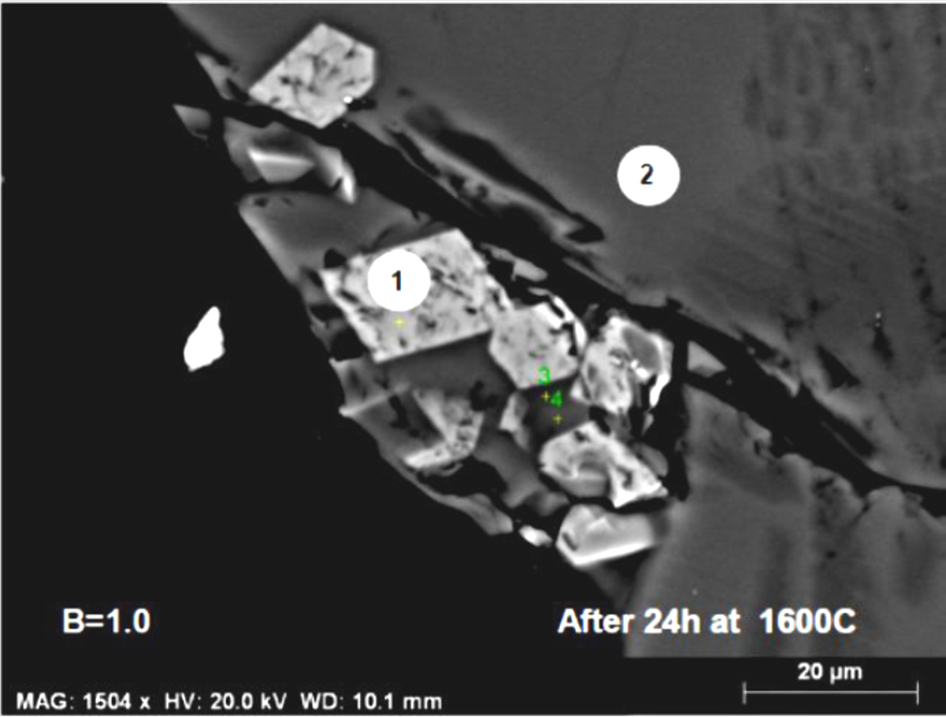
Image (SEM) of sample S1 with basicity 1·0 after heat treatment at 1873 K (1600°C) for 24 h and quenched: phase 1 corresponds to spinel crystals (grain size max. 20 μm) and phase 2 is amorphous matrix
Analysis of slag sample S1 by EDS: Cr content was analysed by WDS/at-%
Oxygen contents are considered unreliable.
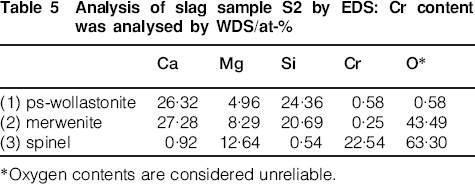
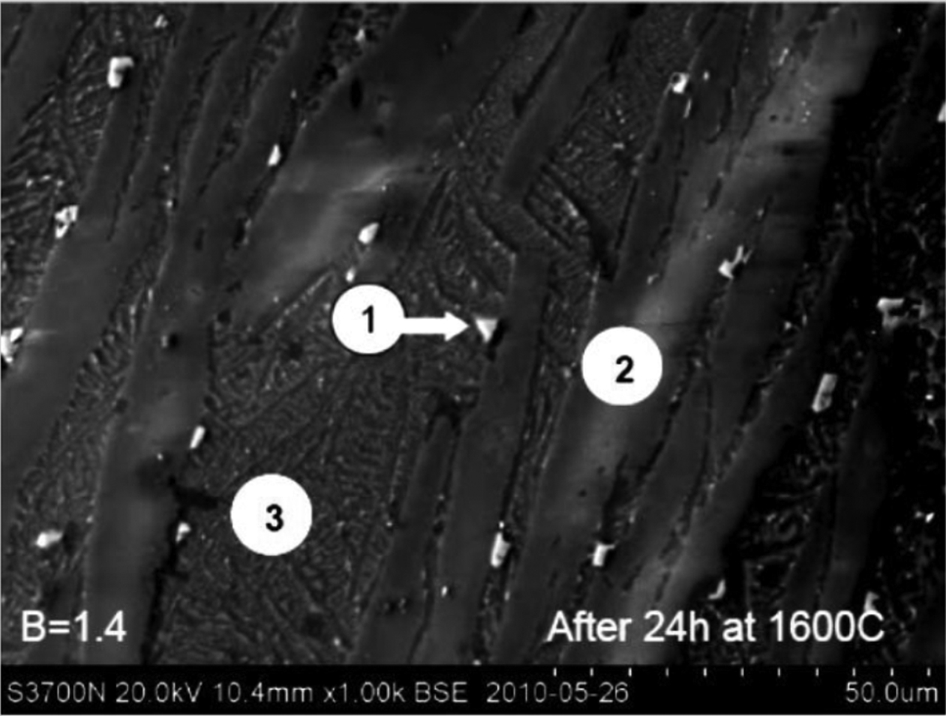
Figure 4 shows SEM micrograph of sample S2 with basicity of 1·2. A considerable amount of spinel phase was found in the sample with 10–20 μm in diameter. Spectra of the sample obtained by EDS show that the matrix consists of chromium containing calcium magnesium silicates (Ca, Mg)(Si, Cr)Ox. The composition variations in the sample are given in Table 5. The phases present according to XRD are merwinite, spinel and wollastonite. From the XRD curve of the sample, it can also be concluded that some parts of the sample remain amorphous. The presence of spinel phase was also confirmed by XRD analysis. The matrix consists of merwinite dendrites surrounded by liquid phase with some amount of wollastonite.
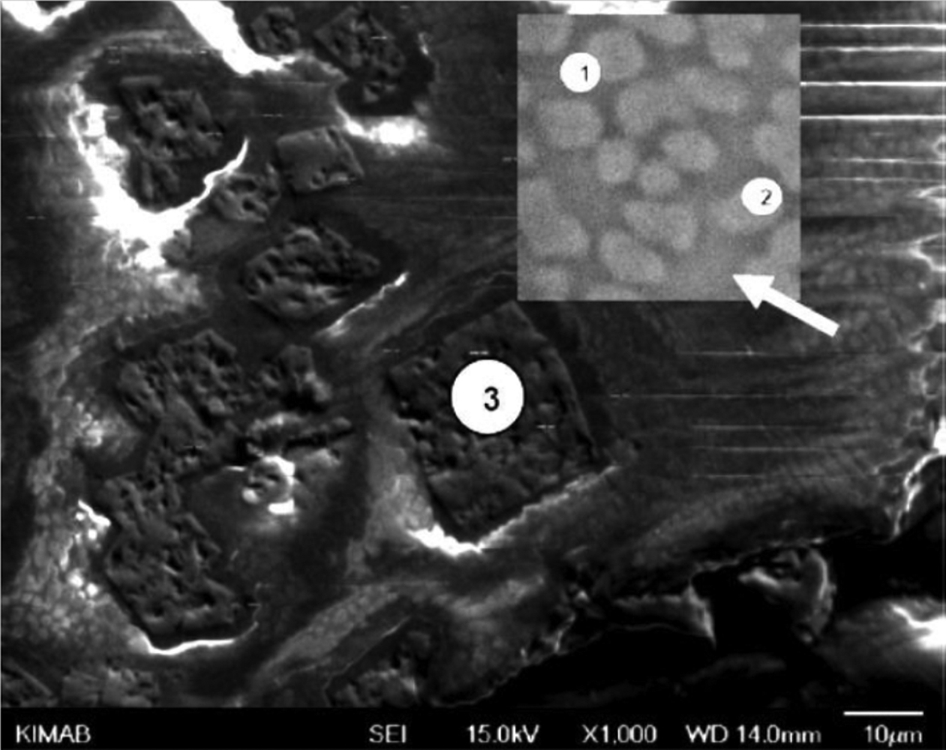
1: amorphous matrix; 2: merwinite; 3: spinel phase 10–20 μm in diameter
Analysis of slag sample S2 by EDS: Cr content was analysed by WDS/at-%
Oxygen contents are considered unreliable.
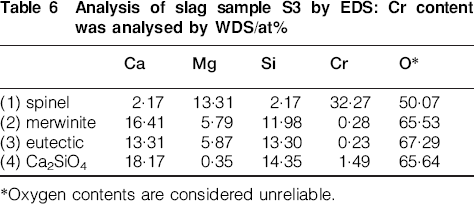
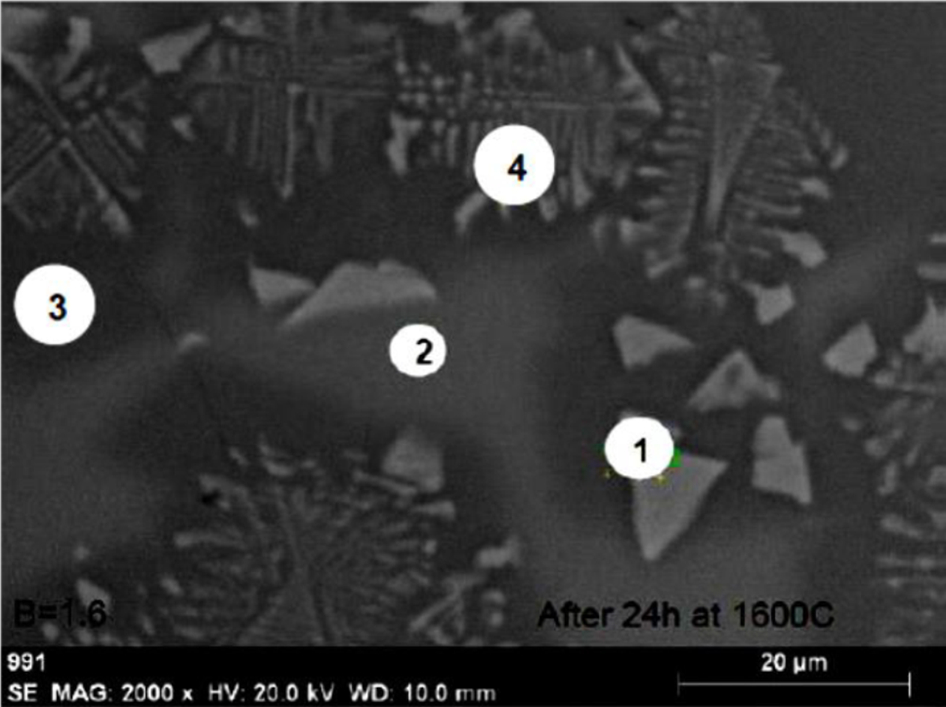
Figure 5 shows slag sample S3 with basicity 1·4 after heat treatment at 1873 K (1600°C) for 24 h. Fine (2·5 μm) polygonal spinel crystals (1), merwinite lamella (2) and eutectic, mostly consisting of ps-wollastonite, Cr rich particles (3) and Ca2SiO4 (4) can be observed. The composition variations in the sample are given in Table 6.
1: fine (2·5 μm) polygonal spinel crystals; 2: merwinite lamella; 3: eutectic, mostly consisting of wollastonite and Cr rich particles; 4: Ca2SiO4
Analysis of slag sample S3 by EDS: Cr content was analysed by WDS/at%
Oxygen contents are considered unreliable.
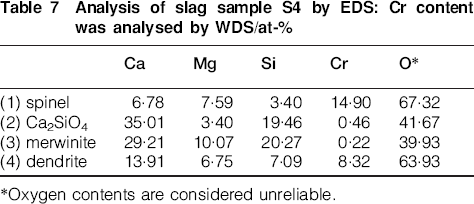
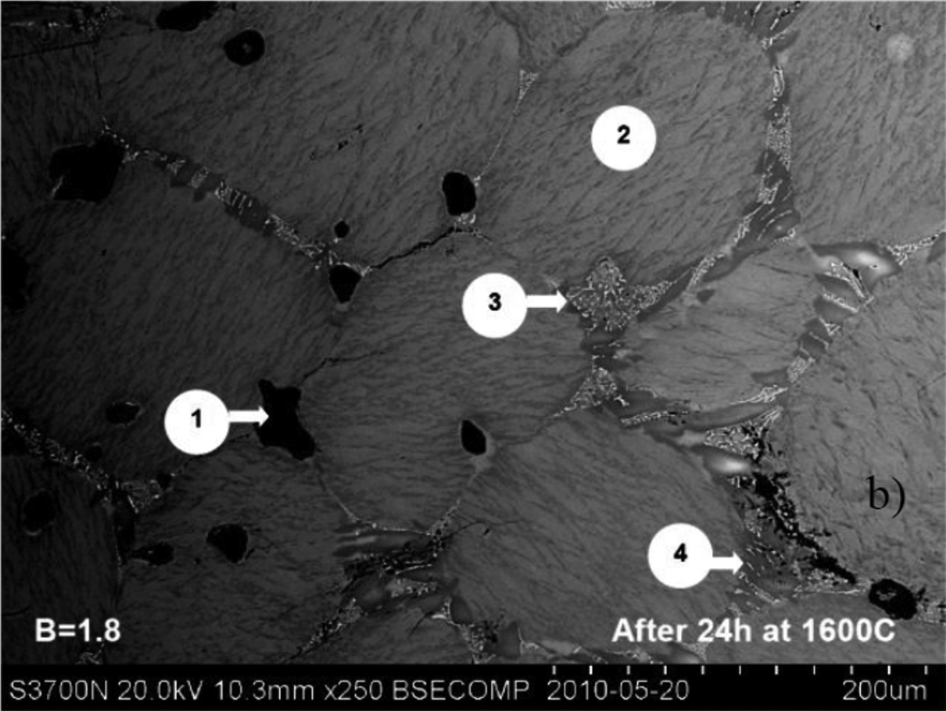
Figure 6 shows chromium rich dendrites and well developed spinel crystals in sample S4. The dendrite structure consisted of spinel solid solution and had a chromium content of 8·32 mol.-%. The spinel phase (Ca, Mg)Cr2O4 with some impurities of Si and Ca, had chromium of 14·90 mol.-% The matrix phase exhibited a concentration variation where areas close to spinel precipitates had less Cr (<0·5 at-%) compared to the chromium content in between the spinel crystals which were slightly higher, ∼5·2 at-%. Magnesium content in the matrix varied between 3 and 10 mol.-%. Concentrations of the complete compositions of the phases are given in Table 7.
1: fine (<10 μm) polygonal spinel crystals; 2, 3: calcium magnesium silicate matrix; 4: chromium rich dendrites
Analysis of slag sample S4 by EDS: Cr content was analysed by WDS/at-%
Oxygen contents are considered unreliable.
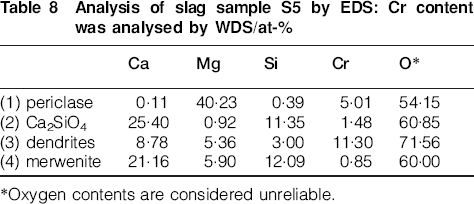
In sample S5, basicity 1·8, porosities in the grain boundaries, triple grain boundaries with divorced eutectic, as well as periclase particles containing dissolved chromium were observed as can be seen in Fig. 7. Grains consisted of Ca2SiO4 and merwenite phases. The eutectic contained Cr rich oxide particles. Cr rich periclase particles with a chromium content up to 5 at-% and merwenite phases were found at grain boundaries. The Cr content dissolved in periclase was found to be ∼5 at-%. The compositions analysed by EDS are given in the Table 8.
1: periclase particles max. 50 μm; 2: merwenite/Ca2SiO4 grains; 3: Cr rich dendrites imbedded in merwinite; 4: merwenite.
Analysis of slag sample S5 by EDS: Cr content was analysed by WDS/at-%
Oxygen contents are considered unreliable.
Figure 8 shows XRD graphs for samples S1–S6 after heat treatment at 1873 K (1600°C). The phases frequently found in the samples are merwinite, wollastonite and calcium silicate Ca2SiO4. In sample S2 with basicity of 1·2, the phases present according to XRD are merwinite, spinel and wollastonite. From the XRD pattern, it can be concluded that sample S1 is mostly amorphous, as can be seen in Fig. 8. In sample S3, merwinite Ca3Mg(SiO4)2, wollastonite and calcium silicate Ca2SiO4 were found in the XRD pattern (Fig. 8). Analysis by SEM confirms that considerable amount of spinel phase, as well as merwenite lamella were formed. Sample S4 consists of wollastonite, merwinite and Ca2SiO4 phases. In sample S5, the matrix consisted of a solid solution of calcium silicates Ca2SiO4 phases, as well as periclase and merwinite. Peaks for β-Ca2SiO4 and γ-Ca2SiO4 are marked by b and g respectively. Periclase particles found in sample S5 were up to 50 μm in size. In the case of sample S6 with basicity 2·0 (Fig. 8), both Ca2SiO4 and merwenite containining periclase (MgO) phases were observed. However, the MgO content in the slag was relatively low, so that the intensity of crystalline phases in the XRD pattern was quite small.
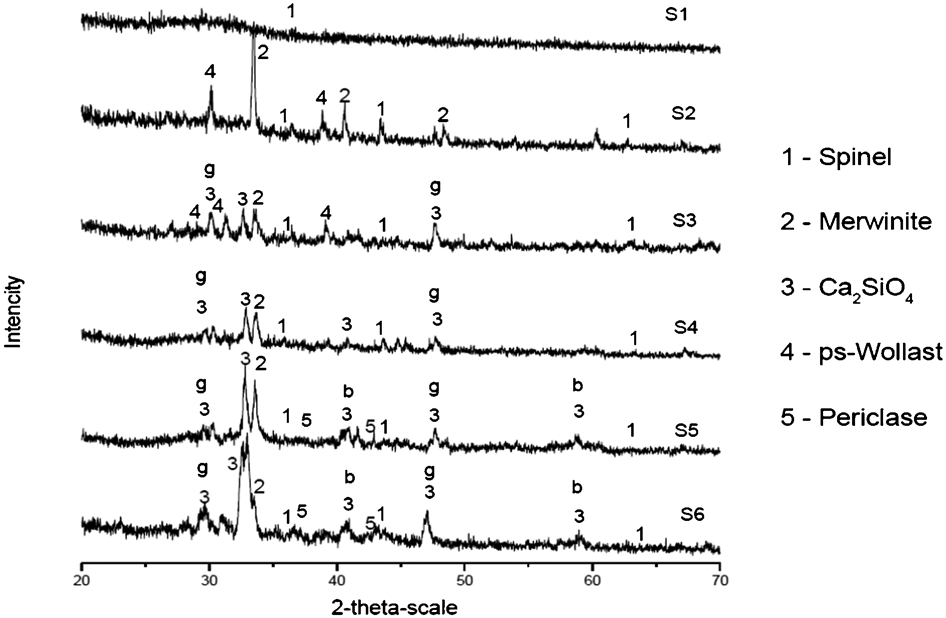
X-ray diffraction pattern for samples S1–S6: 2θ values are in range 20–70°
Discussion
From the XRD pattern for sample S1 the matrix is highly amorphous. Sample S1 consisted of liquid slag before quenching from 1873 K (1600°C). Analysis by SEM showed that samples S1 and S2 (basicities 1·0 and 1·2) contained, in addition, precipitated spinel crystals of 10–20 μm in diameter.
Pseudo-wollastonite was found in samples S2 and S3. According to literature, pseudo-wollastonite should appear in the quenched slag rather than wollastonite (Levine et al., 1956). Wollastonite has triclinic crystals although pseudo-wollastonite has monoclinic crystal structure. Besides the crystal structure, their melting temperatures differ considerably. The melting temperature of wollastonite and pseudo-wollastonite are 1523 K (1250°C) and 1785 K (1512°C) respectively. The transition temperature of wollastonite into pseudo-wollastonite is 1453 K. Pseudo-wollastonite is likely to have been formed on quenching. Merwinite phase was found in samples S2–S5. This phase is also considered to be unstable at 1873 K (Bredig, 1945), but was confirmed by XRD and SEM.
There is clear disagreement between experimental results and thermodynamic calculations by FactSage regarding the merwinite phase. There should be no merwinite phase in samples S2 and S3 according to the equilibria calculations given in Table 3. However, merwinite phase was found in our experimental samples S2 and S3. More experiments are required in order to determine the stability region of merwinite. Pseudo-wollastonite was also found in the samples with low basicities. Even here, further investigations of the stability region and refinement of the phase diagram are required.
According to SEM investigation, the spinel phase was present in samples S1–S4. In samples S3 and S4, the matrix consists of a mixture of silicate and merwinite phases. The maximum Cr content in the matrix phases was found to be 5 at-%. In the matrix close to the spinel surface, the chromium content was found to be less: 1·6 at-%, showing that the spinel growth occurred from the matrix. The chromium rich dendrites (spinel solid solution) were formed in samples S4 and S5, probably on quenching. The Cr content in the matrix in samples S4–S6 is high and close to the start composition of the reagent mixture.
In sample S5, basicity 1·8, porosities in the grain boundaries, triple grain boundaries with periclase particles containing dissolved chromium were observed. The Cr/Mg ratio was found to be ∼0·1. The matrix consisted of a solid solution of calcium silicates β-Ca2SiO4 and γ-Ca2SiO4, as well as periclase, merwinite and calcium silicate. Periclase particles found in sample S5 were up to 50 μm in size and had high amounts of Cr (5·01 at-%) dissolved. It can be concluded that samples S1–S4 were quenched from liquid state and samples S5 and S6 from solid state (remain unmelted). It is possible that samples S5 and S6 have not attained true equilibrium if only solid phases were found from the quenched sections and there was no quenched liquid phase present. β-Ca2SiO4 and γ-Ca2SiO4 found in the samples, according to XRD are not stable at 1873 K (1600°C) and have been transformed from α-Ca2SiO4 at lower temperatures. Ca2SiO4 can exist in five polymorphic phases, among which only two are stable at room temperature. The β-Ca2SiO4 phase, forms usually in the presence of impurity ions and easily reacts with water. The foreign ions, such as Cr as in this work would leach out if exposed to the water. One other stable polymorphic phase is γ-Ca2SiO4 which does not react with water (Lai et al., 1992; Engström et al., 2010), but disintegrates to dust.
Techniques of SEM and EDS confirmed the FactSage calculations, that spinel phase can be successfully precipitated at 1873 K (1600°C) in air atmosphere at slag basicities in the rage 1·0–1·6. The reason for this could be that, within this composition range, the slag is still in the liquid state, close to the liquidus temperatures, giving larger driving force for the precipitation of the crystals, but still holding a fast diffusion of the ions. Spinel formation is a thermodynamically and kinetically controlled phenomenon. At higher basicities, the samples are in the solid state during the entire procedure hindering the movement of ions, possibly requiring longer time to reach thermodynamic equilibrium.
The magnesiochromite spinel phase (MgCr2O4) found in the samples contained some impurities of CaO and SiO2, according to EDS analysis. However, the results could be affected by the surrounding matrix if the electron beam was in contact with it.
Figure 9 shows the Cr content in the matrix phase in slag samples S1–S6. Cr content dissolved in matrix phases is increased as a function of basicity (CaO/SiO2). This is also supported by the activity of Cr2O3 (standard state = pure, super cooled liquid), as shown in Fig. 10, implying that the decrease in the activity in the matrix phase would lead to a higher Cr content. At the higher basicities, spinel is found to dissolve CaO and SiO2. As the basicity increases the Cr distributes to other phases, for example the Cr content in periclase was extremely high. Chromate clusters may be expected to associate with Ca ions in the liquid slags, tending to precipitate out the Ca-chromate phase at lower temperatures. This may be a plausible explanation for the observed Cr contents in the matrix phase.
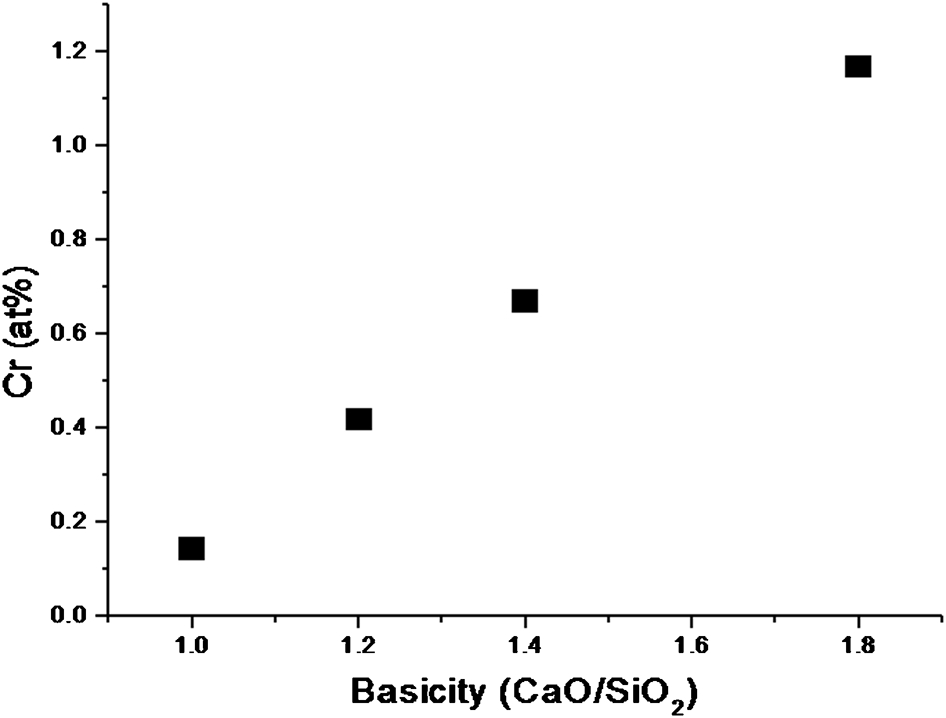
Variation in Cr content in matrix phases as function of basicity (CaO/SiO2)
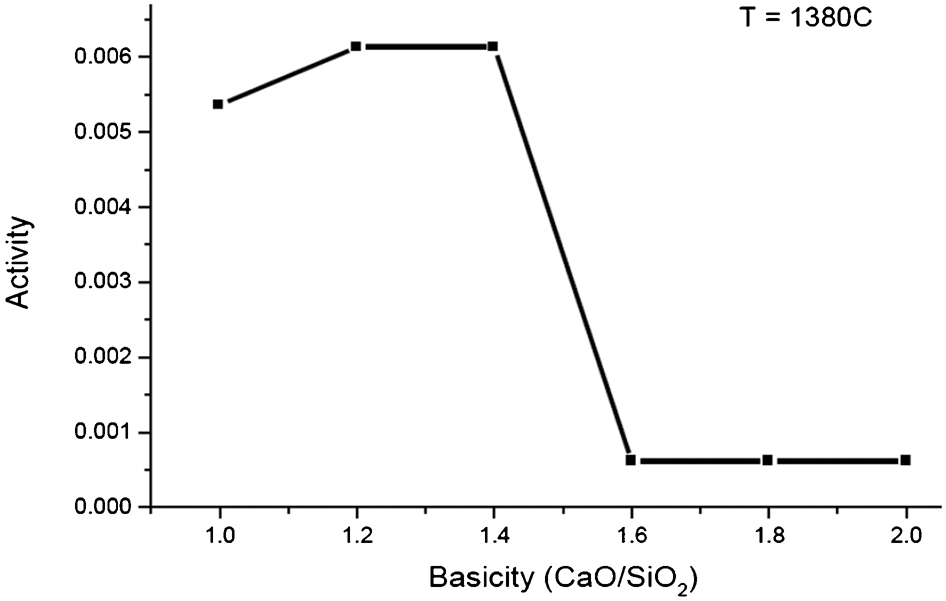
Activity of Cr2O3 in CaO–MgO–SiO2–Cr2O3 (standard state = pure, super cooled liquid Cr2O3) slag system at 1653 K (1380°C) as function of basicity: thermodynamic calculation by FactSage software
Figure 10 shows thermodynamic calculation by Factsage software of the activity of Cr2O3 (standard state: pure super cooled liquid) in CaO–MgO–SiO2–Cr2O3 slag system at 1653 K (1380°C) as a function of basicity. The choice of this temperature was due to the considerations by the authors as to the reliability of the calculations. The liquidus temperature of the slag system changes with basicity. The figure shows how the activity of chromium changes as a function of basicity, at a constant temperature of 1653 K (1380°C). This means that the chemical potential of Cr2O3 was decreased in the silicate slag matrix slag and thus, Cr2O3 should accumulate in this phase. Since the amount of the slag matrix phase is significant compared to the spinel phase, the increase in the concentration of Cr2O3 in the silicate matrix phase will not be large. On the other hand, the decrease in the Cr concentration of the spinel phase was noticeable following the same pattern. A decrease in the activity of Cr2O3 in the slag matrix phase would correspond to the decrease in the amount of Cr2O3 in the spinel phase. The thermodynamic calculations predict that effect is very clear at lower temperatures. When the temperature is increased, the entropy factor dominates. Thus, the system tends towards ideality and the effect of the reduced chemical potential may not be apparent.
The sharp decrease in the activity of Cr2O3 in the slag at basicities 1·4–1·6 was likely to be due to the formation of spinel species in the slag, assuming that the slag is homogeneous. However, experimental results shows that here is a certain risk for formation of solid solution of Cr with periclase and merwinite phases, as well as the formation of CaCr2O4 at higher basicities, that could lead to Cr leaching when the slag is disposed to landfill. Thus, basicities higher than 1·4 have to be avoided since there is a risk of formation of Cr rich solid solutions that might not be environmentally stable. Further investigations on the phase stabilities are required.
Conclusion
The phase correlation in CaO–MgO–SiO2–Cr2O3 slag system at 1873 K (1600°C) in air has been studied. The Cr2O3 and MgO contents in the slag were fixed at 6 and 8 wt-% respectively. The slag basicity was varied in the range 1·0–2·0. A gas/slag equilibrium technique was adopted to synthesise the slags and the equilibration experiments were conducted in air. In order to obtain a Cr rich spinel phase at a temperature of 1873 K (1600°C), a slag composition with basicity of around 1·0–1·4 is required. Higher basicities have to be avoided, since it can lead to formation of leacheable, chromium containing solid solutions, which are potentially harmful to the environment. The chromium content in the spinel phase was found to decrease with decreasing basicity. There are discrepancies between the experimental results and the thermodynamic calculations by Factsage software for basicities 1·2 and 1·4, regarding the stability of the wollastonite and merwinite phases.
Footnotes
Acknowledgements
The author would like to thank Professor Seshadri Seetharaman for valuable discussions and suggestions during the preparation of the manuscript. The work is carried out in close cooperation with Luleå technical university, Sweden. Financial support for the project from Swedish Foundation for Strategic Environmental Research (project no. MISTRA-88035) through Jernkontoret, Sweden is gratefully acknowledged.