







Abstract
The occurrence and recovery of metallurgical wastes from steelmaking and ironmaking processes is nowadays a great problem, mainly because of their large amount and environmental pollution caused by heavy metals. Elements, such as Fe and Zn, which are important to the industries, are the main ones in basic oxygen furnace (BOF) dust. Because of their presence, it becomes very important to know how these elements are combined before studying new technologies for their processing. The aim of this work was to carry out chemical, physical, structural and morphological characterisation of the BOF dust. The investigation was carried out by using granulometric analysis, chemical analysis, SEM, EDAX, XRD and Mössbauer spectroscopy. These findings deepened our understanding of zinc speciation present in zinc-containing steelmaking wastes.
Introduction
The primary source of iron as a feed to iron and steel facilities comes from the oxide ores containing minerals such as haematite (Fe2O3) and magnetite (Fe3O4), which usually carry a negligible amount of non-ferrous metal as an impurity. However, some scrap is always used as a secondary source of iron and it usually carries significant amount of zinc. These scrap originates from a variety of sources such as old cars, cans, bridges, rails and demolished buildings, and in most cases, it is in galvanised form, which accounts for the presence of zinc (Kelebek et al., 2004).
Dust and sludge collected from the gas-cleaning systems during the steelmaking processes in the steelmaking industry is an important type of byproduct (Wang et al., 2012). Every year, a large amount of such kind of metallurgical residues is generated. It is estimated that each year, 5–7m t of basic oxygen furnace (BOF) sludge is generated worldwide (Vereš et al., 2011; Das et al., 2007; Vereš et al., 2012). They often have complex composition and contain several components that have negative effects not only on environment but also on steelmaking processes (Kretzschmar et al., 2012). Demands from society and enterprise itself have exerted the pressure to minimise the amount of metallurgical residues and to find an appropriate way to treat these wastes and to recycle their valuable components (Wang et al., 2012).
Zinc is one of those elements which should be paid attention to in particular. This element is easy to volatilise during the metallurgical process because the boiling point of zinc is below the melting temperature in furnace, and it subsequently condenses and accumulates to form particles in the form of dust or sludge when passing through the gas-cleaning system (Wang et al., 2013). Usually, these dust and sludge cause risks in two ways. One is the negative influence on the environment. This kind of metallurgical residue is often composed of fine particles, and it can be easily discharged into the atmosphere and gets accumulated in the soil during transportation and landfill. Although zinc is an essential element for human beings and plants, it can cause poisoning and environmental risks at high concentrations (Machado et al., 2006; Mansfeldt and Dohrmann, 2004; Steer et al., 2014; Vereš et al., 2010; Wang et al., 2012). The second is about the negative effect on steelmaking process. Generally, dust and sludge must be disposed off at a hazardous waste disposal site, which incurs high transport and disposal costs. These costs could be reduced if metals, such as iron, zinc, and so on, could be recovered or sold. The most common way to utilise this dust and sludge is by reusing them as a secondary source of raw material because of its high iron content. However, if reused, undesirable consequences will occur. In particular, the presence of zinc will damage the production equipment, blast furnace for example. When the dust and sludge are recycled in a blast furnace, zinc will accumulate on the walls, penetrate the lining, take part in the deformation and disintegration of the lining, and subsequently damage the blast furnace (Asadi Zeydabadi et al., 1997; Wang et al., 2013). Since the mobility of inorganic elements largely depends on their chemical forms, it is necessary for us to obtain a thorough knowledge of zinc speciation. Chemical and structural characterisation of solid wastes is very important stage to evaluate the recycling feasibility (Palacios and Sánchez, 2011; Chen et al., 2012a, 2012b; Machado et al., 2006; Wang et al., 2012). In our study, several analytical techniques have been used to study BOF dust. Comparing the chemical analysis results with those from XRD, Mössbauer spectroscopy and SEM makes it possible to determine and to quantify the phases present in the BOF dust. Moreover, the use of several characterisation techniques is important because the findings about the existence of two zinc oxides (ZnO and ZnFe2O4) are of great importance to their recycling as raw material:
to obtain metallic zinc in zinc industry,
to obtain metallic iron in iron and steelmaking industry and even
for their recycling in the civil construction, because depending on the presence and amount of zinc oxide, the retardation in the hydration reactions may occur, which can result in a barrier for their use in this application (Vereš et al., 2012; Kelebek et al., 2004; Vereš et al., 2010; Machado et al., 2006).
The purpose of this research was to deepen our understanding of the zinc speciation in this waste material.
Materials and Methods
A BOF dust sample from the Steelmaking Company (Košice, Slovakia) was used in this investigation. All these samples were collected from the gas-cleaning system generated during the carbon steelmaking processes in a steelmaking plant.
The granulometric analysis of BOF dust was performed using the Helos/LA Sympatec (Germany). The chemical composition of BOF dust was determined by atomic absorption spectroscopy (AAS) using the device VARIAN with the following accessories: Fast Sequential AAS AA240FS, Zeeman AAS AA240Z with Programmable Sample Dispenser PSD120, Graphite Tube Atomizer GTA120 and Vapor Generation Accessory VGA-77.
The mineralogical (phase) composition of the samples was determined by XRD using a Philips PW1820 Automatic Powder Diffractometer with Cu Kα radiation. Powder samples were measured in the range of 20°–80° 2θ with a scan step of 0·05° and fixed counting time of 2 s for each step. The diffraction patterns were analysed using the Powder Cell software and the PDF database was used for the phase identification.
57Fe Mössbauer spectroscopic measurements in transmission mode were carried out using a 57Co/Rh γ-ray source (Germany) at room temperature. The velocity scale was calibrated relative to 57Fe in Rh. Recoil spectral analysis software (Lagarec and Rancourt, 1998) was used for the quantitative evaluation of the Mössbauer spectra. EDAX measurements were performed to obtain additional information on the structure, morphology and chemical composition of BOF dust particles. The samples were pressed in an organic resin by cold cure, grounded with silicon carbide paper and polished with diamond suspension. The samples were then carbon coated for imaging and EDAX analysis. The same samples were also subjected to the element distribution analysis (O, Fe, Zn, Mg, Ca, Si, Mn) through EDAX.
Results and Discussion
The particle size distribution of the examined BOF dust is shown in Fig. 1. The mean particle diameter of BOF dust determined by laser granulometer was 3·5 μm. It can be seen from Fig. 1 that the BOF dust sample presents a heterogeneous distribution of particle size and contains two major size fractions: a fine-grained portion (1–10 μm) and a coarser part (10–36 μm), where 80% of particles are below 10 μm. Such an irregular granulometric distribution is probably because of the agglomerated state of the particles (as later confirmed by SEM analysis), because this material is well known to have fine granulometry. The particles in BOF dust tend to exist as aggregates consisting of very fine individual particles (Kelebek et al., 2004; Vereš et al., 2010). Although metals are usually more concentrated in the fine fraction of the waste, the mesh analysis was unsuccessful in separating fractions from the sludge, which could contain markedly different amount of zinc than the average composition. Mansfeldt and Dohrmann (2004) and Machado et al. (2006) also observed that the metals are more concentrated in the fine fraction of the waste.
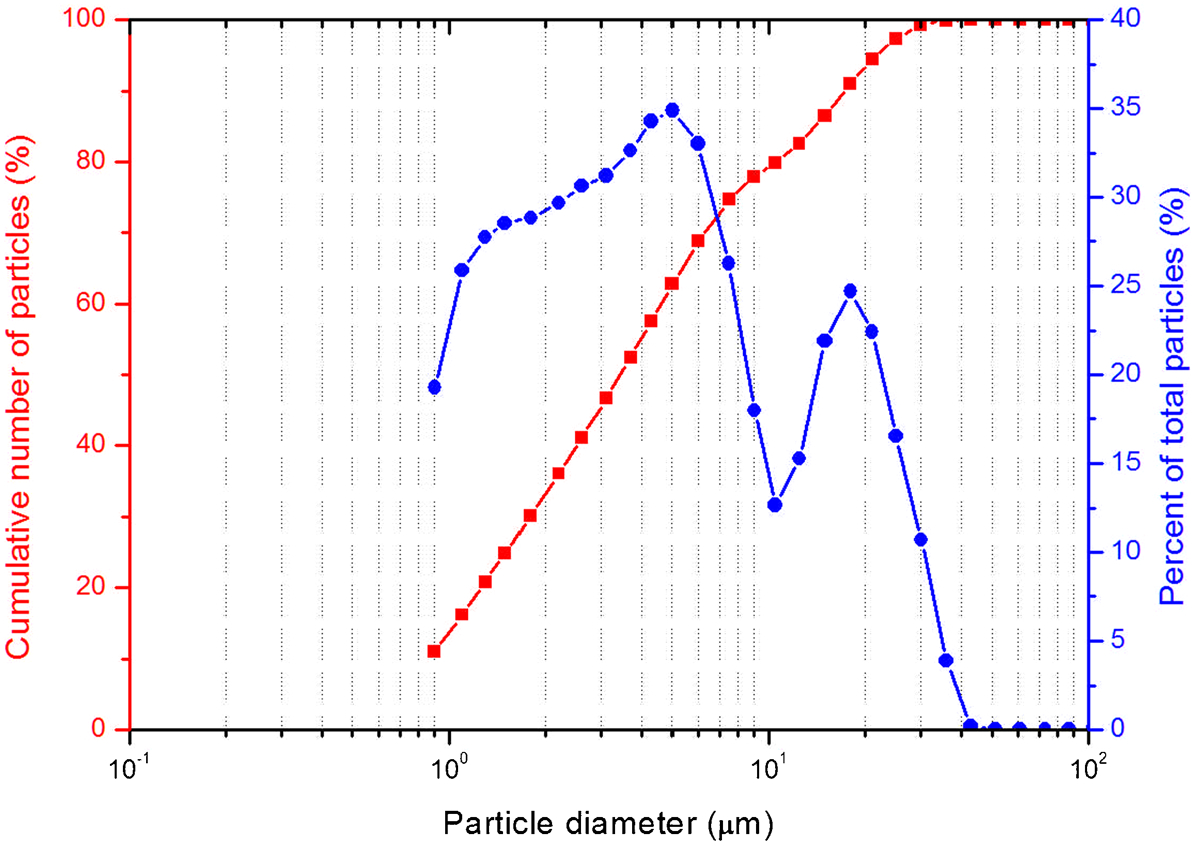
Particle size distribution of BOF dust
Table 1 presents the chemical composition of the major elements of the BOF dust used. Three dust samples were collected and chemically analysed with the standard gravimetric, titrimetric and atomic absorption procedures. The arithmetic average constituents of these samples are shown in Table 1, with 3% of error. Usually, this kind of analysis is expressed in the most stable oxide forms (Pelino et al., 2002; Masud and Latif, 2002). However, the use of other techniques to characterise BOF dust, such as X-ray diffraction analysis, Mössbauer spectroscopy and scanning electron microscopy with EDX, has shown that in fact the elements are not present in the most stable oxide forms as pointed out in those works. According to Meurer and Buntenbach (2001) and Dvořák and Jandová (2002), in the BOF dust, zinc contents are usually between 1 and 14 wt-%. The Fe and Zn contents found in the BOF dust from the present work (Table 1) can be considered as intermediate values when compared to those found in the literature, which is also coherent with the quality of steel scrap processed and on the type of steel (carbon, stainless and tool) produced in the steelmaking plant that generates this BOF dust. Besides iron and zinc, the dust is characterised by the relatively high content of calcium oxide, whose presence should be attributed to the lime added to the steelmaking furnace.
Chemical composition of BOF dust

The mineralogical composition of BOF dust was determined by XRD phase analysis. The XRD pattern of the BOF dust is shown in Fig. 2. Characteristic peak positions indicate the four main crystalline phases present in the dust, such as franklinite (ZnFe2O4), magnetite (Fe3O4), haematite (Fe2O3) and iron oxide (FeO). Furthermore, zincite (ZnO) and elemental iron are also present as minor constituents. Zinc in the examined BOF dust is in the form of zinc oxide (zincite, ZnO) and zinc ferrite (franklinite, ZnFe2O4), whereas iron is mainly in the form of franklinite and magnetite (Fe3O4). Iron ores are the source of iron oxide and magnetite phases. The amount of zinc depends on the ratio of galvanised scrap utilised during the steelmaking process.
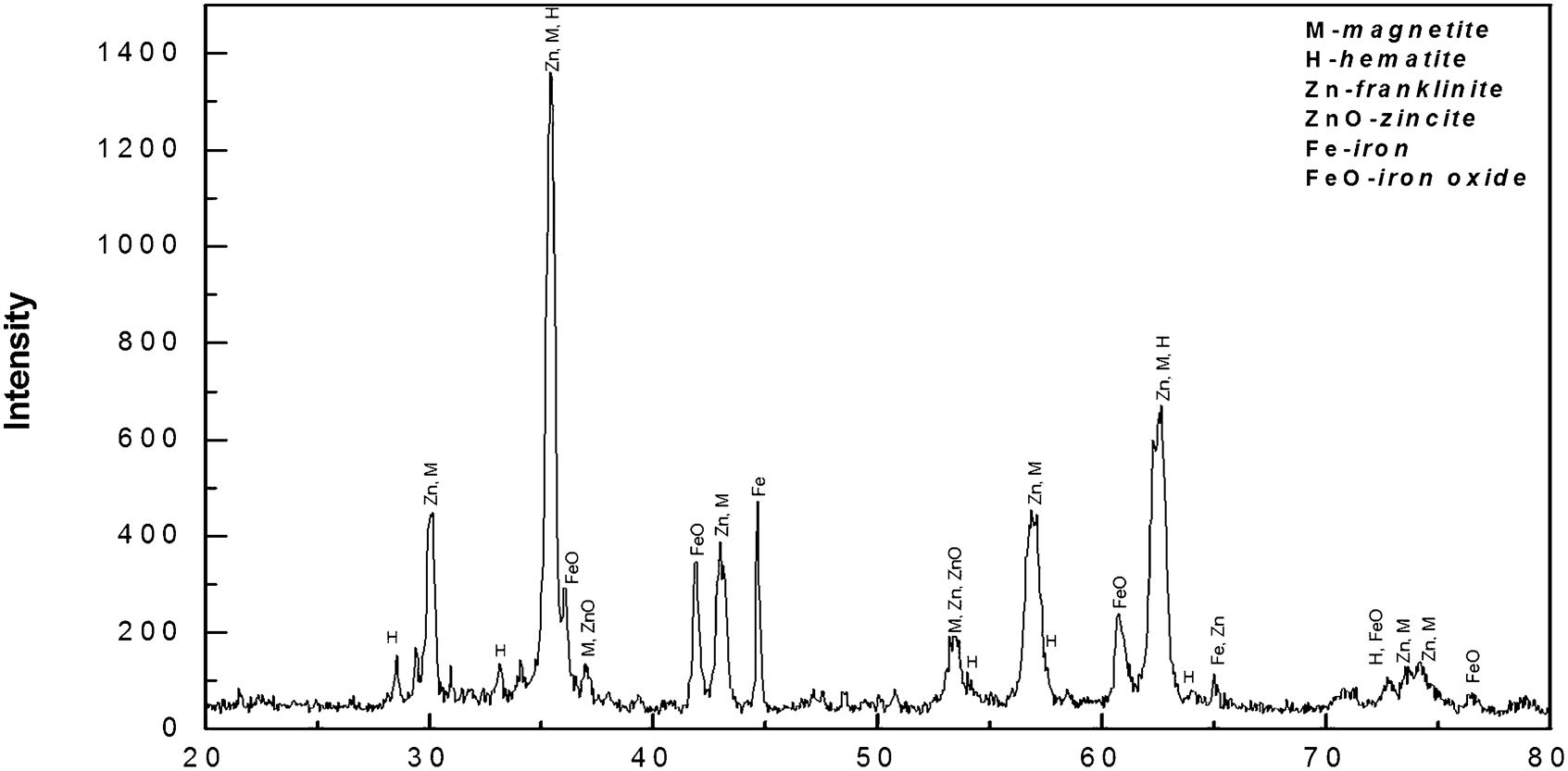
XRD pattern of BOF dust sample
Although the main crystalline substances were identified by XRD, there can also be amorphous compounds. However, the presence of franklinite in the sample is difficult to be proved by XRD, because this material is isostructural with magnetite, i.e. both complex oxides possess spinel structure with similar lattice parameters resulting in overlapping of their corresponding XRD peaks. Because of such overlapping, the presence of these phases cannot be unequivocally assured. As it will be shown, to improve the phase identification in BOF dust sample, it is necessary to use other techniques such as Mössbauer spectroscopy and scanning electron microscopy with energy dispersive spectroscopy and X-ray mapping analysis. To confirm the Fe phases, Mössbauer spectroscopy was used. The Mössbauer spectrum of waste sample is shown in Fig. 3.
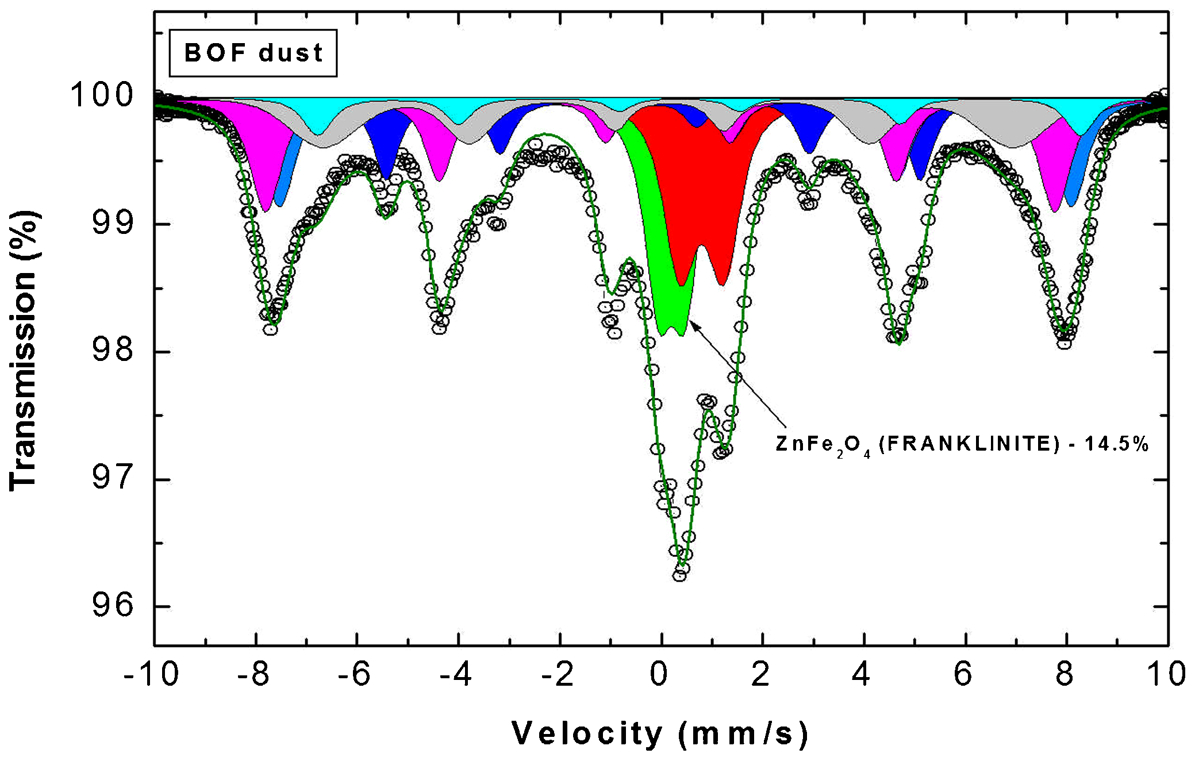
Mössbauer spectrum of BOF dust sample
57Fe Mössbauer spectroscopy was used to determine the phase composition of BOF dust sample in greater detail. This nuclear spectroscopic method has been proved to be well suited for the investigation of the charge state, the local coordination and the magnetic state of iron ions in materials (Šepelák et al., 2007). Mössbauer spectrum is characterised by five sextets and two doublets. The presence of doublets indicates the paramagnetic and superparamagnetic states of iron in the samples. Central doublets shown in Fig. 3 correspond to franklinite with iron content of 14·5% in the BOF dust. In the sample, it reveals the presence of α-Fe2O3, Fe3O4, ZnFe2O4, Fe2+-containing phase – most probably FeCO3, and a small amount of (super)paramagnetic Fe3+-containing phase. The latter can be related to the Fe3O4 particles of such small size that they behave superparamagnetic (Long, 1987). Thus, Mössbauer spectroscopic measurements reveal that Zn in BOF dust occurs mainly in the form of the Zn–Fe complex oxide, ZnFe2O4. The Mössbauer parameters obtained for Fe3O4, ZnFe2O4 and Fe2O3 in the BOF dust are in agreement with those reported in the literature (Šepelák et al., 1998; Goya et al., 1995).
One of the most important characteristics of the Mössbauer spectroscopy technique is its selectivity. If the emitter Mössbauer isotope is, for example, 57Fe, the resonant absorption may only occur if there are identical nucleuses inside the absorbent. In this way, even if the sample shows a greater variety of compounds, only the ones that have a Mössbauer nucleus in their constitution will be detected (Machado et al., 2006). Considering that the BOF dust does not contain only iron in its constitution, the results of the Mössbauer spectroscopy and the AAS analysis (Fe and Zn content) were used to determine the amount of the main oxide phases from the recycling point of view (ZnFe2O4 and ZnO). Analysing the results of both characterisation techniques, it was possible to provide a quantitative estimation of the ZnFe2O4 phase and, indirectly, the ZnO phase. The amount of ZnFe2O4 and ZnO was determined as follows:
Determination of ZnFe2O4

Determination of ZnO


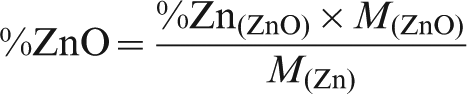
Based on these calculations, Table 2 shows the analysed sample
Quantification of zinc containing oxide phases in the BOF dust
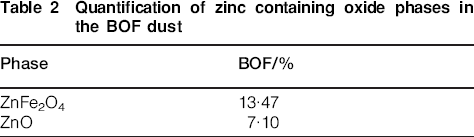
As it can be seen in Table 2, the identified Zn phases (via XRD and Mössbauer analyses) are in agreement with the literature, that zinc in BOF dust is mainly present as ZnFe2O4 and a small amount is in the form of ZnO. However, as it can be seen in the SEM EDX mapping pictures in Fig. 4, existing areas where zinc should be associated with the presence of Zn, Ca, Mg, Si-O phases are not detected by the XRD.
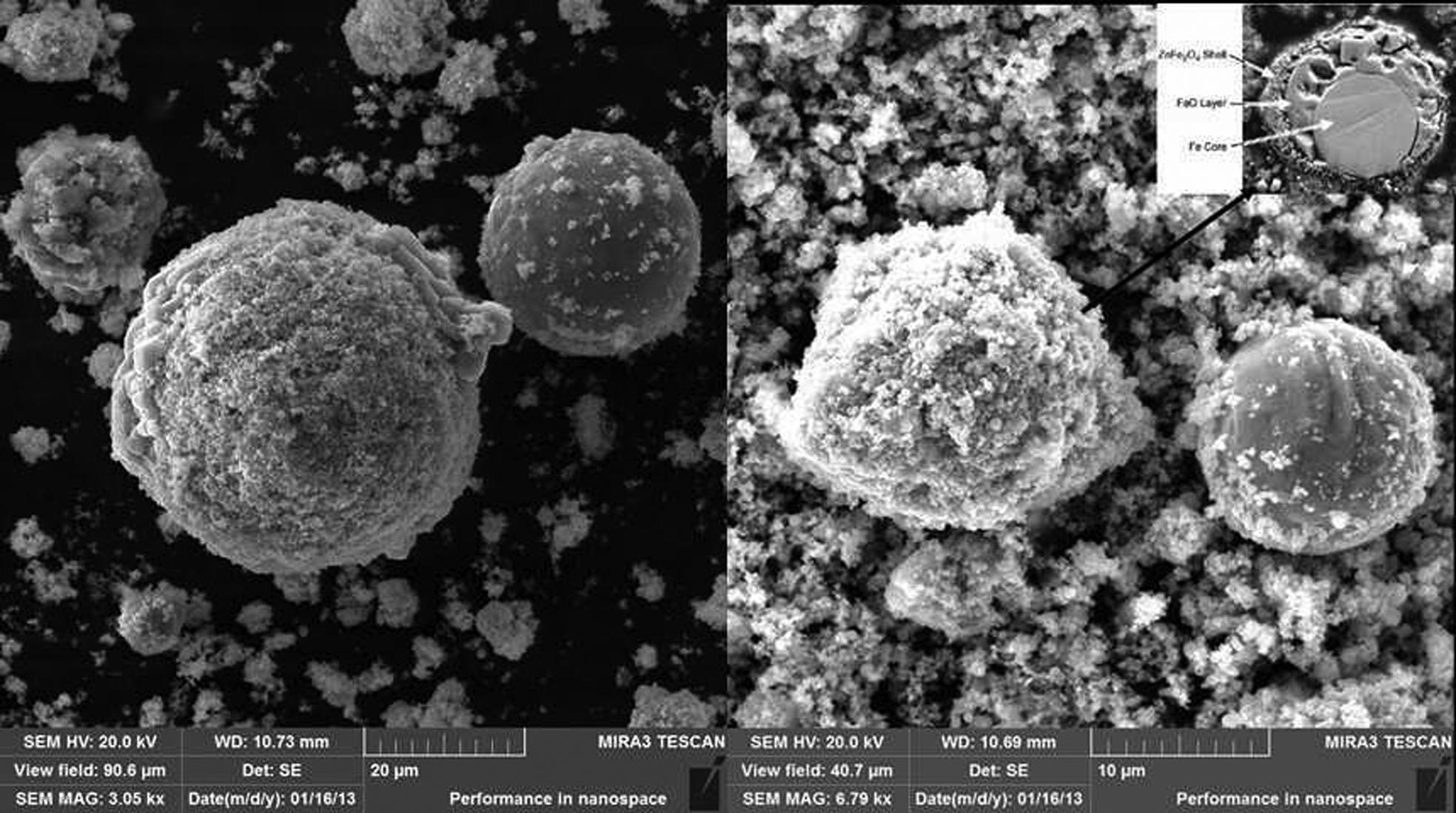
Scanning electron micrograph of BOF dust particles
The representative SEM picture of BOF dust is shown in Fig. 4. Further characterisation work was carried out using SEM to examine the nature of dust particles. Dust particles were observed as spherical formations partially coated with agglomerates of submicron particles. This observation is in accordance with the above-given results of granulometric analysis of the sample. Some larger particles were also observed to be agglomerates of smaller dust particles forming somewhat porous surface structure as shown in Fig. 4.
This shape is in agreement with the main generation mechanism, i.e. ejection of the slag and metal particles by bubble-burst. Discrepancies in the chemical analysis suggest that a zinc-rich thin layer is present at the surface of the particles. Some particles were mounted, sectioned and then analysed for further characterisation. Additional work with SEM was carried out in combination with EDX, which indicated an unrealistically high level of zinc and confirmed concentration of zinc-bearing species around spherical iron cores in the particles as shown in Fig. 4, which is in agreement with facts from other studies (Kelebek et al., 2004; Vereš et al., 2010). It also showed the tendency for particles to agglomerate. Morphology of the particle indicates a metallic iron core inside followed by a slightly agglomerated ferrous oxide layer and a formation of agglomerated fine particles of zinc ferrite as an external coating. The EDX spectrum confirms the presence of the main elements in the BOF sample, which is in agreement with the results of chemical analysis. A coloured micrograph of the same particle along with EDX mapping provided some details that were helpful for confirmation on elemental distribution of zinc and iron. Accordingly, zinc is distributed within the outer layer of the particle, which is shared by iron. Iron appears to be equally distributed within the particle as the dominant species in various forms (Kelebek et al., 2004).
Figure 5 shows a secondary electron image of a BOF dust region and the X-ray mapping for the elements, such as Fe, Zn, Ca, Mg and O, present in the dust. This figure indicates that oxygen is practically distributed along the entire sample, which suggests the presence of metal–oxygen structural forms. There are regions in which the presence of iron, zinc and oxygen elements is coincident, suggesting the existence of ZnFe2O4 phase. At the same time, it is also noted that the areas where iron is not present while zinc and oxygen is in high amount are associated with the presence of ZnO and/or Zn–, Ca–, Mg–, Si–O phases, and the areas where zinc is not present suggests the presence of iron oxides, probably magnetite and haematite.
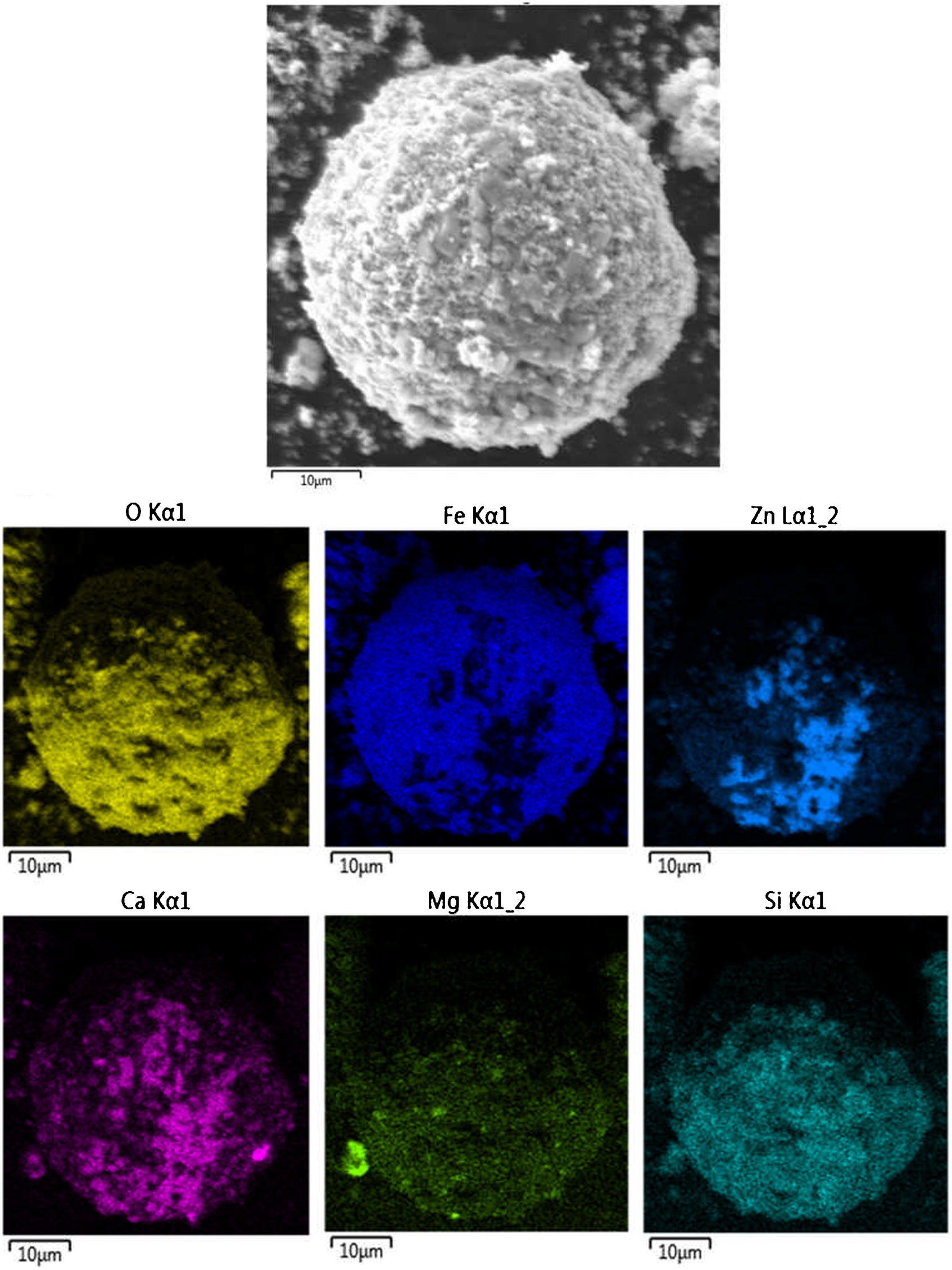
SEM EDX mapping of BOF dust region, and distribution of O, Fe, Zn, Ca, Mg and Si
As it can be seen from Fig. 6, calcium and magnesium are distributed in the BOF dust in two regions; one with iron and the other without iron. Calcium appears in high amount, forming phases with magnesium and oxygen. Probably, it is a phase rich in calcium, and magnesium originated from fluxes added in the steelmaking process. Besides, calcium appears to be distributed in lower concentration in regions where zinc and oxygen are present, which can suggest the presence of the Ca, Mg–Zn–O phase.
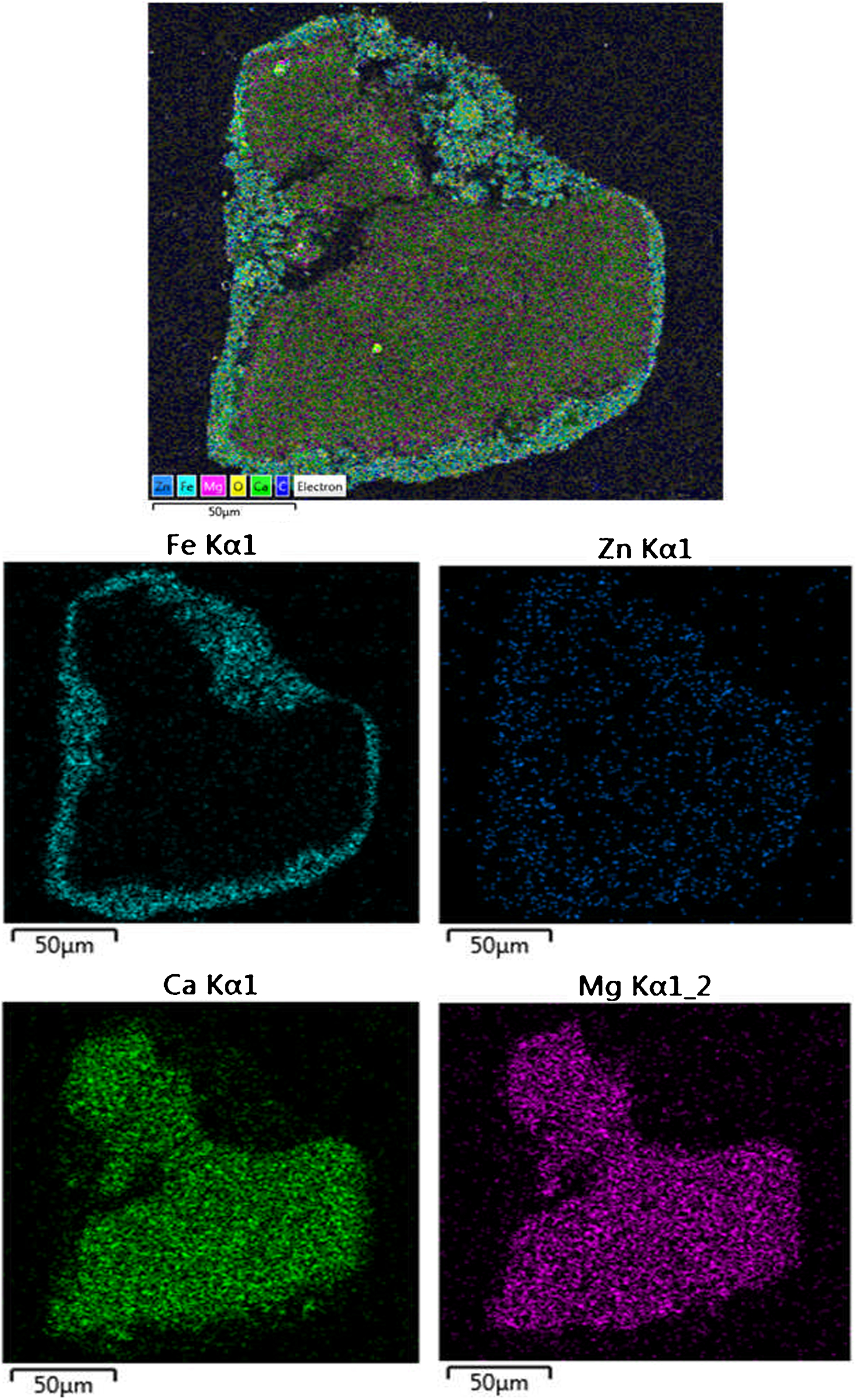
SEM EDX mapping of BOF dust region, and distribution of Fe, Zn, Ca and Mg
Conclusion
As a valuable source of iron and zinc, zinc-containing steelmaking wastes have attracted considerable attention. Currently, there are several ways to manage these wastes depending on the zinc content. If the zinc content in dust and sludge could be reduced to a lesser amount (e.g. <0·4%), it can be directly recycled in the ironmaking or steelmaking process. For zinc-containing wastes with high zinc content (e.g. >10%), hydrometallurgical processes are often used to extract the valuable component, especially zinc element. As for zinc content which is between the above, pyrometallurgical process and/or in combination with appropriate pre-treatments are the best choice to handle these wastes. Since the zinc content in BOF dust was about 10 wt-%, it was a valuable source of zinc. Results of both (XRD and Mössbauer spectroscopy) analyses showed that ZnFe2O4 is in an important proportion in the BOF dust. As it is known from literature and experiments, BOF dust contains less proportion of zinc in the form of easily soluble ZnO and 10 times more zinc in the form of hardly soluble ZnFe2O4. From this study, it is clear that the above methods have an advantage of obtaining chemical form of zinc element in zinc-containing steelmaking wastes. These results could provide us more fundamental information that are much useful for improving the recycling methods. The characterisation of a solid metallurgical waste using many different techniques increases the reliability of the results and also give more conditions to decide about the best possible recycling method. On the basis of the above results, they provide us not only with fundamental information about the zinc speciation at the molecular scale in dust but also demonstrated the essential importance of the characterisation of zinc speciation to develop recycling strategies. From the complex characterisation of BOF dust, we can conclude the following:
The mean particle diameter of BOF dust was 3·5 μm. The BOF dust has a heterogeneous distribution of particles, where 80% is below 10 μm.
Fe and Zn are present in the BOF dust with 49·87 and 9·37%, respectively.
XRD technique detected the following phases: ZnFe2O4, Fe3O4, Fe2O3, Fe, FeO and ZnO. However, the presence of amorphous phases and some other unidentified phases under detection limit cannot be excluded.
The ferrous oxide phases detected by Mössbauer spectroscopy were α-Fe2O3, Fe3O4, ZnFe2O4, Fe2+-containing phase – most probably FeCO3, and a small amount of (super)paramagnetic Fe3+-containing phase.
SEM EDX mapping analysis clearly shows the presence of spherical particles agglomerated with fine particles of zinc ferrite as an external coating.
These results could provide us more fundamental information that are much useful for improving the recycling methods. In future research, a larger set of reference materials, as well as more samples, will be considered in order to get more conclusive identification.
Footnotes
Acknowledgement
This article has been elaborated in the framework of the project Opportunity for young researchers, reg. no. CZ.1·07/2·3·00/30·0016, supported by Operational Programme Education for Competitiveness and co-financed by the European Social Fund and the state budget of the Czech Republic and in the framework of the project ‘Support research and development in the Moravian-Silesian Region 2013 DT 1-International research teams’ 02613/2013/RRC, financed from the budget of the Moravian-Silesian Region. The authors are also thankful for the financial support of the project Innovation for efficiency and environment, reg. no. CZ.1·05/2·1·00/01·0036 financed by the Ministry of education, youth and sports of the Czech Republic and by the Slovak Research and Development Agency under the contract No. APVV-0252-10 and VEGA project No.: 2/0175/11.