







Abstract
To achieve a smooth fracture plane with minimal damage to a rock block or remaining rock mass, a water-coupling cutting blasting technique was applied in a granite quarry. The mechanism of water-coupling cutting blasting is demonstrated with the specification of prerequisites for crack growing and arresting. Using the LS-DYNA program, the maximum principal stress distribution and rock damage evolution process were observed, and the validity of crack extension till coalescence was verified by comparing the calculated and theoretical water pressure needed to induce fracture. The optimum blasting parameters for achieving the best cutting blasting performance were obtained by simulations under different coupling ratios and blasthole spacings. The successful water-coupling cutting blasting practice in the granite quarry has great potential to be applied in other similar engineering.
Introduction
As one of the most economical and productive ways to separate and fragment rock mass, the drill–blast method has been widely adopted in rock excavation and mining engineering (Barker et al., 1978; McKown and Thompson, 1981). In the drill–blast method, two types of loading, stress wave and gas pressure, are generated in blastholes when the explosive is detonated (Kutter and Fairhurst, 1971; Donze et al., 1997). Many efforts have been made to explore the mechanism of crack growth and rock damage evolution subjected to the two loadings (Atkinson, 1987; Paine and Please, 1994; Liu and Katsabanis, 1997). Now, it is generally accepted that the rock fracture and fragmentation are induced by the combined actions of the stress wave and the gas pressure: the stress wave is mainly responsible for the primary radial cracks around blastholes, while the gas pressure further extends the cracks (Rossmanith et al., 1997; Wang and Konietzky, 2009).
In practical engineering, such as rock fragmentation and overbreak control in mining, the control of cracks and fractures in rock breakage is of great interest (Fourney et al., 1975), especially in building stone quarries, where damage to rocks is strictly restrained. On the basis of the existing knowledge on blast-induced rock fracturing, one way of achieving a desired fracture plane is to generate stress concentrations along preferred directions. Controlled blasting techniques, such as slotted-tube charge holder (Fig. 1a) (Fourney et al., 1978; Katsuyama et al., 1983), notched blasthole (Fig. 1b) (Sanchidrian et al., 2000; Rathore and Bhandari, 2005) and shaped charge configuration (Fig. 1c) have been applied in underground excavation and quarry extraction with the objective of controlling crack growth path and minimising the crushed zone and undesirable fractures. However, these techniques are time-consuming and unwelcome among blasting operators because of the complicated charge configurations.
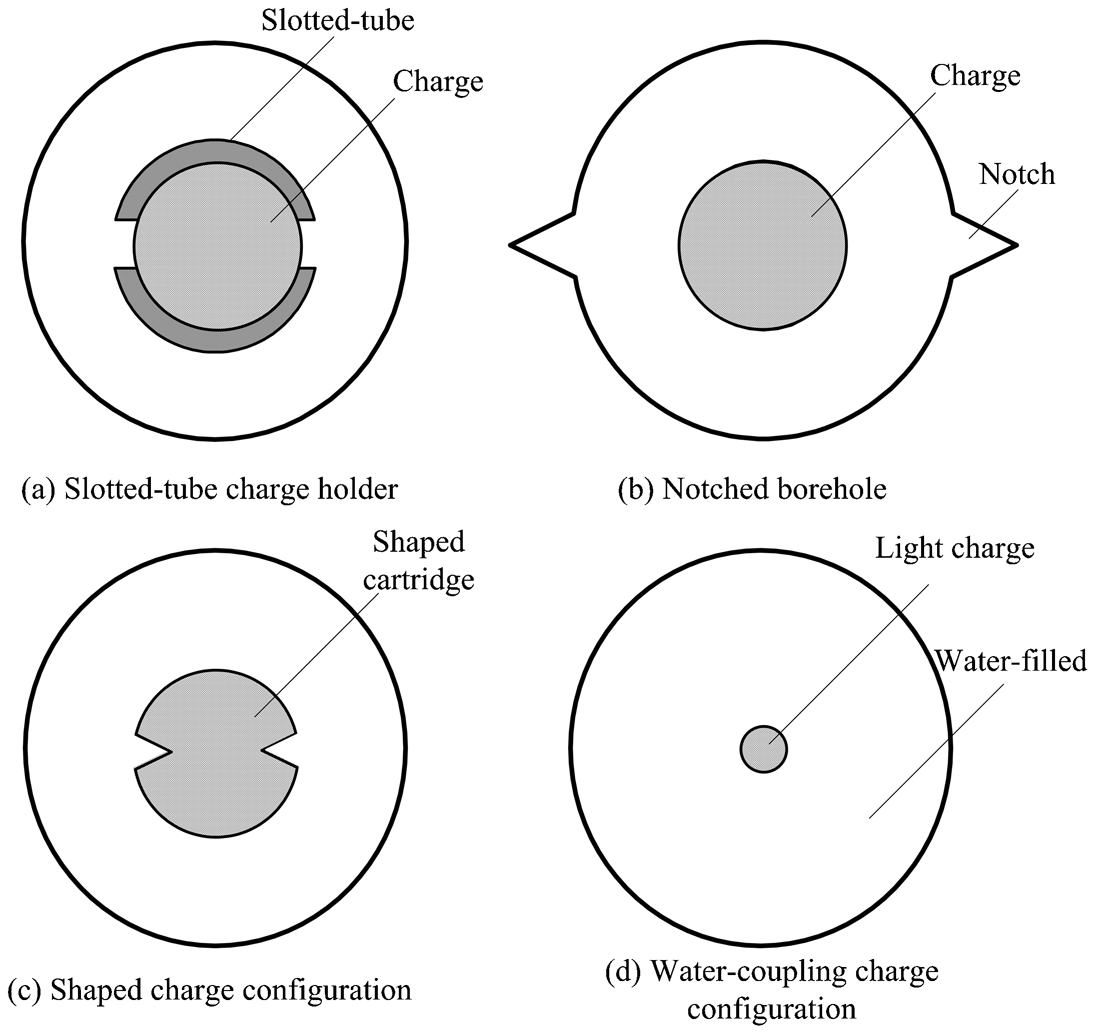
Charge configurations for controlled blasting technique. a slotted-tube charge holder; b notched borehole; c shaped charge configuration; d water-coupling charge configuration
Derived from fracture controlled blasting method, a cutting blasting technique is developed to achieve the desired fracture plane by light charging (detonating cord) and water coupling (Fig. 1d). The cutting blasting coupled by water has been adopted well in quarrying where the blocks extracted from the rock mass need to remain undamaged. Previous publications (Miao et al., 1998; Zhong and Liao, 2001) indicated that the cutting blasting technique coupled by water not only achieves a smooth, stable perimeter and minimises the damage both to the remaining rock mass and to the blocks, but also is quite feasible, economic and productive.
Although theoretical and practical research on fracture controlled blasting has been carried out, the understanding of blasting process is far from complete because of the complex interaction between the explosive and the rock (Wang and Konietzky, 2009). Because numerical calculation methods provide a graphic and visualised perspective on the blasting process, many literatures have been published on investigating the crack evolution path by numerical programmes. Ma and An (2008) used LS-DYNA to simulate blasting-induced rock fractures by fracture control techniques, including notched blastholes and charge holders with slits. Cho et al. (2008) used dynamic fracture process analysis (DFPA) software to examine the effect of the notched guide hole on fracture plane control. A 2D distinct element method was employed by Sharafisafa and Mortazavi (2011) to investigate the effect of presplit blasting on the generation of a smooth wall in a rock domain, showing that the blast loading magnitude and blasthole spacing are significant parameters affecting the blasting performance. However, few reports have been published focusing on the fracture formation mechanism of cutting blasting coupled by water.
In the present paper, the water-coupling cutting blasting technique adopted in a granite quarry is investigated. Based on the actual practice, numerical models were established in LS-DYNA, and the continuous surface cap model (CSCM) was used for the granite material. The CSCM was validated by simulating the blasting performance of a granite block with a single blasthole. Then the material model was used to simulate the cutting blasting process in a three-dimensional model and in a single layer mesh model. More specifically, the formation of a fracture plane was verified by comparing the theoretical critical pressure with the simulated pressure for inducing cracks. Finally, the effects of the coupling ratio and the blasthole spacing on cutting blasting performance were investigated, confirming the blasting parameters adopted in the granite quarry were proper.
Mechanism of the water-coupling cutting blasting
The water-coupling cutting blasting is conducted by choosing appropriate blasthole spacing and coupling ratio (the ratio of the detonating cord radius to the blasthole radius), filling the blastholes with water and initiating a row of blastholes simultaneously to form a fracture plane across the rock mass. With the initiation of the explosive, stress waves and high pressure are produced in the water-filled blasthole. The stress wave propagates into the rock mass, inducing circumferential tensile stress and radial cracks. The stress wave will reflect and transmit repeatedly on the boundary between the water and the rock, resulting in a quasi-static water pressure inside the blasthole. The radial cracks induced by stress wave are further extended under the action of the quasi-static water pressure. Because of the influence of the adjacent blastholes, the circumferential tensile stress in the crackfront along the centreline direction is greater than that along other directions, which gives priority to the growth of cracks in the centreline direction while restraining the growth of cracks in other directions. The cracks between blastholes coalesce eventually, forming a fracture plane (Fig. 2).
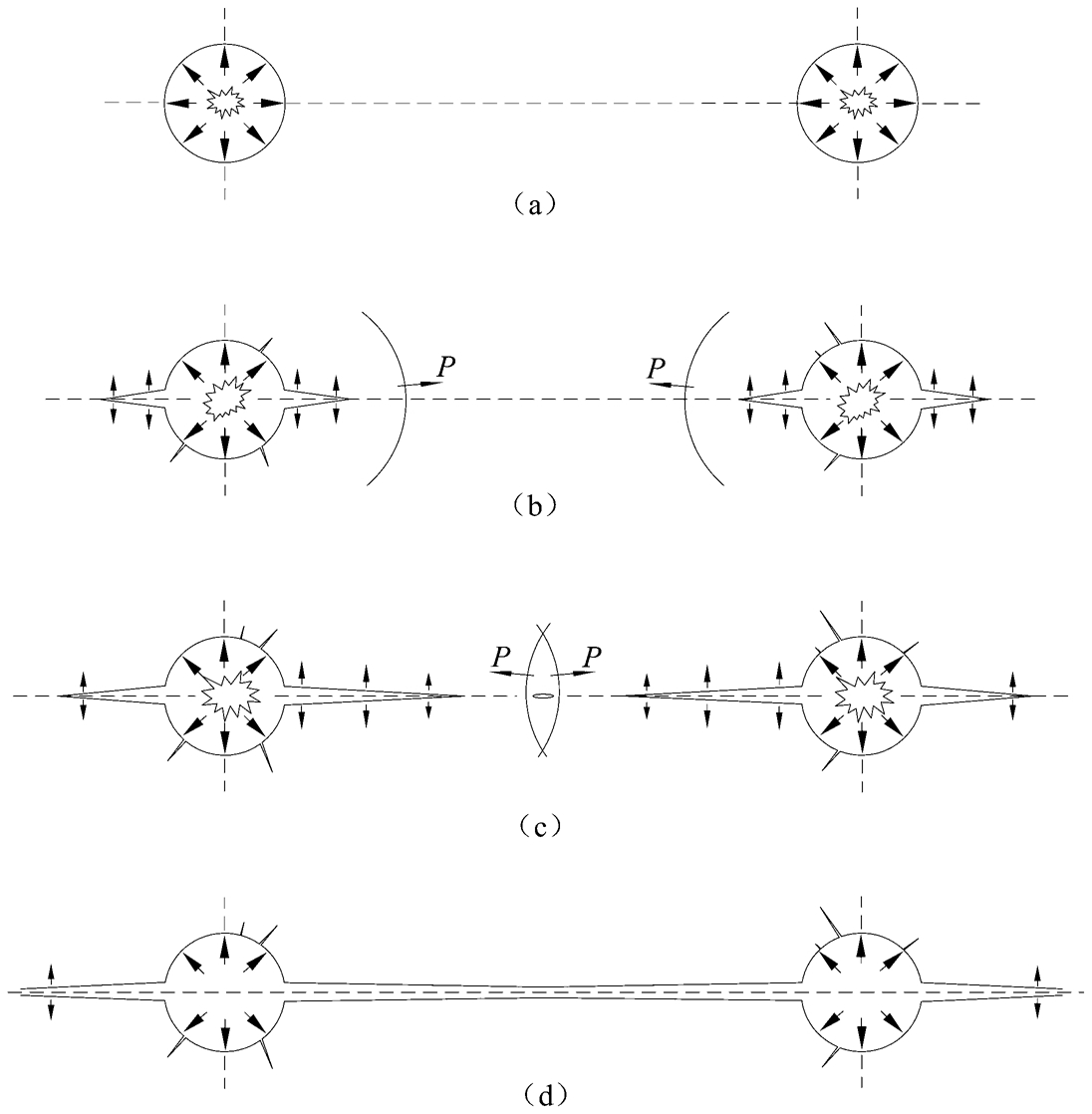
Fracture plane formation process of the water-coupling cutting blasting (P is the blast-induced stress wave)
The water pressure drops with the extension of the blasthole and induced cracks. The decreasing water pressure is incapable of driving the cracks when it drops to a certain critical value. Thus, from fracture mechanics theory, the prerequisites for crack growth and crack arrest can be specified. The crack grows when the intensity factor of the crackfront KI caused by the quasi-static water pressure is greater than the rock dynamic fracture toughness KID, whereas it stops growing when KI is less than KID.
The performance of the water-coupling cutting blasting can be characterised by the smoothness of the fracture plane and the intensity of the damage zone. To form a clean, smooth surface with minimal damage zone, it is of great importance to limit the explosive energy acting on the blasthole wall. One way of reducing the intensity of explosive energy is to adopt decoupling. Detonating cord is the best candidate for charging in the blasthole, because it releases much more energy per unit volume than other common explosives and has variable diameters for different practical uses. In addition, the detonating cord is water-repellent as the high explosive powder (PETN) inside is wrapped by a polyethylene cover.
Blasting parameters and modelling
Practical parameters for water-coupling cutting blasting
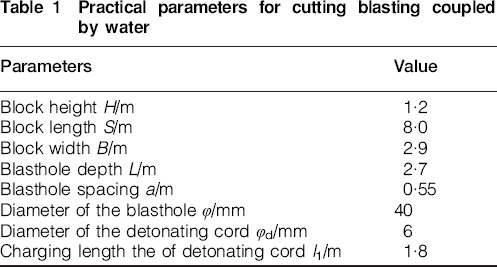
Water-coupling cutting blasting and high-speed circular saw cutting were used in block extraction in the granite quarry. The water-coupling cutting blasting was conducted to fracture the bottom face of granite blocks after the left, the right and the back faces had been split already by circular saw cutting. A row of 12 blastholes with a spacing of 0·55 m and a depth of 2·7 m was drilled horizontally at the bottom of the block, as shown in Fig. 3. Detonating cords with a length of 1·8 m were charged into the holes that were fully filled with water. A granite block of 8·0 m×2·9 m×1·2 m was separated from the rock mass through simultaneously firing the detonating cords, as shown in Fig. 4. The blasting parameters adopted in the practical operations are listed in Table 1.
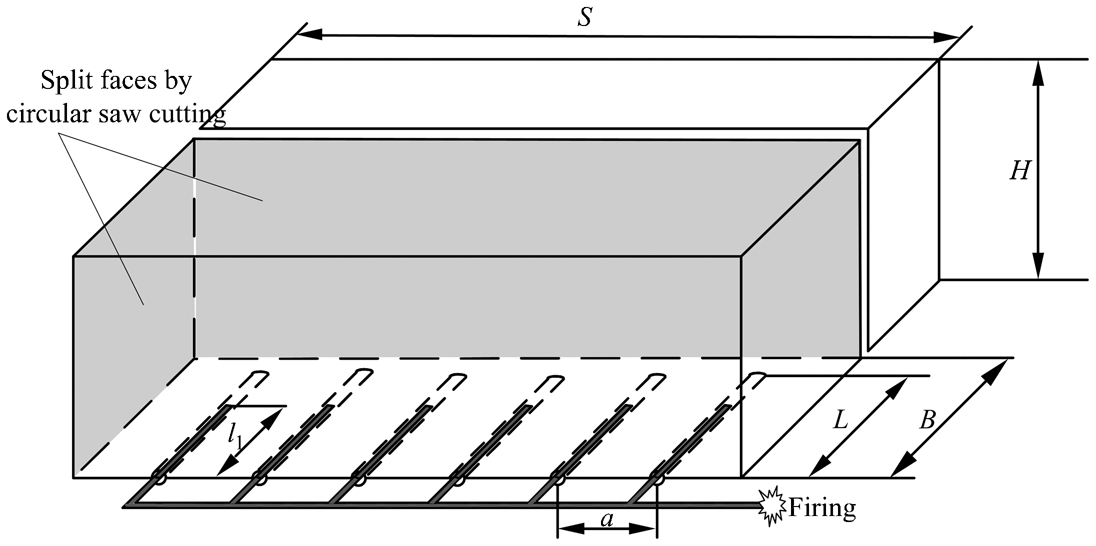
Schematic diagram for water-coupling cutting blasting (the variables in the figure were specified in Table 1)
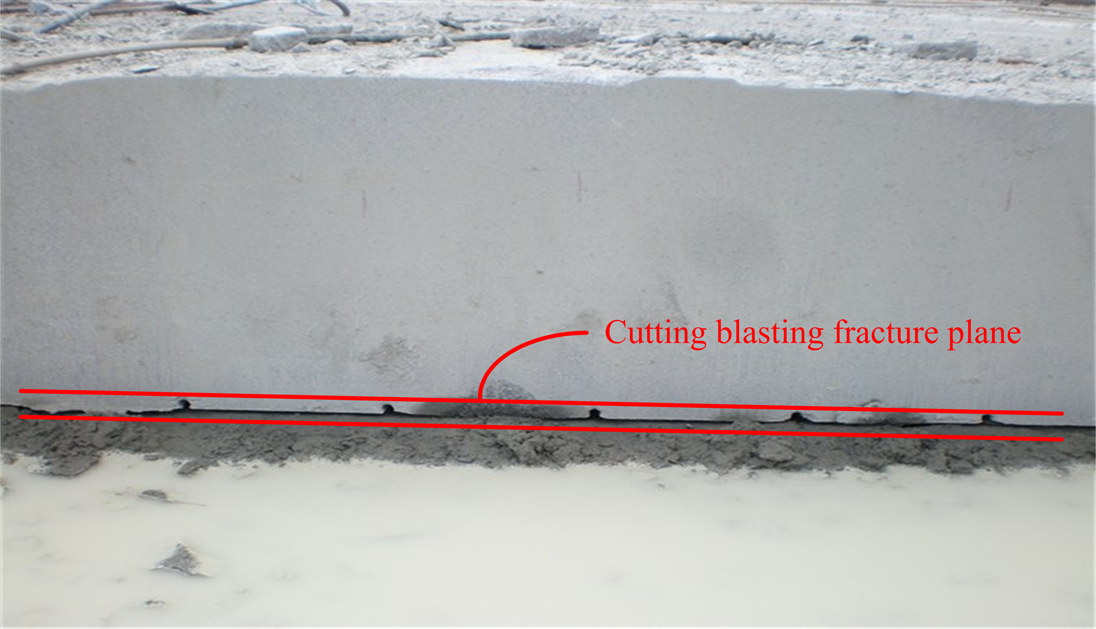
Granite block separated from the original rock mass
Practical parameters for cutting blasting coupled by water
Material models
The numerical calculation involved three materials: detonating cord, water, and granite. The detonating cord can be described via the Jones–Wilkins–Lee (JWL) equation combined with an internal model (MAT_HIGH_EXPLOSIVE_BURN) in LS-DYNA (Zhu et al., 2008). The water medium is defined by the Gruneisen equation of state (Zhang et al., 2012). The input parameters for detonating cord and water are listed in Tables 2 and 3.
Properties of detonating cord used as input
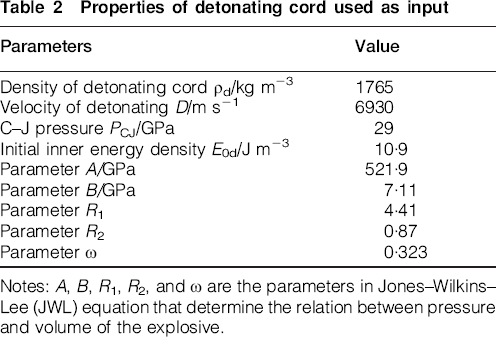
Notes: A, B, R1, R2, and ω are the parameters in Jones–Wilkins–Lee (JWL) equation that determine the relation between pressure and volume of the explosive.
Water properties used as input
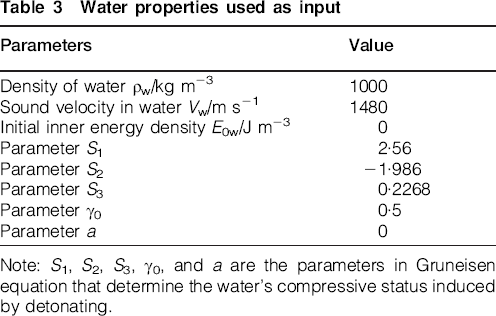
Note: S1, S2, S3, γ0, and a are the parameters in Gruneisen equation that determine the water's compressive status induced by detonating.
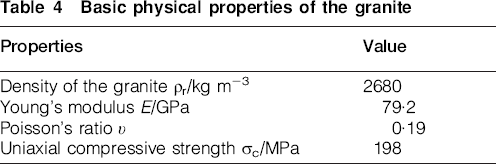
As for the granite, many material models have been developed in recent years to describe the dynamic damage and fracture evolution in LS-DYNA (LSTC, 2007). The CSCM well illustrated in Schwer and Murray (2002) and Murray (2004, 2007) has been widely used to simulate the mechanical behaviour of brittle materials. Tao et al. (2012, 2013) incorporated the CSCM into the LS-DYNA program to investigate the unloading process under axial initial stress and three-dimensional initial stress state, showing that the material model could well represent the behaviour of brittle rock during the dynamic unloading. In this research, the CSCM was employed to model the granite under blast loading. The basic properties of the granite are listed in Table 4. The validation of CSCM in the following section was conducted by simulating the dynamic performance of detonating cord blasting with water in a three-dimensional single blasthole model.
Basic physical properties of the granite
Validation of material models
To validate the use of CSCM for simulating the dynamic characteristics in water-coupling cutting blasting, field testing on blasting vibration was conducted to compare the results of numerical simulation. The vertical vibration velocity was recorded when only one water-filled blasthole was initiated. A numerical model with non-reflection boundaries to describe the infinite rock mass was established in LS-DYNA (Fig. 5). The vertical velocity history curve of the node, which was located in the place where vibration velocity was measured, was obtained by simulation. The measured vibration velocity was compared with the simulated vibration velocity, as shown in Fig. 6. There are only slight differences in the vibration pattern and amplitude values, indicating that the material modelling is suitable for simulating the dynamic characteristics due to water-coupling cutting blasting.
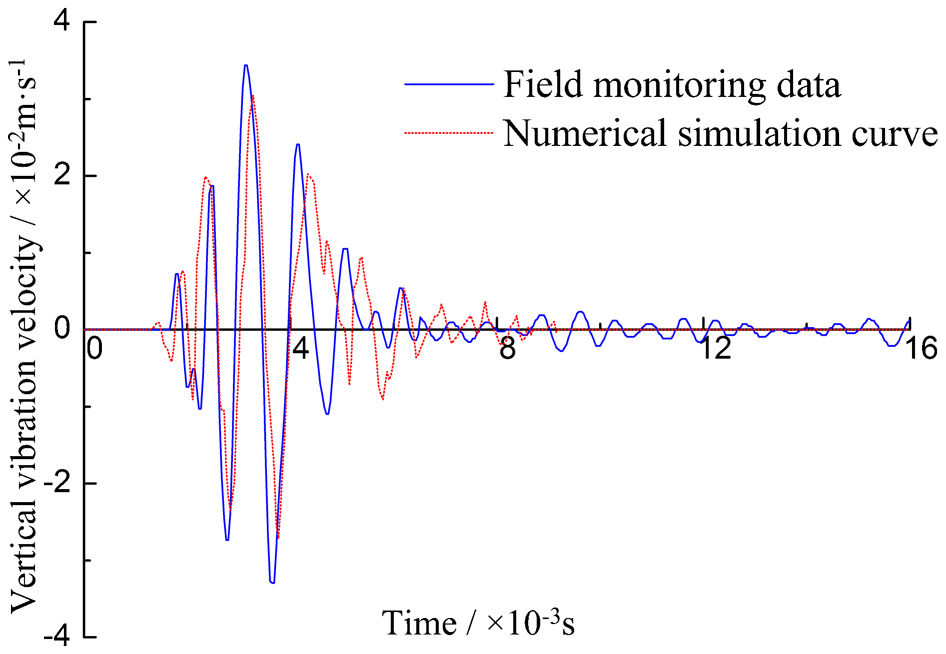
Comparison of the simulated velocity history curve with field monitoring data
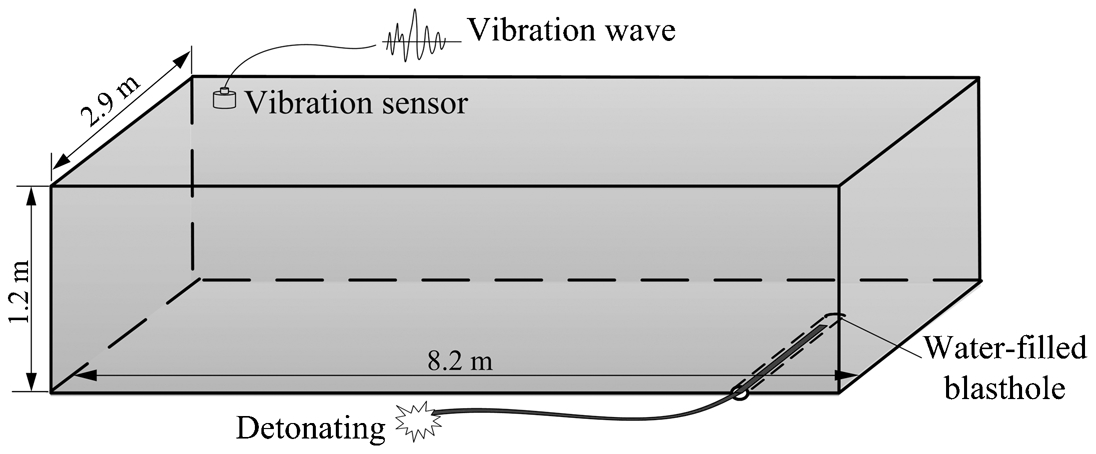
Schematic diagram of vibration testing and validation modelling. (The distance of the sensor to the blasthole is 8·29 m; the charge is 25·2 g)
Numerical simulations and results
The material properties validated in the last section were used for further investigation of the cutting blasting process of granite. First, the coalescence of fractures was verified by a three-dimensional model, and then the optimum coupling ratio and blasthole spacing for granite in water-coupling cutting blasting were obtained by a single layer mesh model.
Numerical solution method and computation models
Many solution methods in LS-DYNA can be adopted to simulate the blasting process. The Arbitrary Lagrangian–Eulerian (ALE) algorithm is widely used for fluid–structure interaction problems (Souli et al., 2004; Hallquist, 2006; Barras et al., 2012). The ALE methods introduce the finite element mesh as a third domain named ALE domain with its own velocity field (Hughes et al., 1981), which means the mesh is independent from the material flow and will not distort when it is subjected to the blast loading, ensuring a better calculated accuracy to a large extent. For the study, the ALE algorithm was implemented in LS-DYNA to model the fracture extension and damage evolution process of rock by initiating detonating cord. The detonating cord and the water were meshed in ALE elements, while the granite was meshed in Lagrangian elements.
Two numerical models were established in LS-DYNA, as shown in Figs. 7 and 8. To observe the stress distribution and damage evolution process along the axial direction, a three-dimensional model was built with a size of 2·9 m×1·2 m×0·55 m, and the detonating cord and the water models were simplified as 1/4 of the real size to reduce the computation time (Fig. 7). Because the mechanical characteristics in every cross-section at each depth are the same, the problem can be considered as a plane strain problem (Uenishi et al., 2010) with non-reflecting boundaries at the left and right sides, symmetric boundary at the bottom and free boundary at the top. Thus, a single layer mesh plane model with two adjacent blastholes was modelled in LS-DYNA with a size of 1·6 m×1·6 m×0·001 m, as shown in Fig. 8.
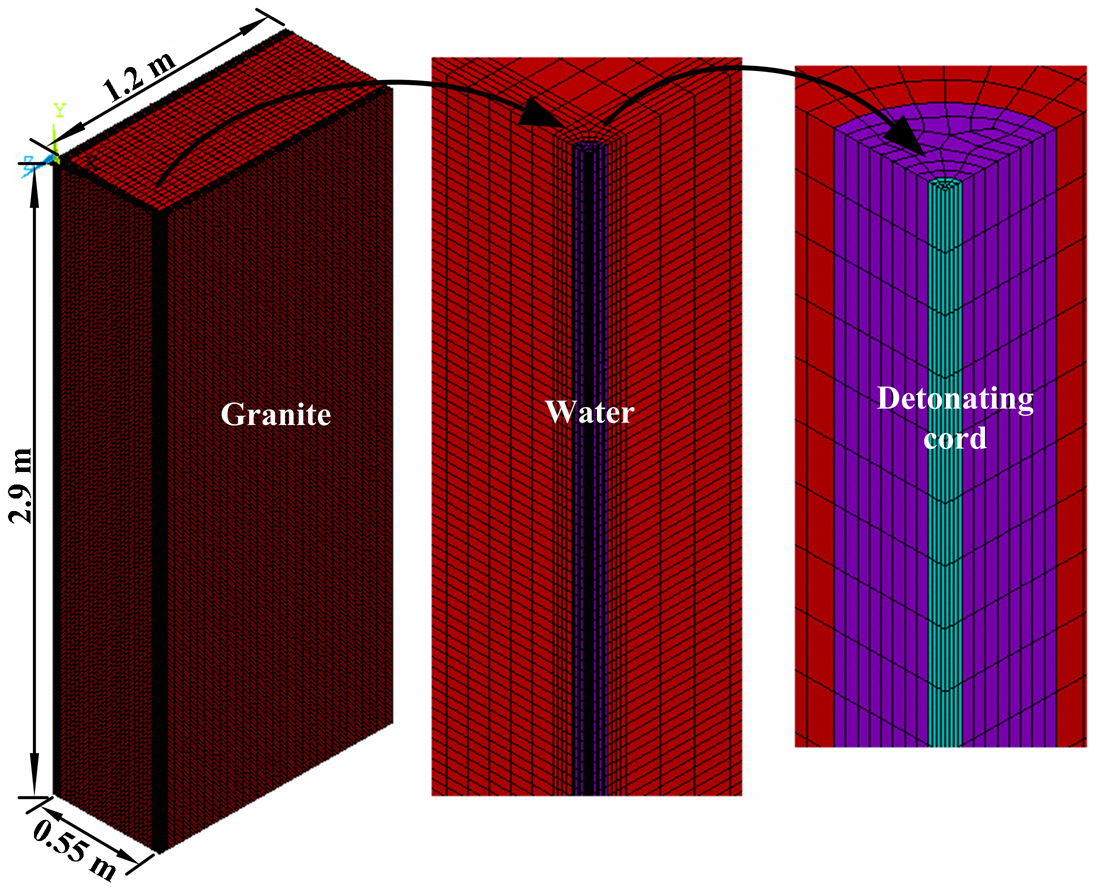
Mesh of the three-dimensional model
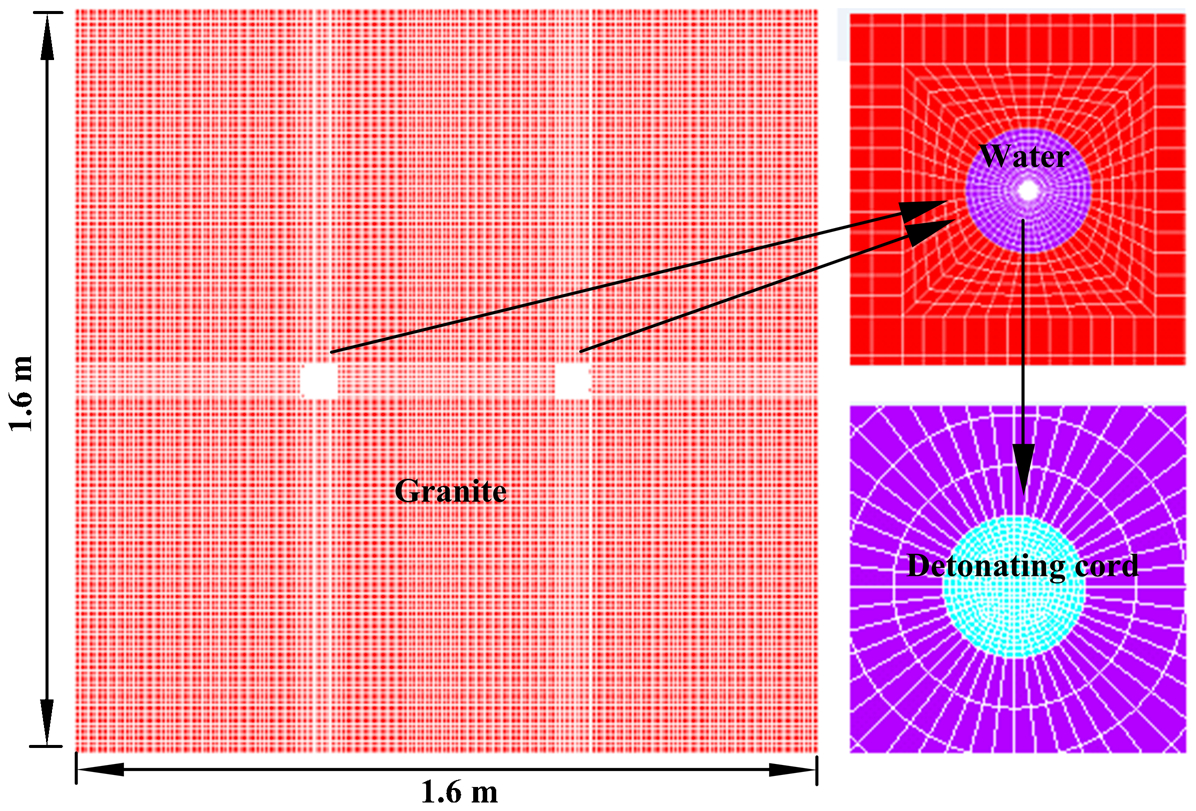
Mesh of the single layer plane model
Maximum principal stress distribution and damage evolution process
Figure 9 shows the maximum principal stress distribution at six different times. The blasting wave propagates from the mouth to the bottom of the blastholes once the detonating cords are initiated. At 130 μs, the stress waves produced by the two adjacent blastholes start to superpose, resulting in a tensile stress concentration in the middle area between the holes. The stress concentration area moves deeper as the blasting waves propagate deeper, which gives priority to the growth of cracks in the centreline direction, while restraining the growth of other cracks. It is worth noting that the detonating cord is not fully charged to the bottom of the blasthole, whereas the stress waves still superpose in the bottom areas of the blastholes and give rise to cracks between the blastholes.
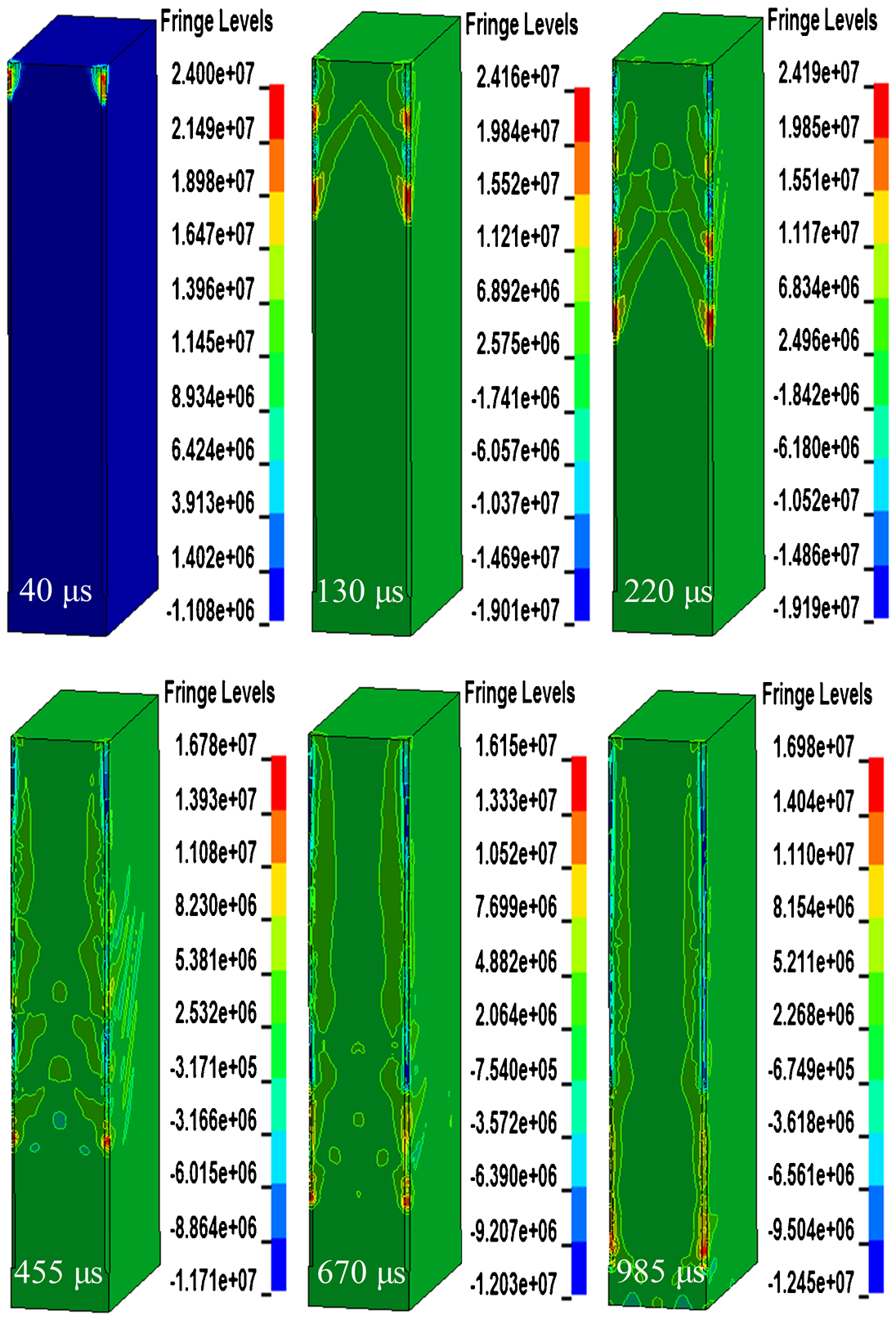
Calculated maximum principal stress distribution
The CSCM has an option for scalar damage manifestation to demonstrate characteristics of damage for granite under explosive loadings. The damage accumulation d is based on two distinct formulations, namely, brittle damage and ductile damage. An element loses whole strength and stiffness as d reaches 1·0, while d between 0 and 0·99 represents damage severity. Figure 10 shows the damage evolution along the axial direction after the initiation of detonating cord. The damage zone is aggravated between the blastholes because of the superposition of stress waves, and goes deeper as the detonating cord detonation propagates deeper. At 300 μs, the damage value around the blasthole orifices reaches 0·99, indicating that a coalescent crack is induced along the centreline of the blastholes. As the damage zone develops towards the interior of the rock mass, coalescent cracks are driven to keep growing under the combined effect of water-wedge pressure and stress wave, finally forming a fracture cutting plane between the holes. A small elastic undamaged zone remains between the two blastholes after 1200 μs, but that would not be a problem for a forklift to remove the block because the main fracture plane has been developed. This in turn is beneficial for reducing the blast-induced damage zone both in extracted blocks and remaining rock mass.
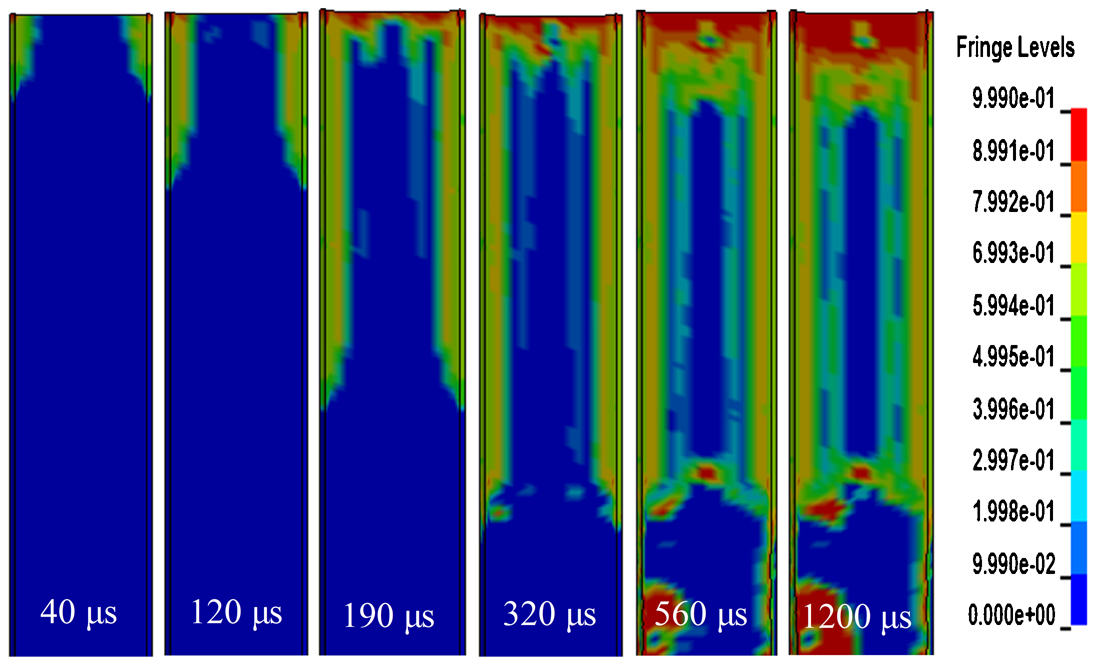
The simulated damage evolution
Comparisons between theoretical and numerical calculated pressure for initiating cracks
It has been stated in section “Mechanism of the water-coupling cutting blasting” that cracks will grow when KI is greater than KID. The quasi-static water pressure decreases with the expansion of the blastholes, thus the crack stops growing once the quasi-static pressure is less than a critical pressure for initiating cracks. From fracture mechanics theory, the critical pressure for initiating cracks is written as (Chen, 1991)
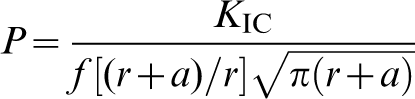
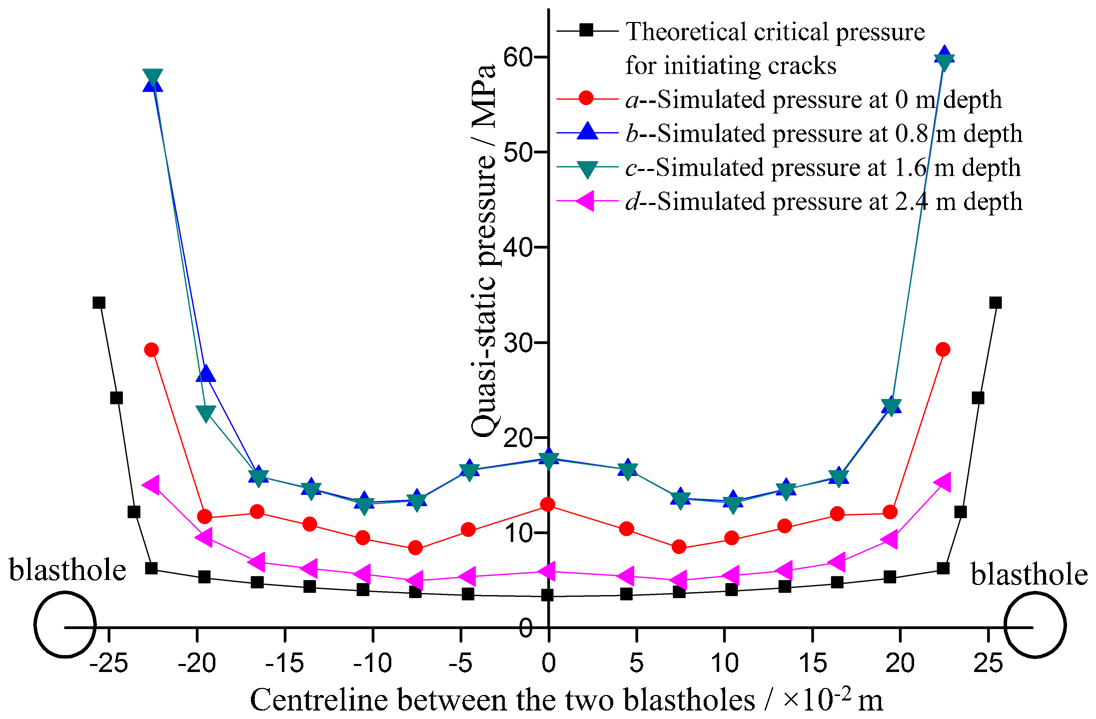
For dynamic fracture problems, the KIC in equation (1) is replaced by KID, where KID is the dynamic fracture toughness, with KID≈1·7KIC. The basic physical properties of the granite presented in this study are close to those of the Barre granite in Iqbal and Mohanty (2007). The KIC of the granite is chosen as 1·8 MPa m1/2 similar to the Barre granite fracture toughness. Therefore, the critical initiation pressure along the blasthole centreline can be calculated from equation (1) and is shown in Fig. 12.
To ensure that the water-coupling cutting blasting with a spacing of 0·55 m is capable of forming a cutting fracture plane, the numerically calculated pressure for initiating cracks was compared with the theoretical critical pressure. The simulated quasi-static pressure of elements in centrelines at depths of 0, 0·8, 1·6 and 2·4 m (Fig. 11) was recorded, with the results summarised in Fig. 12. Figure 12 clearly illustrates that the calculated quasi-static water pressure at each centreline exceeds the theoretical critical initiating pressure, indicating that the cracks are continuously driven forward till coalescing in the middle of the blastholes.
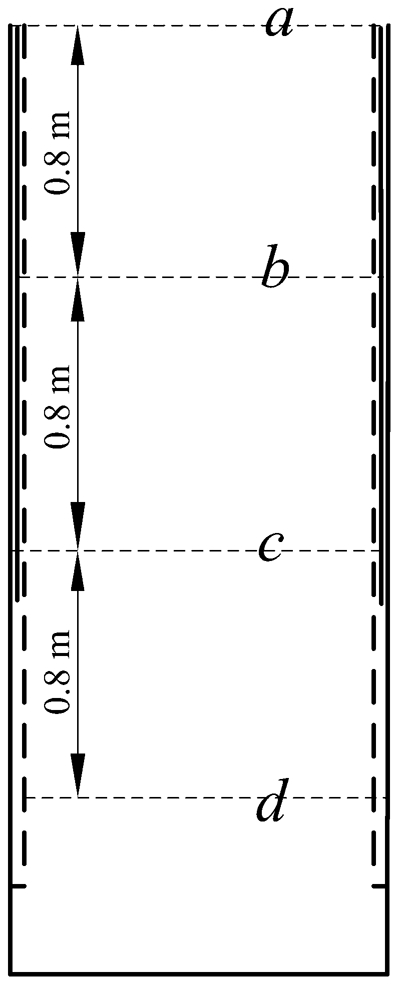
Schematic diagram of the centrelines at various depths
Comparisons of the theoretical and simulated pressure for crack growth
Parametric study on water-coupling cutting blasting effect
The above three sections illustrate how the fracture plane formed by water-coupling cutting blasting, but did not involve other aspects of the blasting performance, such as the undesired cracks and the smoothness of the new surface, which are of most concern for the extraction of granite. In this section, the factors that influence the cutting blasting performance are studied by the simulation of the single layer mesh model (Fig. 8) in LS-DYNA.
Generally, water-coupling cutting blasting is conducted with a decoupled charge configuration and small blasthole spacing to achieve a pre-determined fracture plane, so the coupling ratio and spacing are two significant factors that affect cutting blasting performance. Theoretically, on the one hand, greater coupling ratio will lead to a greater initial pressure on the blasthole wall, inducing a larger crushed zone and damage zone which is unwanted. On the other hand, the effect of blasthole spacing on blast performance is mainly determined by the quasi-static water pressure in the crackfront. As larger spacing will result in a smaller quasi-static pressure, which may no longer meet the crack initiation condition, the cracks cannot coalesce to form a new fracture plane. Therefore, to study the effect of coupling ratio and spacing on the performance of water-coupling cutting blasting, several groups of parameters were selected and calculated in the single layer mesh model.
The relationship between the cutting blasting effect and coupling ratio
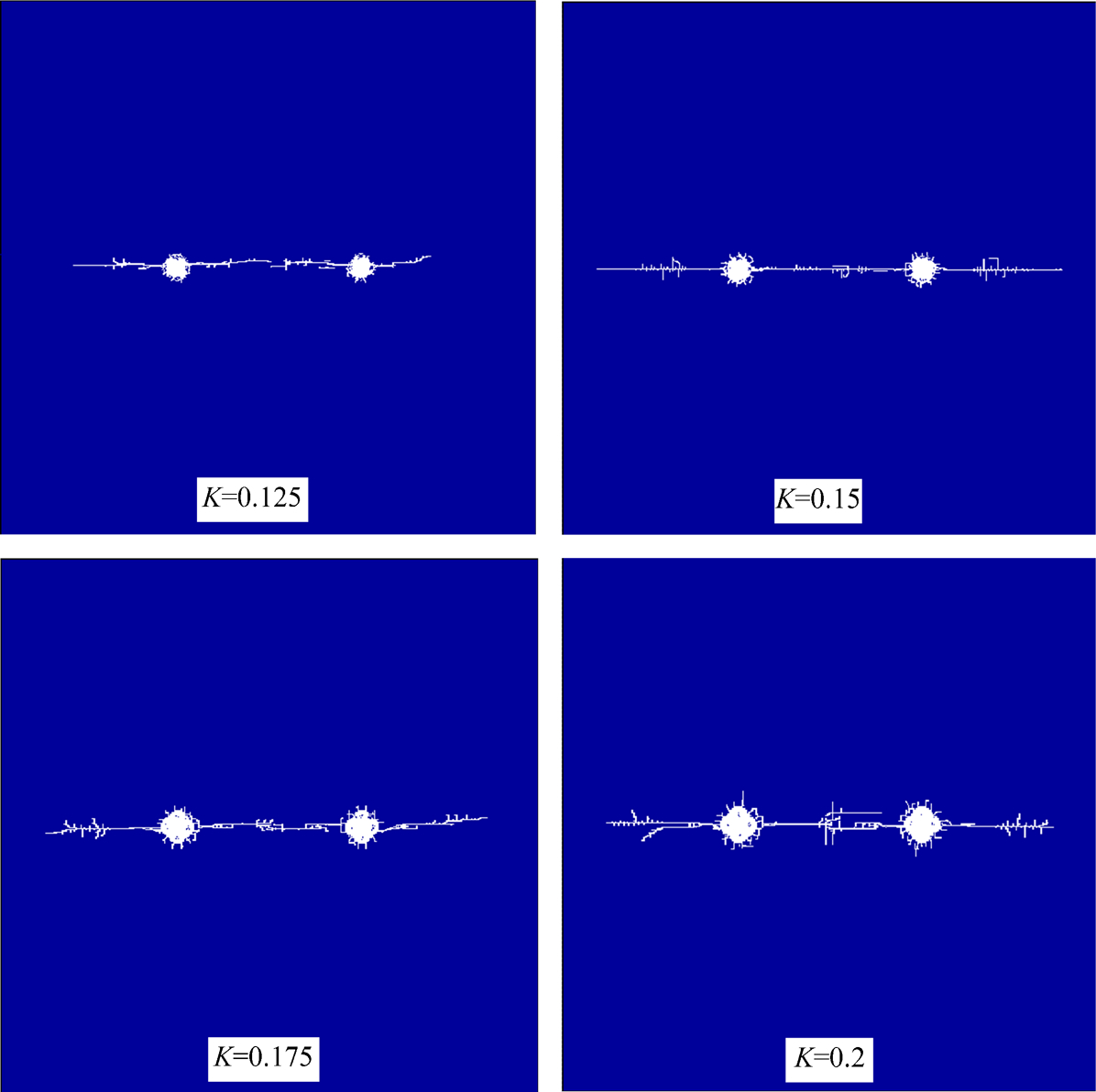
In the blasting practice of the granite quarry, the coupling ratio is 0·15. (The radius of the detonating cord is 3 mm whereas the radius of the blasthole is 20 mm.) To study the relationship between the cutting blasting effect and coupling ratio, four different coupling ratios were chosen by varying the radius of detonating cord from 2·5, 3·0, 3·5 to 4·0 mm. Therefore, four cases, with coupling ratios of 0·125, 0·15, 0·175 and 0·2 were calculated, while the blasthole spacing was the same 0·55 m.
Figure 13 shows the simulation results, which illustrate that the blast-induced cracks of each hole extend and coalesce along the centreline of the blastholes for the four cases. The differences among the four cases lie in the smoothness of the cut fracture plane and the distribution of undesired cracks. As the coupling ratio increases from 0·125 to 0·2, the cracks in undesired directions around the blasthole grow and become longer, and the fracture plane becomes rougher with more bifurcated cracks. This is because a greater coupling ratio means more explosive charged in the blasthole, resulting in an intense pressure on the blasthole walls, so more cracks initiate and extend along undesired directions. From the four simulated cutting performances, it is concluded that the coupling ratio of 0·15 for water-coupling cutting blasting is better than the other three cases.
Simulated results of cutting blasting with various coupling ratios (K is the coupling ratio)
The relationship between the cutting blasting effect and blasthole spacing
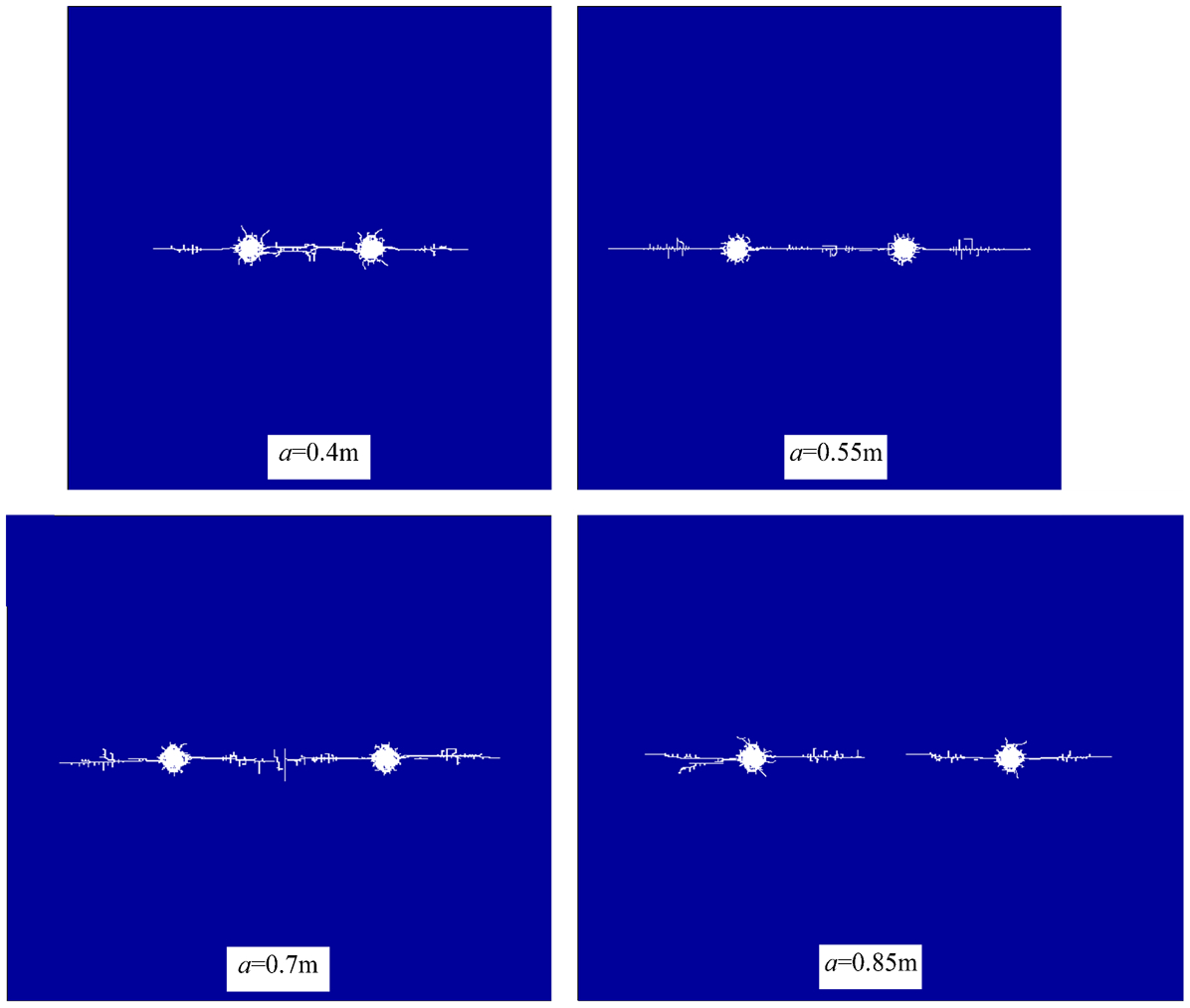
To investigate how the blasthole spacing affects cutting blasting performance, four cases with spacings of 0·4, 0·55, 0·7 and 0·85 m were calculated, while the coupling ratio was the same 0·15. Figure 13 shows the simulation results of cutting blasting with various blasthole spacings.
Figure 14 illustrates that the blast-induced cracks coalesce between the two blastholes when the spacing is 0·4, 0·55 and 0·7 m, respectively, while the cracks cannot coalesce when the spacing reaches 0·85 m. As the spacing increases from 0·4 to 0·85 m, there are more undesired radial cracks around the blastholes and more bifurcated cracks along the main fracture plane. When the blasthole spacing reaches a critical value, the quasi-static water pressure in crackfront no longer meets the crack initiation prerequisite, and the cracks will not coalesce to form a fracture plane. From the simulated results, it is obvious that the spacing of 0·55 m for water-coupling cutting blasting is much better than the other three cases.
Simulated results of cutting blasting with various blasthole spacings (a is the blasthole spacing)
It can be concluded that the coupling ratio and the blasthole spacing exert a great influence on the performance of water-coupling cutting blasting. When the spacing is 0·55 m and the coupling ratio is 0·15, the fracture plane between the blastholes is the most favoured with least undesired cracks, indicating that the energy utilisation rate is highest with minimal damage both to the separated blocks and to the remaining granite. However, because of the diversity and heterogeneity of rock masses, the proper cutting blasting parameters are expected to be different for different rock materials, and should be adjusted in practice to obtain the best parameters.
Conclusions
The practice of water-coupling cutting blasting, which is applied in a granite quarry, was investigated in depth. The fracture plane formation mechanism of the water-coupling cutting blasting was demonstrated. The blasting performances under different coupling ratios and spacings were studied numerically. The results illustrate that a large coupling ratio with small blasthole spacing lead to a rough fracture plane and more undesired cracks, as well as severer damage both to separated blocks and remaining rock mass. With proper blasting parameters (e.g. a coupling ratio of 0·15 and a blasthole spacing of 0·55 m for granite extraction in the study), the water-coupling cutting blasting technique can achieve an expected cutting face for granite extraction. As the detonating cord and the water can be easily filled in the blastholes, the blasting preparation is straightforward and convenient and also saves cost. The water-coupling cutting blasting in the granite quarry can be a good guiding reference for other similar engineering.
Footnotes
Acknowledgement
The research in this paper was supported by the National Basic Research Program of China (2010CB732004) and the National Natural Science Foundation of China (41272304). The authors would like to express their sincerest gratitude to the editors and reviewers for their valuable comments and suggestions on the improvement of this paper.