






Abstract
Cerium–zirconium mixed oxide mesoporous materials were synthesised by using block polymer Pluronic P123 as soft template under the hydrothermal conditions. To enhance the interfacial interaction of cerium–zirconium mixed oxide mesoporous materials in filled polymer composites, an organic grafting method was applied to modify mesoporous materials by treating with oleic acid or silane coupling agent and grafting polymethylmethacrylate (PMMA) onto the mesoporous particles. The structural and surface properties of CeO2–ZrO2 mesoporous particles before and after organic modification were characterised by different methods. The results showed that the desired polymer chains were covalently bonded to the surface of CeO2–ZrO2 mesoporous particles to increase lipophilic degree and reduce the aggregation of these particles. It was also found that the heat decomposition temperature of PMMA grafted CeO2–ZrO2 was higher than that of pure PMMA, which demonstrated that the CeO2–ZrO2 mesoporous materials were potential superior performance filler into thermoplastic polymers to improve polymer properties.
Keywords
Introduction
Polymer composites are increasingly important due to their extraordinary properties. The common technique for preparing polymer composite is to add micron- or nanosized inorganic particles into the polymer, in which the polymer is matrix and inorganic particles are fillers in the dispersive phase. The application of these inorganic particles in recent years, as we know, are mainly focused on solid particles without any porous structure inside, such as nanocalcium carbonate, zinc oxide, alumina oxide, titanium dioxide, etc.1–3 During the process of manufacturing the polymer composite, organic modification for solid inorganic particles is a necessity to improve the dispersibility of these particles in the polymer matrix because the cohesive forces of the interface between the fillers and matrix are of considerable importance for the material performance. 4 , 5 Generally, there are two ways to modify the surface of inorganic particles: one is performed through surface absorption or reaction with surfactant and coupling agents; the other is based on grafting the polymer chain onto the surface of particles by covalently bonding to the hydroxyl groups existing on the particles. As for these solid inorganic particles, the results of these organic modifications are frequently unsatisfactory because the treatment is inefficient and the binding power of the inorganic–organic interface is not strong enough if the surfactant, coupling agents or polymer are grafted ‘just on the solid inorganic particles surface’. The ‘aggregation’ of these particles may still exist in the polymer composites and influence their appearance and properties. 6 , 7
With regard to these disadvantages, utilisation of mesoporous inorganic particles as fillers could be an optimum alternative to make the most of the technique based on dispersive mixing. It can be expected that the modification mechanisms for these new fillers involved in the polymer composites would be different from conventional ones because the mesoporous fillers possess three-dimensional porous structure, high surface areas, regular frameworks and narrow pore size distributions.8 The mesoporous structure of particles makes organic chains more easily to graft the particles surface or enter the pore inside. It is beneficial to filler/matrix miscibility and enhancing filler/matrix adhesion by chain entanglement or chemical bonding between the inorganic mesoporous particles and the polymer matrix. Thus, the inorganic–organic interpenetrating networks could be formed reliably. Furthermore, polymer grafted mesoporous inorganic particles can develop new effective and versatile approaches for a variety of reactions because of mesoporous particles’ unique structure and property.9–11
Mesoporous materials with high surface area are used as dielectric materials, elastomeric materials (such as tires), sensors, filters for industrial pollutants, adsorbents, drug delivery systems, oil spill clean-up, and heterogeneous catalysts in various chemical reactions. Since the first report on the M41S family of silica based mesoporous materials in 1992, mesoporous inorganic materials have developed rapidly from silica to metal oxides, such as Al2O3, TiO2, MgO and ZrO2.12–16 Among them, MgO is well known with its strong basicity, Al2O3 is showing interesting optical properties, ZrO2 is characterised with bifunctional basic and acidic properties, and CeO2 is intensively studied because of its high oxygen lattice mobility. Recently, cerium–zirconium mixed oxide mesoporous materials have earned much attention because of their applications in various fields, with high temperature and acid–alkali resistance, low thermal conductivity, good toughness and stiffness. Several methods have recently been described for the preparation including evaporation induced self-assembly, assembly of nanoparticles, hard template method and direct hydrothermal synthesis. 17 , 18 Most of these approaches, however, are complicated and have limitations, which are not suitable for applications on a large scale.
In this work, the cerium–zirconium mixed oxide mesoporous materials are synthesised via a facile process templated with a non-ionic triblock copolymer pluronic P123 under the hydrothermal condition.19 The process features mild conditions, and facile operation is easy to implement due to its simple equipment, low cost, high grade and adaptation to extensive use. It overcomes the difficulties such as long processing time, impurities, large material waste and the use of high cost or hazardous chemicals in the traditional preparing process of mesoporous materials. The products are firstly treated by oleic acid or coupling agent γ-methacyloxypropyl trimethoxy silane (KH570), followed by radical grafting polymerisation in non-aqueous system to graft polymethylmethacrylate (PMMA) chains onto the surface of CeO2–ZrO2 mesoporous particles. The structural and surface properties of CeO2–ZrO2 mesoporous particles before and after organic modification are analysed using various characterisation techniques. The main issue of the present investigation is to obtain how much improvement of physical and chemical properties can be expected through organic modification of cerium–zirconium mixed oxide mesoporous materials.
Experimental
Materials
The starting materials were Ce(NO3)3.6H2O and ZrOCl2.8H2O as cerium and zirconium precursors. Pluronic P123 block copolymer and carbamide were used as surfactant template and precipitation agent respectively. Silane coupling agent (γ-methacyloxypropyl trimethoxy silane, KH570), methyl methacrylate (MMA) monomer (at a purity of 99·9%), azobisisobutyronitrile (AIBN), toluene and oleic acid were chemical grade. All the materials mentioned above were employed directly except that the AIBN was recrystallised with ethanol, and the MMA monomer were purified by distillation under reduced pressure. Acetone, ethanol and polyethylene glycol (PEG) were analytic grade.
Preparation of CeO2–ZrO2 mesoporous materials
Solution A was prepared by dissolving Pluronic P123 block copolymer (2 g) in 50 mL deionised water and adding carbamide (2·4 g) under rapid stirring. Solution B was gotten by dissolving Ce(NO3)3.6H2O (4·34 g) and ZrOCl2.8H2O (2·15 g) in 10 mL deionised water. The mixed solution was obtained by adding solution B to solution A at room temperature.
The mixed solution was treated by hydrothermal synthesis at 80°C for 2 days, 120°C for other 5 h, then was cooled to room temperature, filtered and washed, with deionised water and subsequent ethanol for an effective removal of the surfactant. The final product was calcined at 400°C for 8 h and the cerium–zirconium mixed oxide mesoporous materials were obtained.
Organic modification of CeO2–ZrO2 mesoporous materials
The cerium–zirconium mixed oxide mesoporous materials modified by 10 wt-% (weight ratio of mesoporous materials) oleic acid or 10 wt-% coupling agents KH570 were dispersed in ethanol/water mixed solutions (volume ratio of ethanol/water = 1∶1) under sonication for 1 h. The pH of the mixture was adjusted to 3–5 by acetate solution, and the solution was kept stirring at 60°C for 5 h, then was cooled to room temperature, filtered and washed by ethanol. The treated mesoporous particles were dried under vacuum for 12 h. The grafting polymerisation was performed by the reaction of KH570 treated CeO2–ZrO2 with MMA monomer. The procedure was as follows: 1·2 g KH570 treated CeO2—ZrO2, 4 mL toluene, 3 mL MMA and 130 mg AIBN were put in a flask under stirring and N2 protection at 80°C for 4 h, the suspensions were then centrifuged and washed with acetone for three times. Afterwards, the obtained particles were dried under vacuum for 24 h. The PMMA grafted CeO2–ZrO2 and homopolymer were separated by acetone in a Soxhlet extractor.
Preparation of organic modified CeO2–ZrO2 suspensions
The CeO2–ZrO2 mesoporous particles suspensions were prepared by followed methods:
5 wt-% (weight ratio of acetone solutions) bare CeO2–ZrO2 mesoporous particles and 5 wt-%CeO2–ZrO2 mesoporous particles modified by oleic acid or KH570 were dispersed in acetone under sonication for 1 h respectively
5 wt-% PMMA grafted CeO2–ZrO2 (grafting degree was 10%) were dispersed in acetone and the mixture was ball milled for 1 h
5 wt-% PMMA grafted CeO2–ZrO2 (grafting degree was 10%) were dispersed in acetone/polyethylene glycol (volume ratio of acetone/polyethylene glycol = 99∶1) mixed solutions and the mixture was ball milled for 1 h.
Characterisation
The XRD patterns were recorded on an XRD system (D/Max-IIIA) using a Cu K α monochromatised radiation source and a Ni filter in the range of 2θ = 1–10° and 2θ = 10–80°. The surface areas (BET) were determined by nitrogen adsorption at −196°C using an automated gas adsorption analyser (The Tristar 3020 Micromeritics). The pore size distribution was calculated from the desorption branch of the isotherm by the Barrett, Joyner and Halenda (BJH) method. Infrared spectra were recorded on a Bruker Fourier transform infrared (FTIR) spectrophotometer using KBr pellets containing 1 wt-% sample in KBr. Thermogravimetric (TG) and differential thermal analysis were carried out in a Netzsch STA 449C system in a static air atmosphere at a heating rate of 10°C min−1. The contact angle of materials was measured by OCA 40 Micro. Transmission electron microscopy (TEM) images were obtained on a JEOL JEM-100II microscope, operating at 200 kV.
The dispersibility of organic modified CeO2–ZrO2 particles was characterised by the time dependence of sedimentation height of the particles in acetone. The preparation of organic modified CeO2–ZrO2 suspensions was mentioned in the part of the section on ‘Preparation of organic modified CeO2–ZrO2 suspensions’. After preparation, the resultant suspensions were poured into a test tube with a scale and a cover. The initial total height of suspension H was recorded, and the sedimentation height h of the particles was then measured every day. The averaged sedimentation rate R of particles can be calculated by the following expression: R = h/t, where t denoted the sedimentation time.
Results and discussion
Mechanism of cerium–zirconium mixed oxide mesoporous materials
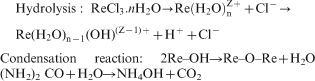
The mechanism of cerium–zirconium mixed oxide mesoporous materials is shown in Fig. 1. According the principle of self-assembly, block polymer P123 can form definite shape micelle aggregations in the water solution as templates. The template orientation is achieved by the combination of hydrogen bond, electrostatic force and micelle formation. The rare earth chloride undergoes hydrolysis in the water solution; the carbamide can promote the rare earth chloride hydrolysis reaction drastically and initiate condensation reaction at 80°C during the sol–gel process. The CeO2–ZrO2 mesoporous materials can be obtained after removing the P123 surfactant templates at 400°C
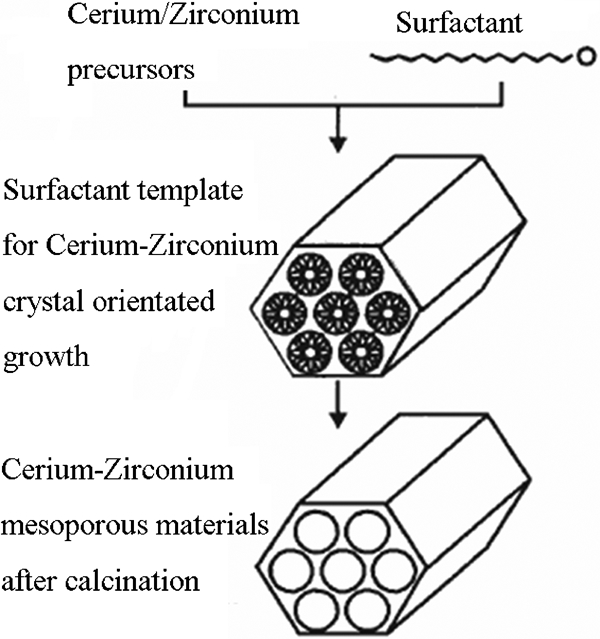
Synthetic mechanism of CeO2–ZrO2 mesoporous materials
XRD patterns of CeO2–ZrO2 mesoporous materials
The use of non-ionic block copolymer P123 is believed to be responsible for the crystallisation of CeO2–ZrO2 mesoporous framework. It is observed from Fig. 2a that the CeO2–ZrO2 crystal structure are formed basically and the P123 is not removed completely because the treatment temperature is relatively low (120°C). Figure 2b shows the peaks related to the surfactant are disappeared and the diffraction peaks are ascribed to the cubic fluorite phase of Ce0·6Zr0·4O2, suggesting the formation of ceria–zirconia solid solutions. As a result of calcination at 400°C, Zr4+ is inserted the crystal lattice of Ce4+ and some of Ce4+ are replaced by Zr4+ because the ion radius of Zr4+ is smaller than that of Ce4+. The lattice distortion occurs, the lattice constant decreases and four well diffraction peaks are observed at 28, 33, 47 and 56° respectively, corresponding to the characteristics of (111), (200), (220), (311) planes of cubic cerium structure. The obtained lattice parameters are close to the value reported in the JCPDS database (Ce0·6Zr0·4O2: JCPDS card no. 38-1439).20 No splitting peaks related to pure CeO2 or ZrO2 phase can be observed, which validates the homogeneity and stability of the solid solution phase at high temperature. Based on above experimental facts, it is speculated that the ceria–zirconia solid solution is formed by the agglomeration of the uniform nanocrystals. In Fig. 2c and d, it can be seen the characteristic planes of cubic cerium structure have not changed, which demonstrates that the CeO2–ZrO2 crystal structure maintains after organic modification. The XRD peak width is broadened and the peak intensity becomes weaken, which indicates that the order degree and the pore diameter of mesoporous materials will decrease because organic compound chain may be grafted the wall of internal pore canal. The mesoporous structure of calcined CeO2–ZrO2 particles can be proved by appearing sharp diffraction peak between 1 and 2° from small angle XRD patterns in Fig. 3.
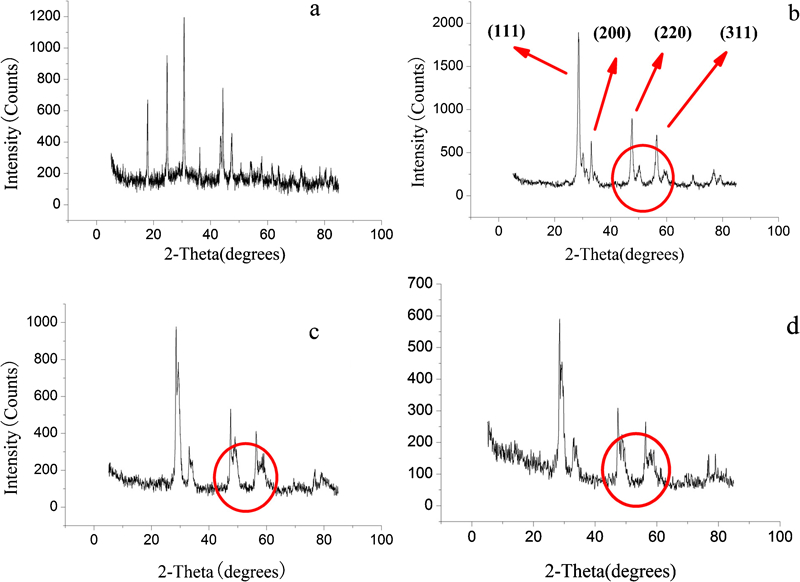
Wide angle XRD patterns of a CeO2–ZrO2 materials before calcination, b CeO2–ZrO2 mesoporous materials after calcination, c CeO2–ZrO2 materials modified by KH570 and d PMMA grafted CeO2–ZrO2 particles
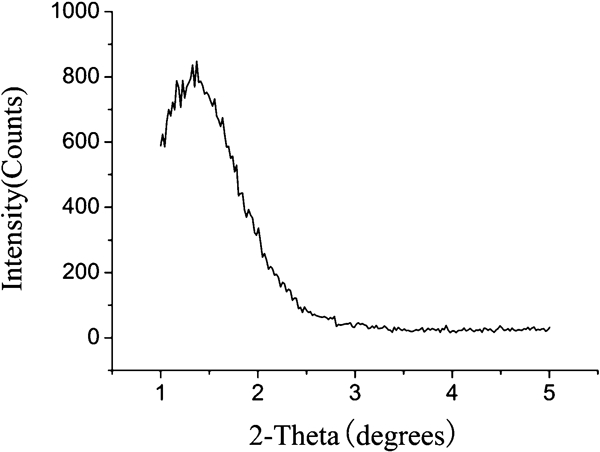
Small angle XRD patterns of CeO2–ZrO2 mesoporous materials
Specific surface analysis of CeO2–ZrO2 mesoporous materials
Figure 4 shows the nitrogen adsorption–desorption isotherms of cerium–zirconium mixed oxide mesoporous materials(Ce/Zr = 6∶4) after samples were calcinated at 400°C for 8 h, which belongs to Langmuir IV type. It illustrates that the adsorbing capacity is increasing gradually with the advance of the relative pressure (p/p0<0·4). On the condition of relative high pressure (0·4<p/p0<1), the adsorbing capacity is increasing rapidly, which reflects the strong force between the adsorbent and adsorbate. The N2 isotherms also reveal a typical type of porous materials adsorption and a H1 hysteresis loop that is representative of mesopore and macropore.21 This type of hysteresis is characteristic of CeO2–ZrO2 mesoporous particles composed of nearly cylindrical channels or made by aggregates (consolidated) or agglomerates (unconsolidated) of spheroidal particles. A narrow peak in the BJH pore size distribution curve is centred at 4–8 nm in Fig. 5, indicative of the uniform size and shape pores inside the particles. The BET surface area and pore volume of cerium–zirconium mixed oxide mesoporous materials are calculated in Table 1.
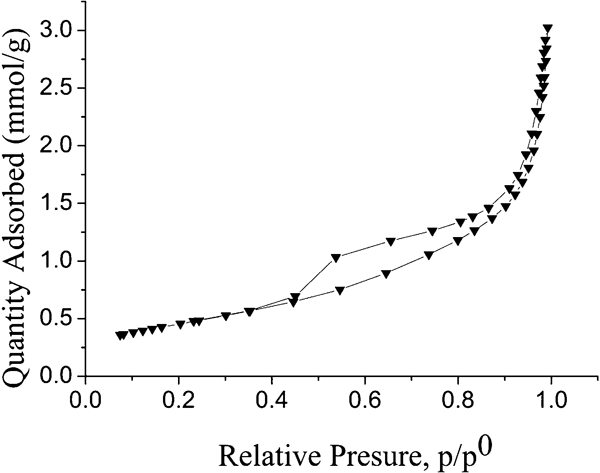
Nitrogen adsorption–desorption isotherms for the CeO2–ZrO2 mesoporous materials after calcination at 400°C
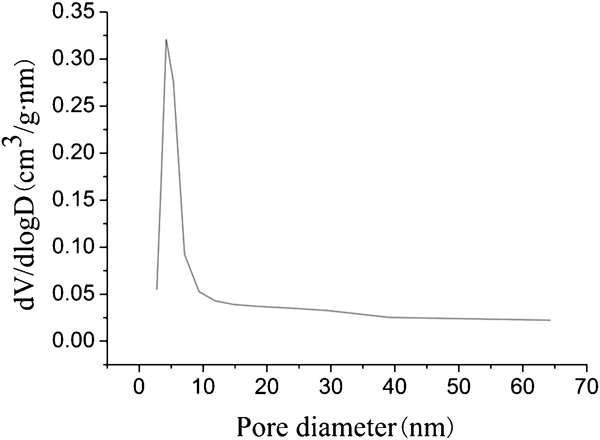
Pore diameter distribution of CeO2–ZrO2 mesoporous particles
Pore structure parameters of samples calculated at 400°C from desorption branch of N2 adsorption–desorption isotherms

FTIR spectra
Figure 6a shows the FTIR absorption spectra of bare CeO2–ZrO2 mesoporous particles. The broad peak between 3350 and 3450 cm−1 are due to the stretching vibrations of the –OH group on the surface of CeO2–ZrO2. Figure 6b shows the FTIR absorption spectra of CeO2–ZrO2 mesoporous particles modified by KH570. The peaks of 1720 and 1420 cm−1 are due to the stretching vibrations of the C = O group and vibrating adsorption of −CH2−. It means the coupling agent KH570 is grafted to the CeO2–ZrO2 mesoporous particles surface. Figure 6c shows the FTIR absorption spectra of PMMA grafted CeO2–ZrO2 after extracting with acetone. The peaks of 3083 and 3025 cm−1 are due to the adsorption of unsaturated double bonds in fatty acid, the peak of 1727 cm−1 is assigned to typical stretching vibrations of the C = O group in ester and the peaks of characteristic peaks at 1150–1250 cm−1 are corresponding to the stretching vibrations of C–O–C in PMMA. All these facts demonstrate that the PMMA polymer chain has been covalently bonded to the surface or pore channels of CeO2–ZrO2 mesoporous particles.
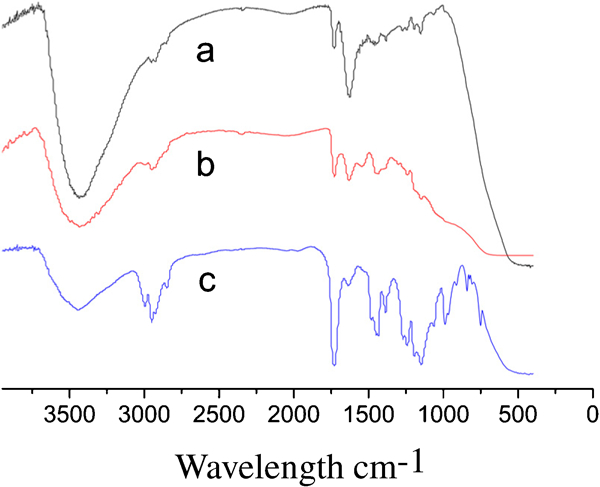
Spectra (FTIR) of different CeO2–ZrO2 samples
Thermal analysis
Thermogravimetric analysis of PMMA grafted CeO2–ZrO2 (grafting degree is 10%) particles is shown in Fig. 7. It is seen from TG curve that there is a weight lose between 273·1 and 367·6°C because of PMMA decomposition. After that, the curve is flat and the weight lose is little, which implies that the remaining materials are inorganic cerium–zirconium mixed oxides. A sharp endothermic peak is appeared on DSC curve at 366°C, which shows the average temperature of thermal decomposition of PMMA grafted CeO2–ZrO2 materials. The flat peak at 870°C on DSC curve is account for decomposition of cerium–zirconium salt mixture residue in the materials. In contrast with the thermal decomposition temperature of pure PMMA (280°C), it illustrates that the PMMA grafted CeO2–ZrO2 materials have much higher thermal stability than the pure PMMA and further verifies a strong interaction between the grafting PMMA and CeO2–ZrO2 particles, which is also in accordance with the characteristic results of FTIR.
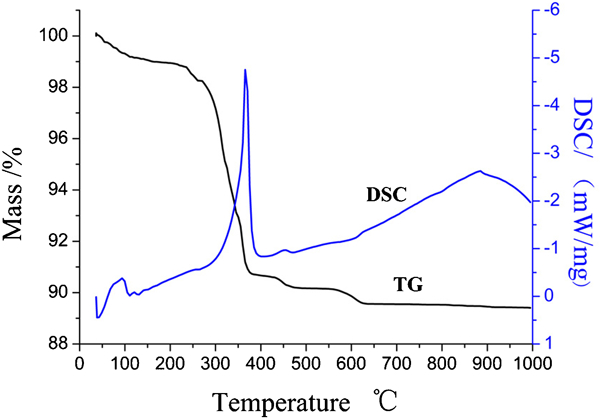
Patterns (TG-DSC) of PMMA grafted CeO2–ZrO2 particles
Lipophilic property analysis
Actually, CeO2–ZrO2 mixed oxide mesoporous particles are difficult to be uniformly dispersed in polymer matrix because of particles bonding energy and shear force during compounding. The lipophilic property or hydrophilic property of inorganic materials can be measured by contact angle after pressing CeO2–ZrO2 mesoporous particles modified by organic compound into tablets and dropping CH2I2 or H2O onto their tablet surface. In Fig. 8, the contact angle of dropping CH2I2 on surface of CeO2–ZrO2 tablet modified by KH570 is 32·6° and the contact angle of dropping CH2I2 on surface of PMMA grafted CeO2–ZrO2 tablet is 40·7°. Meanwhile, the contact angle of dropping H2O on surface of CeO2–ZrO2 tablet modified by KH570 is 86° and the contact angle of dropping H2O on surface of PMMA grafted CeO2–ZrO2 tablet is 113·9°. It demonstrates that CeO2–ZrO2 mesoporous particles modified by silane coupling agent or PMMA grafted CeO2–ZrO2 are lipophilic, which is beneficial to grafting organic chains, enhancing miscibility or adhesion between the CeO2–ZrO2 mesoporous particles and the polymer matrix by chain entanglement and/or chemical bonding.
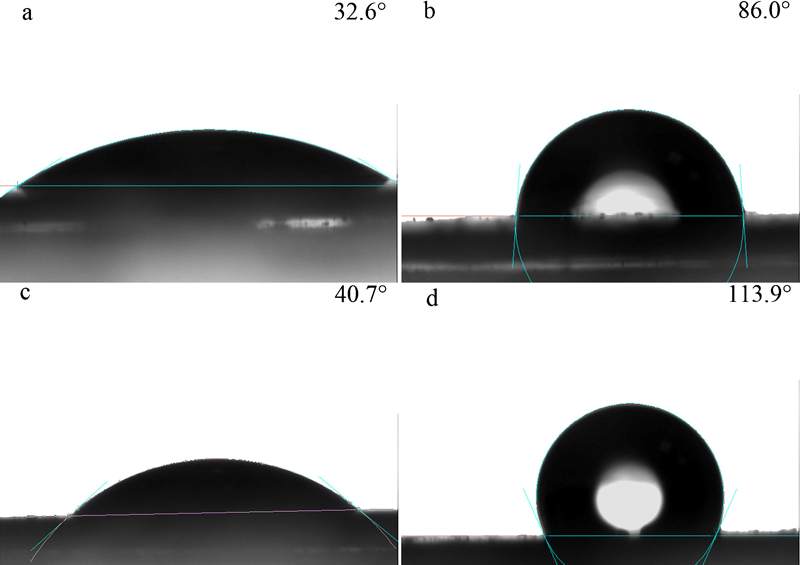
Contact angles of modified CeO2–ZrO2 tablets
Sedimentation test
The CeO2–ZrO2 mesoporous particles modified by KH570 and PMMA grafted CeO2–ZrO2 particles will precipitate in acetone very slowly and float on the surface of water. Bare CeO2–ZrO2 mesoporous particles will precipitate both in acetone and in water. To check the effect of surface modification, the sedimentation behaviour of CeO2–ZrO2 mesoporous particles modified by KH570 and PMMA grafted CeO2–ZrO2 particles in acetone are compared with that of bare CeO2–ZrO2 mesoporous particles (Fig. 9). The sedimentation results show a remarkable difference between them. Bare CeO2–ZrO2 mesoporous particles precipitate at a higher rate, while CeO2–ZrO2 mesoporous particles modified by KH570 and PMMA grafted CeO2–ZrO2 give a stable colloidal dispersion in the acetone. The averaged sedimentation rates R of these particles were 20·67, 5·67, 6·50 mm/day respectively. This indicates that the organic compound and grafting polymer chain have increased the compatibility with organic solvent and reduced the aggregation of CeO2–ZrO2 mesoporous particles. Moreover, the addition of PEG into the suspension of PMMA grafted CeO2–ZrO2 in acetone (3·66 mm/day) can further stabilise the colloid.
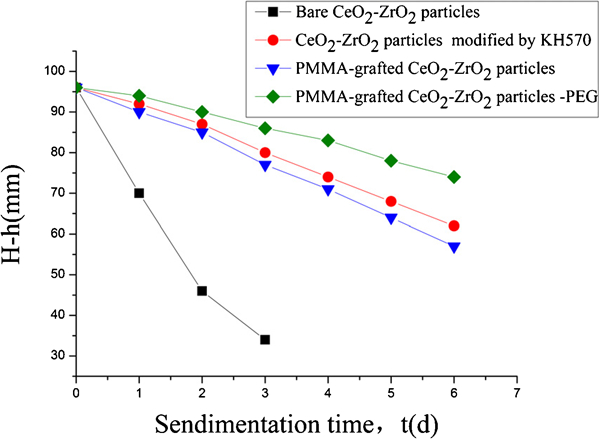
Sedimentation curves of different CeO2–ZrO2 particles
TEM images
TEM images of CeO2–ZrO2 mesoporous particles modified by oleic acid in ethanol and their dispersibility are showed in Fig. 10a and b. It can be found that the hydrophobic chains of oleic acid enter into the pore channel, which further demonstrates that the porous structure of CeO2–ZrO2 have formed. TEM images of the PMMA grafted CeO2–ZrO2 particles in acetone and their dispersibility are displayed in Fig. 10c and d. It illustrates that the PMMA chains are coated on the inorganic particles surface and obscured the pore channel of CeO2–ZrO2 particles. The dispersibility of PMMA grafted CeO2–ZrO2 particles are excellent in acetone, which explicates that the grafting polymer chains have increased the compatibility with organic solvent and reduced the aggregation of CeO2–ZrO2 particles greatly after grafting PMMA.
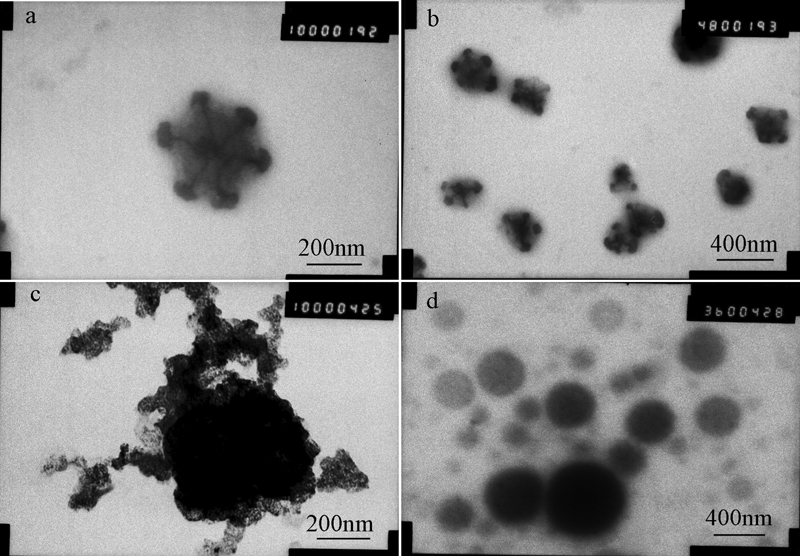
Transmission electron microscopy (TEM) images of a and b: CeO2–ZrO2 mesoporous particles modified by oleic acid in ethanol, and TEM images of c and d: PMMA grafted CeO2–ZrO2 particles in acetone
Conclusions
CeO2–ZrO2 mesoporous materials were successfully synthesised via a facile process by using block polymer Pluronic P123 as soft template. Through XRD, N2 adsorption and TEM studying on as synthesised samples, the authors find that the calcined CeO2–ZrO2 samples possess mesoporous structure, high surface area, large pore volume and uniform pore size. The dispersibility of CeO2–ZrO2 mesoporous particles in organic solvents can be remarkably improved by the addition of some surfactant or silane coupling agent, which introduced the reactive double bonds onto CeO2–ZrO2 mesoporous particles. Grafting polymerisation of PMMA onto the surface of CeO2–ZrO2 particles was achieved by free radical polymerisation after treating CeO2–ZrO2 mesoporous particles by coupling agent. The modification by grafting PMMA on CeO2–ZrO2 mesoporous particles can increase the lipophilic degree of CeO2–ZrO2 mesoporous particles surface and reduce the aggregation of the particles so that the bonding strength between inorganic CeO2–ZrO2 mesoporous particles and polymer matrix is enhanced. It is also found that the heat decomposition temperature of PMMA grafted CeO2–ZrO2 is higher than that of pure PMMA, which implies that the CeO2–ZrO2 mesoporous materials can play the role of potential superior performance fillers into thermoplastic polymers to improve polymer properties. At the same time, structural characteristics of the grafted polymers such as PMMA could be tailored by changing a series of reaction conditions. This may provide possibilities for optimising the structure–property relationships of new polymer composites filled with the modified mesoporous materials in future works.