






Abstract
Cerium(IV) phosphate [CeP(IV)] was synthesised by hydrothermal synthesis and used as a synergistic agent on the flame retardancy of styrene butadiene rubber (SBR)/intumescent flame retardant (IFR) system. The IFR system mainly consisted of ammonium polyphosphate and pentaerythritol. Limiting oxygen index, UL-94 test, thermogravimetric analysis, cone calorimeter, scanning electron microscopy and microscale combustion calorimeter were used to evaluate the synergistic effects of CeP(IV). The addition of CeP(IV) to SBR/IFR composites leads to the improvement in UL-94 values of the SBR/IFR/CeP(IV) composites, and the peak of heat release rate decreases with increasing CeP(IV) content. SEM was used to analyse the morphological structure of the residue chars formed from the SBR/IFR systems with and without CeP(IV). A possible mechanism for catalysing carbonisation was discussed. The experimental results indicated that there existed a synergistic effect between CeP(IV) and IFR for the flame retardancy of SBR.
Introduction
Styrene butadiene rubber (SBR), which is known as a non-polar rubber, is one kind of the most popular general synthetic rubber, which has good mechanical properties and does not easily break down. Particularly, it has better ozone resistance, abrasion resistance and weatherability than natural rubber. Therefore, it is a rubber with comprehensive properties. It is the backbone of the synthetic rubber industry with the largest varieties and has a low price. In most cases, it can replace the natural rubber mainly used in tire industry, automotive parts, rubber hose, rubber shoes, adhesive tape, wire and cable and other rubber products.1 Unfortunately, flammability and low flame resistance limit the applications of SBR, so it was needed to study the flame retardation of SBR. Up to now, there are already various methods to improve the flame retardancy of SBR, as required in many applications. Halogen flame retardant systems are used for this purpose; however, although highly effective, these systems release combustion products containing halogen compounds which have negative characteristics, such as toxicity, corrosiveness, etc. Several halogen free flame retardant additives are commercially available and environment friendly, acting with a number of mechanisms that highly depend on their chemical structures.2 One of the most important ways to improve the flame retardancy of SBR is by applying intumescent flame retardant (IFR). In the recent years, IFR additives have brought great attention in the flame retardation of polymers because they are environmentally friendly, halogen free and also very efficient. These additive systems usually contain three main ingredients: an acid source, a carbon source and a blowing agent. Intumescence is a strategy for the flame retardancy, which involves the formation of a swollen thermally stable char preventing the underlying material on heating from the flame action.3 To improve the flame retardant efficiency of IFRs in polymers, some synergistic agents have been studied. The addition of synergistic agents not only produces more efficient flame retardancy but also makes it possible to reduce the content of the IFR. Lewin and Endo4, 5 proposed that the catalytic effect of the metal ions can promote oxidation and cross-linking reactions in the condensed phase. Rare earth oxides as a solid acid for catalysing organic reactions6–8 have a variety of applications, such as hydrogenation, dehydrogenation, esterification and so on, which means that it may have some positive effects to the flame retardancy of polymers. Recent efforts have been centred on the catalytic activity of rare earth phosphates.9–11 However, little attempt has been made to investigate the effects of cerium(IV) phosphate as a synergist on the flame retardant performance of SBR/IFR systems.
In this study, the goal was to investigate the synergistic effect of cerium(IV) phosphate on flame retardant additives. For this purpose, an IFR system was selected. Ammonium polyphosphate (APP) was used as acid source and blowing agent, and pentaerythritol (PER) was used as carbon source in the intumescent system. The combustion characteristics of flame retarded SBR composites containing the APP, PER and CeP(IV) mixture were studied using limiting oxygen index (LOI), UL-94, cone calorimetry and microscale combustion calorimeter (MCC). The thermal stability and degradation properties of the composites were investigated by thermogravimetric analysis (TGA) and cone calorimetry. Scanning electron microscopy (SEM) was used to analyse the morphological structure of the residue chars that formed from the SBR/IFR systems with and without CeP(IV). The possible catalysing carbonisation mechanism was also discussed in this study.
Experimental
Materials
The SBR (1502) used in this study was provided by Changchun Petroleum Chemical Company. Rubber additives, such as zinc oxide, stearic acid, dibenzothiazole disulphide (DM), tetramethyl thiuram disulphide (TMTD), N-phenyl-1-naphthylamine (antioxidant A) and sulphur, were commercial products. APP, (NH4PO3)n (APP II, n⩾1000) was supplied by Hangzhou JLS Flame Retardants Chemical Company. Pentaerythritol was purchased from Puyang Yongan Institute of Chemical Engineering. Sulphuric acid (H2SO4), ortho-phosphoric acid (H3PO4), hydrochloric acid (HCl), barium hydroxide [Ba(OH)2] and ceric sulphate [Ce(SO4)2.4H2O] were standard laboratory reagents and used as received without further purification.
Synthesis of CeP(IV)12
Cerium(IV) phosphate [CeP(IV)] was synthesised from ceric sulphate and phosphoric acid. After dissolving 7·9985 g Ce(SO4)2.4H2O with 80 mL H2SO4 (pH 0·4), 3 mL H3PO4 was added to the solution and then stirred for 20 min. All the above steps were carried out under vigorous stirring. The mixture was aged, and then the precipitate was washed with HCl until there was no
 . It was tested by Ba(OH)2 solution. Finally, the slurry was dried at 110°C for 3 h, yielding a yellowy powder.
Preparation of samples
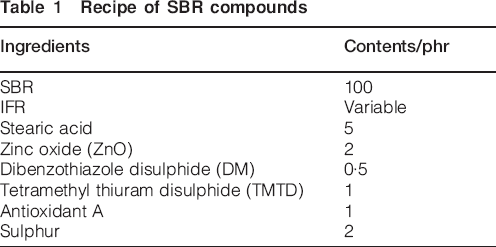
IFR was dried overnight in an oven at 90°C before use. The formulation for rubber composites is given in Table 1. The IFR additives were a mixture of APP and PER, and the ratio of APP/PER was 2∶1 (w/w). The total loading of IFR and CeP(IV) was fixed at 70 phr. The detailed formulations are given in Table 2. The preparation of flame retarded SBR composites was performed on two roll millings, the processing agents were added into the SBR and then flame retardants were added into the SBR blends. After mixing, the samples were hot pressed in a compression moulding machine under 10 MPa for 25 min at ∼150°C into sheets of suitable thickness and size for analysis.
Recipe of SBR compounds
Limiting oxygen index and UL-94 of SBR/IFR systems
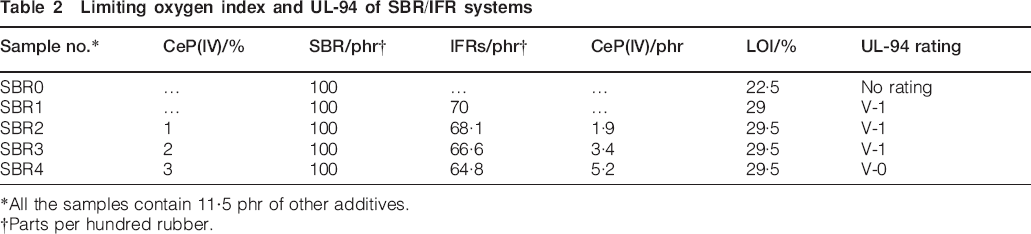
*All the samples contain 11·5 phr of other additives.
†Parts per hundred rubber.
Characterisation
X-ray diffraction
The X-ray diffraction measurement was recorded at room temperature with a Japan Rigaku D/Max-Ra rotating anode X-ray diffractometer equipped with a Cu Kα tube and Ni filter (λ = 0·1542 nm).
Limiting oxygen index
The LOI was measured according to ASTM D2863. The apparatus used was HC-2 oxygen index meter (Jiangning Analysis Instrument Company, Jiangning, China). The specimens used for the test were of dimensions 100×6·5×3 mm.
UL-94 vertical burn tests
The vertical test was carried out on a CFZ-2 type instrument (Jiangning Analysis Instrument Company) according to the UL-94 test standard. The specimens used were of dimensions 130×13×3 mm.
Thermogravimetry analysis
Thermogravimetric analysis experiments were performed using an STA 409 C TGA apparatus (Netzsch Company, Selb, Germany) with crucible sample holders at a heating rate of 20°C min−1.
Cone calorimetry
The cone calorimeter (CONE, Stanton Redcroft, UK) tests were performed according to ISO 5660 standard procedures. Each specimen of dimension 100×100×3 mm was wrapped in an aluminium foil and exposed horizontally to a heat flux of 35 kW m−2.
Microscale combustion calorimeter
The MCC tests were carried out using a GOVMARK MCC-2 microscale combustion calorimeter, which was a pyrolysis combustion flow calorimeter. Samples (4–6 mg) were heated to 650°C at a heating rate of 1°C s−1 in a stream of nitrogen flowing at 80cm3 min−1. The volatile, anaerobic thermal degradation products in the nitrogen gas stream are mixed with a 20 cm3 min−1 stream of pure oxygen before entering a 900°C combustion furnace. Measured during the test are the heat release rate (HRR) dQ/dt (W) and the sample temperature as a function of time at constant heating rate.
Scanning electron microscopy
The morphological structure of the residue char after the cone calorimeter test was examined by an AMRAY1000B scanning electron microscope. The specimens were previously coated with a conductive layer of gold.
Results and discussion
Characterisation of CeP(IV)
The X-ray diffraction pattern of the synthesised CeP(IV) is shown in Fig. 1. All the diffraction peaks are in good agreement with Ce(HPO4)2.0·33H2O, which can be indexed by JCPDS X-ray powder diffraction file no. 34-0466. The TGA curve of CeP(IV) under air atmosphere is shown in Fig. 2. The ∼11 wt-% weight loss at 220°C can be seen. Up to 700°C, the total weight loss was ∼14·5 wt-%.
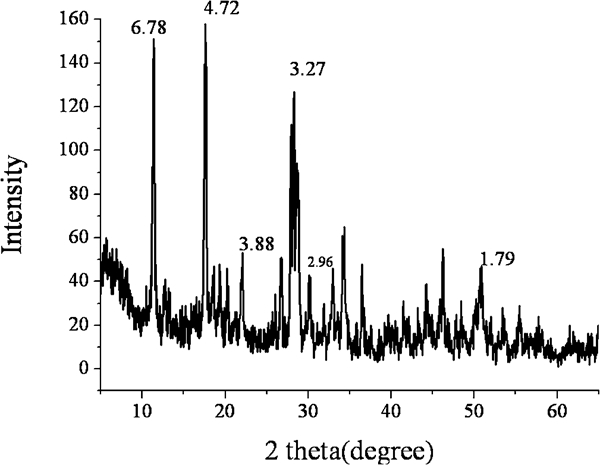
X-ray diffraction pattern of synthesised CeP(IV) sample
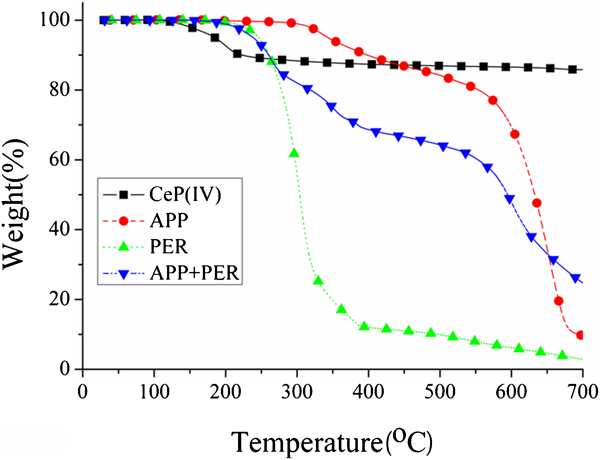
Thermogravimetric analysis curves of APP, PER, APP/PER(2/1) and CeP(IV) in air atmosphere
LOI and UL-94
The results of LOI and UL-94 tests performed on SBR, SBR/IFR and SBR/IFR/CeP(IV) are summarised in Table 2. The neat SBR is a highly combustible material. Therefore, it fails in the UL-94 test. The LOI value of the SBR/IFR without CeP(IV) is 29·0, when the content of IFR was 70 phr. It can be seen that there was hardly no increase in LOI values with the loading of CeP(IV), and the ranking reaches V-1 rating in UL-94 test. The value of LOI for the untreated SBR sample is 22·5 and reaches 29·5 when 5·2 phr of CeP(IV) is added. When 3·4 phr CeP(IV) was added into the SBR/IFR composites, the UL-94 rating reaches V-0 rating, which might be due to CeP(IV) promoting the formation of charred layers. It shows that the addition of CeP(IV) into the SBR matrix containing APP/PER results in a significant increase in the UL-94 test. The results signified a synergistic effect existing between CeP(IV) and the IFR system.
Thermogravimetric analysis
Thermogravimetric analysis is the tool of choice for characterising the thermal stability of polymers and flame retardants. The residue at 700°C is one of the most important parameters used for comparing thermal stability.13 The TGA curves of APP, PER and APP/PER [2∶1 (w/w)] mixture in an air atmosphere are shown in Fig. 2. APP has two main decomposition processes. The first step begins from about 270 to 500°C. Its decomposition products at this step are mainly ammonia and water, and cross-linked polyphosphoric acids (PPA) are formed simultaneously.14 The second step is the main decomposition process of APP, which occurred above 500°C. After the decomposition at 700°C, there was ∼9·9 wt-% residues left. For PER, there is a rapid weight loss process in the temperature interval of 223–380°C. The decomposition of PER consists of two steps of weight loss, and ∼3·1 wt-% of solid residue is left at 700°C.
It can be found from Fig. 2 that the thermal decomposition behaviour of the mixture of APP and PER is much different from that of APP or PER alone. For the APP/PER [2∶1 (w/w)] mixture, the rate of weight loss of the mixture is much higher than that of PER, and the residues left at 700°C for APP, PER and the mixture are 9·9, 3·1 and 25·1 wt-% respectively, indicating that the interaction between APP and PER exists during the decomposition, which is beneficial to char forming.
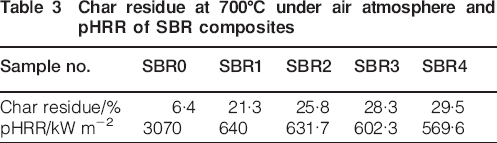
The thermogravimetric analysis curves of the SBR and SBR/IFR systems with different loadings of CeP(IV) are presented in Fig. 3. The loading of CeP(IV) was 0, 1·9, 3·4 and 5·2 phr respectively. From Fig. 3, it can be seen that pure SBR begins to decompose at ∼200°C, the amount of residual material of pure SBR at 700°C is 6·4 wt-%, which is the residue of ingredients of the SBR compound, such as ZnO, while that of the SBR1 composites is 21·3 wt-%. This could be caused by the good stability of the carbonaceous material that formed during the decomposition process of sample SBR1. For the SBR/IFR composites, the weight loss at ∼250°C could be mainly attributed to the phosphorylation of PER by the polyphosphate (PPA) with the release of water and ammonia, which finally leads to the formation of intumescent char. This also illustrated the reason that the addition of IFR makes the ignition temperature advanced. The weight loss in the second step was the degradation of the intumescent char.15 The influence of CeP(IV) on the thermal degradation of the IFR is also shown in Fig. 3; CeP(IV) lowers the initial temperature of the thermal degradation of the SBR/IFR system a little. This fact is attributed to the existence of CeP(IV), which may cause the whole process to be more complicated. The TGA curves show that, in the case of systems containing CeP(IV), the residue at high temperature is improved. It can be seen in Table 3 that higher amounts of the residue were obtained for the SBR/IFR system than for pure SBR at the temperature of 700°C. The residues of SBR2, SBR3 and SBR4 were 25·8, 28·3 and 29·5 wt-% respectively. It is suggested that the adduct of CeP(IV) in intumescent formulations leads to the formation of a more thermally stable material than is created by classical intumescent systems. This fact illuminated that CeP(IV) changed the thermal degradation behaviour of the SBR/IFR system, where CeP(IV) evidently promoted the char formation of the SBR/IFR system. These residues cannot only insulate the substrate, the heat source and the oxygen but also reduce the quantity of carbon entering the flame, and hence play a significant role in the flame retardancy, which is in agreement with the SEM results. In addition, it can be seen clearly that the SBR matrix decomposition process was influenced by the addition of IFR and CeP(IV).
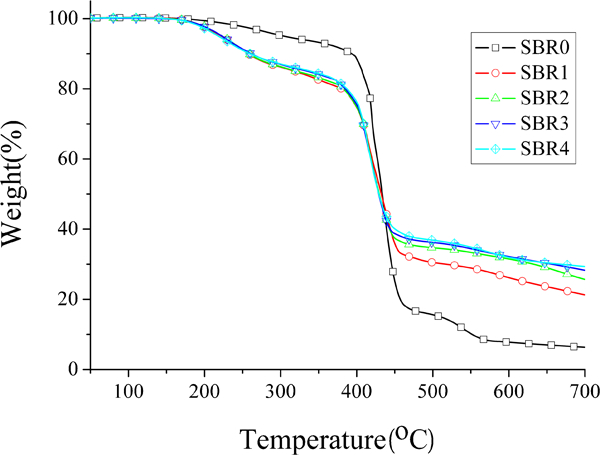
Thermogravimetric analysis curves of SBR/IFR systems with and without CeP(IV) in air atmosphere
Cone calorimeter study
The CONE has been widely used to evaluate the flammability characteristics of materials, which can provide a wealth of information on the combustion behaviour and give a measure of the size of the fire. The results of CONE have been found to relate well with those obtained from large scale fire tests and can be used to indicate the behaviour of materials in real fires. The HRR is a very important parameter and can be used to express the intensity of a fire. An effective flame retardant system generally shows a low HRR value.16 In order to study the synergistic effect between CeP(IV) and IFR, the flammability properties are characterised by CONE in this study. The HRR curves of flame retarded SBR composites and the untreated SBR obtained from the CONE test are shown in Fig. 4. It can be seen that the material without flame retardant burns very fast after being ignited, and a sharp peak HRR (pHRR) appears with a value of 3070 kW m−2 and then decreased rapidly. This is because untreated SBR is very combustible and burns immediately after igniting, and releases a large amount of heat and smoke. Therefore, it was burned completely and had little char residue left. In contrast, the curve of the SBR/IFR composite showed much lower peak values in HRR plots. This may be due to the fact that APP, as blowing agents and acid sources, was in conjunction with PER, which would make the intumescent coating more stable. The combustion behaviour of the materials depends on the thermal decomposition process, which feeds the flame with combustible volatiles. The bubbles formed under the ultraphosphate layer may contribute to the insulative protection. IFRs with CeP(IV) could effectively lower the pHRR and postpone the time to reach pHRR. It is believed that CeP(IV) is responsible for the decreasing HRR. The CeP(IV) could reduce the HRR by providing more char and enhance the strength of the char layer so as to prevent the char layer from cracking. This is in agreement with the SEM results discussed below. The efficient and stable intumescent char formed during the burning process of the composites SBR/IFR/CeP(IV) can prevent the heat and mass transfer between the flame zone and the burning substrate, protect the underlying materials from further burning and retard the pyrolysis of polymers and thus result in a great decease in PHRR.17 It is reported that rare earth oxide has some positive effect to the flame retardancy of polymers.7 In addition, Lewin and Endo4, 5 proposed that the catalytic effect of the metal ions can promote the oxidation and cross-linking reactions in the condensed phase. The cerium ions have the catalytic effect which can promote the oxidation and cross-linking reactions in the condensed phase. The CONE tests indicated that the addition of CeP(IV) in the SBR/IFR system not only reduced the pHRR but also prolonged the time to reach the pHRR. When adding CeP(IV), the decreases of HRR also showed that CeP(IV) is an effective synergistic agent in the SBR/IFR system.
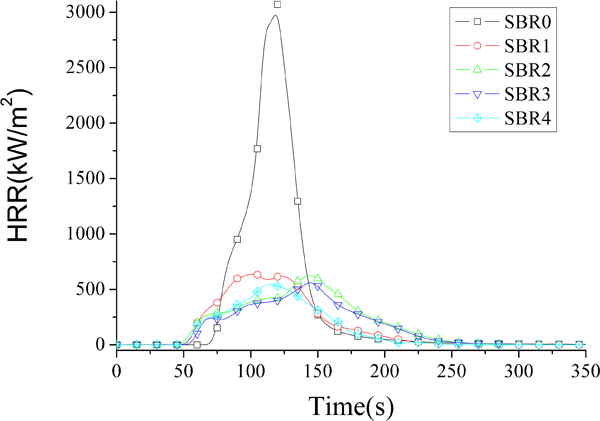
HRR curves of flame retarded SBR composites versus untreated SBR under heat flux of 35 kW m−2
Microscale combustion calorimeter study
The MCC is a pyrolysis combustion flow calorimeter, and the heat released rate recorded by MCC is calculated from the measured oxygen consumption rate, which is in agreement with that of the CONE. However, the CONE results are highly dependent on the ignition source, sample thickness, sample orientation and edge conditions, all of which combined to affect the combustion behaviour of the materials.18–20 In contrast, the results measured by MCC using controlled pyrolysis and complete combustion of the fuel gases depend only on the material being tested, and the MCC test provides a convenient method for estimating the potential fire hazard of a material using only milligram samples.21 The maximum amount of heat release capacity (HRC), which is obtained by dividing the maximum value of the specific HRR (sHRR) with the heating rate in the test, is a material property that appears to be a good predictor of flammability.22 The sHRR curves of the composites and the SBR/IFR system with and without CeP(IV) are presented in Fig. 5. It shows that the SBR/IFR system with 5·2 phr CeP(IV) has a lower peak sHRR than that without the CeP(IV) system, which is in agreement with the CONE results. From Table 4, it can be seen that the values of HRC are similar with the values of peak SHRR respectively. HRC is related to the decomposition kinetics and combustion parameters of the samples.20 Adding CeP(IV) into the SBR/IFR system shows lower values of HRC, which indicated that the CeP(IV) can promote the SBR/IFR/CeP(IV) system by forming a more effective intumescent protective char layer. The result is in good agreement with the above mentioned CONE study and the following SEM results. Table 3
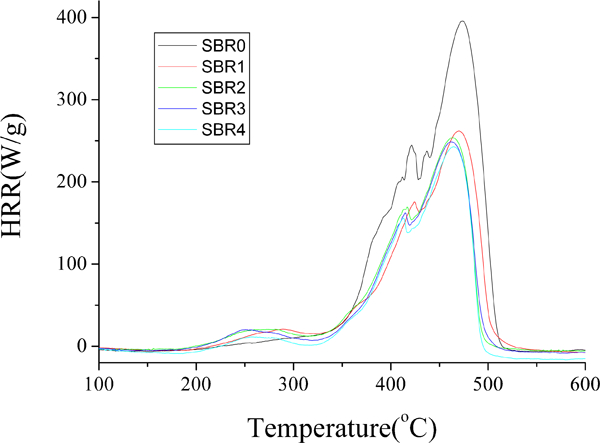
Specific HRRs versus temperature for SBR composites
Char residue at 700°C under air atmosphere and pHRR of SBR composites
MCC data for all samples

SEM analysis
To further investigate how the structure of the intumescent charred layer determines the flame retardancy of the SBR matrix, the morphologies of the charred layers obtained after CONE test are examined by SEM. Figure 6 shows the morphological structures of the surface of the intumescent char layers obtained from SBR1 without CeP(IV) and SBR4 with 5·2 phr CeP(IV) respectively. The surface of the char layers obtained from SBR1 (Fig. 6a) has many holes compared with that of the sample SBR4 (Fig. 6b); therefore, during burning, heat and flammable volatiles could easily penetrate the char layer into the flame zone. When IFR and CeP(IV) were added together, they produced a continuous, intact intumescent surface. Relative to the SBR/IFR system, the surface of SBR/IFR/CeP(IV) was more compact with less bubbles appearing on their surfaces, which acted as a thermal barrier preventing the transfer of heat and oxygen from the flame to the underlying substrate, consequently reducing considerably the HRR and slowed the combustion process. The scanning electron micrograph provides positive evidence that the quality of char of SBR/IFR/CeP(IV) is superior to that of SBR/IFR and gives an explanation that CeP(IV) can lower the HRR of SBR. An effective char layer can significantly act as a physical and thermal barrier to further combustion by limiting the heat transfer to the underlying polymer and mass transfer to feed the flame and thus enhance the flame retardancy of the materials. From Fig. 6, it is suggested that the addition of CeP(IV) has some positive influence on the flame retardancy of SBR/IFR and improves the flame retardancy property of the SBR. The better quality of char plays an important role on the synergist flame retarding effect of CeP(IV) on SBR/IFR. A promising development in IFR or somewhere with the aid of rare earth containing compounds, like CeP(IV), is expected anyway.
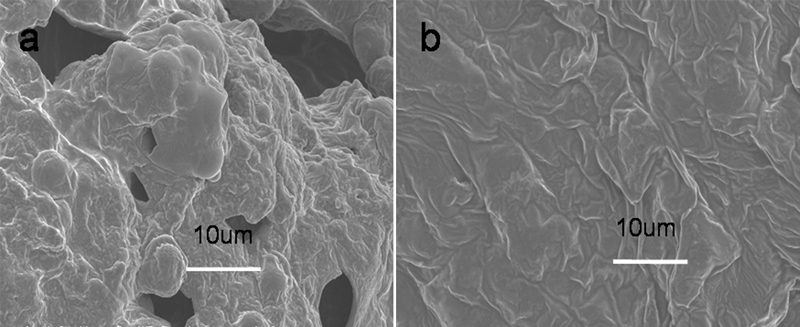
Images (SEM) of inner char layers of a SBR1 and b SBR4
Mechanistic considerations
Based on the above experimental data, possible mechanisms for the cooperation of CeP(IV) with SBR/IFR system were considered. During burning, APP would release ammonia and polyphosphoric acid, produced by the elimination of ammonia from APP, which could attack the hydroxyl bonds of PER with the formation of phosphoric esters. Phosphoric ester is thermally decomposed at higher temperatures, leading to the formation of three-dimensional network structures. The possible reaction mechanism of IFR with CeP(IV) is shown in Fig. 7. When CeP(IV) was introduced into the SBR/IFR systems, the chemical reactions were changed. During heating, CeP(IV) could promote the release of ammonia from APP, and the synergy of phosphorus–nitrogen exists.22 At the same time, the reaction of phosphate ester with elimination of water could be accelerated. In addition, APP may react with CeP(IV) according to Fig. 7, which act as bridges, and the formation would bring about a stabilisation of the APP and lead to the formation of macroradicals and promote cross-linking, which increases the viscosity of the melt during pyrolysis and combustion. However, the exact action of the cerium element needs further study. Above all reasons, it could be explained that CeP(IV) could improve the flame retardancy of the SBR/IFR system. Especially, when the amount of CeP(IV) is increased, the negative effect could exceed the positive effect on the fire properties due to reducing the content of the IFR.
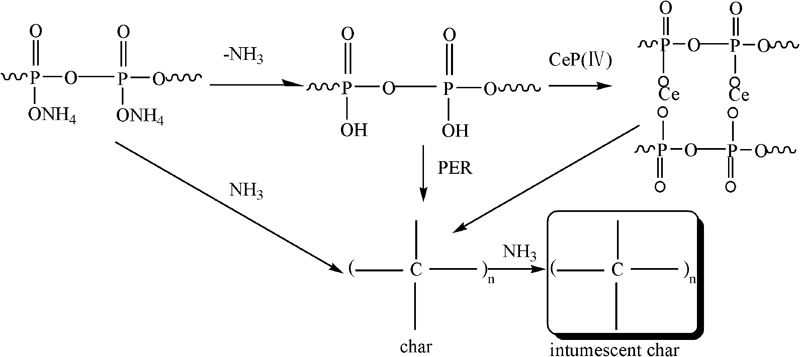
Possible reaction mechanism of IFR with CeP(IV)
Conclusions
CeP(IV) was synthesised by the reaction between ceric sulphate and phosphoric acid and was used to prepare flame retarded SBR/IFR/CeP(IV) composites. It was studied as a synergist to improve the flame retardant properties of SBR/IFR. It was found that the addition of CeP(IV) shows a more effective flame retardation than the SBR/IFR composites. After adding CeP(IV), the LOI values of the composites have no obvious change. However, the UL-94 rating reached V-0 when 5·2 phr CeP(IV) was added to the SBR/IFRs composites. Thermogravimetric analysis results showed that the presence of CeP(IV) could raise the amount of residue. The cone calorimeter test gave clearer evidence that the incorporation of CeP(IV) into SBR/IFR composites resulted in significant deduction of the HRR values, which was further evidenced by MCC results. The SEM analysis indicated that the charring layers of the composites containing CeP(IV) were more compact than that of composites without CeP(IV), and the formation of a good intumescent char could protect the underlying materials from heat and flame and thus enhance the flame retardancy of the material. In conclusion, the flame retardancy induced by IFR can be enhanced effectively by the incorporation of CeP(IV) as a synergist, which promoted the formation of a char layer.
Footnotes
Acknowledgements
The work was financially supported by the Opening Project of the State Key Laboratory of Fire Science and the program for research and industrialisation on safety and environment friendly electronics cables and wires common technology (grant no. 2009A090100029).