







Abstract
The first part of this paper demonstrated how the quasi-Fickian moisture uptake exhibited by stereolithography resins could be modelled. This part outlines the effect of moisture absorption on the mechanical properties of one of the materials. Fickian and dual Fickian diffusion models, using both analytical and finite element analysis (FEA) techniques, were used to model the moisture uptake in aged samples. Uniaxial tensile testing of dog bone samples revealed a decrease in elastic modulus and yield stress and an increase in strain to failure with increased moisture content. A model has been developed to predict the change in stiffness of aged samples over time. The results produced from this model show a good correlation with the experimental data and FEA predictions. It is proposed that FEA based coupled stress diffusion analysis methods can be used to predict the effect of moisture on the mechanical performance of parts made by stereolithography when used in service.
Introduction
Stereolithography (SL) is one of the main rapid prototyping processes currently being considered for the manufacture of end use parts, owing to its accuracy and consistency.1 Materials used in the SL process are termed photopolymers and they are primarily cured using ultraviolet light sources.2 The majority of current SL resins are thermosetting polymers, such as epoxies and acrylates, with the addition of a light curing agent (photoinitiator). The latter is also known as a hardener as it causes phase conversion and subsequent material polymerisation (solidification) when exposed to ultraviolet radiation.3
Currently, the SL process is only used to produce end use parts for limited applications. 4 , 5 This can partly be attributed to the instability of current SL materials at high levels of relative humidity.6 Hence, in order to increase the applications of SL as a manufacturing process, materials more suited to a wide variety of end use applications must be developed. One of the material aspects that requires significant development is the environmental stability of the SL materials post-build, and in order to achieve this, the mechanism of water diffusion into different SL materials should be investigated. In part 1 of this paper,7 water diffusion into various SL epoxy based materials was found to be anomalous and different methods of modelling this behaviour were investigated.
In polymer matrices, moisture absorption can lead to a wide range of effects, both reversible and irreversible. These effects include: plasticisation by weakening of the intermolecular interactions among the functional groups of the chains, 8 , 9 debonding at filler/matrix interfaces,10–12 leaching of unreacted functional groups,13 structural damage such as microcavities or crazes 14 , 15 and chemical degradation of the polymer matrix due to hydrolysis and oxidation.14 The effect of absorbed moisture on the glass transition temperature Tg of polymers has been investigated by Moy and Karasz16 and Ivanova et al.8 and the effect on mechanical properties has been investigated by Kasturiarachchi and Pritchard,12 Lawrence et al.17 and Butkus et al.18 It was seen in this work that both Tg and the mechanical properties of polymers can be significantly affected by humidity. Hamid19 and Andrady20 showed that moisture can have various effects on polymers. One is a chemical influence, attributed to the hydrolysis of unstable bonds. Another is physical, which is due to the breakdown of bonds in the polymer network, leading to swelling and softening of the material. A further influence is that water increases degradation involving the generation of free radicals or other reactive species that can react with other chemical factors. Ritter et al.21 and Salmon et al.22 showed that water acts as a plasticiser as well as a reactant. Long term exposure causes a decrease in the molecular weight of polymers due to chain scission (breaking of the cross-links that form the chains in the polymer network)23 and this will weaken the mechanical properties.24
It is clear from the literature, therefore, that absorbed moisture can affect the mechanical properties of polymers through many mechanisms and, as part 1 of this paper demonstrated, there is significant moisture absorption in SL materials. The next steps in this investigation are to characterise the effect of this absorbed moisture on material properties and develop a model to predict the changes in the mechanical performance of rapid manufacturing (RM) structures on aging. This is achieved by modelling the moisture concentration in specimens using Fickian and dual Fickian models with both analytical and finite element analysis (FEA) methods. The moisture concentration is then correlated with the Young's modulus, enabling the stiffness of the structure to be modelled as a function of the predicted moisture uptake.
Relationship between absorbed moisture and mechanical properties
Diffusion
It has been suggested that the kinetics of sorption of moisture in polymers systems is governed by two limiting cases:7 Fickian, or diffusion controlled, and relaxation controlled. The solution to Fick's second law for the case of a plane sheet where the region x (−b<x<b) has concentration Ct at any time t and C∞ when saturated is given by equation (1)

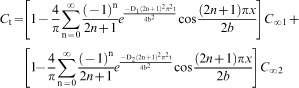

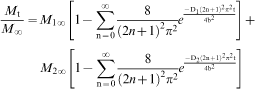
Proposed relationship between elastic modulus and moisture concentration
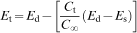
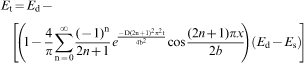
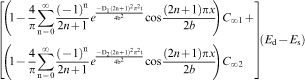
As moisture is absorbed, the concentration at a specific point within the specimen increases with time and this reduces the value of Young's modulus E, which gradually varies from the dry modulus Ed to the saturated modulus Es. It is proposed that Young's modulus E varies with the concentration C according to equation (5)
Analytical model to predict stiffness
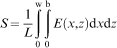
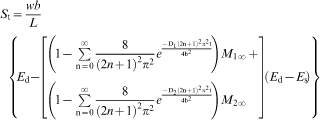
Stiffness S is a useful measure of mechanical performance as it relates deformation to applied load




Experiments
The polymer investigated in the present study is an epoxy based resin SL-7580. The samples were manufactured in a flat orientation using an SLA7000 SL machine from 3D systems with 1, 2 and 4 mm thicknesses. Environmental conditioning of samples was carried out under the following environments.
Fully immersed in deionised water at 20°C
20·8% RH at 50°C
45·5% RH at 50°C
64·5% RH at 50°C
81·7% RH at 50°C
where RH is relative humidity. In order to control the humidity, the chemical salts, potassium fluoride, magnesium nitrate, potassium iodide and potassium chloride were used to give 20·8, 45·5, 64·5 and 81·7% RHs respectively.
Moisture uptake
Moisture uptake samples with 1 and 2 mm thickness were manufactured with dimensions of 60×60 mm, as recommended in ISO 62 (Ref. 25) and shown in Fig. 1. A Mettler Toledo digital scale with an accuracy of 0·1 mg was used to weigh the samples before drying in an oven for 24 h at 50°C and then transferring to a desiccator to cool to room temperature. The samples were kept in the desiccator and weighed periodically until the mass was constant. Once completely dried, five samples of each thickness were immersed in deionised water at 20°C. While the remaining samples, five samples of 2 mm thickness were conditioned at each of the constant %RH environments at a temperature of 50°C. Specimens were extracted at 4, 8, 12, 20, 32, 44, 68 and 92 h, and then at time intervals of 24 h. On extraction of immersed samples, surface water was removed with a clean, dry cloth, and each sample was weighed to the nearest 0·1 mg. This was completed within 1 min of removal from the water. The conditioning process was continued for 312 h.
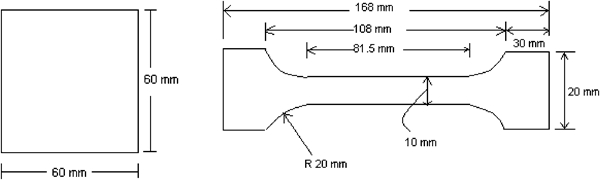
Schematic showing dimensions of moisture uptake samples and tensile test samples (thickness = 1 and 2 mm)
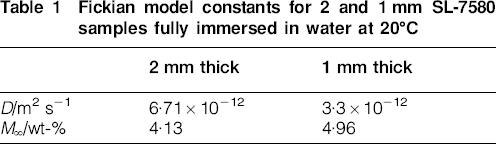
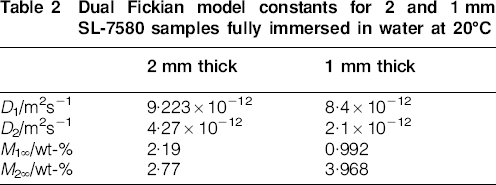
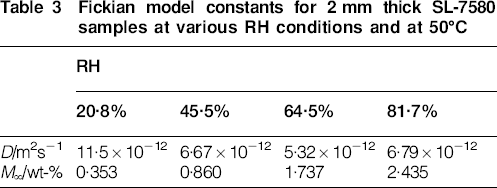
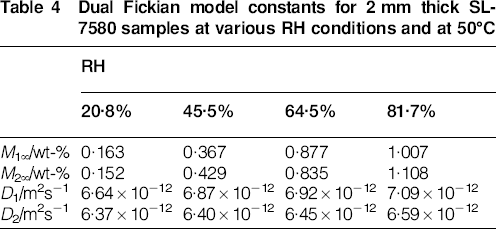
The moisture uptake data were fitted to equations (3) and (4) using the commercial mathematical programming package Mathcad, developed by PTC, by using the least square curve fitting technique available in the software. The best fit values of D, D1 and D2 (Ref. 7) obtained through curve fitting are given in Tables 1–4. These values were substituted in equations (1) and (2) to predict moisture concentration profiles for different time intervals.
Fickian model constants for 2 and 1 mm SL-7580 samples fully immersed in water at 20°C
Dual Fickian model constants for 2 and 1 mm SL-7580 samples fully immersed in water at 20°C
Fickian model constants for 2 mm thick SL-7580 samples at various RH conditions and at 50°C
Dual Fickian model constants for 2 mm thick SL-7580 samples at various RH conditions and at 50°C
Effect of moisture on mechanical properties
In order to observe the effect of moisture uptake on the mechanical properties of the SL-7580, tensile tests were carried out. The specimens were built in an edge orientation to avoid build failure owing to the small thickness of the samples. Tensile testing samples of 2 mm thickness were manufactured for each environmental condition, with the dimensions as specified in ISO 527-1 and 527-2, 26 , 27 as shown in Fig. 1. The drying process for these samples was the same as that described in the section on ‘Moisture uptake’. Tensile testing was performed using a Zwick Z030 tensile testing machine with a 10 kN load cell, 25 mm gauge length biaxial extensometer and at a constant displacement rate of 2 mm min−1. Samples, 4 mm thick, were also immersed in water at 20°C for 52 weeks and tensile tests were performed at 4 weeks intervals to find the effect of moisture uptake on modulus and stiffness. These data were used in the analytical models developed in the section on ‘Relationship between absorbed moisture and mechanical properties’ to determine the relationships between modulus and concentration and stiffness and moisture uptake.
Finite element analysis
Numerical techniques, such as finite element modelling have advanced considerably in recent years and the availability of multiphysics solvers has made finite element modelling an ideal choice for diffusion modelling and coupled hygromechanical analysis. A coupled stress diffusion FEA28 has previously been used to study the stress and moisture distribution in adhesive joints and a good agreement between experimental and FEA modelling was reported. In this work, a finite element based approach is used to model the diffusion and mechanical stresses in SL-7580 using the commercial FEA software Marc from MSC Software Corporation. In MSC Marc software, there is no direct option for moisture transport analysis; however, diffusion can be analysed by adapting the mathematical equations of heat conduction, derived by Fourier, as described by Crank.29
The FEA method has the ability to analyse the transient moisture diffusion response using the single and dual Fickian models discussed previously. The dual Fickian model was implemented by combining the finite element nodal moisture concentrations of two separate Fickian diffusion analyses. The FEA can be undertaken in terms of the normalised moisture concentration, i.e. with respect to the boundary condition applied to the edges of the model. These boundaries are assumed instantaneously saturated at the exposed edges.
Advances in computer hardware and software now make it practical for analyses to account for the effects of two or more interacting physical phenomena together, termed coupled FEA, or performing one physical phenomenon first and taking its result as the initial boundary condition for the second physical analyses, termed sequential FEA. In this paper, the results from Fickian and dual Fickian diffusion analyses have subsequently been used as the initial conditions for the mechanical analyses.
Eight noded quadrilateral continuum elements with an average element size of 0·063×0·063 mm for the moisture uptake models and 0·20×0·08 mm for the tensile test models were used, as shown in Fig. 2. Values of coefficient of diffusion for the diffusion analyses were taken from Tables 1–4. In order to introduce moisture dependant material properties, a table was defined to provide the relation between elastic modulus and moisture concentration for the mechanical analysis. One end of the tensile test sample was restricted against movement in all directions and at the other end a tensile force was applied. Another table was defined to give the relationship between load and time to control the analysis.
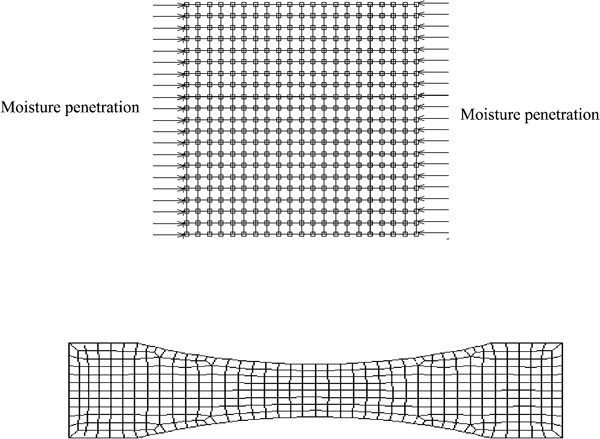
Typical finite element meshes
Results and discussion
Modelling of moisture concentration
A comparison of normalised moisture concentration from Fickian and dual Fickian models, using both analytical and FEA techniques, is shown in Figs. 3 and 4 for immersed samples. The plots show that concentration increases with time and varies through the sample thickness. Almost full saturation of the samples has been reached after 48 h conditioning. It can be seen that there is a good correlation between the analytical and FEA results for both diffusion models, with the FEA predicting slightly lower concentrations.
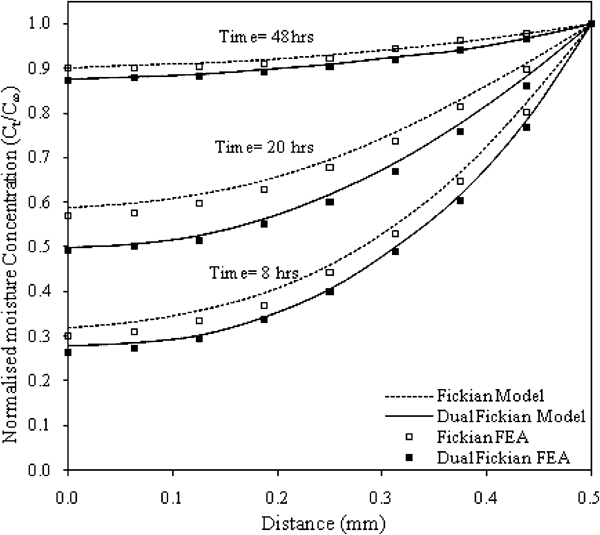
Normalised moisture concentration profile through 1 mm thick samples immersed in deionised water at 20°C
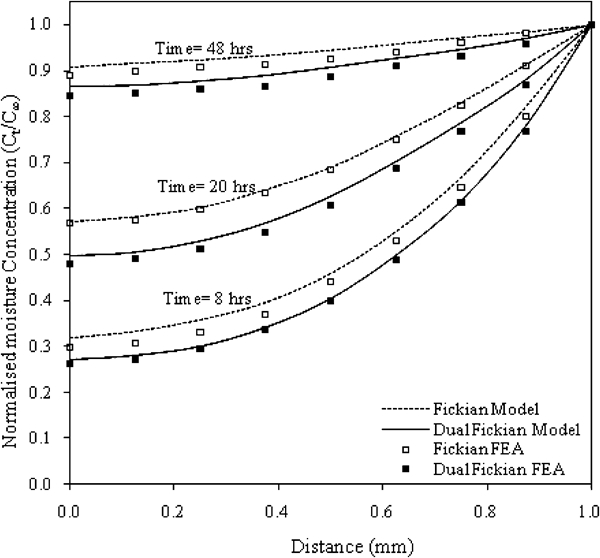
Normalised moisture concentration profile through 2 mm thick samples immersed in deionised water at 20°C
The Fickian and dual Fickian models result in similar concentration profiles, with the Fickian model predicting higher concentrations, particularly at 20 h conditioning. This trend can be explained by observing the mass uptake plots shown in Figs. 5 and 6. It can be seen that the dual Fickian model correlates very well with the experimental data while the Fickian model overpredicts the moisture contents, particularly in the time period corresponding to the greatest overprediction seen in the concentration profiles. Similar behaviour has also been reported by other researchers.30
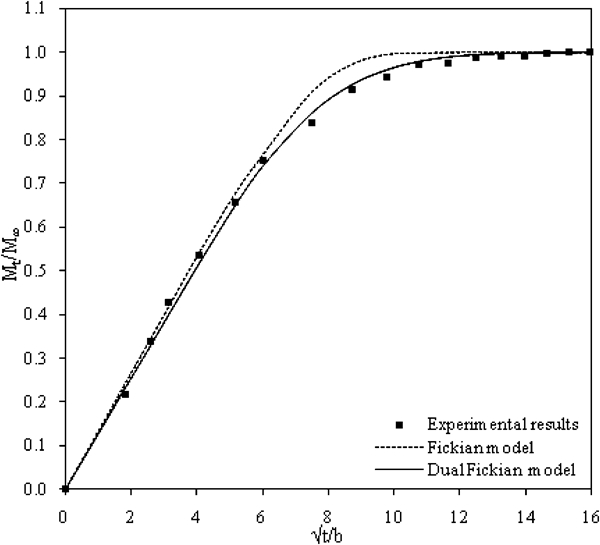
Experimental, Fickian and dual Fickian models curves for 1 mm thick samples immersed in deionised water at 20°C
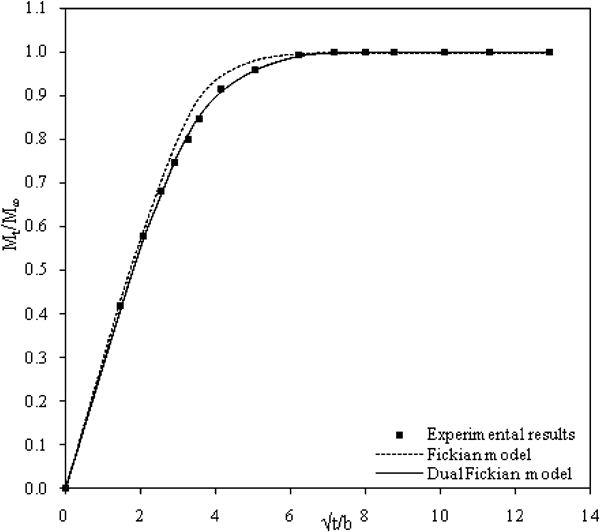
Experimental, Fickian and dual Fickian models curves for 2 mm thick samples immersed in deionised water at 20°C
Figures 7 and 8 show normalised moisture concentration profiles for 2 mm thick samples conditioned at various RHs at t = 8 and 48 h respectively. Constants used in the calculation for various %RH conditions are listed in Tables 3 and 4. The curves for both Fickian and dual Fickian models result in similar concentration profiles, with the Fickian model, again predicting higher concentrations. The FEA results correlate well with the analytical model, with FEA predicting slightly lower concentrations for both models. Figure 9 shows a plot of logarithmic values for saturated moisture concentration at various %RH conditions for samples conditioned at different %RHs at 50°C. The trend of the plot supports a logarithmic power relation between saturated concentration and %RH.
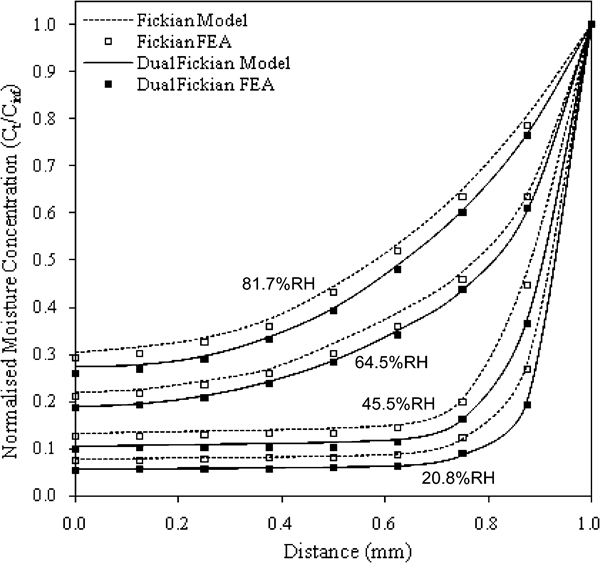
Normalised moisture concentration profile through 2 mm thick samples after 8 h under various RH conditions
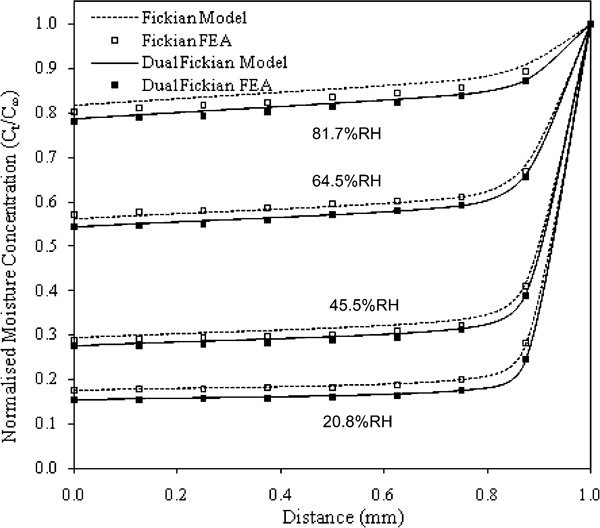
Normalised moisture concentration profile through 2 mm thick samples after 48 h under various RH conditions
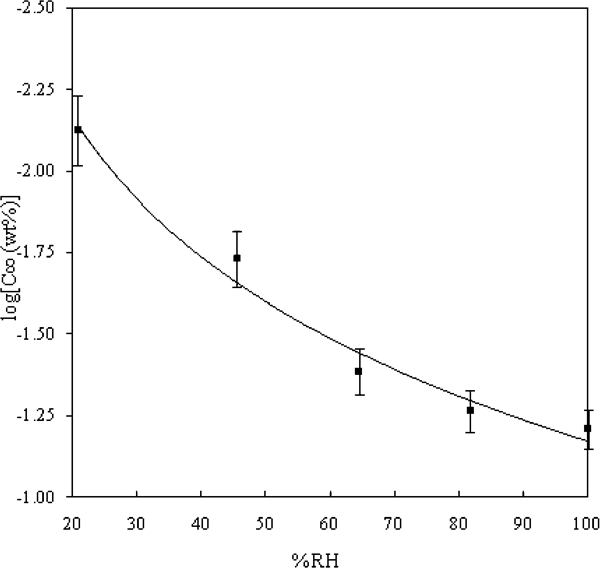
Logarithmic values of moisture concentration at various %RHs for 2 mm thick samples at 50°C
Modelling of elastic modulus profiles
As elastic modulus E is dependent on moisture concentration, then a variable moisture concentration in a sample, as seen in Fig. 3, 4, 7 and 8, will result in a variation in E of the samples. Equations (6) and (7) were used to calculate the elastic modulus profiles at various times. The values of E for dry and saturated samples determined from tensile tests were used in the calculations. Figure 10 shows the predicted change in E after t = 10, 20 and 30 h for both Fickian and dual Fickian models for 2 mm thick samples immersed in deionised water. Results obtained for the Fickian and dual Fickian models are quite close to each other, with less than 2% variation. The variable decrease in the value of modulus can be attributed to an increase in the concentration at a specific point as a result of the non-uniform moisture absorption causing plasticisation.31 Figures 11 and 12 further support this argument where modulus profiles have been plotted for different RHs, after 10 and 30 h conditions respectively. It can be seen that RH below 50% has relatively little effect on E, whereas samples immersed in water or at 81·7%RH see a significant degradation. Figure 13 shows a plot of E as a function of moisture concentration, the error bars indicating ±1% standard deviation. The plot indicates a linear relationship and hence fully supports the linear model proposed in equation (5).
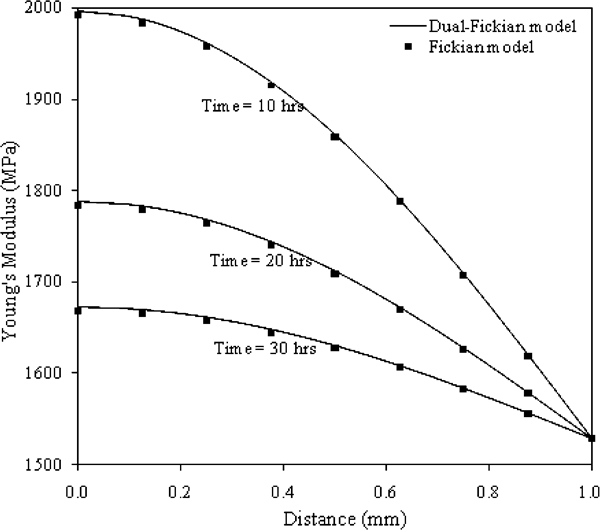
Change in elastic modulus with moisture over time for 2 mm thick sample immersed in water
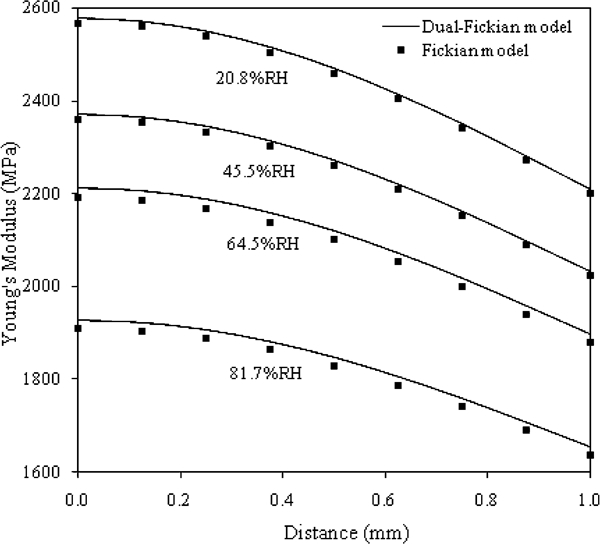
Changes in elastic modulus with moisture over time through 2 mm thick samples stored under various RH conditions after 10 h
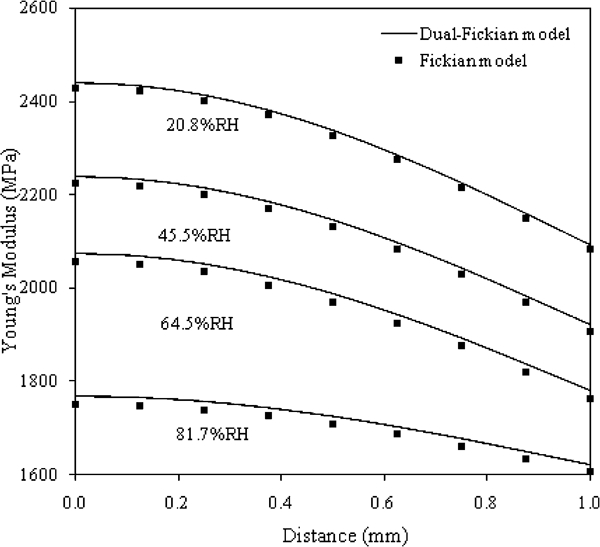
Changes in elastic modulus with moisture over time through 2 mm thick samples stored under various RH conditions after 30 h
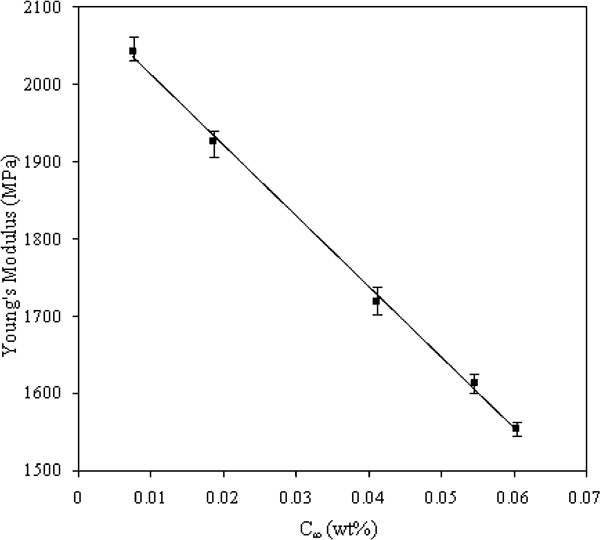
Modulus of elasticity as function of moisture concentration for 2 mm thick samples at 50°C
Relationship between stiffness and moisture uptake
Stiffness is a material property exhibiting resistance to deformation under an applied load and hence prediction of stiffness against environment degradation is important for designing the service life of any object. Figure 14 shows the relationship between stiffness and saturated moisture content of 2 mm thick samples at various RH conditions. The stiffness was calculated from equation (9) by substituting dry and saturated modulus calculated from tensile tests. Standard deviations and mean values of stiffness are plotted against saturated moisture uptake. The plot shows a linear decrease in stiffness with increased moisture content.
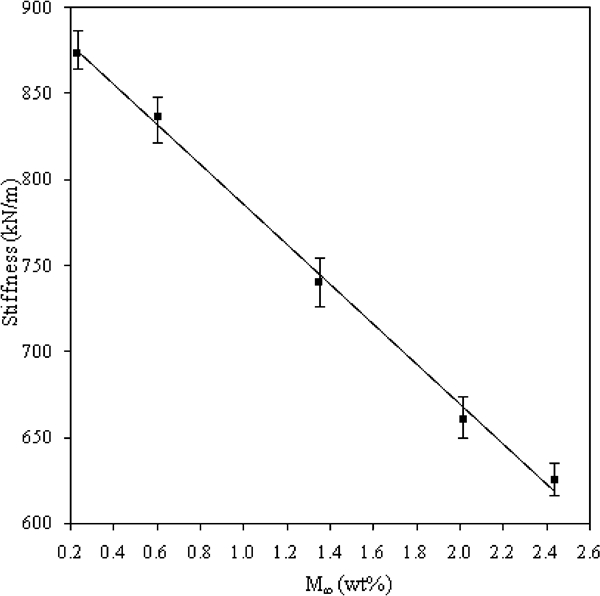
Change in stiffness with increased moisture content under various %RHs for 2 mm thick samples at 50°C
Equation (13) was used to predict the change in stiffness of 2 mm samples using the dual Fickian model at various %RH conditions at 50°C. The same relationship was determined using FEA and it can be seen in Fig. 15 that there is a good agreement with the analytical method. The plots in Fig. 15 show that stiffness decreases with increasing moisture uptake with time, as expected. It can be seen that the stiffness decreases sharply initially, which can be contributed to the rapid moisture uptake in the initial stages, resulting in decreased mechanical strength due to plasticisation.
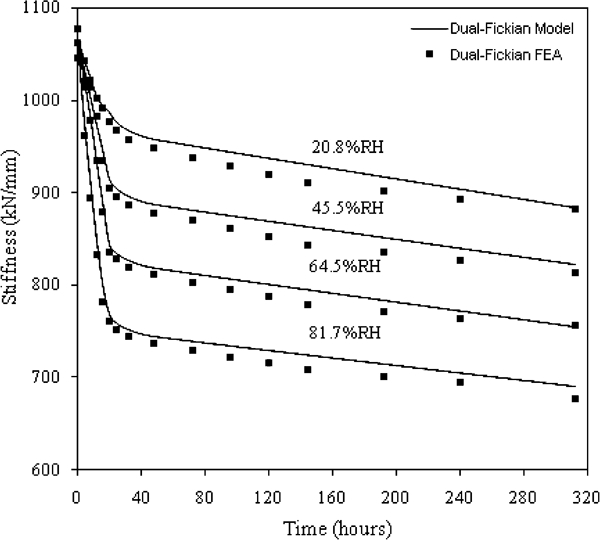
Change in stiffness with time of 2 mm thick SL-7580 sample at constant temperature of 50°C under various %RH conditions
Additionally, tensile tests were performed on a monthly basis on 4 mm thick tensile test samples that were stored at 20°C in water for 1 year. The experimental data were used to calculate the change in stiffness with conditioning time, as shown in Fig. 16. The experimental plot shows that the stiffness decreases with an increase in moisture uptake, which is consistent with previous work.24, 31 It can be seen in Fig. 16 that the stiffness model and FEA agree well with each other and provide a good fit to the experimental data. There is a discontinuity in the experimental data around 75 days. Although possibly a real effect, this is more likely an artefact of the testing. The fit of the models to the experimental data would be better if this was removed.
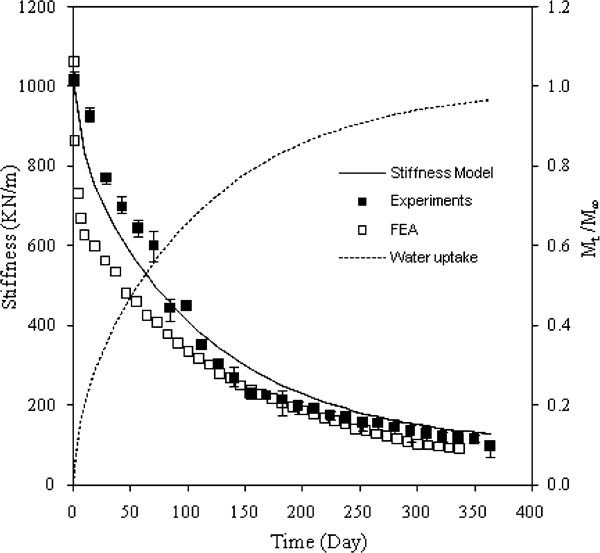
Change in stiffness with increasing moisture uptake for 4 mm thick tensile test samples as function of time
Summary and conclusions
This paper describes the effect of absorbed moisture on the mechanical properties of a representative SL resin, typical of the type proposed for use in rapid manufactured parts. The work included an experimental investigation, the development of an analytical model and the application of coupled moisture–mechanical finite element analysis. Diffusion coefficients calculated from part 1 of the paper were used to predict moisture concentration profiles through the thickness of samples using two analytical models and FEA. The FEA and analytical methods agreed well and the difference in results from Fickian and dual Fickian uptake models illustrated the pseudoFickian behaviour of the material, highlighted in part 1 of the paper. It was seen that as the amount of absorbed moisture increased, the modulus of elasticity of the material decreased, as discussed in previous work.30–32
Analytical models were developed to predict spatial and temporal changes in the value of the elastic modulus resulting from increasing moisture concentration. Models based on both Fickian and dual Fickian models were shown to give similar results. An analytical model was also developed to predict changes in stiffness with increasing moisture uptake. The model was seen to fit well with experimental data. Results showed that as the moisture concentration increases, it decreases elastic modulus and as stiffness is proportional to elastic modulus, hence it decreases it as well in same proportion linearly.
This work has demonstrated that current epoxy resins proposed for SL based rapid manufacturing are highly hygroscopic and that the mechanical performance of manufactured parts using these materials will vary as a function of the absorbed moisture. This clearly needs to be taken into account when designing parts. This paper, together with part 1, presents a relatively straightforward way that this can be achieved to a good degree of accuracy.