







Abstract
This paper presents a new method to completely characterise the in-plane elastic properties of an important type of angle ply laminates using only unidirectional tests. The angle ply laminates having the same number of identical plies are considered. Some new results for orthotropic laminates are found using this technique, namely, the conditions of existence of a particular direction in which there is no shear extension coupling. The laminates are subjected to three tensile tests: two in the orthotropic axes and the third one in a particular direction. The results allow a complete semiexperimental characterisation of the angle ply laminate, which do not need a priori knowledge of the elastic properties of the constitutive layer. Comparisons are made between numerical predictions and experimental results. Finally, the computational results were compared to the experimental results, verifying the capability of the method in order to predict the in-plane elastic properties of composite laminates.
Introduction
Composite materials, in the context of high performance structures, have been increasingly used since the early 1960s, although materials such as glass fibre reinforced polymers were already being studied 20 years earlier. Initially, conventional test methods originally developed for determining the mechanical properties of metals and other homogeneous and isotropic materials were used. It was soon recognised, however, that these new materials, which are non-homogeneous and anisotropic, require different considerations for determining mechanical.1–4
The experimental characterisation of composite materials has been a complex issue because it has been a continually evolving one. As new types of composites have been developed and new applications found, new testing challenges have continually evolved. In fact, the term composite material is not limited to a specific class of fabrication materials, rather a wide spectrum of materials of widely varying properties. Therefore, it can be expected that various test methods will be needed for different types of composite materials. Thus, there is little possibility of standardisation. 5 Various test techniques were developed for evaluating the same properties; some were easy to perform but provided only limited results or data of doubtful quality. Other test methods were so complex, operator dependent and, in some cases, maybe also of disputable quality. Many of the conventional test methods have been reviewed by Carlsson et al., 1, 6 Hodgkinson, 5 Lubin 7 and Daniel and Ishai. 8 Moreover, consensus organisations, such as ASTM and ISO, have made great progress in developing test methods suitable for composite materials; numerous test methods are described in Vol. 15 of The ASTM annual books of standards. 9
The complete characterisation of anisotropic elastic materials is based on the use of as many independent tests as there are elastic constants to be measured. To date, several approaches have been explored: non-destructive characterisation techniques such as ultrasound 10 and also numerical–experimental models. 11 However, in case of laminates, the practical study of Marin et al.12, 13 showed that the most common technique consisted of a complete characterisation only by tension tests.
For orthotropic laminates, two single tensile tests can be performed in the orthotropic axes, but they can provide only 75% of the characteristics. For complete characterisation, it is therefore essential to perform off-axis tension test, too. However, in general, there is an off-axis tensile–shear coupling. Thus, to have homogeneous tensile state, it is necessary to use pivoting jaws or an equivalent system.9, 11 To avoid the use of such complex equipment, an off-axis direction must be found for which this coupling is zero before the tensile test. Verchery and Gong 15 discussed the conditions of existence of such directions ± ω for orthotropic materials developing the formula expressing this angle ± ω according to the elastic constants of the laminate. A useful method using the polar representation of elasticity tensors proposed by Verchery and Vannucci.16, 17 This method is so called the polar method and has been implemented successfully in tests, using an approximate value of the measured angle ω from a prior estimation of the elastic constants. However, in general, an unknown prior angle makes it difficult to use the off-axis tension test without coupling. Therefore, this study is concerned with solving this problem.
In this work, it is shown that, for some angle ply orientations (
 ), there is a simple function between ω and α with excellent approximation. The inequality
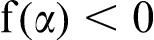 was simply considered using the polar method to determine the ranges α for which ω exists. The function f(α) depends on the elastic constants of the base ply. The function
 also depends on these constants, but presents a very particular form even in a wide variety of highly anisotropic unidirectional plies (reinforcement such as carbon, boron, aramid, etc., polymer matrixes, usual volume fractions).
For a certain stacking angle α0, ω is practically equal to α. In addition, the limit angle α0 slightly depends on the used material, usually 30–33°. It thus becomes possible to completely characterise these angle ply laminates by three tensile tests with traditional jaws in directions 0, 90° and α (or − α).
In order to validate this property experimentally, we performed tensile tests with specimens with rosettes, cut at an angle ply of 12-ply unidirectional plies of carbon–epoxy. The results confirm that off-axis specimens were well in simple traction condition. The set of elastic constants is determined from tensile in-plane tests in three directions and is very close to the estimations found out by the classical laminated plate theory (CLPT).
Determining direction of off-axis test
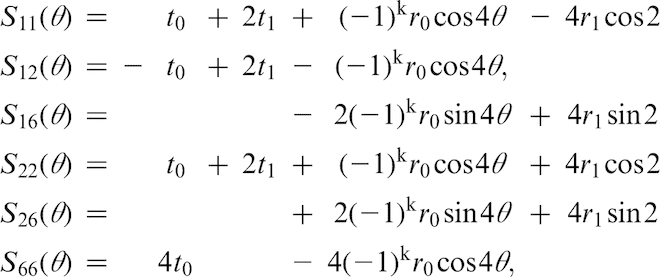
By the polar formalism,16–21 the coefficients of the compliance matrix S of an orthotropic material,
21
which is rotated by an angle θ, relative to orthotropic axes are defined by


Polar formulation of angle Ω for angle ply laminate
The CLPT
22
defined Cartesian formulae for determining stiffness coefficients; these formulae are also valid for the polar coefficients proposed by Verchery;
16
particularly for in-plane behaviour, four complex equations can be found as follows
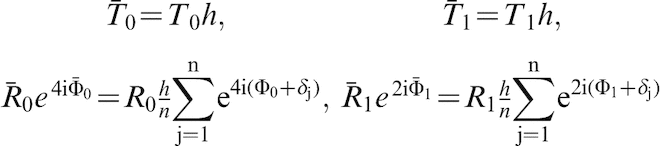
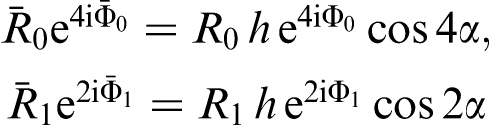
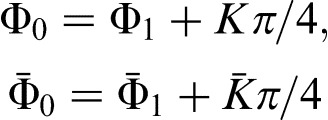
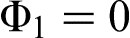 is usually chosen for the basic ply, which corresponds to take the direction of the unidirectional fibres confused with the x axis of not turned frame.
In these conditions,
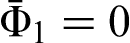 for 0 ≤ α ≤ π/4, which is always the case (the angle ply with π/4 ≤ α ≤ π/2 is the same laminate but rotated π/2), equation (7) is simplified to
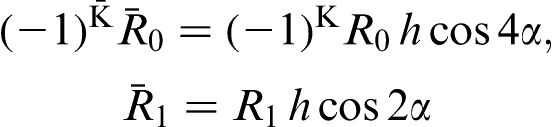
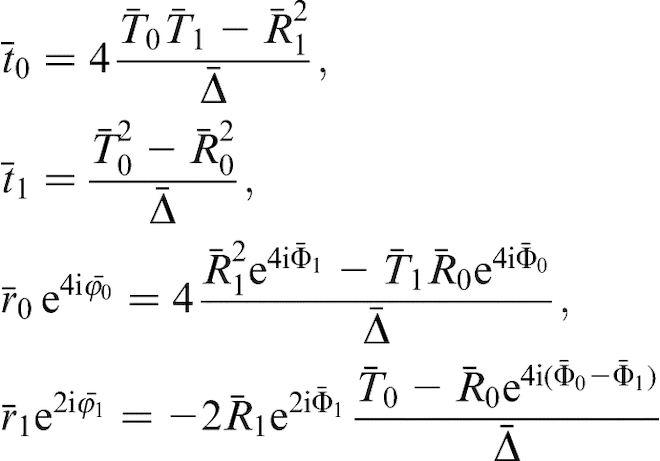
 is invariant
 If
If
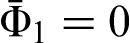 , then
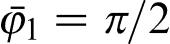 , and consequently,
 for the orthotropic materials, then two last equations of equation (10) can be rewritten as
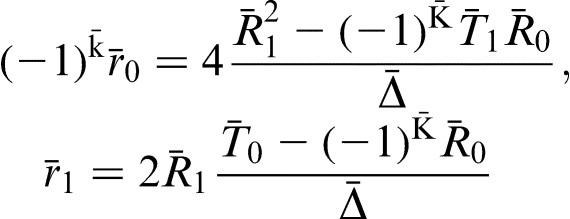

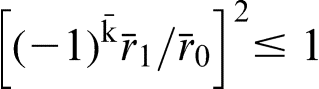
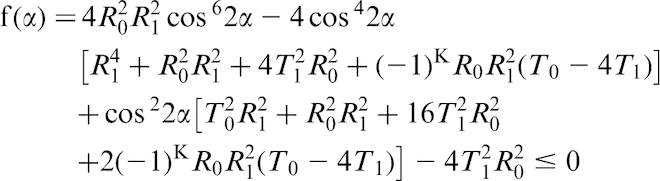
 will exist if and only if f(α) < 0. Under these conditions,
 is defined by equation (3) as follows

 depends only on the mechanical characteristics of based ply and the angle α of fibre orientation. Thus, for a given based ply, it is possible to vary α to verify equation (15).
Equations (13) and (14) show that, for α = 45°, always
 exists (case of cross-ply laminates): therefore, it is always possible to find an angle α from which an off-axis test without tensile–shear coupling can be achieved.
However, the above procedure only affects the in-plane behaviour of the laminate. In fact, in almost all cases, the flexural behaviour is completely anisotropic. There, however, exists a case for which the results can extend to the bending behaviour.
If the material is quasi-homogeneous,17–18, 23, 24 then the homogenised tensor A* and D* are identical, that is to say the angle
 of the off-axis bending test is equal to that of the in-plane off-axis test.
Determining
 for various based plies
According to the previous equations developed in the previous section,
 can be determined only by knowing perfectly the mechanical characteristics of based ply as well as fibre orientation angle α
The rest of this section is devoted to the determination of
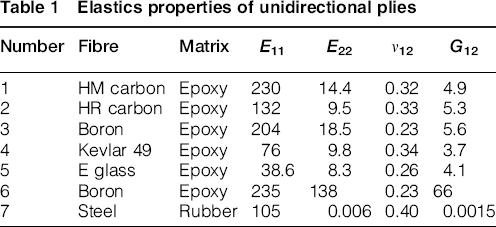
 as a function of α for some practical cases of unidirectional based plies. The elastic properties of plies are given in Table 1; also Table 2 provides the results of calculating the polar coefficients based on elastic properties.
Elastics properties of unidirectional plies
Polar parameters of plies
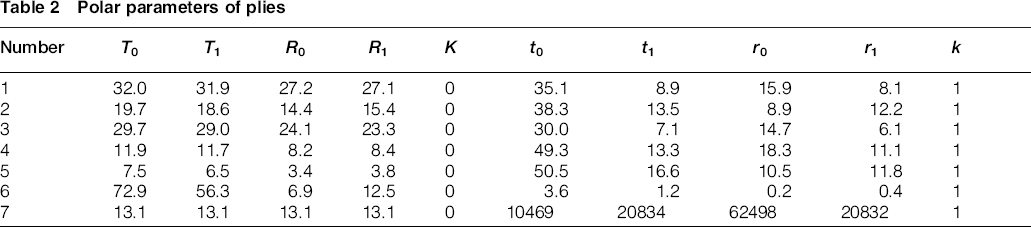
Figure 1 shows variation of
 , α and function f(α), which is multiplied by a constant number to fit on the same chart. The first five graphs clearly show that
 and α have significantly identical values when α ≥ 30° apart from the elastic properties. Therefore, in practice, for all values of α belonging to [30°,45°], the elastic characterisation of angle ply can be completely determined through tensile tests.
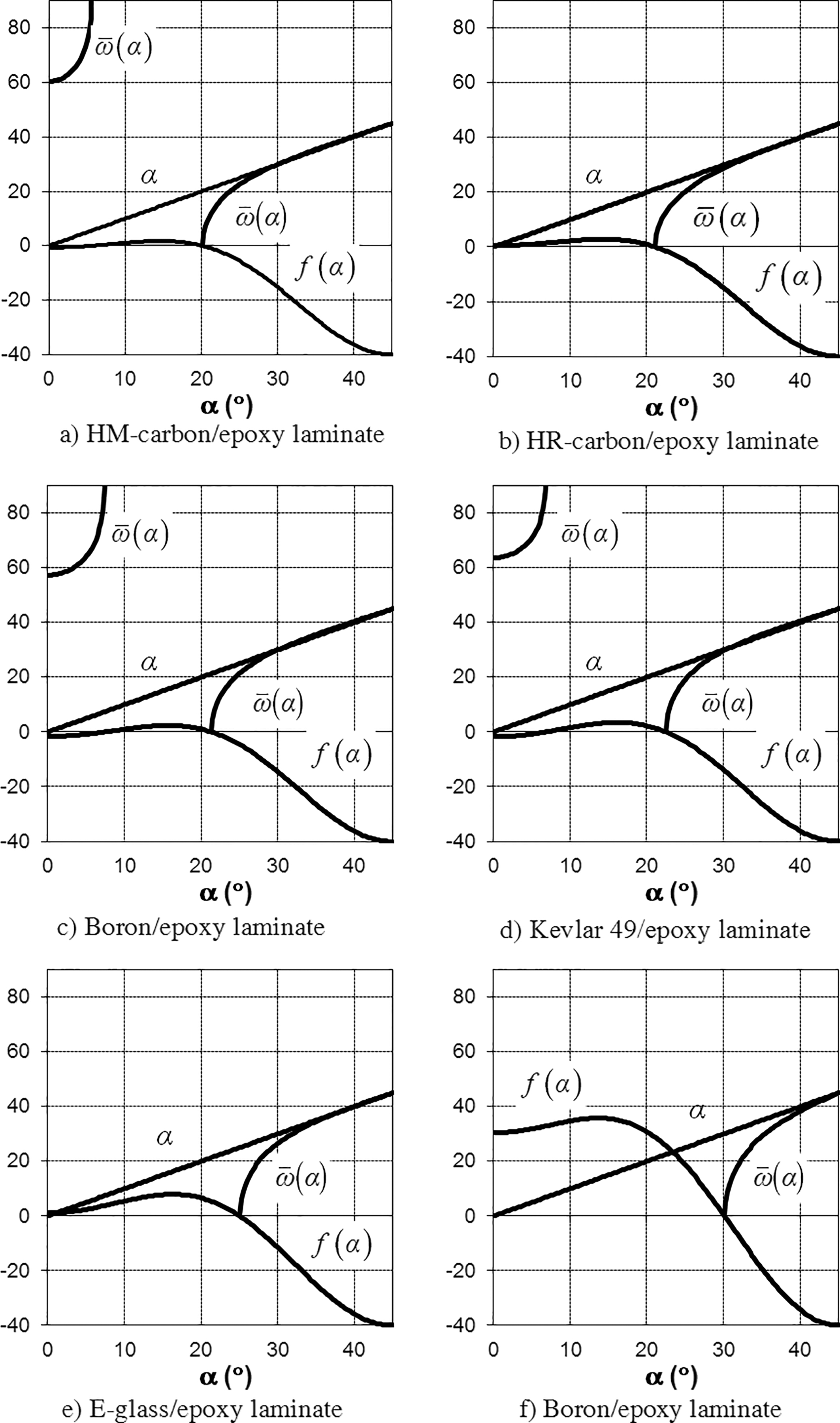
a HM carbon/epoxy laminate; b HR carbon/epoxy laminate; c boron/epoxy laminate; d Kevlar 49/epoxylaminate; e E glass/epoxy laminate; f boron/epoxy laminate
The curves of Fig. 1f (boron/epoxy) show that this empirical rule is not applicable to all cases. In the case of metallic matrices,
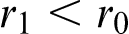
 and α coincide when α becomes >40°, and for balanced tissue, which have all R1 = r1 = 0, this mapping occurs only for α = 45°. The common point of these two examples is that Young's moduli E11 and E22 have very close values, even identical.
Consequently, the condition under which the empirical rule discussed above is valid is that the ply must have a strong anisotropy, i.e. E11/E22 ≥ 4 approximately; this condition is fulfilled for all polymer matrix plies, as well as a number of other materials, such as rubber–steel plies for example (Fig. 2). Moreover, Fig. 1 shows that, in some cases, the condition of existence of
 is also verified for low values of α; this occurs when the based ply itself verifies equation (4). For these materials, when α is low, the equation (15) is respected, and for laminated plate, minimum values of E11(θ) obtain in the direction
 and its minimum in the directions 0 and 90°.
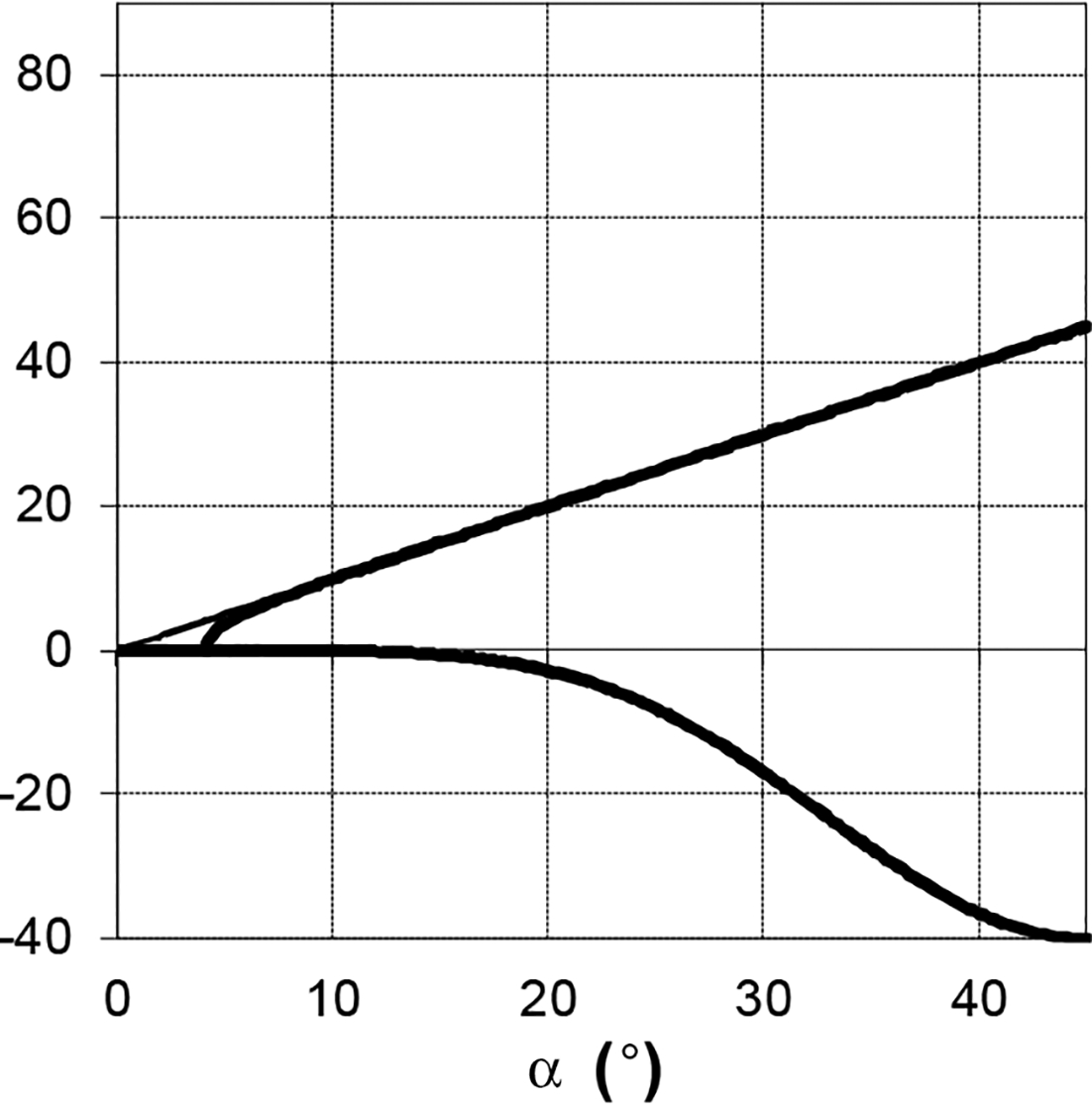
Curves for steel/rubber angle ply laminate
When α increases, equation (15) is not verified anymore and the direction
 disappears; E11(θ) has two extreme directions: a maximum at 0° and a minimum at 90°.
Finally, for α ≥ 30°, equation (15) is satisfied again, and E11(θ) has a maximum at
 and two minima at 0 and 90°. These three possibilities are shown in Fig. 3; in this work, only the third situation is noteworthy.
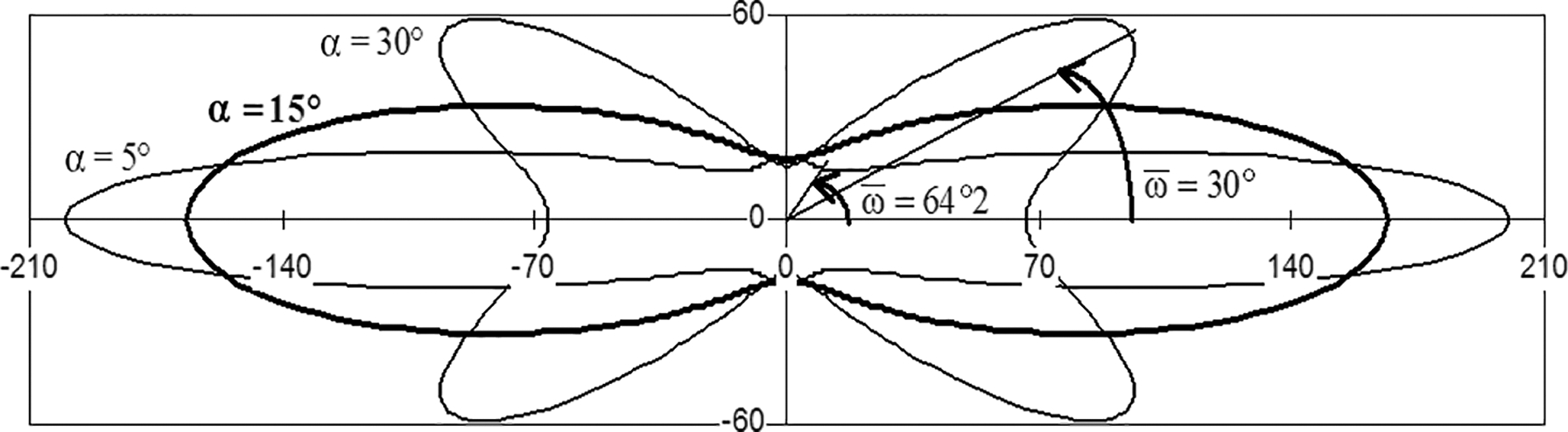
Polar variations of E11(θ) for boron/epoxy angle ply laminate
Experimental results
Tests were carried out on a laminate composed of identical angle ply plies in carbon/epoxy. A quasi-homogeneous laminate of 12 plies was used, whose lay-up was [a/ − a/a/ − a3/a3/ − a/a/ − a]; therefore, the laminate was decoupled and had the same in-plane and flexural properties regardless of the value of imposed α. The elastic characteristics of ply and the laminate are given in Tables 3 and 4. The value of α is 33°, and equation (16) gives an approximate value of 32.7° for
 (Fig. 4). Practically, these values may be considered identical, and Fig. 5 shows that, throughout the off-axes tensile tests, the shear value is very low. In addition, due to the quasi-homogeneity behaviour of the laminate,
 =
=
 .
.
Elastic constants of ply and laminate/GPa

Polar stiffness and compliance parameters

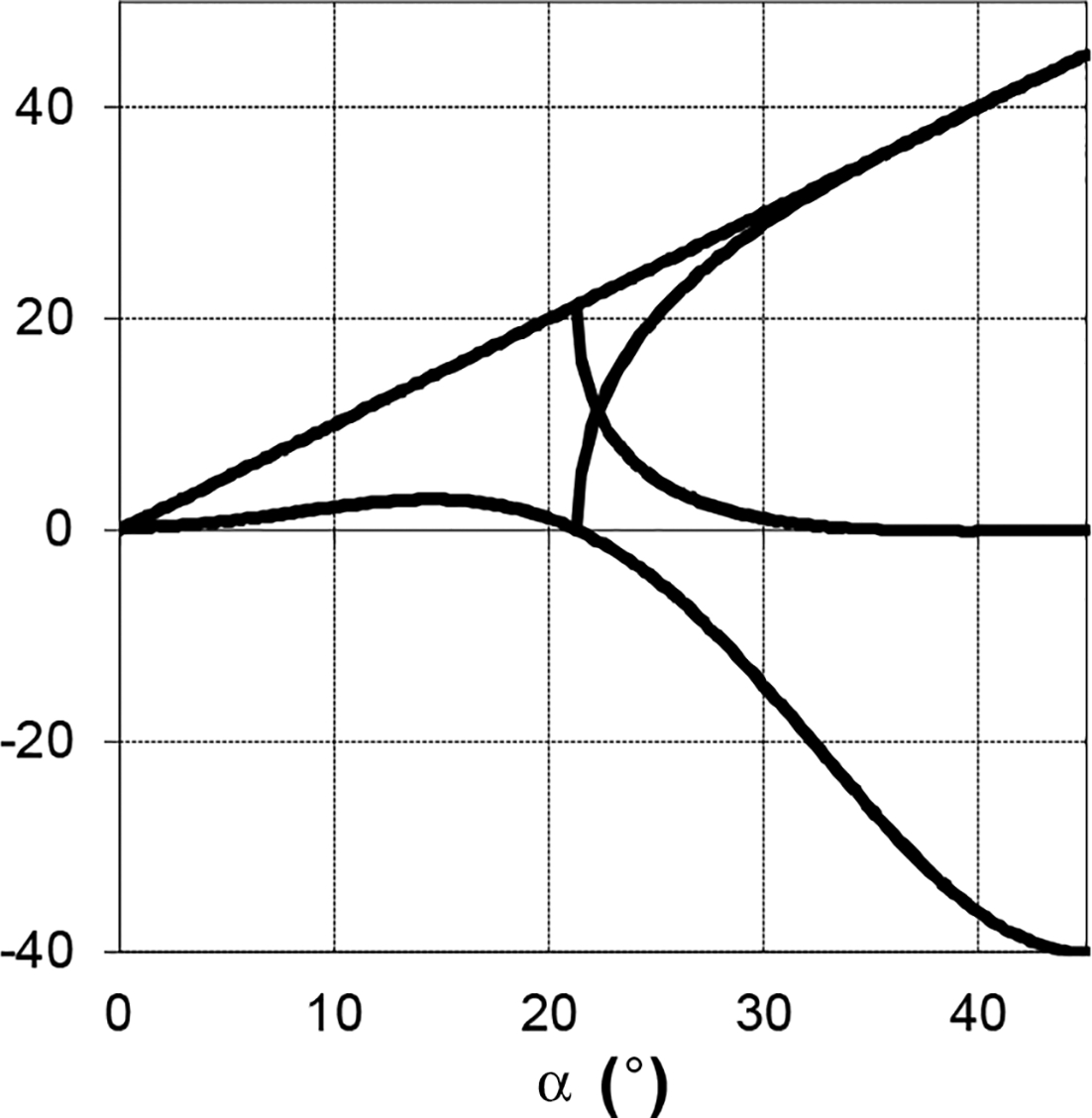
Experimental curves for carbon/epoxy angle ply laminate
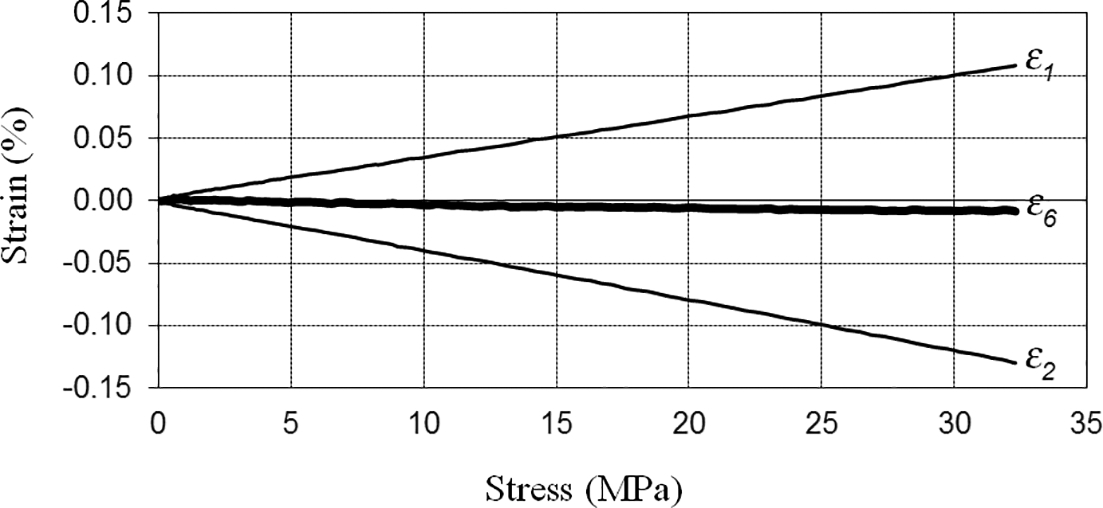
Strains variations thorough off-axis tensile test
Consequently, the bending tests were also carried out on the same test tubes in order to be able to compare the elastic characteristics obtained by bending and tensile tests. Figure 6 shows the curves of E11(θ), of the ply and the laminate as calculated on the basis of CLPT.
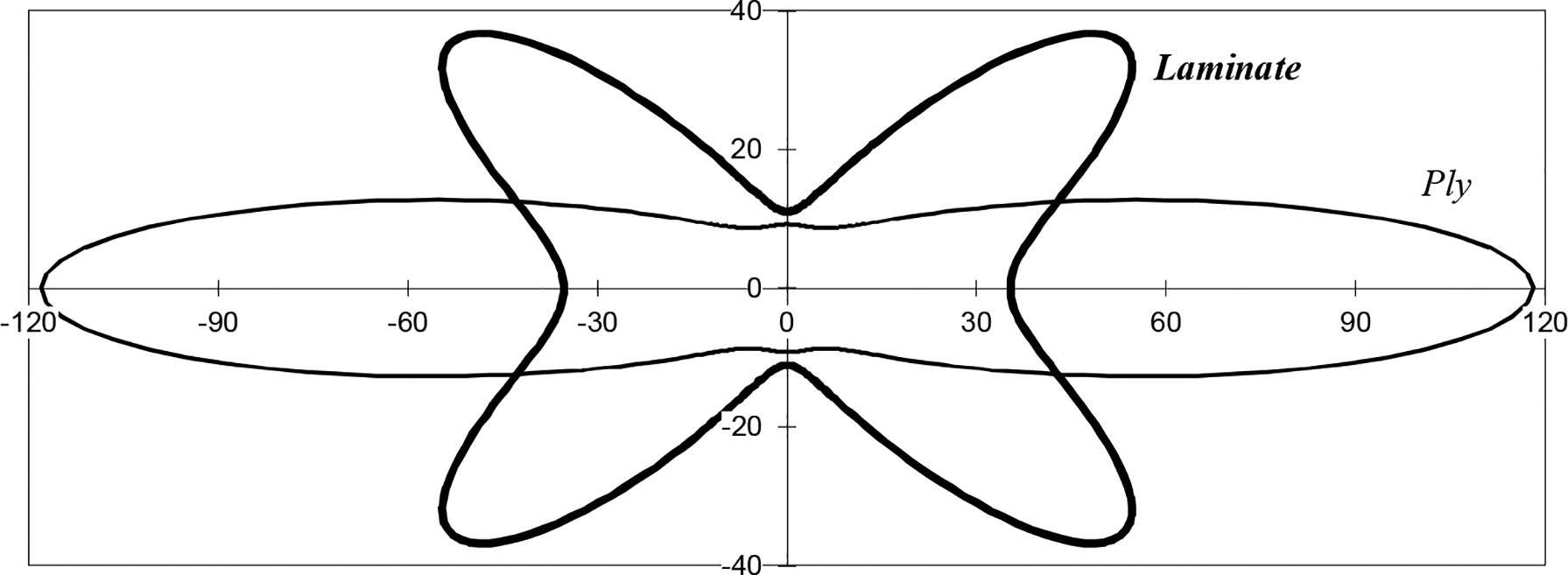
Polar variations of E11(θ) in GPa, calculated by CLPT
The tests results are summarised in Tables 3 and 4.
Figure 7 shows the three obtained curves. Three specimens were tested in all three directions. The experimental results agree well with theoretical predictions obtained by the CLPT. The angle
 found with the tensile tests gives 33.6°, whereas with the flexion
 = 35.1°.
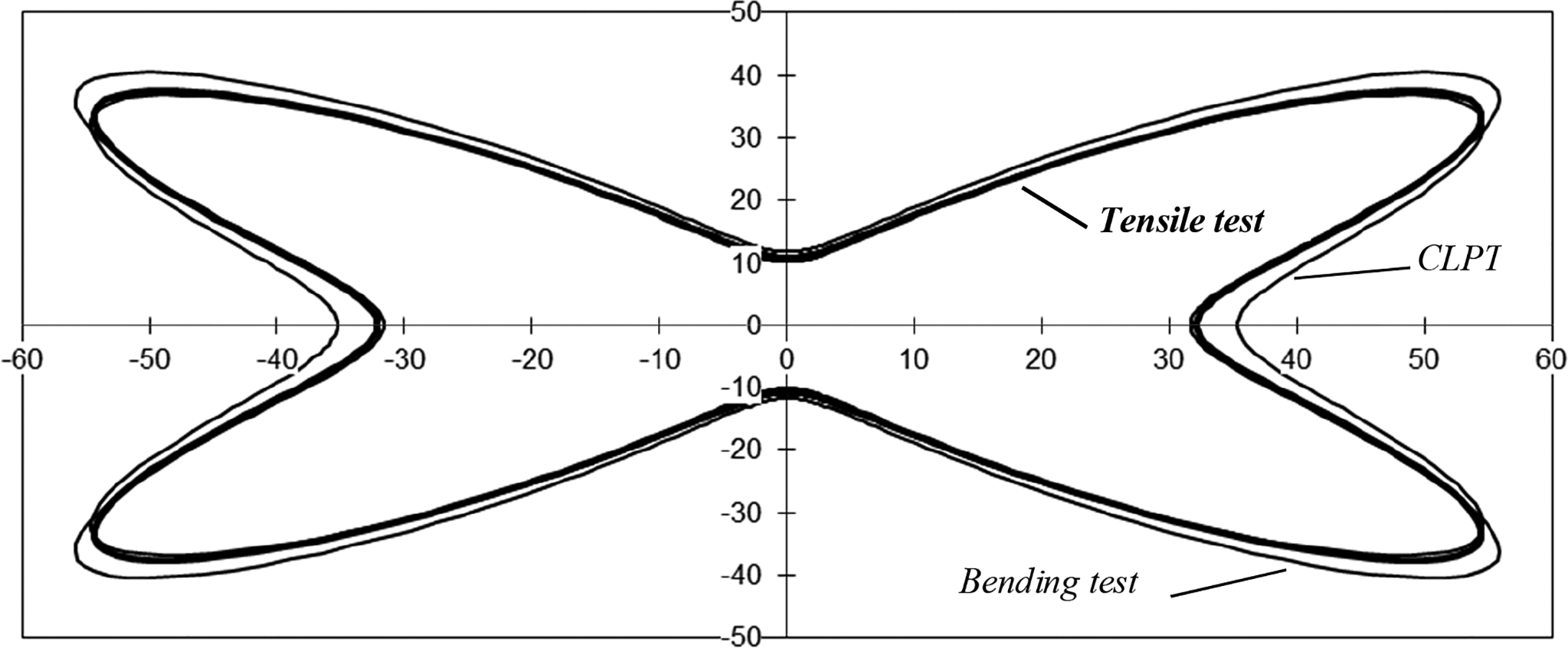
Polar variations of E11(θ) of angle ply laminate
Conclusions
This study showed that it is possible to completely determine the elastic behaviour of angle ply laminates, composed of unidirectional identical polymer matrix plies, using simple tensile tests. Therefore, it is vital that the lamination angle α be in the range of 30–45°; the three directions of tests are then 0 and 90° and α, which are the two axes of orthotropic and the fibre direction respectively. This constitutes a simple empirical rule, which does not require any preliminary calculation, and the precision of this rule can be directly verified experimentally.
The mechanical properties of unidirectional plies could be easily determined using this method. Since the three test directions are defined even if the elastic characteristics of the ply are not known, so it becomes possible to characterise the angle ply.
The advantage of this method is that all these properties are determined from tests on the same laminated plate; all specimens could also be cut from the same plate, which could avoid some experimental issues.