







Abstract
Hydroxyl terminated polybutadiene bound 2,2-methylenebis (4-methyl-6-tert-butylphenol) (HTPB–IPDI–MPH) was prepared by binding 2,2-methylenebis (4-methyl-6-tert-butylphenol) (MPH) onto hydroxyl terminated polybutadiene (HTPB) using isophorone diisocyanate (IPDI) as bridging agent. The structure of HTPB–IPDI–MPH was characterised by Fourier transform infrared spectroscopy, 1H nuclear magnetic resonance (NMR) spectroscopy, 13C NMR spectroscopy and gel permeation chromatography. The thermal stability of HTPB–IPDI–MPH was studied by thermal gravity analysis (TGA). The thermo-oxidative aging resistance of HTPB–IPDI–MPH for natural rubber (NR) vulcanizates was investigated by mechanical properties, cross-link density assessment and TGA, and then, possible mechanism of thermo-oxidative aging resistance of HTPB–IPDI–MPH for NR was proposed. The results showed that HTPB–IPDI–MPH had better thermal stability than the corresponding low molecular antioxidant MPH. The thermo-oxidative aging resistance and thermo-oxidative degradation of NR vulcanizates containing HTPB–IPDI–MPH were better than that of NR vulcanizates containing MPH obviously, indicating that the synergetic effect of phenolic –OH and –NHCOO– groups existed in HTPB–IPDI–MPH, which could enhance ability to scavenge free radical.
Keywords
Introduction
The thermo-oxidative aging usually initiated degradation of natural rubber (NR) under heat, oxygen and ozone.1–3 In order to extend its use life, many methods are explored to prevent or retard NR against oxidative aging. The addition of antioxidants to NR is one of the most convenient and effective ways. 4 Hindered phenols and amines are two common antioxidants used in plastics and rubber. 5 2,2-Methylenebis (4-methyl-6-tert-butylphenol) (MPH) has been widely used as a non-discoloring antioxidant in natural and synthetic rubbers, 6 the structure of which is shown in Fig. 1. This antioxidant could efficiently prevent thermo-oxidative aging of polymer. However, it has low molecular weight, which is easy to depart from the polymer substrate by migration, evaporation or extraction.7, 8 Loss of antioxidants from NR substrate will decrease properties, which could shorten its service. Furthermore, it influences the human health because the toxic antioxidant is easily absorbed by our body resulting in many diseases.9, 10 Therefore, this problem attracts more and more attention in the rubber industry.
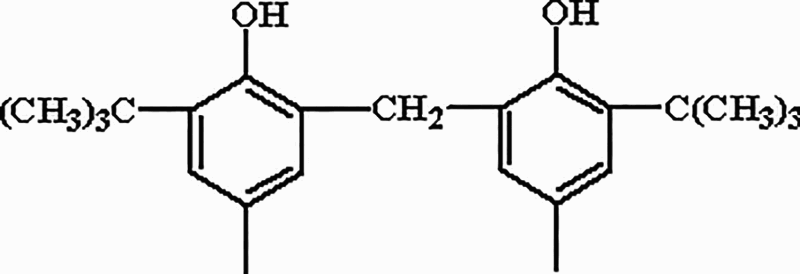
Structure of 2,2-methylenebis (4-methyl-6-tert-butylphenol)
Many methods have been developed to overcome the loss of low molecular weight antioxidant, one of which is the use of polymeric antioxidant in NR. There are two main ways to prepare a polymeric antioxidant. The first method is to synthesise polymeric antioxidants with a functional monomer with antioxidative ability.11, 12 The other one is to bind a low molecular weight antioxidant onto the polymer chains or inorganic particles.13–16 It is obvious that polymer bound antioxidants are easily prepared due to the simpler preparation technology and better oxidative aging resistance. In recent years, polymer bound antioxidants has been paid more attention. Yang and Huang et al.17–22 reported nanosilica based immobile antioxidant by immobilising low antioxidant onto the surface of nanosilica particles. The results showed that the polymeric antioxidants had the excellent dispersibility and good compatibility with the polypropylene, polyethylene, styrene butadiene rubber and NR matrix. The as prepared antioxidants possess better antioxidative and antimigratory performance than the corresponding low molecular counterpart. Podešva et al and Podešva and Kovárˇová.23, 24 reported that phenolic antioxidant was bound to the pendent vinyls of hydroxyl terminated polybutadiene (HTPB) by free radical addition, and a polymeric antioxidant was obtained. It was found that its antioxidative property was superior to low molecular weight antioxidant (Irganox 1076) due to persistence in polymer matrix. In our previous work,25–27 2,2-thiobis (4-methyl-6-tert-butylphenol) (TPH) was bound onto HTPB via a two-step reaction with isophorone diisocyanate (IPDI), and a novel polymeric antioxidant (HTPB–IPDI–TPH) with excellent thermo-oxidative aging resistance for NR was obtained. However, to the best of our knowledge, there have been few reports on the increase in the molecular weight of MPH by modification and the systemic study on properties and mechanism of thermo-oxidative aging resistance of modified antioxidant MPH.
Herein, hydroxyl terminated polybutadiene bound 2,2-methylenebis (4-methyl-6-tert-butylphenol) (HTPB–IPDI–MPH) was synthesised by attaching MPH to HTPB using IPDI as bridging agent. The HTPB–IPDI–MPH was characterised by Fourier transform infrared (FTIR) spectroscopy, 1H nuclear magnetic resonance (1H NMR) spectroscopy, 13C nuclear magnetic resonance (13C NMR) spectroscopy and gel permeation chromatography (GPC). The thermal stability of HTPB–IPDI–MPH was studied by thermal gravity analysis (TGA). The thermo-oxidative aging resistance of HTPB–IPDI–MPH for NR vulcanizates was investigated by mechanical properties, cross-link density assessment and TGA. In addition, the mechanism of thermo-oxidative aging resistance of HTPB–IPDI–MPH was discussed.
Experimental
Materials
Hydroxyl terminated polybutadiene, LBH 2000, was supplied by Cray Valley Co., USA. The number average molecular weight is 1.8–2.5 × 10³ and the 1,4-cis, 1,4-trans and 1,2-vinyl unit contents are 12.5, 22.5 and 65 wt-% respectively.
Isophorone diisocyanate was obtained from BASF Co., Germany. 2,2, -Methylenebis (4-methyl-6-tert-butylphenol) was supplied by Zibo Debaiyi Industral & Trading Co. Ltd, China. Dibutyltin dilaurate (DBTDL) was purchased from GE Co., USA. Natural rubber, SCR5, was supplied by Hainan Natural Rubber Co. Ltd, China. ZnO, stearic acid, sulphur, N-cyclohexyl-2-benzothiazyl sulfenamide, dibenzothiazyl disulphide and nanocalcium carbonate were supplied by Guangzhou Longsun Technology Co. Ltd, China. Toluene, methanol and other chemicals were all analytical pure and obtained from Guangzhou Chemical Co. Ltd, China. All chemicals were used without further purification.
Synthesis of HTPB–IPDI–MPH
Hydroxyl terminated polybutadiene bound 2,2-methylenebis (4-methyl-6-tert-butylphenol) was synthesised via two steps. First, HTPB–IPDI was obtained through the reaction between the secondary –NCO groups in IPDI and the –OH groups in HTPB in the presence of catalyst DBTDL at 40°C for 270 min. Ten grams HTPB was mixed with 4.00 g toluene in a four-neck boiling flask equipped with a mechanical stirrer, a reflux condenser, a thermometer and an N2 inlet. Afterwards, 0.01 g DBTDL was added in the above mixture, and then, 2.02 g IPDI was dropwise added over 30 min. Molar ratio of –OH groups in HTPB and the –NCO groups in IPDI was maintained at 1:2 in the reactants. The mixture was stirred at the constant temperature until the content of –NCO groups reduced to ∼50 wt-% of its initial content.
Second, HTPB–IPDI–MPH was prepared by the reaction between primary –NCO groups in HTPB–IPDI and phenolic –OH groups in MPH in the presence of the catalyst DBTDL at 75°C for 360 min. 2,2-Methylenebis (4-methyl-6-tert-butylphenol) (3.10 g) and toluene (11.00 g) mixed solution was dropwise added to the above solution of HTPB–IPDI over 30 min, and then, 0.23 g DBTDL was dropwise added. The reaction mixture was stirred at constant temperature. When the residual –NCO content was kept constant, reaction was finished. Whereafter, the as prepared mixture was then poured into methanol under vigorous stirring. The obtained emulsion-like sediment was centrifuged, and then, the clear supernatant was removed. The sediment was dissolved in toluene, and methanol was added to it under stirring to form an emulsion again. This cycle was performed for five times to remove all non-polymeric substances. Finally, the whitish syrupy sediment was transferred into a 20 mL flask, and HTPB–IPDI–MPH was obtained after drying at 45°C for 72 h under vacuum condition. The reaction for the synthesis of HTPB–IPDI–MPH is presented in Fig. 2.
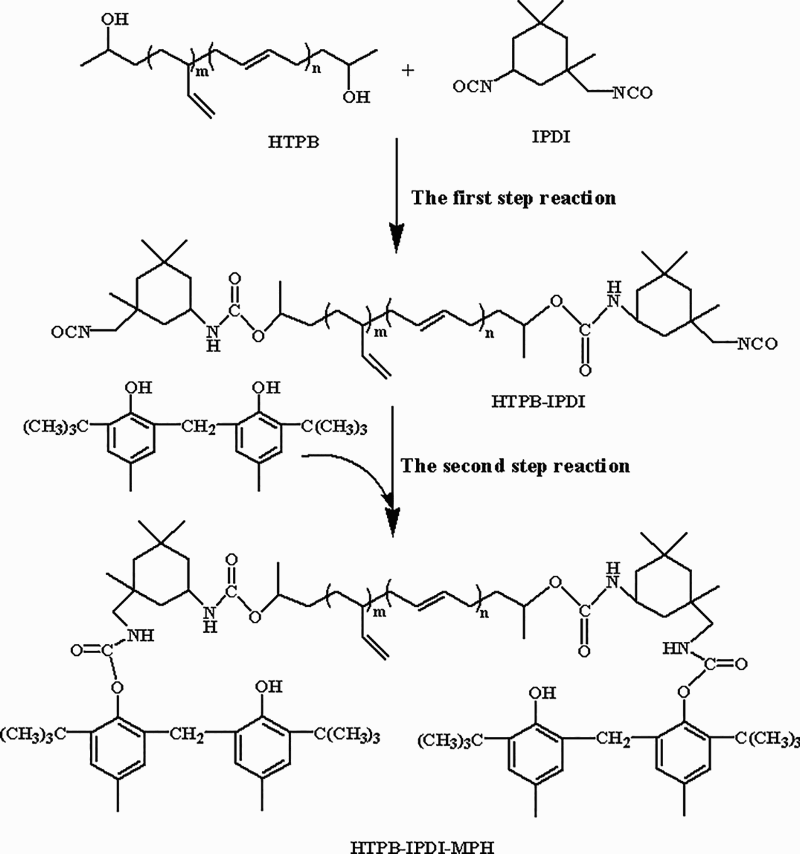
Synthesis route of HTPB–IPDI–MPH
Preparation of NR vulcanizates
The basic formulations of the NR compounds was as follows: NR, 100 parts per hundred rubber (phr); stearic acid, 2 phr; zinc oxide, 5 phr; nanocalcium carbonate, 30 phr; N-cyclohexyl-2-benzothiazyl sulfenamide, 1.5 phr; dibenzothiazyl disulphide, 0.5 phr; and sulphur, 1.5 phr; and the antioxidant was HTPB–IPDI–MPH or MPH (6 phr HTPB–IPDI–MPH is equal to 1 phr MPH structural units). The amount of HTPB–IPDI–MPH is variable, and the amount of MPH was 1 phr. The control was prepared by basic formulations without antioxidant.
Natural rubber was passed through the roller six times on an open two-roll mill (Shanghai First Rubber Machinery Factory, China) at room temperature with the nip gap of ∼0.5 mm, and then, ingredients were added to the glue stock by standard procedure. After mixing, the compounds were left for 24 h before vulcanisation. The vulcanisation of the NR compounds was conducted at 143°C for the optimum curing time t90 in a compression mould. The t90 of the rubber compounds was determined using a UR-2030 vulcameter (U-CAN, Taiwan) at 143°C.
Testing and characterisation
Fourier transform infrared
Fourier transform infrared spectra were recorded by a Tensor 27 spectrometer (Bruker, Germany) in the range of 4000–600 cm− 1 with 30 scans at a resolution of 8.0 cm− 1. The samples were prepared by solution casting of 1 wt-% polymer in toluene directly onto KBr pellets and dried with an infrared lamp.
1H nuclear magnetic resonance
1H nuclear magnetic resonance spectra were obtained using a Bruker AV 300 NMR spectrometer (Bruker, Germany) with CDCl3 as a solvent.
13C nuclear magnetic resonance
13C nuclear magnetic resonance spectra were obtained using an AV 300 NMR spectrometer (Bruker, Germany) with CDCl3 as a solvent.
Gel permeation chromatography
Gel permeation chromatography was carried out with a GPC 2410 instrument (Waters, USA) at 30°C using tetrahydrofuran as the solvent and narrowly distributed polystyrene as the standard.
Thermal gravity analysis
The TGA was performed using a TG 209 thermogravimeter (Netzsch Instruments Co., Germany). Approximately 10 mg of sample was heated with a heating rate of 10°C min− 1 from 30 to 600°C. The HTPB–IPDI–MPH and MPH were performed under nitrogen atmosphere, while NR vulcanizates were carried out under air atmosphere.
Measurement of thermo-oxidative aging resistance
Thermo-oxidative aging was performed in a GT-7017-M aging oven (Gotech Testing Machine Inc., Taiwan) at 100°C. Samples were taken out at periodic intervals, and tensile tests were conducted using a Zwick/Roell Z010 instrument (Germany) according to the ASTM D412 test method with a crosshead speed of 500 mm min− 1. The percentage of retained tensile strength, modules and 100% elongation and elongation at break was calculated using the following equation

Measurement of cross-link density
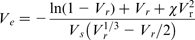
The equilibrium swelling method was used to determine the cross-link density of the vulcanizates. Samples were swollen in toluene at room temperature for 72 h, and then, removed from the solvent, and the surface toluene was quickly blotted off. The samples were immediately weighed and then dried in a vacuum oven at 80°C for 36 h to remove the solvent and then reweighed. The volume fraction of NR in the swollen gel Vr was calculated by the following equation28, 29

The elastically active network chain density Ve, which is used to represent the whole cross-link density, is then calculated by the well known Flory–Rehner equation
30
Results and discussion
Structural characterisation of HTPB–IPDI–MPH
Figure 3 shows the FTIR spectra of HTPB, HTPB–IPDI and HTPB–IPDI–MPH respectively. As shown in Fig. 3a, the characteristic peak at 3370 cm− 1 is assigned to –OH stretching vibration. The band at 3076 cm− 1 is attributed to CH = stretching vibration of –CH = CH2. The band at 2974 cm− 1 is assigned to –CH3 asymmetric stretching vibration. The peaks at 2919 and 2847 cm− 1 are attributed to the asymmetric stretching and symmetric stretching vibration of –CH2– respectively. The peaks at 1643 and 912 cm− 1 are assigned to –C = C– stretching vibration and CH out of plane bending vibration of –CH = CH2 (Ref. 32) respectively. As shown in Fig. 3b, the broad band at 3370 cm− 1 for –OH stretching vibration disappeared, 33 but the weak peak at 3340 cm–1 for –NH– stretching vibration was observed. The band at 2271 cm− 1 is assigned to –NCO stretching vibration. The peaks at 1720 and 1505 cm− 1 are attributed to carbonyl stretching and –NH– bending vibration respectively. The band at 1235 cm− 1 is due to –C–O–C– stretching vibration, which demonstrated that reaction between –NCO groups in IPDI and –OH groups in HTPB occurred and form –NHCOO– groups. The structure of HTPB–IPDI is shown in Fig. 2. As shown in Fig. 3c, the intensity of the –NCO absorption peak at 2271 cm− 1 disappeared in contrast with that in Fig. 3b. The peak at 1480 cm− 1 is attributed to –CH2– bending vibration of MPH, and the peak at 3352 cm− 1 represents phenolic –OH stretching vibration. The peak at 1559 cm− 1 is assigned to stretching vibration of aromatic ring. In addition, the peak at 1364 cm− 1 is due to –C–O–C– stretching vibration linked aromatic ring, which confirmed the reaction between –NCO groups in HTPB–IPDI and phenolic –OH groups in MPH. Therefore, the FTIR spectra demonstrated that MPH was successfully bound onto the HTPB–IPDI chains.
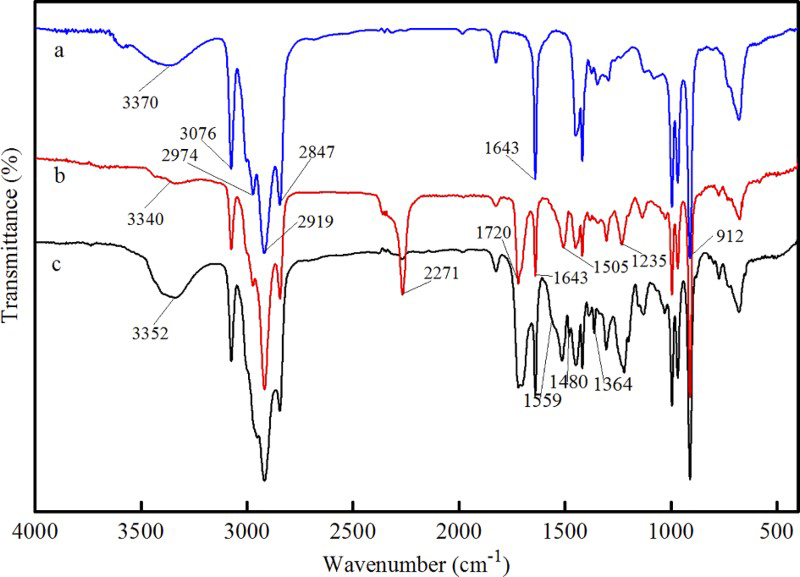
Fourier transform infrared spectra of a HTPB, b HTPB–IPDI and c HTPB–IPDI–MPH
Figures 4 and 5 show the 1H NMR and 13C NMR spectrum of HTPB–IPDI–MPH respectively. As shown in Fig. 4, the peak at 7.18 ppm is due to the proton of benzene ring. The peaks at 1.36 and 2.36 ppm are assigned to the proton of tert-butyl and para-methyl in MPH respectively. Moreover, the peaks at 5.33 and 2.04 ppm are attributed to the = CH– and –CH2– proton of 1,4 microstructure of HTPB respectively, and the peaks at 4.96 and 1.36 ppm are due to the = CH2 and –CH2– proton of 1,2-vinyl microstructure of HTPB (Ref. 32) respectively. The peaks at 3.46 and 2.92 ppm are attributed to methines and methylenes proton connecting to the –NHCOO– groups of IPDI respectively. As shown in Fig. 5, the absorption peaks at 24–34 and 38–43 ppm are assigned to the carbon of 1,2-CH2 and the 1,4-CH2 respectively. The peaks at 114 and 143 ppm were assigned to the carbon of 1,2-vinyl and 1,4-(cis and trans)34, 35 respectively. The peaks at 132.0–125.0 ppm corresponding to aromatic carbon of benzene ring are observed, and the peak at 21.5 ppm is attributed to the carbon of –NHCOO– groups. The peak at ∼78 ppm is attributed to carbon of CDCl3, which is the solvent of HTPB–IPDI–MPH. 1H NMR and 13C NMR spectra also indicated that MPH was successfully bound onto the HTPB–IPDI chains.
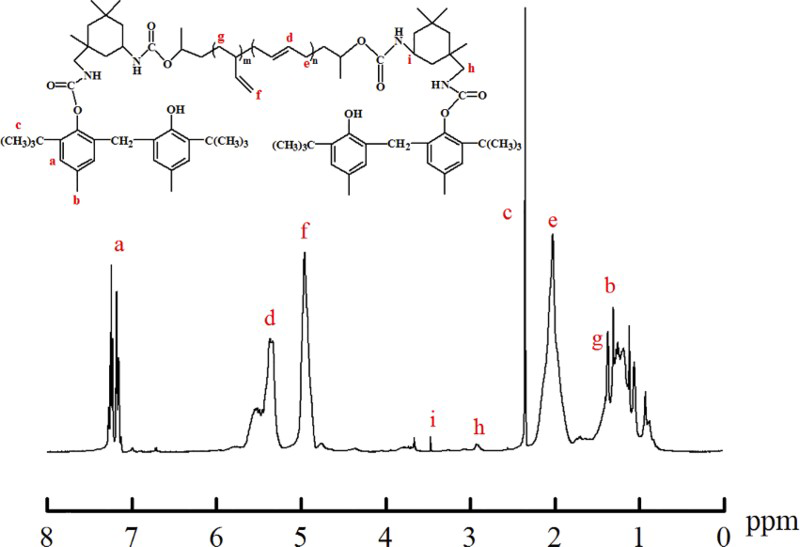
1H nuclear magnetic resonance spectrum of HTPB–IPDI–MPH
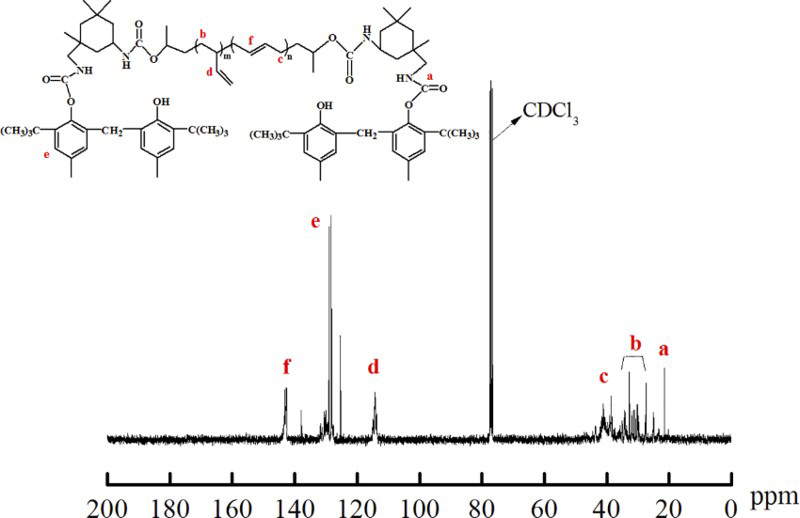
13C nuclear magnetic resonance spectrum of HTPB–IPDI–MPH
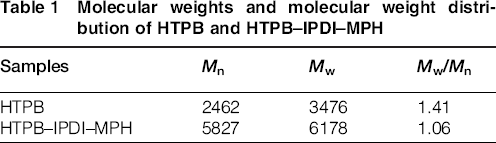
Table 1 lists the molecular weights and molecular weight distribution of HTPB and HTPB–IPDI–MPH obtained by GPC. As shown in Table 1, the number average molecular weight Mn and weight average molecular weight Mw of HTPB–IPDI–MPH increased compared to the pristine HTPB. In addition, the polydispersities (Mw/Mn) of HTPB–IPDI–MPH was narrower than that of HTPB, indicating that the distribution of HTPB–IPDI–MPH was more uniform than that of HTPB. This also demonstrated that MPH was successfully bound onto molecular chains of HTPB–IPDI.
Molecular weights and molecular weight distribution of HTPB and HTPB–IPDI–MPH
Thermal stability of HTPB–IPDI–MPH
Figure 6 shows the TGA and derivative thermogravimetry curves of MPH (Fig. 6a) and HTPB–IPDI–MPH (Fig. 6b) under nitrogen atmosphere with a heating rate of 10°C min− 1. The corresponding TG characteristic parameters are presented in Table 2. As shown in Fig. 6a and Table 2, the TGA curve of MPH has only one weight loss stage. The initial weight loss temperature of MPH is ∼262°C, which results from the vaporisation of MPH, and the maximum rate of weight loss is at 293°C. As shown in Fig. 6b and Table 2, the curve consists of two loss weight stages. The first stage, from 221 to 374°C, is caused by the rupture of –NHCOO– groups, 36 and the maximum rate of weight loss is at 314°C. The second stage, from 385 to 507°C, could result from the hydrocarbon chain rupture of HTPB, which is further broken into low molecular weight fragments, 37 and the maximum rate of weight loss was at ∼465°C. It can be seen from the above results that the thermal stability of MPH units in HTPB–IPDI–MPH was improved remarkably after binding MPH onto HTPB–IPDI by –NHCOO– groups.
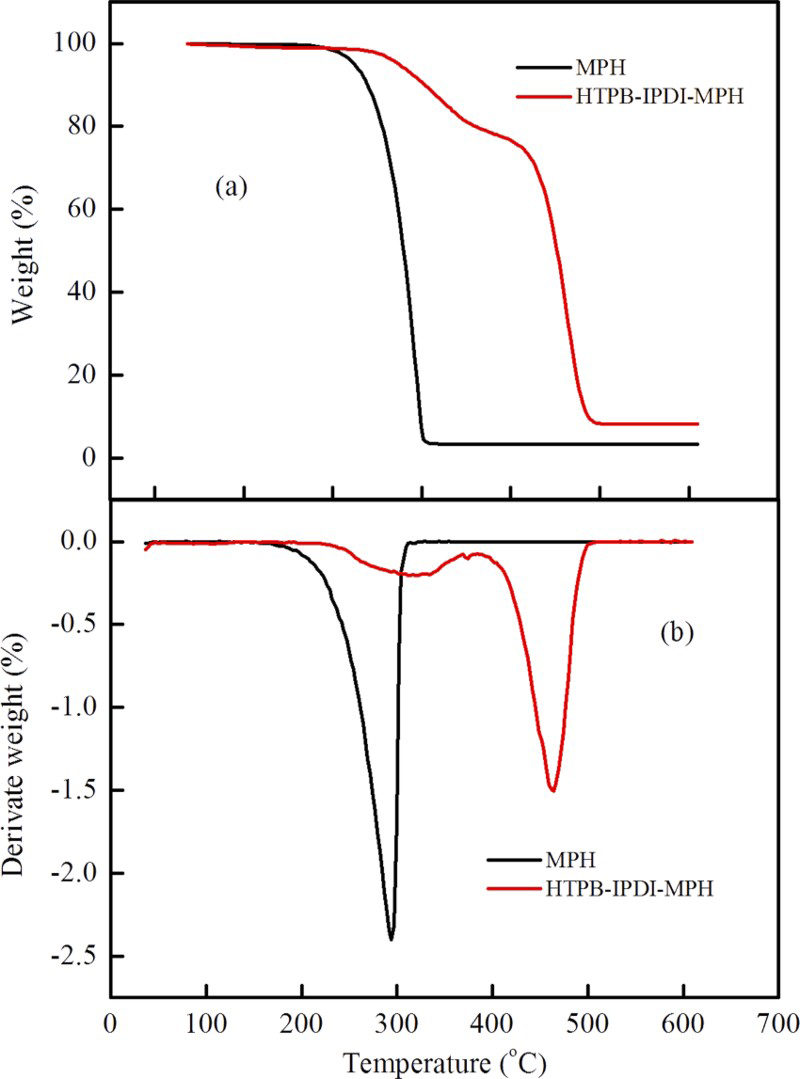
a thermal gravity analysis and b derivative thermogravimetry (DTG) curves of MPH and HTPB–IPDI–MPH
Thermo-oxidative aging resistance of HTPB–IPDI–MPH for NR vulcanizates
Figure 7 shows the effect of the content of HTPB–IPDI–MPH on the percentage of retained tensile strength and elongation at break of NR vulcanizates aged at 100°C for 48 h. As shown in Fig. 7, the percentage of retained tensile strength of NR vulcanizates increased steadily with the increase in the content of HTPB–IPDI–MPH up to 6 phr. When the content of HTPB–IPDI–MPH was more than 6 phr, the percentage of retained tensile strength of NR vulcanizates decreased slightly. The percentage of retained elongation at break of NR vulcanizates changed slightly with the content of HTPB–IPDI–MPH up to 6 phr. When the content of HTPB–IPDI–MPH was more than 6 phr, the percentage of retained elongation at break of NR vulcanizates decreased. Therefore, the optimal content of HTPB–IPDI–MPH as antioxidant for NR vulcanizates is 6 phr as a result of the increase in its ability to scavenge free radicals with the increase in HTPB–IPDI–MPH. However, as the further increase in HTPB–IPDI–MPH over 6 phr, too much free radical could reversely accelerate thermo-oxidative aging of NR vulcanizates, which led to decrease in percentage of retained tensile strength and elongation at break of NR vulcanizates.
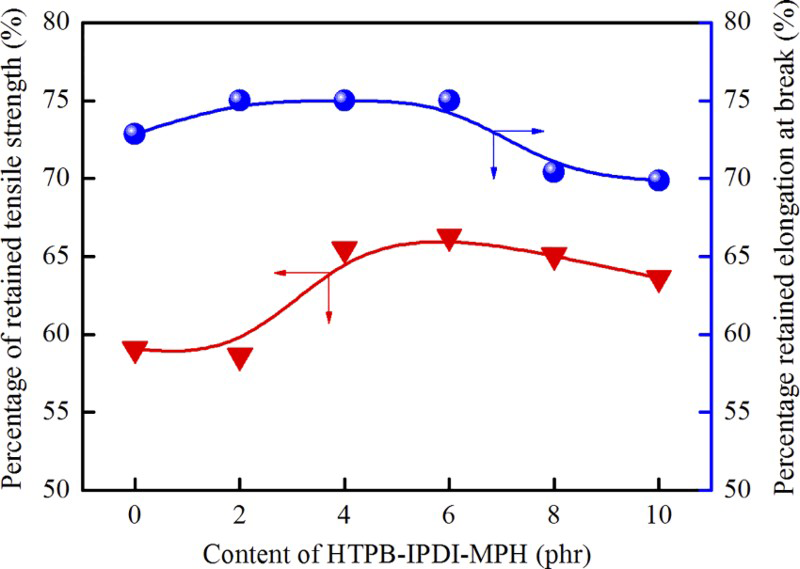
Effect of content of HTPB–IPDI–MPH on percentage of retained tensile strength and retained elongation at break aged at 100°C for 48 h
Figure 8 shows the effect of aging time on the percentage of retained modulus at 100% elongation of NR vulcanizates aged at 100°C. The content of HTPB–IPDI–MPH in NR vulcanizates is 6 phr, which has the same amount of MPH structural units as 1 phr MPH. One parts per hundred rubber of MPH is incorporated in NR vulcanizates in comparison with HTPB–IPDI–MPH and the control. As shown in Fig. 8, the percentage of retained modulus at 100% elongation of NR vulcanizates containing HTPB–IPDI–MPH sharply increased during aging up to 48 h and then did not change. However, the percentage of retained modulus at 100% elongation of NR vulcanizates containing MPH always increased with the increase in aging time, and the increment rate is faster than that containing HTPB–IPDI–MPH obviously. It is notable that the retained modulus at 100% elongation of the control increased sharply with the increase in aging time. This demonstrated that both of cross-linking and degradation reaction existed in the course of NR aging over 96 h. The rate of cross-linking reaction of vulcanizates containing HTPB–IPDI–MPH is less than that of MPH and the control during thermo-oxidative aging, which is attributed to strong ability to scavenge free radicals. The previous research also found that the rate of cross-linking reaction was more than that of degradation in initial aging stage. With increasing aging time, the rate of cross-link degradation increased gradually. 38
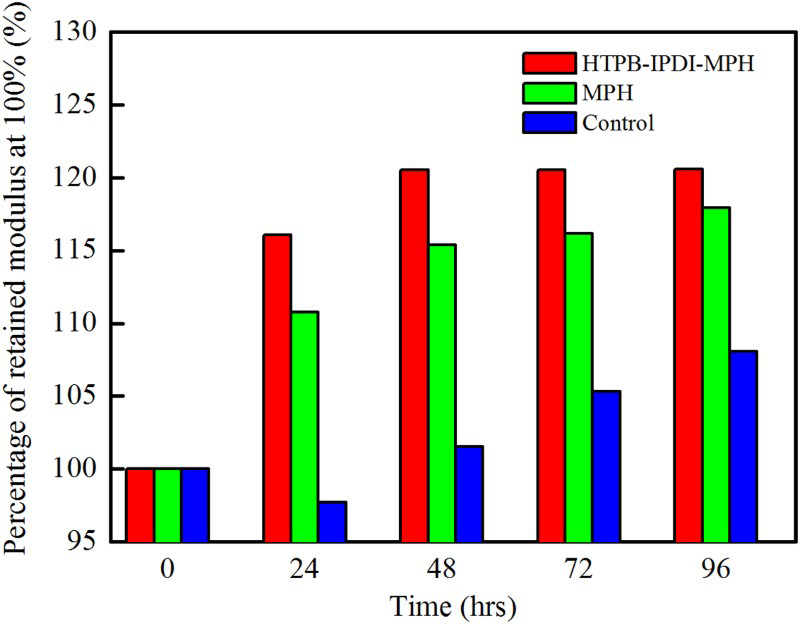
Percentage of retained modulus at 100% elongation of NR vulcanizates at different aging times
Figures 9 and 10 show the effect of aging time on percentage of retained tensile strength and retained elongation at break of NR vulcanizates aged at 100°C respectively. As we have known, the best content of MPH as antioxidant in NR vulcanizates is 1 phr, so 6 phr HTPB–IPDI–MPH was incorporated in basic formulations in our experiment. In contrast, NR vulcanizates containing 1 phr of the corresponding low molecular antioxidant MPH and the control were also prepared. As shown in Figs. 9 and 10, the tensile strength and elongation at break of the control sharply decreased with the increase in aging time. However, the thermo-oxidative aging resistance of NR vulcanizates containing MPH and HTPB–IPDI–MPH was remarkably improved. The NR vulcanizates containing 1 phr MPH exhibited slightly higher percentage of tensile strength and elongation at break than that of the control during aging. It was obvious that the percentage of retained tensile strength and elongation at break were higher than those of the control and vulcanizates containing MPH, indicating that the NR vulcanizates containing 6 phr HTPB–IPDI–MPH had the best thermo-oxidative aging resistance for NR vulcanizates. Based on the previous results, HTPB–IPDI–MPH has the same hydrocarbon chain as NR molecular chains apart from antioxidative groups. Therefore, HTPB–IPDI–MPH has a good compatibility with NR. On the other hand, the structure of HTPB–IPDI–MPH had an excellent antioxidative effect by itself.
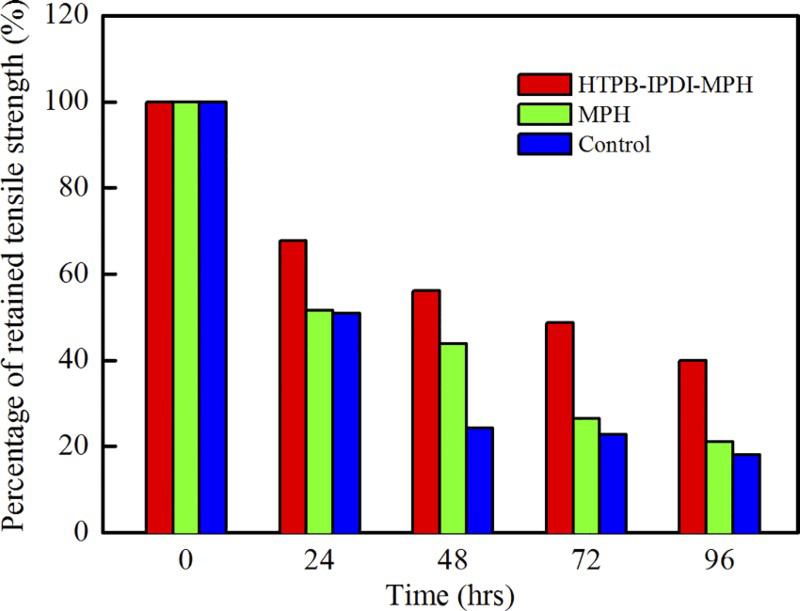
Percentage of retained tensile strength of NR vulcanizates at different aging times
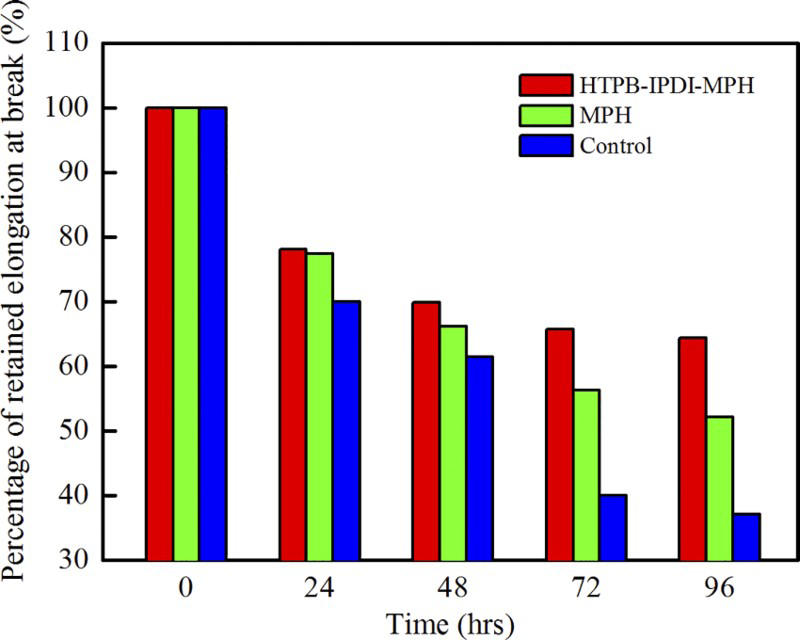
Percentage of retained elongation at break of NR vulcanizates at different aging times
Cross-link density of NR vulcanizates
Figure 11 shows the effect of aging time on cross-link density of the control, NR vulcanizates containing MPH and HTPB–IPDI–MPH at 100°C. As shown in Fig. 11, the cross-link density of the control increased with the increase in aging time up to 48 h and then reduced to 1.14 × 10− 4 mol cm− 3 after aging for 96 h. The cross-link density of NR vulcanizates containing 1 phr MPH increased with the increase in aging time up to 72 h and then decreased with the increase in aging time. The large change of cross-link density of the control and NR vulcanizate incorporated MPH was ascribed to the presence of the cross-linking and degradation reaction together during the aging, and degradation reaction was predominant as a result of lower thermo-oxidative aging resistance. However, the cross-link density of NR vulcanizates containing 6 phr HTPB–IPDI–MPH, which is equal to ∼1 phr of MPH structural units, had little change during aging. This demonstrated that HTPB–IPDI–MPH had excellent thermo-oxidative resistance for NR and effectively prevented NR from thermo-oxidative degradation as a result of good compatibility with NR and highly ability to scavenge free radicals.
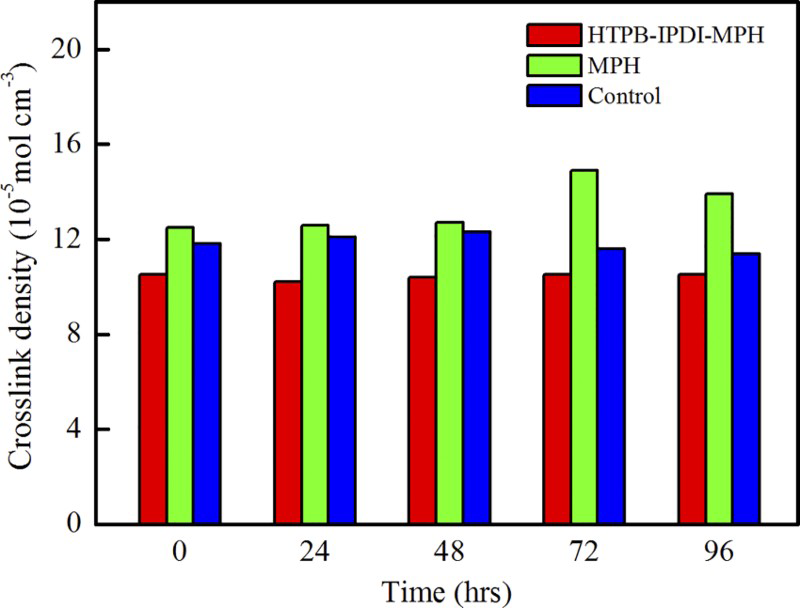
Cross-link density of NR vulcanizates at different aging times
Thermo-oxidative degradation of NR vulcanizates
The thermo-oxidative degradation of NR vulcanizates was carried out in air atmosphere using a thermogravimeter. Figure 12 shows TGA and derivative thermogravimetry curves of thermo-oxidative degradation of the control, NR vulcanizates containing 1 phr MPH and 6 phr HTPB–IPDI–MPH. The corresponding TG characteristic parameters are presented in Table 3. As shown in Fig. 12, thermo-oxidative degradation of NR vulcanizates consisted of three main stages of weight loss. 39 The first stage, from 260 to 400°C, results mainly from the volatilisation of low molecular weight constituent. The second stage, from 400 to 460°C, results primarily from the degradation reaction of the main chains of NR. The third stage, from 460 to 520°C, results from oxidative reaction of residual carbon, which could be oxidised into carbon dioxide. As shown in Table 3, the onset decomposition temperature Tonset of the control is ∼306°C, and the maximum rate temperature Tmax of weight loss is at ∼335°C. Tonset and Tmax of NR vulcanizates containing MPH are 6 and 24°C higher than the control vulcanizates respectively, which is primarily attributed to the retardant effect of MPH on thermo-oxidative degradation. Tonset and Tmax of NR vulcanizates containing HTPB–IPDI–MPH are higher than that of MPH. This may be because the HTPB–IPDI–MPH with higher molecular weight was not easy to volatilise from rubber substrate under high temperature compared with MPH and can effectively exert its thermo-oxidative degradation resistance.
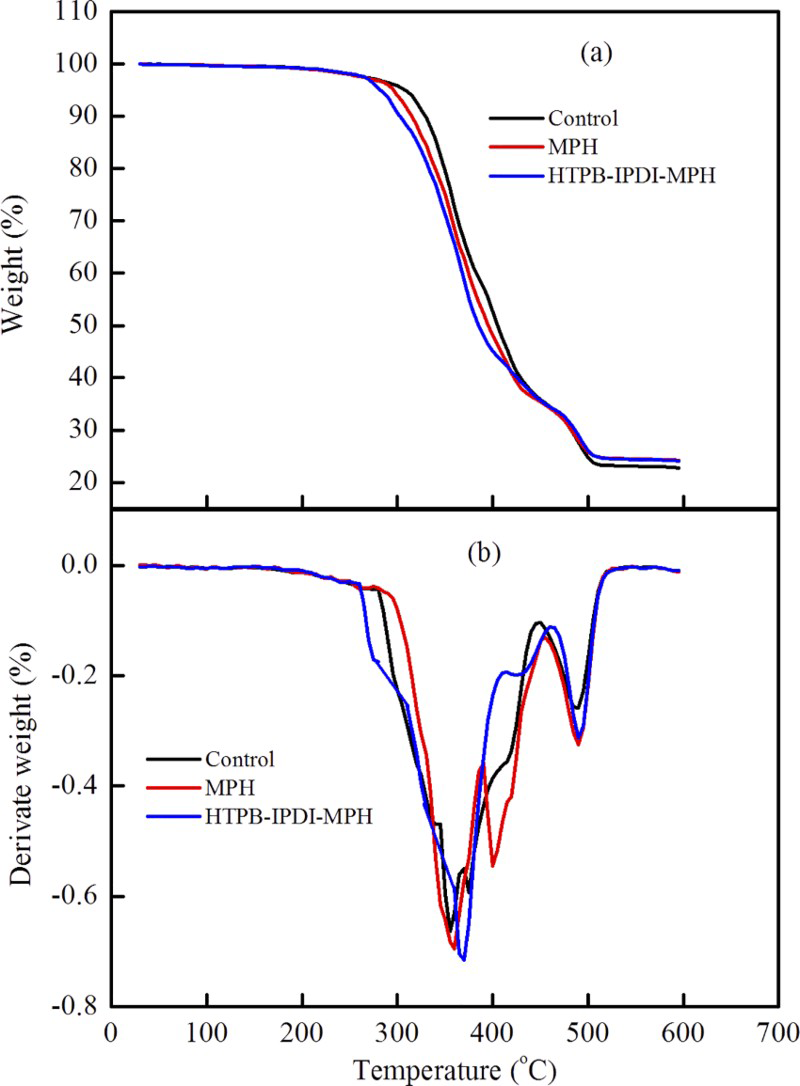
a thermal gravity analysis and b DTG curves of control, NR vulcanizates with MPH and HTPB–IPDI–MPH
Thermogravimetric characteristic parameters of MPH and HTPB–IPDI–MPH*
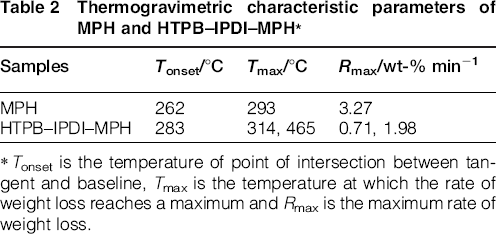
Tonset is the temperature of point of intersection between tangent and baseline, Tmax is the temperature at which the rate of weight loss reaches a maximum and Rmax is the maximum rate of weight loss.
Thermogravimetric characteristic parameters of NR vulcanizates*
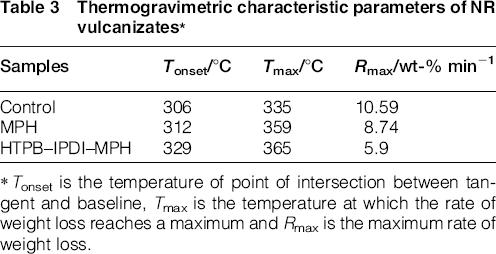
Tonset is the temperature of point of intersection between tangent and baseline, Tmax is the temperature at which the rate of weight loss reaches a maximum and Rmax is the maximum rate of weight loss.
Mechanism of thermo-oxidative resistance of HTPB–IPDI–MPH for NR vulcanizates
The possible mechanism of thermo-oxidative resistance of HTPB–IPDI–MPH is shown in Fig. 13. The polymeric antioxidant can quickly inhibit oxidation by transferring their phenolic hydrogen atom to a chain carrying peroxyl radical (ROO·) to terminate the aging reaction. The rate of chain termination was faster than that of chain propagation. One HTPB–IPDI–MPH had two phenolic OH groups, which could trap ROO· to stop radical chain reaction. In addition, four amino groups of the –NHCOO– groups in HTPB–IPDI–MPH were easy to donate hydrogen atom, which can inhibit oxidation of NR vulcanizates. As shown in Fig. 13, HTPB–IPDI–MPH traps ROO· to give phenoxyl radicals (I). The phenoxyl radicals (I) can quickly trap ROO· to produce the stable benzoquinone compound (II). As a result, one HTPB–IPDI–MPH can trap at most 12 ROO·, but one MPH can trap at most four ROO·. Therefore, the thermo-oxidative aging resistance of HTPB–IPDI–MPH in NR vulcanizates was better than the corresponding low molecular weight counterpart (MPH).
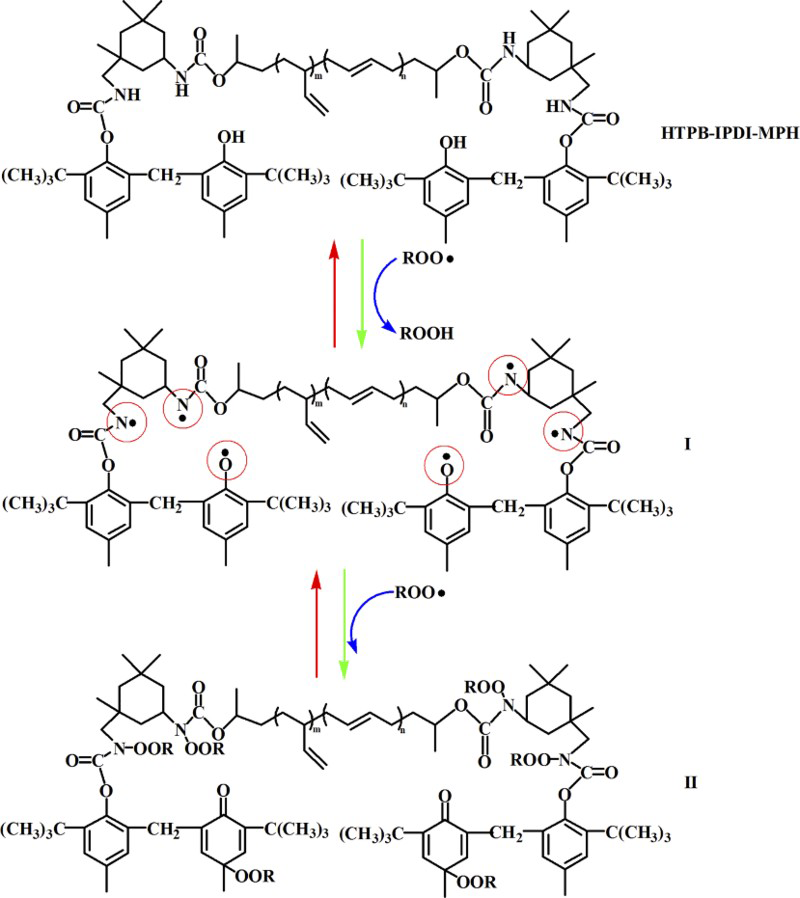
Possible mechanism of thermo-oxidative aging resistance of HTPB–IPDI–MPH
Conclusions
A novel polymeric antioxidant, HTPB–IPDI–MPH, was obtained by MPH binding onto HTPB used IPDI as bridging agent. The HTPB–IPDI–MPH had better thermal stability compared with MPH. The thermo-oxidative aging and thermo-oxidative degradation resistance of HTPB–IPDI–MPH for NR vulcanizates were better than those of NR vulcanizates containing MPH. The cross-link density of NR vulcanizates with HTPB–IPDI–MPH had little change during aging as a result of synergistic effect of the phenolic –OH and –NHCOO– groups in HTPB–IPDI–MPH, which could increase largely scavenging ability of peroxide radical. Therefore, one HTPB–IPDI–MPH could trap 12 ROO·, while one MPH can trap at most four ROO.
Footnotes
Acknowledgements
This work was financially supported by the Natural Science Foundation of Shanxi Province (grant no. 2015021061), the Qualified Personnel Foundation of Taiyuan University of Technology (grant nos. tyut-rc201307a and tyut-rc201261a) and the Youth Foundation of Taiyuan University of Technology (grant nos. 2013Z046 and 2013Z006).