







Abstract
Silver based composites with varying concentration of graphite and/or MoS2 were prepared by powder metallurgy method. Impacts of composition on the tribological performance of the composites in ambient air and vacuum were investigated. The lowest friction in air was achieved by Ag–20G (vol.-%) composite, while Ag–20MoS2 exhibited the best lubricity in vacuum. XPS evaluation revealed the oxidation of MoS2 in air and a decrease concentration of graphite on the surface of the wear tracks under vacuum. As the proportion of graphite to MoS2 increased, the friction coefficient and the wear rates ascended gradually in air while decreased sharply under vacuum. As compared with other compositions, Ag–15MoS2–5G exhibited a comparable stable and good tribological performance as the environmental condition changed for its friction coefficient and wear rate remained around 0·14 and 5×10⁻⁶ mm3 N−1 m−1.
Introduction
Solid lubrication has gained considerable attention because of its tribological effectiveness in the ultimate conditions where oil and grease lubrication cannot operate.1–3 Graphite, MoS2, boron nitride and soft metals (Ag, Cu, Au, etc.) are most commonly used solid lubricants.4–7 Many research works have been carried out to investigate the properties and performance of solid lubricants. However, it was found that no single lubricant could exhibit good lubricating performance in a wide range of environmental conditions. Graphite can provide effective lubrication in humid environments below 300°C but performs badly in conditions with low water vapour, like vacuum and high temperature conditions.8,9 MoS2 is unparalleled as a solid lubricant in vacuum and dry environments but the friction coefficient increases in humid air or at elevated temperature owing to oxidation.10–12 Considerable effort has been expanded towards the lubricity of silver (e.g. synthesised as composites TiC/Ag, 13 Mo2N/Ag 14 and CrAlN/Ag 15 ) due to its low shear strength and low sensitivity to environment. At increased temperature, silver can migrate rapidly to the surface to provide lubrication because of its large diffusion coefficient. 16 However, as it becomes adhesive at high temperature due to excessive softening, 17 Ag often serves as a low-to-moderate-temperature (300–500°C) solid lubricant. Clearly, selecting a single solid lubricant can only be effective in limited environmental conditions.
Previous research works revealed that incorporating multiple lubricants to form composite solid lubricant materials is a promising path for adaptive material.18–21 It was reported that the addition of graphite in burnished and bonded MoS2 films can reduce the sensitivity to moisture. 22 Muratore et al.23,24 found that MoS2 inclusions could further reduce the friction of YSZ-Ag-Mo and Mo2N/Ag and extend the application temperature by reacting with silver and oxygen to form high-temperature lubricious compounds (AgMoxOy). However, no publications have investigated the synergetic effects of Ag, MoS2 and graphite.
In the current work, silver based composites with varying concentration of graphite and MoS2 were subjected to tribotest for investigating the impacts of composition on the tribological performance of the composites in both air and vacuum. By comparing the performance of the composites, the optimal composition for an adaptive composite was determined.
Experimental methods
Samples of the self-lubricating composites with different compositions were prepared as follows: the powders of silver (average particle size 2 μm, purity 99·99%), graphite (particle size ≤30 μm, purity 99·85%) and molybdenum disulfide (particle size ≤45 μm, purity 98·00%) were mechanically mixed by planetary ball mill (QM-3SP04, Nanjing University, China) for 1 h. The mixed powders were put into a steel mould and pressed into circular disks (Φ43×4 mm) at 300 MPa for 90 s. The disks obtained were sintered at 700°C in hydrogen gas for 1 h and then repressed at 500 MPa for 90 s.
Structural characterization of the prepared composites was carried out by X-ray diffraction (XRD, D/MAX2500V, Rigaku, Japan) using Cu Kα radiation with an accelerating voltage of 40 kV and a current of 100 mA. The elemental and phase compositions of the lubricating films were investigated by an X-ray photoelectron spectroscopy (XPS, ESCALAB 250Xi, Thermo, America) analyzer using Mg Kα radiation. The morphology of the composites before and after wear test was analyzed by a scanning electron microscopy (SEM, JSM-6490LV, JEOL, Japan) operating at 20 kV. The equipped energy dispersive X-ray spectroscopy (EDX) apparatus of the SEM system was employed to investigate the element distribution of the sample. The hardness of the composites was evaluated by Brinell Vickers hardness measurements (HBV-30A, indentation load 5 kg). Furthermore, the surface variations of the wear tracks were evaluated by a stylus profilometry (YS2205, HMCT GROUP, China).
The wear tests in laboratory air (20–30% relative humidity) and vacuum (10−2 Pa) were carried out on a ring-on-disc tribometer schematised in Fig. 1 at temperatures of 20–25°C. A commercially available carbon steel (ASTM-1045, HRC 51) was selected as the counterfacing material and was machined into a ring which was 22 mm in inner diameter and 28 mm in outer diameter. All the specimens and the counterfacing ring were mechanically ground and then polished by no. 800 grit paper until average roughness (Ra) was below 0·1 μm. The tests were carried out using a load of 80N and a rotational speed of 150 rev min−1 for 30 min. Furthermore, all the composite disks and the ring were carefully cleaned by ethanol before and after each test. All the tests were repeated 5 times. The volume wear rates Wv of the composites were evaluated by measuring the mass loss on an analytical balance (0·1 mg sensibility).
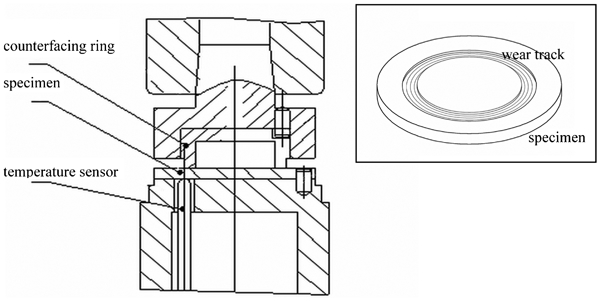
Schematic of ring-on-disk tribometer
Results and discussion
Characterisation of composites
Figure 2 is an XRD scan of the sintered Ag–10MoS2–10G (vol.-%). The peaks shown are corresponding to Ag, MoS2 and graphite. No peaks for other phases were observed, indicating that Ag, MoS2 and G did not react with each other and the crystalline forms of the solid lubricants did not change, which guaranteed an effective lubrication. Figure 3 shows the morphology and EDX analysis of Ag–10MoS2–10G. The elements carbon and sulphur are distributed homogeneously as indicated in the EDX images. The optical morphology of Ag–10MoS2–10G is displayed in Fig. 4. The black phases are MoS2 and graphite which disperse uniformly in the grey silver matrix.
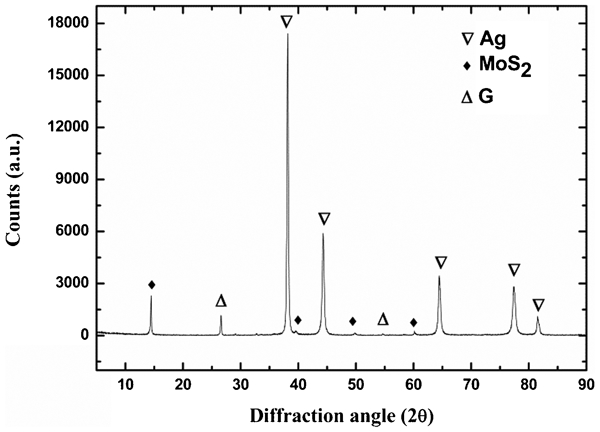
X-ray diffraction patterns of Ag–10MoS2–10G composite
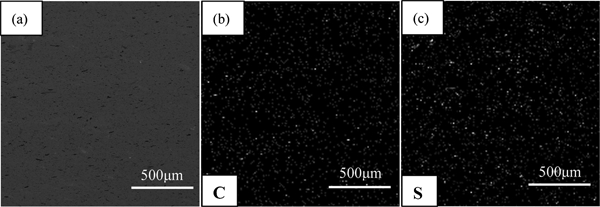
Image (SEM) a and EDX maps with b carbon and c sulphur of sintered Ag–10MoS2–10G composite
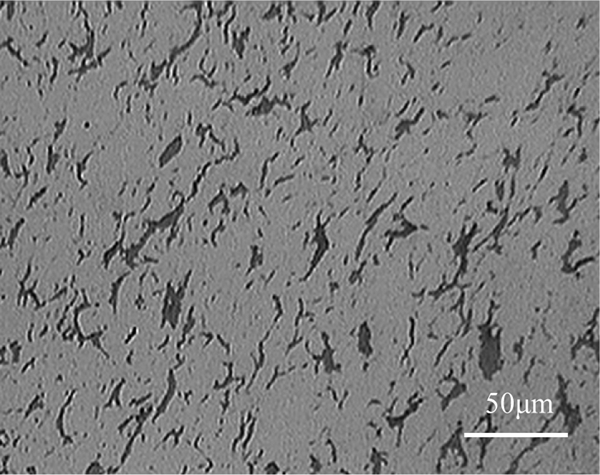
Optical morphology for microstructure of Ag–10MoS2–10G
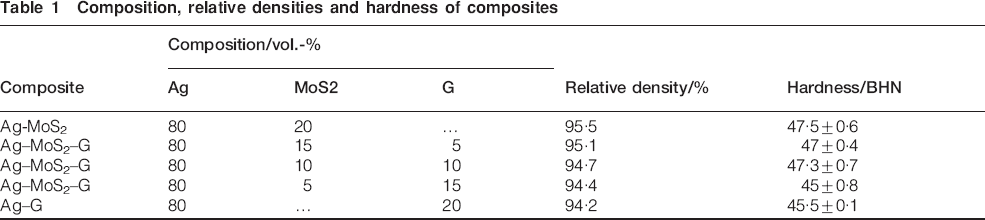
Relative densities and hardness of all the composites are listed in Table 1. There was no significant variation observed both in relative density and hardness as the proportion of graphite to MoS2 increased. The relative densities of all the composites were higher than 94%, which indicated that the composites were dense. As both MoS2 and graphite are soft phases and did not react with silver, changing the amount of the two lamellar lubricants did not vary the hardness of the composites significantly.
Composition, relative densities and hardness of composites
Friction and wear properties
Single lubricant composites
Figure 5 indicates the typical friction behaviours of the two single lubricant composites in air and vacuum. It can be found that the friction coefficients in the initial state are higher than the steady state. In the initial state of sliding, the contact between the counterparts was metal metal contact. Since the surface of solid had a certain degree of roughness, the initial contact between the counterparts took place between the salient points instead of the whole interface. The actual contact area was only a small fraction of the apparent contact area, contributing to a high contact pressure. It caused a high probability of adhesion between the matrix materials and the counterface, leading to a high initial friction. As the sliding continued, the lubricants accumulated and gradually spread out, forming a lubricating film on the interface. The nature of the contact was changed from metal metal type to metal lubricating film metal, which leaded to a low and steady friction coefficient.
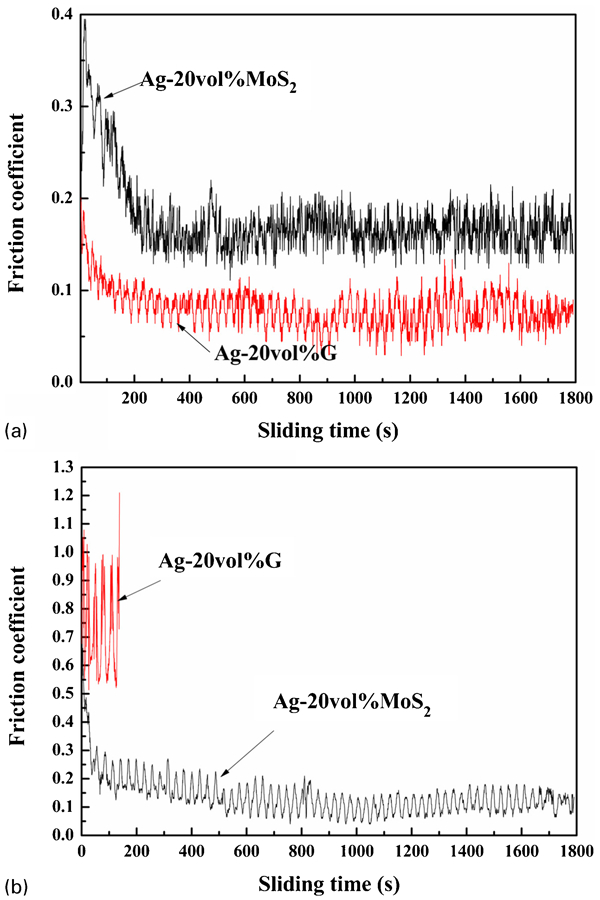
Friction coefficient for single lubricant composites as function of sliding time
In air condition, the composite with graphite as lubricating dopant exhibited better antifriction performance (μ≈0·07) compared with that with MoS2 (μ≈0·16), as shown in Fig. 5a. However, Fig. 5b shows that the friction coefficient of Ag–20G fluctuated a lot and kept at an extremely high level (μ≥0·7) before a sharp increase after the vacuum tribotest began 2 min later, indicating a failure in lubrication. Compared with graphite, MoS2 exhibited an excellent lubricity in vacuum as the friction coefficient of Ag–20MoS2 kept around μ≈0·12 till the end of the wear test.
SEM images for the wear tracks and the corresponding transfer films on the counterface in air condition of the single lubricant composites are shown in Fig. 6. It can be found in Fig. 6a that the interface of Ag–20G is covered with an integrated and smooth lubricating film. Some surface solid lubricants were extruded from the wear track and formed banded debris on the border of the wear track. The transfer film is continuous and covers most of the counterface (Fig. 6b), leading to a low friction coefficient. In contrast, the lubricating film of Ag–20MoS2 is discontinuous and some granular debris is observed on the wear track (Fig. 6c). XPS was employed to investigate the surface composition of the wear track for Ag–20MoS2, as shown in Fig. 7. Besides the peaks of MoS2 and Ag, an additional peak evident in Fig. 7a at binding energy of 232·2 eV is assigned to MoO3. MoS2 is prone to react with O2 or H2O in room atmosphere to form MoO3.12,25 These reactions are described as the following equations


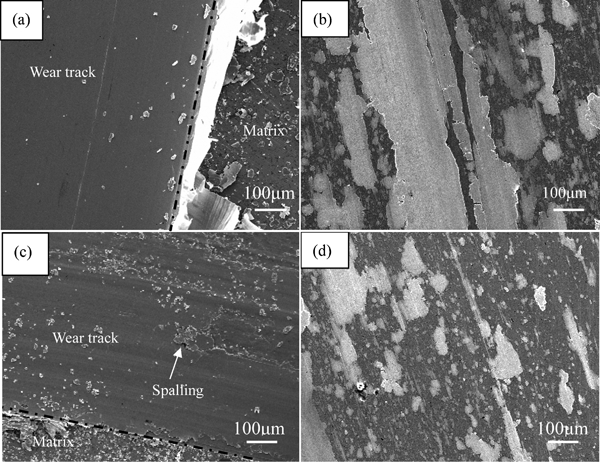
Images (SEM) for wear tracks of single lubricant composites and corresponding transfer films on counterface tested in air condition
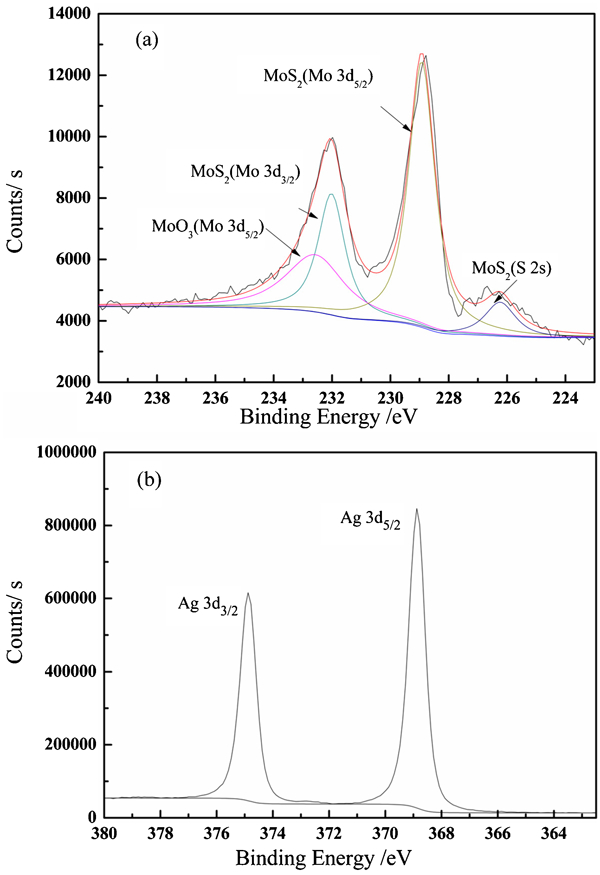
XPS spectra for lubricating film of Ag–20MoS2 in air
During the sliding process, the temperature of the interface was increased by the bad dissipation of the heat generated by sliding, which made MoS2 oxidized faster. The product of the oxidation, MoO3, stopped the slip of the dislocations created by plastic deformation of the composite during sliding. As the sliding continued, the dislocations accumulated around the MoO3 and created an area with high stress and great strain in the subsurface. 26 Finally, cracks formed and expanded in this area, resulting in spalling on the wear tracks (shown by the arrows in Fig. 6c). As MoO3 is orthorhombic and poor in lubrication at room temperature, the oxidation of MoS2 leads to a less effective lubrication. The residual MoS2 and silver matrix were partly transferred onto the counterpart and formed some island-like transfer films, as shown in Fig. 6d.
Figure 8 presents the morphology of the worn surface for the single lubricant composites in vacuum. Graphite is an extrinsic solid lubricant which requires the assistance of water vapour or other chemisorbed vapour to activate its lubricity. 7 The absence of atmosphere in vacuum caused the invalidation of graphite. The unterminated dangling σ bonds at the edge planes of graphite leaded to a high energy surface, 27 which promoted severe adhesive wear, as shown in Fig. 8a. Unlike Ag–20G, the wear track of Ag–20MoS2 was covered with integrated lubricating film (Fig. 8b). This is attributed to the fact that MoS2 is an intrinsic solid lubricant which has an excellent lubricating performance by shearing between its layered structures in vacuum.
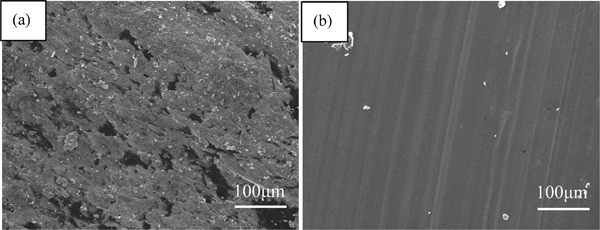
Morphology for wear tracks of single lubricant composites in vacuum
From the analysis above, it can be seen that the single lubricant composites, especially for the composite with graphite, do not possess a good environmental adaption. Graphite was effective in air but lost lubricating role in vacuum. The lubricity of MoS2 was excellent under vacuum but was weakened by oxidation in air. Neither of the composites could keep a good tribological performance in both air and vacuum.
Dual lubricant composites
The friction coefficients and wear rates of dual lubricant composites are shown in Fig. 9. The specific volume wear rate Wv of the composites is calculated by Wv = M/(ρFS) where M is the mass loss, ρ is the density, F is the applied load, and S is the sliding distance. With the increase of volume proportion of MoS2 to graphite, the friction coefficient increased gradually from 0·09 to 0·14 in air while dropped from 0·4 to 0·13 in vacuum. Similarly, the wear rate ascended continually from 1·7×10−6 to 5·9×10−6 mm3 N−1 m−1 in air and decreased sharply from the top value (21·2×10−6 mm3 N−1 m−1) to 4·4×10−6 mm3 N−1 m−1. The composite with 15 vol.-%MoS2 and 5 vol.-% graphite exhibited the most stable tribological performance compared with other composites as its friction coefficient and wear rate remained around 0·14 and 5×10⁻⁶ mm3 N−1 m−1.
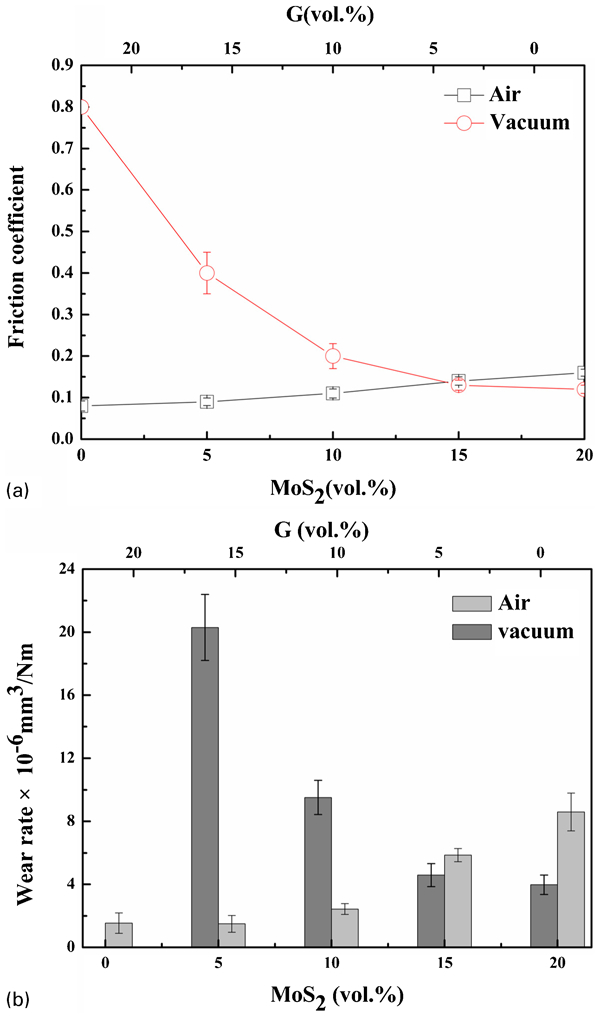
Friction coefficients and wear rates of silver based composites in air and vacuum
The topography of the worn surface for the dual lubricant composites in air is shown in Fig. 10. In air condition, the wear tracks of Ag–5MoS2–15G is covered with integrated and smooth lubricating film (Fig. 10a). As the proportion of MoS2 to G increased, exfoliation occurs on the wear track and becomes severe when coming to Ag–15MoS2–5G. The surface composition of the wear tracks produced in air was analyzed by XPS and the obtained results are listed in Table 2. By comparing the compositions of the composites with the corresponding surface composition on the wear tracks, it can be found that the content of the lamellar lubricants is much higher on the interface, which means graphite and MoS2 was excluded from the matrix and accumulated to form a lubricating film. Besides, the ratio of Mo∶S in the dual-lubricant composites kept increasing, indicating that more MoS2 was oxidized and increasing amount of the Mo element existed as the form of MoO3 as the proportion of MoS2 to G increased. This is due to the fact that an addition of graphite can reduce the oxidation of MoS2 by serving as oxygen diffusion barriers at edge planes and as oxygen scavengers in worn areas. 22
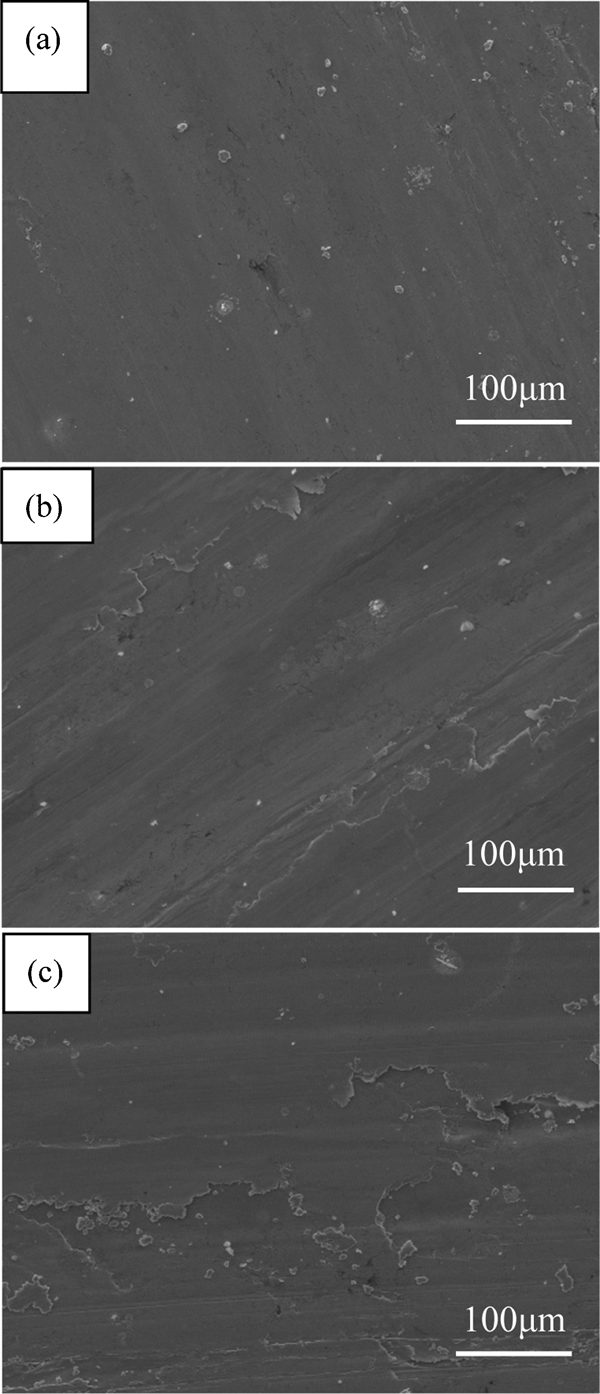
Worn surface of dual lubricant composites in air
Compositions of dual lubricant composite and corresponding surface composition on wear tracks
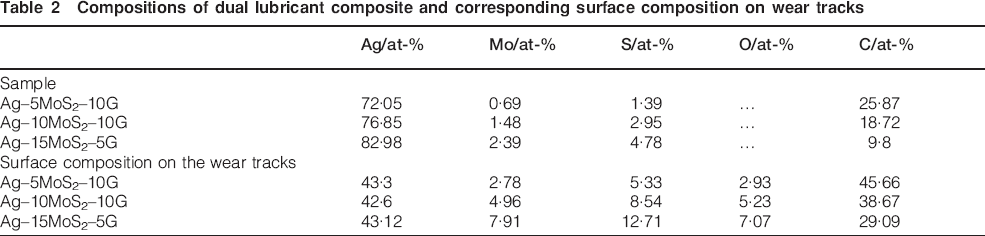
Figure 11 shows SEM images for the worn surface of the dual-lubricant composites in vacuum. The lubricating film formed on the interface became more continuous as the proportion of MoS2 to G increased. The area of the lubricating film of Ag–5MoS2–15G was about 50% of the whole wear track (Fig. 11a) while that of Ag–10MoS2–10G was about 80% (Fig. 11b). When further increasing the content of MoS2 to 15 vol.-%, the interface was covered by an integrated lubricating film (Fig. 11c). XPS data for the lubricating film of Ag–10MoS2–10G when sliding in vacuum are shown in Fig. 12. Clearly, MoS2 neither oxidised nor reacted with Ag and graphite. The composition of the lubricating film was detected as 79 at-%Ag, 15·3 at-%G and 5·7 at-%MoS2. Compared with the original composition of the composite, 79 at-%Ag, 19·3 at-%G and 1·7 at-%MoS2, the content of MoS2 increased by 4 at-% while the content of G decreased by 4 at-%. The content of silver remained unchanged. It means that graphite lost its role in vacuum lubrication.
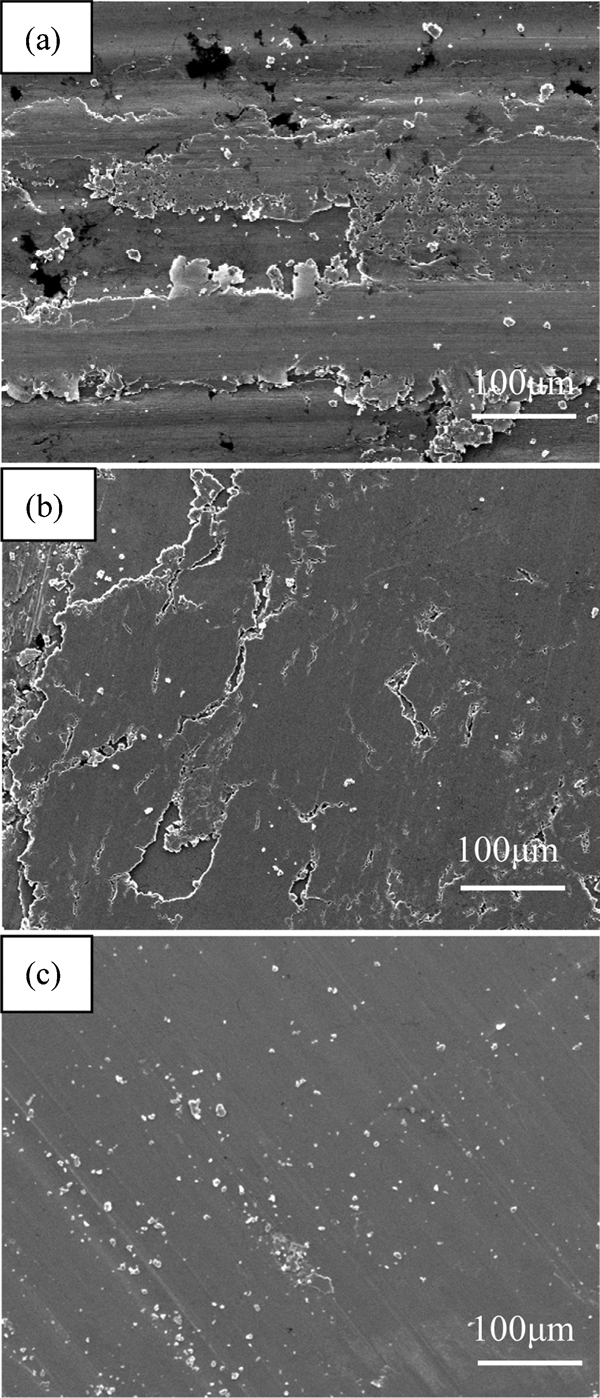
Worn surface in wear tracks of dual lubricant composites in vacuum
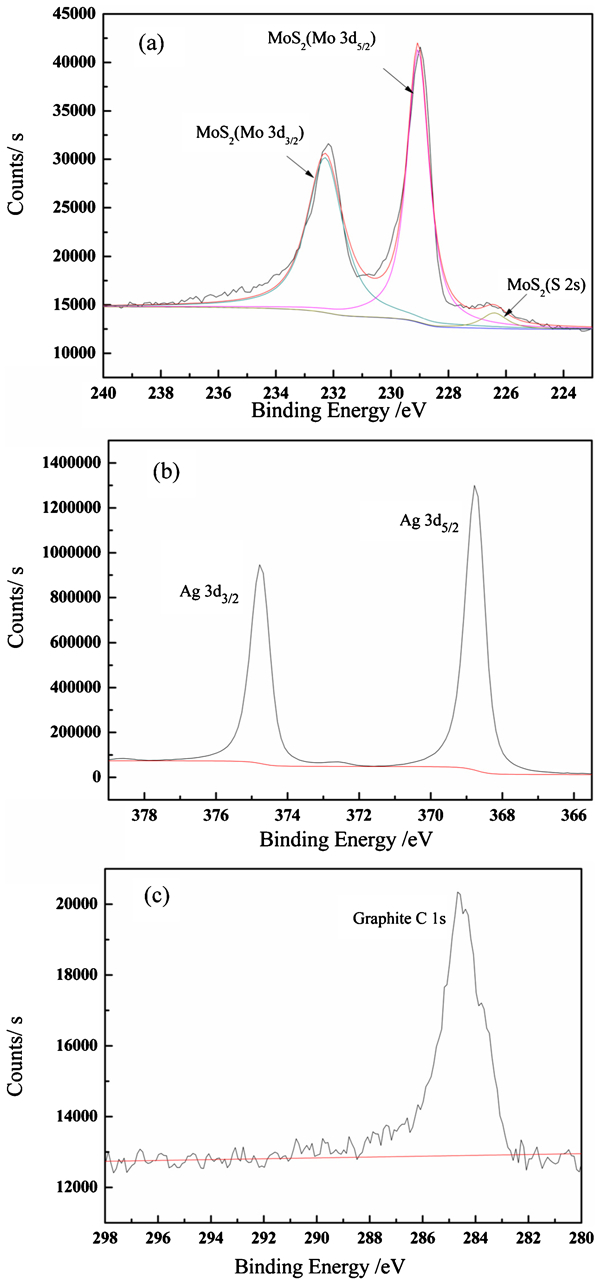
XPS spectra for lubricating film of Ag–10MoS2–10G in vacuum
Figure 13 gives the wear damage suffered by the composites as a function of composition. It was evaluated by measuring the roughness Ra across the wear tracks along the radius direction. Similar to the variations of wear rate, with the increase in the volume proportion of MoS2 to graphite, the Ra gradually increased to 0·206 in air while it sharply decreased from a high value to 0·132 in vacuum. Since Ag–20G was severely damaged in the vacuum wear test, its Ra was not taken into consideration but it was obviously much rougher than that of Ag–5MoS2–15G, as shown in Fig. 8.
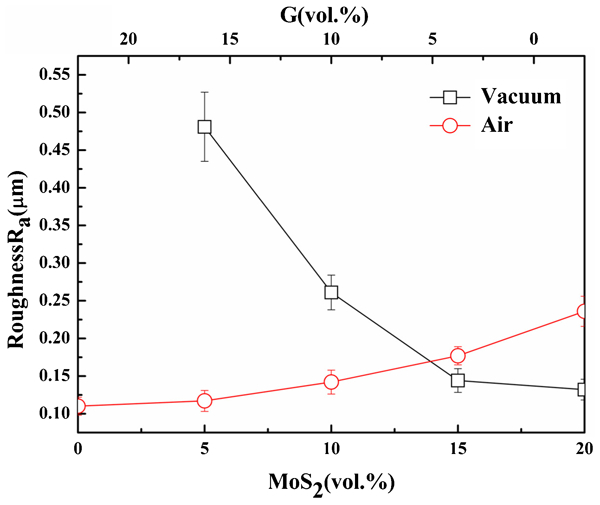
Roughness Ra mesured within wear tracks produced on composites in air and vacuum
The results obtain above reveal that with the increase in the volume proportion of MoS2 to G, the gap between the tribologial performance of the composite in air and vacuum firstly reduced and then widened. Ag–15MoS2–5G exhibited a comparable stable and good tribological performance as its friction coefficient and wear rate remained around 0·14 and 5×10⁻⁶ mm3 N−1 m−1.
Conclusions
Silver based composites with different amount of MoS2 and G were subjected to wear tests in air and vacuum. The lubricity of MoS2 in air was aggravated by oxidation while graphite lost its lubricating role in vacuum in the absence of vapour, which leaded to bad environmental adaptability of the single lubricant composites. The addition of graphite in Ag–MoS2 composite could weaken the oxidation of MoS2 in air while the addition of MoS2 in Ag–G composite could enhance lubricity in vacuum. Compared with other compositions, Ag–15MoS2–5G exhibited a comparable stable and good tribological performance.
Footnotes
Acknowledgements
This work was financially supported by the Major Research Program of the National Natural Science Foundation of China (grant no. 91026018), the National Natural Science Foundation of China (grant no. 60979017) and the Doctoral Fund of Ministry of Education of China (grant no. 20110111110015)