






Abstract
Materials that combine metallic and ceramic properties are of interest for various applications, such as surgical instruments or grinding tools. Powder technology offers the possibility to mix metals and ceramics in form of their powders and process them to complex shapes by means of powder injection moulding. Thus, different material combinations were chosen in order to demonstrate a broad applicability of this approach. The produced composite materials were characterised regarding their densities, mechanical properties and microstructures. It could be observed that the powder injection moulded samples showed rather typical densities for specimens produced by this process, up to 98·3% relative density. The mechanical properties varied strongly mainly dependent upon the materials used in the composites. Thus, the range of mechanical properties is wide and leads to various possibilities to adjust certain properties to a desired level. In combination with the possibilities of the powder injection moulding process to produce near net shape parts cost-efficiently in large quantities, these versatile composite materials can be made accessible for various applications.
Introduction
Composite materials play an important role for many applications. They allow for combining material properties of different materials or for creating properties realised by neither pure material.1,2 Application examples for technical composite materials range from concrete to braking disks, car tires, carbon fiber reinforced plastics up to dental fillings. Also, nature employs composite materials e.g. to realise special mechanical properties. Bone for instance shows a stress–strain behaviour that no artificial pure material (metal, ceramic or polymer) attains. Nacre exhibits enormous fracture toughness despite a ceramic content of about 95%. Nature's examples furthermore teach us that the composite structure is a very important property determining factor. Therefore, composite materials are often differentiated according to their structure. It is generally distinguished between particle reinforced composites, fibre reinforced composites, laminates and interpenetrating phase composites (IPC). 3 This distinction is based on the dimensionality of the dispersed phase of the composite, which is zero-dimensional for particles, one-dimensional for fibres, two-dimensional for layers and three-dimensional in case of IPCs. 4 The dispersed phase is embedded into the matrix, as can be schematically seen in Fig. 1 at the example of a particle reinforced composite. In the case of IPCs, there is no actual dispersed phase; rather there are two matrices intertwined three-dimensionally and penetrating each other throughout the whole part (see also Fig. 1). Owing to this structure, IPCs offer the possibility to combine typical ceramic properties, such as high hardness, stiffness and abrasion resistance, with typical metallic properties like fracture toughness and thermal and electrical conductivity. 5
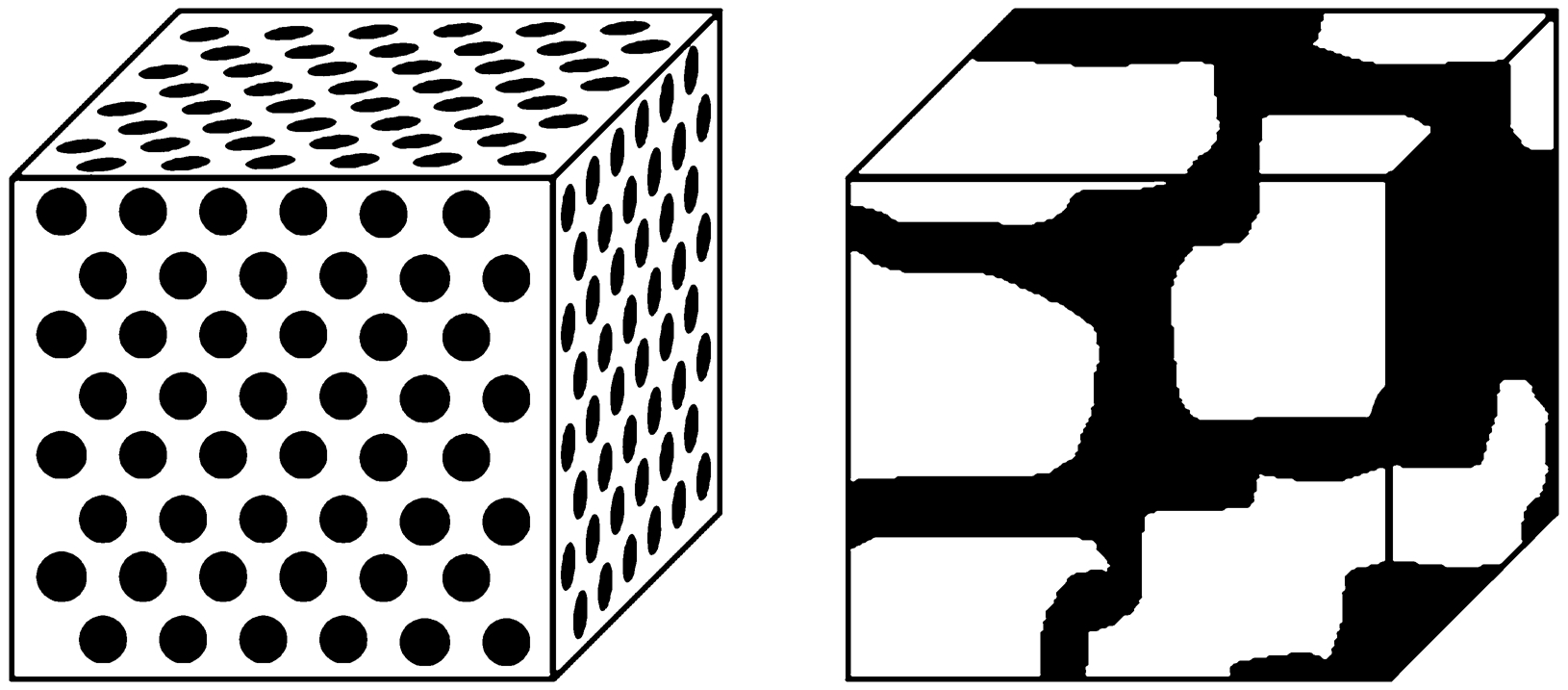
Schematic depictions: (left) particle reinforced composite structure; (right) interpenetrating phase composite structure
The usual method to produce metal ceramic IPCs is infiltration of an open-porous ceramic structure with the molten metal, which may be achieved by capillary driven metal infiltration, gas pressure assisted infiltration or squeeze casting.6–8 Manufacturing the required porous ceramic bodies can be realized for example by gel casting, foaming processes or with the aid of polymer foams or particulate placeholders9,10 Still, porous ceramic bodies are difficult to handle, and in most cases molten metals show a poor wettability of ceramic surfaces. Therefore, the ceramic surface is often chemically modified for a successful composite production. 11 All these factors make this route for manufacturing IPC structures rather complex and costly. At the result is a part that has to be machined in an additional step if the required part is more complex shaped. An example of an applied material combination is Mo–ZrO2, which is used for glass melting electrodes by PLANSEE SE.
Therefore, powder technological processes present an alternative to these infiltration based processes. Utilising the powders of the components, different powders (e.g. a metal and a ceramic powder) can be mixed prior to processing and utilised in conventional powder technological processes like pressing, extrusion and especially powder injection moulding (PIM). The advantages of powder technology in this context are to be seen in the precise control of the composition, the influence on the material properties and processing by particle morphology as well as the producibility of simple parts (e.g. via pressing or extrusion) as well as very complex parts (e.g. via PIM). The consolidation of the material is typically achieved by solid state sintering.
The sintering procedure following the shaping process significantly codetermines the material properties. The choice of sintering atmosphere and temperature profile of the sintering step directly influences densification, microstructure and thus the mechanical properties.12,13 The simultaneous sintering of metals and ceramics represents a special challenge as the demands of metals and ceramics on the sintering parameters usually differ widely from one another. Metals are often sintered under reducing atmosphere which is impractical for many ceramics. Also, the required sintering temperatures of metals and ceramics can differ strongly. Often, the typical sintering temperatures of ceramics are higher than those of metals and the sintering activity is lower which leads the prolonged sintering times compared to metals. One way to influence those parameters is via the particle size and with it the surface energy of the particles. Smaller particles and thus higher surface energies lead to a higher sintering activity and can thus be used to get the required sintering temperatures of the component with the higher sintering temperature closer to the one with the lower sintering temperature. Furthermore, metals and ceramics may react chemically during the sintering procedure, depending upon the materials used and the sintering conditions. Possible reactions must therefore be taken into account when designing the material and excluded in order to be able to handle the processing. Some material combinations will nonetheless be impossible to process via this route.
In order to achieve an IPC structure, both particulate phases must be able to form a continuous network. The minimum volume fraction of a component required in order to form a continuous phase is called percolation threshold. Regarding a metal ceramic IPC, each component has a percolation threshold which leads to a composition ‘window’ in which the IPC is formed. Leaving this composition window leads to particle reinforced composites with smaller or bigger particle clusters. Factors influencing the percolation threshold are for instance the particle size distribution, particle morphology and relative particle sizes of the components.14–18
Within the framework of the presented work, compositions were chosen that should lie within the percolation range of both components (between 40 vol.-% of one component and 60 vol.-% of the other component), except for one composition of 30 vol.-% ceramic and 70 vol.-% metal, which is near the theoretical percolation threshold for the ceramic. The focus of this work was on the producibility of the metal ceramic IPC and the determination of important material properties, particularly the relative density and the mechanical behaviour.
Experimental
The following materials were used for the production of the different metal ceramic IPCs without further pretreatment: pure iron (Diafe-2000, DV50 ∼1·65 μm, Dr Fritsch), stainless steel 316L (DV50 ∼4·14 μm, Sandvik Osprey), beta-tricalcium phosphate (TCP) (Ca3(PO4)2, DV50 ∼ 10·36 μm, Plasma Biotal), aluminium oxide (Al2O3, 99·5%, Amperit 740·2, DV50 ∼ 75·57 μm, H. C. Starck), aluminium oxide (Al2O3, 99·6%, NABALOX NO 115-25, DV50 ∼ 7·02 μm, Nabaltec), aluminium oxide (Al2O3, 99·7%, NABALOX NO 713-10, DV50 ∼ 0·77 μm, Nabaltec), silicon dioxide (SiO2, 99·9%, DV50 ∼ 2·45 μm, Heraeus) and zirconium dioxide (ZrO2, TZ-3Y-E, DV50 ∼ 0·66 μm, TOSOH). The compositions of the metal ceramic IPCs produced by PIM are given in the following table (Table 1).
Compositions of metal ceramic IPCs produced by PIM

In the case of the Fe-TCP-composites the composition was varied in a range of 40 to 70 vol.-% of iron. For the 316L based composites two compositions were chosen; 40 and 60 vol.-% of 316L, and the type of ceramic was altered. Three different aluminium oxides were used in order to observe the differences in percolation and mechanical performance for different powder sizes.
Figure 2 depicts the powder injection moulding process schematically.

Schematic illustration of PIM process
The first step of the PIM process is the feedstock preparation. The components are mixed in the desired fractions in form of their powders and then kneaded at elevated temperatures (∼120°C) with the binder system, consisting of a mixture of waxes, polymer and surfactants. The binder used for the metal-ceramic-composites was comprised of 70% wax, 25% polyethylene and 5% stearic acid. Owing to continued kneading during the cooling step, the feedstock forms granules and is directly usable for injection moulding. The injection moulding step was carried out on a BOY XS (Dr Boy). The following step is a solvent debinding step in n-hexane (24 h, room temperature), during which the waxes are extracted from the green part. The thus produced brown parts are then placed in a furnace where the remaining organic binder components are decomposed thermally prior to the directly following sintering step. All composite materials were sintered in argon atmosphere, as a sintering in vacuum was not possible due to problems with sintering furnace during the time of the experiments. In the case of the Fe-TCP-composites, the maximum sintering temperature was chosen to be 1270°C, the 316L based composites were sintered at 1350°C. Figure 3 shows different parts that were produced and used for characterisation.
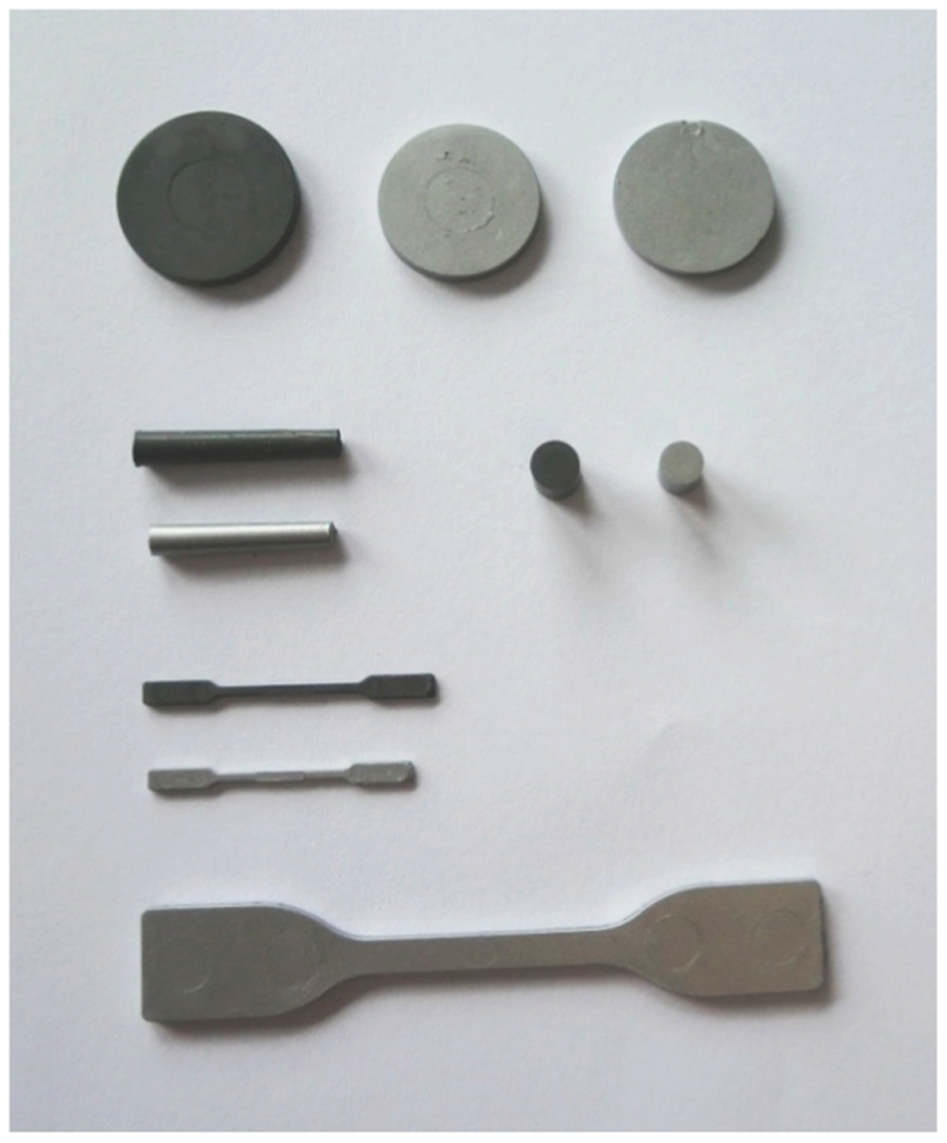
Injection moulded parts, green parts (dark) sintered parts (light)
Results and discussion
The produced parts were characterised regarding their density, microstructure and compression behavior, the 316L based composites additionally regarding their bending strength. For the determination of the density all produced parts were used and tested according to DIN EN ISO 2738:2000-02. The compression tests were carried out with cylindrical specimen (5 mm in diameter, 7·5 mm in height as green part) with a crosshead speed of 2 mm min−1. Bending tests were carried out using flat tensile test bars in a three-point-bending setup with a crosshead speed of 2 mm min−1. All mechanical tests were carried out using five specimen per material.
The microstructure was analysed using the disc shaped specimen and light microscopy (LM). Individual specimens were also investigated by scanning electron microscopy (SEM).
Iron-tricalcium phosphate
The results of density measurement and compression testing in the system Fe-TCP are given in Table 2.
Densities and compression test results of Fe-TCP composites

The relative density refers to the theoretical density which is calculated using the rule of mixture (ROM). In the case of the Fe-TCP-IPCs the sintering conditions were optimised thoroughly. The relative density of PIM parts is usually in the range of 95% up to 99·5% of the theoretical density. 19 Therefore, the relative densities of the iron-rich composites Fe-TCP-3 and 4 are in this typical range. The density of Fe-TCP-2 is just slightly below 95%. In the case of Fe-TCP-1 with the highest TCP volume fraction, the density is rather low with 90·9% and could not be increased by variation of the sintering parameters. As TCP is a ceramic known to be difficult to sinter, this result is not surprising. A means to increase the density of powder-based parts is the reduction of the particle size, thus increasing the sintering activity due to the increased surface energy.
Regarding the mechanical behavior of the Fe-TCP composites, the compressive strength increases with increasing iron fraction and the offset yield strength decreases. The influence of TCP towards a more ceramic-like behavior with increasing TCP amount is also indicated by the strain to failure; the more ceramic is in the composites, the higher the observed brittleness. For Fe-TCP-1 with the highest TCP fraction, the very low compressive strength can be attributed to the low density, as there is an exponential dependence of the mechanical strength on the porosity.
The lighter phase in the images of Fig. 4 is iron, the darker phase TCP. It can be observed that the shape of the TCP areas is rather angular, indicating that the TCP particles keep their original shape during sintering. In contrast to this, the iron phase fills all accessible voids except in case of Fe-TCP-1. There is probably too little iron material in this mixture to fill all voids given by the TCP phase. As TCP does not sinter properly, the TCP matrix does not shrink thoroughly during sintering. If there is not enough iron to fill all voids the result will be pores, as can be seen in Fig. 4a. This observation also correlates with the low relative density measured for Fe-TCP-1 and its poor mechanical performance.
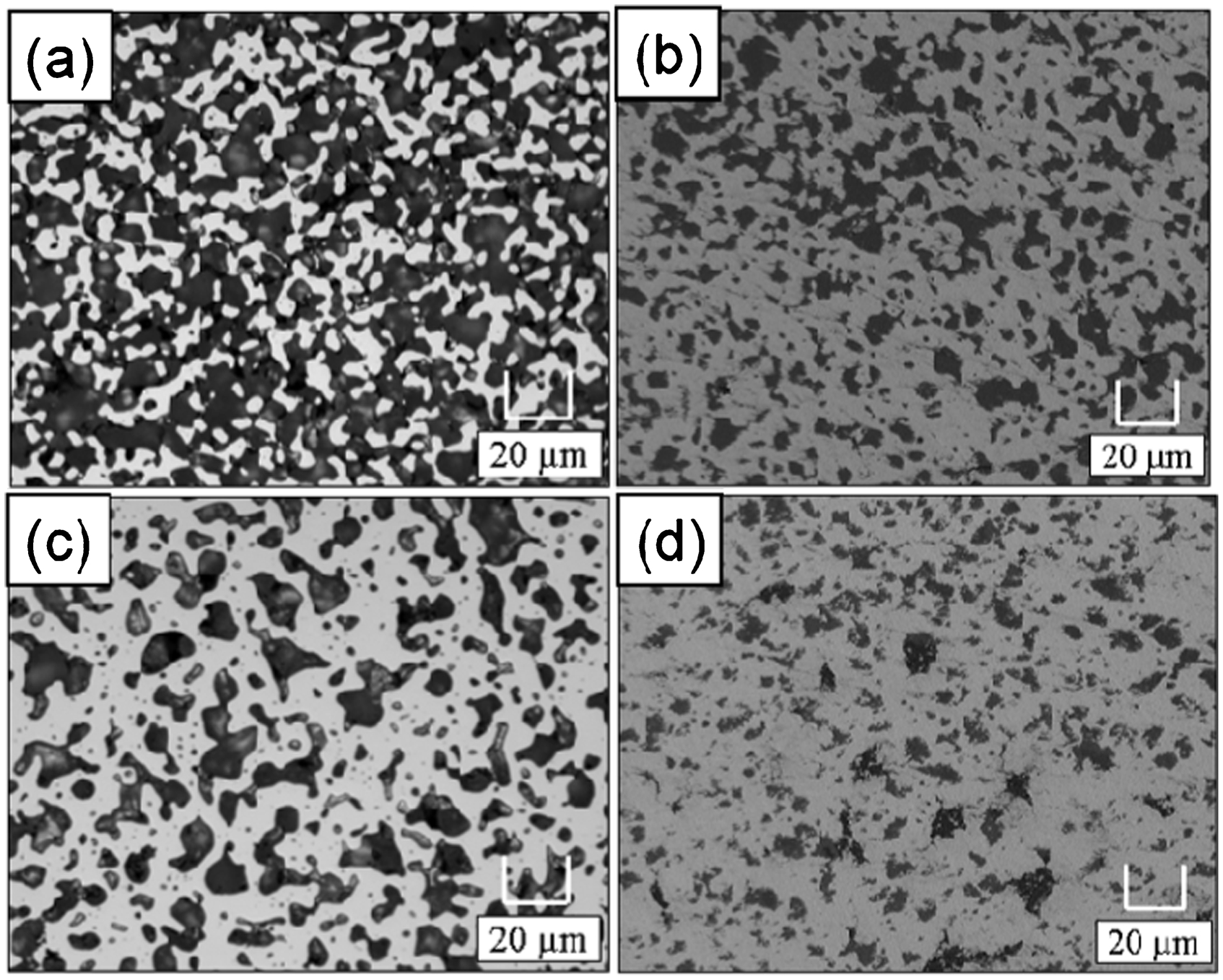
a Fe-TCP-1, LM; b Fe-TCP-2, SEM; c Fe-TCP-3, LM; d Fe-TCP-4, SEM
Figure 5 shows an example of a more complex PIM part of an Fe-TCP composite.
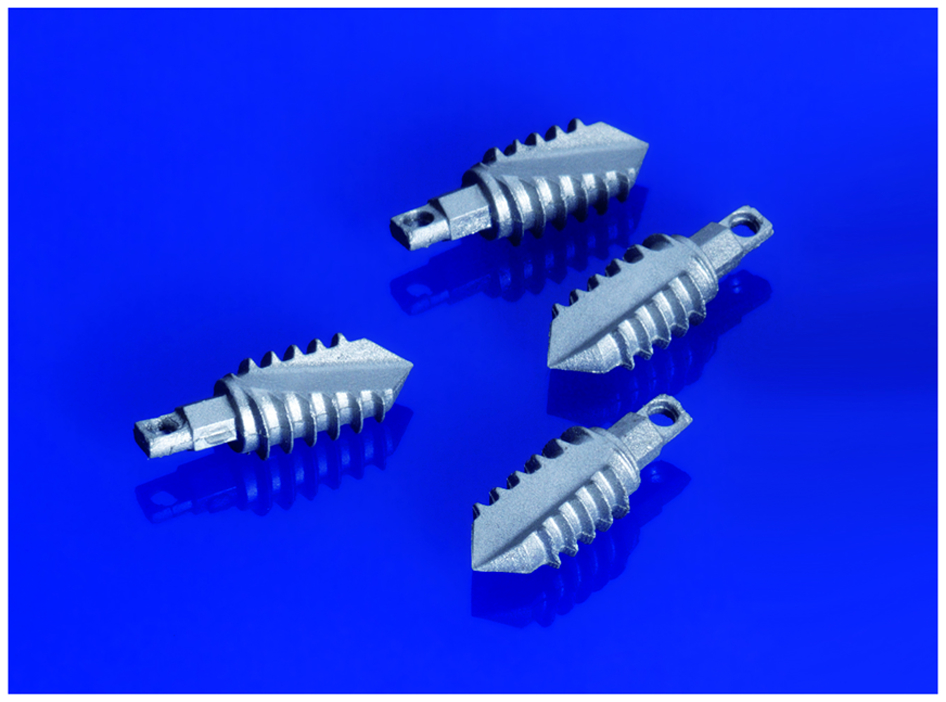
PIM suture anchors made of Fe-TCP
The suture anchors also give an example of a possible application of this material in the field of orthopedic implants, where the mechanical properties of Fe-TCP-2, Fe-TCP-3 and Fe-TCP-4 would be sufficient for designing fixation devices. The material is currently investigated regarding its degradation properties with the goal of creating a degradable material that can bear considerably higher loads than degradable implant materials that are used today.
316L-ceramic composites
The results of density measurement, compression and bending testing of the 316L-ceramic composites are given in Table 3.
Densities and results of mechanical testing of 316L-ceramic composites

In case of 316L-ZrO2 60/40 there was only one bending test carried out.
In case of the 316L based composites 316L-SiO2 60/40 shows relatively low compressive strength but the highest strain to failure. Despite the highest observed relative densities of all investigated composites, 316L-SiO2 40/60 shows rather poor mechanical performance.
Both 316L-ZrO2 composites show very high compressive strengths and high relative densities. Furthermore the bending strength values exceed those of all other materials. The strain to failure of the metal rich 316L-ZrO2 composite is the lowest of all 316L-ceramic composites with 60 vol.-% of metal, but is still high compared to a pure ceramic. As the compressive strength of ZrO2 stabilized with 3%Y2O3 is in the range of 2000 MPa and the bending strength is around 900–1200 MPa, the 316L-ZrO2 60/40 is a good example of how ceramic and metallic properties can be combined. 20
Comparing the 316L-Al2O3 composites, some correlations can be established. In case of the 316L-rich composites the strain to failure decreases with decreasing alumina particle size, whereas the compressive strength is lowest for the 7 μm alumina particles in 316L-Al2O3-2 60/40. Regarding the alumina rich composites, the lowest compressive strength is also shown by the composites containing 7 μm alumina, but the highest strength can be observed when using the 0·8 μm particles in 316L-Al2O3-3 40/60. The system 316L-Al2O3-1 shows a completely different behavior than all the other systems, which will be explained in connection with the microstructure. The following figure (Fig. 6) shows the compression curves of all 316L-Al2O3 composites.
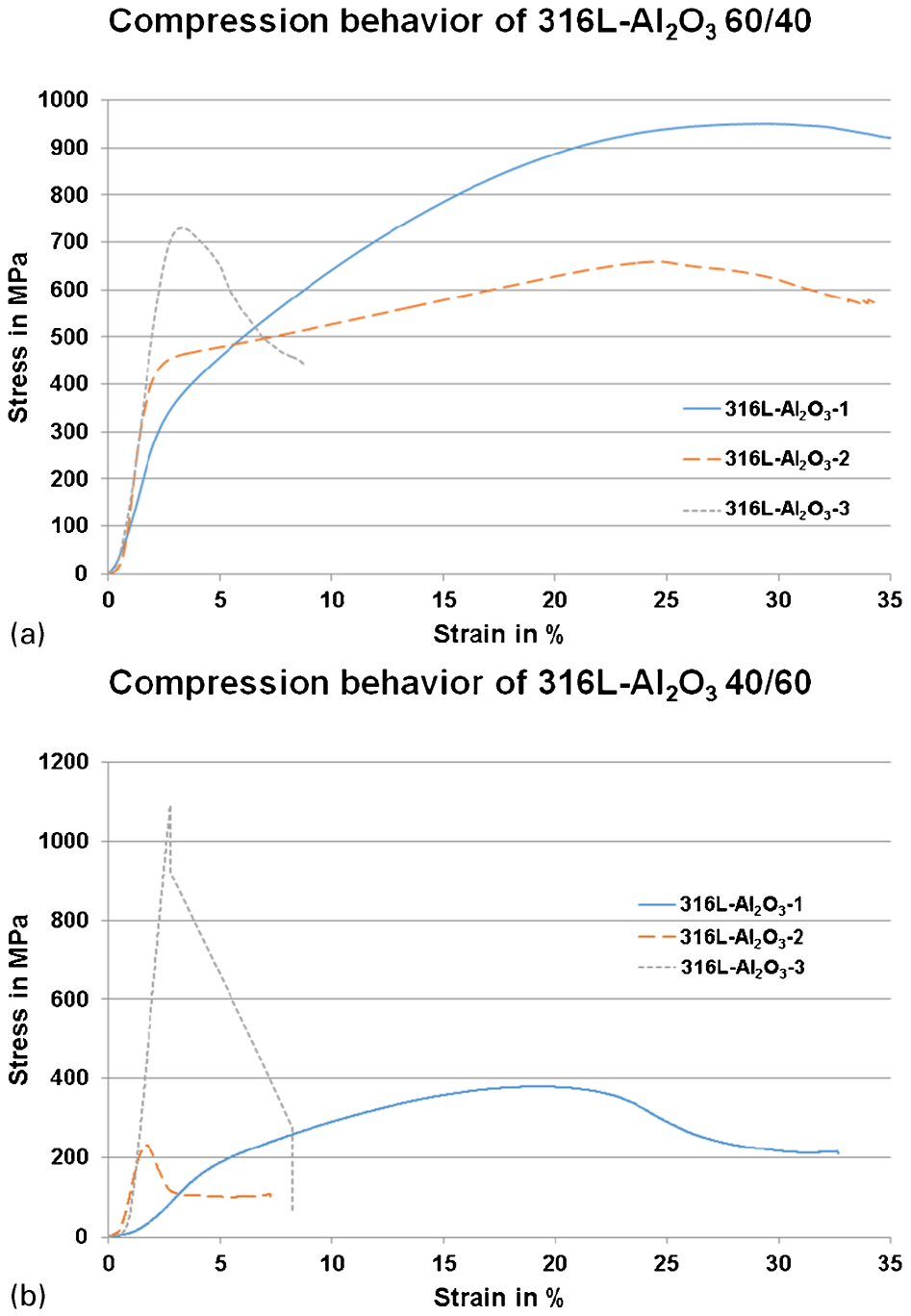
a 60/40; b 40/60
The effect of the alumina particle size on the mechanical behavior can be seen clearly. Bigger alumina particles lead to a higher plastic deformation before the samples break.
Figure 7 shows the plots of compressive strength and bending strength versus the alumina particle size.
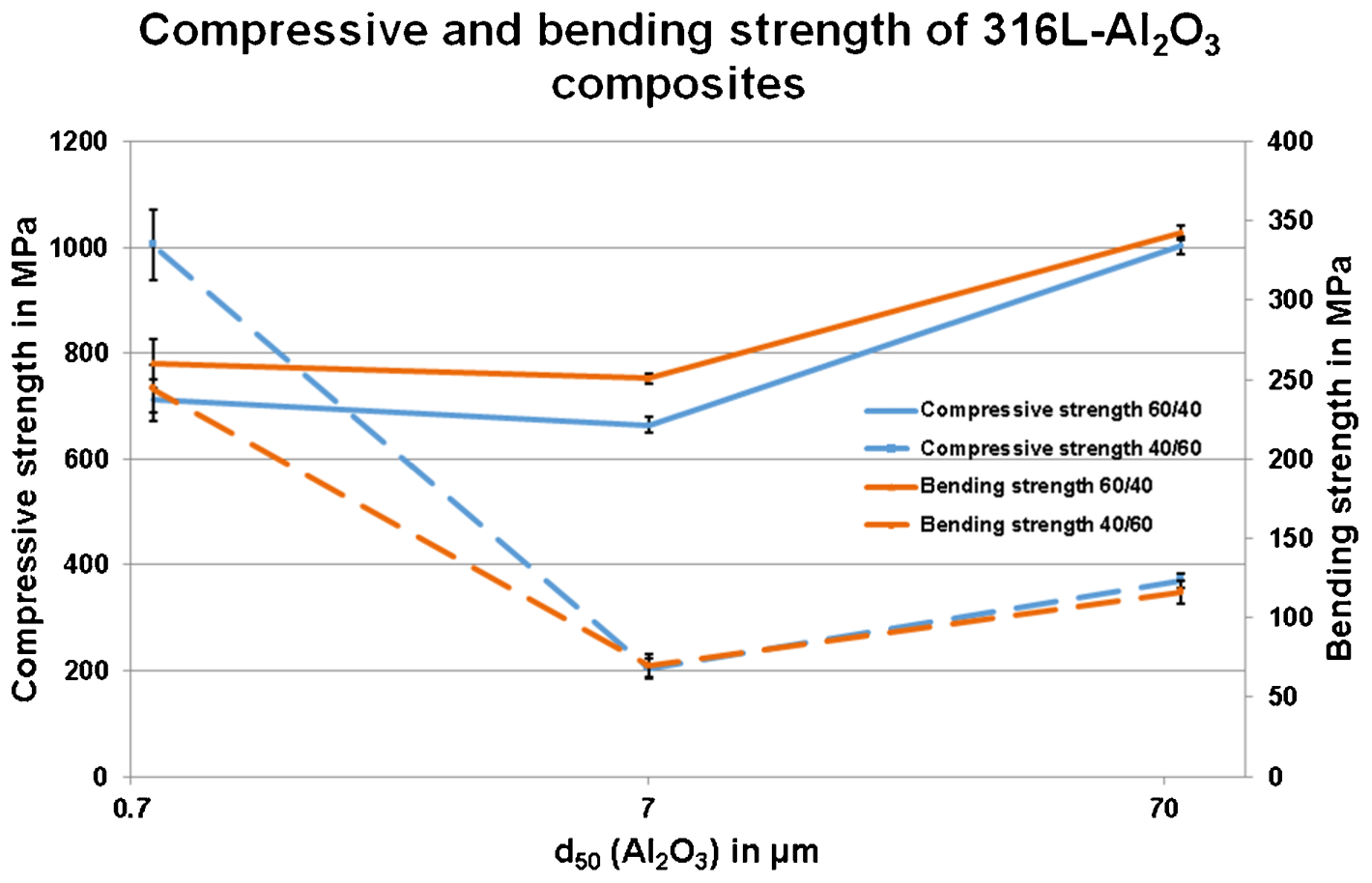
Compressive and bending strength of 316L-Al2O3 composites
When comparing the compressive and bending strength of the 316L-Al2O3 composites it can be observed that they run nearly parallel. But the overall low bending strengths indicate a relatively weak ceramic phase. Bending strain involves both tensile and compressive strains, but the tensile load is the one relevant for failure, since cracking invariably starts from the tensile loaded side. Therefore, the metal phase seems to be mainly responsible for the bending strength. This interpretation is supported by the bending strength of 316L-SiO2 60/40, which is close to the range of the alumina-containing 60/40 composites. 316L-ZrO2 60/40 on the other hand exhibits the highest bending strength with 821 MPa, close to literature values of yttria stabilised ZrO2, as mentioned above. Also, 316L-ZrO2 40/60 shows higher bending strength than the other 40/60 composites, although it is considerably lower than that of the metal rich composite. The zirconia phase seems able to contribute to the mechanical strength to a certain degree. In case of the other 40/60 composites containing the other ceramics only 316L-Al2O3-3 40/60 shows a notably higher bending strength. This indicates that the sintering of the alumina phase is only working to some extent with the smallest alumina particles, whereas the 7 μm alumina particles do not sinter properly. The effect that merely contacting but unsintered particles reduce the tensile strength is known from literature. 21 Milos et al. describe this effect in extruded Al/Al2O3 MMCp and explain it with oxide-oxide contacts acting as defects that lead to failure when they become sufficiently numerous and/or large enough. These findings are supported by the bending strengths of the composites with a higher ceramic share and bigger ceramic particles 316L-Al2O3-1 40/60 and 316L-Al2O3-2 40/60 that show the lowest bending strengths of the alumina-containing composites.
Figure 8 shows images of polished sections of the 316L-composite materials.
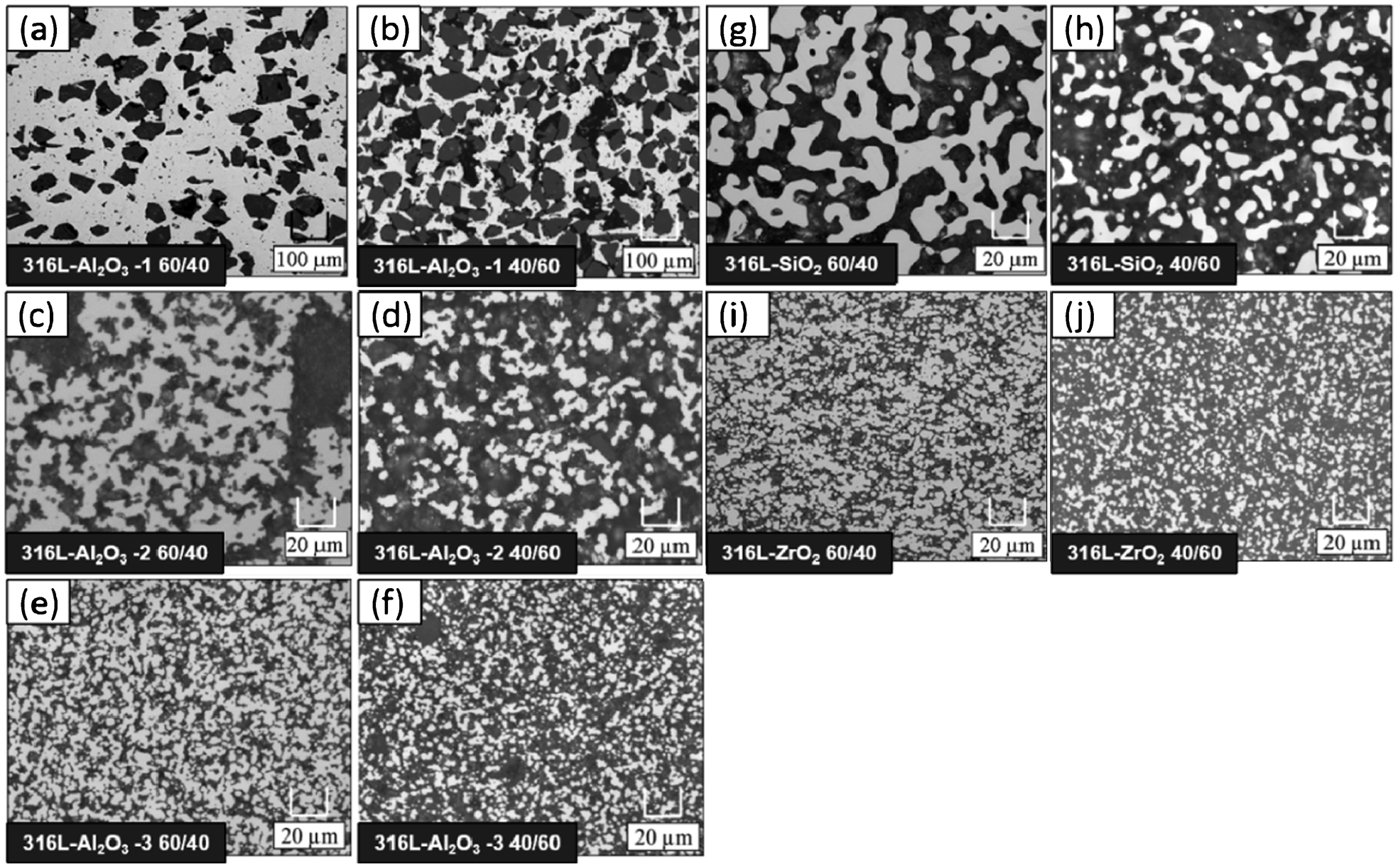
a 316L-Al2O3-1 60/40; b 316L-Al2O3-1 40/60; c 316L-Al2O3-2 60/40; d 316L-Al2O3-2 40/60; e 316L-Al2O3-3 60/40; f 316L-Al2O3-3 40/60; g 316L-SiO2 60/40; h 316L-SiO2 40/60; i 316L-ZrO2 60/40; j 316L-ZrO2 40/60
The lighter phase in the images of Fig. 8 is the respective 316L structure, the darker phase the respective ceramic structure. As a three-dimensional structure is hard to illustrate with two-dimensional images, experiments were carried in which the stainless steel phase was dissolved in nitrohydrochloric acid. If an interpenetrating structure did form, the ceramic phase must be intact after removing the metal and in the form of ceramic foam (Fig. 9).
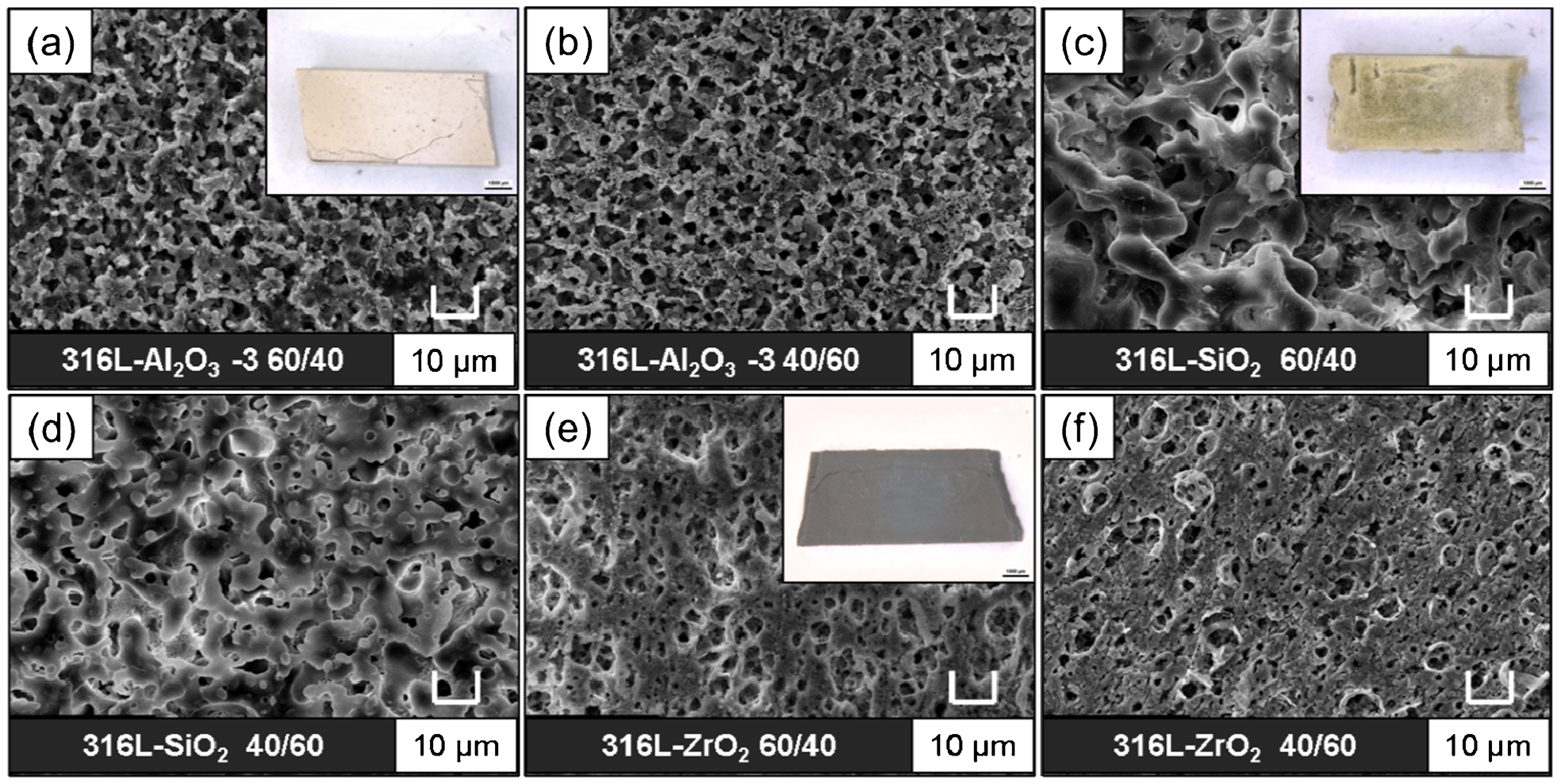
a 316L-Al2O3-3 60/40; b 316L-Al2O3-3 40/60; c 316L-SiO2 60/40; d 316L-SiO2 40/60; e 316L-ZrO2 60/40; f 316L-ZrO2 40/60
The interpenetrating structure could be verified for the systems 316L-SiO2 and 316L-ZrO2, as well as for 316L-Al2O3-3, shown in Fig. 9. The ceramic phases of the etched specimens were intact after the removal of 316L and the SEM images clearly show the foam structure.
In the case of 316L-Al2O3-1, for both compositions only a coarse ceramic powder was left after dissolving the steel. In the system 316L-Al2O3-2, there were partially intact ceramic bodies left after dissolving the metal phase but those parts could be easily grinded to a fine powder using a spatula. These results support the interpretations of the mechanical tests given above. Merely the bending strengths of the 316L-SiO2 composites seem very low, as the silica particles did sinter properly. But when taking the low tensile strength of fused silica of ∼49 MPa into account (information provided by a material data sheet from TOSOH), the determined values appear to be plausible.
As the percolation threshold is a function of the relative particle sizes, even the 60 vol.-% aluminum oxide do not seem sufficient to induce complete percolation in the ceramic phase when combined with the much smaller 316L particles. 13 The structures in the system 316L-Al2O3-1 are no IPC structures but more like those of particle reinforced composites. Thus, the differences in the mechanical behaviors of the 316L-Al2O3 composites can also be explained. A particle reinforced composite shows an elastic behavior closer to that of the matrix, whereas an IPC has an increased Young's modulus. The steeper slope of the stress–strain graphs for 316L-Al2O3-2 60/40 and 316L-Al2O3-3 60/40 in Fig. 6 in the elastic region indicate this. In case of 316L-Al2O3-1 the metal matrix has a relatively high web thickness between the alumina particles and can therefore deform more extensively before failing. Thus, the composites in the system 316L-Al2O3-1 exhibit a higher strain to failure than those of 316L-Al2O3-2.
In the case of the shown examples, a relatively bigger metal particle size in relation to the ceramic particle size is not hindering percolation of the metal phase in the way observed for relatively bigger ceramic particles. This is attributed to the sintering behavior of the metal. The metal phase fills the voids between the ceramic particles thoroughly. The original particle morphology cannot be identified in the metal phase of the sintered parts, whereas the ceramic particle morphology is still determinable.
When looking at the distribution of metal and ceramic on a larger scale, the injection moulded specimen of 316L-Al2O3-1 60/40 show the tendency of demixing, which was not observed for the other composites, as is shown exemplary in Figure 10 for 316L-SiO2 60/40. The bigger aluminum oxide particles accumulate increasingly towards the wall of the mould. As the shear strain during the injection moulding step increases towards the wall, the alumina particle accumulation can be correlated with the higher relative shear strain. 22
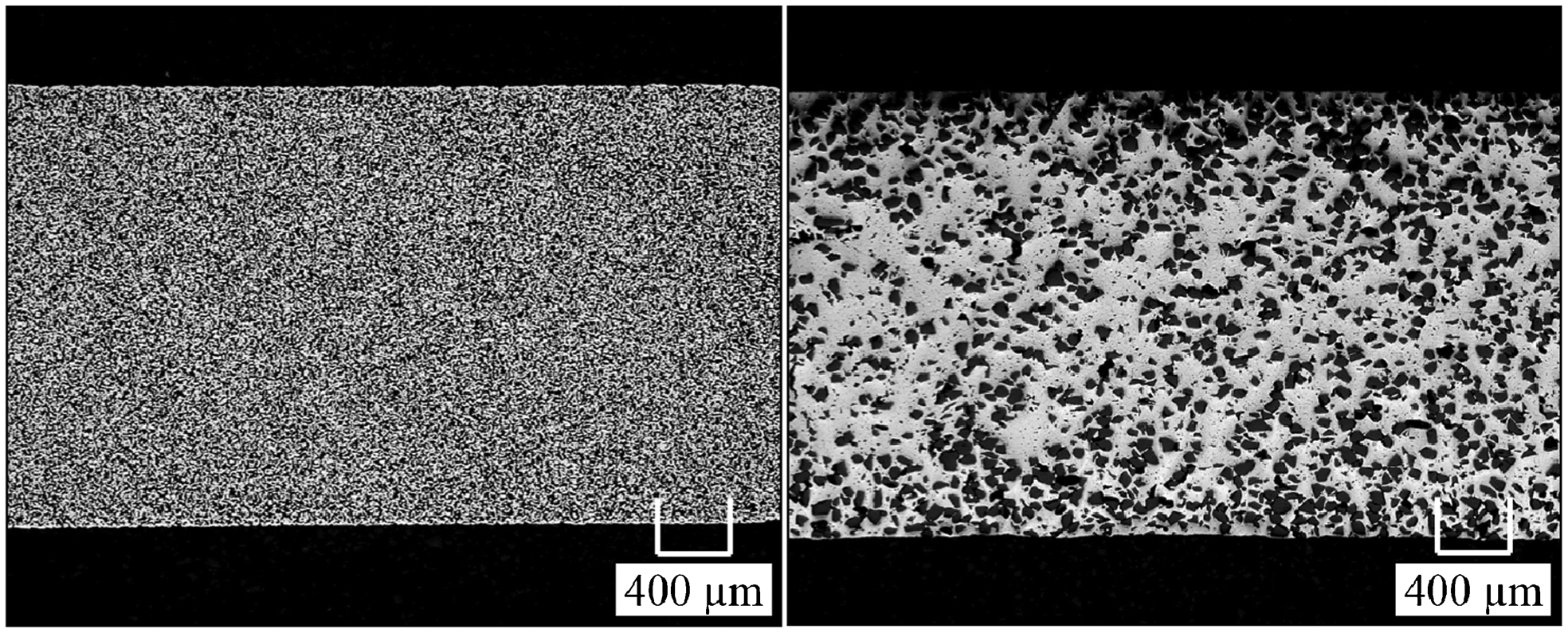
Cross section of injection moulded tensile test bars: (left) 316L-SiO2 60/40, (right) 316L-Al2O3-1 60/40
Therefore, increasing the IPC density by utilising smaller ceramic particles with increased sintering activity may be only applicable to a certain point without losing percolation in the metal phase. On the other hand, the observation of the metal phase to fill the voids between the ceramic particles may counteract this potential problem. Further experiments must be carried out to investigate this issue.
Aside from creating materials with promising mechanical properties, metal ceramic IPCs offer the possibility to be combined with either pure material (metal or ceramic) in a two-component injection moulding step (see Fig. 11a). The interesting factor in this case is the opportunity of positive substance jointing of the pure material and the composite. As the surface of the composite shows both, metal and ceramic areas, those areas that get into contact with the pure material can form a stable bond during sintering. It is even possible to use the composite as a kind of bonding material between pure metal and pure ceramic. We demonstrated this with by producing three-component PIM parts in the material system of 316L-ZrO2 with the composite in the middle (see Fig. 11b).
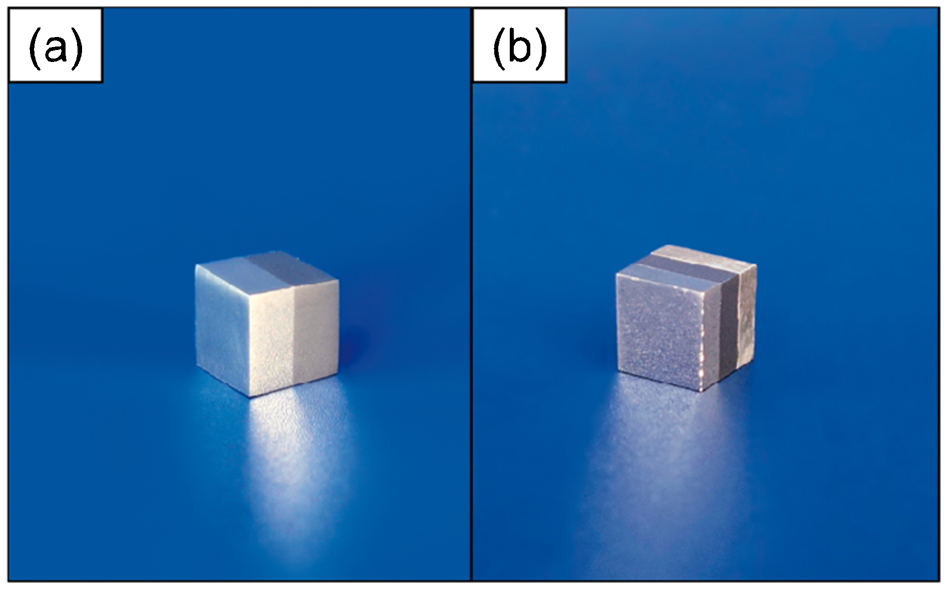
a two-component PIM part and b three-component PIM part in system 316L-ZrO2
Conclusions
In this work, the feasibility of producing metal ceramic IPC parts by powder injection moulding could be shown. Thus, the combination of complex materials with versatile properties and near net shape production enables the application of otherwise difficult-to-manufacture materials for various purposes.
The produced materials showed densities that were in the typical range for PIM parts in most cases. As all sintering runs were carried out in argon atmosphere, a possible way to further increase densities and thus mechanical performances would be to sinter in vacuum, which will be done in future experiments. Furthermore, sintering in hydrogen containing atmosphere might be interesting in order to reduce oxide layers on the metal particles, thus positively influencing the densification. This could at least be carried out for the alumina- and zirconia-containing composites, as those ceramics would not be affected by a reducing atmosphere at the temperatures employed here.
The mechanical properties varied in wide ranges depending upon the material choice, composition, particle characteristics and the process parameters, especially sintering. Thus, materials can be designed that fit a desired property profile. The combination of typical ceramic with typical metallic properties offers great potential for various applications aside from interesting mechanical properties. The combination of certain iron alloys with TCP is subject to current research regarding load bearing and at the same time degradable implants.
A comparison between composites of the same composition but with varying ceramic particle sizes was carried out in the system of 316L-alumina. The alumina particle size has a huge influence on the microstructure and mechanical performance. When combining small 316L with relatively big alumina particles, the IPC structure did not form, as the ceramic particles did not percolate entirely and tended towards segregation during injection moulding. In composites with ceramic particles smaller than 316L or comparable in size, the IPC structure did form at the same composition due to the better material flow of 316L during sintering, which filled the voids between the ceramic particles. This could also be observed for 316L-zirconia composites which exhibited the highest values for compressive and bending strength of all investigated composite materials. The 316L-rich composite with zirconia showed strength values close to those of pure zirconia but could be strained far more than a pure ceramic would allow.
Nonetheless, future research should focus on how to improve the sinter bonds in the ceramic phase. A better control over densification and the possibility to generate ceramic phases with desired web thicknesses would lead to a higher variability regarding the mechanical properties. One possible way would be to use ultrafine ceramic particles that sinter properly at the sintering temperatures that can be set (limited by the metal), but not in the form of a powder but agglomerated in mirco beads that can be controlled in size and that survive the processing by injection moulding. This could achieved by using a sufficiently high melting and tough polymer (e.g. poly(methyl methacrylate) (PMMA)) as a binder for the ultrafine ceramic particles.
Furthermore, the matter of metal ceramic interactions at the metal-ceramic interface was not considered in the present work. It is plausible to assume that improved adhesion between the two phases could improve the mechanical stability of the composite considerably, as in the case of particle reinforced composites with improved filler matrix interaction. An important aspect for some applications will be the degree of interdiffusion of oxygen and other species across the interface. Therefore, this topic should also be part of future research, involving chemical mapping of interfaces and fracture surfaces, together with crack path analysis.
As an outlook, the IPC structure bears a great potential for combining the IPC with either pure component in a two- or even three-component part, as the contact area between IPC and pure material exhibits a great number of contact points that can join during sintering, enabling a firm bond. This might lead to functional parts with locally adapted properties that are mechanically stable.