






Abstract

GKN to acquire Stromag Holding GmbH
GKN has acquired Stromag, a privately held company specialising in engineering of industrial power management components. Stromag, which will be integrated into GKN's Land Systems division, has a strong technology base and focus on tailored solutions. Its core products include hydraulic clutches, electro-magnetic brakes and flexible couplings, serving end-markets including agricultural equipment, construction and mining machinery, renewable energy and the metal processing industry. The business is headquartered in Unna, Germany and has operations in Germany, France, USA, Brazil, India and China. In 2010, Stromag reported sales of €111m, which is expected to grow to €140m in 2011.
GKN has also announced an agreement to acquire the all-wheel-drive (AWD) components businesses of Getrag KG, a privately held German company. The businesses being acquired (Getrag Driveline Products) comprise Getrag Corp., a joint venture with Dana Corp. based in the USA, and Getrag All Wheel Drive AB, a joint venture with Dana Holding Corp. and Volvo Car Corp. based in Sweden. Their core business is the Tier 1 supply of geared driveline products, namely power transfer units (PTU) and rear drive units (RDU) for AWD vehicles, along with final drive units (FDU) for high performance rear wheel drive vehicles. Current activities also target the future supply of transmission and axle products for hybrid and electric vehicle drivetrains.
Getrag Driveline Products, which will be integrated into GKN Driveline, is said to offer an excellent fit with GKN's existing range of products and technology. As part of the overall transaction, GKN is acquiring an exclusive licence, principally for Europe and the Americas, to Getrag's electric drivetrain technology for use in electric and certain hybrid vehicles. Getrag Driveline Products achieved consolidated sales of approximately £380m in 2010.
Further information from: Guy Stainer, GKN plc, email
Gevorkyan expansion
Slovakia based PM parts producer Gevorkyan, founded in 1997, has in 2011 moved into new premises including a new 7000 m2 production hall. This investment reflects the company's rapid expansion: sales are reported to have doubled from £2.4m in 2009 to £4.8m in 2010, and are expected to reach £9m in 2011.
Production is focused on automotive applications, together with parts for hand tools, lock parts and more recently, components for industrial machines. Gevorkyan typically introduces 80–100 new PM parts per year for new projects, more than half of which are said to have been converted to PM from alternative forming processes. The company has its own designers and own tool shop for PM dies to facilitate these projects. Re-equipping related to the move to new premises has included the purchase of new CNC presses from Lauffer and four 250 t compacting presses.
This year Gevorkyan has also installed MIM technology and made its first MIM tools, in response to orders for parts from exisitng customers. Gevorkyan has idenitifed MIM as a key part of its future business development.
Further information from: Artur Gevorkyan, Managing Director, Gevorkyan sro, Tovarenska 504, 976 31 Vlkanova, Slovakia, tel. +421 48 229 7801, email
Sandvik strategic reorganisation
Sandvik is to implement a new strategy focused on increasing profitability, strengthening its position in attractive markets and segments, and more active portfolio management. The organisation will be split in five business areas rather than three and a stronger platform for utilising common resources will be developed. The new structure will be effective from 1 January 2012. In connection with the announcement of the new Sandvik strategy a new Group Executive Management team will be appointed with Olof Faxander as President and CEO.
The new business areas will be: Sandvik Mining; Sandvik Machining Solutions; Sandvik Materials Technology; Sandvik Construction; and Sandvik Venture. An area aiming to create the best possible environment for growth and profitability in attractive and fast-growing operations, Sandvik Venture will focus on product areas with limited connections to other business areas or closely linked to several other business areas and will initially comprise: Sandvik Process Systems, Sandvik Hard Materials, Diamond Innovations, Wolfram and Dormer as well as the parts of Sandvik MedTech comprising medical devices.
Further information at www.sandvik.com.
New Carpenter facility
Carpenter Technology Corp. has announced plans to construct a new 36 500 m2 state-of-the-art manufacturing facility in response to strong customer demand for premium products primarily in the aerospace and energy industries. The new facility will ultimately have an output of 27 000 t per year of additional product. Carpenter says this investment will support the increased demand related to its Latrobe (pending), Amega West, and Oilfield Alloys acquisitions and demand expected from the sales of new technologies it plans to commercialise. The facility, to be built on a greenfield sites and costing $500m, will include remelting, forge, and associated finishing and testing capabilities. It is expected to be operational in approximately 30 months.
Further information at www.cartech.com.
Large net shape titanium castings
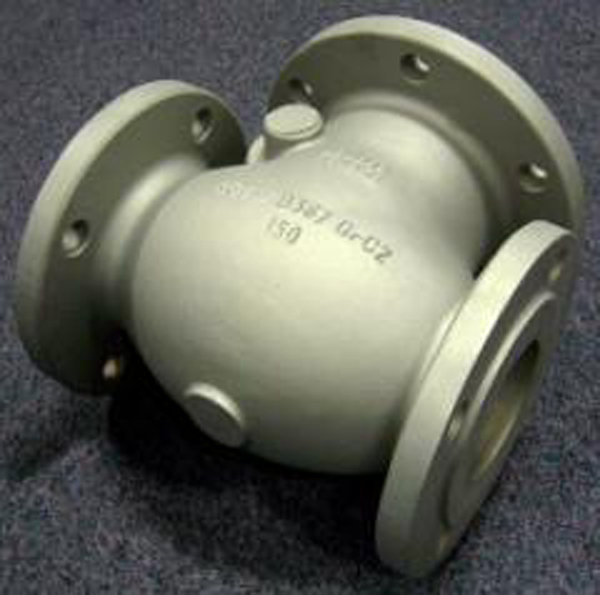
Castings Technology International (Cti) has developed an advanced casting technology said to be capable of producing large one-off and low run net shape castings. Building on the Replicast process that uses moulds built up on precision-machined polystyrene patterns, MEGAshell technology enables exceptionally large ceramic shell moulds to be produced of a size and weight greater than conventional casting practice can feasibly achieve. To date, ceramic moulds with dimensions up to 2×2×2 m have been produced so that, for example, heavy section valve castings weighing several tonnes can be manufactured that are more than 20% lighter than the sand cast equivalent. Cti says that machining cost reductions of 50% or more can be achieved over the sand cast route. These qualities may enable the process to compete against the PM-HIP route for some large, high value components.
To date, more than 3500 ceramic moulds have been manufactured by the MEGAshell technology, principally for high value steels and nickel alloys; more recently, Cti has refined the technology for use with titanium and zirconium alloys. The one-off titanium valve body (see figure) illustrates the quality of part that is rapidly produced from machined polystyrene by Titanium Castings UK Ltd, a wholly owned subsidiary of Cti.
Further information from: Mike Ashton, Chief Executive, CastingsTechnologyInternational, Advanced Manufacturing Park, Brunel Way, Rotherham S60 5WG, UK, email
One-off titanium cp Grade 2 swing check valve cast from a precision-machined polystyrene pattern results in 70% reduction in machining cost relative to sand casting (© Shipham Valves)
Magnetic materials for efficient cooling
The Foundation for Fundamental Research on Matter (FOM) in the Netherlands and BASF are to start a four year joint research programme on magnetocaloric materials. The aim is to improve understanding of fundamental magnetocaloric principles, to develop new materials with improved properties, and to investigate the best routes for large-scale production. FOM and BASF started their cooperation in 2008. The previous research programme yielded insights into the physics underlying the giant magnetocaloric effect. Together with their industrial partners, the researchers are working on the market introduction of the first devices based on magnetocaloric materials.
Magnetocaloric materials, many of which are produced via powder processing routes, heat up in a magnetic field and cool when removed from it. A heat pump based on magnetocaloric materials may provide an alternative for traditional cooling cycles that significantly reduce energy consumption. Systems based on a magnetic cooling cycle can be relatively small where space is an issue and are quieter and cause less vibration than conventional compressor type refrigerators.
The research in this programme will be carried out at Delft University of Technology, Radboud University Nijmegen and at the research sites of BASF in De Meern (NL) and Ludwigshafen (D).
Further information from Professor Dr Ekkes Brück, Delft University of Technology, tel. +31 (0)15 278 31 58 or at www.basf-fb.de or www.fom.nl.
REACH/EHS developments
The European Chemicals Agency (ECHA) has published proposals to identify 20 chemicals as Substances of Very High Concern (SVHCs) and thus possible candidates for authorisation under REACH. Since the last publication six months ago, the number of dossiers has more than doubled. Refractory ceramic fibres, coating substances and trilead diarsenate are among the substances listed that might be used in the PM industry.
The detailed proposals are available on the ECHA website and interested parties are invited to comment by 13 October. Further information at http://echa.europa.eu/news/pr/201108/pr_11_20_svhc_consultation_20110829_en.asp.
The German Advisory Council on the Environment (SRU) has published a comprehensive report, ‘Precautionary strategies for managing nanomaterials’, providing policy recommendations for the control of risks associated with nanotechnology. The report states that many questions remain unanswered as to behaviour and effects of nanomaterials in the environment and on organisms and notes that some characteristics of nanomaterials relevant for risk assessment cannot be inferred from the corresponding bulk material.
Among the recommendations are extensive changes to REACH that would see nanomaterials treated as substances in their own right, with registration dossiers independent of the associated bulk substance and including a core data set that ensures observation of preliminary risk estimation, according to their size. Quantity thresholds would be reduced for nanomaterials and the standard information requirements need to be supplemented.
The report in German can be found at www.umweltrat.de/where an executive summary, conclusions and recommendations in English are also available.
In June 2011 the US Department of Health and Human Services added cobalt–tungsten carbide powders and hardmetals, among eight substances, to its 12th Report on Carcinogens, a science-based document that identifies chemicals and biological agents that may put people at increased risk for cancer. The report can be downloaded at http://ntp.niehs.nih.gov/ntp/roc/twelfth/roc12.pdf.
The information above is drawn from EPMA's latest REACH update. More detailed information is available in the members’ area at www.epma.com
Powders 2011
The Materials KTN and Particulate Engineering Committee of the Institute of Materials, Mineral and Mining are organising Powders 2011 on 30 November 2011 at Holywell Park, Loughborough. A successor to the successful PowdermatriX annual meetings, Powders 2011 will aim to raise awareness of new technologies and services in particulate materials, review the technology needs of key industry sectors and assess current and emerging priority areas. There will also be the opportunity for delegates to learn about and contribute to the TSB Materials strategy and to bid for Innovation prizes.
Further information from: David Whittaker, Materials KTN, email
EPMA Summer School continues success
The EPMA ran its eleventh PM Summer School at the Fraunhofer Institut IFAM in Dresden during the last week in June. The event was coordinated by Professor José Torralba from the Universidad Carlos III Madrid, in conjunction with Professor Bernd Kieback and his team from the University of Dresden. As has been the trend over the past few years, the demand far outweighed capacity with 120 applications for the 54 places available. Participants from 14 countries throughout Europe reflected a wide range of organisations, including PM end users.
Students had the opportunity to listen to, discuss and solve problems with some 20 experts from industry and academia. The lectures were complemented by IFAM's excellent laboratory facilities, where students had hands-on experience of different areas of PM.
Thanks to the ongoing commitment of the EPMA Council, a further PM Summer School is planned for June 2012 at CEIT San Sebastian in Spain. Detailed information will be made available on the EPMA website early in 2012.
Further information from: Joan Hallward at EPMA, email
Basel confirmed for Euro PM2012
The EPMA has announced that the Euro PM2012 International Conference and Exhibition will be held in Basel, Switzerland from 16 to 19 September. The event will have a programme of over 200 oral and poster papers that will cover PM Applications and New Processes; Hard Materials; Powder Injection Moulding; and Hot Isostatic Pressing. In addition to the main programme, workshops and meetings on key topics of relevance to the industry will be held.
Further information from: Andrew Almond, email
Packaging design awards
The 2012 Student Starpack Awards challenge students to solve problems set by brand-leading FMCG companies, design agencies, and manufacturers – and win recognition of their excellence. The deadline for entries into the 2012 competition is 2 March. The briefs on offer are: Food on the Move; Festival Pack; Blue Sky Soft Drinks; Energy Structural Bottle Design; New Uses for Corrugated Board; Senior Friendly Child Resistant Packaging; Premium End Packaging for Wine; and Busy Chocolate.
New for 2012 is the cross-cutting Innovation Award, sponsored by The Packaging Society. Winners can expect to receive prizes of up to £500 and work placement opportunities. Sponsors include Coca Cola, Nestle and Britvic, plus many of the biggest names in packaging – DS Smith Packaging, the Benson Group, Logoplaste, Global Closure Systems, British Polythene Industries plc and The Packaging Society.
Further details at www.starpack.uk.com/students.
Injection moulding market survey
The world metal and ceramic injection moulding market is forecast to reach $ 3·7bn by the year 2017 according to ‘Metal and ceramic injection molding: a global strategic business report’ from Global Industry Analysts, Inc.
Despite challenges, the growing trend towards miniaturisation, and for developing new components with greater mechanical strength, offer opportunities for MIM and CIM. Future growth in the MIM industry will, says the report, stem largely from developing markets such as Taiwan, Malaysia, Indonesia, Mexico and India. Europe and Asia-Pacific account for a major share of current global MIM, whereas the USA is the largest market for CIM.
The report provides a review of market trends, issues, drivers, company profiles, mergers, acquisitions and other strategic industry activities.
Further details at http://www.strategyr.com/Metal_and_Ceramic_Injection_Molding_Market_Report.asp
Updated PM case study booklet
EPMA has launched a revised booklet containing a selection of PM component case studies. This free, 20 page booklet contains recent case studies on a range of component parts made using the PM process and reviews the advantages it provides under the categories: improved performance; increased complexity of component produced; cost saving; and weight saving.
The case studies range from very small medical devices through to automotive components to luxury consumer goods mechanisms. All of these help to showcase the diversity and ingenuity of components that can be made using PM.
The booklet is available in either hard copy or digital (PDF) formats. To order a hard copy, available free in Europe, or download a digital copy, visit www.epma.com.
North American auto industry megatrends
SAE International has announced the release of a new publication, ‘Automotive 2030 – North America’ by Bruce Morey. The book is said to provide decision-makers with information on megatrends that will help them remain competitive in the North American automotive market for the next 20 years. According to the book, the current rapid rate of innovation in the automotive industry is mainly fuelled by the need to improve fuel economy and reduce emissions, increase the use of electronics and global development.
The first chapter summarises key developments in vehicle technologies. The next three chapters show trends and predict the future of established technologies – internal combustion engines, transmissions, vehicle bodies, and materials. A new array of technical developments is resulting from gasoline–electric hybrids, and these are discussed in chapter five. Chapters six, seven and eight delve into the second megatrend – alternative sources of fuel. The other megatrend examined is the emergence of the smart car.
Further information at www.sae.org.
Extractive metallurgy of Ni, Co and Pt-group metals
‘Extractive metallurgy of nickel, cobalt and platinum-group metals’, by Frank K. Crundwell, Michael S. Moats, Venkoba Ramachandran, Timothy G. Robinson, and William G. Davenport, describes and explains the methods by which three related ores and recyclables are made into high purity metals and chemicals for materials processing; focuses on present day processes and future developments; and aims to synthesise detailed review of the fundamental chemistry and physics of extractive metallurgy with practical lessons from industrial consultancies at the leading international plants.
Nickel, cobalt and platinum group metals are key elements for materials processing. They have been brought together in this book because they map together on the periodic table, occur together in many ores and are natural partners for further materials processing and materials manufacturing.
The 610 page book (ISBN 9780080968094) is priced $189·95/€139·95/£119·95. Further information, including sample content, is available at www.elsevierdirect.com/9780080968094.
Nanotechnology skills report
The UK Nanotechnology Mini-Innovation and Growth Team (Mini-IGT) has made available a report following the ‘UK manufacturing needs nanotechnology – closing the skills gap’ event held in May 2011. The report provides supporting information and detailed proposals based on the evidence from an industry survey and conclusions from the event. The report also summarises the issues, recommendations and the responsible departments for ensuring appropriate skills are available in support of the growth of the UK's manufacturing industries.
The survey and event identified a number of key issues articulated in this report including recommendations on how to tackle the current gap in the provision of appropriate skills and the responsible departments for ensuring these skills are available. One key recommendation is that the Department for Business Innovation and Skills supports vocational training, which is seen as vital to the provision of hands on technicians and operators without whom the UK's manufacturing industries would find it difficult to deliver competitive products.
A copy of the report and further information can be found at www.nanoktn.com or www.materialsktn.net.
Men of metals and materials
‘Men of metals and materials’ is the memoir of Gopal S. Upadhyaya, the renowned powder metallurgist who retired from the Indian Institute of Technology, Kanpur as a professor. In all, 36 Indian and 47 overseas persons of eminence are covered. Many are no longer alive and the book gives a rare chance to learn of their scientific achievements and broader social context.
The 248 pp. softbound book is priced at $16·95 or $9·99 as an e-book. Further information at www.iuniverse.com.