






Abstract
Graphite based materials are proposed as one of the candidate materials for metallic fuel reprocessing involving high temperature molten chloride salt environment. Pyrolytic graphite (PyG) was deposited on graphite substrates by thermal chemical vapour deposition using methane gas to enhance their performance in molten chloride environments. The structural features of the PyG deposit were characterised using X-ray diffraction by measuring interlayer spacing, crystallite size and preferred orientation. The present study discusses the corrosion behaviour of PyG in molten LiCl–KCl eutectic salt at 873 K. The PyG samples tested in molten salt for 2000 h in controlled argon atmosphere exhibited negligible weight loss. The as deposited and corrosion tested samples characterised using optical microscopy, scanning electron microscopy, energy dispersive X-ray spectroscopy and atomic force microscopy showed no significant change in surface morphology. The study showed excellent corrosion resistance of PyG in molten salt under inert atmosphere.
Keywords
Introduction
Metallic fuel has been chosen as the fuel for future fast breeder programme in India, and reprocessing is by pyrochemical route involving molten LiCl–KCl eutectic salt.1, 2 Graphite is used as a base material for the fabrication of structural materials like electrodes, salt purification vessel, liners and cathode processor crucible3 in pyrochemical reprocessing. The advantage of graphite material includes easy fabrication into containers of various shapes and good high temperature strength and thermal shock resistance. However, graphite undergoes degradation in molten salt4, 5 and readily reacts with molten uranium.3, 6 It also suffers poor structural integrity to mechanical cleaning procedures.3, 6 Owing to the limited life for application as containers and moulds, often, replacement is necessary, and hence, accumulation of solid waste becomes a critical issue. The corrosion resistance of structural materials is important for the pyrochemical reprocessing process in which spent metallic fuels are handled at high temperature under molten chloride environment.7 – 9 Hence, highly corrosion resistant and life extended materials are required for the pyroprocessing plant. Evolution of long term corrosion is very important to understand the material behaviour under such aggressive environment. Pyrolytic graphite (PyG) is one of the crystalline forms of graphite, and it can be deposited on graphite for providing high temperature corrosion resistance in aggressive environments. The PyG material has been considered as one of the structural materials for molten salt based technologies.4, 10 – 12 The PyG was deposited on graphite by pyrolysis of hydrocarbon gas such as methane, propane and benzene at reduced pressure at temperatures above 2273 K. It is a high purity form of graphite with low porosity (high density) and highly oriented crystalline structure. The properties of PyG, like microstructure,13 structural features and properties,14 depend upon the deposition conditions.15
The PyG has been deposited as coating over graphite because it has greater oxidation resistance, chemical reactivity and good thermal shock resistance and is much stronger than normal graphite.16 A free standing object can be made after separating from the substrate, with sufficiently thick deposition.16, 17 It is possible to deposit the substrate with PyG up to a diameter of ∼7 in.17 The PyG was used in the form of deposition over moulded graphite, carbon fibres or porous carbon–carbon structures.18 The PyG has been used as electrode material for electrochemical reduction in oxides into metals in a LiCl melt.19 The PyG crucible with induction heating system has been used as anode in electrolysis and depositing process in pyrochemical process.20 The PyG and ceramic materials are chosen as candidate materials for corrosive molten salt environment for the fuel reprocessing by the RIAR process.10, 11 Corrosion studies carried out by Takeuchi et al.11 on PyG and other ceramic materials like mullite and cordierite in molten NaCl–KCl salt (for oxide fuel reprocessing) at 1023 K for 24 h showed less corrosion rate (0·01 mm/year) under Cl2 bubbling conditions. The PyG shows high corrosion resistance in molten chloride (NaCl–KCl) salt under Cl2 bubbling at 1023 K. However, the corrosion test carried out in Cl2–O2 (1∶1) atmosphere in molten salt has been exhibiting corrosion rate >0·5 mm/year. This clearly indicated that PyG suffered from severe damage by oxygen effect.11 In order to produce PyG deposition on high density graphite substrate for pyrochemical reprocessing, it is necessary to establish corrosion resistance and stability of PyG in molten chloride salt (LiCl–KCl). Studies on PyG in molten fluoride salt12 and oxidising environment10, 11 are reported in the literature and characterised with corrosion rate and nuclear techniques respectively. The objective of the present study is to investigate the microstructural characterisation of PyG exposed to molten LiCl–KCl eutectic salt at 873 K in ultra high pure argon (UHP) atmosphere up to 2000 h.
Experimental
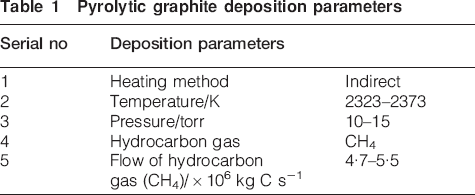
The PyG investigated in this study was deposited at 2323–2373 K in an indirect heating reactor by pyrolysis of methane gas. The details of the experimental technique and the optimisation of deposition parameters were described by Wlodarski et al.21 The optimised deposition parameters are listed in Table 1. The PyG was deposited on graphite up to dimensions of ∼20 cm length, 6 cm width and 2·5 mm thickness. X-ray diffraction measurements of PyG powder and flat plate samples were obtained using a STOE diffractometer with Cu Kα radiation. The interlayer spacing or distance (d002) and crystallite size along the c axis Lc(002) was calculated using Bragg's and Scherrer formula.
Pyrolytic graphite deposition parameters
Corrosion studies were carried out in a molten salt test assembly (MOSTA). The experimental set-up used for the corrosion studies is shown in Fig. 1. LiCl and KCl salts weighed and mixed in proper proportions (44·48LiCl–55·52KCl) were used to prepare a eutectic composition. All the salt handling operations were performed inside the inert argon atmosphere glove box. The chlorinated salt of 400 g was loaded in the corrosion test cell under UHP argon atmosphere in the glove box, and the cell was loaded in MOSTA, heated to the desired temperature. For evaluating the corrosion behaviour in molten salt environment, parameters like exposure time and temperature of molten salt bath are very important. The test was carried out at a temperature of 873 K for 2000 h under UHP argon atmosphere. The PyG samples were immersed in chlorinated molten LiCl–KCl eutectic salt with continuous purging of UHP argon throughout the experiment. After the corrosion test in molten salt, the samples were cleaned in distilled water. The initial and final weights of the samples were measured by A&D HM-202 weighing balance, and the percentage weight loss was determined. The as deposited and corrosion tested PyG surfaces were examined by visual, scanning electron microscopy (SEM) of FEI, Quanta 200F, attached with energy dispersive X-ray spectroscopy (EDX) and optical microscopy (Leica DMILM HC) before and after the impregnation in molten salt. The surface morphology and surface roughness analysis of the as deposited and corrosion tested PyG samples were carried out using an NT-MDT make Solver Pro EC electrochemical scanning probe microscope. The samples were analysed in semicontact mode using a standard conical silicon tip attached to a cantilever in ambient condition. The average roughness (equation (1)) and root mean square (RMS) (equation (2)) values of the surfaces were calculated to understand the extent of corrugation present on the surface by the NOVA software

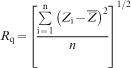
 is the mean of all the height values and n is the number of data points within the image.
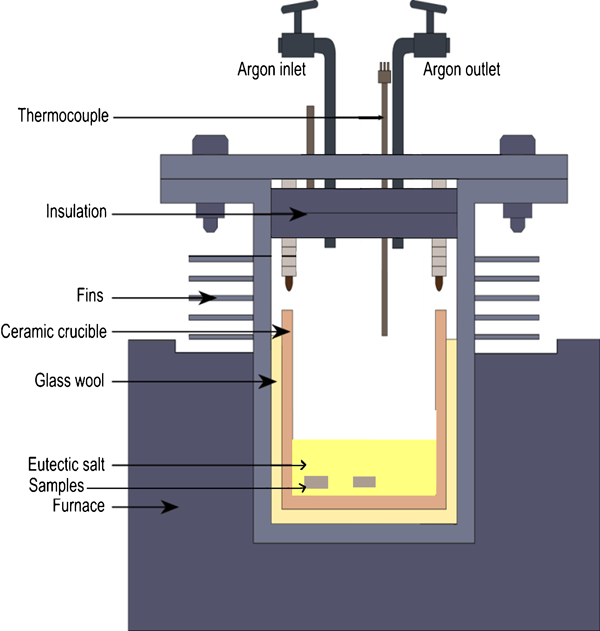
Molten salt test assembly set-up used for corrosion testing of PyG
Results and discussion
Visual examination
Visual examination of the as deposited and corrosion tested PyG top and bottom surfaces shows a silvery softer appearance, as shown in Fig. 2. The top surface has small spherical nodes, and it has a black shadow on the surface formed at the time of deposition. The bottom surface has small curved shapes that are the inverse of the top surface nodes.22 These are formed because of impurities present on the graphite substrate surface and the growth of nodes during the deposition process. After the corrosion test, the surfaces (top and bottom) did not show any variation, and no cracks were observed on the surface of PyG, but the brightness of the surface is increased.
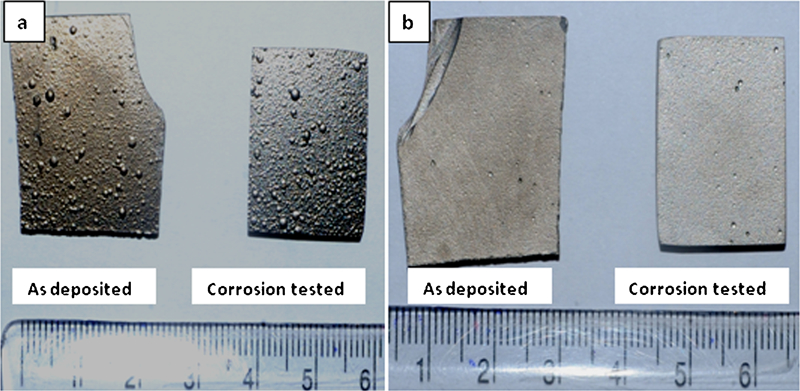
Photographs of PyG surfaces a top surface and b bottom surface as received and after corrosion tested in LiCl–KCl salt
XRD analysis
The structural features of the as deposited PyG samples characterised by X-ray diffraction pattern are shown in Fig. 3. The interlayer spacing of the PyG was measured to be 3·42 Å. This interlayer spacing is much larger than that of the ordered graphite (for well oriented graphite is 3·35 Å). The diffraction lines of the as deposited PyG show a considerable broadening effect. The breadth of a diffraction peak is significant in the determination of crystallite size. The full width at half-maximum values of (002) and (004) diffraction peaks are 0·52 and 1·1° respectively. The Lc of PyG was estimated using the (002) peak found to be 249·4 Å. The broadening is caused by small crystallite sizes present in the PyG. The crystallite sizes indicated that the layer order is nearly random.23 The unique important structural feature of the PyG is the preferred orientation parameter. In this study, the preferred orientation of the PyG is calculated from (002) reflections using the following formula23

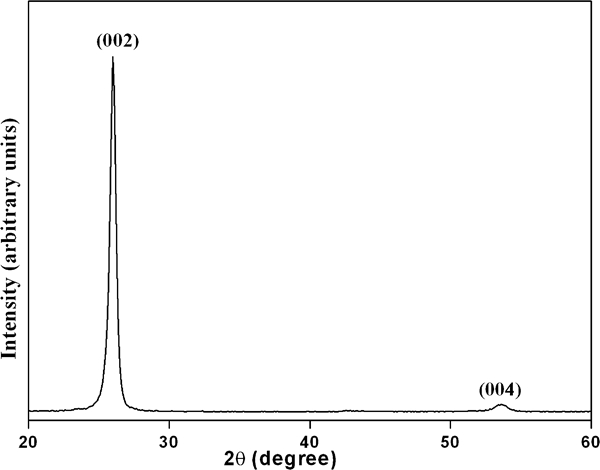
X-ray diffraction pattern of PyG
It is clearly indicated that the preferred orientation of the (002) plane is high, and it is in the order of 103∶1. The PyG thus obtained exhibited a high degree of preferred orientation along one direction. The individual crystallites present in the PyG tend to have their basal planes (002) aligned parallel to the surface of deposition.14 The PyG has a hexagonal layered structure with preferred orientation along the c axis. During deposition, atoms of the hexagonal network could be displaced along the c direction.24 The deposition method plays a key role in producing the preferred orientation in PyG.21, 25 Close interlayer spacing and small crystallite sizes revealed that PyG has a nearly ordered graphite structure with preferred orientation along the (002) plane.
Corrosion studies in molten LiCl–KCl salt
The PyG samples were exposed to molten LiCl–KCl salt with continuous UHP argon purging for 2000 h. The percentage weight losses of the PyG samples were insignificant (0·47×10−3), and the PyG samples exhibited no dimensional changes (i.e. length, breadth and thickness) even after exposure for 2000 h. This showed that PyG did not corrode in molten LiCl–KCl salt. The surface morphology of the corrosion tested samples did not show any change and was similar to that of the as deposited surface of PyG. Both top and bottom surfaces of the as received and corrosion tested PyG SEM microstructures are shown in Fig. 4. These SEM microstructures revealed the major features of concave and convex asperities on the top and bottom basal surfaces respectively.22,
26 The top surface exhibited characteristic bumps that are clearly seen in the optical microscope. These bumps are related to the smoothness of the graphite substrate and to the sootiness of the deposition processes.22,
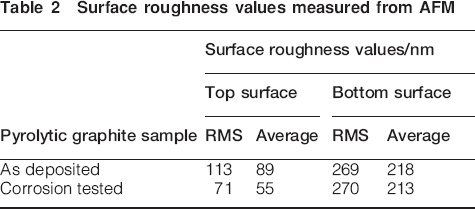
27 The SEM images of the bottom surface before and after corrosion test are shown in Fig. 4c and d respectively. The bottom surface appears as the inverse of the top surface. The EDX spectra of the as deposited (Fig. 4c) and exposed PyG (Fig. 4d) are presented in Fig. 5a and b respectively. The EDX spectrum of the as deposited PyG was found to possess slight impurities of Si (0·91 wt-%) and O (09·25 wt-%) along with C (89·84wt-%) element, while the EDX spectrum of 2000 h exposed PyG showed 100 wt-%C element only. According to Lewis and Floyd,28 a slight impurity content will be present in PyG, which could be due to the starting material. The fine spherical growth features on the top surface of the PyG are presented in Fig. 6a and b. These spherical shapes are growing in perpendicular direction to the substrate. The PyG top surface observed in optical microscopy bright field view has a small nodule-like structure.28 Inside, the nodules have a cauliflower structure (Fig. 6a and b). The bottom face contains very small nodules in comparison to the top face, as shown in Fig. 6c and d respectively. These nodes are large in diameter and increases in size as the deposition process continues.28 These surfaces did not exhibit considerable optical anisotropy. The AFM morphology of the PyG surfaces is shown in Fig. 7. The surface morphology of the top surface analysed by AFM revealed a nodular morphology. After corrosion test in molten chloride medium, there is no appreciable change in nodular morphology (Fig. 7b). The surface nodes seen in Fig. 6 have an elongated shape because these nodes are grown over on it and exhibited a mixed nature (Fig. 7a and c). The concave asperity present on the bottom surface resembling as cavities in AFM (Fig. 7c and d), there is no attack on the bottom side of the PyG surface. The topographical feature present on the bottom surface of the as deposited PyG looks the same as the corrosion tested surface. White regions present in the AFM images are topographically elevated portions. The surface roughness values obtained using equations (1) and (2) with Nova software are listed in Table 2. The values clearly indicated that the top surface has less roughness compared to the bottom surface of PyG. Moreover, the corrosion tested top surface has less roughness as compared to that of the as deposited surface. After corrosion testing, the bumps were found smoothened because the soot particles formed on the surface after chemical vapour deposition are cleaned away by molten salt. The bottom surface roughness profiles exhibited nearly equal roughness. The degradation of graphite materials in molten salt could be attributed to one or more of the following mechanisms:4,
5 (1) adhesion of salt to graphite; (2) diffusion and filling the porosity of graphite; (3) intercalation compounds formation; and (4) removal of carbon particles. However, in the case of PyG, there is no possibility of capturing or penetration of molten salt because of the non-porous structure and high preferred orientation of crystallites, which makes the PyG chemically intact to molten LiCl–KCl salt. The penetration and absorption of molten salt into graphite materials strongly depend upon the microstructure of the material. The microstructures of PyG surfaces are non-porous, which restricts the penetration of molten salt. The nodes and bumps that appeared on the exposed sample were found to be similar to the as deposited sample. There is no significant variation or penetration on both PyG surfaces after corrosion test. The impurities present in molten salt and oxidants are also not affecting the PyG surface. After 2000 h exposure in chloride environment, both surfaces appeared similar to the surface. According to Takeuchi et al.,11 the free energy change of reaction between carbon and chlorine is positive. The reaction is as follows

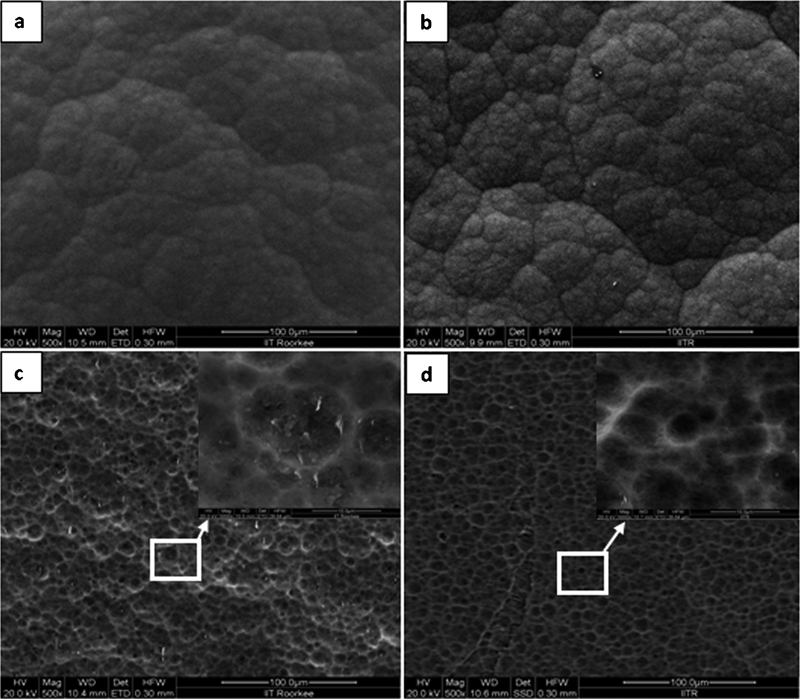
Microstructures (SEM) of PyG top surface: a as deposited and b exposed to molten LiCl–KCl salt for 2000 h and bottom surface: c as deposited and d exposed to molten LiCl–KCl for 2000 h
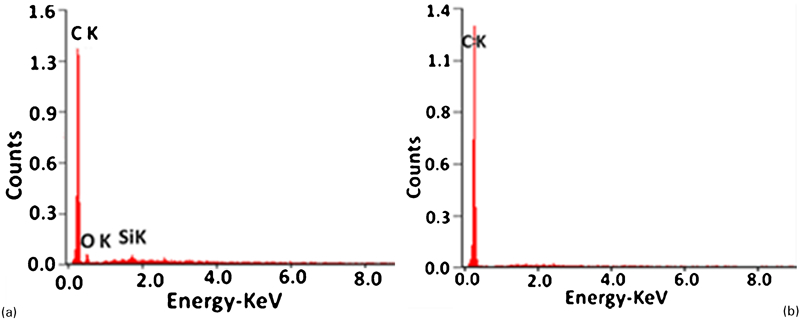
Energy dispersive X-ray spectra of PyG bottom surface a as deposited and b exposed to molten LiCl–KCl salt for 2000 h
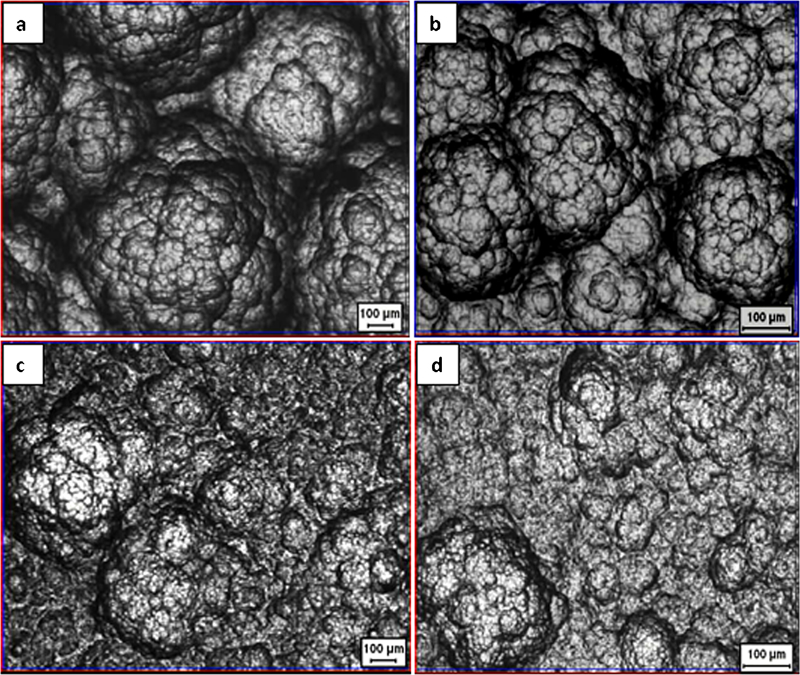
Bright field micrograph of PyG top surface: a as deposited and b exposed to molten LiCl–KCl for 2000 h and bottom surface: c as deposited and d exposed to molten LiCl–KCl for 2000 h
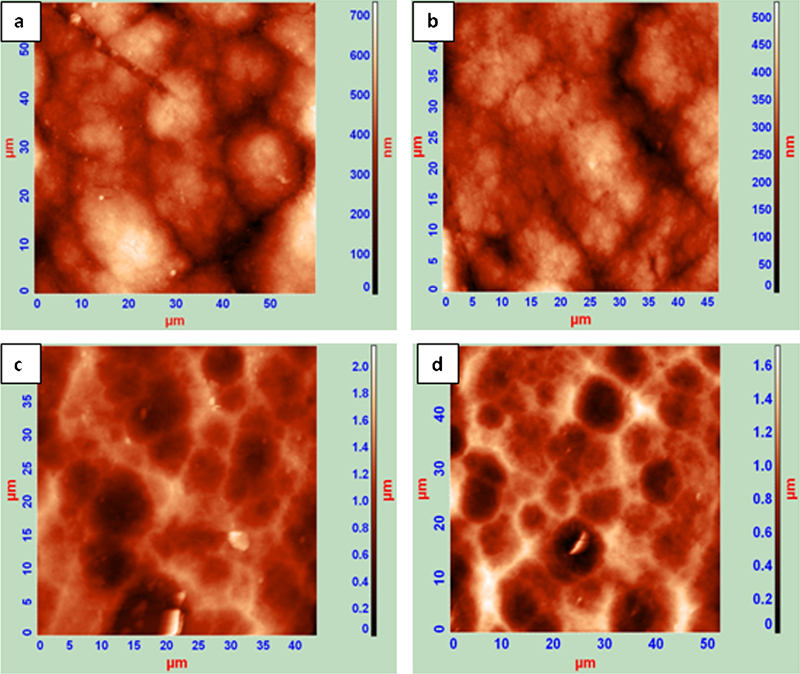
Images (AFM) of PyG top surface: a as deposited and exposed to molten LiCl–KCl for 2000 h and bottom surface: c as deposited and b exposed to molten LiCl–KCl for 2000 h
Surface roughness values measured from AFM
Conclusion
The as deposited PyG has a high preferred orientation along the (002) plane. The interlayer spacing (3·42 Å) and crystallite size (249·4 Å) indicated that PyG has a nearly ordered structure. Visual examination clearly indicated that there were no surface cracks on PyG and the surface appeared silvery bright. The immersion test performed on PyG in molten LiCl–KCl salt for 2000 h at 873 K showed excellent corrosion resistance with negligible weight change. Microstructural analysis of the corrosion tested samples using optical microscopy, SEM and AFM showed that the microstructure of the tested sample is similar to that of the as deposited sample. The EDX analysis confirmed no change in elemental composition before and after corrosion test in molten salt. There is no leaching of carbon particles or surface degradation from PyG exposed to molten LiCl–KCl salt. The study revealed excellent corrosion resistance of PyG in molten LiCl–KCl salt for pyrochemical reprocessing applications.
Footnotes
Acknowledgements
The authors would like to acknowledge K. Thyagarajan of CSTG for help in the operation of MOSTA.