







Abstract
Laser surface texturing is one of the promising surface modification techniques to reduce wear and friction properties of materials. In this study, we report the comparative effect of laser surface texturing on commercial nickel, electrodeposited nickel and Ni–SiC composite coatings. Hemispherical dimples, with 80–200 μm dimple spacing, were created and examined on the surfaces of the materials studied. The results revealed that microsurface texturing with 150 μm dimple spacing considerably improved the coefficient of friction. Electrodeposited nickel has shown improved coefficient of friction under identical texturing and tribological conditions when compared to commercial nickel. Furthermore, incorporation of SiC nanoparticles in nickel, by codeposition processes, resulted in the increase in microhardness of the coating, which in turn prevented the dimples from being deformed after wear testing. Dimple spacing accuracy and incorporated second phase ceramic particles both contributed significantly to reduction in coefficient of friction of electrodeposited Ni–SiC composite coatings.
Introduction
Incorporation of second phase fine particles into a metal matrix can potentially be a more compact and harder deposit with reduced porosity, smaller grain size and increased microhardness and tensile strength.1–3 In addition to the increase in mechanical properties of the coatings, tribological properties such as wear and coefficient of friction have been found to be significantly improved due to inclusion of second phase fine particles into the metal deposit. 4 Nickel is an engineering metal, and nickel coatings have several industrial applications. These coatings usually require low friction and wear properties in order to meet the demands of the application of use. Incorporation of second phase fine particles into nickel, as revealed by several previous investigations, has shown potential to reduce corrosion, wear and friction properties when compared to bare nickel coating.5,6 Electrodeposited Ni–SiC composite coatings have been extensively studied because of their superior mechanical, tribological and electrochemical corrosion resistance properties over pure nickel coatings.7–9 Furthermore, surface modification steps on electrodeposited Ni–SiC composite coatings, such as fabrication of microdimples by laser surface texturing and evaluation of its tribological properties, have not been investigated yet.
It is well known that surface topography significantly influences the friction, wear and lubrication behaviour of an internal combustion engine. Similarly, improvement of lubrication by applying surface texturing has been demonstrated widely in tooling and materials processing.10–12 According to studies, surface modification by creating microstructures on surfaces can either create microtraps for wear debris in either lubricated or dry sliding, or act as microreservoirs for lubricant in starved lubrication conditions or microhydrodynamic bearing in full or mixed lubrication. Excess amounts of lubricants at contact surfaces enhance boundary lubrication; thus, textured surfaces help to increase the thickness of the lubricating oil film between the mated surface in a way such that transitions of the boundary lubrication with the mixed lubrication regime and then into hydrodynamic regime occur. Texturing of coatings has recently been established using laser processing 13 and in-process structuring.14,15 Laser surface texturing has already made significant impact within tribology because of its ability to produce topographical features on many materials including metals, ceramics and glasses. Laser texturing requires a simple geometry of the surface to be textured, and it is reported that using the technique on combustion engine piston rings results in lower coefficient of friction and lower fuel consumption being achieved.16,17 Owing to their high hardness corrosion and wear resistance properties, Ni–SiC composites are potential candidates for protection of friction parts, combustion engines and casting moulds. Surface modification by laser surface texturing on Ni–SiC composite surfaces can be greatly advantageous for further reduction in wear and coefficient of friction. In this investigation, we have illustrated the effect that hemispherical dimples and the variation of dimple spacing on the surface of Ni and Ni–SiC composite coatings have on wear and friction properties of the respective coatings. Furthermore, in order to investigate the effect of matrix hardness, comparative studies on tribological properties of laser surface textured commercial nickel, electrodeposited nickel and Ni–SiC were performed under similar conditions.
Experimental
Electrodeposition of Ni and Ni–SiC composite coatings
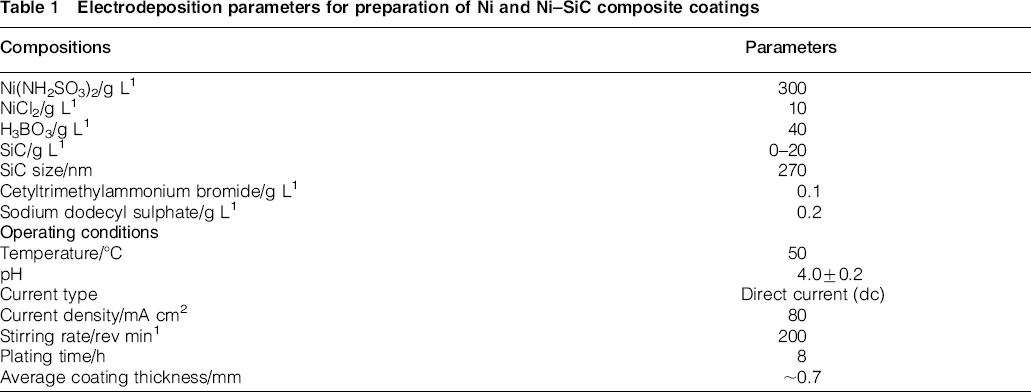
All electroplating experiments were conducted in a 250 mL glass beaker. The electroplating electrolyte was made using Ni sulfamate (purity ≥ 97%); concentration and compositions are listed in Table 1. Pure Ni balls were used inside a titanium basket as the anode, and a polished copper sheet of exposed area 1.5 × 1.5 cm was used as the cathode. The cathode was cleaned using ultrasonic techniques for 5 min before plating. The cathode and anode were placed vertically in the electrolytic bath. Cetyltrimethylammonium bromide and sodium dodecyl sulphate were used as a surfactant and an antipitting agent respectively. Direct current (dc), with average current density of 80 mA cm2, was used as the current source, and the electrodeposition time was set to 8 h in order to get the required thickness of the coatings.
Electrodeposition parameters for preparation of Ni and Ni–SiC composite coatings
After electrodeposition, the samples were cleaned in running distilled water followed by ultrasonic cleaning for 5 min in order to remove loosely adsorbed SiC particles (only in the case of Ni–SiC coatings). The samples were metallographically prepared initially using SiC abrasive paper up to 1200 grit followed by polishing using 0.3 μm Al2O3 and then subjected for further analysis. Microstructure and phase composition of the samples were evaluated by SEM (Nano-Eye, mini-SEM) and X-ray diffraction (Rigaku DMAX 2200). Vickers microhardness (Buehler Ltd, USA) testing was conducted by applying 0.98 N load for 10 s at 10 unique locations on the cross-sections of samples, and the average hardness values were calculated from these readings.
Laser surface texturing of samples
Laser surface texturing was performed on the polished samples using the laser instrument
Laser surface texturing parameters

Tribology test
Tribological properties were evaluated by wear test using a tribometer (CSM instruments; TRN 01-04879) under ball on disc method. A steel ball (SAE 52100) of a measured hardness of ∼830 HV and a diameter of 12.7 mm was used as a counterpart ball and the prepared sample as disc. A constant load of 10 N was set with the sliding speed of 5 cm s1 for 60 min at a radius of 5 mm under the starved lubrication condition using 5 W 30 low viscous engine oil. Coefficient of friction was recorded simultaneously during wear test, and the worn surfaces were analysed by SEM.
Results and discussion
Microstructural analysis
X-ray diffraction patterns of the commercial nickel, electroplated nickel and Ni–SiC composite coatings of different SiC contents are illustrated in Fig. 1. It can clearly be seen that the electrodeposited nickel coating has an intense (200) reflection peak, which reveals the preferred [100] textured orientation. On the other hand, all Ni–SiC composite coatings have shown enhancement of (111) and (311) reflection peaks with attenuation of (200) peak intensity. A similar observation was revealed by different authors in their studies on Ni–SiC coatings.18,19 According to previous studies, it is inferred that this phenomenon is associated with a decrease in ductility behaviour of the coatings.20,21 In addition to these textural changes, it has also been noticed that Ni–SiC composite coatings show broadening of the X-ray diffraction peaks, which might be associated with the reduction in nickel grain size. In order to confirm this, Scherrer's equation was used to calculate the grain size of the coatings, and details are provided in Table 3. Compared to commercial and electrodeposited nickel, the maximum reduction in grain size was achieved in a Ni–SiC composite coating with grain size of ∼18 nm. Coating with smaller grain sizes is desirable as this improves mechanical properties.
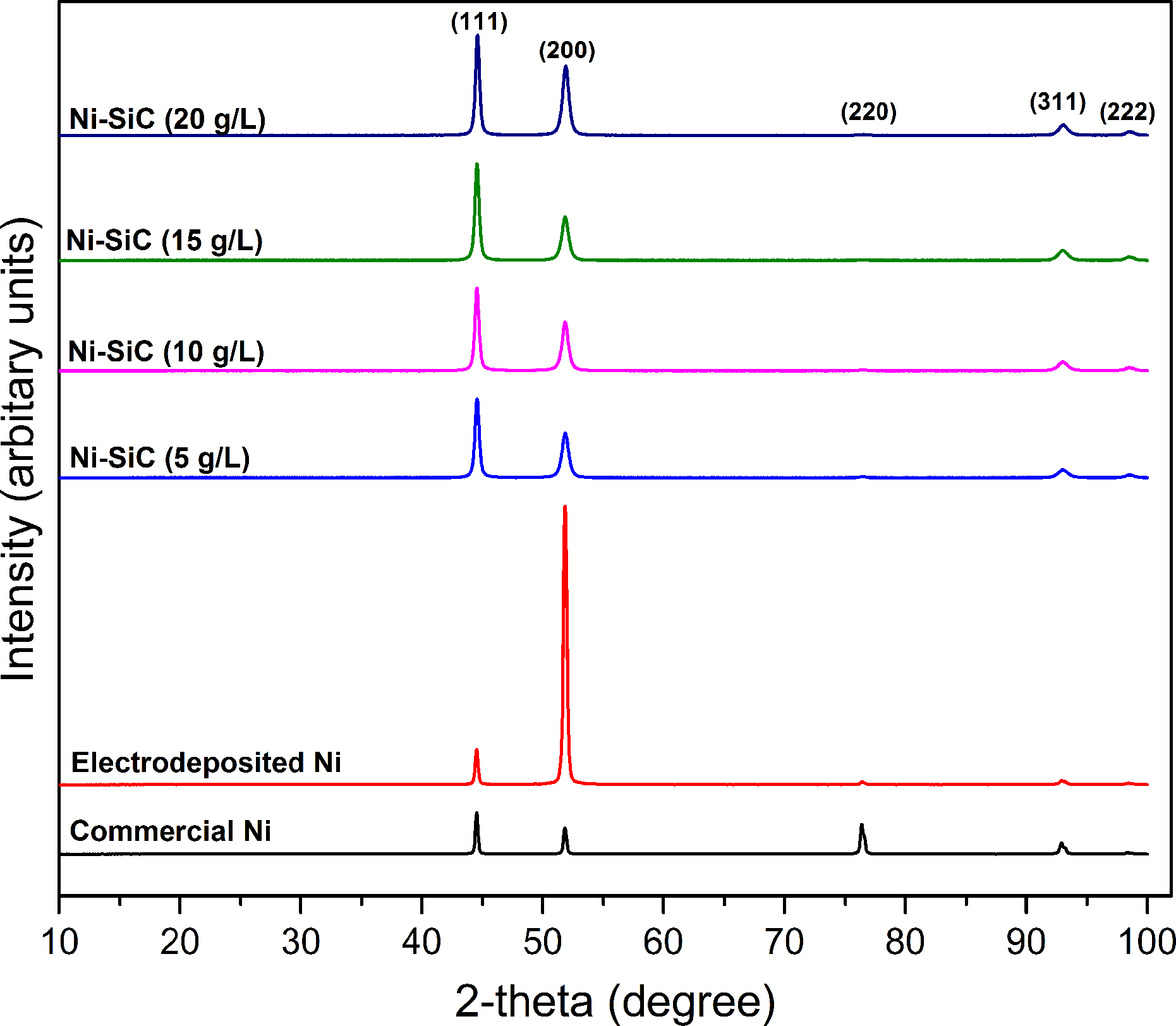
X-ray diffraction patterns of Ni and Ni–SiC composite coatings
Average Vickers microhardness and nickel matrix grain size of Ni and Ni–SiC composite coatings

Vickers microhardness results of commercial nickel, electrodeposited nickel and Ni–SiC composite coatings are shown in Table 3. It is clear that the Vickers microhardness is significantly increased in electrodeposited nickel and Ni–SiC composite coatings compared to commercial nickel. Increase in Vickers microhardness of electrodeposited nickel can be attributed to the reduction in nickel grain size. Vickers microhardness of the Ni–SiC composite coatings was increased with SiC particles content in the nickel matrix. Such increase in Vickers microhardness in composite coatings may be a consequence of the incorporation of second phase harder particles as well as further refining of the nickel grain and textural modifications. 22 It is well known that the reinforcement of second phase nanoparticles into metal matrix not only restrains the grain growth but also reduces the plastic deformation of metal matrix. Dispersed nanoparticles in the metal matrix also act as a barrier to dislocation movement and grain boundary sliding. As a result, the enhancement of microhardness is achieved in the composite coatings.
Effect of laser surface texturing on tribological properties
Laser surface texturing in Ni–SiC composite coatings was performed in order to evaluate the effect of dimple spacing on tribological properties of the composite coatings. Images (SEM) of 80, 100, 150 and 200 μm dimple spaced Ni–SiC surfaces are illustrated in Fig. 2. It has been observed that the hemispherical dimples with uniform dimple diameter (∼35 μm) were successfully created on the surface by laser surface texturing. Figure 3 shows the SEM images of worn surfaces of Ni–SiC samples having 80–200 μm dimple spacing under starved lubrication condition. It is clearly demonstrated that very small plastic deformation occurred in the coating as a result of wear testing. However, wear tracks with different widths are clearly observed as a consequence of the different dimple spacing evaluated. A gradual decrease in wear width is found by increasing the dimple spacing from 80 to 150 μm; however, there is a slight increase in wear track width observed in a sample of 200 μm dimple spacing. It should be noted that dimple morphology is also retained in most samples without any significant damage as seen in the wear tracks except at 80 μm spacing. In the case of sample with 80 μm dimple spacing, microdimples are found to be slightly deformed after wear testing. The observation suggests that the dimple spacing accuracy is also a crucial part for wearing phenomenon under starved lubrication. The width of the wear track in the coating may be correlated with the wear scar produced in the counter ball, as illustrated in the optical micrographs shown in Fig. 4. Wear scar in the counter ball also follows similar trends where the maximum wear scratch is observed for the counter ball sliding over 80 μm dimple spacing sample. In contrast, minimum wear scar on the counter ball is found in the 150 μm dimple spacing sample. It should be noted that surface texturing is performed not only to retain lubrication under starved condition but also to decrease the real contact area. Therefore, too dense texturing sharply reduces the actual contact area and creates more initial pressure during wear testing under constant load. This results in a decrease in load bearing capacity of the matrix leading to deformation of dimples (as observed in Fig. 3a). Hence, a larger scratch area is produced on the disc as well as on the counter ball. Direct calculation of wear rate of the disc was not performed due to some technical limitations; however, analysis of wear scar diameter of the corresponding counter balls can be performed, which can be correlated to the trend for the disc wear rate. It has been found that the larger wear scar of the counter ball is observed in 80 μm dimple spacing sample, while the least wear scar is observed for 150 μm dimple spacing Ni–SiC sample. The smaller wear scar may be associated with the appropriate distribution of micropattern dimples leading to improved contact area and less damage to the matrix surface. In addition, appropriate distribution of microdimples acted as adequate traps for wear debris, thereby preventing further scratches produced by worn particles.
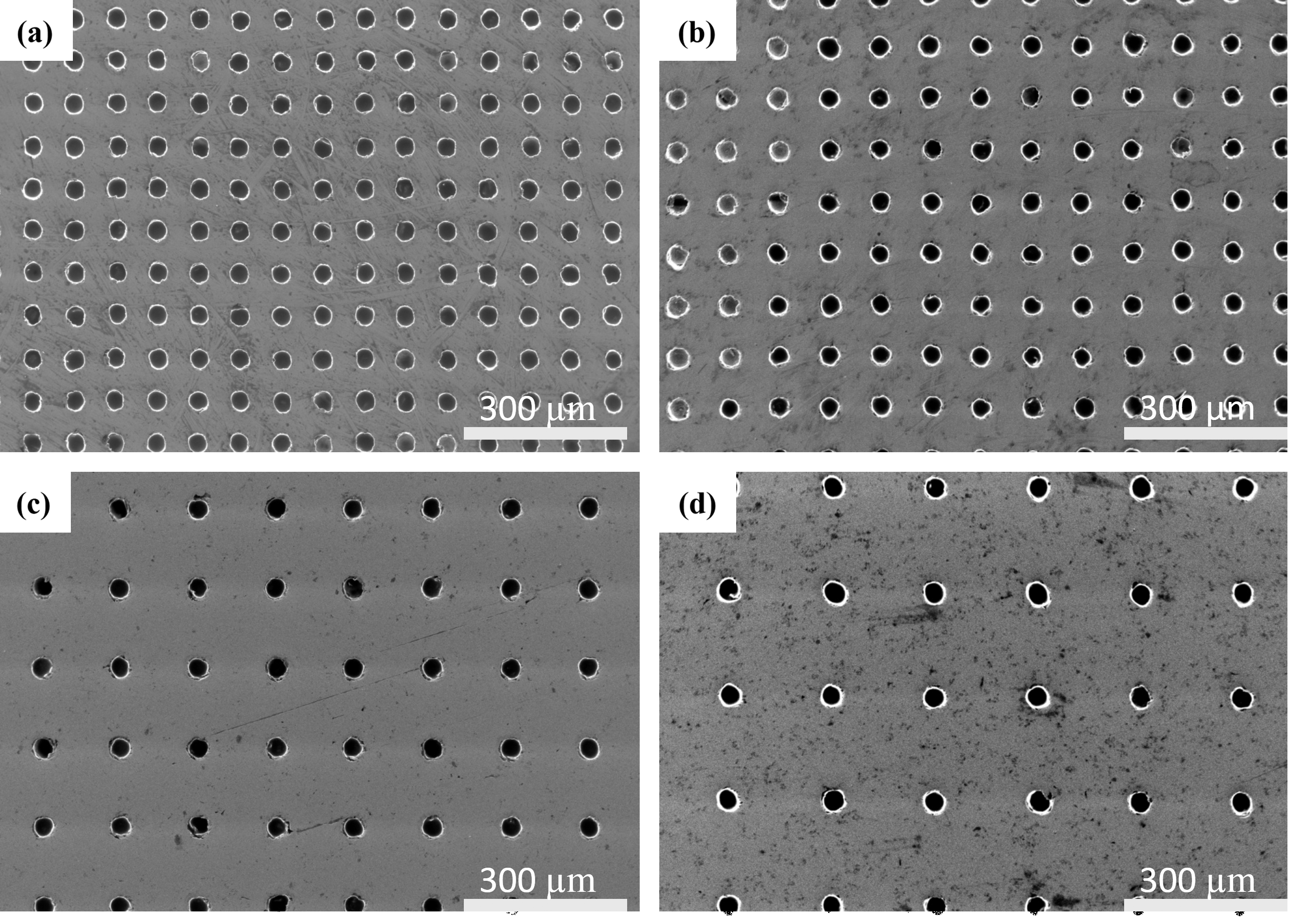
Images (SEM) of laser surface textured Ni–SiC composite coatings of a 80 μm, b 100 μm, c 150 μm and d 200 μm dimple spacing
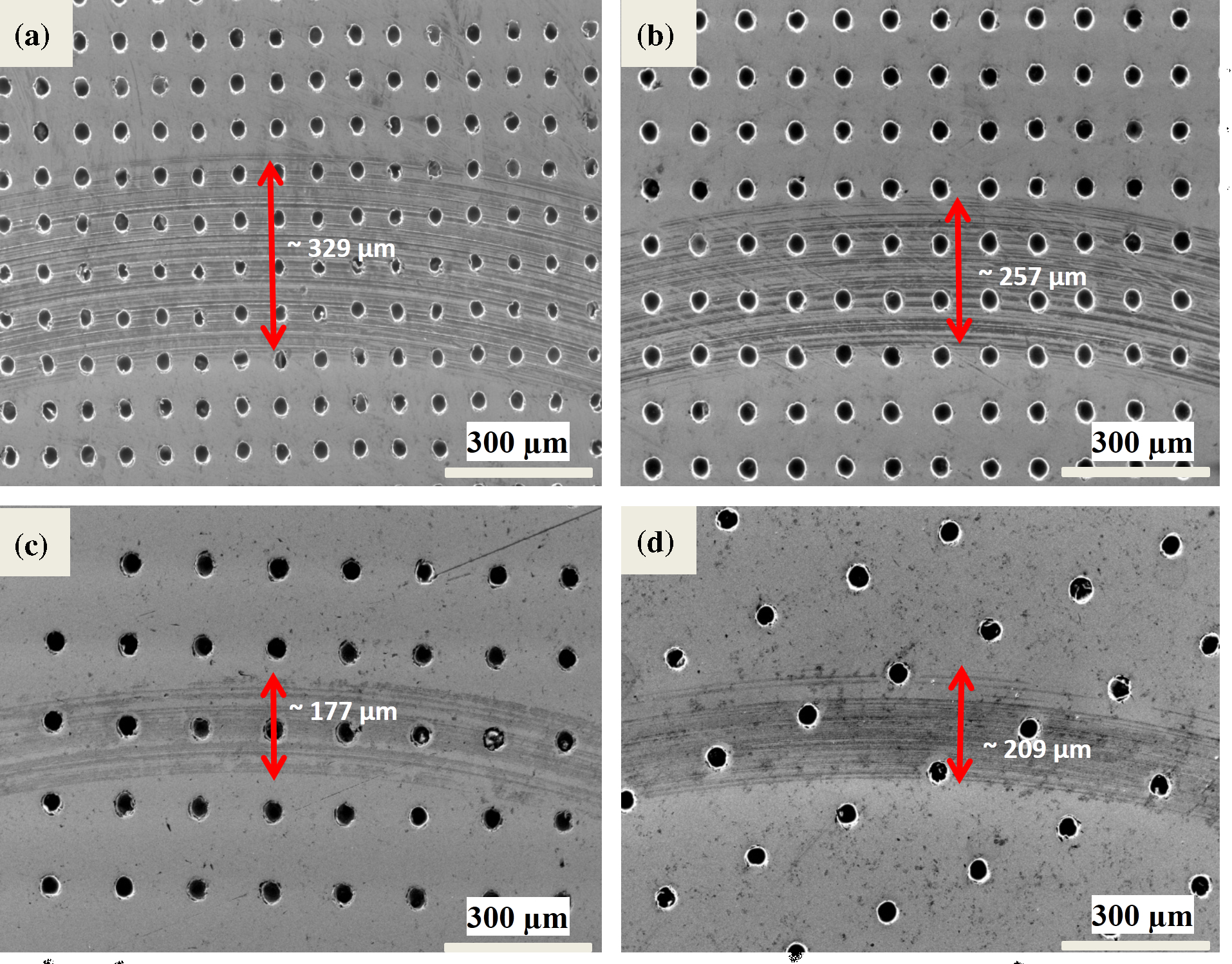
Images (SEM) of worn surfaces of a 80 μm, b 100 μm, c 150 μm and d 200 μm dimple spacing Ni–SiC samples after wear test under lubricating condition
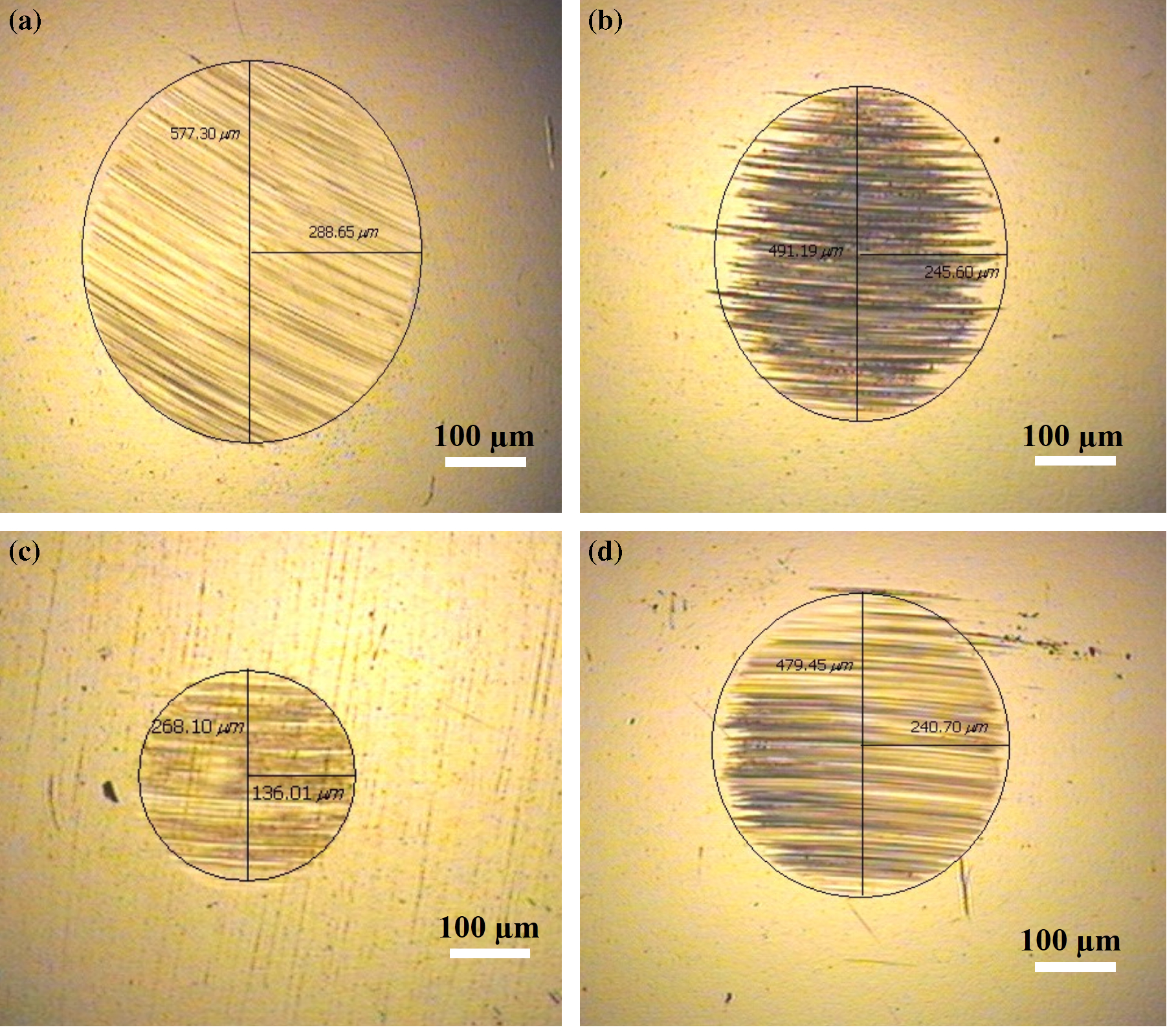
Optical micrographs of corresponding wear scars produced in counter balls slide against a 80 μm, b 100 μm, c 150 μm and d 200 μm dimple spacing Ni–SiC samples after wear test
Variation of coefficient of friction with reference to different dimple spacing in Ni–SiC composite coatings recorded during wear testing is shown in Fig. 5. It shows that the coefficient of friction is found to be the highest for polished surface, while a textured surface with 150 μm dimple spacing shows the lowest value. The maximum coefficient of friction obtained in a polished surface is accompanied with a larger contact area between mating surfaces. There is also a gradual descending order of the coefficient of friction observed with respect to the increasing dimple spacing from 80 to 150 μm. A sudden rise in the coefficient of friction of the 200 μm dimple spacing sample was, however, observed. Therefore, it can be deduced that a limiting value of dimple spacing exists beyond which there is a minimal effect of texturing for reduction in the coefficient of friction.
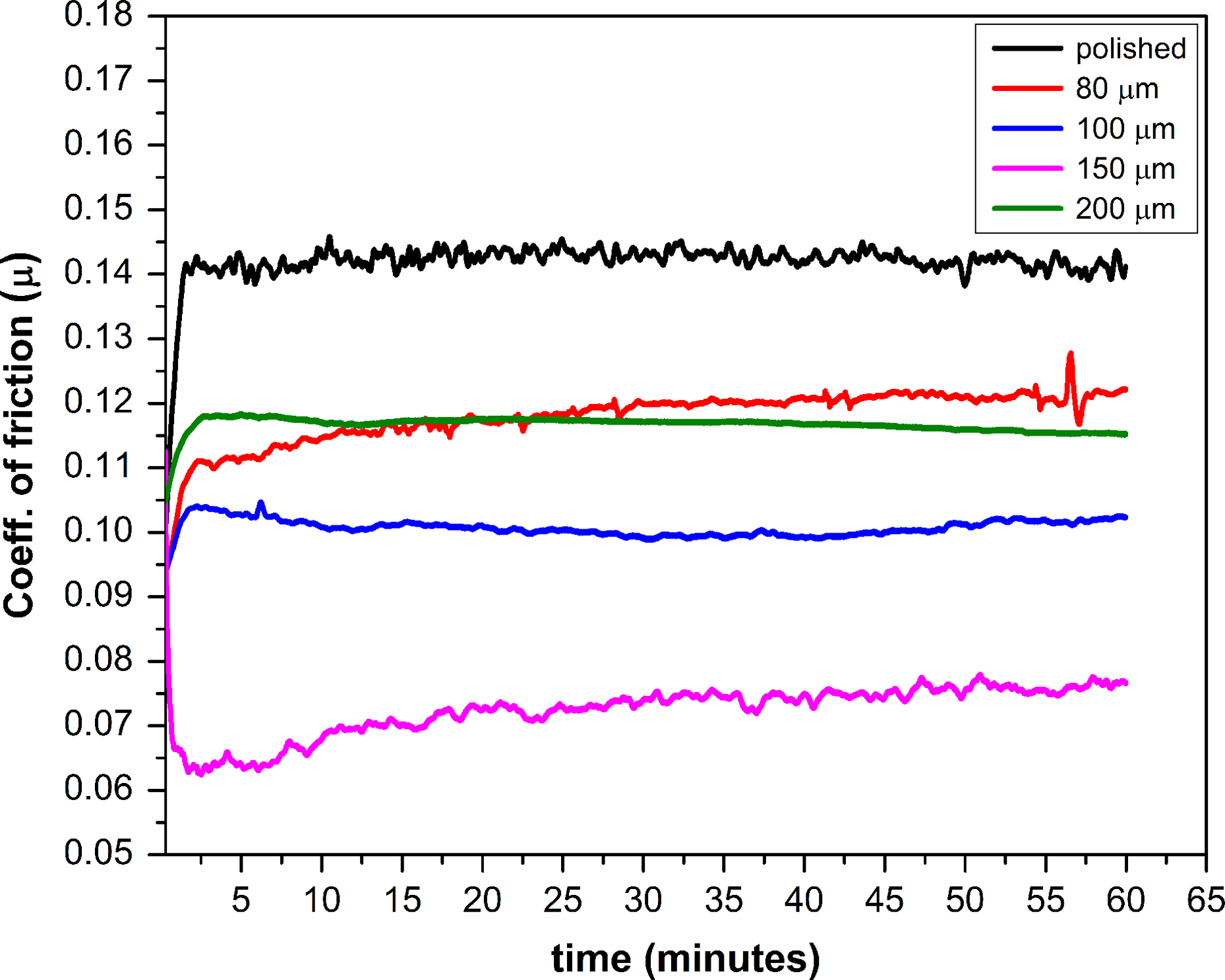
Variation of coefficient of friction with respect to polished and laser surface textured (80–200 μm dimple spacing) Ni–SiC samples
In view of the results achieved in this study, we have further extended the comparative effect of laser surface texturing on tribological properties of commercial nickel, electrodeposited nickel and Ni–SiC composite coatings. A constant dimple spacing of 150 μm was created in the three different samples conditions. Images (SEM) of wear tracks of commercial nickel, electrodeposited nickel and Ni–SiC performed under similar tribological conditions are illustrated in Fig. 6. It has been observed that commercial nickel experienced severe wearing with intense grooves, whereas electrodeposited nickel shows a lesser amount of such grooves with a reduction in the width of wear track. However, in both the cases, dimples are mostly deformed. Such deformation might be related to the intrinsic ductile properties with smaller microhardness of the nickel matrix only. The corresponding scratches on the counter ball also suggests for such behaviour. It can be deduced that the greater the ductility of the disc matrix is, the deeper and wider the wear tracks are on the disc and a correspondingly larger wear scar is formed on the counter ball. In contrast, Ni–SiC composite coatings significantly improved wearing behaviour, as there is no any deformation of dimples observed after wear testing and a smaller wear scar is observed. This improvement in tribological properties might be associated with the increased microhardness together with decreased grain size of the nickel after compositing nickel matrix with SiC.
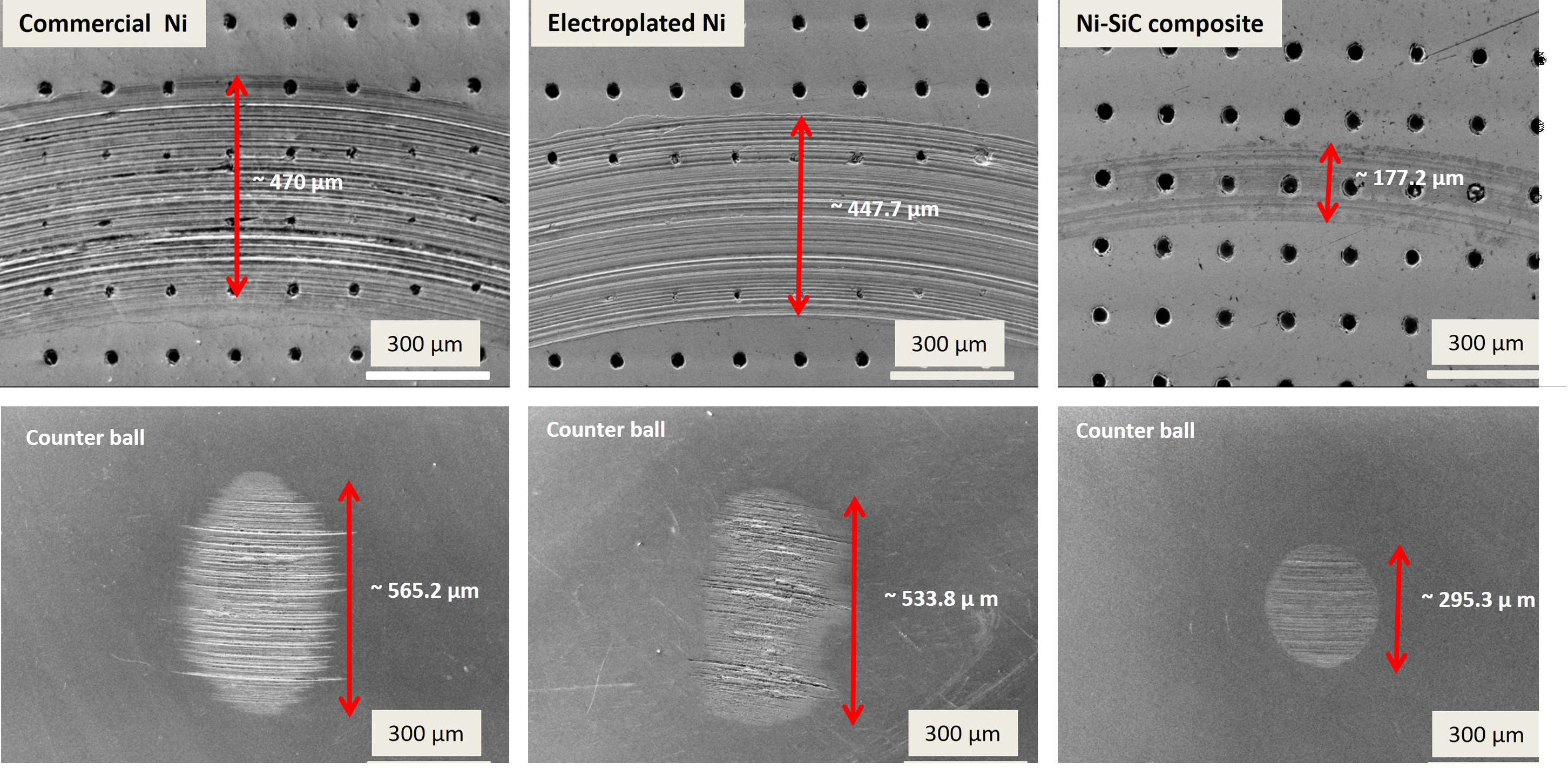
Comparative SEM images of worn surfaces of laser surface textured (150 μm dimple spacing in each) commercial Ni, electrodeposited nickel and Ni–SiC composite coatings, and corresponding counter balls under identical texturing and tribological conditions
Variation of coefficient of friction of textured commercial nickel, electrodeposited nickel and Ni–SiC is shown in Fig. 7. Even under similar texturing and tribological conditions, commercial nickel shows the highest coefficient of friction followed by electrodeposited nickel. The experimentation clearly shows that the lowest coefficient of friction is observed in the Ni–SiC composite. These results conclude that laser surface texturing is more practical when the matrix meets at least the limiting value of microhardness. Harder deposit with appropriate dimple spacing might be the reason for this significant improvement in tribological properties of Ni–SiC composite coating.
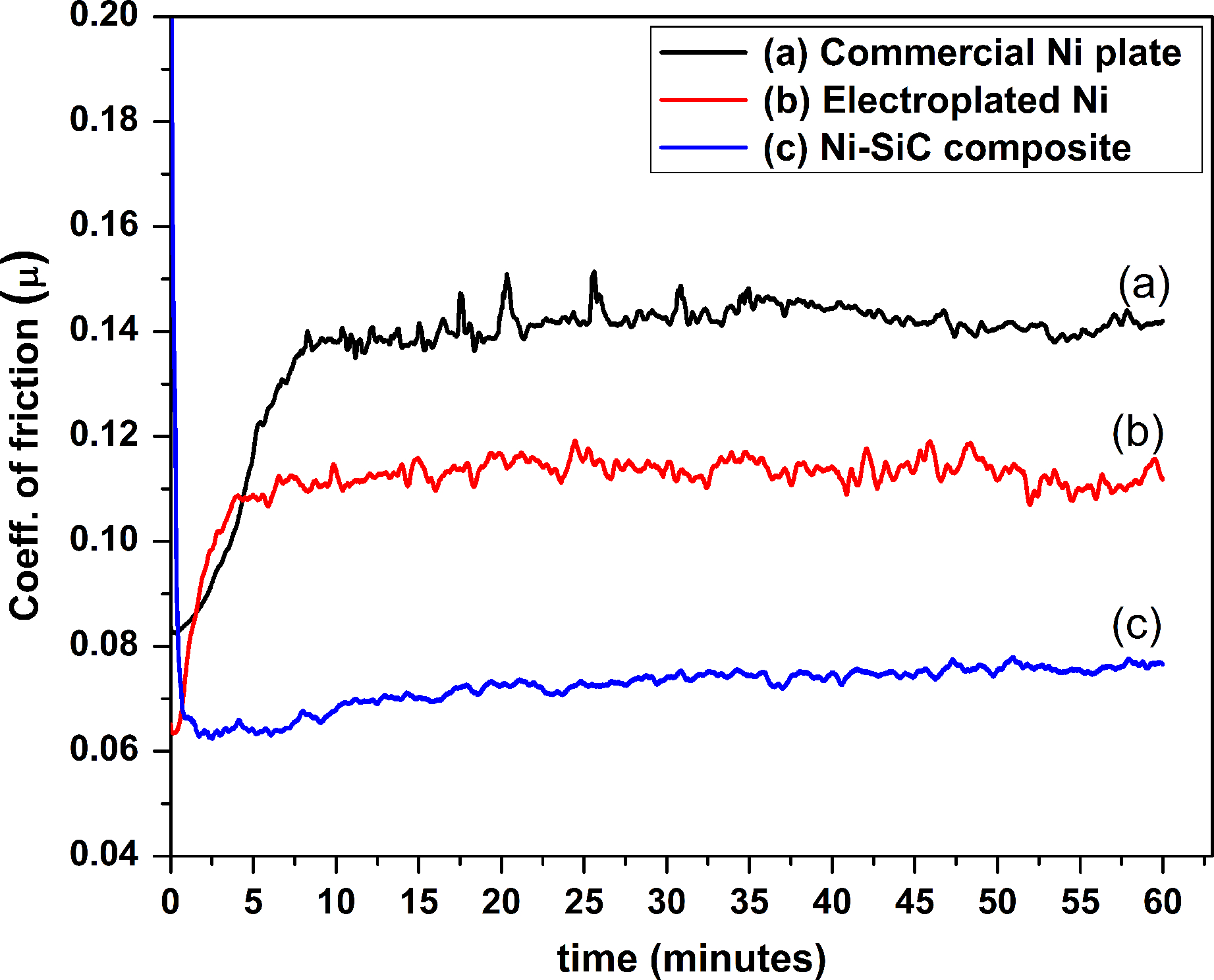
Comparison of coefficient of friction recorded during wear tests of laser surface textured (150 μm dimple spacing in each) commercial Ni, electrodeposited nickel and Ni–SiC composite coatings
Conclusion
As a consequence of the results achieved in this study, it is concluded that laser surface texturing is a potential surface modification technique for the improvement of tribological properties under lubricated conditions. Microdimples not only act as the reservoirs of lubricants under starved lubrication condition but also reduce the effective contact area between mating surfaces. Coefficient of friction and wear properties can be significantly improved by appropriate distribution of microdimples. Similarly, matrix hardness and grain size also play a vital role in preventing deformation of dimples and restoration of dimple shape and size for prolonged performance.
Acknowledgement
This research was supported by the Pioneer Research Program through the National Research Foundation of Korea funded by the Ministry of Education, Science and Technology (grant no. 2010-0019473).