







Abstract
This paper presents new technology variants of electron beam vapour phase deposition (EB-PVD) regarding discrete nanosized metal coatings on the surface of powders and granules of organic and inorganic substances. Examples of Ag, Cu and Fe produced coatings on the surfaces of microsized powders of inorganic (NaCl, Al2O3) and organic (polyvinylpyrrolidone, metronidazole, streptomycin, triazolin) substances, and millimetre organic granules (polyethylene, rice and wheat grains) are presented. Main attention is given to discrete silver coatings. Possibilities of transformation of powder systems with discrete coatings into liquid phase systems, for instance, colloids, following a simple technological schematic are shown, that is, deposition of metal nanoparticles on soluble powders of surfactants and subsequent dissolution of composites in water or other solvents. Directions of further research and development are proposed.
Keywords
Introduction
Simple microsized powders and larger volume multiphase granules of inorganic and organic substances are becoming widely applied as finished products or semifinished products (substances) for further treatment and manufacturing new kinds of products.
Surface composition, structure and properties of powders and granules are some of the main parameters determining their functional properties and, if required, further treatment variants.
Progress in the development of new composite materials, consisting of dissimilar substances, for instance, metal–ceramics and metal–polymer, is closely related to the possibilities of fine adjustment of composition and structure of powder and granule surface.
Physical processes of evaporation and condensation of various substances in vacuum are a unique complex of methods to produce various coatings with microsized and nanosized structure.
Intensive development of vacuum technologies of deposition of thin films ( < 1 μm) took place in the middle of the previous century, from antireflection and reflecting optical coatings to a separate class of thin film materials – the base of modern electronics and computer engineering.
Synthesis of solid thin film structures by controllable deposition of atoms allowed development of miniature devices with dimensions and specific characteristics, which seemed fantastic in the recent past.
Simultaneously with the development of thin film technology, investigations of “thick” films and coatings with thicknesses from several micrometres up to several millimetres were performed.
At present, considerable technological experience has been gained in producing inorganic coatings of various thicknesses with both microsized and nanosized structure by electron beam evaporation and physical deposition from the vapour phase in vacuum – EB-PVD process.1–5
This paper provides a brief description of the investigation results on new EB-PVD variants. Main attention is given to nanoparticles of Ag, Cu and Fe metals deposited on the surface of powders and granules of various substances. The research is aimed at the determination of scientific and practical rationality for the development of nanotechnologies of binary structural composites and nano/microcomplexes of dissimilar substances, including metal/polymer.
Technological schematics of electron beam evaporation and deposition of coatings
Electron beam evaporation in vacuum differs from other processes of vacuum evaporation – thermal and ion plasma – primarily by its technological flexibility, productivity and cost effectiveness. The electron beam is one of the most efficient heat sources. At collision of a flying electron with the solid body surface, the main fraction of its kinetic energy is converted into thermal energy in a thin surface layer of about 1 to 2 μm. Therefore, at heating by the electron beam, the heat source is in the body proper and provides the maximum completeness of electric energy conversion into thermal energy. Note that all the technological variants of electron beam evaporation and deposition are practically unaccompanied by harmful vapour or gas emissions into the environment.
Modern electron beam guns of 50–100 kW power enable evaporation of metallic and non-metallic substances (i.e. ceramics) at quite high rates. For a commercial evaporator consisting of a copper water cooled cylindrical crucible of 70 mm diameter, where evaporation material in the form of an ingot is placed (Fig. 1a), the rate of evaporation by direct electron beam is equal to 1.0 to 3.0 kg h− 1. Specific power consumption is in the range of 15 to 40 kW h kg− 1. The rate of vapour flow deposition on a flat stationary surface located above the liquid pool surface at the distance of 300 mm can reach 10 to 50 μm min− 1.
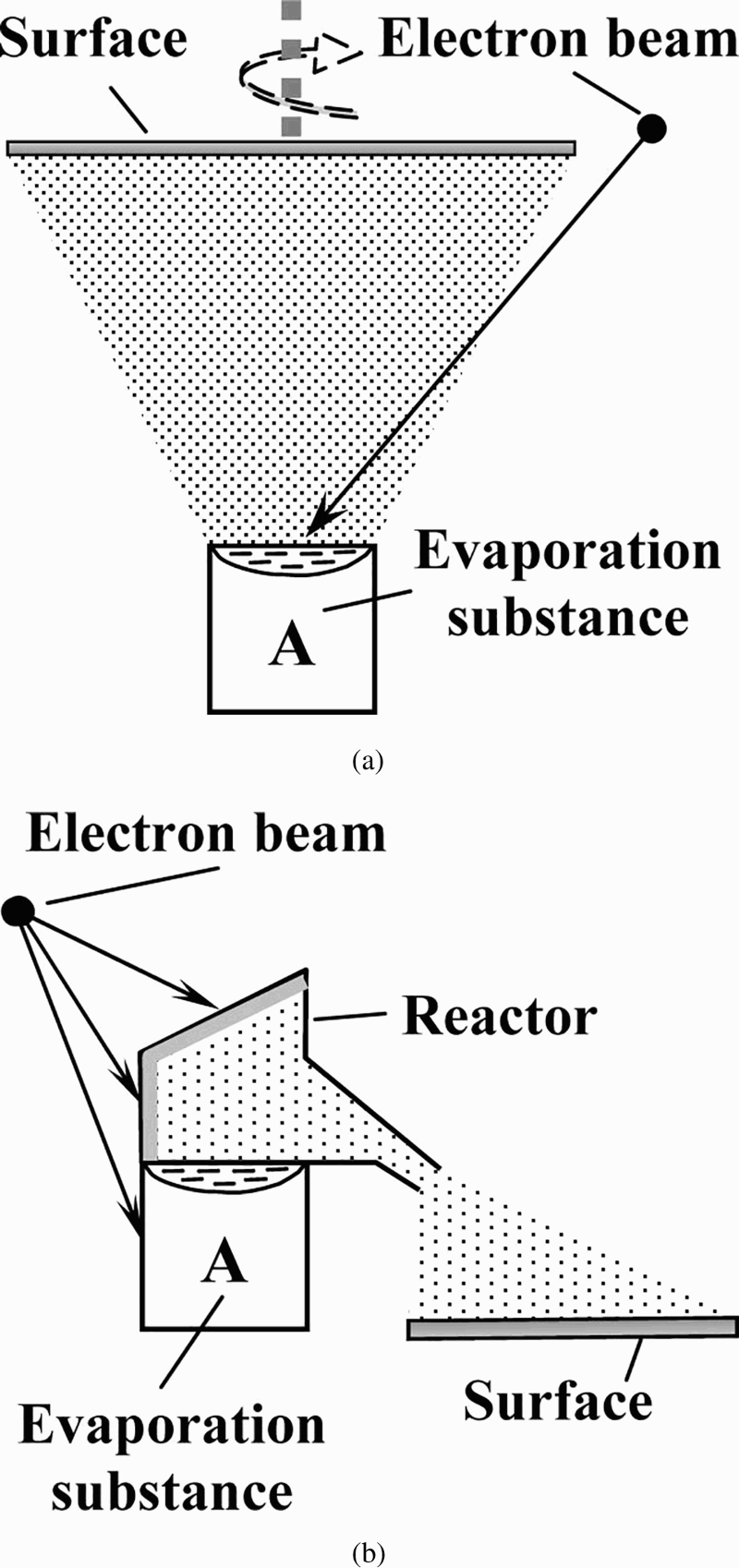
Technological schematics of electron beam evaporation and deposition: a direct action; b reactor type
This is the base variant of electron beam evaporator to produce inorganic materials and thick coatings with microsized and nanosized structure. More sophisticated variants are also becoming accepted in practice: two and more sources of evaporation of dissimilar substances with subsequent mixing of the vapour flows, bleeding reactive gases into the vacuum chamber at certain stages of vapour flow deposition, etc.
Figure 1b shows the schematic of a reactor type evaporator. This evaporator variant allows forming vapour flow at a specified orientation in space, primarily downwards, and realising vapour deposition on solid and liquid surfaces, including powders and granules.
The reactor type evaporator uncooled walls and inner crucible, depending on evaporated metal, are made of graphite, refractory oxides and metals. These evaporators are applicable for evaporation of many metals, for instance, Au, Ag, Cu, Fe, Ni, Co, Ce, Pd and Pt. Their productivity when producing the vapour (evaporation rate) is lower compared to direct action evaporators (Fig. 1a) by approximately 10 to 15 times, but it is quite sufficient for commercial production of metal nanosized coatings on powders and granules of inorganic substances.
Reactor type laboratory evaporators of 10 g h− 1 productivity were used in these investigations. Test samples of powders and granules with nanosized coatings were made in laboratory electron beam unit of 25 kW power and 20 kV, developed and manufactured at the International Center for Electron Beam Technologies of the E. O. Paton Electric Welding Institute.
Powders and granules were placed into flat water cooled crucibles (trays) of 100 to 150 mm diameter and 15 to 20 mm height. Mechanical devices were used to achieve their effective mixing with simultaneous “irradiation” by a directed vapour flow. Vacuum in the chamber at coating deposition was maintained practically constant at ∼10–3 Pa.
The temperature of the powders and granules during coating deposition was in the range of 30 to 60°C. Depending on the requirements made of coating structure, exposure time was varied within several minutes.
Initial powders and granules, methods of coating investigation
As is known, producing coatings at vapour flow deposition in vacuum starts with the formation of nuclei on the deposition surface and is completed by the appearance of a continuous film of a certain thickness and structure. Nuclei are formed as a result of adsorption of vapour flow atoms or molecules on deposition surface and subsequent diffusion induced displacement over the surface sufficient to meet with the “neighbours.”
Under the conditions of incoming vapour flow, the nuclei volume continues increasing, and they turn into islands. Their shape and dimensions are determined by many parameters: surface energy of the interphase, substrate temperature, vapour flow intensity, condensation surface relief, etc.
With increase in island dimensions, the distance between them becomes smaller. In the points of meeting of adjacent islands, they coalesce, resulting in the formation of a developed network of channels. Further on, the channels gradually grow over and turn into pores. The final stage is the formation of a continuous film.
Experimental studies of the regularities of structure formation at physical vapour phase deposition, including experiments on deposition in ultrahigh vacuum (∼10–6 Pa) directly in the electron microscope, are generalised in numerous publications, for instance.6–9
New structural variants can be metallic nanosized discrete (island) coatings on powders and granules of inorganic and organic materials.
The following shape and size powder and granule samples were selected for the investigations.
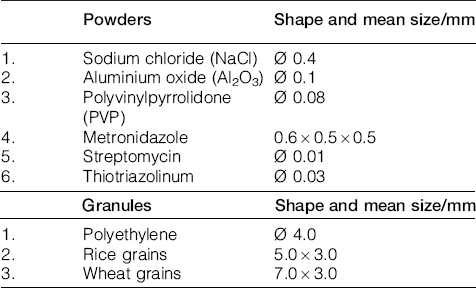
Main studies of the shape, dimensions and distribution of metal particles on powder surface were conducted in scanning electron microscope (SEM) Tescan Vega 3M. Observation results were presented in the form of photographs of the surface structure. Image processing was performed by determination of each particle dimension, calculation of particle number in the specified range of dimensions and plotting histograms of size distribution. Statistical treatment of the obtained data and plotting the distribution histogram were performed in Statgraphics software. The number of analysed particles for each sample was not < 800 units. An optical microscope Polyvar MET with 1000-fold magnification was also used in the analysis of granule surface structure.
Further observations of particles separated from the surface of powders and grains were carried out in specially prepared liquid colloid systems using laser spectroscopy in “Zetasizer – 3” spectrometer as well as predried colloid drops in Hitachi transmission microscope.
Thin metal film thickness h and discrete particle size d of the coating can be assessed, knowing the mean size of powder or granule D and weight P1 of metal deposited in one process cycle on powders or granules in volume V0.
The surface area of powder or granules in a unit of volume (specific surface) S is equal to

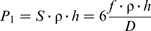


The coefficient K depends on evaporator design and evaporated metal vapour flow intensity and can reach values of 0.7 to 0.8.
Deposition of discrete cubic and spherical particles requires weight of P < P1.
The weight of metal coatings in the studied samples of powders and granules was in the range of 0.005 to 0.5 wt-%.
Metal discrete nanosized coatings on powders of inorganic substances
Discrete nanosized Ag, Cu and Fe coatings were deposited on the surface of NaCl food powders to demonstrate the technological capabilities of the EB-PVD method in producing “island” structures.
Figure 2a shows silver nanoparticles on the surface of NaCl powder with mean size of 400 μm deposited in vacuum of ∼10–3 Pa (10− 5 Torr).
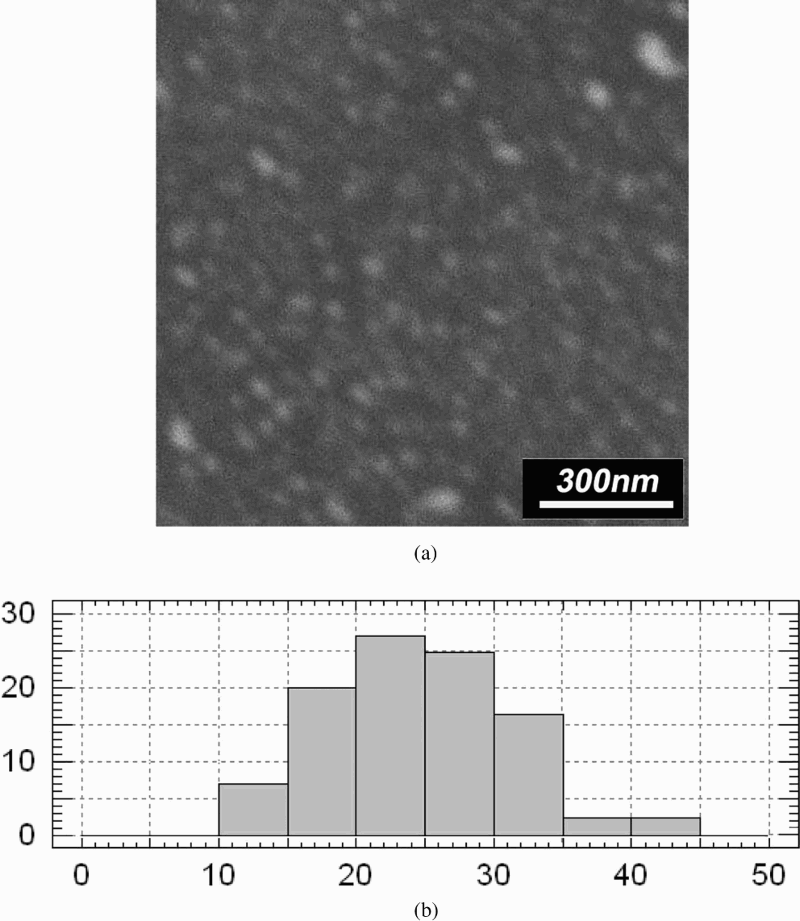
Distribution of silver nanoparticles (0.04 wt-%) on surface of NaCl powder: a discrete structure; b histogram of particle size distribution
Figure 2b shows the histogram of silver particle size distribution. Deposition time is 3 min. The mean particle size is equal to 25 ± 5.0 nm. The increase in deposition time to 10 min is accompanied by an increase in mean particle size up to 50 to 60 nm.
Figure 3a and b shows Cu and Fe nanoparticles on similar NaCl powders.
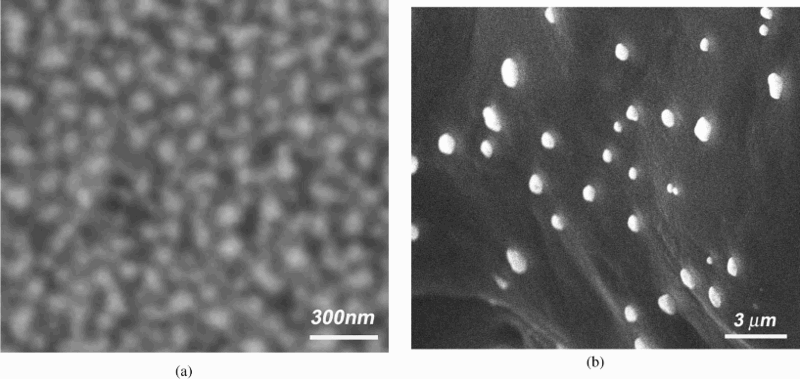
Discrete structure of a copper (0.12 wt-%) and b iron (0.03 wt-%) on surface of NaCl powder
The second example of characteristic island structures of the above metals on powders of inorganic substances can be nanoparticles on the surfaces of refractory oxide powders.
Figure 4a and b shows Ag nanoparticles on the surface of Al2O3 powder and histogram of their size distribution. The mean particle size is 40 ± 10 nm.
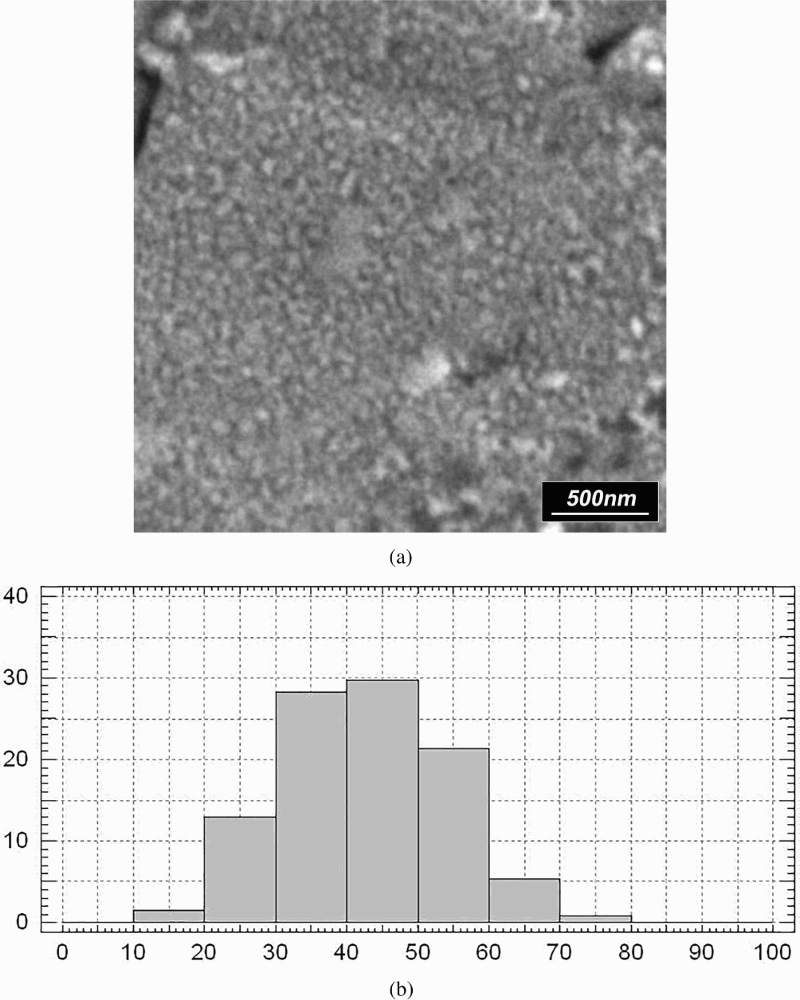
Distribution of silver nanoparticles (0.02 wt-%) on surface of Al2O3 powder: a discrete structure; b histogram of particle size distribution
Such nanosized structures were produced also on carbide powders, for instance, TiC–Cu composition.
Metal discrete nanosized coatings on powders of organic substances
Discrete metal particles deposited on the surface of powders of synthetic and natural polymers are capable of widening the spectrum of functional properties of the currently available materials and creating new composite materials.
Liquid colloid systems such as synthetic hydrofilic surface active polymer PVP solution with molecular weight of 30.000 were taken as an example. This polymer is used in pharmacy preparations as an additive and active ingredient. It readily dissolves in water and in many organic solvents, which is why PVP powder with metal nanoparticles is a promising composite for their subsequent transfer into liquid dispersed medium.
Figure 5a shows discrete Ag particles on the surface of PVP powder and histogram of particle size distribution (Fig. 5b).
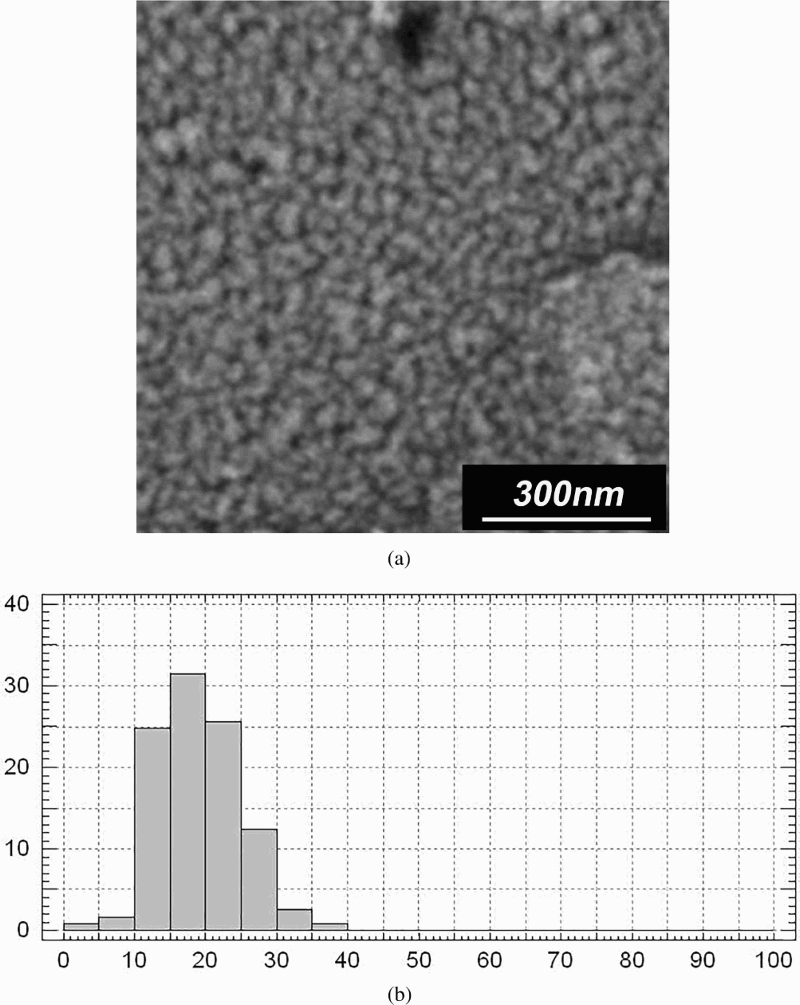
Distribution of silver nanoparticles on surface of PVP: a discrete structure; b histogram of particle size distribution
Exposure time is 3 min. Changing the exposure time allows smooth adjustment of island size and degree of surface filling.
The next stage was dissolution of powder with particles in water and particle size determination using a Laser Z-3 spectrometer and TEM. Figure 6a gives the size distribution of silver particles in the volume of 3% PVP solution. Figure 6b shows that particle distribution was obtained also at dissolution of Dextran-40 powder with silver particles in water.
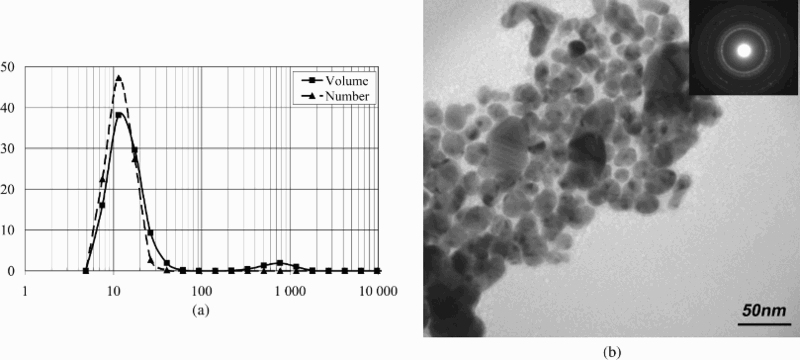
Distribution of silver nanoparticles in volume of 3% solution of PVD water: a curve of particle size; b silver particles and electron diffraction pattern obtained by TEM
The given examples demonstrate the potential of a simple and rather versatile technological approach to producing a liquid colloid system, that is, EB-PVD deposition of metal nanoparticles on powders of surfactants and their subsequent dissolution in the respective disperse medium.
Modifying the surface structure of powders of drug substances and preparations by deposition of metal nanoparticles should be regarded as a promising method of their improvement due to widening the range and increasing the level of their functional bioactivity. It concerns, first of all, silver nanoparticles, the properties of which and the mechanisms of their positive antibiotic impact remain to be in the centre of attention of researchers worldwide.
Figure 7a and b shows a discrete Ag structure on the surface of metronidazole powder and histogram of size distribution of particles.
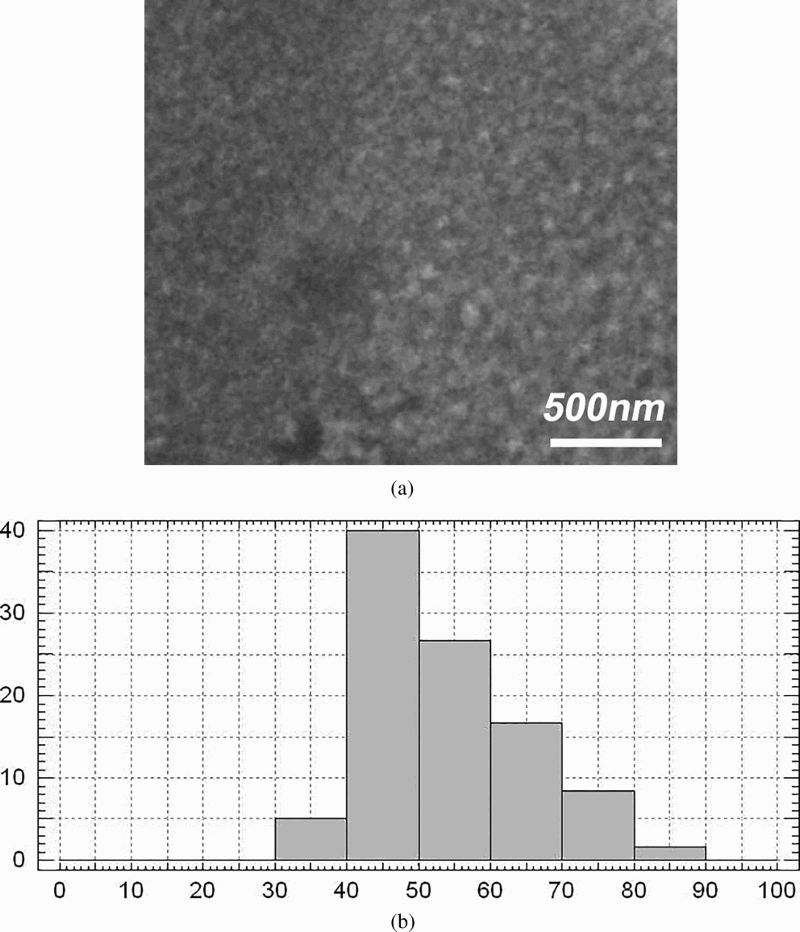
Distribution of silver nanoparticles on surface of metronidazole powder (0.02 wt-% Ag): a discrete structure; b histogram of particle size distribution
Figure 8a and b shows discrete structures of coatings on streptomycin and thiotriazolin powders.
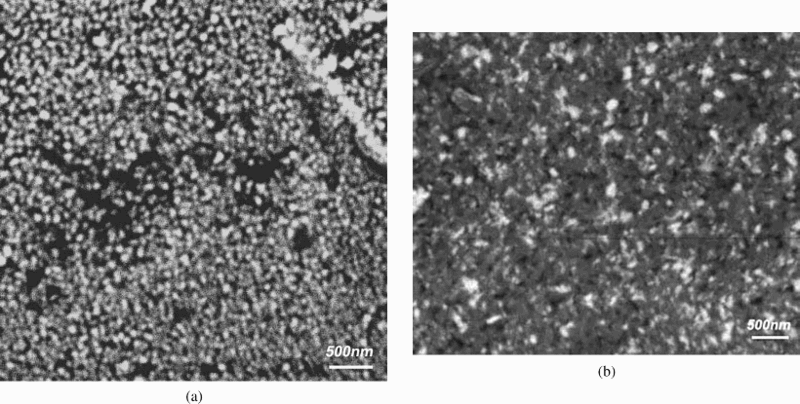
Distribution of silver nanoparticles on powder surface: a streptomycin (0.04 wt-% Ag); b thiotriazolinum (0.05 wt-% Ag)
Note that the characteristic “island” structure of coatings forms under the condition of quite smooth condensation surface and practical absence of chemical interaction of vapour flow atoms with the surface. That is why more complex discrete structures, including acicular ones, can form on organic powders of medicinal substances.
Discrete metal nanosized coatings on granules of organic substances
Technological schematic of deposition of discrete coatings on granules of organic substances practically does not differ from the above considered examples of coating deposition on surfaces of powders of organic and inorganic substances. The main difference and technological difficulties are due, primarily, to chemical and structural instability of granules under vacuum in the technological cycle of coating deposition.
For instance, evaporation of water and volatile components.
Complex microrelief of granule surface and presence of thin adsorbed films appropriately modify the structure of deposited metal films. In this respect, granules of synthetic polymers are in better conditions compared to granules of natural polymers.
Figure 9 shows a discrete nanostructure and practically continuous film of silver on polyethylene granules. Granules have a spherical shape and smooth surface.
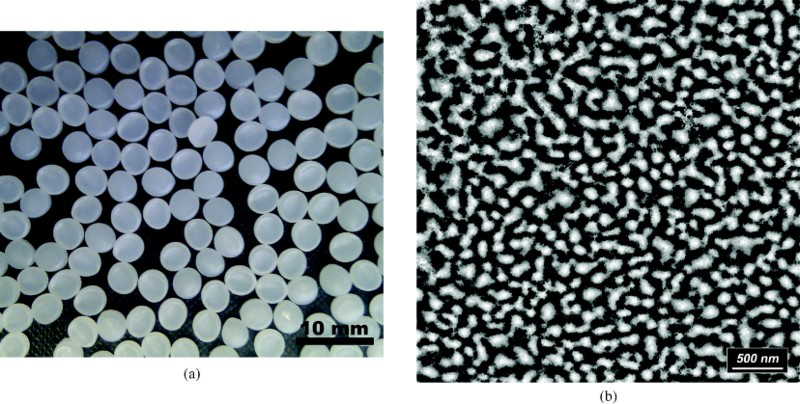
Silver coating on polyethylene granules: a general view of granules; b discrete structure of silver on granule surface (0.04 wt-% Ag); c silver film on granule surface (0.35 wt-% Ag)
Therefore, nanoparticles in the form of islands are uniformly distributed over the granule surface.
Such granules with discrete nanosized metal coatings can be transformed by subsequent thermomechanical treatment into “polymer–metal” composites in the form of fibres, films or shaped products with higher levels of their respective properties: mechanical, magnetic, electrical, biological, etc.
Grains of treated polished rice additionally rinsed with water were taken as an example of natural granules with relatively smooth surface. After deposition of 0.03 wt-% silver, the initially white granules became light brown. Scanning electron microscope could not determine the structure of the coating surface because of practically instant destruction of the coating under electron beam impact. Optical microscopy determined a non-uniform structure of the surface: dark background and individual sections of micrometre sized light dots, changing only slightly after coating deposition.
In order to detect particles and determine their size, an attempt was made at their washing off the granule surface and subsequent analysis of the liquid in laser spectrometer “Zetasizer – 3.” For this purpose water, was poured over the granules, that is, granule/water tincture was prepared with 1/10 volume ratio and was soaked for a specified time.
Figure 10 shows the particle distribution in tincture of rice grains containing 0.03% wt-% silver in the coating after 1 h soaking in the water.
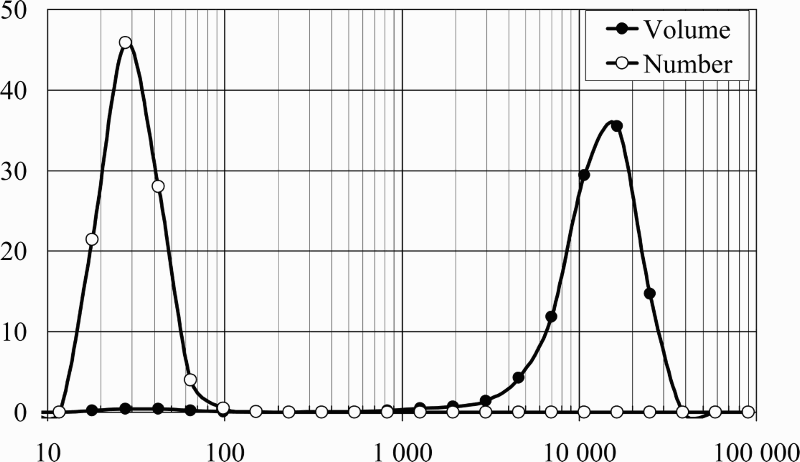
Particle distribution in 1 h water soak tincture of rice grain with silver coating (0.03 wt-% Ag)
Note particles of two sizes 15 μm and 28 nm.
Wheat prepared for sowing has a more complex structure. Figure 11 shows the structure of the surface of initial grains and the structure after metal deposition.
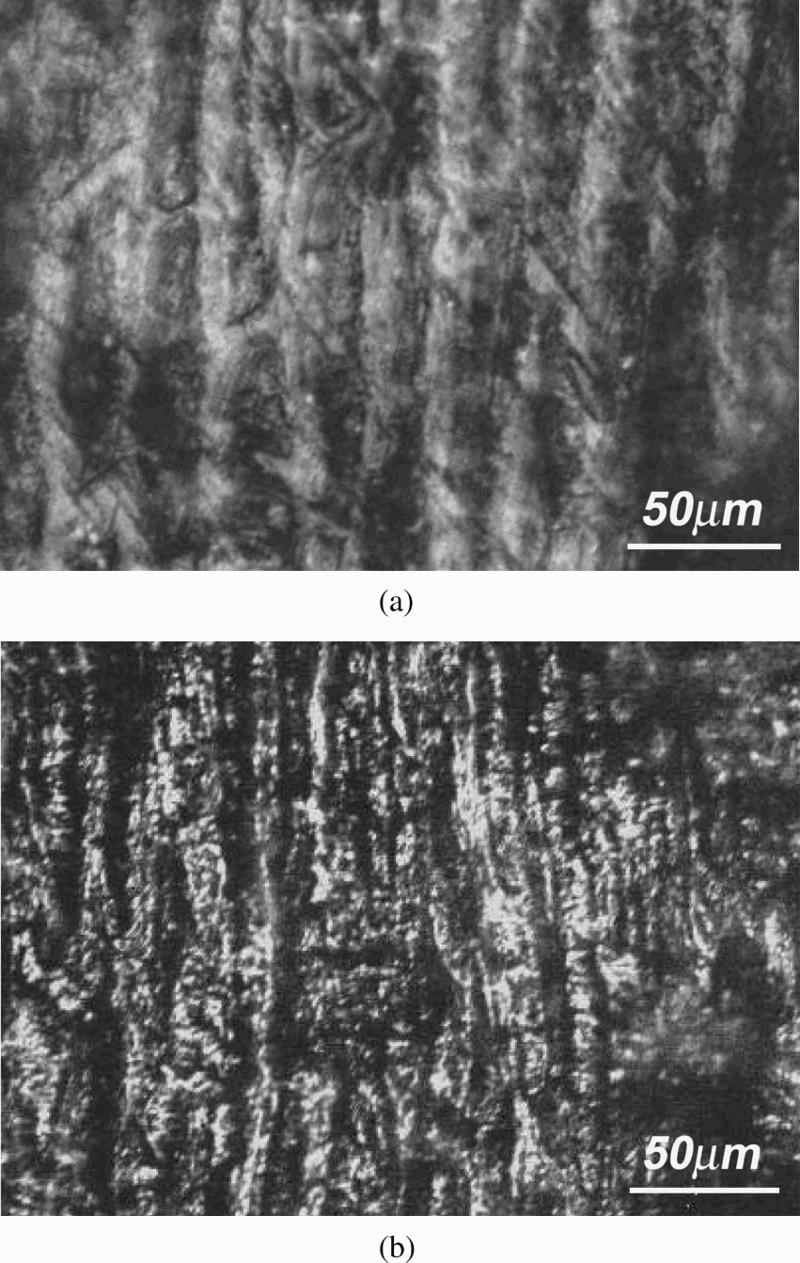
Typical appearance of wheat grain surface structure: a initial; b after deposition of Ag, Cu and Fe in amount of 0.01 to 0.30 wt-% Ag.
The surface of initial grains is covered by non-uniform oriented regions of film, which during metal deposition are transformed into a discrete structure with micrometre grain size. Grains acquire grey colour but retain their natural properties of sprouting and subsequent growth. Just 20 to 30 h of delay before the appearance of the first sprouts is observed compared to the initial grains.
Application of the above procedure of particle “washing off” allowed establishing two structural regions of water tincture. Microsized 20 μm particles similar to those of 1 h tincture of rice (Fig. 10) and region of particles of < 1 μm, the size of which depends on the tincture soaking time.
Figure 12 shows this dependence.
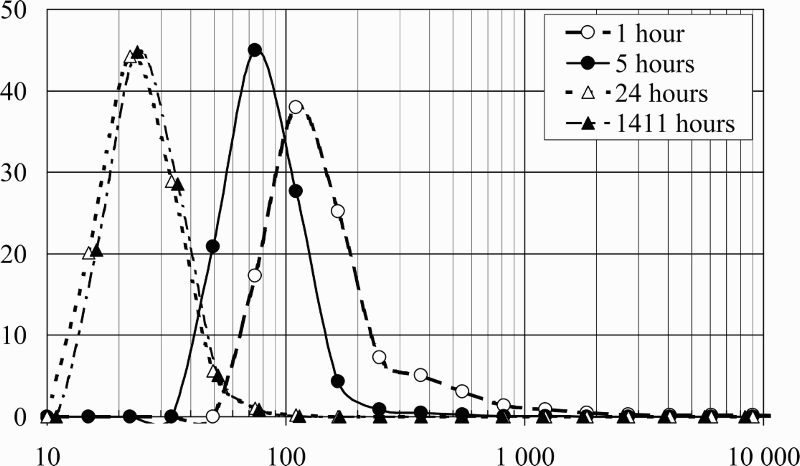
Quantitative distribution of particle size in water tincture of wheat grain, containing 0.02 wt-% Ag, depending on soaking time
Comparing Figs. 10 and 12, one can readily see that in wheat water tincture with 0.02 wt-% Ag silver particles of 25 nm size appear later, compared to rice tincture with silver. It should also be noted that after removal of grains from 24 h tincture of wheat, particle size remains unchanged at further soaking of the solution, as reflected in Fig. 12. These dimensions are in agreement with the dimensions of silver nanoparticles obtained on the surface of wheat grains by chemical deposition. 10
The above examples of silver deposition on wheat grain surface can be complemented by the obtained results, demonstrating the possibility of silver deposition on powder-like products and wastes, produced from these powders, for instance, regular cereals, semolina or siftings.
Directions of further research and development
The presented technology variants of EB-PVD of nanostructured discrete Ag, Cu and Fe coatings produced on powders and granules of inorganic and organic substances are a convincing demonstration, confirming the rationality of further research and development of such coatings from substances evaporated by the electron beam in vacuum.
Two main directions of research and development can be singled out.
Inorganic and organic powders and granules with coatings, which are the semifinished products (substances) required to produce the final product, during subsequent treatment, including consolidation with other solid substances or dissolution, that is, “releasing” nanoparticles and producing liquid systems: colloids, tinctures, etc. Inorganic and organic powders and granules with coatings that are a finished product, for instance, catalysts, sorbents, medicinal preparations with higher bioactivity and nanovectors (particles) for targeted delivery, food additives, etc.
Currently available electron beam equipment for EB-PVD is capable of solving these tasks. We can add to the above described directions that EB-PVD equipment can be adapted to practical implementation of the presented technology variants and their further improvement through controlled bleeding of reactive gases (oxygen, nitrogen, etc.) into the vacuum chamber during or after deposition in order to produce discrete composite nanostructured metal–oxide, metal–nitride and other coatings.