







Abstract
The 0·15 THz resonator based on the (Mg0·95Ca 0·05)TiO3 (abbreviated as 95MCT hereafter) ceramic was designed, and the dielectric property of 95MCT for application has been studied. La2O3 and Nb2O5 were selected as liquid sintering aids to lower the sintering temperature. X-ray diffraction patterns indicated that MgTi2O5 secondary phase could be effectively suppressed by La2O3 and Nb2O5 additions. When the Nb2O5+La2O3 codoping content was 0·25 wt-%, the ceramic could be densified at 1320°C and also has good dielectric behaviours of Qf = 69720 GHz (6·8 GHz), ϵr = 20·18 and τf = −7·56 ppm °C−1. The terahertz resonator designed at 0·15 THz exhibited that with the increasing height of inner cylinder, the two modes’ resonance frequencies decreased.
Introduction
Owing to the rapid development in wireless communication and satellite broadcasting systems, the terahertz spectrum is a very valuable but undeveloped area of electromagnetic radiation. Terahertz wave is a good broadband information carrier, and terahertz frequency is higher than the microwave by several orders of magnitude. It possesses a big wireless transmission bandwidth of 10 Gb s−1.1,2 Based on the University of Toronto SiGe HBT MMIC technology (165 GHz/170 GHz transceiver) 3 and the SiGe BiCMOS MMIC technology (140 GHz transceiver), 4 integrated amplifier, oscillator, amplitude modulator and other components on a single chip form a complete radio frequency channel for several metres of 4 Gb s−1 wireless communication. The development of terahertz communication closely relies on the related communication device's research. This paper studies the eigenmode resonance frequency in 0·15 THz to realise the resonator. Dielectric ceramics become the top selected due to their important applications in resonators, duplexers and GPS antennas. 5 Compared with high ϵr, low dielectric loss and high Q value are more important for ultrahigh frequency communication, 6 such as in terahertz satellite broadcasting. A high Q value of >5000 is of critical important for frequency selectivity.
95MCT [(Mg0·95Ca 0·05)TiO3] is a well known ceramic with ultrahigh Qf value and moderate dielectric constant and compensated temperature coefficient at 7 GHz,
7
which was very suitable for terahertz resonators, oscillators and GPS patch antennas. It is composed of a solid solution between trigonal structured MgTiO3 ceramic and orthorhombic structured CaTiO3 ceramic.
8
Owing to the different crystal structures, a secondary impurity phase of MgTi2O5 was easily segregated in 95MCT ceramics during high temperature sintering process, which would deteriorate Qf value seriously. Moreover, it was proverbial that oxygen vacancies were easily engendered in titania containing ceramics when sintering temperature was >1350°C. The process could be described in terms of Kröger–Vink notation as
 , the generated electrons would be trapped by Ti4+ and reduced it to Ti3+, which was a detrimental factor for Qf value.
In order to avoid these problems, various kinds of sintering aids were added to 95MCT ceramics, and many researchers changed the sintering methods. 9 Many studies proved that Zn (Ref. 10) and V (Ref. 11) could effectively improve Qf value of 95MCT ceramic through lowering its sintering temperature as well as enhancing its bulk density. Among these additives, Sanoj and Varma 12 reported that 15 wt-%Zn–B–Si doped glass effectively lowered the sintering temperature of 95MCT ceramic by 225°C. Shen et al. 13 reported the sintering temperature of B2O3 doped 0·9Mg0·95Co0·05TiO3–0·1Ca0·6La0·8/3TiO3 ceramic could be lowered by 175°C, and the Qf value could be still retained as high as 76 000 GHz. Analogously, we considered that donor impurity, such as Nb5+, substituting for Ti4+, could also prevent its reduction by consuming the donated electrons. This paper presents the synthesis, characterisation and dielectric behaviours of 95MCT aided La2O3 and Nb2O5 additives.
Experimental
Samples were synthesised by conventional solid state methods from reagent purity powders of MgO (98%), CaCO3 (>98·5%), TiO2 (98%), La2O3 (99·9%) and Nb2O5 (99·95%). The calcining process of 95MCT powder was carried out at 1100°C for 3 h; after which, high purity La2O3 and Nb2O5 were added to the powder. After mixing, drying, granulating with 5 wt-%PVA and pelleting with an uniaxial pressure of 150 MPa, the final sintering process was performed at temperatures of 1290–1430°C for 4 h in air.
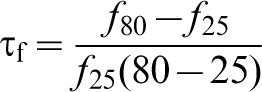
The phase assemblage of specimens was examined by X-ray diffraction (XRD) (D8, Brucker) using Cu Kα (1·5406 Å) radiation and a graphite monochromator in 2θ range of 20–80°. The microstructure of sintered surface was observed by a scanning electron microscopy (Hitachi S-4800 FE-SEM). The densities of the sintered pellets were directly determined by the ratio of mass and apparent volume. The dielectric constant ϵr and Qf value were measured using Hakki–Coleman's dielectric resonator method and an ADVANTEST R3767C network analyser. The temperature coefficient of resonant frequency τf was obtained by measuring the shift of TE011 mode from 25 to 80°C in a digital controllable thermostat and using the following formula
In addition, we designed a terahertz resonator based on the ceramic and research the distribution of the modes. The cylindrical cavity resonator uses relevant design formula of resonator. When the length of the cavity is equal to the radius, TM010 mode was the lowest mode, and the resonant wavelength is

In addition, TE111 is the second lower mode, and the resonant wavelength is
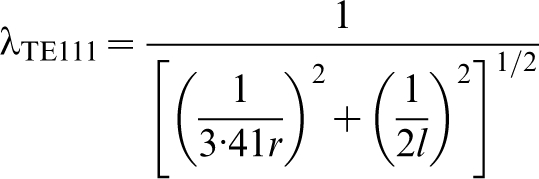
The following is a list of the parameters of the 95MCT dielectric resonator: dielectric constant ϵr = 20·18; diameter of the dielectric resonator r = 1·526 mm; length of the dielectric resonator l = 1·526 mm; and tan δ = 0·00008.
Results and discussion
Microstructure analysis
Different sintering temperatures were employed to 0·25 wt-%La2O3+Nb2O5 codoped 95MCT specimens, and their XRD patterns were illustrated in Fig. 1. As could be observed, single solid solution with MgTiO3 crystal structure (Joint Committee on Powder Diffraction Standards no. 79-0831) could be obtained, which indicated that CaTiO3 dissolved into MgTiO3 host. However, due to their different crystal structures and different cation radii of Ca2+ and Mg2+, minor deleterious MgTi2O5 phase was easily segregated in specimens. Moreover, it was found that the relative content of MgTi2O5 phase could be effectively suppressed by the addition of La2O3 and Nb2O5. As the insets illustrated, when codoping 0·25 wt-%La2O3+Nb2O5 and sintered at 1320°C for 4 h, the MgTi2O5 impurity phase became the minimum of 4·5%, compared with 15·8% in pure 95MCT ceramic sintered at 1400°C. We suggested that this is ascribed to the decreased sintering temperature. As sintering temperature decreased from 1380 to 1320°C, the relative content of MgTi2O5 secondary phase decreased from 7·8 to 4·5%. However, further decreased sintering temperature increased MgTi2O5 relative content again, which might be due to the incomplete chemical reaction in 95MCT ceramic. Therefore, 1320°C was the optimal sintering temperature for 0·25 wt-%La2O3+Nb2O5 codoped 95MCT specimen.
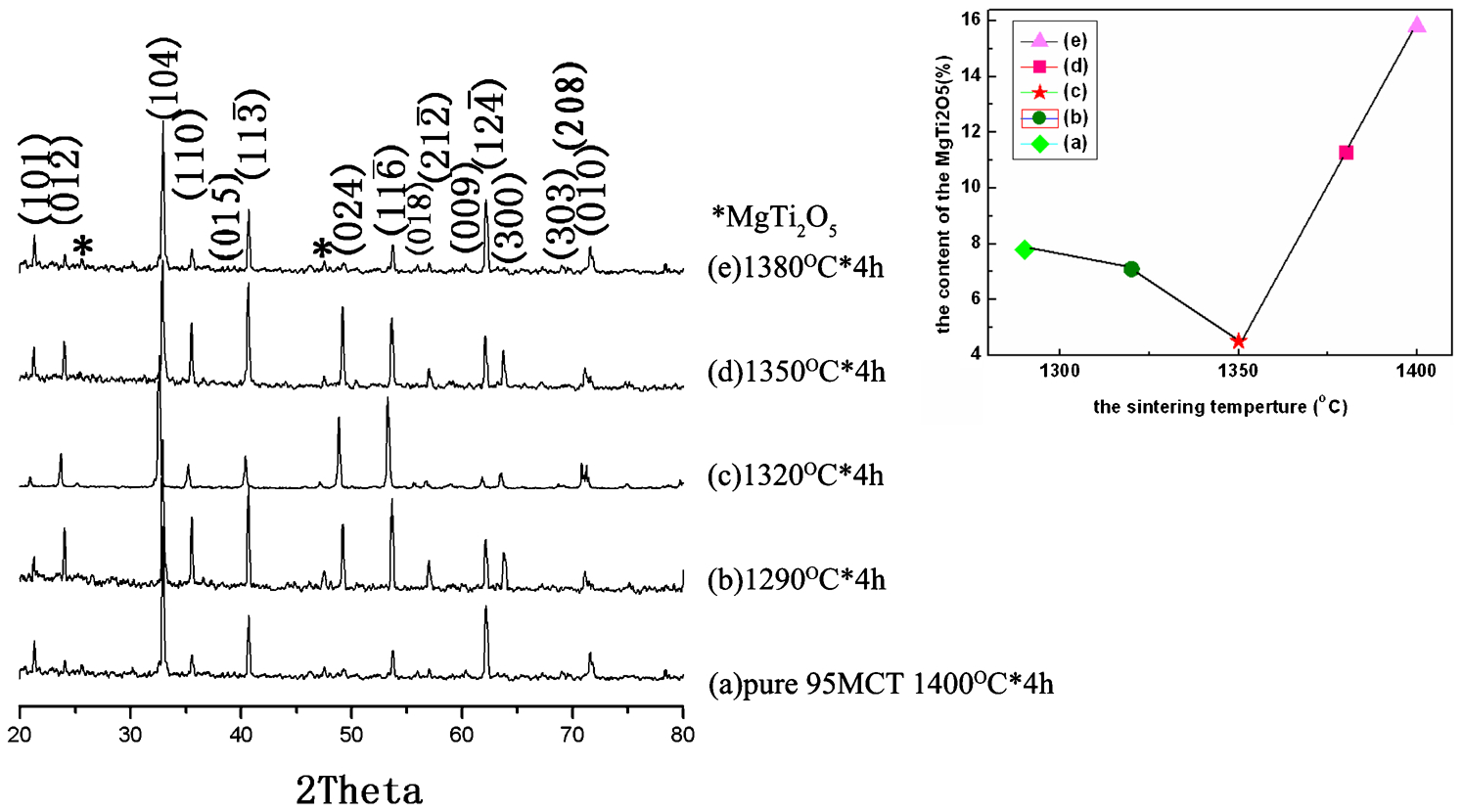
X-ray diffraction spectroscopy from pure 95MCT and 95MCT doped with 0·25 wt-%La2O3+Nb2O5 sintered at various temperatures; second phase peaks are indicated by *; insets show relative contents of MgTi2O5
The microstructure of 95MCT ceramics with various La2O3 and Nb2O5 doping contents sintered at 1320°C for 4 h is illustrated in Fig. 2. The samples were mainly composed of two kinds of grains: the major rounded grains and the minor bar shaped grains. Figure 3 illustrates the energy dispersive spectroscopy (EDS) analysis of the two grains, and it reveals that the former was (Mg0·95Ca0·05)TiO3 main phase, while the latter was MgTi2O5 secondary phase. The La2O3 and Nb2O5 addition obviously decreased the grain size in 95MCT ceramics, which could be due to the decreased sintering temperature. However, the grain size distribution (GSD) was improved by La2O3+Nb2O5 addition, especially when 0·25 wt-%La2O3+Nb2O5 was codoped, the GSD was uniform, the microstructure was dense and the sintering temperature was lowered by 80°C. The average grain size increased gradually from 1·42 to 4·03 μm as the sintering temperature varied from 1290 to 1380°C. However, the GSD became less uniform when sintering temperature was higher than 1350°C, which might directly affect the dielectric behaviours of the specimens.
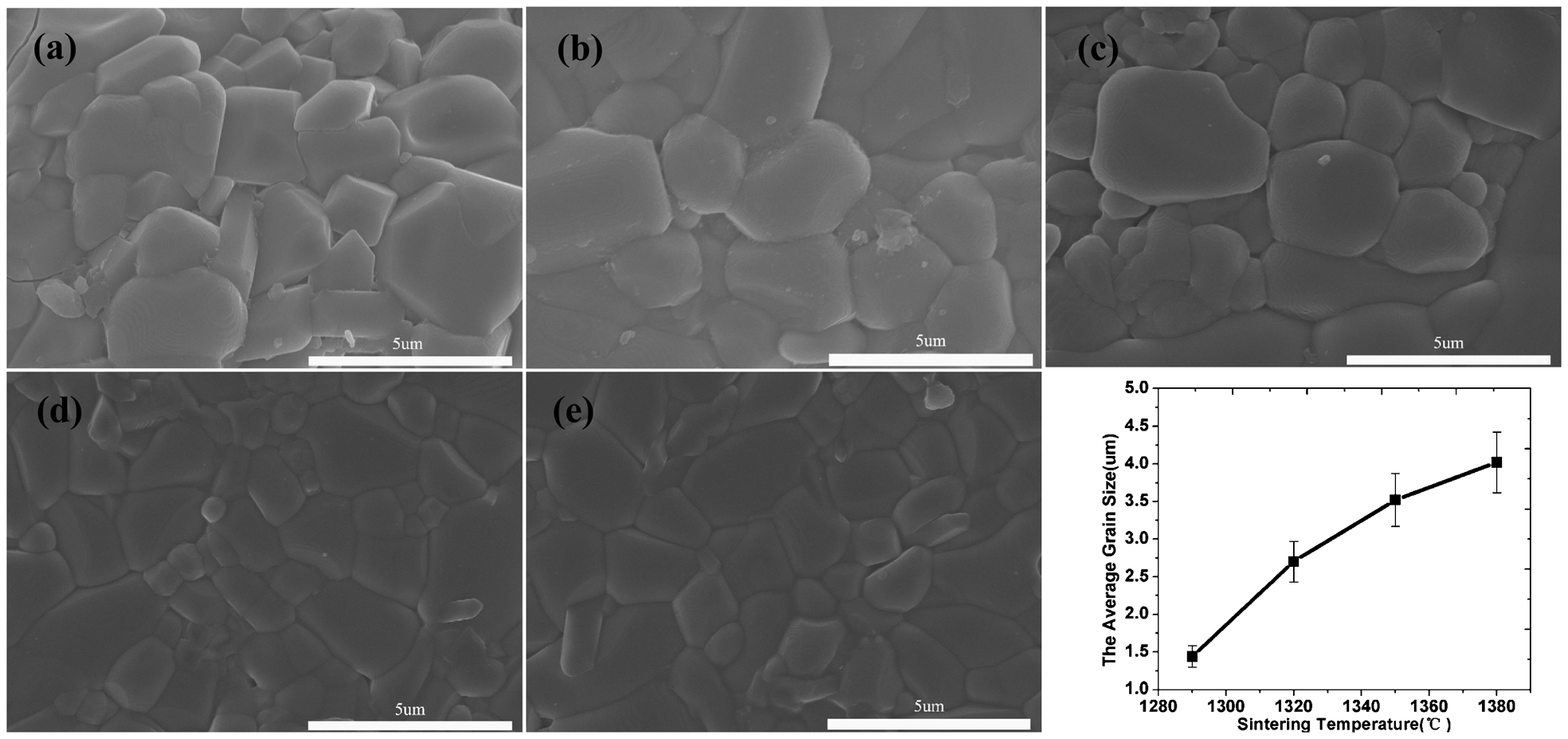
Images (SEM) of a pure 95MCT sintered at 1400°C, b 95MCT added with 0·25 wt-%La2O3, c 95MCT added with 0·5 wt-%La2O3, d 95MCT added with 0·25 wt-%La2O3+Nb2O5 and e 95MCT added with 0·5 wt-%La2O3+Nb2O5 ceramics sintered at 1320°C for 4 h
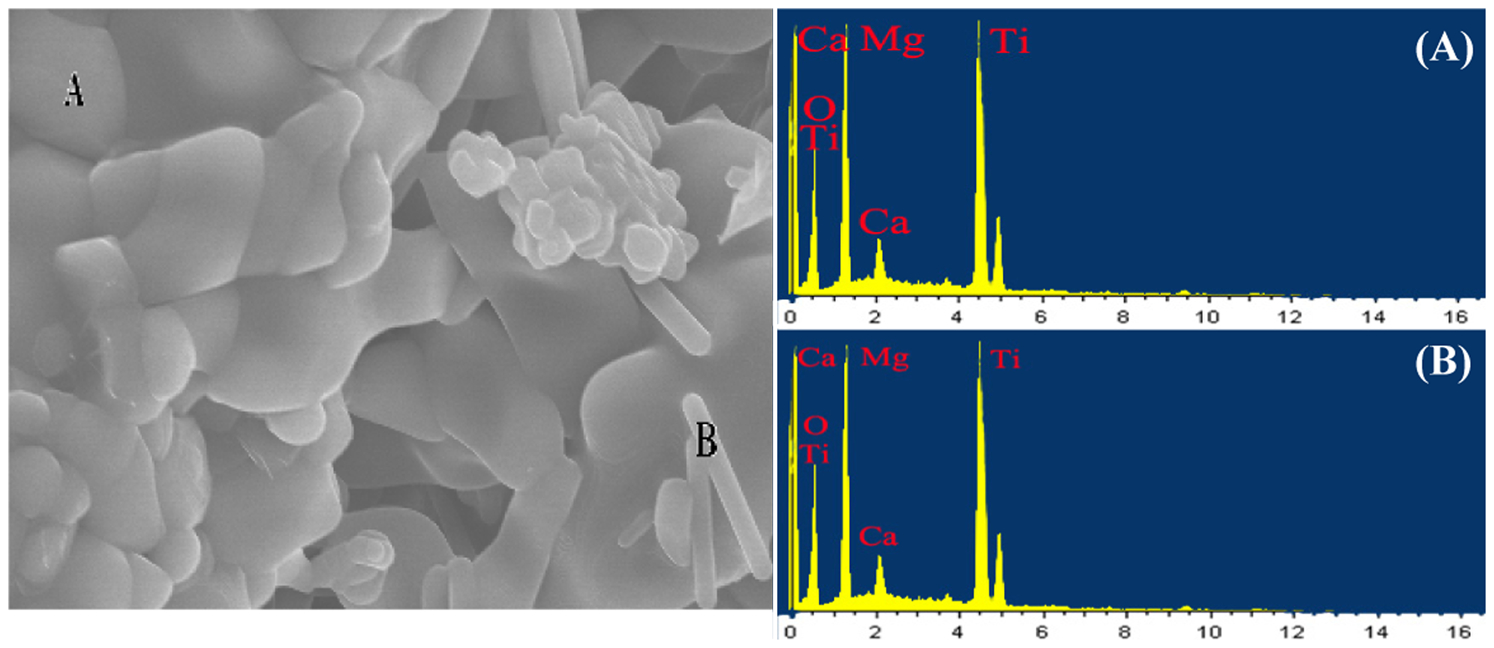
Analysis by EDS of 95MCT ceramic added with 0·25 wt-%La2O3+Nb2O5 sintered at 1320°C for 4 h
Sintering behaviour
The relative densities at various sintering temperatures as a function of La2O3+Nb2O5 addition are shown in Fig. 4. The relative densities initially increased and then decreased with sintering temperature, attaining a maximum value at 1320°C. This corresponded with the fact that the lowest pore density and the uniform grain size were obtained in specimens sintered at 1320°C. The density of 0·25 wt-% La2O3 doping and the density of codoping 0·25 wt-%La2O3+Nb2O5 have the same tendency. Although the highest density was the 0·25 wt-% La2O3 doping, the optimisation scheme depends on the comprehensive consideration of dielectric constant, quality factor and temperature coefficient. The 0·25 wt-%La2O3+Nb2O5 codoping could be the better choice. The relative density of 96·8% could be obtained at 0·25 wt-%La2O3+Nb2O5 codoping content. In addition, further increasing the codoping content decreased the relative density instead. This could be rational since the low melting point of La2O3 component was beneficial for generating eutectic liquid phase at very low temperature, which could act as lubrication during sintering process, wetting solid particles, and providing capillary pressure between them, thus resulting in a faster grain growth of ceramics. 14 However, the overquick grain growth would preclude the pore venting process during sintering and eventually increase the blocked porosity in ceramics. 15 Moreover, as the doping content exceeded 0·25 wt-%, the secondary bar shaped MgTi2O5 phase began to increase, which was unmatched with the rounded shape of ilmenite phase and thus impeded a compact pile-up in ceramics, resulting in increased porosity.
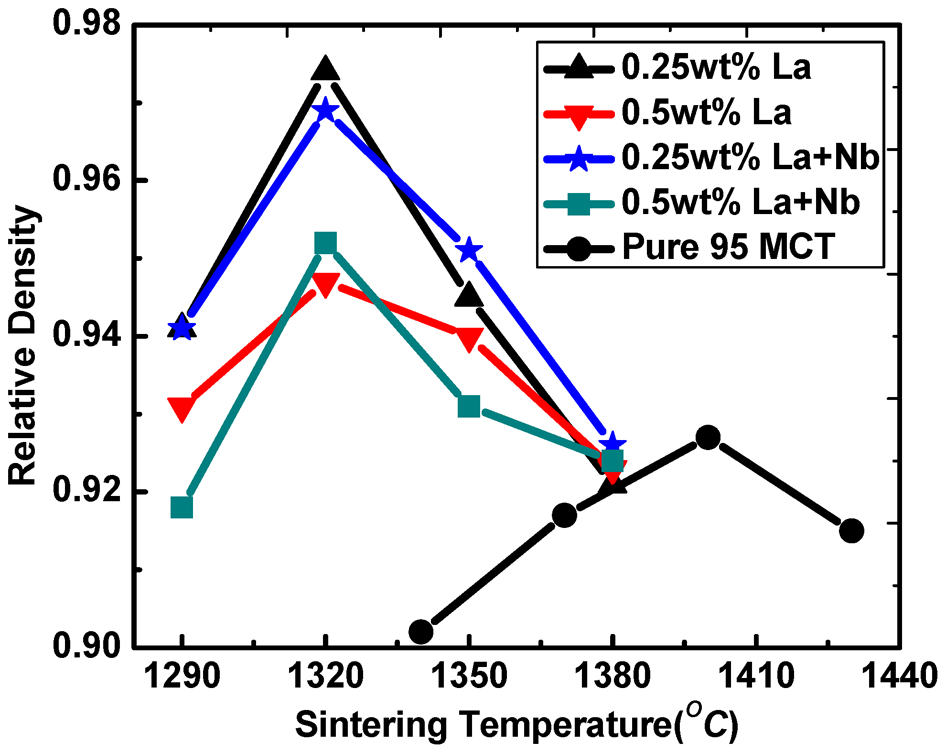
Variation densities of 95MCT with different additions sintering at different temperatures
Dielectric behaviours
Table 1 demonstrates the variation of dielectric behaviours of 95MCT as a function of La2O3+Nb2O5 doping content, where the composition ratio of La2O3 and Nb2O5 was 1∶1. As can be seen, the dielectric constant and Qf value of 95MCT ceramic were both significantly improved by La2O3+Nb2O5 addition, while the sintering temperature was lowered by 80°C. The optimal Qf value of 69 720 GHz was obtained at 0·25 wt-%La2O3+Nb2O5 codoping content.
Dielectric behaviour of 95MCT ceramics varied with different additions

It was suggested that the oxygen deficiency played an important role in determining the Qf value in Ti4+ contenting ceramics. We deduced that the donor impurity Nb5+ could appropriately compensate the electrons produced by oxygen deficiency and inhibit the Ti4+ to Ti3+, and increased the Qf value as illustrated in equation (3)

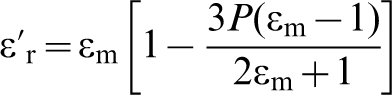
 is the measured dielectric constant, and ϵm is the real dielectric constant of ceramic matrix. One could see that the variation of dielectric constant was much more sensitive to the relative density rather than the secondary phase and oxygen deficiency in ceramic matrix.
The temperature coefficient in La2O3+Nb2O5 codoped 95MCT ceramics varied inconsistently with dielectric constant. It was influenced by both composition and secondary phase. According to the mixture behaviour rule in compound ceramics τf = V1τf1+V2τf2, 17 the MgTi2O5 secondary phase, which possessed a temperature coefficient of −66 ppm °C−1, 18 would make the τf value more negative. A τf value of −7·56 ppm °C−1 was obtained for the ceramics at 1320°C for 4 h, which makes it very promising for commercial applications.
The 0·15 THz resonator is composed of the high Qf 95MCT. The configuration is shown in the left of Fig. 5. By selecting its parameters of dielectric resonator, the maintenance time of the damped oscillation is measured by the Q value. The cylinder resonator has dimensions r×l of 1·526×1·526 mm, and the height of inner cylinder increased from 0 to 750 μm.
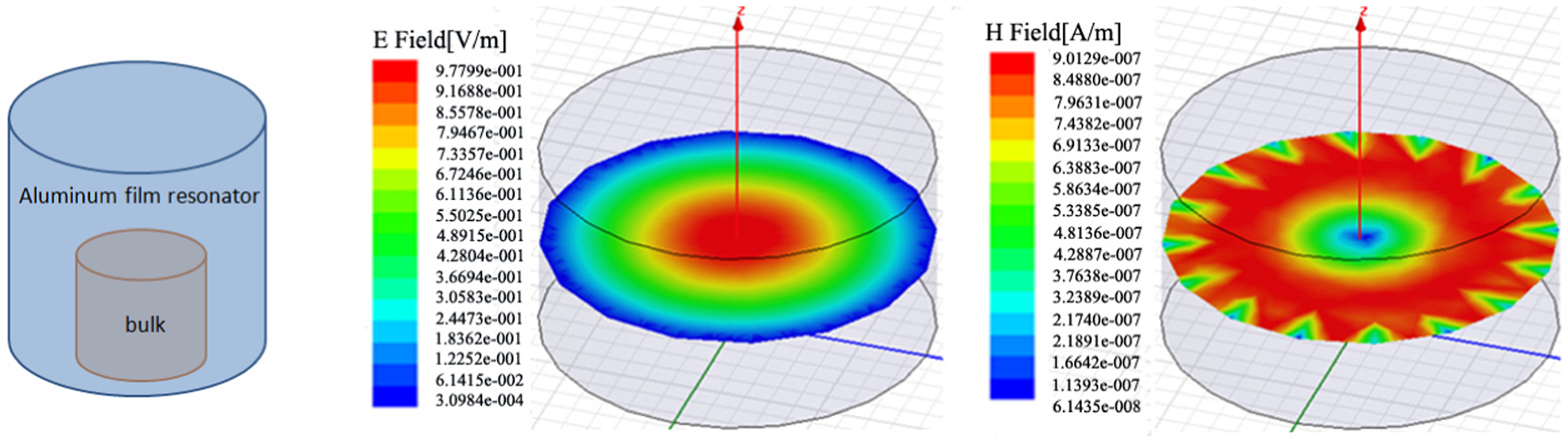
Schematic diagram and electric field and magnetic field on cross-section profile
The resonance frequencies of the two modes are 0·15 and 0·23 THz, and the Qf values are 1796 and 2051 respectively. The frequency is a plural because in the Maxwell equations, the dielectric constant 19 has the dielectric loss. In the analysis results, the resonance frequency of the real part is what we called resonance frequency, and the imaginary part is related to various losses. The corresponding electric field and the magnetic field distribution on cross-section of the resonator are shown in Fig. 5. Cross-section was selected in the intermediate position of the resonant cavity.
In order to investigate the resonant frequencies of the two modes, a dielectric cylinder was added inside it. The radius of the cylinder is 0·25 mm. The relationship of the height and the frequency was shown in Fig. 6. As illustrated, with the increasing of the inner cylinder's height, the two frequencies are gradually reduced.
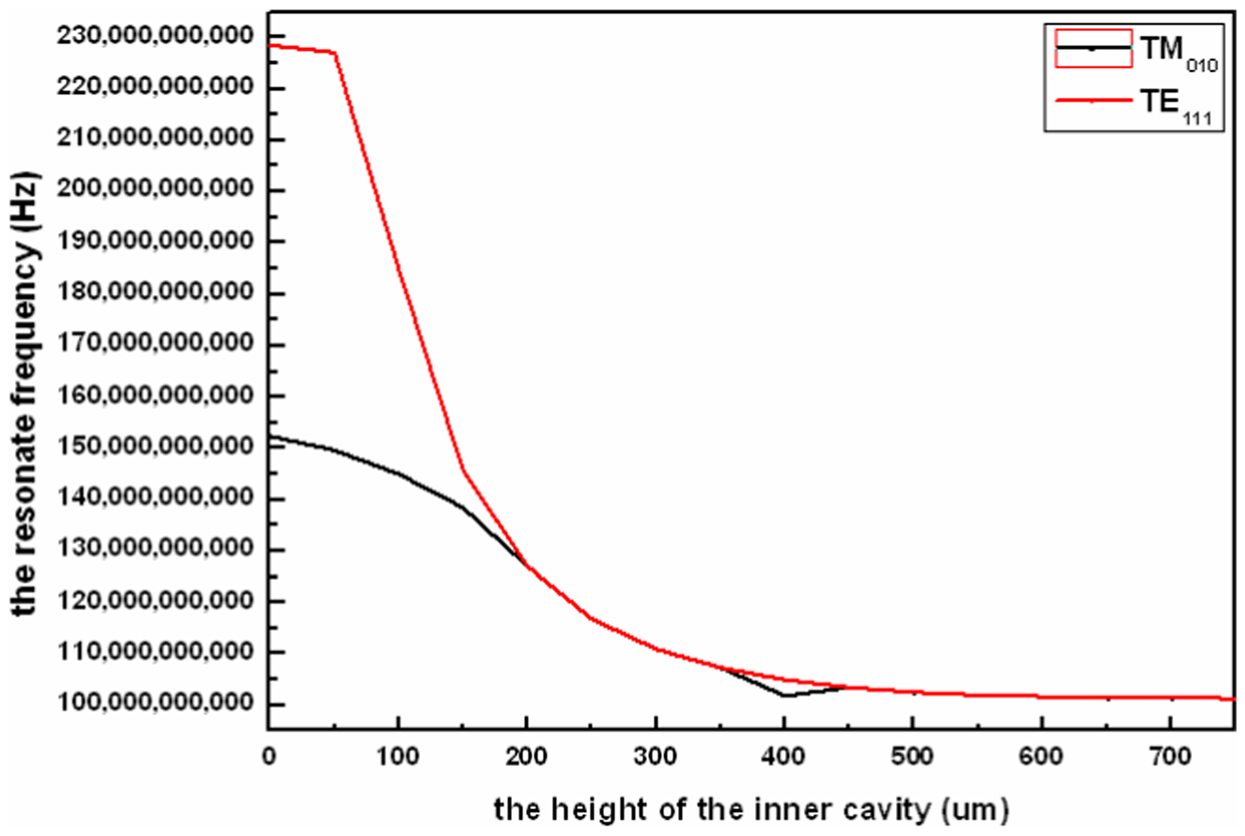
Resonance frequency and quality factor of 0·15 THz resonator
Conclusions
It was found that 0·25 wt-%La2O3+Nb2O5 codoping content with their molar ratio being 1∶1 could lower the sintering temperature by 80°C, and the optimal dielectric behaviours of Qf = 69720 GHz, τf = −7·56 ppm °C−1 and ϵr = 20·18 could be obtained. It was concluded that the oxygen deficiency was the more influential factor on Qf value in codoped 95MCT ceramic rather than the relative content of MgTi2O5 secondary phase and the relative density. A dielectric resonator of terahertz was a successful design of 95MCT ceramics. The resonance frequency is 0·15 THz, and with the increase height of the inner cylinder, the resonance frequency is reduced.
Footnotes
Acknowledgements
This work was supported by the National Natural Science Foundation of China (grant no. 61076042), the Research Foundation of Huanggang Normal University (grant nos. 2013020303 and ZJ201341), the Special Project on Development of National Key Scientific Instruments and Equipment of China (grant no. 2011YQ16000205) and the National High Technology R&D Program (863 Program) of China (grant no. 2011AA03A106).