







Abstract
A series of TiO2 modified hydroxyapatite composites (HA/TiO2) with different compositions were prepared. Phase formations and morphologies of the obtained HA/TiO2 composite were characterised using X-ray diffraction and SEM, and their photocatalytic activities were also determined by decomposition of methylene blue solution. Filter cloths were prepared by depositing the composite on polyester non-wovens via pad dry cure, and their filtering effectiveness was examined by photocatalytic activity measurement and bactericidal test. Hydroxyapatite/TiO2 composites were successfully prepared and exhibited photocatalytic properties. With increasing ratio of anatase titania in the HA/TiO2 composite from 20 to 30 and 50%, photocatalytic activity of composite material increased such that HATi5050 composite exhibited the highest photocatalytic activity. Non-woven filters coated with HA/TiO2 composites also exhibited good photocatalytic activities. Less difference in photocatalytic activity between HATi7030 and HATi5050 coated non-woven filters was observed, compared to that in powder form. The filter coated with HA/TiO2 composite exhibited good bactericidal effect.
Introduction
Hydroxyapatite [HA; Ca10(PO4)6(OH)2], a composite similar to mineral of human bone, has been extensively used for biomedical applications, especially for bone substitution.1–3 It is a promising material due to its excellent biocompatibility, non-toxicity with organic tissues and adsorbability of bacteria and virus.4–6 In its function, HA is capable of adsorbing molecules on its surface but not decomposing molecules; therefore, saturation will be reached over time. 4
Meanwhile, nanosized titanium dioxide (TiO2) is one of the most popular photocatalysts employed due to its excellent photo-oxidation of organic compounds, strong oxidising power under ultraviolet (UV), chemical stability, non-toxicity and long term stability against photo and chemical corrosion.7–12 However, the lack of visible light utilisation and low quantum yield are major restrictions of TiO2 for its potential use.4,5,10 In addition, it can decompose only substances that have come into direct contact, and the decomposition requires presence of light, especially in ultraviolet range. 13
By modifying HA with TiO2, their advantages can be combined such that HA adsorbs molecules, which will later be decomposed by TiO2. Several investigations reported many methods to prepare HA powder modified with TiO2, such as coprecipitation and ion exchange methods, for use as bone regenerative and photocatalysis.6,9,14–17 Although precipitation method is quite simple and could yield high purity of precipitated powder,18,19 the production yield is low. Hydrothermal technique, a well known method to control morphology of HA crystal, was also studied to prepare HA–titania composite. 10 Furthermore, to enhance adsorption and photocatalytic performance, HA was modified by TiO2 doped with other noble metals, i.e. Ag or Au.4,20,21 All these attempts are based on precipitation route. The other synthesis technique used to prepare HA powder is a solid state reaction, which is reliable and yields more reproducible results.
Up to date, investigations on preparing HA modified with titania composite by varying HA/titania ratios had been reported. However, there are no reports on the applications of HA modified with TiO2 for use in microbial filtration. Therefore, in this study, we prepared different nanosized HAs modified with TiO2 composite (HA/TiO2) with the ultimate goal for microbial filtration application. A series of HA/TiO2 composite particles modified with TiO2 were prepared and characterised to understand influences of HA/TiO2 composition ratio on the composite characteristics and properties, as well as to determine optimal condition for preparing HA/TiO2 composite for its use as coating material for filter cloths. The prepared composite powders were deposited on non-wovens, whose features, photocatalytic activities, as well as antibacterial property were then investigated and discussed for their potential uses as microbial filters.
Materials and methods
Preparation and characterisation of pure HA
Solid state reaction method was employed to prepare pure HA. Hydroxyapatite powder was synthesised by calcining mixture powders of calcium phosphate dibasic (CaHPO4) and calcium carbonate (CaCO3) at a molar ratio of 1·5. Chemical reaction is shown in equation (1)

Preparation and characterisation of HA modified withTiO2 composite
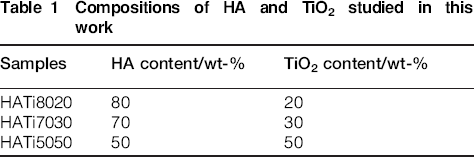
In this work, anatase phase TiO2 (Sigma-Aldrich, Germany) was used as received. Different compositions of HA and TiO2 (Table 1) were dry ball milled, using ZrO2 balls for 3 h. The obtained HA/TiO2 composites were dried at 100°C and then calcined at 650°C and dwelled for 2 h. Analysis of their phases and microstructures was carried out using XRD: JEOL JDX 3530 and scanning electron microscopy (SEM: JEOL JSM-5410). In addition, their chemical structures were also investigated using Fourier transform infrared (FTIR) spectrometer (Perkin Elmer system 2000). The spectra obtained were in the range of 4000–400 cm−1, averaging 20 scans with the resolution of 4 cm−1.
Compositions of HA and TiO2 studied in this work
Preparation and characterisation of non-woven filter cloth
Polyester non-woven (basis weight, 40 g m−2) was used for preparing non-woven filter cloth. To prepare filter cloth, prepared HA/TiO2 composite was dispersed in deionised water to produce slurry of 5 wt-% solid content with and without 0·5 wt-% polyvinyl alcohol (PVA) as a binder. A conventional pad dry cure method was employed such that non-woven sheets 12×15 cm in size were dipped into 20 mL of HA/TiO2 slurry for 5 min before being passed through a padder to press out excess solution and control per cent weight pick up of HA/TiO2 solution at 140. The HA/TiO2 deposited non-wovens were then dried at 80°C for 3 min. The obtained non-woven filter cloths were referred to as HATi_PWB and HATi_PW for the samples with and without binder respectively. Features of non-woven filter cloths containing HA/TiO2 composites were analysed using SEM (JEOL JSM-5410).
Investigation of photocatalytic activity
Photocatalytic activities of synthesised HA particles, HA/TiO2 composites as well as HA/TiO2 coated non-wovens were investigated by measuring degradation of methylene blue (MB) under UV irradiation. This was conducted in closed chamber equipped with UV-A lamps (315–380 nm). One hundred microlitres of 5 ppm MB solution was added into the beaker, and sample (0·005 g of HA or HA/TiO2 powder, or 4×4 cm HA/TiO2 coated non-wovens) was put into the prepared MB solution. The beaker was placed into the chamber and dark closed (no UV light) for 1 h for initialisation. Then, MB solution was sampled out and measured for UV absorption (600–700 nm) on UV spectrophotometer (JASCO-V530) to determine MB concentration at initial time t0. UV lamps in chamber were then turned on to allow photocatalytic activity. After 1 h, the lamps were turned off, and MB concentration at testing time 1 h t1 was determined. The same procedure was continued for other exposure times (3, 6 and 24 h) to determine corresponding MB concentrations at t3, t6 and t24.
Antibacterial activity test
Two types of bacteria, Escherichia coli ATCC 8739, a Gram negative bacterium, and Staphylococcus aureus ATCC 6538, a Gram positive bacterium, were chosen as model microorganisms in this study. Both bacteria, stored in glycerol at −80°C, were plated on nutrient agar (NA), a mixture of nutrient broth and Bacto agar (Difco), cultured overnight at 37°C for 24 h and stored at 4°C. Before each experiment, the strains were inoculated in sterile test tubes in nutrient broth and cultured at 37°C for 12 h in order to reach the stationary growth phase. The cultures were harvested by centrifugation and resuspended in phosphate buffered saline (pH 7·4) to OD600 of 0·4, corresponding to an approximate concentration of 108 colony forming units (cfu) per millilitre.
Non-woven specimens were prepared by cutting the non-woven samples into 15 mm diameter discs. After autoclaving, non-woven discs were kept until use in a 24-well tissue culture plate. The bacterial suspension (1 mL) was added to the non-woven samples and kept under room ambient condition with fluorescent lamp illumination for 48 h. Escherichia coli suspension was removed at 1 h interval for 6 h. Viable concentration of E. coli was enumerated with spreading plate method on NA after a serial of dilutions of the sample in normal saline. A 100 μL bacterial suspension was removed at 4 h interval and spread onto NA medium and incubated for 24 h to determine the number of viable cells. The efficacy of antimicrobial activity is expressed as: survival ratio (%) = N/N0×100, where N is number of survival bacteria and N0 is number of original bacteria. Experiments with non-coated non-wovens were conducted as controls. The mean and standard deviation from triplicate samples were indicated. In addition, a survival ratio curve for a 48 h culture period was completed by combining two data sets in order to avoid working at night.
Results and discussion
Hydroxyapatite/titania composite
Figure 1 showed XRD patterns of as synthesised HA, TiO2 and HA/TiO2 composites at different HA/TiO2 ratios (80∶20, 70∶30 and 50∶50, denoted as HATi8020, HATi7030 and HATi5050 respectively). The XRD patterns confirmed presence of all expected major HA (JCPDS no. 09-0432) and anatase TiO2 (JCPDS no. 21-1272) crystallisations in the synthesised HA and commercial TiO2 used as raw materials respectively. The mixture of HA and anatase TiO2 phases can be indexed in the composites with all HA/TiO2 ratios. No additional phase associated with either decomposition of HA to β-tricalcium phosphate or transformation of anatase to rutile TiO2 was observed at calcining temperature 650°C. As photocatalyst, anatase TiO2 exhibited higher photocatalytic activity than other phases of TiO2 (rutile and brookite).1–9 In addition, with increasing TiO2 content in HA/TiO2 composite, intensity of anatase phase increased, whereas that of HA decreased. This implied that HA/TiO2 composite powder consisted of anatase TiO2 with a superior crystalline size and high crystallinity.
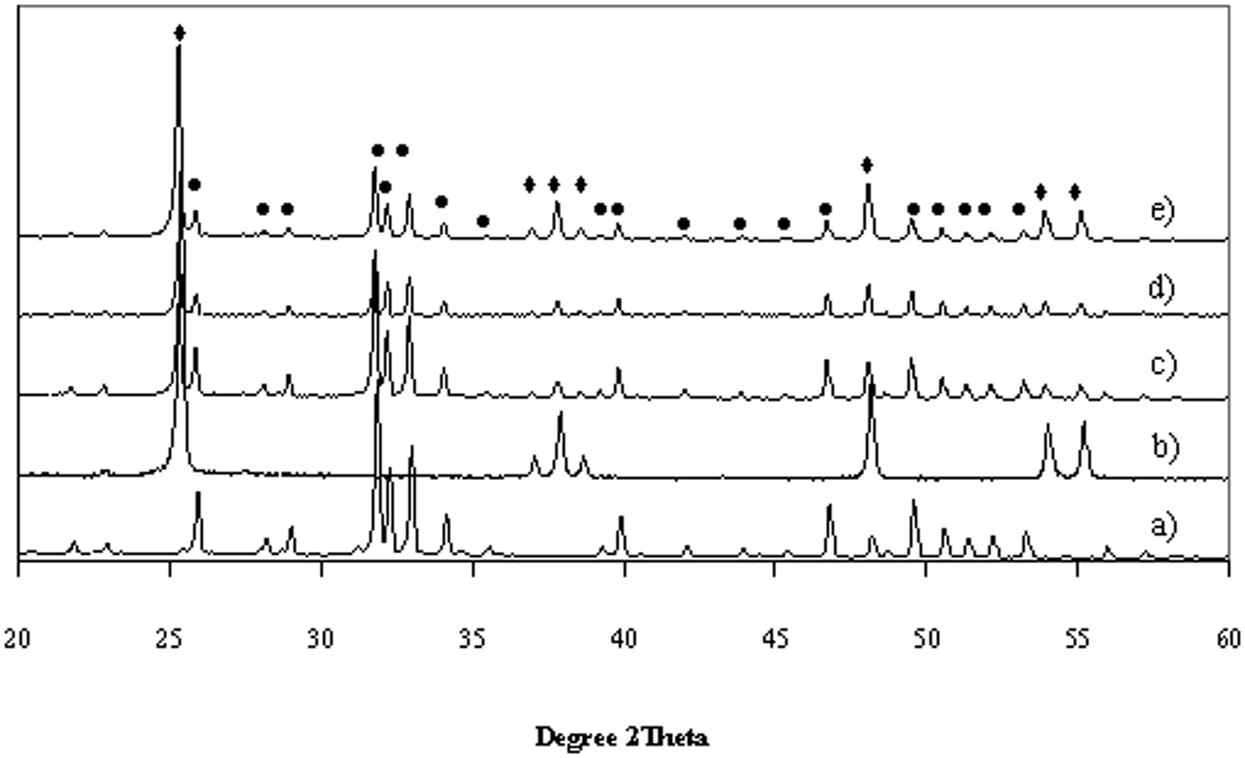
X-ray diffraction patterns of a as synthesised HA, b anatase TiO2, c HATi8020, d HATi7030 and e HATi5050 (• HA and ⧫ anatase TiO2)
Consistent with the XRD results, FITR spectra in Fig. 2 showed absorption band of OH− (3570 and 630 cm−1) and
 (1089, 1047, 601 and 571 cm−1) attributed to the formation of HA. Decrease in absorption band of OH− (3570 cm−1) and broadening FTIR peak at wave number range of 500–700 cm−1 were observed with decreasing HA content. The FTIR spectrum of HATi5050 presented the lowest absorption of OH− peak and the most broadening peak at wave number 500–700 cm−1.
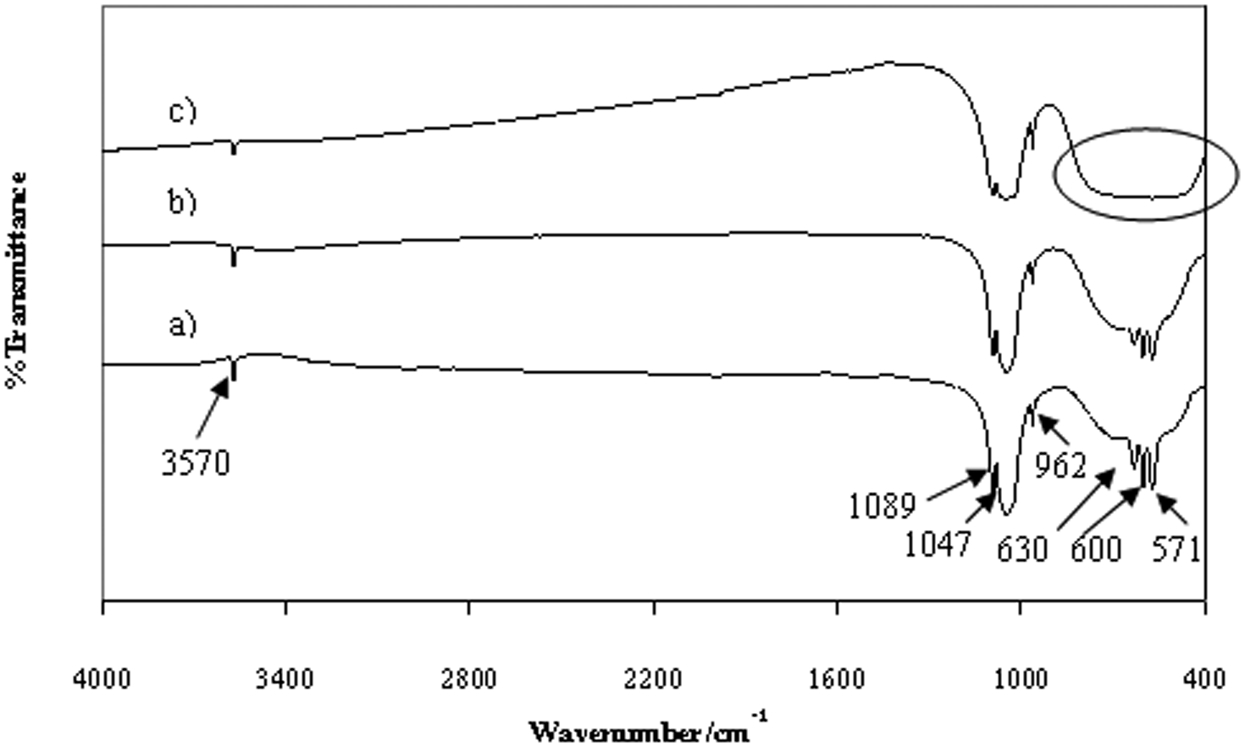
Fourier transform infrared spectra of a HATi8020, b HATi7030 and c HATi5050
Figure 3 illustrated microstructures of HA/TiO2 composite powders with different HA/TiO2 ratios. A mixture of HA and TiO2 particles with irregular shapes was observed. Small crystals of anatase TiO2 were distributed and embedded in larger HA crystals. With increasing TiO2 amount, increase in anatase phase can be observed among HA crystals.
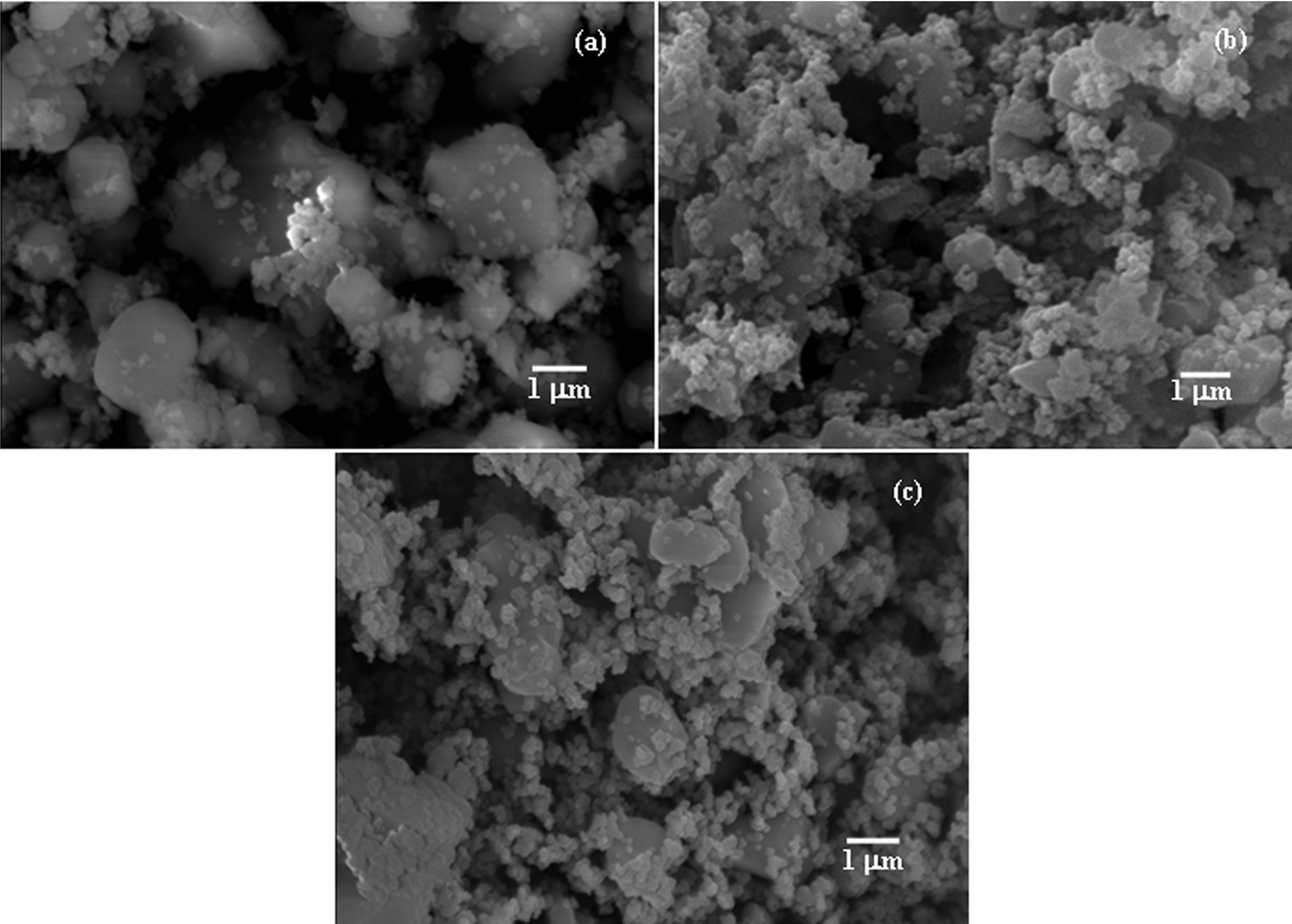
Images (SEM) of irregular composite powders a HATi8020; b HATi7030; c HATi5050
Photocatalytic activities of HA and HA/TiO2 composite powders were shown in Fig. 4. Methylene blue concentration was found decreased with increasing TiO2 content ratio from 20 to 30 and 50% (HATi8020, HATi7030 and HATi5050 respectively), whereas concentration of MB solution in the presence of HA (denoted as HA100) after 24 h did not significantly decrease. During the first 3 h, HATi5050 showed the highest slope, i.e. highest rate of MB decomposition, followed by HATi7030 and HATi8020. Overall, the three HA/TiO2 composites showed good performance in photocatalysis such that the final MB concentrations, after 24 h UV irradiation, were comparable and close to zero for all three HA/TiO2 compositions as evident by clear MB solutions. Despite their differences in initial rates of MB decomposition, the three HA/TiO2 composites contain enough TiO2 content to continue photocatalytic activity and completely decompose MB solution after 24 h UV exposure. A similar observation was reported by Bak et al., 22 that concentration of bacteria in water, in the presence of TiO2 and UV light, decreased with time and finally reached zero after a long exposure time. In filter cloth preparation, HATi5050 and HATi7030 were chosen to coat non-woven for further study on their photocatalytic and bactericidal properties.

Photocatalytic activity of HA/TiO2 composite with different HA/TiO2 ratios
Non-woven filter cloth
Deposition of HA (HA100) and HA/TiO2 particles (HATi5050 and HATi7030) on non-woven filter cloth with and without PVA binder was investigated by SEM, and their images were shown in Fig 5. Overall, a comparable amount of particles were observed on fibres in non-woven coated either with or without binder (HATi_PW, HATi_PWB). Difference in the amount of particles in each non-woven filter cloth might be difficult to determine because SEM only reveals two-dimensional images of the samples, causing limitation in presenting the particle distribution throughout the three-dimensional non-woven filter cloths. Therefore, some particles that penetrated into fabric voids could not be fully revealed by SEM images. Further investigation on adhesion of particles on fibres in non-woven was carried out by strongly shaking non-woven or even boiling it in hot water for several repeats; no detachment of particles was observed. This indicated that HA particles and HA/TiO2 composite particles adhered onto the non-woven surface well. This was confirmed by SEM images (Fig. 6), showing that particles still remained on fibre surface as well as on the space between fibres after boiling.
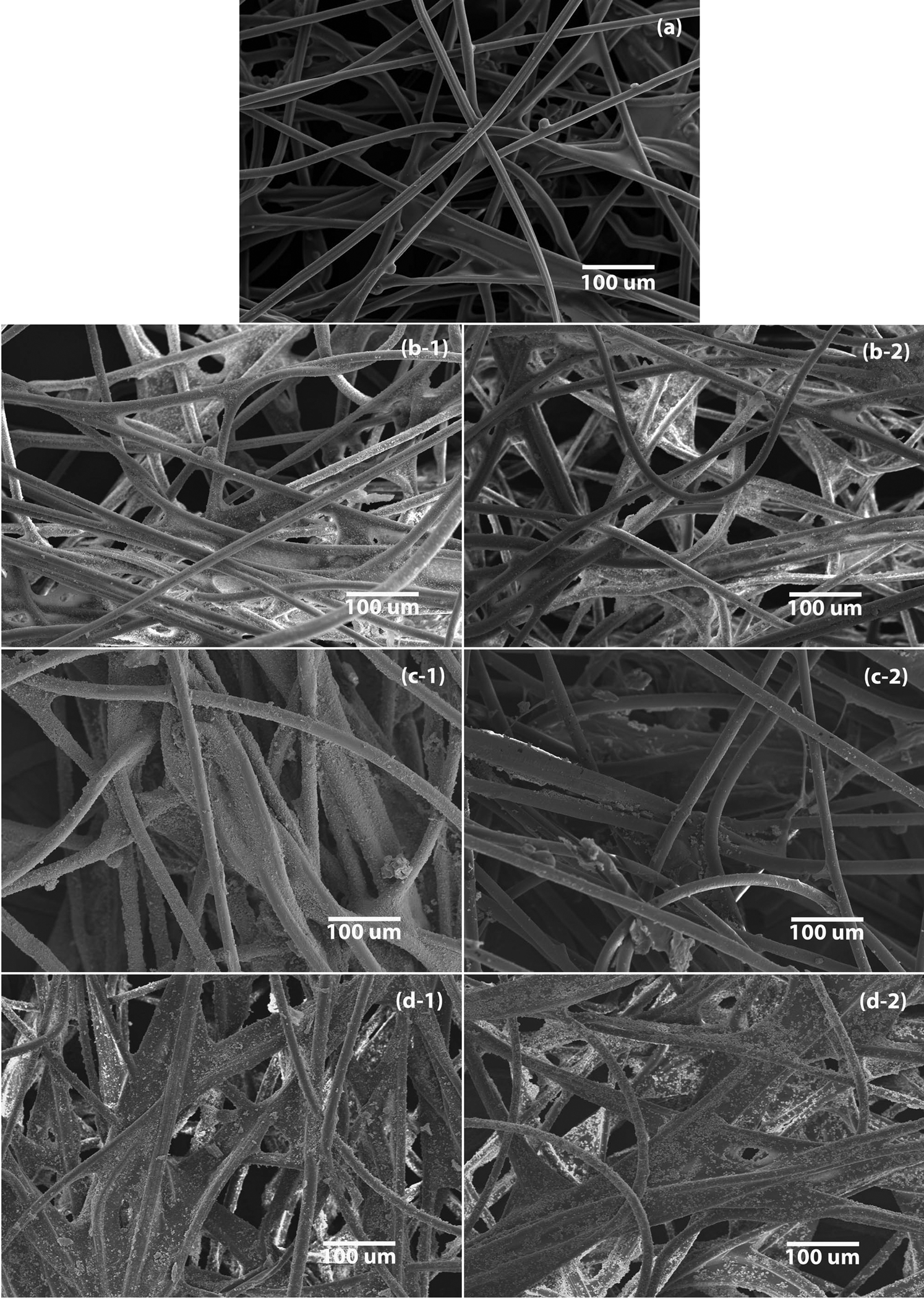
Morphology of non-woven filter cloths a non-woven cloth before coated with particles; b HA100; c HATi5050; d HATi7030; (1) PW and (2) PWB
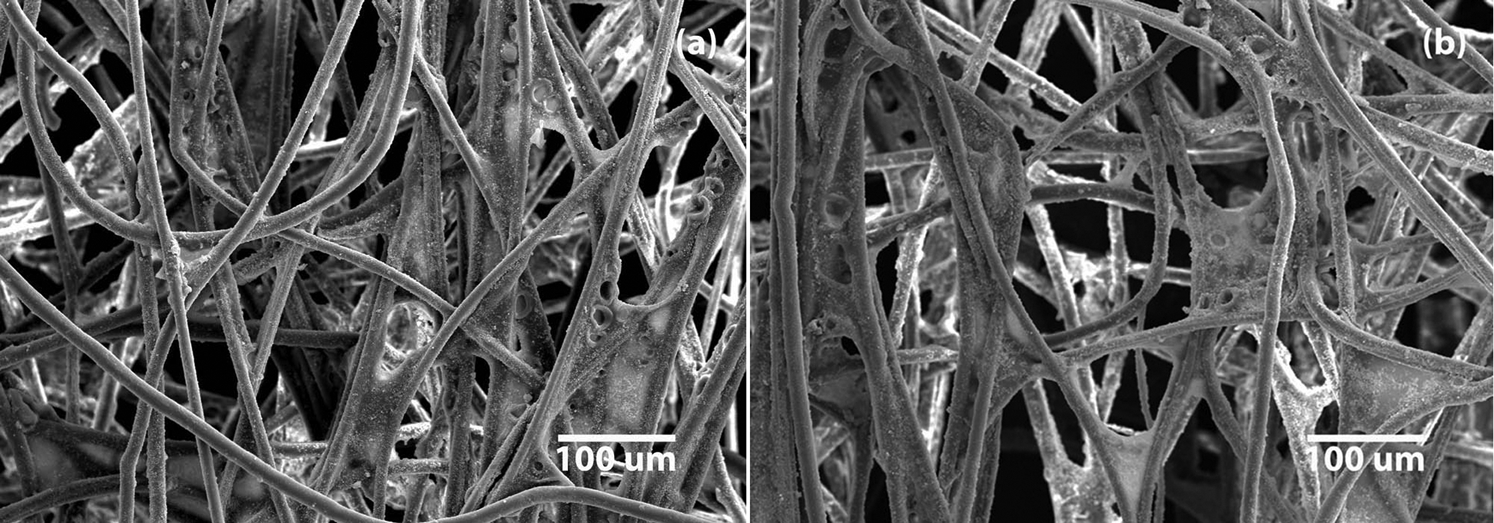
Deposition of composite particles on non-woven filter clothes after boiling a HATi 5050_PW and b HATi5050_PWB
Photocatalytic activities of non-woven coated with HA/TiO2 composites with and without binder (HATi5050 PWB, HATi5050 PW, HATi7030 PWB and HATi7030 PW) were investigated, in comparison with non-coated non-woven (NW blank) and HA coated non-woven (HA) as control, and results are shown in Fig 7. After 1 h initialisation t0, all coated and non-coated non-wovens showed MB adsorption, such that initial MB concentrations were slightly dropped to a range of 4·26–4·46 ppm. Under UV irradiation, HA coated non-woven filter cloths and non-coated non-woven did not show significant change in MB concentration. On the other hand, non-woven coated with HA/TiO2 composites showed decrease in MB concentrations. This indicated that presence of TiO2 in HA/TiO2 composites enabled photocatalytic activities of HA/TiO2 coated non-wovens. Non-wovens coated with HATi5050 composites showed comparable rates of MB decomposition (i.e. photocatalytic activity) to those coated with HATi7030. Those coated with HATi5050 PW and HATi7030 PW, i.e. without binder, showed slightly higher rates of MB decomposition than those coated with binders (HATi5050 PWB, HATi7030 PWB).
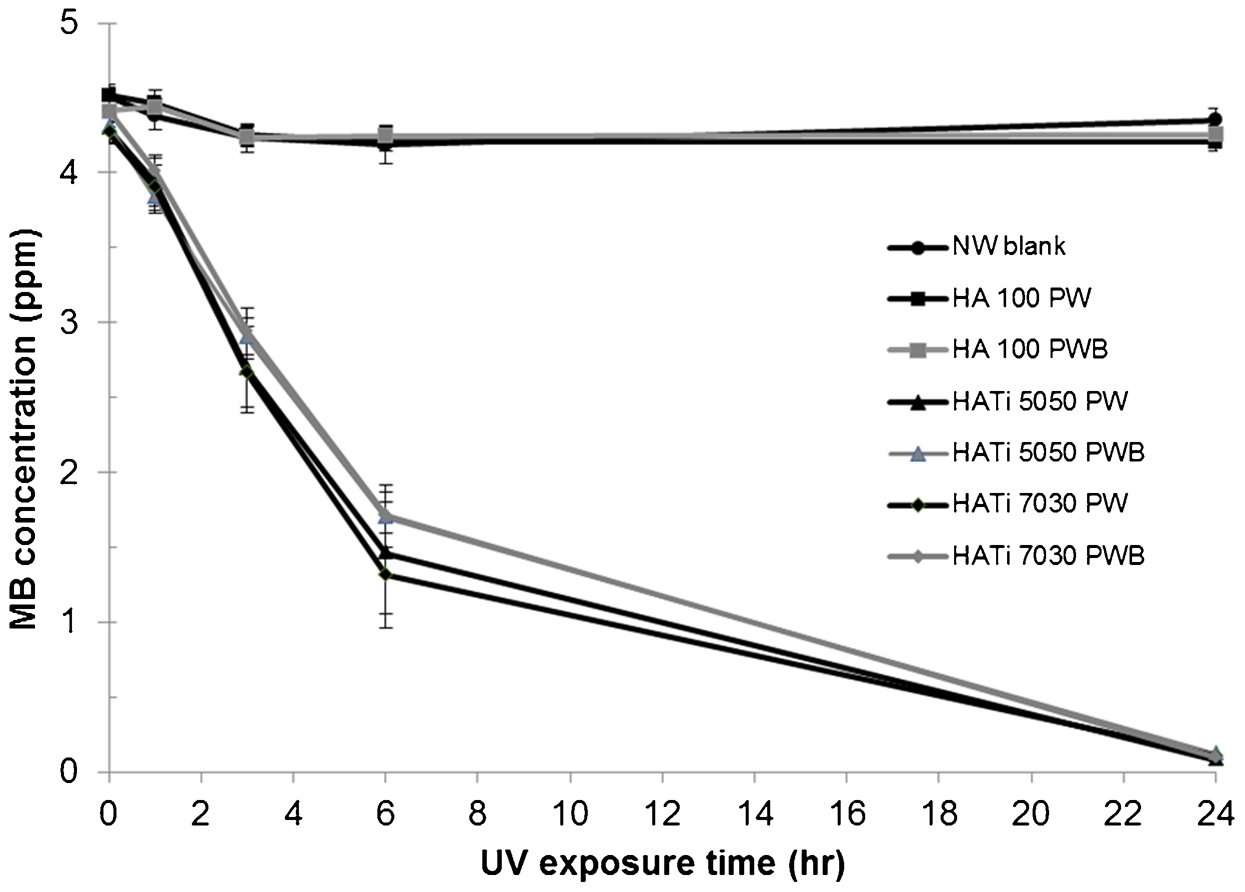
Photocatalytic activities of non-woven filter cloths
Compared to earlier results on HA/TiO2 composite powder, where HATi5050 showed significantly greater MB decomposition rate than HATi7030 (Fig. 4), a small difference observed in MB decomposition rates between non-woven filter cloth coated with HATi5050 and HATi7030 may be the result of non-woven feature, which has rough surface and contains complex spaces and voids between fibres. Particles can either deposit onto fibre surface or penetrate into interfibre space. Unlike in powder form, those particles located between fibres in filter cloth may not be fully exposed to UV light and can result in lower photocatalytic activity. Difference in photocatalytic activity between filter cloths coated with HATi5050 and HATi7030 thus became less compared to the case of powder forms. Nevertheless, both filter cloth coated with HATi5050 and HATi7030 showed good tendency for photocatalytic activity.
The in vitro antibacterial activities of HA/TiO2 composite coated non-wovens were evaluated under room ambient with ceiling mount fluorescent lights. It has been reported that fluorescent lamps emit sufficiently strong UV light to initiate photocatalytic biocidal effect of TiO2. 23 Figure 8 shows the curves of survival ratio (%) versus culture time for the coated non-wovens against gram negative E. coli and gram positive S. aureus. The smaller the survival ratio, the higher was the antibacterial activity of the sample. The non-wovens coated with TiO2 and/or HA all had antimicrobial activity, while the untreated ones (PW and PWB) did not display any antimicrobial activity. The survival ratios of both bacterial strains decreased with incubation time for all treated non-wovens. As expected, the coated TiO2 non-woven exhibited significantly stronger bactericidal activity than the coated HA one (p<0·001). However, statistically less survival ratios of both bacterial strains were unexpectedly found for HATi7030_PW over the entire period of testing, as compared to those of the more TiO2 content HATi5050 composite (p<0·001). This finding is consistent with the photocatalytic test results and can be probably due to the more amount and more even distribution of the HATi7030 particles that were present on the non-woven filter cloth surface (Fig. 5). Moreover, the bactericidal effect of the HATi7030_PW against S. aureus was significantly less than that of TiO2 coated PW (p<0·001) over the 48 h period, while HATi5050_PW showed more bactericidal effect than HA coated PW (p<0·001) with the exception at 12 and 16 h. In the case of E. coli, significantly greater survival ratios for HATi7030_PW, as compared to those of TiO2 coated PW, were found only at the culture time of 4–16 h (p<0·001). No statistical differences against E. coli were found between the survival ratios for HATi5050_PW and HA coated PW at culture times of 8, 12 and 40–48 h (p<0·180).
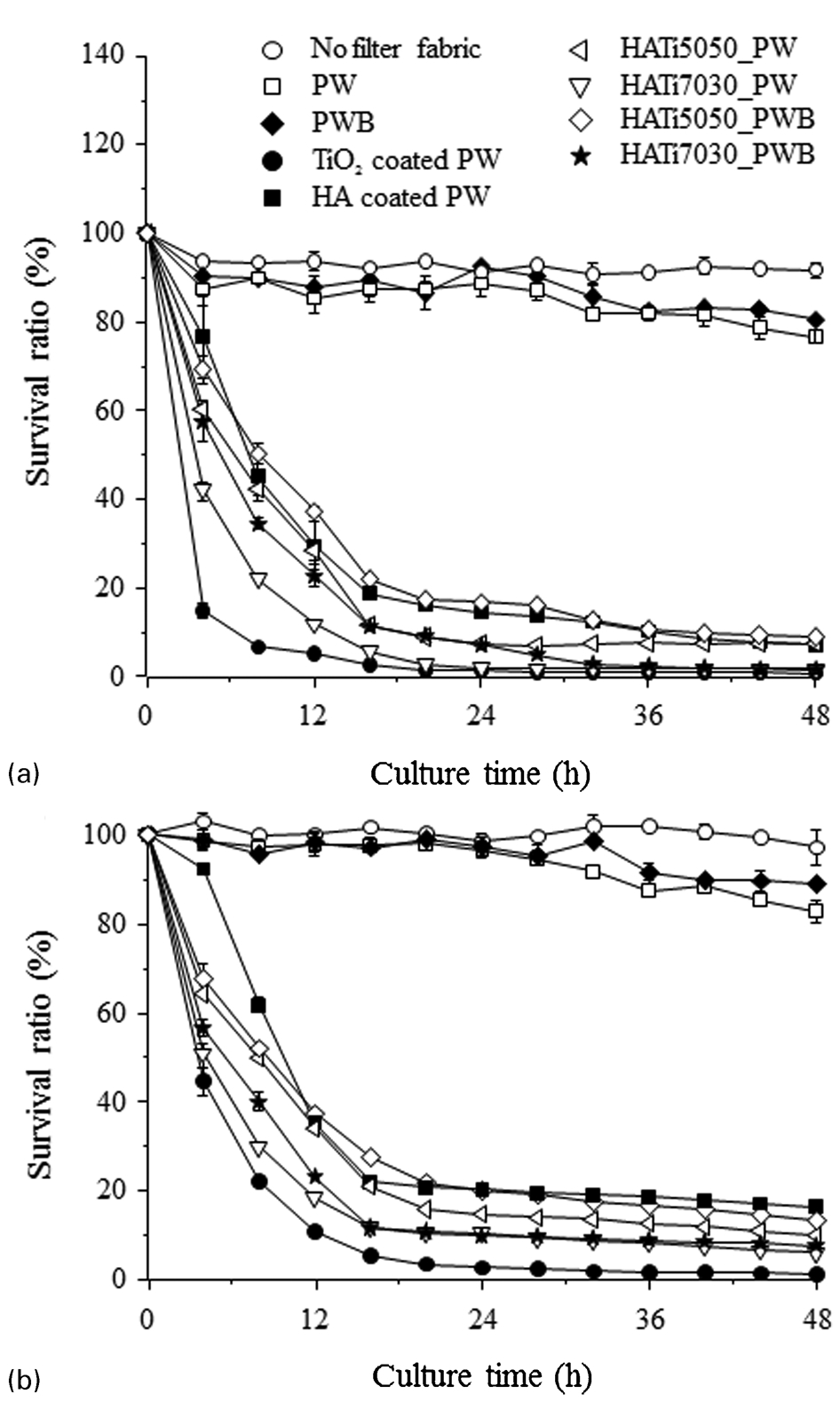
Effect of HA/TiO2 composite coated on non-wovens towards survival of a E. coli and b S. aureus
Incorporation of PVA binder into the composite slurry, resulting in slightly lower photocatalytic activities of HA/TiO2 coated non-wovens, also appeared to decrease the antibacterial performance of HATi5050. This was seen in significantly more survival ratios of both bacterial strains for HATi5050_PWB, as compared to those for HATi5050_PW, over the entire range of incubation time (p<0·036). However, significant changes on the antibacterial activity of the HATi7030 by the presence of binder were observed only during the early period of incubation (p<0·007). After incubation for 32 h for E. coli and 16 h for S. aureus, the survival ratios of HATi7030_PW and HATi7030_PWB became comparable (p>0·157). The weaker inhibitory effect of PVA binder on the bactericidal activity of HATi7030 may be explained by a sufficiently large amount of HATi7030 particles on the fibres of PWB sample to compensate the inhibition of the activity.
Conclusions
Hydroxyapatite modified with anatase titanium dioxide composite of different HA/TiO2 ratios was successfully prepared. The prepared HA/TiO2 composites exhibited MB decomposition, i.e. photocatalytic activity, which was increased with TiO2 ratios in the composites. Non-woven filter coated with HA/TiO2 composite also exhibited good photocatalytic activity. In powder form, HATi5050 containing 50% TiO2 exhibited greater rate of MB decomposition than HATi7030. In coated non-woven filter, however, less difference in photocatalytic activities between HATi5050 and HATi7030 coated filter was observed. Deposition of HA/TiO2 particles from slurry onto fibre surface might cause different amounts and distribution of active HA/TiO2 particles in the non-wovens. Some particles that penetrated into fabric voids could not be fully accessed by light, thus lower contribution on photocatalytic activity. For antimicrobial evaluation, non-woven filter cloth coated with HA/TiO2 composite could decrease the survival ratio to <20% within culture time of 24 h.
Footnotes
Acknowledgement
This work was performed with the support of the National Metal and Materials Technology Center, the Ministry of Science and Technology of Thailand (project no. P-09-00828).