







Abstract
30 vol.-% Ti3AlC2 particle reinforced Zn based (Zn–27 wt-% Al, denoted as ZA27) composites have been prepared via three different mechanically activated sintering technologies: pressureless sintering, hot pressing and combination of pressureless sintering and hot pressing (two-step sintering) technology. The relationship between sintering conditions, microstructure and mechanical properties of the 30 vol.-% Ti3AlC2/ZA27 composites has been investigated. The Ti3AlC2/ZA27 composite with enhanced tensile strength of 335 MPa and bending strength of 570 MPa was achieved by the two-step technology. The improved mechanical properties are attributed to the good bonding between reinforcing particles and matrix as well as the fine grained microstructure. Raising the sintering temperature is more efficient to improve the mechanical properties of the composites than applying pressure.
Introduction
ZA27 alloy (Zn–27 wt-% Al) is widely used in a variety of applications, such as industrial fittings, hardware, sleeve bearings, thrust washers, wear plates and pressure tight housings, due to its good mechanical and tribological properties. However, the deterioration of its properties and the dimensional change at temperatures >100°C are the major disadvantages of this material. 1 Therefore, the reinforcement to ZA27 alloy and the way to get those composites have gathered considerable attention in the manufacturing of well bonding situation products, especially in the addition of thermally stable ceramic phases. Al2O3, C, SiC and zircon particle reinforced ZA27 composites have been fabricated successfully, and their properties were analysed. Sharma et al. 2 found that the zircon reinforced composites fabricated by the ‘compocasting’ technique exhibited reduced wear rate compared to the unreinforced ZA27 alloy specimens with the liquid metallurgy technique. With increasing zircon content from 1 to 5 wt-%, mechanical properties such as ultimate tensile strength, yield strength, hardness and Young's modulus were significantly improved. However, the ductility and impact strength were reduced. 3 Girish et al.4,5 investigated the effect of macroscopic graphite particles on the mechanical and thermal behaviour of ZA27 alloy composites that were prepared using the liquid metallurgy technique. The tribological properties were improved with the addition of graphite particle. However, with the increase in content of reinforcement, the hardness >150°C slightly reduced. El-khair et al. 1 have discussed the microstructure and mechanical properties of SiC, ZrO2 or C reinforced ZA27 composites by squeeze casting. They found that the presence of particles in the composites led not only to an accelerated age hardening response but also an increase in peak hardness. However, the coefficient of thermal expansion and tensile strength of the composites decreased as a result of the addition of the particles. However, how to get a well bonding interface between the ZA27 matrix and the reinforcements and how to expand their application areas by improving the mechanical properties are still challenging.
Recently, several Ti3AlC2 particle reinforced composites, such as Cu/Ti3AlC2 (Ref. 6), SiC/Ti3Si(Al)C2 (Ref. 7), Ti3AlC2/EP (Ref. 8), etc., have been fabricated, and their mechanical properties have been improved by the addition of Ti3AlC2. This was due to Ti3AlC2 combining the good properties of both metals and ceramics, such as high strength, low density, excellent electrical conductivity, good tribological properties and large coefficient of thermal expansion. 9 Therefore, Ti3AlC2 is expected to be a kind of ideal reinforcement for ZA27 alloy. However, until now, no work has been reported on the Ti3AlC2/ZA27 composite according to the literatures.
It is well known that the processing technique is very important for the preparation of metallic matrix composites. Different processes may lead to different bonding between matrix and reinforcement and consequently to different mechanical properties. Mechanically activated sintering technology combines short duration mechanical alloying (MA) to obtain nanostructured and homogeneous powders and a process of low temperature annealing with or without pressure application to fabricate fully dense nanocrystalline materials.10,11 In our present work, Ti3AlC2 particle reinforced ZA27 matrix composites have been successfully synthesised by three kinds of mechanically activated sintering technology methods: pressureless sintering, hot pressing and combination of pressureless sintering and hot pressing (two-step sintering) technology. Two-step sintering method means that the materials were firstly pressureless sintered at a higher temperature and then hot pressed at a lower temperature. The mechanical properties of the 30 vol.-% Ti3AlC2/ZA27 composites prepared by three different methods were tested, and the effects of preparation temperature and pressure on the mechanical properties of the Ti3AlC2/ZA27 composites were discussed.
Experimental
Synthesis of Ti3AlC2/ZA27 composites
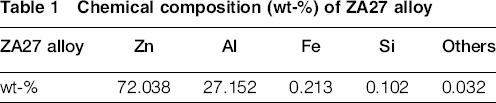
A commercial ZA27 powder (particle size < 200 μm, Hunan Luxixian Antai New Materials Company, China) and the homemade Ti3AlC2 powder (purity 98%, average particle size 6.8 μm) 12 were used as starting materials. The chemical composition of the ZA27 alloy powder is listed in Table 1. The volume ratio of Ti3AlC2 to ZA27 was selected as 3:7. The two powders were mixed using a planetary mill (QM-3SP4, China) for 3 h in steel containers under vacuum with rotational speed of 300 rev min− 1 and ball to powder weight ratio of 10:1. Then, the mixture powder was sintered in different processes, which are shown in Table 2. Sample 1 was firstly compacted into a cylindrical green body with 50 mm diameter and ∼8 mm thickness. Then, the body was isostatically cold pressed (KJYc 200-600/300, China) with 200 MPa for 2 min before pressurelessly sintered at 870°C for 2.5 h. Samples 2 and 3 were sintered in a graphite die using a hot pressing furnace (ZT-30-22y, China), and the mixed powder was shaped in the graphite die by a uniaxial pressure of 10 MPa before sintering. All the samples were sintered in Ar atmosphere with a heating rate of 30°C min− 1.
Chemical composition (wt-%) of ZA27 alloy
Sintering process of as prepared samples

Characterisation
Phase composition of the three samples was identified by X-ray diffraction (XRD; D8 ADVANCE A25, Bruker, Germany). The density of the composites was tested by Archimedes method in distilled water using four parallel specimens. Both tensile and bending tests were conducted at room temperature on a loading speed of 0.3 mm min− 1, and the average strength values of four specimens were obtained for each composite. The dimension of the tensile specimen is shown in Fig. 1 with a thickness of 2 mm. The bending strength was measured with the specimens of 3 × 4 × 36 mm using a three-point bending device (CMT4105, China) with a span size of 30 mm. The hardness of all the samples was measured by a Vickers hardness tester (HVS-1000 Z, China) using a static load of 2 kgf and a dwell time of 15 s. The fracture surfaces and polished surfaces of specimens were observed using a scanning electron microscope (JSM 6700F, JEOL, Tokyo, Japan).
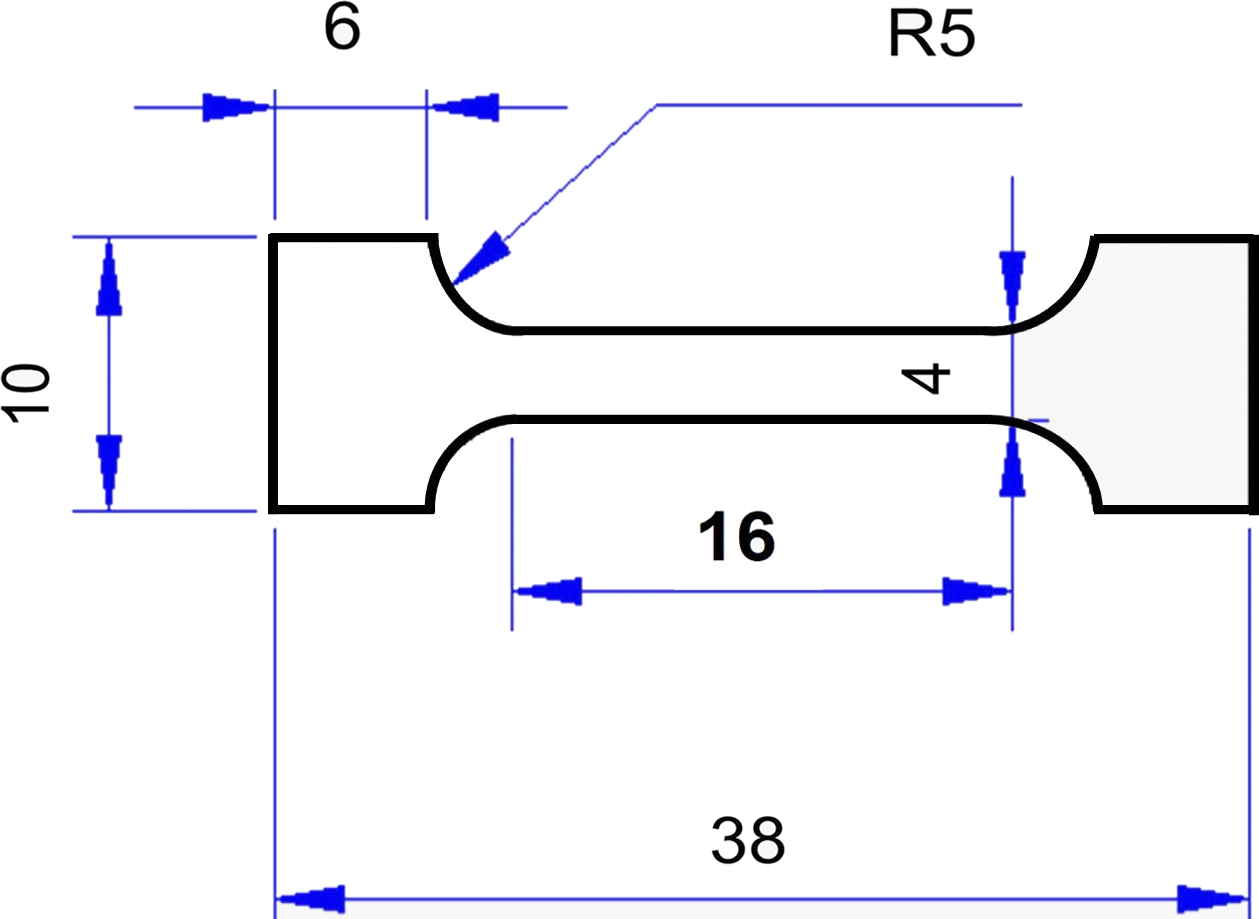
Size of specimen used by microtensile machine at room temperature (in mm)
Results and discussion
X-ray diffraction analysis of Ti3AlC2/ZA27 composites
The XRD patterns of the three samples are shown in Fig. 2. It can be seen that the patterns are similar in spite of the different preparation processes for the three samples. The strong diffraction peaks of all the samples are identified as Zn, Al and Ti3AlC2. However, several different peaks, which are attributed to two new phases of Al0.64Ti0.36 and TiC, appeared in samples 1 and 3 except for sample 2. Both contents of the two new phases are much lower than that of the starting components according to the low peak heights for the new phases. Considering the high sintering temperature of 870°C for samples 1 and 3, it can be concluded that a small amount of Ti3AlC2 decomposed into TiC, Al and Al0.64Ti0.36 at 870°C under the action of liquid ZA27 alloy, and thus the reaction could be expressed as follows



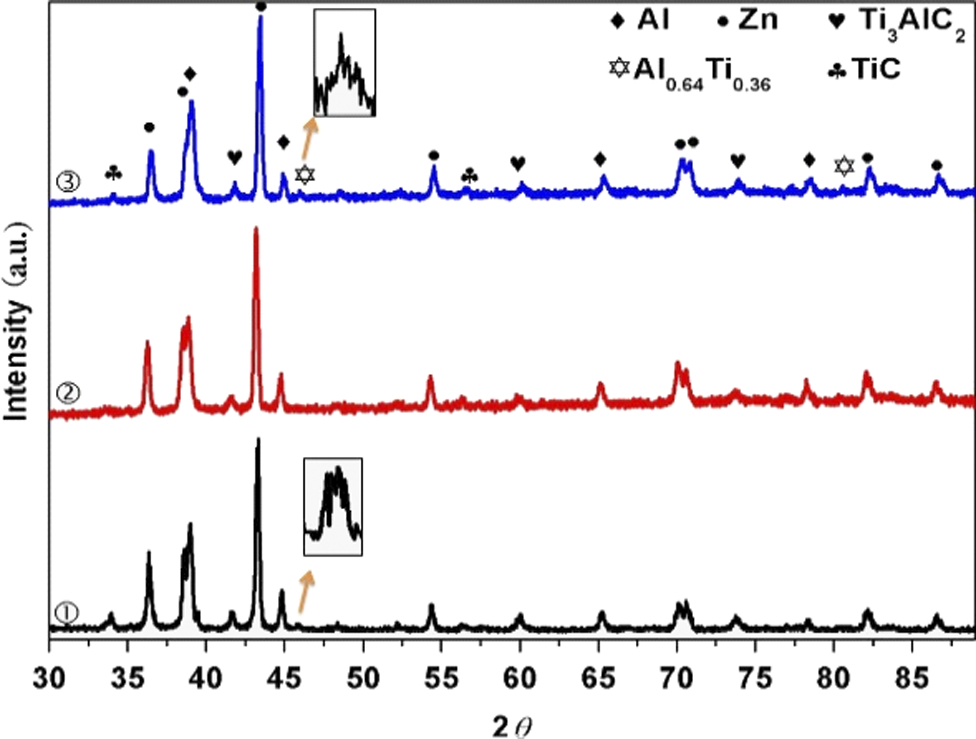
X-ray diffraction patterns for Ti3AlC2/ZA27 composites: (1) sample 1, (2) sample 2 and (3) sample 3
Microstructure of Ti3AlC2/ZA27 composites
Figure 3 shows the surface morphologies of all the samples. It can be seen that there are three kinds of regions in each picture, the black spots, the grey region and the striped area, as pointed in Fig. 3a by arrows, which correspond to voids, Ti3AlC2 particles and ZA27 matrix respectively. Small black voids can be detected in the polished surfaces of all the samples, especially in sample 2 shown in Fig. 3b. This is consistent with the density results listed in Table 3. In addition, the particle distribution of sample 3, as shown in Fig. 3c, is more homogeneous than that of the others. From Fig. 3d, the magnifications of sample 3, it was observed that the grey Ti3AlC2 particles are distributed in the striped eutectoid structure of the ZA27 matrix.
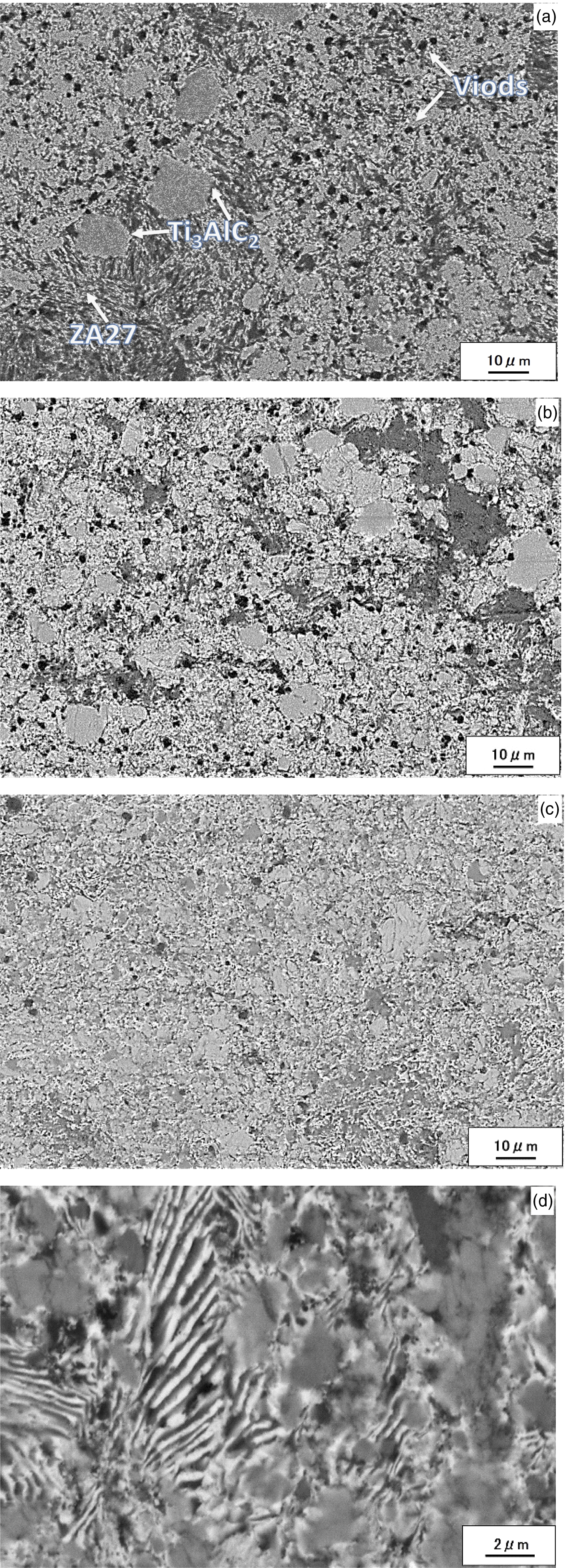
Back scatter images of specimen surfaces of all samples. a sample 1; b sample 2; c sample 3; d magnification of sample 3
Experimental data of as prepared samples

Density analysis of Ti3AlC2/ZA27 composites
Table 3 summarises the results of performance testing of all the samples fabricated by the three different methods. It is demonstrated in Table 3 that all the samples showed high relative density >90%, especially sample 3, which possesses the highest relative density of 96.2%. On the other hand, sample 2, prepared by hot pressing, showed the lowest relative density of 91.4% among the three samples. Hot pressing is an effective method to densify a composite. However, in this study, higher sintering temperature is more efficient to improve the density of Ti3AlC2/ZA27 composites than pressure. The two-step sintering method, which combines the advantages of both higher sintering temperature and pressure, can get highly compact Ti3AlC2/ZA27 composites. In accord with the results of XRD (Fig. 2), it can be concluded that the densification of Ti3AlC2/ZA27 composites was improved with an appearance of a weak reaction that occurred at a high sintering temperature of 870°C. It is worth mentioning that the theoretical densities of TiC and Al0.64Ti0.36 are 4.25 and 3.55 g cm− 3 respectively, which are similar to the density of Ti3AlC2 (4.25 g cm− 3). In addition, the content of the new phases is very low because of the weak interface reaction, so we ignored the change of composite theoretical density after reaction. The theoretical density of the composite is determined by the equation

Strength analysis of Ti3AlC2/ZA27 composites
Table 3 represents the average tensile and bending properties of the 30 vol.-% Ti3AlC2/ZA27 composites obtained by different ways. Sample 3 exhibits the highest tensile strength of 335 MPa and bending strength of 570 MPa (the bending strength of Ti3AlC2 referenced to 340 MPa
17
), while sample 2 has the worst mechanical properties among the three samples. Comparing to other ZA27 matrix composites reinforced by SiC, ZrO2 or C,
1
the Ti3AlC2/ZA27 composite prepared by the two-step method exhibits a much higher strength. This may due to following three reasons:
Stronger bonding strength between the reinforcement and the matrix due to the weak reaction. According to the results of XRD analysis, the reaction is
Refined crystalline size by MA. Ultrafine particles were used in the present study. The MA happened in a planetary ball mill is a solid state powder processing technique involving repeated welding, fracturing and rewelding of powder particles in a high energy ball mill. It can refine grain size, improve surface energy and help the mixture of Ti3AlC2 and ZA27. The SEM images of the raw ZA27 powder and as mechanical alloyed Ti3AlC2/ZA27 mixed powder are shown in Fig. 4. Comparing the mixed power (Fig. 4c) to the raw ZA27 powder (Fig. 4a), it can be seen that the particle size of the ZA27 powder decreased from ∼20 to < 3 μm by MA processing. However, the fine grained particles agglomerated together to form larger clusters after MA, as shown in Fig. 4b, and the aggregate sizes of the as mechanical alloyed powder in this case showed a large degree of heterogeneity. High densification. The Ti3AlC2/ZA27 composite prepared by the two-step sintering method possesses the highest relative density of 96.2%. That means that there are less flaws in the composite, and thus, high mechanical properties are expected.
Typical tensile stress–strain curves of the three Ti3AlC2/ZA27 composites are shown in Fig. 5. Sample 3 demonstrated a larger fracture strain up to 2.3%, while samples 1 and 2 showed a limited fracture strain < 0.8%. Moreover, the elastic modulus of sample 3 can reach 108 GPa, which is also the largest value among the three samples. In general, all the samples exhibited low elongation characteristics, which indicates a brittle fracture nature, as shown in Fig. 6. Figure 6a clearly displays a typical brittle fracture characteristic in sample 3, and the fracture surface is even and nearly perpendicular to the tensile direction. What is more, in the fracture surface in Fig. 6a, a large magnification of Fig. 6b, is composed of two distinct phases. One is Ti3AlC2 particles with layered structure, and the other is ZA27 with an appearance of cotton wool. It was seen that the Ti3AlC2 particles are in tight compaction by cotton wool liked ZA27 matrix, which demonstrates a well sintered composite with relatively high density for sample 3. Therefore, sintering at a higher temperature can significantly improve the interfacial bonding between ZA27 matrix and Ti3AlC2 reinforcement, and the succedent hot pressing at a lower temperature can further improve the density of the composites, as well as avoiding the extrudation of liquid ZA27 from the mould. . It indicated that some weak reactions happened after sintering and resulted in the increasing properties of the composites. While sample 2 was received at the temperature of 500°C, that cannot provide the suitable circumstance for reactions.
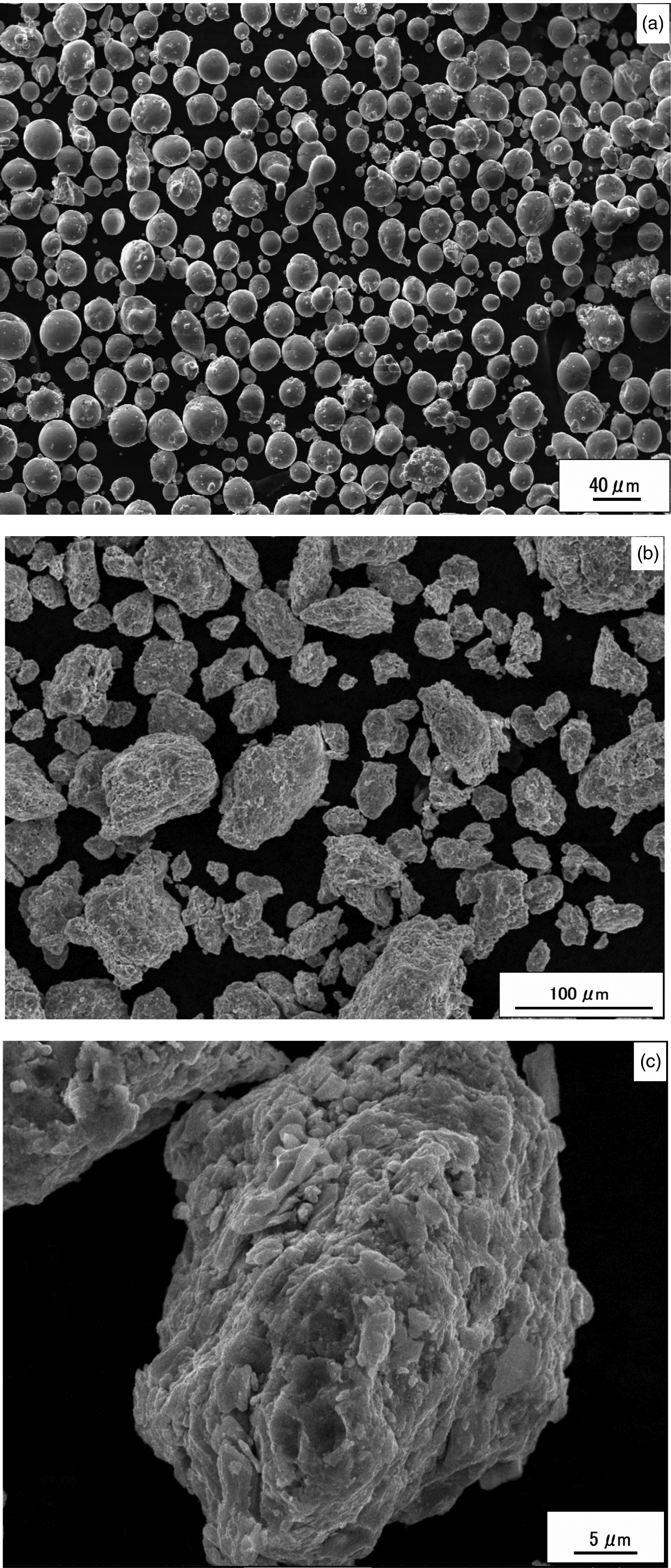
a SEM images of ZA27 powder before MA and b, c SEM images of Ti3AlC2 and ZA27 (according to volume ratio of 3:7) mixed powder after MA
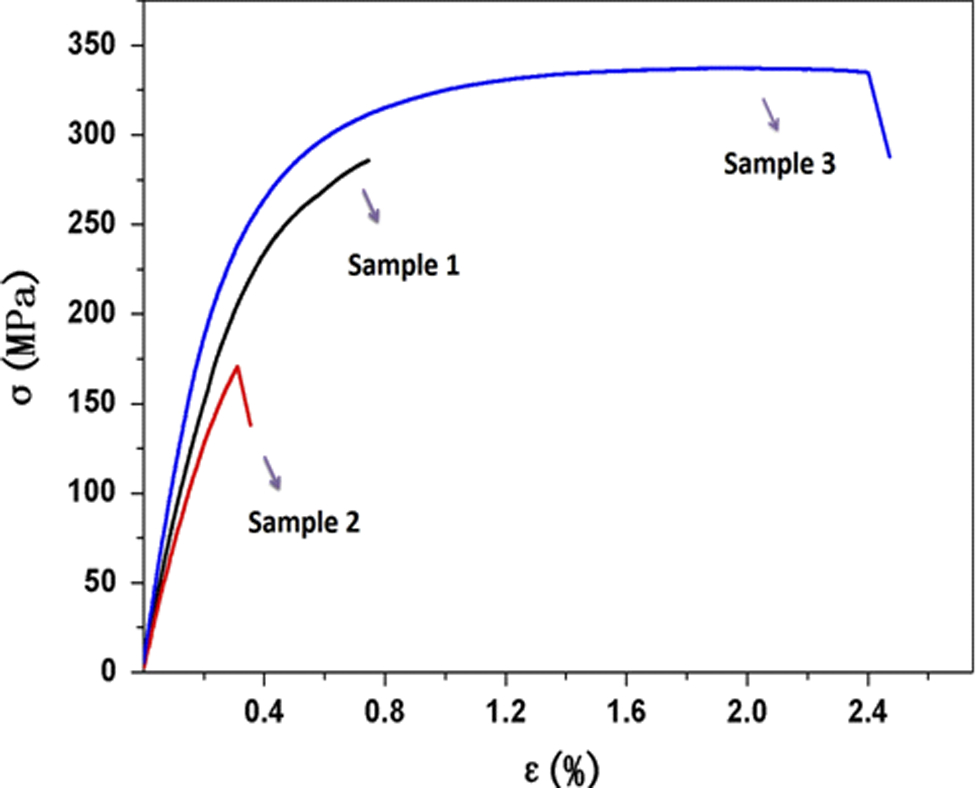
Tensile stress–strain curves of Ti3AlC2/ZA27 samples
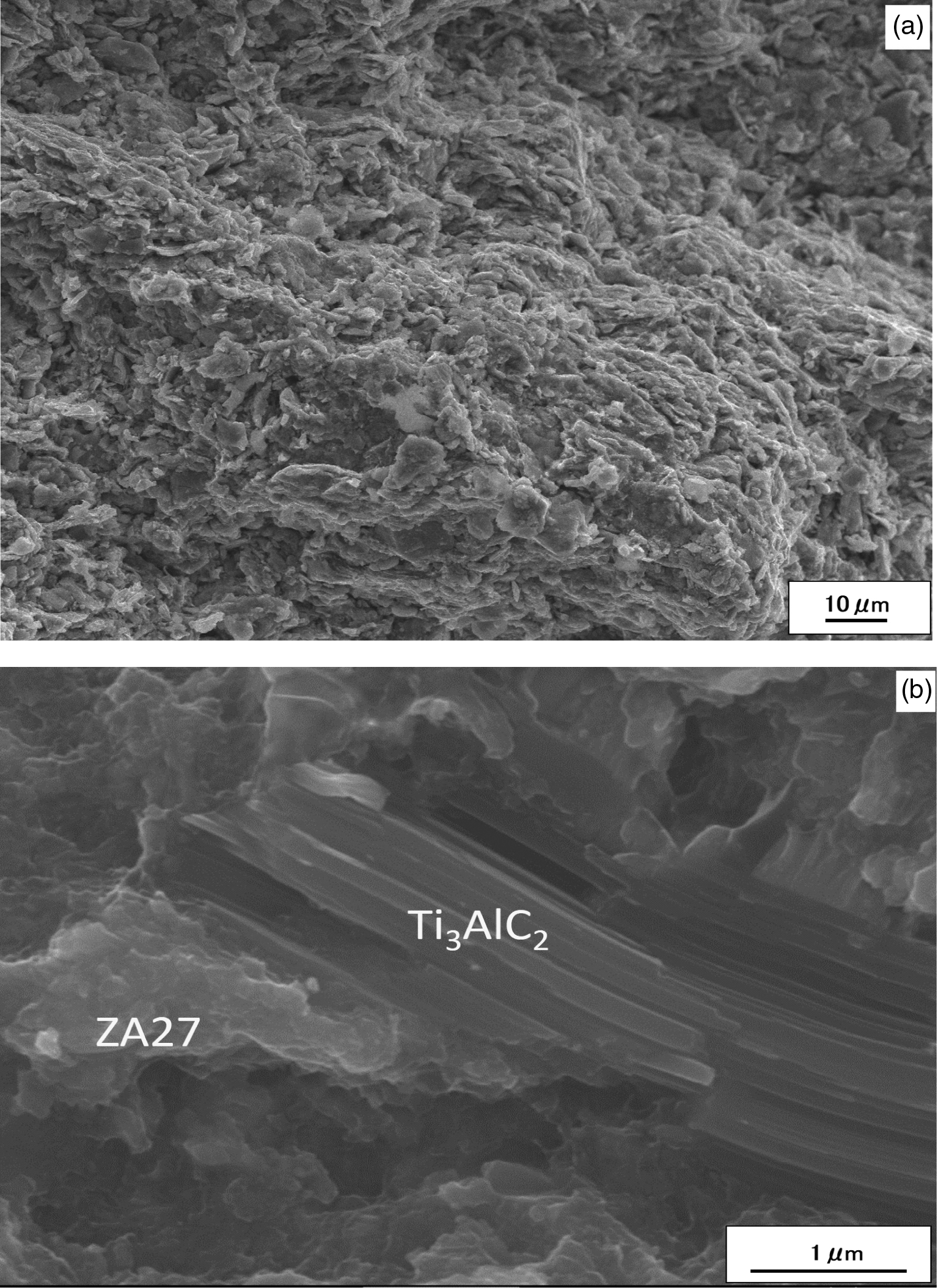
a SEM of fracture surface of sample 3 and b larger magnification of sample 3
Hardness analysis of Ti3AlC2/ZA27 composites
From the results of the hardness examination shown in Table 3, it can be seen that preparation conditions have a muted impact on the hardness of the composites. According to composite theory, the Vickers hardness (HV) values can calculated according to the following equation

Conclusion
Three kinds of 30 vol.-% Ti3AlC2/ZA27 composites were prepared by MA and then followed by pressureless sintering, hot pressing and combination of pressureless sintering and hot pressing technology respectively. The composite sintered by two-step technology possesses the highest relative density and the best mechanical properties. In addition, its tensile strength, bending strength and Vickers hardness are 335, 570 and 1204 MPa respectively. The superior mechanical properties for the composite achieved by two-step sintering are mainly attributed to a weak reaction on the boundary between Ti3AlC2 reinforcement and ZA27 matrix at a high temperature of 870°C. Meanwhile, a fine grain size gotten by planetary ball mixing and high density are also beneficial to the mechanical properties. The weak reaction could be explained according to the XRD analysis as
 , which results in good bonding between matrix and reinforcement. In contrast, the hot pressed composite, which was sintered at a lower temperature of 500°C, owns the worst mechanical properties among the three composites due to the lack of interfacial reaction.
Acknowledgements
This work was financially supported by the National Natural Science Foundation of China under grant nos. 51172015, 51372015 and 51472024 and the Beijing Government Funds for the Constructive Project of Central Universities.