







Abstract
In this study the authors have compared the tribological behaviour of three aluminium alloys (ASTM 2011 T3, ASTM 6061 T6 and ASTM 7075 T6) lubricated with two room temperature ionic liquids (ILs) with the same short alkyl chain imidazolium cation, 1-ethyl-3-methylimidazolium, and two different anions, tetrafluoroborate (BF4) (L102) and bis(trifluoromethylsulfonyl)imide {[(CF3SO2)2N]; NTf} (LNTf102). The ILs were used as 1 wt-% additives of the synthetic ester base oil propylene glycol dioleate (PGDO) in reciprocating sliding tests. The results are discussed in terms of the properties of the lubricants and the hardness of the aluminium alloys. Plastic deformation, wear mechanisms and surface interactions have been studied by electron microscopy (SEM), energy dispersive (EDS) spectroscopy and three-dimensional profilometry. The tribological performance of both ionic liquids is similar, and depends on hardness values and on the degree of plastic deformation of each alloy. Reductions of more than 40% in the wear rate and surface roughness with respect to the base oil are achieved for both additives only for the hardest alloy Al7075. The performance of the additives is independent of the contribution of the different anions due to the absence of extensive tribocorrosion processes.
Introduction
Synthetic oils have many advantages as lubricating fluids over mineral oils and are more suitable for practical applications. Until now, their applications have been limited because the conventional non-polar additives developed for mineral oils are not suitable for polar synthetic base oils such as ethers and esters. In this way, a search for effective additives of synthetic lubricants is needed.1–4
Room temperature ionic liquids (ILs) are supramolecular fluids with a highly ordered structure5 in the liquid state similar to that found in solid state. Moreover, in the presence of other substances this supramolecular arrangement may be altered to give rise to polar and non-polar domains.6,7 These characteristics make ILs miscible both with polar and non-polar solvents.
Since first reported as promising neat low friction lubricants more than a decade ago,8 ILs have been attracting a growing attention in the field of tribology and surface engineering, not only as neat lubricants but, in more recent times, as lubricant additives and thin films precursors.9–12 One of the more promising lines in tribological applications of ionic liquids is that of their use as additives of mineral or synthetic lubricants.9–17
The good lubricating ability of ILs has been attributed to the polarity of their molecules and their ability to form ordered adsorbed layers. For the same imidazolium cation, the polarity decreases as the lateral alkyl chain length increases.
In the present study, the authors have compared two 1-ethyl-3-methylimidazolium ionic liquids with different anions, tetrafluoroborate (BF4) (L102) and bis(trifluoromethylsulfonyl)imide {[(CF3SO2)2N]; NTf} (LNTf102).
The flexibility and polarity of the bis(trifluoromethylsulfonyl)imide (NTf) anion, that permit good miscibility with base oils and formation of physical adsorption films have been proposed to contribute to its excellent tribological properties.13
Imidazolium ILs with the same NTf anion have been studied as 5 vol.-% additives of mineral oil for diesel engine applications under reciprocating sliding14 and as additives in poly(ethylene glycol) for steel–steel oscillating sliding surfaces.18
Ammonium or imidazolium ILs containing the same NTf anion has been previously studied as lubricants of different aluminium alloys19 finding accelerated wear for Al6061 when the imidazolium NTf lubricant was used.
One of the fields of tribology of higher interest is, currently, that of lubrication of light alloys and, in particular, of aluminium alloys. Synthetic lubricants such as alcohols, carboxylic acids and esters strongly bind to the aluminium substrate. This could reduce friction, but if many of these molecules contact the aluminium surface, they could react to form compounds which are less protective than the oxide layer. In this way, synthetic lubricants could give higher wear values than mineral oils.2
Our research group has carried out previous studies on lubrication of aluminium alloys with neat IL and with IL additives in mineral20,21 and synthetic oil, in particular in PGDO.22 In these previous studies, only the more polar IL additives, those with a short alkyl lateral chain on the imidazolium ring and with small fluorine containing anions, show wear reducing ability with respect to the base oils. Recent studies23 have shown that for the room temperature ionic liquids (ILs) containing the same anion, bis(trifluoromethylsulfonyl)imide, [(CF3SO2)2N] (NTf), and cations with increasing alkyl chain length, 1-ethyl-3-methylimidazolium, 1-butyl-3-methylimidazolium and 1-octyl-3-methylimidazolium, the wear rates for Ti6Al4V at room temperature under the pin-on-disc configuration increase as the alkyl chain length of the IL increases. These were the reasons to select the 1-ethyl-3-methylimidazolum cation and the tetrafluoroborate and bis(trifluoromethylsulfonyl)imide anions.
The three aluminium alloys Al2011, Al7075 and Al6061 selected for the present study have shown24 a good resistance to erosion–corrosion in a concentrated solution of L102 in water in the presence of alumina particles. As expected, in the case of the copper containing alloys, the corrosion rates increase as the copper content in the alloy increases.
The reciprocating configuration used in this work was chosen in order to better simulate contact conditions such as those present in piston and cylinder sliding.
Experimental
The chemical composition and Vickers hardness values for the aluminium alloys ASTM 2011 T3, ASTM 6061 T6 and ASTM 7075 T6 are shown in Table 1. Ionic liquids (Fig. 1) were commercially available from Solvionic (France). Propylene glycol dioleate (PGDO) was kindly provided by Uniqema Chemical Ltd. Spain. Viscosity values (Table 2) were measured using the AR-G2 rheometer with a plate to plate configuration in air using 1 mL volume sample. The diameter of the upper plate is 20 mm and the gap was 700–800 μm. A speed ramp from 0 to 300 s−1 was applied, and then the speed was maintained constant to measure the viscosity. Aluminium discs (20×20 mm; 15 mm thickness, surface roughness less than 0·2 μm) were tested in a reciprocating tribometer (Microtest, Spain) (Fig. 2) against AISI 52100 (1·52%Cr; 0·95%C; 0·33Mn; 0·25%Si) steel balls (8 mm sphere radius) of hardness 848 HV, in the presence of 2 mL of lubricant. Mixtures of the base oil and the additives were stirred for 30 min immediately before the tests. Tribological tests according to ASTM G 133-05 standard (Fig. 2) were carried out under a normal applied load of 80 N, corresponding to a mean contact pressure of 1 GPa, with a stroke length of 5 mm and at a sliding velocity of 0·01 ms−1.
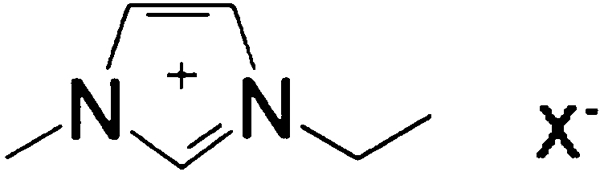
Chemical formula of ionic liquids: X− = BF4− (L102); X− = (CF3SO2)2N− (LNTf102)
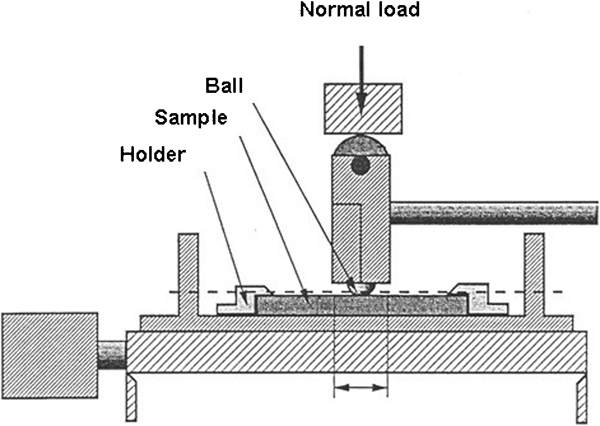
Scheme of contact configuration during tests
Aluminium alloys composition and hardness values

Viscosity values

Friction coefficients were continuously recorded with sliding distance for each test. Volume loss from aluminium samples was determined from measuring wear track volume. Mean friction coefficients and wear rates are obtained after at least three tests under the same conditions. The SEM images and EDS analysis were obtained using a Hitachi S3500N scanning electron microscope. Three-dimensional profiles, wear volumes and surface roughness measurements (according to ISO 25178 standard) were carried out by means of a Talysurf CLI optical profiler.
Results and discussion
Friction coefficients
Table 2 shows that the addition of IL additives decreases the viscosity of the PGDO ester oil at room temperature in a 1%, and in a 4% at 100°C for L102, and in a 11% for LNTf102. Therefore, as the friction and wear tests were carried out at room temperature, the viscosity values of the three lubricants are very similar.
Table 3 shows that the addition of 1 wt-% L102 or LNTf102 to PGDO increases the friction coefficient for Al2011, with respect to the base oil. This is in agreement with previous results described for Al2011 lubricated with PGDO+1%L102 and other imidazolium ILs at room temperature under the pin-on-disc configuration. The friction coefficient for Al6061 are slightly lower in the presence of the IL additives, and for Al7075, the friction values are very similar for the three lubricants. For the three lubricants, the lowest friction values are obtained for the Al6061 alloy, which presents the lowest hardness (Table 1), while the highest friction values are obtained for the Al7075 alloy, with the highest hardness value (Table 1).
Mean friction values (standard deviation)

Figure 3 shows the three-dimensional views of a typical wear track. When plastic deformation takes place with material accumulation over the edges of the wear track, the final wear volume is the result of the difference between the volume of material removed from the wear track below the surface (V1) and the plastically deformed material on the edges over the surface (V2). The values of V1, V2 and V1–V2 as a function of hardness are represented in Fig. 4a for PGDO, in Fig. 4b for PGDO+1%L102 and in Fig. 4c for PGDO+1%LNTf102. For Al2011 and Al6061, with hardness values of 115 and 110 HV respectively (Table 1), the values of V2 are always larger than for Al7075, which shows negligible plastically deformed material, so that the final wear volume (V1–V2) corresponds to the volume of material removed below the surface (V1).
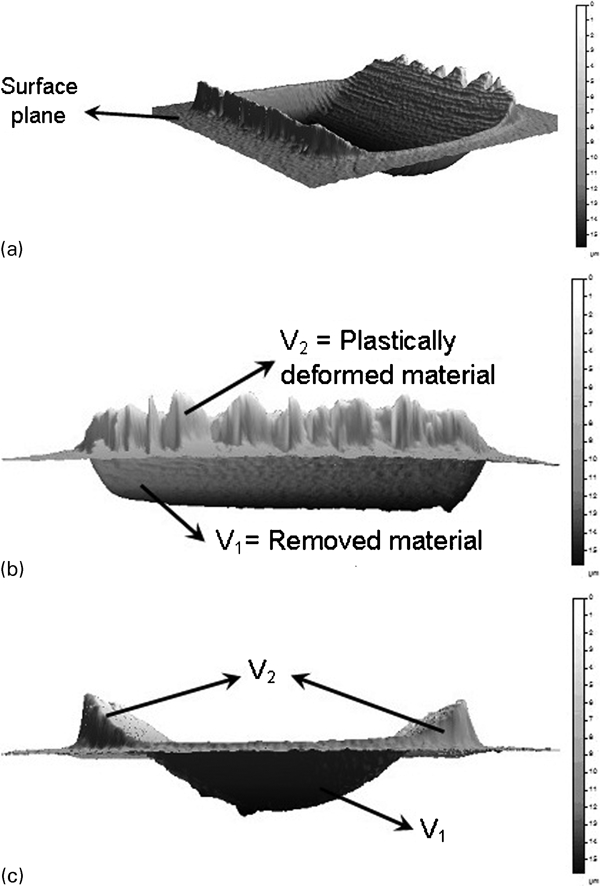
Three-dimensional optical profiles and wear volumes: a three-dimensional view; b longitudinal section; c cross-section
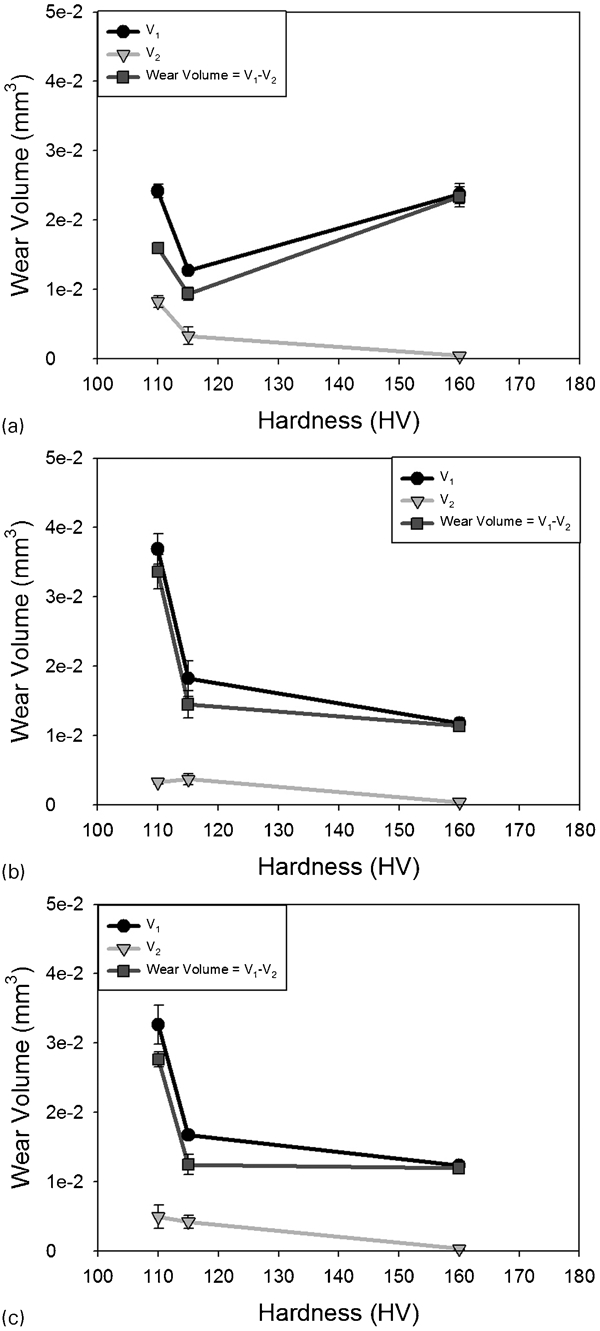
Wear volumes versus hardness: a PGDO; b PGDO+1%L102; c PGDO+1%LNTf102
When the aluminium alloys are lubricated with the base oil, the minimum values of wear volume (V1 and V1–V2) are obtained for Al2011 with a hardness of 115 HV (Fig. 4a). However, when a 1% of L102 (Fig. 4b) or LNTf102 (Fig. 4c) is added to PGDO, the wear volume values decrease as hardness increases.
Wear tracks for PGDO on aluminium discs are shown in Fig. 5. No wear debris particles are observed for any of the lubricants under the sliding conditions used in this work. Different wear mechanisms can be observed for each material depending on its hardness value. Figure 5 shows very limited plastically deformed material over the edges of the wear track for Al2011 (Fig. 5a), and the absence of plastic deformation for Al7075 (Fig. 5c). The softer alloy Al6061 clearly shows the presence of plastically deformed material accumulated over the edges of the wear track (Fig. 5b).
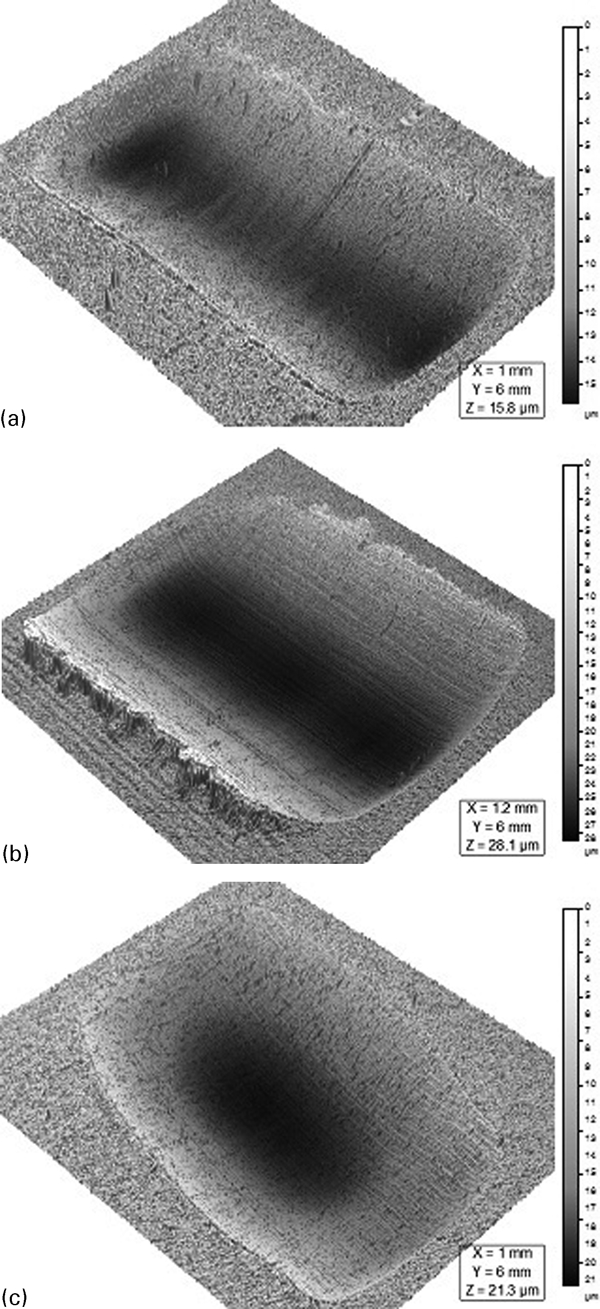
Three-dimensional profiles of wear tracks after lubrication with PGDO: a Al2011; b Al6061; c Al7075
Values of a wear index can be calculated according to equation (1)

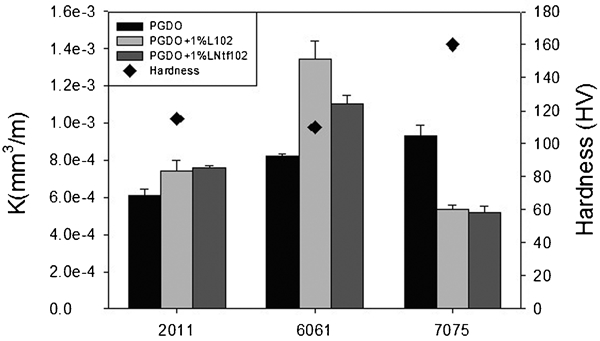
Figure 6 shows the mean values of the wear rates for the three lubricants and the three aluminium alloys, as a function of hardness.
Mean wear rates
The base oil PGDO gives the highest wear rate for the hardest material, the Al7075 alloy, with a wear rate order of Al7075>Al6061>Al2011, independent of hardness values. This is in agreement with the variation of friction coefficients (Table 3). In contrast, both PGDO+IL lubricants show wear rate orders in agreement with hardness values: Al6061>Al2011>Al7075. The addition of the ILs is not able to reduce the wear rate for the softer Al2011 and Al6061 alloys, with respect to the base oil. In contrast, when Al7075 is lubricated with PGDO+1%IL, the wear rates show a sharp reduction of more than 40%, to reach the lowest values of all tests, with wear index values (equation (1)) of −0·43 for L102 and −0·44 for LNTf102.
In all cases, wear tracks show a relatively smooth appearance. Figure 7a shows the area, inside the wear tracks, which has been selected for surface roughness Sa measurements. The results are shown in Fig. 7b. Al2011 and Al6061, with similar hardness values, show very similar results for the three lubricants, with a roughness order of (PGDO+L102) >PGDO>(PGDO+LNTf102). Al7075 shows the highest surface roughness values for all three lubricants. Interestingly, the presence of the IL additives reduces the roughness value for Al7075 in a similar proportion (∼40%) to that of wear rates (Fig. 6). These results suggest that, for Al7075, the presence of the IL additives reduces not only adhesive wear but also abrasive wear.
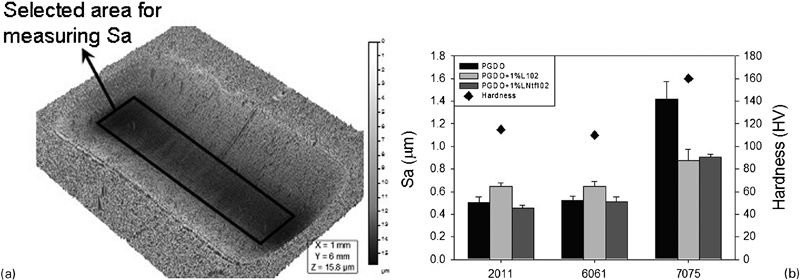
a area selection for measuring surface roughness Sa and b average surface roughness inside wear tracks
The surface damage due to abrasion inside the wear tracks have been studied by SEM and EDS. Figure 8 compares the wear tracks on Al2011 (Fig. 8a), Al6061 (Fig. 8b) and Al7075 (Fig. 8c) when PGDO+LNTf102 is used. In agreement with the roughness variation (Fig. 7), the most severe abrasion damage is observed for Al7075. The EDS analyses for Al2011 and Al6061 (Fig. 8a and b) show the composition of the respective alloys, while some oxide layers still remain inside the wear track of Al7075 (Fig. 8c).
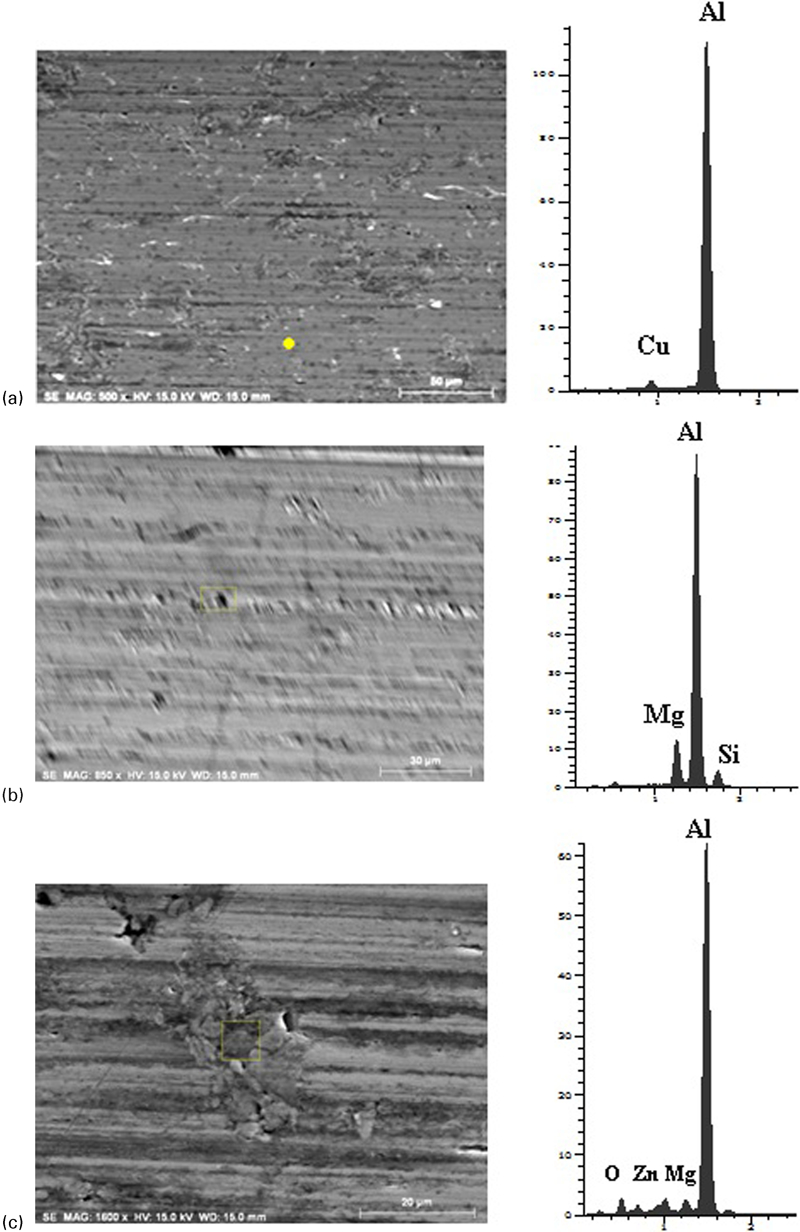
Images (SEM) and EDS spectra of wear tracks after lubrication with PGDO+LNTf102: a Al2011; b Al6061; c Al7075
In steel–steel contacts, the improved friction and wear results for the base oil+IL blends has been related to the boundary film formation on the worn surfaces due to the reactivity of the anion with the steel surfaces.15 Boundary lubrication films formed on the steel worn surface, composed of metal fluorides, organic fluorides, phosphorus containing organic compounds, and nitrides, result in excellent friction reduction and antiwear performance.16
Previous results have shown that Al7075 and Al6061 alloys under erosion–corrosion conditions with L102 form the corrosion product aluminium hydroxyfluoride.24 In the present study, the absence of tribolayers containing fluorine or sulphur inside the wear tracks (Fig. 8) shows that, in contrast with the results observed for neat IL lubricants no extensive tribochemical surface interactions between the ILs and the alloys have taken place, due to the low IL proportion present in the lubricant.
The reduction of adhesive wear with the increase in the hardness of the aluminium alloys is confirmed by the observation of the wear scars and transfer layers on the steel balls (Fig. 9). For PGDO+LNTf102, the area of the wear scar on the steel ball after sliding against Al6061 (Fig. 9a) is larger than that for Al7075 (Fig. 9b), and its geometry corresponds to the plastic deformation observed on the wear track (Fig. 5b).
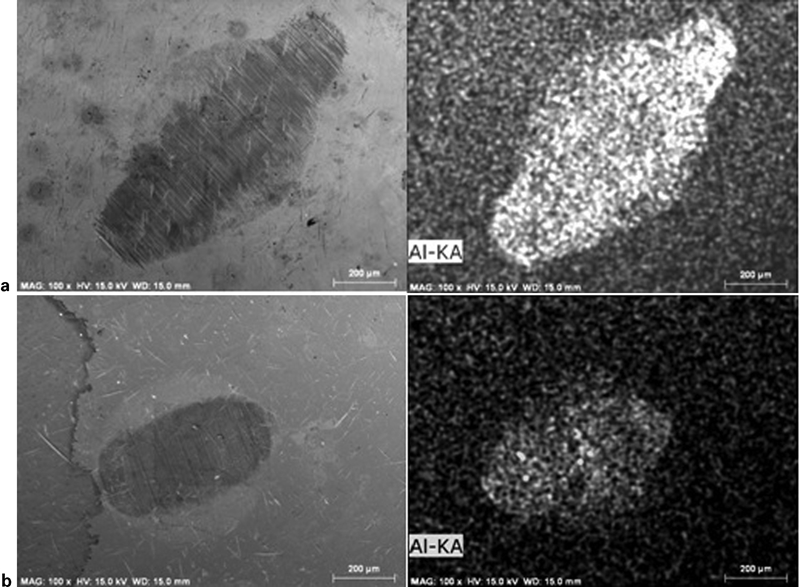
Wear scars and transfer layer on steel balls after lubrication with PGDO+1%LNTf102: a Al6061; b Al7075
The correlation between wear and hardness observed for the additivated oils but not for the base oil can be attributed to the interaction between the ionic liquid molecules and the surface layer on Al7075.25 This alloy is the hardest and more corrosion resistant of the three aluminium alloys studied here.24 Fig. 8a and b shows that the oxide layers have been completely removed from Al2011 and Al6061 surfaces. Only Al7075 (Fig. 8c) retains some areas within the wear track still covered by oxide. This is in agreement with a less abrasive wear mechanism in the presence of the IL additives. In contrast, the base oil is not able to reduce this abrasive component, as seen by the parallel grooves inside the wear track in Fig. 5c.
Conclusion
Two room temperature ionic liquids with the same 1-ethyl-3-methylimidazolium cation and tetrafluoroborate or bis(trifluoromethylsufonyl)imide anions have been used as 1 wt-% additives of the synthetic oil propylene glycol dioleate. Three aluminium alloys (Al2011, Al6061 and Al7075) with different hardness and composition have been studied under reciprocating sliding against steel.
The additives are unable to reduce the friction coefficients found for the base oil, but reduce the wear rate of the Al7075 alloy in more than 40% with respect to the base oil.
The wear rates of the aluminium alloys in the presence of the ionic liquid additives are proportional to their hardness values.
Surface topography and wear volume measurements by three-dimensional profilometry show that the accumulation of plastically deformed material over the edges of the wear tracks is proportional to hardness, being maximum for Al6061 and negligible in the case of Al7075.
The degree of plastic deformation on the wear tracks is in agreement with the size and geometry of the wear scars on the steel balls and with the aluminium transfer layers on the steel surface.
Surface roughness inside the wear tracks is similar for Al2011 and Al6061 and higher for Al7075, with the highest hardness. The higher roughness on Al7075 is related to a more abrasive wear mechanism due to its limited plastic deformation. The addition of the ionic liquids also reduces the surface roughness of Al7075 with respect to the base oil, in a similar proportion to that of the wear rates. These results show that the ionic liquid additives reduce both adhesive and abrasive wear for Al7075.
The tribological performance of the ionic liquid additives with the same cation is very similar. In this case, the contribution of the different anions is not relevant due to the absence of the tribochemical reactions which are observed when they are used as neat lubricants.
Footnotes
Acknowledgements
The authors wish to thank the financial support of the Spanish Ministerio de Economía y Competitividad (MINECO) (grant no. MAT2011-23162).
This paper is part of a special issue on Enabling and Emerging Lubrication Technologies