







Abstract
Impurities or wear particles are almost impossible to avoid during powder lubrication. This condition causes three-body contact with rough surfaces in the condition of mixed in large particles. The mechanical properties of large particles in the process of powder lubrication are analysed in this study by combining the caulking effect, covering effect and three-body elastic contact model. The relationship and influencing factor between load and the contact area and the separation between the two surfaces in the presence of a third body are determined. Furthermore, the impact of large particles on the lubricating effect is analysed. Experiments are conducted to observe the destruction of the powder layer of friction, the impact of large particles and specific forms of damage.
Notation
test specimen elastic modulus
general elastic modulus of the test specimen
P ratio
asperity radius
contact area
load of total, caulking effect and covering effect
asperity number
elastic modulus of lubricants
general elastic modulus

function of asperity's peak height

function of asperity's peak height with covering effect
separation between test specimens
probability factor of the combined effect
general elastic modulus of the top sample and lubricants
general elastic modulus of the bottom sample and lubricants
radius of large particles
load of top and bottom sample
contact area of the first and third bodies
standard deviation
separation from the centre of the particle to surface 2
compressed length of the test specimen
Introduction
The actual contact surface of engineering or mechanical production is not absolutely smooth. Real contact involves the touching of surface asperities. In fact, the real contact is always three-body contact 1 because of the presence of wear, solid lubricant and abrasive particles. Three-body contact is a common contact mode of tribology. The study of the organisational characteristics of the third body and the role of the third body in the contact process is an important field of modern tribology research. 2
The major mathematical models of rough surface contact include Hertz elastic, 3 statistical and fractal contact models. G–W model 4 and G–T model 5 are typical types of statistical model. These two models analyse contact, force, deformation and other issues on rough surface contact based on statistical methods. Majumdar and Bhushan 6 proposed the contact model based on fractal geometry.
Three-body contact behaviour directly affects friction, wear, sealing, lubrication and heat transfer and has always been an important topic in tribology. The state of rough surface contact is a very complex issue. Existing methods that involve simplifying contact conditions have been utilised in meaningful studies. However, owing to the complexity and time variability of the contact condition, current research work and achievements remain limited. Heshmat 7 established a semi-empirical model through hydrodynamics method to predict the movement of third-body powder and features. Aiming to determine the role of shear extrusion and the effect of factors, Wei et al.8,9 performed granular media simulations, experiments and analyses. Fengbi and Youbo 10 established the three-body elastic model and three-body plastic model by combining knowledge of probability and statistics. Based on these two models, the researcher analysed the relationship among load, plastic deformation, third particle distribution and surface topography. Avcu et al. 11 studied the solid particle erosion behaviour of Ti6Al4V alloy and the relationship between solid particle behaviour and morphology. Kabir et al.12,13 first introduced the explicit FEM approach for granular modelling. In these works, the explicit FEM method (using LS-DYNA software) was applied to modelling parallel shear cells where the top wall remained stationary, while the rough bottom wall moved at a fixed velocity. Heshmat developed a rheological model for powder lubricants, which related the shear rate (du/dy) of the powder to an odd fifth-order function of the shear stress τ. 14 Powder lubrication or layered shearing was shown to only occur when the film is sheared with a stress between the powder's shear based yield strength τ0 and its limiting shear stress τl. Similar to the pellet on disc with slider tribometer developed by Heshmat, Higgs and Wornyoh developed a tribometer set-up to study thin powder transfer films from compacted powder pellets. 15 In wear tests, MoS2 pellets were sheared against the surface of the rotating titanium carbide (TiC) disc forming a transfer film, which was then depleted by the downstream loaded slider pad. The resulting friction coefficient between the slider and disc was a function of the amount of lubricant that remained on the disc.
The development of solid lubricants in recent years has made the three-body contact problem even more important. Solid lubricants have the following advantages.
Solid lubricants can be applied under special conditions of high temperature, high vacuum, strong radiation, dust, moisture, water and other harsh environments. Solid lubricants can be used when grease does not work. Solid lubricants are lightweight, small and easy to transport unlike liquid lubricants and grease that need to be sealed. Solid lubricants change minimally over time and reduce workload maintenance and costs.
Powder layer destruction and the technology of adding solid lubricants are the two main factors that hinder the widespread use of solid lubricants. Problems on contact conditions, mechanical properties, and friction and wear under the conditions of solid lubricant use must be resolved. In the actual production process, powder lubricants are mixed inevitably with a small amount of particulate matter. In reality, the contact process also involves mixing in a relatively large particulate matter. This condition represents the practical significance of the study of the impact of large particles on powder lubrication. The present study presents an analysis of the mechanical properties of particles in the contact process and the effect of large particles on powder lubrication through three steps: theoretical research, analysis and experimental verification.
Theoretical analysis
Rough surface contact
The G–W model is the oldest statistical model of rough surface contact. Greenwood and Williamson established this model under the condition of contact between a rough and a smooth surface. This model is a hybrid contact model of elastic and elastic–plastic. They assumed the following: (i) many asperities exist on the contact surface, (ii) the distribution of the asperities’ height approximates Gaussian distribution, (iii) all the asperities are rotating parabolic at least on the peak and have the same radius of curvature, (iv) asperity height variation is random, (v) the deformation of asperities is independent in the contact process, and (vi) asperities exhibit no large deformation. With the G–W model, the relationship between load and contact area and the separation between the two surfaces can be obtained as follows:
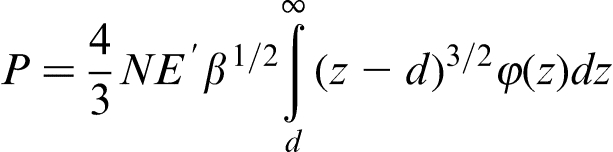
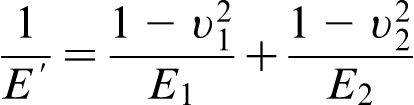
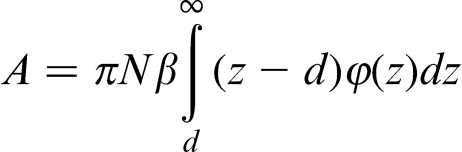
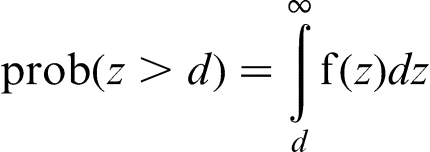
 is the function of the asperity's peak height.
Rough surface contact with powder lubrication: Caulking and covering effects
The effect of the third body on surface topography was determined based on the G–W model. The actual contact status of the third body was observed, and the caulking and covering effect models were set up. These effect models facilitate the transformation from rough surface contact to three-body contact of rough surfaces. A new method was developed to study the three-body contact problem and clarify the position and role of the third body in the contact. The relationship and influence factor between load and the contact area as well as the separation between the first two bodies in the presence of a third body were determined. The effect and function of powder were obtained based on caulking and covering effects. Caulking and covering effects enhance touch performance. Powder lubrication increases the range of elastic deformation and improves the capability of the bearing. Therefore, the use of elastic mechanics is effective for powder lubrication. Based on the caulking and covering effects, the relationship between load and the contact area and the separation between the two surfaces during powder lubrication can be determined.
Caulking effect: Covering effect: Combined effect:

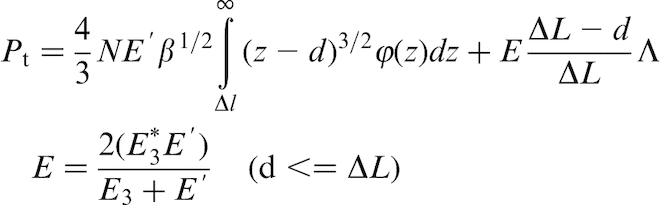
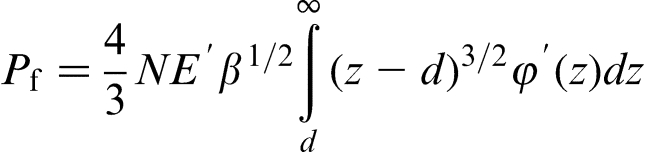

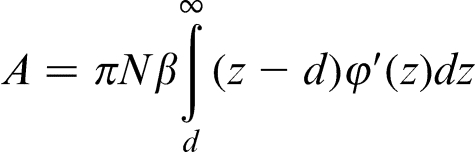
 , using Hooke's law. E represents mixing elastic modulus of the third body and the first body. Further optimisation equation requires precise experimental data. Pt is the load in the condition of caulking effect, and Pf is the load in the condition of covering effect. Equations (4) and %(5) represent two stages of the contact process. Equation (4) shows the combined effect of covering and caulking through parameter λ.
Smooth surface contact with large particles: Three-body elastic model
Fengbi analysed the mechanical properties of large particles through the use of the classical theory of elasticity. The analysis was based on the following assumptions: (i) particles are spheres, (ii) particle size is a random variable, and (iii) surfaces 1 and 2 are smooth and flat. Through the three-body elastic model, the relationship between load and the contact area and the separation between the first bodies in the condition of powder lubrication were obtained (Figure 1).




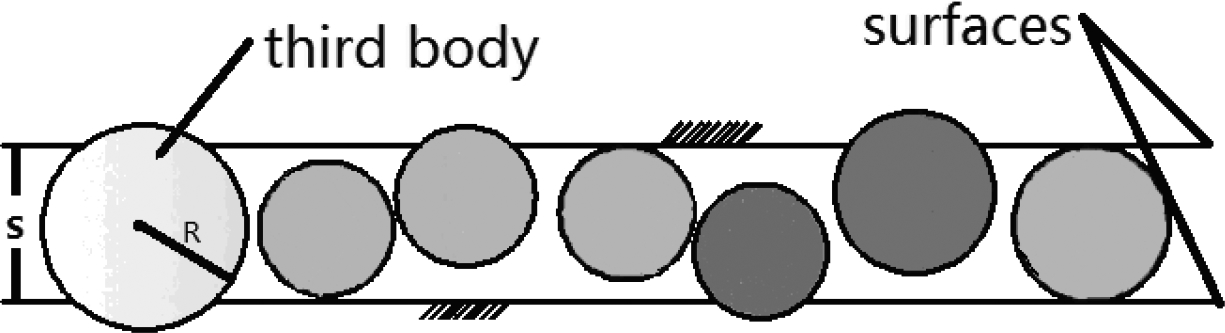
Three-body elastic model
Lubricating powder mixed with large particles
Wear particles generated in the contact process have sizes. Their diameter and hardness are generally greater than those of solid lubricants. Such large particles can exacerbate contact surface damage in the contact process. With the classical theory of elasticity and the effect of powder lubrication on three-body contact, the mechanical properties of the particles on the surface and wear particles can be analysed in three-body contact between rough surfaces.
The classical model of rough surface contact (G–W model) analyzes the asperity's contact force, deformation and other issues. Thus, the covering and caulking effects optimise the model. The new model can analyse the mechanical properties of the contact surface in condition of solid lubrication. For the large particulate mixed in the lubricant powder, the three-body elastic model can be utilised to analyse its mechanical properties. Through the steps mentioned above, the effect of large particles on powder lubrication can be determined. (Figure 2).
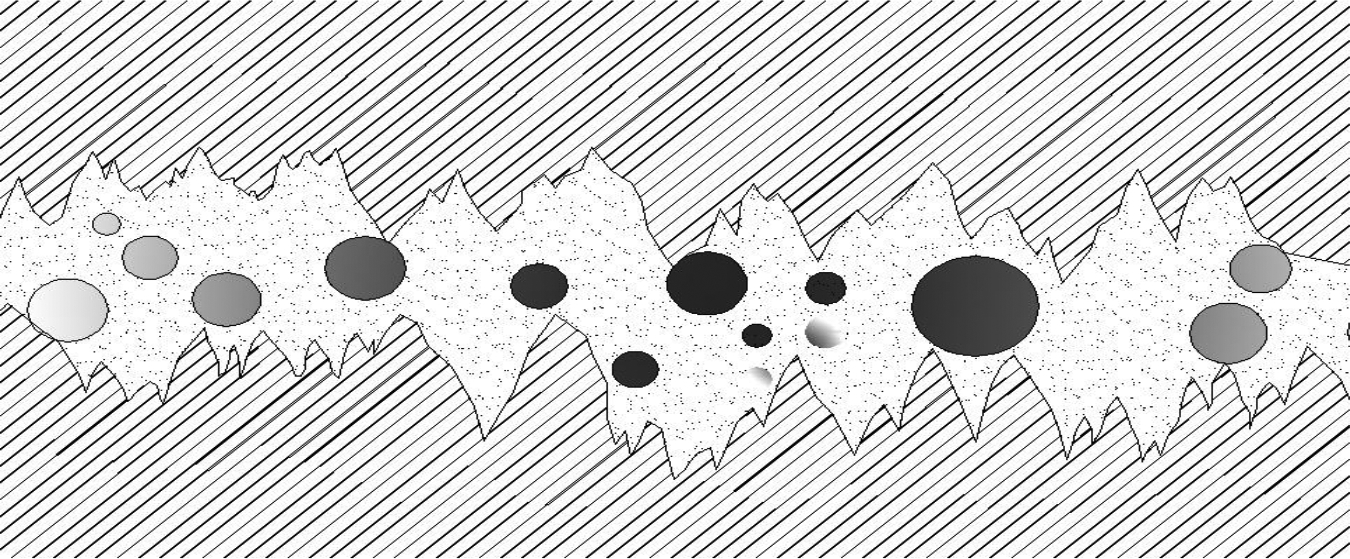
Large particles’ model
The three-body elastic model assumes that particle size obeys a folding normal distribution.

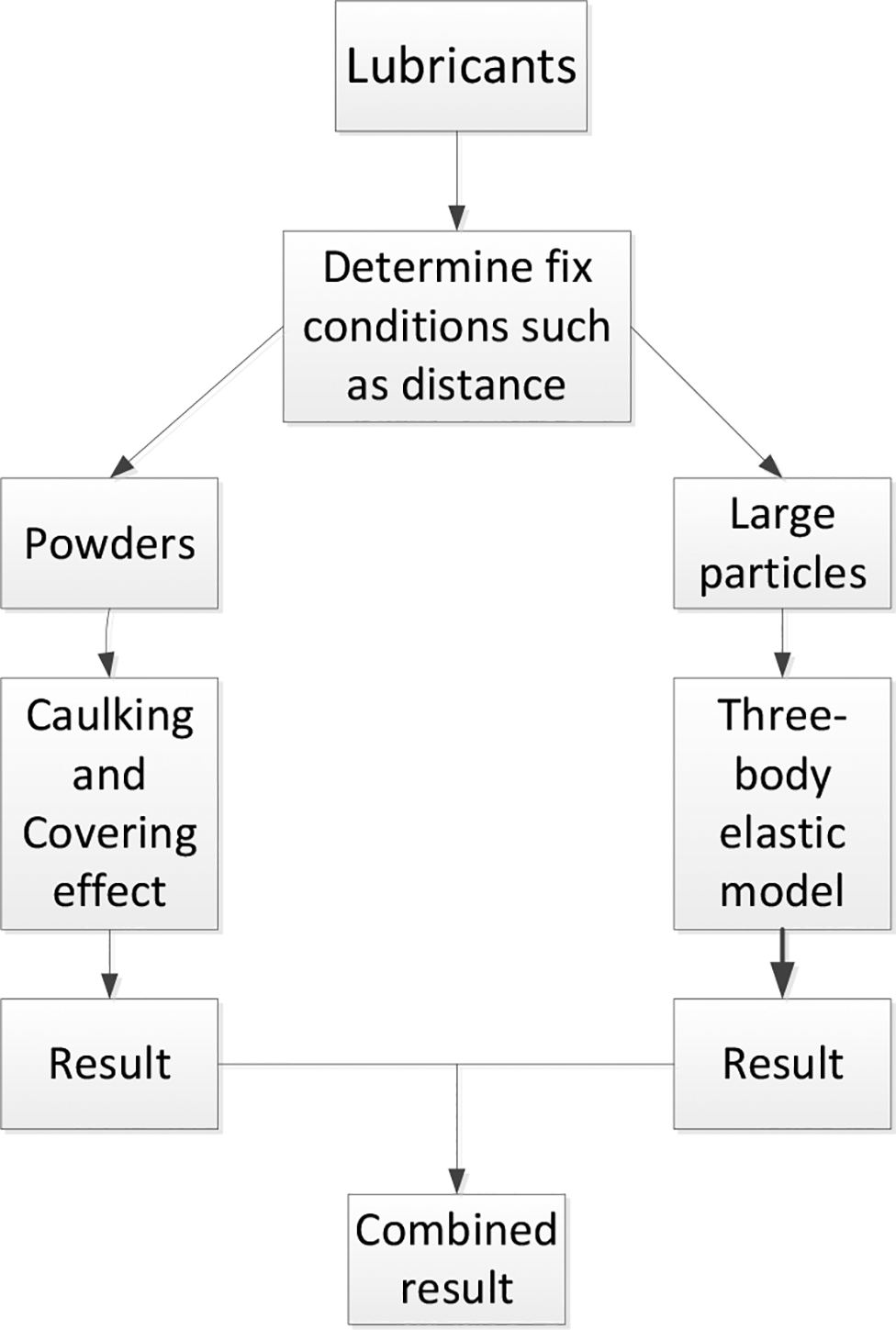
Calculation flowchart. First, common parameter values was identified. Then, relationship between load and contact area and separation between two surfaces was calculated based on caulking and covering effects and three-body elastic model. Finally, two calculations were combined based on volume fraction of large particle.
Results
The volume fractions of large particles are 5 and 10% in two cases. The other parameter values are as follows:
 ,
,
 ,
,
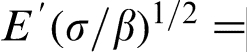
 .
.
Factor of large particle's content
The relationship between the curve and the load when the contents of large particles are 0, 5 and 10% is shown in Fig. 4. The distance between surfaces (separation) increases with the increase in the content of large particles at similar loads. Large particles bear larger loads than the same volume of powder. This situation increases the separation of the surfaces. Load is concentrated in the area where large particles exist. Load distribution on the contact surface is uneven. The covering and caulking effects show that the role of the lubricating powder is to enhance the carrying capacity of the contact surface and make load distribution uniform in the contact process. The presence of large particles diminishes the beneficial effects of the lubricating powder.
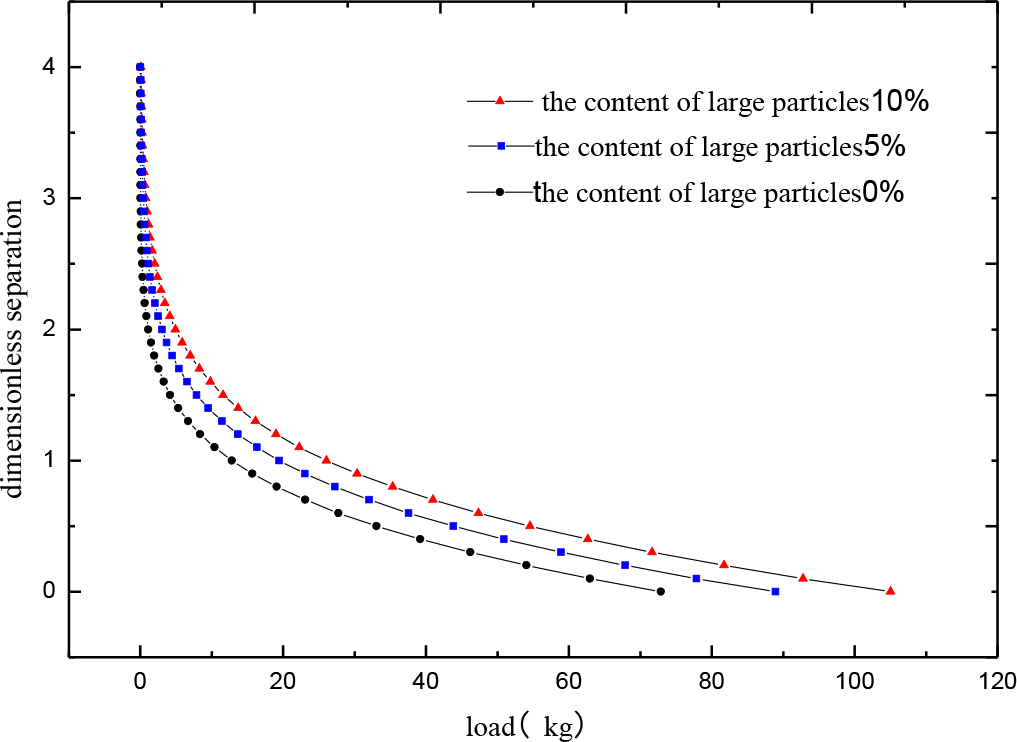
Relationship between separation and load at different contents
The relationship between the contact area and load when the contents of large particles are 0, 5 and 10% is shown in Fig. 5. The powder lubrication mixed in the large particles has a small contact area in the contact process at a similar load. This condition means that the actual contact area bears a large load per unit area. The contact surface bears a large load even when the total load is small. Figure 5 shows that the separation between the first two bodies is large when the powder lubrication is mixed in the large particles. The effects of large particles under the condition of similar load include the following: (i) large particles bear large loads; (ii) large separation between the first two bodies; (iii) the load per unit area increases; and (iv) load distribution is uneven.
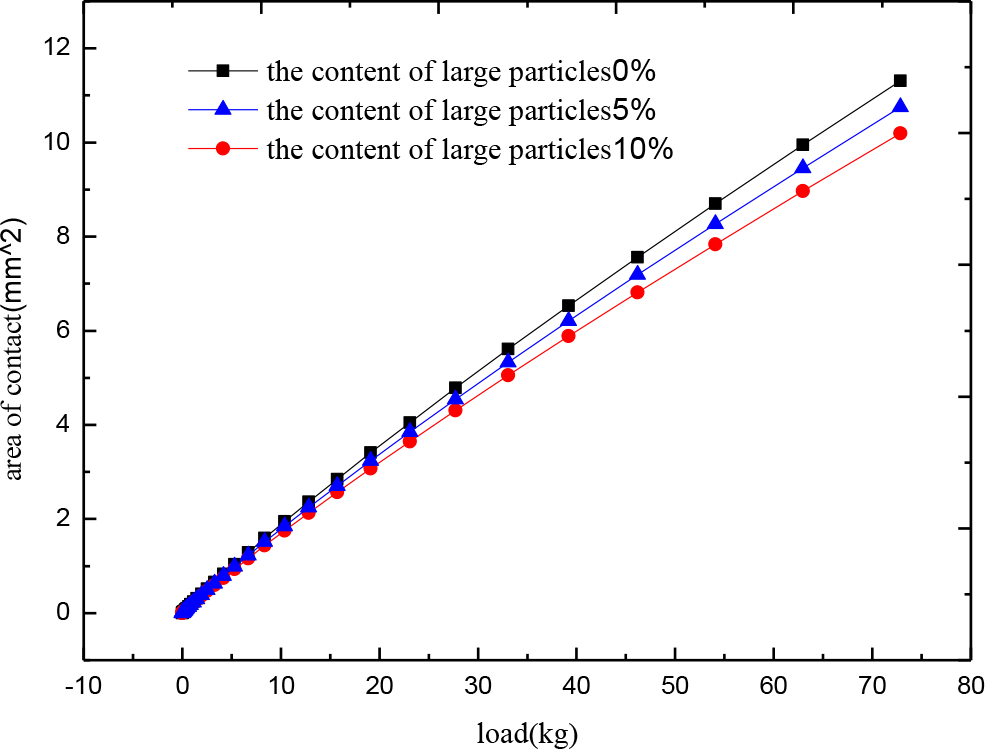
Relationship between area of contact and load
The above conditions can generate strong chains near the large particles. Thus, the contact surface is damaged.
Factor of particle size
Figure 6 shows the relationship between load and the separation between the contact surfaces in the condition of different particle size distributions. The separation between the contact surfaces increases when the particle size increases. Thus, the effect of large particles increases with the increase in particle size.
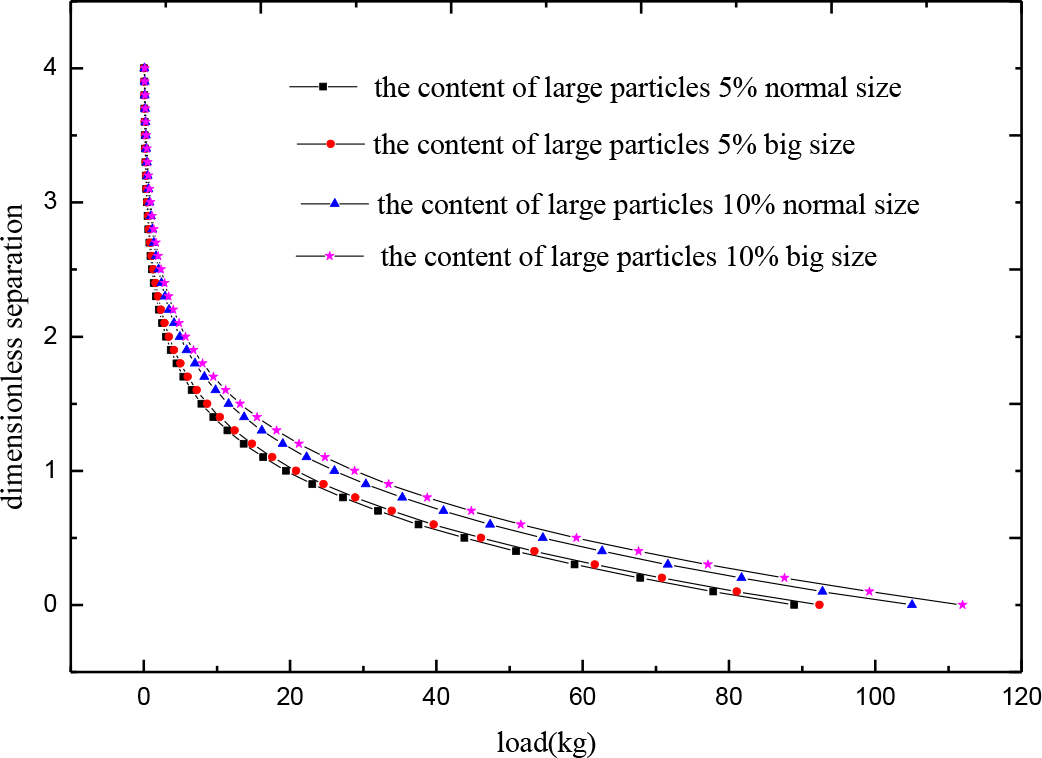
Relationship between separation and load at different distributions
Experiment
Loose powder was utilised to lubricate the tribopair with a replenishing mechanism. 16 The contact and damage behaviour of the powder layer during powder lubrication were analysed. The typical life cycle of a powder layer includes the full powder layer, partial detachment, serious detachment and complete destruction, which can be concluded from the powder layer images. The carbon and copper contents remaining on the surface were analysed by scanning electron microscopy and energy dispersive X-ray spectroscopy. Layer blistering, partial detachment, delamination and scuffing, which represent the different forms of damage and deterioration grades, were observed with an optical microscope.
Figure 7 shows several typical forms of partial detachment. Figure 7a presents a microscopic image of pitting detachment. A few pits are scattered in a small area. The obvious feature of the plough detachment (Fig. 7b), which is another form of partial detachment, is the direction of the groove. This direction coincides with the sliding direction of the friction track. The mechanism for this phenomenon is that some hard particles, either introduced from the outside or resulting from the aggregation of loose powder under the effect of the rotation of the top sample, plow the powder layer. Figure 7c shows a large partial detachment of the powder layer at the margin of the friction ring. This finding indicates that the powder layer detached from the bottom surface and blistering may have formed before detachment.
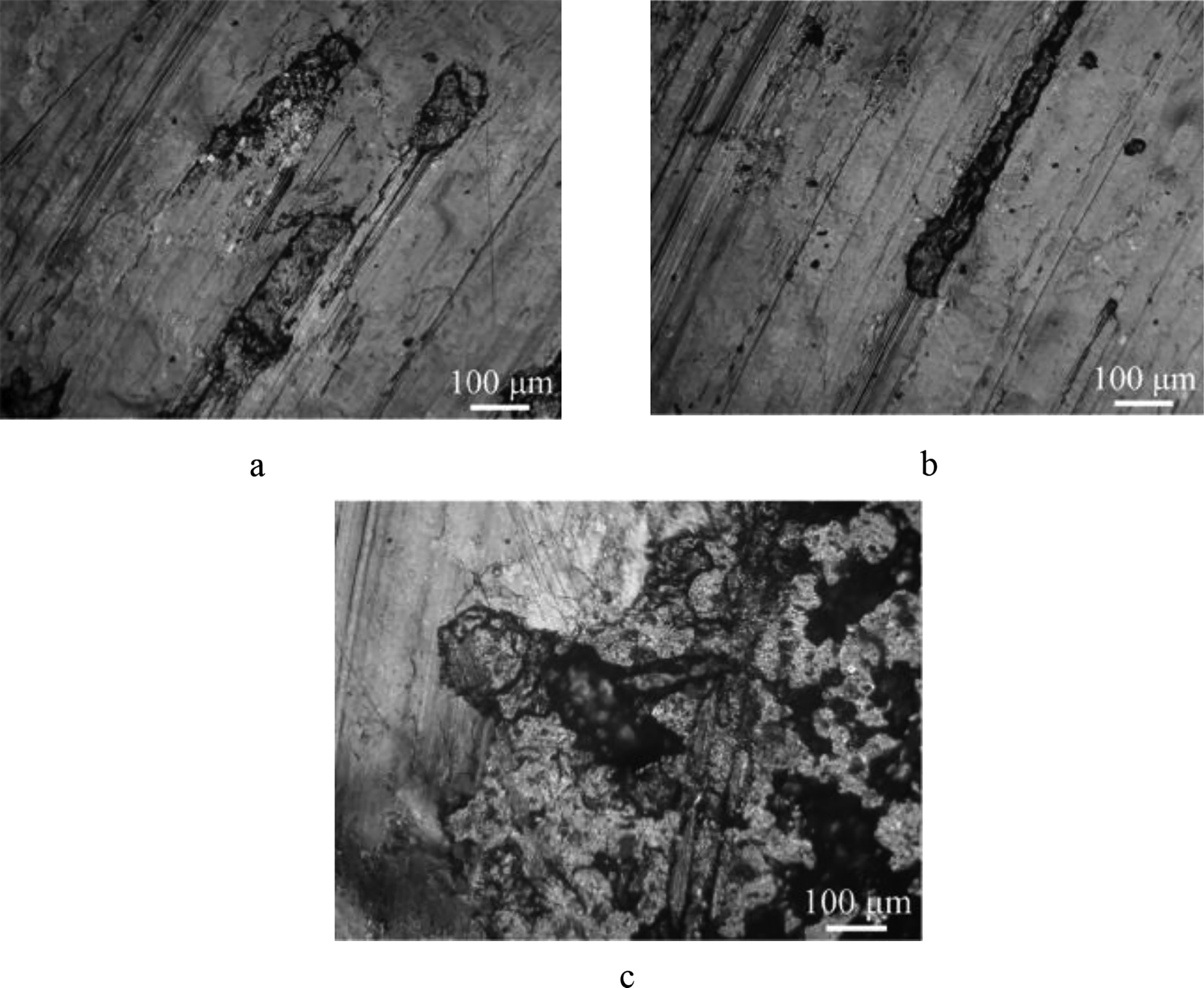
Partial detachment of powder layer: a pitting detachment; b plowing detachment; c partial detachment at edge
The comparison of theoretical and computational results indicates that large particles caused the several forms of damage.
At different stages of the experiment, I made a careful observation of the contact surface. Figure 8 shows a typical interaction of caulking and covering effect. There are obvious caulking area and also covering area on the contact surface. This type of figure is very common in the latter of friction and wear.
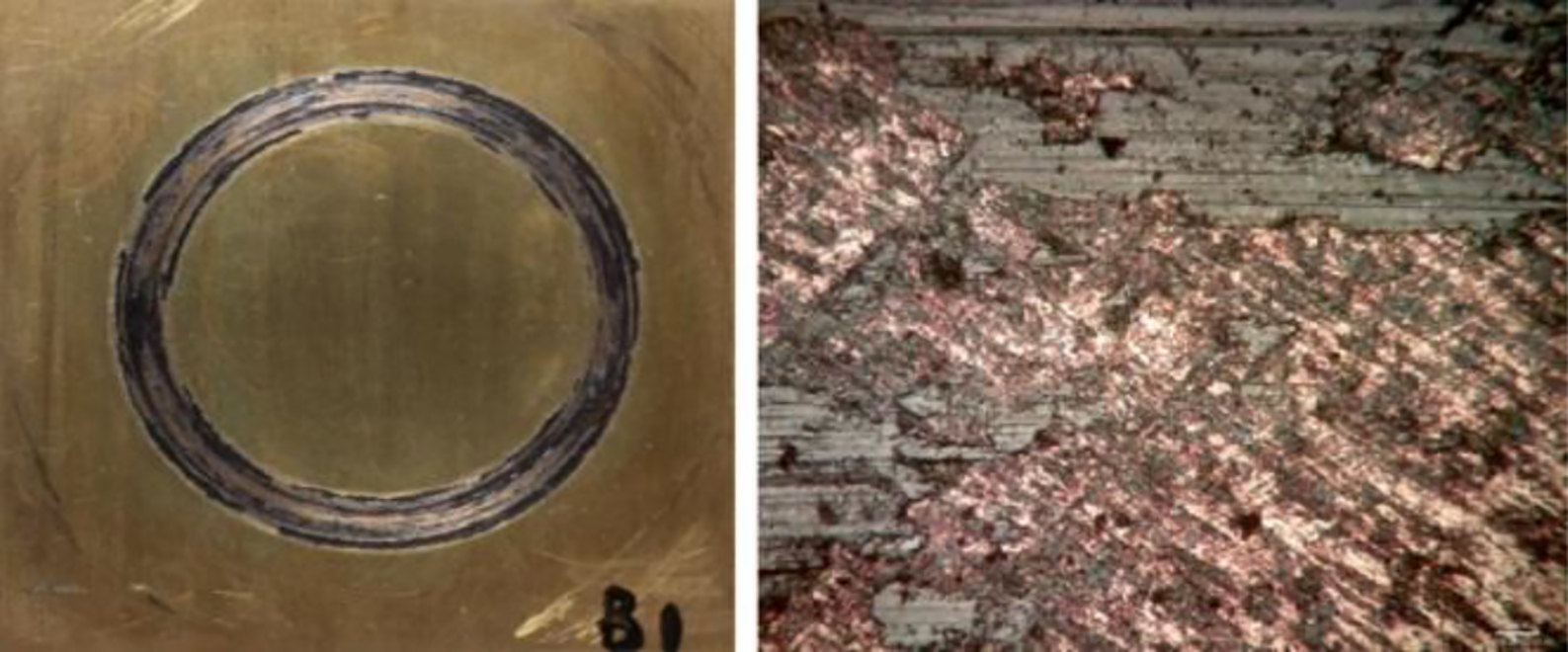
Interaction effect of caulking and covering effect
Figure 9 shows two representative situations in the early and late process of the friction. (i) The early stage of the surface is covered by powder. At this time, covering effect dominates. (ii) The powder is substantially taken away by the friction. Powder concentrated on valley and reflected mainly caulking effects.
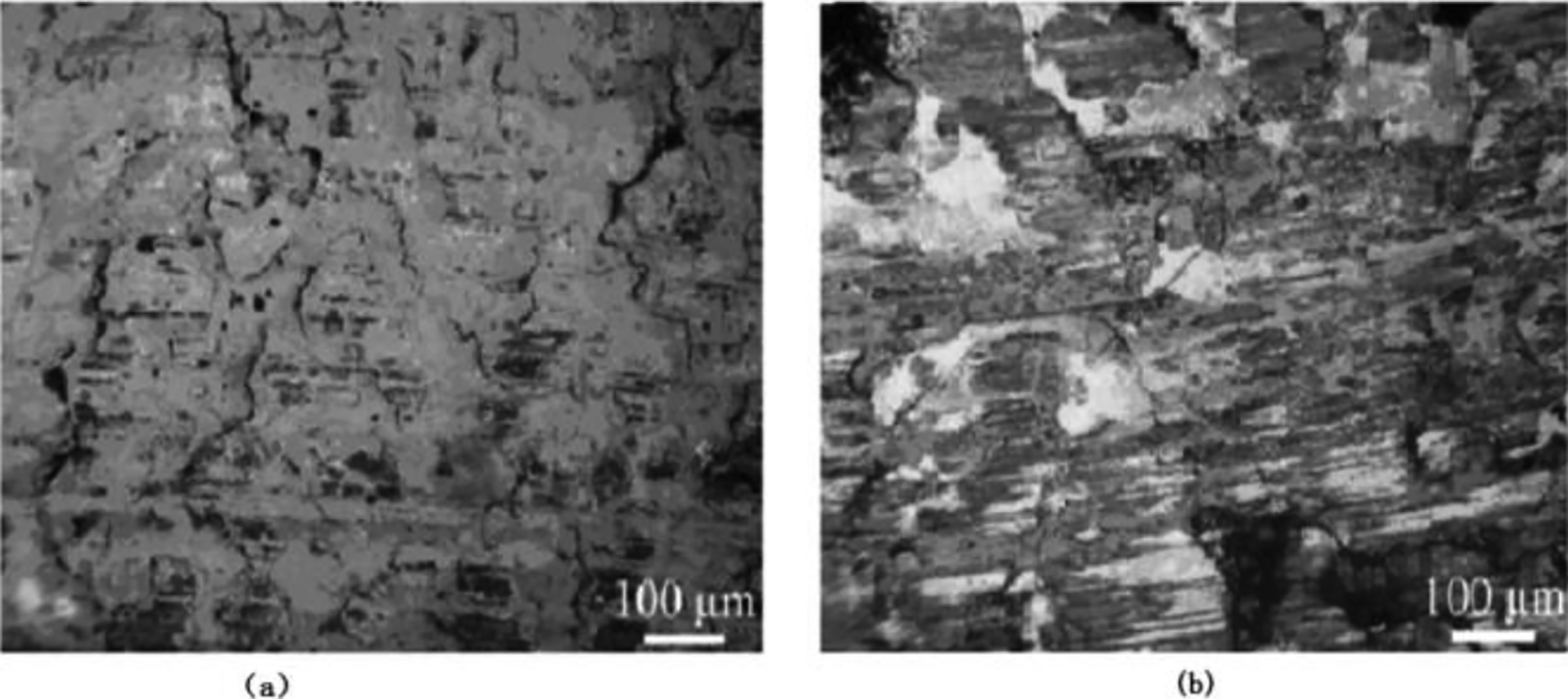
Caulking and covering effect
Conclusion
Large particles have a significant effect on powder lubrication. Analysis of the contact process should fully consider the effect of large particles.
The primary influence of large particles is on the mechanical properties during the contact process. Large particles bear greater load than lubricating powder. This condition leads to uneven load distribution, resulting in the generation of a strong chain. Several different forms of damage on the powder layer are caused by large particles in the friction process.
The effect depends on two factors: number and size of particles. The effect becomes strong with the increase in the number and size of particles.
Acknowledgements
The authors wish to thank the National Natural Science Foundation of China (grant nos 51175136, 51375132 and 51475135) for their financial support. This work was also partly supported by the Anhui Provincial Natural Science Foundation (grant no. 1408085ME93) and the Tribology Science Fund of the State Key Laboratory of Tribology (grant no. SKLTKF13A02).