






Abstract

Wiley-Blackwell, Oxford, 2014
pp. 216, ISBN 978 0 4706 5777 £49.95
When you first open this book, you know that you have in your hands the work of an enthusiast for wood, forestry, and the forest-products industry. I found it slightly ironic that while the author was waxing lyrical about writing the book on a Caribbean island, I was reviewing it, in part, in a tent in Wales in the pouring rain. The fact that I did not burn it to keep warm is in itself a testament to its content, not a perceived lack of calorific value.
After a rapid tour of the global forest resource, the first significant chapter addresses the concept of sustainability. In my view, this is the weakest chapter. It suffers a bit from what I imagine are the authors experiences of trying to promote the genuine sustainable characteristics of most forest products in a world that didn't always see it that way. There is reference to ‘environmentalists’ in inverted commas, ‘treehuggers’, a strange paragraph on why trees should be harvested young, and then a section titled ‘illegal logging’, again in quotation marks. This disputes the core concepts of illegal logging, and either misunderstands the underlying issues or deliberately misrepresents them. It feels a bit like back to the 1990s. No-one these days believes illegal logging is the main cause of deforestation, but also very few people doubt its occurrence is wide-spread in countries with weak governance.
However, after this things improve markedly and rapidly. There is a fairly standard run through of voluntary certification, including both the older voluntary schemes (FSC and PEFC) and FLEGT. As the book progresses, it becomes more advisory, and more of a ‘how-to’ guide, which is what I imagine the bulk of readers want. There is a very good section on legal trading, which provides an excellent account on compliance with EUTR and Government procurement requirements, and similarly high quality advice on due diligence requirements. This ‘how-to’ approach could have been extended to include how to operate a chain of custody system, detailing common systems such as transfer and percentage claim systems, and bringing in ‘controlled wood’, which does not seem to be mentioned.
The next chapter provides a wealth of high quality advice for anyone specifying or procuring wood based products. It should be required reading for architectural and design practitioners. Following on from this are chapters on softwoods and hardwoods. There is not a lot of detail, and what would have added value to the listings is a discussion of risk associated with these species from their common sources. This is not well understood outside the main timber first-placers. The book rounds off with chapters on re-use and energy considerations.
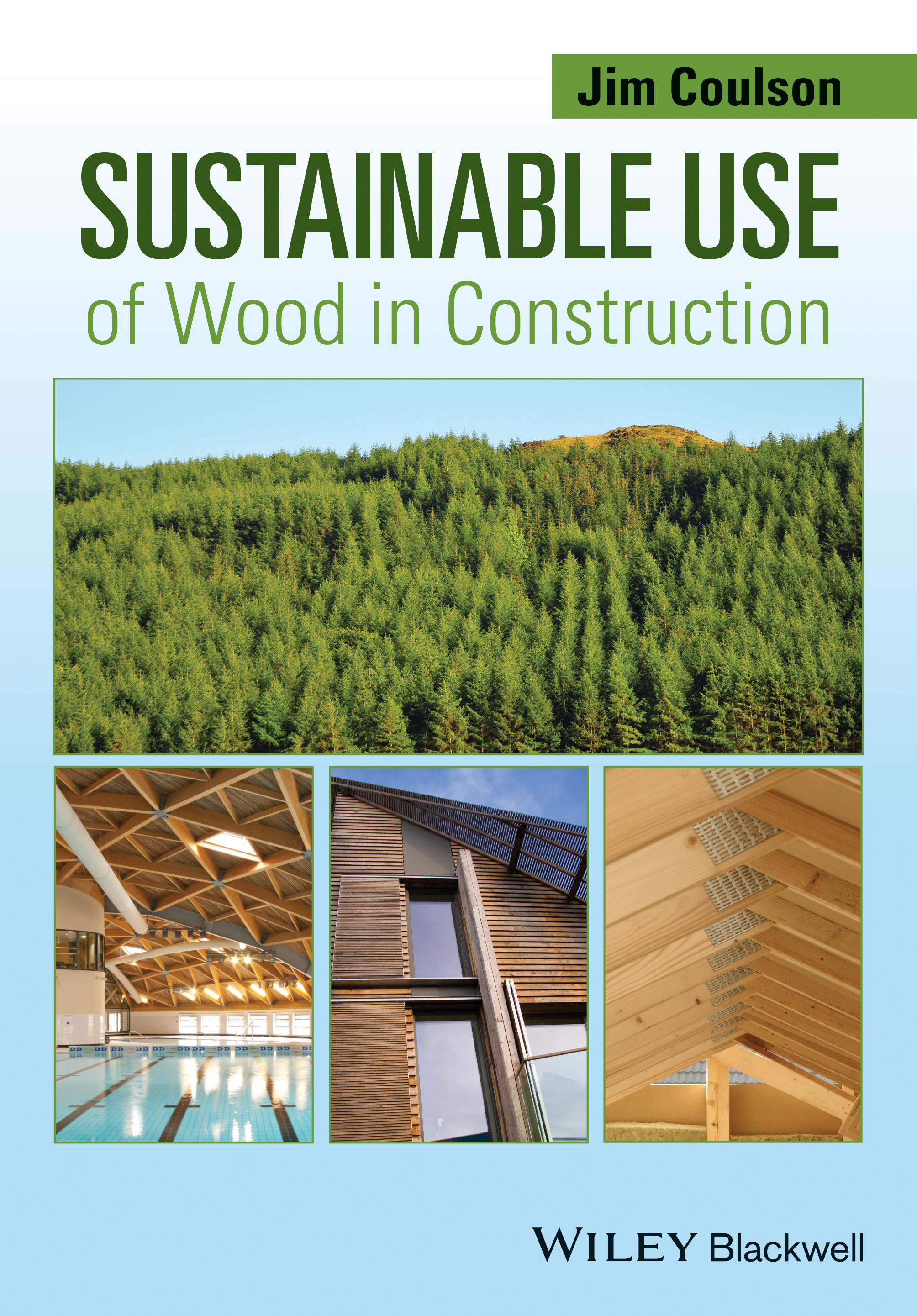
Throughout the book Jim's total enthusiasm for the timber trade, forestry and wood in general shine through. He is such a strong advocate for the industry, and the book is much livelier and entertaining for this (although as I touched on above, the scars from the 1990s still show).
The book does not seem to have been written for a particular audience. Perhaps this is a strength. Parts will be of interest to architects and, more specifically, architectural technicians. Other sections may interest procurement staff, timber importers, merchants, and of course there is plenty to interest students and lecturers here. The issue here is not that the book is too generalist: it is more to do with the multi-faceted nature. For people in this quite diverse audience I would definitely recommend this book for its wide ranging interest, knowledge and advice.
Gavin Jordan PhD, Director of Ligna Ltd and ISOS Certification, specialising in ISO 9001/14001 and forest certification services.