






Abstract

VISUALISATION OF SPATIAL DISTRIBUTION OF MOISTURE CONTENT AND BASIC DENSITY USING A NEAR-INFRA-RED HYPERSPECTRAL IMAGING METHOD IN SUGI (CRYPTOMERIA JAPONICA)
Rapid and cost effective methods for evaluating wood properties are essential to the wood industry. For example automatic scanning of log dimensions and shape have dramatically improved conversion efficiency at sawmills. Similarly, whole tree X-ray tomography has been developed. In this paper, Dr Fujimoto and his team at Tottori University, Japan, show how the technique of near-infrared (NIR) hyperspectral imaging with suitable analytical techniques can predict moisture distribution and basic density. The results demonstrate the potential for development of a novel log sorting method.
Visualisation of spatial distribution of moisture content and basic density using near-infrared hyperspectral imaging method in sugi (Cryptomeria japonica). T. Fujimoto, T. Numa, H. Kobori and S. Tsuchikawa, pp. 44–46

EFFECT OF SURFACE TREATMENT ON THE BONDABILITY OF BIRCH VENEER WITH PF RESIN
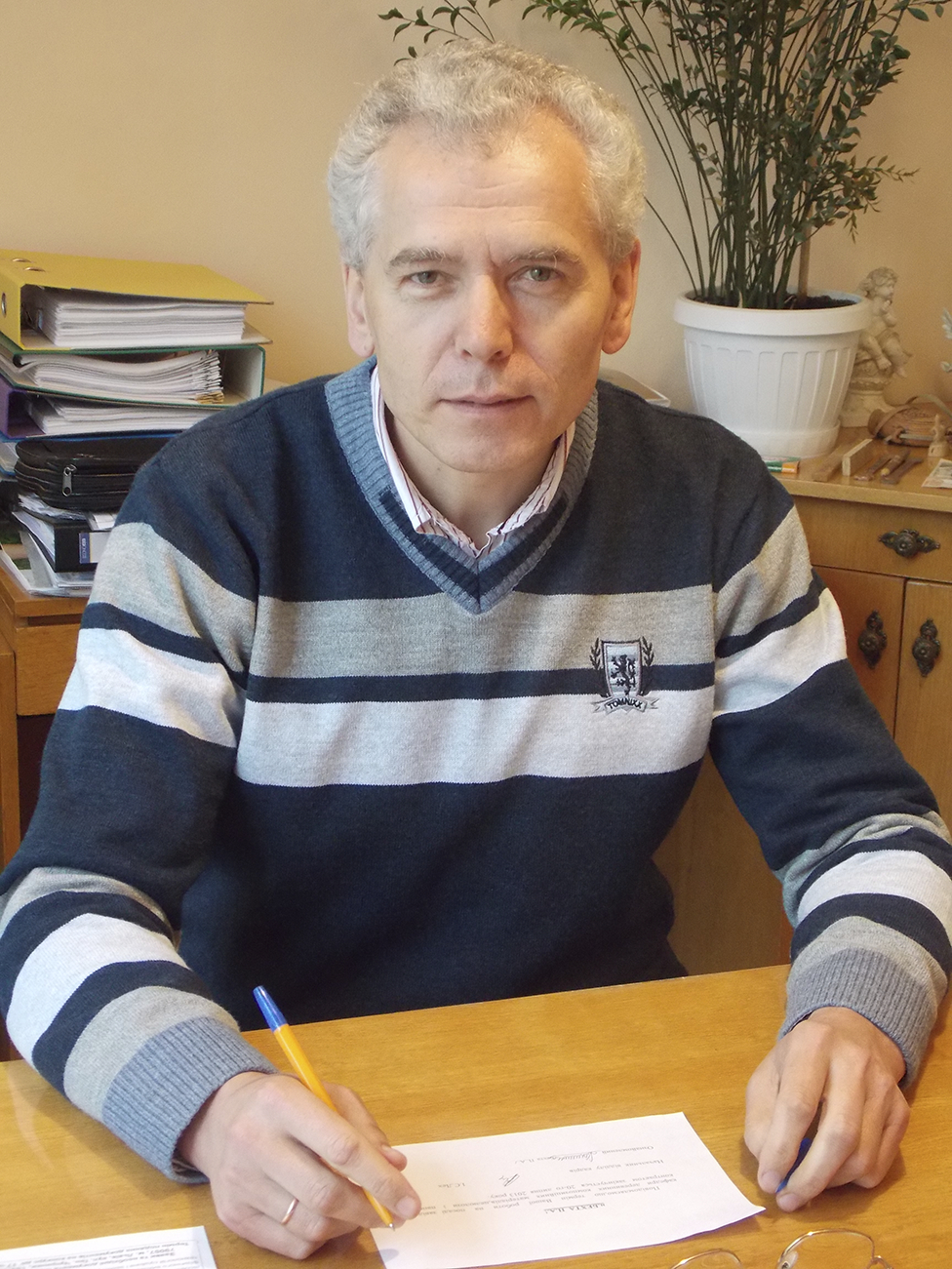
Birch plywood is one of the most important panel products because of its strength properties and quality control. In this paper Dr Pavlo Bekhta at the University of Lviv, Ukraine investigated the application of surface treatments of birch veneers in order to improve bonding during plywood manufacture. Processes investigated were chemical surface treatments and thermo-mechanical densification and combinations of the two processes. Results showed that bonding strength could be improved such that glue spread could be reduced by 33%.
Effect of surface treatment on bondability of birch veneer with PF resin. P. Bekhta and J. Sedliacik, pp. 47–50
VARIABILITY OF THE WATER VAPOUR SORPTION ISOTHERM IN LARCH (LARIX KAEMPFERI KARAMATSU) - EARLYWOOD AND LATEWOOD INFLUENCES
In terms of total area, the UK has one of the largest resources of larch in Europe outside of Russia. Siberian larch is currently much used for cladding of buildings and whilst there is an increased use of UK larch, it is generally an undervalued and under utilised species in the UK. In this paper by Callum Hill working with the Norwegian Landscape Institute, the sorption properties of Larch are investigated. This work was part of a larger project, and sheds light on the influence of earlywood and latewood on the sorption behaviour and whether the location of the wood in the stem has any influence. The investigation is important in understanding wood behaviour such as distortion during drying and the stability of clear coatings on exposed surfaces, to name just two.
Variability in water vapour sorption isotherm in Japanese Larch (Larix kaempferi Lamb.) – earlywood and latewood influences. C. A. S. Hill, J. Ramsay and B. Gardiner, pp. 51–57

EFFECT OF SOME TREATMENTS ON THE EMISSION OF VOLATILE ORGANIC COMPOUNDS (VOCS) FROM CHIPS USED IN PELLET MAKING PROCESSES
Wood pellets are manufactured for the biofuel industry. Volatile organic compounds (VOCs) are emitted during storage of raw materials, manufacture and storage after manufacture. These emissions are usually undesirable for environmental reasons as well as objectionable odour. In this paper Edmone Roffael and his team at the University of Goettingen, Germany, have made a comprehensive evaluation of the effects of certain treatments to the chips used in pellet making processes. Temperature and length of storage are significant factors.
Effect of some treatments on emission of volatile organic compounds (VOC) from chips used in pellets making processes. M. Gabriel, S. Paczkowski, S. Nicke, S. Schütz, C. Behn, R. Kraft and E. Roffael, pp. 58–66

SURFACE DROPLET CONTACT ANGLE AND COLOUR CHARACTERISTICS OF EASTERN COTTONWOOD TREATED WITH NANO-COPPER OXIDE AND EXPOSED TO NATURAL WEATHERING
Nano-copper is a component of many wood preservatives and can function not only as an algaecide, bactericide, fungicide and insecticide, but can also stabilise the colour of wood and retard photodegradation. Ultraviolet light can destroy lignin and make wood more wettable. In this paper Fazel Chehreh at Gorgan University, Iran, investigated the effect of nano-copper oxide on colour changes and loss of contact angle (i.e. increased wettability) after weathering as applied to Eastern Cottonwood.
Surface droplet contact angle and colour characteristics of Eastern Cottonwood treated with nano-copper oxide and exposed to natural weathering. F. Chehreh and M. Mastari Farahani, pp. 67–69
PERFORMANCE OF NORTHEASTERN UNITED STATES WOOD SPECIES TREATED WITH COPPER BASED WOOD PRESERVATIVES: 10 YEAR ABOVE GROUND DECKING EVALUATION
This paper by Stan Lebow at the Forest Products Laboratory, USDA, USA presents an evaluation of ten years of exposure of treated and untreated above-ground decking. Several species were evaluated together with several preservative treatments/methods. Factors considered were mould, decay, warping and checking. The study shows that some species are less suitable for decking than others.
Performance of Northeastern United States wood species treated with copper based preservatives: 10 year above-ground decking evaluation. S. T. Lebow and S. A. Halverson, pp. 70–76

THE INFLUENCE OF FIBRE PREPARATION METHOD AND WOOD SPECIES ON THE VOC EMISSIONS FROM MDF BOARDS
Emission of volatile organic compounds from MDF boards has always been of interest, particularly formaldehyde. However other emissions such as terpenes, aldehydes and acetic acid are significant. In this paper, Edmone Roffael and hi steam at the University of Goettingen, Germany, have investigated the effects of varying the proportions of hardwood and softwood and the methods for preparing the fibre for MDF manufacture, on VOC emissions. The study demonstrates the need for further research particularly as there is increasing use of hardwoods to redress current shortage of wood feedstock.
Influence of fibre preparation method and wood species on the VOC-emissions from MDF boards. M. Gabriel, C. Behn and Edmone Roffael, pp. 77–81

GROWTH CHARACTERISTICS AND WOOD PROPERTIES OF 26 YEAR OLD EUCALYPTUS ALBA PLANTED IN INDONESIA
Eucalyptus alba is distributed in Australia, PNG and eastern Indonesia. It is extensively planted in Malaysia. It has a wide range of applications, from heavy construction to furniture. However, little is known about the properties of the plantation grown resource. Futoshi Ishiguri and his team at Utsonimiya University, Japan have thoroughly investigated the properties of Indonesian plantation grown E. alba. Amongst the results it can be seen that faster growth does not result in lower wood properties.
Growth characteristics and wood properties of 26-year-old Eucalyptus alba planted in Indonesia. I. Wahyudi, F. Ishiguri, K. Makino, J. Tanabe, L. Tan, A. Tuhumury, K. Iizuka and S. Yokota, pp. 82–86
SHAPE STABILITY OF LAMINATED VENEER PRODUCTS – A REVIEW- DEFINING AND ACHIEVING SHAPE STABILITY
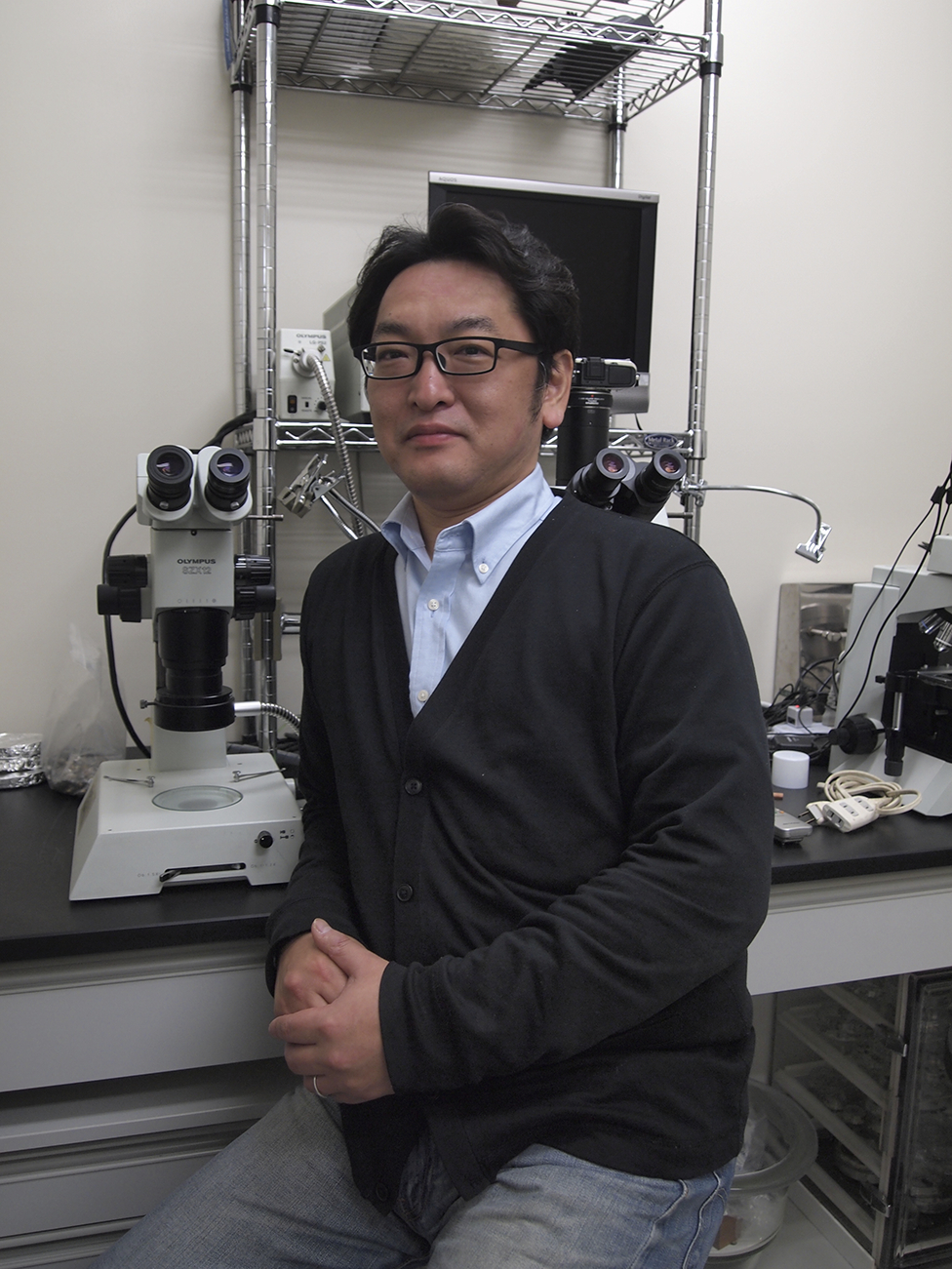
Laminated veneer products (LVP) consist of veneers bonded together with adhesive to form shapes. Deviation from the required shape is problem for manufacturers and customers alike. In this paper, Lars Blomqvist at Linnaeus University, Sweden, reviews the material and process parameters and identifies the important factors influencing shape stability. Fibre orientation is found to have a strong influence particularly when there are changes in moisture content in service. Interestingly the orientation of loose and tight sides of veneers affects stability. Varying moisture content during manufacture and asymetric constructions are also less stable.
Shape stability of laminated veneer products – a review – defining and achieving shape stability. L. Blomqvist, pp. 87–93

Book Review: Sustainable Use of Wood in Construction by Jim Coulson 2014
This new book gives an invaluable explanation of sustainability certification and legislation, as well as advice for anyone specifying or procuring wood based products. It is reviewed by Dr Gavin Jordan, a professional in forest certification services.