







Abstract
The present study was conducted to investigate the influence of heat treatment temperature and duration on the dimensional stability of chir pine (Pinus roxburghii Sarg.) and mango (Mangifera indica L.) wood. For this purpose, wood was heated at different temperatures for periods of 4, 8 and 12 h in an inert atmosphere. Differential responses of both wood species to different parameters, namely, volumetric swelling and shrinkage, water absorption and equilibrium moisture content (EMC) at different relative humidities, were observed. Results revealed that increase of heat treatment temperature in conjunction with time leads to a significant drop in the shrinkage of mango wood, whereas a reverse trend prevailed in chir pine until 210°C for 12 h treatment. Least values of EMC were recorded for chir pine and mango wood treated at 190 and 210°C for 4 h respectively. Further, increase in temperature and/or time of treatment significantly decreased the water absorption capacity of mango wood.
Introduction
Dimensional instability of wood with changing atmospheric conditions and non-durability are major hindrances in its use. Thus, many methods have been developed to enhance properties of wood for efficient utilisation of this valuable resource. Thermal treatment is one of the methods that can be used and is seen as an alternative to costly chemical treatments in wood modification to increase durability and dimensional stability of wood. Various methods of thermal wood modification have been developed, which differ in the medium of heat transfer, type of wood, temperature and time of treatment (Militz 2002). Retification of wood is a method developed in France at the Ecole des Mines de Saint-Etienne. The process consists of slow heating of predried wood in a nitrogen atmosphere with less than 2% oxygen content (Vernois 2001). The treatment temperatures are commonly in the range of 180–220°C (Kamdem et al. 2002).
Heating of wood at lower temperatures (below 100°C) results only in loss of water from the wood, while heating at higher temperatures (usually between 150 and 260°C) causes chemical, physical, mechanical and microstructural changes in wood and thereby production of new modified material. During heat treatment, chemical changes in the wood polymers, mainly depolymerisation of wood polymers, especially hemicelluloses (which are less stable to heat than cellulose and lignin), seem to be the main cause of more durable and dimensionally stable wood according to Hillis (1984). Hygroscopicity of heat treated wood depends upon process conditions (temperature, time and pressure) of which temperature plays a vital role (Tjeerdsma et al. 1998b, 2002; Tjeerdsma and Militz 2005). Results of various studies (Esteves et al. 2007a; Akyildiz and Ates 2008; Karlsson et al. 2011; Metsä-Kortelainen 2011) indicate differences between species in the way they respond to heat treatment and there is a need to standardise treatment parameters for proper modification.
In the present study, Pinus roxburghii Sarg. (chir pine) and Mangifera indica L. (mango), softwood and hardwood respectively, were used to study the effect of heat treatment by the retification method on the swelling, shrinkage, water absorption and equilibrium moisture content (EMC).
Material and methods
Heat treatment
Wood samples of 20×20×270 mm (radial×tangential×longitudinal) size were obtained from seasoned planks of Pinus roxburghii Sarg. and Mangifera indica L. wood. The samples were subjected to heat treatment at 160, 190 and 210°C for 4, 8 and 12 h in a small heating unit under nitrogenous atmospheric conditions. Six replicates were used for each treatment, whereas untreated wood samples served as control. After heat treatment, samples of dimensions 20×20×60 mm (radial×tangential×longitudinal) for volumetric shrinkage, swelling and water absorption (IS:1708) and 20×20×75 mm (radial×tangential×longitudinal) for EMC were made and conditioned at 25°C and 65% relative humidity (RH).
Dimensional stability and hygroscopicity
Swelling and anti swelling efficiency
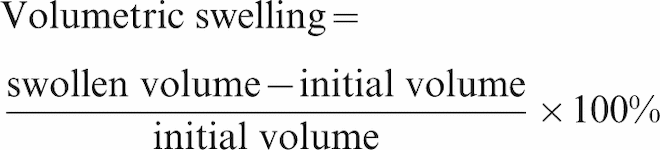
Water immersion for 24 h was performed to determine swelling and antiswelling efficiency of wood. Dimensions of samples were recorded with a digital caliper before and after submersion in water and initial and final swollen volumes were determined. Volumetric swelling and antiswelling efficiency were determined by using the following equations

Water absorption and water repellency effectiveness (WRE)
For water absorption, the samples were initially weighed and then submerged in distilled water for 24 h. After removal from water, samples were wiped off with dry cloth and weighed again. Water absorption and water repellency effectiveness were determined using following equations


Shrinkage and anti shrinkage efficiency
The treated and untreated samples were initially saturated with water to determine the swollen volume. After determination of swollen volume, the samples were placed in an oven at 103±2°C to record the oven dry volume. The samples were weighed at regular intervals and finally removed from the oven when a constant weight was observed. The oven dry volume was determined and the following calculations were used to calculate shrinkage and antishrinkage efficiency


Equilibrium moisture content (EMC) and moisture exclusion efficiency (MEE)
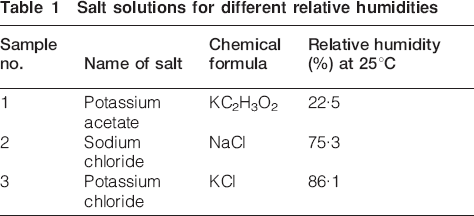
For EMC determination, samples were oven dried initially to determine oven dry weight and than placed in desiccators over different salt solutions (Table 1) used to create different RHs (TAPPI 2002). The samples were weighed at regular intervals until they attained constant weight at a particular humidity and then subjected to a higher level of humidity (Esteves et al. 2007a, b).
Salt solutions for different relative humidities
The following calculations were used to determine EMC and moisture exclusion efficiency


Data obtained in the study were analysed using analysis of variance (ANOVA) by SPSS (version 16·0) software statistical package (P≤0·05). Significant differences between mean values of control and treated samples were determined using Duncan's multiple range test.
Results and discussion
The mean values and standard deviations of the swelling, shrinkage and water absorption of untreated and heat treated chir pine and mango woods are shown in Table 2. It can be seen that overall swelling and shrinkage is greater in chir pine than in mango, which shows that chir pine is less dimensionally stable than mango. From the table, it is clear that heat treatment at higher temperatures for longer time durations has improved dimensional stability of both woods.
Swelling, shrinkage and water absorption of treated/untreated chir pine and mango wood*
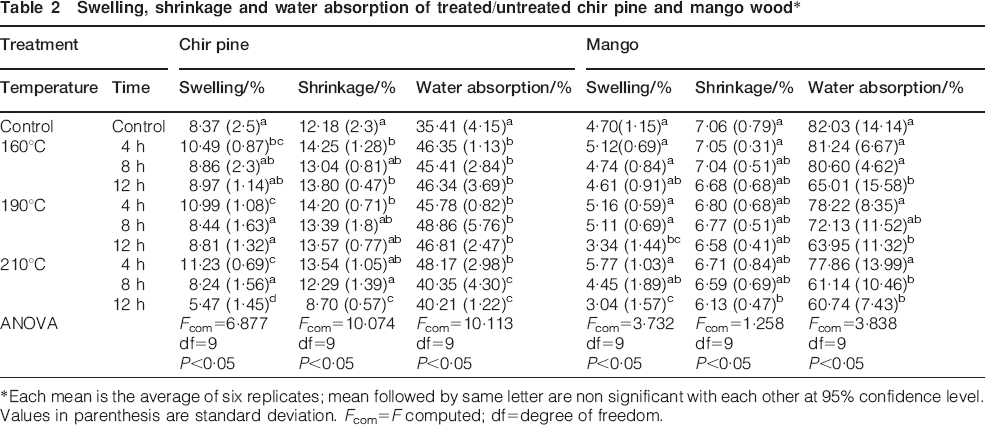
*Each mean is the average of six replicates; mean followed by same letter are non significant with each other at 95% confidence level. Values in parenthesis are standard deviation. Fcom = F computed; df = degree of freedom.
Swelling and antiswelling efficiency
Table 2 shows that swelling in control samples of chir pine and mango was 8·37 and 4·70% respectively. The treatment at 210°C for 12 h has reduced swelling in both wood species, which was 5·46 and 3·04% in chir pine and mango respectively. The treatments at 190 and 160°C for 12 and 8 h have not shown significant effect (P≤0·05) on swelling in chir pine wood, however, in mango wood, treatment at 190°C for 12 h reduced swelling up to 3·33%. Interestingly, heat treatment for 4 h at all temperatures resulted in a reverse trend in swelling, which was significantly higher than in controls. Antiswelling efficiency increased with increase in treatment time in mango wood, while in the case of chir pine wood, such trend could be seen only at 210°C (Fig. 1). Temperature increments for 8 and 12 h increased antiswelling efficiency in both species, while a reverse trend was found for 4 h treatment time. Significant reduction in tangential and radial swelling of heat treated Polycias nodosa wood is reported by Jimenez et al. (2011). Heat treatment for longer durations and high temperatures results in more reduction in swelling as shown by Korkut et al. (2008), whereas Charani et al. (2007) found no linear reduction in swelling with increasing time of treatment at a particular temperature.
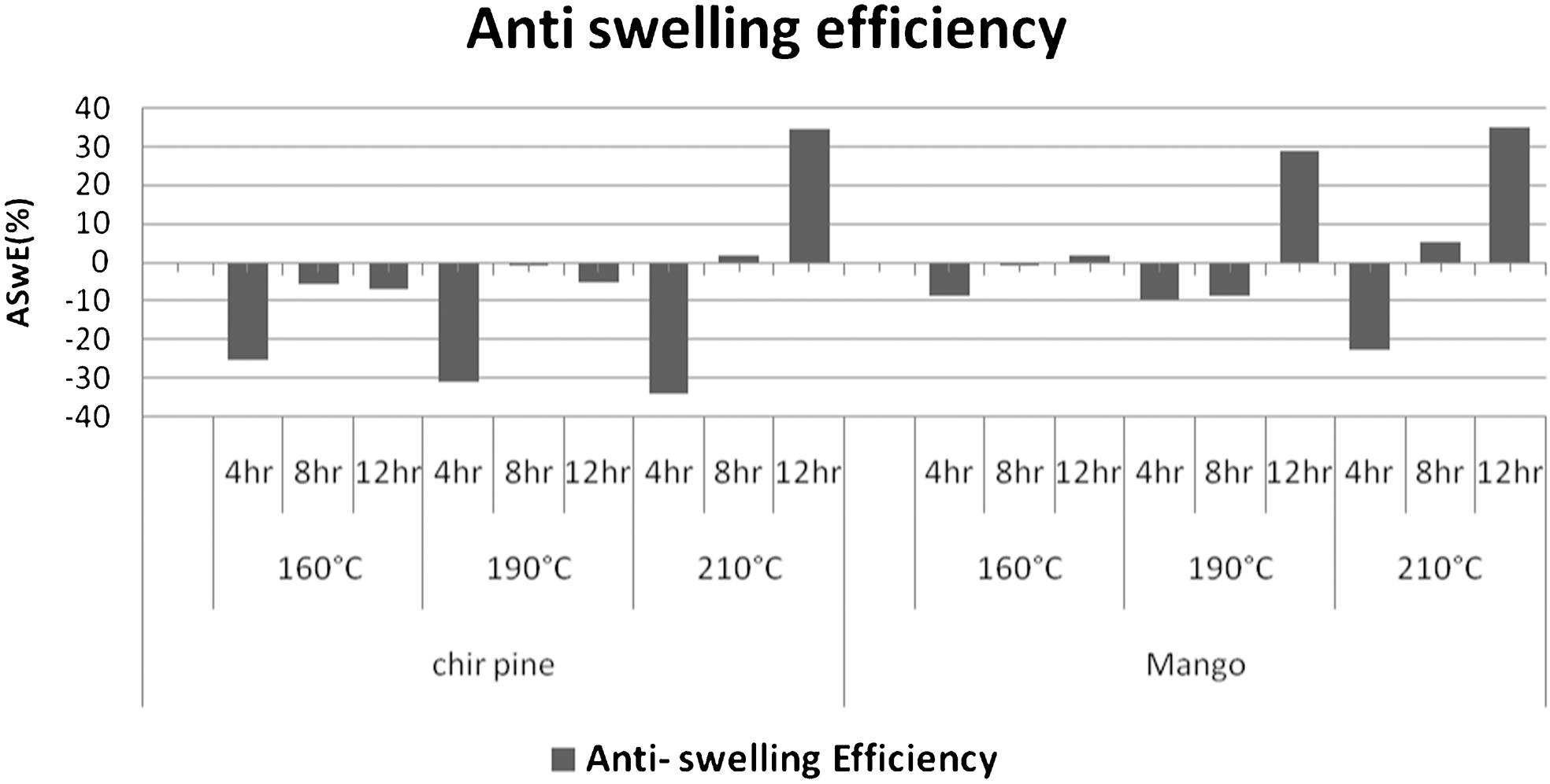
Antiswelling efficiencies of chir pine and mango woods
Shrinkage and antishrinkage efficiency
Shrinkage from full swollen volume to oven dry condition in chir pine and mango control samples was 12·18 and 7·06% respectively (Table 2). Shrinkage from the green to oven dry condition is reported as 11·2 and 7·3% in chir pine and mango wood respectively by Panday and Jain (1992). Heat treatment at 210°C for 12 h reduced the shrinkage significantly (P≤0·05) to 8·7 and 6·13% in chir pine and mango woods respectively. In case of mango wood, there is a general increase in antishrinkage efficiency with increasing treatment time and temperature, but a significant difference between treated and untreated samples could only be observed at 210°C for 12 h treatment (Fig. 2). However, in the case of chir pine, all the treatments resulted in negative values of antishrinkage efficiency except treatment at 210°C for 12 h. The differences in response to heat treatment of two wood species may be attributed to differences in their structures and chemical composition. An increase in the dimensional stability with heat treatment was reported by many authors (Kollmann and Schneider 1963; Bekhta and Niemz 2003; Esteves et al. 2007a, b). However, increase in dimensional variation was found by Oliveira et al. (2010) with heat treatment in Araucaria angustifolia. Significant reduction in shrinkage and swelling, better resistance to decay, darkened colour, disappearance of extractives, lower equilibrium moisture content and increased thermal insulating capacity by heat treatment is achieved only above 200°C (Viitaniemi and Jamsa 1994).
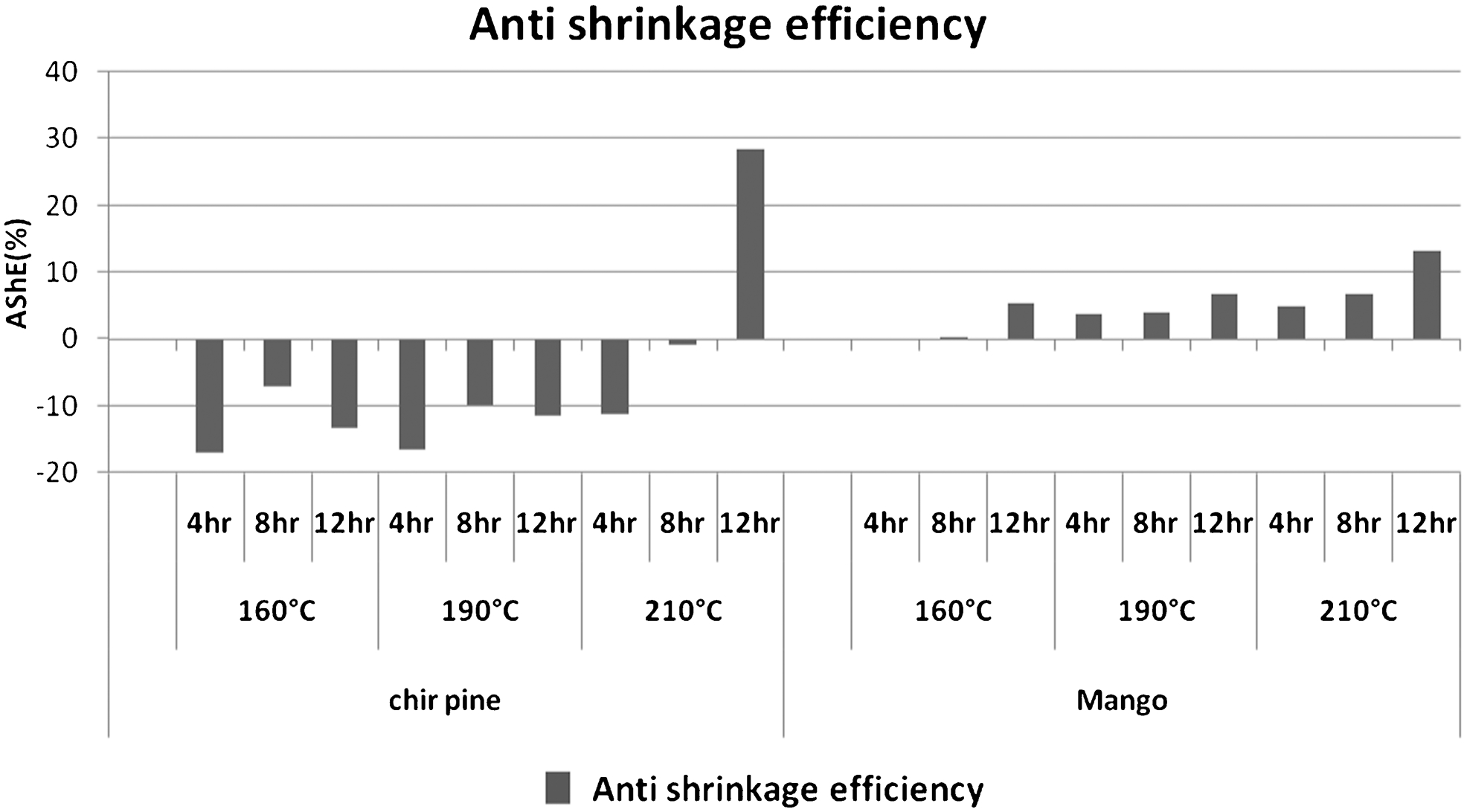
Antishrinkage efficiencies of chir pine and mango woods
Water absorption
Thermally modified samples of Mangifera indica (hardwood) exhibited a significant decrease in water absorption for 12 h treatment at 160°C (65·01%), which was further decreased (63·95%) when samples were heated at 190°C for the same period of time. It was observed that significant water absorption could not be seen at lower temperature, i.e. 160°C and shorter period of time, i.e. 4 and 8 h as compared to control. However, a substantial decrease in water absorption capacity of treated samples could be observed at 190 and 210°C for all durations of treatments. Almost 20% decrease in water absorption could be seen at 210°C for 8 and 12 h treatments as compared to untreated wood.
ANOVA showed that water absorption of untreated wood samples was significantly different from treated samples. Comparison of means showed that generally the water absorption by the untreated samples was significantly different from treated samples (Table 2). Thermal degradation and cross-linking of lignin could also be the reason for limited sorption sites for water (Nuopponen 2005).
Water absorption difference between the control and thermally modified chir pine is shown in Table 2. Water absorption in chir pine and mango was in the range of 35·41–48·86% (Table 2). Surprisingly, heat treatment caused an increase in water absorption in chir pine as compared to control.
WRE
The results of water repellency effectiveness of samples after 24 h soaking in water are shown in Fig. 3. It was observed that in mango there is a general trend in increase of WRE with increasing treatment time. For mango, the 12 h treatment at all temperatures has shown significant improvement over the control and the highest reduction (25·95%) was achieved at 210°C. The results are in agreement with Jimenez et al. (2011); Ahmed and Moren (2012) and Cai and Cai (2012), who found similar reduction in water absorption by heat treatment. All temperatures and treatment times were found to increase in water absorption of chir pine. However, it can be seen that treatment at 210°C for 8 and 12 h has much higher values of WRE that than rest of the treatments, which shows that higher treatment temperature and longer exposure time are more favourable for WRE in chir pine wood. Metsä-Kortelainen et al. (2006) reported thermal modification of Pinus sylvestris sapwood at 170–210°C increased water absorption as compared to untreated control samples. In the same study, it was also found that heat treatment at lower temperature made heart wood of Pinus sylvestris more hydrophobic than at higher temperature. Similarly, Johansson et al. (2006) reported that heat treatment increases the capacity to store and transport free water in Pinus sylvesrtris wood. Kartal et al. (2007) also found a similar increase in moisture content with Cryptomeria japonica samples thermally modified at 180°C for 2 h. The decrease in water absorption of thermally modified Fagus orientalis wood when modified at 160°C, but increase after thermal modification at 180°C compared with unmodified samples was reported by Mohebby and Sanaei (2005). The reason for increase in water absorption in chir pine after thermal treatments may be due to structure degradation and formation of cracks in wood due to heat treatment, which may have increased permeability and free surface for water. Tangential cracks between the earlywood and latewood tracheids in dry scots pine and Norway spruce were reported by Boonstra et al. (2006a). Generation of a large amount of stresses due to uneven shrinkage and swelling of earlywood and latewood due to abrupt transition from earlywood into latewood had been given as the possible cause. Presence of a large amount of resin in chir pine may also have added to this. It was visually observed that at lower temperatures, the resin had moved from the resin canals to the surface, which may has created more free space for water there by shadowing the effect of thermal wood modification, while at higher temperatures, thermal wood modification was more than evident. Nuopponen et al. (2003) also reported that resin acids in the resin canals of scots pine move to the surface of the heat treated wood between 100 and 180°C and entirely disappear at higher temperatures from the wood surface. Esteves et al. (2011) found that increase in extractive content of maritime pine due to heat treatment and water soluble extractives (mostly sugars) represented more than 50% of the total extractives. It is possible that when wood was submerged in water the extractives might have dissolved in water and leached out, thereby creating more free space for water to move inside wood. However, this phenomenon needs further detailed study to reach any conclusion.
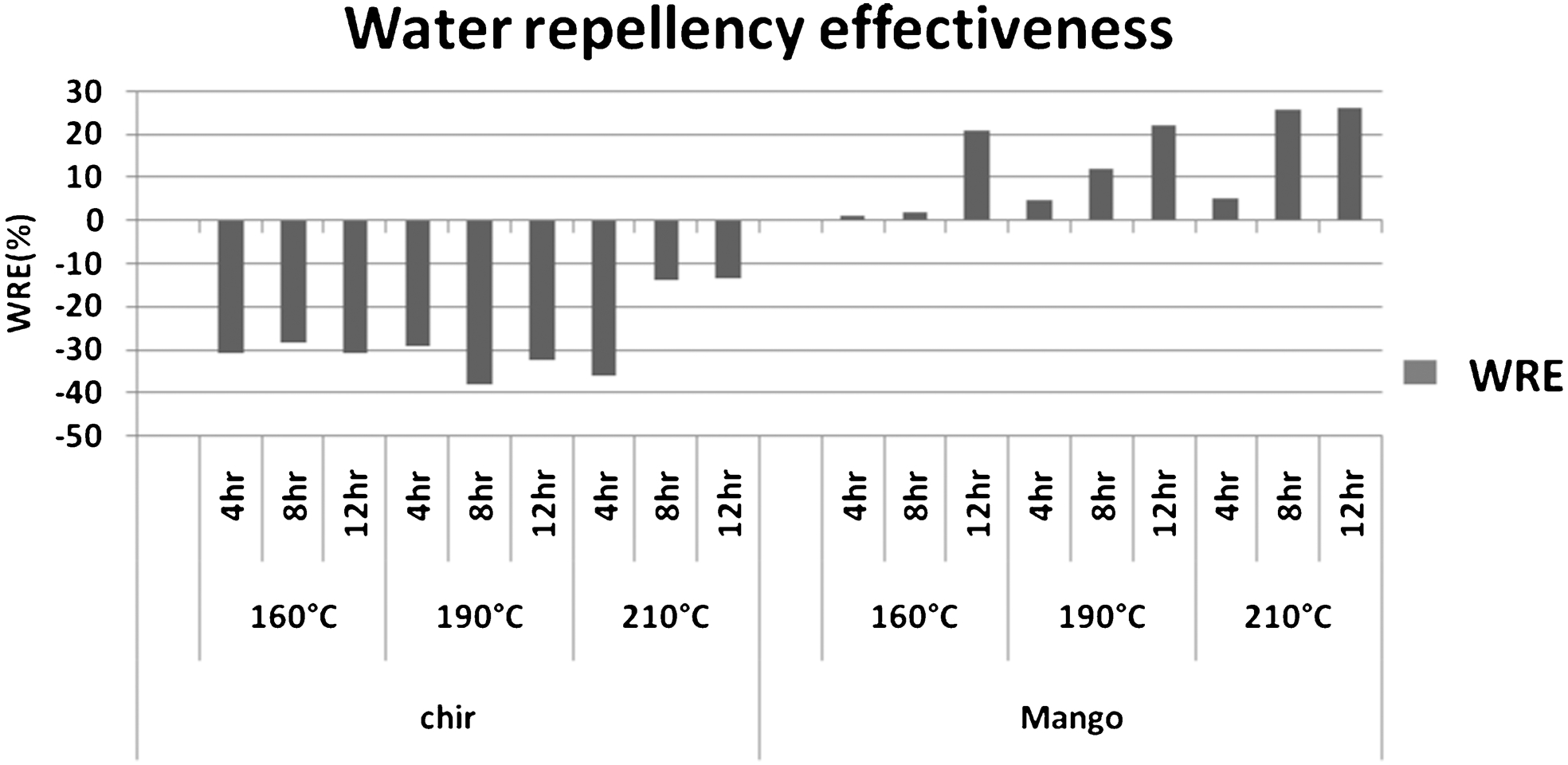
Water repellency effectiveness of chir pine and mango woods
EMC
The EMCs at 86·1, 75·3 and 22·5% RH were determined and the average values attained by treated and untreated wood samples of both species are given in Table 3. Statistical analysis showed that all the treatment temperatures and time durations were statistically different. It can be seen that heat treated wood had lower EMC as compared to control in general which is in accordance with Jamsa and Viitaniemi (2001), Esteves et al. (2007a, b) and Akyildiz and Ates (2008). At a particular humidity, chir pine has higher EMC value than mango wood. The chir pine control samples have shown 14·54, 13·5 and 3·99% EMCs at 86·1, 75·3 and 22·5% RH, which was reduced to 12·8, 11·45 and 2·98% by heat treatment at 190°C for 4 h. Control samples of mango achieved 13·64, 12·64 and 3·56% EMCs at the same humidities. The maximum reduction in EMC was observed with treatment for 4 h at 210°C treatment.
Mean EMC values at different RHs of treated/untreated Chir pine and Mango wood*
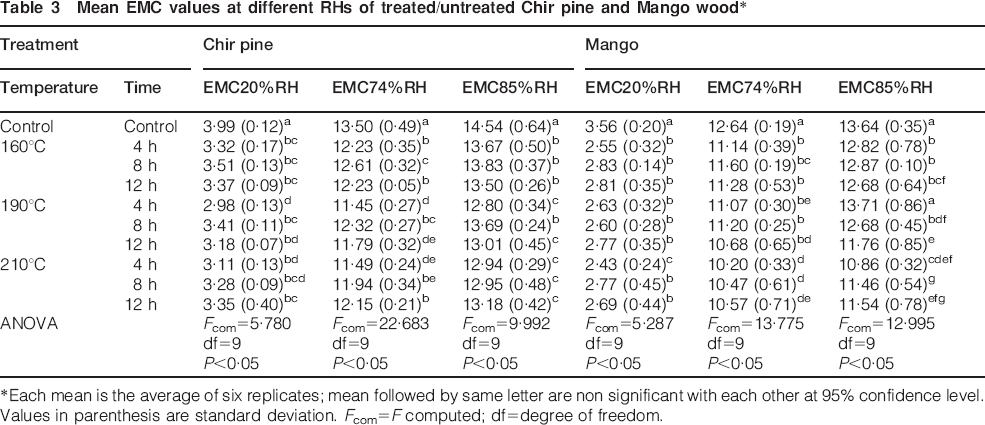
*Each mean is the average of six replicates; mean followed by same letter are non significant with each other at 95% confidence level. Values in parenthesis are standard deviation. Fcom = F computed; df = degree of freedom.
MEE
Figure 3 shows the mean values of MEE of chir pine and mango woods. The MEE at various RH levels increases in both species and there is a general reduction in MEE of both woods with increasing RH which is in agreement with Esteves et al. (2007a, b). The highest MEE value of 31·74% was achieved in mango, while in chir pine wood, the highest MEE value of 25·31% was achieved. This shows that even if there is more water absorption in the water soaking test in heat treated chir pine, the samples have less affinity for moisture at various RHs than untreated controls. The increase in water absorption may be due to increase in permeability of the wood due to heat treatment as discussed above. Akyildiz and Ates (2008) studied the effect of heat treatment on EMCs of oak, chestnut, calabrian pine and black pine woods, and found that EMC value was lower at 230°C for 2 h than for 8 h at the same temperature for oak and chestnut, while other species studied showed a reverse trend. Increase in extractive content in wood generally reduces EMC because of its bulking effect on cell wall with materials of low hygroscopicity as is reported by Wangaard and Grenados (1967).
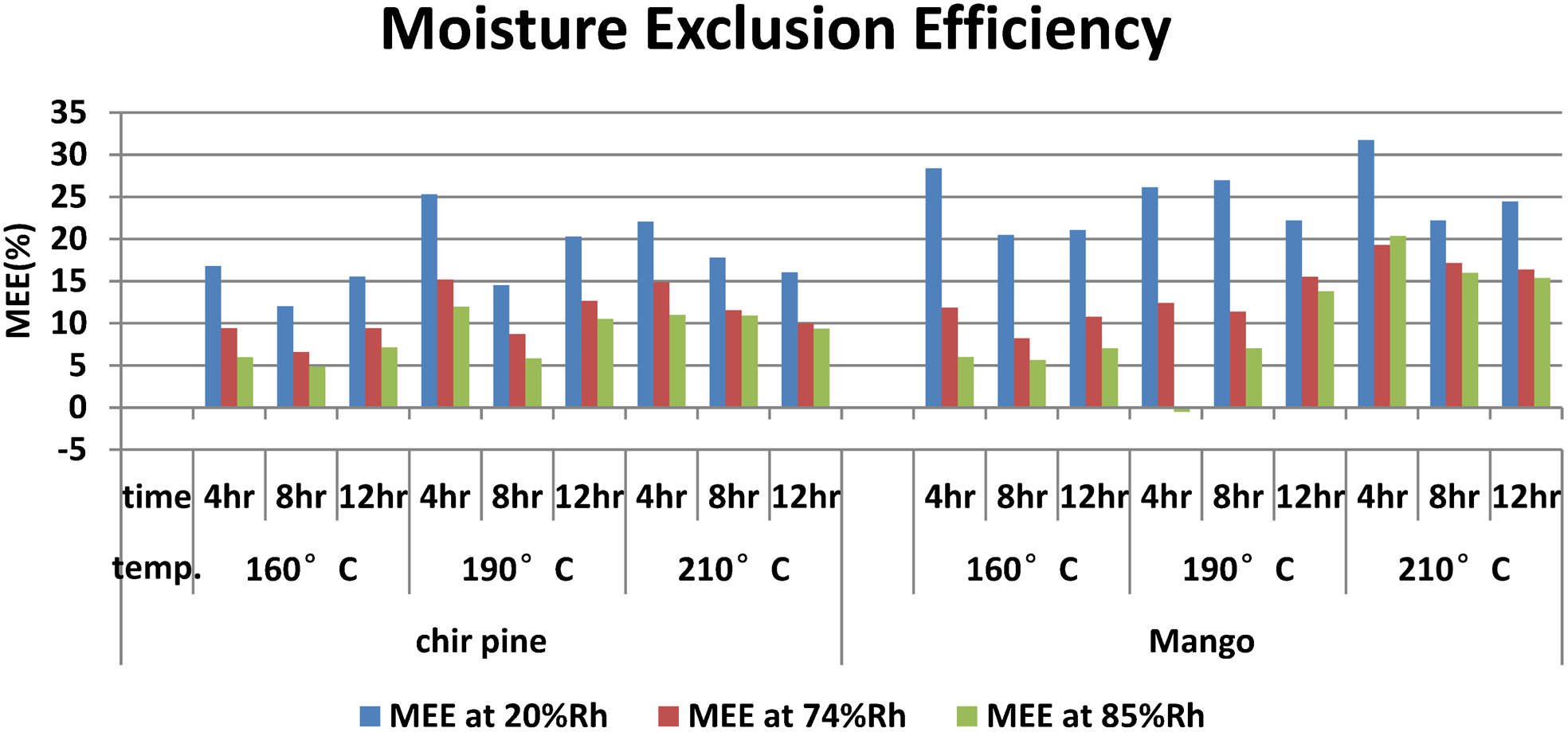
Moisture exclusion efficiencies of chir pine and mango at various relative humidities
The heat treatment causes a chemical change in the wood, which increases dimensional stability and hydrophobicity of wood. Main changes observed were degradation of hemicelluloses by deacetylation (Tjeerdsma et al. 1998; Sivonen et al. 2002; Nuopponen et al. 2004), followed by carbohydrate dehydration causing reduction in overall content of hydroxyl groups (Weiland and Guyonnet 2003) and formation of aldehydes like furfural and hydroxymethylfurfural from pentoses and hexoses respectively (Tjeerdsma and Militz 2005). There is degradation of the amorphous cellulose and thereby an increase in cellulose crystallinity is observed (Bhuiyan and Hirai 2000). Cleavage of b-O-4 linkages in lignin and reduction in methoxyl content in softwood lignin form a more condensed structure (Wikberg and Maunu 2004; Tjeerdsma and Militz 2005; Boonstra and Tjeerdsma 2006).
Conclusion
Heat treatment affected swelling, shrinkage, water absorption and EMC significantly. Heat treatment reduced the swelling, shrinkage and EMC resulting in more dimensional stability to wood. Overall swelling and shrinkage was more in chir pine than mango. The treatment at 210°C for 12 h showed the highest reduction in swelling in both woods. Only higher temperature and longer time periods were able to reduce shrinking. Water absorption in chir pine increased, while in mango, it is reduced as compared to controls. Heat treated wood had lower EMC as compared to control in general. The maximum reduction in EMC at particular RH as compared to control was achieved by 4 h treatment at 190°C temperature for chir pine and 210°C for mango.
Footnotes
Acknowledgements
The authors are thankful to the Director, Forest Research Institute, Dehradun, India, for providing the facilities. The authors are also thankful to the staff of Wood Preservation Discipline for providing necessary assistance.