







Abstract
Research was conducted to evaluate the decking performance of northeastern United States wood species treated with copper based preservatives. Decking specimens were treated with one of four wood preservatives and exposed near Madison, Wisconsin. Specimens were evaluated for biological attack and dimensional stability. After 10 years, none of the preservative treated specimens had fungal decay. All of the untreated Southern Pine specimens were severely decayed within 5 years, but untreated specimens of other species were much slower to decay. Surface mold was most commonly observed on untreated specimens, but was also sometimes present on preservative treated wood. Warp and checking were greatest in red maple and least in eastern white pine. Although all wood species/preservative combinations were decay resistant, concerns with appearance and dimensional stability may make red maple and balsam fir less desirable for use as decking. Eastern white pine appears to be the northeastern species most suitable for use in decking.
Introduction
Some common tree species within forests of the northeastern and northcentral United States have relatively little commercial lumber value. The greatest volume of the wood from these species is used for pulpwood or firewood, which has much lower value than timber converted to sawn products (Wisconsin DNR 2010). Adding value to these wood species would give forest managers more flexibility in economically managing the forest resource while preserving more traditional commercial species. It could also create business and employment opportunities in rural communities.
One potential path to adding value to low value species is to demonstrate the feasibility of their use in structures built from pressure treated wood. However, before a wood species can gain acceptance for treatment with a particular preservative, it must be demonstrated that adequate penetration and retention can be achieved and that the treated wood has acceptable durability. To address these concerns, a research project was conducted with the cooperative efforts of the USDA Forest Products Laboratory (FPL); USDA State and Private Forestry; Northeastern Forest Alliance; Vermont Department of Forest, Parks and Recreation; preservative manufacturers; and cooperating lumber producers in the Northeast. The wood species selected for evaluation were balsam fir (Abies balsamea), eastern hemlock (Tsuga canadensis), red maple (Acer rubrum), eastern white pine (Pinus strobus) and eastern spruce (a mixture of white (Picea glauca), black (P. marian) and red (P. rubens) spruce). An evaluation of species treatability has been conducted (Lebow et al. 2005) and pressure treated stakes were placed into a test site in Mississippi to evaluate ground contact durability of the treated wood (Lebow et al. 2010). A third component of the project, reported in this paper, was an evaluation of the performance of treated wood in an above ground decking test.
Treatability evaluations of these northeastern species have produced mixed results. In an earlier stage of the research reported in this paper, Lebow et al. (2005) reported that eastern white pine was nearly as treatable as Southern Pine, but that red maple and eastern spruce were not adequately treated with any of the preservatives, even after incising. The arsenic- and chromium-free alternatives to chromated copper arsenate (CCA) appeared to penetrate at least as well as CCA and may offer treatability advantages over CCA in species such as eastern hemlock and balsam fir. In earlier research, Smith (1986) and Smith et al. (1996) reported on the treatability of eastern white pine, eastern hemlock, and red maple with CCA or ammoniacal copper quat Type B (ACQ-B). Preservative uptake was greatest in white pine, but also appeared promising in incised eastern hemlock. ACQ-B uptake was similar to that of CCA in red maple sapwood, but uptake of CCA was greater in red maple heartwood (Smith et al. 1996). A separate treatability study of Canadian species concluded that eastern white spruce and balsam fir were among the most difficult to treat with CCA-C, although incising did improve treatment (Richards and Inwards 1989). Other researchers found that penetration of balsam fir, eastern spruce, eastern hemlock, and white pine was generally greater with ammoniacal copper arsenate (ACA) than CCA, and that the growth rate of the material (fast or slow) had no significant effect on penetration or retention (Gjovik and Schumann 1992).
Stake tests indicate that the ground-contact durability of northeastern species may be a function of treatability (Crawford et al. 1999; Lebow et al. 2010; Richards and McNamara 1997). There have been few previous reports of the durability of northeastern United States species above ground, but the results of one study indicate that preservative penetration may be less critical in above ground exposures. As part of a study including other species, balsam fir, eastern spruce, and Southern Pine decking specimens were treated with CCA and exposed at two sites in Canada (Morris and Wang 2011; Morris and Ingram 2012). After 20 years, even the balsam fir and eastern spruce specimens with limited penetration were in good condition, with ratings similar to fully penetrated Southern Pine specimens (Morris and Ingram 2012). The authors attribute the durability of the poorly treated specimens to redistribution of copper within the wood, and speculate that this effect is also likely to occur with the newer copper based preservatives.
To better assess the potential for using northeastern species in outdoor applications, additional research is needed to evaluate their performance in above-ground applications such as decking. In addition to decay resistance, the performance of wood used above ground might be judged by factors such as dimensional stability and appearance. This paper summarizes an evaluation of the above-ground performance of specimens cut from northeastern wood species and pressure-treated with copper-based preservatives. The specimens were exposed for 10 years at a site near Madison, Wisconsin, and evaluated periodically for extent of decay, mold growth, checking and warp.
Experimental methods
Cooperating mills supplied eastern white pine, eastern spruce, balsam fir, eastern hemlock, and red maple lumber for the study. For comparison, the FPL obtained lumber from the Southern Pine species group of the southeastern United States (primarily Pinus taeda, loblolly pine). Cooperating preservative manufacturers provided chromated copper arsenate (CCA-C), copper citrate (CC), alkaline copper quat (ACQ-C), and copper azole wood preservative formulations (CBA-A) for use in the study. The specimens were configured and exposed to represent potential use of these materials in decking applications. It is recognized that a decking simulation is not an accelerated test of decay resistance. The decking approach was selected because it also allowed evaluation of dimensional stability and mold/mildew development under somewhat realistic conditions.
Specimen preparation
The decking evaluation was conducted with 914 mm long specimens cut from longer 38 mm by 140 mm (2 by 6 inch nominal) lumber. Both incised and unincised boards were supplied for the eastern spruce, balsam fir, eastern hemlock, and red maple species. For the eastern white pine, only incised boards were supplied, while for the Southern Pine only unincised boards were evaluated. The incising density was approximately 3100 incisions m−2, with incision length ranging from 12 to 15 mm and incision depth ranging from 5 to 9 mm. Five replicate specimens were prepared for each wood species/incising condition/preservative combination. For the Southern Pine lumber, only sapwood samples were used, but the other boards contained a mixture of heartwood and sapwood. Prior to treatment, the specimens were conditioned in a room maintained at 23°C and 65% RH.
Five types of treatments were evaluated:
chromated copper arsenate type C (CCA): actives composition of 47·5% CrO3, 18·5% copper (expressed as CuO), and 34·0% As2O5. CCA was used as a reference preservative because of its long history of use in pressure treatment of Southern Pine wood products
alkaline copper quat type C (ACQ-C): actives composition of 66·7% copper (expressed as CuO) and 33·3% alkylbenzyldimethyl ammonium compound. The copper in this formulation is solubilised in a solution of ethanolamine and water
copper azole type A (CBA-A): actives composition of 49% Cu, 49% H3BO3, and 2% tebuconazole. The copper in this formulation is solubilised in a solution of ethanolamine and water. CBA-A is not currently in commercial use but is similar to the current formulations CA-B and CA-C
ammoniacal copper citrate (CC): actives composition of 66·7% copper (expressed as CuO) and 33·3% citric acid. The copper in this formulation is solubilised in a solution of ammonia and water. CC is no longer in commercial use but represents a copper based system using ammonia to assist in solubilising the copper
untreated: both incised and unincised specimens were evaluated for eastern spruce, balsam fir, eastern hemlock, and red maple. For eastern white pine, only incised specimens were evaluated, while for the Southern Pine only unincised specimens were evaluated.
All treatments were conducted using a full cell pressure process. The initial vacuum was maintained at –75 kPa (gauge) for 30 min; the pressure was maintained at 1·03 MPa (gauge) for 2 h. Specimens were weighed before and after treatment to determine solution uptake and allow calculation of uptake retention (Table 1). Solution concentrations (Table 1) were adjusted to target the standardised above-ground retentions (in Southern Pine) for the respective preservatives based on typical uptake during earlier stages of this research project. However, in some cases the retentions obtained differed substantially from the target retention (Table 1).
Preservative solution concentration and resulting retention for each wood species
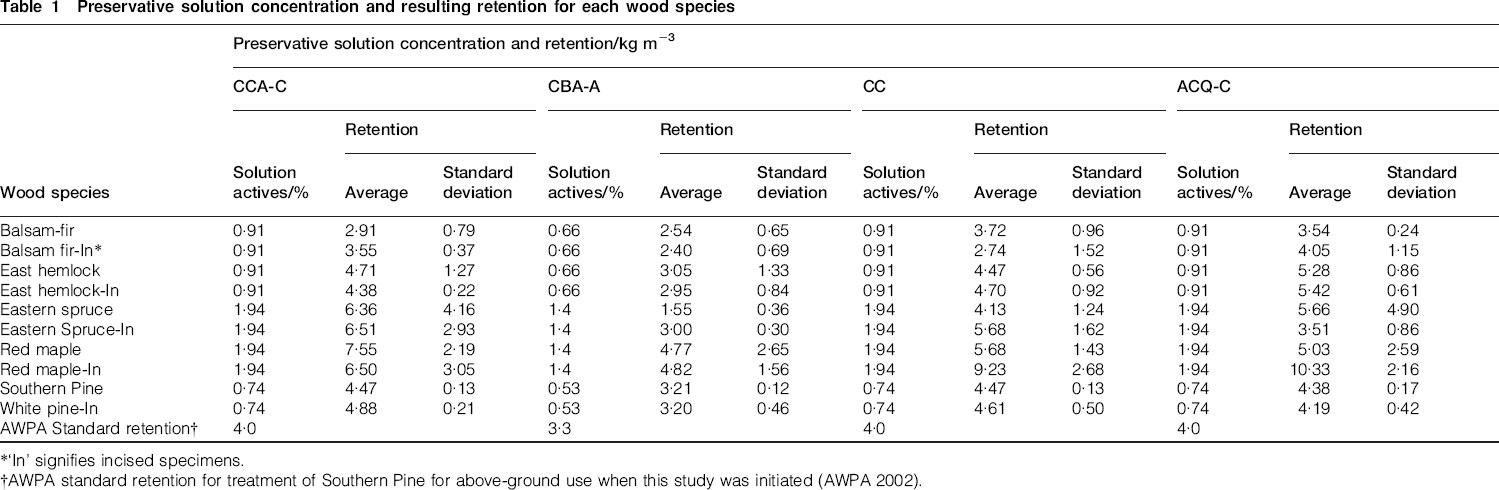
‘In’ signifies incised specimens.
AWPA standard retention for treatment of Southern Pine for above-ground use when this study was initiated (AWPA 2002).
Decking specimens in this study were not sacrificed to measure penetration, but penetration was measured on specimens cut from the same material and treated under similar conditions (Lebow et al. 2005). That earlier treatability study found that eastern spruce and red maple had the least penetration, while Southern Pine and eastern white pine had the greatest penetration. Incising yielded only slight increases in penetration. Among preservatives, ACQ-C typically yielded the greatest penetration while CCA-C and CBA-A typically had the least penetration.
Installation and inspection
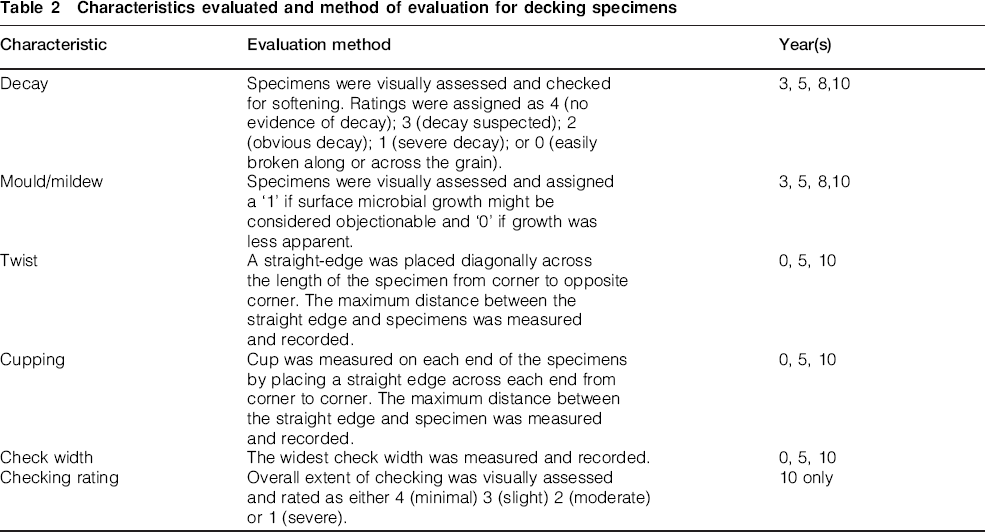
Prior to installation, the specimens were evaluated for extent of warp and checking (Table 2).
Characteristics evaluated and method of evaluation for decking specimens
The specimens were subsequently exposed in a test plot near Madison, Wisconsin, in October 2003. The location is characterised by cold winter months and warm, somewhat humid summers. It has a Scheffer Decay Hazard Index of 43·6 (Carll 2009). The specimens were supported on a pressure treated wood frame approximately 762 mm above the ground (Fig. 1). A single stainless steel deck screw was driven through the center of each specimen 152 mm from each end, fastening the specimen to 38 mm thick support joists. This method of fastening the specimens was selected to allow the specimens to warp. The decking screws and the contact area with the support joist on each end of the specimen provided some additional moisture trapping, although not necessarily to the extent provided by accelerated testing specimen configurations.
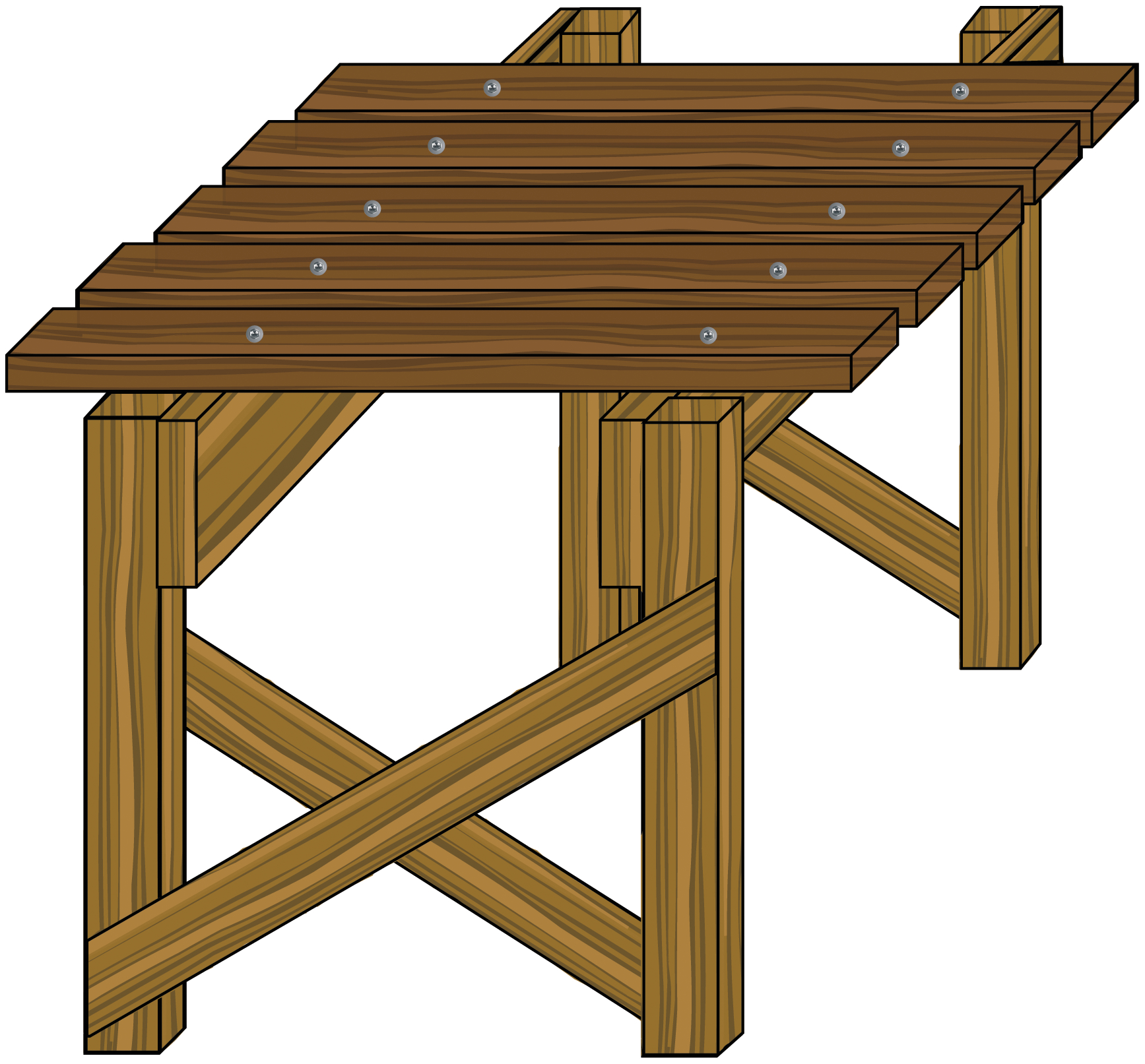
Sketch of test set-up for exposure of decking specimens
The specimens were evaluated for decay and surface microbial growth (mould/mildew) after 3, 5, 8, and 10 years, and for warp and checking after 5 and 10 years (Table 2). Decay ratings were assigned by visually inspecting the specimens as well as gently probing the end-grain and other areas for evidence of softening. A five-point rating scale (4, 3, 2, 1, 0) was used to express the extent of decay (Table 2). Specimens were assigned the highest rating (4) unless there was evidence or suspicion (darkening or softening) of decay. Note that this rating system differs from the 8 point (ratings of 10, 9·5, 9, 8, 7, 6, 4 and 0) system typically used for visual evaluation of decay in the United States (AWPA 2014). The conventional 8 point rating system corresponds to the percent cross-section decayed (for example a rating of ‘8’ corresponds to 3–10% cross-section decay while a rating of ‘7’ corresponds to 10–30% of the cross-section decayed). The simplified rating system was adapted because decay in these deck boards specimens developed internally and the percent cross-section affected could not be quantified.
The presence of surface mould or mildew did not influence the decay rating unless it was accompanied by other signs of decay. Within 3 years, all specimens had some surface microbial growth, and the mould/mildew rating was simply a ‘yes’ or ‘no’ response to the question of whether a consumer might find that extent of growth noticeable and objectionable. We recognize substantial subjectivity in this judgment. It is worth noting that the extent of surface microbial growth was a function moisture and temperature conditions during the periods immediately prior to the inspections.
The extent of twist and cupping was measured by placing a straight edge on the specimens and measuring the distance of greatest displacement (Table 2). A single measurement was made for twist, while the extent of cupping was measured on each end of the specimens and those values averaged. The maximum check width was also measured for each specimen, and at the 10 year inspection, specimens were also assigned a rating for overall extent of checking. Extent of checking was rated on a 4-point scale varying from minimal (4) to severe (1). As was noted for surface microbial growth, the extent of twist, cupping, and checking is partially a function of weather conditions immediately prior to the inspection.
Results and discussion
Decay
After 10 years of exposure there was no evidence of decay in any of the preservative treated specimens of any species, with or without incising. This reflects both the efficacy of these copper based treatments in above ground exposures and the moderate decay hazard of the test configuration and exposure location. For Southern Pine, balsam fir, and eastern spruce, this finding is in agreement with previous research that noted no decay in CCA-C specimens after 9 years of exposure in Canada (Morris and Ingram 2012). However, evidence of decay has been reported after similar time periods for above ground tests using more accelerated configurations. Slight decay was observed in CCA, ACQ and copper–azole treated Scots pine mini-deck tests after 13 years of exposure in Sweden (Westin et al. 2010). Those specimens were placed much closer to the ground (50 mm) and thus likely sustained higher moisture contents than the decking specimens evaluated in this study. Decay was also observed in Scots pine specimens treated with above ground retentions of CCA and copper azole and exposed for 11 years in ground proximity tests in Sweden (Brelid and Edlund 2013). The ground proximity method used in that study creates a relatively severe decay hazard because the bottom layer of specimens rests on a water permeable geotextile fabric that is in direct ground contact (Brelid and Edlund 2013). In actual deck construction, the severity of the decay hazard may vary greatly depending on how the deck is constructed and on the exposure conditions. Deck boards placed close to the ground or in areas of leaf litter accumulation would experience a greater decay hazard than that evaluated in this study.
Durability differences were observed among the untreated specimen in this study. Most notably, the Southern Pine was much less durable than the other species, with failures occurring in four of the five specimens within 5 years (Fig. 2). No failures occurred within 10 years for balsam fir, eastern spruce, eastern hemlock, or red maple, but one eastern white pine specimen did fail at the 8 year inspection. This finding is again in agreement with previous research in Canada, which noted that untreated Southern Pine decking specimens decayed more rapidly than other species, including balsam fir and eastern spruce (Morris and Ingram 2012).
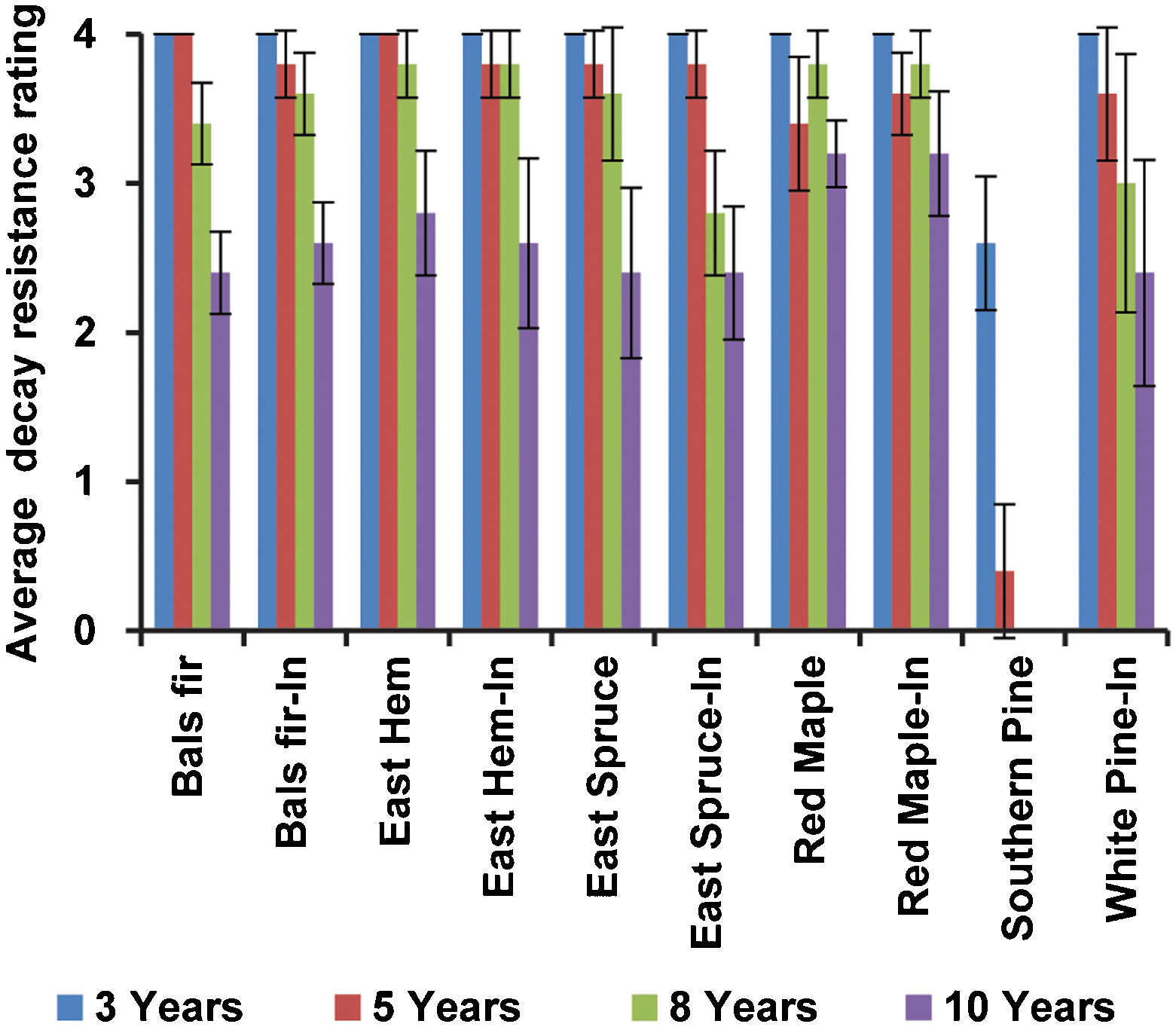
Average decay ratings of untreated specimens: no decay was observed in preservative-treated specimens; error bars represent one standard deviation from mean; ‘In’ indicates incised specimens
Although rapid decay of untreated Southern Pine was expected, the relative durability of other species contrasts with that observed for the ground contact evaluation conducted as part of this research project. In the ground-contact evaluation, untreated red maple and eastern hemlock failed more rapidly than Southern Pine stakes, and the other species performed similarly to Southern Pine (Lebow et al. 2010). It is possible that greater durability observed for the northeastern species in the above ground exposure results from their lower permeability and resulting lower moisture uptake during precipitation events. Numerous European studies have indicated that the extent of moisture uptake is a key factor in the relative natural durability of wood species exposed above-ground (Bornemann, et al. 2013; Brishke and Rapp 2010; Engelund et al. 2012; Miltz et al. 1998). Engelund et al. (2012) also noted that the proportion of heartwood is an important component of the differences in moisture uptake between species. They found that that although Norway and Sitka spruce heartwood had lower moisture content and less decay than Scots pine sapwood, the opposite was true when the spruce species were compared to Scots pine heartwood.
Mould and mildew
Some mould and mildew growth was observed on all specimens, but appeared to be more prevalent with some wood species/preservative combinations. Microbial growth was much greater for untreated than treated wood for all species, with untreated red maple specimens tending to have the most frequent occurrence of mould growth (Fig 3). The finding of frequent mould growth on the only hardwood evaluated in this study is in agreement with earlier research (Lindegaard and Morsing 2003). Those researchers evaluated mould growth on a range of wood species exposed in Norway and concluded that two hardwoods, aspen and ash, were most prone to microbial growth.
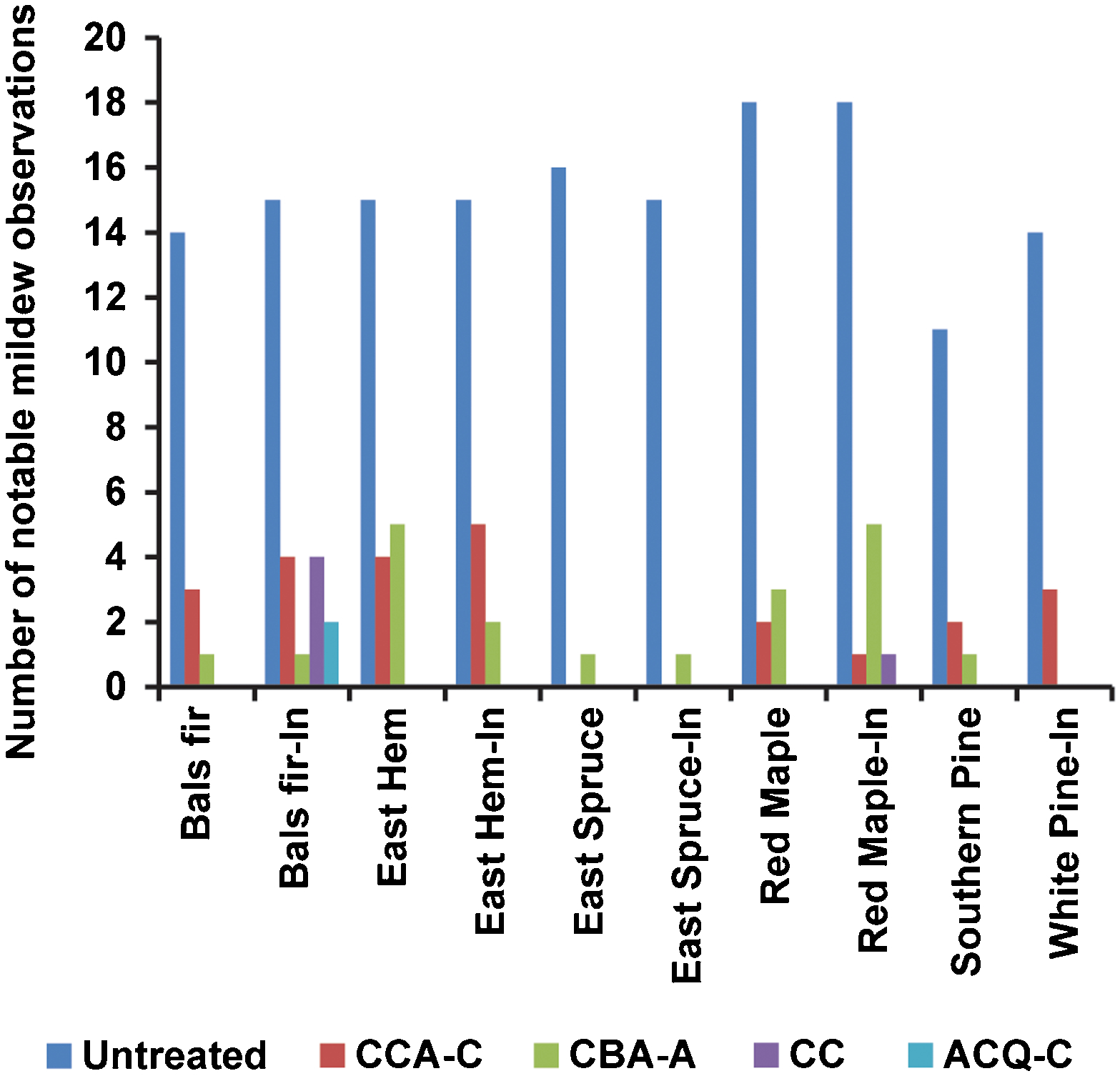
Total number of times that specimens had notable mould/mildew growth, summed across 3-, 5-, 8- and 10-year inspections: untreated southern pine specimens failed, limiting number of those observations; ‘In’ indicates incised specimens
Although treated specimens generally had much less mould growth, there did appear to be some differences between wood species. Treated eastern spruce specimens tended to have fewer mould/mildew observations than treated specimens of other species, while treated, incised balsam fir was most prone to surface growth. Differences were also observed between preservatives, with CCA- and CBA-A-treated specimens having more frequent mould/mildew observations than specimens treated with ACQ-C or CC. The reason for this trend is unclear, although it may be a function of copper retention. On the basis of preservative uptake and copper concentration in the treatment solution, the average copper retention across all species was greatest for ACQ, followed by CC, CBA-A, and CCA in that order.
Twist and cupping
No relationship was observed between preservative treatment and extent of twist or cupping, and for the purposes of this discussion the results of all preservative types and untreated wood were combined within each species. The greatest average twist was observed in red maple (Fig. 4), although all of the northeastern species except white pine had greater twist than Southern Pine prior to installation. At the 5 year inspection, the amount of twist in Southern Pine had increased, while twist had decreased in all northeastern species except white pine. As a result, only red maple had greater twist than Southern Pine at the 5 year inspection. After 10 years, red maple continued to have the greatest average twist, while other species were similar to Southern Pine. The exception was white pine, which had the least amount of twist at all inspections. Incising appeared to lessen the amount of twist observed in red maple and balsam fir, but did not appear to lessen twist in eastern hemlock or eastern spruce.
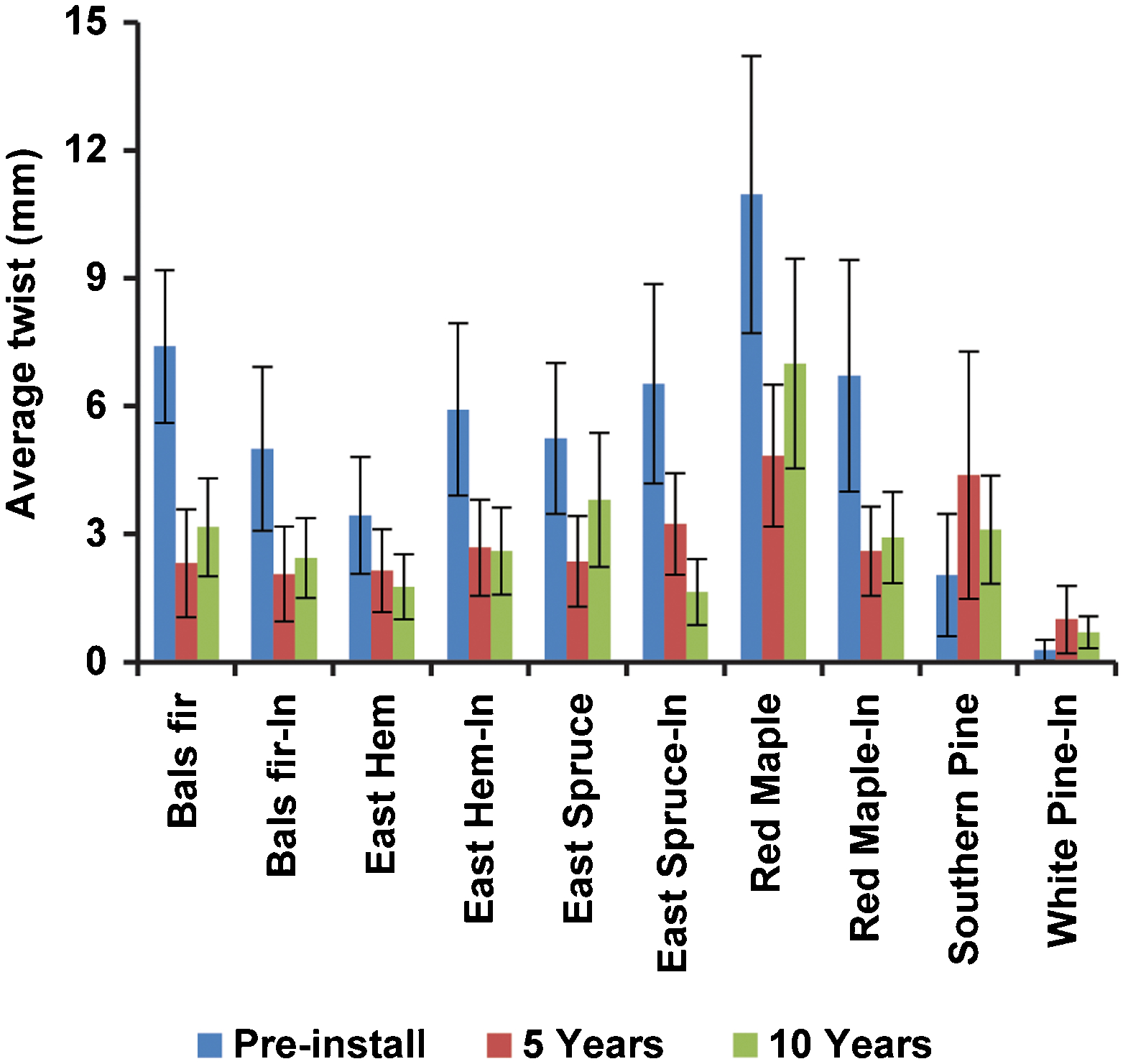
Average twist observed for each wood species: includes untreated and all preservative treated specimens; error bars represent one standard deviation from mean; ‘In’ indicates incised specimens
Red maple also had more cupping than other species, and in general the northeastern species had more cupping than Southern Pine (Fig. 5). The exception again was eastern white pine, which had the least amount of cupping for all but the 5 year inspection. Eastern hemlock was also relatively resistant to cupping. As was observed for twist, incising seemed to lessen the amount of cupping observed in red maple. However, incising did not consistently affect the extent of cupping in other species.
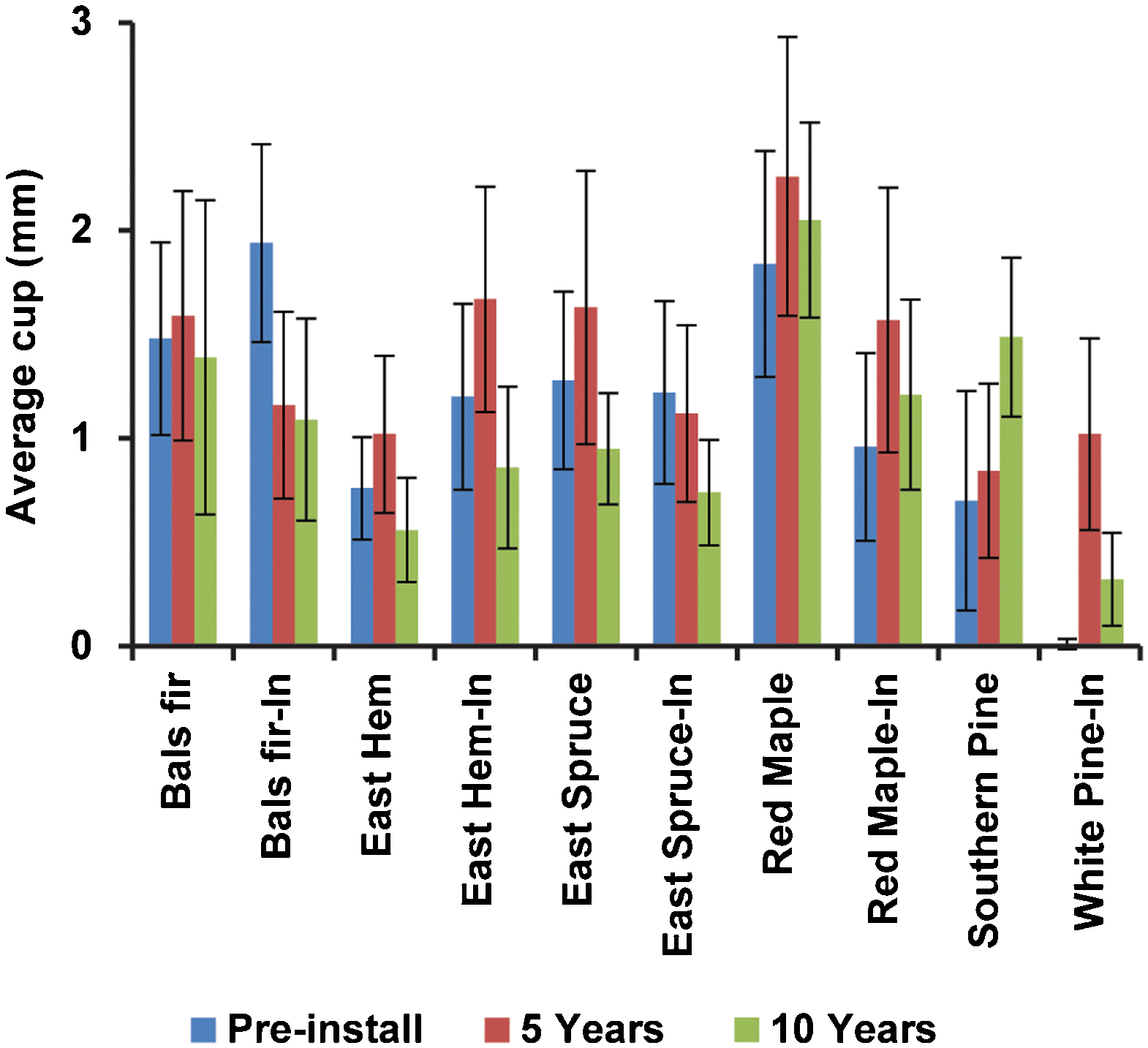
Average cupping depth observed for each wood species: includes untreated and all preservative treated specimens; error bars represent one standard deviation from mean; ‘In’ indicates incised specimens
Checking
No relationship was observed between preservative treatment and extent of checking, and for the purposes of this discussion the results of all preservative types and untreated wood were combined within each species. Average maximum check width was greatest for unincised red maple and balsam fir, and tended to increase over time (Fig. 6). Prior to installation, all the northeastern species had greater average check width than Southern Pine, but at the 5- and 10-year inspection, check width of the Southern Pine was similar to several of the northeastern species. As was observed with twist and cupping, maximum check width in eastern white pine tended to be less than other species, including Southern Pine. Incising appeared to lessen the average maximum check width for all species that had comparative incised and unincised specimens. Incised specimens tended to have a greater number of smaller checks rather a few larger checks.
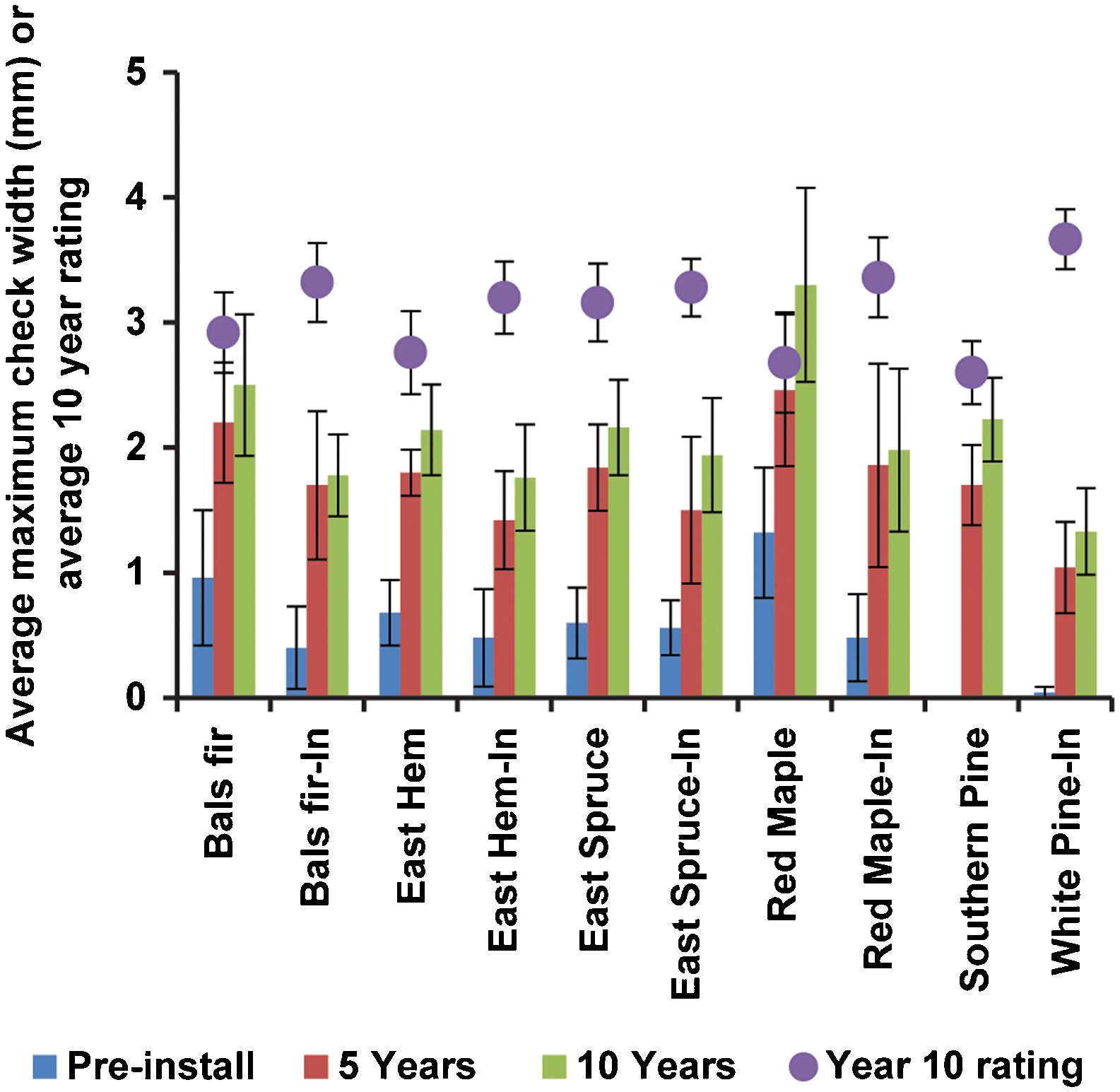
Average maximum check width and average extent of checking rating for each wood species: includes untreated and all preservative treated specimens; error bars represent one standard deviation from mean; ‘In’ indicates incised specimens
In an attempt to better characterize checking, specimens were assigned a visual rating for overall extent of checking after 10 years of exposure (Table 2, Fig. 6). This rating considers the number of checks in addition to check width and length. On this basis, the differences among species are not dramatic, but eastern white pine appears to have had the least amount of checking, whereas Southern Pine had the greatest amount of checking. Incising slightly improved the overall checking rating, although the effect was not as great as that observed for maximum check width.
Conclusion
Northeastern species treated with copper-based preservatives have been free from decay for 10 years of exposure. Untreated northeastern species have also been more decay-resistant than Southern Pine in this above ground exposure. These findings indicate that northeastern species treated with copper based preservatives can be sufficiently durable for use in decking and other above ground applications. It should be noted, however, that this test was not intended to accelerate decay, and did not incorporate all of the moisture trapping conditions found in some types of deck construction. Not surprisingly, untreated specimens of all species were more susceptible to growth of surface mould and mildew than their treated counterparts. Among treated specimens, eastern hemlock, balsam fir, and eastern spruce tended to have greater surface mould than Southern Pine, whereas eastern spruce had the fewest occurrences of notable mould growth. Specimens treated with ACQ-C and CC tended to have less frequent mould occurrences than those treated with CCA or CBA-A. Dimensional stability may be a concern with some of the northeastern species evaluated. Red maple in particular tended to have more warping (twist and cupping) than other species, including Southern Pine. Red maple also tended to have larger checks than the other species evaluated. In contrast, eastern white pine appeared to have greater dimensional stability than other species, including Southern Pine. Overall, this research indicates that although pressure treated northeastern species can be sufficiently decay resistant for use above ground, dimensional stability could be a concern for some species. On the basis of the properties evaluated in this study eastern white pine appears to be the northeastern species most suitable for use in pressure treated decking.