







Abstract
Radon is a radioactive gas that occurs naturally, causing severe consequences to human health. In fact, some studies have shown that high indoor radon values can have an impact on the development of cancer. The gas can enter the inside of buildings though cracks. In the construction industry, wood-based products are used frequently because of the fact that they are made from natural resources and have various functions in a building context. The present study led to the development of an optimised wood-based product with a new function, allowing a real radon resistance ability of over 95%. This product was developed for application on buildings’ floors and is intended to prevent the penetration of radon gas inside the buildings. The solution demonstrated higher efficiency than current commercially available products, revealing itself to be an excellent and competitive alternative to already existing active and passive mitigation methods in the market.
Introduction
The European Union (EU) is one of the largest producers, traders and consumers of wood products in the world (European Commission 2011). The Wood sector (forestry, forest-based and related industries) is made up of the following industrial subsectors: (i) woodworking; (ii) cork and other forest-based materials; (iii) pulp, paper and paper-board manufacturing; (iv) paper and paper-board converting and; (v) printing industries. The woodworking industries supply basic products such as sawn goods, wood panels and builders’ carpentry for construction, internal/external decoration and packaging items (European Commission 2011). Wood-based panels are an important material used in the building sector, and multifunctional panels have gathered more attention and investment by the wood sector. It is important that the forestry sector develops selective applications of multifunctional wood-based products, which will increase the value of this vital ecosystem.
Radon gas (222Rn) derives from the decay of radioactive elements, namely Uranium (238U), which is present naturally in soils. Owing to its long halflife, estimated at 3.82 days, radon has, under certain conditions, enough time to reach the topographic surface (Dubois 2005). When that happens, it either diffuses into the atmosphere or, if there is a closed environment space, it accumulates in the atmosphere inside that area. According to the United Nations Scientific Committee on the Effects of Atomic Radiation (2000), radon and its decay products are the single most relevant sources of human exposure to natural ionising radiation. Radon is a colourless, odourless, tasteless and radioactive gas that easily penetrates many common materials. The gas is able to penetrates through cracks between the floor-to-walls junctions, pavements, porosity of concrete slabs, and through piping, drains and plumbing (Neves, Avelans and Pereira 2003). Several studies have shown that there is a correlation between high indoor levels of radon and a higher occurrence of lung cancer in its inhabitants (Lubin and Boice 1997; Denman and Phillips 1998; Darby et al. 1998, 2001, 2005; Kreienbrock et al. 2001; Krewski et al. 2005). According to estimates from the U.S. Environmental Protection Agency, radon is the leading cause of lung cancer among non-smokers and the second leading cause for cancer in general in smokers (A Citizen's Guide to Radon – The Guide to Protecting Yourself and Your Family From Radon 2007). The World Health Organization classifies radon as a degree 1 carcinogenic substance.
The EU (Directive 90/143/EURATOM) recommends that the radon annual average concentration in existing buildings does not exceed 400 Bq m− 3. As for new constructions, it is recommended that levels do not exceed 200 Bq m− 3. In the Portuguese legislation, radon limits are discussed in the Regulation of Energy Systems of Air Conditioning in Buildings (RSECE) mentioned in the Decree-Law related to the requirements for indoor air quality (Decree-Law No. 79/2006, of April 4, 2006). It specifies that the maximum reference for indoor radon in the designated buildings is 400 Bq m− 3. A study by Louro et al. (2012) showed that in a population of 185 buildings selected by sampling about half had values above the limit set by the Decree-Law. According to a study by Dubois (2005), focusing on radon concentrations in dwellings in several European countries, the highest annual average levels are observed in Luxembourg, Finland, Czech Republic and Serbia, with 115, 120, 140 and 144 Bq m− 3, respectively. When considering radon levels between 200 and 400 Bq m− 3, the countries whose percentage of dwellings were above 10% – Switzerland (10%), Czech Republic (between 10 and 15%), Slovakia (14%) and Serbia (18%). On the other hand, the countries with higher percentage of dwellings above 400 Bq m− 3 are Sweden (between 3 and 4%), Serbia and Austria (4%), Switzerland (7%) and Slovakia (11%). In the United States, there are many high risk areas with a large number of dwellings affected.
Sustainability is on the agenda of most organisations, and particularly on the urban and rural development sectors (Peuportier, Thiers and Guiavarch 2013) having witnessed a rising market for green or ecological products (Bovea and Vidal 2004). In the building sector, it is important to take into account the sustainability of the systems and methods used and to promote greener solutions. Various systems and methods have been developed aiming at reducing indoor radon concentrations. They can be divided into two main groups: active methods and passive methods. Mechanical extraction (by forced ventilation) is an active method and is currently the most widely used method for reducing radon levels inside buildings (Consumer's Guide To Radon Reduction – How to fix your home 2006, EPA, 2006). This method requires an investment in mechanical systems. However, it is also important to account for the additional energy consumption on ventilation and compensation of energy by air exchanges introduced in the building, as they decrease the energy efficiency class of buildings. The maintenance costs of the equipment are another important cost factor in these systems. This technique may also be less attractive given the interference it has in the buildings’ aesthetics. Natural ventilation is a passive method, which consists, for example, of simply opening windows and is considered a temporary solution for a permanent problem. As such, after closing the doors and windows, for example, the radon concentrations most often return to previous values within about 12 h (Consumer's Guide To Radon Reduction – How to fix your home 2006, EPA, 2006). The actual passive methods (which can be sealing the cracks and/or the use of materials that constitute a barrier to vertical migration of radon gas) present limitations in terms of effectiveness when compared to active methods. There are a number of membrane products that guarantee radon impermeability (e.g. Monarflex – RMB 400 – Radon Barrier™ and Monarflex – Reflex Super™), lacking however scientific results in a real application context. These products are not enough to answer market needs and cause structural and mechanical resistance when applied indoors. Additionally, there is a possibility of damage during placement, given that the building process is aggressive towards ‘anti-radon’ acrylic membranes.
This paper presents an solution to the isolation of natural radiation, in indoor buildings. It comprises a passive method, consisting of a multifunctional wood-based panel: (1) impermeable to radon; (2) decorative; (3) and (4) with acoustic and thermal insulation and (5) carbon stock. This project was developed as a partnership between a centre for technology and innovation (BLC3, Portugal), a Portuguese world leader company in the wood-based industry (Sonae Indústria P.D.C.M. – S.A., Portugal) and a university (University of Coimbra, Portugal).
Experimental methods
Efficiency determination of the wood-based product developed for indoor buildings
The evaluation of radon resistance potential for natural or synthetic materials is normally determined by precise laboratory methods, used by various scientific and technical entities in this area, and by application of well-defined procedures set by specific norms. Our initial analysis focused on the main methods used in other studies and on the norms ISO/TC 85/SC 2/WG 17 – Radioactivity measurements and ISO/CD 11665-10 Air: radion-222 – Part 10. For this study, the authors focused on the published results by Quindos Poncela, Fernandez, Gomez Arozamena and Sainz Fernandez 2004; Leung, Nikezic, Leung and Yu 2007; Mujahid, Hussain, Dogar and Karim 2005; Daoud and Renken 2001; Ashry, Abou-Leila and Abdalla 2011; Arafa 1994; Arafa 2002; Klein et al. 1997; Jiránek and Hulka 2001; Jiránek and Hulka 2000; Keller, Hoffmann and Feigenspan 2001; Wójcik and Zuzel 2004; Narula, Chauhan and Chakarvarti 2010; Singh, Singh and Singh 2005. Our study was conceived taking into account the need for a tool that would allow the comparison between different products and that would simulate full-scale applications with as much reliability as possible.
For these tests, the authors used the AlphaGUARD PRO2000™ monitor and its respective accessories. The software DataEXPERT™ was used for storage and analysis of the obtained data. In relation to the accessories, the most important is The AlphaPUMP™, which is a light and easyto-use demonstration pump. It transports the gas from the container to AlphaGUARD's™ measuring chamber (Fig. 1). Each of the containers enclosing the radon source and the products for testing were placed in the cylindrical metal containers, radon airtight, which guaranteed a 99.99% effective sealing. This sealing efficiency was determined in previous trials using this container alongside a radon source, placed inside a certified calibration chamber for 40 days. After an 11-day closure (according to the radioactive decay equation, that is the require time so that about 90% of radon is in equilibrium with 226Ra) being the canal for connecting the valves from the container with the AlphaPUMP pump and the AlphaGUARD measuring equipment.
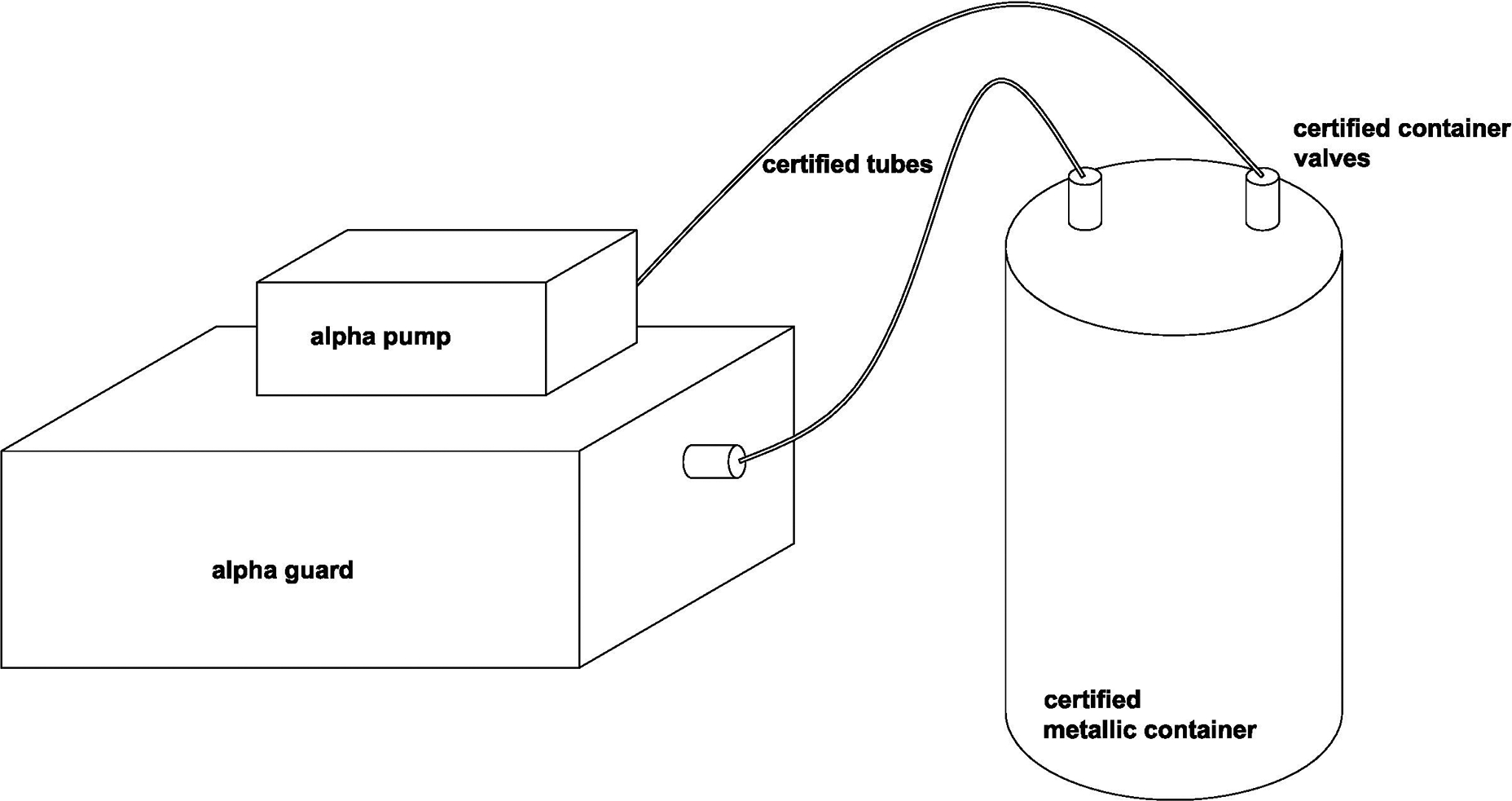
The apparatus designed to study the effect of wood-based samples on its radon exhalation
The containers were divided into two sections. Section A had the radon emanation source and section B, containing a fitting enclosing the sample to be tested and the airbox section, was where the air was collected and the concentration of radon gas was analysed. The project required the analysis of a significant number of samples (64) and since each trial needed a timeframe of more than 11 days, 11 containers were used during the project. For each container, the valves were opened in simultaneously with the activation of the pump, allowing the pump to pull the air inside the container to the ionising chamber of the AlphaGUARD equipment. This operation lasted for about 15 min (enough time to ensure an average of the radon gas quantity pumped into the interior of the ionising chamber). This process was repeated for each container with the product to be tested, during each set of tests. Before each new set of tests, the containers previously used were opened and aired for roughly 5 min, so as to guarantee that the air inside the containers for the new set would not be contaminated by radon concentrations from the previous set. To ensure that the equipment's chamber was not contaminated and as such influencing the values registered in the following measurements, the equipment was placed, with the pump on, in contact with exterior air during approximately 10 min, so as to purify the chamber before a new measurement.
Preparation and selection of the materials used for development of wood-based product with ‘anti-radon’ properties
Initial studies focussed on the applicable waterproof products for floors and walls of buildings to prevent radon gas from entering indoor spaces. The goal was to ascertain the most-effective products as a barrier to prevent the inflow of radon inside buildings. The following products commercialised on the market were analysed: (1) KENSUPER® – Tinta Plástica Lisa (Flat plastic paint); (2) KENFLEX® – Membrana Elástica Lisa (Flat elastic membrane); (3) KENCOLOR® – Tinta Plástica Lisa (Flat plastic paint); (4) KENSIL S1® – Tinta Texturada (Textured paint); (5) Ceys AGUA STOP® – Borracha Acrílica com Fibras (Acrylic rubber with fibre); (6) Monarflex® – RMB 400 – Radon Barrier; and (8) Monarflex® – Reflex Super. Considering the results obtained together with the data observed by other studies in this area (Asian patent No. CN1300078-A to Gao 2001; Gao et al 2008; Abel-Ghany 2011), the constituents present in the composition of the best materials were studied and a new efficient product, regarding the retention of this harmful gas, was developed. Consequently, samples of wood derivatives were developed for further testing, produced by Sonae Indústria, with different characteristics regarding density and thickness and produced using several processes and compositions. Composition-wise, different sorts of samples were produced, with the variation in constituents being Sonae Indústria's responsibility. The technical and scientific goal was to test different wood-based products until we obtained, on a first stage, an efficiency above 95% at a laboratory level.
Selection and characterisation of a real case study application and method for analysing the effectiveness of the product
Regarding the application of the product at full scale, in an early stage, a map of Oliveira do Hospital with indication of faults and abnormal areas was analysed. Through this analysis, the authors sought to identify which public buildings were situated in the most problematic areas to be the case study for the application of the product developed in the laboratory. Two school buildings were analysed: one in a medium risk area – Gavinhos school – and another in a high risk area – Gramaços school (Fig. 2).
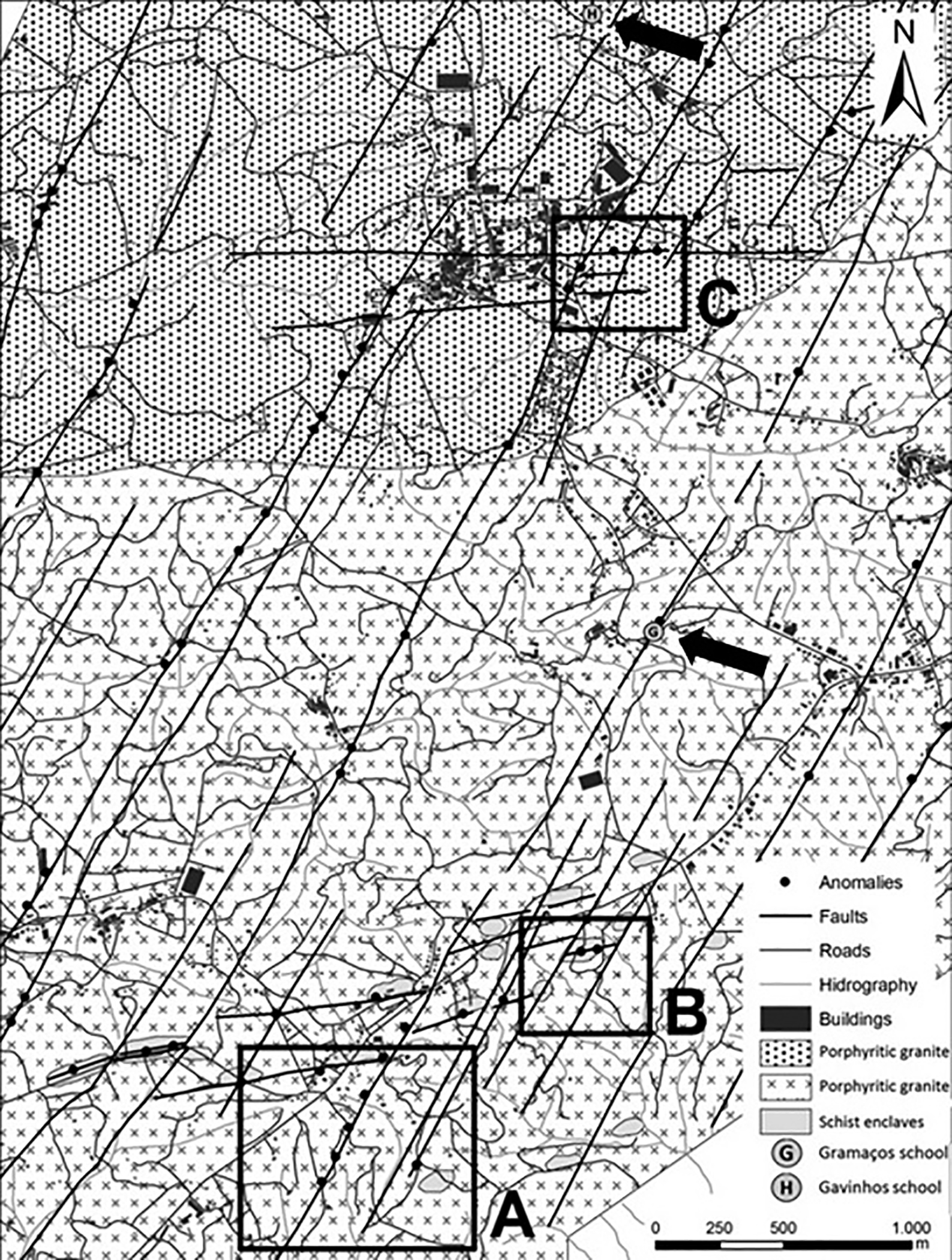
Radon map of Oliveira do Hospital. A, B and C refer to specific sectors that were studied in detail
Before the application of the new product developed during this project, the radon flow inside two school buildings was followed. The measuring procedure consisted of on the application of three boxes sealed with aluminium tape in the pavement of each of the schools. The distribution of the boxes in the schools of Gavinhos and Gramaços are represented in Fig. 3a and b. In Fig. 3c, the location of the measurement points is showcased, after the application of the new wood-based developed panel. The same locations were kept, with an added one that is located in a point with four linear bridges created by the joints of applying and fitting the product.
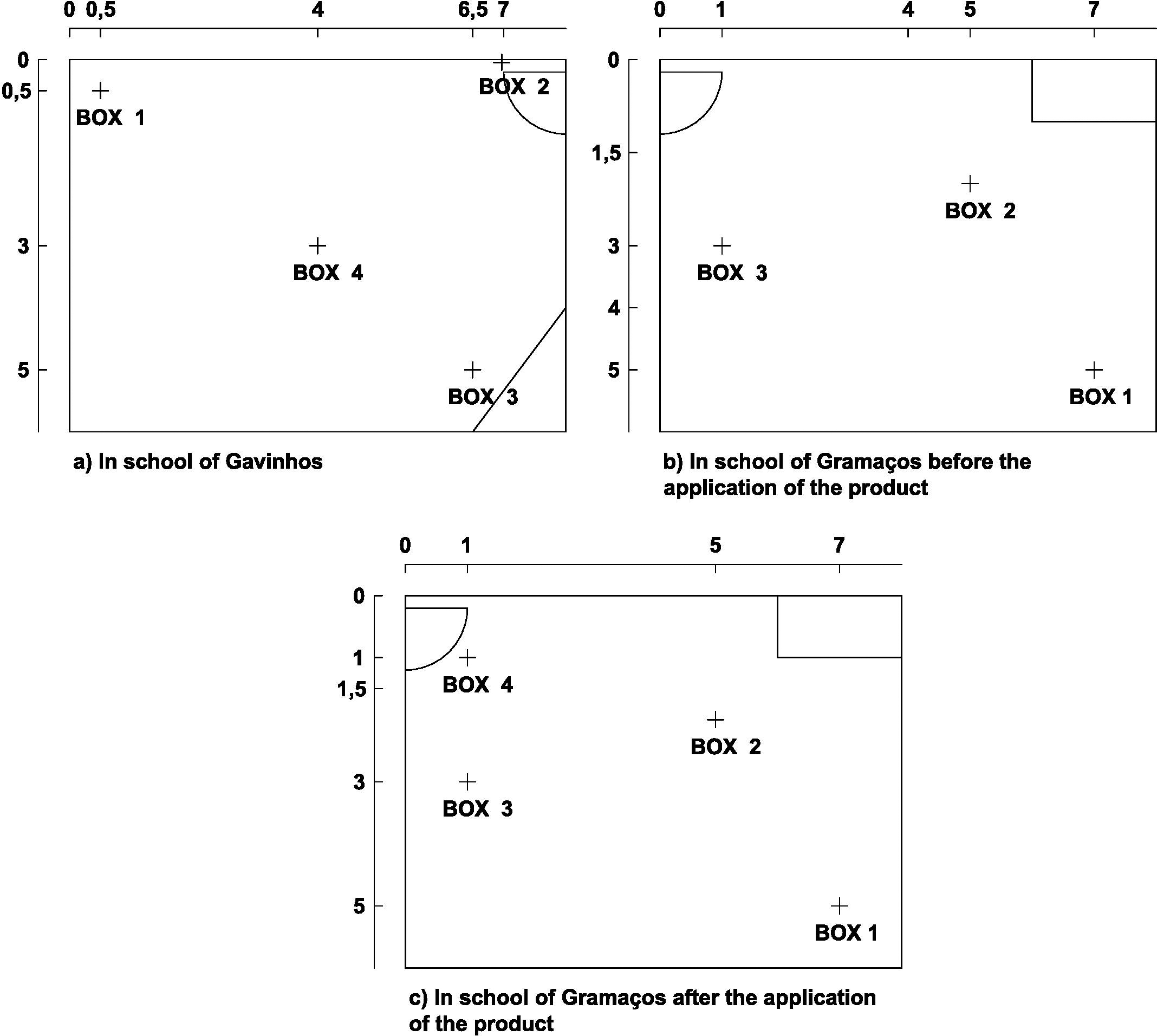
Boxes measuring distribution (distance in metres): a in school of Gavinhos; b in school of Gramaços before the application of the product; c in school of Gramaços after the application of the product
After sealing the boxes and maintaining the valves closed, the radon gas was allowed from the soil to accumulate inside. One day after closure, the radon gas inside the boxes was measured. The measurements were registered with the AlphaGUARD and AlphaPUMP equipments, which were connected with tubes certified for the purpose. After selecting the site for the case study, using the above method and three of the same spot, the efficiency of the product against the flow of natural radioactivity indoors was evaluated and is present in Fig. 3c. This method intended to: (i) confirm the level of risk and the importance of the application of the product and (ii) evaluate the efficiency of the product by comparing the radon flows in the measuring spots before and after placing the product developed in the present study. After measuring the radon flow, through the development of a passive solution in the present study, the authors did a comparative analysis with an active solution developed and applied by Vázquez, Adán and Saiz (2011) and a passive one, by comparison with other existing products in the market (Monarflex – RMB 400 – Radon Barrier and Monarflex – Reflex Super). The case study of Vázquez et al. (2011) was developed for the same levels of radioactivity flows and risk as the present study.
Results and discussion
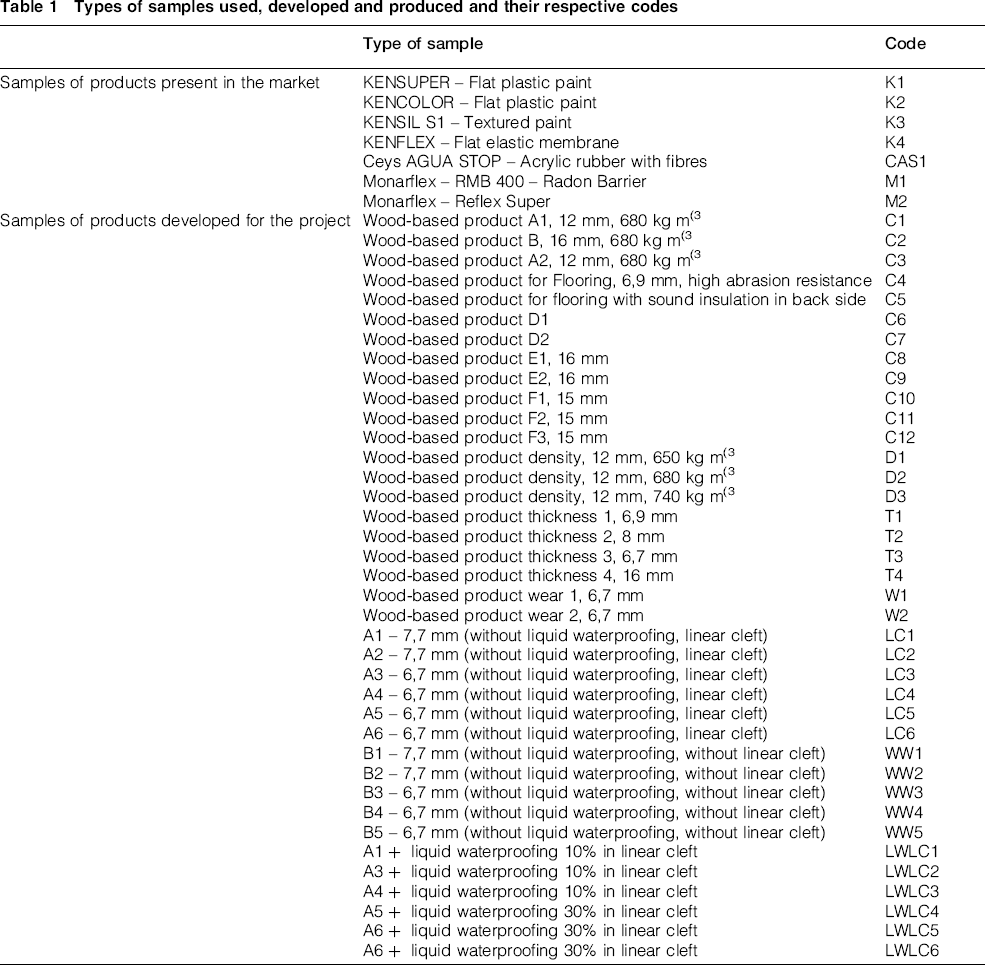
Table 1 presents the set of samples used, developed and produced in this study, with a code attributed to each one. First, the products available in the market were analysed as to the ones that presented a greater efficiency. The parameters and characteristics, such as the constituents, density, thickness, wear effect and the radon linear flow effect created by the fitting systems of each product were analysed and optimised. As a new product for indoor application was being developed, tests in real-life situations with a high risk of natural radiation and with radon present indoors were made. Lastly, a comparative analysis of the new wood-based product for the isolation of natural radioactivity in an indoor context was performed against an active and a passive solution already existing in the market.
Types of samples used, developed and produced and their respective codes
There are surface flows (flows of radon gas in all the whole area of the product) and linear flows (flows of radon gas in linear bridges formed by the junction of wooden boards) of radioactivity that penetrate buildings, derived from the presence of highly porous materials, which are unable to retain this type of gas, and from the existence of cracks that allow linear flows of gas to enter inside buildings. Given that we were developing a solution for the common market, we knew that a wood-based product could not be applied as a whole but instead through the joining and fitting in of various products in such a way that the fitting would create linear bridges. The original purpose was to develop a product that has impermeability levels higher than 95% at a laboratory level, which would afterwards be optimised to answer the problem of the linear bridges. The results and solutions developed to obtain a situation of permeability in laminar flows are presented in the following sections.
The effect of the wood-based product characteristics on the permeability efficiency
To develop the ideal solution, the inherent properties of the wood-based product that could lead to its impermeability to radon gas were analysed. The different tests made to attain higher efficiencies are presented in the following sections. The results are presented in terms of the work developed: the authors first tried to optimise the types of constituents present in the product; afterwards the authors analysed it in terms of density, thickness; and finally tested the resistance to wear of the material. The different samples used and developed were obtained from Sonae Indústria, by changing the production system and with the support of its internal laboratory for product development. This goes in accordance with the analysis of the physical and chemical characteristics of the commercially available products and the results derived from the aforementioned analysis. This part of the work relates to the development of an impermeable product to the flows of radon gas in the surface.
Analysis of the impermeabilising solutions for gases and water available in the market
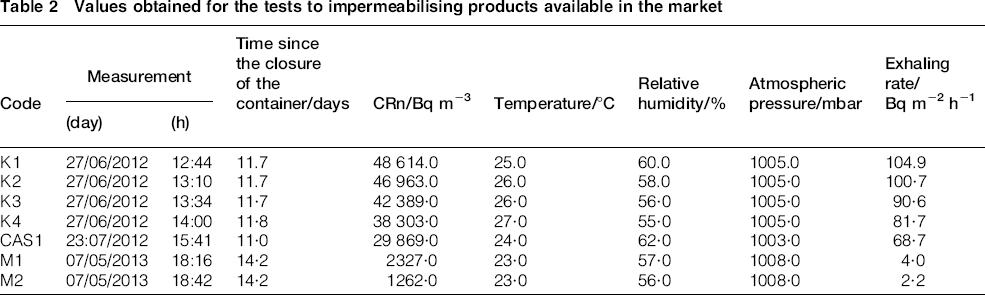
In Table 2, the results obtained for the tests performed with some of the impermeabilising products available in the market are presented, namely paint, acrylic rubbers and membranes (mentioned in Preparation and selection of the materials used for development of wood-based product with ‘anti-radon’ properties section), to test their resistance to the passage of radon. Analysing Table 2, the majority of the products available in the market present high flows of radon (exhaling rate) and as such are an inefficient barrier to the passage of radon gas. It can also be verified that, despite the great ability to retain gas (namely when compared to the rest of the tested materials available in the market), products M1 and M2 still present significant exhaling values (exhaling rates of 4.0 Bq m− 2 h− 1 for M1 and 2.2 Bq m− 2 h− 1 for M2).
Values obtained for the tests to impermeabilising products available in the market
Composition
To evaluate the impermeability of different types of components of the wood-based product, the authors tested samples (C1–C12) with variations in constituents and production processes. Samples C10, C11 and C12 are wood-based panels without surface protection, while all the other samples had a protection surface in both sides as a coating, with the exception of samples C1 and C2, which had only one side coated. Whereas C1 showed an exhalation rate of 11 Bq m− 2 h− 1, C2 presented practically null values of flow. Every sample that had coating on both sides (from C3 to C9) registered equally null values of flow. The values measured for samples C10, C11 and C12 have confirmed that the application of a protection surface has definitely influenced the impermeability to radon.
Density
Given the excellent results obtained in terms of composition for sample C3, the density of that sample was modified and analysed as to the effects on the impermeability properties. The results showed that, despite the different densities, the high impermeability to radon gas was maintained (with the exhalation rate varying between 0.1 and 0.4 Bq m− 2 h− 1). With these data, it is concluded that the density of the product did not influence its resistance ability regarding radon gas.
Thickness
After concluding that density had no influence on the retention ability of the samples, two samples with the same coating system and different thickness were developed. After analysing the data, it was observed that the exhalation rate did not have a significant variation between two products with similar composition but variable thickness (samples T3 and T4). These results leads to the conclusion that the thickness of the product is not an essential characteristic in terms of gas resistance. It is more important for structural properties in terms of the application context.
Wear and tear
To evaluate the effect of usage over time (wear and tear), as well as the possible damage from regular use of the product, samples that had presented good results in the resistance of the gas were tested, by simulating extensive wear through a sander. The results showed that the values of the radon flow through the samples with a simulation of extensive wear were maintained null. Consequently, the product was considered to have a high resistance to various aggressions throughout time.
Intensive wear tests were carried out in three samples of the product, which had efficient prior results. These samples were tested by application of an intensive wear caused by a mechanical sander to simulate a damage in the material equivalent to 30 years of use. The data obtained proved that wear by use did not have a significant influence on radon flow, has shown in Table 3. The developed product presents two waterproofing layers, a lower and a superior layer. These two layers allow the lower surface to endure smaller wear or damage, even if there is a higher wear than normal or any physical damage to the top layer (the surface that the users are in direct contact with).
Values obtained for the prototypes subjected to wear

The radon linear flow effect
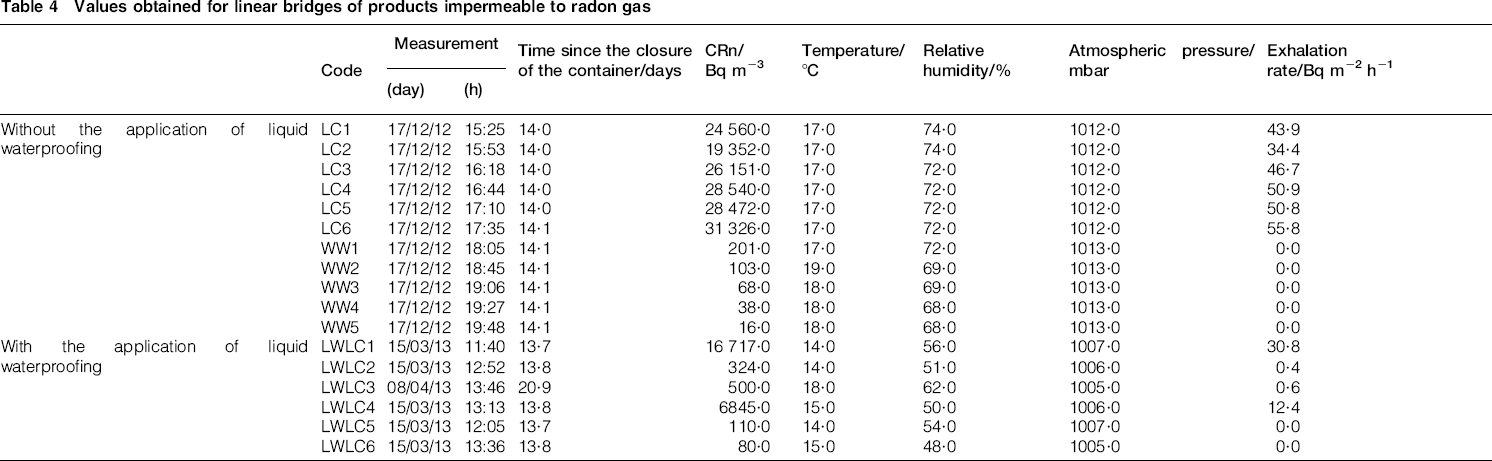
Based on the wood-based product samples that presented null values regarding radon passage, a specific linear bridge was created to simulate a real application scenario. As indicated in Table 4, the WW samples (without joints) have excellent retention ability. However, the LC samples (with joints) revealed high values of radon flow. Considering these results, it can be ascertained that the joints create problems for the resistance of gas. Consequently, an impermeabilising liquid was applied to the LC samples and the products were tested again. When comparing the results of the previous samples with the ones of the samples with impermeabilising liquid, developed by Sonae Indústria, completely different situations regarding the barrier effect towards the radon gas were observed. However, for four samples, there were exhalation rates with null values, in all of the others the exhalation rates registered were higher than 12 Bq m− 2 h− 1. To confirm the retention ability of the liquid agent developed, the quantity applied in the joints that caused higher leakage of radon gas was increased. After new measurements, practically null values of radon flow were verified.
Values obtained for linear bridges of products impermeable to radon gas
Results of real-scale application in schools – before and after the product
After the optimisation of the product and the development of a solution that reduced as much as possible the radon flow through the linear bridges, it was vital to confirm the feasibility of these methods in a real-scale context. For that, measurements in two schools with great potential for indoor radon concentration were made (Fig. 3). Analysing the values obtained for both schools, it was concluded that Gramaços school should be used for the case study for real-scale application, given the incredibly higher concentration of indoor radon when compared to Gavinhos school. While the highest concentration on the Gavinhos school reached only 201.0 Bq m− 3 (box 1), in the Gramaços school, all the values measured were above 11 000.0 Bq m− 3, with the highest level obtained in box 1, with 65 200.0 Bq m− 3. In this way, testing the retention ability of the developed product would be most trustworthy. Taking into account that joints and expansion joints are critical for the present solution and further utilisation of wood-based product, the strategy involved placing two misaligned layers of wood-based products insulated by specific silicone (to protect against dangerous gases). The dilatation joints were never aligned, which also enhanced sealing. The efficacy of this setup has been tested and is presented in Table 5 (box 4). The point ‘Box 4’ of Fig. 3c was intentionally placed in a convergence zone of four lines (discontinuities) to verify the effectiveness of the method. For an applied area of approximately 45 m2, the method was reliable. The results of radioactivity concentration decreased very significantly for situations of geographical locations over geological faults and with high natural radioactivity flows into the interior of buildings.
Values obtained before and after the application of the product in the school

Measurement in a box placed on the top of a joint between the slabs and constituted by four linear bridges, located next to the door of the school of Gramaços, as seen in Fig. 3c
In the measurements made in the original wood floors of the school, dangerous values of indoor radon concentrations were registered, little after 1 day since its closure. At a certain point, the measurement average was of 56 218 Bq m− 3 (Table 4). The values of radon concentration measured after the application of the product, with more than 21 h after closure, were incredibly lower than the values measured in the original wood floors. The results of radon flows measured in the original wood floors and the flows after the application of the building solution are summarised on Table 5.
In practical terms, this ‘anti-radon’ solution had an average retention ability from 95.7 to 98.7%, concerning the radon flow into the Gramaços school.
Comparing the ‘anti-radon’ properties with alternative market solutions
In the context of service entries, just as it happens with other current methods, the air is extracted on the entrances and exits and forced out by dilution to external areas. For high concentration radon levels, active solutions are normally used. Thus, the presented method minimises the problems with service entries because of the absence of natural or forced air extraction. Moreover, it is also possible to place an ante-camera in service zones, which would allow the isolation of the air flux for indoor buildings. In terms of saturation point, there is none because the compound does not absorb radon. It simply creates a physical barrier to its flow (similar to the effect of thermal barriers through thermally insulated materials). Considering that radon lifetime is about 3–4 days and that after this period it becomes solid, the solution presented is not affected by a saturation point. This aspect is demonstrated by the effectiveness shown to very high flux levels of radioactivity.
Passive solutions
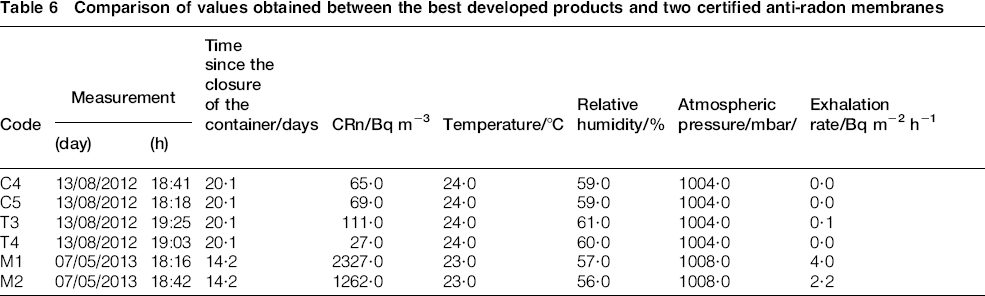
Two ‘anti-radon’ membranes available in the market with good impermeabilisation properties were compared with the samples developed during this study that displayed the best radon retention ability. Table 6 presents the developed samples (C4, C5, T3 and T4) with higher radon retention, in comparison with the two best products available in the market (M). It is important to mention that the products in the M category refer to certified ‘anti-radon’ membranes, which are sold as a passive solution to avoid radon from entering inside buildings. The natural air extraction method was not analysed because it is a seasonal solution, without any guarantee that when there is an indoor radon flow this system will be working.
Comparison of values obtained between the best developed products and two certified anti-radon membranes
Active solutions
A study (Vázquez et al. 2011) published recently on a real situation of indoor natural radon high levels (in Ciudad Rodrigo, province of Salamanca, Spain, 143.0 km from the Gramaços school) similar to the Gramaços School, demonstrated that a reduction of radon flow of about 93.0% could be achieved by using an active system. However, their active system represented an energy consumption of an average annual cost of 4.3 € m− 2 pavement (1.6 × 10− 1 € kWh− 1). In terms of the flow duct fan (e.g. Model MIXVENT TD 350/125™), it can represent an initial investments of 3.8–4.4 € m− 2 pavement, without considering the maintenance cost. In 5 years (period of guarantee of the flow duct fan), this solution presents an average cost of 25.8 € m− 2, for the same levels of efficiency as the solution presented in this paper. The energy loss because of the renovation of the air and its respective thermic cost for the replacement between the comfort temperature that should be maintained in the interior of buildings and the temperature of the air entering from the exterior were not accounted for.
Cost–benefit analysis of concept
At the moment, the concept of a wood-based product is already an industrial company prepared for the serial production of the referred product. The cost of implementation is competitive with current solutions for extracting air from buildings and presents a better performance comparatively with current passive solutions. Cost–benefit analysis of the product with competing products and solutions differentiating factors are presented below.
Comparison with passive solutions
There are currently screens for impermeabilisation that are used in construction and depend on:
for new buildings: the changes in the subsoil to maintain its effectiveness, e.g. the action of the root system of plants; microorganisms and other living organisms that can damage the screen. In these cases, the early detection of any air leaks is impossible and requires great investment. The developed product provides an application that does not depend on the phenomena in the subsoil and can be easily checked if any damage or alteration occurs; for the existing constructions: the method of application – the screens are products easily drillable and without structural mechanical capacity to withstand efforts and other mechanical actions that may hinder the effectiveness of the screen. The solution developed in this project is less likely to be drilled and with a mechanical strength significantly higher than that presented by available screens.
Other products existent on the market are similar to paints, with the characteristic function of ink and impermeability to humidity and radon flows, but with exhalation rates above the solution present in this paper. Furthermore, its superficial application on a wall or a floor does not show sufficient mechanical resistance to ensure that it is a good solution to be applied commercially, in particularly in the construction sector. The solution developed during this work has a superior effectiveness and has no such limitation. The application of paints in pavements does not represent a good solution because of wear and cracking caused by physical contact, endangering its retaining ability. The advantages inherent to the product development are significant: it works as a thermal and acoustic insulating material, has a good application for floor and is resistant to wear, presenting higher security as anti-radon flow. This new product also contributes to the decrease of humidity problems in buildings without energy consumption.
Although both types of passive solutions presented are labelled as products largely impermeable to gases, it was found that for the same conditions and for radon emission sources, they have the potential to insulate lower flows of radon when compared with the values obtained in this project. Furthermore, they do not exhibit the following characteristics: (i) thermal, acoustic and decorative insulator (a very important characteristic because the solution itself is presented as a final product, final wall or floor, and as such does not require extra investment); (ii) use of products with reduced environmental impact, greater durability and improved resistance to contact with the surface.
Comparison with active solutions
In the study by Vázquez et al. (2011), mentioned above, the authors demonstrated that the active solutions used led to a reduction of 93.0% in radon level for high risk situations, equal to the situations studied in the demonstration of real scale in this project. However, this reduction represents an energy consumption with an annual average cost of 4.3 € m− 2 of floor space. In addition to energy consumption, in the context of air extraction system, the authors could have investments of 3.8–4.4 € m− 2 for real situations in the same category of the studies in this project. In 5 years (medium period life guarantee of the flow duct fan), this solution presents an average cost of 25.8 € m− 2, for the same levels of efficiency as the solution presented in this paper. The energy loss because of the renovation of the air and its respective thermal cost were not accounted for in this analysis. The provisional costs are 17.0–21.0 € m− 2 for the wood-based product ‘anti-radon’ solution that contemplate the cost of the product, the application and the adaptation of the floor for anti-radon wood-based product developed for indoor buildings (estimated by the real-scale application in schools realised in this study).
The solution presented in this study is a technical and economically viable solution, with capacity to respond to a high demand, considering the ageing tests used to assess the effects of wear and tear corresponding to an average equivalent to 30 years of use (Wear and tear section), the real situation of indoor natural radon high levels and the other solutions available in market.
Conclusion
The presence of natural radioactivity inside buildings is a serious public health problem. It is invisible, odourless and it can not be felt, presenting a health hazard and being associated with the development of cancer. There are very few solutions in the market that are specifically aimed at solving this problem. Different types of passive solutions commercially available were analysed and all had significantly lower performances than the one presented in this paper. In terms of active solutions, similar performances were obtained but with significantly higher costs and without any other functions. It is important to value the existing functionalities of the wood (thermic and acoustic isolator, decorative product, carbon stock and made based on natural resources) and the development of new integrated functionalities. This paper presents a new functionality for the wood-based anti-radon products and guarantees a good performance in a real application context and the ability to respond to a high demand. Isolation of natural radiation for indoor application was obtained with an average retention ability ranging from 95.7 to 98.7%. This solution appears as a new entry risk prevention solution for radon gas and is economically attractive, when compared with active and passive solutions available in market. The technological, academic and entrepreneurial communities and the local entities and population are essential to the success and development of these type of solutions.
Acknowledgement
The ‘Quadro de Referência Estratégico Nacional (QREN)’, MaisCentro, project WoodCare is gratefully acknowledged. To Sonae Indústria P.D.C.M. for the development of different samples, the availability of the production line and active participation in the perfecting of the wood-based product for the wanted objective. Thank you to the Municipality of Oliveira do Hospital and to the Associação Desportiva de Gramaços (Sports Association of Gramaços) for providing their installations for the case study and for supporting the real-life application of the project.