







Abstract
This paper follows the life of Sydney Garne, from qualification as a dentist in London through a short visit to South Africa, to a lifetime of professional service in Ceylon. There he was the first non-medically qualified dentist to enrol on the Dentists Register. Then he became the founder-President of the Ceylon Dental Association which he ensured was based on the British association. The responsibilities of that post remained on his shoulders for 10 years; all the time he ran a thriving practice and had a happy family life, including a stepson of whom he was proud.
Introduction
This author was encouraged to think about Sydney William Garne 1 by Henry Carr Green, LDS Manch DDPH, 2 a much later member of the same family and a retired UK general practitioner and community dentist. He had gathered some information about his relatives, especially Sydney Garne and his adopted son Spencer. Although qualified in England, Sydney was immensely important in the world of Ceylonese 3 dentistry.
When Green's elderly aunt died in 1985 he was executor of her Will. Among her papers Green found a notebook written in about 1870 by his great, great grandfather, William Louis Garne for his son Henry. It helped him trace several generations of his family. Green had retired in July 1984 and after dealing with his aunt's affairs he decided to investigate the family's history. 4 As a fellow dentist he developed a special interest in Sydney Garne.
Among Green's contacts was Richard (Dick) Garne who had been researching the family since World War II. He told Green that he had been sent a cutting from a 1902 South African newspaper publication with information on Sydney.
Sydney William Garne
Sydney Garne was born on 24 December 1875 in Berkshire, Surrey. 5 His parents married in Windsor in 1874. His father was Henry Frederick Garne (b. 1849 in Newbury; d. 1898), son of Henry Jenner Garne (1811–77) who in 1842 married Helen Smith of Newbury, Berkshire. Henry Jenner was the younger brother of Henry Carr Green's great, great, great grandfather, William Louis Garne, author of the diary.
Sydney's mother was Caroline SR Bowker (b. 1846 of Stoneleigh, Egham) who previously had married Mr Goodman by whom she had a daughter Kate (who married Sydney James of Egham). In addition to this half-sister, Sydney had a sister who died in infancy.
Looking for a reason as to why Sydney chose dentistry as a career, Green wondered whether his father was a dentist or perhaps a physician or surgeon. 6 However, there was no record of HF Garne in relevant medical or dental directories or registers or in the Royal College of Surgeons of England's lists of members. 7 That is not surprising. In fact Frederick was the proprietor of a ‘fancy repository’ in Egham in 1882 and 1890. 8 In 1895 he is listed as a private resident in Runneymede Street, Egham. He was no longer noted in the 1899 local directory, but is on the Electors list for 1899 as owner of 3 and 4 Tennyson Villas, Denham Road, Egham. Henry Frederick Garne died in 1898.
Education and training
Sydney Garne was educated at Kent College, Canterbury and then at the Coopers' Company School in Egham. 9 The latter was possibly the Strode's School that was associated with the Worshipful Company of Coopers, a City of London Livery Company. Between January and December 1891 he attended the King's College School in London's Strand. At the time Sydney went there it occupied the same building as King's College London, 10 for which it was largely a feeder school. Students of the school and college mixed together a great deal. In 1897 the school moved to Wimbledon, but by then Sydney had left.
Having made up his mind to become a dentist, Sydney Garne obtained a formal education and training rather than undergo an apprenticeship as was common at that time. The Licence in Dental Surgery of the Royal College of Surgeons of England had been introduced in 1860 and the Dentists Register established in 1878, so the dental trade was becoming professionalized. Garne gained a place to study at the Dental Hospital of London, founded in 1858 at 32 Soho Square. In the following year the London School of Dental Surgery was established in the same building to prepare students for the LDS. According to a prospectus issued in August 1858:
11
The Dental Hospital of London is founded for the purpose of affording to the poor generally the means of obtaining gratuitous relief and advice, in such cases as are included in the special practice of Dental Surgery; and also for affording an opportunity of instruction to those who enter the Dental Profession.
By 1874 both institutes moved to 40 Leicester Square, in ‘a disreputable area of London’, a ‘notorious hunting ground of the debased and profligate’. In 1901 the hospital and school moved to number 32. 12 King Edward VII agreed to become patron, bestowing the title of ‘Royal’ Dental Hospital on 15 October. Garne would have studied at the second building. He also attended Charing Cross Hospital for medical aspects of the course, necessary as the dental hospital was not part of a general hospital. In 1898 Garne passed the examinations for the LDS RCS. His son Spencer said Sydney wanted to study medicine and had possibly started the course when his own father died in that same year but it did not happen.
Practice in the UK
At some stage Garne was a house officer at Charing Cross Hospital. Even though he qualified in 1898 Garne (Figure 1) did not register his name on the list of dentists held by the Dental Board of the UK, a subcommittee of the General Medical Council, until 15 May 1901. 13 Before 1921 when dentistry became a closed profession, it was not essential for practitioners to register with the Board. Thus, he could have worked without doing so but it probably would have been unusual if not rare for qualified dentists not to register. So either he was not working or he had gone abroad.
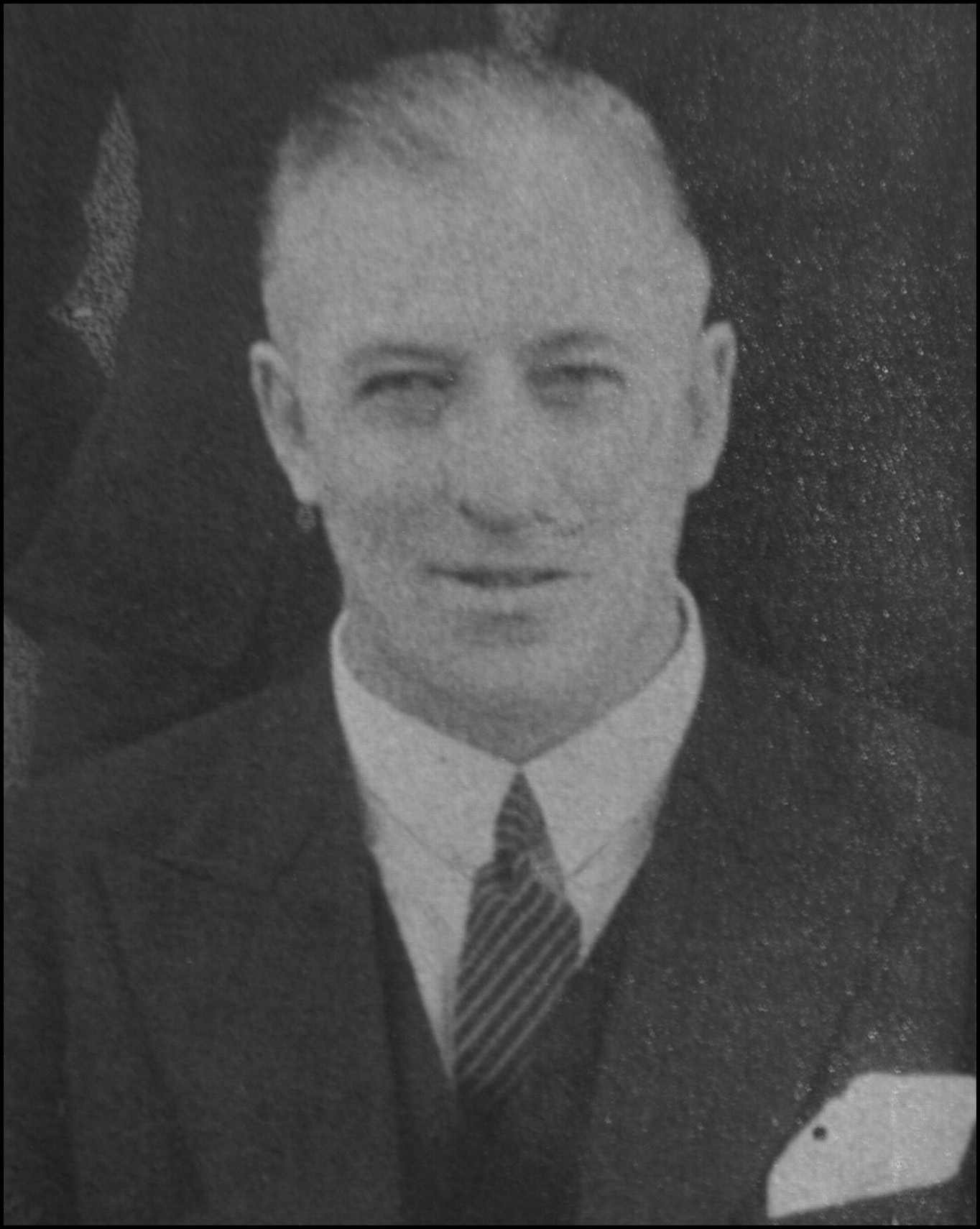
Sydney William Garne, 1932, reproduced courtesy HC Green from the family archive
The 1902, 1903, 1904 and 1905 Dentists Registers show Garne was registered at 15 Clarence Street in Staines, although this does not necessarily mean he was working there. 14 The 1901 Census indicates he was living in Staines in that year. The dental list in the Calendar of the Royal College of Surgeons of England shows that in 1904 Garne was living in Johannesburg, Transvaal. He had emigrated to Krugersdorp in South Africa and was certainly still there in 1905. The 1905 and 1906 calendars suggest he did not return the form in those years to update his personal information so his entry was dropped in 1907 and 1908. He did not remain in Africa. By 1908 he was listed in the Dentists Register at ‘Clovelly’ in Egham, Surrey, but again that does not confirm he had returned to England. By then he may have travelled to Ceylon.
The 1909 College Calendar lists Garne as at Clovelly and at the Bristol Hotel in Colombo, Ceylon. 15 Before air travel, a journey by sea from Britain to Ceylon would have taken about a month so it was unlikely he was practising in both countries. As often happened with ex-pats, no doubt he used Clovelly as a UK point of contact.
Garne remained on the British register until he died in 1946. Until 1923 he was registered at Clovelly; from 1924 at the Grand Oriental Hotel, Columbia; and from 1933 at 45 Galle Face Court, also in Columbia.
According to his son, Sydney Garne was the first dental lecturer to ‘the Royal Naval Dental Corps at Portsmouth’. 16 It has not been possible to trace any association. The Royal Naval Dental Service was not formed until April 1920. However, Harry Green learned that naval medical officers were appointed to Haslar Hospital and the RN Barracks at Devonport in 1892 for ‘dental duties’. He wondered if they could not cope and called in specialist help to lecture the naval officers about teeth.
South African interlude
Sydney decided to go to South Africa. According to a South African publication, Garne migrated in 1893 17 but it is probably a printing error. His move came after ‘practising successfully at Queen's Gate, London, and Staines, Middlesex’ so he could not have gone unless he practised dentistry before taking the LDS examination in 1901. The article suggests he chose Krugersdorp as it offered ‘considerable possibilities for the exercise of his science’ and the fact he ‘remained there proves he has succeeded to his and his clients’ satisfaction'. The publication said Garne was a foremost supporter of sport in the district and was a member of the West Rand and the Krugersdorp Clubs, and of the Pony and Galloway Club.
Spencer also said his father was a dental examiner in South Africa, but again confirmatory evidence is lacking. Garne did not stay there. He returned to the UK for a while and then emigrated to Ceylon.
Marriage
In 1910 Sydney married Agnes Bessie (known as Betty) Clapp. She was born on 7 June 1878 as Bessie Gould to a family living in Shanghai, China, where she married Harry Clapp. 18 A son, Spencer, was born in Japan on 16 October 1899. The marriage broke down and Betty went to San Francisco, USA for a divorce and then she travelled to Singapore and married Sydney. It is not clear where they met. Sydney legally adopted her son Spencer but the couple did not have children themselves.
Practice in Ceylon
The British arrived on the island of Ceylon in the late 18th and early 19th centuries. They introduced extensive crops of tea and coffee. By 1909 Garne had moved there after a sea voyage of three to four weeks. 18 He settled in Colombo in the south-west of the country. Initially he practised at the Bristol Hotel in Colombo which was occupied by a succession of dentists until the late 1970s. Ceylon became Sri Lanka in 1974.
From 1924 he was listed in the Dentists Registers at another address in Colombo, the Grand Oriental Hotel (known locally as GOH). Later renamed as the Hotel Taprobane, by 1994 it reverted to the old name.
Garne's long-standing practice was at 45 Galle Face Court, which he was in the process of selling at the time of his death. Although it was not his first home, for many years he lived and worked at apartment number 45. This interesting building with its shallow dome stands near the Galle Face Hotel, at the far end of Galle Face Green in Colombo. 19 It was built in two phases: 20 in 1923 the first section was built as Galle Face Court 1, the first multistoried block of flats in Ceylon; in 1926 a large domed addition, Court 2, was built with an observatory in the dome for the residents and their guests. At first the flats were let out to Europeans and later it also housed the HQ of Macan Markar, the family of jewellers who built it.
Garne changed his address for registration with the General Dental Council in 1923 21 and remained at Galle Face Court until his death. This address saw a succession of dental practitioners. 22 The practice probably closed in the mid-1970s.
Dentistry in Ceylon and origins of the dental association
From 1915 the Dental Registration Ordinance governed the practice of dentistry. The first qualified dentist to register and work in Ceylon was Sperling Christoffelsz, LRCP MRCS Eng LDSEdin. Garne was the first dentist to register without a medical qualification, entering the dental list on 16 June 1916. Strangely it suggested his LDS was from Edinburgh rather than from the English college of surgeons.
According to Hilarian (Hilary) Cooray, a past president of the Sri Lankan Dental Association and a noted historian of dentistry in that country, 23 ‘the name of William Garne is of great importance in the history of dentistry in this country [ie Ceylon, later Sri Lanka]’. On 6 December 1932 Garne and 11 colleagues formed the Ceylon Dental Association (CDA), with him as founder-president. By then 25 dentists worked in government hospitals and the private sector. 24 According to a foreword Garne wrote to the Constitution of the Association, the original rules and regulations were based on those of the British Dental Association (BDA). The BDA was thanked by Garne and Gomes, the honorary secretary, for much encouragement and support and for ‘readily accepting our application for affiliation to the Parent Institution’. 25
Garne remained president of the CDA for 10 years, after which he retired because of ill health. 26 In wartime the activities of the association were disrupted and election of its office bearers was delayed in 1942. On 12 November Garne said that with much regret, owing to ill health he was not willing to be re-elected president ‘which office he filled just 10 years from the day of the founding of the Association’. 27 Because of his ill health a few meetings were held at his home. Garne was succeeded by JSR Goonewardena (1942–45).
In 1943 a dental school was established as the Department of Dental Surgery in the Faculty of Medicine of the University of Ceylon, Colombo. 28 As an acknowledgement of his outstanding contribution to dentistry in Ceylon, Dr W Balendra proposed that an enlarged portrait of Garne should be hung at the meeting place of the CDA. 29 A date was fixed for the hanging, on the 15th anniversary of the founding of the association. The CDA sought permission from the Director of Medical and Sanitary Services, Dr Briercliffe, to hang Garne's portrait on the walls of the school. Permission was not granted as it was against policy to hang private portraits in government buildings and Garne was not a government employee. On 20 July 1946 the issue was taken up with the new director of the school, Balendra himself. He agreed to allow portraits of Garne and Gomes 30 to be mounted in the hall where the association held its meetings. 31
The Royal Geographical Society
Garne was elected a Fellow of the Royal Geographical Society on 15 November 1909. 32 On the form he described himself as a Medical Dental Officer of Colombo and so certainly he was in Ceylon at that time. His proposers were Sir Ernest E Shackleton and John Scot Keltie (secretary of the society). He had met the famous explorer when Shackleton visited Ceylon en route to one of his expeditions. 33 On 9 April 1940 Garne wrote to the society about the expense of the annual subscriptions: ‘I trust you did not take any exception to my letter re the fees payable by foreign fellows, but of course, I know you appreciate the difficulties we are all going through at the present’. 34 He relinquished membership in the following December.
Death and Will
Sydney William Garne died aged 72 years at the Joseph Frazer Nursing Home, on 25 October 1946. 35 The funeral was held that same evening at the General Cemetery in Kanatte. Reverend Proctor held a short service in the chapel and at the graveside. The Times of Ceylon wrote: 36 ‘Dr Garne was one of the oldest and best known dental surgeons in the Island’. On 4 December the dental association passed a motion of condolence on his death.
Garne appointed his wife, Agnes Bessie (Betty), and a friend, Arthur Nesbitt Strong MA, Barrister-at-Law as executors for his Will. In it he asked Betty to give some friends a few personal belongings. 37 The rest of the estate was left to her. 38
The Will signed in Colombo on 25 October 1944 left nothing to Spencer: perhaps Sydney felt he had enough of his own money. At some time Sydney had given Spencer a ring that possibly he felt was enough of a memento. Spencer said earlier that Sydney had a ring of which he was very proud. It had a crest with a French motif – possibly an ‘N’ – which Spencer thought was a family crest. Maybe this was the ring given to Spencer.
Garne's Will lists the companies in which he held shares. 39 On 26 November 1946 an agreement was signed between Betty and William Hugh Burndred, a dental surgeon who was in the process of purchasing the practice. Garne had agreed before death to sell the practice (‘exclusive of the safe and the contents thereof’) for £3000, £1500 of which had already been paid. The sale was completed on 11 November 1946 with the balance to be paid in 20 months. Everything including goodwill was to be included. Letters were to be sent to the patients that the practice had been sold to Burndred.
After Sydney's death Betty and her two sisters settled in a house in Oxfordshire. She made contact with her first husband, Harry Clapp, and visited him in Norfolk Island, perhaps en route to Australia to see Spencer. Her brother John had lived out his years in Canada. Betty died on 4 October 1966 in Sunningdale.
Spencer Harry John Garne (1899–1980)
Spencer Garne was born in Kobe, Japan on 16 October 1899, to Bessie (Betty) Clapp. 40 Spencer spent his early years in Singapore but his main education was at ‘Berkhamsted, Hertfordshir [sic]’. Sydney adopted him when he married his mother.
In World War I Spencer joined the Royal Flying Corps (RFC), on 5 December 1917. 39 At first he was an RFC cadet at Blackdown Camp and then he trained as an observer in Hastings, Reading, Uxbridge, Hythe, New Romsey and Winchester. Spencer was then posted to France. His movements were: 21 July 1918, No. 8 HQ Squadron; 8 August, with tank brigade on the Somme; and 21 August, Arras front. Spencer was wounded on 23 August 1918 and demobbed on 23 June 1919.
April 1936 saw the marriage of Spencer to Marion Haynes Padbury (born 26 May 1903) in Colombo. In World War II Spencer served in the Royal Air Force. 41 He joined up in Ceylon and held a staff appointment in Colombo throughout the war, perhaps engaged on some cipher work. 42 His rank is unknown.
After the war Spencer became a tea planter on the very large and well-known Gikiyanakande Estate in Neboda, Western Ceylon. He still retained an English address, c/o Mrs Atkinson, High Kelton, Berkhamsted, Hertfordshire. It is unclear who owned the estate when Spencer worked there. However, the Sunday Times reported in 1998 43 the former Finance Minister, Ronnie de Mel, had said he owned 50 acres of land to which he was entitled under the Land Reform Law. Under this law his family surrendered 5000 acres of the highest yielding tea and rubber lands in the country and also some coconut and paddy lands. They included the Gikiyanakande estate. Under this law he applied to keep 50 acres for which he was eligible from his own Glendon estate at Neboda. However, in 1975 the Commission allocated 50 acres from Puttalam Plantations that also belonged to him.
Upon leaving Ceylon in 1959 44 Spencer and Marion spent some time in the UK then emigrated to Western Australia. Their last address was 86 Tyrell Street, Nedlands in Perth. Spencer and his wife both died in Perth in 1980; Marion on 13 March, Spencer on 14 September.
His Will dated 16 August 1974 named Marion as the main beneficiary but she pre-deceased him. Having no children, his estate of 50,000 Australian dollars was left to Marion's niece, Helene Elizabeth Niquet Wilson, of Sevenoaks, Kent, who had also lived in Ceylon for some years. 45
Footnotes
Acknowledgements
Grateful thanks are due to Harry Greene for setting me on this journey and allowing access to his papers and also to those of his relatives who clarified points of information. Helen Nield, Library Manager, and Damyanti Raghvani, Librarian, at the BDA Information Centre gave an enormous amount of help with locating information as did librarians at the Royal College of Surgeons of England, the Wellcome Collection and the local archives mentioned in the text. The Royal Geographical Society (with IGS) kindly gave access to Sydney Garne's original application form and to some correspondence. Support, encouragement and information came from Hilary Cooray, the eminent Sri Lankan dental historian.