Abstract
When the first edition of this book was published in 2002, it was greeted with pleasure and proved very successful. As the editors hoped, it did indeed fill the gap in the market for a comprehensive readable account of the physics and technology underpinning diagnostic ultrasound. It has become the standard text for many ultrasound courses and many of us use it as source material for teaching.
Eight years later, there is still a need for a text to clarify the numerous ‘technological advances’ with which manufacturers now litter their machines. This edition fulfils that need admirably. There are new chapters on 3D ultrasound, contrast agents and elastography. These modalities have been with us for several years and the new chapters help to put them into perspective, certainly from a technological point of view. Discussion of the clinical value of these techniques is outside the remit of this book and the editors have wisely decided to leave it there. However, the whole issue of the diagnostic value of the numerous technological changes in imaging modalities is very important for students of ultrasound. Perhaps the editors could consider including a chapter on this for the next edition.
The existing chapters have been re-visited and updated very successfully. The reader has little difficulty understanding the explanations. Clear diagrams and appropriate examples are very helpful. The questions at the end of each chapter are easily sufficient for the reader to reflect usefully on the material within the chapter.
The appendices deal with boring but useful matters such as the decibel, the binary system and the British Medical Ultrasound Society (BMUS) scanning guidelines. Re-reading the guidelines I am reminded as to how cumbersome they have become and especially how unclear is the concept of ‘scan time’. In one table the time is said to include pauses, but in the same table, for transcranial scanning, it is recommended that the duration of the pauses be increased to reduce thermal effects. This is much more a criticism of the BMUS guidelines than the book – but help within this book's safety chapter would be appropriate.
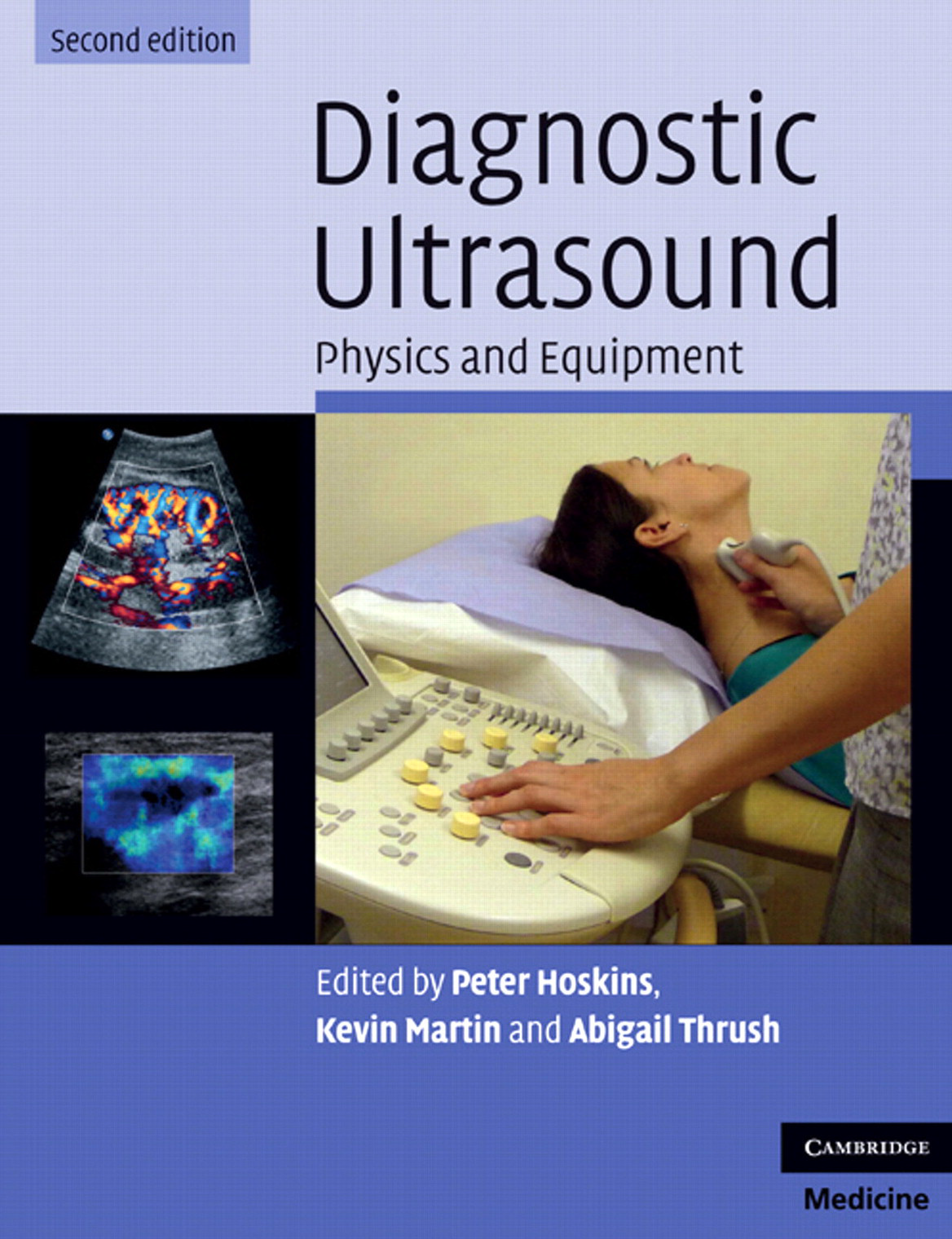
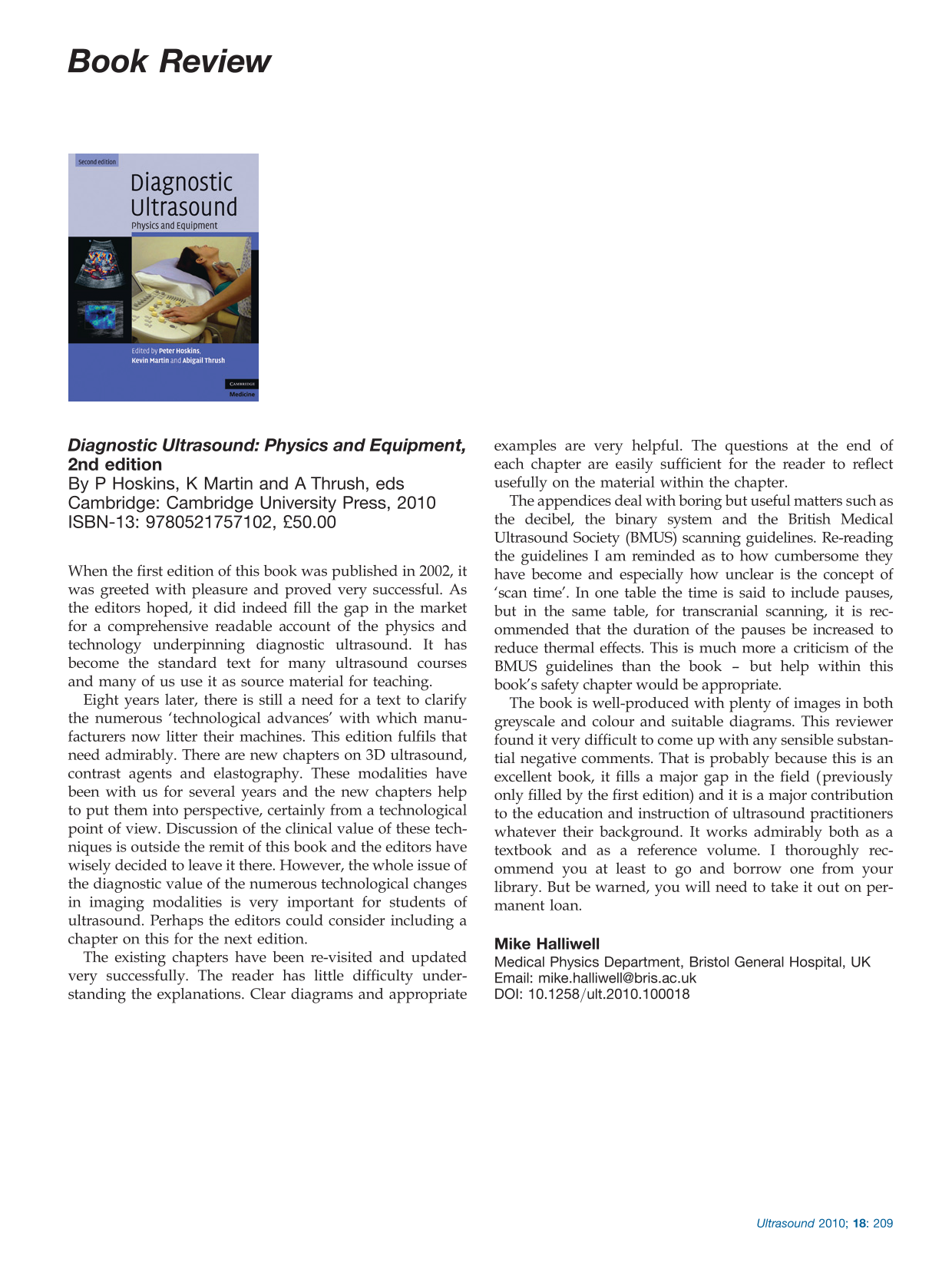
The book is well-produced with plenty of images in both greyscale and colour and suitable diagrams. This reviewer found it very difficult to come up with any sensible substantial negative comments. That is probably because this is an excellent book, it fills a major gap in the field (previously only filled by the first edition) and it is a major contribution to the education and instruction of ultrasound practitioners whatever their background. It works admirably both as a textbook and as a reference volume. I thoroughly recommend you at least to go and borrow one from your library. But be warned, you will need to take it out on permanent loan.