






Abstract

TO THE EDITOR: Interferon (IFN) was the first drug to demonstrate good efficacy in the treatment of chronic hepatitis C virus (HCV) infection. 1,2 Combination therapy with pegylated IFN alfa-2b plus ribavirin is associated with a response rate of 50% among patients infected with HCV genotype 1. Systemic cutaneous manifestations have occasionally been reported, mostly involving small and limited lesions. 3,4
We report a case of generalized exfoliative dermatitis and intense pruritus during therapy with pegylated IFN alfa-2b in a patient with chronic HCV infection.
Case Report
A 41-year-old man with chronic HCV infection presented with an increase in serum alanine aminotransferase and serum aspartate aminotransferase values (Table 1). There was no history of drug use or abuse. Antiviral therapy was initiated with pegylated IFN alfa-2b plus ribavirin. After 3 months, normalization of aminotransferase levels and serum HCV-RNA occurred (Table 1), but with development of urticaria and cutaneous desquamation of all of the patient's body except his face. He was taking no other medication at that time. Blood chemical evaluation did not reveal serologic evidence of autoimmune disorders. Antimicrosomal antibody, anti-nuclear antibody, anti–smooth-muscle antibodies, thyroid peroxidase antibodies, and anti–double-stranded DNA were negative. Tests for total and differential circulating immunocomplexes were negative.
Laboratory Findings After the Start of Pegylated IFN alfa-2b Therapy
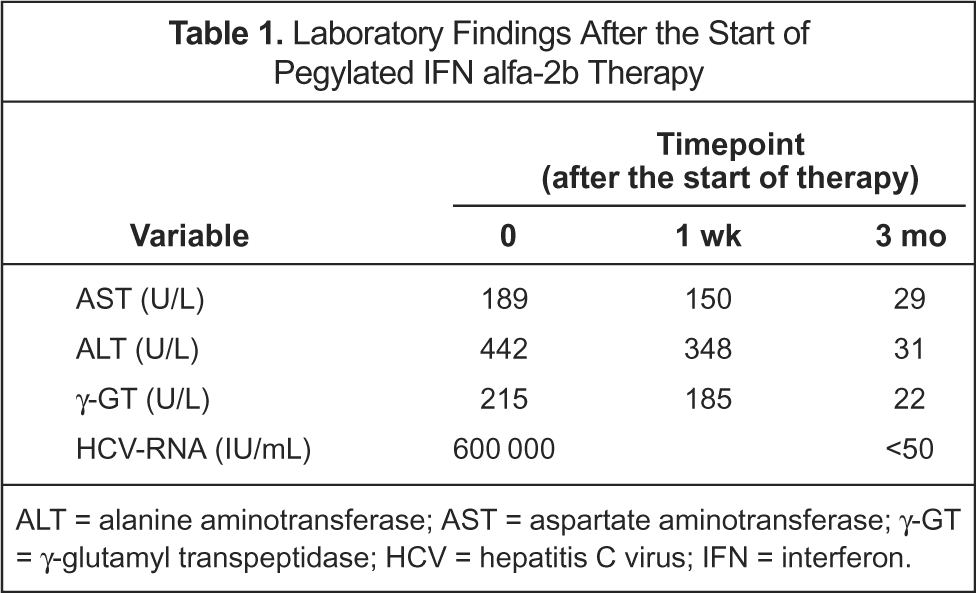
ALT = alanine aminotransferase; AST = aspartate aminotransferase; γ-GT = γ-glutamyl transpeptidase; HCV = hepatitis C virus; IFN = interferon.
Ribavirin was promptly stopped and corticosteroid topical therapy for these lesions was started, without any significant improvement. Therefore, 2 weeks later, pegylated IFN alfa-2b therapy was discontinued. One week later, a new clinical evaluation showed significant decrease in cutaneous lesions. Pegylated IFN alfa2b rechallenge was performed in the presence of clinical specialists and confirmed the development of systemic cutaneous lesions with pruritus. The Naranjo probability scale indicated a highly probable relationship between the skin manifestations and pegylated IFN alfa-2b therapy in our patient. 5