






Abstract

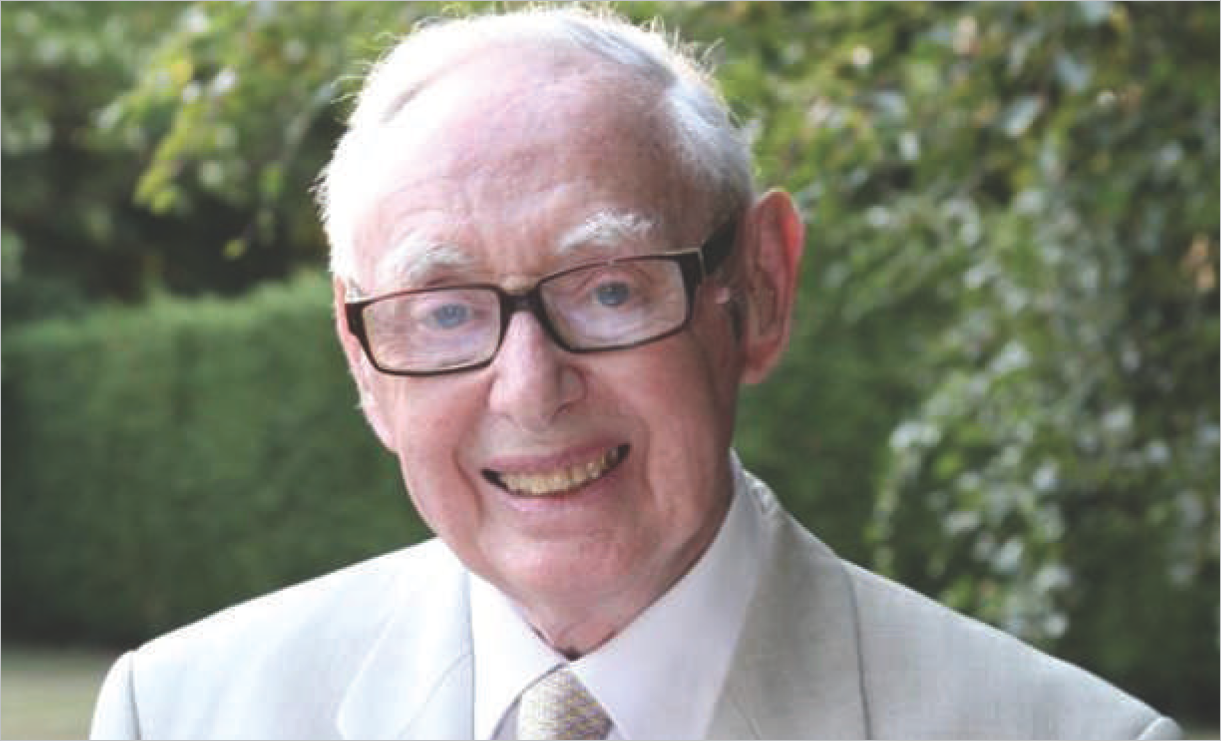
Norman Sheppard, one of the giants of spectroscopy and surface chemistry in the United Kingdom, passed away peacefully at the age of 93. After receiving his B.Sc. from Cambridge University, Sheppard joined the research group of Gordon (later Sir Gordon) Sutherland, who was one of the leading infrared spectroscopists in the world. Infrared spectroscopy found an important application during the Second World War in that it could be used for the analysis of enemy fuels in order to assess to what extent Germany was dependent on synthetic fuels as opposed to fuels as opposed to fuels derived from natural sources. Infrared spectroscopy was also used to distinguish between natural and synthetic rubber, again important information from a strategic standpoint.
In addition to investigating the structure and origin of natural and synthetic rubber, Sheppard studied the vulcanization process whereby rubbers were strengthened by treating them with sulfur. This work was important since it was found that most synthetic rubbers were not as successfully vulcanized as natural rubbers. At that time, most spectroscopists fabricated their own instruments and it took the better part of an hour to measure an infrared spectrum. In the early instruments, a prism was used to disperse the radiation from an incandescent source into its component wavelengths. Infrared radiation is not transmitted through glass and instead the prisms of the early spectrometer had to be made from sodium chloride (common salt), which has good transmission properties out to wavelengths of about 15 μm. However, the carbon-sulfur bond, which was believed to be important for the study of the vulcanization process, absorbs at a longer wavelength than 15 μm and it was necessary to use potassium bromide (KBr), which transmitted light of longer wavelengths than rock salt, as the prism. Even with KBr optics, measurement of C–S bonds proved difficult as the band corresponding to the stretching vibration of the C–S bond proved to be very weak. Nonetheless, Sheppard Still found that infrared spectroscopy could be used to investigate the vulcanization, process. Both natural and synthetic rubbers are formed by polymerizing a molecule known as isoprene. Isoprene can be polymerized in two different ways and Sheppard's work showed that only one from of the isoprene polymers could be readily vulcanized on reaction with sulfur.
After the end of the war, Sheppard was allowed to publish the results of this work, and related studies of hydrocarbons, as part of his Ph.D. thesis. Measurements on homemade instruments such as the one used by Sheppard were difficult and time-consuming, making his work even more impressive in retrospect. It is worthy of note that after 1945, infrared spectrometers became commercially available and today tens of thousands of these instruments are installed in chemistry labs worldwide.
After receiving his Ph.D., Sheppard embarked on a year of post-doctoral study at Pennsylvania State University (“Penn State”) where he continued his work on the vibrational spectra of hydrocarbons, this time using a Raman spectrometer. Raman spectra were even more difficult and time-consuming to measure than infrared spectra at that time, but the complementary information that can be obtained by Raman spectroscopy made the time spent in their acquisition worthwhile. As a result of his work at Cambridge and Penn State, Sheppard became recognised as one of the leading authorities on the spectra of hydrocarbons and his work in this area has retained its importance today.
As a sideline during his time at Penn State, Sheppard developed an interest in the spectroscopy of molecules adsorbed on the surface of metals, especially those used as catalysts in industrial processes, and this topic consumed the rest of his scientific career. He first measured the spectrum of hydrocarbons adsorbed on the surface of finely divided metals (especially platinum) that were dispersed in powdered silica. Later he made the much more challenging measurements of molecules adsorbed on flat metal surfaces, providing the first knowledge of the possible structures of chemisorbed hydrocarbons in catalytic situations.
In 1963 Sheppard and his wife moved to Norwich, where Norman became professor of chemical physics at the newly formed University of East Anglia, staying there for the rest of his career. His scientific reputation grew rapidly, and he became renowned for his ability to interpret complex spectra to identify molecular structures. While at UEA, his pioneering research shaped the emergent field of surface chemistry–identifying chemical catalytic reactions on crystallographically defined single-crystal metal surfaces, with vital applications in semiconducting, medicine, and nanotechnology. His team discovered a new type of bond between hydrogen and other elements that explains why water is liquid at room temperature.
Sheppard's work benefitted from several major advances in instrumentation that were made during his scientific lifetime. Infrared spectrometers advanced from instruments based on salt prisms to ones in which diffraction gratings were used to disperse the radiation, and finally to Fourier transform spectrometers, where all the wavelengths are measured simultaneously. Raman spectrometers underwent even greater transformations, where the development of lasers in the 1960s revolutionised the way in Raman spectra are excited, and the development of charge-coupled array detectors simplified the detection of very low light levels, which is necessary for the measurement of Raman spectra. He also pioneered the application of electron energy loss spectroscopy (EELS) to the study of adsor-bates on single crystals of various metals.
Throughout his career, Sheppard's lab was at the forefront of measurements made using every new advance in the instrumentation required for his work. However, he also recognised that other newly developed instruments would supersede currently used instruments for certain applications. For example, between about 1945 and 1955, infrared and Raman spectroscopies were recognised as the optimal techniques for determining molecular structure, yet when nuclear magnetic resonance proved to be far more powerful for this purpose, Sheppard ensured that his department was one of the first in the UK to acquire such an instrument. Similarly, when it became apparent that EELS was a more powerful way of studying molecules adsorbed on flat metal surfaces than either IR or Raman spectroscopy, he managed to acquire one of these instruments for his lab, ensuring that his research in surface characterization was always at the forefront.
In summary, the fields of vibrational spectroscopy and surface chemistry were greatly enhanced by Norman Sheppard's research group and today's workers in these subjects owe him an enormous debt of gratitude. —Peter Griffiths