Abstract

Norman Sheppard, Pioneer in Spectroscopy and Surface Chemistry
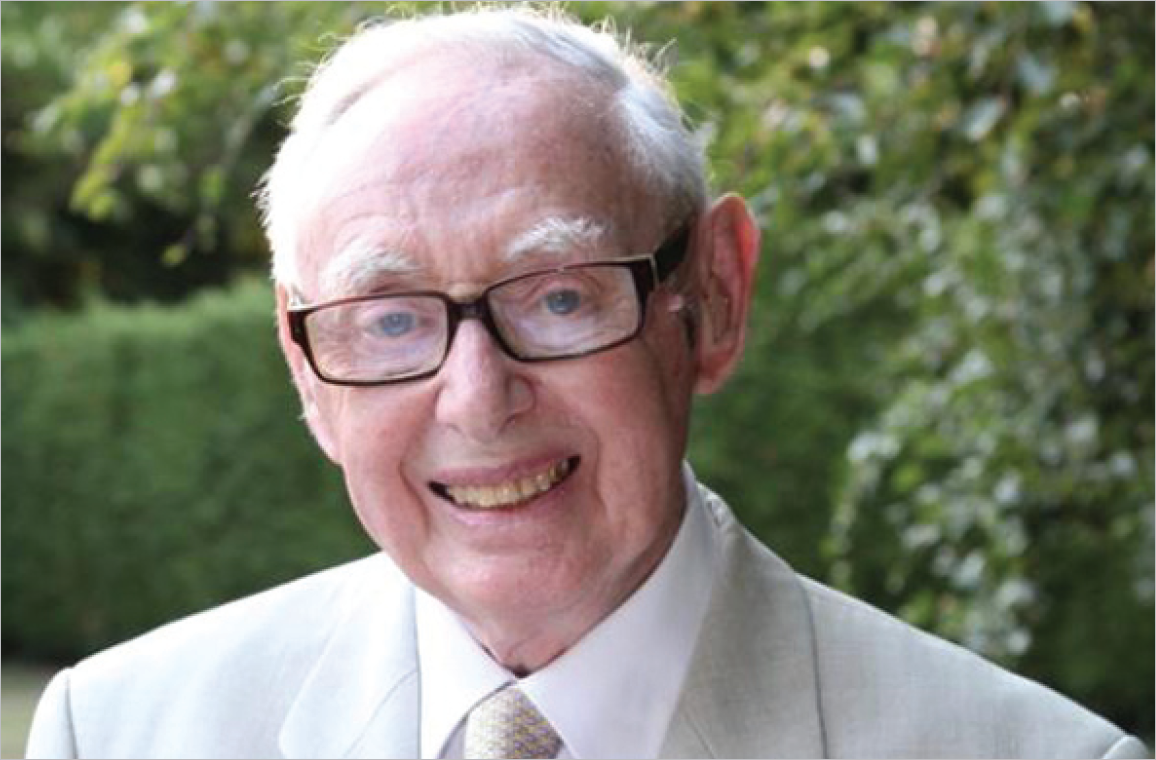
The Society of Applied Spectroscopy is saddened by the death of Norman Sheppard at the age of 93. Professor Sheppard had a number of notable achievements, including founding the School of Chemical Sciences at the University of East Anglia (UEA) and membership in the Royal Society.
In 1963 he moved to Norwich, where Norman became professor of chemical physics at the newly minted UEA, staying there for the rest of his career. His scientific reputation grew rapidly, and he became renowned for his ability to interpret complex spectra to identify molecular structures.
While at UEA, his pioneering research shaped the emergent field of surface chemistry—identifying chemical catalytic reactions on crystallographically defined single-crystal metal surfaces, with vital applications in semiconducting, medicine, and nanotechnology. His team discovered a new type of bond between hydrogen and other elements that explains why water is liquid at room temperature.
His academic passions continued after compulsory retirement at 65, focusing on the philosophy of science and the relationship between science and religion.
He is survived by his daughter Elaine, his sons Eric and Andrew, and his four grandchildren.
For the full obituary, please see the article written by his surviving son, Eric Sheppard. http://www.theguard-ian.com/science/2015/may/24/norman-sheppard-obituary. A full In Memoriam tribute by Dr. Peter Griffiths was featured in the July 69[07] 2015 issue of Applied Spectroscopy as well.
Student Ambassador Report for the European Winter Conference on Plasma Spectrochemistry
I am currently a PhD candidate in the department of chemistry at the University of Cincinnati, under the direction of Dr. Joseph Caruso. This past February, I had the pleasure of traveling to Münster, Germany as a student ambassador for the Society for Applied Spectroscopy at the 2015 European Winter Conference on Plasma Spectrochemistry (EWCPS). There were over 700 attendees from 45 countries in attendance. I had the honor of presenting my dissertation research as an oral presentation entitled, “A Metallomics Approach to Examine the Host Macrophage Defense Mechanism from the Perspective of the Pathogenic Fungus Histoplasma capsulatum (Hc)”. This work seeks to extend our understanding of the survival mechanisms through characterizing the metalloproteome of Hc, but also to determine expression changes under macrophage-induced low Zn stress. My presentation peaked interest not only within the metallomics community at the conference, but also initiated conversation with researchers in other fields.
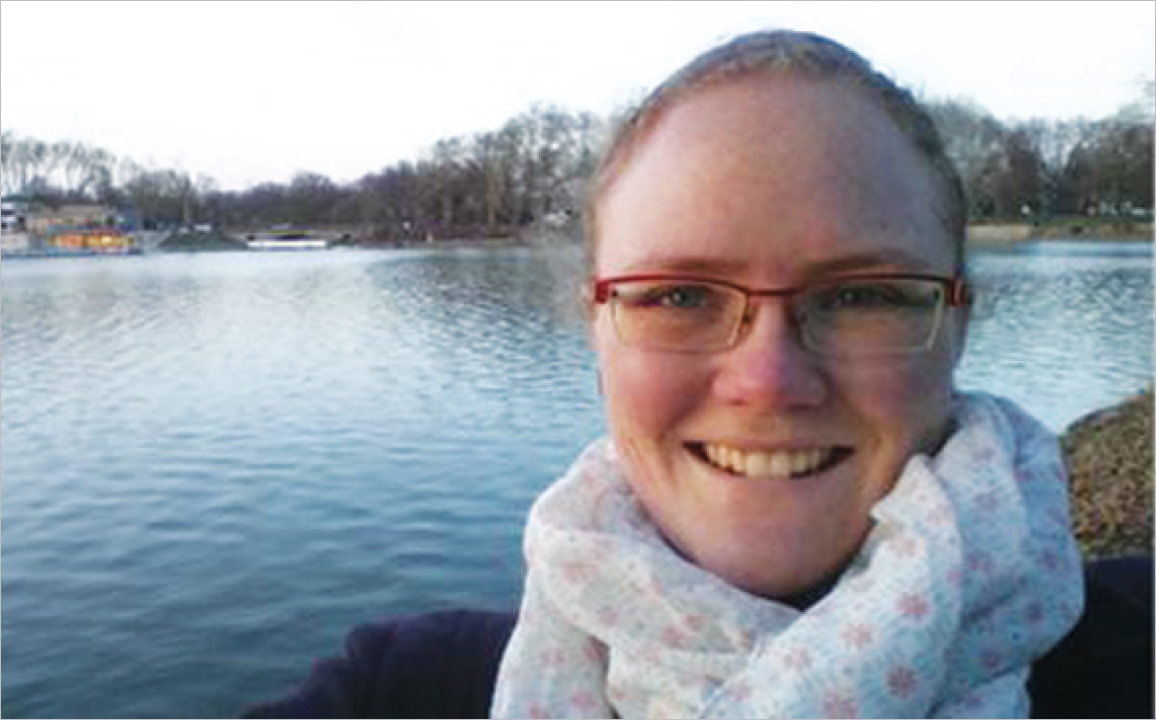
Anna next to Lake Aasee in Monster.
The conference provided an exceptional scientific program with a wide range of topics including fundamentals, laser ablation, LIBS, environmental analysis, advanced materials, and more. There were ample opportunities to network and discuss research as well as learn about the city through the exposition, a conference dinner and tour at the Allwetterzoo (All-Weather Zoo) Münster, and a guided city tour. I spoke with several people in academia and within the industry as well as numerous students from all over the world, and I told them about SAS and the benefits of being a member. A few students had heard of SAS, but it was wonderful to talk with someone about their research, and then tell them that there is a professional society dedicated to spectroscopy. We also discussed the upcoming SciX conference in Providence, Rhode Island.
The chemistry graduate students at the University of Münster were extremely generous. They helped me navigate the city and gave me a tour of their lab, facilities, and teaching labs. This led to a wonderful discussion comparing STEM (Science, Technology, Engineering, and Math) education in the United States and Europe. Often at the EWCPS, attendees are focused on the plasma aspects of their research, and rightfully so, but there was a lot of wonderful spectroscopy work being done, especially with new LIBS systems. I hope that my efforts encouraged conference attendees to learn more about SAS and become members!
Gordon F. Kirkbright Bursary Award, 2016
The Gordon F. Kirkbright bursary award is a prestigious annual award that enables a promising student/nontenured young scientist of any nation to attend a recognized scientific meeting or visit a place of learning.
The fund for this bursary was established in 1985 as a memorial to Professor Gordon Kirkbright in recognition of his contributions to analytical spectroscopy and to science in general. Although the fund is administered by the Association of British Spectroscopists (ABS) Trust, the award is not restricted to spectroscopists. Applications are invited for the 2016 Gordon Kirkbright Bursary.
For further information contact John Chalmers at, email:
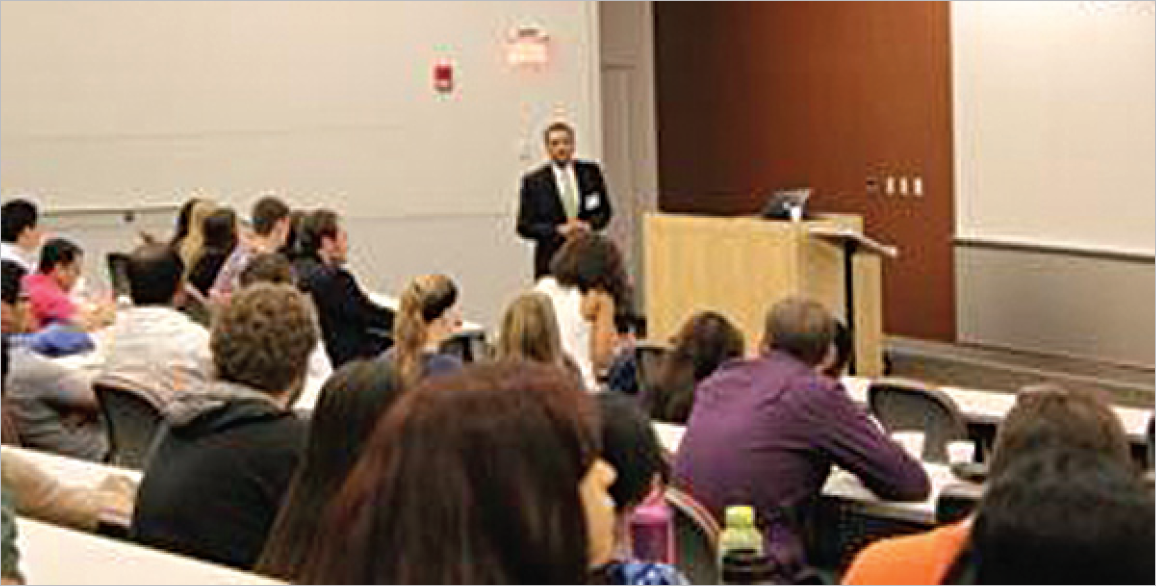
Rohit Bhargava Speaks at the 33rd Chemistry Graduate Student Symposium
On May 18-20th, graduate students from across the northeastern United States and Canada gathered at the University of Buffalo in Buffalo, NY for the 33rd annual Chemistry Graduate Student Symposium (GSS). Established in 1983, GSS is a unique symposium that is completely student organized, free of registration fees, and focused on allowing graduate students to develop professional skills through interaction with peers. The symposium is a three-day event consisting of posters and presentations given by attending graduate students, highlighted by three keynote speakers who are prominent in their field. This year, GSS was proud to host SAS member Professor Rohit Bhargava who spoke about his research into chemical imaging for molecular histology. SAS student members were also on hand during the poster session to speak with graduate students about the benefits of SAS membership.
To learn more about GSS or to participate in next year's symposium, visit www.ubchemgss.org.
Submitted by Sidney Coombs University of Buffalo
Professor Rohit Bhargava presenting his keynote lecture “Chemical Imaging for Molecular Histology” to graduate students at the University of Buffalo's 33rd Annual Graduate Student Symposium.