





Abstract
Phenylhydrazone derivatives of 2,6-diarylpiperidin-4-ones viz., 3-methyl-2,6-diphenylpiperidin-4-one (PMP-PH) and 3-methyl-2,6-di-(9H-fluorenyl)piperidin-4-one (FMP-PH) when illuminated and protonated perform the functions of AND, OR, NOR, NAND Boolean logic gates with all optical outputs. The functions of the AND and the NAND gates rely on changes in absorption and emission of the phenylhydrazone upon isomerization of the photochromic unit. We report novel heterocyclic compounds where setting up of threshold absorption or emission can be made as a logic device.
INTRODUCTION
One of the most fascinating areas of nanoscience is the attempt to use ions and light in information processing based on molecules performing logic. Nanoscience mimics nature, and the idea of switching in molecules has a precedence in living systems from purple bacteria to the human eye. 1 Molecular electronics aims at building computational systems, both memory and logic. Individual or small collections of molecules serve as discrete device components. Molecules—whether large or small—are only a few nanometers in size. Custom synthesis of molecules is possible through a vast availability of chemical synthesis routes. An integrated circuit using molecules could include trillions of electronic devices, making potentially tiny supercomputers or memories with a million times the storage density than today's semiconductor chips. The advantages of molecular electronic systems include: (i) reducing the cost and complexity of current integrated circuits, (ii) reducing heat generation by using only a few electrons per bit of information, and (iii) providing a route to meet the ever-continuing demand for miniaturization.2–4
Over the past ten years, many reports have been available in the literature on molecular devices performing Boolean operation.5–12 Systems consisting of chemically encoded information as input and a fluorescence signal as output have been studied extensively. 6 In these systems, the molecule demonstrates “on” or “off” switching of the fluorescence signal meaning “1” or “0” output, in response to the addition 1 or non-addition 0 of the input chemicals. So far, various molecular systems expressing AND, 7 OR, 8 NOR, 9 INHIBIT, 9 XOR, 10 YES, 11 NOT, 12 and XNOR 12 logic functions have been proposed. The function of input signal is played by chemical affect or irradiation with light, although the output will be optical density or luminescence. However, many such molecular systems with chemical stability, ease of preparation, reversibility of isomeric states, and simplicity of structure need to be analyzed for the performance of molecular logic. This prompted us to choose phenylhydrazone of piperidin-4-one as performers of molecular logic operation.
Piperidin-4-ones were prepared initially due to their importance in the field of medicinal chemistry. 13 Several 2,6-disubstituted derivatives of this class have been reported to possess applications in different fields. 14 Derivatization of piperidones on the carbonyl group is commonly the preparation of azines, hydrazones, and semicarbazones. Molecular logic gates designs for information technologies has been studied in few systems with structural similarity.15–17 However, a similar study on piperidon-4-ones has not yet been carried out, and we consider these as efficient candidates for the logic operation. Phenylhydrazones are expected to undergo reversible transformations (photoisomerization and protonation on the hydrazo moiety). This makes phenylhydrazones of piperidones convenient systems for studying the principles of the design and operation of molecular logic including controllable switches, logic gates, etc. There are four stable states (forms) in this system including neutral cis and trans isomers and protonated cis and trans isomers. The present work originates from (i) the quest for the possibility of performing logical operations on the molecular level with simple, two-step synthesized molecules with structural criterion for absorption and emission of light, and (ii) the reckoning that heterocycles tethered with hydrazone function could form a four-stated switching.
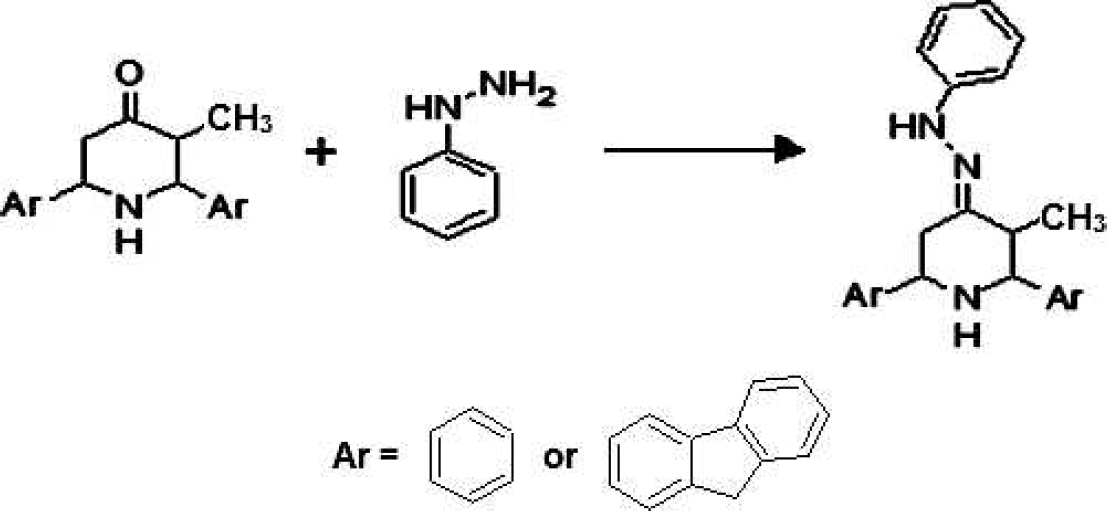
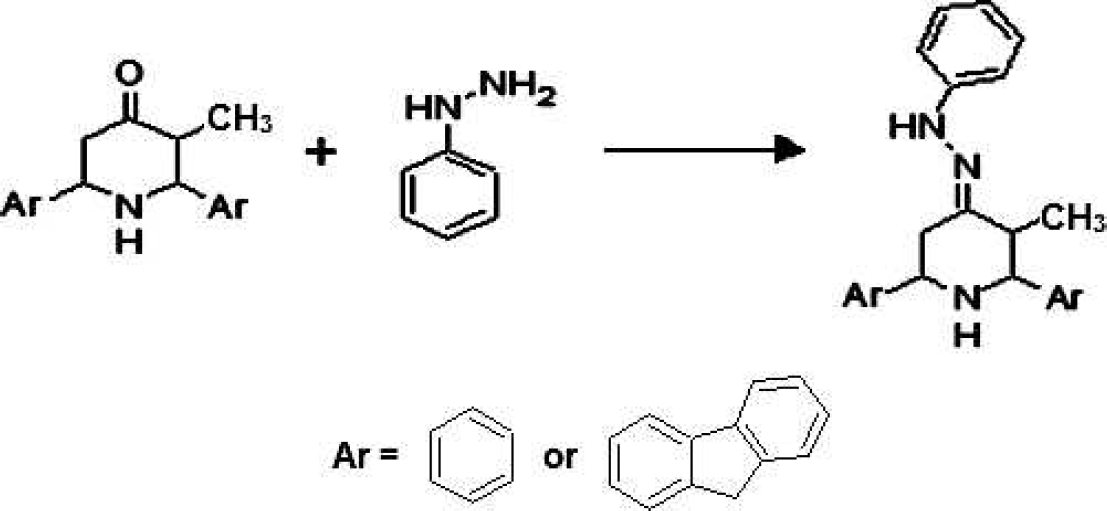
Preparation of phenylhydrazones from piperidin-4-ones.
EXPERIMENTS
Benzaldehyde and fluorene-2-carboxaldehyde were purchased from Aldrich (Bangalore). Ammonium acetate and 2-butnone were from Fluka.
The synthesis of piperidin-4-ones has been reported earlier. 18 In a typical procedure, Mannich condensation reaction was carried out using respective aldehydes and ketones with ammonium acetate. Studies were carried out for two different phenylhydrazone derivatives of piperidones (PMP-PH and FMP-PH) with aldehydes, viz., benzaldehyde and fluorene-2-carboxaldehyde and the ketone, 2-butanone. About 0.5 g of phenylhydrazine hydrochloride and 0.8 g of sodium acetate were dissolved in 5 mL of water and a solution of 0.4 g of the synthesized piperidone in a little ethanol was added. The mixture was shaken well until a clear solution was obtained. It was kept in water bath for 10–15 min and cooled. The crystalline derivative was purified by column chromatography with silica gel column and benzene as the solvent. Scheme 1 represents the reaction of piperidones with phenylhydrazine hydrochloride to form phenylhydrazones.
Nuclear magnetic resonance (NMR) spectra were recorded using a Bruker spectrometer operating at 400 MHz for the synthesized phenylhydrazones. The solvent used was deuterated chloroform. Mass spectra were recorded on an EI-MS Thermotrace VC Ultra spectrometer. Melting points of the synthesized compounds were checked using a Labtronics (India) melting point apparatus. Absorption spectra were recorded using a Jasco-V630 spectrophotometer in acetonitrile for FMP-PH and ethanol for PMP-PH derivative. Fluorescence spectra were recorded on a Fluorolog Horiba (FL-1039/40) spectrofluorimeter with xenon lamp. The concentration of the test solutions was 9.38 × 10⁻⁶ M. Phosphate buffer (phosphoric acid-sodium hydroxide) was used to adjust pH of solutions for the study of effect of pH. The pH was measured in the range of 2 to 7 using an Elico LI 120 pH meter. Irradiation was carried out (for isomerization) in quartz tubes under a UV light of 254 nm wavelength and for the reverse switching at 365 nm.
RESULTS AND DISCUSSION
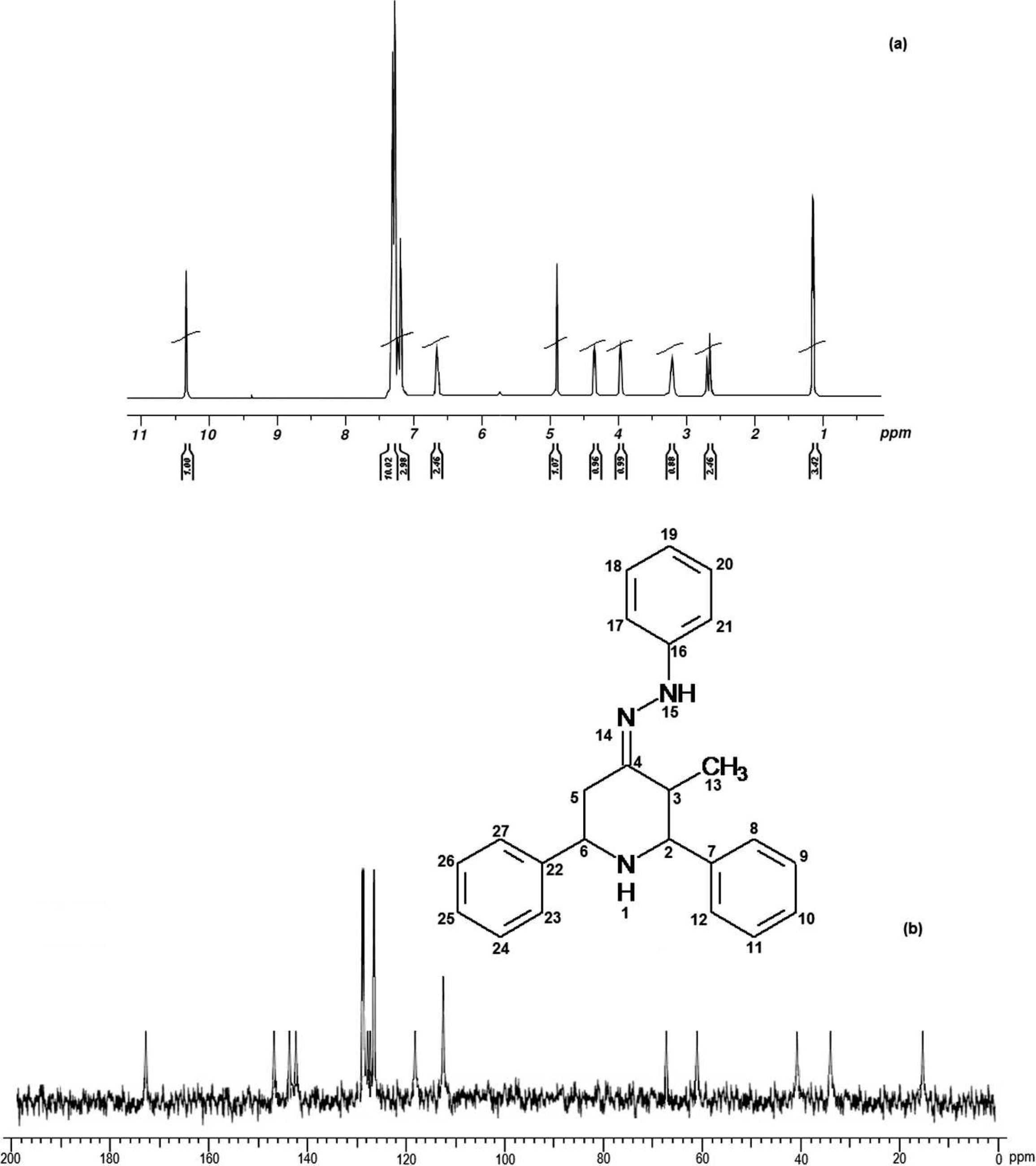
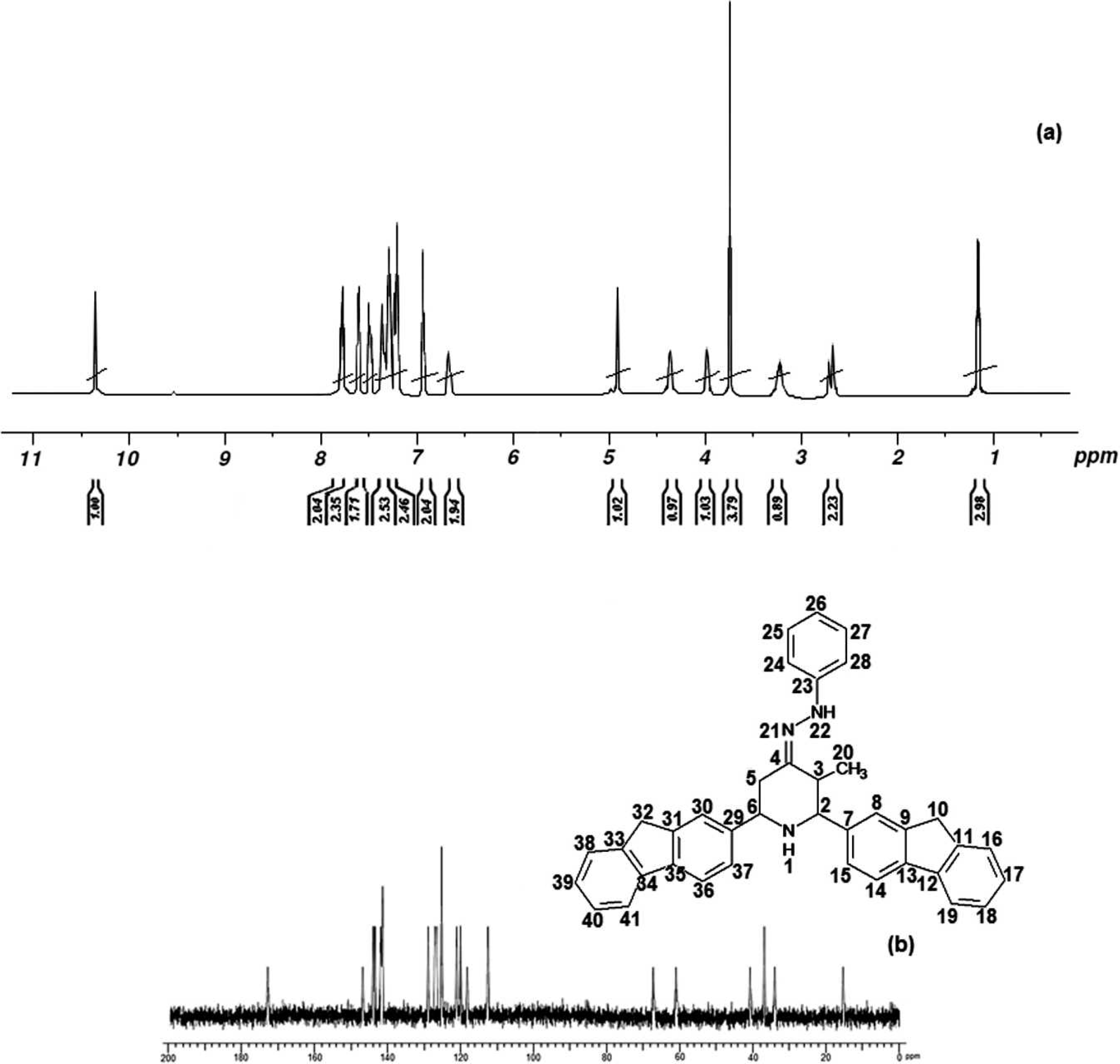
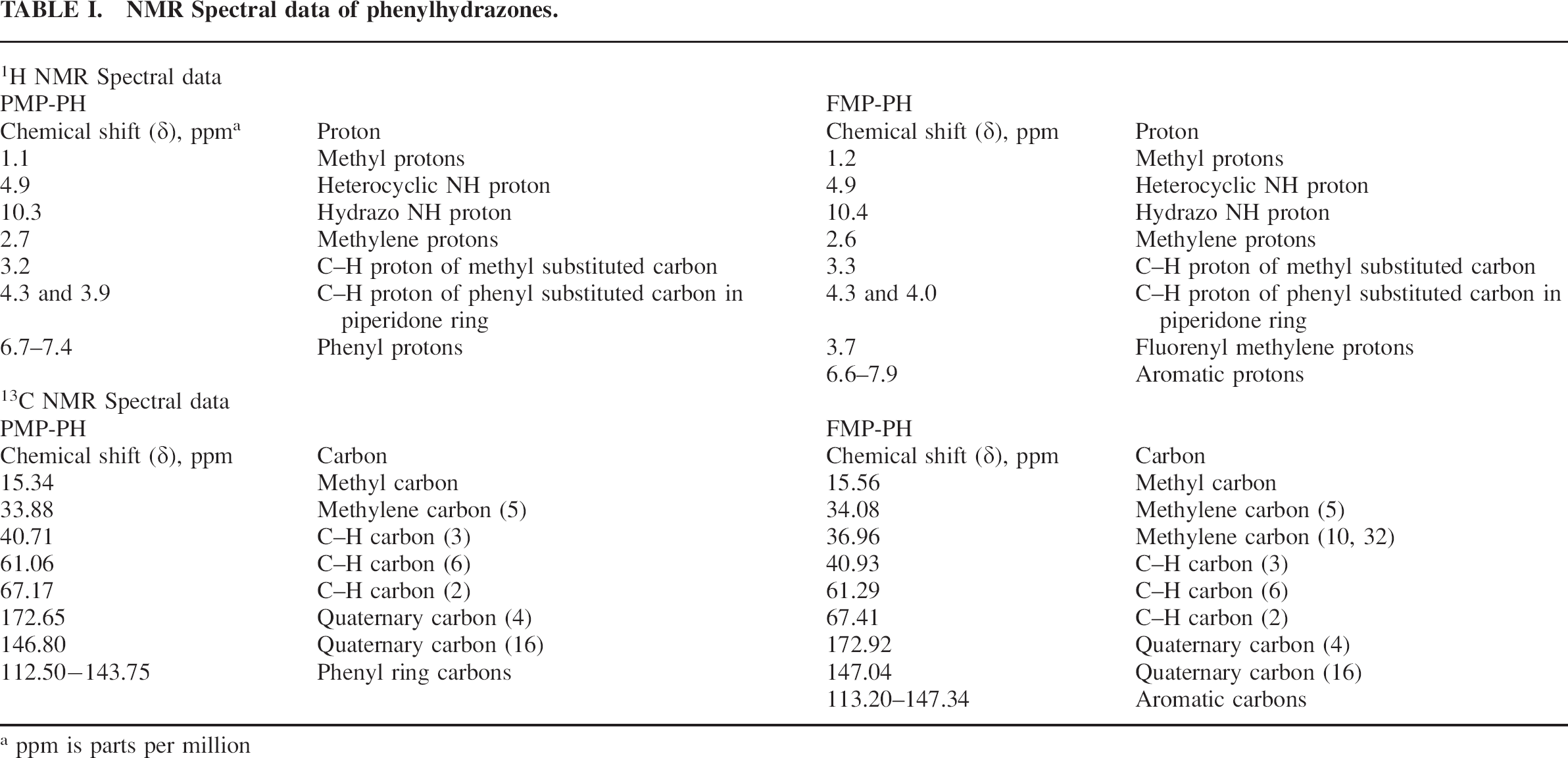
The 1H and 13C NMR spectra of PMP-PH are depicted in the Figs. 1a and 1b, respectively. The 1H and 13C NMR spectra of FMP-PH are depicted in the Figs. 2a and 2b, respectively. The assignment of NMR signals of PMP-PH and FMP-PH are given in Table l. The NMR spectra confirm the formation of the phenylhydrazones of piperidin-4-one. The melting points of PMP-PH and FMP-PH were 197–199 °C and 207–209 °C, respectively.
(
(
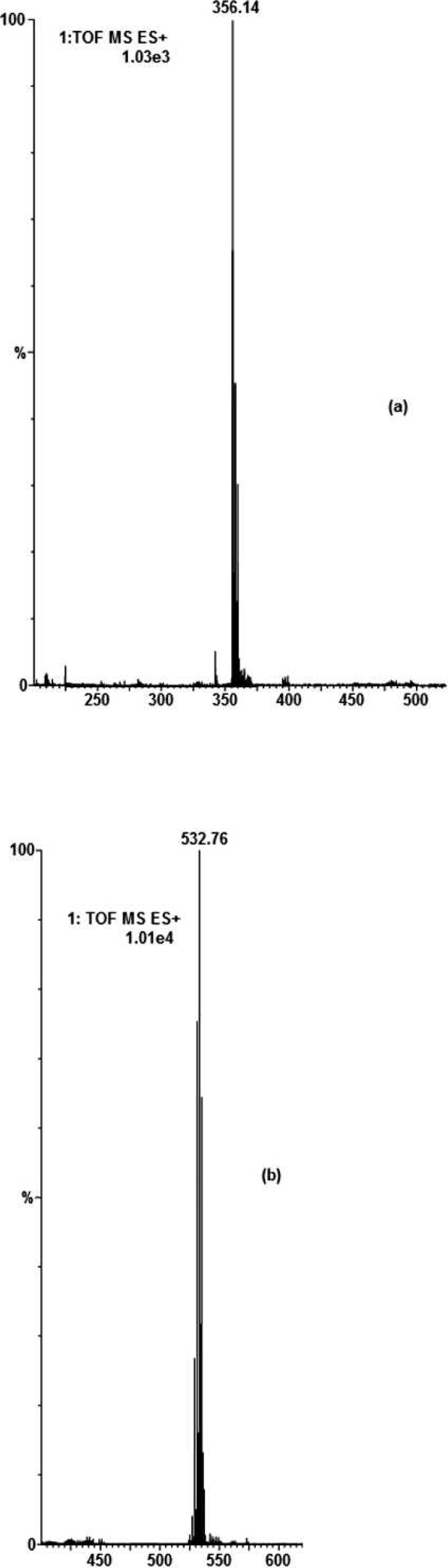
The mass spectra of PMP-PH and FMP-PH are given in Figs. 3a and 3b, respectively. The spectra confirm the formation of the compounds.
(
NMR Spectral data of phenylhydrazones.
ppm is parts per million
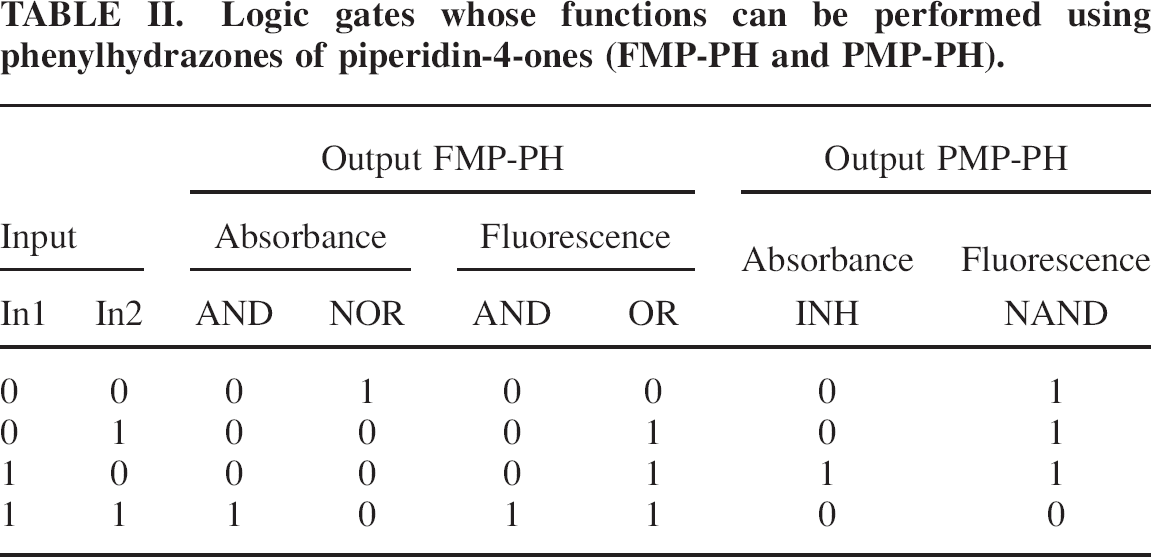
Depending upon the input signal, a logic gate can switch to give an output signal of 0 or 1. The input also can be of signal 0 or 1. A four-stated logic gate can be set up with two inputs and one output, i.e., (0,0), (0,1), (1,0), and (1,1). The type of the logic gate gives the output signal value. It can be determined by a truth table that shows a combination of input signals and the desired output signal. The input signals are logical variables, and the output signal is a logic function. The logic gates whose functions can be performed using phenylhydrazones of piperidin-4-ones (FMP-PH and PMP-PH) are presented in Table 2.
Logic gates whose functions can be performed using phenylhydrazones of piperidin-4-ones (FMP-PH and PMP-PH).
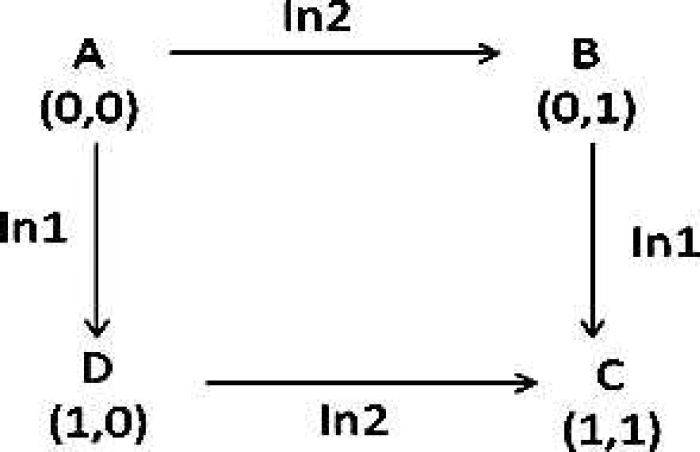
Scheme 2 presents four states of the logic gate in a square. Transition between them occurs in response to inputs in the form of light photons or H+ ions. Arrows show such transitions.
Each state of the logic is assigned to a particular form of phenylhydrazone of piperidin-4-ones. Since transition between different forms of the molecules is possible, any one of the two forms, either cis or trans, can be fixed as the initial state of the logic gate (A). The properties of a particular form of a compound which is considered the state D (final state) should differ from those of the other three forms A (initial), B, and C (intermediate) states of the molecular logic gate.
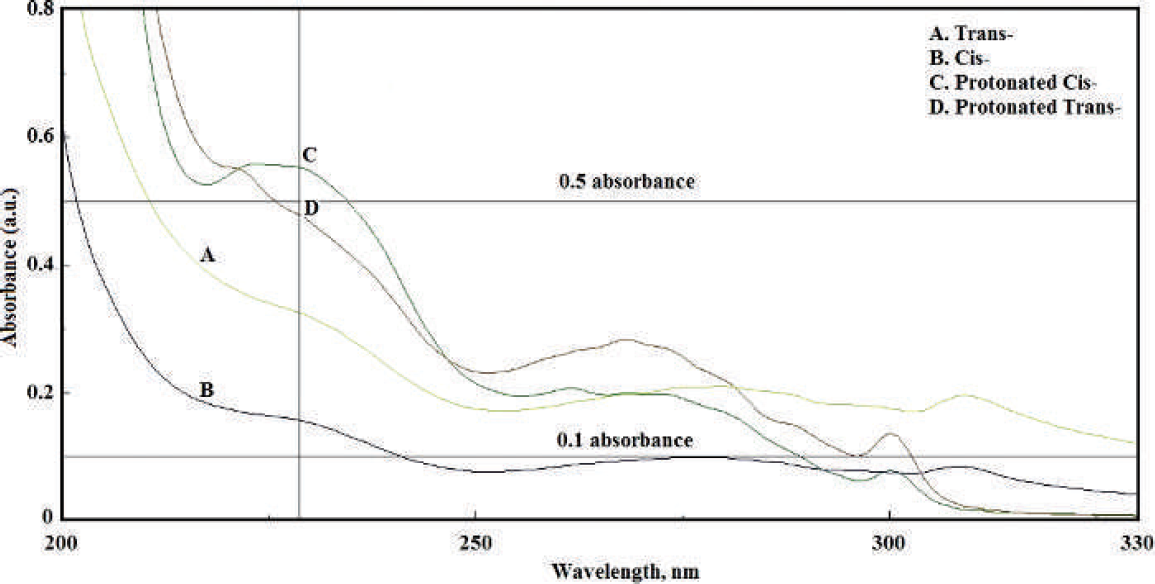
Absorption spectra of the neutral and protonated forms of cis and trans isomers of PMP-PH.
To perform logical function INH, we chose the wavelength of absorption 228 nm and a threshold absorbance of 0.4 (molar extinction coefficient, ε = 4.2 × 10⁴). Above this threshold value, if a state shows absorbance at 228 nm, it is considered 1; if below that, it is considered 0. It is difficult to make perfectly pure molecular logic gate states for the compounds owing to the impossibility of a 100% photo isomerization of one isomer to the other. A photo stationary state is reached where the composition of cis and trans isomers is determined by the wavelength of irradiation as given by the equation

where [cis]ps and [trans]ps represent the concentrations of the cis and trans isomers in the mixture, respectively.
Four-stated logic operation in phenylhydrazones.
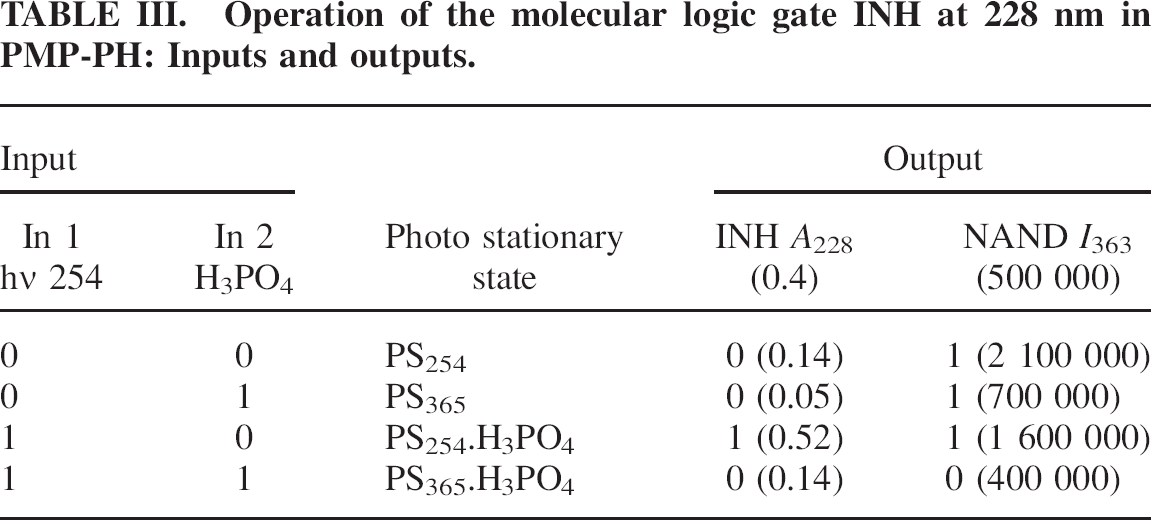
Upon irradiation at 365 nm, the reversal to the trans-dominated photo stationary state was indicated by the change of absorbance above 0.1 (molar extinction coefficient, ε = 1.1 × 10⁴), which corresponded to the absorbance of trans form. The vertical line in Fig. 1 shows the wavelength 228 nm. Signal readout at this wavelength allows the operation of the molecular logic gate INH, which processes the input signal according to Table 3. The operation of the molecular logic gate based on PMP-PH is described graphically using the logic elements as shown in Scheme 3.
Operation of the molecular logic gate INH at 228 nm in PMP-PH: Inputs and outputs.
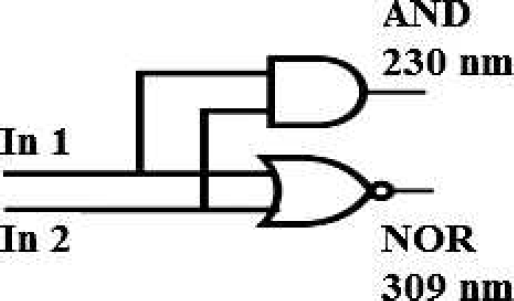
The operation of the molecular logic gate based on absorbance of PMP-PH.
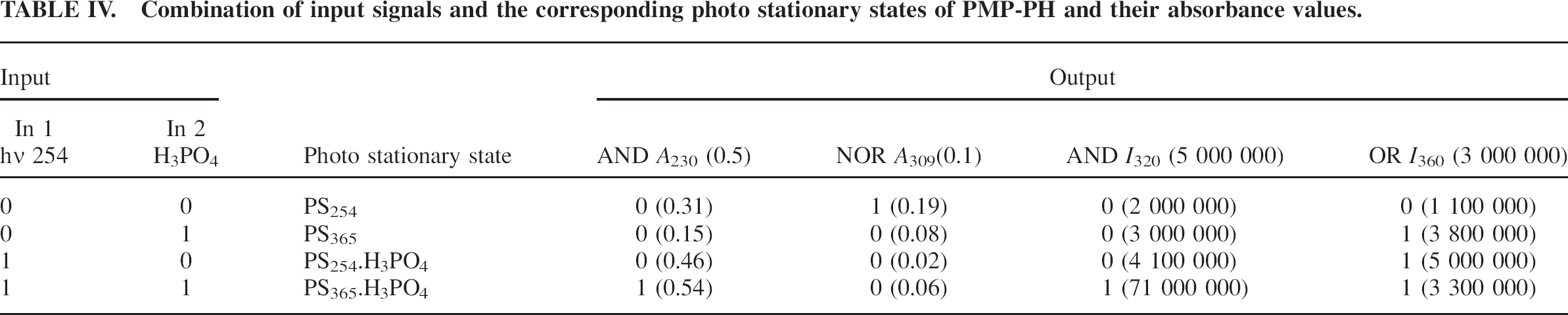
Table 4 lists out the combination of input signals and the corresponding photo stationary states of PMP-PH along with the absorbance values. When the signal is read out at 228 nm, A228 = 0.4 for the threshold absorbance. The output signal is 0 at A228 < 0.4 and 1 at A228 > 0.4. The output value in this case equal to 1 is attained at input 1 = 1 and input 2 = 0 (PS254.H3PO4 state), with the system operating as the INH logic gate. The threshold absorbance for logic gate is shown by a horizontal dotted line in Fig. 1. On change of pH to 2.0, only the absorbance in the state PS254.H3PO4 is above the threshold line. At pH 4.4, the absorbance at 228 nm went below the absorbance value of 0.2 (ε = 2.1 × 10⁴), which was below the threshold value. The neutral trans and cis both are having absorbance below 0.4 [0.14 (ε = 1.5 × 10⁴) and 0.05 (ε = 0.5 × 10⁴), respectively] at 228 nm.
Combination of input signals and the corresponding photo stationary states of PMP-PH and their absorbance values.
Absorption spectra of the different forms of PMP-PH before and after irradiation at 254 nm.
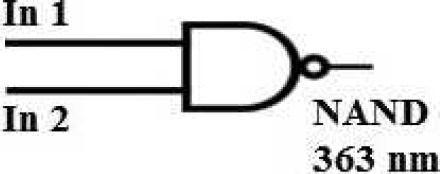
The fluorescence threshold intensity is taken as I363 = 500 000 and denoted as I0. From this, the relative intensities of fluorescence for the other forms are calculated as I0/I, where I refers to the intensity of fluorescence for each form of PMP-PH. If the emission maximum falls above the threshold intensity, it is considered as logic 1, and below logic 0. When the logic is read out at λ = 363 nm, the system operates as NAND logic, which is a universal logic gate. It is clearly read from the graph that only the PS365 H3PO4 state (I0/I = 1.25, the protonated cis) is below the threshold intensity, and all the other forms [PS254 (I0/I = 0.24, the trans), PS365 (I0/I = 0.71, the cis), PS254.H3PO4 (I0/I = 0.31, the protonated trans)] are above the threshold, which makes only logic operational input (1, 1) to be 0 and the rest as 1. From this, the logic operation is clearly known, and the system operates as a NAND gate. Table 3 shows the NAND logic operation with all the forms of PMP-PH comparing the intensities of fluorescence and the inputs. Scheme 4 shows the operation of the logics using fluorescence of PMP-PH.
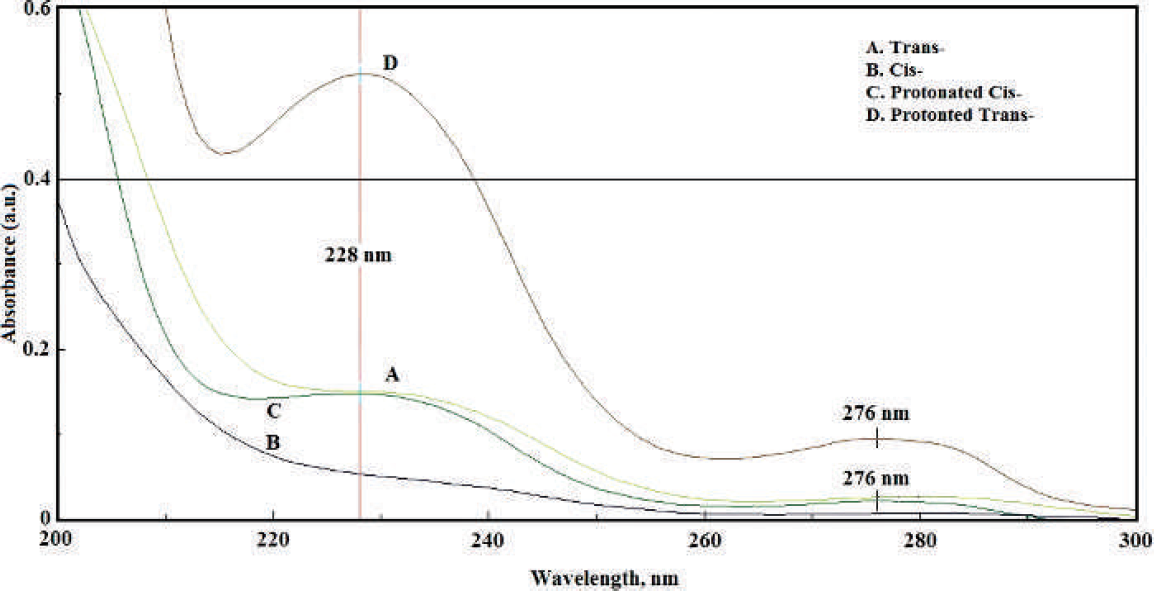
The absorption spectra of the four-stated equilibrium for FMP-PH.
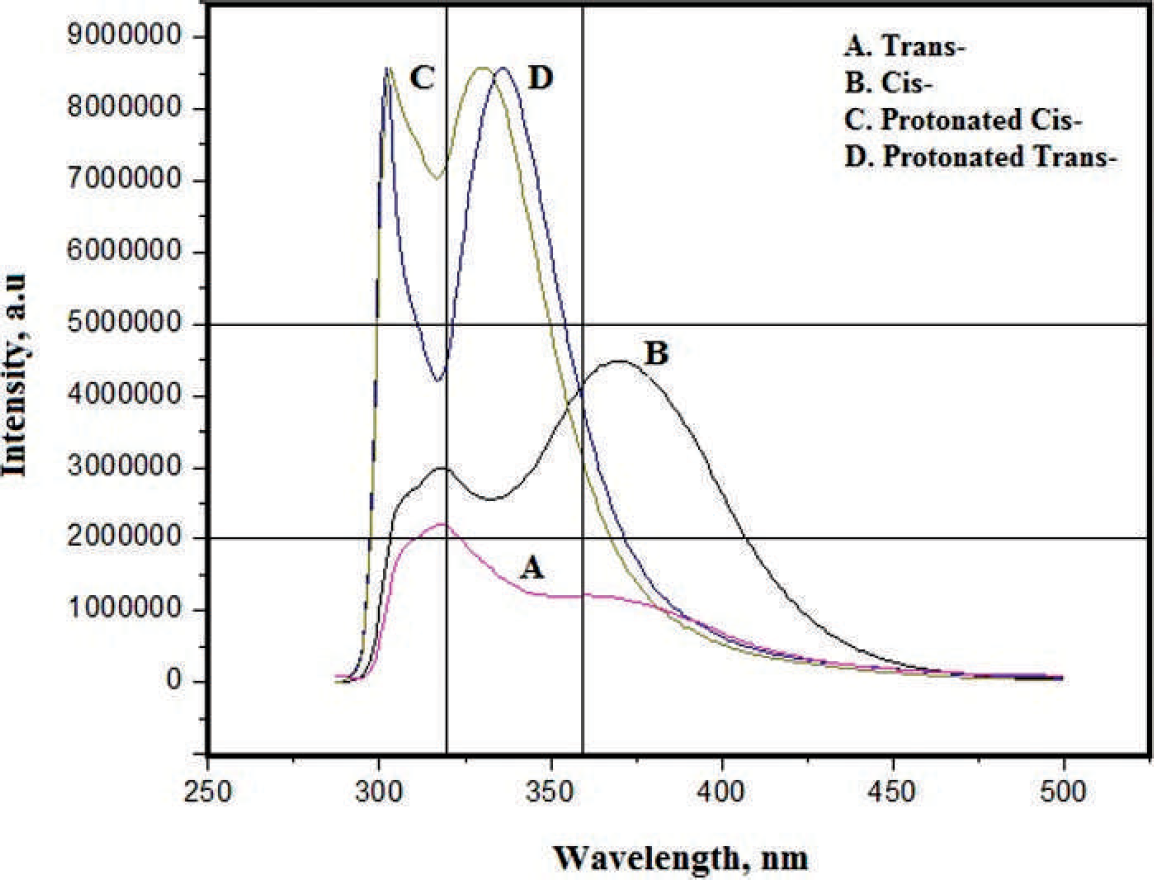
The operation of the molecular logic gate based on fluorescence of PMP-PH.
The molecular logic can be determined with ease because different forms exhibit spectra with difference in absorbance and an appreciable change in absorption maximum. Table 2 shows the different logic of FMP-PH after the impact of the input signal. The vertical lines shown in Fig. 6 show the signal readout absorption position. The signals are read out one at λ = 230 nm, and other is at λ = 309 nm, which are considered to perform two different logics. When the signal is read out at 230 nm, it shows AND logic, and at 309 nm, it reveals NOR logic. The logic function AND shows a high output when both the inputs are having the state (1, 1); for the other operation, it will be logic 0. The signal read out at 230 nm has A230 = 0.5 as the threshold absorbance. Absorbance A230 < 0.5 (ε = 5.3 × 10⁴) is considered logic 0 and A230 > 0.5 as logic 1. From Table 4, it follows that the output value is equal to 1 for In 1 and In 2 (1, 1) and 0 for the rest of the states. The state (PS356 H3PO4) has an absorbance A230 = 0.54 (ε = 5.7 × 10⁴), which is above the threshold value, and hence it has a logic 1 operation. The other absorbances are below the threshold. The NOR logic operation will be performed when the output is taken at λ = 309 nm. The threshold absorbance is A309 = 0.1 (ε = 1.0 × 10⁴), above which is logic 1. For the system to perform NOR logic, the In 1 and In 2 should be logic 0, i.e., (0, 0) input state. Then the output signal is 1 and will be 0 for rest of the combinations. So for FMP-PH, the state PS254 has absorbance above the threshold value. The absorbance for PS254 is A309 = 0.19 (ε = 2.0 × 10⁴), is above the threshold absorbance, and for the remaining states, the absorbance is below the threshold. The operation of molecular logic gate for the compound FMP-PH is shown in the Scheme 5.
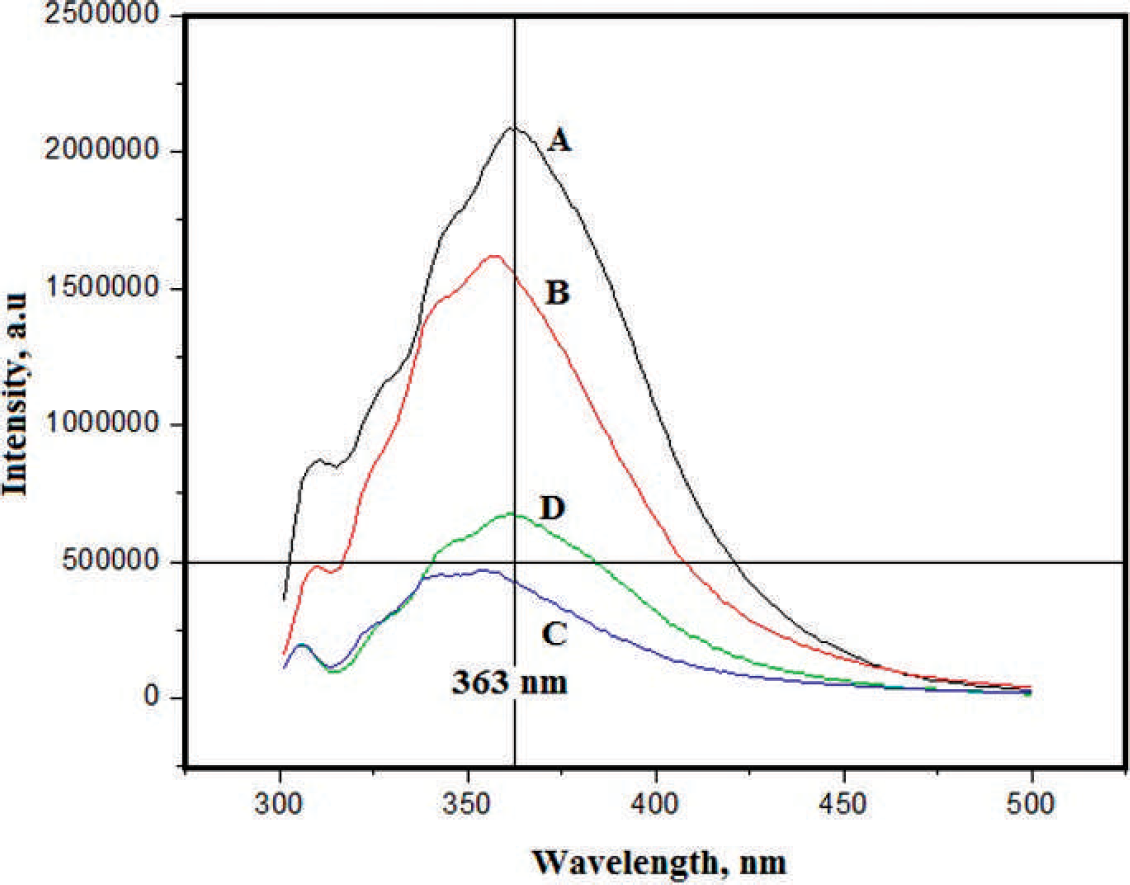
The fluorescence spectra of FMP-PH in protonated/neutral and irradiated/non-irradiated forms.
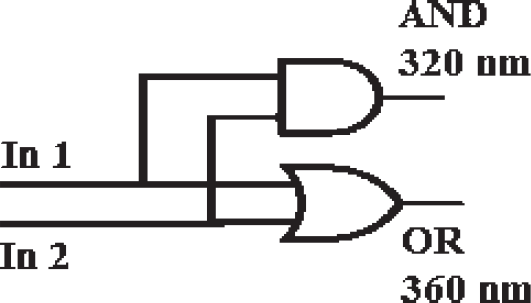
The operation of molecular logic gate with absorbance of FMP-PH.
The operation of molecular logic gate with fluorescence of FMP-PH.
CONCLUSIONS
We synthesized the phenylhydrazones of 3-methyl-2,6-diphenylpiperidin-4-one and 3-methyl-2,6-di-(9H-fluorenyl)piperidin-4-one. Neutral and protonated forms of the phenylhydrazones and their trans to cis isomers formed a four-stated equilibrium. Absorption and fluorescence techniques were used to build molecular logic gates based on threshold absorbance and threshold fluorescence respectively. The PMP-PH performed INH and NAND logic, as observed with absorbance and fluorescence, respectively. The FMP-PH performed AND and NOR logics when observed at different wavelengths of absorbance. With observation of fluorescence emission, OR logic was performed in FMP-PH. Hence, we demonstrate operation of different logic gates with the molecules we chose for their simple method of preparation and the easy tag of absorbing and emitting groups at 2 and 6 positions. With different substitutions at positions 2, 3, 4, and 6, the conformation of the piperidone ring can be modified or fully biased, and hence different logic gates can be made possible in the future.
Footnotes
ACKNOWLEDGMENTS
We thank the Department of Science and Technology, Government of India for the financial support (Project: SR/FT/CS-062/2009).