







Abstract
This study was completed within the framework of two research projects dealing with the conservation of contemporary artworks. The first is the Seventh Framework Project (FP7) of the European Union, Preservation of Plastic ARTefacts in Museum Collections (POPART), spanning years 2008–2012, and the second is the Italian project funded by the Tuscan Region, Preventive Conservation of Contemporary Art (Conservazione Preventiva dell'Arte Contemporanea (COPAC)), spanning 2011–2013. Both of these programs pointed out the great importance of having noninvasive and portable analytical techniques that can be used to investigate and characterize modern and contemporary artworks, especially those consisting of synthetic polymers. Indeed, despite the extensive presence of plastics in museum collections, there is still a lack of analytical tools for identifying, characterizing, and setting up adequate conservation strategies for these materials. In this work, the potentials of in situ and noninvasive Fourier transform infrared (FT-IR) spectroscopy, implemented by means of portable devices that operate in reflection mode, are investigated with a view to applying the results in large-scale surveys of plastic objects in museums. To this end, an essential prerequisite are the reliability of spectral data acquired in situ and the availability of spectral databases acquired from reference materials. A collection of polymeric samples, which are available commercially as ResinKit, was analyzed to create a reference spectral archive. All the spectra were recorded using three FT-IR configurations: transmission (trans), attenuated total reflection (ATR), and total reflection (TR). A comparative evaluation of the data acquired using the three instrumental configurations is presented, together with an evaluation of the similarity percentages and a discussion of the critical cases.
Keywords
INTRODUCTION
The word plastic literally means “moldable.” This term is commonly used to indicate synthetic and semi-synthetic organic polymers that have a high molecular weight and are made up of specific units (monomers) linked to form long chains. The chemical–physical properties of plastics may be designed by varying the production processes and the formulations. Indeed, by starting from the same basic resin, the final formulation may be varied by adding several types of additives (colorants, fillers, plasticizers, etc.), which then make it possible to control precisely the characteristics of the finished material. This exceptional versatility of plastics is indeed the reason for their pervasive and capillary diffusion into every field and aspect of our lives. Nowadays, as culture and art reflect and dip into the historical context and into daily life, plastics have also become part of our cultural heritage and are widespread in art collections, museums, and art galleries.
The first documented use of plastics as artistic materials dates back to the pioneer works of Naum Gabo in the early 1900s. 1 Since then, recourse to synthetic polymers in the art field has constantly increased, reaching a high point in the 1960s. At present, resorting to synthetic polymers is ubiquitous among artists, and plastics are definitely considered to be also a class of artistic materials. In addition to artistic production, the appearance of plastics in museums and galleries is also related to design, ethnographic collections, and technical collections, as well as film archives. Consequently, a notable percentage of artworks and valuable objects consisting of synthetic and semi-synthetic polymers are kept in museums, and these are classified as items to be preserved for future generations. Despite this fact, the problem of the conservation of plastics in art collections had been disregarded until recently because, for a long time and due to widespread misconception, plastics have been considered imperishable materials. The need to adopt systematic strategies for the conservation of plastic objects, in a way analogous to other, more traditional materials in collections, has been completely recognized only in recent decades. Such an increased awareness has given rise to a new research area aimed at filling in the lack of knowledge, practices, and methodologies for preserving plastics in collections.2–4 Several projects devoted to the safeguarding of contemporary art have recently been launched, such as the Preservation of Plastic ARTefacts in Museum Collections (POPART), Conservazione Preventiva dell'Arte Contemporanea (COPAC), and International Network for the Conservation of Contemporary Art (INCCA),5–7 and studies on the care of plastics in collections have been published.8–12 Within these research projects, particular attention has been paid to the development of new tools and techniques specifically tailored to the in situ and noninvasive identification of polymers that constitute museum objects. In fact, a knowledge of the materials constituting an artwork is the essential first step in understanding the causes of its degradation and, if necessary, in setting up a correct approach to its preservation.
Because the integrity of the object is a priority in the art conservation field, noninvasive or micro-invasive analytical techniques are preferred to sampling methods. In addition, the use of portable instrumentation is desirable because this makes it possible to investigate the artworks in situ. However, most of the best-established analytical techniques for the identification of plastics are borrowed from other application sectors (industrial, chemical, manufacturer, etc.), in which the requirements of portability and noninvasiveness are not usually met. State-of-the-art analytical methods used for the identification of plastics in museum collections were drawn up by the POPART Project, in which a comparative evaluation of well-established methods and novel techniques was carried out. 13 Several analytical methods were examined in this study, and those based on vibrational spectroscopies—in particular, on Fourier transform infrared (FT-IR) techniques—have been found to be among the most effective and suitable for identifying synthetic resin blends in artworks.
In fact, FT-IR analysis in the mid-infrared (mid-IR) spectral region gives researchers considerable ability to distinguish and identify polymers, and meets requirements such as micro-destructiveness (and, in certain circumstances, nondestructiveness), cost effectiveness, and the availability of a wide range of commercial instrumentation. Actually, FT-IR spectroscopy is well established in several applicative sectors (industry, quality controls, etc.) 14 as well as in the cultural heritage field.15,16 However, literature reporting applications of FT-IR to the identification and characterization of plastics in art collections is relatively scarce,17–20 and certain fundamental issues still need to be investigated in greater depth.
First, there is a lack of suitable spectral databases of reference materials set up specifically to interpret data acquired from plastic artworks. Indeed, although several FT-IR spectral libraries of synthetic polymers are available, only a few of these include a significant number of polymers of interest to researchers of art collections. In recent years, this issue has been partially tackled, and spectral archives of plastics of specific interest to the art conservation field are being assembled, such as the SamCo archive, developed under POPART, and the Infrared and Raman Users Group (IRUG) database.21–23 Nevertheless, extensive further work is still needed to build rich and statistically meaningful databases for practical applications.
A second issue concerns the feasibility of noninvasive FT-IR measurements on museum objects and the quality of FT-IR spectra acquired in situ. Indeed, in recent decades, a new generation of high-resolution portable FT-IR devices has been marketed at affordable prices. 24 In addition to their portability, these devices offer the possibility of operating in total reflection (TR) mode by recording spectra in a contactless mode, without any need for sampling. It should be pointed out that, until recently, the only way to perform noninvasive FT-IR analysis in the mid-IR region was by means of optical fibers coupled with FT-IR benches.25–28 However, the use of optical fibers in the mid-IR region has several drawbacks, such as the elevated cost of the equipment and the need for liquid nitrogen to cool down the mercury–cadmium–telluride (MCT) detectors. In addition, chalcogenide glass fibers, which are commonly used to produce mid-IR fiber bundles, strongly attenuate the IR radiation and have their own absorption bands. These absorption bands may mask spectral features of interest for the identification of materials. Thus, the recent availability of portable FT-IR instruments equipped with reflection mode accessories has opened up new applicative perspectives, especially in the field of art conservation, where in situ and noninvasive analyses are in great demand.
Despite these advances, TR FT-IR spectroscopy is still far from being fully exploited as a routine technique for large-scale surveys and in situ investigations of art collections. This is mainly due to the lack of databases of TR FT-IR spectra acquired from reference materials, which are essential for a correct interpretation of spectra acquired on real objects. Commercial FT-IR spectral libraries are usually built using other FT-IR configurations, such as the transmission (Trans) and attenuated total reflection (ATR) modes. In the TR FT-IR configuration, both diffuse and specular components of the reflected radiation are acquired and contribute to the registered spectrum. For this reason, TR FT-IR spectra are intrinsically more complex and are not always directly comparable to the data included in commercial spectral archives, unless suitable data pretreatments are made.
The research presented here aims to investigate the effectiveness of TR FT-IR spectroscopy implemented by means of portable spectrophotometers as a noninvasive analytical technique for routine and large-scale investigations on plastic objects that can be found in contemporary art museums. We carried out a pilot study using a commercial set of 50 reference samples of thermoplastics resins, with the intention of ascertaining the comparability of FT-IR data acquired in the TR mode to those acquired in both the Trans and ATR modes. A comparison of the FT-IR spectra acquired from these plastic samples using the same FT-IR bench in three different configurations (Trans, ATR, and TR) is reported and discussed, with particular focus on critical cases. A collection of TR FT-IR spectra based on this comparative evaluation has been chosen to provide a first nucleus for a TR FT-IR spectral archive of some of the most common synthetic resins, to be used as a guide in interpreting data acquired in the field.
EXPERIMENTAL
The most well-established method for the analysis of solid plastic samples is the conventional Trans mode, which can be used whenever sampling is possible. The Trans spectra are usually acquired from pellets prepared by mixing a small amount (about 0.5–1 mg) of the ground sample with potassium bromide (KBr; about 100 mg). Because plastics are highly variable in softness, flexibility, and consistency, in some cases they can barely be transformed into a thin powder, thus making it impossible to obtain a homogeneous pellet and, consequently, a well-resolved Trans spectrum. When it is difficult or impossible to obtain homogeneous sample–KBr dispersions, less straightforward preparation processes have to be adopted to perform measurements in Trans mode. If the samples are soluble in a volatile solvent, they can be dissolved and analyzed by depositing a few drops of the solution onto an IR transparent material. If the polymer is not easily soluble, Trans spectra may be recorded by resorting to specific instrumental accessories, such as diamond cells. Thus, provided that suitable technical expedients are adopted for the preparation of the samples, high-quality Trans FT-IR spectra may, in principle, be acquired from any type of specimen.
Another well-established method for performing FT-IR analysis is ATR mode. The use of this configuration is widespread for the characterization of polymers and overcomes any drawbacks related to the preparation of KBr pellet samples. However, ATR spectra may be less easy to interpret than spectra recorded in a conventional Trans mode.
In the ATR mode, the penetration depth of the evanescent wave within the sample depends on the optical thickness of the sample; longer wavelengths may undergo relatively stronger absorptions. This fact may cause spectral band distortions due to broadening or peak shifts at the longer wavelengths. 29 These effects have to be taken into account when ATR spectra are compared with those acquired in Trans mode. Suitable algorithms are available to correct for such systematic spectral differences. It should be remembered that in ATR mode, high-quality spectra may be obtained only by applying high pressure to ensure an intimate contact between the sample and the ATR crystal. Therefore, even if the ATR mode is in principle noninvasive, this method cannot be used to analyze fragile or precious objects without risking damage to them. On very soft materials, such as some common plastics (e.g., expanded polystyrene), the ATR mode cannot be used profitably. The use of an ATR configuration to distinguish between similar classes of plastics was reported by Enlow et al., 30 and an application to semi-synthetic resins of interest in museum applications was reported by Paris et al. 19
Whenever sampling has to be avoided, as is often the case in museum contexts, FT-IR spectra can be acquired in TR mode. As mentioned, one of the main drawbacks of TR FT-IR measurements is the complexity of the spectra acquired. Indeed, they are often affected by distortions, both in the band shape and in the absorption frequency, which depend mainly on the variable balance between the diffuse and specular reflection components. These spectral anomalies are due to several factors, such as the concentration of the sample, the surface texture, and the refractive index of the materials. 31 For example, when a strong specular component is present, as is the case when materials have high refractivity, anomalous spectral bands (usually known as derivative-like bands) are observed. These anomalies in the FT-IR reflection spectra are usually treated by applying specific data-processing algorithms, such as the Kramers–Kroenig (KK) transform. 32 The KK algorithm makes it possible to reconstruct a pseudo-absorption spectrum, thus making the TR spectra comparable with those acquired in the Trans or ATR modes. However, the use of correction algorithms is not always sufficient to make the TR spectra superimposable on (or comparable with) those registered in Trans and ATR modes from the same specimen. For example, when undiluted materials with a strong absorption coefficient are analyzed in TR mode, intense distortions may appear in the FT-IR spectra. The most evident case is the Reststrahlen band, where a reflection maximum occurs in place of the absorption band. In this case, spectral distortions cannot be corrected by recourse to mathematical algorithms. 27
List of ResinKit specimens and corresponding case typologies.

PBT, polybutylene terephthalate; TPU, thermoplastic polyurethane; TPV, thermoplastic vulcanisate.
The spectral range investigated was 4000–375 cm−1, with 4 cm−1 resolution, and 64 scans. The Trans spectra are reported in absorbance scale to facilitate their comparison with the ATR and TR data.
All the TR spectra were processed using the KK algorithm. This procedure was usually applied in the 4000–375 cm−1 range, but in a few cases the KK algorithm was applied only to selected regions of the spectra.
RESULTS AND DISCUSSION
Because acquisition in Trans mode is traditionally the most widespread FT-IR technique for identifying the materials under investigation, and most FT-IR spectral libraries are based on Trans spectra, the 50 samples were first characterized in Trans mode to build a reference spectral archive. Subsequently, these spectra were compared to the ones acquired in both ATR and TR modes, and the differences and similarities were analyzed. Based on the results, five case typologies were identified.
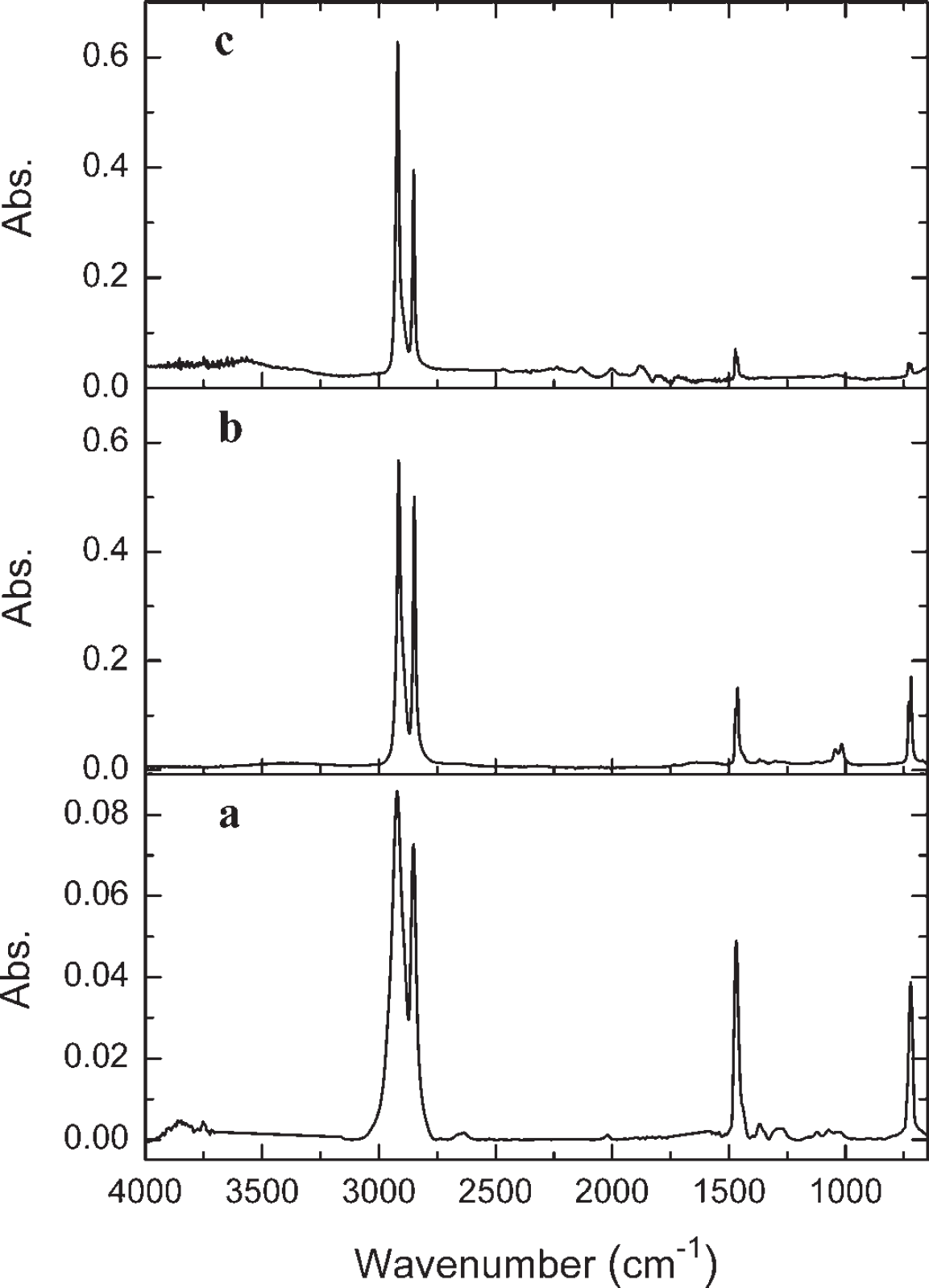
The FT-IR spectra of specimen no. 25 (polyethylene, high density). (
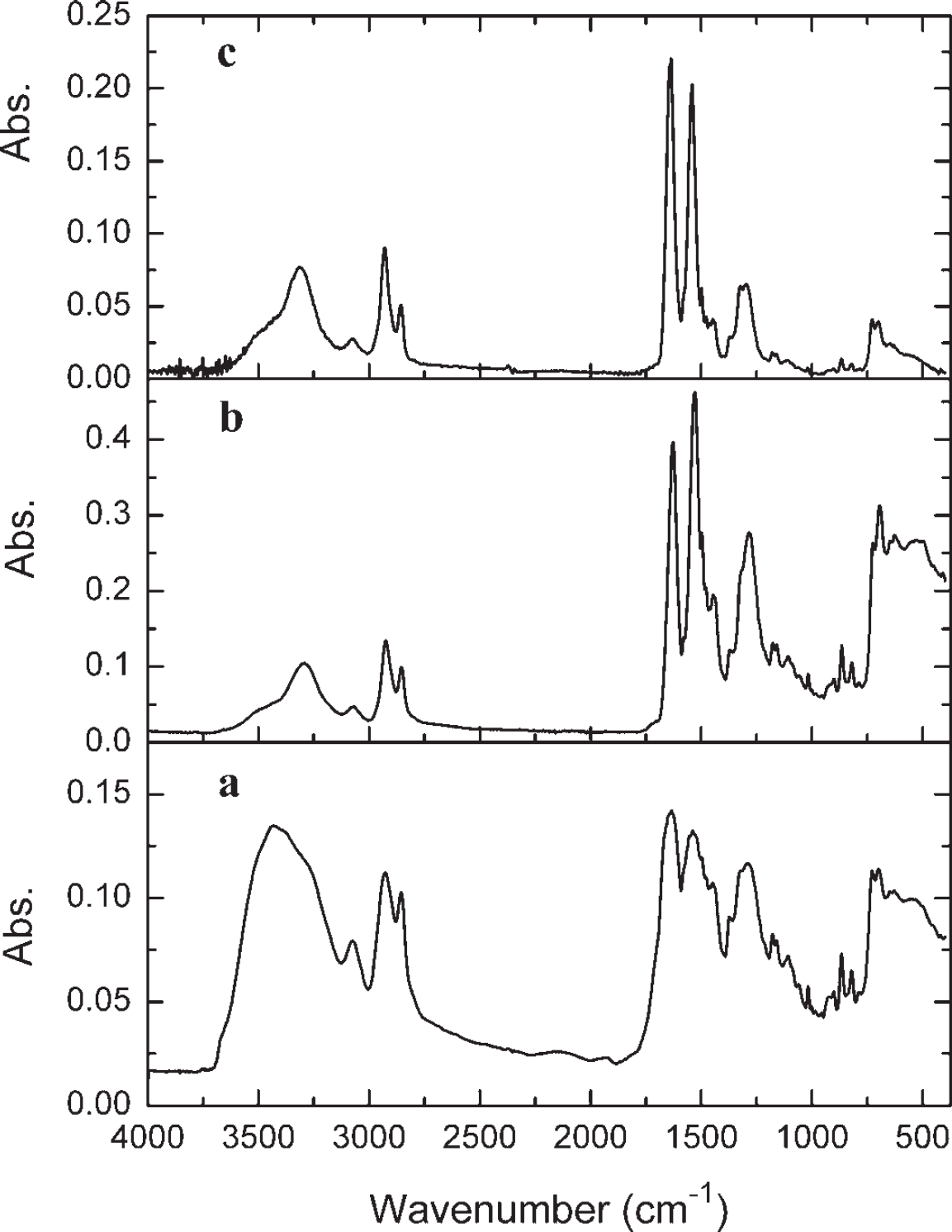
The FT-IR spectra of specimen no. 14 (nylon, transparent). (
This is a typical example of polymers for which the researcher would have to resort to using different types of sample preparations to increase the quality of the spectral data, such as diamond cells, ATR, and TR measurement modes.
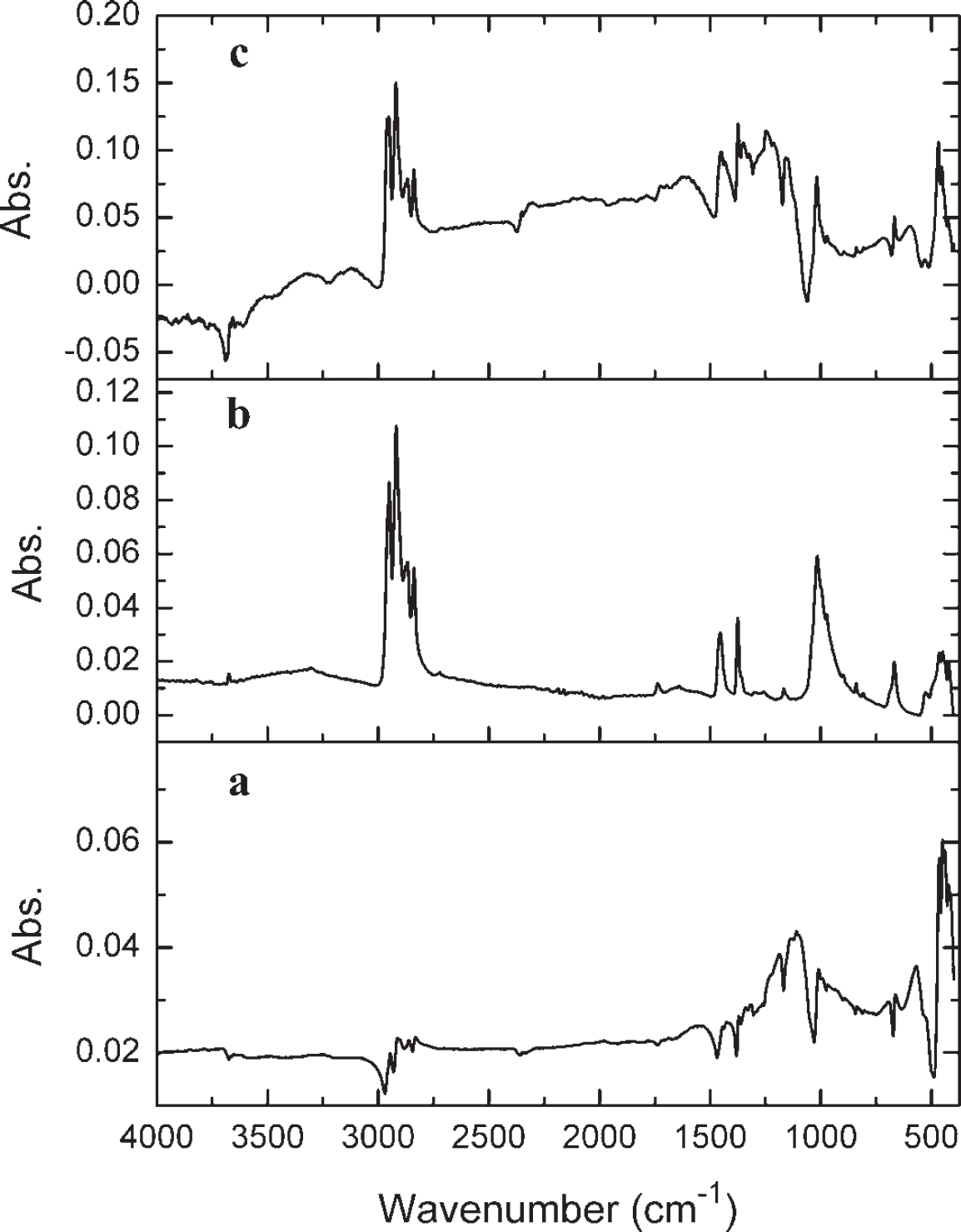
The FT-IR spectra of specimen no. 44 (polypropylene, talc reinforced). (
Therefore, no direct comparison was possible between the TR and the Trans or ATR spectra for this category of samples for the entire frequency range. A suitable spectral matching could be obtained among the data acquired in the different configurations only after the application of the KK algorithm in selected spectral regions.
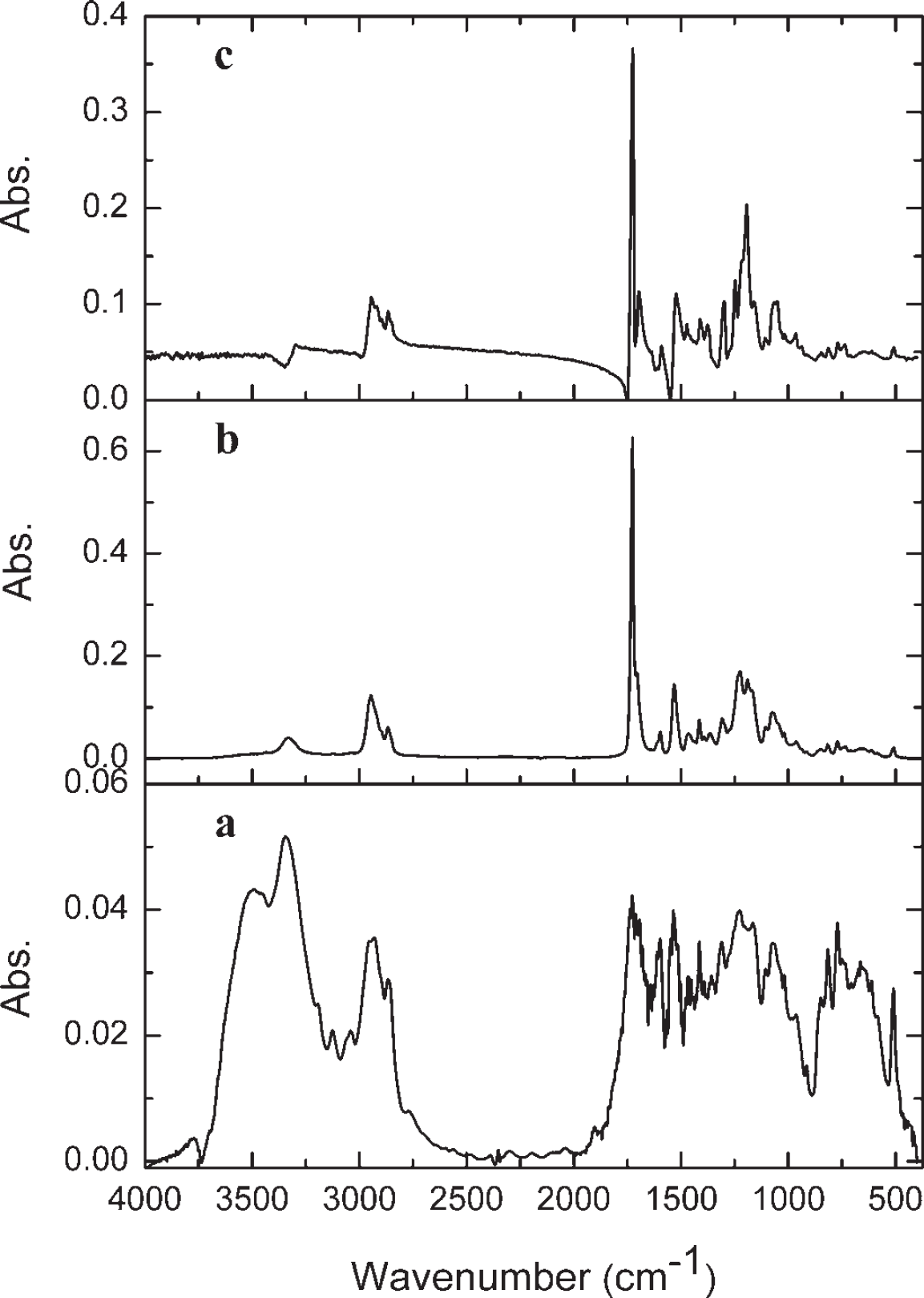
The FT-IR spectra of specimen no. 37 (urethane thermoplastic elastomer). (
As shown in Table I, the five specimens grouped in case 4 have diverse compositions and appearances.
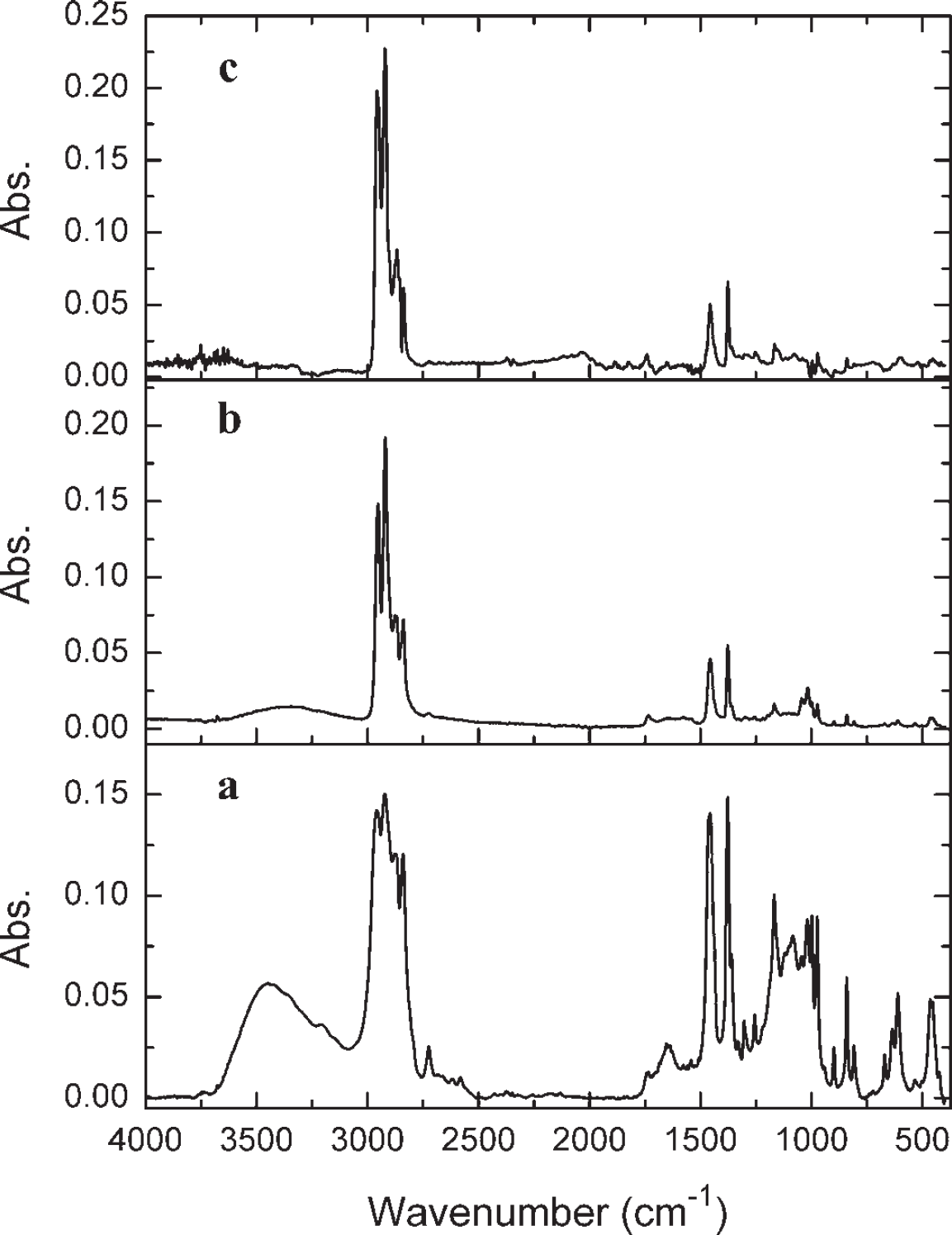
The FT-IR spectra of specimen no. 28 (polypropylene, barium sulfate reinforced). (
Another example is shown in Fig. 6; here the spectra acquired from specimen no. 36 (polypropylene, glass filled) are compared. Once again, the broad absorption band at 1200–900 cm−1, due to the presence of glass, is detectable only using the Trans spectrum.
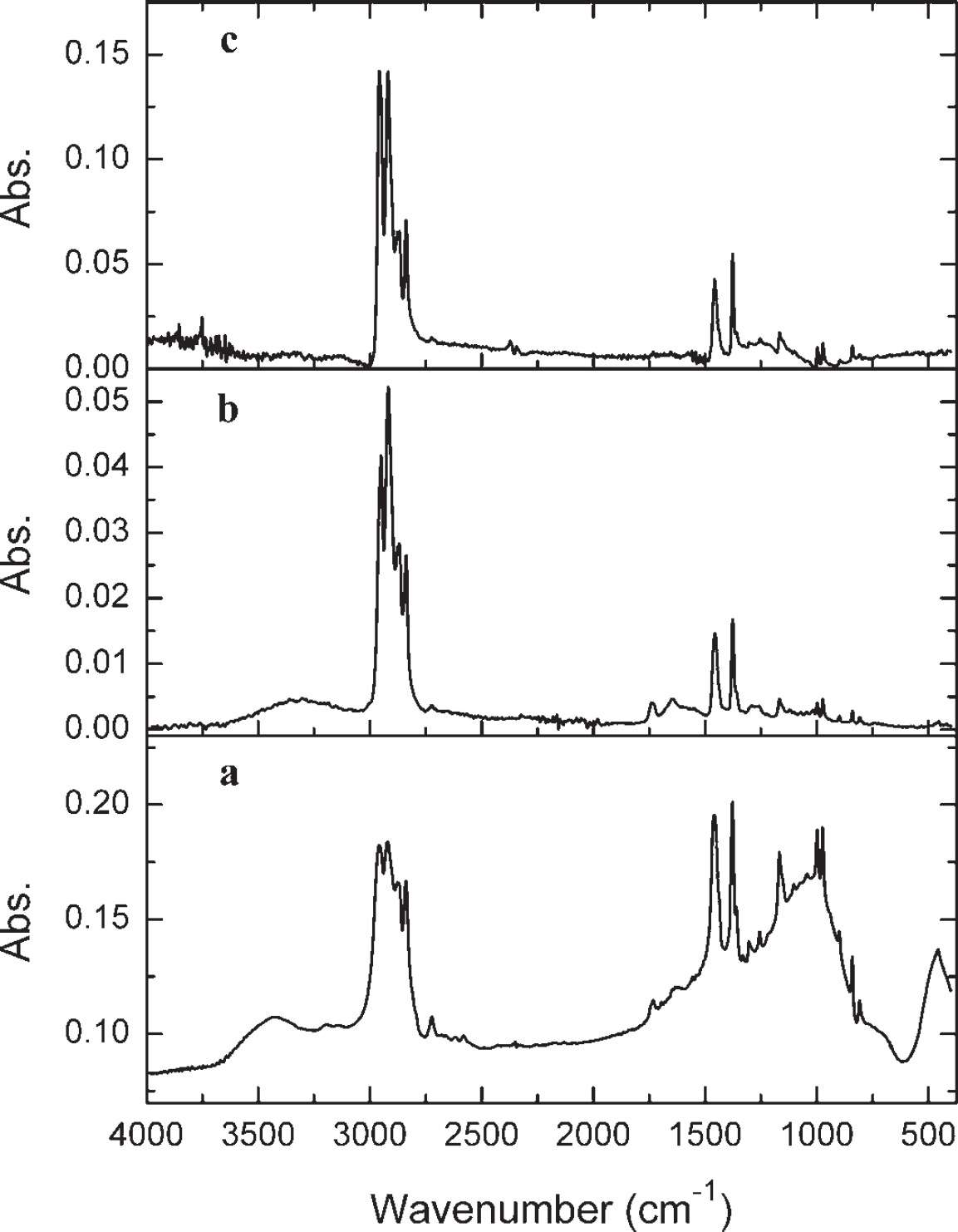
The FT-IR spectra of specimen no. 36 (polypropylene, glass filled). (
As a general comment with regard to the comparability of the three techniques, we can state that the spectra recorded using both the ATR and TR techniques were often in poor agreement with those obtained using Trans mode in terms of the intensity and shape of the absorption bands; however, this usually did not affect the correct identification of the materials. For a relatively small number of cases (14 specimens, falling into cases 2 and 3) of the 50 analyzed, TR could not be considered interchangeable with and as reliable as Trans and ATR. This indicates that portable FT-IR devices may be used to implement the noninvasive identification of constituent polymers in plastic artworks, provided that a certain margin of inexact attributions is taken into account when TR spectra are compared to spectral libraries built using Trans and ATR. Indeed, the reliability and good quality of the TR spectra acquired without sampling have been confirmed in most cases.
A side outcome of this study performed on the ResinKit set was the demonstration that, in a few cases, FT-IR analysis succeeded in highlighting some discrepancies between the declared composition and the actual formulation of the specimens analyzed. For example, the FT-IR spectrum of sample no. 18, classified in the ResinKit set as thermoplastic polyester, glycol-modified polyethylene terephthalate (PETG), had the spectral features of an alloy of polyethylene terephthalate (PET) and polycarbonate (Fig. 7). This material is available commercially and is used to manufacture such items as greenhouse roofs, automobile instrument panels, wheel covers, snowmobiles, and cellular phones.
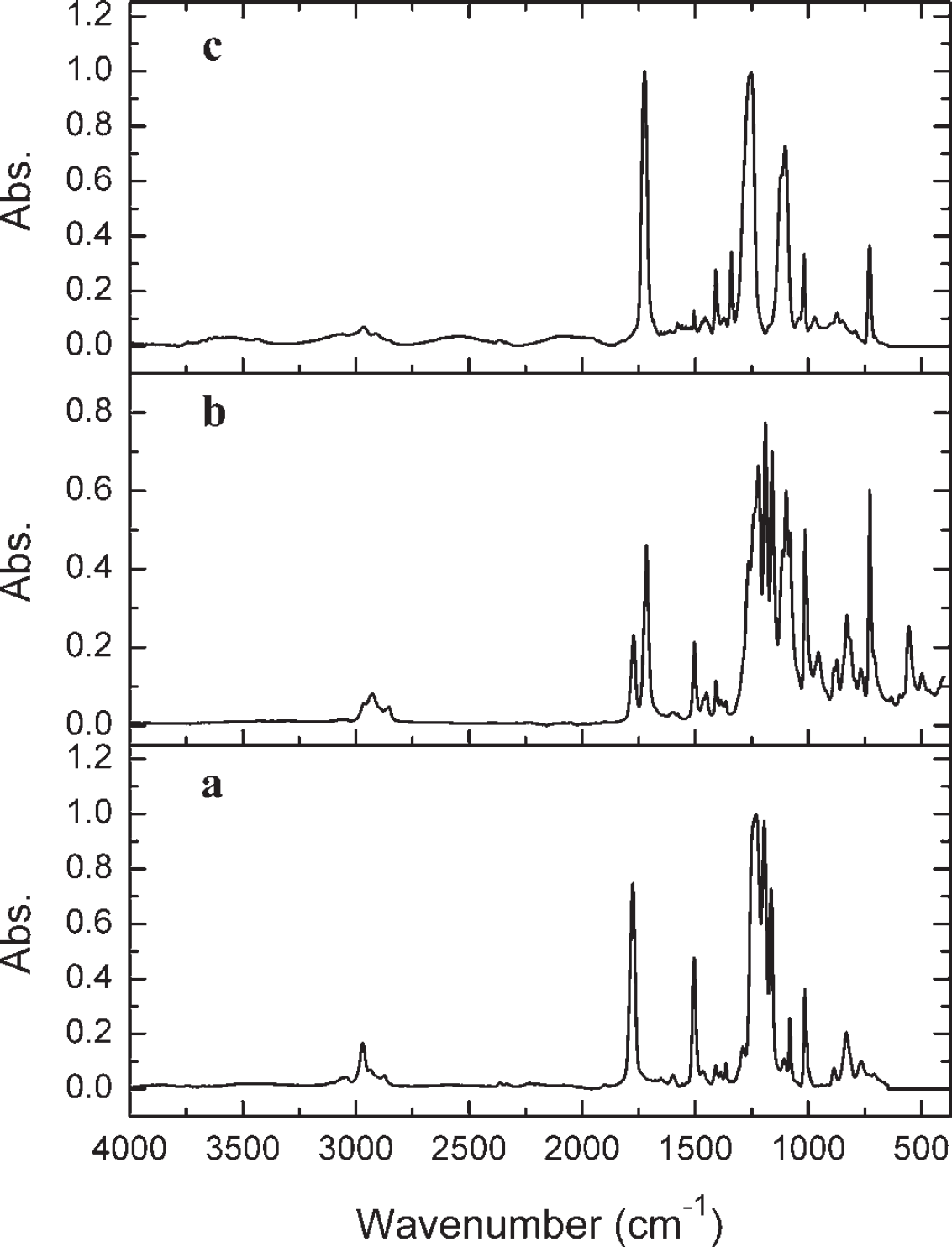
The FT-IR spectra of three plastics. (
Another general consideration concerns the possibility of distinguishing polymers that belong to the same polymeric class but have different densities. Based on the results obtained, we found that, irrespective of the instrument configuration used, FT-IR techniques were not suitable for this finer discrimination. This was the case for the following polymeric classes: polyethylene (no. 24, low density; no. 25, high density), polystyrene (no. 1, general purpose; no. 2, medium impact; no. 3, high impact), and acrylonitrile butadiene styrene (ABS) (no. 5, transparent; no. 6, medium impact; no. 7, high impact).
CONCLUSION
A set of 50 thermoplastic resins was characterized using three different FT-IR instrument configurations: Trans, ATR, and TR modes. Our ultimate aim was to investigate the quality and reliability of FT-IR spectra acquired noninvasively using TR mode and portable FT-IR spectrometers. The TR spectra were then compared with those acquired using the Trans and ATR modes, and the results were classified into categories based on their agreement level.
We found that the spectra recorded using both the ATR and TR techniques were often in poor agreement with those obtained using the Trans mode, in both the intensity and the shape of the absorption bands. Conversely, we found in most cases that the spectra acquired using the ATR and TR techniques were definitely comparable, particularly after processing the TR spectra by means of the KK algorithm. However, the results we obtained point out that the application of the KK algorithm should be considered case by case, on the basis of a careful evaluation of the frequency range in which the KK correction is to be made. Moreover, in a few cases the TR spectra were not comparable with those collected using the ATR and Trans modes.
The results obtained reveal that, in the majority of cases, the TR mode may be used advantageously in situ to obtain a noninvasive identification of constituent polymers in plastic objects, especially for large-scale and preliminary surveys of plastic artworks. However, a certain margin (18% according to the results presented here) of inexact attributions has to be taken into account when comparing TR spectra with spectral libraries built using different techniques (Trans and ATR).
We conclude that, considering that the TR FT-IR technique is a noninvasive and portable methodology for in situ measurements, our results are promising for application in the cultural heritage field and in the analysis of plastic artworks.
Footnotes
ACKNOWLEDGMENTS
This work was carried out within the Preventive Conservation of Contemporary Art project (COPAC, 2011–2013) financed by the Regione Toscana (Tuscan Region, Italy) within the framework of the PAR-FAS Regional Project (2007–2013). The research presented is based partially on materials and results obtained within the framework of the EC POPART Project (FP7/2007-2013, Grant Agreement No. 21221), financed by the European Community.