







Abstract
A systematic study has been performed on the spectral characteristics of the full spectrum of He emission lines and their time-dependent behaviors measured from the He gas plasmas generated by a nanosecond neodymium-doped yttrium aluminum garnet laser. It is shown that among the major emission lines observed, the triplet He(I) 587.6 nm emission line stands out as the most prominent and long-lasting line, associated with de-excitation of the metastable triplet (S = 1) excited state (1s 1 3d 1 ). The role of this metastable excited state is manifested in the intensity enhancement and prolonged life time of the Cu emission with narrow full width half-maximum, as demonstrated in an orthogonal double-pulse experiment using a picosecond laser for the target ablation and a nanosecond laser for the prior generation of the ambient He gas plasma. These desirable emission features are in dire contrast to the characteristics of emission spectra observed with N2 ambient gas having no metastable excited state, which exhibit an initial Stark broadening effect and rapid intensity diminution typical to thermal shock wave-induced emission. The aforementioned He metastable excited state is therefore responsible for the demonstrated favorable features. The advantage of using He ambient gas in the double-pulse setup is further confirmed by the emission spectra measured from a variety of samples. The results of this study have thus shown the potential of extending the existing laser-induced breakdown spectroscopy application to high-sensitivity and high-resolution spectrochemical analysis of wide-ranging samples with minimal destructive effect on the sample surface.
Keywords
INTRODUCTION
The early recognition of the favorable intensity enhancement effect of He ambient gas1–4 in laser-induced breakdown spectroscopy (LIBS)5–12 has since stimulated a long series of investigative and corroborative experiments using either single-pulse 7 or double-pulse13–23 laser setups, supporting and clarifying the much desired effect. Its benefits have been further demonstrated for high-sensitivity and high-resolution spectrochemical analysis, especially for light elements such as H and D.24–36 The important advantages of the He ambient gas have been often suggested to have their origin in the role of He metastable excited states for the delayed excitation of the ablated elements in the He gas plasma. Despite a variety of circumstantial evidence from experimental results reported in the literature,29–32 additional concrete experimental data are still needed for the establishment of the suggested role of the He metastable excited states. Among these desirable data are the identification of the specific excited states of He involved and the correlation of dynamic characteristics between the relevant He emission and the delayed emission of the ablated element supposedly induced by the He metastable excited states.
In response to those needs, this experiment is designed to reveal the pertinent He excited states based on the spectral features of observed He emission lines and their dynamic characteristics that may be ascertained to play the important role in the above-mentioned delayed target emission. Furthermore, a special double-pulse setup with a dual nanosecond–picosecond laser system is used to allow the separate controls of the target ablation and the ambient gas plasma generation. In such an experimental arrangement that was previously used for the analysis of Zircaloy samples, 37 one can explore the possibility of applying the much smaller target ablation energy to minimize the crater size produced on the target surface without significantly compromising the emission spectral quality. But, more importantly for this study is the flexibility for varying and exploring the time delay of the ablation laser irradiation to measure the time-dependent intensity profiles of the ablated element emission. In particular, this experimental setup allows the delay to be adjusted so as to reduce or suppress the thermal shock wave excitation effect within the delay time and thereby examines the suggested exclusive role of the He-assisted excitation process. For those purposes, the time profiles of Cu emission intensities are measured from a Cu sample for the analysis and demonstration of the distinct advantage of using He ambient gas over the use of N2 ambient gas, which has no metastable excited state in the N atoms, as shown by comparing the dynamic characteristics of the resulting target emission in the two cases. To demonstrate that the favorable effect of He ambient gas can indeed be attributed entirely to the excitation process via energy transfer from the metastable He excited state as suggested previously,25,29,33 a separate experiment is performed by delaying the target ablation to the point when the He gas plasma has cooled down below the temperature for its effective role in the thermal excitation process. By further relating the dynamics of the specific major metastable He emission lines with that of the target element emission lines, this experiment allows us to sort out the specific He metastable excited state that is most likely responsible for the He-assisted excitation process.
Finally, the applications of the special double-pulse experimental technique to spectrochemical analyses of a variety of target samples are performed to verify the favorable spectroscopic features observed in the Cu emission spectrum and the role of the He metastable excited state responsible for the advantages. The results presented in this work show that the double-pulse technique with the use of atmospheric He ambient gas does offer a promising extension of LIBS application for more sensitive and higher resolution spectrochemical analysis of wide-ranging elements, including the light elements and elements of high excitation energies.
EXPERIMENTAL
Figure 1 shows a schematic description of the experimental setup consisting of two neodymium-doped yttrium aluminum garnet (Nd : YAG) laser systems that are configured to produce the laser beams at mutually perpendicular direction. For the dual-laser setup, two optical windows made of quartz are installed on the sample chamber. Both laser systems are operated in the Q-switched mode at the same repetition rate of 10 Hz. One of the lasers with 8 ns pulse width operating at its fundamental wavelength of 1064 nm and a fixed energy of 80 mJ is focused onto a spot within the ambient He gas in the chamber to generate the He plasma at a point 3 mm in front of the target. The He gas (Air Liquid, 6N) is maintained at atmospheric pressure of 101 kPa with a constant He flow rate of 3 L/min. The second Nd : YAG laser of the same wavelength, but with a much narrower pulse of 20 ps, is operated subsequently at a much lower fixed energy of 7 mJ for the ablation of the solid target. The very low ablation energy is chosen to minimize the damage on the sample surface without compromising the detected emission intensity. The time lag of this second laser irradiation is varied for investigating the dynamic correlation between the target emission and the major He emission. The emission spectra of the ablated atoms are collected by an optical fiber with its entrance end fixed inside the chamber at a distance of 2 cm sidewise from the He plasma. A 2 mm wide metal plate is placed between the target and the fiber entrance serving as a mask to block off the target plasma emission from entering the detector, thus ensuring that only emission coming directly from the He gas plasma is detected. The other end of the optical fiber is connected to the detection system consisted of a spectrograph and an optical multichannel analyzer (OMA).
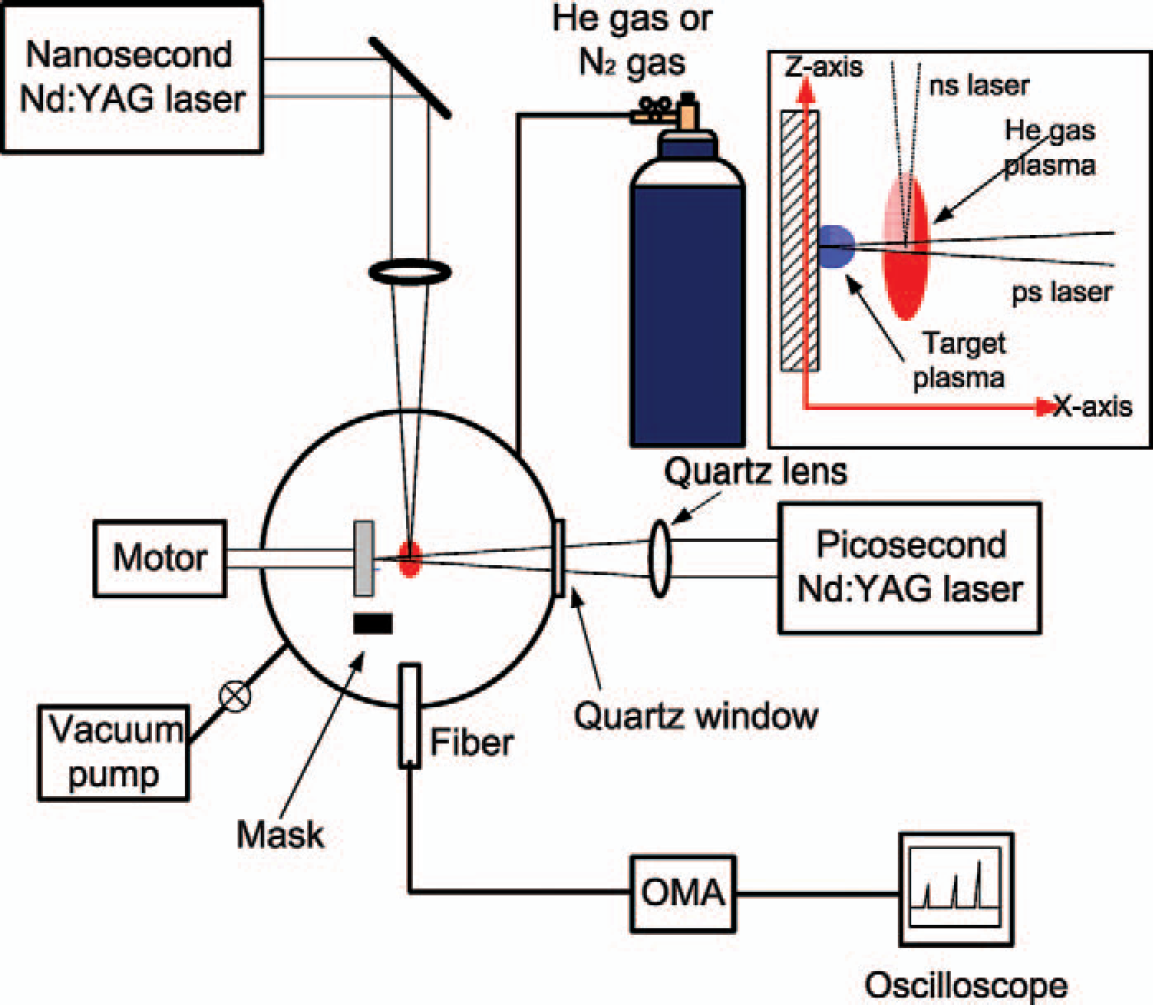
Description of the experimental setup.
The main targets used in this experiment consist of Cu plate, black stone, Teflon, and Zircaloy samples. All of the samples are cut to a 10 mm × 10 mm cross-sectional area. The experiment is divided into three parts. The first part is focused on the detection and study of the spectral and dynamic characteristics of He emission using the nanosecond laser alone without interference from the target emission. In the second part, measurements and analyses of emission from both He and Cu target plasmas are performed by operating the orthogonal double-pulse setup for investigating the effects of He gas plasma on the target plasma emission characteristics detected at various time delays of the ablation process. Those emission characteristics are to be compared with those observed using the N2 ambient gas having no metastable excited state. Finally, the advantages of He ambient gas demonstrated in the case of the Cu sample are further verified by repeating the experiment on a variety of other samples.
RESULTS AND DISCUSSION
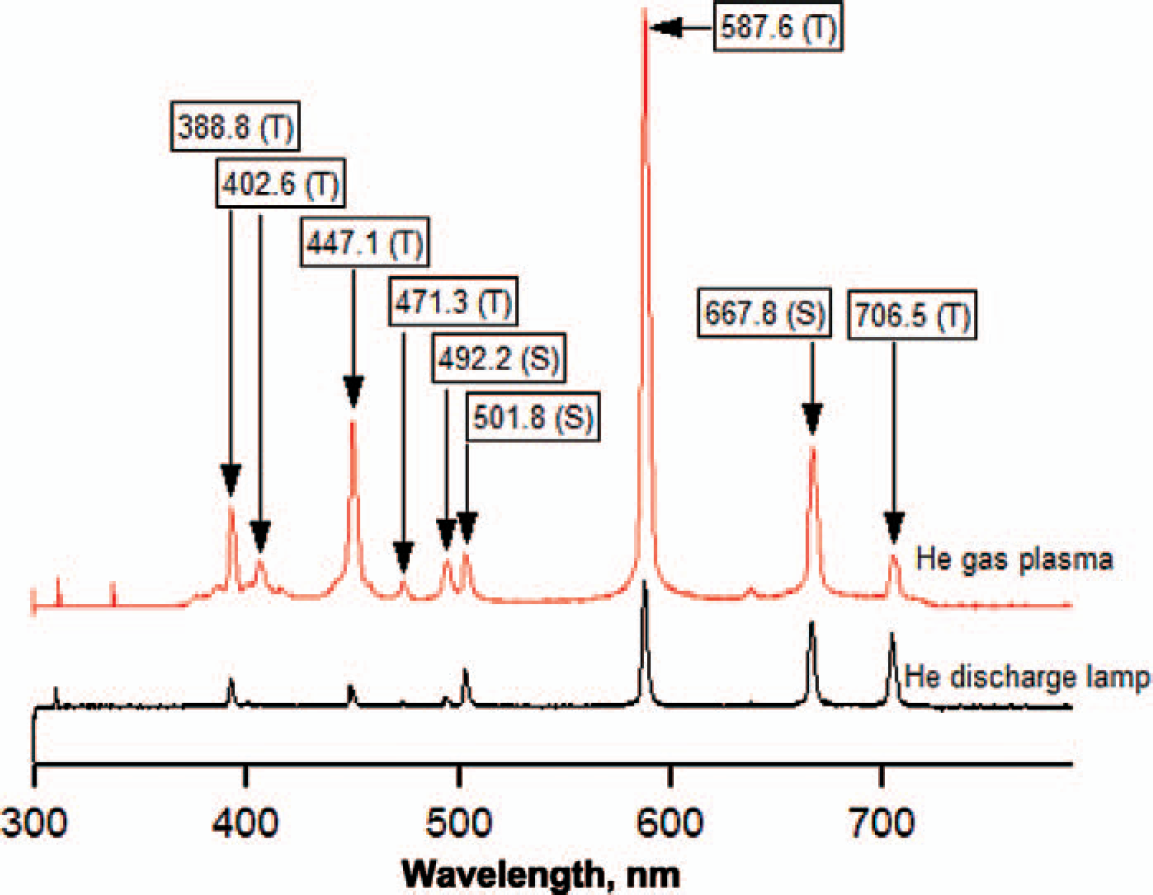
Emission spectrum of He emission lines measured from He gas plasma generated by a nanosecond laser and He discharge lamp, detected with gate delay and gate width of 200 ns and 100 μs, respectively.
In view of the important role of the He metastable excited states in the He-induced delayed plasma emission suggested previously,25,29 we have chosen to focus the ensuing measurement of the time-dependent intensity variation of the He singlet and triplet emission lines by varying the time of detection. For this experiment, the low-resolution grating of 300 g/mm used in the spectrograph is replaced by a high-resolution 1200 g/mm grating with the much narrower 80 nm observable spectral window. Figure 3 shows the time-dependent emission intensity of He(I) 587.6 nm (T) measured at gate delays of (Fig. 3a) 5 μs and (Fig. 3b) 20 μs with the same gate width of 2 μs. A considerable intensity reduction of 1/20, as shown in Fig. 3b, is clearly observable for He(I) 587.6 nm detected with 20 μs delay compared with the intensity detected with 5 μs delay. The same measurement is repeated for the other triplet emission line He I 706.5 nm (T) and the neighboring He(I) 667.8 nm (S) and He(I) 728.1 nm (S) emission lines. One notices from Figs. 3c and 3d, presented in the different spectral ranges, that roughly the same intensity reduction of 1/18 is found for the triplet emission line, while considerably more severe reduction of 1/40 and 1/35 is observed for He(I) 667.8 nm (S) and He(I) 728.1 nm (S) emission lines, respectively. Thus, the intensity reduction with increased time delay is generally and noticeably much more severe in the case of He (S) emission compared with that observed from the He (T) emission. Above all, it is obvious that the He triplet metastable excited state associated with He I 587.6 nm emission line exhibits by far the highest intensity throughout the time interval observed. Therefore, it is likely to play a prominent role as the temporary energy reservoir for the delayed excitation of the ablated target atoms, as is discussed further in the next section.
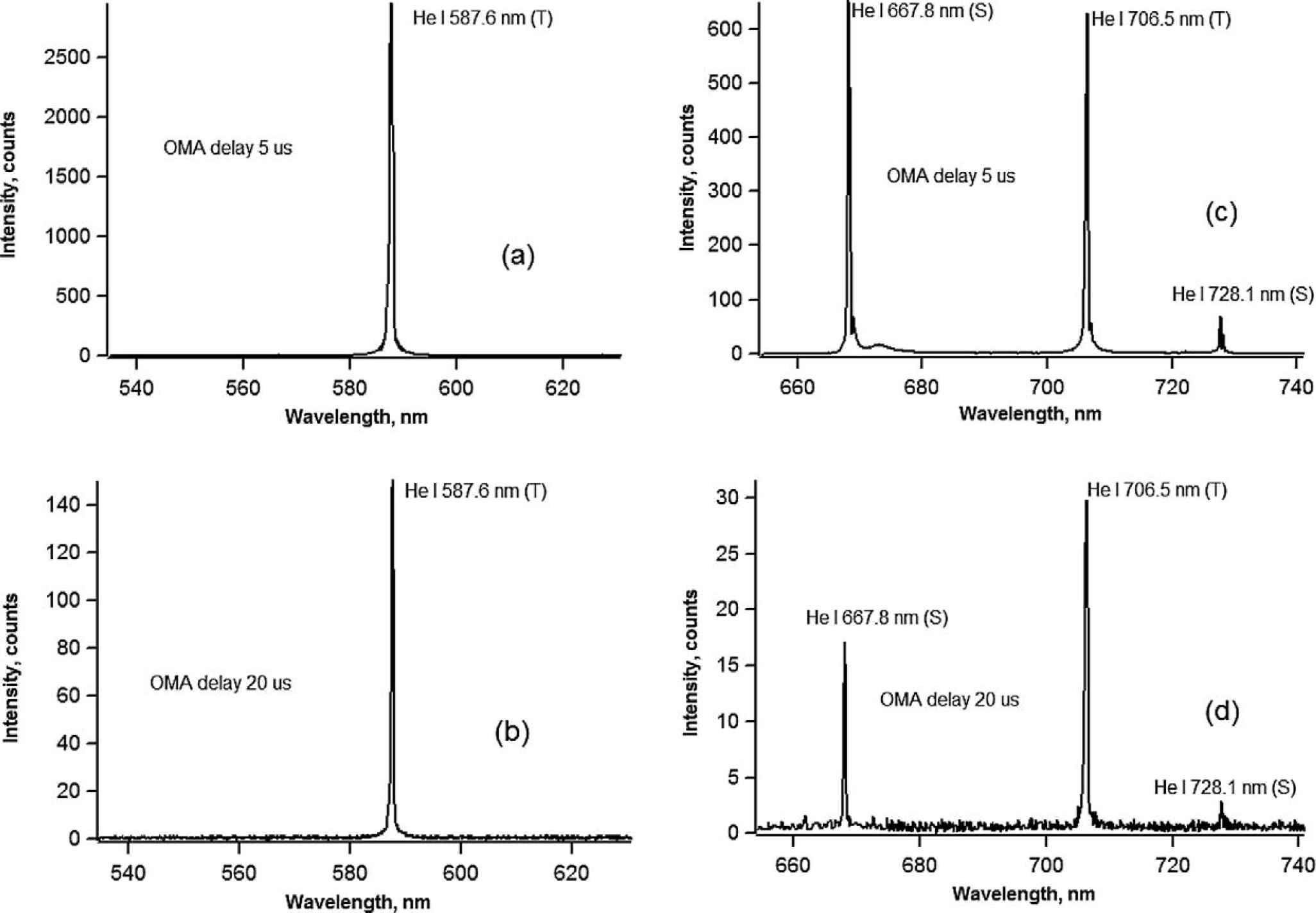
Time-resolved emission lines of He I 587.6 nm (T) at OMA gate delay of (
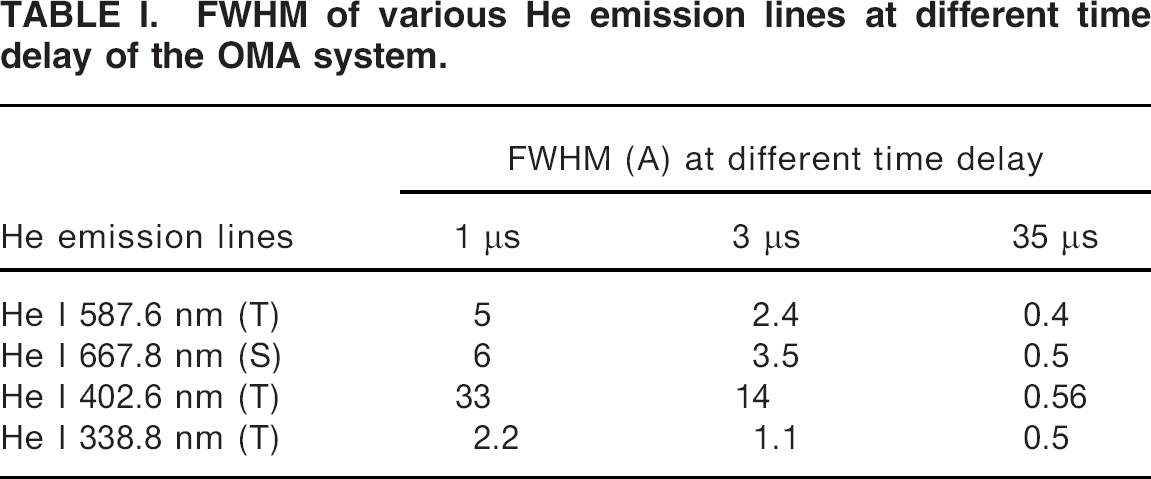
Before proceeding with the double-pulse experiment for revealing the effects of He gas plasma, it is useful to digress to verify and re-emphasize the typical time-dependent emission characteristics of the shock wave-induced emission lines reported previously. 29 To this end, a time-resolved measurement was performed on the most dominant He(I) 587.6 nm (T) emission line with time delays of 3 μs and 35 μs. The emission spectra are measured by using a high-resolution spectrograph (McPherson model 2061, focal length 1000 mm, grating of 1800 g/mm) equipped with a fast intensified charge-coupled device (Andor), with a 15 nm spectral window for each measurement. It is found that the full width half-maximum (FWHM) of the emission line obtained with 3 μs delay is 2.4 Å, which reduces to 0.4 Å with a longer delay of 35 μs, while a FWHM of 5 Å is found in the emission line detected with a 1 μs delay. This feature of narrowing FWHM is further confirmed by the results measured from the other He emission lines as summarized in Table I.
FWHM of various He emission lines at different time delay of the OMA system.
The major reason for the initial broadening effect found in plasma emission generated by laser bombardment on the target is the appearance of electron density in the plasma that is responsible for the Stark broadening effect. This electron density is known to decrease with time due to subsequent recombination processes resulting in the narrowing line width (FWHM) as noted above. This is also clearly depicted by the FWHM variation for H(I) 656.2 nm emission detected with different time delays, as plotted in Fig. 4. Note that the FWHM is as large as 1.5 Å at the initial stage of plasma formation and rapidly decreases to 0.8 Å at 5 μs time delay, followed by a gradual and monotonous reduction to 0.53 Å at 40 μs time delay, in agreement with the decreasing charge density in the plasma.
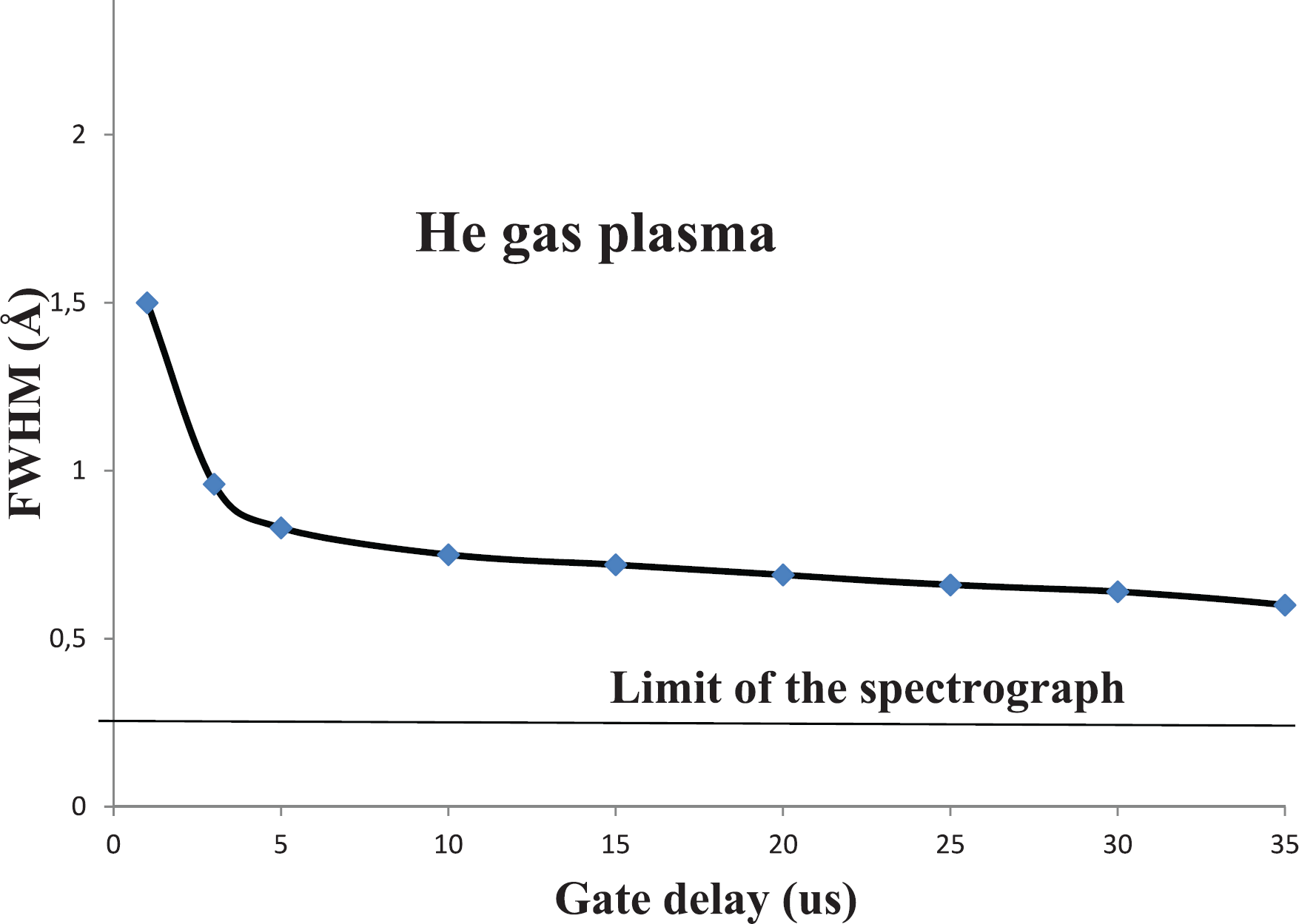
Time evolution of FWHM of H I 656.2 nm from He gas plasma. The OMA gate width was fixed at 2 μs.
There are three remarkable features exhibited in Fig. 5. First, the Cu emission lines remain clearly detected even 35 μs after the ablation process when the shock wave excitation process is supposed to have become inoperative. Second, all the Cu emission lines feature roughly the same narrow FWHM of 0.4 A regardless of the different time delays taken for their detection; this implies the absence of charge density that is commonly found in the plasma associated with the initial stage of shock wave excitation process, as mentioned above. Third, the intensity ratio of Cu(I) 521.8 nm/Cu(I) 510.5 nm is also found to remain more or less constant regardless of the different time delays. These features indicate the working of an alternative excitation mechanism unlike the shock wave excitation process featuring changing FWHM and rapidly decreasing emission intensities. In the absence of any other known excitation process, these features, together with the most prominent and long-lasting He(I) 587.6 nm emission line presented in Fig. 3, have provided a clear indication of the dominant role of He metastable excited state associated with the He(I) 587.6 nm emission line in the delayed excitation of Cu atoms in the He gas plasma, via the Penning-like collision-induced energy transfer process.37,38
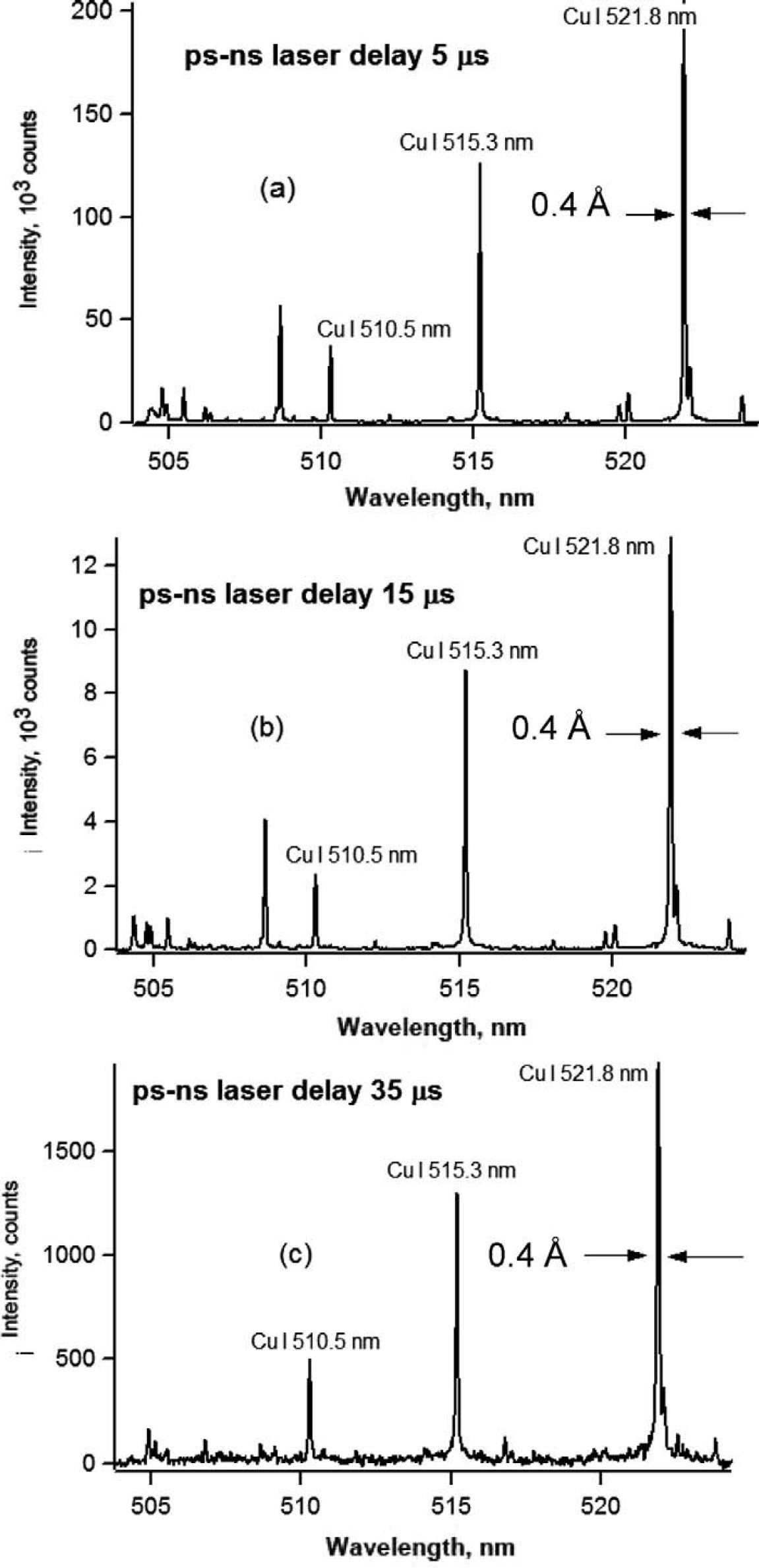
Emission spectrum of Cu I 510.5 nm, Cu I 515.3 nm, Cu I 521.8 nm detected with a picosecond laser operated at time delays of (
To further corroborate the above-mentioned conclusion, the surrounding He gas used previously is replaced by N2 gas, a gas known to have no metastable excited state in the dissociated N atoms. In this case, the Cu emission is detected from the N2 gas plasma generated by the same nanosecond laser irradiation. The resulted Cu emission lines are presented in Fig. 6 for three different time delays of the picosecond laser irradiation, namely, 5, 10, and 15 μs. Only the spectrum detected with 10 μs exhibits the three major Cu emission lines, whereas only the Cu emission of longest wavelength (521.8 nm) appears weakly in the spectrum detected with 5 μs delay, and no perceptible sign of Cu emission is found at 15 μs delay. It is important to note that the obviously weaker and considerably shorter lifetime of the Cu emission lines is typical of shockwave–induced emission due to the rapid decline of the plasma temperature. This along with the much weaker emission intensities can be attributed to the absence of metastable excited state in nitrogen and hence the lack of the delayed excitation mechanism for the enhanced and sustained emission observed in the case of He ambient gas. The relatively early appearance of Cu(I) 521.8 nm and the late appearance of the full spectrum in this case can be explained as follows. It is well known that the considerably larger mass of N compared to He is supposed to result in lower speed of the N atom, and thereby lead to slower buildup of the shock wave and the plasma temperature. Consequently, only the longest wavelength emission line associated with the lowest excited state is observed at the earlier stage. This also explains the absence of even a trace of the Cu(I) 515.3 nm emission line despite its comparable (>60%) intensity.
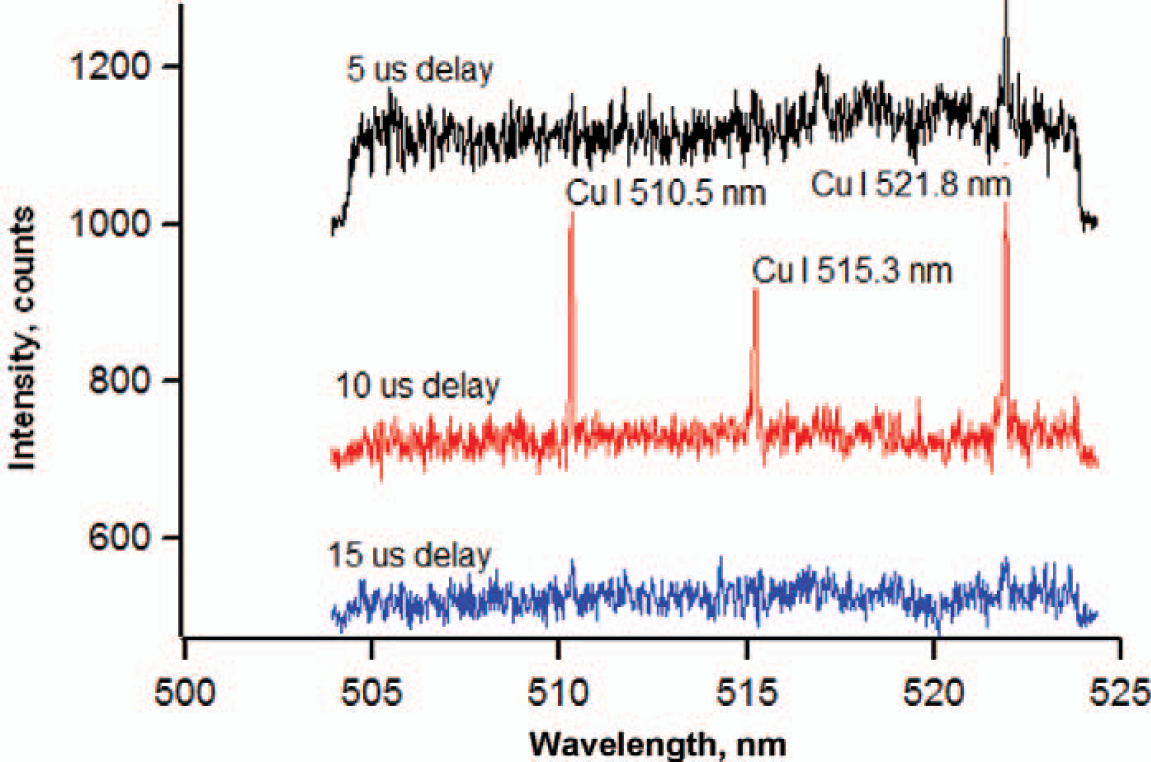
Emission spectrum of Cu I 510.5 nm, Cu I 515.3 nm, Cu I 521.8 nm emission lines measured with a picosecond laser operated with time delay of 5 μs, 10 μs, and 15 μs. The OMA gate delay was set at 1 μs after the picosecond laser operation, with gate width of 50 μs. The N2 surrounding gas was used at 101 kPa.
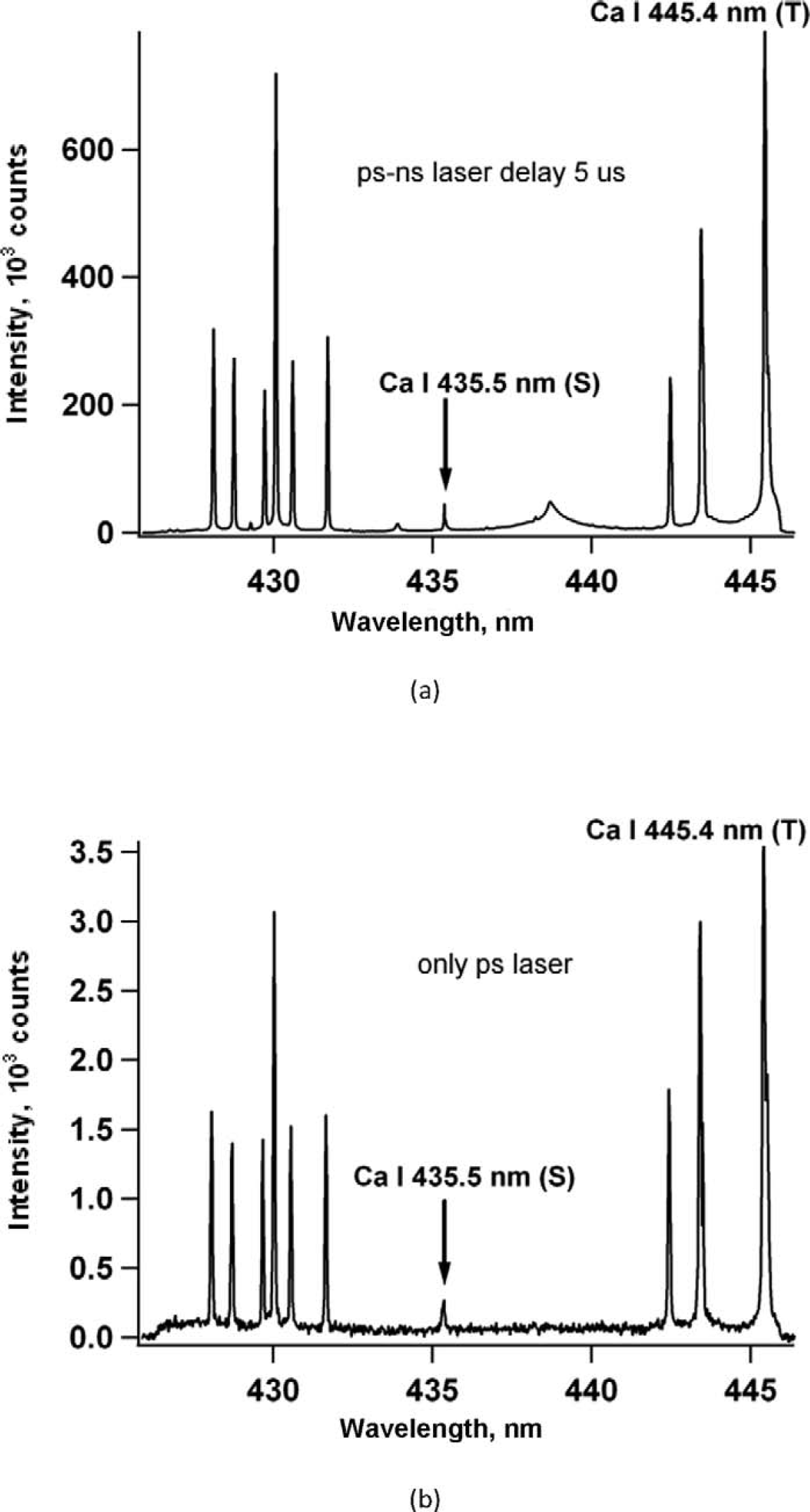
Emission spectrum of Cu I 435.3 nm (S) and Ca I 445.4 nm (T) emission lines from black stone; (
The relative advantage of the double-pulse method over the standard single-pulse technique is further examined for the case of H analysis. The sample used in this experiment is a Zircaloy plate cut from a Zircaloy tube used in a nuclear power station as a fuel vessel. The results are presented in Fig. 8 for spectra obtained with double-pulse irradiation (Fig. 8a) and picosecond laser irradiation only (Fig. 8b). It is obvious that the emission intensity detected in double-pulse irradiation (Fig. 8a) is much stronger, namely, about 25 times that detected in picosecond laser irradiation only (Fig. 8b). Besides, the emission spectrum is moderately simpler in double-pulse irradiation (Fig. 8a) due to the absence of ionic emission lines compared with picosecond laser irradiation only (Fig. 8b) where ionization of the target atoms also take place due to collision by the fast electron produced by the picosecond laser irradiation. These ionic emission lines are bound to complicate the spectral background as seen in Fig. 8, rendering the result less favorable for spectrochemical analysis.
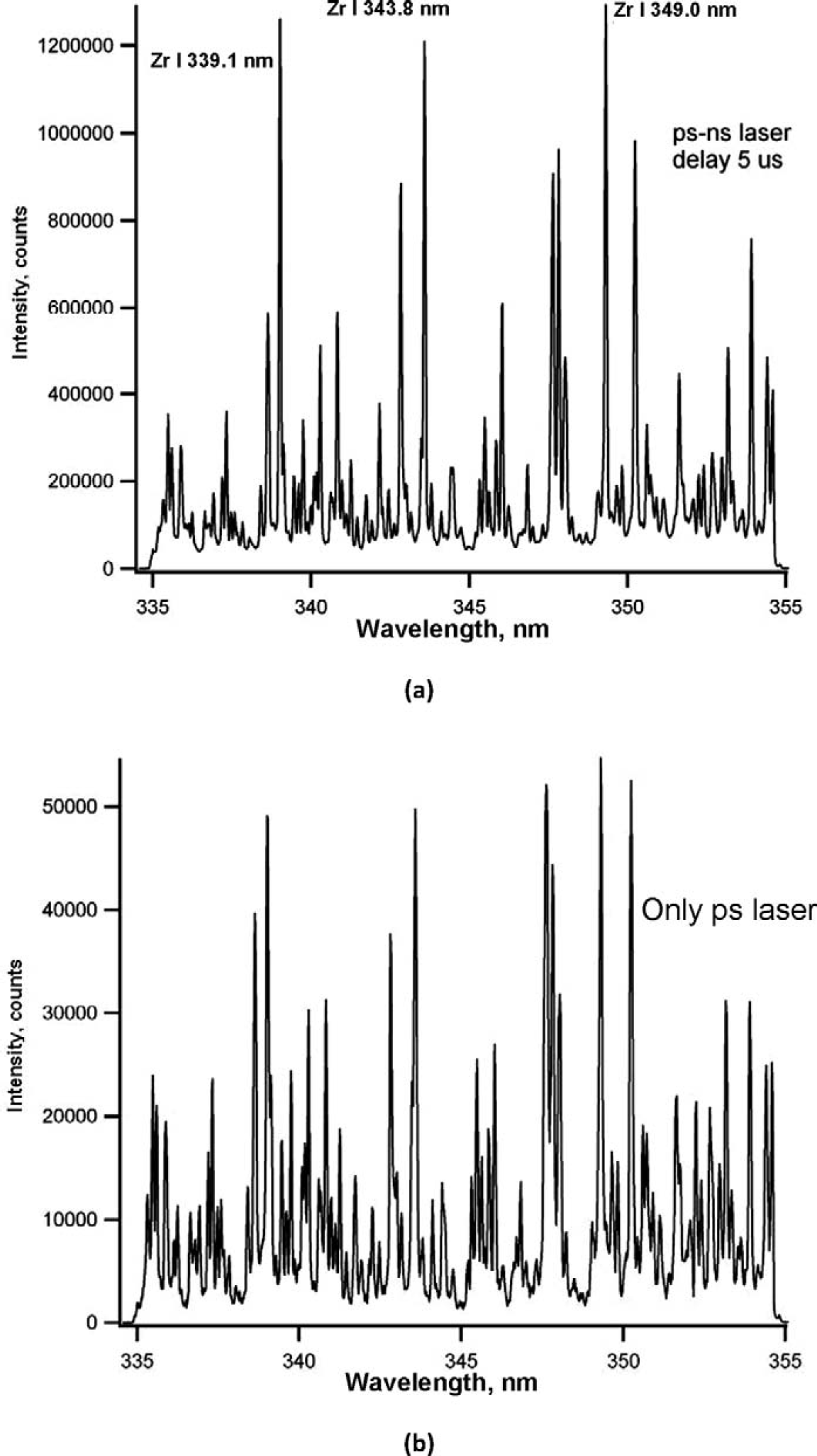
Emission spectrum of Zr lines from Zircaloy plate in He surrounding gas of 101 kPa that was obtained when (
Finally, the double-pulse method is applied to a Teflon sample containing 9% F having a high excitation energy of around 14.5 eV. The resulted spectrum obtained from the double-pulse measurement is presented in Fig. 9. Note the strong F emission in the wavelength range from 675 to 690 nm, consisting of the F(I) 676.6 nm, F(I) 683.4 nm, F(I) 685.6 nm, F(I) 687.0 nm, F(I) 690.2 nm, and F(I) 690.9 nm emission lines. To demonstrate the exclusion of thermal excitation in the target plasma, the time delay between the target ablation and the He gas plasma generation is varied to give the result shown in Fig. 10. The sustained F emission lasting for more than 35 μs, as shown in the figure, is certainly not the result of the thermal excitation in the target plasma, since the plasma is supposed to have cooled down below its effective temperature for the thermal excitation, as explained above. Obviously, a different excitation mechanism must be at work in the He gas plasma that is most likely due to the energy transfer from the metastable He excited state of relatively long lifetime associated with the prominent He(I) 587.6 nm emission line.
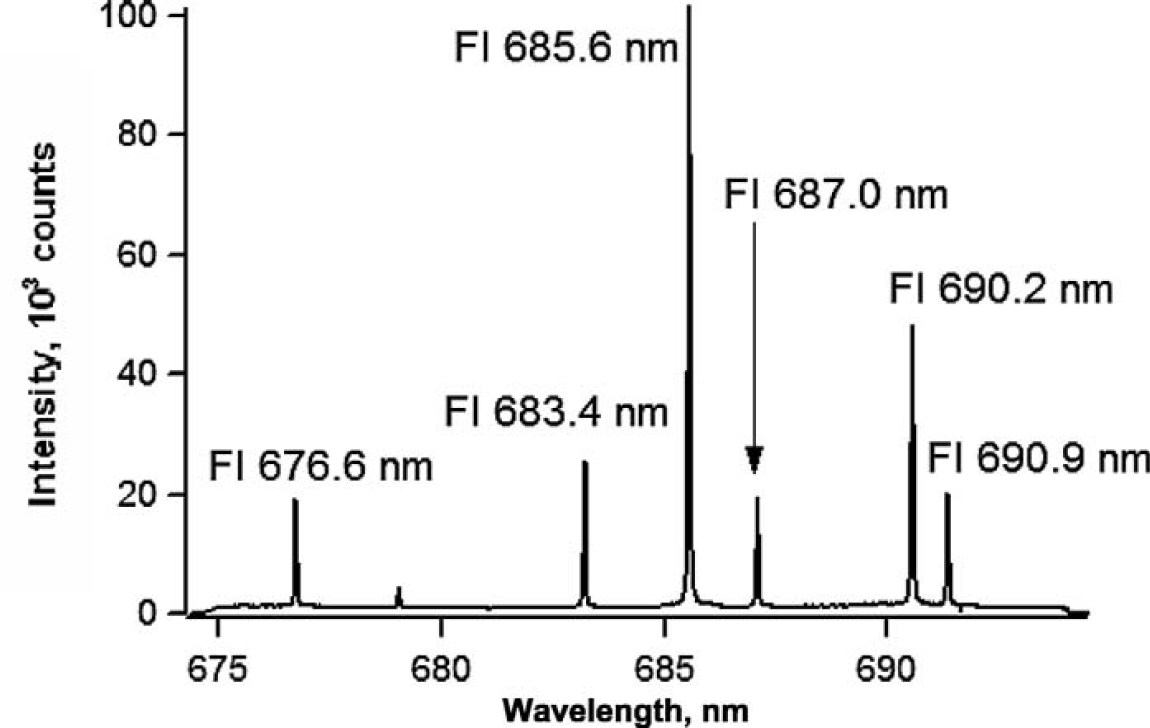
Emission spectrum of F lines from a Teflon sample in He surrounding gas of 101 kPa. The picosecond laser was fired 5 μs after the nanosecond laser (formation of He gas plasma). Gate delay of the OMA system was set at 1 μs after the picosecond laser operation, with gate width of 50 μs.
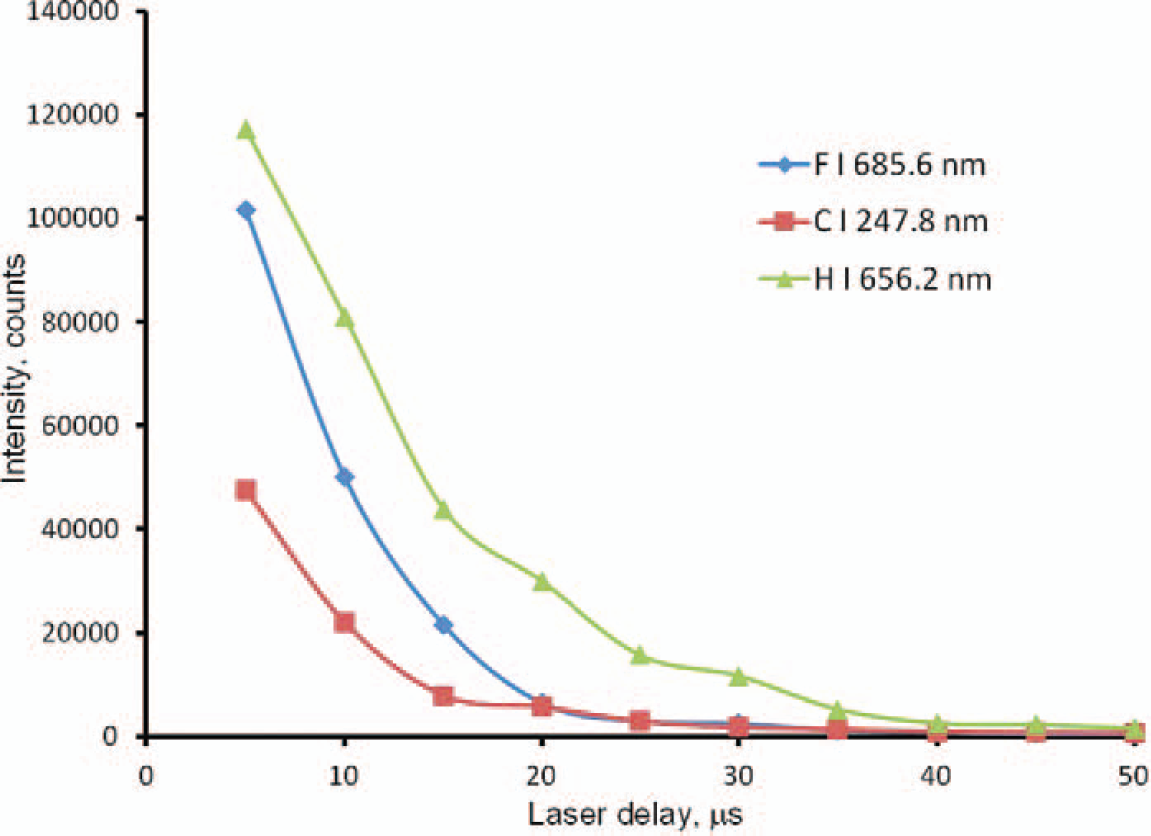
Emission intensity of F I 685.6 nm, C I 247.8 nm, H I 656.2 nm as a function of time delay between picosecond-nanosecond laser operation. Gate delay of the OMA system was set at 1 μs after the picosecond laser operation, with gate width of 50 μs. A Teflon sample was used in this study under He gas at 101 kPa as the surrounding gas.
It is particularly remarkable to note that the F and H emission lines shown in Figs. 8 and 9 that have their origins in the excited states of high excitation energies of 12 eV and 14.5, respectively, remain strongly visible even after 20 μs. This is in dire contrast to the Cu emission of low excitation energy of 7 eV that already disappeared at 15 μs in N2 gas plasma, as shown in Fig. 6.
CONCLUSIONS
We have shown that the metastable triplet He excited states associated with the He(I) 587.6 nm emission line are most likely responsible for the delayed excitation of the ablated target atom via the previously suggested Penning-like energy transfer process. The time-resolved measurements on Cu emission using the orthogonal double-pulse setup of a nanosecond–picosecond dual-laser system using either He and N2 ambient gas clearly exhibit the distinctly different time-dependent emission characteristics observed with the two different ambient gases. While the use of N2 ambient gas leads to the initially broad spectral lines with rapid intensity diminution and short-lived emission as a typical result of a shock wave excitation process, the same emission produced in the case of He ambient gas clearly shows significantly enhanced and consistently sharp emission lines lasting long after the shock wave excitation process has ceased to function. Application of the same double-pulse experimental technique to a variety of different target samples corroborated the same favorable features of the double-pulse setup with He ambient gas, which also allows the use of much smaller laser ablation energy for minimizing damage on the sample surface. These demonstrated advantages promise desirable and useful extension of LIBS for high-sensitivity and high-resolution and minimally destructive spectrochemical analysis for wide-ranging samples, especially for those containing light elements and elements of high excitation energy.
Finally, it is worthwhile to note that the experimental method employed in this study may be applicable to the study on the He emission detected in astrophysical observation to examine the contribution of He metastable atoms to the excitation of He atoms in the cosmic world.
Footnotes
ACKNOWLEDGMENTS
Part of this work was supported by Third World Academy of Sciences (TWAS), Italy, through a basic research grant in physics (03-109RG/PHYS/AS). Part of this work also was supported by Steffi Kurniawan.