






Abstract

To the Editor:
Marine signal flares are used in nautical situations in which illumination and communication are required. They are used for military and civilian purposes and are commonly found in marine survival kits. Some are fired by pulling a pull-wire trigger. We would like to report a case of significant injury from a ship's signal flare.
A 37-year-old man presented to our emergency department with severe chest and abdominal pain associated with shortness of breath. He had been struck on the lower lateral part of his left hemithorax while sunbathing on a beach in the Eastern Black Sea region of Turkey. Further investigation revealed that children playing on the beach had found a ship's flare (Figure 1A). They inadvertantly ignited it, and it struck the patient appropriately 30 m away.
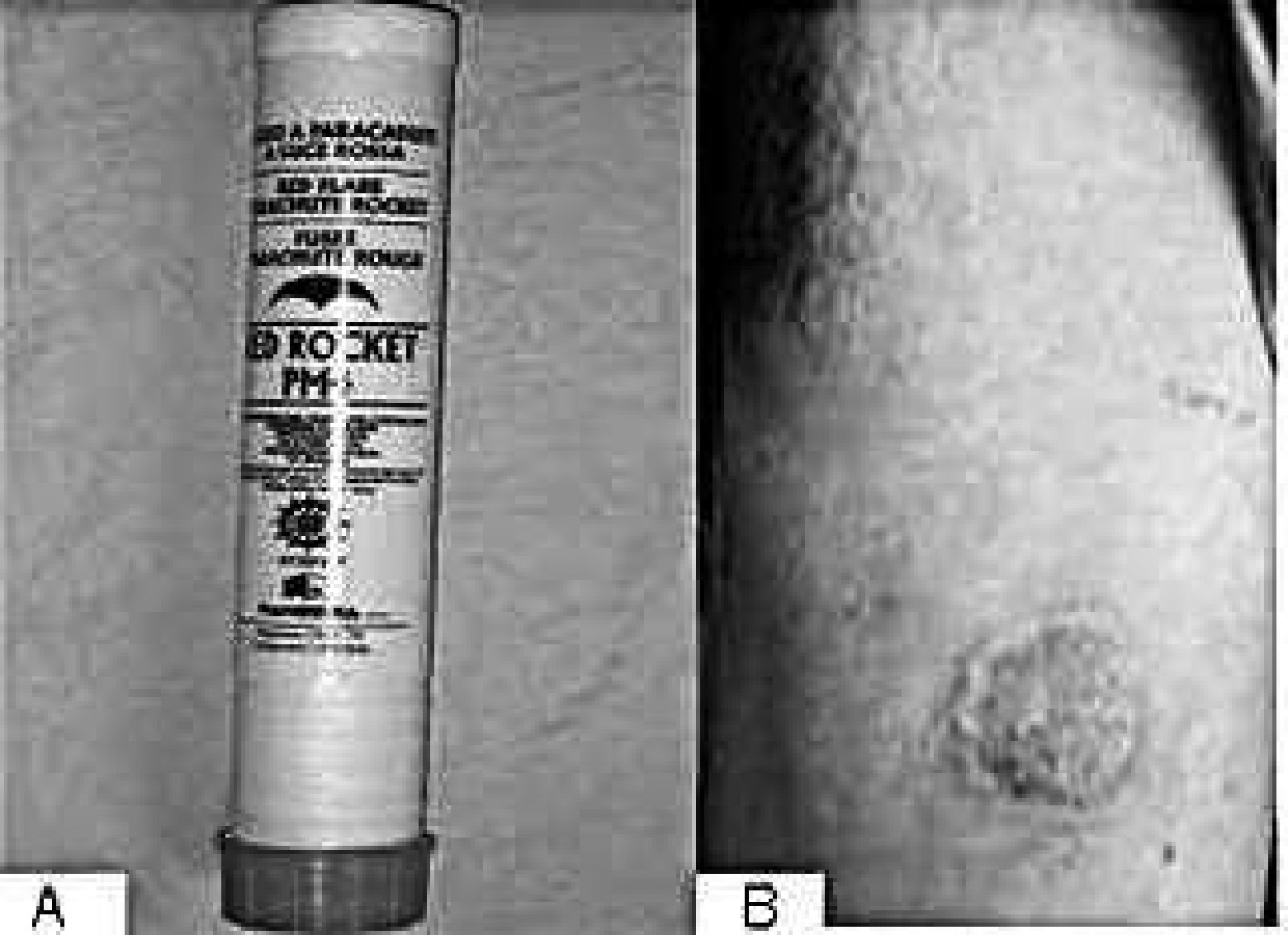
On physical examination, there was a 10 × 10 cm burn on the patient's left lateral hemithorax (Figure 1B). He had decreased breath sounds in the left hemithorax. Abdominal examination revealed tenderness and guarding. A chest radiograph revealed blunting of the left costophrenic angle.
Thoracic and abdominal computerized tomography (CT) revealed a pleural effusion in the left hemithorax and a subcapsular hematoma of the spleen (Figure 2). Hemorrhagic fluid was aspirated during thoracentesis, and left tube thoracostomy yielded 500 mL of hemorrhagic drainage. Repeat chest radiography showed good lung expansion and no hemothorax. Repeat thoracic and abdominal CT on the seventh day showed decreased fluid, and the patient resumed oral intake. The patient was discharged on the 10th hospital day.
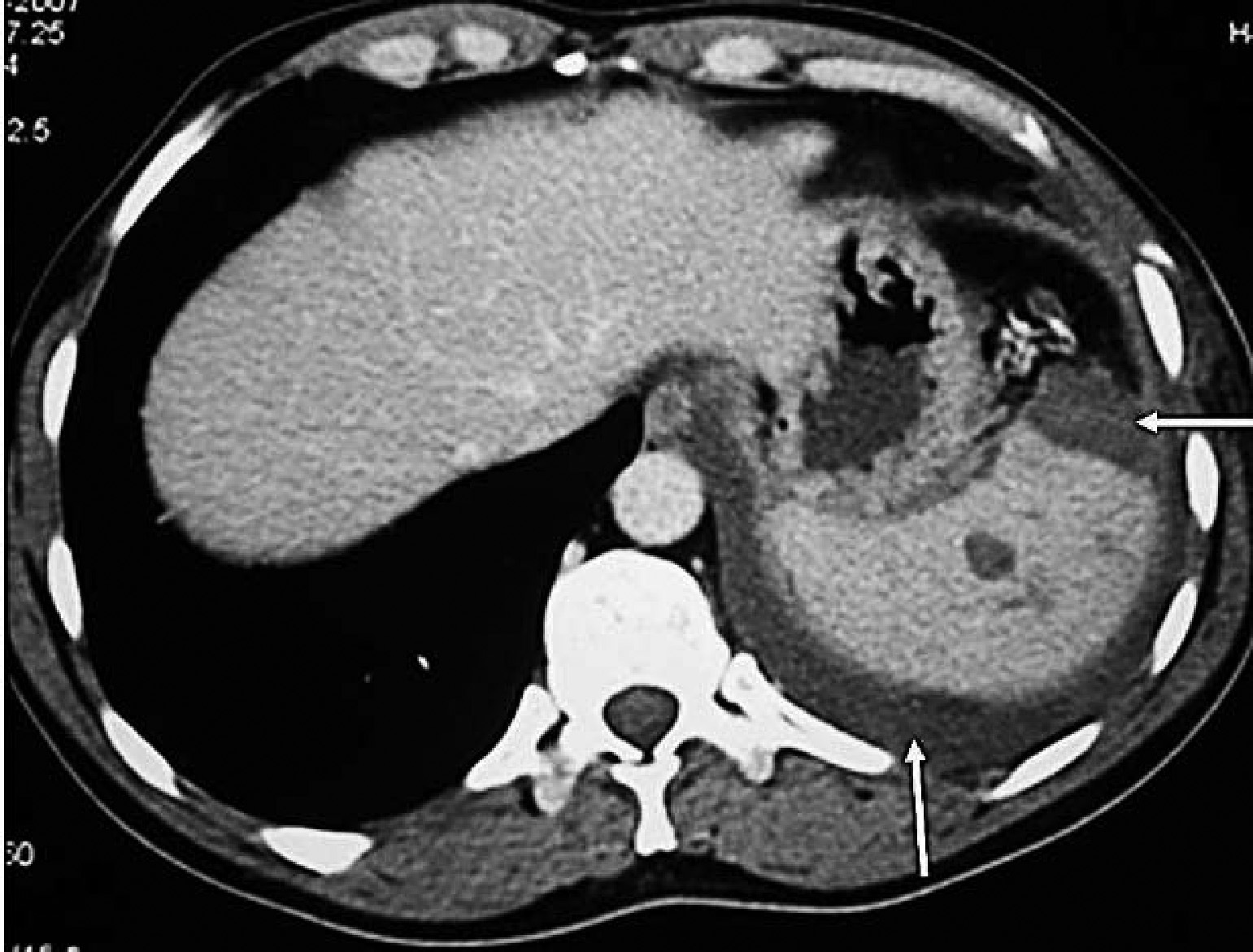
Computerized tomographic scan demonstrating a left pleural effusion and a subcapsular splenic haematoma.
Signal flare injuries are very rare but can lead to life-threatening complications if not diagnosed and properly treated. There are 2 case reports in the literature of fatal injuries caused by hand-held signal rockets.1,2 Signal rocket–related injuries may be due to blunt force, penetrating trauma, and associated burns. Physicians should keep in mind the potential for serious visceral injuries in addition to the more obvious cutaneous manifestations. CT radiography is indicated if the patient is stable enough and if the mechanism of injury and physical examination suggest the possibility of internal trauma. Therapy is directed at the specific injuries.
Prevention of such injuries is, of course, most important and centers on public education regarding the risks associated with these devices and measures to prevent their getting into the hands of children.