






Abstract

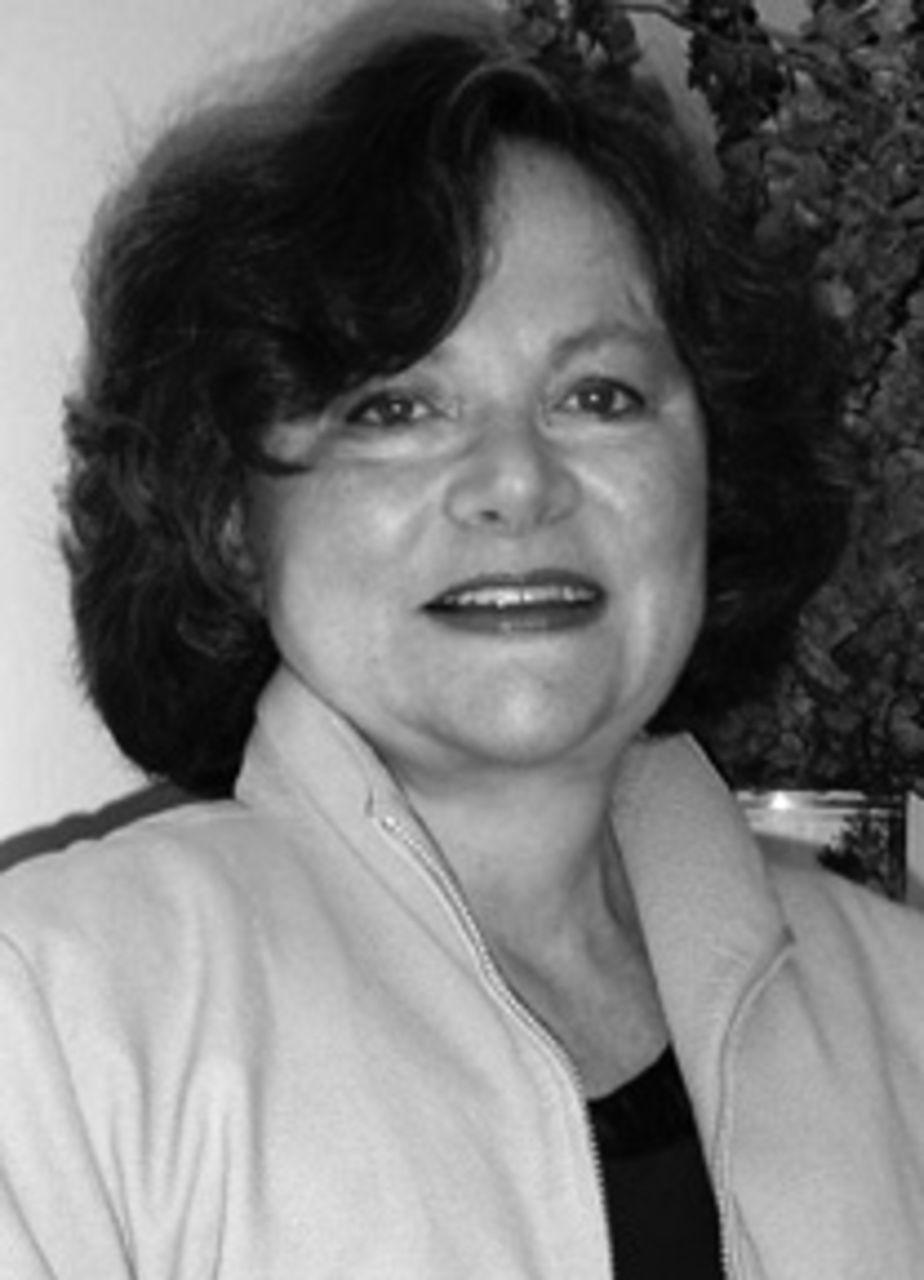
The Doris Duke Charitable Foundation (DDCF) is an independent private foundation devoted to improving the quality of people's lives through grants supporting four specific areas: the performing arts, wildlife conservation, medical research, and the prevention of child abuse. The foundation was established in 1996 and began awarding grants in 1997. By the end of 2004, more than 500 grants had been awarded to support work in the focus areas. In the area of medical research, the Doris Duke Charitable Foundation has established and developed a number of programs that have been designed to assist in the development of physician-scientists. We spoke with Elaine Gallin, PhD, program director for medical research since May 1999. As the Foundation's first such director, she has played an important role in the creation and management of the Doris Duke grant programs committed to support and strengthen clinical research.
The first strategy is to support physician-scientists conducting clinical research at three different points in their career ladder.
First, we offer Distinguished Clinical Investigator Awards to midcareer investigators. Recipients receive a 5- to 7-year grant of $1.5 million to support their translational clinical research and mentoring activities. One-third of their funds need to be used to mentor junior investigators and trainees. This award focuses, in great part, on the need for more role models and mentors.
Second, we fund junior investigators who are just establishing (or about to establish) their own independent research group. Seventy-one grants were awarded during our first five competitions. These grants, called Clinical Scientist Development Awards, provided up to 5 years of support. However, this year's grant recipients will only receive 3 years of funding. Unfortunately, we needed to reduce the length of the award because of financial issues.
Third, we fund a fellowship program for medical students. The fellowship enables students to take a year off to conduct clinical research. Our vision is that if we expose medical students to the rewards of clinical research, many of them will incorporate clinical research into their career plans.
The Foundation's Medical Research Program's second major strategy is to help push the frontiers of clinical research and to encourage innovative and, therefore, riskier research. To accomplish that goal, we have supported two different kinds of grants: the Innovation in Clinical Research Award (ICRA) program and the Clinical Interface Award Program (CIAP). The ICRA program was offered for 4 years. It provided $200,000 2-year grants to investigators or pairs of investigators to support the “seed” funding for innovative projects not yet ready for National Institutes of Health (NIH) funding. Many of the recipients of these awards went on to compete successfully for NIH funding. In 2002, we launched a program called the Clinical Interface Award Program, which provides larger (up to $2.25 million) grants to teams of investigators from different disciplines to work together to address an important clinical issue which can only be addressed if one crosses disciplines. One grant was awarded in 2003, and we will be announcing our 2005 grants shortly.
Those are our two major program strategies. However, some resources are also targeted to supporting two other program strategies. First, because we are interested in strengthening clinical research, we occasionally fund activities that examine the roadblocks and needs of the clinical research enterprise. Four years ago, we felt that more attention needed to be paid to ethical issues relating to the conduct of clinical research and to human subject protection. Therefore, we provided support to establish the Consortium to Examine Clinical Research Ethics, which brought together a group of ethicists and researchers to examine these issues empirically and conceptually. The group has contributed to the discussion of the issues with a series of papers. One of their projects involved collecting the data on the cost of Institutional Review Boards.
Our last program strategy was formulated in response to the AIDS pandemic. With the encouragement of our Board of Trustees, the Medical Research Program has devoted about 10% of our resources over the last 4 years to supporting clinical research and the related infrastructure needed to determine how to best care for and treat AIDS patients in the developing world. Our grants have focused on sub-Saharan Africa, the region hardest hit by HIV/AIDS.
That got us thinking about physician-scientists. From there, we looked for other needs in the development of physician-scientists. One of the needs is for more role models and mentors. Therefore, we decided to invest in some of the best people and provide them with large enough grants to significantly increase their translational clinical research efforts and mentor activities.
The next natural step was to think about medical students who had not yet committed to a career path. Waiting to provide clinical research opportunities after medical school is often too late. Almost all of the existing programs providing medical students with an extra year for research focused on basic research. We hypothesized that there was an unmet need for a national fellowship program focusing on students interested in clinical research. Those students would not necessarily want to clone the next gene or determine the structure of a protein, but they would be interested in clinical questions. Therefore, we launched the medical student program. Happily, there was a great interest in it.
It has been extremely rewarding that many of our Distinguished Clinical Scientist awardees have served as mentors to our junior investigators, and both our senior and junior level grantees have mentored our medical student fellows. We have an incredible group of committed, talented grantees. Our programs are informally integrated by the natural mentoring activities that occur among them. Our grantees are busy clinical investigators who are already balancing research with their patient care, teaching, and administrative responsibilities, so we try to keep our requests for their time to a minimum. Nevertheless, we do ask our Distinguished Clinical Scientist awardees to help us review and select our Clinical Scientist Development Award recipients. We also are beginning to ask some of our first (1998 and 1999) Clinical Scientist Development Award grantees to serve on review panels. Lastly, we convene our grantees at least every other year.
In this regard, a number of foundations have recently formed an alliance—the Health Research Alliance (HRA)—to work together on issues of mutual interest. One of those is best practices in evaluation. I am the co-chair of the Evaluation Subcommittee for HRA. Most funders try to track their grantees so that we can report to our respective boards. However, we do not often coordinate our efforts or share data to inform the community. We are beginning to do that now.
We are a minor funder, given the vast size of the biomedical research enterprise. So we work closely with our advisors to determine how best we can make a difference and not simply try to be a “mini-NIH.” We also now have a cohort of extraordinary grantees from whom we solicit feedback.
All funders continually face the tension between staying the course (and supporting programs like our Clinical Scientist Development Award for enough years to make a difference) and the desire to respond to new compelling opportunities. The new research opportunities today are extraordinary. Deciding if it is more valuable to support those opportunities or stay the course is a continual challenge.
In terms of human resources and the career development of clinic researchers, more attention needs to be paid to the role of PhDs as clinical research investigators. Certainly, MDs play a critical role in clinical research, but PhDs also can play an important role. In the 1980s and 1990s, the Markey Foundation had supported a number of programs focused on providing clinical research training to PhDs. However, when the Markey Foundation spent down their money and ceased operations, most of these programs ceased. The issue of sustainability is very important. It is nice to see that the Howard Hughes Medical Research Institute has decided to focus resources in this area.
Lastly, it is discouraging that despite the multitude of new drug targets, the pipeline of new drugs is decreasing. There are many reasons for this, but creating programs to train individuals involved in drug development, pharmacogenomics, bioinformatics, and other related fields would help.
Even if the problems are enormous, if foundations are thoughtful and willing to take on risk, they can serve as effective catalysts. We have tried to do this within our international AIDS portfolio. Three years ago, in response to the need for cheaper diagnostics for AIDS care and treatment, we gave small grants to 10 teams of investigators to support the development of inexpensive diagnostics to monitor CD4 counts and viral load. Now that funds are finally available to purchase highly active antiretroviral therapy (HAART) in low-resource regions, inexpensive diagnostics that can help determine when to start and stop HAART are critically needed. We have our fingers crossed that at least one of the teams our foundation has supported to develop these low-cost diagnostics will be successful.
Doris Duke Charitable Foundation Medical Research Programs
http://www.ddcf.org/page.asp?pageId=12
Clinical Research Fellowship for Medical Students
http://www.ddcf.org/page.asp?pageId=292
This program is designed to encourage medical students to pursue careers in clinical research by giving exceptional students the opportunity to take a year to experience clinical research firsthand.
Clinical Scientist Development Award
http://www.ddcf.org/page.asp?pageId=291
These awards provide grants to junior physician-scientists to facilitate their transition to independent clinical research careers.
Distinguished Clinical Scientist Award
http://www.ddcf.org/page.asp?pageId=297
This award recognizes outstanding midcareer physician-scientists who are applying the latest scientific advances to the prevention, diagnosis, treatment, and cure of disease and enables them to mentor the next generation of physician-scientists conducting clinical research.
Clinical Interfaces Award Program
http://www.ddcf.org/page.asp?pageId=299
This program intends to catalyze activity at the interface of clinical and other research disciplines.
Innovation in Clinical Research Award (currently inactive)
http://www.ddcf.org/page.asp?pageId=300
These grants were awarded to support innovative clinical research in targeted disease areas.