







Abstract
Background:
Informed shared decision making is a mutual process engaging both doctor and patient and informed by best medical evidence and patient values and preferences.
Objective:
Our aim was to identify the needs of psoriasis patients in decisions on selecting treatment.
Methods:
Psoriasis subjects participated in an online survey on decisional role, postdecisional conflict, and treatment awareness.
Results:
Of 2,622 people invited to participate, 248 completed surveys. Their most recent treatment decision was either made by subjects alone (42%) or physicians alone (28%) or was shared (29%). Subjects perceived that their doctors lacked time to stay abreast of treatments, to provide counseling, and to access appropriate treatments. Deficiencies most frequently identified were information on options, clarification of values, access to physicians, and decision-making skills. Those with a body surface area (BSA) ≥ 3% more frequently indicated that having the skill or ability to make treatment decisions was important.
Limitations:
The limitations of this study include sampling, recall, and reporting bias. Percent BSA was not verified.
Conclusions:
The multiple deficiencies in support of psoriasis patients in treatment decisions may preclude informed shared decision making.
RECENT ADVANCES in immunobiology have led to breakthroughs in our understanding of the pathogenesis and treatment of psoriasis. This has been accompanied by an increasing number of treatment options for patients. In Canada, for example, there are currently nine systemic treatments beyond phototherapy: four conventional options (methotrexate, acitretin, cyclosporine, and psoralen plus ultraviolet A) and five biologic options (alefacept, etanercept, infliximab, adalimumab, and ustekinumab). 1 In contrast, there are limited nonsystemic options, such as topical agents (corticosteroids, calcineurin inhibitors, retinoids, vitamin D derivatives, coal tar) and phototherapy.
Concomitantly, medical decision making has also evolved to include patient values and preferences. 2 Integration of these elements into decisions is considered fundamental to patient-centered care. 3 However, meeting patient preferences can be hampered by individual circumstances and modifiable factors, including unrealistic expectations, unclear values, and inadequate support. Decision aids are tools that help engage patients in making decisions about care, inform them about the evidence of treatment options, assist in clarifying the relative value they place on outcomes, and guide them in the process of decision making. 4 They are of particular value when there are multiple treatment options with different outcomes or that involve scientific uncertainty. Their use can improve knowledge, realign expectations, decrease decisional conflict, and increase patient participation in decision making. 4 However, no current decision aids in the Cochrane inventory address psoriasis.
The criteria for the development of quality decision aids include an understanding of the needs of potential users—patients and practitioners. 5 Although national and international surveys indicate that patients in general want to be actively involved in decision making, little is known about the decision-making role and needs of psoriasis patients.6–8 Although specific treatment attributes, such as adverse effects, time to improvement, and time to relapse, have been shown to influence the treatment preferences of psoriasis patients, 9 there is a wide variation between individual valuation of symptom burden, disease severity, and potential risks of therapy. 10 In view of the dearth of information on the needs of psoriasis patients in treatment selection, our objective was to evaluate their roles and perceived deficiencies in the process of decision making.
Methods
This cross-sectional survey was conducted between March 26 and April 4, 2008, by Ipsos-Reid, an independent survey group. Their Canadian consumer panel was polled by e-mail notification for those interested in a survey on psoriasis. Of 62,375 respondents, only 2,622 indicated that they had psoriasis and were provided a weblink to initiate the online survey. The full survey was further restricted to only those with psoriasis diagnosed by a physician. Recruitment was limited to the first 250 participants, with gender and geographic quotas based on 2006 Canadian census statistics. 11 The study was approved by a central ethics review board (IRB Services, Aurora, ON).
At the start of the survey, participants were asked to recall their most recent treatment for psoriasis and to respond to a series of questions about that decision. Each respondent completing the survey was awarded 20 incentive points (equivalent to Canadian $2), which could be exchanged for gift cards and merchandise.
Survey questions were based on the Ottawa Decision Support Framework, 12 in which the key underlying concept is decisional conflict. Decisional conflict is defined as personal uncertainty about a course of action and is influenced by knowledge, clarity of values, and adequacy of support. The fundamental premise is that minimizing decisional conflict facilitates patient participation in decision making. The goal is to achieve higher-quality decisions, which are defined as being informed, congruent with patients' values, and acted upon. A 26-item survey was developed for individuals with psoriasis that included questions about psoriasis history, role in the last (ie, most recent) treatment decision, decisional conflict about treatment, awareness of treatment options, values associated with outcomes of options, and factors influencing participation in decision making. Questions were selected from a standardized decisional needs assessment survey 13 and included questions from several valid and/or reliable instruments such as the adapted Control Preferences Scale 14 and the Decision Regret Scale. 15 Level of commitment to the most recent treatment decision was based on responses to the question “How committed did you feel about this last treatment decision?” The response range was not at all, not very, somewhat, and very committed. The draft survey was circulated to a national panel of six dermatologists for review, with particular attention to clarity, absence of bias, comprehensiveness, and relevance. It was subsequently pilot-tested on four adults with psoriasis.
Analysis
Participant responses were entered directly into an online database (using ConfirmIT version 8.0; Confirmit Inc, Oslo, Norway), downloaded into an Excel file, and transferred into SPSS software version 16.0 (SPSS Inc, Chicago, IL) for statistical analysis. Participants were grouped into those with a body surface area (BSA) < 3% and a BSA ≥ 3%. Total BSA was estimated by subjects with the palm of their hand representing 1% BSA. Spearman correlation and chi-square tests were performed to evaluate the significance of relationships between variables. Student t-test was used for comparison of mean scores. The level of statistical significance was two-sided, p = .05.
Results
Of 2,622 individuals in the panel invited to participate, 405 initiated the survey (15%). Of these, 157 were excluded: 51 from individuals not diagnosed with psoriasis by a physician and 67 that were incomplete. Thirty-nine consecutive female respondents, identified by initial demographics, were excluded from completing the full survey owing to attainment of the female quota. Accordingly, subsequent analysis was based on 248 surveys.
The mean age of participants was 52 years, and the mean duration of psoriasis was 16.1 years (Table 1). Whereas 176 (71%) had previously consulted a dermatologist, only 50 (20%) were being followed by one at the time of the survey. Seventy-four (30%) reported psoriasis as moderate or severe at the time of the survey, whereas 176 (70%) indicated that they had moderate or severe psoriasis within the preceding 5 years. During that period, BSA involvement was estimated as 0 to 2% in 181 (73%) and ≥ 3% in 67 (27%). Of these groups, 18% of the former and 28% of the latter reported being currently followed by a dermatologist. The mean BSA was 2.5% for those self-rated as mild or less, 4.1% for moderate, and 15.5% for severe or extremely severe, indicating a positive association between BSA and self-rated severity (Spearman correlation = 0.42, p < .01). Participants with BSA < 3% compared to those with BSA ≥ 3% were similar for gender, age, and length of time since diagnosis.
Demographic Features of Psoriasis Patients
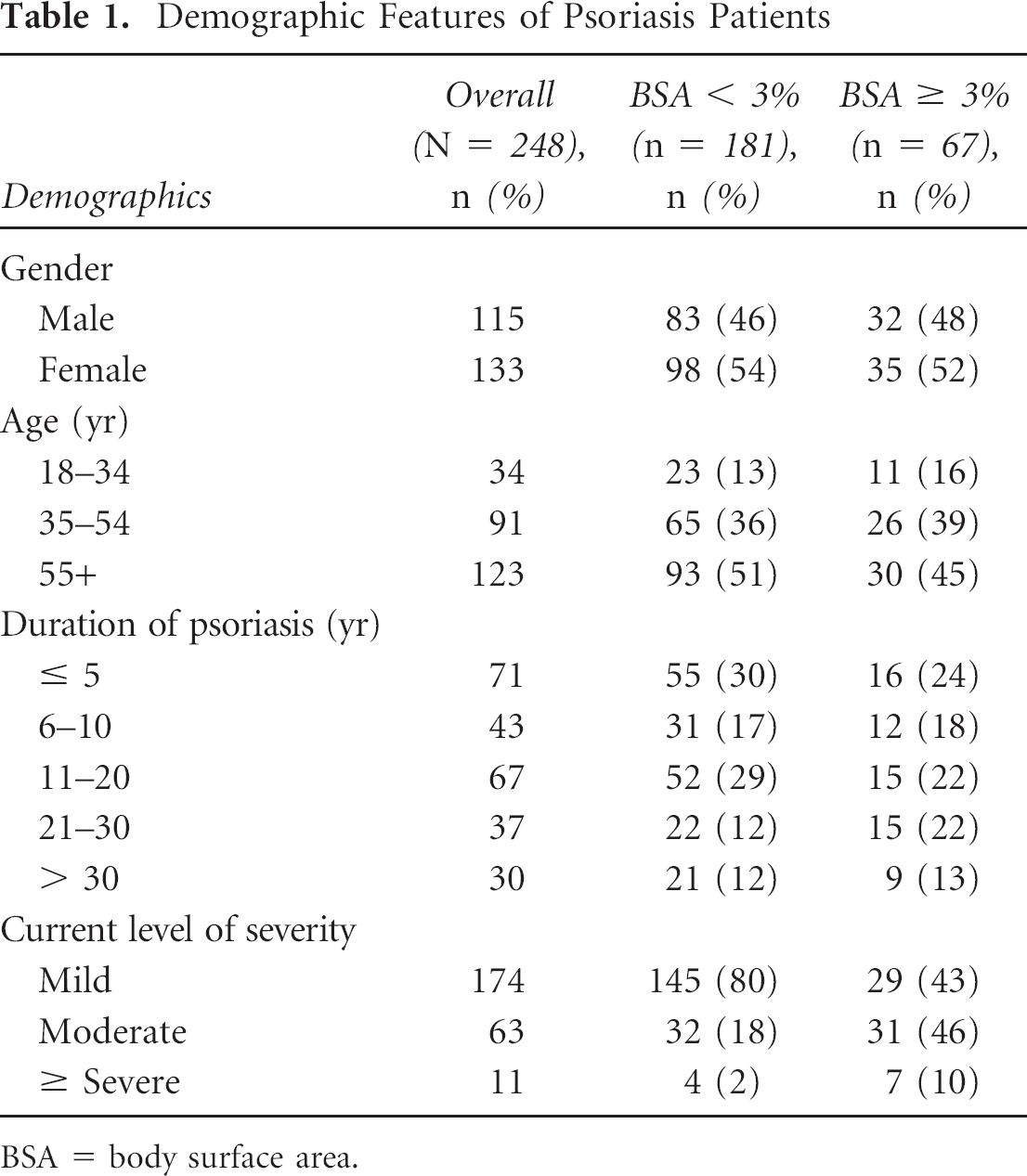
BSA = body surface area.
Current treatments being used for psoriasis were prescription topicals in 161 (65%), nonprescription topicals in 79 (32%), natural sunlight in 79 (32%), ultraviolet therapy in 10 (4%), oral medications in 5 (2%), and injectables in 2 (1%). Thirty-seven (15%) were not using any treatments.
Treatment Awareness and Attributes
Treatment awareness was greatest for prescription topical medications (n = 228; 92%), over-the-counter topical products (n = 181; 73%), and natural sunlight or phototherapy (n ≥ 156; ≥ 59%) (Table 2). Participants with BSA ≥ 3% were more likely to be aware of injectable (12% vs 28%; p = .002) and phototherapy options (59% vs 75%; p = .020). However, although there was a trend to greater awareness of oral treatments in those more affected, the difference was not significant (34% vs 23%; p = .059).
Awareness of Treatment Options
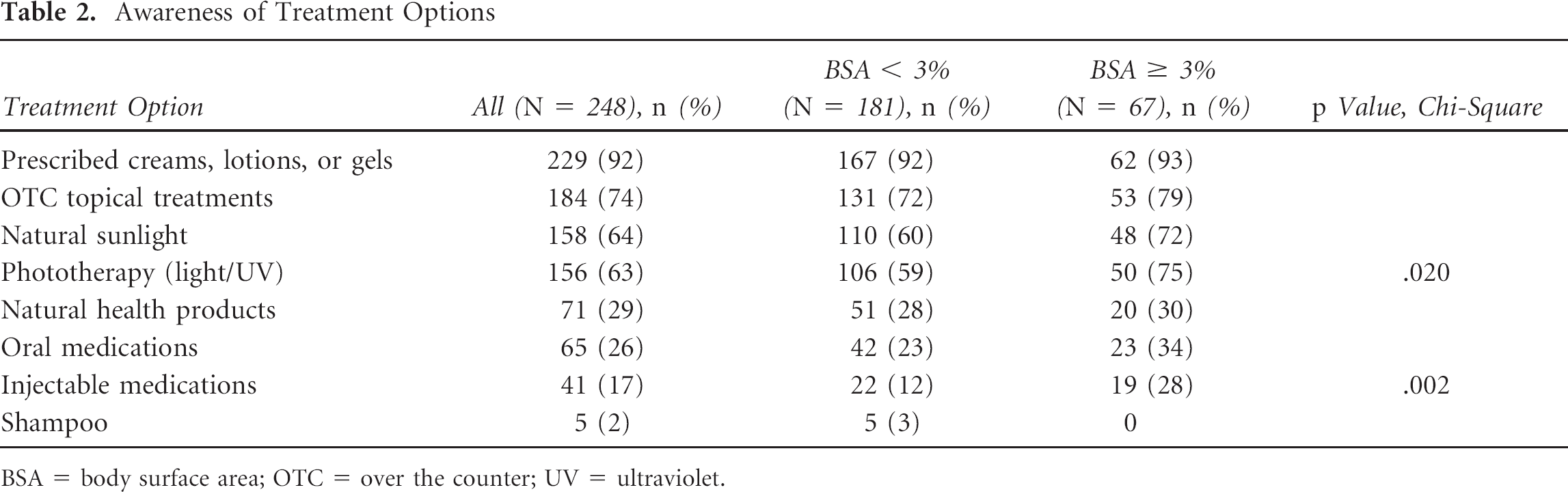
BSA = body surface area; OTC = over the counter; UV = ultraviolet.
Role in Making Most Recent Treatment Decision
Two hundred eight (83%) participants reported having made a recent psoriasis treatment decision regarding topical medications and 11 (5%) about phototherapy; 29 (12%) did not recall. This decision was shared with their physician in 74 (29%), made by themselves in 103 (42%), and made by their physician in 71 (28%).
Levels of confidence in these decisions were very confident for 109 (44%), somewhat for 99 (39%), not very for 27 (11%), and not at all for 13 (6%). A larger proportion of those who had their decision made by their physician or who shared in the decision were somewhat or very confident compared to those who made the decision solely (Pearson chi-square, p = .033).
Decision Regret and Commitment
Over 80% of participants did not regret their decision and indicated that their choice did not harm them (Table 3). However, up to 28% were either neutral or disagreed that the choice was the right one, that they would choose the same option again, or that it was a wise decision. No significant differences in responses were noted between those with BSA < 3% compared to those with BSA ≥ 3%. However, commitment to the last treatment decision varied, with those with more severe psoriasis (eg, BSA ≥ 3%) being less strongly committed to their treatment (Table 4).
Decision Regret

Level of Commitment to Most Recent Treatment Decision
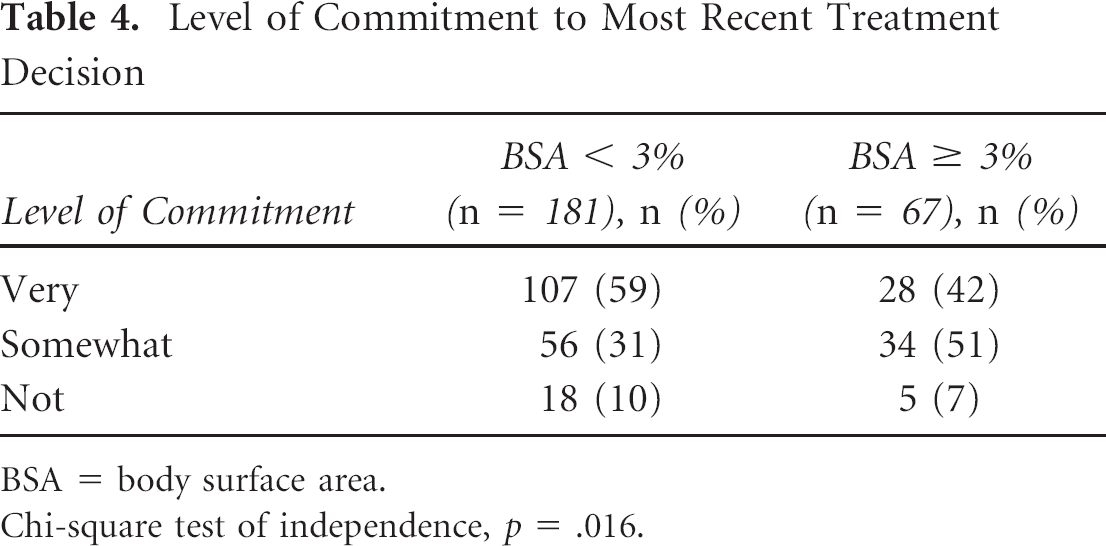
BSA = body surface area.
Chi-square test of independence, p = .016.
Factors Influencing Decision Making
The most important factors in treatment decisions were having information on the benefits and risks of treatment (234; 94%), being clear about what is important (232; 94%), having information about all available treatment options (222; 90%), having the skill or ability to make treatment decisions (218; 88%), and having access to the doctor for discussion (218; 88%).
The most highly ranked factor by importance for decision making was how well the treatment works (Table 5). Having the skill or ability to make this type of decision was of greater importance to those with BSA ≥ 3% (p < .001), as was feeling pressure from others to make certain choices (p = .012).
Patient Ratings of Factors Influencing Decision Making
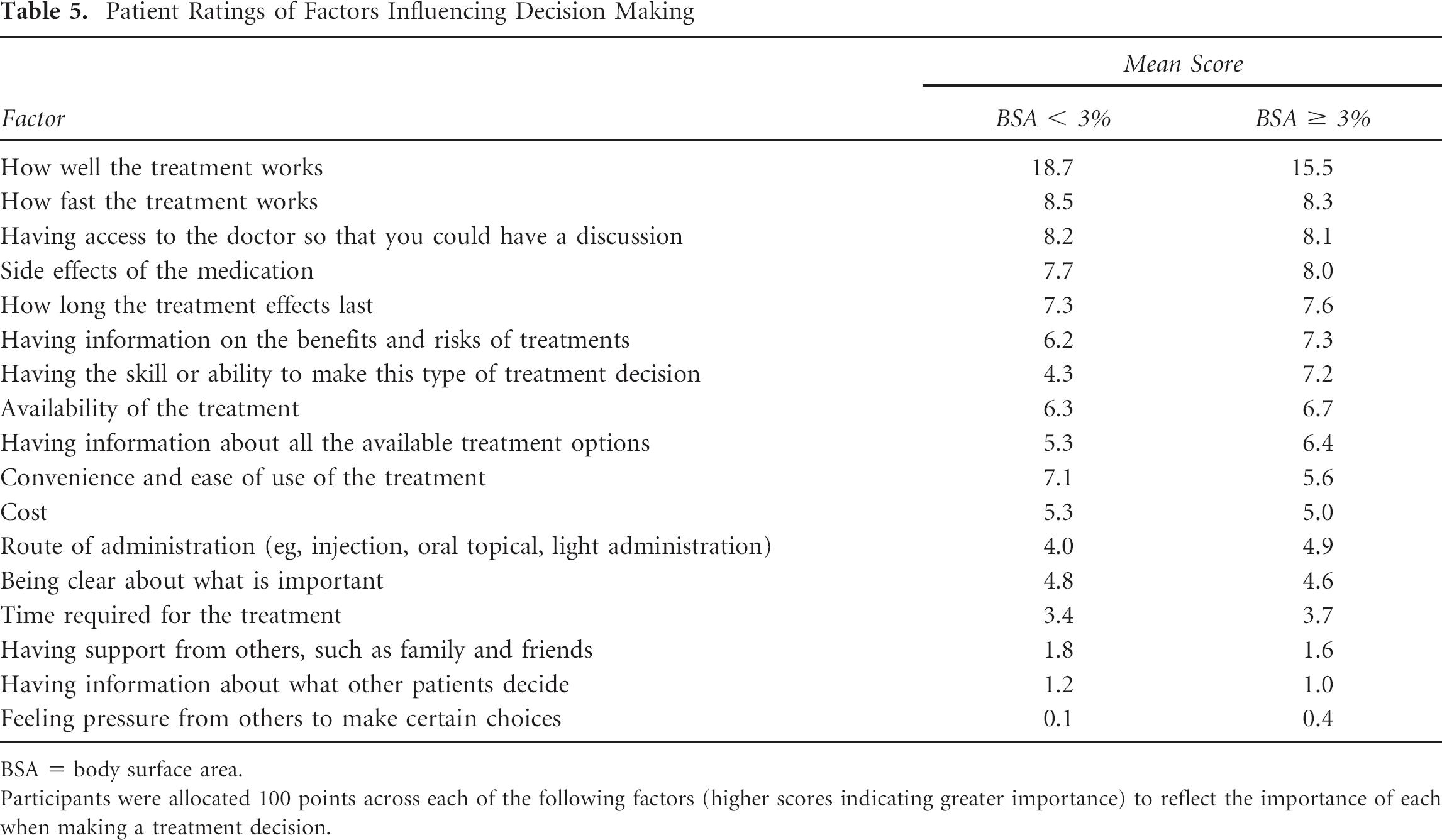
BSA = body surface area.
Participants were allocated 100 points across each of the following factors (higher scores indicating greater importance) to reflect the importance of each when making a treatment decision.
Although 175 (71%) participants considered counseling to be important and preferred that it be delivered by dermatologists (n = 155; 89%) or family doctors (n = 132; 75%), the most common perceived barrier for physician support was lack of time (Table 6). Specifically, the lack of time to keep abreast of treatment options (n = 118; 48%) and lack of time to provide counseling on decision support (n = 102; 41%) by their physicians were reported as factors hindering decision support. Those with a BSA ≥ 3% were more likely than those with a BSA < 3% to indicate lack of physician's ability to access the most appropriate treatment as a barrier (p = .012).
Patient-Perceived Barriers to Physicians Facilitating Decision Support
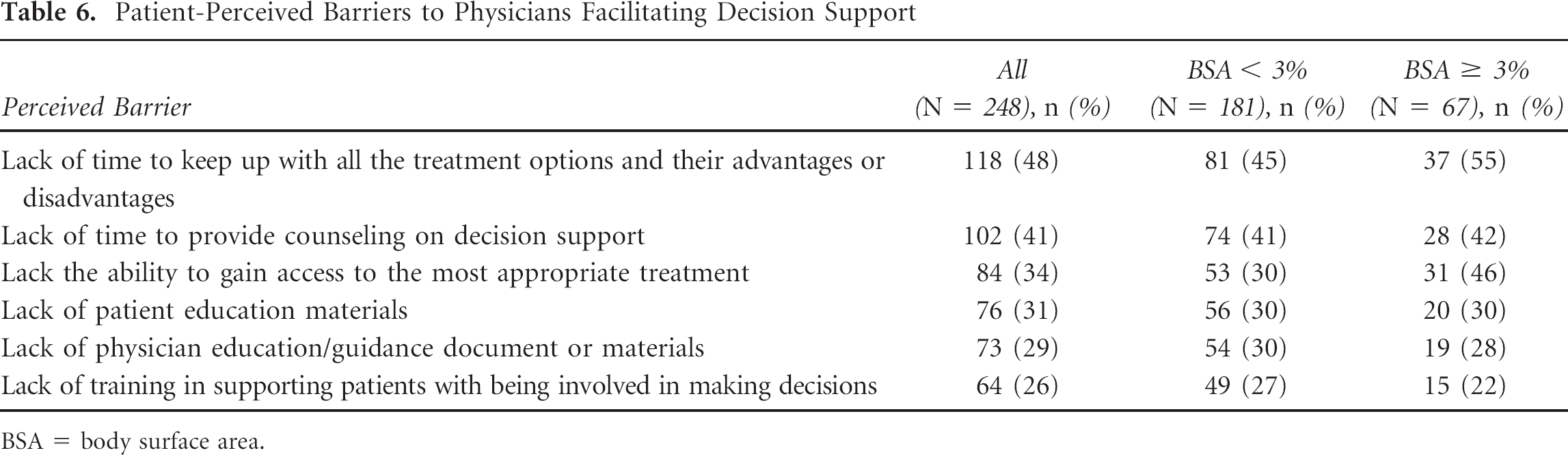
BSA = body surface area.
Discussion
Informed shared decision making is a process by which decisions are shared by doctor and patient and informed by best clinical evidence and guided by patient preferences and values. 16 This survey was conducted to evaluate the decision support needs of psoriasis patients and to inform the development of appropriate interventions.
The majority of our subjects (71%) took an active role in decision making, with few deferring it to their physicians. These findings concur with those of an earlier study in which only a minority deferred treatment decisions to their physicians. 17 We found that those who involved their physicians were significantly more likely to be confident about their selections. Although the majority desired counseling by physicians, almost half felt that physician support was inadequate owing to time constraints in maintaining knowledge on and proficiency in treatments and in providing counseling. These deficiencies were also highlighted by their desire for more information on treatment options, including their risks and benefits. When combined with the relative lack of awareness of options beyond topical treatments, these findings concur with those of previous studies showing that psoriasis patients have extensive knowledge gaps in basic aspects of their condition and its management.18–20 Ultimately, insufficient knowledge regarding treatments is a barrier to patient involvement in decision making. 17
The relative shortage of dermatologists in the United States and Canada, increasing demand for their services, longer waiting times, and relative disincentivization of cognitive services are such that their provision of counseling services is not likely to increase.21,22 Furthermore, previous research indicates that physicians have limited skills in involving patients in decision making. 23 Potential solutions to these shortcomings include patient decision aids 6 and inclusion of other health care members as decision facilitators. 24 Addressing knowledge deficits with counseling sessions, educational tools, and specialized psoriasis education centers can increase patient knowledge and improve quality of life.25,26
Our survey cohort comprised a greater proportion with mild severity (71%) compared to those of the National Psoriasis Foundation (34%) 27 and the European Federation of Psoriasis Patient Associations (32%). 28 As those surveys were derived from the membership of psoriasis support groups, our findings may be more representative of psoriasis in the general population. Accordingly, our findings may be especially pertinent given the lesser severity of our cohort and their focus on topical treatments. It would be anticipated that those considering systemic options would require greater degrees of decision support.
We acknowledge the following limitations of this study: sampling bias (subjects in this group belonged to a survey panel with access to the Internet), recall bias (for the last treatment decision), and response bias (diagnosis of psoriasis based on subject reporting that the condition was physician diagnosed). Finally, although self-estimation of BSA (and the cutoff of 3% BSA for mild versus moderate-severe psoriasis) was based on precedent,28,29 this metric was not independently verified.
Conclusions
Psoriasis patients are actively involved in treatment decisions and are more confident in their decisions when their physicians are involved in the process. However, there are multiple deficiencies in support for psoriasis patients, including insufficient information on treatment options, inadequate decision-making skills, and scarcity of physician time. The development of patient decision aids and supportive educational resources may assist in reducing these impediments to informed shared decision making.
Footnotes
Acknowledgment
Financial disclosure of authors and reviewers: The authors received an educational grant from Ortho Biotech Canada. Dr. Tan has served as an advisory board member, clinical investigator, and speaker and/or received honoraria from Abbott, Allergan, Amgen-Wyeth, Astellas, Biogen, Centocor, Fujisawa, Galderma, Isotechnika, Janssen-Cilag, Johnson and Johnson, Leo, Novartis, OrthoBiotech, Pfizer, Schering, and Serono. Prof. Stacey has received honoraria from Ortho Biotech Canada. Dr. Gulliver has served as an advisory board member, investigator, consultant, and speaker for Janssen Ortho/Ortho Biotech. Dr. Barankin has served as an advisory board member and speaker and/or received honoraria from Abbott, Amgen-Wyeth, Astellas, Galderma, Dermik, Leo Pharmaceuticals, Stiefel, Schering-Plough, and Serono. Dr. Bissonnette has served as an advisory board member, investigator, speaker, and/or consultant and received honoraria and/or grants from Abbott, Amgen-Wyeth, Astellas Inc, Centocor Inc, EMD Serono, Schering-Plough, and Janssen Ortho. Dr. Lui has served as an advisory board member, clinical investigator, and speaker and/or received honoraria from Abbott, Amgen-Wyeth, Astellas, Biogen, Johnson and Johnson, LEO Pharma, OrthoBiotech, Schering, and Serono. Dr. Shear has served as an advisory board member, clinical investigator, and speaker and/or received honoraria from Abbott, Amgen-Wyeth, Astellas, Biogen-IDEC, Centocor, Galderma, Isotechnika, Janssen-Ortho, Johnson and Johnson, Leo, Novartis, Pfizer, Schering-Plough, EMD-Serono, and Merck. Christine Jackson works for the Canadian Skin Patient Alliance, which has received funding from Abbott, Amgen-Wyeth, Galderma, Leo, Janssen-Ortho, Schering-Plough, Bristol Myers Squibb, EMD Serono, Steifel, and Taro. Mr. Xuemao Zhang received an honorarium from Ortho Biotech.
Financial disclosure of reviewers: None reported.