







Abstract
Background:
Radiation- and chemotherapy-induced alopecia is mostly temporary. However, permanent scalp alopecia is reported, albeit infrequently.
Objective:
The objective of this observational case series was to determine the kind and doses of chemotherapeutic agents and radiation in inducing permanent alopecia of the scalp.
Methods and Results:
Eleven patients referred to our department over a period of 3 years for permanent alopecia after chemotherapy/radiotherapy or combination therapy were included. A detailed medical and therapeutic history was obtained from each patient and from medical records. Photography was done, and the scalp biopsies were taken. Patients were divided into three groups according to the type of therapy. The first group received conditioning chemotherapy prior to bone marrow transplantation. The second group had radiation for brain tumors, and the third group received both.
Conclusion:
A comprehensive multicenter and multidisciplinary study is required to determine the definite causative agents, doses, and other cofactors that induce permanent alopecia following chemotherapy/radiotherapy, as well as the means to avoid this distressing outcome in surviving patients.
TEMPORARY ALOPECIA resulting from chemotherapy/radiotherapy is a well-known side effect. However, permanent loss of scalp hair may also result from radiotherapy for brain tumors or metastasis as well as certain chemotherapeutic agents, in particular those used for conditioning prior to bone marrow transplantation (BMT). In the medical literature, such reports are no longer rare, but why some patients develop permanent loss of hair and others do not and what the common mechanism is between chemotherapy and radiotherapy that results in this condition need to be investigated thoroughly. The following case series consisted of 11 patients who reported to the Department of Dermatology at the King Faisal Specialist Hospital and Research Centre in Riyadh, Saudi Arabia, for permanent loss of scalp hair following either radiotherapy or chemotherapy alone or in combination.
Methods and Results
This observational study includes 11 patients referred to us over a period of 3 years for permanent loss of scalp hair after radiotherapy, chemotherapy, or both. The female to male ratio was 10:1. The patients' ages at the time of presentation to the dermatology clinic ranged from 6 to 30 years, but the age at which they received treatment ranged from 2 to 20 years. Four patients received chemotherapy alone (group 1), three patients received radiotherapy (group 2), and four patients received both (group 3). All patients were photographed at the time of presentation, and scalp biopsies were taken in nine patients (two declined).
Group 1 received busulfan and cyclophosphamide as a conditioning regimen before BMT. The age at the time of receiving therapy ranged from 2 to 17 years. In addition to conditioning therapy, other medications were given either before or after transplantation. Three different patterns of alopecia were observed (Table 1).
Chemotherapy-Induced Alopecia
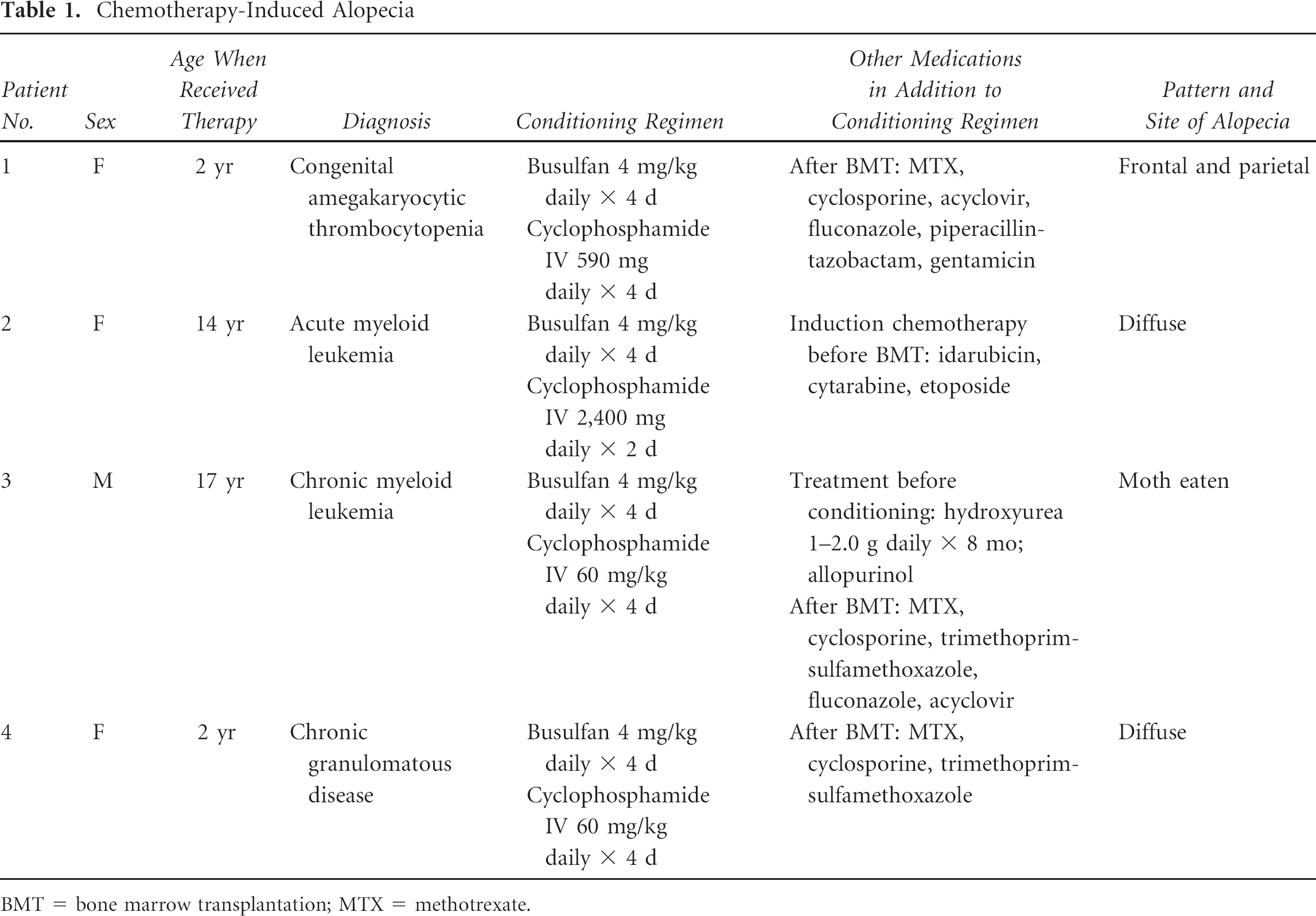
BMT = bone marrow transplantation; MTX = methotrexate.
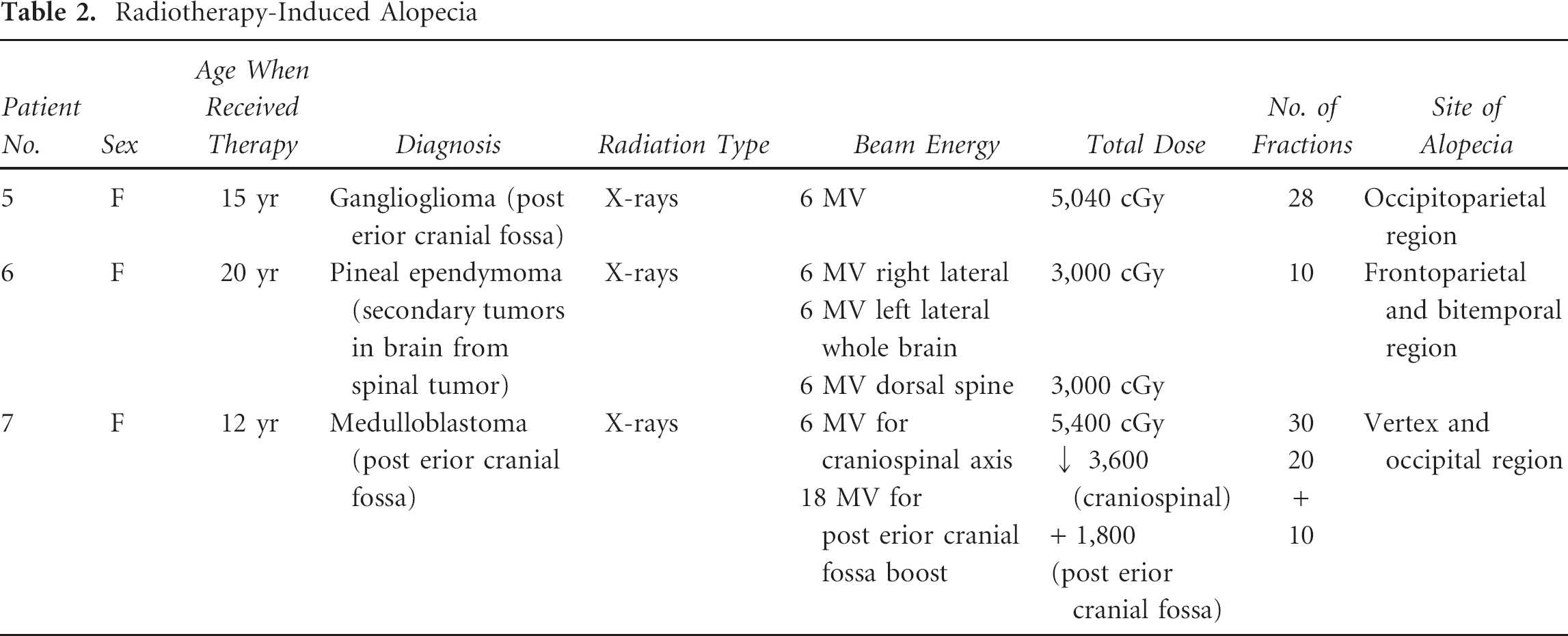
Group 2, aged 12 to 20 years at the time of therapy, received radiation for brain tumors. Total doses given ranged from 3,000 to 5,400 cGy in 10 to 30 fractions (Table 2). One patient (7) received radiation after resection of the tumor. In the other two patients, resection could not be performed due to location. In the following 2 to 6 months, progressive hair loss was noticed at the sites of radiation in all patients.
Radiotherapy-Induced Alopecia
Group 3 comprised four patients suffering from medulloblastoma, astrocytoma, and neuroblastoma. The first three received radiation followed by chemotherapy over a period of 10 to 12 months (Table 3). In patients 8 and 9, partial resection of the tumor was performed due to involvement of the floor of the fourth ventricle. In patient 10, the tumor was unresectable due to location. Patient 11 first underwent induction chemotherapy for neuroblastoma grade IV (four cycles in 3 months) followed by surgical removal and total body irradiation and then conditioning with carboplatin, etoposide, and melphalan prior to autologous BMT (see Table 3). All patients developed alopecia during radiotherapy, with only partial recovery in subsequent months.
Combined Radiotherapy/Chemotherapy-Induced Alopecia
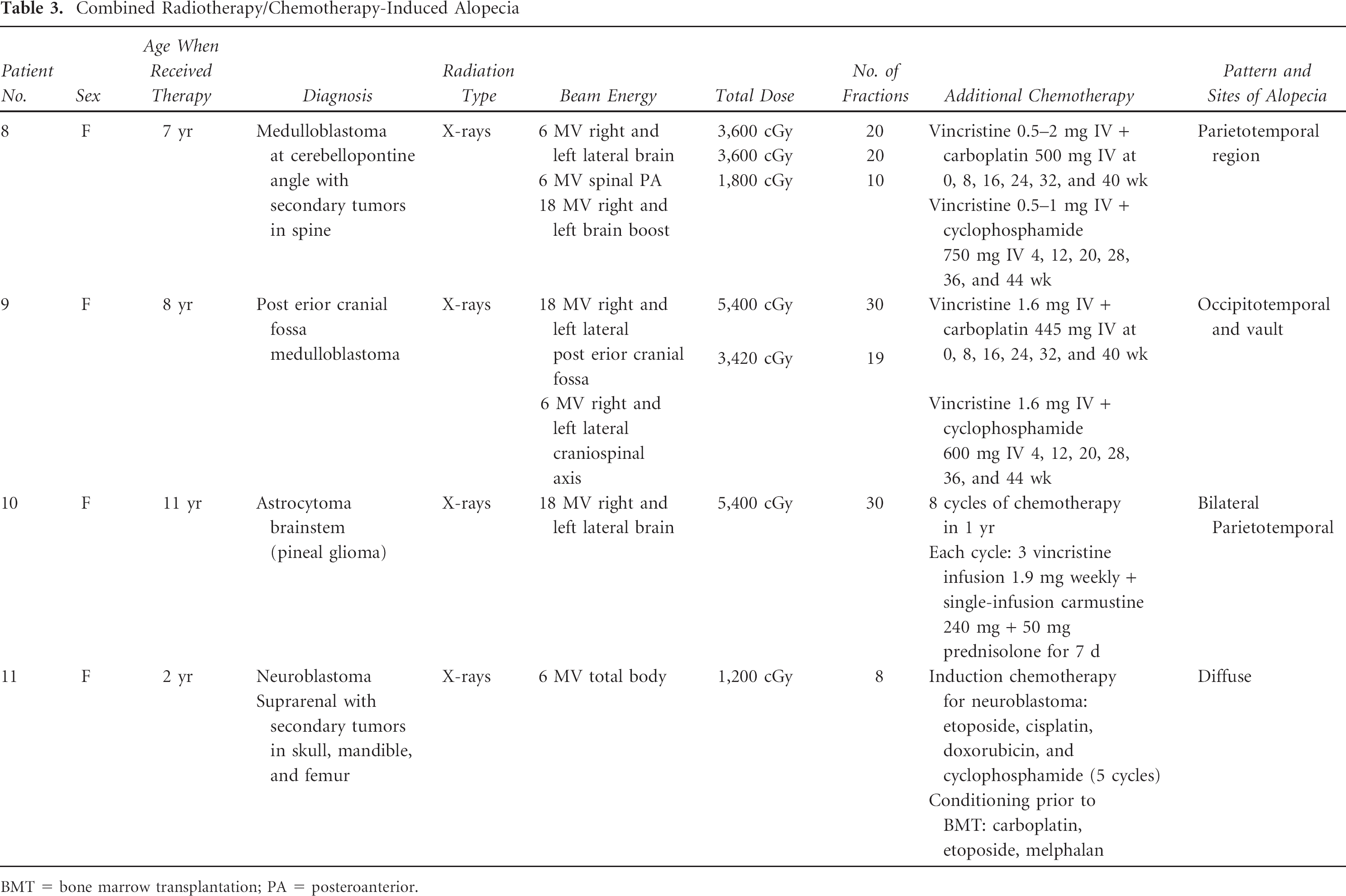
BMT = bone marrow transplantation; PA = posteroanterior.
Scalp biopsies were transversely sectioned in seven cases and vertically in two cases. Similar changes were observed in all nine biopsies. There was a reduction in follicular densities and some degree of variation in follicular size, as well as significant miniaturization (Figure 1). None of the biopsies revealed scarring, peribulbar inflammation, interface dermatitis, or graft-versus-host disease (GVHD).
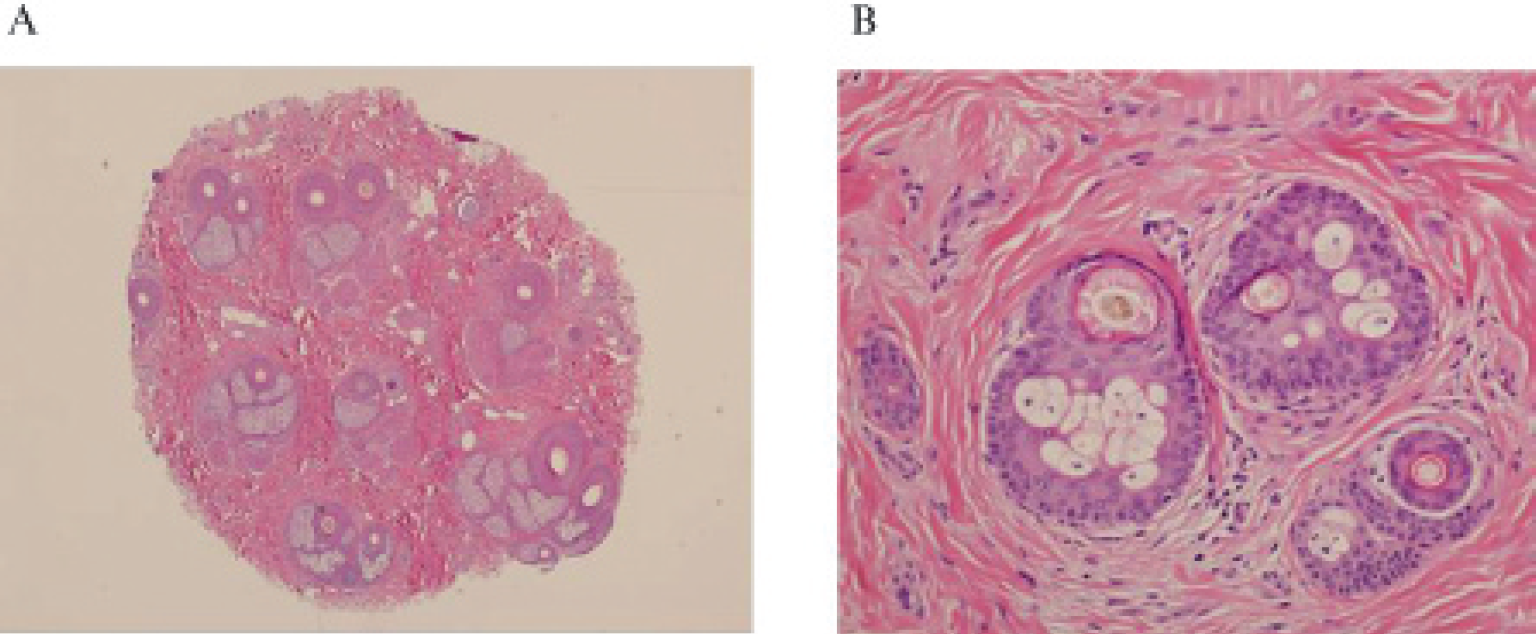
A, Transverse section at the level of the upper dermis (isthmus) showing reduced follicular density and some variation in follicular size (hematoxylin-eosin stain; X40 original magnification). B, Miniaturized follicles (hematoxylin-eosin stain; X200 original magnification).
Our patients were followed up for 2 years. Topical minoxidil 2 to 5% was prescribed. Some patients used it for 3 months to 1 year but then discontinued due to a lack of response.
Discussion
Hair loss, temporary or permanent, is one of the most stressful side effects for patients undergoing oncologic treatment. The true prevalence of permanent alopecia by chemotherapy or radiation may be underestimated as many patients do not complain and accept it as the price of treatment.
Postchemotherapy Alopecia
In general, alopecia after chemotherapy is temporary, with regrowth expected within 4 to 6 weeks. However, irreversible alopecia has been reported in the last two decades with various therapeutic agents, in particular, busulfan-cyclophosphamide combination therapy (BUCY), as a conditioning regimen prior to BMT.1,,,–5
Permanent alopecia is defined as complete loss of growth or partial regrowth at least 6 months after chemotherapy. 6 Increased risk factors for permanent alopecia in transplant patients are treatment with busulfan, chronic GVHD, and previous cranial irradiation. 7
Given that scalp hairs are one of the most rapidly growing hairs in the body, they are the most commonly affected. However, other body sites may also be involved, including eyebrows, eyelashes, and axillary and pubic hair.
The exact mechanism of chemotherapy-induced permanent alopecia (CIPAL) is still unknown. Possible explanations are stem cell destruction or acute damage of matrix keratinocytes that die in the hypodermis instead of entering the catagen phase 1 or permanent toxic damage to the hair follicle stem cells in their bulge (at the insertion of arrector pili muscle). 2 The p53 protein is found to be essential for this chemotherapy-induced alopecia as it mediates apoptosis and growth arrest in TP53-negative cancers. 8
However, not all patients receiving chemotherapy develop CIPAL. In a retrospective study by Machado and colleagues, only 6 of 760 patients developed irreversible hair loss after high-dose chemotherapy. 6 Baker and colleagues described 6 patients with incomplete regrowth of varying severity among 22 who had undergone allogenic or autologous BMT and had BUCY conditioning. 5 Similarly, Ljungman and colleagues studied 65 patients who received busulfan prior to BMT and found some degree of permanent alopecia in 31 cases. 3
Why some patients develop permanent rather than temporary alopecia following chemotherapy is still unanswered. Serum busulfan concentration can be a factor. Pharmacokinetic variability as a result of the bioavailability of oral busulfan may be contributing to this. 9 In their study, Ljungman and colleagues found extensive permanent alopecia in patients with high busulfan concentration. 3
Although there is no current effective therapy for CIPAL, one possible solution is to reduce the dose. However, a mean plasma concentration below the median level during conditioning can significantly increase the risk of relapse. 4 Other suggested options include scalp hypothermia 10 and topical anti-p53 treatment. 8
Drugs other than busulfan reported to cause permanent hair loss are docetaxel,11,12 carboplatin, thiotepa, 13 and tamoxifen. 14
All four patients in group 1 received BUCY conditioning therapy in standard doses before BMT. None of them suffered from acute or chronic GVHD. All developed permanent hair loss but with variable patterns (Figure 2), the explanation of which may be that cytotoxic drugs damage actively proliferating follicular cells in an apoptosis-related manner, rendering the hair follicle cells vulnerable depending on their state of proliferation. 13
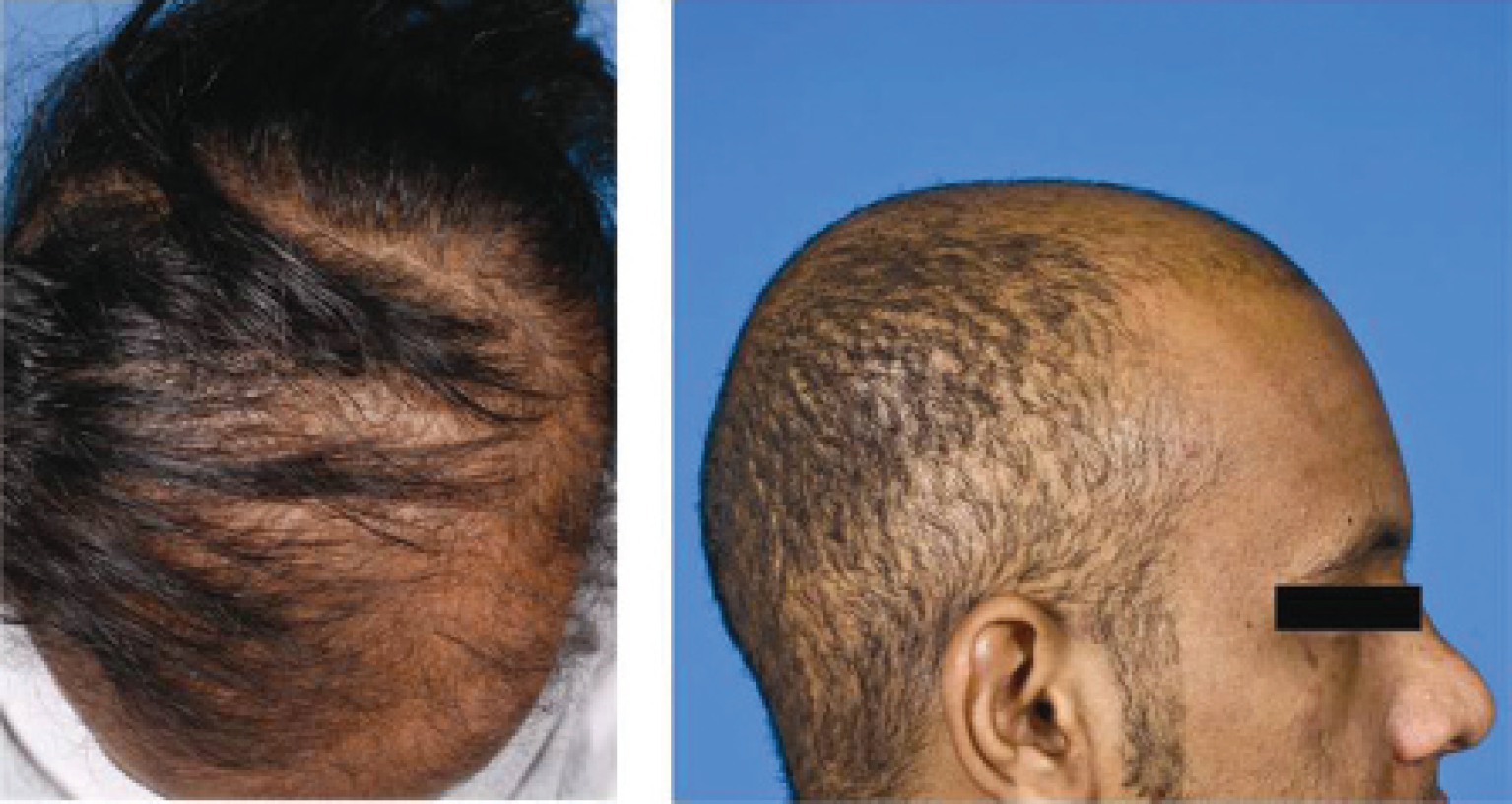
Patterns of chemotherapy-induced permanent alopecia.
Postradiotherapy Alopecia
Permanent alopecia is a well-known side effect of radiation. Although the principal change following an acute dose of radiation is apoptosis, 15 radiation damage can occur due to a combination of changes such as a reduction in matrix cell reproduction, the effect on protein synthesis/plasma membrane permeability of matrix cells, and alteration in perifollicular blood flow. 16
Temporary alopecia following radiotherapy occurs in 2 to 3 weeks and resolves within 2 to 3 months after completion of radiotherapy. Doses as low as 2 Gy in a single fraction can cause temporary anagen alopecia. 15 Telogen alopecia takes more time to occur compared to anagen alopecia and needs higher doses than anagen (two to three times) but stores radiation damage for long periods. 16 The doses reported to cause permanent hair loss vary widely. A study conducted by Shakespeare and colleagues documented that at a dose of 36 Gy the estimated median risk of permanent alopecia was 5% and that a dose of 45 Gy resulted in a risk of 15%. 17
Follicular dose (the dose of radiation at the level of hair follicle in a particular radiation field) is the only significant factor in determining the degree of permanent alopecia.18,19
Most anagen follicles are at a depth of 4 to 4.5 mm from the skin surface. If the radiation superficial to this depth is kept under a lethal dose, the incidence of radiation-induced alopecia can be markedly reduced. 20 The D50, the follicular dose at which 50% of patients develop permanent alopecia, is estimated to be 43 Gy. 18
Follicular dose in turn depends on beam energy, field position and size, and method of radiation. For patients treated with opposed lateral fields, the follicular dose is usually the highest at the anterior-superior and/or posterior region of the skull where two lateral fields overlap. Use of stereotactic arcs minimizes the follicular dose as arcs typically do not overlap. Similarly, higher beam energies have skin-sparing properties. 18 Other methods or materials used in animal models/humans for radiation protection include nitroxide 21 and prostaglandin E2. 22 In our three patients who received radiotherapy alone for the brain tumors, the total dose ranged from 30 to 54 Gy in 10 to 30 fractions (see Table 2). The sites of alopecia varied according to the field of radiation (Figure 3).
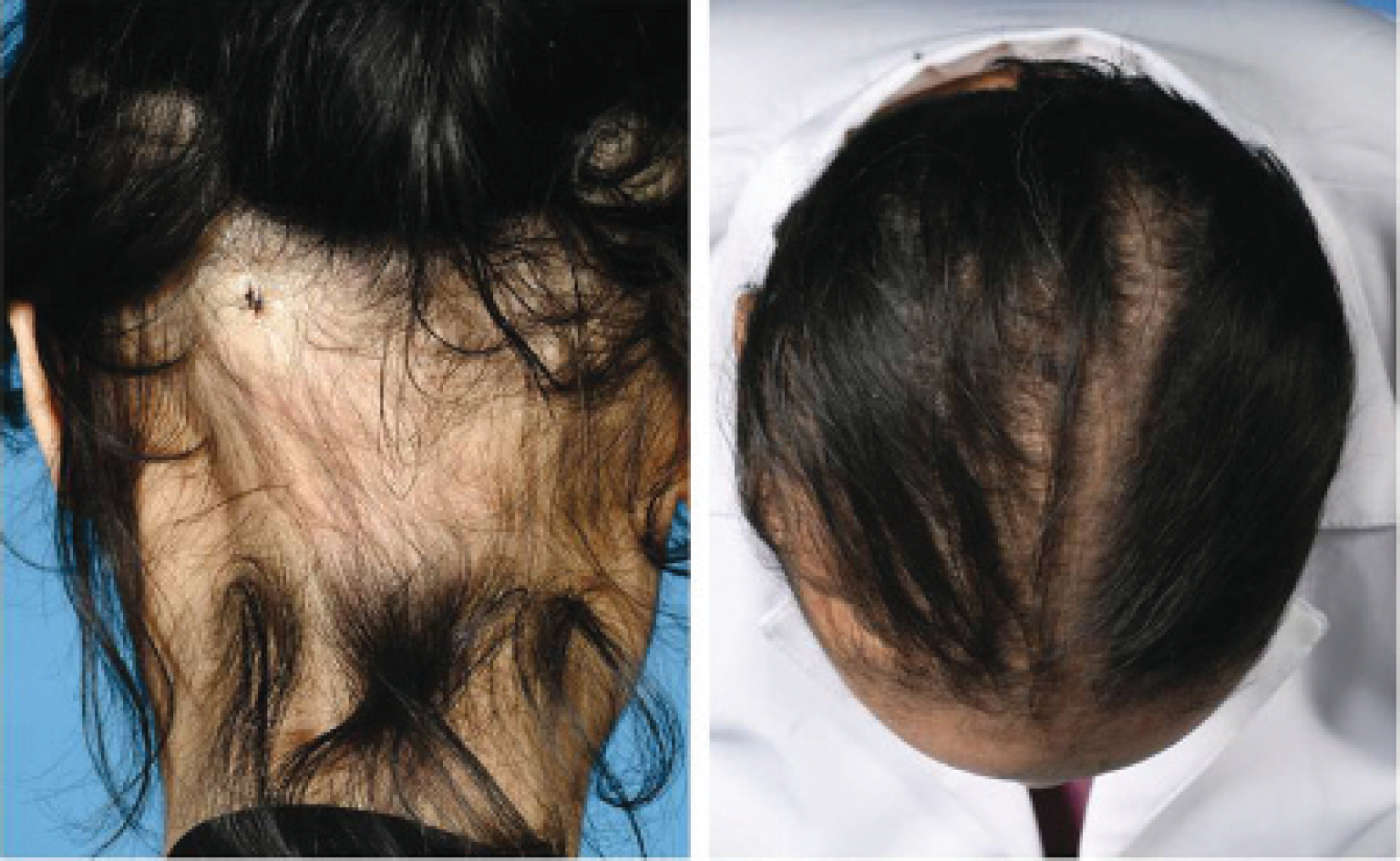
Patterns of radiation-induced permanent alopecia.
Post-Chemotherapy/Radiotherapy Alopecia
The third group comprised patients who received combined radiotherapy and chemotherapy. Three patients (8, 9, 10) were treated with lateral opposed fields, whereas patient 11 had total body irradiation. The total dose ranged from 12 to 54 Gy. Among chemotherapeutic agents, vincristine, cyclophosphamide, carmustine, and carboplatin were given over a period of 9 to 12 months in the first three patients. In patients 8 and 9, weekly intravenous vincristine was administered during radiation and adjuvant chemotherapy for children with the medulloblastoma protocol was started 1 month after stopping radiotherapy. In patient 10, chemotherapy was also started 1 month after stopping radiotherapy. Patient 11 received induction chemotherapy prior to surgical resection of tumor, followed by radiotherapy and conditioning with carboplatin, etoposide, and melphalan (see Table 3).
Loss of hair was noticed soon after radiotherapy in all patients, and hair was only partially replaced in the following months (Figure 4).
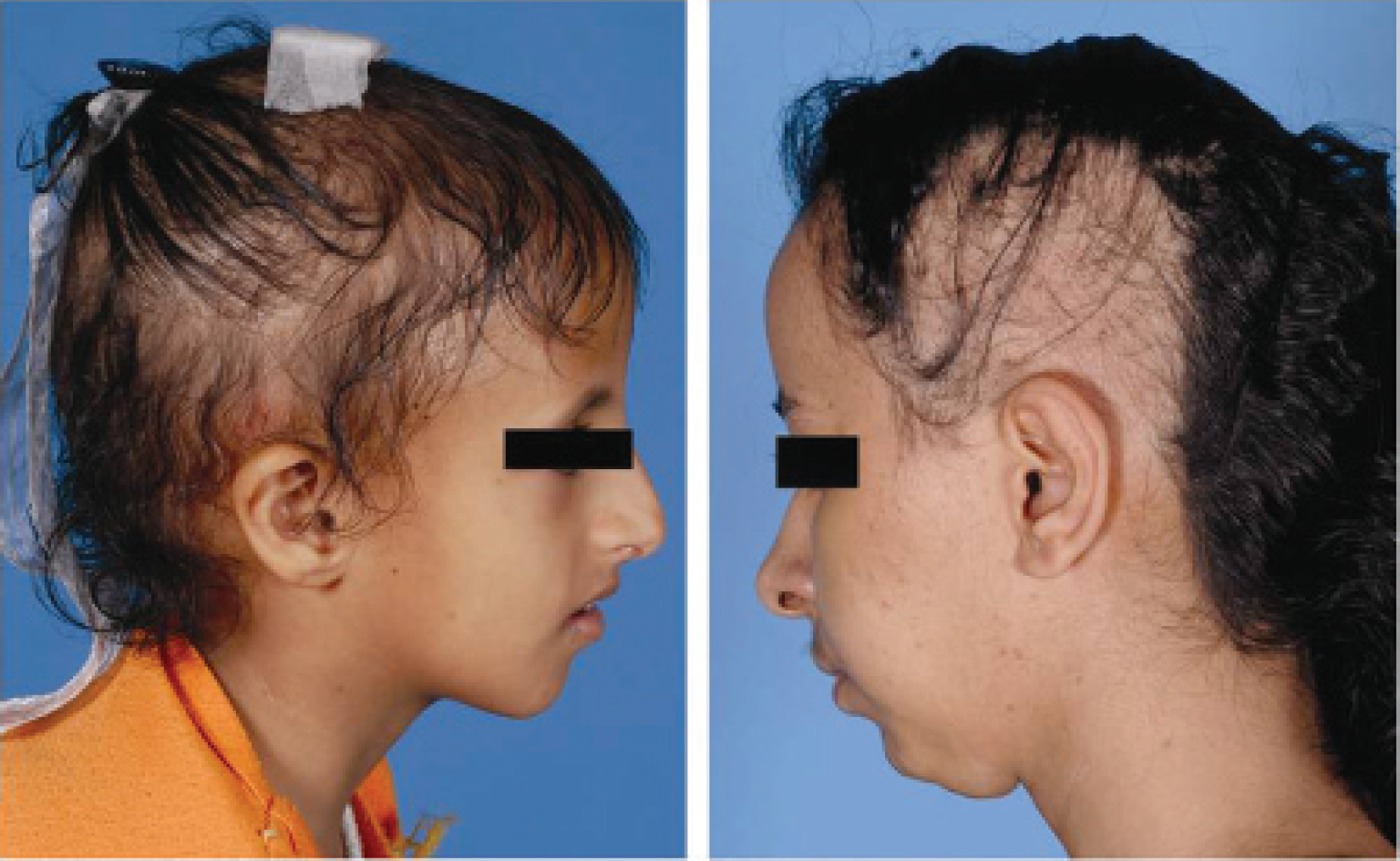
Patterns of combined radiotherapy/chemotherapy-induced permanent alopecia.
Vincristine has no documented association with alopecia. Cyclophosphamide causes only temporary alopecia. Carboplatin and cyclophosphamide, the only drugs that enhance radiosensitization,18,23 were administered after completion of radiation in the first three cases and thus were unlikely to be a contributing factor in inducing permanent alopecia. Even in the study done by Lawenda and colleagues, no statistically significant difference was found in D50 among patients who received radiosensitization chemotherapy agents and those who received agents without this property. 18
In a review article by Malkinson and Keane, the authors explained that the adjuvant effects of chemotherapy/drugs are related to the interval between the drug administered and radiation given. 16 This enhancing effect was observed when radiation was given hours after chemotherapy, which in turn depends on the phase of cell cycle in which activity was arrested. Moreover, no changes were observed when the sequence of radiation and drug was reversed and metabolic activity failed to influence radiation changes at higher doses. In patient 11, cyclophosphamide was administered before radiotherapy, but the interval between them was over weeks rather than hours. So in this group, radiotherapy was considered to be the cause of permanent loss of hair, and chemotherapy was most likely not involved.
Conclusion
Chemotherapy/radiotherapy-induced permanent alopecia is a distressing condition that must be addressed at multicenter levels to determine the exact prevalence among populations undergoing these types of therapies and possible ways and means to minimize its occurrence.
Footnotes
Acknowledgments
We thank Marieta P. Ricardo for typing and uploading the manuscript.
Financial disclosure of authors and reviewers: None reported.