






Abstract

An Array of Mobile Apps for Dermatologists
To the Editor:
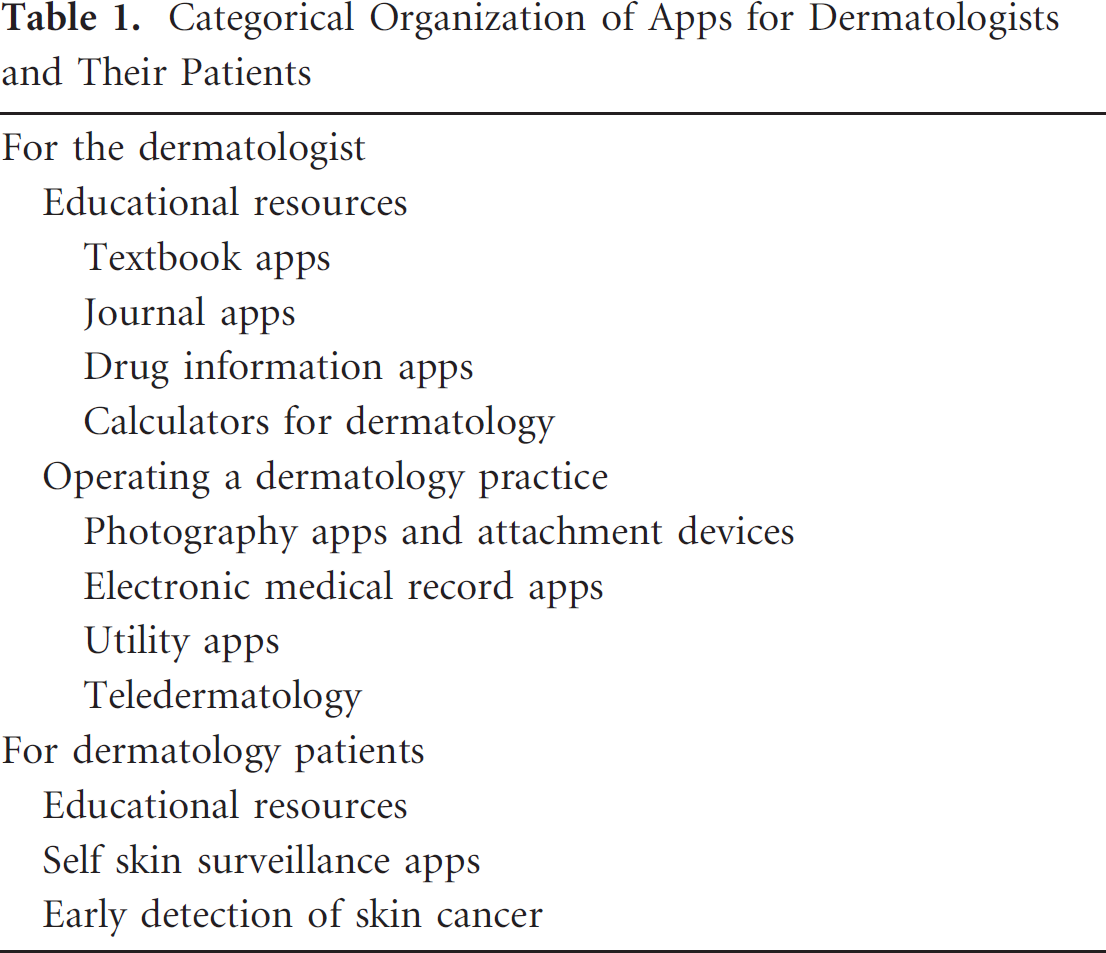
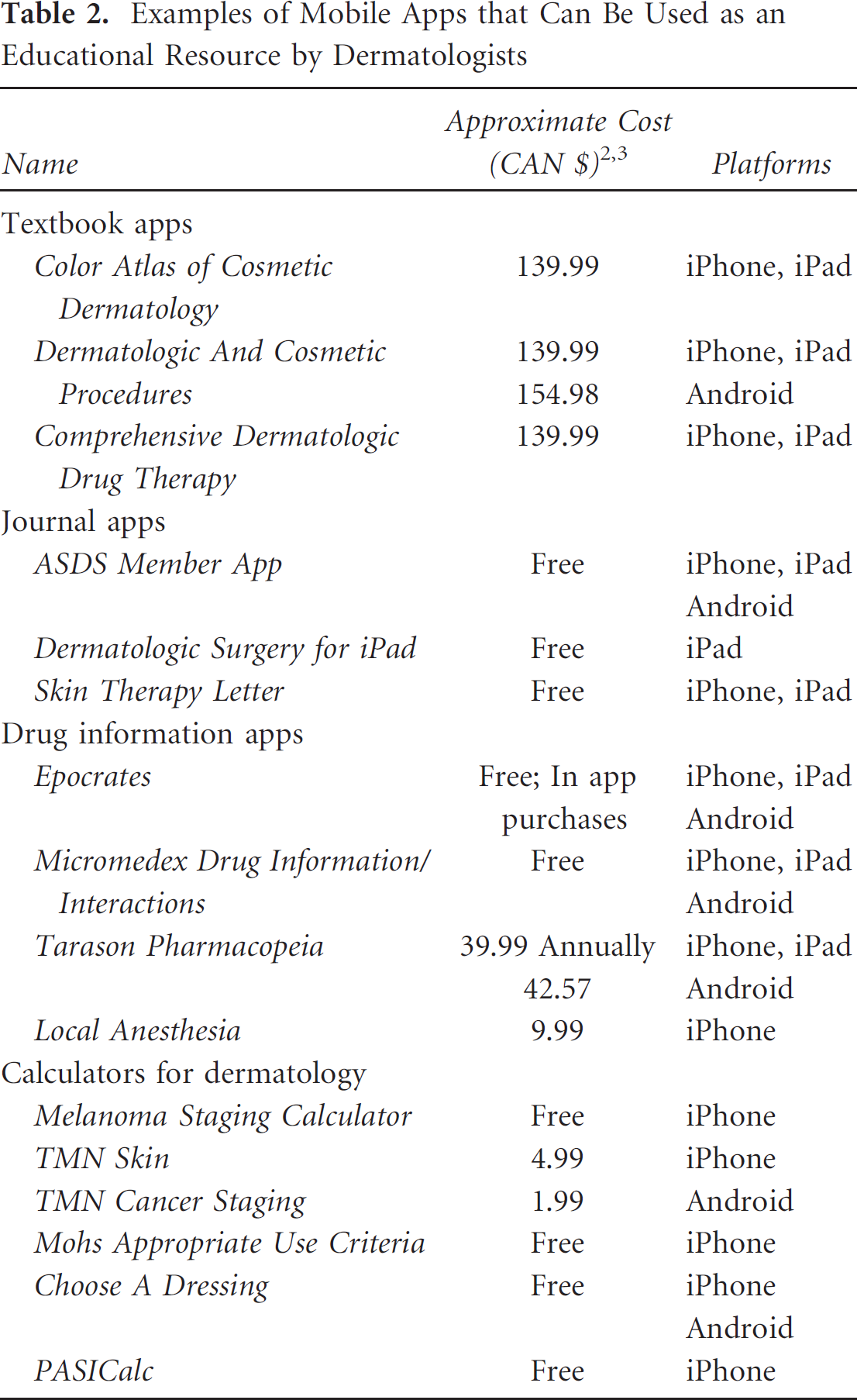
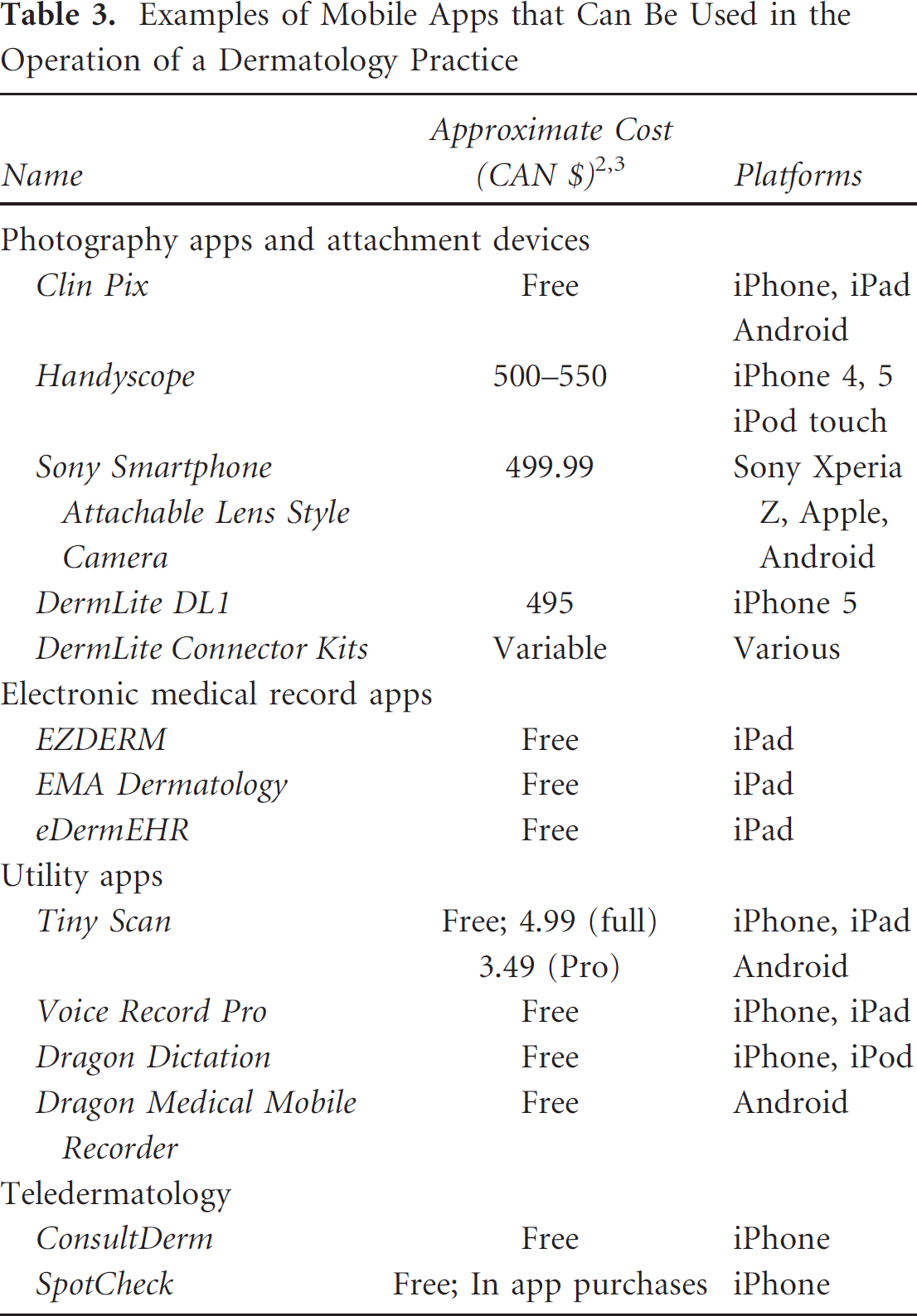
As of June 2013, there were 19,619 and 8,209 medical applications (apps) available for the Apple and Android platforms, respectively. 1 Hence, finding useful dermatology apps for physicians, residents, and medical students can be overwhelming. My goal was to create a short list of credible apps, organized into functional categories (Table 1), that would be clinically relevant for dermatologists or their patients. To achieve this, dozens of apps, obtained by searching specific keywords (ie, dermatology, medications, skin cancer, skin surgery, and melanoma) in both the Apple iTunes and Google play websites, were methodically reviewed.2,3 Only a sample of the dermatology apps, which were deemed both accountable and clinically relevant, are discussed in this document (Table 2, Table 3, and Table 4).
Categorical Organization of Apps for Dermatologists and Their Patients
Examples of Mobile Apps that Can Be Used as an Educational Resource by Dermatologists
Examples of Mobile Apps that Can Be Used in the Operation of a Dermatology Practice
Examples of Mobile Apps that Can Be Used by Dermatology Patients
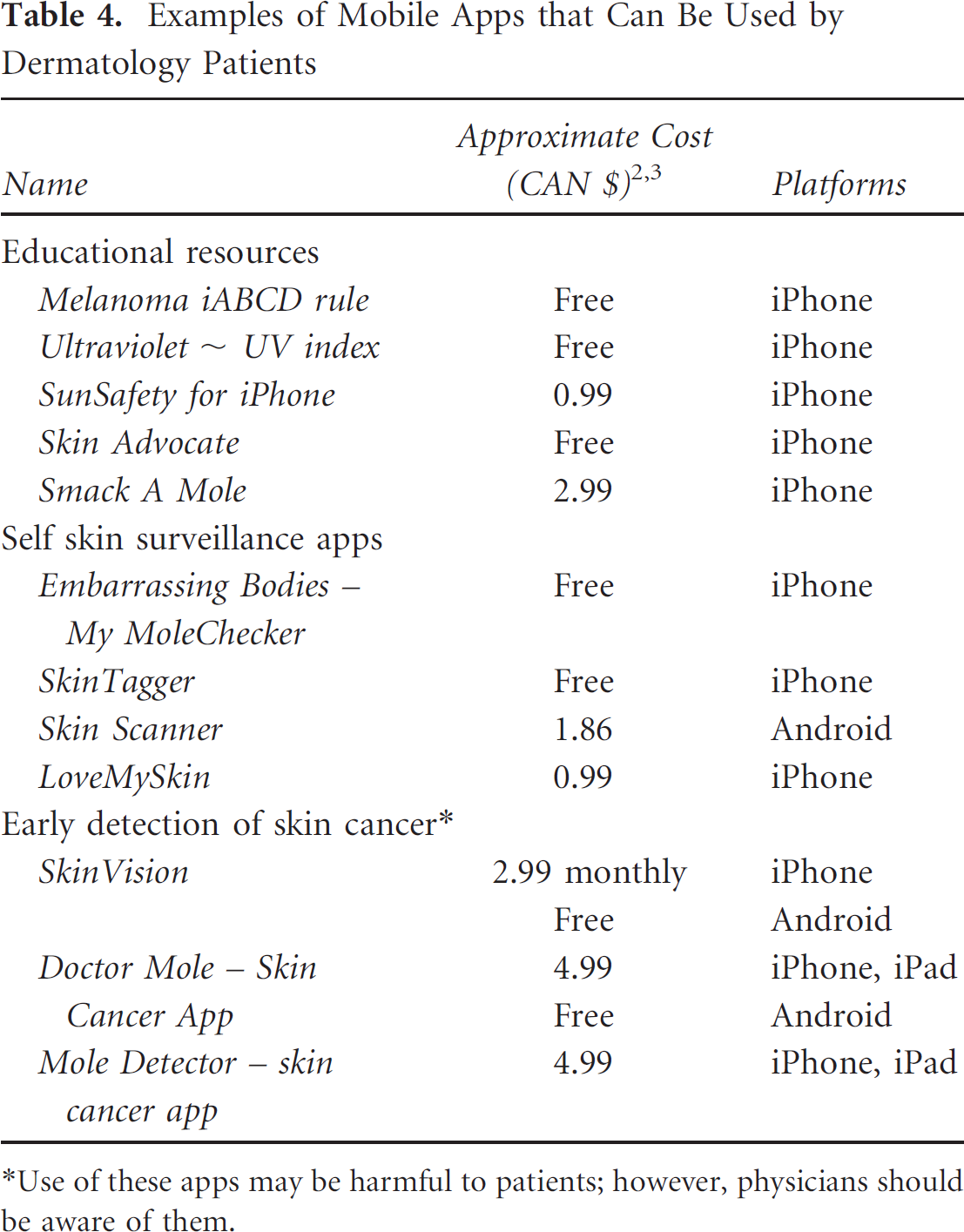
Use of these apps may be harmful to patients; however, physicians should be aware of them.
Mobile Apps for Dermatologists
There are numerous mobile apps that can be used by dermatologists as educational resources (see Table 2). Textbook apps, such as Color Atlas of Cosmetic Dermatology, are compact resources for both experienced dermatologists and learners working with them. Journal apps, such as Dermatologic Surgery for iPad, offer the capacity to search through a vast array of articles with relative ease. Some drug information apps include Epocrates and Tarason Pharmacopeia, providing clinicians with vital drug information, including dosing during pregnancy. Local Anesthesia app calculates the maximum recommended dosages of local anesthesics, based on age and weight, and provides an overdose indicator for multiple injections. This could be used as a running record of total anesthesia administered during multiple simultaneous Mohs surgeries.
There are several apps, such as Melanoma Staging Calculator and TMN Skin, that quickly determine a patient's skin cancer prognosis and 5-year survival, based on various TMN features. The Mohs Appropriate Use Criteria app helps determine whether Mohs surgery is “inappropriate,” “uncertain,” or “appropriate” using an algorithm developed by the American Academy of Dermatology (AAD) and American Society of Dermatologic Surgery (ASDS). Choose A Dressing app can be used to determine an appropriate dressing required based on the characteristics of the wound or ulcer. Finally, PASICalc app quickly calculates a patient's Psoriasis Area and Severity Index.
With respect to the operations of a dermatologic practice, there are several apps that are helpful (see Table 3). Taking photographs using a smart phone is a swift way to document pre- and postprocedures and interesting cases for teaching. In addition, photos of challenging cases can easily be forwarded to a colleague for a second opinion. Clin Pix is a photography app that organizes photos in a clinically useful manner (ie, by patient, encounter date, and lesion site) and stores them separate from personal photos on your mobile device. There are numerous smart phone attachments for taking high-quality photographs (see Table 3). Furthermore, a number of electronic medical record (EMR) apps have been created specifically for dermatologists, such as EZDERM, which is a cloud-based EMR that uses three-dimensional body maps of the patient. It can be used to schedule patients, record patient information, store photos, and generate biopsy requisition forms. There are numerous utility apps that can aid with clerical tasks, such as Tiny Scan. This app coverts a photograph on your phone into a PDF that can be used to create an electronic record of receipts of purchases, patient consent forms, hand-written notes, and evaluation forms for residents. Voice Record Pro records voice memos and dictations using various file formats, which can be e-mailed with password encryption. Finally, Dragon Dictation converts spoken words into electronic text.
Presently, there are a few teledermatology apps available. SpotCheck is available directly to patients in the United States, where board-certified dermatologists review a photo of a patient's “mole,” indicate whether it looks “normal” or “atypical,” and subsequently provide follow-up. During 2013, legislation has been enacted in many US states, making the possibility of a nationwide teledermatology service for patients closer to reality. 4 In Canada, this is presently a reality. ConsultDerm.com is a teledermatology service offered to patients in several Canadian provinces, whereby a registered physician sends a clinical synopsis and photos of a case, via a secure encrypted system, to be reviewed by a board-certified dermatologist, who, in turn, provides advice and follow-up, if necessary. 5 Furthermore, the website has passed privacy assessments from the Office of Information and Privacy Commission of Alberta. 6 There are countless implementations surrounding telehealth. Some advantages include shorter wait times and possible cost savings to the health care system. 7 The disadvantages include the lack of a face-to-face encounter between the patient and the dermatologist and potential liability issues. 7
Mobile Apps for Dermatology Patients
There are multiple apps that can be used by patients (see Table 4). Some educational apps for patients include the following: Melanoma iABCD rule explains the “ABCD's of melanoma”; UV Index or SunSafety provides the local ultraviolet index and information regarding sun safety; Skin Advocate lists contact information for a number of patient support groups; and Smack a Mole is an educational game for pediatric patients. My Mole Checker, allows patients to record information regarding their moles (ie, location on a three-dimensional image of the human skin along with attached photos and notes) and provides access to educational videos on conducting skin self-examinations.
Using apps for early detection of skin cancer is a current and controversial issue. A recent case-control diagnostic accuracy study revealed that the performance of these apps is highly variable. 8 Three of the four apps incorrectly classified 30% or more of melanomas as unconcerning. 8 One advantage of these apps is that they may promote skin self-examinations. 9 However, they are not subject to any sort of validation or regulation, and there are issues surrounding patient confidentiality and data storage.8,9 Additionally, they may give the patient false reassurance and hence even delay diagnosis, potentially creating a poorer outcome. 9 It is useful to be aware of these apps as patients may ask about them (see Table 4).
Summary
Recent developments in technology, including mobile apps and teledermatology, are shaping the way in which the practice of dermatology is being conducted. Currently, there are hundreds of dermatology apps and counting. Many of these can be extremely useful for dermatologists during their daily practice, as well as for their patients. However, caution must be used regarding the accountability of some apps. A recent study, which reviewed 97 dermatology apps, revealed that only 62% of these apps provided reference material. 9 Moreover, only 33% explicitly stated the name of a dermatologist, other physician, or valid collaborative group that was involved in developing the app. 9 Furthermore, extreme caution must be used regarding patient confidentiality and data security. Users must always ensure that their mobile phone is password encrypted and should download a remote wipe app, such as Find My iPhone or Google Apps Device Policy, which will allow them to remotely delete the contents on their phone if lost or stolen.
