







Abstract
While coaching and mentoring share similarities, no existing development framework integrates their distinct attributes to jointly enhance entrepreneurial self-efficacy (ESE) during the early stages of entrepreneurship. This exploratory, qualitative study followed an inductive approach and employed Canonical Action Research (n=10) for data collection and analysis, leading to the development of the Integrated Coaching and Mentoring Entrepreneurial Development (ICMED) framework. The novelty of the ICMED framework lies in its unified approach, equipping entrepreneurs with a single source for ESE development through a coach or mentor who addresses both dimensions of ESE, general self-efficacy and entrepreneurial functional competencies.
Keywords
Introduction
Entrepreneurship has often been credited globally, and in emerging economies, as a driver of economic growth through innovation and job creation (Bak et al., 2023). Therefore, entrepreneurs are often described as catalysts of change who establish new businesses that were previously non-existent (Block et al., 2017), thereby providing the opportunity for economic advancement (Cui & Bell, 2022). To cultivate an entrepreneurial mindset, it has been suggested that coaches and mentors must address its cognitive, behavioral, and emotional dimensions (Kuratko et al., 2021). While both coaching and mentoring have shown promise in enhancing the ESE in entrepreneurs (Newman et al., 2019), limited scholarly attention has been given to their integration. Existing research on the integration of coaching and mentoring is largely confined to organizational development contexts (Harding, 2006; Hollywood et al., 2016). In the entrepreneurial domain, Kotte et al. (2020) introduced a two-dimensional entrepreneurial coaching framework that incorporates mentorship attributes, particularly the sharing of entrepreneurial knowledge. However, this framework does not represent a true integration of coaching and mentoring but rather a mentorship-influenced coaching approach. Recognizing the absence of an integrated framework in the entrepreneurial context, this study aims to explore how the distinct, yet complementary attributes of coaching and mentoring can be integrated to enhance ESE development in entrepreneurs. This integration of coaching and mentoring seeks to address both behavioral and domain-specific entrepreneurial competencies, particularly in the early stages of entrepreneurship. Wilber’s Integral Theory (2007), specifically the Four-Quadrant Model, serves as the theoretical foundation for this approach, enabling a structured synthesis of coaching’s facilitative, individual-focused nature and mentoring’s directive, experience-based guidance. The next section presents a literature review on key concepts, followed by the research methodology. The paper concludes with the findings and a discussion of the results.
Literature review
Entrepreneurship
Entrepreneurs create and grow small businesses and, therefore, the effect of entrepreneurship on the stimulation, development and growth of SMMEs cannot be underestimated (Botha et al., 2019). The contribution of entrepreneurship towards economic prosperity is even more significant in developing nations where entrepreneurs and SMMEs are important vehicles to eradicate unemployment, whilst contributing to income distribution and employment creation (Zwane and Nyide, 2017). One example is the South African government’s National Development Plan (NDP), launched in 2011, which envisions small, medium, and micro enterprises (SMMEs) providing employment to 90/ of the workforce by 2030, a significant increase from the 50/ to 60/ employed by SMEs in 2022, as reported by McKinsey (Albaz et al., 2020). This highlights the critical need for entrepreneurial development and support. Furthermore, the rise of artificial intelligence (AI) and automation technologies has brought about significant changes in the labour market in terms of job security and the future of work (Wach et al., 2023). It is anticipated that AI and automation technologies will replace many jobs that are currently done by humans. It can therefore be argued that the emergence of AI and its negative impact on employment could force more people into entrepreneurship as a means of securing income and survival. Therefore, developing the entrepreneurial competencies and entrepreneurial behaviour of the individual entrepreneur could be positioned as one of the key factors in supporting entrepreneurship (Raposo and do Paço, 2011).
Entrepreneurial self-efficacy (ESE)
Derived from Bandura’s Social Cognitive Theory, self-efficacy, an extension of behaviourist principles suggests that individuals are more likely to engage in activities where they believe they are competent and confident in achieving a desired outcome (Bandura, 1986). Entrepreneurial self-efficacy, a domain-specific form of self-efficacy, influences both entrepreneurial intentions and actions (Chen et al., 1998). This construct is particularly relevant during the early stages of entrepreneurship, when individuals must decide whether to pursue and commit to entrepreneurship as a viable career option (McGee & Peterson, 2019). Bandura (1986) identified four sources of self-efficacy: mastery experiences, vicarious learning, social persuasion and managing emotional states. According to Bandura, there are certain processes through which self-efficacy beliefs produce results and outcomes. These include cognitive processes, motivational processes, affective processes and selection processes (Bandura, 1986). In the context of entrepreneurship, the contribution of these self-efficacy process can be grouped into two categories (Newman et al., 2019) namely: (i) Individual-level outcomes (entrepreneurial behaviour), which refers to the entrepreneur’s perceptions about their own capabilities and self-belief to handle given situations (Ajzen, 1991); and (ii) firm-level outcomes like revenue growth and financial performance (Newman et al., 2019)
ESE is a learned competence that can be developed and improved (Florin et al., 2007). Several ESE development options like work experience (Hockerts, 2017), education and training (Zhao et al., 2005), role models (BarNir et al., 2011), mentors (St-Jean and Mathieu, 2015) and coaching (Hunt et al., 2019) exist. However, in developing economies where unemployment is high, work experience is limited due to high levels of unemployment (Altman, 2022). Similarly, opportunities to develop entrepreneurial skills through education and training are also limited (Mutanda et al., 2021) and entrepreneurial education remains a challenge (Bowmaker-Falconer et al., 2023). However, both coaching (Caliendo et al., 2023) and mentoring (Kubberød & Ladegård, 2021) are recognized as key individual-level antecedents of ESE. In many countries, coaching and mentoring are widely available as forms of entrepreneurial support offered by public and private entrepreneurial development institutions.
Coaching
Coaching, which is underpinned by adult learning theories (Cox et al., 2018), adopts a custom-tailored, flexible and reflection-orientated approach (Bozer and Jones, 2018) towards development which can be applied during any stage of the entrepreneurial process (Kotte et al., 2020). During the early stages of entrepreneurship, entrepreneurs should adopt a mindset that actively identifies, creates, and explores new ideas and opportunities as an integral part of the venture creation process (Drnovšek et al., 2010). Creativity plays a pivotal role in this phase, enabling entrepreneurs to go beyond conventional thinking and generate innovative solutions. Coaching, through the use of stimulating and critical questioning (Crompton et al., 2012), fosters this exploratory and creative mindset, helping entrepreneurs to refine and reimagine their business ideas and concepts (Alvarez & Barney, 2007). In the entrepreneurial context, coaching also supports individuals in setting ambitious, visionary goals and in cultivating a belief in the feasibility of success (Caliendo et al., 2023). To translate these aspirations into reality, coaching contributes to both effective goal setting and goal attainment by helping entrepreneurs maintain focus, motivation, and adaptability throughout the entrepreneurial journey (Mühlberger & Traut-Mattausch, 2015).
Entrepreneurial coaching is a relatively novel concept (Kotte et al., 2020) and there is an increasing demand for coaching in the entrepreneurial context as a reflective action-based method of entrepreneurial learning and development (Brinkley and Le Roux, 2018) which could lead to improved levels of ESE (Brinkley and Le Roux, 2018; Kotte et al., 2020). The role of the coach is to facilitate learning and development by helping the entrepreneur to develop the ability to step back from a situation and to think about the learning process, which is a requirement for critical reflection (Audet & Couteret, 2012). However, a potential limitation of coaching in the entrepreneurial context is the coach’s lack of entrepreneurial experience and lack of business and industry-specific expert knowledge (Kotte et al., 2020), which limit the ability and confidence of the coach to be directive and provide guidance in the entrepreneurial context.
Mentoring
Mentoring, which is informed by developmental theories, learning theories and social theories (Dominguez and Hager, 2013), adopts a directive approach as the mentor guides and shares their experiences with a novice (É. St-Jean & Mathieu, 2015). Despite the number of widely accepted definitions of mentoring, there is no such consensus with regards to the specifics of the term, ‘entrepreneurial’ mentoring. Since the context and circumstances of entrepreneurs are different from formally employed individuals, the definition of mentoring in the entrepreneurial context is influenced by the context and specific needs of the individual entrepreneur (Brodie et al., 2017). The mentorship needs of entrepreneurs, which influence and determine the type of mentorship required, include the transfer of knowledge and skills, guidance towards achieving business results (Kunaka & Moos, 2019), as well as the need for reassurance, feedback, a source of confidence, and access to networks (St-Jean & Mathieu, 2015).
In the context of entrepreneurship, the mentor can become a positive role model for the entrepreneur which allows the entrepreneur the opportunity to find inspiration through their mentor’s example (Laukhuf and Malone, 2015). The mentee observes the expertise of the mentor (Baluku et al., 2020), whilst the mentor acts as an advisor who shares experience, expertise, advice and wisdom with the mentee (Stout-Rostron, 2014). A possible limitation of mentorship is the importance attached to the skills, knowledge and experience of the mentor in the outcomes of the relationship (McKevitt and Marshall, 2015). Therefore the expectation from the mentee for the mentor to provide an appropriate response could be challenging due to the many potential issues the entrepreneur may face (Clutterbuck, 2005). In summary, mentoring is a form of social learning where an entrepreneur, through their engagement and observation of the mentor’s behaviour can enhance their own entrepreneurial behaviour and performance (Kunaka and Moos, 2019).
In summary, the emergent nature of entrepreneurship necessitates that entrepreneurs possess functional, cognitive, and behavioral competencies (Kuratko et al., 2021). Entrepreneurial self-efficacy provides a theoretical foundation for developing entrepreneurial behavior and domain-specific skills (Boyd & Vozikis, 1994). This review showed that there is currently no theoretically underpinned development framework that integrates the unique attributes of coaching and mentoring to jointly enhance the ESE of entrepreneurs. Addressing this gap could significantly benefit entrepreneurs in the early stages of their ventures.
Method
Canonical Action Research (CAR), which is a form of action research, was the method adopted for the development of the ICMED framework. CAR is an iterative, rigorous and collaborative approach which focuses on the shared involvement between researcher and the participants (Davison et al., 2004). The application of CAR was also influenced by the researcher’s ontological view as a constructivist (Guba & Lincoln, 1994) and epistemological perspective as an interpretivist (Saunders et al., 2009), which is supported by Jones and Alony, who stated that “knowledge is not static, but always emerging and transforming and is interpreted by both researcher and participant” (2011, p. 97). The application of CAR is congruent with the Coaching Model Derivation Process (Terblanche, 2020) which provided methodological guidance for the development of the ICMED framework.
Population and Sampling
The sampling was purposive to ensure that the participants could answer the research question based on their experience with the phenomenon (Babbie & Mouton, 2012), in this case entrepreneurs during the early stages of entrepreneurship. The sample size was determined a priori (Sim et al., 2018) and ten (10) entrepreneurs were included in the sample. The sampling was purposive to ensure that the participants could answer the research question based on their experience with the phenomenon (Babbie & Mouton, 2012), in this case entrepreneurs during the early stages of entrepreneurship. The sample size was determined a priori (Sim et al., 2018) and ten (10) entrepreneurs were included in the sample. The inclusion criteria for the sample are listed below:
Be a full-time owner, male or female, of a business that has been operating for up to two years (classified by GEM as early stages of entrepreneurship (Bowmaker-Falconer & Herrington, 2020)).
Aged between 18 years and 44 years, which was influenced by the GEM classification brackets of entrepreneurial activity per age group. According to the GEM South Africa 2019/2020 report, the highest entrepreneurial activity was in the age group 25 to 44 years (Bowmaker-Falconer & Herrington, 2020).
South African citizen and proficient in English in view of the interview process and data collection.
Had to be accessible for virtual engagement and interviews.
Profits from business as their only source of income.
They should have started the business themselves, rather than having acquired an already established business.
They should not be engaging in any coaching or mentoring programmes for the duration of this phase of the study which was estimated to be approximately six months.
Race, gender and geographic location were excluded as qualifying criteria
Table 1 is a summary profile of the entrepreneurs included in the sample.
Profiles of the entrepreneurs included in the sample
Data collection
Data was collected by coaching and mentoring the 10 participants over six sessions each. The decision on whether to adopt a coaching or mentoring approach with the participants was influenced by their development needs. The cyclical data collection process was guided by the iterative steps of planning, acting, evaluating, and reflecting, as defined by the Cyclical Process Model (Davison et al., 2004) and the Coaching Model Derivation Process (Terblanche, 2020). The involvement of the practitioner in the research process is an inherent feature of action research (DuPlooy-Cilliers et al., 2014). Data sources included: (i) structured participant feedback obtained through semi-structured interviews of approximately 20 minutes, after each coaching or mentoring session; (ii) researcher observations during the coaching or mentoring sessions; and (iii) researcher reflections recorded in a reflective journal throughout the process.
Data analysis
The data analysis followed an inductive approach, consistent with the researcher’s interpretivist perspective, and was conducted using thematic content analysis. Braun and Clarke (2006) support the use of thematic analysis, emphasizing its flexibility and independence from pre-existing theoretical frameworks, which aligns with the research aim. The data analysis process was guided by the four phases of content and thematic analysis—initialization, construction, rectification, and finalization— as defined by Vaismoradi et al. (2016). Three distinct themes emerged from the data analysis process which informed the conceptual version of the ICMED Framework. Figure 1 below is a visual representation of the data analysis process.
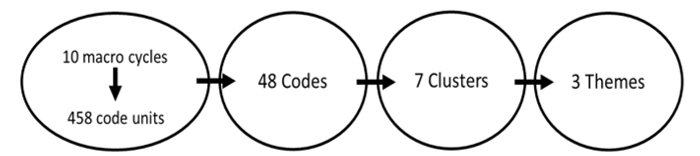
Data analysis process
Findings
This section presents the findings that emerged from the study, with the aim of describing how the exploratory and reflective nature of coaching can be integrated with the directive approach of mentoring to support the development of entrepreneurial self-efficacy (ESE) in entrepreneurs. Three key themes emerged from the data analysis: Awareness, Engagement, and Reflection and will be discussed in more detail in the following section.
Theme 1: Awareness
The first theme,
“I put my dishes through the dishwasher, but what about putting yourself through a dishwasher. I am looking and refreshing myself” (E1).
“Made me think, I never realised the impact of my mood on the business. The business is me. It was good to think about myself, I am always worried and thinking about the business, but never about me” (E4).
This finding led to a unique feature of the ICMED framework, its holistic approach to entrepreneurial development. The framework raises awareness of both behavioral development needs, traditionally associated with coaching, and entrepreneurial functional competency development needs, often linked to mentoring.
By adopting an exploratory approach informed by coaching, the awareness phase helps entrepreneurs recognize these needs, shaping their overall relationship with their coach or mentor. This, in turn, informs their development focus and goals, forming the basis for effective guidance and support. The following comment from participant E4 reflects the value of this exploratory approach and underscores the importance of the awareness step in the framework:
"It made me think. I never realized the impact of my mood on the business. The business is me. It was good to think about myself. I am always worried and thinking about the business, but never about me."
Theme 2: Engagement
The second theme, Engagement, represents the second phase of the framework and involves developmental conversations with the entrepreneur in an iterative process. This phase focuses on generating options for engaging with the sources of self-efficacy. Mastery experiences emerged as the most practically preferred source of ESE within the context of entrepreneurship. Coaching, with its facilitative and exploratory nature, supported entrepreneurs in identifying and engaging with mastery experiences—such as becoming aware of new opportunities to attract clients and expand their networks. In contrast, mentoring tended to adopt a more directive approach, guiding entrepreneurs toward tangible actions like implementing marketing initiatives, which also contributed to mastery experiences. Vicarious learning was fostered primarily by encouraging and directing participants to join business networks, offering them the opportunity to observe and learn from the experiences of others. Verbal persuasion, another source of ESE, was evident in the use of positive feedback on progress and results—serving as intentional words of encouragement to build confidence. Emotional states, a subtler but important source of ESE, were addressed predominantly through coaching at the beginning of the relationship. Coaches facilitated reflective conversations that helped entrepreneurs process past experiences, including failures, reframing them as valuable learning opportunities. This exploratory process contributed to a more resilient and self-efficacious entrepreneurial mindset. The following participant comment exemplifies how the integrated approach addresses both dimensions of entrepreneurial self-efficacy (ESE):
“A combination of coaching and mentoring works best for me, for sure. The questions help me unpacks my thoughts. The guidance keeps me and the business on track” (E3).
A unique feature of the framework is its flexibility in allowing engagement through either an exploratory or directive approach, enabling coaches and mentors to address both entrepreneurial behavioral and functional development needs. The following is an extract from the researcher’s reflective journal that underpins the rationale for exploring an integrated approach:
“I enjoyed staying with the participant based on their progress and ‘stuckness’, as opposed to being aware of a specific model or approach.”
Once development options are identified, the entrepreneur is guided through a mentoring approach to actively engage with these sources within their entrepreneurial context. Below are examples of the how coaching and mentoring activates self-efficacy processes:
“I have things to plan and focus on” “I know what to do know.” (E6) (mentoring, activating cognitive process).
“you allowed me to speak about my concerns and listened to me which helped me to realise that I am actually doing ok.” (E9) (coaching, activating affective process).
This engagement serves as the foundation for reflection and self-awareness, facilitating the activation of self-efficacy processes and fostering awareness of their development progress.
Theme 3: Reflection
The third and final theme, Reflection, marks the conclusion of the developmental process with the entrepreneur. In this phase, generative learning is activated through intentional reflection on their development progress, enhancing the entrepreneur's self-regulating capabilities for future application. The contribution of the integrated approach is captured by the comment from a participant at the conclusion of the CAR process:
“The sessions helped me to get a different perspective. The benefit was not only for the business, but the business influences you personally and the other way around as well. The reflection will help me to apply the lessons in future” (E1).
These themes played a critical role in shaping the Integrated Coaching and Mentoring Entrepreneurial Development Framework (ICMED) at a conceptual level. The ICMED framework integrates the exploratory and reflective nature of coaching with the directive approach of mentoring. This integration enables coaches and mentors to adopt a holistic and integrated approach to entrepreneurial development by addressing either or both behavioral development needs and functional competency development needs, which reflect the dimensions of ESE. Figure 2 below presents the conceptual ICMED Framework.
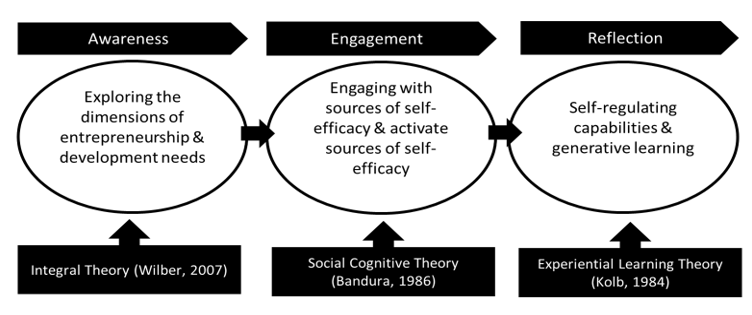
Conceptual ICMED Framework
In conclusion, the integrated framework suggests a coaching, mentoring or combined “approach” which can be defined as: (i) a coaching session followed by a mentoring session and vice versa during the overall relationship; or (ii) a coaching or mentoring session followed by a combined coaching and mentoring session which is a combination of an exploratory (coaching) and a guiding (mentoring) approach in a single session.
Discussion
This study set out to develop an integrated coaching and mentoring framework for entrepreneurial development. Through canonical action research, three main themes were identified, which, along with focal and instrumental theories, form the foundation of the ICMED framework. The empirically derived framework offers several advantages, as summarized in Table 2 below and discussed in the following section.
Summary of the benefits of the ICMED Framework
(i) The ICMED Framework ensures a client-centric approach to entrepreneurial development. The novelty of the ICMED Framework lies in its integrated approach, offering entrepreneurs a unified source of development through a single coach or mentor. This feature stands in contrast to conventional coaching and mentoring practices, where entrepreneurs typically engage either a coach—traditionally associated with behavioral development (Brinkley & Le Roux, 2018; Flaherty, 2006)—or a mentor, who focuses on the development of functional skills (Laukhuf & Malone, 2015), and rarely both. By combining these roles within a single practitioner, the ICMED Framework extends the reach and impact of entrepreneurial support (Bowmaker-Falconer et al., 2023), particularly in economic and social contexts where access to both coaching and mentoring may be limited.
(ii) In addition to its client-centric approach, the ICMED Framework enables the integration of coaching and mentoring, allowing coaching and mentoring practitioners to address both dimensions of ESE. This holistic approach to entrepreneurial development allows coaches to facilitate the acquisition of functional skills by adopting a directive and guiding approach typically associated with mentorship (Mullen & Klimaitis, 2021). Conversely, mentors facilitate behavioral development, traditionally linked to coaching by incorporating a more exploratory and facilitative approach (Bozer & Jones, 2018). This dual capacity of the ICMED Framework reveals a previously unrecognized potential: that both coaches and mentors, when working within an integrated framework, can actively contribute to the development of general self-efficacy as well as specific entrepreneurial competencies (Baum & Locke, 2004). As such, the ICMED Framework not only broadens the functional scope of practitioner roles but also provides structured guidance for engaging with all four sources of ESE identified by Bandura (1986) to further enhance their contribution to entrepreneurial development. It should however be noted that a practitioner’s ability to confidently integrate these approaches will depend on their qualifications, experience, and depth of contextual knowledge (Kotte et al., 2020).
(iii) A further contribution of the ICMED Framework lies in its ability to facilitate engagement with the sources of entrepreneurial self-efficacy (ESE) for coaches and mentors through the integration of the unique and distinct developmental features of coaching and mentoring. Coaching, with its facilitative and exploratory approach (Bozer & Jones, 2018), enhances entrepreneurs’ self-awareness and helps them refine their developmental goals (Crompton et al., 2012). In contrast, mentoring brings a directive and guiding approach (Kubberød & Ladegård, 2021), which ensures that entrepreneurs are actively involved in developmental activities that promote experiential learning (Kolb, 1984). These approaches engage differently with the sources of ESE: coaching typically fosters self-efficacy through self-directed learning and internal reflection (Knowles et al., 2015), while mentoring draws on observational learning and external guidance (Kunaka & Moos, 2019). In addition to the distinct contributions of coaching and mentoring, the ICMED Framework also integrates the similarities between the two—such as one-on-one dialogue (McCarthy, 2016), experiential learning as an underpinning theory (Cox et al., 2018), a structured approach (Rostron, 2014) overlap in skills and qualities (De Souza & Viney, 2014), the role of the relationship (Brockbank, 2008) and their practical nature (Kunaka & Moos, 2019).
(iv) A key functional benefit of the ICMED Framework is its potential to stabilise the inherently fluctuating nature ESE through its integrated coaching and mentoring approach. Findings from this study provide new insights, suggesting that improvements in business management competencies like planning and networking are generally more enduring compared to the behavioral dimensions of ESE, such as motivation and confidence. This insight emerges from the observed relationship between enhanced business outcomes and general self-efficacy, which subsequently, influences entrepreneurs’ motivation and confidence. Self-Determination Theory (Ryan & Deci, 2000) offers a useful lens to interpret this finding positing that that individuals are more likely to act when they feel competent—when they perceive that they possess the skills and knowledge necessary to influence outcomes through their own efforts
(v) Another novelty linked to the ICMED Framework is that the integrated coaching and mentoring approach supports the development of generative learning in entrepreneurs, a process that enhances their self-regulating capacity and promotes sustained growth and development over time. The mentoring component, characterised by a directive and guiding approach (Villa et al., 2021), encourages entrepreneurs to actively participate in entrepreneurial tasks and learning experiences (Cope, 2005) whereas coaching with its emphasis on reflection and exploration, cultivates the self-regulating and self-generating capacities required for sustained behavioural change and future application of newly acquired skills (Flaherty, 2006; Fiorella & Mayer, 2016). This combination leverages the benefits of both observational learning, where entrepreneurs learn through guided experience—and self-directed learning, which empowers them to take ownership of their development journey. By fostering these complementary learning modes, the integrated approach not only equips entrepreneurs with practical skills but also strengthens their ability to adapt, reflect, and evolve beyond the coaching or mentoring engagement. In doing so, it addresses two persistent challenges in entrepreneurship: the high failure rates among early-stage entrepreneurs and the limited access to sustained developmental support (Bowmaker-Falconer et al., 2023). Ultimately, this approach enhances entrepreneurial resilience and lays the foundation for longer-term success.
(vi) In conclusion, the integration of multiple theoretical perspectives forms the foundation of the ICMED Framework and underpins its contribution to the development of ESE. The ICMED Framework distinguishes itself through the integration of complementary theories that collectively enhance its contribution to the development of ESE. While Social Cognitive Theory (Bandura, 1986) offers a foundational lens for understanding ESE, its scope is limited in fully accounting for the development of both general self-efficacy and the specific behavioural and functional competencies required by entrepreneurs. To address these limitations, the framework incorporates Wilber’s (2007) Integral Theory, which offers a more comprehensive approach by addressing both general and domain-specific competency development. In addition, Kolb’s (1984) Experiential Learning Theory brings a vital practical dimension, supporting the transformation of new behaviours and skills through lived experience—an element not explicitly addressed by either Social Cognitive or Integral Theory. Finally, the structural coherence of the ICMED Framework is underpinned by the PPP Framework (Lane & Corrie, 2009). Therefore, these theoretical foundations position the ICMED Framework as an innovative contribution, uniquely combining behavioural, developmental, and learning perspectives to holistically support the growth of ESE in entrepreneurs.
Recommendations
The following recommendations regarding coaching and mentoring emerged specifically from the study.
Continuous competency development. Entrepreneurial coaches and mentors should continuously enhance their functional entrepreneurial skills and intentionally expand their understanding of industry dynamics in which entrepreneurs operate. Entrepreneurs expect coaches and mentors to provide industry-specific guidance.
Obtaining formal coaching qualifications. Formal coaching qualifications are recommended for both coaches and mentors working with entrepreneurs. Exposure to theoretically informed coaching models as part of the qualification process can instill confidence in addressing entrepreneurs' behavioral development challenges.
Coaching skills development for mentors. Entrepreneurial training and development programs should incorporate coaching skills into the training curriculum for entrepreneurial mentors. Skills such as open-ended questioning (exploratory) to generate options should be intentionally developed. Additionally, mentors should possess the skills and ability to facilitate reflective practice as a means of fostering generative and self-directed learning.
Limitations and future research
The CAR focused on the practical application and development of the ICMED Framework over six sessions with ten entrepreneurs. A limitation is that the impact of the ICMED Framework over a longer period was not explored, leaving its long-term efficacy unknown. A longitudinal study is recommended to assess the impact of an integrated coaching and mentoring approach on the fluctuating nature of ESE and its benefits for the entrepreneurial venture over time.
Conclusion
Entrepreneurship is widely recognized as a key driver of economic growth and social development. This study is one of the first to integrate the power and unique contributions of coaching and mentoring into a comprehensive, theoretically grounded, yet empirically derived and pragmatic framework, offering a client-centric approach to entrepreneurial development through a single practitioner. The findings of this study indicate that the theoretically supported ICMED Framework provides structure and guidance for coaches and mentors to address the development needs of entrepreneurs. Specifically, its novelty lies in the ability to support both the enhancement of behavioral skills linked to general self-efficacy, as well as entrepreneurial functional skills. Consequently, the ICMED Framework makes a much-needed contribution in the development process for working with entrepreneurs, facilitating their transition from the early stages of entrepreneurship to becoming established business owners. This, in turn, can generate positive economic and social impacts within their communities and the broader economic ecosystem.