







Abstract
In this article, I document contemporary highland Maya use of traditional tobacco (Nicotiana tabacum) preparations among the highland Maya (Tzeltal-Tzotzil) of Chiapas, Mexico. Among the Ancient Maya, Nicotiana was considered a sacred plant, closely associated with deities of earth and sky, and used for both visionary and therapeutic ends. The contemporary Tzeltal and Tzotzil Maya of Highland Chiapas are bearers of this ethnobotanical inheritance, preserving a rich and varied tradition of Nicotiana use and folklore. The entire tobacco plant is viewed as a primordial medicine and a powerful botanical “helper” or “protector.” Depending on the condition to be treated, whole Nicotiana leaves used are used alone or in combination with other herbs in the preparation of various medicinal plasters and teas. In its most common form, fresh or “green” leaves are ground with slaked lime to produce an intoxicating oral snuff that serves as both a protective and therapeutic agent. Despite its historical and cultural significance, traditional tobacco use is declining in favor of smoked tobaccos. The article closes with a discussion of the social transformations responsible for this decline, reviewing research that suggests tobacco powder snuffs may be less dangerous to health than smoked tobaccos, despite their addictive potential.
“The taking of tobacco in every form permeated Indian life in ancient Middle America. The attitude of noble, priest, and commoner was imbued at times with something approaching mysticism, as when tobacco was personified or even deified or when it was accepted as an ally fighting beside man to overcome fatigue or pain or to ward off so many of the ills of human flesh. There is deep beauty there which we, in our materialistic world…are unable to share or even to perceive” (Thompson 1970:122–123).
Introduction
Throughout the Mayan region, tobacco (Nicotiana) has long been regarded as a supernaturally powerful plant. Both ancient and modern Maya employed tobacco in various forms: as an intoxicant, a stimulant, a medicine, and a potent magical agent—a sort of “botanical helper” or protector (de Smet and Hellmuth 1986; Elferink 1983; Janiger and Dobkins de Rios 1973, 1976; Robicsek 1972; Thompson 1946, 1970). In the Chiapas Highlands of southern Mexico, traditional tobacco preparations continue to play an important role in the therapeutic, religious, and ritual life of the Tzeltal and Tzotzil Maya. Whole leaves are boiled, wilted, mashed, and bruised to prepare medicinal plasters and teas. Fresh leaves are mixed with slaked limestone and ground into a green mash, yielding a potent oral snuff that is used as a medicine, a stimulant, a protective agent, as well as an intoxicant. This same preparation is also used as a sort of all-purpose charm, conferring protection against snakes, meteorological phenomena, demons, and witches. Although tobacco in all its forms is inherently valued and respected, the oral snuff preparation represents the plant in its most powerful and highly respected form. This mixture, stored and carried in small polished gourds, is the embodiment of an unbroken tradition of Mayan oral tobacco snuff use spanning more than a thousand years.
Despite the plant's manifest cultural importance, to date it has not been the subject of focused ethnographic study. The research for this article was conducted over a 17-year period (1992–2009) in an effort to document Highland Maya tobacco culture before it disappeared, and to reconstruct what I could of the historic roots of this ethnobotanical tradition. Following an overview of highland Maya tobacco ethnotaxonomy and nomenclature, I examine the process of oral snuff production, exploring its use in therapeutic contexts as well as its quasi-magical use as a “protector” or “helper.” Integrating ethnographic interviews conducted in the Tzotzil-speaking community of San Juan Chamula with the broader ethnographic and ethnohistoric record for the region, I present an overview of the cosmological and mythological significance of tobacco within the highland Maya worldview. Owing to both its chemical potency and quasi-magical power, Tzeltal and Tzotzil Maya attribute to the plant an ability to overpower a wide range of illnesses and supernatural threats. Indeed, controlled nicotine ingestion—particularly in the form of oral snuff—generates a range of positive psychological and physiological effects, supporting the local belief that tobacco is, in fact, one of the primordial “powerful substances” in the pharmacopoeia of the highland Maya. The paper closes with a discussion of recent transformations in local tobacco culture as a consequence of religious evangelization and the availability of commercial cigarettes, exploring the potential health impacts of a shift from oral to smoked tobaccos. I present an overview of recent research suggesting that, despite its addictive potential, oral tobacco snuff may be less dangerous to health than introduced smoked tobaccos.
Ethnobotanical Description
Nicotiana tabacum L., referred to colloquially as “tobacco,” has been well described in the botanical literature (Breedlove and Laughlin 1993:242; Goodspeed 1954:372–75). Based on genetic and distributional data, Nicotiana appears to have spread to the Central Mexican highlands from its origin in Andean South America (Goodspeed 1954:8; Wilbert 1987:2). Cultivated and semi-cultivated forms are common among horticulturalists throughout Southern Mexico, where the plant is used widely for medicinal and recreational purposes. In Chiapas, Nicotiana grows wild in disturbed soil in house gardens and along trails (Figure 1). Wild plants are often left alone when weeding, and seedlings are sometimes collected and transplanted to house gardens, placing it firmly in the category of semi-cultivar (Breedlove and Laughlin 1993:242). Belief in the plant's ability to repel malevolent entities makes it a desirable “protective” botanical in house gardens, while ensuring a ready source of leaves for the preparation of tobacco snuff and medicine (Breedlove and Laughlin 1993).
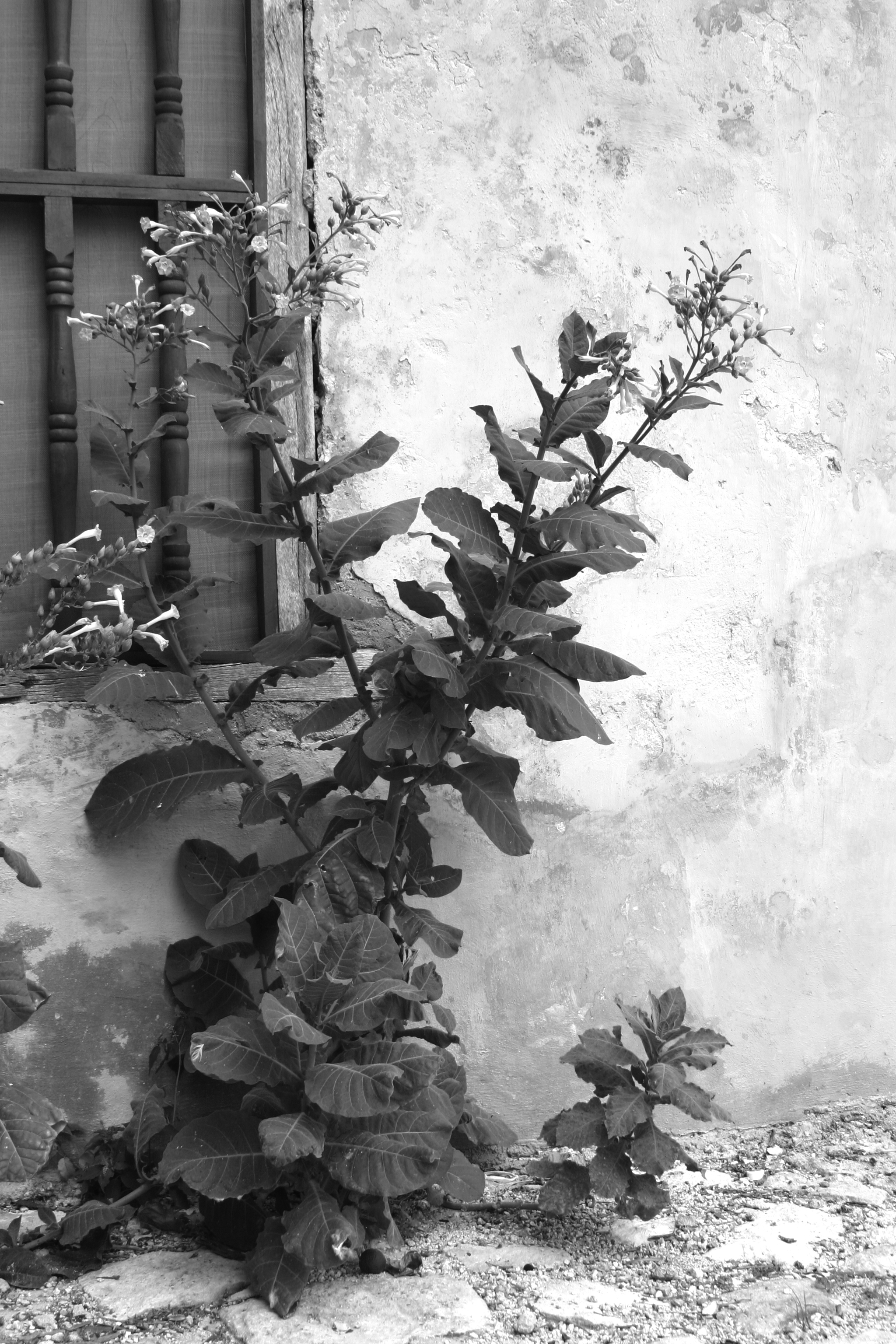
Tobacco, Nicotiana tabacum L., growing wild under the eaves of a house in San Cristóbal de Las Casas, Chiapas, Mexico. Photograph by Kevin P. Groark.
Tobacco Nomenclature
Tobacco is generically referred to as
In addition to this generic name, a number of more expressive metaphorical names (referring principally to prepared tobacco snuff) are also in circulation. In both Tzotzil- and Tzeltal-speaking communities, tobacco is referred to as “elder brother” (
Nicotiana Ethnotaxonomy
Two folk varietals of Nicotiana are locally distinguished based on the color of the flowers, which occur in both pink and white forms. In the Tzotzil community of Chamula, the pink-flowered variety known as “male tobacco” (
While discussing the difference in potency between the two Nicotiana varieties, one of my Chamula Tzotzil collaborators, an
There are two kinds of tobacco: white-flowered (
This short narrative frames the genesis of the two varieties—as well as the variation in their power or strength—in terms of the gendered differences between the progenitor deities said to have cultivated the first tobacco plants. Like human beings, they consider the “pink” male tobacco to be stronger and more effective than its “white” female counterpart.
Preparation and Use of Oral Tobacco Snuff
Among traditionalist Maya in the Chiapas highlands, tobacco use centers on the ingestion of a coarsely ground mixture of raw tobacco leaves and slaked lime. While knowledge of tobacco preparation and use is distributed universally throughout the highlands, the eastern Tzeltal-speaking communities (particularly Tenejapa, Oxchuc, Chanal, and Cancuc) preserve the most vigorous traditions of tobacco use. In more distant parts of this region, old men still carry tobacco gourds and use snuff in both secular and ritual contexts. In the western Tzotzil communities, in contrast, tobacco use has become much more restricted; while it remains central to many rituals and therapeutic practices, daily use as a stimulant is now rare.
Preparation of Tobacco Snuff
In the Tzotzil-speaking community of San Juan Chamula, the production of tobacco is limited to men, who prepare it for personal and family use; although women can use tobacco, they do not usually prepare it. This gender-restriction is not universal; in the Tzeltal communities of Chanal and Oxchuc, widows and older unmarried women prepare their own tobacco. In all communities, however, both men and women use the same locally preferred variant, usually the pink “male” variety. Preparation of the mixture is limited to Monday, Wednesday, Friday, or Saturday (the days when the saints and other protective deities are guarding the earth from malign influences). Preparing the mixture on other days is said to yield a tobacco without strength, or worse yet, one that will sicken the user.
The preparation process, as documented in San Juan Chamula, can be divided into five general stages:
Leaf Collection—Fresh Nicotiana leaves ( De-Veining—The leaves are cleaned and carefully de-veined. The lamina is stripped out from between the coarse veins and stem, and collected in a basket or on a cloth (Figure 2A). The veins and stem, too fibrous and moist to be ground into a palatable chewing tobacco, are generally discarded. Pounding—The lamina is pounded into a moist pulp (Figure 2B). Once reduced to a course mash, it is ground with a stone to medium coarseness, similar in texture to ground oregano leaves. Addition of Admixtures—Slaked limestone ( Storage in Tobacco Gourd—After the tobacco has been pounded to the desired coarseness, it is packed into a small, highly polished gourd container (
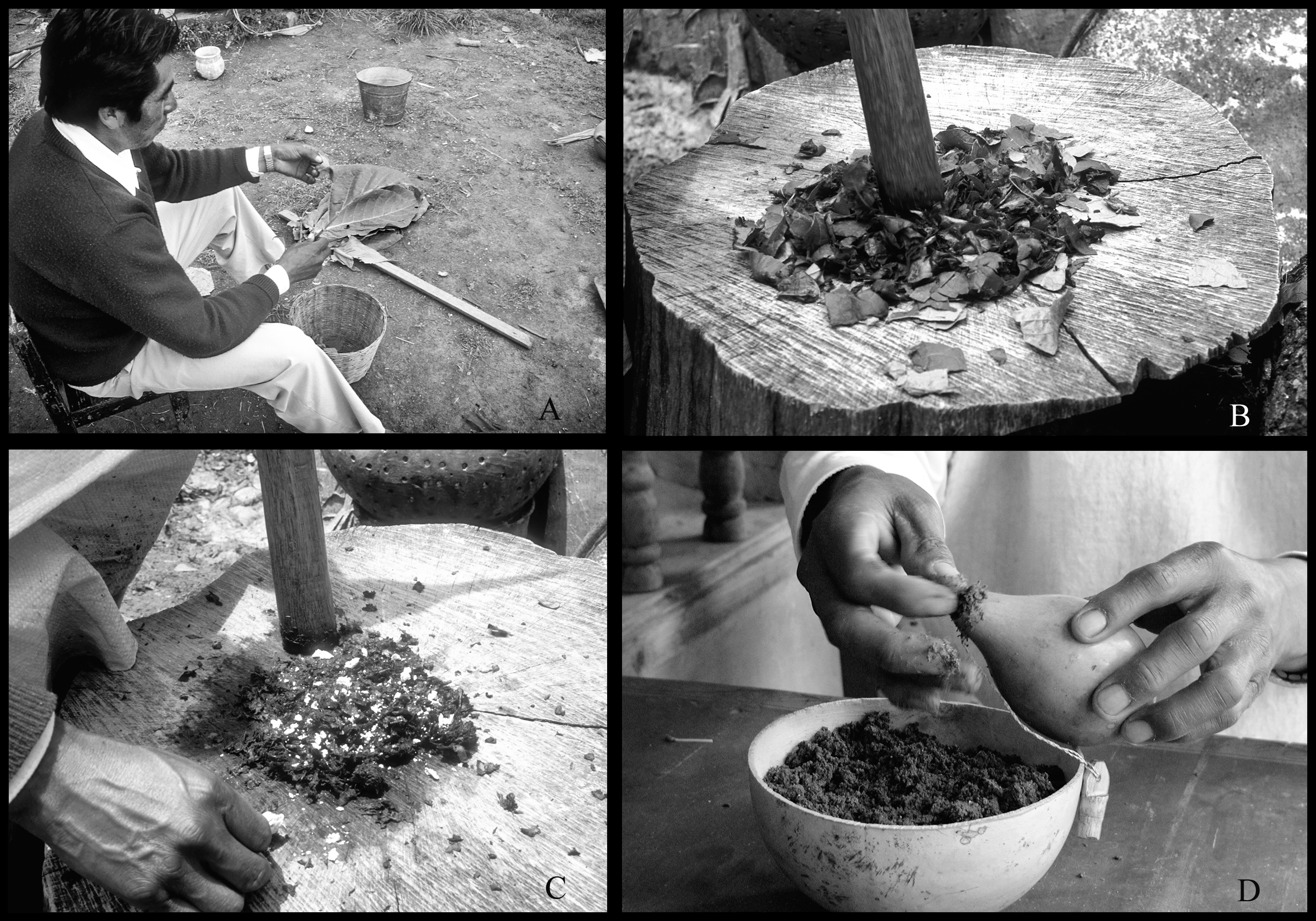
Preparation of tobacco snuff, San Juan Chamula 1998: (A) de-veining fresh Nicotiana leaves, (B) pounding the lamina, (C) adding slaked limestone to the pounded tobacco, (D) filling the tobacco gourd (tzual moy) with freshly-prepared tobacco. Photograph by Kevin P. Groark.
During preparation, tobacco and its admixtures are referred to only obliquely, to avoid weakening the snuff's potency. In Chamula, tobacco is called
Tobacco Ingestion and Physiological Effects
In everyday use, a small quantity of snuff is poured into the palm, then tossed into the mouth, where it is held either on the tongue or between the cheek and the jaw for an extended time (Figure 3). The juice from the tobacco quid is allowed to run down the throat or is swallowed. In both Tzeltal and Tzotzil Maya, this form of tobacco ingestion is described not as chewing or sucking, but as “eating” (
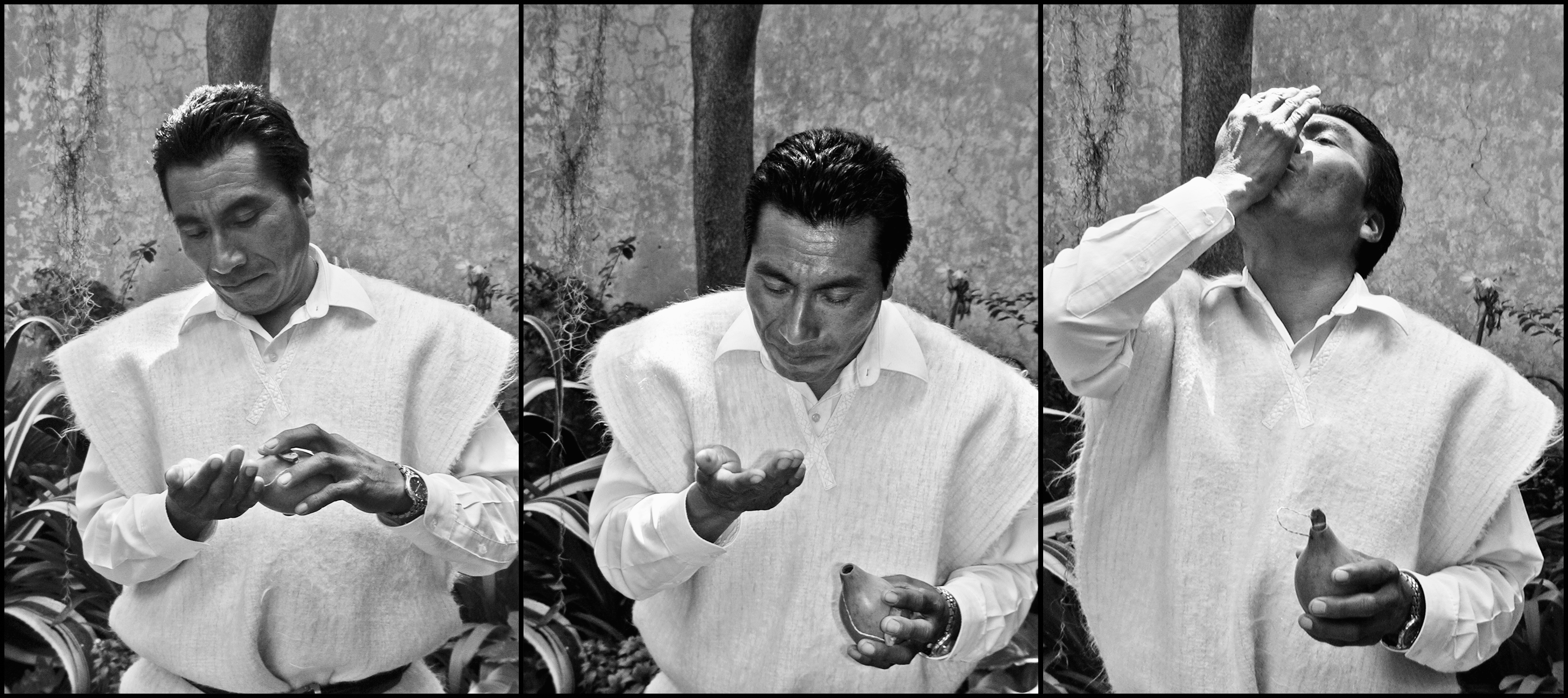
Chamula man taking tobacco snuff, 2003. Photograph by Kevin P. Groark.
Anyone who has used freshly prepared green tobacco can attest to its potency: swallowing the juice produces a marked burning sensation in the nasopharyngeal region, often accompanied by a burning constriction (
According to Wilbert (1987:137), oral administration when little or no tobacco juice is expectorated maximizes enteric absorption of nicotine—the principal alkaloid in tobacco—through the buccal cavity, the stomach, as well as the small and large intestine (see also D'Orlando and Fox 2004). Indeed, nicotine absorption from tobacco quids is two to three times greater than that obtained from smoked tobaccos (Benowitz et al. 1988). Absorption rates depend on the size of the quid, fineness of grinding, the length of time the quid is retained, its relative movement within the mouth, and the presence of alkalizing agents such as lime; but under optimal conditions, total absorption is possible (Wilbert 1987:137). Since the nicotine alkaloid is miscible in salivary secretions, rapid diffusion across the epithelium and vascular barriers provide ready access to the heart and circulatory system, thereby elevating blood levels of nicotine (Wilbert 1987:137–138).
Traditional tobacco use offers many benefits to people who spend much of their lives working outside. At controlled doses, nicotine reduces fatigue and pain, eases hunger, reduces the skin's surface temperature, and produces marked central nervous system stimulation, memory-enhancement, elevation of mood, and an increase in attentional focus (Badio and Daly 1994; Benowitz et al. 1990; McGehee et al. 1995; McGehee and Role 1996; Newhouse et al. 2004).
The Tobacco Gourd (Tzual Moy)
In past times, most highland Maya men carried in their shoulder bag a small, highly polished gourd filled with prepared tobacco. Made from one of several forms of Lagenaria siceraria (Mol.) Standl (Cucurbitaceae), these simple undecorated gourds are known as
The typical tobacco gourd is 100–130 mm in length, with a maximum width of 75–100 mm. Suitable specimens are sold in regional markets but are quite expensive; a typical container with no stopper costs about $10 pesos, roughly 20% of a man's daily wage. New gourds are matte honey-yellow, but gain a deeply polished red-brown patina through many years of use and storage in smoky dwellings. Like the tobacco plant, gourds are identified by gender. “Male gourds” (
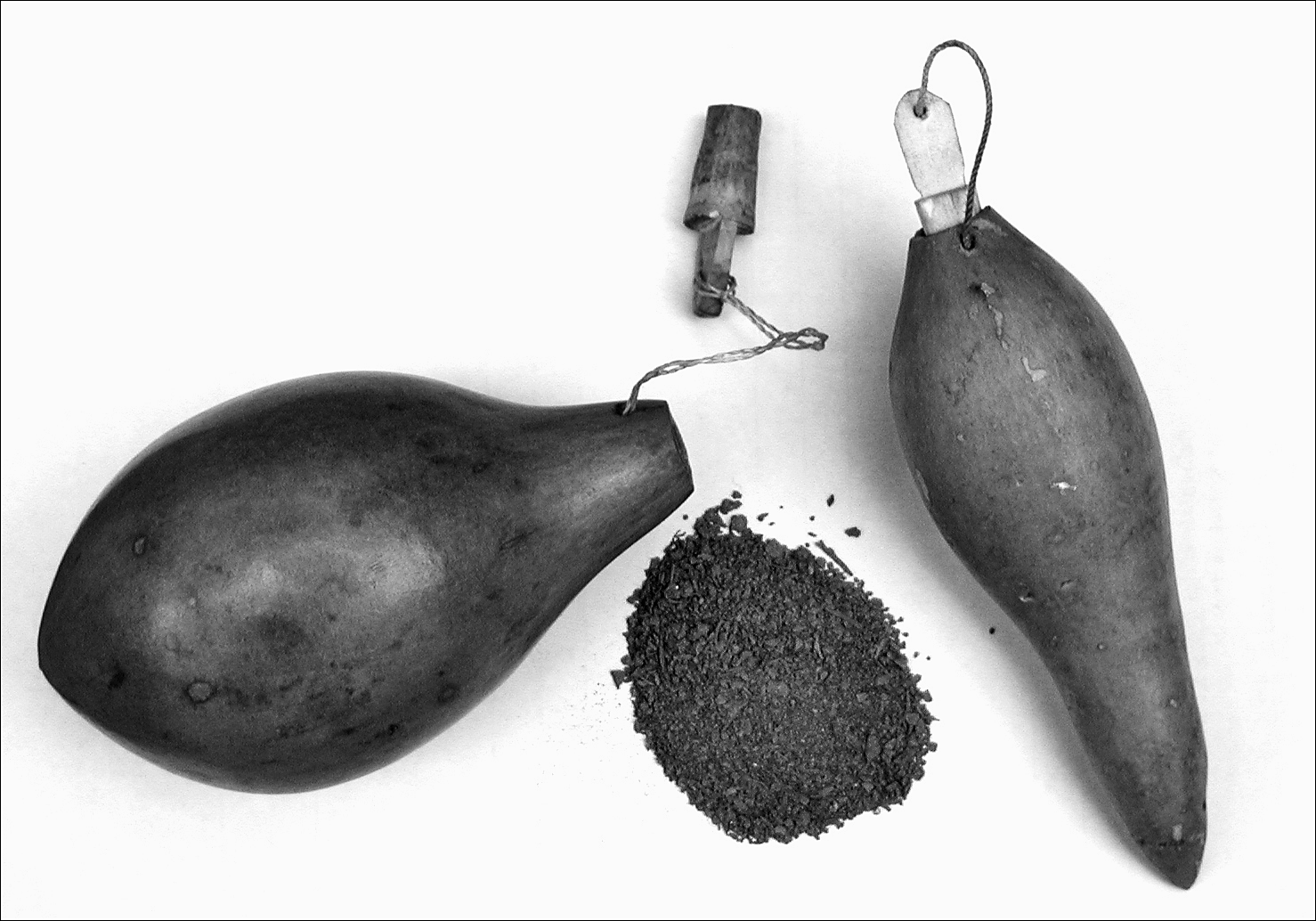
Female” (left) and “Male” (right) gourds with prepared tobacco snuff, San Juan Chamula. Photograph by Kevin P. Groark.
In a number of Tzeltal communities, tobacco gourds were traditionally paired with a long deer bone spatula or needle (
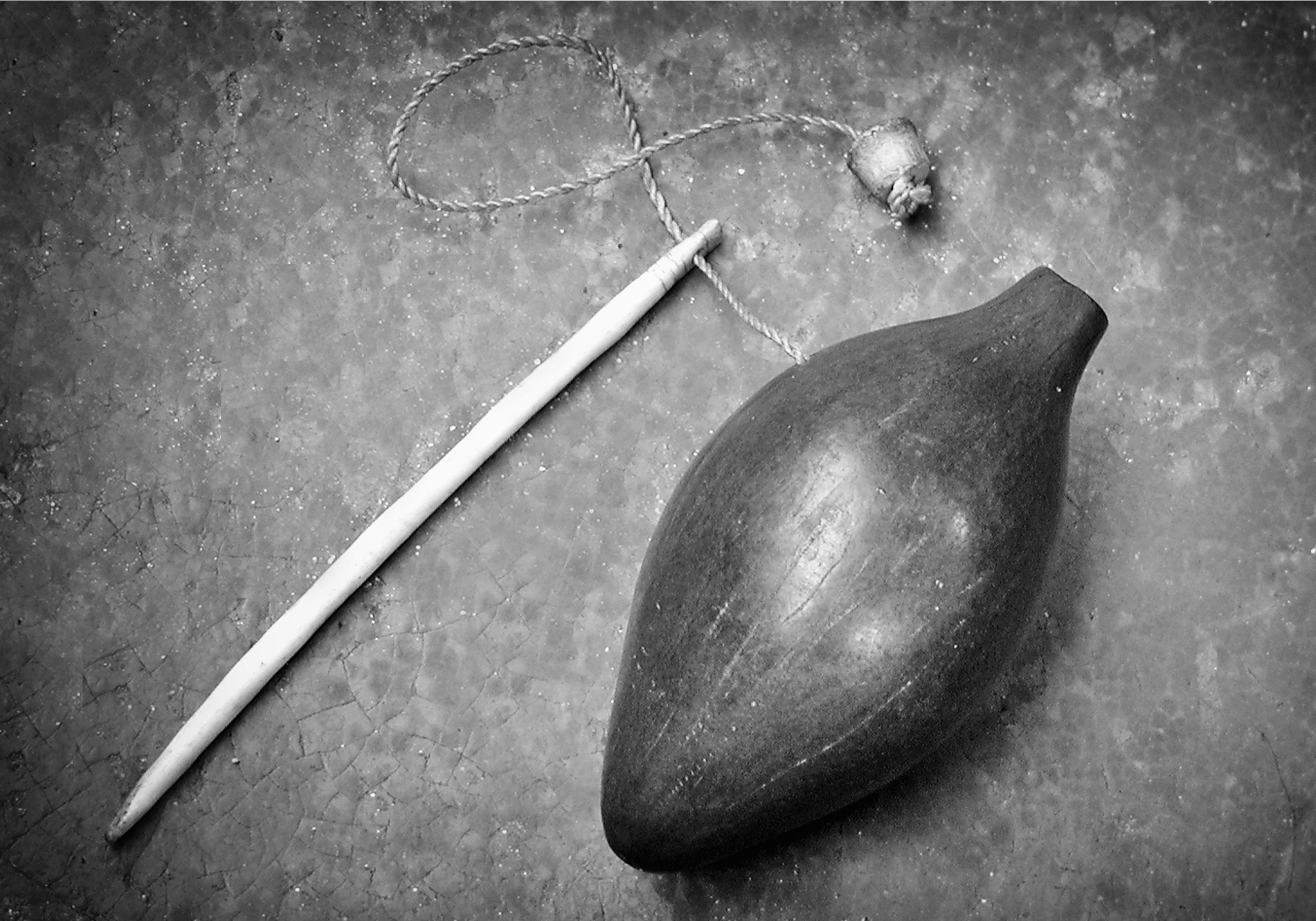
Antique tobacco gourd with bone spatula, Tenejapa. Photograph by Kevin P. Groark.
Ancient Maya Tobacco Vessels
This tradition of personal tobacco containers appears to extend back to the Ancient Maya of the Classic period (A.D. 250–850). Carlson (2007b:11) identified a class of small ceramic vessels common during the Middle to Late Classic (A.D. 550–850)—often referred to in the literature as “poison bottles” or “pilgrim's flasks”—that may have served as containers for tobacco. These are typically flask-shaped: discoidal, with a flat base and lateral handles for suspension. Many feature codex-style scenes and inscriptions, and some display tobacco leaf or deity motifs. The presence of enema scenes and specific inscriptions identifying the flasks as “the dwelling place for tobacco” (
During the Late Classic period (A.D. 600–850), these bottles were traded throughout the Maya region, suggesting not only exchange of vessels, but also their contents (Houston et al. 2006:116). While the contemporary highland Maya store and transport tobacco snuff exclusively in the small gourd containers described above, it is interesting to note that an Early Classic ceramic “poison bottle” executed in the form of a gourd was recovered from Uaxactun (Smith 1955 cited in Houston et al. 2006:114). Similarly, Deal (1998:199) identified antique ceramic containers shaped like gourds from Chanal, reporting that, while no longer manufactured or used, these vessels served as temporary containers for, among other things, ground tobacco. The use of gourd-shaped ceramic flasks for tobacco storage in the eastern Tzeltal region suggests a line of continuity between ancient Maya ceramic tobacco bottles, ceramic gourd vessels, and gourd containers typical of the contemporary highland Maya described in this article.
Tobacco as Primordial Medicine
In a world dominated by the use of commercial tobacco, we are quickly losing our connection with both the positive physiological effects and the powerful mind-altering powers of traditional Nicotiana preparations. Among the contemporary Tzotzil and Tzeltal Maya, however, awareness of the physio-transformative power of tobacco remains strong. Indeed, native tobacco is regarded as a prototypical medicine or “powerful substance” (
Maffi (1996) argued that the proto-Tzeltal-Tzotzil term for medicine (
In highland Maya ethnomedicine, a key element in therapeutic strength is the ability to “attack” or “overpower” an illness, a quality usually associated with bitterness (
Therapeutic Uses of Tobacco
Depending on the condition being treated, tobacco is administered therapeutically in the following forms:
Throughout the highlands, tobacco is the most common remedy for a wide range of gastrointestinal ailments (Berlin and Berlin 1996:297). To treat stomachache, ground tobacco is drunk with warm water. Berlin and Berlin (1996:301) recorded that the principal admixtures used to treat abdominal pain include garlic cloves (
A number of tobacco-based remedies serve to alleviate painful abdominal bloating (
To treat supernaturally-induced swelling and/or aching of the foot and leg (
In both Oxchuc and Chamula, tobacco leaves are used in the treatment of a form of aggressive madness known as
Breedlove and Laughlin (1993:243) reported additional uses for tobacco in Zinacantán: a mixture of tobacco and warm water is drunk as a purgative to “vomit up” tuberculosis (
Commenting on its diverse therapeutic applications, a Tzotzil-speaking man from Chamula concluded, “It's a strong curer, this [tobacco], a strong medicine” (
Magico-Protective Uses of Tobacco
Throughout the Chiapas highlands, tobacco is accorded great respect as a personal protector. While tobacco in all forms is considered to be “medicine” (
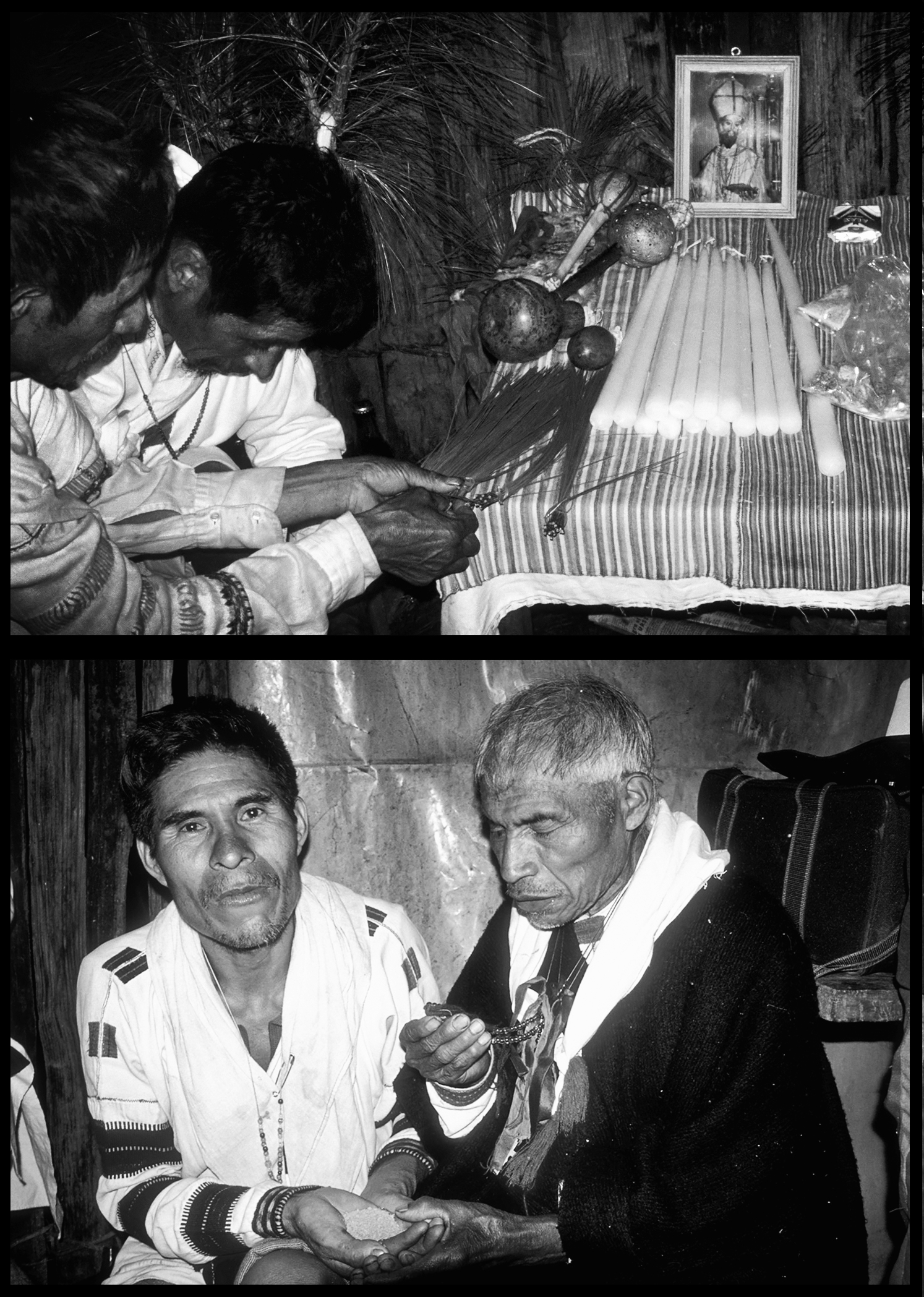
Tobacco gourds and cigarettes on altar during fiesta (top); religious officials blessing tobacco with rosary (bottom), Santo Tomás Oxchuc, 1992. Photograph by Kevin P. Groark.
Based on its unique protective potential, Page Pliego (2005:143) described tobacco as occupying an “intermediate position between deity and amulet.” Similarly, Holland (1963:107) reported that the Tzotzil of San Andres Larrainzar regard tobacco as a sort of quasi-deity; one that requires no worship or offerings, but acts as a protector by its mere presence, so long as it is shown respect. Breedlove and Laughlin (1993:242) also highlighted the protective uses of the tobacco-lime mixture, which confers the ability to “stupefy, paralyze, blind, and drive away adversaries of all kinds.” Indeed, such therapeutic and apotropaic uses are at the forefront of contemporary highland Maya tobacco use and figure prominently in many stories and anecdotes. Summing up its cultural significance, Breedlove and Laughlin (1993:242) concluded, “No other plant… is accorded the magical power, both for good and evil, as that assigned to tobacco. Although this power is focused on chewing tobacco, it is also present in the mere leaf.”
The most common method of protecting oneself with tobacco involves rubbing (
The tobacco gourd, like the tobacco plant itself, is closely linked to protective powers, particularly the ability to safeguard the owner during travels away from home. Indeed, tobacco-filled gourds continue to serve as general protective talismans and are often stored on the home altar. Several people I spoke to explained that the gourd gains its strength from the constant absorption of concentrated tobacco juice, which gradually infuses the container with the same power as the plant.
Like tobacco, the gourd is said to “glow” or emit light when dangerous forces draw near or when its owner is in need of assistance. In a tale from Zinacantán reported by Breedlove and Laughlin (1993:242), Tzotzil men working on a lowland coffee plantation slept with tobacco gourds next to their heads. When the evil-intentioned plantation owner looked in upon the workers, he saw flames dancing on the ground next to the gourds, signaling the approaching danger. Describing the Tzeltal community of Tenejapa, Maffi (1996:42) recounted a widely-held belief relating to the protective role of the tobacco gourds, “…should one become lost somewhere along a path away from home, especially while drunk—and maybe even pass out and fall in a ditch—the small gourd would begin to shine brightly, revealing one's location to rescuers. Older Tenejapans… still [swear] to having witnessed this phenomenon.”
For analytic purposes, the protective uses of tobacco can be arranged into three broad classes: 1) When used to paralyze or neutralize some immediate threat, tobacco is referred to as
Yaluobil: “That Which Lowers”
Tobacco's magical ability to incapacitate or neutralize threatening entities or forces that are immediately present is referred to as
Makobil: “That Which Closes or Blocks”
When used as a prophylactic to prevent supernatural or ordinary illness, tobacco's ability to “block” (
Should a person slip and fall near a waterhole, river, or cave (many of which are inhabited by “angels” or “earth lords” who may snatch the soul of the person), shock-induced soul loss can be prevented by promptly rubbing tobacco on the body. And if, by chance, the soul is taken captive “there where the earth has its owner,” tobacco powder serves as a ransom. A small quantity of tobacco, along with other “replacement offerings” (
A Chamula curer explained that they use tobacco in soul collecting rituals because the place where the person fell is “living earth” (
Metz'tael: Magical Protection
Tobacco is also used as a general protective talisman (
In addition to protecting people, tobacco is used to magically guards objects, animals, and crops against damage or molestation (a procedure known as
Tobacco is also used to combat a class of stinking supernatural animals known as
Similar protective applications are used on objects. In the past, shotguns for killing both witches and
While tobacco offers great protective potential here on “the face of the earth,” it is of even greater importance as a sign or indicator (
If you know how to eat tobacco, it can be of use to your soul as well. There will already be a sign on your palm (
Depending on the informant and context, there is some variation in the application of these terms. For instance, when using tobacco to paralyze a threatening animal, I have heard it referred to as both
Cosmological Associations of Tobacco and Gourd
In order to understand tobacco's significance as a quasi-supernatural therapeutic and protective agent, we must examine more closely its place within local cosmology and mythology, both past and present. Although Ancient Maya cosmological beliefs surrounding tobacco remain obscure, ethnographic and ethnohistoric investigations shed some light on pre-Columbian tobacco ideology and practice. Similarly, recent interpretive advances in the fields of Ancient Maya iconography and epigraphy have deepened our understanding of contemporary Mayan tobacco use and associated beliefs. In this section I review these data in order to contextualize highland Maya tobacco culture within broader temporal and regional patterns.
Tobacco as “Old God L” and “Elder Brother”
John Carlson argues that the Classic Maya “Old God L” (most famously depicted as an old man smoking a large cigar in the Temple of the Cross in Palenque) is “the personification of tobacco itself, in all of its forms” (Carlson 2007b:11; see also Carlson 2007a; Miller and Taube 1993:112, 147, 169). Based on extensive epigraphic and iconographic research, he suggests that God L was referred to as both
This association between tobacco and deities of storm and sky can still be found in fragments of contemporary highland Maya cosmology. In many communities tobacco snuff is referred to as “Older Brother” (
Thunderbolt is younger brother of tobacco. Tobacco has power over storms because he is the older brother of lightning and thunder. If the wind and thunderbolts come, tobacco dissipates them. The two talk together—Thunderbolt up above and Tobacco here [in the gourd]. They talk with each other and the storm calms. Since tobacco is the older brother, he has more power. He diminishes the power of his younger brother, thunder and lightning. That's why [tobacco] is called “elder brother”…
Based on similar ethnographic data, Carlson (2007b:11) speculated that the aforementioned Old God L (“Holy Tobacco”) and God K (“Smoking Lightning Axe”) are related to one another as elder and junior brother, paralleling precisely the contemporary Tobacco-Thunderbolt/Elder Brother-Younger Brother association.
Tobacco as “Angel”
In Chamula Tzotzil the favored name for prepared tobacco snuff is
Köhler's (1995) ethnohistoric work on the relationship between the rain gods, earth lords, and “angels” illuminates some of the cosmological underpinnings of highland Maya tobacco belief. During the Colonial Period, tobacco appears to have become associated with San Miguel Arcángel, the most powerful of the Christian angels. In the Yucatan, the name canjel is used in reference to San Miguel, as well as various elements and phenomena associated with the rain gods, such as thunder, lightning, and storms (Redfield and Villa Rojas 1934:116 cited in Köhler 1995:123). Köhler (1995) argued that canjel derives from a contracted form of San Miguel's title “Arcángel” (archangel) perhaps also explaining why he was regarded by the Yucatec Maya as the most “senior” (or
Syncretic Christian-Mayan Tobacco Lore
As this discussion suggests, tobacco has been deeply integrated into the syncretic Christian cosmology of traditional Mayan Catholics. As a “traditionalist” from Chamula explains, the protective power of tobacco was recognized during the First Creation by Our Father in Heaven (
A long time ago, Our Father walked like a real person—like us, he walked the earth. And tobacco, well he carried it with him as he walked about. That's why tobacco remains on earth and continues to serve the people. You know why? Because Our Father carried it with him, he had his tobacco a long time ago. He chewed tobacco and used it whenever he went walking about….That's the way they say it was long ago with Our Father. He always carried his “helper” (
Tobacco served as a powerful ally even during the First Creation, protecting the Sun deity himself during his travels on the face of the earth. Owing to its protective potency, in Chamula Tzotzil the protective tobacco mixture is sometimes referred to as “helper” or “assistant,” a powerful botanical ally that augments the bearer's strength or “power”:
Tobacco is called
The Symbolism of the Tobacco Gourd
Although many of the underlying cosmological associations have been lost, the tobacco gourd also appears to have been rich with symbolic import. A Chamula folktale I collected recounts how the Sun-Christ deity's tobacco gourd transformed into Hummingbird at the end of the First Creation, explaining both the origin of the hummingbird as well as its unique dietary preferences:
Our Father's tobacco had its container [its gourd] (
As this folktale fragment indicates, the tobacco gourd is symbolically linked to the origin of the hummingbird and seems to share something of its essence (or vice versa). As the final line reveals, the soul of the tobacco gourd is Hummingbird, messenger of the Sun and protective animal companion of warriors throughout Mesoamerica. After relating this account, the narrator explained that the primordial link between the tobacco gourd and the hummingbird is preserved as a “sign” in the form of the gourd: the body of the gourd (
This story appears to draw on widespread Mesoamerican beliefs relating to the protective potency of both the hummingbird and the tobacco plant. Gossen (2002:1033) reported that the hummingbird is considered sacred in both Chamula and Zinacantán, and is “associated with the Sun god and tobacco.” Recinos (1961[1952]:105, cited in Page Pliego 2005:146) pointed out that Hummingbird was connected to the ancestral creator deities of the Popol Vuh, acting as their animal soul companion, the “guardian and protector of the people and their souls…” Similarly, Guiteras Holmes (1961:248) reported that in the Tzotzil community of San Pedro Chenalhó, Hummingbird is considered to be one of the most powerful animal souls, possessed only by the
Myths from Guatemala emphasize a similar Sun-Hummingbird-Tobacco connection. A Mopan Maya folktale reported by Thompson (1970:364) describes an adventure of the young Sun deity who, while attempting to woo a young girl who would later become the Moon, slipped and fell in front of her. As she laughed at him, he transformed into a hummingbird and darted back and forth between the flowers of a tobacco plant, presumably drinking their nectar. After the girl's father killed the hummingbird with a blowgun dart, the girl took the dead hummingbird into her room where it revived, and they fled together to become the Sun and the Moon. A cognate myth collected among the Kakchiquel Maya indicates that at night the Sun transformed into a hummingbird in order to visit his lover—the future Moon—in a disguised form that would not be noticed by her father (Thompson 1970:365). In a Kekchi version of this same story, the young Sun deity is explicitly identified as Xbalamque, Jaguar Sun, establishing a line of continuity with the hero twins of the Popol Vuh (Thompson 1970:364).
Despite the gaps and inconsistencies in these diverse myths and folktales, they allow me to account for many puzzling features of highland Maya tobacco culture, including: the plant's enigmatic metaphorical names (“elder brother” and “great old man”), its close connection to personal protection (particularly against atmospheric and meteorological threats), as well as various symbolic associations found in both ancient and syncretic folklore fragments. Elucidation of the full cosmological import of tobacco must await further research into Ancient Maya symbolism, as well as additional ethnobotanically-focused ethnographic and ethnohistoric studies.
Changing Patterns of Tobacco Use and Potential Health Impacts
Unfortunately, this well-developed ethnobotanical tradition of tobacco use and lore is in danger of disappearing due to the availability of commercial cigarettes combined with widespread conversion to evangelical Protestantism, both of which have led to the rapid decline of traditional tobacco ingestion throughout the highlands. While tobacco use continues, the contours of “traditional” practice have shifted, becoming at once more limited and more closely associated with orthodox religious beliefs. Among Mayan Catholic “traditionalists,” tobacco snuff has become increasingly sacralized and is now almost exclusively associated with ritual, medicinal, and protective uses, while its more secular and social functions have been replaced by commercial smoking tobacco.
Commercial cigarettes (
The replacement of traditional chewing tobacco with commercial cigarettes will likely lead to an increase in tobacco-related morbidity and mortality. Limited data suggest that “smokeless” tobaccos may pose fewer of the health risks associated with burned and inhaled forms (Broadstock 2007; Foulds et al. 2003; Powledge 2004; Roth et al. 2005). Specifically, the use of high-pH, low-nitrosamine, chewing tobacco appears to maximize the desired effects of mild nicotine intoxication while offsetting some of the most common risks associated with commercial cigarettes (Boffetta et al. 2005; Bolinder 1994; Ferlay et al. 2004; Lagergren et al. 2000; Levy et al. 2004; Lewin et al. 1998; Luo et al. 2007; Rosenquist et al. 2005; Schildt et al. 1998). In addition, the addictive potential of chewed tobacco may be lower than that of smoked forms. Recent research suggests that nicotine dependence is related primarily to the speed of nicotine delivery rather than to absolute levels of free nicotine (Foulds et al. 2003; Henningfield and Kennan 1993; West et al. 2000). Although oral tobaccos produce a greater availability of free nicotine, it is delivered to the brain at a slower rate than inhaled form, which may offset some of the addictive potential of higher nicotine concentrations (Foulds et al. 2003).
This is not to say that highland Maya tobacco preparations are without danger. A number of health risks accompany use of “traditional” oral tobaccos: in addition to some level of carcinogenicity, many are linked to periodontal disease and may also contribute to the development of cardiovascular disease, peripheral vascular disease, hypertension, peptic ulcers, fetal morbidity and mortality, and pancreatic cancer (OTRU 2007). Highland Maya tobacco snuff is informally produced, and thus quite variable. It is made from tobacco plants that may vary widely in chemical content, it employs a range of admixtures (in varying ratios) that may condition its effects on the body, and it is prepared, stored, and used in any number of idiosyncratic ways. All of these variables could potentially increase the levels of carcinogenic tobacco-specific nitrosamines present in highland Maya tobacco preparations, considerably increasing potential health risks (Hoffman et al. 1995; IARC 2007:74–81).
While the particular chemical composition and potential health impacts of highland Maya tobacco snuff use must be directly assessed before any definitive conclusions can be reached concerning intrinsic safety, traditional social norms relating to its preparation, exchange, and use serve to moderate use in ways not applicable to commercial tobaccos, which can be bought and sold with ease, and consumed rapidly and in large quantities. While tobacco abstinence is certainly the healthiest alternative, controlled use of traditional oral tobacco might be considered preferable to smoking in contexts of mixed or habitual use.
Conclusions
This article documents contemporary highland Maya use of traditional tobacco (Nicotiana tabacum) preparations, providing an overview of the therapeutic, ritual, and cosmological significance of this quintessentially Amerindian plant. Among the Ancient Maya, Nicotiana was considered to be sacred plant, closely associated with deities of earth and sky, and used for both visionary and therapeutic ends. The contemporary Tzeltal and Tzotzil Maya of Highland Chiapas are the heirs to this ethnobotanical tradition, maintaining a complex tradition of Nicotiana use and folklore. The entire tobacco plant is viewed as a primordial medicine and a powerful botanical “helper” or “protector” with uses both mundane and divine. Depending on the condition to be treated, whole Nicotiana leaves used are used alone or combined with other herbs to prepare various medicinal plasters and teas. In its most common form, fresh leaves are ground with slaked lime to produce an intoxicating oral snuff that serves as both a protective and therapeutic agent. This mixture, stored in small, highly polished gourds, represents an unbroken tradition of Mayan oral tobacco snuff use spanning more than a thousand years.
Unfortunately, this well-developed ethnobotanical tradition is in danger of disappearing owing to the availability of commercial cigarettes (combined with widespread conversion to evangelical Protestantism), both of which have led to the rapid decline of traditional tobacco use throughout the highlands. A review of recent biochemical research suggests that tobacco powder oral snuffs may be less dangerous to health than smoked tobaccos, despite their addictive potential. When seen in this light, the replacement of traditional tobacco snuff preparations with commercial smoked tobacco products raises a number of health concerns. I hope that this article stimulates further comparative medical-ethnobotanical research into the social significance and cultural history of tobacco use among both contemporary and ancient Maya populations, along with more detailed biochemical assessments of the health impacts of traditional and commercial tobacco preparations. Through such focused research we will come to better understand the ongoing importance of this primordial medicine in the medical culture and worldview of indigenous Mesoamerica.
Footnotes
Acknowledgments
This paper is dedicated to Johannes Wilbert—mentor, advisor, and friend. Thanks to John Carlson, for encouraging me to write this article, to Vicente Gómez López Kulel for introducing me to the world of Mayan tobacco, and to Xun López Kalixto for keeping me supplied with Elder Brother over these many years. Field research took place at intervals between 1992 and 2009. The bulk of data was collected in the Tzotzil community of San Juan Chamula, with supplementary data and observations from the Tzotzil communities of Santo Tomás Oxchuc and Tenejapa. Unless otherwise indicated, all native language terms are presented in the Chamula dialect of Tzotzil, translated by the author from audio and video field recordings, interviews, and fieldnotes. Field research and writing was supported at various stages by the National Science Foundation, ISOP-Ford Foundation, Tinker Foundation, the Department of Anthropology at the University of California Los Angeles, and the Division of Occupational Science & Occupational Therapy at the University of California. Informed consent was obtained from all research participants.