







Abstract
This historical study analyzes the little known practice of gathering food resources from rodent stores in Siberia, with comparative perspectives from northern Europe and North America. Until the 19th century, taking roots, tubers, corms, bulbs, seeds and nuts from rodent food stores was a widespread practice by several ethnic groups in Siberia to supplement their diets. Rodents in northern areas, for example the root vole (Microtus oeconomus), depend on a constant food supply and therefore collect large quantities of plants in their underground caches. Often, but not only during colder seasons, Siberian peoples collected these high-quality plant parts from the voles. Some plundered the stores completely, but others left food or other objects for the animals so that they would survive and gather more the following year. In the circumpolar area ceremonies were held, presenting the rodents with gifts that were valued in human society.
Introduction
The Barabin Tatars in western Siberia had a strange custom. They gathered roots and bulbs from the nests of the root vole (Microtus oeconomus Pallas) for food. Johan Peter Falck (Falk in German sources), an 18th-century Swedish explorer and natural scientist, mentioned that in autumn the Barabin Tatars and other Siberian peoples regularly plundered the voles’ winter stores they called
Gathering plant foods from rodent stores was a widespread practice in Siberia among the indigenous peoples and Russian immigrants at least until the 19th century (Sarytschew 1806:154). Peasants in Europe occasionally plundered rodent caches, and North American indigenous peoples, including those on St Lawrence Island, the Interior Plateau and in Alaska, were regular gatherers like the Siberians (Jones 1983; Kari 1987; Rausch 1951:168). Some Native Americans, such as those around the Gulf of California, continue gathering from rodent stores today (Nabhan 2009).
The colder seasons, late autumn, winter and early spring, challenge the survival of humans and animals in Siberia. This enormous area extends from the temperate steppe zone in the south through the forest belt or taiga to the arctic tundra in the far north. These very different ecosystems exist to a varying degree under severe climatic conditions, and seasons contrast sharply. The summers are usually short and sometimes hot, snow falls early, and winter temperatures reach −40 to −50 °C. These variations create drastic seasonal differences for subsistence. During summer and early autumn, plant parts such as roots, bulbs, leaves and berries are abundant almost everywhere. In winter, however, plants are difficult to find, and fresh vegetables almost impossible to get in nature. Because animal products from hunting, fishing and animal husbandry are less seasonally variable than plant resources, most Siberian peoples previously subsisted on a diversified, plant-rich diet in summer and a limited, fish- or meat-based diet in winter (Eidlitz 1969).
Plant foods are important for human nutrition and health. Consuming an insufficient quantity of carbohydrates creates health disorders and nutritional deficiencies. Even in hunter-gatherer societies that subsisted on meat or fish, plants played an essential role in the diet (Cordain et al. 2000; Speth 1990; Speth and Spielmann 1983). Like other groups in areas with periodic and seasonal shortage, Siberian peoples developed several strategies for obtaining vegetables when plant foods were scarce in the surrounding environment. They cultivated, gathered, preserved and stored surplus plant food in summer and autumn. Food gathering, preparation and preservation formed an important part of the yearly economic cycle. Yet in Siberia this cycle could be upset by an unusually long winter, insufficient resources in nature during the growing season due to unfavorable climatic conditions, the gathering of too little surplus food in summer, miscalculations of supplies, or other factors that resulted in a shortage of resources before new provisions became available (Eidlitz 1969:120; Shrinelman 1992). Early spring was the most critical time not only in terms of plant resources, but the fishing and hunting season did not begin until later; therefore food was generally scarce (Speth and Spielmann 1983). For example, during this period of springtime hunger the Nenets and the Nganasan in eastern Siberia resorted to digging up roots and eating small rodents in addition to stealing reindeer from their neighbors (Popov 1948:93).
It is within this context of strong fluctuations in food availability, periodic shortage of plant resources and human adaptation to extreme conditions that we must study the gathering of vegetables from rodent stores. The rich underground food resources of the root vole (M. oeconomus) were the main target of the Siberians’ gathering activities. This vole's survival strategy is to collect and store roots, bulbs and tubers in great abundance, hence the specific epithet oeconomus. The vole chooses only high-quality vegetables that are, in most cases, also edible and appetizing to humans. The phenomenon of gathering food from rodent caches is poorly known and researched in Siberia and Europe (Eidlitz 1969; Gunda 1949; Manninen 1931), but there are several North American studies (see Nabhan 2009).
Gathering from rodent stores was traditionally very important for many indigenous Siberian peoples (Figure 1), including the Sagai, Altai, Chulym and Barabin Tatars, the Sakha (older name: Yakut), Evenki (Tungus) and Buryat, and in the Russian Far East (geographically an extension of Siberia), the Chukchi, Koryak and Itelmen (Kamchadal). Russians and other Europeans who migrated to Siberia from the 17th century onwards were taught by indigenous peoples and quickly adopted the custom (Bogoras 1904:198; Eidlitz 1969:48; Gunda 1981:82; Jochelson 1908: 577; Middendorff 1875:1565; Pallas 1776:195–196, 350). The gatherers were of all occupations – peasants, nomads engaged in animal husbandry, hunters, fishermen; most peoples practiced several economic activities at the same time, and changed occupations according to season or need (Ragulina 2009). The custom of gathering from rodent burrows has now disappeared following economic changes during the past two centuries (Ståhlberg and Svanberg 2006).
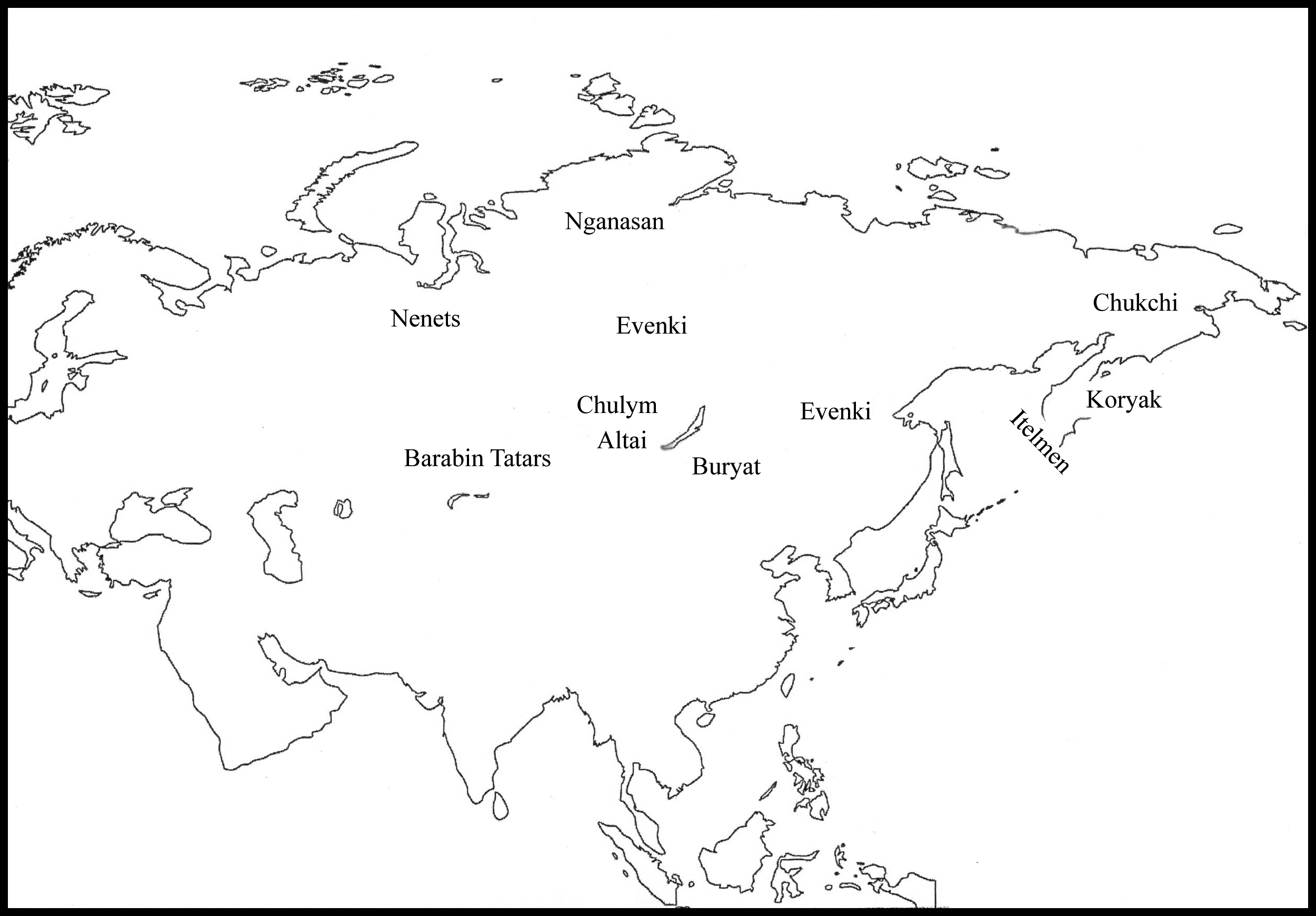
Indigenous Siberian groups mentioned in the article.
Sources and Purpose
The main, and often the only sources of information about the Siberian practice of gathering food from rodent stores are 18th-century travelogues, the first scientific records about the customs of Siberians. Later authors, especially in the 19th century, generally quote these sources as if they were contemporary, but without checking the validity of the data at the time of writing. These secondary sources have been omitted except where they add information or contribute to the analysis. Most relevant here are field reports written by explorers, sent around 1770 by the Russian Imperial Academy of Sciences to Siberia. Only a few decades earlier Siberia was opened up to Russian colonization and the area was still largely unexplored. The explorers, who stayed for several years with indigenous peoples, Russians, and other immigrants such as Swedes and Germans, were educated natural scientists with a broad scientific travel agenda provided by the Academy. They studied Siberian biology, geology, hydrology, ethnology, linguistics and economy among other fields (Ståhlberg and Svanberg in prep; Svanberg 1987). The agenda was inspired by the ideas and research methods of Carl Linnaeus (Cox 2001; Rausing 2003). Johan Peter Falck (1732–1774) and his German colleague Johann Gottlieb Georgi (1729–1802) were disciples of Linnaeus; Germans Peter Simon Pallas (1741–1811) and Johann Georg Gmelin (1709–1755) were pioneers in zoology and botany. Nineteenth-century travelogues are usually more limited in scope and mainly concerned with the unexplored Russian Far East, particularly the Kamchatka Peninsula and the Pacific Rim. Later explorers include Russian hydrographer Gavriil Sarytschew (1763–1831) and German geologist Karl von Ditmar (1822–1892).
Despite the scientific approach and detailed field notes, the reliability of the information provided by the explorers must be questioned and put into a historical perspective. For example, it is impossible to make geographical maps or tables with species of rodents or roots gathered, due to the often lacking or imprecise information on when and where the traditions were observed. The data on gathering of these resources are scarce and scattered through the narratives, and only in a few cases is there detailed information about the relationship of local peoples with the animals. Moreover, the data in the field notes depend on the season when the explorers visited local peoples and the information that could be obtained about subsistence activities in other seasons. Many peoples were nomadic, which means we can only estimate where in the enormous Siberian steppe or taiga the explorer met and studied them. Finally, there is little comparison between the collected data or analysis in the travelogues as the explorers were not typically interested in the larger context of local traditions, except when these were economically transferable to other parts of the empire. Therefore it is necessary to reconstruct the historical and local contexts to understand the gathering practices and the complex relationship between humans and rodents (Balée 1994; Kinzelbach 1999). Certainly the data do not meet modern criteria in several respects, but the information opens up intriguing ethnobiological perspectives. For instance, modern science looks at taxonomy in very different ways from both the indigenous perspective and 18th-century science, so identifying the animal and plant species mentioned in the Russian Academy travelogues is not easy and sometimes even impossible (Ståhlberg and Svanberg in prep). In some cases we only have folk taxonomic names and categories, but this important information reflects local concepts, beliefs, practices and understanding which are essential aspects of ethnobiological research.
In presenting and analyzing the custom of gathering food resources from rodent stores in Siberia, we discuss the rodents, the gathering humans, the plants, the gathering techniques and tools as well as food preparation and preservation methods. Finally, the relationship between humans and rodents is analyzed from the viewpoints of sustainability and reciprocity. Throughout the analysis we use comparative perspectives with modern biological data and information from North America and Europe.
Gathering Rodents
Several northern rodent species are known to gather large quantities of plant parts, mainly nuts, roots, tubers, bulbs, seeds and corms for the cold season. Food is, in principle, available all year round in the environment, but resources are scarce especially in winter and of poor quality for several months, so the difficult feeding period includes autumn and spring as well as winter. Many animals hibernate during the winter, but they need food before and after their sleep. They have adapted to the climatic conditions by gathering extensively, which provides them with suitable nutrition throughout the year. For instance the Bobak marmot (Marmota bobak Müller) hibernates, but lives in autumn and spring on roots it collects during summer (Falk 1786:302; Pallas 1776:197; Ronkin and Savchenko 2003).
The most active rodent gatherer with the largest food stores in Siberia is the tundra or root vole. It was also the most important provider for the region's human gatherers. The root vole is now considered a circumpolar rodent, but previously it could be found as far south as the Kazak steppe (Georgi 1800:1567; Musser and Carleton 2005:1010–1011). It can survive in extreme conditions, such as great temperature variation and changing seasonal light conditions (continuous daylight in summer and constant darkness in winter). The root vole is easy prey for birds and mammals, and like all rodents, its numbers fluctuate greatly (Aars and Ims 2002). In summer the root vole feeds on sedges, grass, roots, leaves and berries (Siivonen 1968; Tast 1966). It requires regular food intake, because energy storage in its body is not very effective and it cannot survive for more than 6 to 12 hours without food (Mosin 1982,1984; Mustonen et al. 2008). Interestingly, there are regional variations in root vole feeding patterns. For example, in Scandinavia root voles seldom gather winter stores, but Siberian voles collect large quantities of vegetables (Høiland et al. 1993; Vander Wall 1990).
Siberian root voles can travel long distances to gather plants and even swim across rivers and lakes. Pallas (1776:195) was impressed with the extensive collecting efforts of the small animals. He noted that they made large nests underground, with multiple corridors and food stores. The voles, which often worked in pairs, dug out the roots quite far from the burrow. The voles cleaned the soil from the roots on the spot and pulled them backwards into their nest, enlarging the entrance as needed. Pallas found that one rodent store in eastern Siberia could hold 3–5 kg of carefully cleaned roots, and in a nest there could be three or four stores. A few other rodents are mentioned as providers for humans. For instance, an active gatherer was the social vole (Microtus socialis Pallas 1770), which collected roots and bulbs from lilies and other plants, such as Lilium pumilum Hort.Bouch. ex Kunth, Hedysarum ssp., lupine clover (Trifolium lupinaster L.), wild garlic (Allium angulosum L.) as well as the so-called “cedar nuts” (actually seeds of Swiss pine, Pinus cembra L.) from long distances. Georgi (1775:162) observed that some social voles had stores up to 16 kg, which is much more than any other explorer found. Among others, the Sagai (now considered a subgroup of Khakas in southern Siberia) gathered food from social vole stores (Pallas 1776:350).
Common or European (black-bellied) hamsters (Cricetus cricetus L.) stored large grain and seed caches throughout Eurasia that were dug up by several Siberian groups as well as Hungarian herdsmen. The Hungarians often obtained several sacks from one nest. We do not know the size of the Siberian peoples’ harvest, but data show that they seldom gathered grain from rodents. Explorers report that indigenous Siberian peoples who subsisted on hunting, fishing and gathering generally consumed little grain (Georgi 1800:1573; Pallas 1776:195–196). The Hungarians who subsisted on agriculture also plundered burrows of steppe mice (Mus spicilegus Petényi) and European souslik (Spermophilus citellus L.) for grain in the autumn (Davis 1976; Gunda 1949:371).
These may not be the only rodents exploited by Siberian gatherers. In North America, pine cones and seeds were gathered from different squirrels (Hebda et al. 1996; Kuhnlein and Turner 1991), and in Transylvania, Hungarian peasants took hazelnuts from squirrels, mice and the fat dormouse (Glis glis L.) (Gunda 1949). Similar practices in Siberia are not recorded in the available materials, but it is possible that they existed (cf. Novgorod below).
Gathering Humans
According to archaeological finds gathering, in addition to hunting and fishing, was previously practiced widely in northern Eurasia (Weber et al. 2002). Archaeological excavations in the Novgorod area (northwest Russia) uncovered large stores of nuts gathered by rodents. These stores were supposedly used by humans as well (Manninen 1931:30). Gathering is still a common way of supplementing the modern diet based on agricultural and animal produce, at least in Siberia, European Russia and northern and eastern Europe. The practice has never been limited to indigenous peoples in these areas as peasant and urban populations also gather plants, plant parts such as berries and fruits, and mushrooms. Certain wild plants are today extensively collected by the mainly agricultural population in the north of European Russia and Siberia. These include horse-tail (Equisetum arvense L.), angelica (Angelica archangelica L.), turnip-root chervil (Chaerophyllum bulbosum L.), bird-in-a-bush (Corydalis solida (L.) Clairv.), wild onion (Allium schoenoprasum L.) and wild garlic (Allium angulosum L.). Some of these plants have been gathered for at least the past few centuries (Voronina 2000).
For Siberian peoples, gathering from the environment and gathering from rodent burrows belonged to the same form of activity: gathering. They did not distinguish between the two types of work (Krasheninnikov 1764:84). Gathering was a year-round occupation, but the gathered products and the intensity of work varied. Fresh plants could be collected in the environment only during late spring, summer and early autumn, and the work was highly labor-intense. Some were immediately consumed and others stored. Gathering from rodent nests was comparatively easy and not limited to any season. Throughout the year Siberian peoples took roots, bulbs, corms, seeds and tubers from rodent burrows to supplement their fish- and meat-based diet. In summer, rodent nests provided an easy harvest compared to gathering from the environment; in colder seasons the rodent vegetables were fresher and in better condition than those found in the wild. Therefore the Siberian peoples plundered rodent nests more regularly from late autumn to early spring. This seasonal gathering pattern was common throughout Siberia and the Kamchatka Peninsula. For example, in Kamchatka, Fritillaria bulbs had to be gathered when the flowers were still in bloom in July and August; after that, the roots rotted and became inedible. Local peoples gathered these roots during summer in meadows, and dug up roots from vole stores throughout the year (Erman 1848:246).
None of the Siberian groups in our study subsisted completely on vegetables. All peoples varied their diet according to season and included vegetables whenever possible (see Georgi 1800:898). The summer diet for Barabin Tatars, for instance, consisted of wild birds, fish, berries and vegetables, especially roots and bulbs of Lilium martagon L., Erythronium dens-canis L., Adenophora lilifolia (L.) Ledeb., Rumex acetosa L., Angelica archangelica L. and Heracleum sphondylium L. The winter diet mainly consisted of fish and meat, and robbing rodent burrows was a popular strategy for supplementing preserved vegetables (Falk 1786:539). Of all peoples, the Evenki relied most heavily on root vole food stores. Georgi (1775:161–162) called the root voles “the best gardeners of the Tungus [Evenki].” The steppe Evenki were probably the only people who obtained the majority of their vegetables from rodent stores. They lived mostly on hunting, fishing and animal husbandry, but told Georgi (1775:257) that they would die if they did not get roots from rodent stores. It does not appear from the sources that they gathered plants from the environment, but this impression may simply be due to a lack of observation. Most other peoples gathered vole vegetables to a lesser degree than the Evenki, some groups only as a means to combat hunger or compensate for the lack of other food especially in late winter or early spring (Eidlitz 1969). Available sources do not provide enough information to define how much vegetable material was gathered from rodents compared to plants from the field, how much was consumed or the vegetable ratio in the overall diet.
The practice of gathering did not follow ethnic or economic lines. For instance, the Turkic Sagai subsisted on agriculture, but also dug up several kinds of roots, gathered plants, and frequently plundered the holes of the field mouse, probably an Apodemus (Pallas 1776:349). Only certain groups plundered rodent nests. The Mongolian Buryat west of the Baikal Lake, neighbors of both the nomadic Evenki and the peasant Sagai, supplemented their diet with hunting and gathering wild roots. They subsisted on animal breeding, but these poor Buryat in general lived like the poor Evenki, mainly on fish and roots. Like the Evenki, they gathered most of their vegetables from rodents and cooked the bulbs and tubers into porridge or served them with meat. Their relatives, the eastern Buryat across the Baikal Lake, had enough other food sources from their extensive animal husbandry and did not gather vegetables except on a limited basis (Georgi 1775:206, 1780:428–429).
We do not know who the first gatherers from rodent burrows were, nor do we know how or where the practice originated or how it spread. The question of whether the plundering of rodent nests is a late adaptation to climatic and environmental conditions, the result of cultural contacts, or a fragmentary remnant of older hunter-gatherer cultures (as some, like Gunda (1949), assert) must remain unanswered until more information surfaces from archaeological sources. In more recent times, however, the spread of the practice can be identified. The Russians who lived close to Turkic peoples in Siberia supplemented their diet like their neighbors, gathering, for instance, lilies and dog's tooth (Erythronium dens-canis L.) from rodent nests. They were already familiar with other methods of gathering when they moved into Siberia and appear to have readily adopted this technique (Georgi 1780:487; Ståhlberg and Svanberg 2006).
Vegetable Resources
One of the most important food resources found in Siberian rodent stores was
The Evenki and the poor Buryat also gathered common bistort (Bistorta major S.F.Gray), Alpine bistort (Bistorta vivipara (L.) S.F. Gray), Siberian peony (Paeonia anomala L.), Sanguisorba, lilies and other plants. They considered stone leek (Allium altaicum Pallas) a delicacy (Georgi 1775:303). In 1735, a group of Evenki gave Gmelin (1752:50) a sack full of roots that they called
Generally the roots, bulbs and corms of the same plant species were gathered in summer from the environment and in winter from rodent caches in Siberia. Several groups, however, added vegetables not found in rodent stores to their diet. For instance, the Sakha supplemented their fish- and meat-based diet, like the Barabin and Chulym Tatars, with vegetables from rodent stores, but in the colder seasons they added Butomus umbellatus L., Hedysarum alpinum L. and other available roots, which they collected directly from the environment and which were not present in local rodent stores (Georgi 1776:194, 266).
Some of these Siberian plants were gathered from rodent stores in North America as well. Particularly Liliaceae and Polygonaceae played a considerable role in Siberia, in Inuit economies and among American indigenous peoples. Lilium bulbs were gathered from rodents and called
Several plants taken from rodent nests in America were unknown at least to our sources, despite intense contacts between the Russian Far East and Alaska and the fact that Alaska was part of Russian America until 1867. For example, tall cottongrass (Eriophorum angustifolium Honckeny), which is called “mouse nut” by Alaska Inuit and Yupik, is not recorded among the products taken from rodents in Siberia (Jones 1983; Kuhnlein and Turner 1991). A perennial sedge, Carex sp., called “mouse food,” because singing voles (Microtus miurus Osgood) gather its roots for the winter, and shagbark hickory (Carya ovata (Mill.) K. Koch), taken from rodents in North America, were also unknown (Jones 1983; Nelson 1899:268). Other examples are meadow horsetail (Equisetum pratense Ehrh. 1784), taken from rodents by Ojibwa and Alaska Inuit, hog-peanut or ground-bean (Amphicarpa bracteata (L.) Fern.), dug out from “bean mice” by Ojibwa and other Great Lakes peoples and peoples in the Midwest of the United States, and Douglas-fir seeds (Pseudotsuga menziesii), which Shushwap of British Columbia gathered from rodent caches (Jones 1983; Kuhnlein and Turner 1991; Palmer 1975).
Tools, Techniques and Traditional Knowledge
The importance of roots, bulbs and tubers in the Siberian diet can be illustrated by the occurrence of gathering tools and techniques. Pallas (1776:196) wrote (our translation):
Nowhere is the industry of these small animals [rodents] more useful for humans than in Dauria and some other regions of eastern Siberia, where the pagan peoples who have no agriculture treat them as low nobles treat their peasants. The Tungus [Evenki] are especially adept in using the food resources of the mice [voles]. They live all winter on the root stores which they take from their poor serfs, the mice. In autumn, when the mice have filled their food stores, the Tungus look for the holes, trying with the foot or a spade where the grass gives way, and with the first dig they seldom fail to find a nest filled with grass or a store. Old abandoned holes they know from the fact that the small passages around are not lately dug out, the earthen holes are not cleaned and there are no traces of buried roots in the vicinity, so they do not bother to dig them out.
Usually vegetable harvesting in the environment and from rodent burrows requires little equipment and is mostly done by hand (Kuhnlein and Turner 1991). Yet digging out rodent caches in the soil was easier with a special hook or stick. A hook was also needed when the earth was frozen in winter. We do not know how Siberian peoples transported the roots or what containers they used, but we know about their hooks, which apparently impressed the foreign explorers and were often described.
The Sagai and Oirot had a special hoe, called
Only from the circumpolar area do we know of other animal species being used for finding vole caches. Chukchi in the Pacific Rim and Inuit in Alaska located stores with a domestic dog (Canis familiaris L.) specially trained for the purpose. They searched for Hedysarum alpinum, for example, which was the principal food of several species of meadow voles (Microtus) (Bogoras 1904:198; Porsild 1953:30–31).
Traditional or local ecological knowledge, experience, training, the right timing and the ability to use tools were important elements in the gathering process. The habits and habitats of rodents must be observed, their nests identified, competitors such as boars and bears avoided and toxic plant species recognized (Nabhan 2009). In 1789, Sarytschew (1805:180) visited several Itelmen homes on the Kamchatka Peninsula. He was usually served wild birds, berries and a lot of roots, gathered from vole burrows. Upon asking how they gathered, he was told that to locate the nests, the local people beat the earth with their tools. Where the sound reflected a cavity, they started digging and easily found the stores. Children learned from the adults, and gathering events were retold many times, which spread knowledge among all members of the group and educated the inexperienced gatherers (see Fremstad and Paal 1993; Koester 2002).
Vegetable Utilization
Vegetables from the dry and well-kept rodent stores were generally found in great amounts and perfect condition. Often the voles had gnawed off a small piece of these cleaned vegetables, but if planted the roots or seeds would grow again. Most vegetables taken from rodent stores were safe and could be eaten by humans (Falk 1786:306; Georgi 1775:227, 1800:1190; Vander Wall 1990).
Europeans also recognized that rodent vegetables are of high quality. On the Baltic islands of Gotland and Öland (Sweden), local people collected “mouse nuts” or “rat nuts” (hazelnuts) in winter from field mice (Apodemus ssp.). Carl Linnaeus (1745:63) noted on a journey to Öland in 1741 that wild hazelnut (Corylus avellana L.) taken from mice were the best nuts that could be found. The mice gathered them in large stores under the bushes, and many nuts were perfect, without any worms or cavities. A hundred years later, Per Arvid Säve (1939:42–43) recorded a similar observation on Gotland. The happiest people, he says, were those who in winter found a treasure of “rat nuts” which were the best of all. Siberian peoples would certainly agree.
Although rodents generally gather vegetables that are also edible for humans, not all plants are usable and people know to discard the inedible or cook the more indigestible ones before use (Kuhnlein and Turner 1991:11). Siberian peoples sorted out the “good” vegetables and threw away the bitter or poisonous, consuming the edible or using them for medicine. Certain vegetables had multiple uses: great burnet roots (Sanguisorba officinalis L.) were used by the Russians to treat diarrhoea, but the Sakha, the Evenki and other Siberian peoples used them both for food and tea. Common bistort was similarly used, but the first cooking water was thrown away because of its bitter taste. When making tea, though, the Evenki would use the cooking water and the roots (Georgi 1775:208–209,1800:739, 1567; Pallas 1776:196).
One root that the Evenki immediately discarded was called “crazy root” – similar to Sanguisorba in form, but easily distinguished by its hard and white root. Another root they would not use was described by Pallas (1776:195–196) as “a sort of field plant, with umbrella-like flowers,” similar to Chaerophyllum. It contained a substance that paralyzed humans, but apparently had no impact on rodents. This root cannot be identified with certainty, but may be Aconitum (see below). The Evenki thought the rodents gathered the roots to get drunk during celebrations (Pallas 1776:195–196).
Although Siberian peoples preferred to consume the vegetables found in rodent stores fresh, preservation of the food was important for survival during the cold seasons. The most common method was drying, but often two or more methods were applied both for food preparation and preservation. Vegetables were often dried on mats and when needed, boiled or soaked and mixed with other food. For example, the Evenki cooked dried or fresh rodent vegetables into porridge and served it with meat similar to North American treatments (Georgi 1775:206; Kuhnlein and Turner 1991:11–12; Ståhlberg and Svanberg 2006). The Chulym Tatars, who subsisted mainly on fresh or dried fish, preserved cow parsnip roots (H. spondylium) and Turkish cap bulbs (L. martagon) after taking them from rodent burrows by re-burying them until they fermented (Georgi 1776:230). The Sagai ate most roots plundered from the social vole raw, but the remainder were baked in ashes like chestnuts or cooked in water with milk and butter (Pallas 1776:350).
The popularity of
Human–Rodent Relationships
Vegetables from rodent stores provided an easily-available, year round food source for Siberian peoples. We do not know how destructive this plundering of food resources was to the rodents, but can safely assume that many rodents died of hunger after humans robbed their stores. Georgi (1800:1567) noted that many voles died of cold and lack of food, information that apparently came from his local informants. Most Siberian peoples did not purposely kill the rodents when plundering the nests. Only the Sakha and Evenki caught and ate the voles they could find. Birds and bigger animals such as wild boars (Sus scrofa L.) and bears competed with humans in robbing the underground stores, often devouring the rodents in the process (Brehm 1923:359–360; Georgi 1775:161–162, 1800:1567–1568; Pallas 1776:196).
Systematically plundering rodent nests may have influenced rodent populations. Yet rodents seem to have been very numerous, and few people lived in their habitats before the intense colonization of Siberia in the 18th and 19th centuries. For instance, at one lake in eastern Siberia, Pallas (1771:384) observed so many voles that their mounds filled the whole beach and the area was undermined by passages. We can assume that the plundering of rodent nests did not make much difference to the populations at large, but the question requires closer attention. Rodents and their predators are subject to great natural population fluctuations, but studies on Siberian rodent populations and their relationship with fox, wolf and other predator populations are lacking, as are data on human and rodent population connections. During years when the rodent population was small, humans probably had to use other strategies than plundering burrows.
According to our sources, a human-rodent relationship that included the idea of leaving something for future rodent generations was most common in eastern Siberia and the Russian Far East, especially the Kamchatka Peninsula, and more or less non-existent in other parts of Siberia. Several eastern groups left some roots in the nests, especially those that they did not want themselves, but some groups always gave something else in exchange for the vegetables they took. These traditions of exchange in eastern Siberia and the Russian Far East can be divided into two categories: those that leave something the rodents can feed on, and those that leave something the rodents cannot use, but which has nutritional, symbolic or other value for humans. Leaving some of the vegetables behind is an example of the first category. In Kamchatka, the Itelmen swapped some “sugar herb” (Heracleum sibiricum L.) for the lily bulbs they took (Georgi 1800:899–900). The second category is more complex and reflects folk beliefs and traditional ecological knowledge. In many cases both systems were in use and a mix of edible and inedible products were left for the rodents.
Similar traditions exist in North America. For example, in the Interior Plateau of America, some vegetables were left behind by humans and sometimes grain or other food was added (Turner 2006). On the Great Plains, indigenous peoples like the Dakota, Omaha and others robbed hog peanuts (Amphicarpa bracteata L.) from the meadow vole (Microtus pennsylvanicus Ord) but left other vegetables in exchange (Burroughs 1961:118, 132; Gilmore 1925). The Inuit around the Bering Strait plundered vole food caches, but they left a few roots and nuts or replaced them with fish, so that the rodents could survive to create a new supply in the following year. Since the Inuit subsisted on fish and meat, they thought that the rodents could as well. Although this kind of exchange could be defined as a sustainable practice, it actually belongs to quite another dimension than ecological thinking. In the exchange, humans consider themselves and the rodents as different aspects or elements of the same system. As humans eat rodent food, rodents can subsist on human food (Anderson 1939:715; Bogoras 1904:198; Eidlitz 1969:48; Hughes 1960:122). However, the idea that animals eat the same food as humans is not far from reality. A marmot, if caught and domesticated, according to Falck (Falk 1786:302), would eat cooked food and meat, even though its preference remained fresh vegetables.
Georg Steller (1774:91) is most explicit about the social and symbolic context surrounding the gathering of bulbs from rodent nests in Kamchatka. Every year the Itelmen collected supplies from the root voles “with many ceremonies and superstitions” and using a special reindeer horn hoe. They never killed or hurt the voles, Steller wrote, but gave something back so that the procedure looked like an exchange or trade (cf. Fremstad and Paal 1993:32). The Itelmen talked to the voles in a special language, using strange words and forms, so that the voles, who understood the local language, would not be able to understand them. When the people had taken out all roots from the burrows, they put back pieces of old textiles and broken needles for beds and tools, as well some plants such as “sugar herb,” Swiss pine nuts and
This description shows not only a practical attitude of giving something back to the rodents so they could survive, but also elements of the local belief system, which was based on the ideas of good and evil forces in nature. The Itelmen try not to anger the voles, fearing evil consequences if the animals starve. They also talk in an invented language in order to strengthen the ceremonial character of the occasion, since this language that the rodents and humans could not understand has symbolical value. The habit of giving animals and things new names is common throughout northern Eurasia and is related to ceremonies and symbolic issues as well as folk beliefs and collective and personal fears (Herjulfsdotter and Svanberg 2005; Zelenin 1929). As for all hunter and gatherer societies, the human relationship with rodents, as well as with other animals, was problematic and complex, and humans often coped with this in a ritualized way (Harvey 2006).
Crisis or catastrophe was the presumed result if the exchange or trade did not take place. Sarytschew (1805:180) notes that some Itelmen left at least one third of the roots so that they did not completely chase away the voles, keeping them as useful animals. They told each other horrifying stories about what could happen if the exchange was not fulfilled. Sarytschew was informed that if the humans did not leave anything, the vole would go and hang itself in the nearest tree. Probably, explained the rationally-minded explorer, the story's source was that once a vole got entangled in tree branches and died there. This story could probably be defined today as a traditional belief that might be connected to kin-centric perceptions of all creatures being related to each other (Salmón 2000; Turner 2005). Among the Itelmen the concept of giving the rodents a reward plays a lesser role than among indigenous peoples in North America, but it is indirectly present in the exchange as the Itelmen give gifts to the rodents (see Jones 1983; Nabhan 2009).
The relationship between humans and rodents was clearly one-sided and based on the assumption that rodents live in a similar way and react as humans do. This is apparent from the fear of starvation because food crises were regular in Siberia, and starvation was one of the greatest threats (Georgi 1775:151, 1777:63). Also the exchange traditions reflect the perception of the rodents as more or less human. Textiles and needles were among the trade goods the Russians brought to Kamchatka, and it seems likely the Itelmen re-enacted the trade situation with the rodents, giving them broken but valued goods (in human society). Similarly in central and western Siberia the root vole was attributed a somewhat human character and seen as a benefactor by the predominantly nomadic or hunting peoples, not a destroyer of crops or pestilence as in Russia. Even the explorers and later researchers adopted this view. The nests were described as comfortable, with bedding of plants and grass; the root vole had living-rooms, rooms for their offspring and corridors under the earth, as well as storerooms, just like a human home (Brehm 1923:359–360).
Local peoples are in general familiar with their environment and pay great attention to it. Although Siberian peoples observed rodents closely and must have known their behavior and understood that the rodents usually did not change their lifestyle patterns due to humans, they still projected human qualities, values and social relations onto the animals. Indigenous peoples throughout Siberia knew very well that rodents sometimes changed their habitat due to environmental factors. The rodents played an important role as harbingers of weather and ecological conditions. When the voles left an area, the Evenki knew they were fleeing from inundation. In Kamchatka, vole migration from lower to higher ground meant that the year would be very wet. After inundations, though, they returned to their old homes and the humans knew danger was over (Brehm 1923:359–360; Georgi 1775:162).
The most striking example of people projecting human qualities and reactions on rodents can be found in the treatment of poisonous plants. In Kamchatka, local inhabitants reported that voles gather Aconitum leaves, possibly Fischer's monkshood (Aconitum fischeri Rchb.), which is poisonous to humans, and believed the voles got drunk on them (Fremstad and Paal 1993:36). Similarly, the Evenki thought that the root vole gathered the tubers of a Chaerophyllum-like plant (see above) in order to get drunk on celebration days, just like humans. In reality, rodents eat this small tuber and it does not cause them harm, but humans cannot eat it without side effects (Brehm 1923:359–360; Pallas 1776:195).
Conclusion
Plundering the nests of food-hoarding rodents was an easy way for indigenous peoples as well as peasant immigrants in Siberia to access large amounts of vegetables at any time during the year. The nomadic, hunting and fishing Evenki were the most active gatherers, but several of their peasant or animal-breeding neighbours such as the Sagai, the Buryat and peasant Russians practiced plundering of rodent caches. While eastern Siberian and North American gathering practices are relatively similar, western Siberian practices are different.
In western Siberia, humans gathered roots, bulbs, tubers and nuts from rodent food stores without giving any thought to the suppliers. They did not give anything back, nor did a majority of them leave any part of the vegetables behind for the rodents to survive on. Only the groups living in the Russian Far East left items or food for the rodents, attaching beliefs and ceremonies to these activities. By creating an exchange resembling trade, they tried to pacify the rodents so that they would not get angry or hurt themselves and thus deprive humans of future winter stores.
Further research and fieldwork is required to analyse the use of plants especially in the Russian Far East, which had close contact with North America long before Russian expansion and until the end of the 19th century. The use of vegetables in this region has been little studied and could yield much new information on the migrations and cultural relationships over the Bering Strait. The consumption of the same plants and the use of the same techniques for locating and digging up roots point at a connection, but the questions how, when, why and who remain to be researched.
The gathering from rodent stores is a little known and now generally lost tradition in Siberia. Research is scarce as are sources, but comparative research between Siberia and North America could provide new, interesting finds. Plant use in Siberia needs to be researched in a broader context. Ethnobiological methods combined with archaeological finds could give fresh perspectives. Our research lays the foundation for regional comparisons and studies of migration patterns and demographic processes, aiming to create an overall picture of Siberian subsistence and gathering and dietary practices.
Footnotes
Acknowledgments
We are indebted to Karl Fredga, specialist on Eurasian rodents, and to our referees for their generous comments on the manuscript. Thanks also to Nicholas Redman for linguistic advice.