







Abstract
Research to date on the relationship between climate change and agriculture has focused primarily on annual crops. Long-term perennial crops such as apple trees give researchers the opportunity to study a more longitudinal record of human-climate interactions. In Appalachia, one of the earliest orchard areas in the United States, many orchards have been run by single families for multiple generations, and oral histories contain climate information stretching back several decades or longer. We investigated folk crop varietal diversity in southern Appalachian orchards, grower observations and perceptions of environmental change, and the potential effects of climate change on apple diversity. Twenty-two orchardists were consulted in Appalachian North Carolina, using a combination of participant observation, free-listing exercises, in-depth semi-structured interviews, and benchmark socioeconomic surveys. We documented 450 apple ethnotaxa in 22 orchards. Our results show that although a majority of growers recognize increased climate variation and variability in annual and seasonal weather patterns, only a minority attribute those changes to human activity. The major environmental change of concern to orchardists in the study region is warmer winters and earlier springs, which can cause devastating losses to apple production. Current consumer and market trends are selecting away from diverse and potentially disease- and weather-resistant heirloom apple varieties toward modern commercial varieties that are highly susceptible to environmental change. Apple diversity is threatened in southern Appalachia as a result of multiple factors, yet maintaining high diversity levels may be a key adaptive strategy in the face of global climate change.
Introduction
Previous research on the relationship between climate change and agriculture has focused primarily on annual crops (e.g., Friese et al. 2011; Mercer et al. 2012). Inquiry into the management decisions of growers of long-lived perennial crops has the potential to provide long-term records of both perceptions and influences of climate change and climate variability. Apples (Malus domestica Borkh.) are long-lived tree crops that can be productive from 20 to over 100 years, yet are highly sensitive to environmental change. As a result, apple orchard managers are often close observers of even small changes in local weather and climate patterns, sometimes over a period of decades or longer (McClatchey, this issue). In related research, one of us found that southern/central Appalachia is home to at least 633 distinct ethnotaxa of heirloom apple varieties. This is a testament to its status as the most diverse foodshed (at the varietal level) in the United States, Canada, and northern Mexico studied to-date, as demonstrated in a comparative study by the Renewing America's Food Traditions alliance (Veteto 2010, 2014; Veteto et al. 2011). Appalachian apple diversity has traditionally given orchard managers a wide variety of cultivars to choose from. Research presented here on apple diversity, orchard managers’ perceptions of climate variation and change, and the potential impacts of climate change on orchards is directly applicable to understanding fruit tree management in southern Appalachia while also contributing to research on climate change and agricultural decision-making more generally. Following Orlove (2005), we use the term climate variability to describe climatic changes that have been ongoing during the entirety of the history of the earth, for the most part independently of human influences. We apply the term climate change to refer to human-induced change and impacts, now widely acknowledged through scientific consensus (IPCC 2007). In the Anthropocene, we also recognize that climate variability and climate change are interrelated with the potential to form positive feedback loops with each other (Hansen et al. 2011).
As global population levels continue to rise and extreme weather events become more frequent due to climate change, research into the adaptation strategies of local agriculturalists is important for improving food security and food sovereignty globally (Guyot et al. 2006; HLPE 2012). Important methods and practices used to ensure food security and sovereignty include in situ conservation and in vivo maintenance of crop diversity, which allow genetically diverse crops to coevolve in local agroecosytems and develop resilience to environmental stresses (Nazarea 2005). The Food and Agriculture Organization of the United Nations (FAO 2007) recognizes that genetically diverse crop populations have greater potential to adapt to climate change. Orchardists’ management decisions will have important effects on extant high levels of apple diversity in southern Appalachia, impacting food security and sovereignty in the face of increasing climate change and economic globalization.
Apple orchards are measurably impacted by climate change (Blanke and Kunz 2011; Chmielewski et al. 2004; Vedwan and Rhoades 2001). Spring flowering time preceding fruit production has been shown to significantly correlate with air temperature (Chmielewski et al. 2004). Since 1895, Appalachian North Carolina has experienced a 0.38% increase in air temperature with a corresponding 1% decrease in annual rainfall (NOAA 2012; State Climate Office of North Carolina 2012). However, microclimate fluctuations in mountain orchards relate to specific variables such as aspect, elevation, soil type, and rainfall, and may not be captured in cumulative regional statistics. Therefore, ground-truthing scientific environmental data with local observations is important for understanding how climate change is impacting apple orchards and influencing corresponding management decisions, whether or not management decisions are intentionally or coincidentally linked to regional and local climate change.
While anthropologists have become increasingly involved in climate change research over the past decade, inquiries into farmers’ observations, perceptions, and reactions to climate change are still underexplored. Notable exceptions include Vedwan's (2006) examination of apple grower perceptions of climate change in northwestern India through the lenses of risk and vulnerability; Rhoades’ (2007) research on disappearing glaciers in the Ecuadorian Andes; Roncoli's (2006) long-term work on climate and farmers in Africa; and Orlove et al.'s (2002) research on weather, climate, and indigenous peoples in Peru. It is increasingly recognized that farmers are not passive victims of climate change, but active problem-solvers, persistently working at adapting to changing local and global conditions (Crane at al. 2011; Nakashima et al. 2012; Ovuka and Lindqvist 2000). Contributing to the growing body of knowledge about how local community members perceive and react to shifts in weather patterns, climate variation, and climate change is important for advancing theoretical and empirical investigations of resilient responses (Crate 2011).
Our research addresses three interrelated questions that relate to apple diversity in Appalachia: 1) what environmental changes have Appalachian orchardists observed; 2) what ultimate causes do orchardists attribute observed environmental changes to; and 3) what potential effect is climate change having on apple diversity? In the next section, we provide a brief overview of global research on local knowledge and climate change in order to contextualize our findings from Appalachia that follow.
Local Knowledge, Climate Change, and Appalachian Orchards in Global Context
The impacts of climate change vary considerably between regions (Friese et al. 2011) and in specific settings should be contextualized within the cultural perspectives of local people (Vedwan 2006). Local perceptions of climate change and climate variability in western North Carolina have not been studied to date, contributing to a general lack of knowledge about the adaptive capacity of American rural communities in the face of increasing climate change (Lal et al. 2011), as well as a general lack of consideration of the effects of climate change on long-lived crops such as orchard fruits.
Farmers and orchardists are astute observers of changes in local climate and weather patterns (Crate and Nuttall 2009) in diverse world locales and indicators of environmental change often appear in their crops (Vedwan and Rhoades 2001). For example, family farmers in the US states of North and South Dakota exhibited a complex range of adaptive responses to specific variations in climate (Jennings 2002). Andean potato growers in Peru and small-scale farmers in Burkina Faso are able to make accurate weather and climate predictions based on close observation of environmental indicators (Orlove et al. 2002; Roncoli et al. 2002). Farmers in the Sahel have observed long-term trends in rainfall as plant varieties with high water requirements become more difficult to grow (West et al. 2008), and Indigenous groups in northern Canada have recognized changes in climate variability and unpredictability and have also linked environmental changes to food security (Guyot et al. 2006). Malian potato farmers have not only observed recent climate variability, but have actively expressed an interest in learning coping strategies (Ebi et al. 2011). The observations of small farmers in Nepal match scientific climate data very closely (Manandhar et al. 2010), and farmers in diverse locations have adapted to observed long-term changes in rainfall by altering planting schedules (Bryan et al. 2009; Gamble et al. 2010).
Although there is clear evidence of farmers observing and responding to changing environmental conditions, insufficient attention is given to how climate variation/change and related management decisions may relate to agricultural biodiversity. Farmers are in some cases rescheduling operations to adjust to changes in conditions such as precipitation, but less is known about shifting to resilient crop varieties (Mercer et al. 2012). Exceptions include Malian farmers’ adaptive choices of sorghum varieties (Lacy et al. 2006) as well as varietal diversification among smallholders in Nepal (Manandhar et al. 2010). Although growers might be expected to make varietal changes that improve the resilience of their food systems, economic hardships imposed by climate change have encouraged many farmers to turn to modern crop varieties, which are thought to be more productive and more profitable (Manandhar et al. 2010). However, modern varieties that resist specific stresses such as drought may still be vulnerable to various types of disturbances in local agroecosystems (Mercer et al. 2012).
Data on phenological change in crop plants are not always formally collected (Wolfe et al. 2005) and local observations may supplement incomplete knowledge of how crops are adjusting to changes in climate. Such local data are important, as phenological changes are among the most responsive observable indicators of climate change (Badeck et al. 2004). For example, research in the northeastern United States suggests that climate change has advanced the spring phenology of apples, grapes, and lilacs by two to eight days over the latter half of the twentieth century (Wolfe et al. 2005). Apple phenology is notably sensitive to climate change, particularly in the spring (Wolfe et al. 2005). Fujisawa and Kobayashi (2011) found that Japanese apple growers observed climate-related weather events affecting yield and changes in fruit characteristics—such as altered color, deterioration in quality during storage, and later ripening—and in response they have diversified the varieties they plant.
Apples are a historically prominent crop in Appalachia and were ubiquitously grown by subsistence farmers in the early twentieth century (Gregg 2004). Apples are an important ingredient in diverse traditional foods (Shortridge 2005; Veteto 2008, 2014) and were historically used in many Appalachian medicines as well (Cavender 2006). Although southern Appalachia is now a post-agrarian rural society, food is still very local in many communities, with gardening and part-time farming being common practices (Shortridge 2005). As Goland and Bauer (2007) concluded for Ohio, locally-based food systems can help preserve apple diversity. Apples still have considerable cultural significance in southern Appalachia today and contribute to the noteworthy persistence of agrobiodiversity in the region (Veteto et al. 2011).
Perceptions of climate change impacts, long-term weather patterns, and shifts in apple orchard practices might seem to clearly and directly relate to regional and larger scale shifts in climate and weather. However, in the Appalachians, these connections are nuanced among orchardists, falling more closely within what Wyndham (2009) has referred to as “subtle ecologies,” or the slow, gradual connections people have to the ecologies of places. Thus, connections between climate and apple diversity, though perhaps clear to the ethnoecologist, may or may not be transparent in the words and actions of the orchardists. Nonetheless, this investigation into local observations and perceptions of climate change and climate variation and its relationship to apple diversity will contribute to conversations on climate change and agriculture more generally, in addition to providing a case study that can be used to help inform local adaptation and conservation strategies in southern Appalachia and beyond.
Study Area
The mountains of western North Carolina are part of the Blue Ridge Belt that extends from southern Virginia to north Georgia (Gragson and Bolstad 2006). The portion of the Blue Ridge in western North Carolina is the most rugged in the belt, with elevation that ranges between 610 and 2037 m (Figures 1 and 2). Present-day topography and climate in the Blue Ridge are relicts of the Paleogene, Neogene, and Pleistocene. Pedology, aspect, and erosional/soil-forming processes have created diverse environmental conditions that allow for a high variety of soil properties and plant types (Pittillo et al. 1998). The dominant vegetation type in southern Appalachia is temperate deciduous forest, an intermixing of northern and southern forest types, a phenomenon characterizing the region as one of the most biologically diverse in North America (Braun 2001; Gragson et al. 2008).
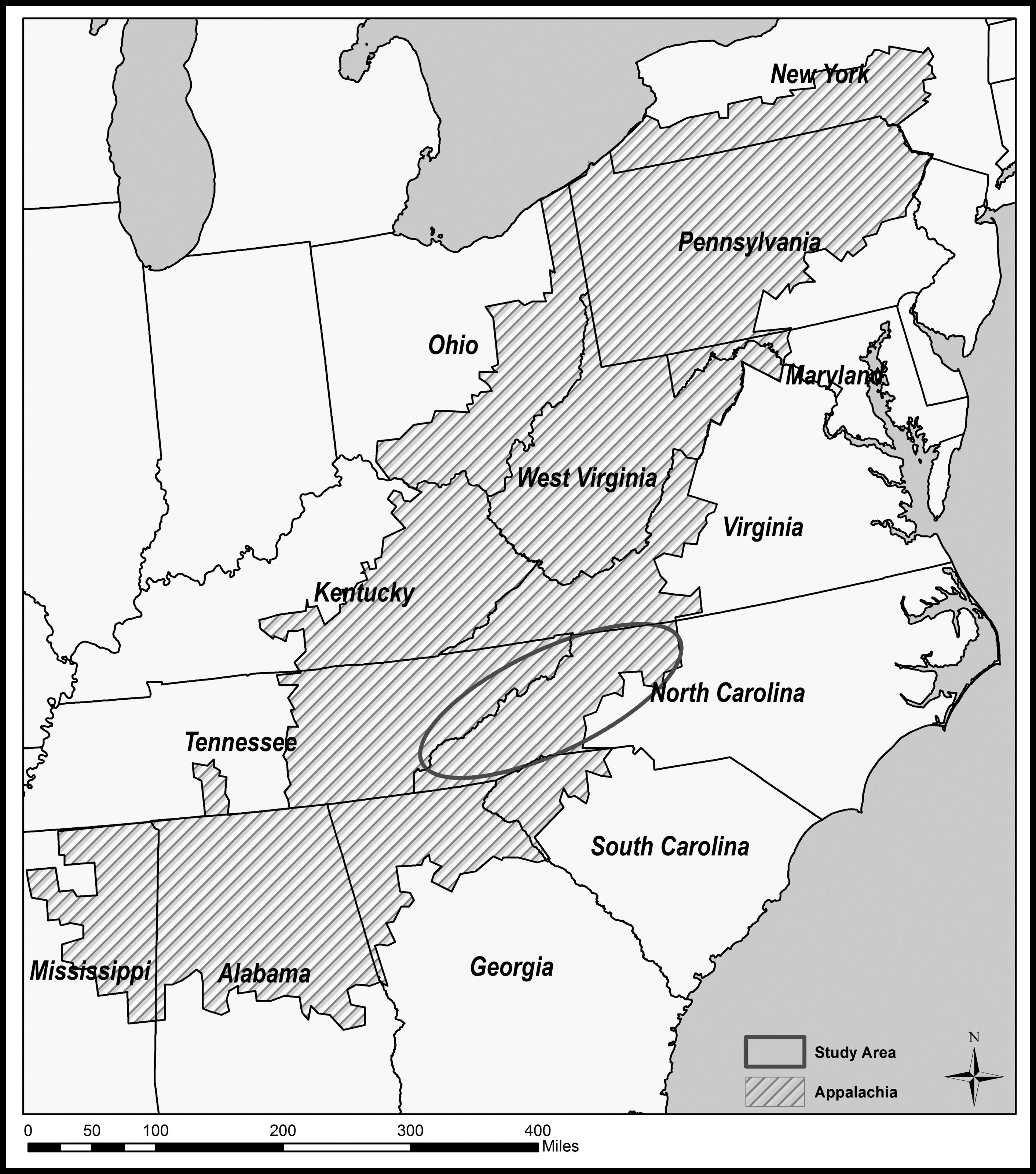
The Appalachian region; study site circled in black (adapted from ARC 2008).
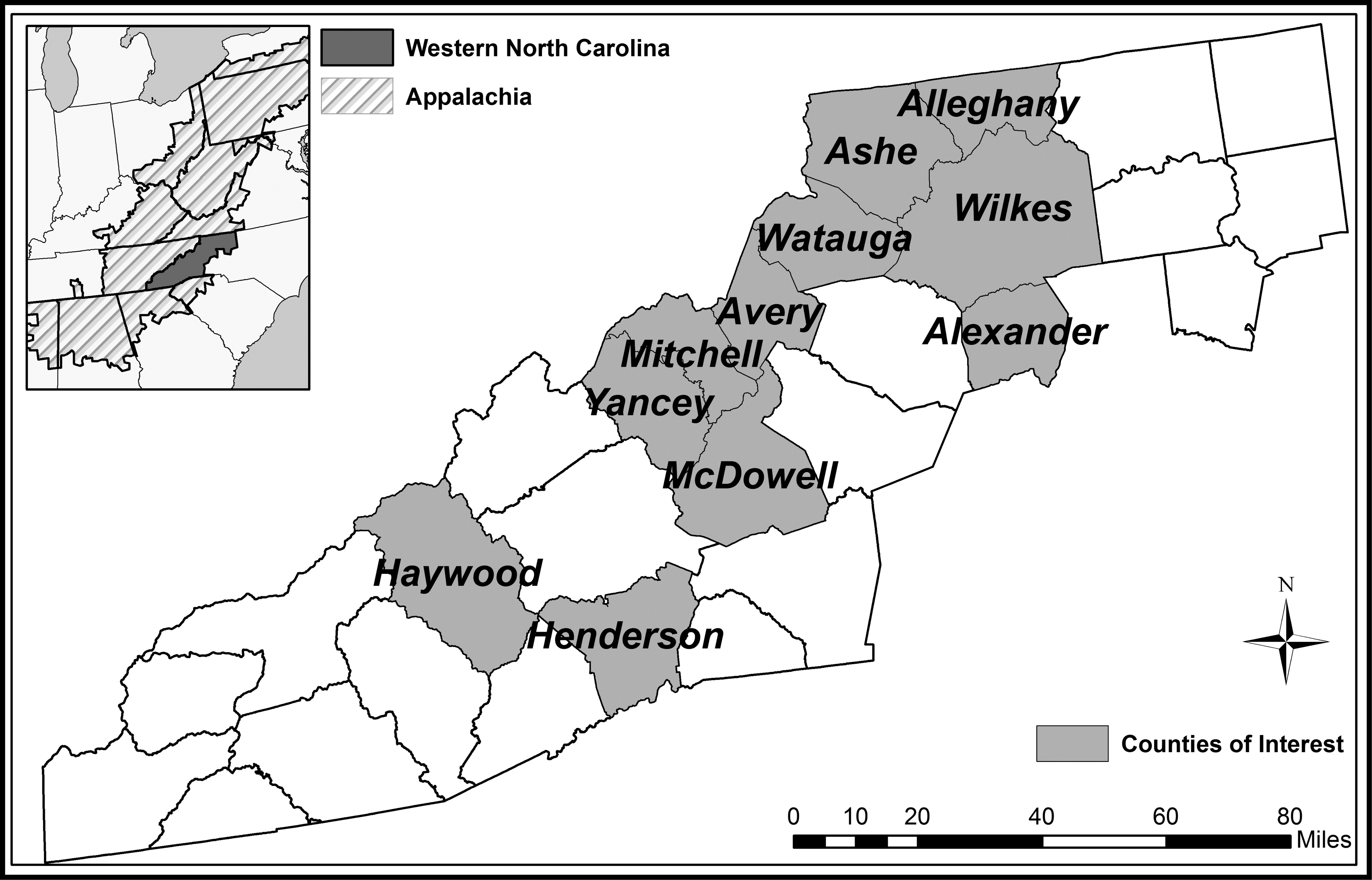
Map of western North Carolina counties (shaded counties are where the authors interviewed orchardists).
Southern Appalachia also has a very complex and diverse cultural history. The Cherokee (who have had a major impact on orchard history and apple diversity in the region; see below) and other Native American mountain dwellers are descendents of earlier Indigenous inhabitants of the Woodland and Mississippian periods. After European contact during the Pioneer and Antebellum periods, southern Appalachia was largely peopled by immigrants of Scots-Irish, English, and Germanic origin. Small-scale farmers in the region practiced a highly self-sufficient agriculture, relying on corn as the staple crop with an array of other food crops and free-range herding of cattle and hogs (Davis 2000). However, southern Appalachia has also been historically characterized by large land-holdings of absentee owners, resulting in high rates of tenancy and an extractive economy based on timber and mineral resources (Dunaway 1996). The people of southern Appalachia have traditionally maintained higher degrees of geographical, commercial, and cultural autonomy—relative to most Americans—that persist to the present day (Veteto 2008). Despite this tendency toward semi-autonomy, throughout the twentieth century southern Appalachia has suffered from periods of out-migration to northern and mid-western cities as people left to seek jobs due to a history of poverty and unemployment in the region (Williams 2002). In recent years, in-migration of more affluent lowlanders from cities such as Atlanta, Charleston, and Miami and the second-home developments associated with them (Gragson and Bolstad 2006) have increased land prices and taxes and made it difficult for natives of the region to practice agriculture and other traditional lifeways.
In the 2000 United States census, less than 2% of the population in southern Appalachia listed agriculture as their primary occupation (Gragson and Bolstad 2006). Yet, mountain people continue to engage in “multiple livelihood strategies” (Halperin 1990), which include a mix of kinship, barter, and flea-market networks. These lifeways also incorporate small-scale animal husbandry, wildcrafting of a variety of native and introduced plants, hunting and fishing, and home gardening that utilizes a high diversity of apple varieties.
The apple industry that has for many years provided full or part-time employment in western North Carolina has declined by 30% in each of the past two decades (USDA 2011). After the planting of orchards by early settlers, western North Carolina was the location of two periods of rapid expansion of the apple industry. The first occurred from roughly 1880–1920, as Appalachian nurserymen grafted scion wood from orchards that had been abandoned by the Cherokee after their forced removal in 1838–1839. Legendary Cherokee varieties such as Nickajack, Junaluskee, and Tillaquah originate from that time (Bonner 1964; Calhoun 2010; Davis 2000). After 1920, apple production slowed as the industry moved to the Pacific Northwest (Calhoun 2010). Another apple boom occurred from the late 1940s through the 1970s in parts of western North Carolina (although not southern Appalachia as a whole) as many packing houses opened in the region. Large companies such as Gerber, Seneca, National Fruit Company, and Musselmans opened processing plants, and as the industry expanded, apples became a more important part of the cultural identity of various communities (Blue Ridge Farm Direct Market Association 2013).
In 1947, the first North Carolina Apple Festival was held, and 66 years later it is still a major annual event in western North Carolina (Blue Ridge Farm Direct Market Association 2013). Although apples are still a prominent cultural symbol in the area, the industry has changed dramatically over the past several decades. At the height of the second apple boom in 1976, there were 328 orchards in North Carolina and by 2006 there were only 117. Processing plants shut down and relocated to countries such as China. Arable land was lost to urban sprawl, technological innovations changed the industry, international competition drove prices down, and many producers were bought out or forced out of business (Blue Ridge Farm Direct Market Association 2013). Although the apple industry has declined, the highest amount of extant apple diversity in the United States can be found amongst homesteads (both inhabited and abandoned) and fields throughout southern/central Appalachia (Veteto 2014; Veteto et al. 2011). Clearly, not all of this change relates directly to climate change; however, apple diversity and local orchard-management lifeways have declined during a period in which (by many measures) weather and climate patterns have shifted at multiple spatial scales. In the face of climate change, orchard managers are likely at the most vulnerable point in the rich history of this lifeway. It is in this historical context that this study of orchardist perceptions of climate change is situated.
Methods
In order to understand orchardists’ perceptions of local weather patterns, climate variation, and climate change in relation to a baseline context of regional climate over the past 116 years, we analyzed local precipitation and temperature data collected by the National Climatic Data Center for climate Division One in North Carolina. Data from climate Division One is aggregated from all stations in the western portion of the state. Monthly data from 1895 through 2011 was retrieved (NOAA 2012) and organized into four approximately 30-year periods. The periods we used for this analysis were 1895–1924, 1925–1954, 1955–1984, and 1985–2011.
Field research took place from May to September, 2012. We interviewed orchardists throughout Appalachian North Carolina in order to understand local knowledge of apple diversity, perceptions/observations of environmental change and ultimate causes, and the effect of climate variation/change on apple diversity. Recruiting was accomplished through a combination of convenience and snowball sampling. We generated a list of apple orchards, apple houses, and roadside stands found on online public orchard directories and organized the list according to county to ensure the widest possible spatial coverage. Some counties (e.g., Henderson) have a high number of orchards, whereas other counties have few or no orchards, so counties with a greater density of orchards are overrepresented despite our attempts at even coverage. Overall, we were able to interview orchardists in 11 out of 28 counties in the study area (Figure 2).
We began recruitment by calling phone numbers listed online and got a very low response rate. Subsequently, we traveled to orchards, roadsides stands, and apple houses to recruit participants in person. At these locations we interacted with community members and orchard workers, gaining more familiarity with the cultural terrain and developing rapport with locals. These interactions continued throughout the entirety of the data collection process, which aided in identifying participants and gaining hands-on experiential knowledge. During interviews, we asked informants for contact information about other orchardists they were acquainted with. Many orchardists were more willing to participate if they knew someone we had been referred by, illustrating the effectiveness of snowball sampling in Appalachia, which has been borne out in previous studies (e.g., Veteto 2013; Veteto and Welch 2013).
In-depth interview and survey data provided the bulk of the information gathered during this research. Semi-structured interviews were conducted with 22 orchardists. At the conclusion of each interview, a benchmark socioeconomic survey was administered. At each orchard, we recruited the individual who had the most intensive and long-standing experience with apple diversity, weather, and climatic trends—this was most often the orchard manager or owner-manager. Eighteen of the orchardists we interviewed were male and three were female, in addition to a husband-wife team. The average age of our research participants was 62 years (with a range of 40–80 years) and the most represented religion was Southern Baptist (56%). The predominant political affiliation was the Republican Party (45%), median income was $45,000, and all orchardists descended from Northern European ancestry (see Carlson 2013 for complete demographic results). Qualitative semi-structured interviews were designed to provide information on the study research questions. Interviews also elicited quantitative data about each orchard, including number of varieties grown (both heirloom and commercial), using a free-list activity; apple tree acreage; and the number of years the orchard had been in operation and was managed/owned by the informant. The interviews were guided by our research questions, but not limited to them, and orchardists would often provide relevant information that was not a part of our primary research agenda, which we included as emergent research themes below.
Interviews were audio recorded, transcribed, entered into the qualitative data analysis program Atlas.ti, and supplemented with field notes and observations. Once qualitative interviews were transcribed and entered into Atlas.ti, they were coded, yielding key concepts, themes, and relationships. Quantitative data obtained through the survey were entered into MS Excel and managed for descriptive quantitative analysis.
Results
Appalachian North Carolina Climate Data
We were able to observe some general patterns in the data we gathered from North Carolina climate Division One. The mean annual precipitation during the current 30-year period was less than the first 30-year period by 4.3 cm (137.1 from 141.4). More salient than the small decrease in overall precipitation are the shifting patterns of monthly precipitation. Over the past 116 years precipitation is shifting away from July and August, months that were previously among the wettest (and the most important agricultural months of the year in the study area), toward September and November, months that were previously among the driest.
Mean annual temperature has increased from 12.7°C (1895–1924) to 13.1°C (1985–2011). Certain months such as April and November show more dramatic trends of temperature increase than others. Although such changes are important, perhaps the most revealing trend indicating recent anthropogenic climate change is shown in Figure 3: every mean monthly temperature from 1985–2011 is warmer than corresponding mean monthly temperatures from 1955–1984. This across-the-board temperature increase is slight but indicates temperature trends anticipated by climate scientists (e.g., IPCC 2007). Year-round temperature increases (spring and fall showing intensified changes), coupled with a redistribution of precipitation, are increasing the likelihood for noticeable effects on apple production in western North Carolina. The climate and weather data we collected and analyzed are not meant to validate or invalidate local observations, but do provide a broader context for understanding our ethnographic research findings.
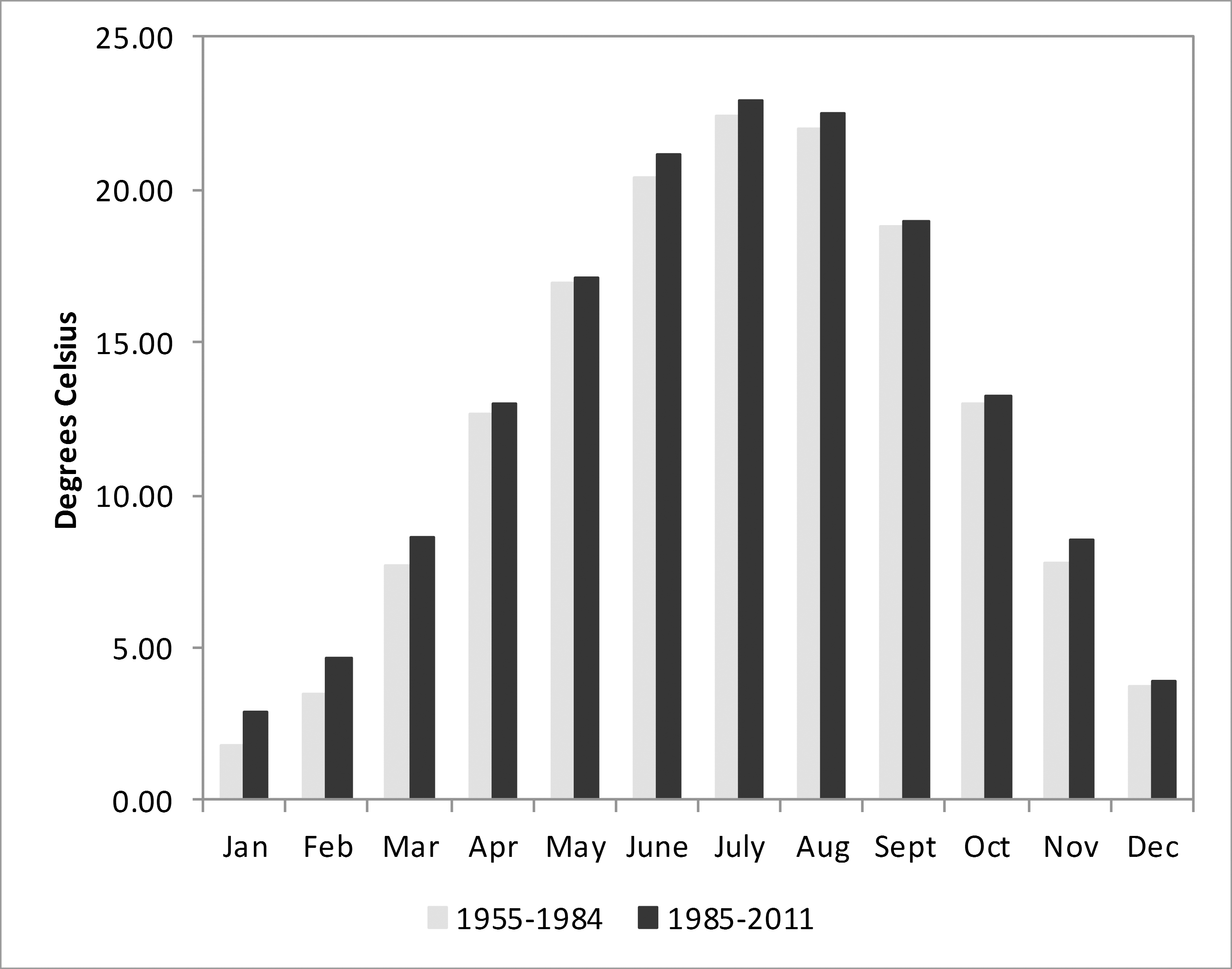
Mean monthly temperature.
Apple Diversity
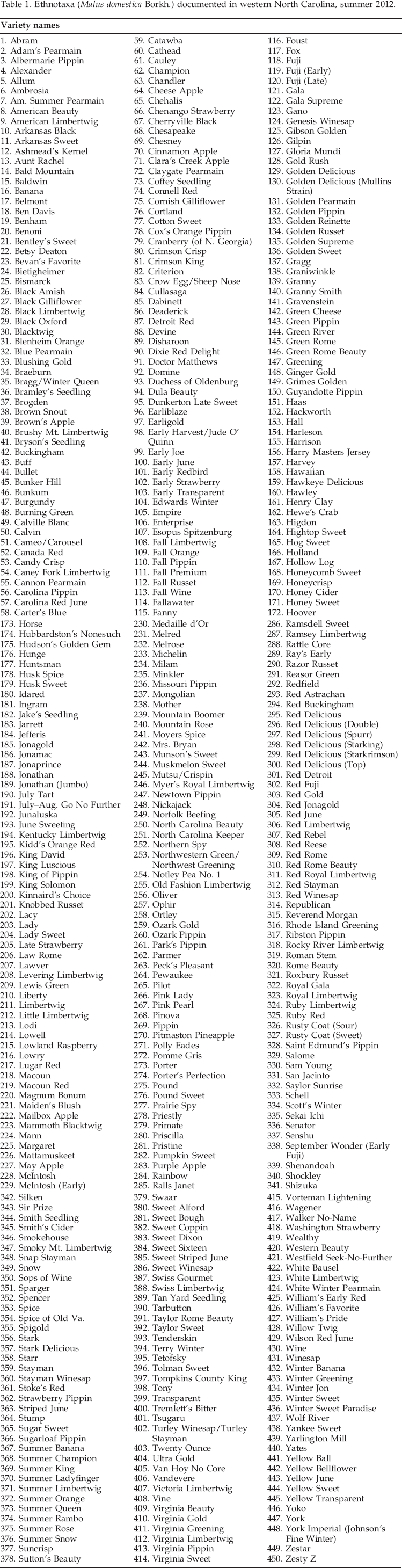
We documented 450 ethnotaxa of apple varieties being grown in the 22 orchards we visited (Table 1). Combined with Veteto et al.'s (2011) previous research, this increases documented apple diversity in central/southern Appalachia to 905 potential heirloom/heritage varieties (the total number will likely be lower when we cross-check our list with historical documents and for synonyms in the next phase of research). Although these results are promising for the goal of heirloom apple preservation, we found the majority of total varieties on only a few orchards. The average number of hectares per orchard was 16 and the average number of varieties per orchard was 46, but the number of apple varieties being maintained on each of the 22 orchards varied dramatically, as did the land area per orchard. For example, the largest orchard we visited had only ten apple varieties on 89 hectares, which is in contrast to the 341 varieties we documented on 2.8 hectares in another orchard.
Ethnotaxa (Malus domestica Borkh.) documented in western North Carolina, summer 2012.
There was generally an inverse correlation between orchard size and number of varieties (Spearman's rho = −0.53, p = 0.01). Because of extreme, but important outliers, arithmetic means do not describe the typical orchard accurately. More representative are the median orchard size of 8.1 hectares and the median number of varieties at 24. The largest orchards we visited were more similar to the modern industrial model of United States agriculture, which is typified by low varietal diversity and intensive methods of chemical fertilization and pesticide application in addition to reliance on low-paid, immigrant labor (Barlett 1989; Clunies-Ross and Hildyard 2013). Conversely, the orchards with the most varieties tended to be smaller in size, a necessity for managing dozens of different bloom and harvest times. The above pattern reflects two ends of a continuum of apple growers we encountered during this project: 1) the modern commercial grower; and 2) the heirloom apple preservationist; though many growers fell somewhere in between these two extremes. The two types are illustrated in a comparison of two growers we interviewed. Bill (pseudonyms are used to protect the identity of our informants) grows 341 apple varieties on 2.8 hectares, all of which are considered heirloom varieties. Paul grows ten varieties on his 89 hectares, only two of which might be considered heirloom—Ginger Gold and Red Rome. Bill's motivation for growing apples is to preserve rare varieties; Paul grows popular apples for the consumer market. Additionally, Paul was the only orchardist we talked to who did not grow at least one “rare” heirloom variety. All of the other orchardists were growing a minimum of one variety that is recognized as an heirloom with some degree of rarity.
Grower Observations of Climate Variation
Orchardists who perceived long-term shifts in weather patterns may or may not attribute such fluctuations to anthropogenic climate change. Several patterns emerged from data collected on orchardists’ observations of weather and climate. Eighteen of 22 orchardists (82%) discussed at least one way they had observed climate variation. Of the 18 growers who mentioned changes in weather/climate patterns, 16 (89%) discussed warming trends. This was the most significant finding and included the local conditions being warmer in general (seven growers; 39%), hotter in summers (five growers; 28%), and milder or warmer in winter (eight growers; 44%). Several growers mentioned more than one of these trends in addition to others, such as a longer growing season. These observations are generally consistent with the scientific climate data we analyzed (see above), and many orchardists also noticed an increase in extreme temperatures, especially record high temperatures. Whether in March or August, for one day or a week, extreme heat events are an increasing local occurrence according to the majority of our informants.
Directly related to observed warming trends and apple phenology are increasing occurrences of crop-killing spring frosts. Every spring, apple trees go into bloom on a date that is determined by the variety, orchard location, elevation, aspect, winter weather, and other variables. As weather warms, trees bloom for pollination, and those in cooler areas such as more northern microclimates or orchards higher in elevation tend to bloom later. Warmer winter temperatures generally cause apple trees to bloom earlier. When trees are in bloom they are susceptible to being damaged by frost, which prevents them from bearing fruit that year. One night of below-freezing temperatures during the blooming period can destroy an entire apple crop.
Eighteen of the 22 orchards we visited had been damaged by frost in 2012. Roger, a 59-year-old fourth generation grower, has never witnessed a crop-killing freeze like the one that occurred in 2012. Referring to the magnitude of impact, he stated that, “we won't even have two percent of the crop, maybe one percent. It's just a wipeout. The worst crop we've ever had” [Interview 20]. Many orchardists mentioned having 50% of a normal-sized crop, while others estimated having less than 10% or worse. The strong consensus among our informants was that warmer, milder winters lead to earlier bloom periods and the frost date (which has always been roughly the same) occurs during the earlier bloom. Estimates about the early bloom in 2012 ranged from two weeks to one month earlier than normal.
In addition to Roger, many of the other orchardists described the 2012 freeze as the worst they had ever seen and some view the threat of such freezes becoming more frequent. Some growers talked about winter conditions they experienced as a child being a thing of the past. One noted that, “we don't have the winters we used to have—when I was growing up you never see the ground hardly for snow; snow stood on the ground all winter and we don't got that no more” [Interview 15].
Six of the 18 growers (33%) who mentioned climate variation discussed shifts in precipitation patterns. Three of these six growers believed there was less snowfall than in their parents’ and grandparents’ generations, indicating that they are perceiving climate variation instead of simply observing short-term weather shifts. The other three described less precipitation in general, with changes in timing and distribution. One grower observed that rainfall had decreased in June/July and increased in late fall/early winter (a trend consistent with the scientific climate data above).
In addition to spring freezes and extreme heat events, hailstorms were also mentioned as a concerning extreme weather pattern. Hailstorms can be as damaging to apple production as spring frosts. Many orchardists, when talking about extreme events, noted that current weather patterns are “unsettled” or “inconsistent.” An important part of our research was to ask about what kind of changing environmental conditions growers expect for the future, but to our initial disappointment, most did not care to speculate. Responses ranged from, “no idea, you'd be ‘guessin’” [Interview 18], or “only God knows” [Interview 4], to “it'll keep getting hotter and we'll all be growin’ oranges” [Interview 8]. Although most informants would not make future predictions, a few suggested that weather and climate patterns will continue following the same trends they had observed and described to us. We interpreted orchardists’ inability to predict, or their hesitance to speculate, an indication of the unpredictable, erratic weather Appalachian North Carolina is experiencing. Dale, a fourth generation orchardist, described his frustration with the variable weather patterns over the past few years:
When I was a kid growing up, we worried about hail but it didn't seem like it was a yearly event like it is now. We've had major weather events trying to farm for the last five years to some magnitude, 2007 being the worst. This year's [2012] been pretty bad, too. Be it hail, be it frost [Interview 9].
When analyzing these findings in relationship to orchardist demographic characteristics (see Carlson 2013), we found only one important association. All eight of the third-, fourth-, or fifth-generation growers had noticed at least one pattern of environmental change. The four individuals who denied observing any pattern of climate variation were all first or second generation growers. Although 72-year-old Jack is a first generation grower, he worked on a local apple orchard throughout his youth. With over a half-century of direct observation in the study area to draw from, Jack said, “I would say the weather patterns have changed. I worked up here when I was growing up, and the weather wasn't—it didn't vary as much. It was more consistent” [Interview 16]. This quote demonstrates that Jack's observations are consistent with that of the multiple-generation growers and are most likely a product of his age and longitudinal work experience. After eliciting growers’ perceptions and observations of general environmental change and climate variation, we then sought to gain insight into their attribution of ultimate causes in order to better understand climate change perception on southern Appalachian orchards.
Causes of Climate Variation: Grower Perceptions
Although orchardists reported observing weather and climate variability, they did not necessarily accept or recognize global climate change. Although 18 growers (82%) gave examples of how they perceived the climate to be changing, only eight of those (44%) believed such changes to be human-induced. Consequently, 36% of our total sample acknowledged anthropogenic climate change. Of the other ten orchardists that observed climate variation, five were unsure of what the cause was, four did not think changes were human-induced, and one had no response.
All five growers who observed changes and were unsure of what caused them were third-, fourth-, or fifth-generation growers. None of the eight informants who were third-, fourth-, or fifth-generation orchardists denied the existence of climate change—though most of them did not acknowledge it either—they were just unsure. Of the 14 growers who were first- or second- generation orchardists, seven did not think humans are causing changes in climate patterns, six acknowledged climate change, and one was unsure (Figure 4).
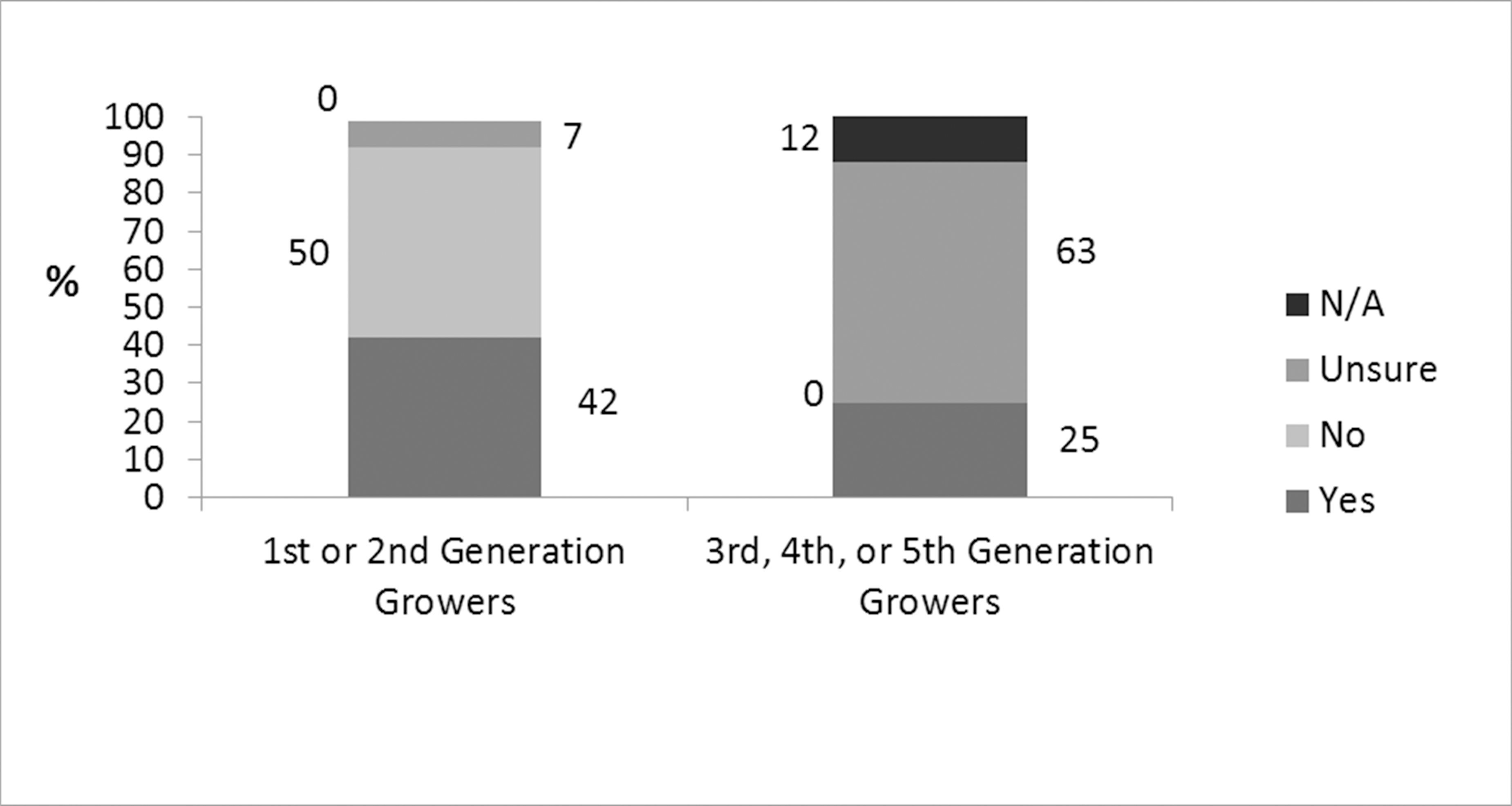
Acknowledgement of anthropogenic climate change.
The four growers who did not recognize climate change referenced climate variation as evidence for any observations they made to changes being normal and short-term. Similarly, of all growers who either answered “no” or “unsure” about the existence of climate change (13 of 22), ten cited examples of climate variation as a counterpoint. Several of these growers mentioned experiences they or their family went through in the past to demonstrate that weather events happening in recent years (such as the 2012 spring freeze) are not new trends. Jeff's recollection of the weather his grandfather experienced as a youth is an example:
I'm not really on the global warming bandwagon. I'm not convinced of it, you know. Just because, I've talked to people—well my grandpa for example, he's 86. And you know he said he was a boy, he remembered winters you could almost wade the creek. And he remembers winters when it was froze completely over [Interview 17].
Such results are consistent with a Hansen et al. (2012) study that indicates the reality and concept of climate variability can be a barrier to public acceptance of the existence of anthropogenic climate change.
Richard expressed a more polemic and political opposition to climate change proponents. After describing climate variation he had observed throughout his time growing apples, he made the emphatic statement, “I think Al Gore made millions off of that shit” [Interview 15] when discussing climate change. Since Gore (a Democrat) is perhaps the most recognizable public figure in the world bringing awareness to the dangers of climate change (e.g., Gore 2013), Richard's comment clearly indicates that he thinks he is witnessing climate variation rather than climate change.
Other growers, such as Bill, felt that recent changes were unexplainable as climate variation:
Just to see these kind of changes in such a short 25 year period, there's more at play here than just the shifting of climates by mother nature. There's other factors that play here so I'm just convinced that mankind has something to do with this [Interview 7].
His viewpoint clearly articulates an understanding of the difference between climate variation and climate change and an acceptance of the reality of global climate change.
Joseph is representative of the five growers who were comfortable discussing climate variation, but did not want to take a position on causation:
Well you know, I tend to believe that global warming is occurring. I'm not sure, I don't know the cause of it, so I don't really want to speculate on that. I don't know if man is doing it or if it's just a natural cycle of the universe or what. I don't know [Interview 11].
This perspective can be interpreted as “playing it safe,” or alternatively, an indication that the erratic weather and climate patterns of the past few decades make it hard for local people to judge how such perturbations originate and reluctant to discuss either causation or future trends. After investigating grower perceptions of both climate variability and change, we then sought to understand local perceptions of how both were affecting apple diversity.
Perception of the Effects of Environmental Change and other Factors on Apple Diversity
We were able to identify several potential implications for the future of apple diversity in western North Carolina. Grower observations of environmental change with the greatest potential to impact diversity relate to reoccurring, damaging spring frosts and their relationship to apple phenology. Such frosts are a trend we expect to continue because as the frost date has remained the same, earlier bloom times have increased in frequency due to late winter and spring warming trends. There are a number of ways in which this trend can impact apple diversity. Prominently, apple varieties that bloom early are at a greater risk of suffering harvest loss. If the investment that orchardists put into early-blooming varieties is increasingly lost, they will likely replace those varieties with apples that bloom later. Red Delicious, Transparent, and Lowland Raspberry were among early-blooming varieties impacted by spring freeze.
As early-blooming varieties get phased out it is likely that orchardists will become more dependent on late-blooming varieties. The two apples being grown the most—Golden Delicious and Rome Beauty—are also apples most often cited for their ability to survive a spring freeze. They generally bloom later than other varieties. Also cited as late-bloomers were King Luscious and Summer Rambo—two heirloom apples with a long history of being grown on orchards in the study area.
Another impact of spring freeze is the correlation between freeze damage and disease incidence. It was repeatedly mentioned that spring freeze may not only destroy a crop, but that it can cause damage to trees that will allow diseases—especially fire-blight (Erwinia amylovora [Burrill] Winslow)—to spread rapidly. An increase in conditions that allow fire-blight to spread will make it more difficult to grow apples that are prone to the disease. Particular apple varieties were repeatedly described as being susceptible to fire-blight such as Gala, Jonathan, Jonagold, Fuji, and Pink Lady. With the exception of Jonathan, all of these apples are modern commercial varieties. Gala, Fuji, and Jonagold are among the top-ten most widely grown apple varieties in our research sample; grown on 88%, 68%, and 64% of orchards, respectively. This is concerning because apples that have the greatest susceptibility to fire-blight were both among the most recent additions to orchards and the most widely grown. Describing the difficulty some of the newer commercial apple varieties have with diseases, Jeff explained his displeasure with them:
You know a lot of the older varieties is easier growing than the new ones. We have to spray the new varieties a lot more. Like the Limbertwig, you can just, I mean, they don't require near the work and the thinning and everything…I think they've improved the looks on the new varieties but they lost their resistance to disease. And they've lost a lot of flavor [Interview 17].
The increase of extreme weather events also contributes to disease susceptibility. For example, hailstorms can cause tree damage resulting in disease and lower production.
An emergent theme from our research that is a very important variable regarding the current and immediate future of apple diversity is consumer demand. Honeycrisp was the most recently planted variety in eight of 22 orchards due to consumer demand and is also a variety that is difficult to grow in the study region. Multiple growers told us about the difficulty they had growing Honeycrisp but that they persisted because of potential profit:
You can get more for a Pink Lady and a Honeycrisp than you can anything else and they will pay it…we call the Honeycrisp a beast because it is hard to grow [Interview 12].
And we increased our Honeycrisp acreage a whole lot out there…and it was all just to supply the store with stuff we thought would sell [Interview 20].
Not only is consumer demand likely the most important variable driving what varieties are being planted, but lack of demand for other apples was given as a reason for decreasing their acreage. Two varieties a number of orchardists were phasing out due to lack of consumer demand are Rome Beauty and Black Ben Davis. Rome Beauty has been the most ubiquitous variety in our orchard sample to date—it was among the top two apples (in quantity) grown in most orchards. However, Rome Beauty is currently being replaced by disease-prone apples due to consumer demand. Other apples being replaced because of declining demand are Empire, Limbertwig, Arkansas Black, Cowmac, King Luscious, and Winter Banana. Most of these apples are heirlooms, indicating that consumer demand is driving heirloom varieties out of orchards to make room for modern commercial varieties. When discussing motivations behind planting modern commercial varieties, Richard explained the decreasing demand for heirloom apples traditionally used for cooking, processing, or cider. He described how people want the newer varieties which are bred for fresh-eating and long-term storage:
They want something to eat, something juicy, something crisp, you know? Like the Honeycrisp you see. That's what goes now… the old varieties, well, people they wasn't much interested in them I don't reckon [Interview 15].
A final emergent theme identified in our study that impacts apple diversity is international competition. The number of apple orchards in Appalachian North Carolina declined sharply after processing plants closed in the United States from the 1980s forward, relocating to China and other countries. Prices for apples have remained low while the cost for fuel, chemical sprays, and labor have increased. Due to these economic factors, combined with unstable climate conditions and consumer demand for modern commercial apple varieties, we expect the number of orchards in western North Carolina to continue declining. As the number of orchards decreases, more apple diversity will be lost. Many of our informants mentioned they had no one to take over their orchard when they retire. Only 23% of the participants in this study were first-generation growers, while 77% inherited their orchards. Due to increasing expense and risk involved with growing apples, the future is likely to see fewer newcomers to the orchardist profession than in previous generations. There is cause for hope, however, as increased interest in heritage foods and the dedicated work of apple preservationists are nurturing the persistence of heirloom varieties that may prove to be more resilient in the face of increasing climate change.
Conclusions
Our research documented 450 apple ethnotaxa in 22 orchards. Although our findings contribute to southern/central Appalachia's status as the most diverse foodshed (at the varietal level) in the United States, Canada, and northern Mexico (Veteto 2010; Veteto at al. 2011), deeper analysis reveals threats to apple diversity from a combination of environmental, economic, and social variables. Our study showed a general consensus among orchardists that both weather and climate patterns (climate variation) have been changing significantly. Their major observation was a general warming trend, but growers also noted changing precipitation patterns, a general pattern of climate instability, and increased frequency of extreme weather events. Most of these observations were consistent with scientific climate data for Appalachian North Carolina, but were more nuanced. For example, the information growers provided included the observation that the greatest impact on apple growing has come from the increased occurrence of spring freezes after a mild winter and warm spring that results in early-bloom onset. Early-blooming varieties are most at risk of being damaged by frost and are likely to be replaced by later-blooming varieties if current trends continue. A significant consequence of post-bloom freeze is tree damage and resultant vulnerability to disease. Fire-blight was noted as the major disease in the study region and grower perception was that environmental changes were contributing to increasing intensity and occurrence.
The majority of growers in this study attributed changes in environmental conditions to climate variation rather than climate change. Every third-, fourth-, or fifth-generation orchardist observed abnormal climate variation. These growers had more experience to draw from and therefore more longitudinal information for making informed decisions in the face of climate change. All four orchardists who denied observing noticeable climate variation outside the norm were either first- or second-generation growers. We interpreted the widespread hesitation among research participants in speculating about future climate trends as an indicator of increasingly erratic and unpredictable weather patterns.
We found that socioeconomic factors currently play a greater role than environmental conditions in shaping apple diversity in Appalachian North Carolina. This situation may change in the future as the effects of climate change amplify, making diversity more centrally important to orchard survival. Current trends show that there is more consumer demand for modern commercial apple varieties than for heirloom varieties. Orchardists are responding to this demand by planting modern varieties despite the fact that most of these are susceptible to fire-blight. Growers told us that consumers want juicy, sweet apples for fresh eating rather than apples for baking, sauces, or juice. This is a reversal of the cultural uses of Appalachian apples from a hundred years ago when apples were primarily used for cooking and pressing and seldom eaten raw (Calhoun 2010). The current demand for fresh eating-apples can cause varietal extinctions unless the public becomes interested in more diverse uses of apple varieties. The local/heritage food movement and an increasingly visible cider-making revival in Appalachia are hopeful trends toward the diversification of apple use and revitalization of heirloom apple varieties.
It is becoming increasingly difficult to make a living from growing apples in western North Carolina. Our informants routinely complained about the rising costs of inputs and national and international pressure to keep prices low. Because of this, many orchardists have turned from commercial farming to agrotourism—a marketing approach that encourages tourists to experience agricultural life first-hand (Yang et al. 2010). Economic pressures are instrumental in preventing younger generations from pursuing apple growing as a profession, as indicated by the average age of 62 among our study participants. Multiple orchardists mentioned they had no next-of-kin to continue their orchards. Two growers who have no one to continue their work were preservationists who maintained the highest apple diversity levels in our study. If these heirloom apple collectors retire with no one to inherit their orchards, the figures on apple diversity in this study would be significantly reduced.
Although our study focuses on a small number of orchards and the results may not be generally applicable to assessing climate change impacts and orchard management in other parts of the world, our research does provide an important case study of local perceptions of, vulnerability to, and experience of climate change. It is possible that we are witnessing a type of end-game regarding apple diversity in Appalachian North Carolina. Consumer trends are creating demand for commercial varieties that are driving heirlooms out of the market, and younger generations are less interested in the diverse culinary uses and tastes of folk-crop varieties. Climate change, however, is adversely affecting newer commercial varieties while heirloom diversity shows more resistance to the negative effects of weather, pests, and diseases. As the impacts of climate change become more severe (IPCC 2007), orchard managers may be forced to change their planting practices toward more genetically variable heirloom varieties. At present, the continued spread of less diverse, modern commercial orchards will have negative effects on apple diversity preservation. To offset this trend, a combination of governmental policies and research on sustainable agriculture with grassroots citizen movements such as food sovereignty (Wittman et al. 2010); Slow Food (Petrini 2007); bioregionalism, permaculture, and ecovillages (Lockyer and Veteto 2013); re-territorialization (Escobar 2008); transition towns (Hopkins 2008); and alter-globalization (Pleyers 2010), among others, could help nurture the resilience of apple diversity in Appalachia that has heretofore been stewarded by an aging population of in vivo growers and preservationists at the margins (Chapman and Brown 2013; Nazarea et al. 2013). The vast store of apple diversity in western North Carolina may prove to be a valuable asset in constructing adaptive strategies for increasing food security and food sovereignty in the age of global climate change.
Footnotes
Acknowledgments
We would like to thank all of the Appalachian orchardists who took time out of their busy schedules to talk with us. We would especially like to thank Steve Wolverton for his keen editorial assistance and help on improving the figures. Special mention also goes to Alicia Gray for improving our maps. We would also like to thank Kimberlee Chambers, Will McClatchey, Doug Henry, Kent McGregor and three anonymous reviewers for their editorial suggestions. This research was supported by a Junior Faculty Summer Research Fellowship from The University of North Texas and a USDA-SARE Graduate Student Grant.