







Abstract
Traditional settlements with diverse resource management strategies are important for in situ conservation of agrodiversity. Community scale perception, taxonomy, and uses of citrus (Citrus spp.) contribute to the conservation of germplasm and practices generating and maintaining diversity. I used ethnobotanical research methods, including assessment of local perceptions and criteria involved in the selection of variability, to document the uses and diversity of citrus in the south of Misiones province (Argentina) and discuss several aspects of local taxonomy. In this research, I recorded thirty ethnovarieties belonging to nine citrus ethnospecies and found that the organoleptic descriptors (both morphological and sensitive) and grafting practices are the most important in their recognition. Local people use citrus in diverse ways––as fresh fruit, to make preserves, and as fodder. Local citrus variability is related to families and individuals, as well as the presence of the native forests where ethnovarieties remain as spontaneous plants.
Introduction
Agrodiversity is the outcome of multiple biological and cultural processes that have taken place throughout history, where local sociocultural dimensions and macroeconomic determinants overlap (Emperaire et al. 2001). The importance of these biocultural processes is well represented in traditional settlements, defined as rural societies with production systems for survival or small-scale sale, where people relate to the environment through non-industrial agrarian practices (Toledo and Bassols 2008). Historical practices, informed through experimentation and traditional botanical knowledge (TBK), are combined with new information from science and cultural exchange (e.g., scientific, by means of communication and interchange) (Pochettino and Lema 2008; Pochettino et al. 2008). This body of knowledge is also influenced by factors such as age, sex, occupation, relationships, access to resources, and multiculturalism (Lozada et al. 2006; Poderoso et al. 2012).
Regarding local processes of cultural selection, a diversity of cultural practices related to local taxa favors their management and their in situ conservation. In that context, ethnovarieties can be understood as cultivarieties—defined in a specific traditional cultural context—characterized by distinguishable, uniform, and stable attributes (Núñez et al. 1998). These ethnovarieties—also known as landraces—are characterized by their adaptability to local climatic and edaphic conditions and by the fact that they are the outcome of cultural selection practices, which result in particular morpho-physiological characteristics (Harlan 1992).
Additionally, cultural diversity inherently involves different ways of perceiving and appreciating the environment and plants. The local classification of this variability, characterized by multiple assessment criteria and by the fuzziness in describing features of the same descriptor (Nazarea 1998), contrasts with the reductionist principles of Western science (Lema 2009). This series of differentially perceived discontinuities configures the ethnovarietal richness on which the cultural selection is based (Berlin 1992). For example, when analyzing the conceptual organization of introduced peaches (Prunus persica) in Jujuy (Argentina), Lambaré and Pochettino (2012) observed the presence of several levels of inclusion—which Zamudio and Hilgert (2012:39) defined as “folk identities”—that are recognized by local communities and, in most cases, are assigned a vernacular name.
In this sense, the genus Citrus is a good example of landrace variability with various recognized organizational levels related to cultural practices and to biological characteristics that promote diversifying strategies like hybridization, polyploidy, and mutations. Due to these facts, the systematics of Citrus are very complex and have generated controversies, as can be observed from the varying number of species assigned to it: between 16, as expressed by Swingle and Reece (1967), and 162, by Tanaka (1966, 1969).
This botanical genus, native to tropical and subtropical regions of Southeast Asia, was first introduced to the New World during Columbus's second expedition (Gmitter and Hu 1990). The multiple entry routes, in turn related to diverse cultivation views and practices, facilitated the diverse dynamics of cultural practices and environments in the different regions of introduction. In the south of the Misiones province in Argentina, citrus history since the sixteenth century Conquest until the mid-twentieth century has been previously studied by Capparelli et al. (2011) and Stampella et al. (2013b).
The objective of this study is to analyze the local diversity of citrus in this region, the local criteria that inform the perception and selection of the variety, the uses assigned to the variability, and to discuss aspects related to local citrus taxonomy. Additionally, the study aims to show strategies of environmental appropriation by the local communities and describe the history of development of these settlements as these relate to citrus diversity. Analysis of local citrus variability, related to the diversity of uses and the way in which they are perceived and socialized, contributes to the explanation of the diversification processes, selection, and in situ conservation of the present ethnovarieties, which are essential elements needed to articulate the management of the diversity at local and regional levels.
Study area
The Misiones province is the most biodiverse region in Argentina (Placci and Di Bitetti 2006) and its environments are considered to be hotspots of world biodiversity conservation (Mittermeier et al. 2004). This province is one of the priority ecoregions for conservation actions according to the World Wildlife Fund (WWF) (Olson and Dinerstein 2002). Throughout its land-use history, the local environments were transformed into agricultural, agrosilvicultural, and/or forestry systems (Chebez and Hilgert 2003; Izquierdo et al. 2010).
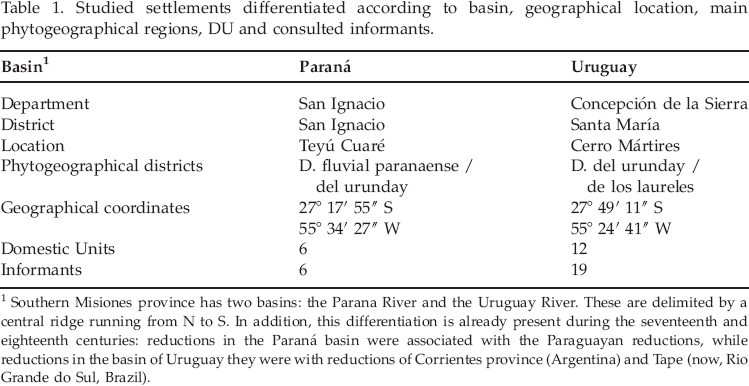
During the period of 2010 to 2013, I carried out fieldwork for this research in two rural settlements: Teyú Cuaré (Municipality of San Ignacio, homonymous Department) and Cerro Mártires region (Municipality of Santa María, Department of Concepción de la Sierra) (Table 1, Figure 1).
Studied settlements differentiated according to basin, geographical location, main phytogeographical regions, DU and consulted informants.
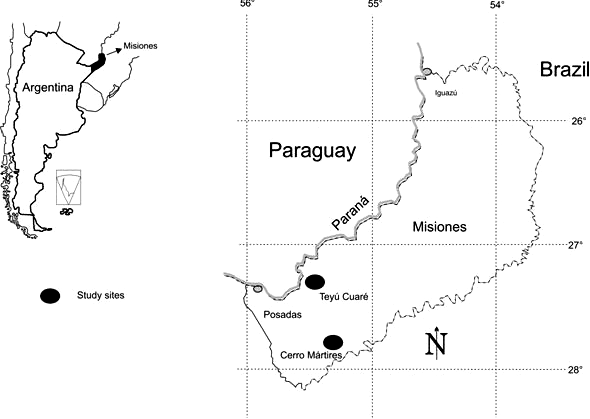
Study area indicating the location of Misiones province and the studied settlements.
These settlements belong to the transition zone between “Selvas Mixtas” and “Los Campos,” districts of the Phytogeographic Province of Parana (Neotropical Region, Amazon Domain), where the wooded areas extend in galleries along the most important watercourses. Thus, this zone is defined as an impoverished rainforest that advances over the savannah where wooded islets—called capons—can be observed in grasslands (Cabrera 1976; Chebez 2005). This transitional area is described in depth by Martínez-Crovetto (1963), who calls it “District of the Urunday” due to the dominance of “urunday” (Astronium balansae).
The studied settlements correspond to a diverse and complex settlement scheme from different origins and backgrounds, grouping Argentine citizens, colonos (descendants of the immigrants at the end of the nineteenth century and beginning of the twentieth century), native M'bya-guaraní communities (called locally paisanos), and Paraguayan and Brazilian immigrants from the end of the last century (Belastegui 2006). In these settlements, a “fusion” of this diversity can be observed from Creole groups with a high percentage of Paraguayans (in Teyú Cuaré) and Brazilians (in Cerro Mártires). Production systems involve traditional slash and burn techniques (survival production or for small-scale sale at the free trade markets) with cultivation on several varieties of cassava (Manihot esculenta), sweet potato (Ipomoea batatas), corn (Zea mays), sugar cane (Saccharum officinarum), and several species of beans (Phaseolus) and gourds (Cucurbita) (Schaden 1998). These activities are complemented with hunting, fishing, and gathering of local plants, as well as sheep (Ovis orientalis aries), pig (Sus scrofa domestica), and poultry raising (Gallus gallus domesticus, Anas platyrhynchos domesticus) (Chifarelli 2010).
The most important economic activities in the region are silviculture, commercial farming, and livestock production (Izquierdo et al. 2010). Regional silviculture is based on Pinus spp. and Eucalyptus spp. for the paper and wood industry. Primary agricultural crops are tobacco (Nicotiana tabacum), yerba mate (Ilex paraguariensis), tea (Camellia sinensis), and citrus, especially tangerine (Citrus reticulata), orange (Citrus × aurantium [sweet orange group]), and key lime (Citrus × aurantiifolia). These industries provide sources of temporary work for day laborers (changueros, jornaleros, tareferos). Livestock production is dominated by Indian cattle breeds, which are slowly being replaced by the cross-bred Cebu-Hereford, Braford, Angus, and Criolla (all breeds of Bos taurus) (Pantiu et al. 2010). In the region, there is currently a trend toward adoption of companion planting practices (pine–yerba mate) and of silvopastoral systems (pine–cattle).
Methodology
I conducted eight research trips between 2010 and 2013. I employed qualitative techniques commonly applied in ethnobotany (participant observation, open and semi-structured interviews, and walks with the informers) (Albuquerque et al. 2014). Through these techniques, I reconstructed local history from the collection of life stories told by informants who have resided in the area for a long time. To categorize the importance of the citrus ethnovarieties among local fruit trees, I used the technique “rank of preference,” which consists of informants ordering of the five most mentioned fruit trees in the previous interviews (Bernard 2000). I visited a total of 18 domestic units (hereinafter DU) multiple times over the course of four years and interviewed 25 informants between 12 and 88 years old. The selection of the participants was first carried out randomly and then I applied the “snowball” method (Bernard 2000). During the interviews and walks to different areas, the informants were asked about the cultivated and spontaneous diversity, its uses, and descriptors used to differentiate citrus varieties.
I obtained informed consent of one adult per DU. Prior to conducting fieldwork, I explained objectives, grounds, implications, and scope of the investigation (Laird and Noejovich 2002; Lewis 2010) and established several categories of consent, such as plant sample gathering, photographic images, recordings, knowledge sharing, and identity.
Additionally, I made collections of aerial parts of plants (branches with leaves and flowers; fruits and seeds). Fruits were preserved in ethanol 70%. I identified these collections using a selected citrus bibliography (Anderson 1996; Mabberley 1997, 2004; Palacios 1978; Webber 1943; Zhang and Mabberley 2008). These specimens can be found in Herbario de Plantas Útiles and in the Colección de Frutos y Semillas del Laboratorio de Etnobotánica y Botánica Aplicada (CFS, LEBA, FCNyM, UNLP) and in Herbario del Museo de La Plata (LP). In this contribution, I use the botanical nomenclature of Citrus given by Mabberley (1997, 2004) and Zhang and Mabberley (2008).
Results
Citrus Fruit and Discontinuities of the Locally Recognized Variability
I gathered nine citrus ethnospecies containing 30 ethnovarieties. These correspond to four biological species (Citrus maxima [pummelo], C. reticulata [tangerine], C. japonica [kumquat], and C. trifoliata [hardy orange; trifoliate orange]), and five hybrid taxa (C. × limon [lemon], C. × taitensis [Rangpur lime, rough lemon], C. × aurantium [with three groups: bitter orange, sweet orange, and grapefruit], C. × aurantiifolia [key lime], and C. × latifolia [Tahiti lime]), each one composed of multiple varieties (Table 2).
Ethnospecies and ethnovarieties of citrus fruits distinguished in the Misiones Province. n/s indicates non specified.
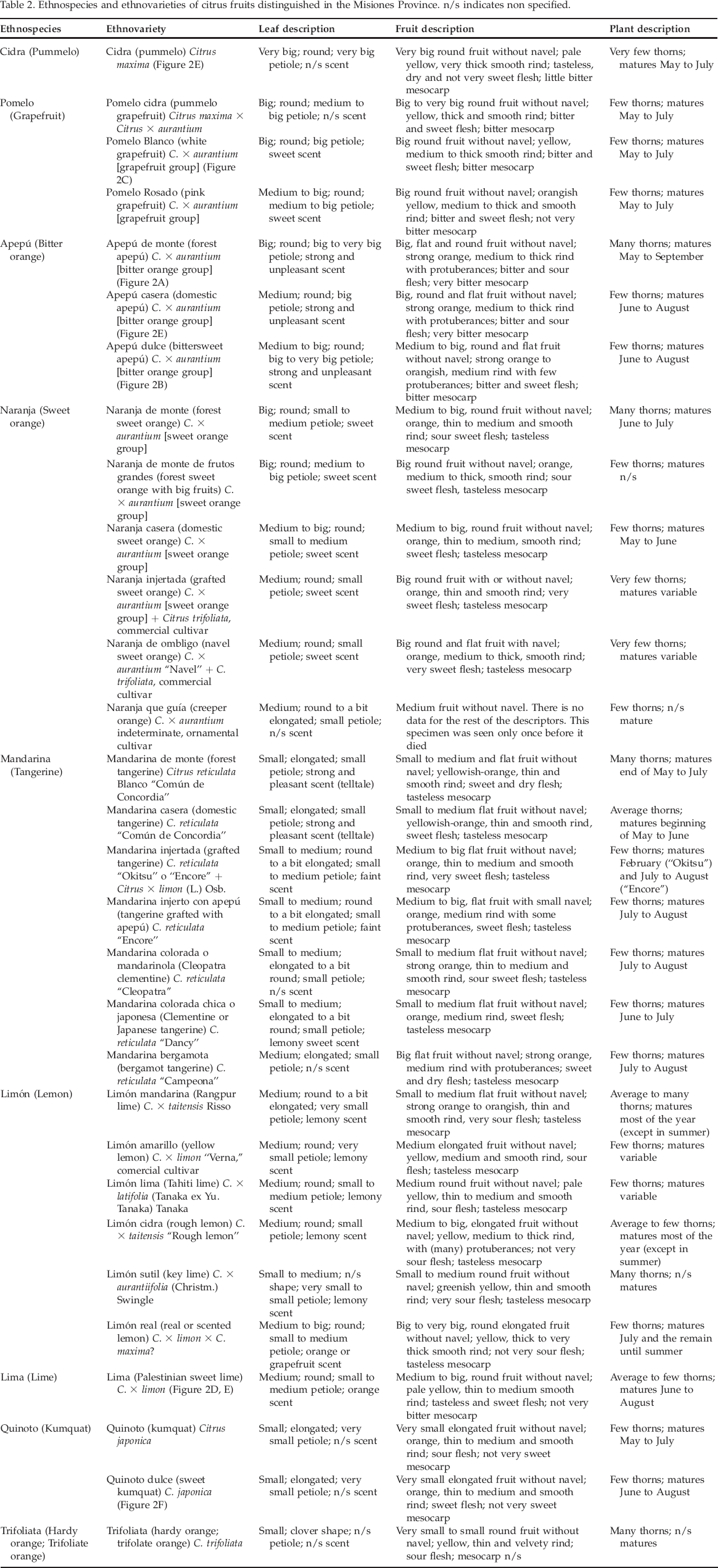
The most frequent ethnovarieties in the study area are the limón mandarina (Rangpur lime), mandarina común (common tangerine), naranja común (sweet orange), and then pomelo blanco (C. × aurantium [grapefruit group]; white grapefruit), the lima (Palestine lime), and the apepú (bitter orange). According to the informants' stories, the ethnospecies “citron” (Citrus medica) and “apepú” are currently less variable than in the past due to disuse. This disuse is based in the current use of the trifoliata (hardy or trifoliate orange) as a rootstock, changing local cooking and medicinal practices, and in the decrease in the production and exportation of essential oils of petit-grain or neroli (bitter orange; C. × aurantium [bitter orange group]).
According to informants, grafting “orange trees” (bitter orange; C. × aurantium), lima dulce (Palestine lime; C. × limon), and mandarina común (tangerine; C. reticulata) (Figure 2: A, D, E) was also traditionally practiced before 1950; locals gathered scion wood of these varieties as well as others found in the monte (the forest, or areas of spontaneous vegetation) to graft. Other ethnovarieties such as limón mandarina (Rangpur lime; C. × taitensis), limón cidra (rough lemon; C. × taitensis), and mandarina colorada (Cleopatra tangerine; C. reticulata) have a relatively recent history in the area; however, they have been culturally appropriated, resignified (i.e., with new local denominations), and widely represented in the local knowledge (for further details, see Stampella et al. 2013a, 2014).

Different ethnovarieties of citrus trees of Misiones. A. Detail of the “apepú” fruit; B. Boy peeling an “apepú dulce” fruit to eat; C. “pomelo blanco” fruit; D. “lima” fruit; E. Comparison between “lima,” “apepú” and “cidra” fruits (from left to right); F. Foliage and “quinoto dulce” fruits. Photographs by author
Descriptors as Indicators of Perception of Variability
I documented 14 organoleptic (morphologic and sensorial) and agronomic (physiologic and ecologic) descriptors used to differentiate the variability of ethnospecies and ethnovarieties (Table 3). These descriptors refer to varieties of the plant and of its parts (fruits and leaves).
Descriptors used in the differentiation of the ethnovarieties according to the part of the plant, indicating the times each one was mentioned in the interviews.
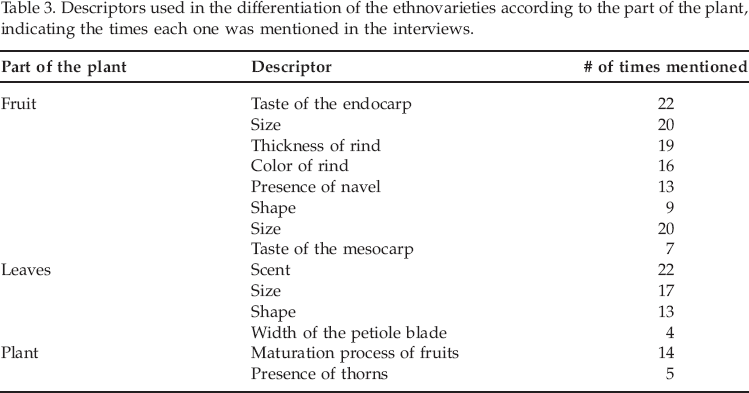
During the fruiting season (during the months of February to September in this province), ethnovarieties are distinguished by shape, size, color, and taste of fruits, with the exception of some little-known commercial cultivars. All parts of the fruit inform the recognition: scent of the epicarp, taste of the mesocarp and of the gomo (flesh, endocarp), the presence and amount of seeds, as well as the season/time of maturity and availability of fruits.
In the vegetative state, adult plants and muditas (seedlings) are distinguished according to their size, shape, and the scent of their leaves. This last characteristic is categorized differently by informers: strong, light, ugly, nice, sour, sweet, lemony, similar to a recognized ethnovariety, or, in most cases, incommunicable. However, the smell of the leaves is the characteristic most used to identify the muditas gathered in the forest. Each plant has a particular scent that almost everyone recognizes, related to the amount and composition of essential oils. Some of these sometimes get mixed up, for example naranja común (sweet orange) with lima (Palestine lime) or the diverse varieties of mandarina injertada (grafted tangerine), with the exception of mandarina común (C. reticulata), which has a strong particular scent.
Locally, these ethnospecies are generally grouped by similarities. Naranja (sweet orange), apepú (bitter orange), pomelo (grapefruit), mandarina (tangerine), and cidra (pummelo) are recognized as familiares (relatives), a term that makes reference to their morphologic-organoleptic similarity. On the other hand, limón (lemon) and lima (Palestine lime) are usually grouped together. These two groups are different mainly in the appearance of the plant, the color of the flowers, the scent of the foliage, and the characteristics of the fruits. The other ethnospecies, such as quinoto (kumquat) and trifoliata (hardy/trifoliate orange), as well as the cidra (pummelo), are less known in the area (only 5% of the informants) and are mainly associated to the colonos families.
Management Practices and Space in the Classification of Citrus
Informants also used descriptors that made reference to strategies used by the local people for the propagation of citrus trees: grafting and planting by seeds. The ethnovarieties are referred to as injertadas (grafted varieties), de injerto (rootstocks varieties), and comunes (common varieties) and, within the common ones, other descriptors made reference to the areas where the plants grow, the house (caseras) or the forest (de monte) (Table 4). Thus, the criteria used to differentiate ethnospecies and ethnovarieties combine the descriptors mentioned in Table 3 with propagation methods and the degree of relationship with human beings in each of the distinguished ethnovarieties (Table 4).
Descriptors related to the propagation method, and the location where citruses grow.
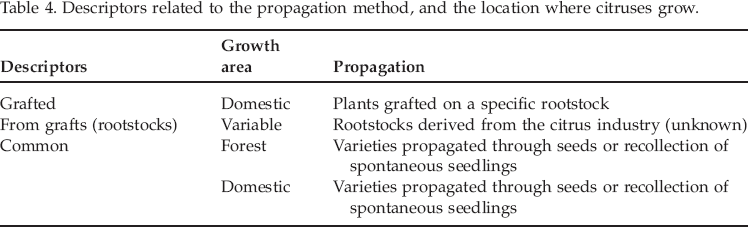
Plants that have been spread by seeds are called comunes (common, ungrafted) and they can be from the monte or caseras. The former belong to the forest and to the capuerones—ecological successions that approach the forest—whereas the latter belong to the vicinity of the house and crop or cattle breeding. Thus, the mandarina de monte seedlings collected in the forest environment and planted in the huerta (orchard) become mandarina casera. Inversely, when a DU is abandoned, the mandarina casera become mandarina de monte when the ecological succession advances.
Since very few citrus fruits prosper through cuttings (citron [C. medica] was not found in the area), the vegetative propagation of phenotypes with selected characteristics is achieved through grafting. This propagation technique, described in depth in citriculture literature, involves the plant to be vegetatively propagated (from which a bud or scion is taken) and a rootstock. For the latter, different species and varieties obtained by germinating citrus seeds are used according to the edaphic, climatic, and vegetation characteristics desired. In the study area, very few people currently know how to graft trees; this is primarily observed among colonos
Another local particularity is that the word injerto (graft, grafted) is used indistinctively to make reference to the technique described above, as well as to the hybridization processes (in which it is observed that bees are the ones that pollinate and, in consequence, hybridize the plants).
Therefore, the ethnovariety mandarina injerto con apepú (Encore tangerine) makes reference to a “tangerine” that gets characteristics of the apepú (bitter orange) through casamiento (marriage, pollination), but still fits into the ethnospecie mandarina since it has more phenotypic properties in common with it.
Within the group of grafted citrus, two groups can be distinguished: injertados (grafted citrus trees) and those de injerto (rootstock varieties). Grafted citrus are those that have been grafted on a particular rootstock (usually C. trifoliata [hardy/trifoliate orange], C. × taitensis [Rangpur lime], or C. × limon [lemon], lima dulce [Palestine lime]). These specimens can be found in local nurseries and on neighboring farms, or are distributed by INTA (National Institute of Agricultural Technology).
Citrus de injerto (e.g., C. reticulata [tangerine], mandarina colorada [Cleopatra tangerine] and mandarina japonesa [Okitsu tangerine], and C. × limon [lemon], limón cidra [rough lemon]) are those used as rootstocks of grafted varieties and, like common ethnovarieties, are also spread by seeds and become spontaneous trees in the forested areas.
Uses
Citrus trees occupy an important cultural place in the study area. Like native trees, citrus are considered local or belonging to the forest. The preference ranking of seven local fruits (independently of their spontaneous or cultivated status) selected from prior research shows that “orange” and “tangerine”—especially the common ethnovarieties—are among the preferred fruit trees, together with banana (Musa × paradisiaca) and plum (Prunus domestica), the latter being cultivated and obtained in the fairs and town markets, respectively.
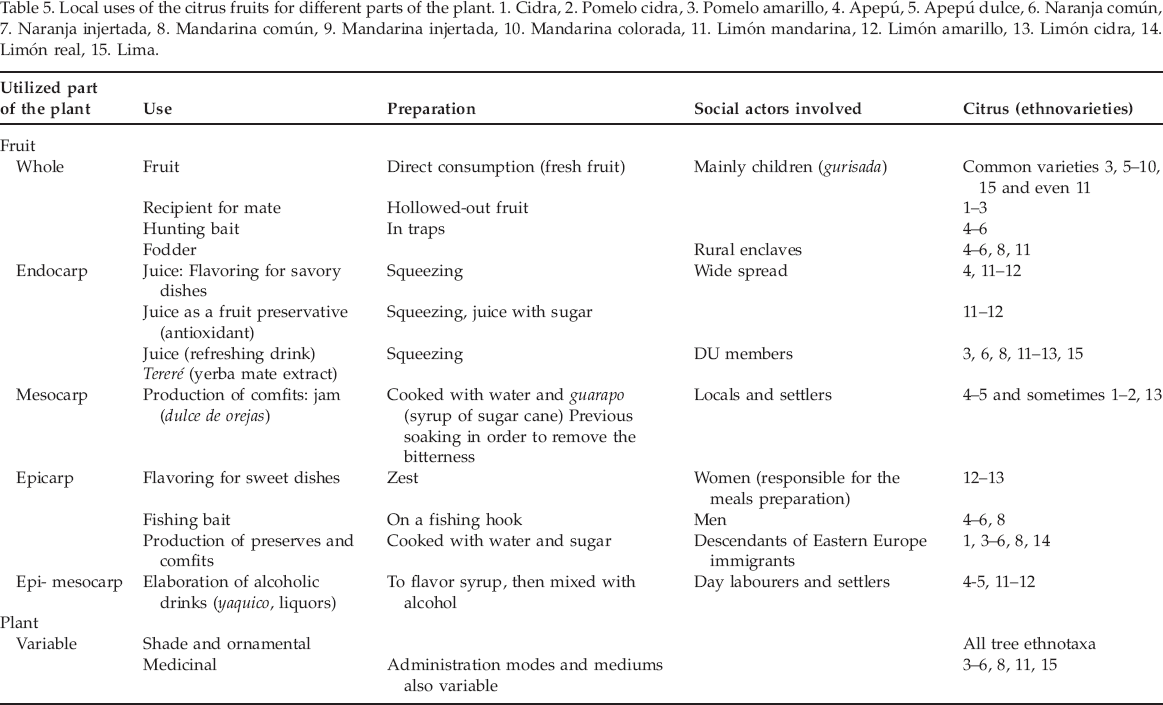
Citrus trees are used in diverse ways in the communities by different actors in the study communities (Table 5). These uses can be grouped into eight etic categories: fruit and juice; flavoring and canned food elaboration; fruit preservative; container; medicine; bait for hunting and fishing; fodder for cattle; and as shade and ornamental trees.
Local uses of the citrus fruits for different parts of the plant. 1. Cidra, 2. Pomelo cidra, 3. Pomelo amarillo, 4. Apepú, 5. Apepú dulce, 6. Naranja común, 7. Naranja injertada, 8. Mandarina común, 9. Mandarina injertada, 10. Mandarina colorada, 11. Limón mandarina, 12. Limón amarillo, 13. Limón cidra, 14. Limón real, 15. Lima.
Discussion
Diversity
Criollos (mixed populations that represent the convergence of native people, descendants of Luso-Hispanic colonizers, and of the immigrations in the late nineteenth century) from the rural settlements of southern Misiones can be considered a traditional society because of their rich TBK and the way their beliefs and practices relate directly to their environment. These are captured in strategies of multiple use of common goods, according to Toledo and Bassols (2008), since these beliefs and practices are the result of a synthesis of different cultures, creating diversity within the k-c-p (kosmos-corpus-praxis) complex.
Other research surveyed citrus diversity in different environmental conditions (more arid environments) such as those in southern Spain and Baja California (Mexico). In the Segura River basin (Spain), a large variety of citrus tree ethnospecies and ethnovarieties—all cultivated—has been found. Even though the variety is greater, the uses are fewer in comparison to the uses in Misiones (Núñez et al. 1998); citrus fruits are generally used to make candied fruits and desserts, and as condiments. There are also “bergamots” which were selected because their peel is edible and “mela rosas” (pink apples [C. × aurantium]), used for comfit. On the highly arid Baja California peninsula of Mexico, a limited number of varieties were found (de Grenade et al. 2014), perhaps due to the absence of forest or jungle areas (humid environments) that serve as a spontaneous diversity reservoir, of which varieties can be recovered by settlers.
The comparison between scientific and local citrus nomenclature shows a greater discrimination in the latter since the nine ethnospecies and 30 ethnovarieties correspond to four biological species and four hybrid taxa. On the other hand, some local names can lead to confusion since they take terms from the citrus nomenclature and assign them to other taxa. For example, the ethnospecie cidra (pummelo; C. maxima) may be mistaken with cidro (citron; C. medica), known as pampelmusa, toronja, or zamboa in other Spanish-speaking settlements (Palacios 1978). The cidro is not present in the study area, but is represented by the limón cidra (rough lemon; C. × taitensis), hybrid taxa that represent the hybrid cross of C. reticulata and C. medica. This trivial denomination was used in Spain at the beginning of sixteenth century when grapefruit/pomelo and citron were interchangeably called toronja (Ramón-Laca 2003). Thus, the “confusion” may have originated in this time period or may have been incorporated by nineteenth-century immigrants. The apepú is also called “bitter orange” or “sour orange,” making reference to the taste of the mesocarp and the endocarp, respectively. However, apepú is not considered a secondary name but a primary complex category and, therefore, different than “orange” (Berlin 1992: 27–28). Limes are generally classified in the citrus literature as “sour” (according to size, C. × aurantiifolia and C. × latifolia) and “sweet” (Palestine lime, C. × limon) (Swingle and Reece 1967). In the study area, “lime” refers to the “sweet” varieties only, and the “sour” fruits are grouped in the “lemon” ethnospecies category. This distinction reveals the importance of the gustatory perception in the characterization of the species.
Members of the domestic units use different descriptors according to the phenological stage, either alone or in combination to recognize variability. Thereafter, the classification of the variability is nonrestrictive and several descriptors can be used throughout the year according to different phenological state to systematize citrus. This can be related to the phenotypical variability that is the result of the hybridization processes among the majority of ethnovarieties, as well as to the different contexts in which the groups are made and to the individual knowledge of the inhabitants (Capparelli et al. 2011; Zamudio 2012).
Classifications are hierarchically constructed (vertical dimension) in the study communities according to principles proposed by Berlin (1992), since all the ethnospecies belong to “citrus,” “citrus fruits,” or “relatives of the orange.” These ethnovarieties are then grouped into different ethnospecies. “Orange” is thus the ethnospecies that groups other citrus. Within ethnospecies, different categories may be flexible and include a wide variability of shapes around a prototypical ethnovariety. According to Rosch (1978), a prototype is a specimen that best represents the characteristics that define the whole, or domain, to which the rest of the specimens are associated; i.e., a cognitive reference point. Thus, within the ethnospecies, common varieties are considered prototypical. It is also relevant to emphasize the similarity between the classification made locally and the one proposed by Scora (1975), that groups together bitter orange, sweet orange, and grapefruit as C. × aurantium. The difference between them is that Scora (1975) considers that the parental types are C. maxima [pummelo] and C. reticulata [tangerine], while in the local perception, pummelo and tangerine are seen as variations of oranges rather than their parents. Thus the importance of the orange is reflected in everyday life and its introduction history. Toward the end of nineteenth century, even the tangerine was called “tangerine orange” by the naturalists that explored the northeastern region of Argentina (Stampella et al. 2014).
The gene pool concept as presented by Harlan (1992) may be used to explain the different types of barriers to varieties crossing. In this model, there are three Gene Pools (GP): Primary gene pool (GP-1), which corresponds to the concept of biological species and is characterized by plants with frequent crossing, fertile hybrids, and normal gene segregation; Secondary gene pool (GP-2), which includes biological species that can cross with the crop species, of which hybrids may be sterile and with weak gene segregation; and Tertiary gene pool (GP–3) in which crossings may be anomalous, lethal, or completely sterile, a characteristic of complex hybrids. Among citrus fruits, the “common tangerine” (C. reticulata) serves as a good example of the model: GP-1 corresponds to cultivated (domestic) and spontaneous (forest) ethnovarieties, whereas GP-2 is represented by the hybrid taxa which result from the hybridization between C. reticulata (tangerine) and C. medica (citron) (C. × taitensis [Rangpur lime]) and C. × aurantium (sweet orange, bitter orange, grapefruit). Finally, GP-3 is represented by complex hybrid crossing or hybrids generated through crop breeding and genetic engineering and must be propagated through grafting. An example is “tangerine kumquat,” C. × georgiana, also known as “citrangequat”. This hybrid taxa represent a complex cross (C. trifoliata [hardy/trifoliate orange] × C. × aurantium [sour orange] × C. japonica [kumquat]).
Sensory organoleptic (taste and smell) characteristics constitute a field that has not been studied in depth due to the disparity of local and even personal categorizations, which hinder comparative studies. Nonetheless, they are widely used in traditional contexts and scientific works where the field determination or the one coming from sterile vegetative materials prevails (Molares 2010). For example, citrus fruits with a sour endocarp similar to a “tangerine” (i.e., rough lemon and Rangpur lime, both C. × taitensis), key lime (C. × aurantiifolia), and Tahiti lime (C. × latifolia) are grouped into the “lemon” category, which is characterized by a sour taste, regardless of whether or not they are related to the lemon family. The taste is also present in the differentiation of ethnovarieties: apepú and apepú dulce (bitter-sweet orange; C. × aurantium [bitter orange group]) and quinoto and quinoto dulce (kumquat; C. japonica).
The impossibility of describing and communicating the non-morphological organoleptic categories seems to be related to early childhood learning through practices such as observation and imitation. Some authors make reference to “know how” as the way in which actors spontaneously act in a given situation, in contrast to the “know what,” in which the abstractions or logical judgment prevail (Eyssartier 2011). Taste and smell are valuable tools for the research of new medicinal plants since they constitute important mnemonic elements—together with ecological and cultural factors—in the transmission of ethnomedical knowledge (Molares 2010) and, for citrus and other aromatic fruits, in the recognition of ethnospecies and ethnovarieties during the seedling stage or in individuals without fruits.
In the treatises on citrus fruits of the seventeenth to the nineteenth century, the use of the words “vulgare,” “vulgaris,” “franc,” “ordinaire,” “sauvage,” and “silvestre” (Ferrari 1646; Risso and Poiteau 1818–1822; Volkamer 1708–1714) can be observed. These words are used to make reference to prototypical citrus fruits which have not been culturally selected. The rest of the varieties, much more numerous, are described with titles that refer to their geographical origin (from China, from Malta, from Calabria) and to specific organoleptic characteristics (bicolor, double-flowered, with sweet fruits).
When comparing characteristics between common ethnovarieties and rootstock ethnovarieties, it can be observed that they are primarily differentiated in their antiquity in the area—introduced in the sixteenth century and mid-twentieth century, respectively—and, to a lesser degree, in their modes of propagation and in the areas where they prosper. The undifferentiated use of the words “hybridization” and “graft,” as it was previously mentioned in the results of this work, is a common and old fact as it can be seen in the work of Monardes in the sixteenth century (González and Ramón-Laca 2002).
The grafted varieties of citrus include several commercial cultivars that have been locally renamed. For example, C. reticulata (tangerine) “Encore” is known as mandarina injerto con apepú due to the shape of the fruit, and the color and roughness of its rind (epicarp). The “Japanese tangerine” is the C. reticulata “Okitsu,” which belong to the seedless early tangerines (Satsuma) usually cultivated by Japanese communities in Misiones. On the other hand, the common and rootstock ethnovarieties are more variable and easy to cultivate (according to sexual reproduction and seminal propagation). This facility to be reproduced is coincident with their diversity of uses, previously mentioned in the results. Besides, the common ethnovarieties of citrus are important medicinal resources in the area (Stampella et al. 2016).
Diseases, Threats to Diversity, and Uses
Currently, this local variability is in danger due to the presence of the citrus disease HLB (Huanglongbing) in the province. This disease is caused by a Gram-negative bacteria (Candidatus Liberibacter) spread by the insect Diaphorina citri that parasitizes the phloem of the citrus trees and other Rutaceae and kills the affected plant (Halbert and Manjunath 2004; Ramos Méndez 2008). Seedlings from infested plants propagate this disease and it is prohibited to export seeded citrus fruits from the province.
This disease threatens commercial citrus orchards as well as local varieties, since contaminated trees must be eliminated (Ministerio de Ganadería, Agricultura y Pesca 2012). During 2013, more than 1,500 trees were destroyed in several districts in the north of the province near the Brazilian border (Territorio Digital 2014).
In this research, I document a high diversity of uses of the citrus fruits in the study area. The use of the cidra (pummelo) and pomelo (grapefruit) as containers for yerba mate (an infusion prepared by steeping dried leaves of yerba mate [I. paraguariensis] in hot water), tereré (mate prepared with cold water), and the preparation of dulce de oreja (conserves made with the mesocarp of the fruits of apepú) are here mentioned for the first time (Table 5). In many places around the world, citrus mesocarp is used to make preserves, especially in Middle East, but also in the Americas (Nabhan 2014; Paul and Cox 1995). This is an example of processes of elimination of unpalatable compounds—bitter flavonoids—through water washing, similar to what Lancaster et al. (1982) describe for cyanohydrin compounds of M. esculenta (cassava or manioc). Common ethnovarieties of naranja and limón constitute resources used for several purposes corresponding to the strategy of multiple use since they are utilized as food, medicine, fodder, and shade.
Conclusion
Criollos communities in the Misiones Province cultivated 30 varieties of citrus. The variation distinguished in this research reveals the high agrodiversity of this genus locally adopted in diverse traditional enclaves despite its historical introduction. The naturalization of common and grafted ethnovarieties allows locals to perceive citrus trees as “natives” (from the forest) and to transplant them to new orchards or household gardens. The use of seedlings to initiate crops, and the association of several ethnovarieties, favor the hybridization and the generation of variability on which the cultural selection takes place.
Informants in this research identify citrus fruits by groups of descriptors, primarily organoleptic (morphological and sensorial), that allow them to differentiate ethnovarieties, even at a seedling stage. These characteristics are learned by children at an early age, at least for the edible or medicinal ethnovarieties, and constitute a valuable body of knowledge where information is orally transmitted through family and individual experiences. The diverse uses of the citrus fruits—especially “orange,” “apepú,” and “lemon”—highlight the role of the family in conservation through the use of fruit ethnovarieties by means of diversified agrodiversity practices and landscape management.
Footnotes
Acknowledgments
I would like to thank CONICET (Comisión Nacional de Investigaciones Científicas y Técnicas) and UNLP (Universidad Nacional de La Plata) for financial and technical support: PIP 0460 (2013-2015). I am also grateful to Dr. M. Lelia Pochettino and Dr. Norma I. Hilgert for guiding and directing me in the research and the numerous times they have read the manuscript and made suggestions to improve it, as well as to the anonymous reviewers. Finally, I want to express my gratitude to the people of Cerro Mártires and Teyú Cuaré (Misiones, Argentina).