







Abstract
Wild animals are an important source of food and income throughout the Amazon basin, particularly for forest-dependent communities living in the more remote regions. Through interviews in 51 households within 16 communities in the Jutaí River Extractive Reserve, Amazonas, Brazil, we determined animal taxa consumed and frequency of wild meat consumption, as well as patterns of wild meat trade. We then investigated the influence of social and biological factors on wild meat consumption and trade. People declared consuming wild meat on an average of 3.2 ± 2.8 days/month/household, amounting to 198.85 kg/month consumed by all sampled households. The vast majority of respondents got wild meat by hunting themselves or it was given to them by their neighbors. The most consumed taxa were paca (Cuniculus paca) and collared peccary (Pecari tajacu). Approximately two-thirds of respondents declared selling wild meat; meat destined for urban markets was more expensive and was primarily sold from houses of relatives living in the city. Wild meat consumption was determined by taste preferences, while prices were related to the body mass of the taxa concerned. Frequency of wild meat consumption and the probability of selling wild meat were positively associated with the number of hunters in the household. We highlight the importance of wild meat for remote communities, and, importantly, the prominent links these communities have with urban markets. These findings are useful in developing strategies to ensure the sustainable use of wildlife in the Amazon.
Introduction
In tropical forested regions throughout the world, increasing human populations, better access to previously unhunted areas, and improvements in hunting technologies have intensified pressures on wildlife and habitats (Coad et al. 2019). In addition, the integration of local people into the wider market economy in the recent decades has driven the switching of hunting for home consumption to trading and fulfilling city markets' demands for wild meat, exacerbating wildlife harvest in the tropics (Benítez-López et al. 2017; Ripple et al. 2016). In this context, understanding the livelihood, economic, and cultural values of wild meat (here considered as any wild vertebrate animal used for food, excluding fish) and the drivers of hunting and trade in tropical forests is fundamental to developing strategies for the conservation of game species and to guarantee food sovereignty of local people (Coad et al. 2019).
In the Amazon basin—a region that encompasses c. 4,982,000 km2 of tropical forests shared by eight countries in South America—wild meat represents important sources of food and income for many forest peoples (Sarti et al. 2015), especially where meat from domestic animals is scarce or expensive (Nunes et al. 2019a). Together with manioc (Manihot esculenta) flour and fish, wild meat comprises one of the main components of the diet of rural and Indigenous communities in the Amazon (Adams et al. 2009). In the Brazilian Amazon alone, according to Peres (2000), as many as 23.5 million game vertebrates are hunted for subsistence yearly by rural and Indigenous communities.
As well as consuming wild meat, hunters also sell part of their quarry to nearby communities or in urban centers to complement their income and to enable them to purchase urban goods such as salt, oil, and clothes (Antunes et al. 2019; Morcatty and Valsecchi 2015). The trade in wild meat in Amazonia occurs within and between rural communities and in urban areas (Chaves et al. 2019; van Vliet et al. 2015a, 2015b). Rural communities and urban centers are connected especially by 1) the typical multi-sited household organization, i.e., a network among relatives that connects different localities, with community-based or commercial boats carrying people and goods between localities (Chaves et al. 2019; Padoch et al. 2008), and 2) the riverine trader, or “patron,” who acts as an intermediary in commercial relationships, traveling between urban centers and rural communities selling industrialized products and buying forest products, such as manioc flour, fish, and wild meat (Lima 2009). Although households in rural communities regularly exchange fish and wild meat as part of a local reciprocity system (Lima 2009), recent studies show that trade in wild meat also occurs within and between communities (Morcatty and Valsecchi 2015).
Differences in market connectivity, type of habitat, as well as the cultural background of communities, are known to influence patterns of wild meat consumption and trade (Chaves et al. 2019; Morcatty and Valsecchi 2015; van Vliet and Nasi 2008). However, there is still a lack of knowledge of potential drivers of wild meat use in more isolated Amazonian communities. For instance, people's willingness to engage in conservation and land use management depends on their place attachment and how they identify with their surroundings (Walker and Ryan 2008). These bonds are strongly influenced by people's time of residence in an area (Hernández et al. 2007). Although to our knowledge never tested for wildlife exploitation, hunting pressure and frequency of trade in Amazonian communities may differ between long-standing inhabitants and newcomers.
Cooperation among hunters is likely to increase hunting yields (Alvard and Nolin 2002); however, it is unclear whether a larger number of related hunters within a household can increase hunting and trade rates. Additionally, although abundance and body mass influence the species hunters pursue (Peres 2000), there is little data available on how taste preferences affect hunting choice and consumption of game species.
Determining patterns and correlates of wild meat consumption and trade among remote Amazonian communities will allow a more accurate understanding of the use of wildlife resources in the region, and to foster more effective strategies for the sustainable use of Amazonian fauna (Levi et al. 2009). In this study, we measured consumption and trade patterns of wild meat within remote rural communities in the Jutaí River basin, in central Amazonia. We also assessed the social and biological factors that may influence the consumption rates, trade, and pricing of wild meat by these communities.
Materials and Methods
Study Area and Cultural Context
This study was conducted in the Jutaí River Extractive Reserve, in the Jutaí River basin, between the Jutaí and Riozinho Rivers (Figure 1). The Jutaí River Extractive Reserve is 2755 km2, mainly covered by upland forests, although other vegetation types occur to a lesser extent (e.g., white-water and black-water flooded forests). Annual precipitation in the reserve averages 883 mm per month in the rainy season (December–March) and 665 mm per month in the dry season (June–September). A total of 1221 riverine people, distributed among 223 families within 24 communities (11 on the Jutaí River and 13 on the Riozinho River), live in the Jutaí River Extractive Reserve (ICMBio 2011). The city of Jutaí, with 17,964 inhabitants, is the closest urban center from the Jutaí River Extractive Reserve, 75–200 km (92.2 ± 54.7 km) from the sampled communities by river.
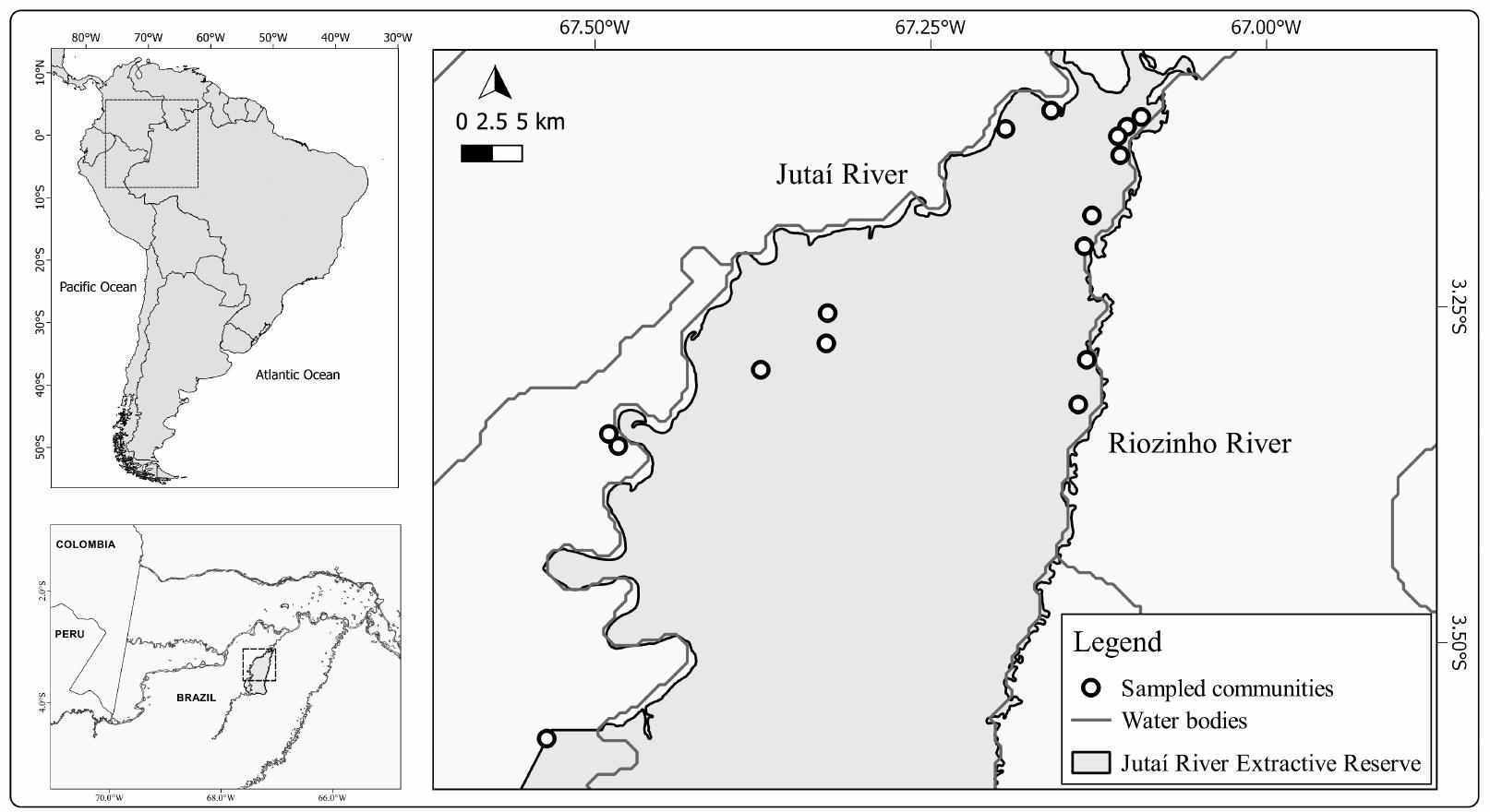
A map showing the location of the Jutaí River Extractive Reserve, central Amazonia, and the 16 sampled communities settled on the Jutaí and Riozinho Rivers.
Extractive reserves are a category of protected areas defined by Brazilian environmental law (Law No. 9985/2000) as a “sustainable use conservation unit,” meaning that local populations living within it are allowed to use natural resources. In the past, extractive families lived scattered along Amazon rivers working in rubber tapping. During the 1970s, the Catholic Church brought together extractive families into organized communities (Lima and Peralta 2017). With the support of the progressive branch of the regional Catholic Church, community dwellers in the Jutaí River basin created the Jutaí River Extractive Reserve in 2002. Inhabitants of the Jutaí River Extractive Reserve call themselves extrativistas (extractive people), meaning that they are non-Indigenous people, descendants of Amazonia's colonial history (Lima 2009). They are better referred to as “agro-extractive,” given their engagement in agriculture, fishing, hunting, logging, and other extractive activities (Fraser et al. 2018).
Data Collection
We interviewed household heads of a total of 51 different families in 16 Jutaí River Extractive Reserve communities from June 9–19, 2014. Within each community, we selected households in which the head was available for interview (i.e., not occupied with other activities). We were able to interview at least one household from each community (average: 3.2 ± 2.8 households/community).
We used a standardized, semi-structured questionnaire (Supplementary Table 1) to ask interviewees the following questions: 1) background information: age of the interviewee, number of residents in the household, number of hunters in the household, whether the household head was born in the community (yes/no, hereafter origin), and residency time in the community (in years); and 2) wild meat consumption and trade patterns: frequency of eating wild meat (in days per month), how wild meat is obtained (i.e., hunting, buying, earning as a gift, or exchanged with other products), the most consumed (open question) and the three most preferred (in terms of meat flavor) taxa, whether wild meat is sold by the household (yes/no), and if sold, where (city or their own/neighboring communities) and what taxa are sold, the sale unit (i.e., entire specimen or in kg), and price it sells for.
Participants were familiarized with our consultation process, as well as the aims of the study prior to the interview. We held a joint meeting with all available residents in each community at the time of the visit, during which we presented the aims of our visit and interviews. We also clarified that respondents were free to participate in the study and to leave the study at any time, and that they were free to refrain from responding to questions they were uncomfortable to answer. All visited households agreed to participate. Interviewees were provided with an Informed Consent Form detailing the project aims and guaranteeing that their identities would remain anonymous. The data collection protocol was approved by the Committee on Research Ethics of the Mamirauá Sustainable Development Institute (Protocol #001-2011).
Data Analysis
We used descriptive statistics to describe the frequency of consumption of wild meat, the means by which wild meat is obtained, most consumed and preferred taxa, and the number of people selling wild meat along with prices. The global threat status of the consumed taxa was classified according to the International Union for Conservation of Nature (IUCN) Red List threat categories (IUCN 2019). If local names provided by informants did not allow us to unequivocally catalog the species, we used genus or family.
The amount of wild meat consumed monthly per household was estimated using the following formula (see El Bizri et al. 2020):

where B is the wild meat biomass consumed; 0.18 is a working value of grams of wild meat consumed per person, per day on which wild meat was eaten (obtained from a study of 13 Indigenous communities [Ojasti 1996]); Fc is the declared monthly frequency of wild meat consumption in the household; and Npeople is the number of people living in the household. The overall monthly biomass consumed in the 51 households was calculated by summing the values for all informants. For those informants who did not declare their frequency of consumption (n = 8 or 15.7% of the total number of informants), we applied the average Fc for all informants. We estimated the amount of meat consumed of each taxon by using the percentage citations of the taxon of the overall biomass (B). The number of individuals consumed was estimated by dividing the biomass consumed of each taxon by the body mass of eviscerated specimens for the taxon (see El Bizri et al. 2020; García et al. 2004).
We used Generalized Additive Models for Location, Scale, and Shape (GAMLSS) to test the effects of social and biological factors on consumption and trade patterns of wild meat. Firstly, we tested whether the frequency of consumption and the probability of selling wild meat varied with the residence time in the community (calculated as percentage of the number of years the interviewees declared they had lived in the community divided by their age), and the number of people and hunters in the household. We then assessed whether the percentage citations of consumed taxa were related to the percentage citations of preferred taxa, as well as the effect of the size of the taxa (body mass) on percentage citations. In addition, we built a model to test whether the price per taxon is related to their body mass and to the locality where sold (whether urban centers or within/among communities), using taxa as a random effect due to differences in the number of citations among them. Body mass of all mentioned taxa was obtained from García et al. (2004) and from Robinson and Redford (1986). Prices per taxon were calculated in USD/kg; when the sale unit was the entire specimen, we divided the price by the eviscerated body mass of the species or taxon (García et al. 2004). We adjusted for inflation and converted the selling price for each taxon by employing the exchange rate for June 15, 2014 to convert Brazilian reals (R$) into US dollars (R$ 2.24 = 1.00 USD), based on the General Price Index for Brazil estimated by the Getúlio Vargas Foundation 1 .
To build the models, we tested combinations of predictor variables in linear or non-linear relationships using different distribution families. Firstly, we checked for collinearity among variables. Since the number of people was positively correlated with the number of hunters in the household (Spearman R = 0.66), these variables were never included in the same models, but tested separately. Final models were selected based on the Akaike Information Criterion (AIC), considering all models with good support as those with ΔAIC values smaller than two in relation to the model with the smallest AIC. In cases when more than one model was best fitted, we selected the model with the smallest number of parameters (simplest model).
We used R 3.3.3 software and gamlss R-package for generalized additive models, and GGally R-package for the collinearity test. For the variables' effects, we assumed significance when p < 0.05.
Results
Wild Meat Consumption Patterns
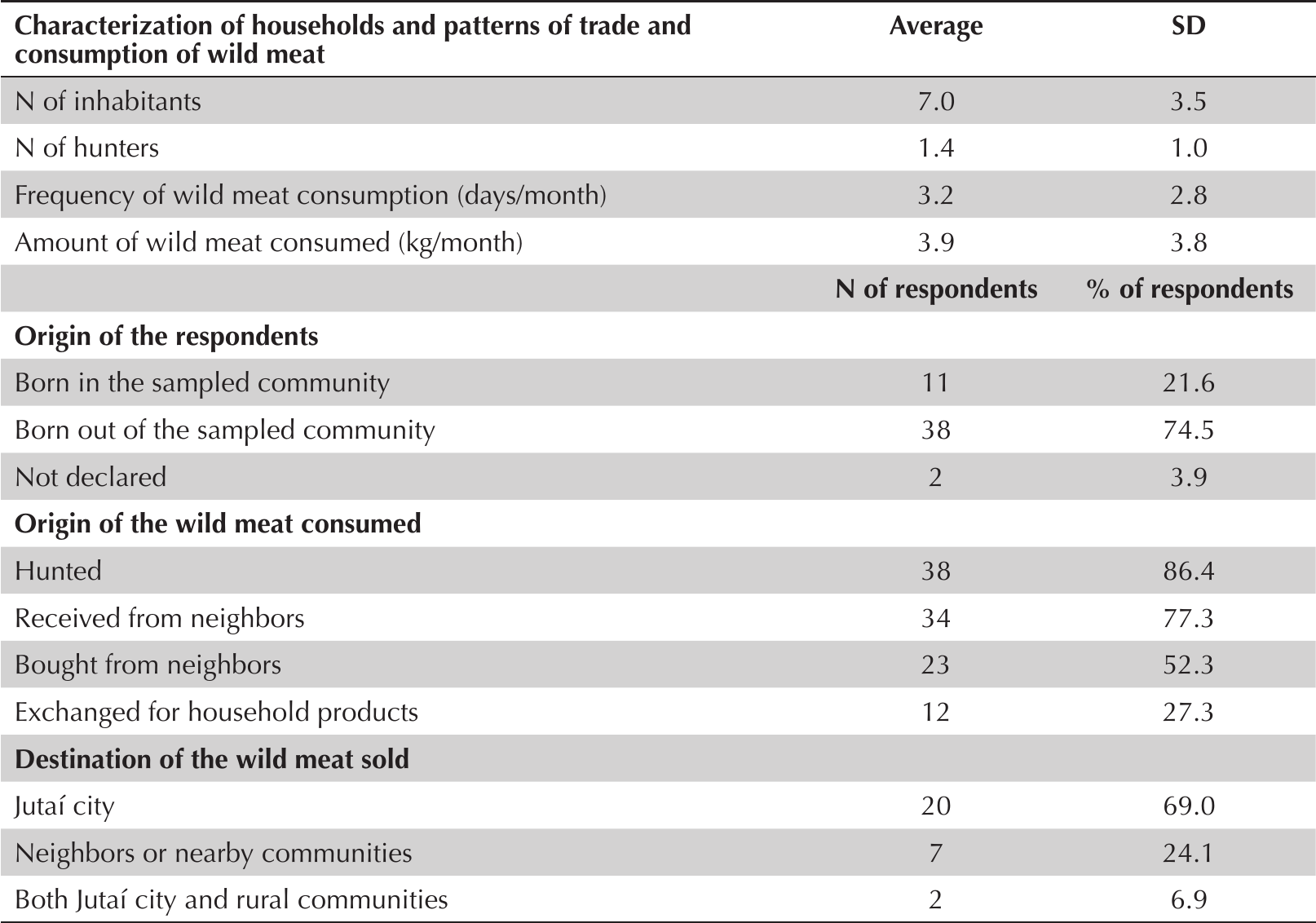
Households were occupied by seven people on average, and the number of hunters in households ranged from none to six people (Table 1). The majority of the respondents were born outside of the sampled communities. All interviewees confirmed that they ate wild meat, with the vast majority of respondents getting wild meat by hunting themselves or receiving it from their neighbors (Table 1). Buying wild meat or exchanging it for other products occurred less frequently (Table 1). Those who exchanged products for wild meat did so for sugar, kitchen oil, soap, petrol, flour, or bananas.
People declared consuming wild meat on an average of 3.2 ± 2.8 days/ month/household, resulting in a total of 198.85 kg of wild meat consumed per month by all surveyed households. The declared frequency of wild meat consumption was positively correlated with the number of hunters within the household (Table 2; Figure 2). However, there was no relationship between the number of persons occupying the household or with the percentage time of residency in the community and the frequency of wild meat consumption (Table 2; Figure 2). This suggests that the origin of the family (whether born in the community or not) does not influence wild meat consumption, and that the number of hunters in the household is more important to define wild meat consumption rates than the amount of people in a family depending on these hunters for food provision.
Details on the households interviewed and their patterns of consumption and trade of wild meat in the Jutaí River basin.
Most Consumed and Preferred Taxa
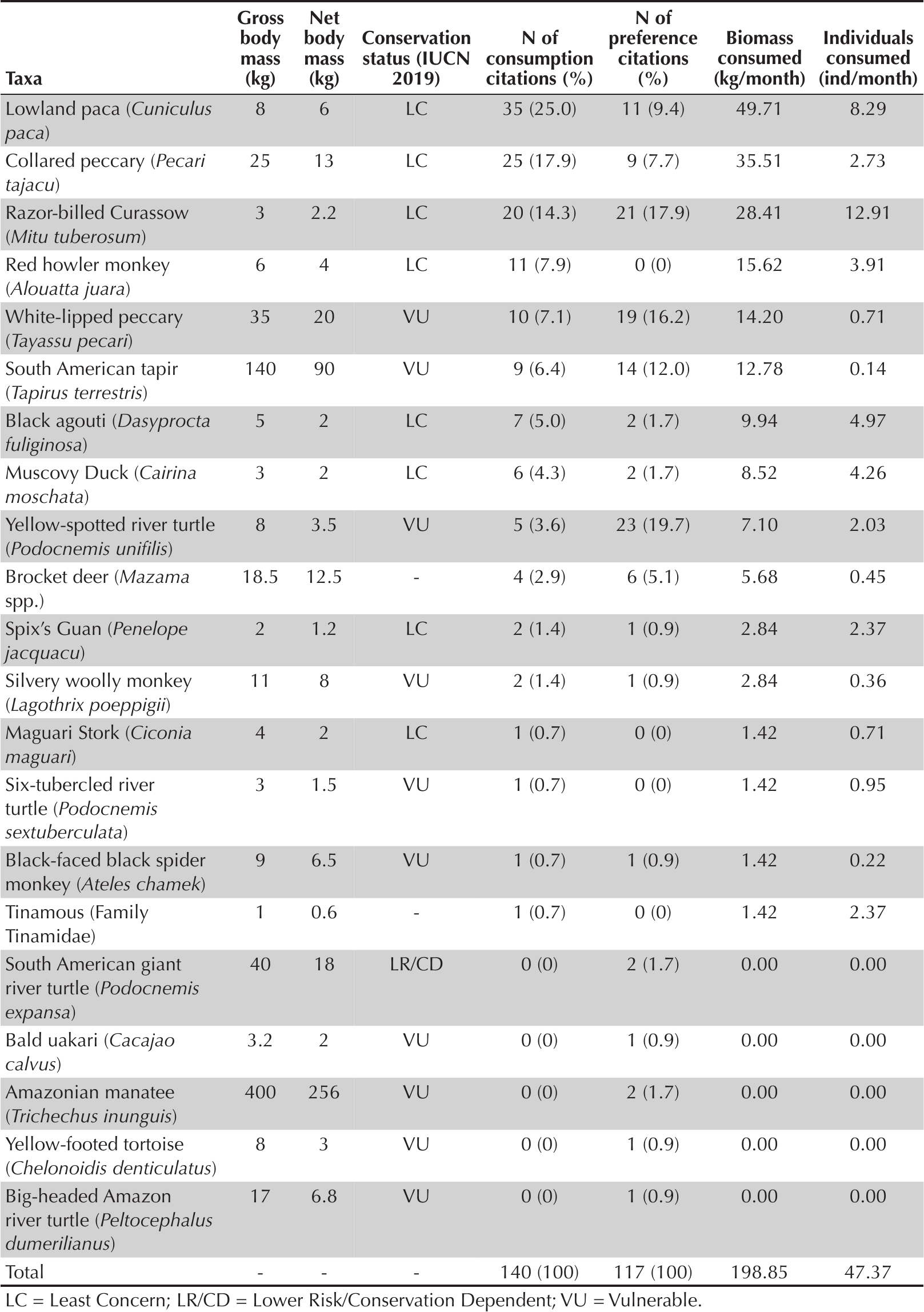
Sixteen taxa were mentioned by interviewees in a total of 140 citations of the most consumed wild meat. Mammals were the most cited group, followed by birds and chelonians (Table 3). Six taxa, namely paca (Cuniculus paca), collared peccary (Pecari tajacu), Razor-billed Curassow (Mitu tuberosum), Juruá red howler monkey (Alouatta juara), white-lipped peccary (Tayassu pecari), and tapir (Tapirus terrestris) represented 78.6% of all citations. Overall, an estimated 47 individuals of all taxa were consumed monthly by the 51 households, the most common being curassows and paca. Among the cited taxa for which it was possible to identify the species (n = 14), at a global level, six (42.9% of the taxa) are currently threatened with extinction (Table 3). However, in terms of individuals consumed, threatened taxa represented only 9.8% (n = 4.4 individuals).
As many as 17 different species were cited 117 times as preferred species by the interviewees. Mammals were the most representative group, followed by chelonians, and then birds (Table 3). The top five most preferred taxa were the yellow-spotted river turtle (Podocnemis unifilis), curassows, white-lipped peccary, tapir, and paca, together comprising 75.2% of all citations. The percentage number of citations for consumption of each taxon was positively correlated with the percentage number of citations for preference (Table 2; Figure 3). We found no significant effect of species' body mass on the percentage consumed.
Trade in Wild Meat
Regarding the trade of wild meat, from the 48 interviewees that responded to these questions, 30 (62.5%) declared selling wild meat. The trade in wild meat on the Jutaí River basin occurs between neighbors or nearby communities and in the Jutaí city, but most people declared selling exclusively in the city (Table 1). For those selling in the city, most declared selling in only one single place within the city (n = 11), five interviewees declared selling wild meat in two places, five others in three places, and one in four places. Localities where wild meat was sold in urban centers were in most cases houses of relatives in the city (n = 14), followed by direct trade at the Jutaí city quay (n = 9), to intermediaries (n = 7), delivered directly to peoples' houses who pre-order wild meat (n = 7), or directly to consumers in local fairs (n = 3). Similar to the results for the frequency of wild meat consumption, the probability of selling wild meat increased with the number of hunters in the household; households with more than three hunters had ∼100% of probability of selling wild meat (Figure 4). However, this probability was not related to the number of people in the household nor with the time of residency in the community.
Details of the best-fit generalized additive models for location, scale, and shape (GAMLSS) for the frequency of consumption of wild meat, percentage of consumption per taxon, probability of selling wild meat, and prices applied according to a number of social and biological predictor variables on the Jutaí River basin, central Amazonia. Smoothers were fitted using cubic splines (cs) and p-splines (pb). AIC is the Akaike Information Criterion for the selected model, while ΔAIC null is the difference between the AIC of the selected model and the AIC of the null model.
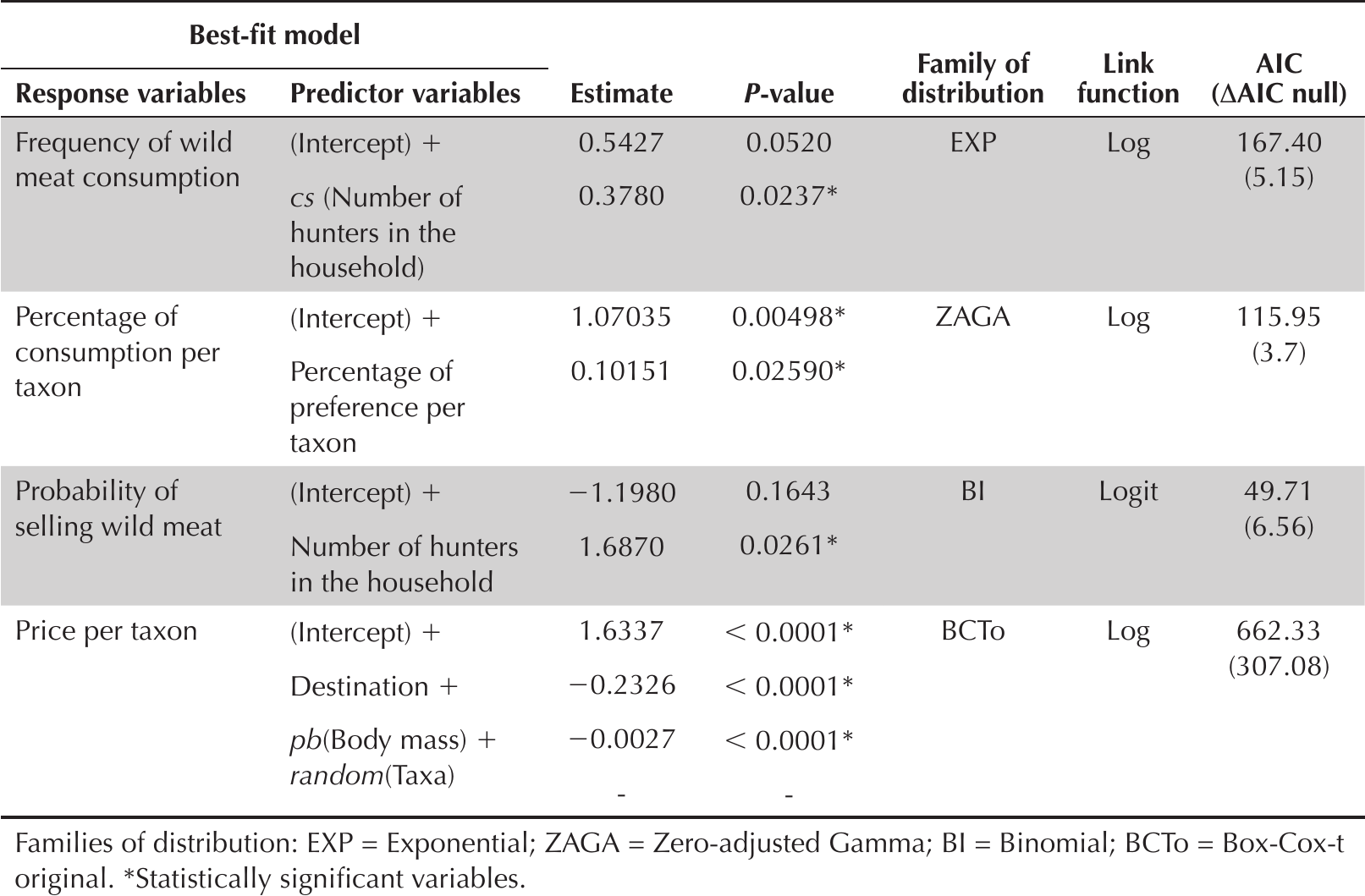
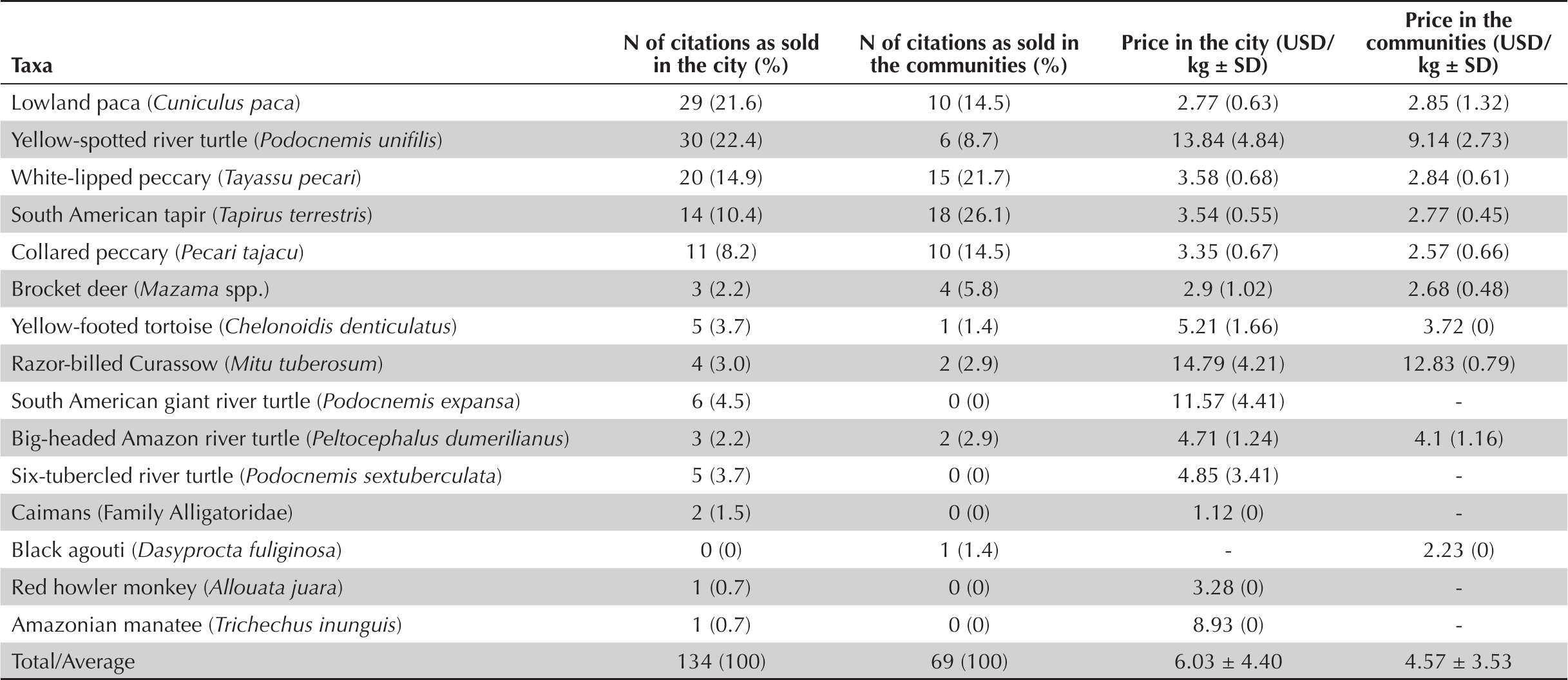
Wild meat was sold at an average price of 5.6 ± 4.2 USD/kg (6.0 ± 4.4 USD/ kg in cities and 4.6 ± 3.5 USD/kg in the communities). Fifteen taxa were recorded as sold; the number of taxa sold in the city being greater than in the communities (14 [n = 134 citations] vs. 10 [n = 69 citations] taxa) (Table 4). The yellow-spotted river turtle was the most cited species sold in the city, while the tapir was the most cited species traded between neighbors and with nearby communities. The most expensive taxa were the yellow-spotted river turtle and the curassow, independent of their sale destination (Table 4). Price per kg was higher in the city than in the communities, and a U-shaped trend pattern described the relationship between prices and gross body mass of the sold taxa (Table 2; Figure 5).
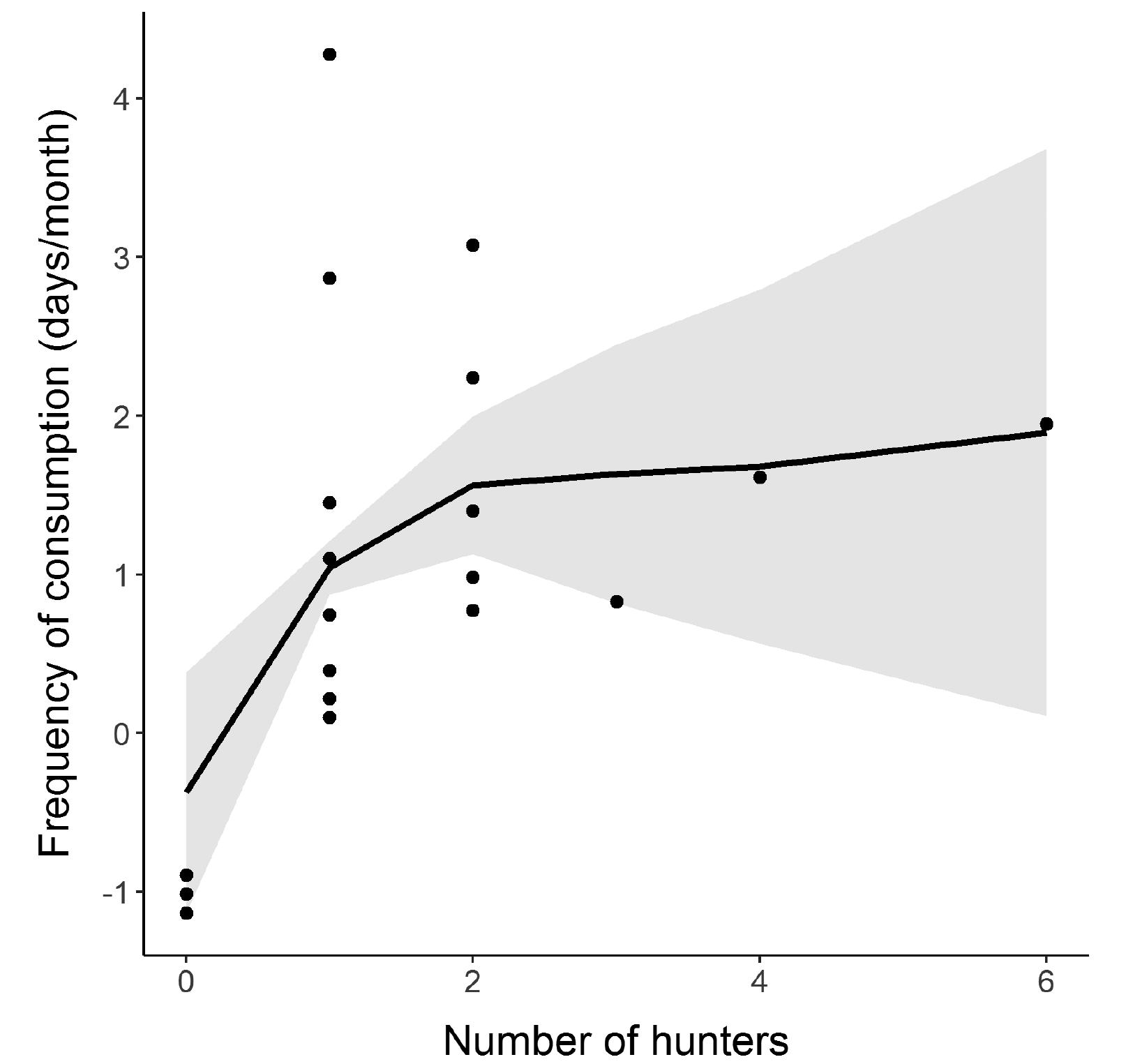
Relationship between the frequency of consumption of wild meat and the number of hunters living in the household on the Jutaí River. Gray shaded area represents the 95% confidence interval. The y-axis is transformed into log (ln) scale.
Discussion
Our results show that the use of wild meat as food and income in the Jutaí River basin is widespread, and most wild meat was obtained directly by hunters in the families. Amazonian communities further away from urban markets are known to consume larger amounts of wild meat than those having access to other meats in closer city markets (Chaves et al. 2017). Given that the communities in the Jutaí River basin are around 92 km from the nearest urban center, where markets selling domestic meats are found, and are not culturally used to raise domestic animals, access to urban goods, especially domestic meats, is limited. Although we did not quantify this, according to informal reports, inhabitants of the Jutaí River basin travel to the city only once every two to three months. Thus, reliance on timber and non-timber forest products is the norm. In addition, the lack of access to reliable electricity supply still does not permit Jutaí River basin inhabitants to refrigerate domestic meat or perishable foods for long periods.
Details of game taxa cited by 51 households of 16 local communities within the Jutaí River Extractive Reserve, central Amazonia, with their gross body mass, net body mass after evisceration, conservation status, percentage of citations as consumed and preferred, and wild meat biomass and number of individuals estimated to be consumed monthly. Taxa names are ordered according to the number of consumption citations.
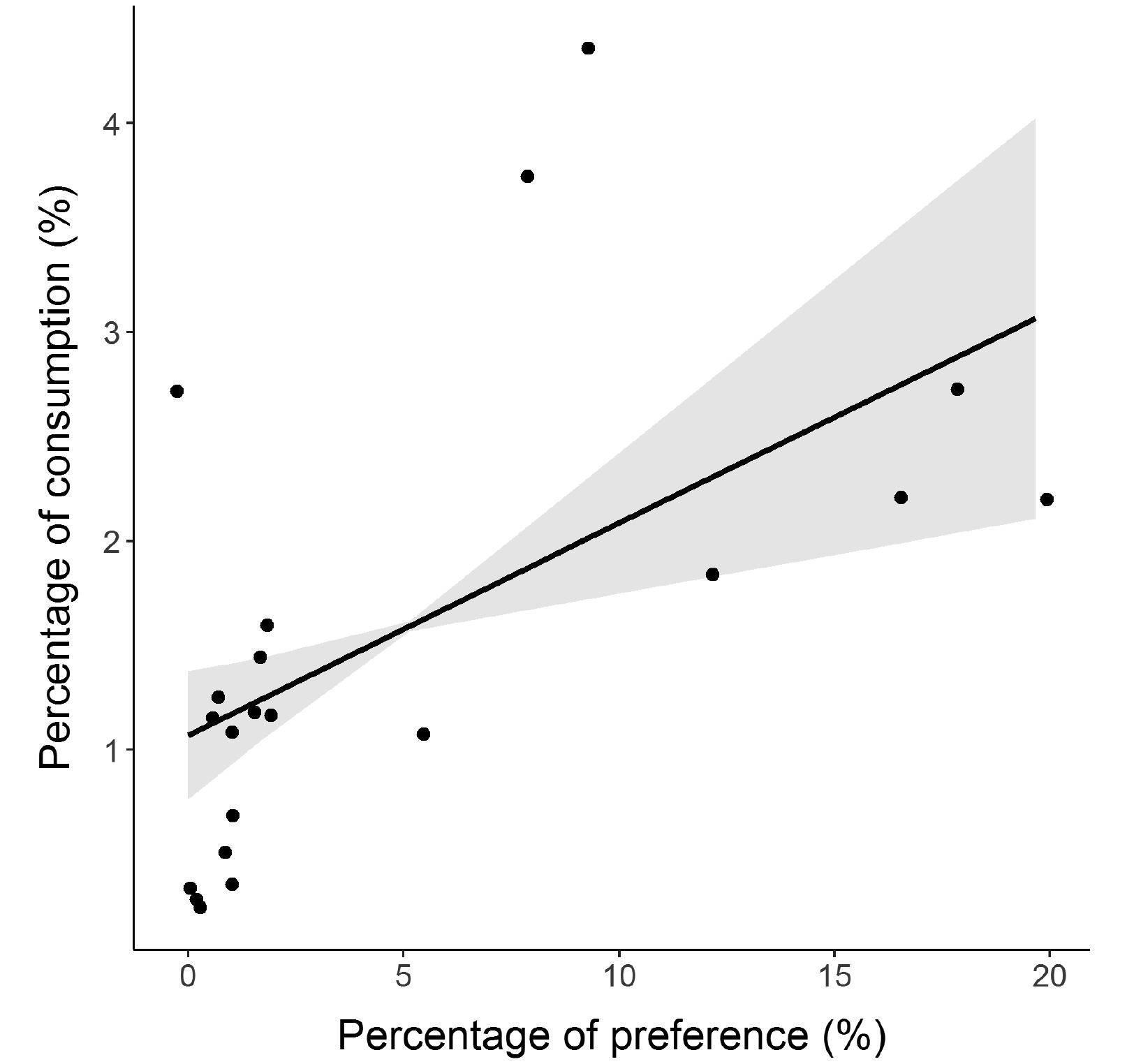
Relationship between the percentages of wild meat consumption per species according to the percentage of preference of meat flavor of the species on the Jutaí River. Gray shaded area represents the 95% confidence interval. The y-axis is transformed into log (ln) scale.
A high proportion of respondents received wild meat as gifts from neighbors. This is not unusual in many rural and traditional societies, reinforcing social bonds and improving food security among closely related people and relatives (see Gurven 2004). In Amazonian communities, there is a term called vizinhar that means sharing products with the neighbors, which is frequently used as reference for sharing wild meat (Lima 2009). The rules about vizinhar, such as which part or amount of the animal should be donated and to whom they should be donated, vary widely among societies (Almeida et al. 2002). For example, in Riozinho da Liberdade Extractive Reserve, in the Brazilian Amazon, half of all hunted wild meat was given to other village members (Nunes et al. 2019b). In the Ipaú-Anilzinho Extractive Reserve, also in the Brazilian Amazon, the killed animal is divided among the hunters that participated in the hunting event, but the hunter who shot it has preference over certain parts (Figueiredo and Barros 2016).
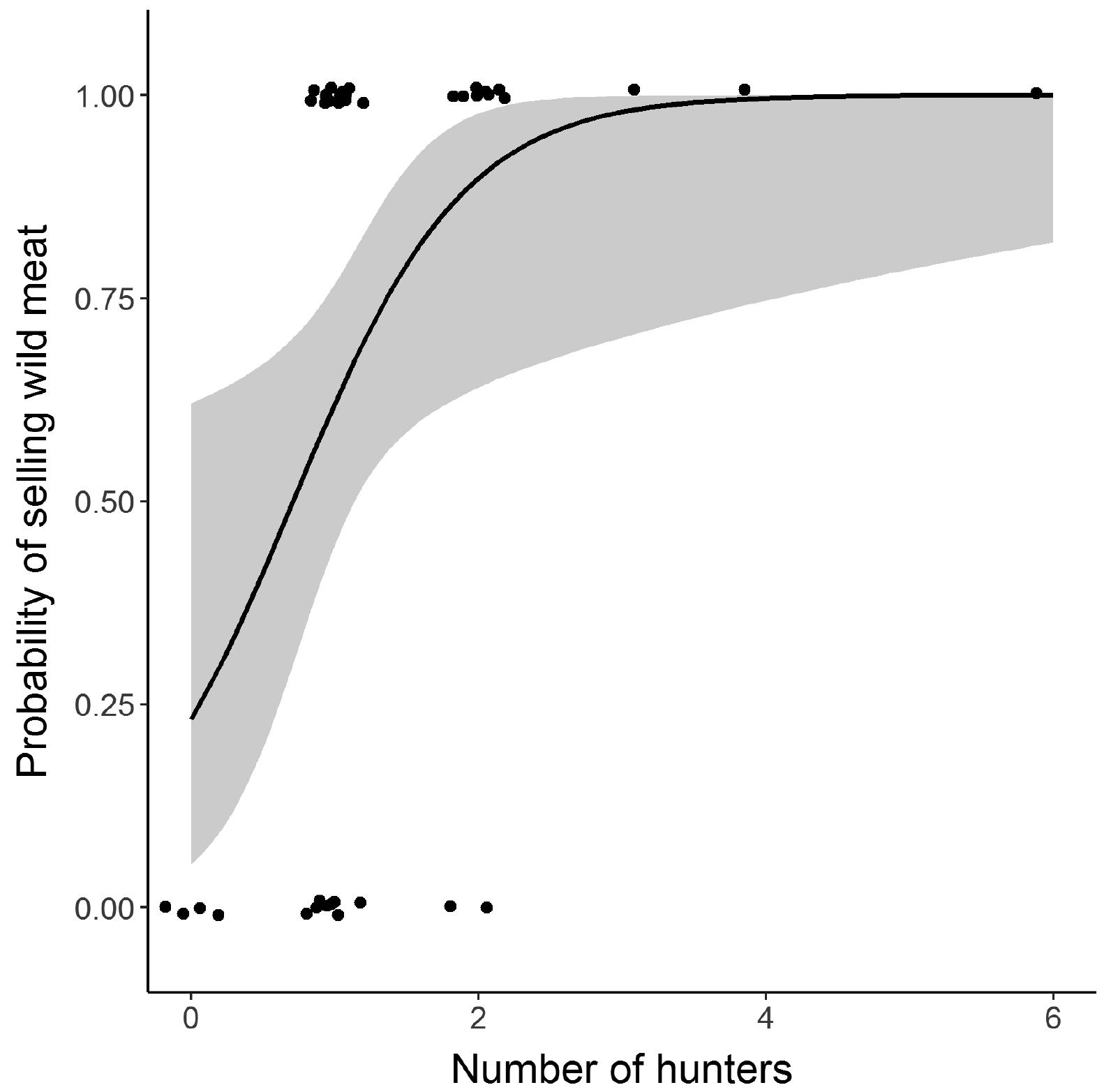
Probability of people selling wild meat on the Jutaí River according to the number of hunters living in the household. Gray shaded area represents the 95% confidence interval.
Wild meat was traded within and between our study communities. Buying wild meat from neighbors eliminates long periods spent hunting, time that can be dedicated to other income-generating activities, e.g., farming and fishing. In addition, when some communities purchase wild meat from others, it may actually alleviate pressure on game populations in their hunting zones. For wild meat traders, selling the product locally also requires lower investment in transport and meat preservation. Comparative information on the trade of wild meat within and between rural communities in the Amazon and other parts of the tropics is still scarce. However, some studies indicate that the amounts of wild meat sold inside communities can vary significantly. For instance, Coad et al. (2010) estimated that only 8.5% of the overall wild meat offtake in a community in Gabon was sold within it. In another example, Morcatty and Valsecchi (2015) found that 31.4% of tortoises hunted in Amazonia were sold within or between neighboring communities.
Details of game species cited as sold and the prices applied in the city and within/between rural communities on the Jutaí River basin, central Amazonia. Taxa names are ordered according to the total number of citations as sold.
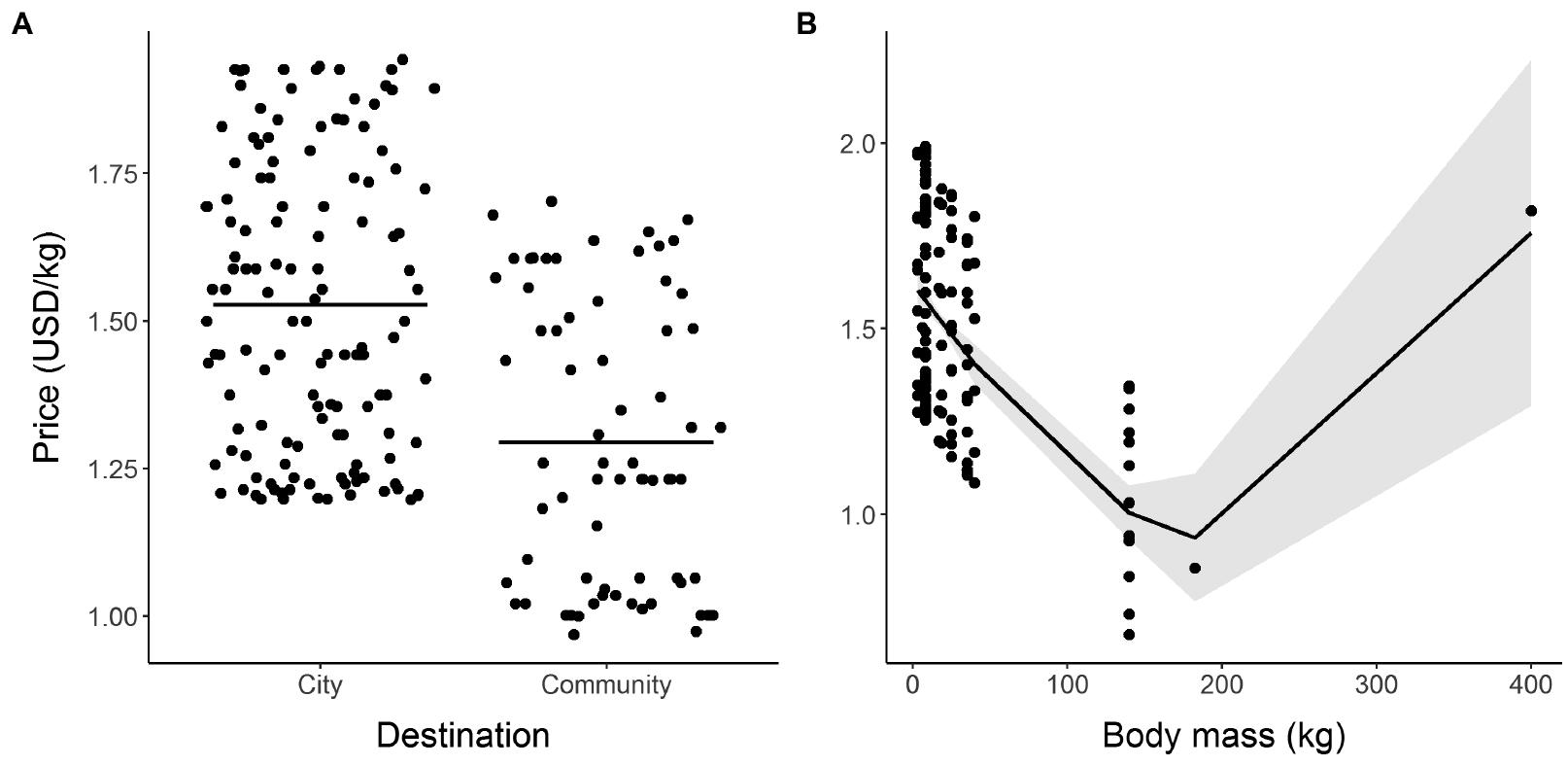
Price of wild meat (in USD/kg) on the Jutaí River according to (A) destination of the product (whether bounded to urban markets or traded within and between rural communities) and (B) body mass of the species. Gray shaded area represents the 95% confidence interval. The y-axes are transformed into log (ln) scale.
Van Vliet et al. (2015a) showed that some Amazonian urban hunters may supply urban markets with wild meat directly, but our study revealed that more than half of the interviewees living in rural areas of the Jutaí River basin sold wild meat exclusively to urban centers. This corroborates data from the Peruvian Amazon, which show that 6.5% of the total harvest in rural areas is sold in cities (Bodmer and Lozano 2001). In Amazonian cities, wild meat is commonly traded within local fairs but can also be sold from the hunters' or intermediaries' houses, in the streets, and at docks (Chaves et al. 2019; El Bizri et al. 2020). We showed the importance of hunters having links with people living in the city, since most interviewees declared that wild meat was sold from relatives' houses. This may be a means of avoiding detection and prosecution for selling wild meat. In other cities, strategies for selling wild meat differ in response to law enforcement and surveillance intensity by the authorities. For instance, in the Amazon tri-frontier region between Colombia-Brazil-Peru, hunters already use cell phones to inform their clients about the availability of wild meat and sell the product directly to their consumers, thus avoiding potential controls (van Vliet et al. 2015b). These strategies are so far effective, since information on wild meat trade in cities in Brazilian Amazonia indicates a lucrative wild meat market that, despite being forbidden by law in the country (Law No. 5197/1967), is worth over 35 million USD annually (El Bizri et al. 2020).
One important finding in our study was that the more hunters there were in a household, the higher the household frequency of consumption and amount of wild meat sold was. Cooperation among hunters, often close relatives (e.g., Alvard 2003), led to higher hunting success and return rates (e.g., Alvard and Nolin 2002; Hitchcock et al. 1996). In particular, more hunters in the household also means that large-sized species, such as peccaries and tapirs, which usually require several hunters, can be hunted. In addition, more hunters in a household may mean that the likelihood that at least one household member has ties to outside markets increases. It will likely also lead to increased skills and knowledge sharing about hunting, including those related to pathways and mechanisms for the sale of wild meat, enabling the persistence of the wild meat trade as a culturally acceptable practice in the region.
Since percentage citations of consumed taxa was related to the citations of favored taxa, this suggests that local perceptions on species' flavor is likely to play a crucial role in determining diet breadth in the Jutaí River basin (e.g., Renoux and de Thoisy 2016). For some groups, such as chelonians, however, they may be consumed less frequently despite being highly preferred. Chelonians are highly valued, appearing among the top hunted species throughout the Amazon (Chaves et al. 2019; El Bizri et al. 2020; Peres 2000), but their capture is highly seasonal and most of the yield is frequently traded instead of consumed (Morcatty and Valsecchi 2015; Pantoja-Lima et al. 2014). In addition, Amazonian freshwater turtles have historically been used since the eighteenth century as a food resource and to produce oil for cooking and lighting (Casal et al. 2013), leading to a severe decline in their populations (Johns 1987; Smith 1979). Therefore, the disproportionate percentage of citations of chelonians as consumed (only 4.3%), in comparison to the percentage citations of preference (23.1%), in this study may also reflect depletion in chelonian populations in the Jutaí River basin.
The relationship between price and taxa body mass was very similar to that found by El Bizri et al. (2020) for species sold in urban markets, reflecting that, when pricing species, hunters take into account a balance between prey profitability and yield (Rowcliffe et al. 2004). Smaller species are generally more abundant and easier to capture but are sold at a higher price per kilo because they yield less meat. Conversely, large-bodied species, such as the manatee (Trichechus inunguis), although more profitable in terms of meat obtained, are less abundant and difficult to capture, explaining the U-shaped curve in this relationship. Wild meat was less expensive when sold within rural communities than in urban centers. The same difference in prices between urban and rural sectors was observed by Morcatty and Valsecchi (2015) for the trade in yellow-footed tortoise (Chelonoidis denticulatus) meat in central Amazonia. However, the observed prices increased only by 24% from rural communities to urban centers, which probably reflects an additional amount to cover travel costs. Considering that urban inhabitants generally have a higher income and greater purchasing power than inhabitants from rural and weakly-monetized communities, the small difference in price might indicate that the wild meat in the Jutaí city is not a luxury item, i.e., only accessed by the wealthier class, as suggested for African cities (e.g., Fa et al. 2009).
Our results show that wild meat still plays a crucial role in communities that are considerably isolated from urban centers on the Jutaí River basin in central Amazonia, being used to guarantee both the subsistence and the economy of local people. A number of social and biological factors seem to be related to the consumption and trade of wild meat in the region, especially the number of hunters in the household, taste preferences, and species' body mass, and should be considered for designing any conservation strategy. Therefore, once we understand the livelihood, economic, and cultural value of wild meat consumption, it is possible to develop management programs that consider local peoples' needs and enhance the sustainable use of wild species.
Rushton et al. (2005) argued that, in rural areas of South America, wild meat could potentially be substituted by domestic meat, especially in Brazil, where there are high rates of livestock production, ultimately reducing the impacts of hunting. However, a complete transition from eating wild meat to exclusively eating beef in Amazonia would require the spending of around 90% of the total wages of local people and the conversion of large portions of Amazonian forests into pasture (Nunes et al. 2019a). Game species represent culturally important elements for Amazonian people, meaning that the depletion of their populations would affect not just their food security but erode the traditional knowledge and practices related to these animals (Tavares de Freitas et al. 2019). Therefore, considering the high level of isolation and dependence on wild meat of communities living in the Jutaí River basin, strategies for sustainably managing wildlife for consumption seems to be a better option than substituting wild meat for domestic meat. The largest-scale wildlife conservation program in the Brazilian Amazon is currently focused on river turtles, and for 30 years, this community-based program has been protecting river turtles' nesting beaches, guaranteeing an increase in the recruitment rate and subsequent population growth for the most historically depleted species, without banning egg consumption by local people (Eisemberg et al. 2019). Since 2007, Jutaí River Extractive Reserve is part of this program, supported by the governmental environmental agency, where the inhabitants released more than 10,000 freshwater turtle hatchlings in 2010 alone, helping to recover these species while guaranteeing the sustenance of local people (ICMBio 2011).
In terms of wild meat trade, a long history of extractive production to the market, under a debt-peonage system called aviamento, shaped the patterns of natural resource management and commerce in the Amazon (Almeida 2002; Lima 2009). After the decline of the Amazon rubber production, the domestic and international trade in animal hides replaced it (Antunes et al. 2016). However, during the 1960s, with the advent of the Convention on International Trade in Endangered Species of Wild Fauna and Flora (CITES), trade has been more tightly regulated. More recently, the boom and growth of urban agglomerations and intensive migration from rural areas to urban centers increased the demand for wildlife products in Amazonian cities.
There is a consensus that commercial hunting for trade is more impactful to animal populations than subsistence hunting (Coad et al. 2019), but the current prohibition on wildlife commerce in the Amazon has been driving the establishment of hidden markets that hampers control. In urban areas, the replacement of the wild meat with domestic meat at a more affordable price is usually recommended (Rushton et al. 2005), but this strategy has been shown to be ineffective. For instance, a previous experiment conducted in an Amazonian city showed that access to discount coupons to buy chicken had not dissuaded people from consuming wild meat (Chaves et al. 2017). Instead, social marketing with information campaigns and community engagement on activities related to the reduction of wild meat consumption were more effective strategies (Chaves et al. 2017). We argue that this could be applied in the city of Jutaí and other Amazonian cities to reduce the demand for wild meat.
Experiences of wildlife management prove that community-based efforts, if appropriately implemented, provide an effective way to manage natural resources, especially where law enforcement is ineffective (Tavares de Freitas et al. 2019). Our results showed that households with three or more hunters were guaranteed to sell wild meat, so trade is an important source of income for those families. Therefore, regulating wild meat trade and bringing it into the formal economy instead of banning it could improve rural livelihoods, while maintaining the cultural importance of hunting for local people. A major example of this is the community-based management of the giant arapaima fish (Arapaima gigas) in the Amazon, which allowed the sustainable commercial exploitation of the species along with the recovery of its previously overharvested populations (Tavares de Freitas et al. 2019). Our results showed that most of the species consumed and traded by local people in the Jutaí River basin are not listed as threatened with extinction on the IUCN Red List. Therefore, this system could be applied for hunted game species that are more resilient, which are also generally more demanded by urban people, such as the paca (Cuniculus paca) and the collared peccary (Pecari tajacu) (El Bizri et al. 2020). A key first step would be revising national hunting laws in Brazil, since hunting and trade of wild meat still occupies an uncertain status in the legal framework of the country, even for traditional Amazonian populations depending on these activities to live (Antunes et al. 2019). By doing so, game species conservation with the maintenance of their ecosystem services could be aligned with the provision of food and income for local people in the Amazon.
Footnotes

Acknowledgments
We thank all local people from the Jutaí River Extractive Reserve for participating in this study and for kindly hosting us during our trip to the reserve. This work was supported by the grant agreement for Instituto de Desenvolvimento Sustentável Mamirauá of the Gordon and Betty Moore Foundation (number 5344) and the National Council for Scientific and Technological Development (CNPq) (grant numbers 300005/2013-0, 452908/2016-7, 201475/2017-0, 300346/2013-1 and 312729/2015-4). T. Q. Morcatty is supported by the WCS Graduate Scholarship Program, a program of the Wildlife Conservation Society and the Christensen Conservation Leaders Scholarship, and by the Wildlife Conservation Network Scholarship Program through the Sidney Byers Scholarship award.