







Abstract
While relatively little is known about bats across much of Africa, globally, many bat populations are in decline due to human activities. Successful bat conservation efforts, therefore, depend on both ecological studies and research on human-bat relationships. To address these knowledge gaps about African bats and their interactions with humans, we used semi-structured interviews of pastoralists in northwestern Namibia to assess local experiences with, attitudes toward, and cultural stories about bats. Our research was conducted in conjunction with an ecological study on Namib Desert bat distributions, thus allowing for a broader understanding of the social-ecological dynamics of human-bat interactions in this region. Though only 65% of interviews were able to correctly identify bats from photographs, 100% classified these species as bats when provided with an additional description of “animals that fly at night.” A majority (77%) of interviews expressed positive attitudes toward bats and over a third (38%) provided cultural stories, offering detailed reports of myths and common meanings assigned to bats. Of those stories, 12% indicated that bats brought good luck or good rains, and 84% specified that bats represented bad luck or omens of injuries, death, disease, or lack of rains. While the primary threats of habitat loss and bushmeat hunting were never mentioned in our interviews, the influence of negative cultural stories on individual behavior could pose challenges for future bat conservation initiatives. This qualitative approach combined with ecological research may be valuable for assessing cross-cultural relationships between humans and understudied wildlife in other remote areas.
Introduction
Bats (Chiroptera) comprise nearly one-fifth of mammalian biodiversity and are the most widely distributed terrestrial mammals on Earth, with more than 1400 described species spread across every continent except Antarctica (Simmons and Cirranello 2020). They play critical ecological roles, serving as seed dispersers, pollinators, and insect suppressors (Frick et al. 2020), but low reproductive rates render their populations vulnerable to many anthropogenic activities (Kingston 2010). Eighty percent of bat species assessed by the International Union for Conservation of Nature (IUCN) are considered threatened or data deficient or have unknown or decreasing population trends (Frick et al. 2020). Declines are largely due to anthropogenic activities (e.g., agriculture, urbanization, hunting; Kingston 2010), demanding that bat conservation efforts rely not only on ecological studies, but also on research examining human-bat relationships and interactions.
Geographic biases in research have resulted in a lack of ecological information for many African bats (Frick et al. 2020), particularly in arid or semi-arid landscapes (Lisón et al. 2020). Studies documenting human-bat interactions are also lacking in Africa, except for those focused on zoonotic disease risks to people in West Africa (Gbogbo and Kyei 2017; Ohemeng et al. 2017). Additionally, ethnobiological research on African bats has primarily been conducted in more forested regions where people hunt and consume more conspicuous, larger-bodied—typically frugivorous—species (Rahaingodrahety et al. 2008).
In desert ecosystems, pastoralists and their livestock have historically coexisted with and shown relatively high levels of tolerance for conflict-prone wildlife (Browne-Nuñez et al. 2013; Gadd 2005). However, as pastoralists become less nomadic and resources become more variable with climate change, these relationships are expected to shift, which could affect the frequency and severity of human-wildlife conflicts over time (Galvin 2009). Understanding what factors affect pastoralists' behaviors toward specific species, such as bats, and how such factors may change over time, will therefore be critical to future wildlife conservation efforts in these arid regions.
Applying concepts from psychology can contribute to this understanding of pastoralists' behaviors, thereby strengthening existing ethnobiological research on bats. Theories in social psychology, such as the value-attitude-behavior framework (Homer and Kahle 1988) and Theory of Planned Behavior (Fishbein and Ajzen 2010), have frequently been applied in conservation contexts to understand and predict human behaviors (Manfredo 2008; St John et al. 2010). According to these models, individual behavior is guided by a series of interrelated cognitions, including values, attitudes, and norms. Examining broader cultural influences, such as myths and traditional ecological knowledge passed down across generations, can also assist conservation practitioners in determining the most culturally appropriate management strategies (Schneider 2018). For understudied species like bats, integrating social science research on these factors with ecological studies can generate more proactive and innovative solutions to conservation problems like human-wildlife conflict and declining wildlife populations (Lischka et al. 2018).
Recognizing the knowledge gaps for desert-dwelling bats in Africa, our study explored the interrelationships between bats and pastoralists in the northern Namib Desert through a social psychology and ethnobiological lens. Our objectives were to document (1) pastoralists' knowledge of and familiarity with bats; (2) the types and frequencies of human-bat interactions; (3) attitudes toward bats; and (4) cultural stories about bats from four ethnic groups residing in our study area. We also interpreted our findings in relation to an ecological study conducted in parallel on bat communities of the northern Namib Desert (Laverty 2020; Laverty and Berger 2020). This approach not only advances understanding of bats in arid Africa, but also offers insights on bat conservation needs in an understudied region. Additionally, our methods may be useful for assessing relationships between humans and understudied wildlife across other cultures.
Methods
Study Area
Our study took place in the Kunene Region in the Sesfontein, Anabeb, and Torra conservancies (Laverty et al. 2019; Figure 1). This region of Namibia receives,100 mm of rainfall, on average, between January and April each year, and local communities range in size from 2 to,150 households. Communal conservancies are demarcated land areas collectively managed by a group of residents who agree to conserve and share their natural resources in a sustainable and economically beneficial manner, permitting both consumptive and non-consumptive uses of wildlife (Shaw and Marker 2010). In northwestern Namibia, conservancies are comprised of a mix of ethnic groups (e.g., Damara, Herero, Himba, and Riemvasmaker) due in part to forced relocations of people imposed by successive colonial governments (Jones and Mosimane 2000). All ethnic groups in this region rely primarily on livestock and pastoralism for income, although ecotourism and trophy hunting are also increasingly important (Bandyopadhyay et al. 2004; Lindsey et al. 2007). For more information about our study area and these ethnic groups, see Appendix 1 and Laverty et al. (2019).
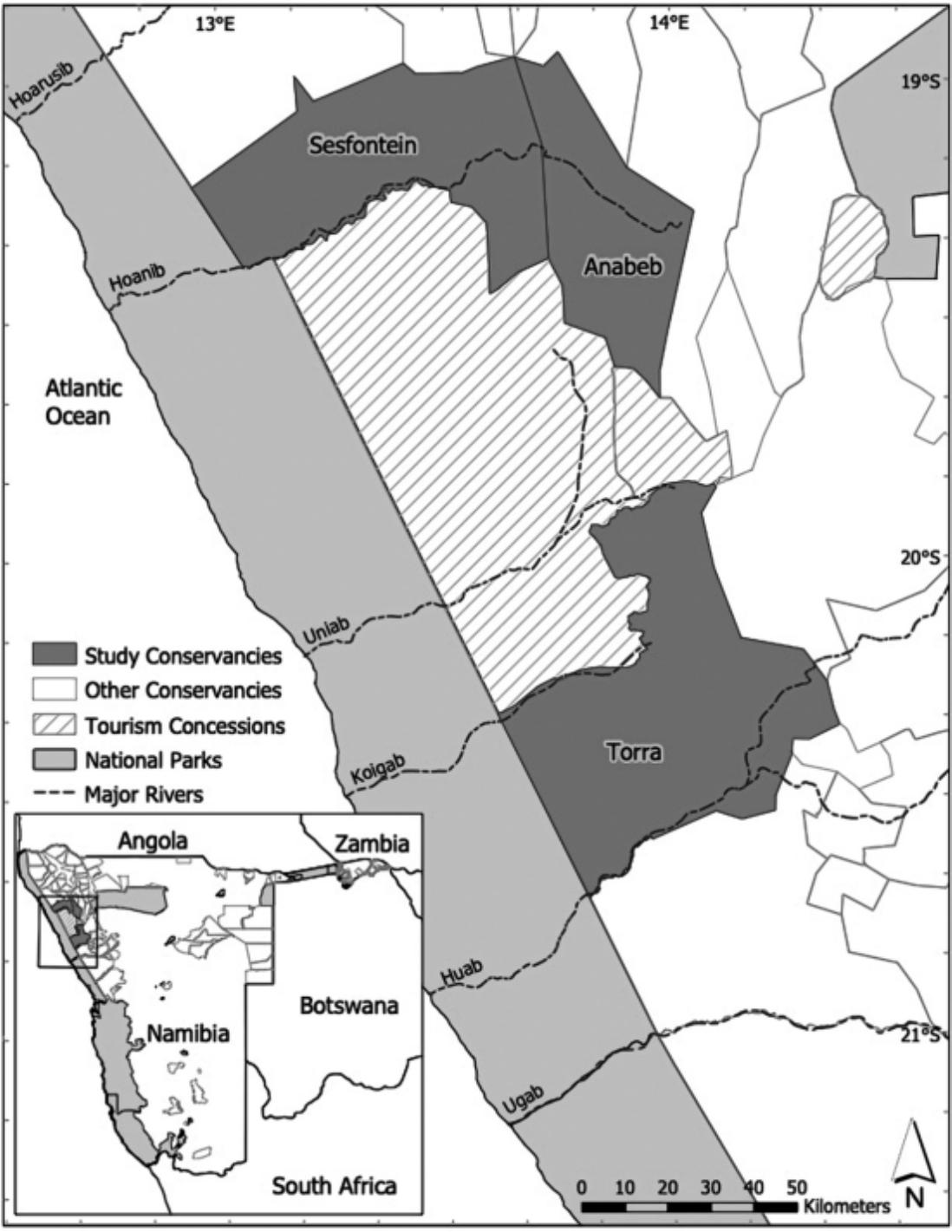
Study area map featuring conservancies in northwestern Namibia.
Data Collection
To explore the relationships between bats and pastoralists, we collected qualitative data from face-to-face semi-structured interviews after first conducting an ecological study of local bat communities. From February 2016 to May 2017, we sampled bats over 23 bodies of water using mist netting and acoustic surveys (Laverty 2020; Laverty and Berger 2020). These ecological data were used to inform interview questions and interpret responses. In May 2017, immediately after the wet season, when bat activity peaks in this region (Laverty and Berger 2020), the first and third authors conducted 86 interviews in 31 villages in Sesfontein, Anabeb, and Torra conservancies (Appendix 2). Of the 86 interviews, 64 were conducted with individual respondents and 22 were conducted through focus groups comprised of two to six respondents each (Appendix 3). While we aimed to interview participants individually, we allowed for focus groups when requested to enhance the comfort level and gender diversity of respondents. Women, in particular, were more likely to deny consent to be interviewed individually (especially if their husbands were not present at the time of the interview) but would often agree to participate if a family member or neighbor could join them. This resulted in a total of 112 conservancy residents who were interviewed, ranging in age from 19 to 88 years old.
The third author translated interview questions into Khoekhoegowab, Otjiherero, or Afrikaans, as appropriate, in real-time, allowing the first author to ask follow-up questions as necessary. Final interview procedures were approved for use with human subjects prior to implementation by Colorado State University's Institutional Review Board (Protocol #043-18H) and the Namibian Ministry of Environment and Tourism (Permit #2225/2016). For more detailed information on our semi-structured interview methodology, see Appendix 1.
Measurement and Analysis
We relied on a subset of bat-specific questions (Appendix 4) included as part of a more extensive investigation on local human-wildlife interactions and wildlife value orientations in the region (Laverty et al. 2019). To assess local familiarity with bats, we asked respondents to identify which animals were present in three photographs of bat species native to southern Africa (Appendix 5). We asked several questions to elicit respondents' knowledge of bat ecology (e.g., diet, habitat, behavior) and to document the types and frequencies of human-bat interactions, including perceptions of recent bat population trends. We compared interview-reported seasonal trends in bat sightings with our ecological data on bat activity from acoustic surveys (Laverty and Berger 2020). We also contrasted distributions of insectivorous and frugivorous bats reported in the interviews against our observations from more than a year of mist net surveys in the region (Laverty 2020).
To assess human attitudes toward bats, we asked respondents how they felt about interactions that they or their neighbors experienced with bats, as well as how they felt about bats in general (i.e., if they were good or bad animals). We also asked respondents to indicate if they thought that bats should be conserved or protected (i.e., not hunted or killed), and why or why not. Finally, we asked respondents if there were any stories about bats in their culture or if bats symbolized anything in particular.
To analyze the data, the first author used inductive in vivo coding with attention given to repeated codes (Laverty et al. 2019). Interviews were our unit of analysis rather than individuals because some interviews involved more than one respondent.
Results
Of the 112 interview participants (Appendix 3), only 10 (8.9%) did not currently own livestock (i.e., cattle, goats, sheep, and donkeys). All of them, however, had owned livestock at some point in their lives, and some had only recently lost their livestock to drought or predation. Forty-three (38.4%) of the respondents had no other means of employment, and 17 (15.2%) were receiving a social pension from the government. The remaining respondents (46.4%) worked in the tourism sector (e.g., campsite worker, hunting lodge chef, craft seller), for the conservancy (e.g., rhino ranger, conservancy secretary), for the government (e.g., Ministry of Agriculture, Ministry of Works and Transportation, Veterinary Services), in education (e.g., schoolteacher, school janitor), or as herders. All interviews suggested, however, that pastoralism is their dominant livelihood and that livestock were central to their wealth and culture.
Familiarity and Knowledge of Bats
Most interviews (65.1%) correctly identified the subjects of the three photographs as bats. Others rotated the photographs 180 degrees and, while mostly focusing on the fruit bat, speculated that these animals were jackals (10.5%), hyenas (3.5%), lions (2.3%), caracals (1.2%), birds (1.2%), or owls (1.2%). Respondents in the remaining interviews (15.1%) were unsure of which animals were shown in the photographs. When provided with an additional description of “animals that fly at night,” however, all respondents (100% of interviews) correctly identified the animals as bats. They referred to them as ondiri in Otjiherero, vlermuis in Afrikaans, and either forchewguve, habugugais, habuses, or surutsikhubes in Khoekhoegowab.
Of those interviews that provided an answer to the question “where do bats sleep?” (87.2% of all interviews), all correctly identified caves, rock crevices, tree branches and cavities, and other dark places as the day roosting habitats of bats (Figure 2a). Only one interview indicated that bats slept in nests, mistaking them for swallows. A majority of interviews (61.6%) also mentioned people's houses or abandoned buildings as additional roosting habitats. One male remarked, however, that, “in the old days, we used to stay together with bats in the houses, but now the health inspectors are spraying the [insecticide] throughout the houses. We [now] see very few [bats] in our houses.” At least four interviews (4.7%) reported seeing bats swoop down over waterholes near their houses to skim the surface for drinking.
Respondents' knowledge of bat diets was also generally accurate. While many interviews (34.9%) were not sure what bats eat, 58.1% correctly identified insects as the primary food source of bats in this region (Figure 2b). Only one interview reported that some bats also eat fruit and another related that bats feed on worms. Scorpions were also reported as a food source in one interview, in which the male respondent stated that when “I come out from the house in the morning, every morning, I used to see the parts of the scorpions—the bones—around where [the bats] were flying.” Relatively few interviews incorrectly indicated that grasses and leaves (5.8%), meat (e.g., mice; 3.5%), or mieliepap (Afrikaans for maize porridge; 1.2%) were primary food sources for bats in the region.
After describing the differences between insectivorous and frugivorous bats native to the region to our respondents, a majority of interviews (66.3%) reported that they were only familiar with insectivorous bats. Of the remaining interviews, 27.9% were acquainted with both types of bats; 3.5% only knew of fruit bats; and 2.3% were unsure of which type of bats they had seen. Consistent with these findings, only two of the 19 bat species detected by a combination of mist netting and acoustic sampling in our ecological research in the region were fruit bats (Laverty 2020). The Angolan epauletted fruit bat (Epomophorus angolensis) and the African straw-colored fruit bat (Eidolon helvum) were only captured between March and June under fruiting trees at springs in Sesfontein and Fonteine. Many of the respondents who were familiar with fruit bats said they encountered them while visiting areas near Sesfontein.
Types and Frequencies of Human-Bat Interactions
Most interviews (89.5%) reported seeing bats on a nightly to monthly basis (Figure 2c) and several (8.1%) remarked that bats were more active during the wet season, consistent with findings from bat acoustic data we collected across the region. On average, we recorded twice as many bat passes during the wet season as compared to the dry season (Laverty and Berger 2020). One male respondent emphasized this when he stated, “[Bats] only come during the rainy season. Once the rains start, you will see them in many numbers flying around.” When asked if bat populations have increased, decreased, or remained constant over the years, most interviews reported declines (34.9%) or constant population trends (22.1%). Fewer interviews (14.0%) reported that bat populations were increasing, but many (27.9%) were unsure of any changes in population sizes. Of the interviews that indicated potential decreasing bat population trends, drought was often blamed as the source of the decline. For instance, one woman recounted,
When we were young and my grandmother was still alive, we used to go to her house. You would see [bats] almost every night—like if you do not see [bats] tonight, you will see [them] after two nights or perhaps even tomorrow night. I would say [they have] maybe decreased since we did not have enough rain and it is dry, as you can see.
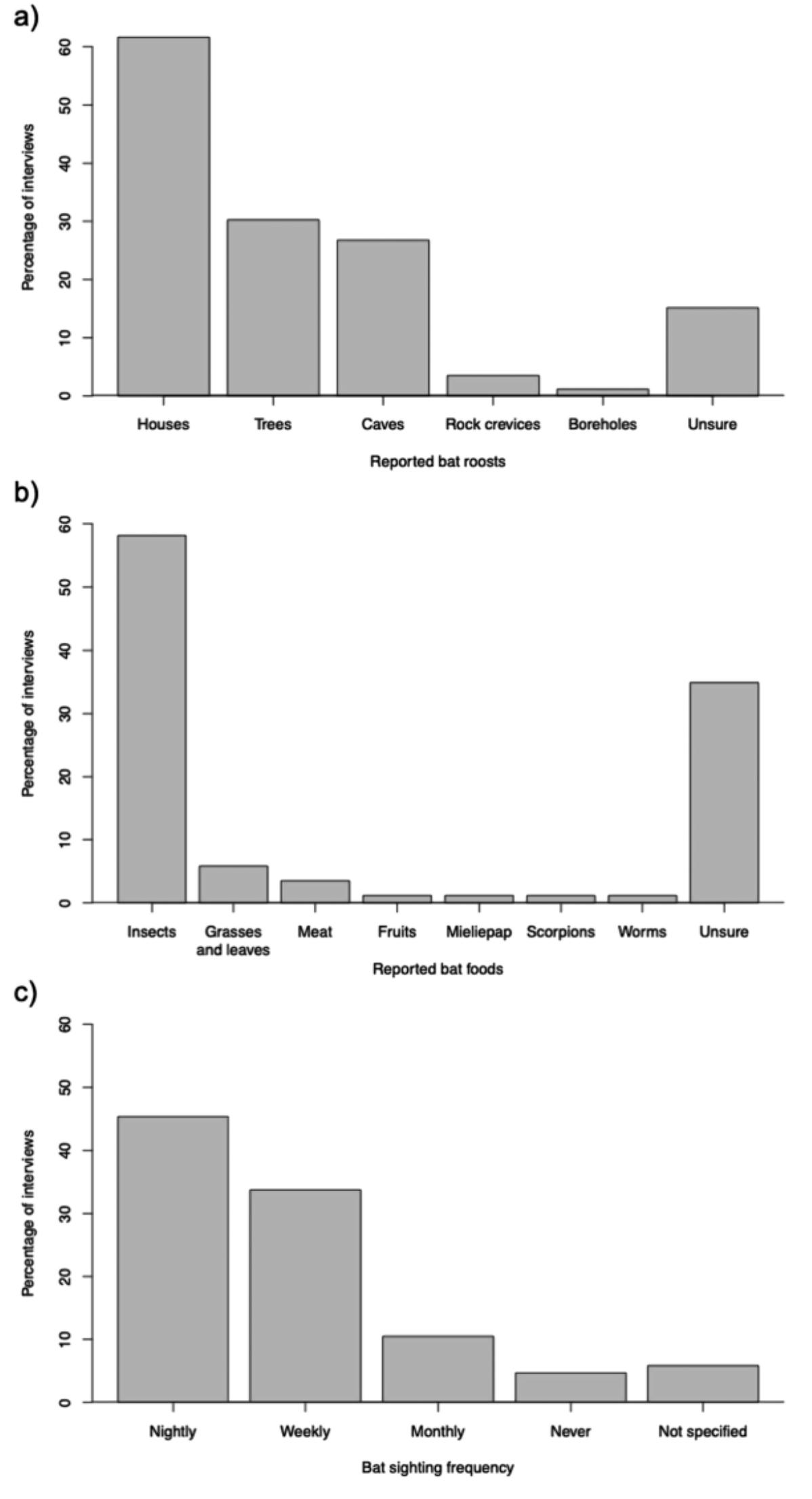
The frequency of reported a) roosts, b) foods, and c) sightings of bats at pastoralists' homes in the northern Namib Desert as reported from a 2017 interview (n = 86). Multiple roosts or food items were found in some interviews, so the frequencies in panels a) and b) sum to > 100%.
Of the 86 interviews, all but one (98.8%) provided a story of an encounter with bats. Almost all descriptions (94.1%) involved the respondents coming across bats in or beside their homes. One male respondent stated, “you see that maybe [a bat] is in the house and just trying to move out because if you open the door, [the bat] just goes out without crashing or squeezing [by] a person.” In another interview, a woman detailed, “normally if you switch off the lights, [the bats] used to fly in front of our faces and then also sometimes go out from our house.” Sometimes these situations resulted in the respondent chasing the bat out of their house due to cultural beliefs (see “Cultural Significance of Bats” subsection below).
Attitudes toward Bats
Nearly a third of all interviews (30.2%) expressed some level of fear of close encounters with bats. For instance, a female respondent said, “[bats] come into my house and then I have to take the blanket over my head… It makes me feel afraid. If there is a bat in my house, I have to come outside and sleep outside. It is better for me because I am afraid of them.” Another 7.0% of interviews reported anger or irritation in relation to their encounters with bats. One man who resonated with these emotions recounted, “I just want to chase them away [from my house] and [I am] also asking what does this animal want from me?” Alternatively, 8.5% of the interviews were happy to come across bats. A husband and wife described how “in the old days, when there was too much rain and the grass was about [knee] high, we used to make small huts to live in. [The bats came in the huts and] used to help with the mosquitoes as well. We felt happy as [the bats] slept there as well.” The remaining 54.7% of interviews did not express any particular emotion(s) regarding these encounters with bats. One man said, “I grew up with [bats]. Children might be afraid, but for me, it is normal.”
When asked how they felt toward bats in general, a majority (76.7%) of interviews expressed positive attitudes (i.e., described bats as good animals). Many cited that these species do no harm to humans (26.7%), and bats help keep insect populations in check (24.4%). For instance, one man shared that, “every living thing has advantages and disadvantages. For me, this one is fine because it helps us with the mosquitoes.” In another interview, two women said, “[Bats] are not biting even people. This is the animal staying together with us, so we do not have problems with them. We are happy with them.” Only 12.8% of interviews expressed negative attitudes toward bats (i.e., described bats as bad animals), mostly citing fear of interacting with bats. For example, one female said, “during the night, [bats] just fly around, just sometimes they fly before your face and sometimes you get afraid of them. I think [their wings] will [hit] me in the eyes, so I feel sometimes afraid.” Only one interview suggested that bats may transmit diseases to people, stating, “the only thing I am afraid of is I think [bats] will give us diseases because the [guano] of the bats is so dangerous according to the elderly people. [This includes] coughing diseases and so on.” An additional 10.5% of interviews did not express any particular feelings toward bats, suggesting more of a neutral stance. One man even related the presence of bats to the bats being “just like chickens,” meaning their presence is familiar to him.
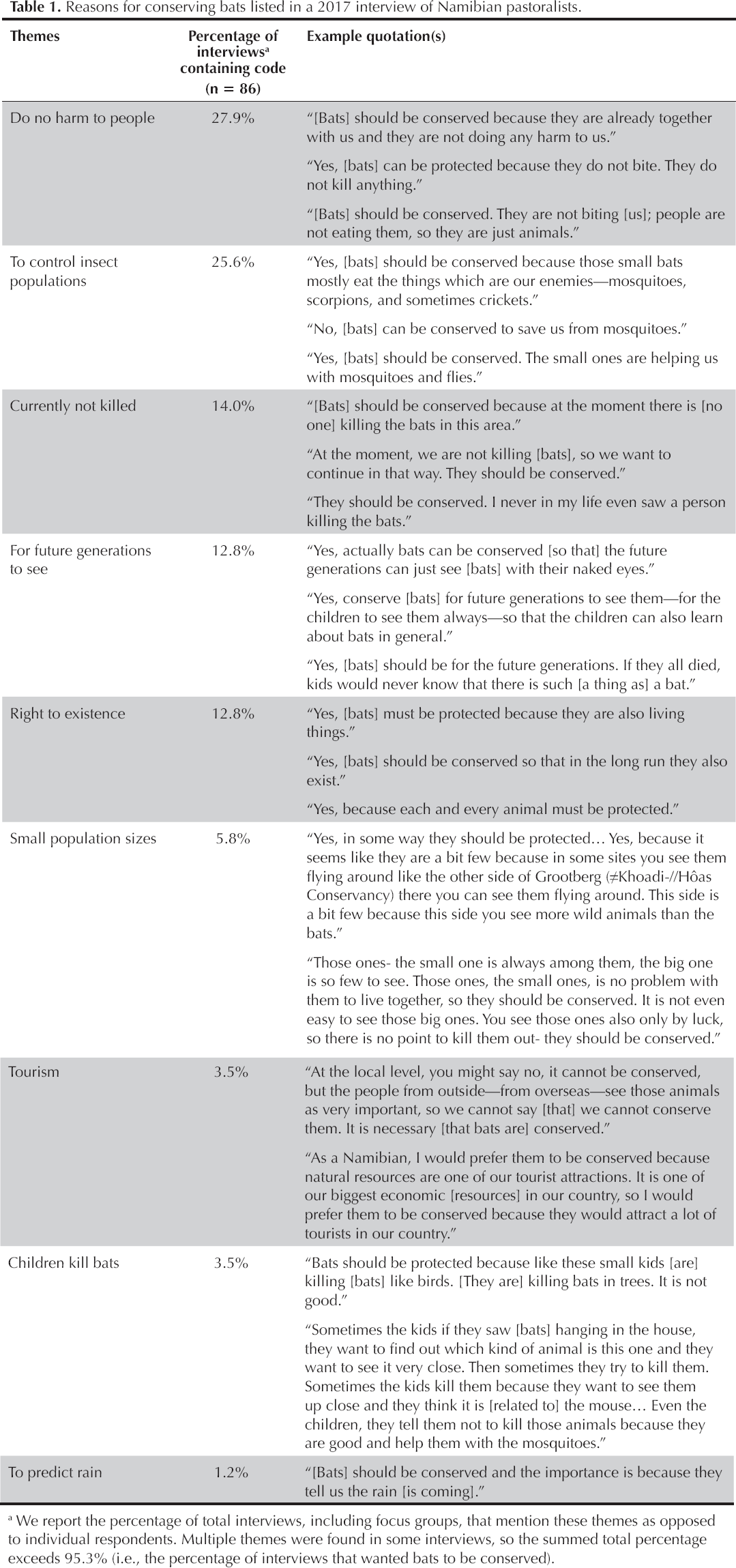
Despite some respondents holding negative attitudes toward bats, nearly all interviews (95.3%) agreed that bats should be conserved in northwestern Namibia. However, their stated reasons to conserve these animals varied (Table 1). Several interviews (25.6%) pointed out the benefits of conserving bats to curb insect populations. For example, two men interviewed together said, “bats should be conserved. They are helping with mosquitoes. We even do not have [mosquito] nets [above our beds].” Some respondents (12.8% of interviews) thought all wildlife have a right to live, but more (27.9%) supported bat conservation because they felt that bats do not harm people or livestock. Others (12.8% of interviews) wanted to be sure that bats existed many years from now so future generations would also be able to observe bats. One woman who supported this reasoning said, “I want all the [animals] that I know [around] for my kids to also see. [Bats] must be safe, so that the kids can come and see them.” Finally, other interviews (14.0%) suggested that bats are already and should continue to be conserved because most adults were not currently killing or eating them in this region. Some interviews (3.5%) reported that children occasionally kill bats, but that they were scolded for doing so and told by their parents or elders not to kill them again. Other interviews (3.5%) cited that conserving bats may help the tourism industry. Only one interview indicated that bats should not be conserved, as this woman did not like that they disturbed her when she sat outside with the light on. The remaining interviews (3.5%) did not have an opinion on whether or not bats should be conserved.
Cultural Significance of Bats
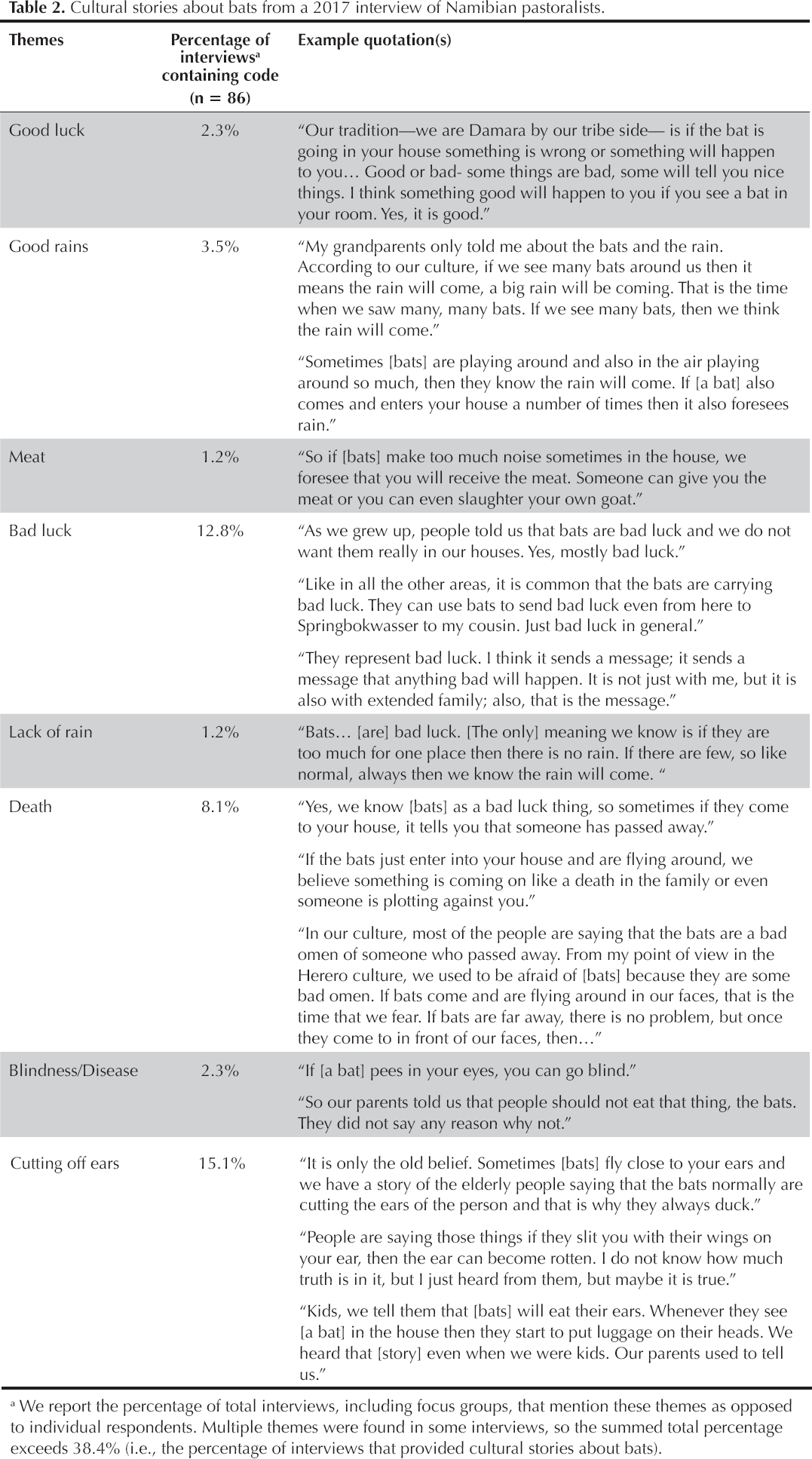
Over a third (38.4%) of all interviews provided cultural stories about bats, offering detailed descriptions of myths and common meanings assigned to bats (Table 2). Of those, 12.1% indicated that bats brought good luck or good rains, whereas 84.8% indicated that bats represented bad luck or omens of injury, death, disease, or drought. One male respondent provided a positive cultural story about bats, stating, “bats are representing wildlife and then when you see them flying, a lot of them flying around, then you know that okay you will get a good rain. They also represent a long life.” In contrast, one male respondent disclosed that he kills bats that enter his house because they represent bad luck, stating, “bats are like [bad luck] for everything. Sometimes there are three in my house, sometimes one, but we kill them because our belief is that if you see a bat, it is a bad luck story and so on.” Of the interviews that provided a cultural story, many (39.4%) expressed a particular fear of bats flying around people's heads related to stories in which bat wings are capable of slicing off human ears. This story, in particular, appeared to be commonly told to children. About half of the interviews that reported this story (46.2%) indicated that respondents doubted it was true given their personal experiences with bats, but still passed on the story to their own children. One male respondent described this story, stating, “when I was growing up as a young boy, my parents always told me that the bats are cutting the ears of the people, but when I was living with bats, I never encountered such a thing.”
Reasons for conserving bats listed in a 2017 interview of Namibian pastoralists.
Associations between Knowledge, Attitudes, and Cultural Stories
Of the 12.8% of interviews that reported negative attitudes toward bats, 54.5% had correctly identified bats from photographs, 18.2% incorrectly labeled them as other animals, and the remaining were unsure of which animals were present in the photographs. Only 36.4% of these interviews that expressed negative attitudes correctly identified insects and fruits as the primary food sources for bats in the region. In contrast, for the interviews that reported positive attitudes toward bats (76.7%), a slightly higher percentage (65.2%) correctly identified bats from photographs. However, a slightly higher percentage of interviews in this group (22.7%) also incorrectly labeled them as other animals. Interviews that expressed positive attitudes were almost twice as likely to correctly identify insects as bats' primary food items (63.6%), although two of those interviews (3.0%) also incorrectly believed that mieliepap and grasses were also important diet items. While 54.5% of the interviews that expressed negative attitudes toward bats provided cultural stories that represented bats as bad luck, death, or slicing off people's ears, only 24.2% of interviews that reported positive attitudes described similar negative cultural narratives. However, the majority (68.2%) of interviews that expressed positive attitudes were unaware of any stories or myths—positive or negative—about bats in their culture.
Cultural stories about bats from a 2017 interview of Namibian pastoralists.
Discussion
Our study employed concepts from social psychology to investigate pastoralists' relationships and interactions with bats in the northern Namib Desert. People, their livestock, and wildlife—bats included—all cluster in this study system around bodies of water, likely contributing to higher rates of human-wildlife interactions (Laverty and Berger 2020; Laverty et al. 2019). Indeed, nearly all pastoralists described seeing bats on a nightly to monthly basis across our study area and most of their reported encounters with bats took place in or just outside of their homes, representing a significant source of potential conflict between people and bats. However, while more than half of our interviews correctly identified bats in photographs and all associated them with the description of “animals that fly at night,” 34.9% either could not name the animals or misidentified them as carnivores or birds of prey, suggesting that not all interactions have included observations of bats at close range.
In contrast to a study in Kenya, in which over a third of participants did not see any benefits of bats to humans (Musila et al. 2018), pastoralists in our interviews generally recognized bats as ecologically important species, citing their role in controlling insect pests. Similar to findings in rural Ghana (Ohemeng et al. 2017), rarely were Namibian bats considered to be carriers of disease, although this theme has been found in interviews in more urban regions of Africa (Gbogbo and Kyei 2017). Rather than harboring diseases themselves, bats were thought to help local people combat insect-borne diseases. One male respondent highlighted this benefit of living with bats saying, “small [bats] are also helping us with mosquitoes, [which] are giving us some sicknesses.” While the role of bats in curbing mosquito populations has been debated (Fenton 1997), recent studies have found bats to prey on several arthropods known to carry diseases (Kemp et al. 2019; Puig-Montserrat et al. 2020). Bats may also benefit pastoralist communities by mitigating the detrimental effects of insect pests on livestock (Ancillotto et al. 2017). Future ecological studies should document the insect species found in the diets of Namibian bats to confirm their role in curbing insect-borne diseases and/or livestock pests and inform educational efforts aimed at raising awareness among pastoralists of the local benefits of living with bats.
Bats in other parts of the world are threatened by habitat loss and fragmentation, bushmeat hunting, and human disturbances of bat habitats (Costa Rego et al. 2015; Frick et al. 2020; Musila et al. 2018). However, these themes were absent in our interviews. Information on bats in this region was extremely limited prior to our research (Shortridge 1934), making our findings valuable not only in determining the nature of human-bat interactions, but also in informing key areas for future social and ecological research in the study area. While this absence of prior bat research did not allow for an assessment of relative changes in bat activity over time, over half of our interviews suggested declining or constant bat population trends in recent years. Interviews cited drought as the key factor in restricting bat population growth, likely assuming that bats are similarly affected by limited rainfall as livestock and larger-bodied wildlife (e.g., springbok; Laverty et al. 2019). In the Mojave Desert, short-term declines in water availability have resulted in increased bat activity over isolated bodies of water (Lambert et al. 2018), but determining the long-term effects of drought on desert bat populations requires further investigation (Adams 2010). Longitudinal studies of bats in the northern Namib Desert are needed to confirm if bat populations indeed experience declines in response to drought and to identify the suite of factors that may threaten bat populations. One caveat of our study was that the interview questioning allowed respondents to determine their own reference period for bat population trends. Future studies should include an unambiguous reference period (e.g., in the past five years) to permit stronger interpretations.
Pastoralists' attitudes toward bats were generally positive in our study despite many reporting a fear of close encounters with bats. Fear and disgust of bats are commonly reported worldwide (Davey et al. 1998). Since many interviews recognized that bats might significantly curb insect populations, it was unsurprising that more than 95% of interviews indicated support for local bat conservation. Additionally, the prevalence of positive conservation attitudes may be linked to the fact that all respondents inhabit conservancies and that bats pose minimal risks to human and livestock safety in comparison to other species (i.e., lions, leopards, cheetah, and elephants) whose conservation is less likely to be universally supported by pastoralists in this region (Laverty et al. 2019). Compared to a recent study of farmers in Kenya (Musila et al. 2018), pastoralists in our research were less likely to report actively killing bats and more likely to highlight the benefits of bats to humans. In other cultures (e.g., Czech Republic), bats are often conceptualized as “bad” animals starting at a very early age (Kubiatko 2012). Our findings suggest, however, that high encounter rates between people and bats may play a role in reducing the likelihood of such perceptions forming. Specifically, we found that pastoralists with positive attitudes toward bats were also generally more knowledgeable about bats (i.e., more likely to identify bats from photographs and recount their food sources).
In the cultural stories we obtained, bats were often portrayed as bad luck and conveyors of death or physical harm, similar to their depiction in the myths and folklores of Western cultures (Knight 2008). Through taboos and oral traditions, bats also represent death, harm, or bad omens in other regions of the world, including Madagascar (Fernández-Llamazares et al. 2018), the Philippines (Tanalgo et al. 2016), and southwest Asia (Frembgen 2006). In northwestern Namibia, our findings indicated that simply seeing a bat may suggest that a death will occur in your family, and some stories alluded to people sending bats to bring bad luck to their enemies, similar to reports from Kenya, in which witches cast spells on people using insectivorous bats (Musila et al. 2018). A story recited to children—unique to this region as far as we are aware—was that the wings of bats circling above people's heads could cut off human ears, causing them to rot. More than half of the interviews that provided the story of bats slicing off ears believed it was true. None of the interviews included stories of vampirism or mentioned blood as food for bats, as is depicted in popular Western horror films, such as Dracula. Stories were conflicted on whether bats represented good rains or a lack of rains in the future but, overall, few interviews associated bats with good omens, unlike findings from East Asia (Anh and Lee 2008; Lunney and Moon 2011).
The prevalence of negative stories in Namibia may assist in protecting bats. For instance, taboos in Madagascar prevent many people from eating fruit bats (Fernández-Llamazares et al. 2018; Rahaingodrahety et al. 2008). More likely, however, these stories could pose challenges for future bat conservation initiatives in the region. If reports of bats being potential reservoirs of ebolaviruses and coronaviruses reach Namibia, we anticipate the possibility of rapid changes in people's attitudes toward bats. People killing bats as a response to zoonotic disease outbreaks has been noted elsewhere (Schneeberger and Voigt 2016; Tuttle 2017), indicating that behaviors could also be affected in this process. While we acknowledge the importance of retaining stories and cultural identities, false conceptions, such as bats slicing off human ears, often correlate with negative attitudes and can be challenging to correct (Mintzes and Wandersee 2005). Therefore, we suggest building educational programs or materials that specifically counter misperceptions about bats documented by our interviews in this region to promote safe human-bat interactions.
Our findings, as a whole, indicate a disconnect between the mostly negative cultural representations of bats and the largely positive attitudes toward bats. It is possible that the positive attitudes reported in our study were recently acquired and, thus, may be in dissonance with the deep-rooted cultural traditions and beliefs that also surfaced in our interviews. Cultural narratives may guide individual behavior, as was reported by one respondent who killed bats in his home because they represented bad luck. As pastoralists become less nomadic, additional ethnobiological studies should be conducted to monitor changes in cultural values and attitudes. Meanwhile, local conservation efforts might benefit from reinforcing positive attitudes toward bats by emphasizing their ecological benefits through educational campaigns. Integrating experiential opportunities into local outreach under the supervision of wildlife biologists or rehabilitators may also reduce pastoralists' fear response to bats. Indeed, our findings indicated that pastoralists with positive attitudes toward bats not only had a greater familiarity with these species, but were also less likely to report negative cultural stories or myths about bats. Future research in this region should increase representations of different age groups, genders, ethnic groups, and education levels to relate these variables to attitudes toward and cultural beliefs about bats, as has been done in similar studies (Musila et al. 2018; Prokop et al. 2009). Future studies could also benefit from including social science methods that allow for greater generalizability of findings (e.g., random sampling, survey techniques). Our qualitative methods, however, allowed us to go into more depth in documenting local perceptions of and cultural stories about bats among pastoralists of variable literacy and numeracy. As such, our study represents an important first step toward obtaining a baseline understanding of the cultural belief systems related to bats and human-bat interactions in northwestern Namibia. Additionally, our findings illustrate the value of integrating social and ecological research to gain a broader understanding of human-bat interactions and to highlight misinformation and knowledge gaps. Such an approach may be similarly useful for assessing relationships between humans and other understudied wildlife in remote regions across the world.
Footnotes
Acknowledgments
The authors are grateful to Anabeb, Sesfontein, and Torra conservancies and the Namibian Ministry of Environment and Tourism for permitting these interviews. We especially thank our 112 research participants. We thank T. Straka, E. Verwey, and R. Warrier for insights and comments throughout the duration of the study, J. Field for reviewing an earlier version of this manuscript, and T. Kingston for recommending that we submit an abstract to this particular issue. This work was supported by a National Science Foundation Graduate Research Fellowship to T.M.L.