







Abstract
Changes in climate are important for agriculture and the livelihoods it sustains. To improve the understanding of how climate vulnerability is expressed in agricultural environments, it is necessary to address how people perceive and interact with their surroundings. This study analyzes farmers' perceptions of a set of climate change indicators and their influence on agricultural practices in two Indigenous communities located at different altitudes in Mexico. Farmers' observations were explored using semi-structured interviews and contextualized within the local instrumental climate record. The influence of these farmers' perceptions on their agricultural practices was further analyzed using a logistic regression model. Changes in rain intensity and seasonality, as well as in wind intensity, were mentioned most frequently. Farmers' experiences suggest a reduction in rain and wind intensity and shorter rainy seasons. Memories of past anomalous years coincide with precipitation anomalies found in the instrumental records. However, temperature changes and biotic indicators were seldom perceived. Our results show that the perception of these indicators is mediated by agricultural practices, and we found evidence indicating that these perceptions during the first stage of the seasonal calendar induce readjustments in sowing dates. Moreover, farmers resort to out-migration, integration of cash crops, and use of commercial fertilizers to cope with or reduce crop loss due to climate impacts.
Introduction
Climate results from the dynamics of a complex system that consists of the hydrosphere, atmosphere, lythosphere, biosphere, and cryosphere (Hulme 2017). With the development of new technologies and systems thinking, climate change during the Anthropocene era has been defined as the alterations of the climate system arising from human activities, especially after the Industrial Revolution, and as one of the most pervasive socio-environmental problems in contemporary human history (Hulme 2017; Taylor 2015).
Changes in the climate, such as shifts in temperature and precipitation, are particularly important for agricultural activities, given their high dependence on weather conditions. Indeed, climate change has been framed as a source of environmental uncertainty and risk that threatens agrarian systems and, consequently, human populations and their livelihoods (IPCC 2019). These shifts impact countries, regions, and ecosystems differentially due to their unequal geographical distribution and the socioeconomic, political, and ecological contexts of each place (Morton 2007; Nawrotzki et al. 2017; Torres-Lima and Acosta-Barradas 2014). Countries like Mexico, where climate records reveal increases in maximum and minimum temperatures and reductions in precipitation for all seasons since 1970, are especially vulnerable (Ureta et al. 2018). Climate change scenarios predict harsher environmental conditions for rainfed maize in Mexico (Monterroso Rivas et al. 2011), which is significant since this system comprises 86% of the country's total agricultural productive units; more than 25 million hectares of cultivable agricultural surface (INEGI 2017).
To address the consequences of climate change, scientific institutions, governments, and other organizations have suggested adaptation as a course of action. Adaptation consists of locally implemented, short- to mid-term actions of systemic adjustment, and the term has been used to conceptualize the response of socio-ecological systems to environmental change (IPCC 2014; Nelson et al. 2007). Adaptation allows socio-ecological systems to overcome environmental change through the development of adaptive capacities. These capacities are the social, ecological, or political abilities to adjust to potential damage or take advantage of or respond to changes; hence, these capacities are connected to the degree of vulnerability that a socio-ecological system may experience (Füssel 2007; IPCC 2014; Taylor 2015).
A growing body of literature has recognized that climate perceptions of local communities can provide valuable information to identify impacts of climate change and adaptation strategies (Karki et al. 2019; Reyes-García et al. 2016; Savo et al. 2016). In addition to uncovering the complexity of the relationships between climate and societies, local perceptions provide information on climate at fine spatial resolutions (Fernández-Llamazares et al. 2017; Savo et al. 2016). According to Ingold (2000, 2011), perception is mediated by and modified through interaction with the environment, historical background, and personal or lived experiences. In the context of climate change, perception is often studied as the process of acquiring information about one's environment and how it enhances climate awareness (Karki et al. 2019).
Previous research on perceptions of and adaptation to climate change in agricultural systems has documented perceived changes in climate variability, seasonal patterns, and extreme weather events, as well as shifts in decisions concerning the management of agricultural systems and possible adaptation pathways (Nguyen et al. 2016; Niles and Mueller 2016; Niles et al. 2015; Postigo 2014; Rivero-Romero 2016; Sánchez-Cortés and Lazos-Chavero 2011). Some communities around the world have developed or revitalized adaptation strategies in response to changes in climate by changing their agricultural calendars (Abid et al. 2016; Franco 2015; Márdero et al. 2014), diversifying activities, introducing new species into agricultural systems (Biggs et al. 2013; Conde and Eakin 2003; Nguyen et al. 2016; Sánchez-Cortés and Lazos-Chavero 2011), and incorporating scientific knowledge and technology into their agricultural practices (Devkota et al. 2017; Galicia et al. 2015). Other studies have suggested that awareness of climate change impacts does not foster adaptive strategies in agricultural practices directly (Mertz et al. 2009).
Acknowledging the close relationships between Mexican agrarian communities and their changing environments, we worked with two communities aiming to a) identify changes in climate perceived by farmers and their consequences for their agricultural system; b) contextualize perceived climate changes within the local meteorological records; and c) examine how farmers modify the management of their milpas and whether this is related to their perceptions of changes in climate.
Methods
Study Sites
The study sites were the Nahua Indigenous communities of San Gabriel Vista Hermosa (SG) and San Marcos Tlatlalkilotl (SM), which are part of the Coyomeapan municipality. These communities have a total population of 195 and 177 people, respectively, and are situated between 18° 11′ and 18° 23′ N and 96° 51′ to 97° 06′ W in the Tehuacán Valley highlands of Puebla state in Mexico (INEGI 2020). Both communities are located along the same mountain slope (Figure 1) but at different altitudes. San Gabriel is located at 2335 masl and it experiences a mean annual temperature of 13.8 °C and a total annual precipitation of 1582 mm. San Marcos is situated at 2000 masl and has a mean annual temperature of 15 °C and a total annual precipitation of 1590 mm (Fernández-Eguiarte et al. 2021).
The livelihood of SG and SM revolves around rainfed milpas (Blancas et al. 2013; Vallejo et al. 2014). The milpa is an agroecosystem that usually consists of squash (Cucurbita spp.), beans (Phaseolus spp.), and maize (Zea mays) but may also include multiple other annual and perennial crops, edible herbs known as quelites, and forest species (Figure 2). This polyculture is managed following a seasonal calendar that marks the times for management practices to be undertaken and depends on the onset of the rainy season and rainfall distribution throughout the year. The milpa is fundamental for families' nutrition throughout the year, has a symbolic meaning that guides management practices, contributes to local species conservation, and is a versatile system that produces surplus for fodder or for sale (Benítez et al. 2014; Lammel et al. 2008; Perales et al. 2003; Vallejo et al. 2014; Vallejo-Ramos et al. 2016).
Data Collection
Semi-structured interviews were conducted with 34 Nahua farmers from SG and SM during the summer of 2017. Each interview was carried out with farmers who were at least 30 years old (NSG = 20, average = 47 years; NSM = 14, average = 49 years) based on the assumption that younger farmers might be unable to remember past climate fluctuations due to a more recent perceptual frame of reference (Fernández-Llamazares et al. 2017). We interviewed only men; although we acknowledge that this introduces a strong gender bias in our results, we argue that our data are still relevant in examining local perceptions of changes in milpa, given that men tend to be more directly involved in the management of milpas. Participants were selected through snowball sampling after presenting the research group and project to the communities' representatives and farmers in previous meetings. During each interview, the study objectives were explained to the participant, and his permission to audio record the conversation was requested. Interviews were conducted by the first, fourth, and fifth authors of this article, always together, and were 20 to 45 minutes long. None of the authors belonged to either community. Twenty-eight interviews were conducted in Spanish, and six interviews (NSG = 4, NSM = 2) were conducted in Nahuatl with the aid of bilingual local residents.
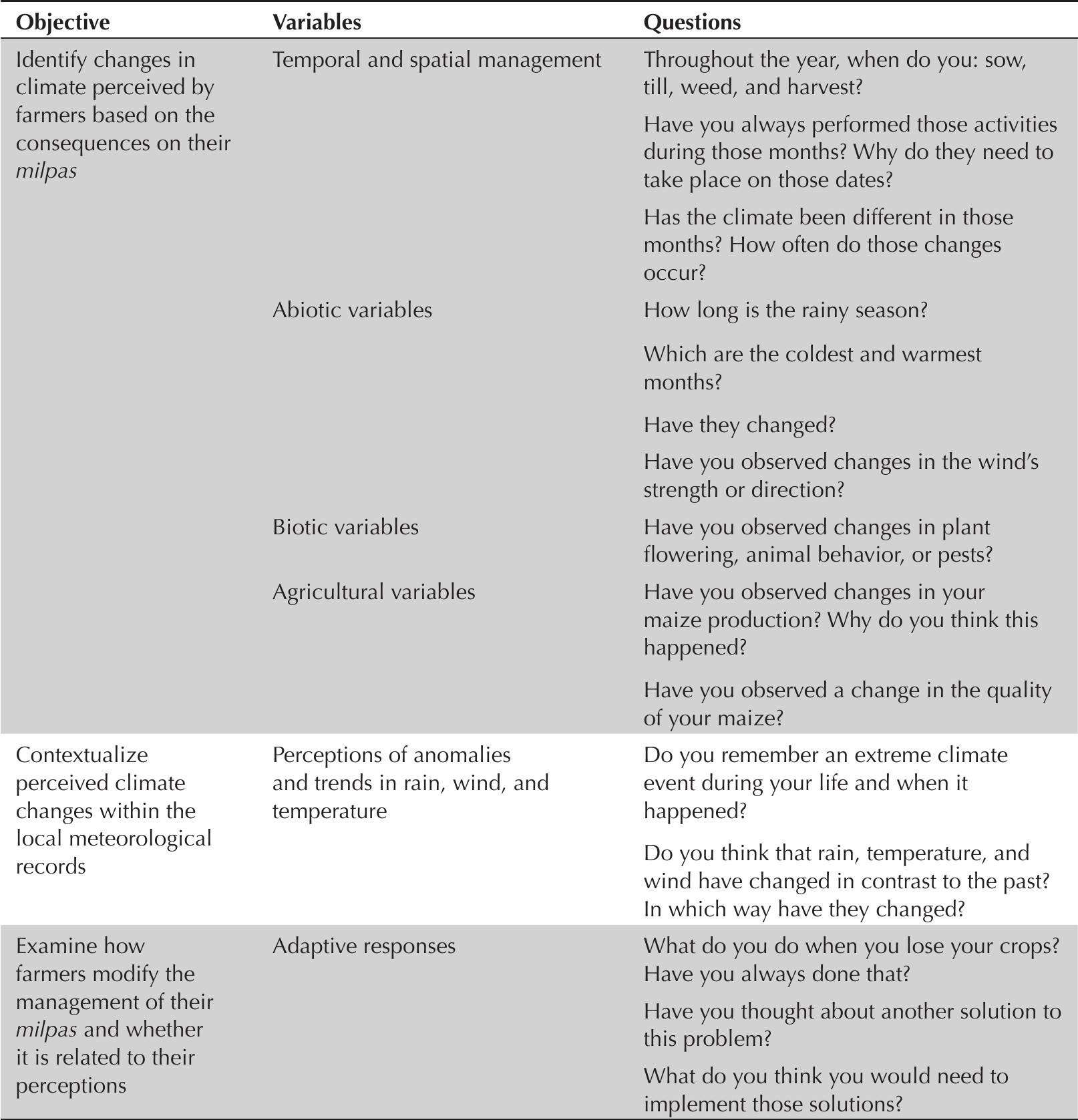
Interviews were used to identify perceived changes in climate and their impacts on milpas and how these influenced farmers to adjust their management in SG and SM. We asked interviewees about the agricultural practices that take place throughout the seasonal calendar, the atmospheric conditions occurring during such practices, and their perceptions about climate change impacts in abiotic variables (precipitation, wind, and temperature), biotic variables, such as changes in plant flowering, animal behavior, crop diseases, and agricultural shifts in the production volume of maize and kernel quality (Table 1).
Daily measurements of maximum and minimum temperature (°C) and precipitation (mm) from 1954 to 2016 were obtained from the nearest weather station (97° 0′ 0″ W, 18° 23′ 60″ N, 2077 masl; National Meteorological Service 2021). Months and years with fewer than 80% of their records were discarded for subsequent analysis. This information was used to reconstruct historical climatic variation, which was used to contextualize local perceptions and verify the coincidences between such perceptions and climatic trends, as well as the mentioned years where farmers experienced anomalous meteorological variation that affected their crops or productive activities.
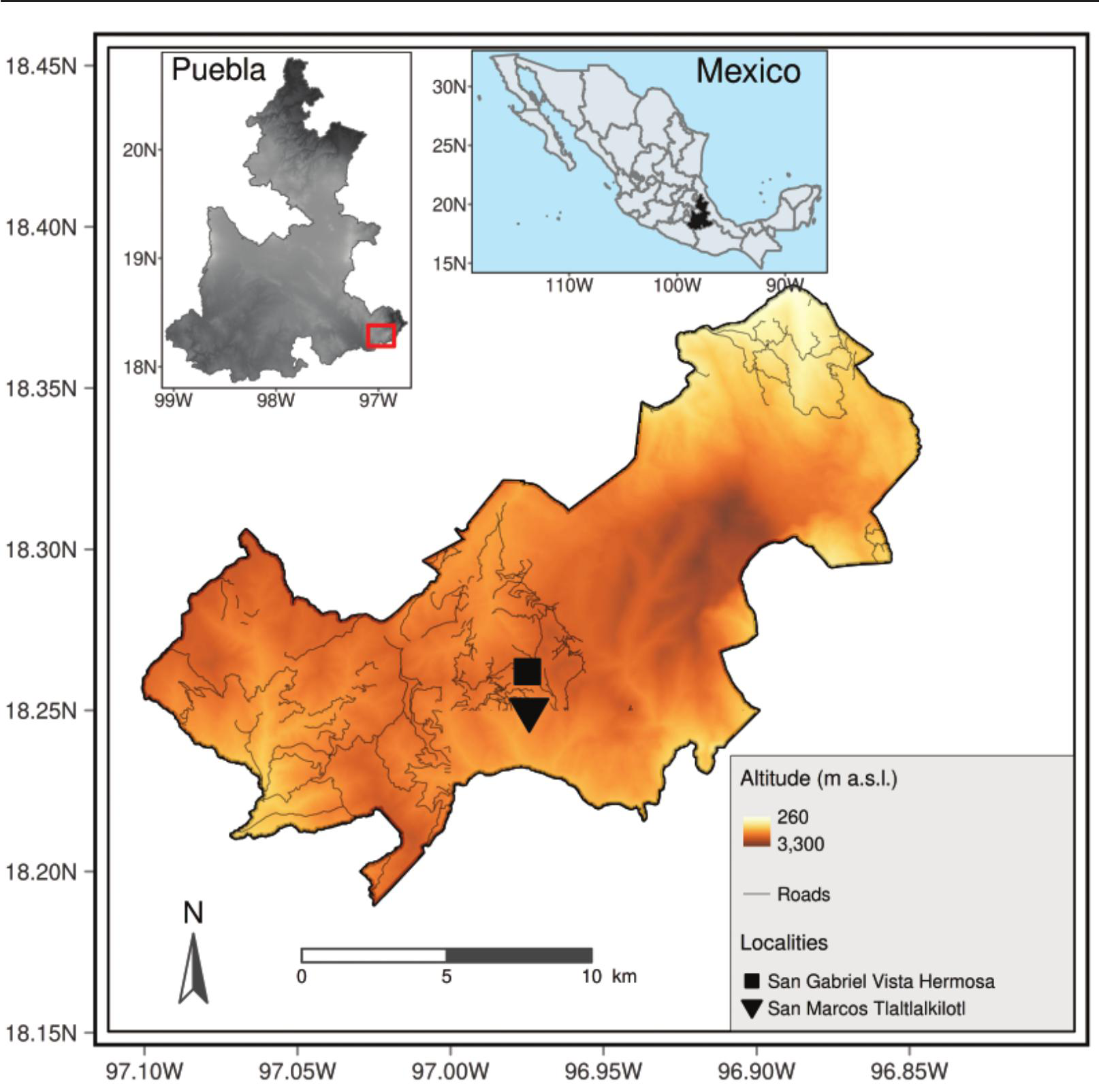
Geographical location of San Gabriel Vista Hermosa and San Marcos Tlaltlalkilotl. The map shows the altitude gradient of the municipality of Santa María Coyomeapan.
Data Analysis
Content analysis of the interviews was performed using the software Atlas.ti 7 (Scientific Software Development GmbH). The analysis sought patterns and relationships in farmers' responses within and between communities. The codification process used the interview questions as a starting point, and newer codes were generated as the process advanced. Codes were arranged in the following families: milpa characteristics; milpa management; seasonal calendar; perception: rain; perception: temperature; perception: wind; perception: Other (which included the rest of the indicators); and strategies. Strategies were categorized in preventive and responsive.
Interview design. This table shows the link between interview questions and the variables used to achieve each objective.
Contextualization of people's climate perceptions within the historical instrumental record was done by verifying the coincidences between interviewees' memories of years with anomalous meteorological variation and climatic trends and anomalies in instrumental records. Instrumental trends were evaluated through Mann-Kendall tests using the modified mk package for R (Patakamuri and O'Brien 2020), while precipitation and temperature anomalies were calculated following Conde et al. (2006).
The relationship between the interviewees' perceptions and changes in their management practices linked with the seasonal calendar was analyzed through the following multiple logistic regression model:

Management change (man_change) was set as the response variable and was coded as 1 if the interviewee claimed to perform at least one of the following: irrigate his fields, use pesticides, change sowing dates, or include cash crops; otherwise, it was coded as 0. Explanatory variables were binary and were coded as 1 if the interviewee perceived changes in meteorological conditions during the sowing months (sow_dif) or shifts in wind's strength or direction (win_dif), and the hottest or the coldest months (tem_dif). Only the variables that people associated with changes in climate were used in the model, while other variables that interviewees did not relate with changes in climate (such as maize production or plant flowering) were excluded to avoid introducing confounding factors. Statistical analyses were done in the R statistical environment (R Core Team 2018). The model was adjusted using the glm function and simplified through a stepwise method. The simplification consisted in removing the least significant term from a model and then testing the change in the new model's deviance with the anova function; if the change was significant, the variable was not removed and the next significant term was removed. The final model's goodness of fit was assessed by a Hosmer-Lemeshow test (Lele et al. 2019).
Results
Climate Perception Analysis
The analysis of the interviews indicates that farmers perceived changes in all climate indicators and biotic and agricultural variables (Figure 3). Rain was the most frequently cited indicator in both communities, followed by crop pests and wind. Overall, fewer people perceived these indicators in San Gabriel (SG) than in San Marcos (SM).
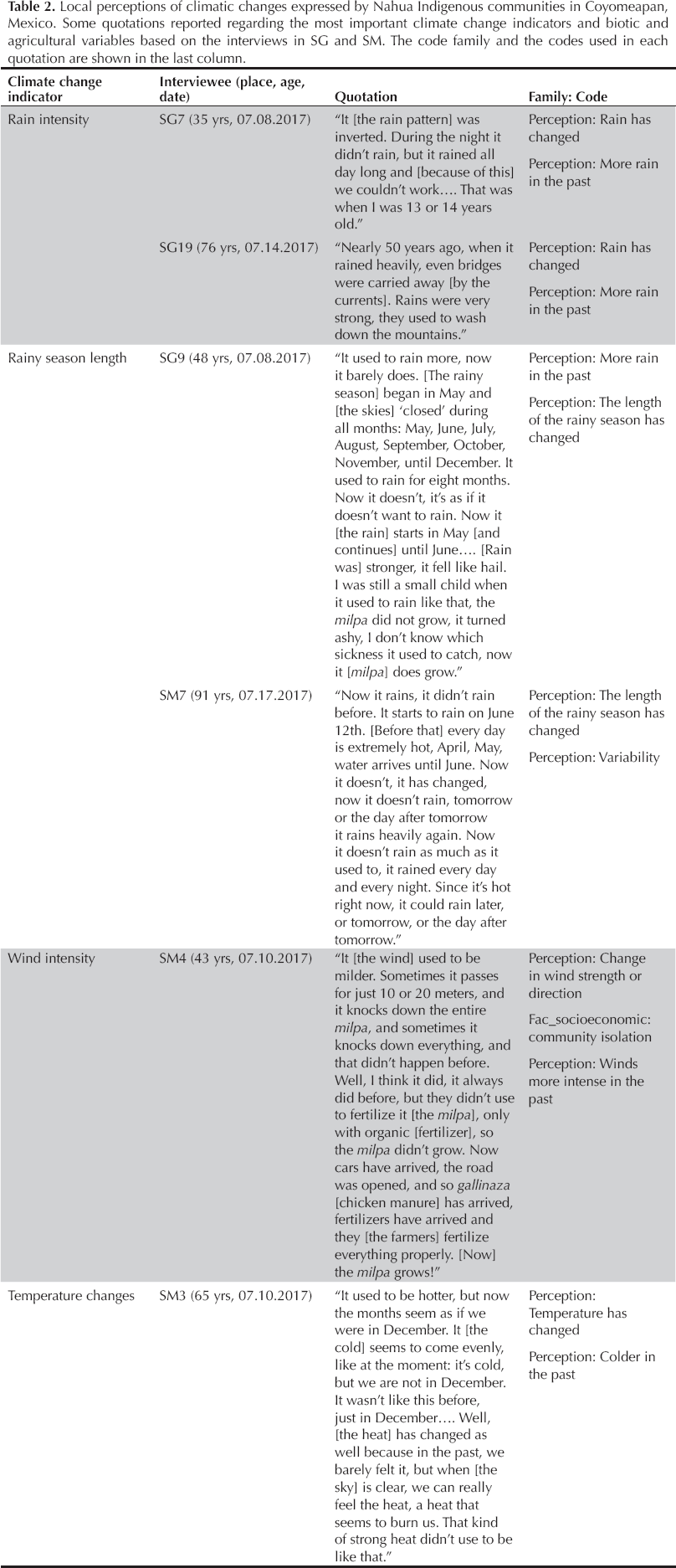
Interviewees reported that rain has changed in three ways: rain intensity has decreased, the length of the rainy season has shortened, or both. Farmers who recognized changes in rain intensity mentioned that it used to be more intense in the past. These changes were usually expressed in terms of impacts on their daily life or material belongings, such as loss of houses, milpas, or work constraints. Other descriptions highlighted the impacts of rain on landscape elements, such as collapsed bridges or landslides (Table 2).
Like rain intensity, people perceived that the rainy season has become shorter. However, the perception of this reduction is not the same because there is variation in the number of months that each person considers that the rainy season lasts (NSG = 6, 30%; NSM = 5, 25%). More people interviewed in the community located at a higher altitude (SG) perceived a reduction in the intensity of the rain, either by itself (N = 7, 58% of the farmers who reported changes) or combined with a shorter rainy season (N = 5, 42%). A small fraction of people living in SM mentioned changes in rain intensity alone (N = 3, 27%); most frequently, this was perceived in combination with a reduction in the length of the rainy season (N = 7, 63%). Only one person from SM perceived a shorter rainy season (9%).
Changes in wind were the second most frequently mentioned climate change indicator. As with rain, farmers perceived changes in wind through the effect on their daily routines or material belongings, such as destroying houses or causing maize plants to topple over and abort maize kernels, thus recognizing it as a potentially dangerous meteorological phenomenon. Interestingly, the changes in the intensity of the wind are perceived not only by the damage it causes with maize but are also linked to other socioeconomic aspects that shape their perceptions. In one participant's opinion, the construction of new roads facilitated their access to the market to buy fertilizers that make maize more resistant to the attack of the wind (Table 2). Interview responses in both communities indicate a similar proportion of mentions (NSG = 12, 60%; NSM = 7, 50%), and all responses indicated a reduction in wind intensity without persistent changes in its direction or seasonality. Although farmers recognized that wind is not as strong as before, they mentioned that it still poses a threat to their milpas which they cannot mitigate.
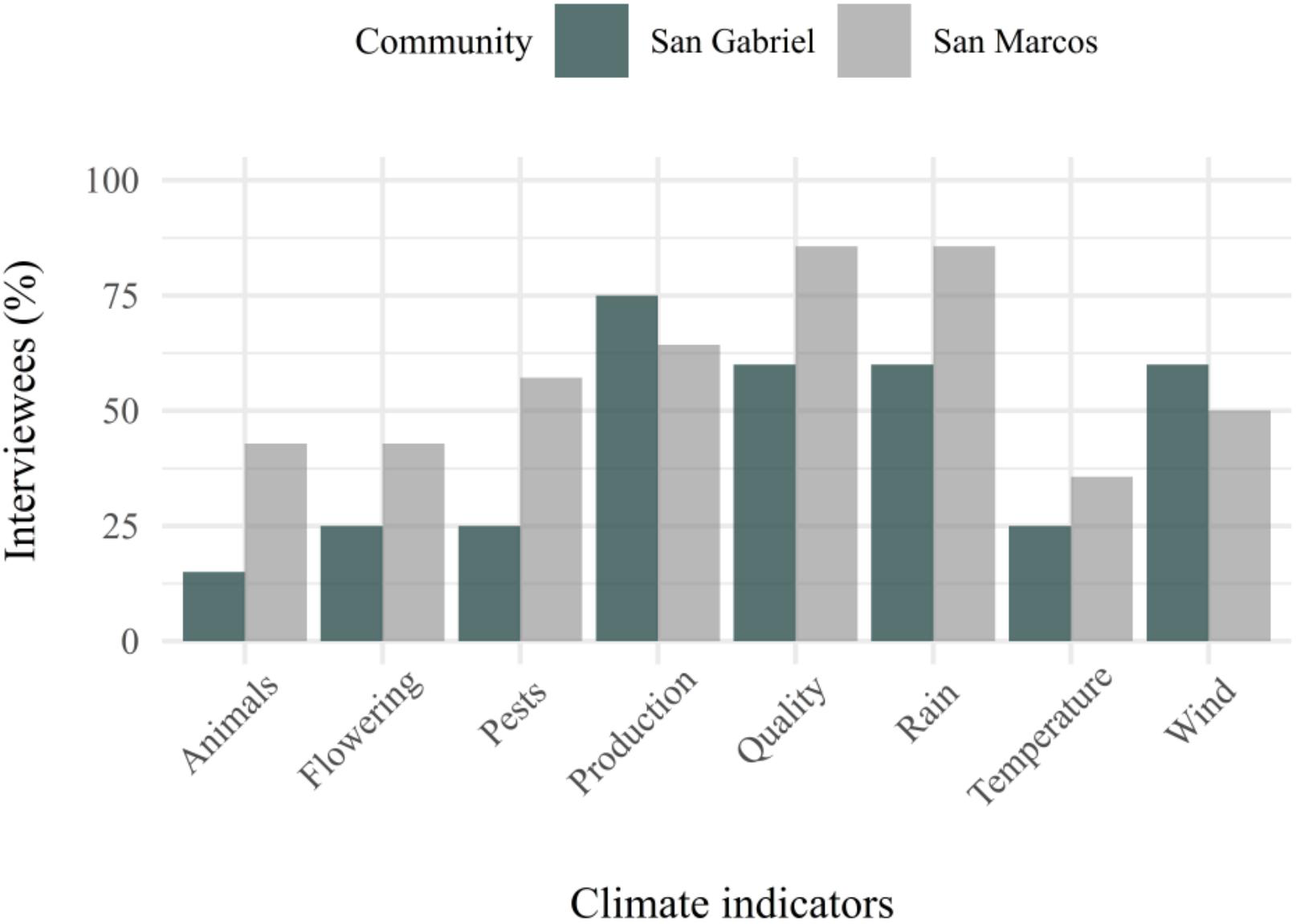
Quantitative summary of the perception of climate indicators. Y-axis shows the percentage of interviewees who responded positively to changes in climate indicators. Animals = Behavioral changes or presence of new species; Flowering = Shifts in flowering dates; Pests = Presence of new pests or diseases; Production = Changes in maize production volume; Quality = Changes in the quality of maize kernels; Rain = Shifts in rain intensity or in seasonal length; Temperature = Seasonal changes or shifts in extreme values; Wind = Shifts in wind intensity or in flow direction.
Perceived changes in temperature were scarce and inconsistent (NSG = 5, 25%; NSM = 5, 36%). One participant reported that cold periods had become harsher or that the weather was now colder throughout the year, “as in December” (Table 2); however, the rest of interviewees did not mention changes in temperature, or they reported that the changes that they have perceived are not different from expected annual variation.
Changes in production (NSG = 15, 75%; NSM = 9, 64%) and in maize quality (NSG = 12, 60%; NSM = 12, 85%) were the most mentioned non-abiotic variables. Two farmers mentioned that their production volume and the quality of maize has increased because now the climate is different than in the past (NSG = 1, 5%; NSM = 1, 7.4%). The rest explained that fertilizers and herbicides have improved maize's performance since they became available when roads were constructed approximately 15 years ago. The few changes perceived in biotic variables included shifts in plant phenology (NSG = 5, 25%; NSM = 6, 43%), sightings of uncommon animal species (NSG = 3, 15%; NSM = 6, 43%), and pests or plant diseases (NSG = 5, 25%; NSM = 8, 57%). Interviewees did not relate variation in flowering and ripening of fruits to the reduction in rain and wind intensity; instead, they explained them as part of the expected inter-annual variability or the outcome of bad management. Perceptions of change in animal behavior or sightings of uncommon species, such as coyotes, were thought to be a consequence of deforestation. Pests or plant diseases were associated with agricultural inputs (insects mixed in with fertilizers). Like shifts in rain and wind, farmers referred to changes in biotic variables through their consequences for their daily life and livelihood activities (e.g., crop loss due to pests or diseases).
Ten interviewees (NSG = 4, 20%; NSM = 6, 43%) recalled years in which they observed atypical rainfall. Each of these years was mentioned by only one interviewee (except for 1975, which was cited twice), and according to farmers, in all of the years mentioned, rainfall was more abundant. However, although the years mentioned coincide with some of the strongest precipitation anomalies that occurred between 1954 to 2016, they do not coincide with the direction of the anomaly in all cases (Figure 3).
There is a consensus among the farmers that rainfall has decreased over time; however, the analysis of the meteorological data shows a weak but non-significant increase in precipitation between 1954 and 2016 (Mann-Kendall τ = 0.008, p = 0.64).
Only three farmers (NSG = 1, 5%; NSM = 2, 15%) stated that the temperature was colder in 2002, 2013, 2014, and 2016, and only one farmer from SM (7 %) reported hotter temperatures in 2002 (Figure 4). After locating these years in the instrumental record, we found that farmers' perceptions of colder conditions are congruent with meteorological data showing a reduction in maximum temperature in 2013, with the significant but weak negative trend (τ = –0.152, p = 0.0006). Minimum temperature shows a less pronounced non-significant decrease (τ = –0.008, p = 0.628).
Changes in Management Practices Based on Perceived Changes in Climate Indicators
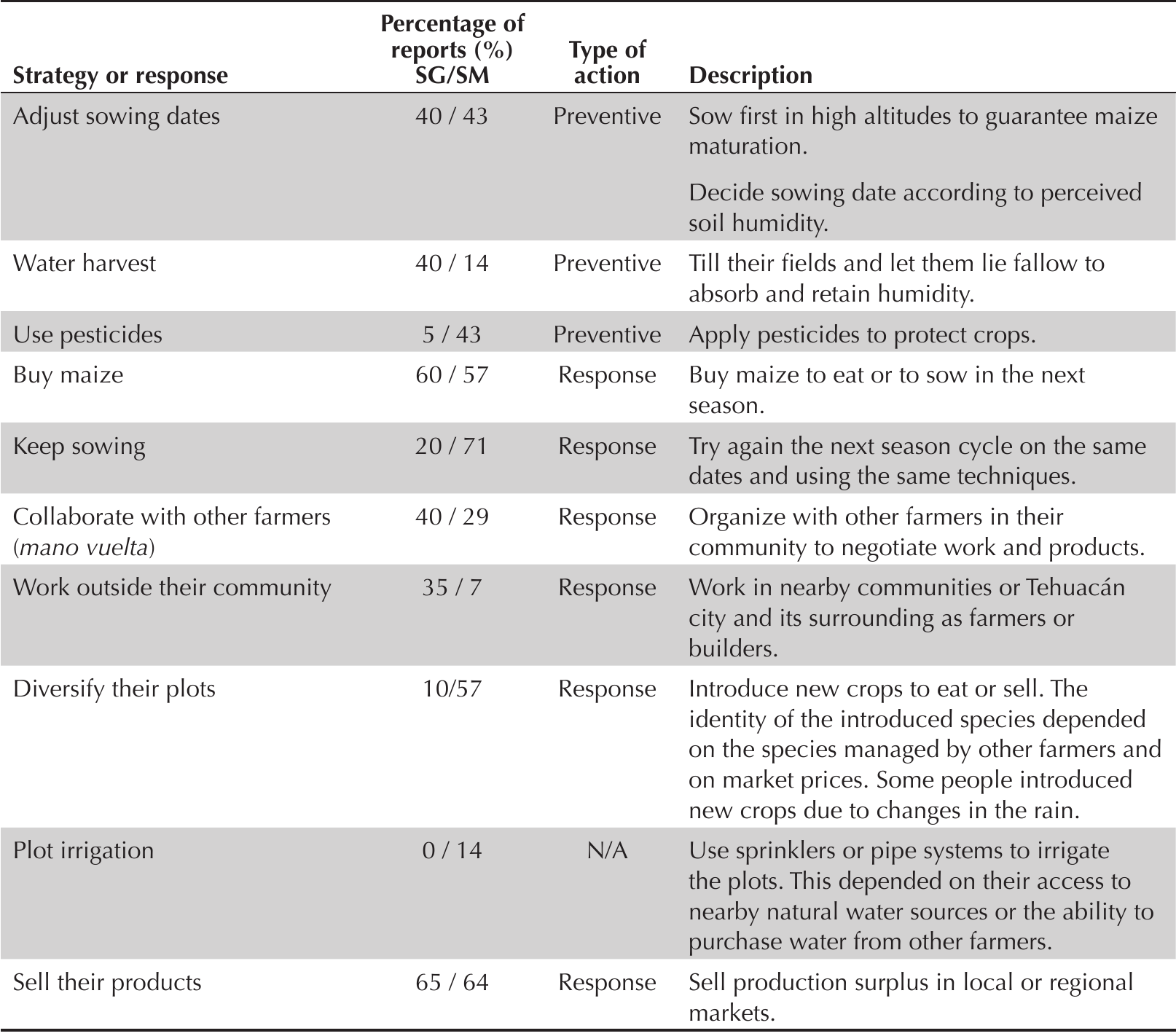
Farmers' answers reveal that people employ a set of strategies that we have categorized as “preventive” and “responsive” (Table 3). Preventive strategies usually are performed before the onset of the rainy season and are thought to reduce the risk of crop loss. The most mentioned preventive strategy was the modification of sowing dates. Responsive strategies are a diverse group of practices employed as ways to remedy possible losses in the maize crop. The most cited responsive practices were to keep working or to buy maize after crop failure and sell their production surplus (Table 3).
Both communities, in different proportions, reported a delay in the traditional sowing dates based on their perceptions of the amount of rainfall and seasonal behavior. They also mentioned attempting to collect water in agricultural fields before the onset of the rainy season and pesticide use to prevent pests (Table 3). In the higher and colder fields of SG, water harvesting was the preventive practice most frequently cited (40%), while plot irrigation (0%) and pesticide use (14%) were the least mentioned. Conversely, warmer conditions and irrigation availability in SM allowed farmers to postpone sowing dates if needed (43%), but they suffer from more pests and therefore require more pesticides (43%).
Farmers from both communities (SG = 20%; SM = 71 %) mentioned that it is common to lose at least a fraction of their maize each year, but when these losses exceed their food demand or seed supply for sowing in the next season, they buy maize. Interviewees expressed a generalized feeling of inability to prepare for or respond to a perceived climatic change and crop losses, leading to the idea that to “keep working” is the only possible course of action. Nevertheless, members of the community who suffer these losses also negotiate labor rearrangements with other farmers to work together and split costs, materials, labor, and the harvest, or to temporarily migrate to nearby cities to work as builders or jornaleros (paid farmers). Farmers' out-migration destinations could be as close as other communities within the municipality or as far as cities like Tehuacán and its surroundings, or Mexico City; some even reported that they worked in the state of Sonora or the United States. The implementation of these practices varied between communities. In SG, farmers tend to collaborate and migrate more than in SM.
Local perceptions of climatic changes expressed by Nahua Indigenous communities in Coyomeapan, Mexico. Some quotations reported regarding the most important climate change indicators and biotic and agricultural variables based on the interviews in SG and SM. The code family and the codes used in each quotation are shown in the last column.
Diversification of these systems results from farmers' decisions to experiment in their plots by integrating new species or to experiment with new arrangements within plots (Table 3). For example, people sowed maize or chile canario (Capsicum pubescens) between apple trees, carefully maintaining a certain distance between plants to avoid shade from covering the maize plants (Figure 5A–C). Farmers reported introducing species, like chile canario, that could be sold at higher prices than maize (SG = 2, 10%; SM = 8, 57%) (Figure 5D). Families frequently own more than one field, often located at different altitudes, because it is thought to provide some insurance against potential maize losses due to wind or frost and to offer food alternatives or harvest surpluses that can be sold to pay other expenses. The number of plots owned depended on the socioeconomic status of families and familial ties (in the case of inherited lands). Although more plots are desirable, acquiring more lands does not represent a strategy itself.
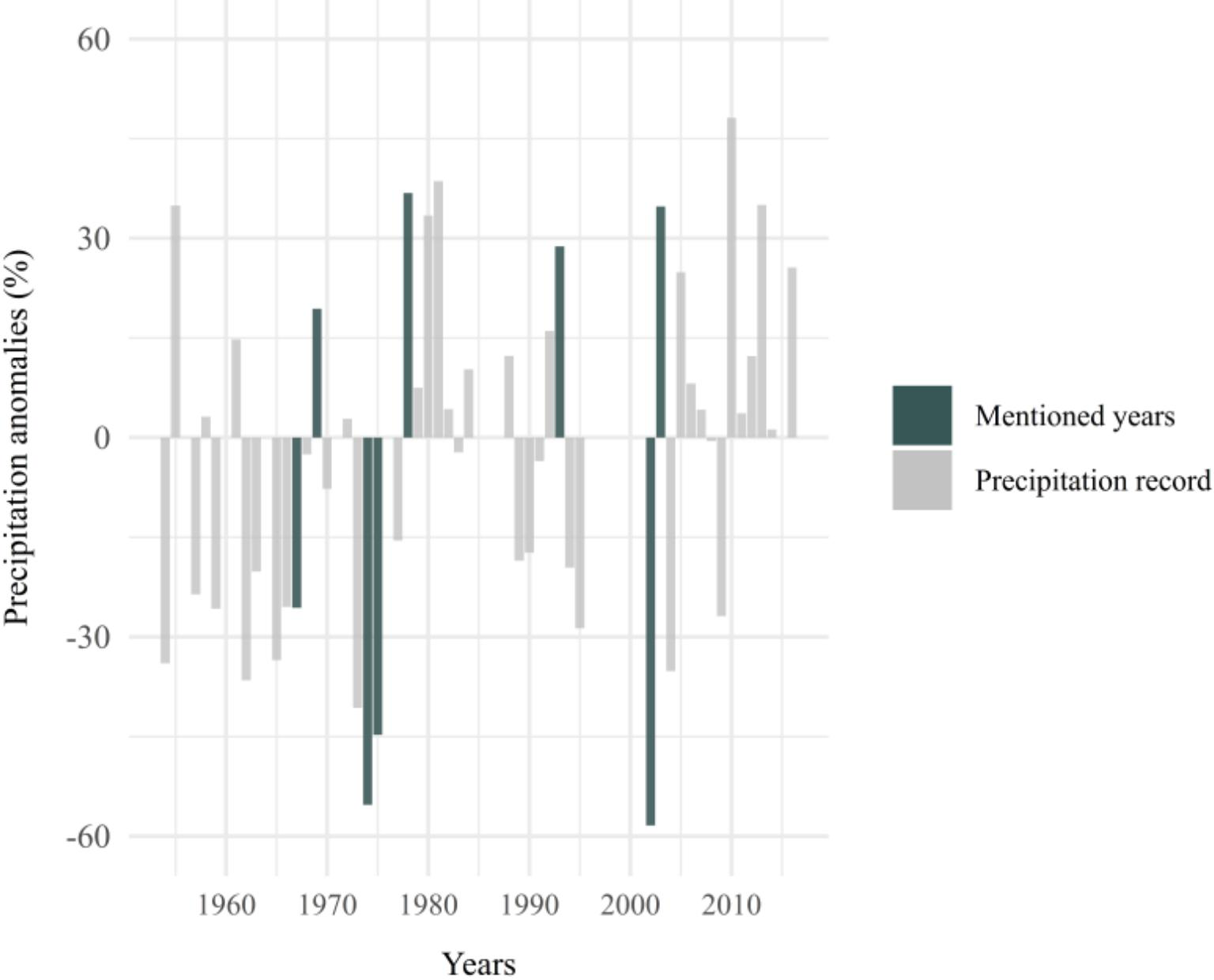
Precipitation change perceptions located within the meteorological anomalies record. Precipitation anomalies between 1954 and 2016 were calculated from data recorded at the 21114-Zoquitlán meteorological station. The y-axis shows percentage deviations from the median of precipitation calculated for the complete time interval. Dark bars are the atypical rainfall years mentioned by the interviewees.
The logistic model suggests that farmers who perceived changes in climatic conditions during sowing months were 87% more likely to make changes in the management of their fields (log odds of βsow_dif = 1.897, p = 0.018). The perception of changes in temperature or wind did not show a significant association with changes in the management of milpas. The Hosmer-Lemenshow test results were non-significant, which indicates that the model is adequately specified and that it fits the data (χ2 = 2.592e–30, df = 8, p = 1).
Discussion
Climatic Perceptions
Farmers' climate perceptions in these communities concur with those reported in other studies (Karki et al. 2019; Reyes-García et al. 2016; Savo et al. 2016). Changes in rain and wind were the two most frequently mentioned climate factors, while shifts in temperature received fewer mentions than in other parts of the world (Savo et al. 2016). Rain's primacy over other variables can be understood by its predominant role in agricultural production and as reflected in statements about changes in the quantity and intensity of rain and length of rainy seasons. Other studies have reported similar results that recognized the role of accumulated experience gained through continuous agricultural practice in the perception of changes in climate (Tesfahunegn et al. 2016; Tschakert et al. 2013). The multiple ways in which rain impacts people's lives could explain why memories of atypical years coincided with strong precipitation anomalies. However, few people remembered anomalous years and rarely reported the same years as anomalous. This mismatch could be related to a socio-psychological phenomenon known as shifting baseline syndrome, which refers to the lack of precision in human perception about historical changes in ecosystems due to adjustments made to memories throughout life (Fernández-Llamazares et al. 2015). The perception that rainfall has decreased coincides with the mild decrease found by Ureta et al. (2018) in their instrumental analysis in the area where our study site is located. In contrast, we did not find changes in total annual rainfall between 1954 to 2016 at a finer local scale. Although farmers' perceptions do not perfectly concur with trends in local meteorological data, their perceptions of rainfall variation are informed not only by changes in quantity but also in perception of changes in the intensity and length of the rainy season.
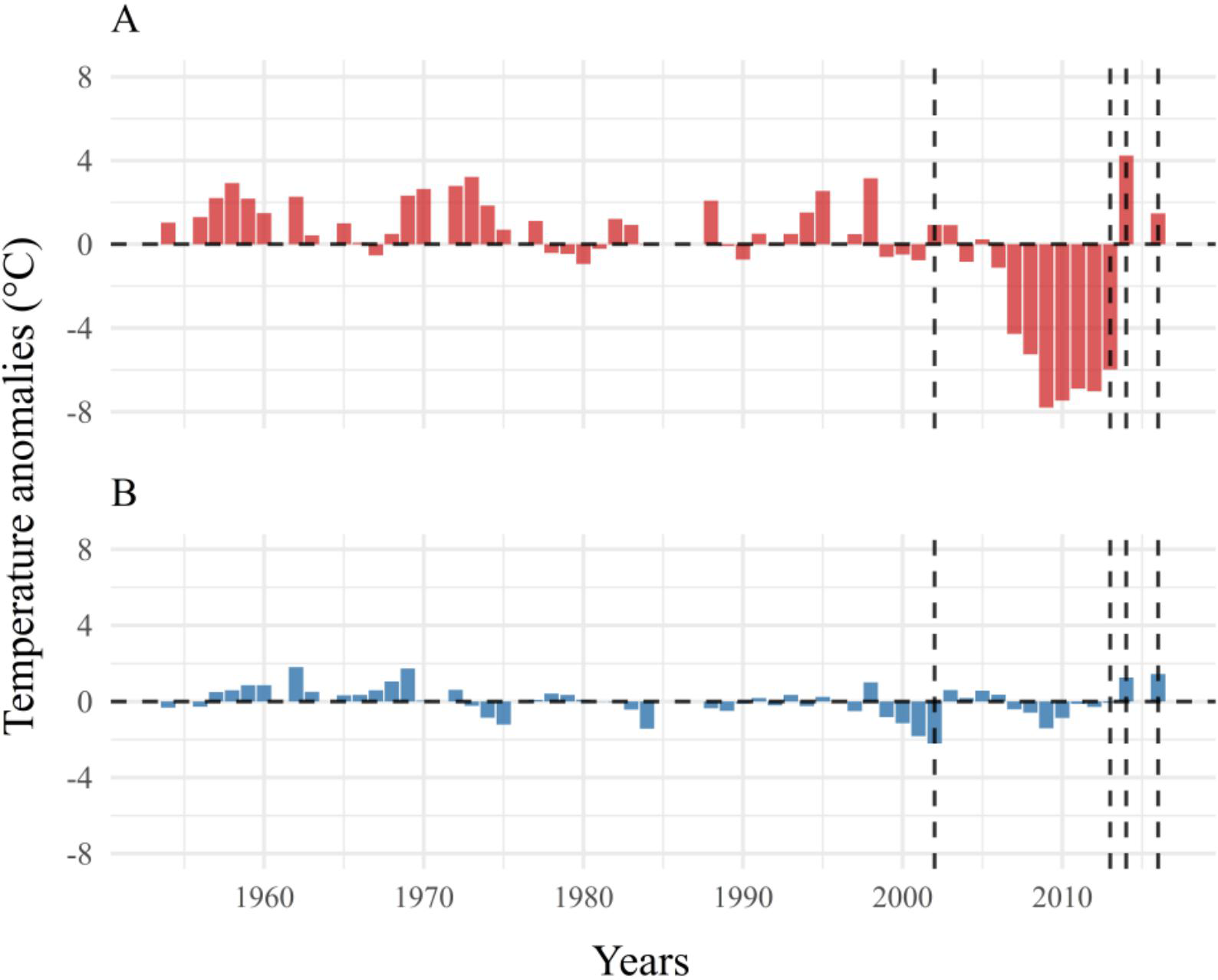
Temperature change perceptions located within the meteorological anomalies record. Maximum (A) and minimum (B) temperature anomalies across 1954 to 2016 comprising the depurated climate record obtained from the 21114-Zoquitlán meteorological station. The Y axis shows anomalies' magnitude in Celsius. Vertical dotted strokes correspond to the years with extreme temperature events mentioned by the interviewees.
Although evidence from other countries shows that winds have become more intense (Savo et al. 2016), the Nahua farmers from Coyomeapan commonly perceived a reduction in wind strength. Like rain observations, the importance of wind for these communities can be explained by the severity and frequency of its effects on their milpas. The interpretation of wind as a risk seems to be the cause and product of farmers' self-perceived inability to prevent its impacts on their milpas, but they also assess it in terms of effects on their houses and of other aspects of their livelihoods. They consider the wind to be a risk factor, but they believe that the construction of roads in the region has facilitated connectivity with urban areas and allowed the possibility of buying fertilizers that improve their crops' vigor and materials to build more resistant houses. These factors have produced a change in the perception of wind intensity since access to infrastructure has reduced vulnerability to damage caused by the wind. As suggested by the theory of perception proposed by Nguyen et al. (2016), climate perceptions can be linked and modified through interaction with the environment, history, and personal experiences. This has led to multiple forms of interaction between communities and the wind, which is not perceived as an isolated factor.
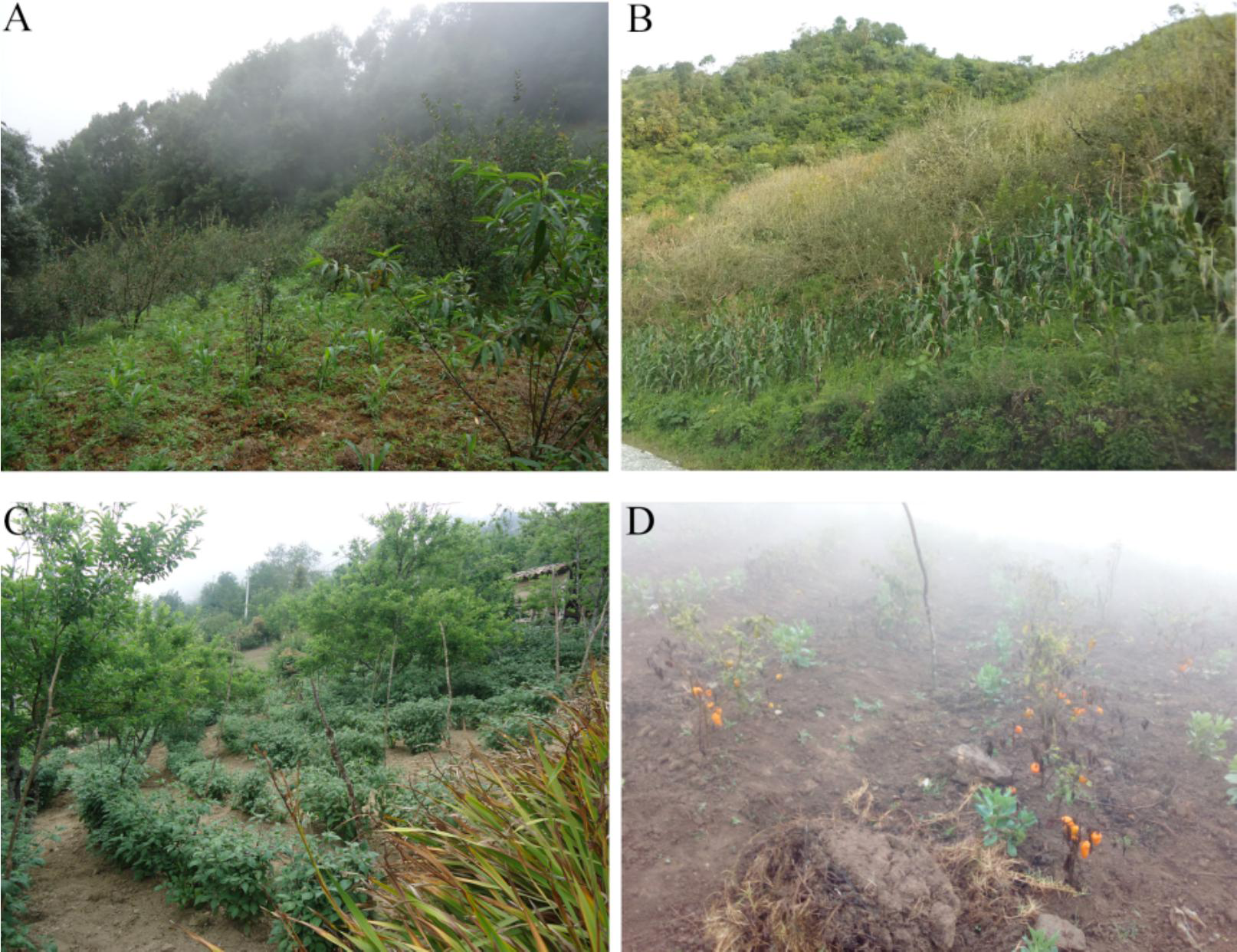
Crop combinations observed in SG and SM over the year. A and B: Plots sown with maize (milpa; Zea mays) between apple trees (Malus domestica) in July and September, respectively. C and D: Canario chili peppers sown between apple trees and Vicia faba in April and January, respectively.
Perceptions of changes in temperature were scarce in both communities. One explanation for the difference between the number of temperature observations and those of rain and wind is that temperature's impacts are less tangible and direct upon material belongings beyond milpas (e.g., houses are not destroyed) and, therefore, depend more on personal sensory experiences. This scarcity can also be explained by the familiarity that farmers have with temperature differences along the altitude gradient, which could mask temperature shifts not strong enough to be construed as atypical but rather as part of the expected variability. The analysis of historical records did not suggest multiple anomalies besides the strong decrease in maximum temperatures between 2005 and 2013. This decrease is consistent with farmers' perceptions that temperatures have become colder. Overall, temperature records did not show consistent changes, which is consistent with the relative lack of mentions in interviews. These results contrast with those reported in other studies, where temperature is usually one of the most frequently perceived meteorological variables (Savo et al. 2016).
Adaptation strategies for milpas' management in SG and SM. The strategies aimed to avoid (preventive) or to cope with (responsive) maize loss, and their descriptions are detailed along with the proportion of farmers from SG and SM who reported their implementation. NSG = 20, NSM = 14.
Although biotic variables, such as changes in animal behavior or flowering, were mentioned in both communities, they were not associated with shifts in meteorological phenomena. It is possible that farmers report meteorological variables before biotic variables because they are not as relevant to maize production, which is the main crop in the milpa. This crop is pollinated by wind and, therefore, not affected by changes in pollinator behavior (Ashworth et al. 2009; Cuevas et al. 2021). However, for other frequent crops in the milpas, such as apple and plum trees, cold temperatures are required during winter to start flowering (Kurokura et al. 2013; Miranda-Trejo et al. 2009) and farmers are aware that changes in temperature will reduce fruit production.
Adaptation to Climate Changes
Farmers' most important decisions to secure their harvests come at the beginning of the calendar. Qualitative data showed that preventive strategies usually are performed before the onset of the rainy season, so they are attentive to changes in meteorological conditions during the sowing dates. The logistic regression, on the other hand, showed that perceiving changes during this initial stage of the seasonal calendar increased the chance of adjusting sowing dates and implementing other strategies, such as plot irrigation, integration of new species, and pesticide use. This can be explained by the fact that sowing marks the beginning of the agricultural cycle, so changes to it exert a lagging effect on subsequent practices in the seasonal calendar, which increases the risk of losing maize due to winds in September or frost in October. The non-significance of other climate change indicators in the model suggests that farmers pay more attention to the risks and repercussions of these indicators (i.e., loss of their crops) for decision-making than to the perception of recent changes in the same variables (i.e., reduction of the wind's intensity). Therefore, it seems logical that they perform management activities to reduce these risks independently of such recent perceptions.
Improvements in connectivity have promoted commercial relations with distant markets, promoting the integration of new strategies and cash crops, like chile canario, in agricultural systems, which are implemented as a response to crop loss. Usually, farmers' reasons for implementing these practices are oriented towards satisfying farmers' financial needs instead of being an active measure aimed to reduce the impacts of rain reduction or wind. Nevertheless, they could be an example of how socioeconomic transformations influence farmers' livelihoods and the elements that shape their perception of changes in climate. For example, the option to irrigate their fields in SM make them less dependent on rain and less vulnerable to hail during winter, reducing maize losses, which plays an important role in perception.
Adaptations to climate change are not restricted to changes in the management of milpas; they can encompass socioeconomic actions that reduce vulnerability to climate change (Michetti and Ghinoi 2020). The people interviewed in SG resorted to out-migration in search of work or to selling their agricultural products to earn money to replace maize or lost investments. These strategies, although not directly related to perceptions of changes in climate, can be explained by the self-perceived inability to cope with crop loss associated with risk perceptions. More importantly, however, it is necessary to rethink the implications of these activities for farm families. Taylor (2013, 2015) highlights that vulnerability to climate change cannot be understood separately from socioeconomic and political struggles that may extend beyond communities' physical territory. Taylor defines relational vulnerability as the vulnerability that emerges from the incorporation of farmers into disadvantageous social, economic, or political relationships. We can assume that out-migration, introduction of water-dependent cash crops, and, increasingly, dependence on commercial fertilizers is forcing farmers to enter into unequal economic relationships inside and outside their communities, which make it more difficult for farmers to secure the continuation of their livelihood, adding another layer of vulnerability.
Conclusions
This study shows that contemporary management of milpas in the context of climate change is the outcome of a web of biophysical and socioeconomic dynamics that shape these communities. Our findings indicate that farmers perceive changes in abiotic, biotic, and agricultural variables, and that such awareness is constructed in reference to how these factors impact their livelihoods. The perception of such changes is understood based on an environmental perception that has been developed throughout their lives, which is responsible for the elaboration of most practices.
It would be relevant for new research to delve into the socioeconomic aspects that interact with atmospheric dynamics to improve the understanding of how climate change vulnerability is developed. For this reason, novel research and climate policy need to take the ontological and epistemological differences between Indigenous and Western knowledge into account because understanding the conflicts and similarities between them is a necessary step towards achieving climate justice while meeting adaptation goals (Burman 2017; Ludwig and El-Hani 2020; Ludwig and Weiskopf 2019; Nightingale et al. 2019).
Footnotes
Acknowledgements
We are thankful to the people of San Gabriel Vista Hermosa and San Marcos Tlaltlalkilotl for sharing their time and memories with us. We also thank the municipal authorities of Santa María Coyomeapan for allowing the project and their logistical support. We thank our three anonymous reviewers and editors for their valuable time and suggestions that improved this manuscript. This project was possible thanks to the CONACYT grant number 464071 received by the first author and the funding received by the Red Temática Productos Forestales No Maderables.