







Abstract
Half a century onward, this essay reflects on a field project initiated in 1963 that examined the human use and vertical distribution of wild, weedy, and cultivated species between 4314 m and 700 m in the Urubamba (or Vilcanota) Valley, southern Peru. Five well-defined climatic zones from microthermal to macrothermal characterize that valley, which was inhabited by a then largely non-literate Quechua-speaking peasantry. Direct observation, interviewing, plant collecting, and mapping characterized the 18-month effort to retrieve the tacit knowledge held by rural people and to convert that information into formal knowledge for others to read. Obstacles peculiar to the period had to be surmounted and shortcomings of various kinds overcome. That first big research endeavor, an intense and intensive learning experience, imparted a sense of intellectual autonomy in selecting topics; respect for the power of intrinsic motivation; a view of fieldwork as a source of adventure; and a perspective on ethnobiology as a form of delicate empiricism that is not simply a matter of registering an objective world. Retrospection on ethnobiological fieldwork at the dissertation stage provides another way to examine the circumstances of knowledge creation and its transformative possibilities.
Introduction
For many scholars doing ethnobiology, looking back in time to one's first big field project opens a critical perspective on what was achieved and what lessons were learned. Retrospection may be especially compelling for those who do fieldwork, as I did, in exotic places so unfamiliar that everything had to be learned from scratch. I am now better able to appreciate the special determination and perseverance it took to unlock the keys to the culture that permitted me to function effectively. Subsequent research stints in the same country benefitted from the learning curve that defined my first field experience. At least for me, the initial field study remained the most impressionable scholarly activity of a lifetime. Specific incidents or encounters have stayed vivid in the mind. Field notes and certain photographs can be reconstructed as to time and place in an instant. In this essay, I reflect on a dissertation project undertaken at age 26 to which the passage of time provides another level of meaning about fieldwork, ethnobiology, and the Central Andes (Figure 1).
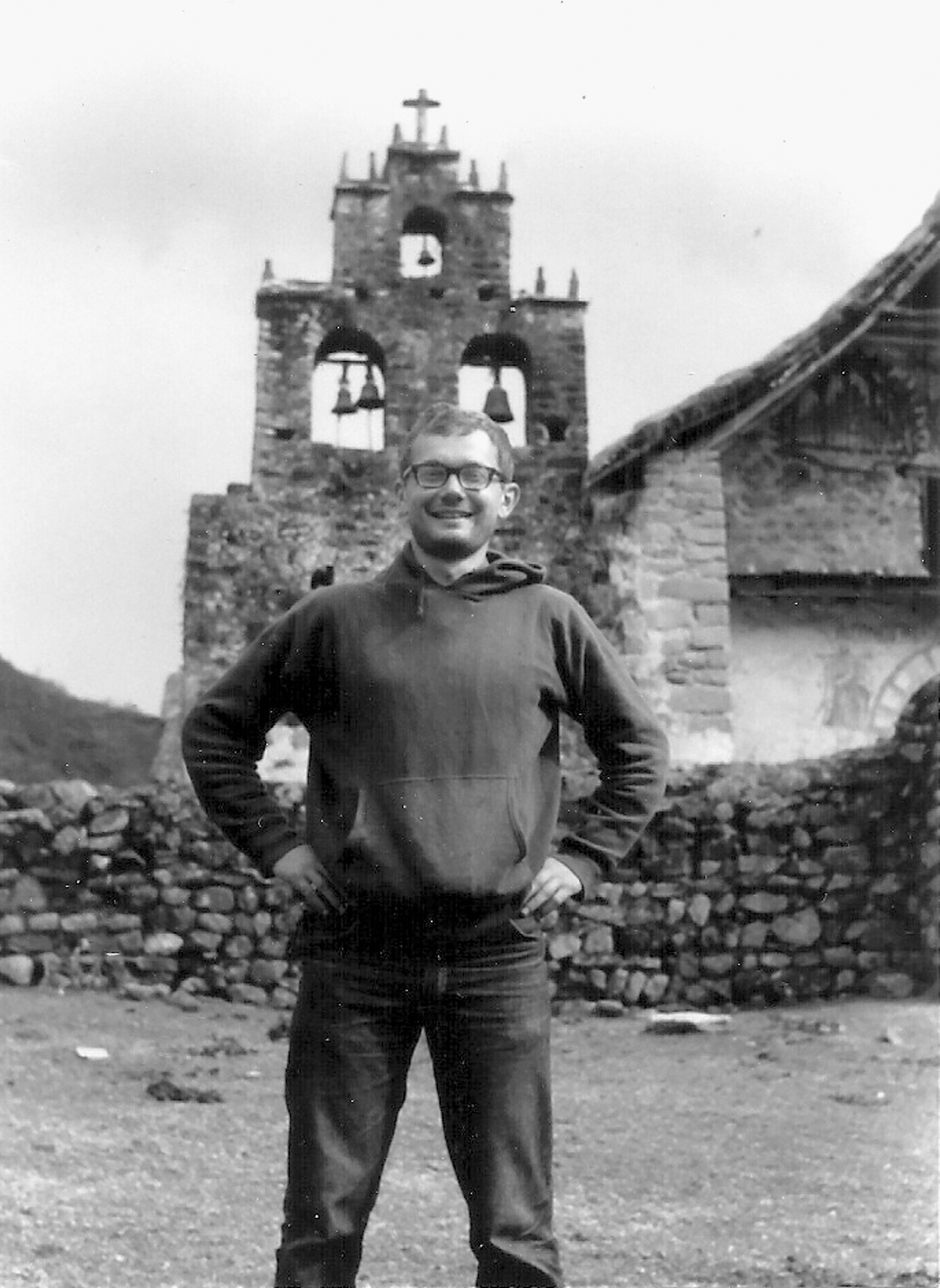
Daniel Gade in September 1964 at Lucma, Peru. Photo by S. Arias.
Background to a Research Trajectory
In the early 1960s, the term “ethnobiology” did not exist as a rubric. Ethnobotany, a term proposed in 1895, was occasionally used, but it had no one set meaning or application. For example, Heiser (1995) described the ethnobotany of domesticated plants in terms of his particular interest in plant origins, which was not how others approached it. Economic botany sometimes overlapped with ethnobotany. More universities at the time had courses in economic botany than they did in ethnobotany. Meanwhile, spinoffs were undergoing definition. Archaeobotany was then starting to get a major boost in interest as radiocarbon dating accelerated research in plant domestication and ancient diet. Yet, at the same time, a sense of inclusiveness started to take hold. With the founding of the Journal of Ethnobiology in 1981, the name change from ethnobotany to ethnobiology came to be widely accepted. In the two compelling volumes edited by Richard Ford (Ford et al. 1978 and Ford 2001), the first volume had “ethnobotany” in the title whereas the second had “ethnobiology.”
Geography is usually considered to be peripheral to ethnobiology, but it is the discipline that most encouraged my interests in that regard. Long before the environmental movement, geography had as an operating concept the integration of physical and cultural phenomena. Beginning in the 1930s, the human use of plants and animals had become a salient focus in the so-called Berkeley School of Geography. Its founder, Carl Ortwin Sauer (1889–1975), conceptualized geography as the convergence of space, time, ecology, and culture (Denevan and Mathewson 2009; Williams, Lowenthal and Denevan 2014).
Sauer's (1950a; 1952) interests in plants and people placed particular attention on two themes: 1) human impact on natural vegetation; and 2) domestication. Practitioners in that tradition identified themselves as biogeographers, cultural geographers or, later, as cultural ecologists. More recently, historical ecology corresponds in many ways with the approach and subject matter of the Sauerian project (Balée 2006). In its heyday when Carl Sauer was alive, the Berkeley School maintained unusually permeable boundaries as a crossroads of knowledge. Now ethnobiology continues that epistemological openness at the same time as it develops new sub–clusters of affinity. For example, Karl Zimmerer (2001), well known for his own research on Andean agriculture, conceptualized “ethnolandscape ecology,” as a subset of ethnobiology that merges with it site-specific approaches from geography. Like the similarly constructed in-between sphere called environmental studies, ethnobiology now has its own journals, organizations, conferences, and subcircles of affinity. At the same time, however, scholars in different parts of the world continue to produce monographs and articles on human use of organic life, without using any of the labels now in vogue.
The particular direction that researchers in ethnobiology take often reflects their own disciplinary backgrounds. As an undergraduate geography student with complementary courses in the biological and social sciences, I had acquired the essentials of an ethnobiological focus by the time I started graduate studies at the University of Wisconsin. Coursework in genetics, plant anatomy, cultural anthropology, and South American archaeology filled perceived gaps. No one there at the time called himself or herself an ethnobiologist or ethnobotanist. However, a number of astute scholars on the Madison campus encouraged my interests. Frederick J. Simoons (1994), who had studied at Berkeley under Carl Sauer, probed the culture and history of food long before that became a popular topic. Jonathan D. Sauer (1918–2008), a world authority on Amaranthaceae and tropical beach ecology, was also interested in weeds and the origin of crops (Brothers et al. 2009). J. Sauer, with a double appointment in the Departments of Botany and Geography, was a model of interdisciplinary involvement. Hugh H. Iltis, his colleague in the Wisconsin Botany Department, was a taxonomist, plant geographer and ardent conservationist, who later became known for his ideas on the origin of maize. Karl Butzer was starting to carve out a geoarchaeological niche in the geography department that necessarily involved attention to plants. William M. Denevan, a Berkeley-trained field geographer was then working on prehistoric changes in vegetative landscapes. Two senior faculty members in the Geography Department, Henry S. Sterling (1895–1987), a Latin Americanist, and Clarence W. Olmstead (1912–2000), an agricultural geographer, had supporting roles in encouraging my take on the organic world. Donald E. Thompson, an archaeologist and Andeanist in the Anthropology Department guided my prehistoric interests as they related to South America.
On my return from the field in 1965, I benefitted from the fortuitous presence in Madison of the maestro himself. During that year, Carl Sauer came as a visiting professor and offered a seminar in which I began sorting out the vast amount of data I had just finished collecting in Peru. Mr. Sauer, who had himself been in my study area in 1942, had a total sense of what I was talking about. His Goethean way of looking at observable phenomena—“delicate empiricism”—matched my own predilection. I remember Mr. Sauer as a man of enormous charisma who liked to cogitate while smoking his pipe as if tobacco was the elixir that unleashed his cascade of insights. By 1968, J. Sauer and Simoons had departed Madison for positions elsewhere, which forced the realization of just how fragile a research cluster is in any one institution and how fortunate I was to have been at Madison when I was. Even when professors remain on the same campus, their interests may diverge from an earlier path, diminishing their willingness to interact through time.
The Central Andes emerged as my focus of ethnobiological enchantment midway through my graduate program. This region, incorporating Peru, Bolivia, and Ecuador, had it all: steep vertical environmental gradients, contemporary palaeotechnic peasant culture, and a retrievable pre-Columbian past. A pioneer study of the vertical dimension of the Andes came from Alexander von Humboldt (1769–1859), perhaps the world's most iconic field geographer of all time. He documented the change in plants with elevation on Mt. Chimborazo (6212 m), considered in the nineteenth century to have been the world's highest mountain (Humboldt 2009). Along the way to the top, he collected plants and carried with him a bulky barometer to measure his altitude above sea level. His studies led to the realization that, except for a few unusually tolerant adventives, each species has a defined niche along a thermal gradient. Cultivated plants also follow that principle of thermal control with, however, the one key difference that human agency determines presence or absence. The values and perceptions of the cultural group typically define what plants are chosen for cultivation. I always found it useful to keep in mind that it is humans who, through selection, turn wild or weedy plants into artifacts.
Beginning in the 1920s, the German geographer Carl Troll (1899–1975) made geoecological studies in the Central Andes that substantially refined Humboldt's notion of mountain ecology (Gade 1996; Troll 1943). Troll's studies of Andean landscape configurations that changed with both altitude and latitude inspired the ethnohistorian John V. Murra (1985) to formulate ideas of verticality relating to the Inca past. Before the Conquest, Andean folk established outliers in different climatic zones where they grew different crops in each zone or kept domesticated animals. This practice of marshalling to good use the discrete parcels in the up-and-down terrain expanded diets, reduced subsistence risk, and seemingly made the need for market exchange all but superfluous. Murra's studies lacked biophysical specificity, an omission that motivated me to put forward a framework of vertical understanding centered on climate and plant identification. My ethnobiological imagination about the Andes found particular inspiration in two readings: 1) USDA plant scientist O. F. Cook's (1916) article in the National Geographic Magazine, which described Andean agriculture as an inheritance from the past; and 2) Carl Sauer's (1950b) chapter on native New World crops in the Handbook of South American Indians. A masterly synthesis, Sauer's chapter (which had been written in the 1940s) provided information on Andean food plants that were then poorly known. I later probed the intellectual background of that piece (Gade 1999:184–213). Though now obsolete, Sauer's article was a key reading for about two decades in the emerging area of New World domesticated plants. It is instructive to read that piece now if only to get a sense of the stunning advances in knowledge that have occurred on this topic.
Thoughts on the Urubamba Valley as a Study Area
The Urubamba (also known as the Vilcanota) study area extended from La Raya Pass at 4340 m asl to the juncture with the Rio Yanatile (700 m asl), which at that time corresponded more or less to the traditional lower limit of Quechua-speaking people (Figure 2). Below that point the territory of the Matsigenka forest tribe began. The Urubamba actually ended more than 300 km downriver at Atalaya (200 m asl) where, at the confluence with the Tambo, it becomes the Ucayali. Within the 3700-meter environmental gradient between the upper and lower ends of the study area, average annual temperatures increase from 5° C at the southern end to 25° C at the northern end. The small area of microthermal climate on the puna (high-altitude grasslands) soon gave way below that to a larger zone (3900 to 3000 m) of cold temperate climate where freezing temperatures at night for part of the year formed a check on some plant growth. Between 3000 and 2400 m, the so-called Sacred Valley formed the heart of the Urubamba depression. A major ecological change occurred between 2400 and 1600 m where ceja de la montaña vegetation reflected a high rainfall pattern. Machu Picchu is located in this luxuriant green zone. From 1600 m to the end of the study area at 700 m, the hot climate has a pronounced seasonal regime of wet and dry and a corresponding tropical deciduous forest.
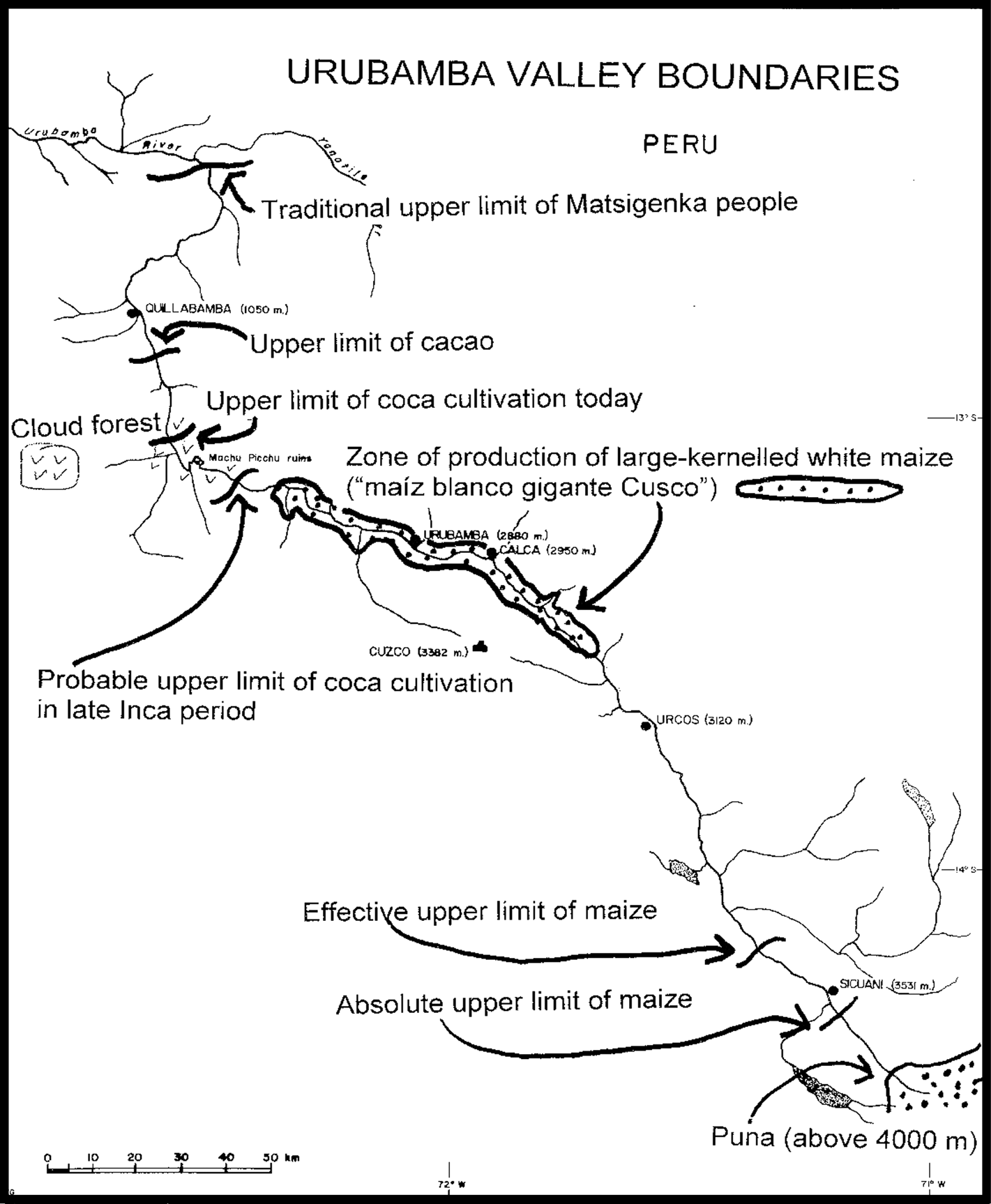
The Urubamba Valley study area extended from 4314 m asl in the south to 700 m asl in the north. Much farther downstream, where the Urubamba joins the Tambo, the Ucayali begins.
The study area had a cultural continuity of both Indigenous and colonial Spanish elements—Quechua was the main language spoken, though many people also knew at least some Spanish. By holding constant the cultural variable, a verticality based on thermal thresholds became more decipherable. Both O. F. Cook and C. O. Sauer included comments about crops in the Urubamba Valley, without, however, discussing the intricacies of vertical limits. Thus, in addition to patterns of plant use, my secondary research goal was to contribute knowledge about crop boundaries. The vertical boundary of a crop, more complex than I had originally assumed, does not necessarily reflect a biophysical limit. Even if it did, the weather, especially subzero weather, varies from one year to the next, influencing the position of crop boundaries. Moreover, the human decisions involved in setting that boundary do not necessarily reflect the normative perception of a farming community. Some farmers are patent risk takers; thus, an attempt at cultivation may reflect the idiosyncrasy of one individual. To address this variable, I distinguished an absolute limit from an effective limit, that is, where a cultivated plant reached its limit of importance in the agriculture of the immediate area.
Puzzling out the patterns of plant use in this valley required frequent displacement. The rainy season brought many medicinal plants into flower. Thatching roofs with wild plants and cutting wood were done mainly in the dry season. In the long agricultural cycle, harvest was the most critical period to study the agricultural plants, allowing identification of landraces and cultivars that could not be determined when the plant was in its earlier growth stage (Figure 3). Sowing provided another opportunity for identification. The macrothermal section of my study area, corresponding to the province of La Convención down valley from Machu Picchu, had a totally different and much richer flora than the temperate section at elevations above 2500 m asl. The important agriculture in that zone consisted of perennials. Sugar cane (Saccharum officinarum L. Poaceae) grew up to 1500 m, though its harvest at that elevation required three years of growth. Cacao (Theobroma cacao L. Sterculiaceae), most of which was a cultivar known as chuncho, had spread in the late colonial period from the Amazon tributaries where it grew as a semi-wild native plant. Its vertical boundary at 1100 m reflected its sensitivity to temperatures below 12° C.
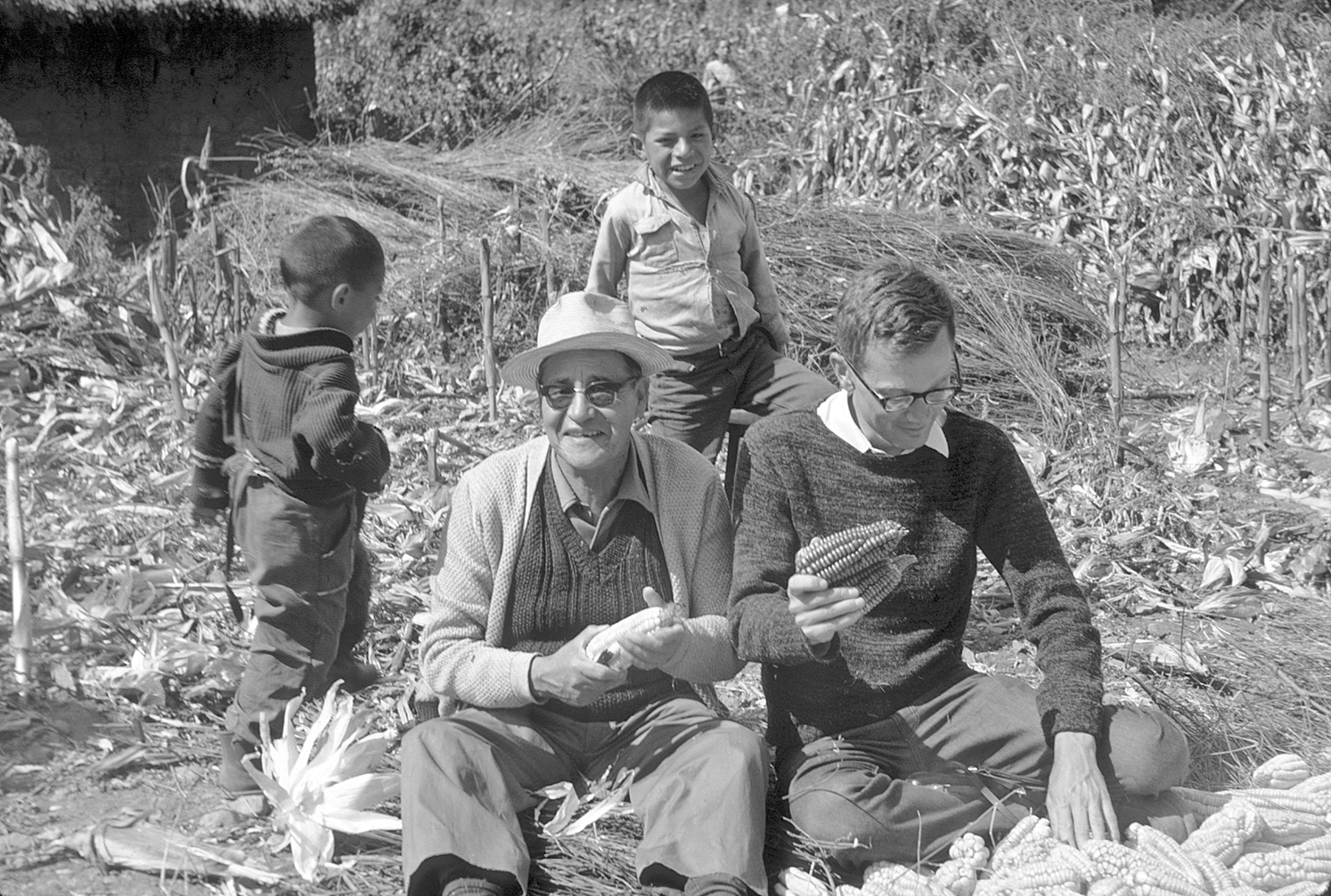
Maize harvest near Urubamba (2800 m asl) in the 1960s. D. W. Gade with (on the left) César Vargas Calderón (1903–2002), Professor of Botany at the Universidad Nacional del Cusco. Photo by M. Killgore Gade.
Conversations with interlocutors in a community were most fruitful in the field and when approached on foot. Within any one community, the rural Andes was a walking world. Appearing at a peasant hut with a vehicle, then still uncommon in the valley, would have placed me as a privileged person on a par with the hacendado. Deriving information from peasant folk benefitted from demonstrating interest in them and their livelihoods. People differed in their receptivity; some were obliging, others were reticent. Uneven responses may explain why researchers who once wanted knowledge about peasants and their livelihoods talked to hacendados to get that information. Retrieving traditional knowledge implies respect for what a culture and the individuals who comprise it have internalized. I perceived my task as one of recording the tacit knowledge that peasants had about plant use and agriculture, but which neither they nor anyone else had written down. Some of that unspoken information was observable; other aspects required informants. As Polanyi (1967:35) described it, the researcher's objective in extracting tacit knowledge is to “draw out bits of the universe” that his subjects have interiorized. The subsequent phase of writing it up involves turning that information revealed to the researcher into formal knowledge that anyone can then access.
From an ethnographic perspective, multisite field research carried with it the difficulty of finding reliable informants. Determining trustworthiness depends on getting to know people and that takes time. Ethnographers think long and hard about the people they engage in a community to tell them the stories that will accurately reveal the patterns of life in a place. I acknowledge that I would have extracted fuller information on some subjects if I had stayed for a longer period in a given village. Research decisions involve many trade-offs. In my case, the scope of my project required my presence in a number of places.
Other vicissitudes had an impact on my research program. The land problem surged as an issue during that period. Although some of the temperate valley above 2400 m asl had been in smallholder peasant farms and legally recognized indigenous communities, most of the flat land of the Urubamba was in large estates. I was a witness to the early stages of the demise of a venerable 350-year institution. It was in the Urubamba Valley, especially its tropical part, where the national malaise about the hacienda system came to a head. Large and powerful estates there dominated the economy and defined even the settlement pattern, for neither the Incas nor the colonial Spaniards laid out towns in that zone. Hacienda owners reserved for their own use the flattish river terraces and allotted parcels with lesser quality soils to their workers. Social tensions that characterized the whole Urubamba were especially high in that zone. Worker grievances on estates triggered social unrest. Not a few hacendados considered themselves above the law and acted with impunity. Intransigence led to roadblocks, invasions, and assassinations, making ethnobiological research seem incongruous to the pressing issues of the moment. As I learned about worker grievances on individual properties, it was hard not to take sides. The organizational structure of haciendas virtually guaranteed exploitation of those who worked on them even when the large landowners were not bad people. Beliefs about justice presented a moral quandary. My way out of it was to convince myself that institutionalized inequities ran through all levels of society and that what I needed to do as an outsider was focus on my project. This was the second kind of trade-off I made in order to successfully carry out my research.
My arrival in several places in the valley involved two different kinds of suspicion. People in certain localities perceived foreigners as potential pishtakos, evil individuals said to steal children, kill them, and boil their fat down to make oil for use in jet planes. Notwithstanding the absurdity of that legend, I took care not to walk into villages at night where I was not known. A more justifiable perception of locals, given the roiling controversy about land, was the possibility that I had come to Peru to impose revolutionary ideas. In one place, the national police interrogated me about my motives for being in that town. I congratulated myself for having the prescience to bring with me documents in Spanish that explained my purpose. Some other people, who could not read, accosted me because of their mistrust of my intent. However, the gold-colored seals attached to my documents conveyed a magical authority they apparently dared not question.
Collecting plants as vouchers also worked to my advantage, for it suggested to people a harmless preoccupation precluding any possibility of my being a spy or abductor. Without electricity, the process of drying plants by constantly changing blotters and then exposing them to the sun's rays in public spaces gave villagers prima facie evidence of my presumed role as a person known as an herbolario who collects materia medica. Awareness of how locals perceive the researcher became not just an abstraction read in a book on ethnographic field methods. That perception may be a personal safety issue; more to the point, the information received from people is often dependent on their skewed view of one's motives. Peasants came to their own conclusions: herbolario to some; an ingeniero to others. The latter word referred to an agronomist who was identifiable to peasants as one who wore leather boots. Information collection perplexed quite a few rural people and I soon made no effort to correct their misconceptions. Not only are labels applied to people often meaningless, every person has multiple identities.
Useful Plants and the Art and Science of Observation
In retrospect, I was amazed how much first-hand information I had collected on most useful plants. At the time, all I could think about were the questions I had without answers. Crops, the basis of livelihood, received the most attention. Some ethnobotanical studies and most herbaria exclude agricultural plants as a realm apart, but to me they get to the heart of the nature-culture nexus. The inventory of New World domesticates is as diverse in the Andes as any place in the world. Root crops of different species and even families occur in succession from high to low elevations (Figure 4). In addition to the New World domesticates, species brought to the Andes from Spain in the sixteenth century greatly expanded the crop list. Some introductions became so well adapted that they displaced certain native species. Many of these plants could be examined in the more than a dozen weekly markets and several annual fairs. The one disadvantage of these displays was that although the range of valuable plants grown or collected in any one area was captured, specific crop proveniences could not always be precisely established.
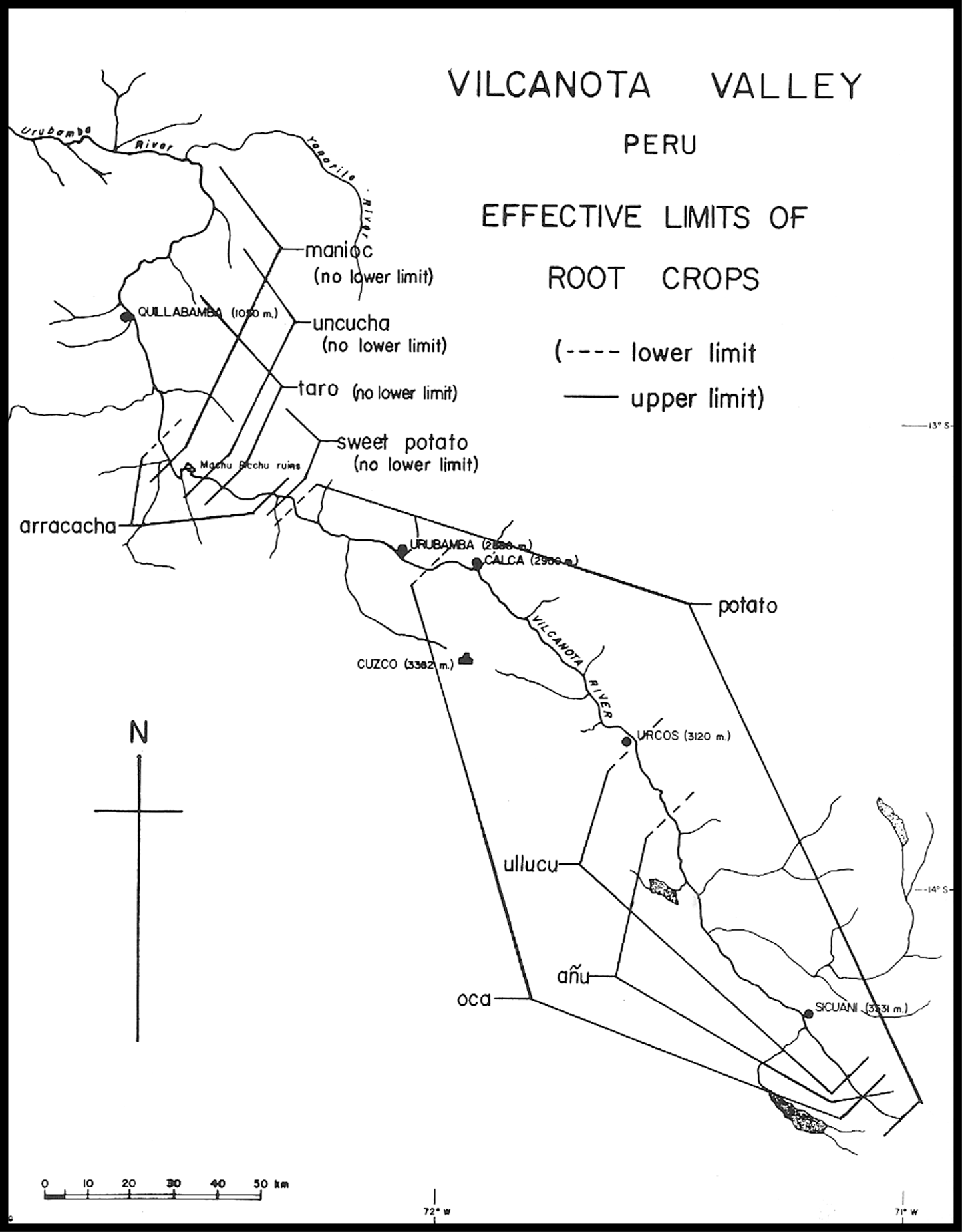
Boundaries of crops grown for their underground parts in the Urubamba Valley
Weeds constitute an intermediate realm that includes species used in many cultures (Turner et al. 2011). In the Urubamba Valley of the 1960s, peasant farmers did not apply herbicides and used hand weeding as a necessary cultivation practice. Among the weed species, wild turnip or field mustard (Brassica rapa L. var rapa = B. campestris Brassicaceae) stood out for its high level of infestation. Called nabo in Spanish and yuyo in Quechua, this Old World crucifer probably came to the Andes from Spain in the sixteenth century mixed in with wheat seeds (Triticum turgidum L. Poaceae). Somewhere in that process, a long-day plant mutated into one tolerating the short days of low latitudes. Inadvertently put into the ground with the grain, the cycle kept repeating itself when, at harvest, Brassica seeds were again mixed in with wheat seeds. In that way, the two species have formed a weed-crop complex that starts with the practice of saving seeds from the last harvest for the next planting and the absence of mechanical cleaning equipment to eject those belonging to weeds.
Though an unwanted competitor in the plot, Brassica nevertheless had a role on the table as food. Taken back to the dwelling, the bluish-green leaves were cooked and eaten. Rich in vitamins and minerals, Brassica's high nutrient value came at a time of the year when food supplies were low. Several weeks later, a second weeding of grain fields normally occurred in which Brassica, by then in bloom with its characteristic yellow flowers, continued to infest the ground. By this time, however, the leaves were considered unpalatable and used instead as cattle fodder.
This weed-crop complex intrigued me as a later domestication process of the same plant (Gade 1972). Four millennia ago, this same species underwent domestication in Western Asia and, as rape seed, is still an important crop in some parts of the world. It recalled other crops with an adventive past. Rice started as a weed in taro fields as did rye in wheat fields; both eventually became attractive to the point where rice and rye were selected to be crops in their own right. Brassica, moreover, was not entirely dependent on the sowing-harvest mode mentioned earlier. Seeds fall to the ground and go into dormancy during the dry season and sprout with the next season's crop planting. This mode of regeneration explained Brassica populations in maize and potato fields. A spontaneous native plant, chullcu (Nothoscordium andicola Kunth, Amaryllidaceae) was also associated with maize and potatoes. After the latter two crops were harvested, farmers came in and collected the edible garlic-like bulbs of chullcu.
Data Collection in the Field
Information for this project came from a mix of point and pattern data collected from observation and informants. I also recorded altimeter readings, collected plant vouchers, and took photographs. 1 I remember tussling with what part of my data collection was fact and what part interpretation, an issue reflecting the zeitgeist of the 1960s in the social sciences. The reigning assumption of the day held that objectivity was possible. However, as all those who go into the field know but rarely discuss in their published reports, “objectivity” is a relative concept.
Other recollections involved the unanticipated problems that happen to every fieldworker. A good day of information gathering was followed by one that yielded little. Culture shock also made its appearance in my psyche, shutting down my routine 27 days after arrival in the valley and making it hard to function as usual. Although I initially blamed others for my dysfunction, it was more about my frustration at the slow progress I perceived I was making. That discontent, in turn, was related to my struggle to improve communications skills in Quechua and Spanish (Gade 2001). About a week later, the sense of paralysis came to an abrupt halt. From then on, my information gathering regained momentum, undeterred by the physical discomfort of fleas, dust, mud, and stomach illness. More problematical was finding the time and solitude needed to press plants and organize the constant cascade of new information swirling in the mind and in urgent need of transcription. First-time fieldwork involved so much exotic content and so many new sensory experiences that it was hard to keep my head afloat. Lack of electric light necessitated a period in the late afternoon to record observations and interviews made earlier in the day.
Naturalistic field observation was critical, but so were informants who could tell me about what could not be seen or what happened in the past. For example, questions to peasants about where the best tasting coca (Erythroxylum coca Lam. var. coca Erythroxylaceae) came from elicited responses about places that corresponded to cocales above 1400 m asl. Lower annual temperatures at those elevations reduced the biomass of coca shrubs and the number of yearly harvests, but they also accounted for coca leaf higher in alkaloids and flavonoids than the coca grown in the hotter parts of the valley. A team of researchers years later verified the correlation that I had intuited (Acock et al. 2011). The connection between coca quality and altitude above sea level may explain in large measure the pattern of coca growing in the Inca period. Locations of their plantings retrieved from the early colonial chronicles were all above 1400 m asl. The unanswered question is whether the Incas used trial and error to determine where the best coca could be grown. Although I strived to provide a diachronic perspective, the archival skirmishes for information in Cusco and Lima failed to reveal many details about colonial plant use. Prehistoric plant use is also poorly known; the archaeobotanical paradise that is the Peruvian coast has no parallel in the highlands. For a valley with such a dense historicity, local knowledge of past plant use is thin.
Fifty Years of Change
Exactly 50 years after I first went to the Urubamba in 1963, I came back to the valley to palaver with people who could have been the grandchildren of those I had interviewed on my first visit. Many changes in plant use had occurred in that period. Making cotton cloth in the macrothermal Urubamba seems now to have almost disappeared (Figure 5). Not all plant remedies have retained their former folk importance. Pharmaceuticals bought in drug stores have made inroads into the inventory of materia medica. Sheet metal has virtually eliminated use of thatch as a roofing material. Fifty years ago, firewood was used by more than 90% of valley residents; in bigger towns some people had kerosene-fueled cookers. Now, firewood dependency has fallen to roughly 50% as a result of access to bottled gas. Land devoted to agroforestry has substantially increased even though fuel-wood use has declined. Need for construction wood in the growing towns and especially the city of Cusco favors the maintenance and expansion of woodlots as an economic strategy. In 1963, the capital had 80,000 people; in 2013, it had grown to 380,000. Although Tasmanian bluegum (Eucalyptus globulus Labill. Myrtaceae) still strongly dominates plantations, the use of native species has since entered forestry as a retrieval of a practice used in the late Inca period.
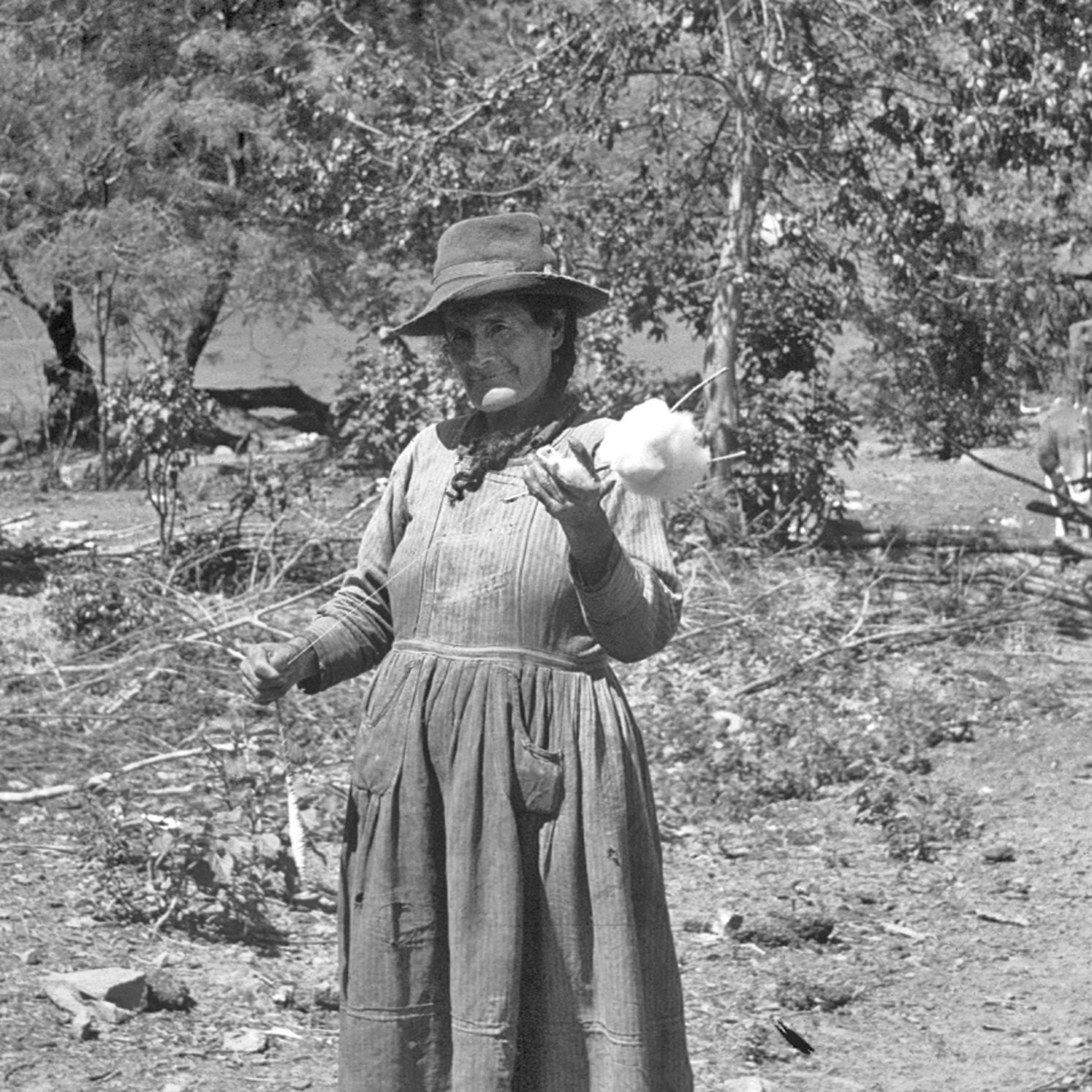
Quechua woman garbed in cotton holds a spindle of cotton near Echarati (750 m asl). Gossypium barbadense L. Malvaceae is a frost-sensitive perennial growing as a small tree. At elevations above 2500 m, women spun wool and were clothed in wool cloth. Photo by D. Gade, July 1963.
As a result of land reform, agriculture is now in the hands of smallholders. Though more smallholder production is commercialized, agricultural plant use maintains many of its traditional Andean characteristics. In the 1960s, use of hand labor in agricultural operations, even on haciendas, was almost total (Figure 6). Fifty years later, hand labor still dominated, though to a lesser degree. The transition from latifundia to minifundia has had an especially strong impact on agriculture plant use in the tropical part of the valley below 1600 m asl. Coffee (Coffea arabica L. Rubiaceae), benefitting from export market demand, has seen a threefold increase in land devoted to its production. Sugar cane, on the other hand, has almost disappeared. Its cultivation requires machinery to process it, which only haciendas possessed, and an abundance of labor, which no longer exists. Since cane juice was almost entirely converted into rum, abandonment of that crop was seen as having a social benefit.
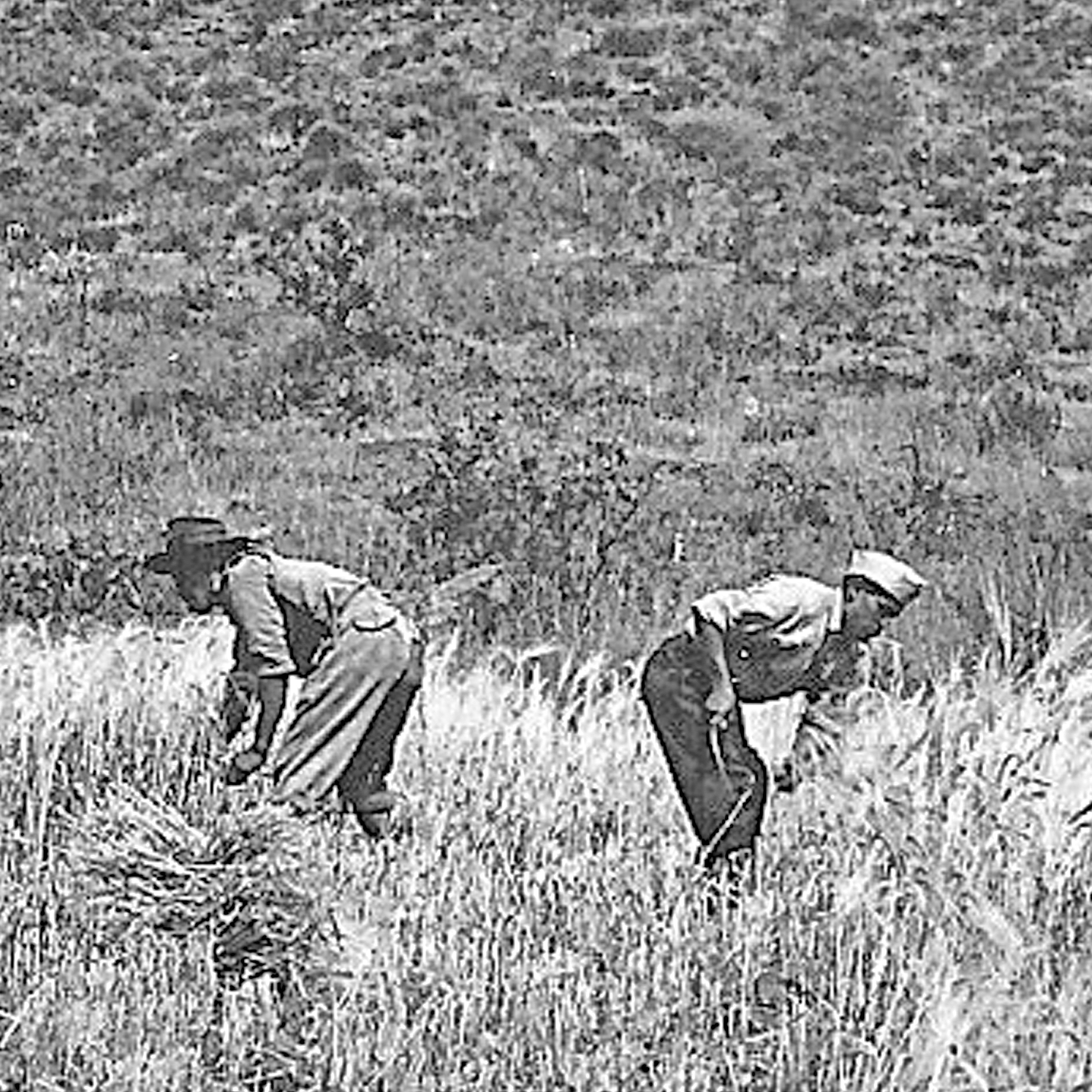
Harvest with sickles of two-row barley (Hordium vulgare L. Poaceae), a variety used in the Cusco brewery for malt. Lower protein content makes two-row barley more fermentable than six-row barley. A single gene mutation separates the two types. Near Huambutío (3050 m) in the Urubamba Valley. Photo by D. Gade, May 1964.
In the temperate part of the valley, land reform similarly rewarded hacienda peasants with title to plots, but only after the failure of a Marxist-style collectivization scheme more than a decade later. As one result of land ownership, many more peasants use chemical fertilizers and pesticides than they did in the 1960s. Wheat has greatly declined in favor of barley, a crop that peasants can sell directly to the Cusco brewery for cash, but also because bakers became convinced that good bread could only be made from imported grain. Horticultural crops have increased in the Urubamba for the urban Cusco market. On the valley floor between 3200 and 2400 m maize cultivation has continued as the dominant crop. Two forces at work, still in their early stages, are likely to compromise that preponderance. Firstly, land with good bottom soils long used for maize has attracted tourist entrepreneurs. Secondly, increased glacial melt in the cordillera that frames the valley on one side has reduced the quantity of water needed to satisfy all maize growers.
Two native crops that require much less water have experienced an expansion: 1) quiwicha (Amaranthus caudatus L. Amaranthaceae); and 2) quinoa (Chenopodium quinoa Willd. Chenopodiaceae). Both are now grown in the valley more than in the 1960s, but, in response to high prices, as export crops. In the 1960s, tarwi (Lupinus mutabilis Sweet Fabaceae), a domesticated lupine, had declined so much in competition with broad bean (Vicia faba L. Fabaceae), that I explained its marginalization in terms of field patterns. Broad bean, called haba in Spanish, has in the Andes long been resistant to chocolate spot (Botrytis fabae Sardiña, Sclerotiniaceae), a fungus that has ravaged this species in so many other parts of the world. Moreover, haba requires no elaborate processing, whereas tarwi must undergo multiple washings to eliminate the bitter alkaloids in the seed. Given its decline, I went out on a limb and conjectured, wrongly, its eventual disappearance (Gade 1969). Peasant attachment to an ancestral crop has kept it in the inventory of some farmers, though in the long term its survival as part of the agricultural inventory depends on reconfiguring the plant's architecture. Selection of a mutant that suppresses high alkaloid content and the crossbreeding of cultivars to increase yields would give tarwi a future in world agriculture (Caligari et al. 2000).
The agrobiodiversity now seen in the Andes, which includes species, cultivars, and landraces, has become a topic of interest in agronomic circles outside the region. The germplasm held by non-literate farmers is seen as a precious resource. Fifty years ago, many agronomists considered peasants as ignorant and impermeable to the benefits of modernization. Such assertions are rarely heard today. A realization that the world values the agrobiodiversity held in native Andean crops initiated efforts at legal protection.
Publicized attempts by foreign companies seeking to patent crop landraces developed in the Andes have increased awareness of the stakes involved. The Parque de la Papa (Potato Park), established in the indigenous communities above the town of Pisac to provide in situ preservation of crop germplasm, is managed by native communities. The large-kernelled white flour maize (Zea mays L. ssp. mays Poaceae) grown in the Sacred Valley zone of the Urubamba was registered internationally in 2007 as a legally-defined denomination of origin known as maiz blanco gigante Cusco. Its aim is to inhibit misappropriation of that germplasm as private property of seed companies.
In the 1960s no one thought about peasant rights on such matters. Now an ethics protocol is in place that has sensitized ethnobiologists to the rights of native and tribal peoples to their agricultural heritage (Alexiades and Sheldon 1996). One of the crowning achievements of ethnobiologists in the past three decades has been to serve as advocates for those who formerly were powerless in protecting the plants developed by their ancestors. This issue serves as a case of how informed first-hand and up close experience with peasant agriculture engenders respect and empathy for it as a remarkable achievement inherited from the past. By engaging articulate defenders, traditional farmers around the world, not just academic practitioners, have benefitted from the crystallization of ethnobiology as a coherent knowledge realm.
A vast increase of interest over the last half century in traditional rural practices has occurred in the Central Andes. Foreign researchers continue to be drawn to this region for the multi-dimensional fascinations that raise so many interesting questions about land and life. Most heartening is that interest in ethnobiology in Peru and all of Latin America has greatly increased (Albuquerque et al. 2013). Rather than the discredited developmentalist discourse of Andean farming as primitive and backward, the emphasis is on how native agriculture reflects a remarkable agrobiodiversity. I have often reminisced about the arrogance of office-bound pontificators with their grand theories who sought to impose their agendas imported from the United States. For example, a development economist from Stanford University under contract in Cusco chided me for not following his advice about what data to collect. Agents of change have been one factor in explaining the livelihood changes that have occurred in the Urubamba and elsewhere. Valleys still without road access maintain more traditional ethnobiological practices though not necessarily a richer agrobiodiversity.
Reflection on the Fieldwork and its Outcomes
The backstage of this initial project indicates one case of how a research tyro made choices for better or for worse about his project. Part of that decision process came from a notion that a dissertation study was not simply a demonstration of being competent to do research, but an opportunity to contribute a piece of knowledge. Its environmental diversity and importance in Andean culture history made the Urubamba a logical valley to survey. Having made that choice, however, I had to deal with the reality of a large territorial expanse that defined the study area and what that meant for the scope of the project. I had already encumbered myself by the need to learn two regional floras, one for the temperate valley and the other tropical, and two languages in which I had never taken a formal course (Gade 2001). Seen from the present, only a total involvement enabled me to persist in that effort. I was driven by sheer fascination with the project and the valley I had chosen. If I had undertaken it for any other reason, it is likely that I would have abandoned the plan.
A project that extended over 13 years from its conceptualization to its publication is an example of how an existential decision shaped the life course. As the years passed, I realized that I could never again marshal my forces in the same way on a project quite like that one. Certain kinds of research seem feasible at particular times in one's trajectory and not at others. The physical and mental energy required to activate the reservoirs of enthusiasm may be strongest at the early stage of a research trajectory. An advantage of youth is its optimism, some would say naiveté that assumes that almost everything is possible. Although not always the case, most field projects of the sort described in this essay are the domain of younger scholars in their 20s and 30s. Aspirants in that general age group (which includes soldiers who have fought most of the wars), are flexible, willing to take risks, and unencumbered by other responsibilities perceived or real.
Two years after my return from the field, I filed my ethnobiological study in the Urubamba as a dissertation (Gade 1967). In 1968 and again in 1970, I returned to capture more details of Andean plant use and incorporated the data from those two stints into a published monograph (Gade 1975). Half a dozen positive reviews and much correspondence over the years suggested the study resonated with a gamut of scholars and scientists in several disciplines. A return 50 years after my first trip there pointed to changes that within the next two decades will squeeze out the old patterns of plant use that characterized rural life in the valley. Climatic warming is melting the glaciers on which irrigation depends. Investment in tourism is accelerating in such a way that it will transform land use, especially between Pisac and Machu Picchu, and with it livelihoods. Though hand tools still dominate rural life now, that may soon change as people move to the cities. The labor shortages thus created will be dealt with by acceptance of labor-saving technology. The study I made may be useful mainly as an historical baseline to measure the changes that at some point will engulf the valley.
Views and Virtues of a Research Experience
The payoff for carrying out what I had formulated extended to more than I could have imagined at the time. Then, the holy grail was to file a doctoral dissertation at the University of Wisconsin Graduate School. Later reflection on what was done led to other perspectives imparted by that experience. Some of them became habits of mind, though others might interpret them as misplaced choices or lost opportunities.
The Importance of Place
That ethnobiology happens in specific places became my hook in integrating diverse knowledge. The importance placed on concrete location in choosing a study area came out of my geographical training. The Urubamba Valley, forming a frame within which locales had their own biophysical character and traditions, established the contours of intelligibility about plant use and peasant agriculture. As a place, the Urubamba was a neatly bounded space as valleys tend to be, providing a framework that seamlessly integrated time and space, nature and culture, and diversity and unity. When a place becomes an integrative principle, all those antinomies dissolve.
Personal View on Andean Folk
A close encounter with Andean peasant life broadened the mind and touched the heart about cultural difference. The facile generalizations and stereotypes created enough cognitive dissonance that I was not able to agree with two foreign sociologists who found Andean culture to be “dour, hostile and devoid of joie de vivre” (Berghe 1992:426). Certainly a peasant mindset prevailed in the rural Andes, which explained much about the culture, but, within it, people differed just as they do in modern Western societies. In my interactions with Andean people, I realized that I was much more the learner than the teacher. Among the lessons that have stayed with me were peasant frugality. They did not waste the resources they had. Their different sense of time made me think about the virtues of patience for an American society that seems to want instant gratification. I was also charmed by the ability of Andean folk to improvise and live in the present moment; a lifestyle that imparted a new meaning to the notion of spontaneity.
Mode of Engagement
Moving about on foot became the preferred way to engage people in the countryside. Once I learned how to deal with aggressive dogs, slow locomotion provided an ideal way to closely observe growing plants. Intimate encounters with the phenomenon under examination, is one of the tenets of Goethean science whose value comes from avoiding abstraction as a starting point. For the eighteenth-century genius Johann Wolfgang von Goethe, “every act of looking turns into observation, every act of observation into reflection, every act of reflection into the making of associations. Thus it is evident that we theorize every time we look carefully at the world.” (Goethe 1996:90). That inductive sequence meshed with asking myself a string of questions about what I was observing as I sauntered along the borders of fields and gardens.
Walking provided a symmetrical opportunity to converse with people close to the biological objects of mutual concern: the farmer to explain or offer his perspective and me, the gringo metete, to cogitate the meaning of what I had just been told. Driving to the site in a vehicle would have required me to pay attention above all to the road, but also set me apart as a privileged person from the people with whom I sought information. The practice of walking everywhere also helped the cogitation process that released a new or reworked idea. From that sauntering, I learned that walking was an effective modus operandi and used it in subsequent research projects and have continued it in my home town. Walking as an everyday activity became a way to look at a tree, bird, fence or house with a fresh eye and to gather thoughts on what meanings can be extracted. Experimental psychologists found validity in the notion that walking is a spur to creativity (Oppezzo and Schwartz 2014).
Developing a Sense of Autonomy
Carrying out that fieldwork and successfully executing the project imparted a sense of intellectual autonomy. The phrase that frequently came to mind was Immanuel Kant's exhortation of sapere aude!—“have the courage to use your own understanding.” Certainly many people helped by answering questions, writing letters, and providing contacts, and for that I was and still am grateful. All field research everywhere is never done without some kind of assistance from others.
I have never been reluctant to acknowledge either help or inspiration received. Yet, from the perspective of conceptualization and data gathering, this 1963–1964 stint was very much an individual effort from start to finish. Another ethnobotanical project in Peru more than a decade after mine focused on just one community, Chinchero, also in the Department of Cusco. This meritorious study, led by Christine Franquemont (1990), then a doctoral candidate in anthropology at Cornell University, had six coauthors, including four people with PhDs in botany. Certainly a lot of good can come out of collaboration, but, seen retrospectively, my single-handed project had two beneficial outcomes. One was to empower in me a faith in intrinsic will and the other was to trust my own intellectual authority, that is, become a self-affirming knower. Steeled by that experience, it was easier to resist the subtle pressures from funding agencies and universities to conform to their vision.
Power of Intrinsic Motivation
Fascination with my initial project convinced me that intrinsic motivation is the most potent and dependable incentive for research. It has galvanized my projects and best satisfied the quest for the seeds of eternal growth (Gade 2011). Intellectual curiosity not only energizes the mind and body, it has the moral power to move the researcher to achieve her or his goals. When attentive and fully engaged, an epistemic curiosity drives a field researcher toward an augmented reality in which even the most cursory observation can be overlain with added layers of significance and possibility.
Pursuit of the quest as a compulsion derived from within awakens a sense of wonder, embracing a combination of astonishment and perplexity that triggers a bevy of interrogations about the contours of the topic or idea. For ethnobiologists, wonder about a plant-people connection may also extend to amazement about the culture and place in which it is found. Wonder is an intellectually productive emotion to cultivate, for it can bring one to formulate a hypothesis about something worth knowing. Out of that incipient determinacy, a research project can be crafted.
In the course of the fieldwork, a sustained curiosity plays another role in boosting the researcher beyond information gathering to knowledge about how the phenomena all fit together. Epistemic curiosity seems to dominate research in ethnobiology, but extrinsic motivations may also exist. Research reports are rarely explicit on the topic of motivation, but some studies hint at advocacy as the prime force in having created knowledge. Occasionally moral imperative linked to ideology seems to lie behind the reason to have made a study. Financial gain is almost never indicated as a driving agenda in ethnobiology, though in the larger world of science that motive is not absent. I have found that quite a few scholars are either not fully aware of their motivation or are unable to articulate their position.
Fieldwork as Adventure
Research can be a grand adventure if we permit ourselves to think in those terms. When I wrote up my dissertation proposal to the granting agency, I included a pious justification that the knowledge generated would “help” Peru. Just how that could be implemented was not clear. At the time it seemed like a gracious assertion to make, if only because the way in which knowledge, once formulated, is actually used is often unpredictable. Not included in my grant application was any allusion to the project as a quest for an unforgettable experience or an inner call to adventure that required moving out of a familiar orbit and into an unfamiliar world. The urge for adventure characterized by Homer's Odyssey and all those explorers who went off on expeditions; though a silent part of proposals, many other researchers, travelling to exotic lands to launch a project of their own design, had the same idea. Information-gathering as the central objective does not conflict with an openness to uncommon experience.
Doing field research is a kind of hero's journey in which the investigator answers the call to adventure by setting off into the unknown, collecting information, and meeting an array of challenges along the way before returning home to the familiar. The experience is often transformative, making one smarter because of the knowledge acquired, but also wiser as a result of hardships suffered, errors learned from, and difficult decisions made. All my projects, long or short, had that element of a journey to the unknown and back again. Peru in 1963–1964 set me on a research trajectory that extended to Ethiopia, Southern Europe, Paraguay, Bolivia, Madagascar, and Brazil. In the process of carrying out a project, new environments were personally discovered and cultures encountered that took me outside myself. Being in an exotic place had an energizing effect that facilitated data collection, whereas for some other people, exactly the opposite occurs. Research into plant and animal use of the local and familiar is as valid as inquiries into the distant and exotic.
Challenges and Charms of Ethnobiology
Ethnobiology as a research sphere has the integration of different strands of knowledge as its major justification. A secondary aim, as I perceive it, is to retrieve traditional knowledge of plant-use patterns in the present and the past. Though commonly articulated, the salvage rationale is a valuable foil to the ideology of progress. Developmentalists have used specious moral arguments to justify their emphasis on changing people who continue ancient practices, use a technology outside the mainstream, or insist on the values of an inherited past. Whole cultures have disappeared as a result of the outside arrogance of a self-reinforcing constituency of development “experts” who recast peasant desiderata into the mold of universal need (Shepherd 2004).
The nature of what practitioners of ethnobiology do perforce orients them to the empirical. Some have called for more theory, which, if it led to the emergence of armchair thinkers, might dilute the field aspect that has made ethnobiology so special. Geography used to be a discipline heavily oriented to fieldwork, but the domination of theoreticians has left large areas of geographical knowledge untilled. Ethnobiology still holds to an anti-theoretical spirit that responds to an epistemic curiosity about how humans have interrelated with other organisms now and in the past. To have ethnobiologists articulate their enthusiasms and passions for their subject matter would further the intellectual bonds they share. Perhaps because many practitioners see themselves as doing science, few such personal declarations have appeared in print.
Ethnobiology certainly does have a science component, yet it is not based on experimentation; thus, the notion that the systematic analysis of data is going to have only one conclusion cannot be sustained. Ethnobiology is not a matter of simply registering an objective world, for the “facts” of biotic use as perceived are likely to vary with the researcher. How biotic objects are to be empirically studied as part of a field experience requires negotiation best sorted out in the field. Lorraine Code's (2006) “ecological naturalism” has relevance in thinking how to reformulate knowledge claims of science on environmental realms that include ethnobiology. The diligent work of observation is one thing; the connections perceived between phenomena as an act of the creative imagination is another.
Footnotes
Acknowledgments
The Foreign Field Research Program of the Geography Program of the Office of Naval Research and managed by the National Academy of Sciences-National Research Council provided the funds for the work in 1963–1964. Other research funding on this project in subsequent years came from the Graduate College of the University of Vermont and from the Social Science Research Foundation.
1.
Voucher plants collected on this project are filed in the Herbarium at the University of Wisconsin-Madison.