







Abstract
We summarize results of two independent ethnobiological field studies in adjacent Zapotec towns in the Sierra de Miahuatlán, Oaxaca, Mexico. San Juan and San Pedro Mixtepec share a common language (with minor lexical variation) and occupy contiguous traditional municipal territories ranging from 1650 m to 3700 m elevation and practice a common subsistence agricultural tradition. In conjunction, our data provide a detailed account of how macro-fungi are classified, named, and used by residents of these two towns. We first consider “where fungi fit” in the local worldview as well as in the broader context of folk systematics, noting their relative neglect in ethnobiological studies to date. We document more than 30 distinct, named folk generic taxa of macro-fungi (known locally as
Introduction
Contemporary mycologists estimate that between 1.5 and 5 million species of fungi exist, though just 5% of this total (ca. 75,000) have been formally named (Blackwell 2011; Hawksworth 2001). By comparison, current estimates of the number of animal and plant species are 1,470,000 (of which more than 1,100,000 are insects) and 300,000–315,000, respectively (Mora et al. 2011; Scheffers et al. 2012). Fungi are now known to be somewhat more closely allied in evolutionary terms with animals than with plants. In very general terms, we may characterize plants as organisms that capture solar energy, while animals are consumers of, and thus parasites of, plants, and fungi recycle organic material. These three kingdoms of living organisms encompass roughly comparable biodiversity and each plays a distinct role in the economy of the biosphere.
Despite this comparable biodiversity, from a “naked-eye” folk scientific perspective plants and animals present far greater apparent diversity than do the fungi. This is due in large part to the fact that the vast majority of fungal species are microscopic or otherwise difficult to perceive as distinct organisms (cf. Hunn 1999). Only “macro-fungi” are obvious candidates for folk biological recognition, the fungi popularly known as “mushrooms” (which are the visible, above-ground reproductive bodies of these fungi).
Macro-fungi are by and large restricted to a single phylum of the fungal kingdom, the Basidiomycota (∼ 31,500 species known), and a single class within that phylum, the Agaricomycetes (∼ 21,000 species known) along with a few Ascomycota (Kirk et al. 2008; Mueller et al. 2007). Thus, we should not expect folk fungal domains to exhibit a degree of diversity comparable to that of the plant and animal kingdoms. Rather, such domains are more readily compared with a plant or animal life-form, as they typically incorporate from ten to 50 folk generic taxa, as opposed to the several hundred such taxa encountered in many folk floral or faunal domains. We argue in favor of treating fungi as a life-form rather than a folk generic or folk kingdom because we believe that solution best represents the cognitive status of fungi in the local folk classification system. This fungal “life-form” is most often considered to be neither plant nor animal, and is thus in such cases “unaffiliated” with either kingdom.
Methods
We combine here the results of two independent ethnographic investigations in two neighboring communities in the Sierra de Miahuatlán of the southern Mexican state of Oaxaca (Figures 1 and 2). Citizens of these two communities speak as their primary first language mutually intelligible dialects of a single Zapotec language, classified as Cisyautepecan by Smith Stark (n.d.). According to local oral histories the two communities separated within the past 500 years, but are today quite distinct socially and politically, though occupying very similar habitats and practicing subsistence economies based in milpa agriculture with limited reliance on hunting and gathering of wild foods, including a considerable variety of mushrooms (Hunn 2008; Venegas Ramírez 2013). According to the 2010 Mexican census (INEGI 2012), San Juan has 711 and San Pedro 1099 residents, approximately 95% of whom speak the local Zapotec as their first language.
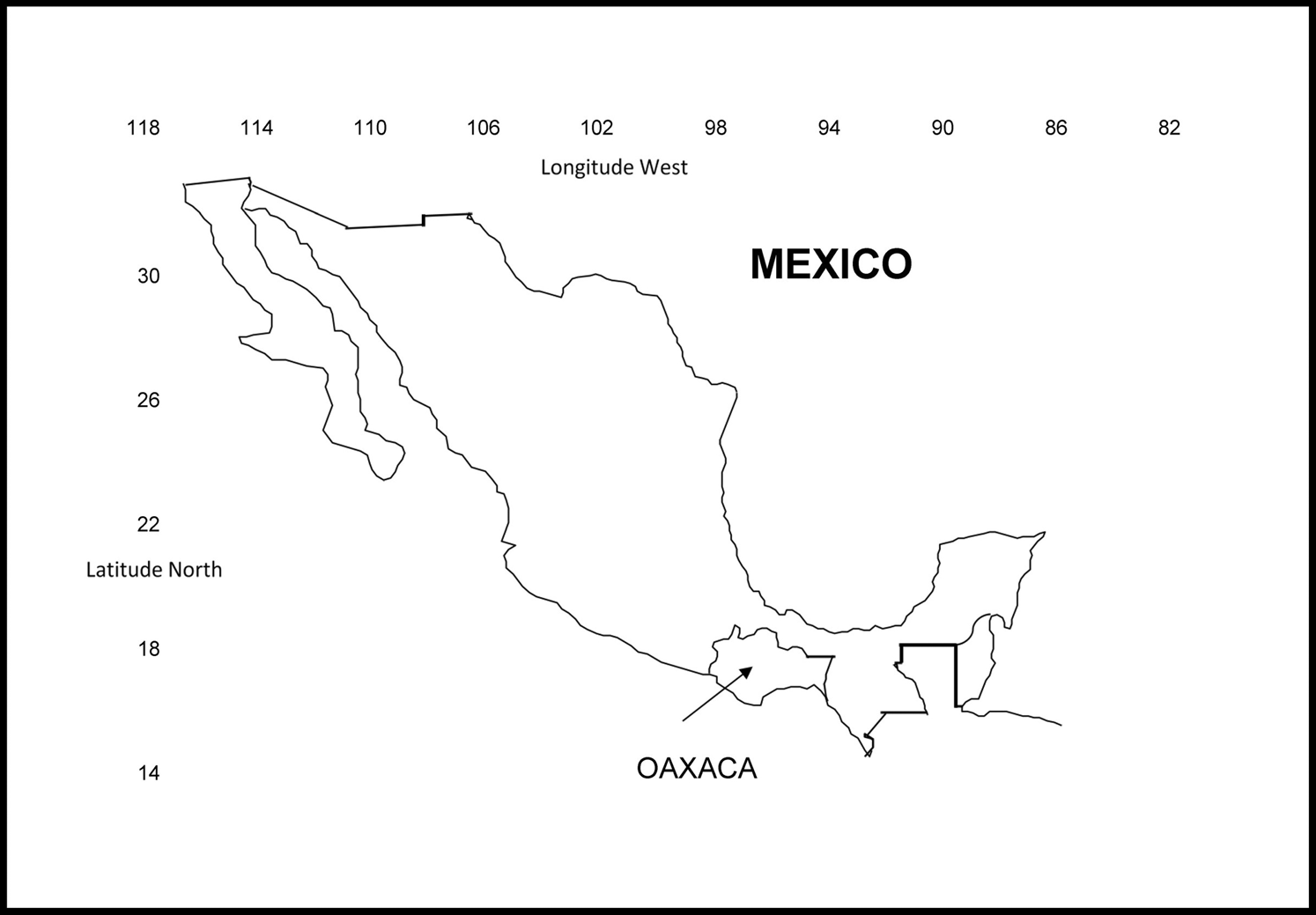
Map of Mexico showing the location of the state of Oaxaca.
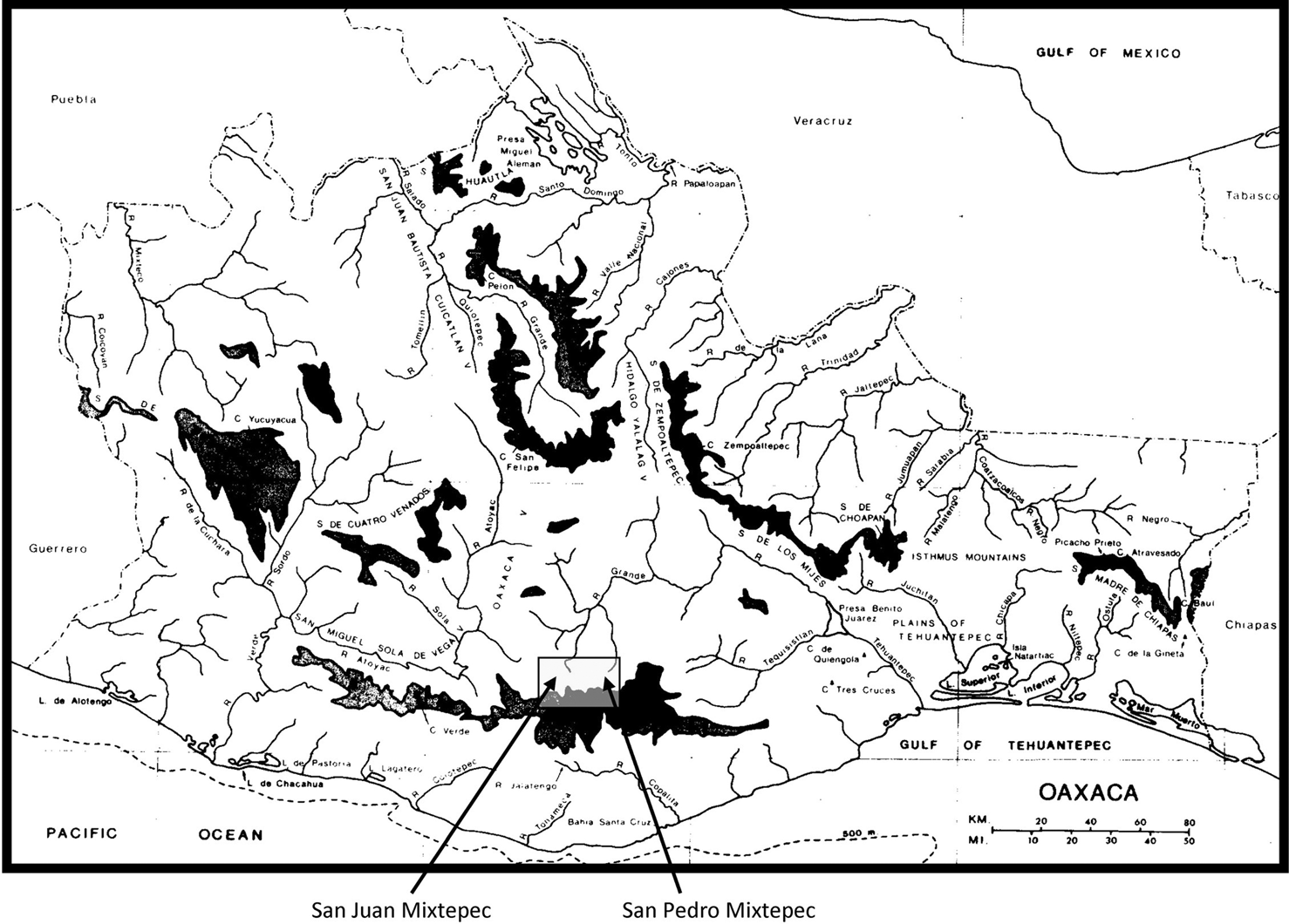
Detailed map of Oaxaca.
Hunn recorded Zapotec names for mushrooms during his comprehensive ethnobiological studies in San Juan Mixtepec (SJM) initiated in 1996. His research was approved by the town assembly in August of that year. Specimens of local macro-fungi were collected by Hunn and his colleagues, Donato Acuca Vásquez and Marco Antonio Vásquez Dávila, either in the company of local resident guides or after returning to the town from hikes in the surrounding countryside. These specimens have been curated at the Escuela Nacional de Ciencias Biológicas del Instituto Politécnico Nacional (IPN) in Mexico City or at the Herbario Etnomicológico “Dr. Teófilo Herrera Suárez” at the Instituto Tecnológico del Valle de Oaxaca (ITVO) in Xoxocotlán, Oaxaca. They were identified by local staff by reference to standard keys, though these determinations should be considered provisional in many cases.
The great majority of the specimens from San Juan were collected during two guided tours of the pine-oak forests above the town center (between 2200 and 2800 m elevation): the first on June 25, 1997 by Hunn and Acuca Vásquez with Pánfilo Santiago Cruz as guide (specimens to IPN); and the second on August 26, 2005 by Hunn and Vásquez Dávila with Lorenzo Mendoza and Maximiliano Sánchez Hernández guiding (specimens to ITVO). In the latter instance we obtained additional commentary from several other residents of the town the next day.
We compared our efforts at transcribing the Zapotec terms with a dictionary published by Reeck (1991), though there may well be errors of transcription in the names reported here. We also enquired as to local understandings of the edibility or toxicity of the various named categories of mushrooms as well as recording certain details with respect to the phenology and habitat preferences of each. Hunn reviewed lists of potential Zapotec mushroom names with elders considered most expert in an attempt to distinguish valid, that is, broadly consensual names, from descriptive phrases or inventions, though a number of names remain of uncertain status and/or applicability. Preliminary results of the San Juan studies were published in Hunn's A Zapotec Natural History (2008, CD annex).
The San Pedro Mixtepec (SPM) data derive from a systematic study by Yuliana Venegas Ramírez and Marco A. Vásquez Dávila for Yuliana's master's thesis at El Colegio de la Frontera Sur, San Cristóbal de las Casas, Chiapas, Mexico (Venegas Ramírez 2013). They requested and were granted permission for their study by the San Pedro authorities in 2011. They then visited the community twice each month for a week or two each between February and July of that year. They conducted semi-structured interviews with 35 local consultants using visual aids as stimulus material. In these interviews they sought to corroborate their field observations and to elaborate on local understandings with respect to the use and management of mushrooms by residents. They completed 11 “mushroom hunts” with local guides in the countryside surrounding the town center and participated as observers on mushroom collecting forays with local consultants. A sample of local species was collected, photographed, and deposited at ITVO. Scientific determinations were obtained by reference to standard guides and identification keys with the assistance of experts.
Names and comments recorded in one or the other of these two communities are marked SJM or SPM, as appropriate. Otherwise no specific source is indicated.
Results
One striking find of our research is the fact that from the local perspective mushrooms are treated as a kind of “animal” rather than as a kind of plant. This is expressed linguistically in several ways, including the anatomical terminology applied to mushrooms, which shares many terms with the anatomical vocabulary applied to animals and which explicitly labels mushroom parts as “animal” parts (e.g., the mushroom cap is called
In San Pedro, at least, mushrooms are associated with the moon,
Though knowledge of local fungi is widely shared within these communities, those who are especially knowledgeable about fungi are distinguished as
Mushroom “flesh” is considered to be “cold,” perhaps in part due to the close association of mushroom fruiting with the rains and humid ground. (The single exception is the parasitic fungus Ustilago maydis, huitlacoche.) Likewise, the meat of forest game animals such as deer, rabbit, and squirrel, is “cold.” This distinction between “hot” and “cold” essences of foods and medicines is at the core of Mesoamerican understandings of health and disease and of fertility more generally. One should avoid eating too many mushrooms during the rainy season for fear of stomach upset (due to the “cold” essence).
Nomenclatural Patterns
Nearly every “kind of” mushroom is named binomially by qualifying the head term
This might argue in favor of considering these names to be “secondary lexemes” and thus as referring to folk specifics within a single, albeit very large and complex generic taxon. However, as Hunn (1999) has demonstrated elsewhere, Zapotec routinely incorporates the life-form name into the names of folk generic plant taxa (e.g.,
Given that the mushroom life form exhibits a nomenclatural pattern common in the plant domain, and unlike that of the animal domain, why not simply treat
A nomenclatural strategy that has been widely noted in many languages is the use of a modifier to indicate that a particular specimen is similar to, but not a perfect example of, a named category. In Mixtepec Zapotec, the term
We should note that lichens, molds (
In San Pedro the crustose lichens are called
We prefer to treat
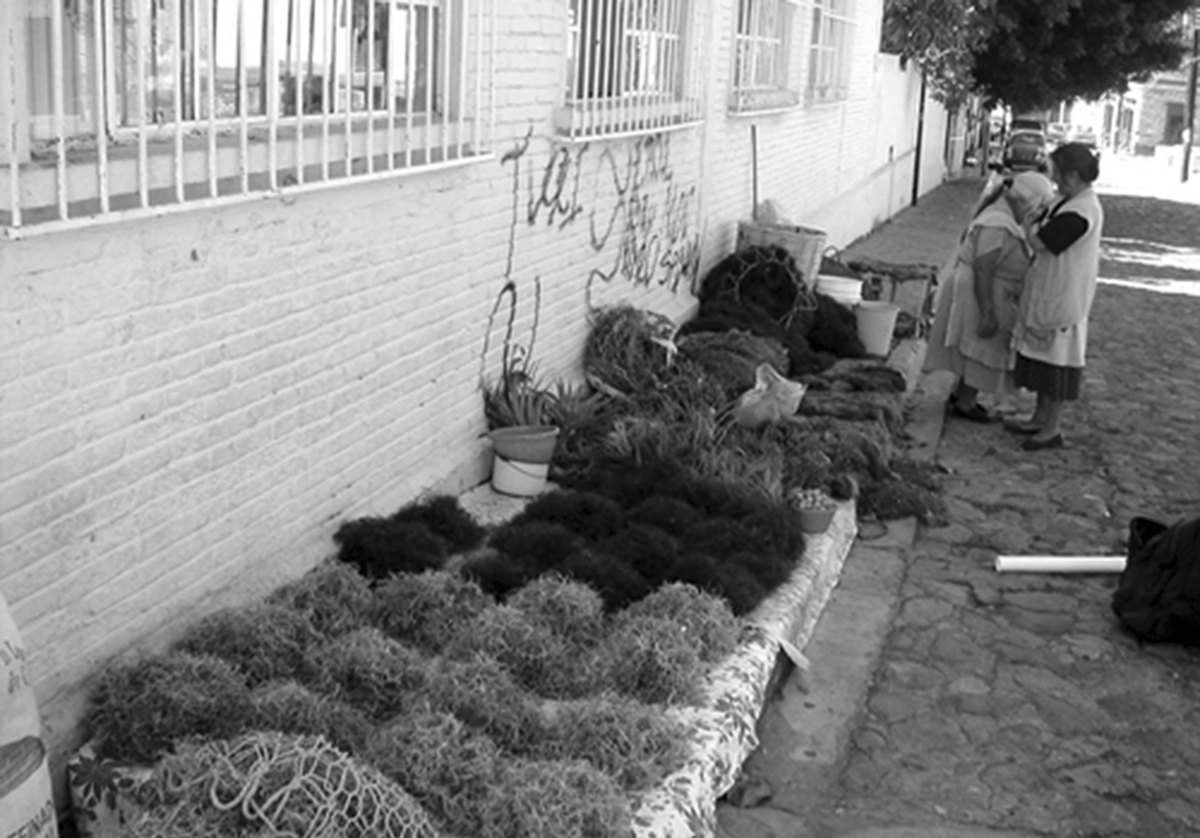
Sales of decorative
An Inventory of Mixtepec Zapotec Macro-Fungi
We have 124 collections of fungi from San Juan Mixtepec. These represent at least 71 species of 40 genera in 25 families. Determinations are listed in Supplementary Appendix A (http://www.bioone.org/loi/etbi). We also have descriptions of three additional species known to occur in the town. This compilation falls far short of a comprehensive local mycological survey. However, we have collected examples of most of the categories used as food, medicine, or material.
Venegas Ramírez and Vásquez Dávila collected specimens which represent at least 55 species plus two subspecies, of 36 genera of 22 families. Ten species are of the phylum Ascomycota (including several lichens) and 45 are of the Basidiomycota.
Combined, we have records of at least 105 species and subspecies of 65 genera in 40 families from these two adjacent municipios. However, only 15 species are common to both communities in our samples. This suggests either that there are many more species to be found or that the habitats sampled or the collection strategies in each study were quite different. A third possible explanation is that the determinations are faulty and that specimens assigned to different species from the two sets of collections may prove to be the same. We are inclined to favor the first option. Though our two samples are hardly random, the problem is similar to the “capture-recapture” problem in biological sampling (see http://en.wikipedia.org/wiki/Mark_and_recapture). If Hunn's sample “capture” from the local population of fungal species is considered the first sample and that of Venegas Ramírez the second, we may crudely estimate that both samples could have been drawn from a common population of somewhat over 250 species. This results from calculating the number of species “captured” or “marked” by Hunn (n = 71) divided by the proportion of species “recaptured” by Venegas Ramírez, 15/55, or 0.27, 71/0.27 equals 263, the most likely population size from which the two samples were drawn. This is not unreasonable. Despite this uncertainty, we believe our ethnomycological analysis is robust, as the best known species exhibit substantial agreement between the two communities. Of the 31 folk generic taxa we recognize here, 20 (65%) are common to both communities, though these folk taxa are not precisely equivalent in the species included nor the names applied.
The prototypical mushroom or
Of course, not all “mushrooms” are typical, just as not all plants or animals are typical. In fact, the outer boundary of the category
Edible Mushrooms
First we list the 24 edible species, many of which are among the most widely recognized mushrooms. Our first two citations are for species considered particularly satisfying, “vanquishing hunger” (SPM),
1).
We find pine mushrooms held tightly to the roots or trunk of old, rotten pines, others on trunks at river shores where it is humid (Roberto, SPM). There are two classes of pine mushrooms, one that grows on the white pine and the other on yellow pine, the mushrooms of the white pine are more tasty than that of the yellow (pine) (SPM).
There are two pine mushrooms, the yellow…is hard like cedar and tastes bitter…the other that comes out of the white pine, this is very tasty and smells of walnut (Samuel, SPM).
Pine mushrooms are exceptional in fruiting during the late dry season, in April and May, when the first thunder is heard forecasting the first rains. Note that this is not what is better known in English as “pine mushroom,” which is the matsutake (Tricholoma magnivelare). That species is scarce in our area and known rather as
2)
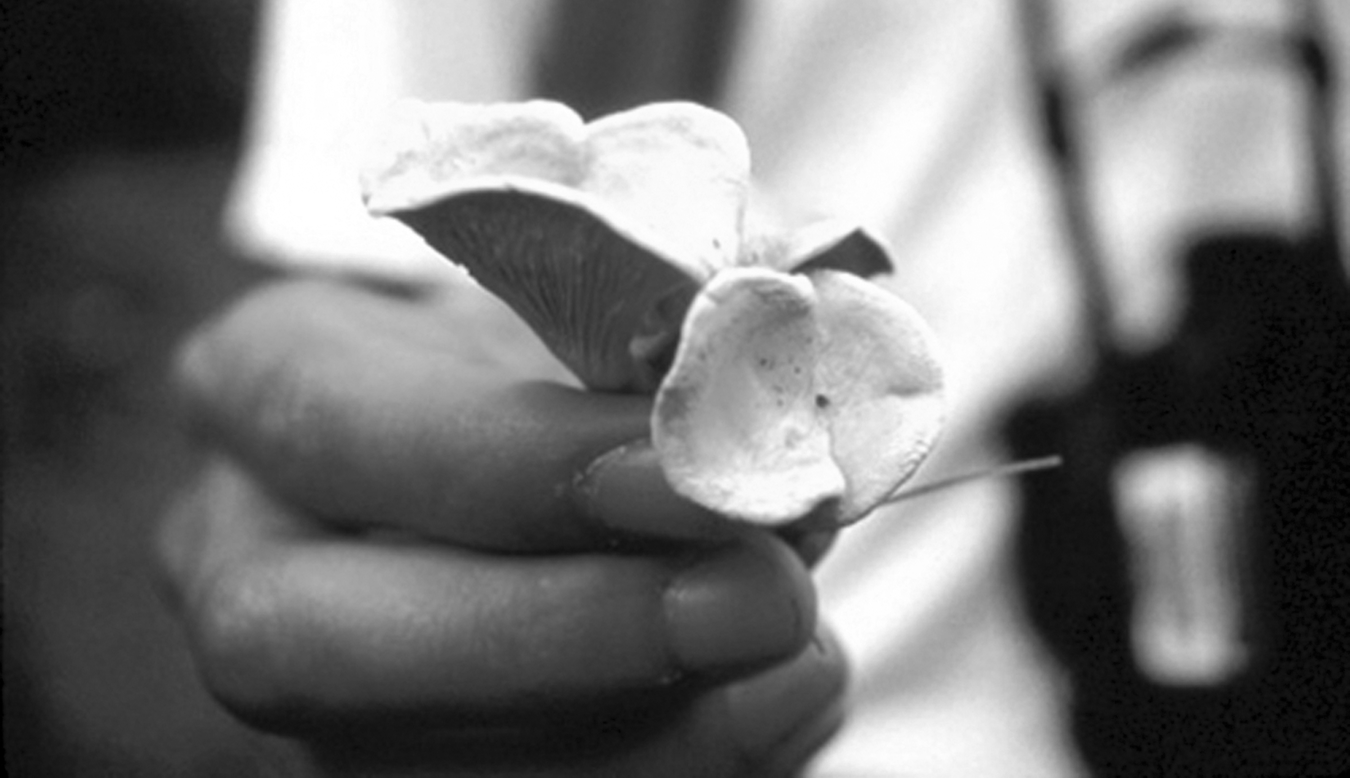
A number of other mushrooms are widely known and eagerly sought as food:
3)
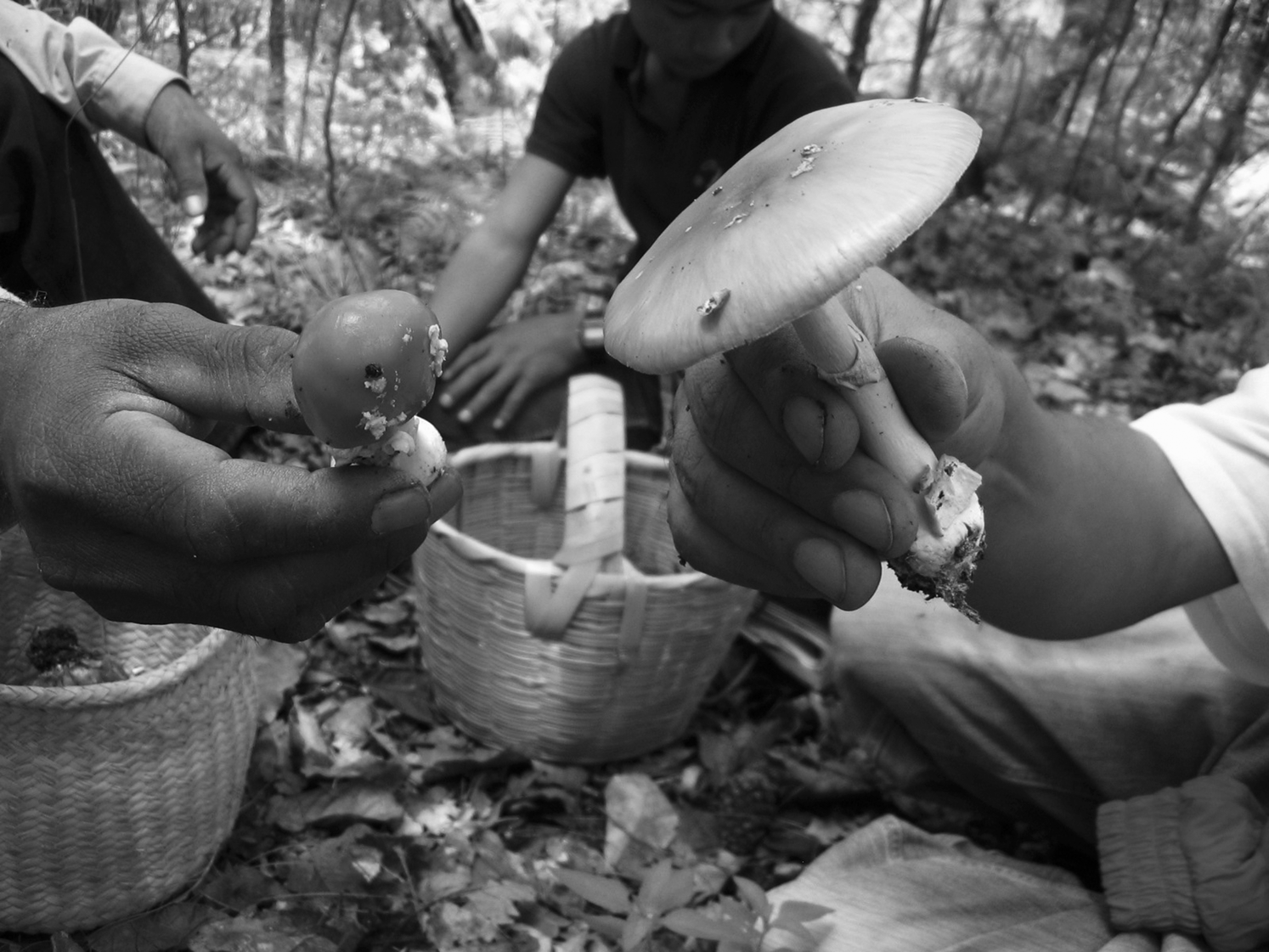
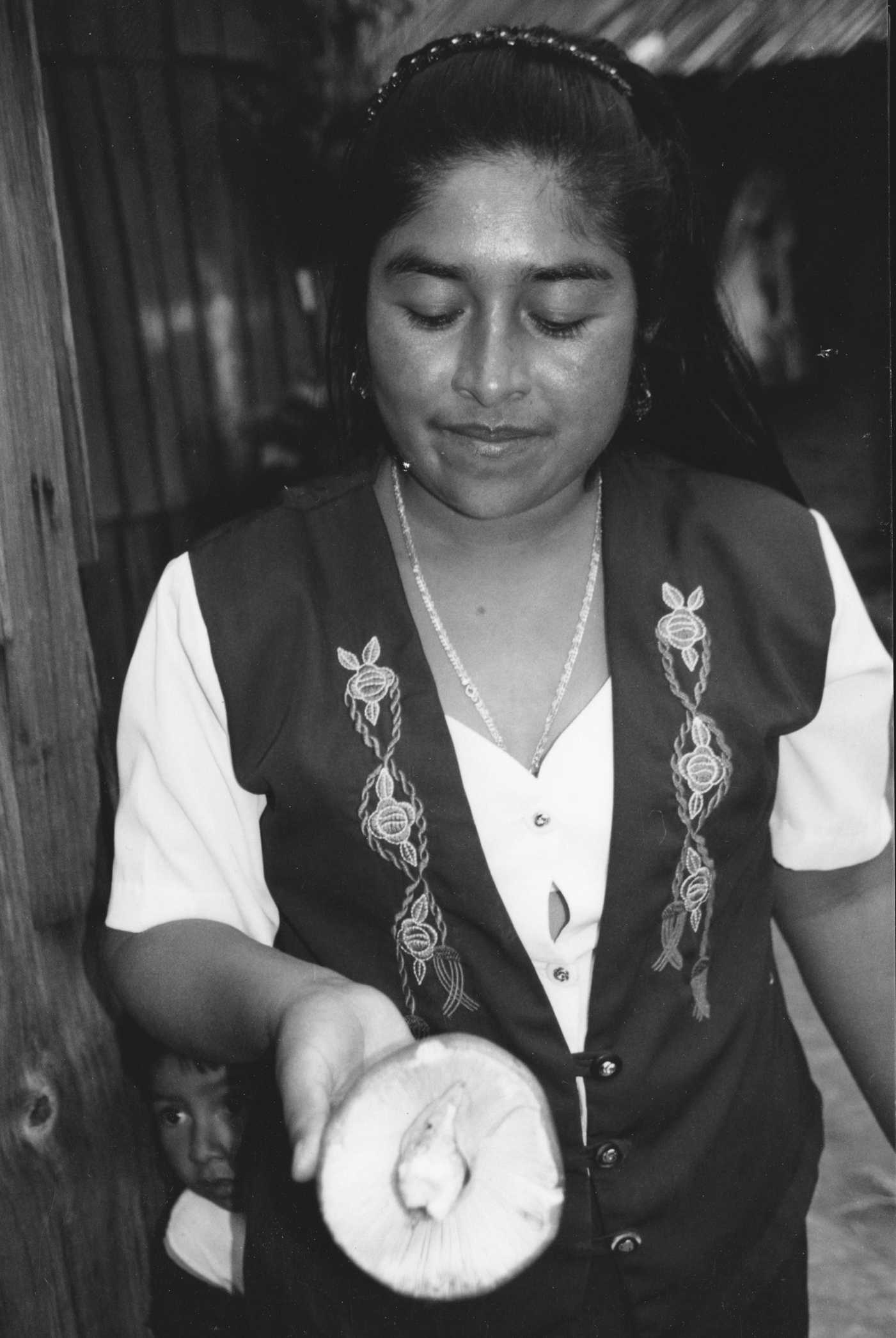
4)
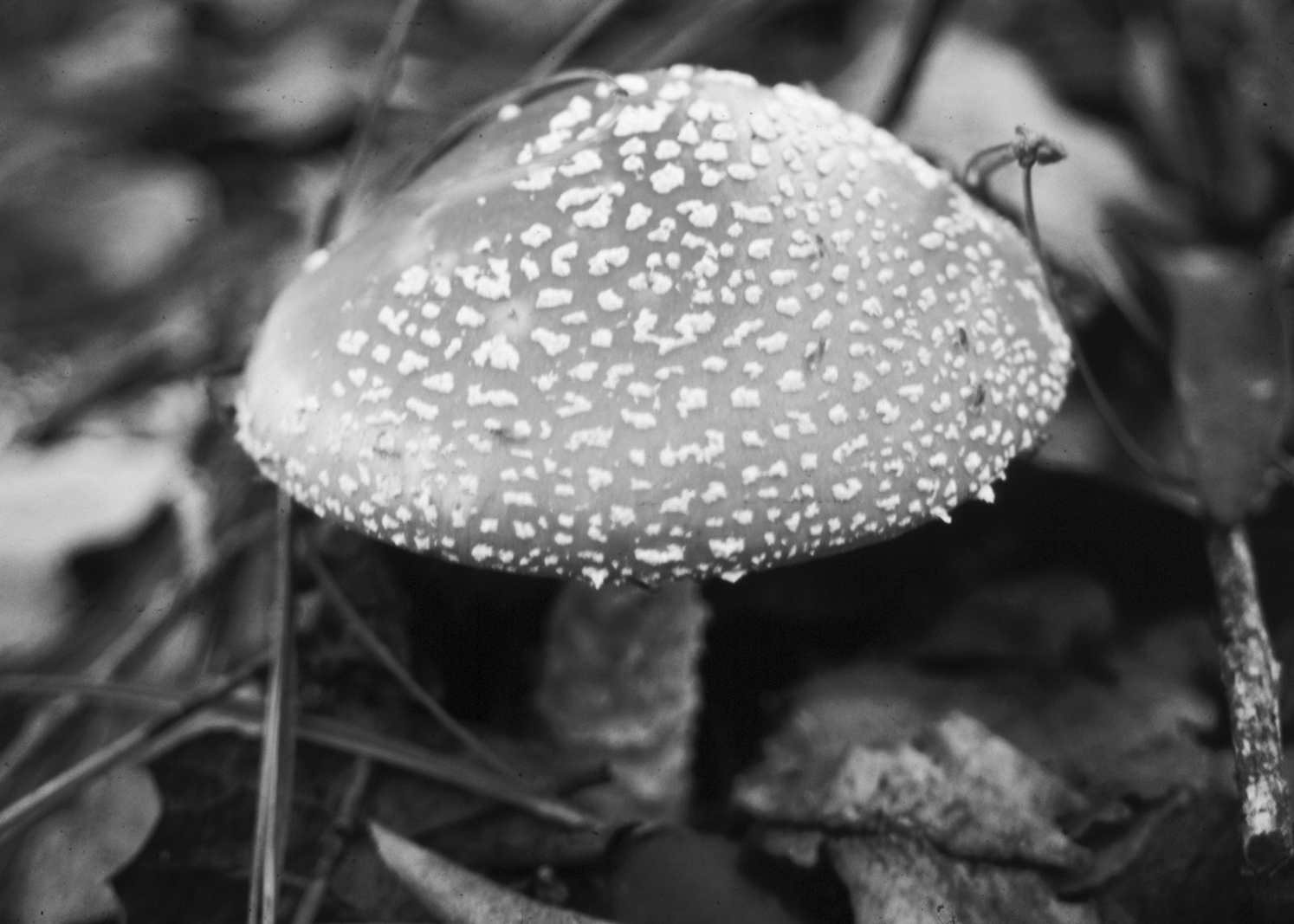
The
Amanita muscaria and A. pantherina are classified in the special purpose intermediate taxon,
We cannot state for certain yet exactly which species of this genus are eaten and which avoided, but as mushroom poisoning is said to be rare in the village, it seems reasonable to assume that they are conservative and accurate in their judgments. However:
People get confused and collect both…Those that have white warts (
5)
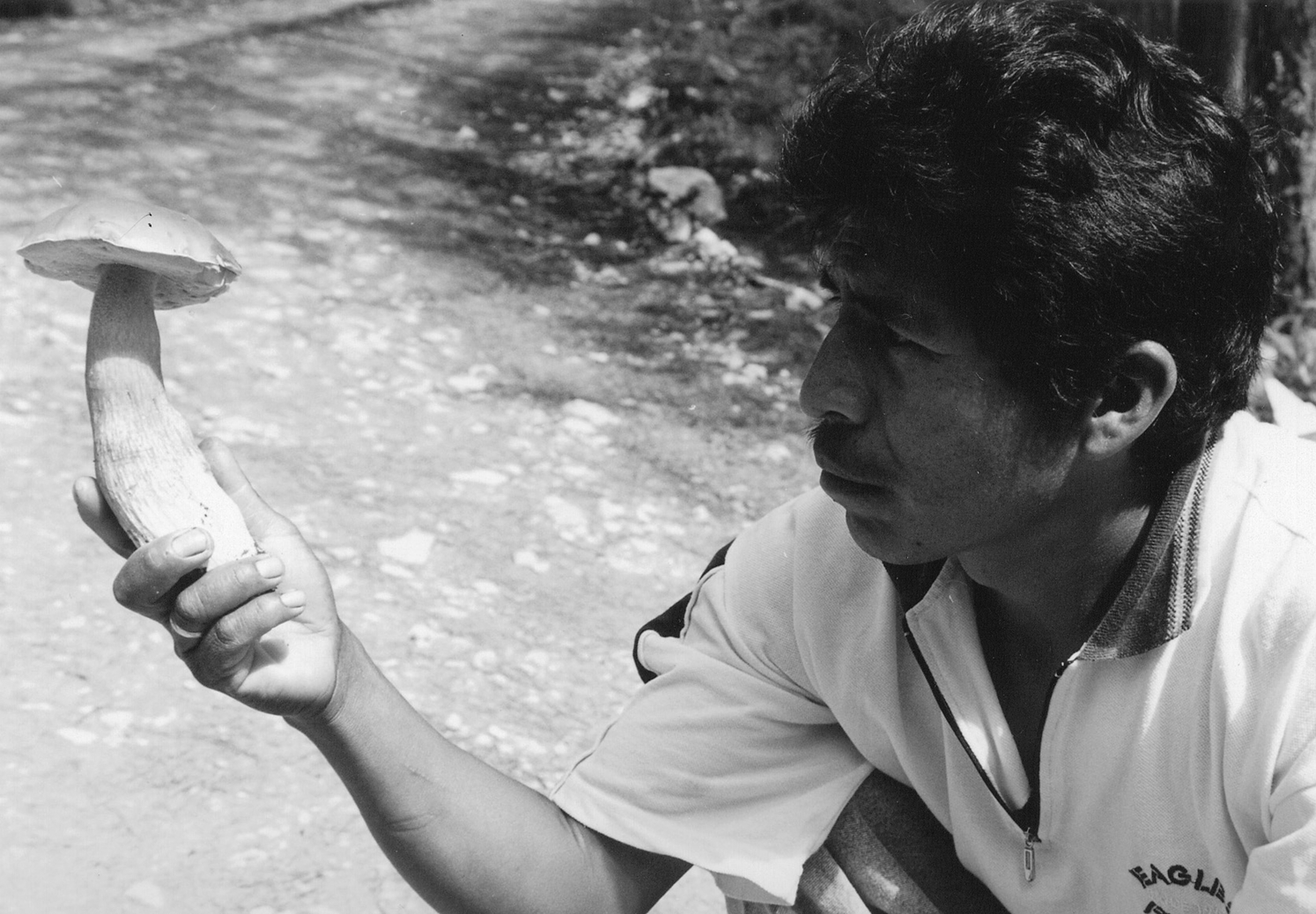
6)
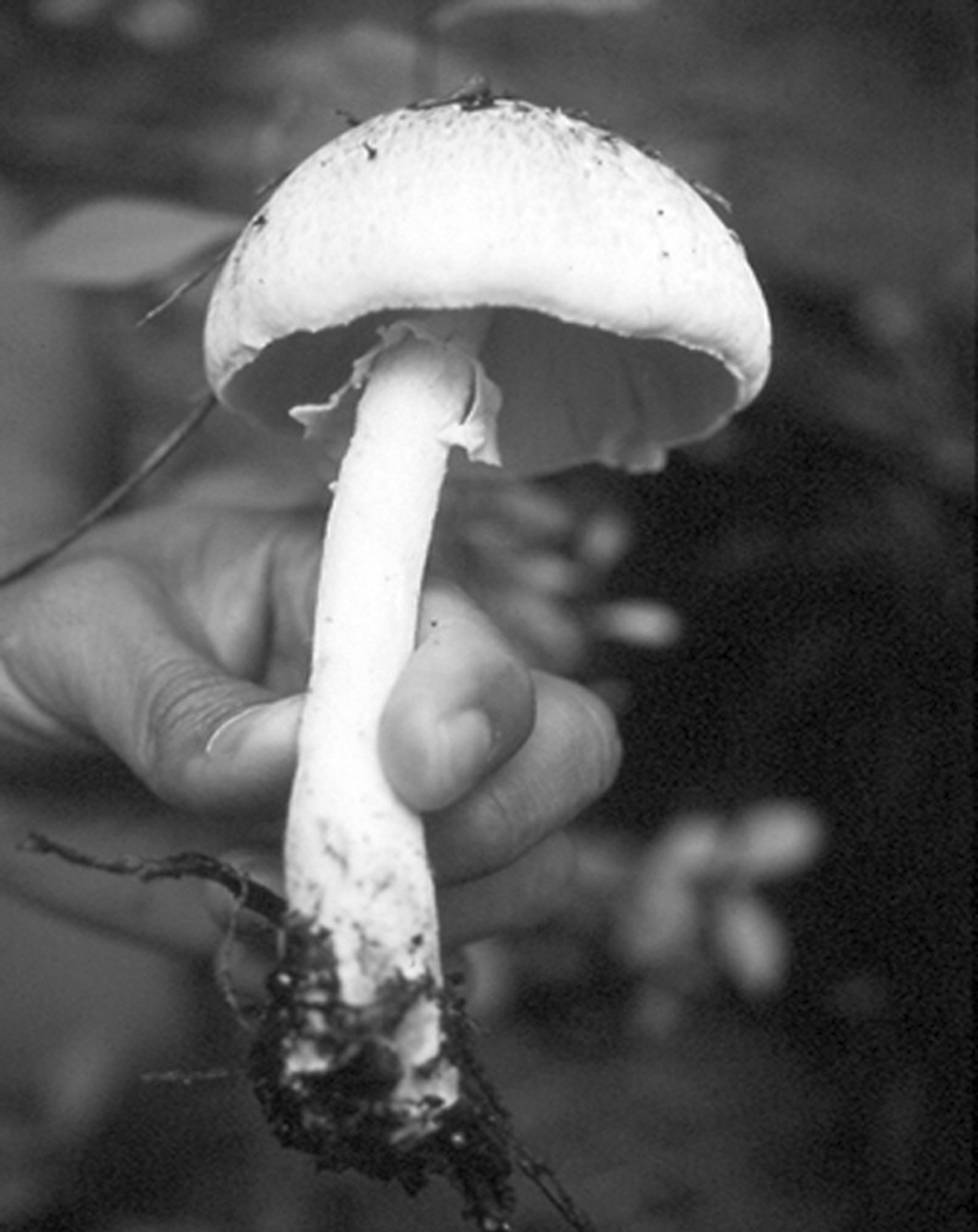
7)
8a)
9)
10)
11)
13)
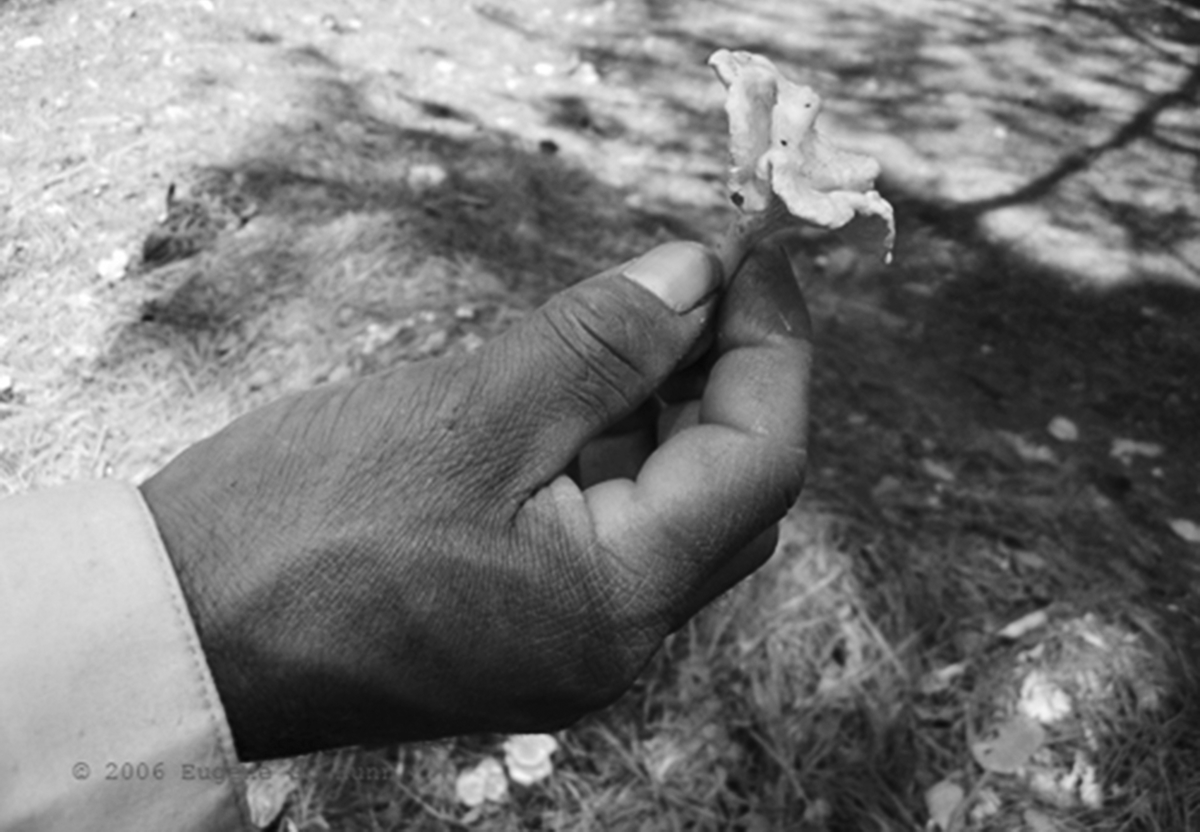
14)
A few edible species are less widely recognized:
15)
16)
17)
We have mentioned above how poisonous look-alike species are distinguished. These are classified as
Other Useful Species
A few species have medicinal applications. Best known are the puffballs (Lycoperdon marginatum, L. perlatum, L. umbrinum; Figure 11), the spores of which are applied to wounds both as an antiseptic and to stop bleeding and promote healing. These are known by a welter of synonyms.
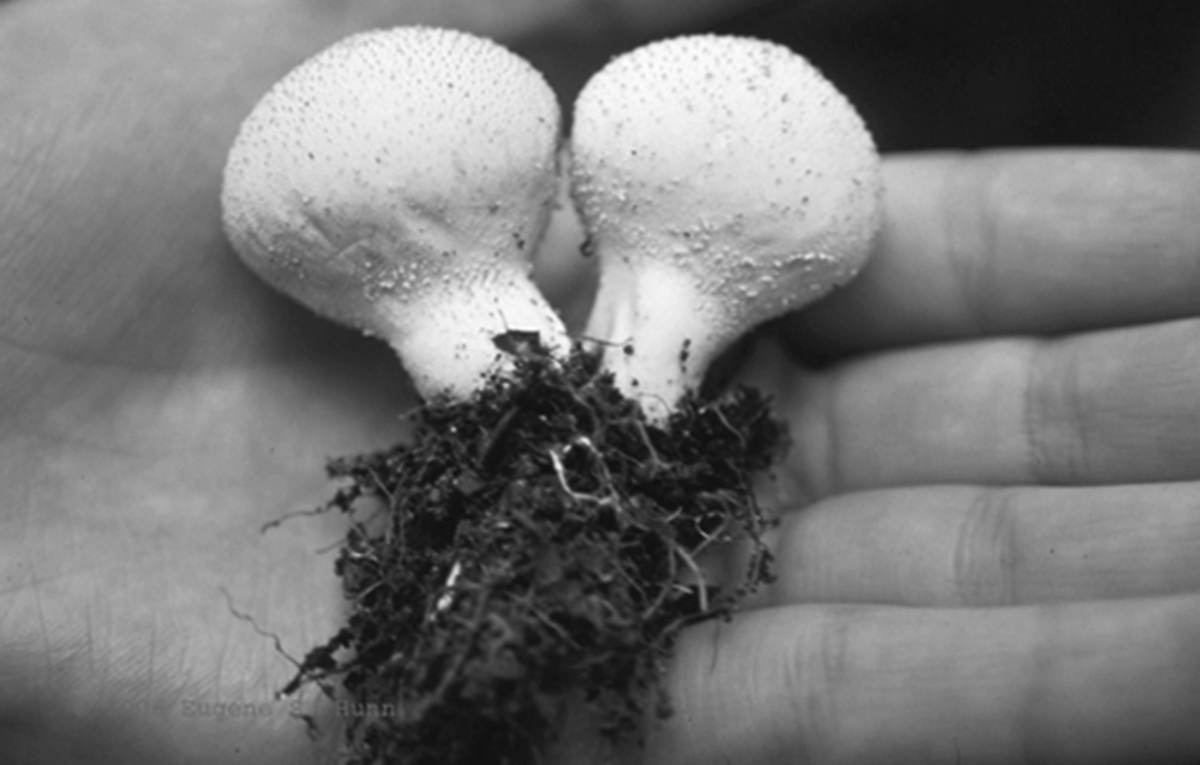
18)
Finally, a related species, Astraeus hygrometricus, an earth star, may be distinguished: 19)
One species is used as a colorant for dying wool, which is then used for weavings on the back-strap loom: 20)
Several species are notable as indicators of the weather or of ecological associations. The general association of fungi with rain is, of course, well known. More specifically, it is said that
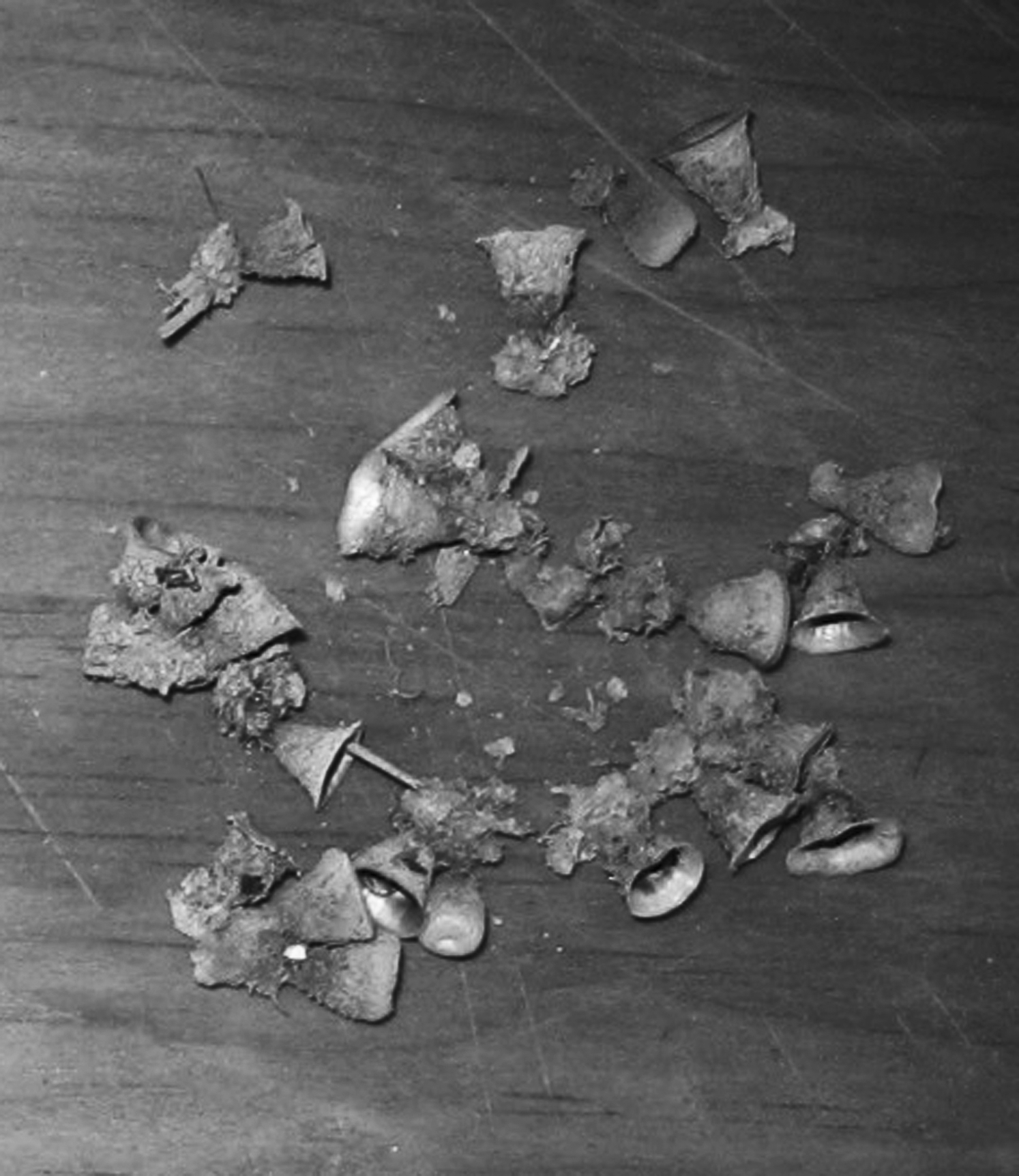
The subtle distinction made in San Pedro between two very similar species of Neolentinus that are associates of different species of pine has been noted. We have also noted the association recognized between chanterelles and manzanitas (Arctostaphylos pungens) and the explicit association of Ustilago maydis with either the maize ear (
Other species not otherwise recognized may be named by reference to a characteristic host tree. It is not always clear if these terms are established names for recognized types of mushrooms or simply descriptions of where they were found (e.g.,
Other species are named for their characteristic substrate. (22)
25)
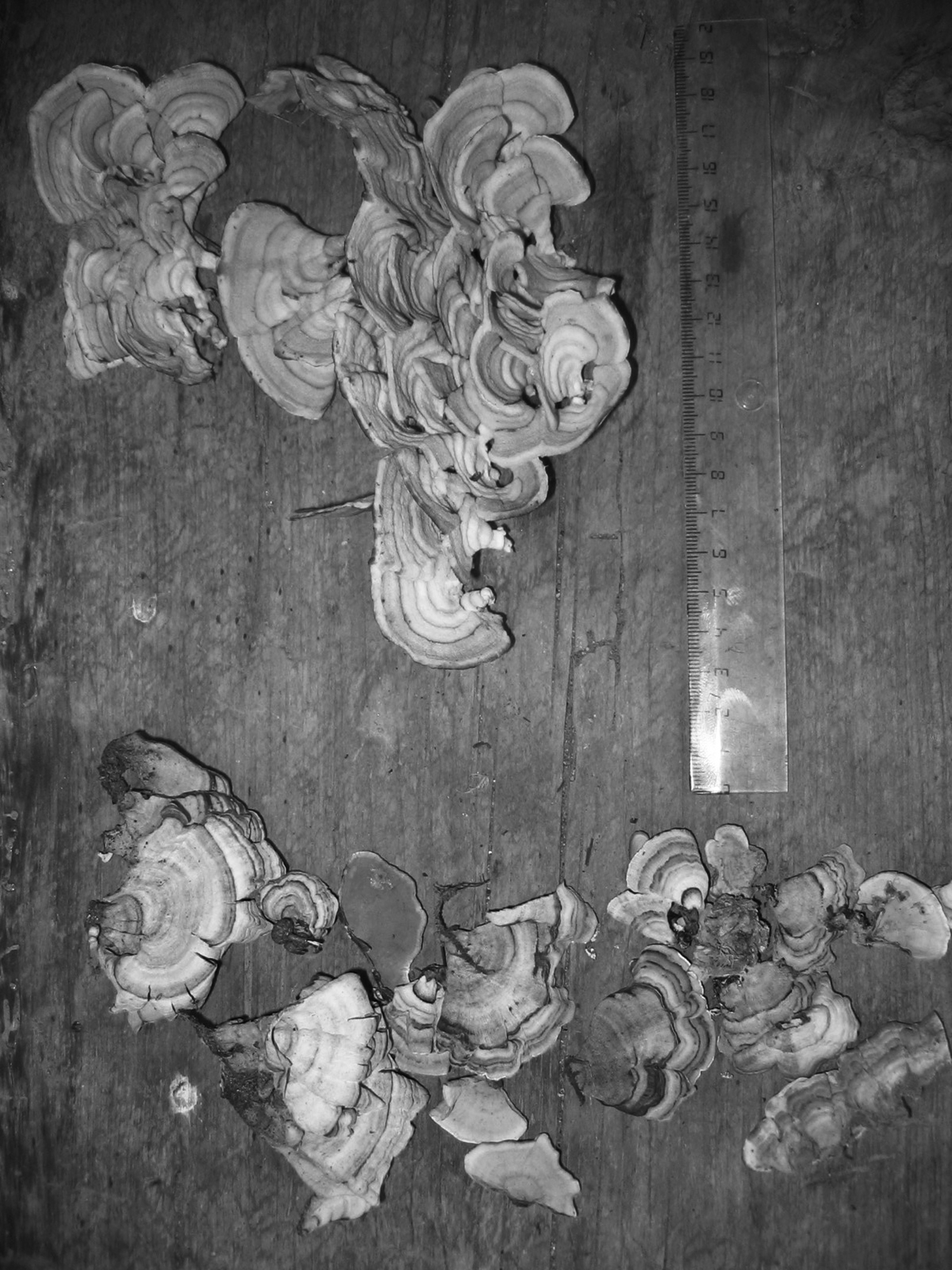
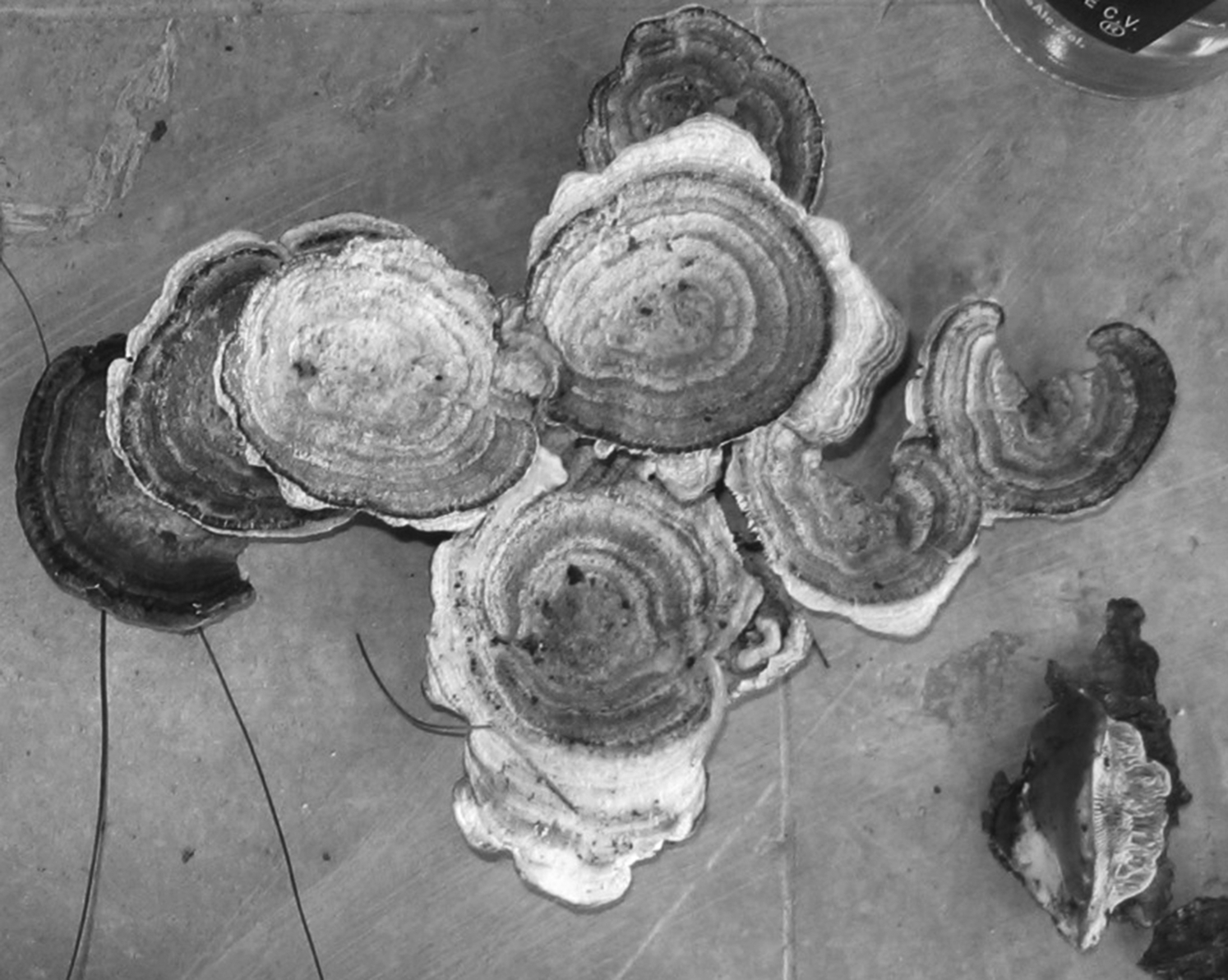
The majority of the folk taxa described above correspond to a single scientific species or to a small number of scientific species of a single genus. Exceptions to this generalization are
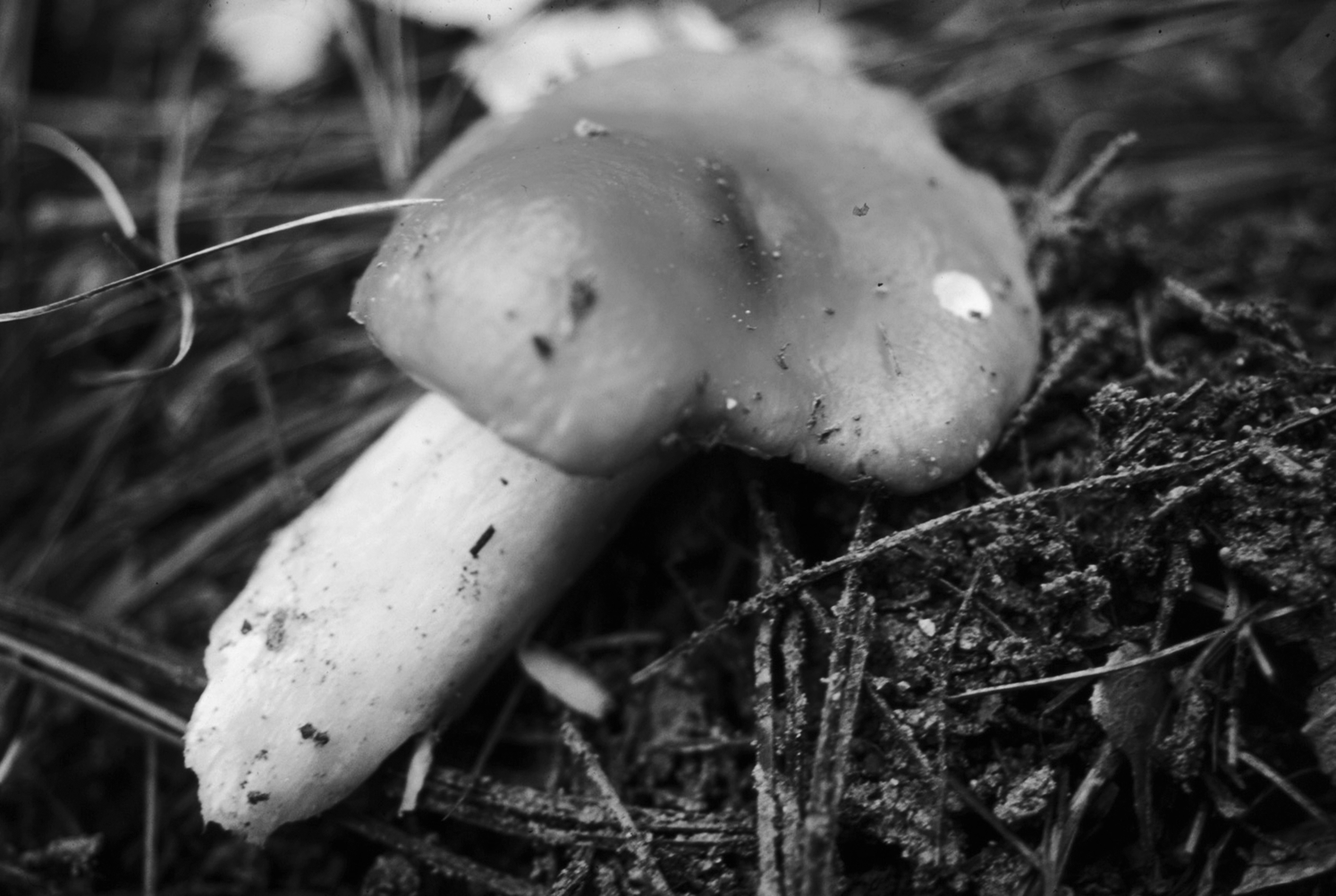
There remains a large “residuum” of small and/or insignificant species that are not consistently distinguished except by reference to some superficial characteristics. For example, there are eight kinds of mushrooms named for a prominent color, typically of the cap (
Discussion
Mixtepec Zapotec Mushroom Classification and Berlin's Taxonomic Framework
The standard analytic framework for ethnobiological classification presumes that living things are classified into one of two “kingdoms” (i.e., the floral and faunal domains each of which incorporates a hierarchical taxonomic structure). Berlin (1992) defines three to five “universal taxonomic ranks” within each of these domains. The folk generic rank is the heart of each domain, including in the neighborhood of 500 folk generic taxa, which represent the most perceptually salient “natural” kinds within the experience of the local community. Moving down through the hierarchy, one may find polytypic folk generic taxa subdivided by specific (and perhaps varietal) taxa. Moving upwards one finds that the majority of folk generic taxa are subsumed by a few life-form (and perhaps intermediate) taxa. The kingdom is often left unnamed.
An unintended consequence of this emphasis on these two major domains of living organisms is the neglect of living things that are neither animal nor vegetable, notably fungi, considered by academic scientists to constitute a third major domain of life, but, as noted above, one less conspicuously variable to the naked eye. One might say that these fungi “have fallen through the cracks” in the Berlinian taxonomic scheme. With a few exceptions, systematic ethnomycological studies are few and far between (but cf. Lampman 2004, 2007; Mapes et al. 1981; Montoya Esquivel 1998; Morris 1984).
To adequately deal with how the fungal domain is classified and named in these Zapotec communities requires some novel adjustments to the universalist perceptual/taxonomic scheme proposed by Brent Berlin (Berlin 1992), while retaining many aspects of the taxonomic and nomenclatural regularities recognized by Berlin, in particular, his characterization of obligatory folk taxonomic ranks and the cognitive and linguistic patterns associated with those taxonomic ranks (Berlin 1992).
Actual folk taxonomies exhibit a number of “irregularities” that require some theoretical refinements of this basic scheme. For example, it has long been recognized that some folk generics will be “unaffiliated” with any life form. These unaffiliated generics are directly included in the “unique beginner,” the kingdom plant or animal. This is attributed to either the perceptual aberrancy of the unaffiliated taxon or some extraordinary cultural significance of the taxon, such as might be associated with domestication (Berlin 1992). Motivated by peculiarities of a Zapotec ethnobiological classification system, Hunn has suggested that we need to recognize that folk specific and even varietal taxa may be unaffiliated at one or more superordinate ranks (e.g., a folk specific that is directly included in a life form or a varietal directly included in a folk genus or life form; Hunn 1999). These “holes in the taxonomic fabric,” we suggest, indicate that Berlin's formal taxonomic structure does not adequately capture the psychological reality of folk biological classification (cf. Hunn 1977, 1982).
The present analysis of a Zapotec classification of fungi motivates an extension of unaffiliated status to life forms with respect to the kingdom rank. The Mixtepec Zapotec category
Comparisons with the Ethnomycology of the Purépecha of Michoacán
Mapes et al. (1981) summarize the classification and nomenclature of the Purépecha (also known as Tarascan) indigenous communities of the Lake Pátzcuaro Basin of Michoacán State in west central Mexico. They treat mushroom classification as “an aspect of ethnobotany which is little studied” (Mapes et al. 1981:231), though they note that “the Purépecha consider mushrooms as something apart from plants and animals” (Mapes et al. 1981:232). They apply a single unanalyzable term to name all mushrooms, terekua (singular), terekuicha (plural), which may be abbreviated in binomial compounds as tereko or teko (Mapes et al. 1981:232); for example, pantereko, literally ‘bread mushroom’ (< Spanish pan + tereko ‘mushroom’), applied to various species of the Boletales.
They treat the mushroom domain as a kingdom, though they note that it is anomalous in comparison with the plant and animal kingdoms in being named with a “single term,” which they note is not unique to the Purépecha. We might note also that the Purépecha mushroom category is also quite unlike the plant or animal kingdoms of most well-documented ethnobiological classification systems in the small number of included folk generic categories just 11 according to Mapes et al. (1981:236, though 12 are listed in their Figure 1 [Mapes et al. 1981:235]), all of which may be named with binomials incorporating the general term for mushroom as the head element, though these names may also be abbreviated.
They report that local consultants group these 11 folk generic taxa into three higher-order categories: 1) gilled mushrooms; 2) pore mushrooms; and 3) a residual category of mushrooms with neither gills nor pores (Mapes et al. 1981:233). They consider these to be “life-forms” within the mushroom “kingdom.” Given that these three broad categories are not named, they would appear to us to be more appropriately analyzed as “intermediate” taxa within an unaffiliated mushroom “life-form,” an analytic strategy we have suggested above.
The Purépecha folk generic taxa correspond rather closely with phylogenetic groupings recognized by academic mycologists, though there are exceptions. The following are examples that, in some cases, are quite similar to Mixtepec Zapotec categories. Tepajkua terekua ‘meadow mushroom’ includes edible and toxic species of the genus Agaricus, cf. Zapotec
Jelly fungi and lichens are separated from mushrooms in Mixtepec Zapotec. Note also that the “corn smut” fungus parasitic on maize, Ustilago maydis is not considered a mushroom by Purépecha consultants, but rather a part of the maize ear. However, the Spanish term, hongo de milpa is known and the fungus is considered edible and marketed in Pátzcuaro. Thus, the outer limits of the Purépecha mushroom “life-form” differ slightly from that of the Mixtepec Zapotec.
Polytypic Purépecha folk generic taxa frequently take the form of a “good” example of the category (typically edible) and one or more “bad” examples, which are toxic or at least considered inedible. Such bad examples may sometimes be distinguished at the folk specific level or referred to as “relatives of” the good example (e.g., the “good” tepajkua terekua, literally ‘meadow mushroom’, is the edible Agaricus campestris, while the “bad one,” the toxic Agaricus xanthodermus is “a relative of the [meadow] mushroom”). A third option is to distinguish “good” and “bad” examples without nomenclatural distinction (e.g., the “good” tiripiti terekua are mushrooms of the Amanita caesarea group, which are widely regarded as edible and choice, while the “bad” tiripiti include Amanita gemmata and A. muscaria, the last the notorious fly agaric [Mapes et al. 1981:233-34], set apart as
Berlin described this core-periphery classificatory scheme for Tzeltal ethnobotany and it is replicated in ethnobiological classifications schemes of many languages from around the world (Berlin 1992).
Comparisons with the Ethnomycology of the Tzeltal Maya of Chiapas, Mexico
Lampman (2004, 2007) provides a comprehensive analysis of mushroom classification, management, and use in “cold country” hamlets of the Tzeltal Mayan communities of Tenejapa and Oxchuc in the Central Highlands of Chiapas. As a student of Brent Berlin his analysis is informed by Berlin's theoretical approach, as we have noted above, with certain caveats of our own.
Lampman describes a basic dichotomy in the Tzeltal mushroom classification, between
Tzeltal also makes extensive use of a head term
One fundamental conclusion of Lampman's analysis clarifies a long-standing controversy in the ethnobiological literature, that of the contrast between “intellectualist” and “utilitarian” explanations for observed regularities in ethnobiological classification systems around the world (Berlin 1992:3-5). Berlin (1992:7) has vigorously defended an intellectualist position, credited initially to Levi-Strauss, criticizing the utilitarian bias ascribed to Malinowski. Lampman characterizes the “Tzeltal ethnomycological classification (as focused) on natural patterns of similarity and dissimilarity (Lampman 2004:329),” in accord with the intellectualist claim, but he continues:
Classification through recognition of natural patterns is not enough, however, to fully explain how the Tzeltal categorize and label the macro-fungi in their local environment. The Tzeltal clearly place importance on the cultural utility of macrofungi (Lampman 2004:329).
He notes that:
Of the 72 species collected for this dissertation, approximately 40 received consistent Tzeltal linguistic designations that were widely known throughout the highlands. At least 75% of these linguistically recognized species were considered edible, medicinal or otherwise considered useful…the remaining 25% of linguistically recognized species are abundant in the landscape, large or otherwise morphologically salient, or highly toxic…In the majority of cases, culturally useless species received no name at all…unknown mushrooms are lumped together into a large group that is generally labeled
We find a very similar situation with respect to Mixtepec Zapotec ethnomycological classification and nomenclature. Local residents clearly recognize that consistent morphological and ecological contrasts characterize the fundamental units that they name and classify as kinds of
As Hunn (1982, 1999) has argued, the great majority of basic folk biological taxa (i.e., folk generics and many folk specifics, following Berlin [1992]), are motivated by the phenotypic distinctiveness of the organisms classified, that is, by “natural discontinuities.” However, the selection of which “natural discontinuities” to recognize and name is driven more by cultural utility. Thus, exclusive emphasis on either “intellectual” or “utilitarian” factors will fail to capture the complex reality. We note also that the “good” examples of most Purépecha folk generic mushroom taxa are edible.
As is the case for Mixtepec Zapotec and Purépecha, mushrooms are considered to be living things apart from plants and animals (Berlin 1992:15). Tzeltal distinguishes several verb stems which we would translate as “to eat,” depending on the texture or taste of what is eaten. One such verb stem is
As in our two comparison cases, Tzeltal Maya apply a single “unanalyzable primary lexeme” to name the mushroom domain,
Mycophilia versus Mycophobia
Morris (1984) characterized a basic dichotomy among the world's societies between mycophilic and mycophobic cultures, in the first instance naming and using a significant variety of mushroom species, in the second recognizing just a handful of useful species and dismissing the vast majority as “toadstools,” or some local variant of that concept. Clearly, both the Mixtepec Zapotec communities and those of the Tzeltal Maya qualify as mycophilic, as are the Purépecha (Mapes et al. 1981) and Tlaxcalan (Montoya Esquivel 1998) communities that have been carefully documented to date.
However, it is no simple matter to count the number of named categories of mushrooms recognized within a given society, a fundamental criterion for distinguishing mycophiles from mycophobes. As noted above, the consistency of recognition of folk categories varies along a continuum from those universally or widely and consistently recognized and named (as measured by sampling free-lists or by extensive interviewing) through the tail of a distribution characterized by considerable ambiguity as between accepted names and idiosyncratic or invented terms with limited cultural currency. Where to draw the line between “countable” and invalid names is rarely entirely clear. The distinction between “folk specific” and “folk generic” taxa is also problematic.
Lampman describes for the Tzeltal Maya “at least 51 monotypic taxa at the genus rank and at least three polytypic taxa at that rank” (2007:22). By comparison, the 30 folk generic taxa we record for Mixtepec Zapotec and the 11 (or 12 or 14) reported for the Purépecha suggest a considerably more intense focus on mushrooms by the Tzeltal. However, the intensity of Lampman's research accounts for much of the numerical superiority of the Tzeltal data. We might have been able to include for Mixtepec Zapotec an indeterminate number of additional folk categories if we had been able to establish the validity of distinctions named by reference to color, shape, or host tree species.
Differences of interpretation and/or contrasting nomenclatural styles may also play a role. For example, unlike Tzeltal, most Purépecha “folk generics” are polytypic, in that “good” examples are distinguished from “bad” examples. How should these be counted? Also, in both the Purépecha and Zapotec classifications “relatives” of various categories are recognized. Finally, the boundaries of the mushroom domain vary, with, for example, Mixtepec Zapotec separating “mushrooms” from “lichens.”
Conclusions
Our studies of Mixtepec Zapotec ethnomycology confirm the major findings of contemporary ethnobiology, to wit, that communities living close to the land, depending directly upon locally harvested resources for life's necessities, apply their human cognitive and linguistic powers to make sense of the diversity of life within their immediate environment and that they apply this “Traditional Ecological Knowledge” to the necessary tasks of making a living, maintaining health, and satisfying their curiosity about their place in the world.
Our ethnographic efforts summarized here provide but a sketch of a complex conceptual and material engagement by the citizens of San Juan and San Pedro Mixtepec with their natural environment. Their knowledge is distilled from a millennial occupation daily renewed, of the Sierra de Miahuatlán. Today their young people are confronted by global forces that present new challenges and opportunities. How they apply their knowledge and wisdom to meet these challenges remains an open question. Meanwhile, we hope that by documenting one piece of their extensive and subtle environmental understanding, we may inspire a deep appreciation of the value of their homeland now and in the future.
Footnotes
Acknowledgments
We are grateful for the welcome we have received from the citizens of San Juan and San Pedro Mixtepec and the interest that our Indigenous colleagues in these two communities shared with us in our studies. In San Pedro, Venegas Ramírez and Vásquez Dávila give special thanks to the Samuel Mendoza family for their hospitality and teachings about mushrooms at home and on field trips. Hunn's ethnobiological research in San Juan has been funded by the United States National Science Foundation, the University of Washington, and the Jacobs Research Funds. His research was generously supported in kind by the Sociedad para el Estudio de los Recursos Bióticos de Oaxaca, A. C. (SERBO) and by staff at the Instituto Tecnológico del Valle de Oaxaca (ITVO). Hunn wishes to thank Ricardo Valenzuela of the Universidad Autonoma de México and Ing. Hugo León Avendaño and Biol. Alfonso Aurelio for assistance in identifying specimens and the late biologist Donato Acuca Vásquez for friendship and inspiration. Venegas Ramírez's and Vásquez Dávila's research in San Pedro was supported by El Colegio de la Frontera Sur and ITVO.
Supplementary Materials
Supplementary materials are available online at BioOne (http://www.bioone.org/loi/etbi). Members of the Society of Ethnobiology can access these materials through the society's website at  . The electronic version of the journal is also available through many university libraries.