






Abstract
This article explores the relationship between school contextual factors and teacher retention decisions in New York City. The methodological approach separates the effects of teacher characteristics from school characteristics by modeling the relationship between the assessments of school contextual factors by one set of teachers and the turnover decisions by other teachers in the same school. We find that teachers’ perceptions of the school administration has by far the greatest influence on teacher retention decisions. This effect of administration is consistent for first-year teachers and the full sample of teachers and is confirmed by a survey of teachers who have recently left teaching.
When given the opportunity, many teachers choose to leave schools serving large concentrations of poor, low-performing, and non-White students (Boyd, Lankford, Loeb, & Wyckoff, 2005; Hanushek, Kain, & Rivkin, 2004; Scafidi, Sjoquist, & Stinebrickner, 2005). While a substantial research literature has documented this phenomenon, far less research effort has gone into understanding what features of the working conditions in these schools drive their higher turnover rate (see Loeb, Darling-Hammond, & Luczak, 2005, for an exception to this). Excessive teacher turnover can be costly and detrimental to instructional cohesion in schools(National Commission on Teaching and America’s Future, 2003). Consequently, many policies, such as mentoring programs and retention bonuses, have aimed to stem teacher attrition, particularly at those schools that experience high teacher turnover. Yet, without a better understanding of the reasons teachers leave, these approaches may not be as effective as they could be at reducing detrimental attrition.
This study contributes to our understanding of teacher attrition by modeling the relationship between teacher turnover and school contextual factors—including teachers’ influence over school policy, the effectiveness of the school administration, staff relations, student behavior, facilities, and safety. Using a unique data set that combines longitudinal survey data with district administrative files, we find that school administration plays a particularly important role in teachers’ career decisions. In what follows, we briefly review relevant prior research to motivate our study, describe our data and methods, and present the results. The final section discusses the implications of these results, limitations of the study, and directions for future research.
Background and Motivation
Across the United States, approximately half a million teachers leave their schools each year. Only 16% of this teacher attrition at the school level can be attributed to retirement. The remaining 84% of the teacher turnover is due to teachers transferring between schools and teachers leaving the profession entirely (Alliance for Excellent Education, 2008). In the New York City public school district alone, more than 5,000 teachers left their schools in single recent year—with 8% of teachers transferring to another school and 10% leaving the school system. The research literature has begun to investigate the complexities of teacher turnover—for example, distinguishing between permanent and temporary exits from teaching, as well as making distinctions among transfers within districts, transfers across districts, and exits from teaching all together (see DeAngelis & Presley, 2007; Johnson, Berg, & Donaldson, 2005). This teacher retention research can be categorized as examining the relationship between teacher turnover and (a) teachers’ own characteristics (i.e., what types of teachers are more likely to leave), (b) student body characteristics (i.e., what types of student bodies experience high teacher turnover), or (c) school characteristics (i.e., what types of school contextual factors are related to higher teacher turnover). We discuss each of these bodies of literature in turn below.
Teacher Characteristics and Teacher Turnover
Teacher background characteristics and work experience consistently predict turnover. For example, turnover is higher among young and old teachers compared to middle-aged ones (see Allensworth, Ponisciak, & Mazzeo, 2009; Guarino, Santibanez, & Daley, 2006; Johnson et al., 2005) and among less experienced teachers compared to more experienced ones (see Ingersoll, 2001; Marvel, Lyter, Peltola, Strizek, & Morton, 2006). Teachers’ preparation experiences and pathways into teaching are also predictive of attrition behavior. On average, teachers from early entry routes—such as Teach for America (TFA) and the New York City Teaching Fellows (NYCTF)—are more likely to leave than are teachers from more traditional routes (Boyd, Grossman, Lankford, Loeb, & Wyckoff, 2006). Researchers also have linked teacher quality measures to attrition behavior. Teachers with stronger qualifications as measured by their own test scores and the competitiveness of the undergraduate institutions from which they received degrees are more likely to leave teaching (Boyd et al., 2005). However, teachers who are more effective as measured by the test score gains of the students in their classrooms are less likely to leave teaching (Boyd, Grossman, Lankford, Loeb, & Wyckoff, in press; Boyd, Lankford, Loeb, Ronfeldt, & Wyckoff, in press; Goldhaber, Gross, & Player, 2007; Hanushek, Kain, O’Brien, & Rivkin, 2005). The research linking teacher gender, race, or ethnicity to turnover is less consistent (see Allensworth et al., 2009; Guarino et al., 2006; Johnson et al., 2005).
Student Body Characteristics and Teacher Turnover
The research examining the relationship between student body characteristics and teacher attrition tends to utilize large-scale, longitudinal data sets to characterize teacher transfer patterns in relation to the student demographics of schools. These studies generally find that schools with large concentrations of low-income, non-White, and low-achieving students are the most likely to experience high teacher turnover (Boyd et al., 2005; Carroll, Reichardt, Guarino, & Mejia, 2000; Hanushek et al., 2004; Scafidi et al., 2005). For example, in New York City, there is a 27% attrition rate of first-year teachers in the lowest performing schools as compared to 15% in the schools having the highest student achievement (Boyd et al., 2005). As another example, Scafidi et al. (2005) use a competing-risk model and find that Georgia elementary teachers tend to move from schools with higher proportions of minority students to schools with lower proportions. Hanushek et al. (2004), using a similar model and Texas data, find that teachers prefer working at schools with higher achieving students even after controlling for student racial composition.
School Contextual Factors and Teacher Turnover
Student characteristics are not the only features of schools that influence teacher career paths. A number of studies have demonstrated a significant relationship between teacher attrition and school contextual factors—particularly teacher influence, administrative support, staff relations, student behavior, facilities, and safety (see Darling-Hammond, 2003; Glaser, 2003; Hirsch & Emerick, 2007; Loeb et al., 2005). We separately review the research to date on each of these factors below. Unlike the studies predicting turnover by student composition cited above, which utilize large, longitudinal data sets, most of these studies rely on surveys of teachers, asking about their perceptions of working conditions and likelihood of leaving. These survey data likely produce less accurate models of teacher turnover because they do not observe actual turnover, and a teacher’s report both of his or her probability of leaving and of the school’s working conditions could be affected by a temporary positive or negative feeling about the job. Despite concerns about self-reports, survey data can be combined with other data about schools to provide useful information about school contextual factors and their relationships with teacher retention decisions, as we describe further below.
Teacher influence
Teacher influence refers to teachers’ autonomy in their classrooms and to their ability to affect school policies and practices. Teachers appear to derive greater satisfaction from their work and are more likely to stay in teaching when they perceive themselves to have greater autonomy (Johnson, 2006). Teachers are also more likely to stay in schools where they have the opportunity to contribute to schoolwide decision making—such as decisions about scheduling, selection of materials, and selection of professional development experiences. For example, Allensworth et al. (2009), in a study including more than 50,000 Chicago Public Schools teachers, find that teachers are more likely to stay in schools where they have influence over school decisions, even after controlling for teacher characteristics (such as age, gender, ethnicity) and student attributes (such as percentage meeting state standards, percentage low-income students).
Administrative support
Administrative support refers to the extent to which principals and other school leaders make teachers’ work easier and help them to improve their teaching. Administrative support can assume a variety of forms—ranging from providing teachers with professional development opportunities to protecting them from district office mandates (e.g., Hirsch & Emerick, 2007). Multiple studies relate administrative support to teacher retention. Ladd (2009), for example, analyzes teachers’ responses to North Carolina school climate surveys and finds that teachers’ perceptions of school leadership are more predictive of teachers’ intentions to remain in the school or to find alternative jobs than are their perceptions of any other school working condition.
Additionally, a number of studies demonstrate the relationship between school leadership and other school working conditions that, in turn, influence teacher retention decisions. In a meta-analysis of 70 empirical studies, Waters, Marzano, and McNulty (2003) find the average effect size of school leadership, broadly defined, on student achievement to be approximately .25. The school leadership effects on student achievement in the studies they review operate via a variety of mechanisms—including building a sense of community, establishing school routines, providing teachers with necessary resources, and advocating for the school to stakeholders. Leithwood, Seashore Louis, Anderson, and Wahlstrom (2004) and Hallinger (2005) similarly conduct reviews of the literature on how school leadership impacts schools and conclude that leaders impact student learning through their influence on school staff and structures. Other research similarly suggests that support from administrators has the potential to influence a host of working conditions, such as the amount of teacher influence and school safety (see Johnson, 2006). In other portions of this review of the literature, we demonstrate how working conditions such as teacher influence and school safety relate to teacher retention decisions.
Staff relations
Staff relations refers to teachers’ professional and social relationships with other teachers. Allensworth et al. (2009) characterize “positive, trusting, working relationships” as ones where teachers feel comfortable talking with others about their struggles and seeking advice from others. They define this relationship in terms of teacher reports of “a strong sense of collective responsibility among teachers—where there is a shared commitment among the faculty to improve the school so that all students can learn—compared to schools serving similar students but without a sense of collective responsibility” (p. 25). Teachers appear to be more likely to stay at a school if they have positive relationships with their colleagues (see Darling-Hammond, 2003; DuFour & Eaker, 1998; Glaser, 2003).
Student behavior
In addition to socioeconomic status, ethnicity, and achievement, other student characteristics, such as student behavior and level of engagement, have been shown to predict teacher retention. As an example, teachers often cite student discipline and students’ lack of motivation and interest as reasons why they leave a school (see Elam, 1989; MacDonald, 1999; Tye & O’Brien, 2002). Haberman and Rickards (1990) analyze data from a survey of teachers in Milwaukee who resigned, retired, or terminated their contracts between January 1988 and December 1988 and find that student discipline was the greatest perceived problem before they started teaching as well as when they left teaching. The consistency of the findings linking student discipline to teacher satisfaction suggests that student behavior and schools’ responses to student behavior in their discipline policies and practices are persistent and prevalent issues for teachers.
Facilities
Facilities refers to the physical spaces where teachers work as well as the resources available to them—such as textbooks, pacing guides, and periodic assessments. Facilities, again, have been linked to teacher career paths (see Corcoran, Walker, & White, 1988; Darling-Hammond, 2003; Steuteville-Brodinsky, Burbank, & Harrison, 1989). Loeb et al. (2005) combined California teacher survey responses to administrative data on student demographics and teacher salaries. They find that teachers’ reports on the physical features of their schools and the availability of textbooks and technology are significant predictors of school-level teacher turnover. Other researchers draw similar conclusions using teacher-level survey responses instead of school-level survey responses (see Buckley, Schneider, & Shang, 2005; Johnson, 1990). They conclude that teachers who perceive their schools to have sufficient resources and agreeable facilities feel better prepared and supported to do their jobs and, in turn, are more likely to stay.
Safety
School safety refers to school conditions that affect the physical and psychological well-being of students and teachers. Safety can be influenced by a variety of factors ranging from classroom misconduct to violence and can be described by a variety of indicators, such as the number of arrests for violent behavior (Dinkes, Kemp, & Baum, 2009; Mayer & Furlong, 2010) or responses to school climate surveys that measure the perceptions of students, parents, and staff about safety (Anderson, 1982; Cohen, McCabe, Michelli, & Pickeral, 2009; Cornell & Loper, 1998). Some existing research demonstrates that schools with fewer safety concerns are better able to focus on instructional issues and provide a positive working environment for teachers (see Duke, 2002). Schools that are struggling to maintain a safe school environment have a more difficult time retaining teachers (Boyd, Lankford, Loeb, Ronfeldt, & Wyckoff, 2010).
Building on Prior Research
This article is not the first to use large-scale data to assess the effects of working conditions on teacher retention. In particular, researchers have used data from the Schools and Staffing Survey (SASS) and the related Teacher Follow-Up Survey (TFS) from the National Center for Education Statistics, which provide opportunities to model teacher turnover using measures of school context that are richer than those typically found in state administrative databases (see Bobbitt, Leich, Whitener, & Lynch, 1994; Boe, Bobbitt, Cook, Whitener, & Weber, 1996; Luekens, Lyter, & Fox, 2004; Luekens, Lyter, Fox, & Chandler, 2004; Perie & Baker, 1997). Using data from these surveys, Ingersoll (2001) explores some of the same aspects of working conditions that this article addresses. He finds that teacher attrition is higher in schools with low salaries, limited faculty input into school decision making, poor support from the school administration, and many student discipline problems. These findings hold even after controlling for student composition, school level, and school location. Faculty input into school decision making, support from school administration, and student discipline are three of the factors that we address as well, while salary schedules are constant across schools in the district that we study in this article.
Ingersol (2001) is not the only researcher to use the SASS and TFS. Weiss (1999) uses 1987–1999 and 1993–1994 SASS data to explore the relationship between working conditions and the morale and retention decisions of first-year teachers. The study creates two factors of working conditions based on teacher self-reports: (a) school leadership/teacher autonomy and discretion, and (b) social climate. The paper finds a significant relationship between these working condition factors and teacher morale and retention decisions—even after controlling for teacher demographics, teacher academic background, teacher financial background, and class size. Of note, Weiss hypothesized that school leadership and autonomy would be two separate factors, but items loaded on a single factor. Shen (1997) uses 1990–1991 SASS and 1991–1992 TFS data and finds a similar positive correlation between school leadership (specifically, school administrators knowing staff members’ problems) and teacher autonomy (specifically, teacher’s influence over school policies). Shen further finds that both school leadership and teacher autonomy are related to teacher retention decisions. Grissom (in press) analyzes more recent SASS and TFS data and finds evidence that principal leadership, an orderly schooling environment, greater classroom autonomy, and increased professional development predict lower teacher turnover after controlling for student and teacher demographics. Overall, analyses of SASS and TFS data over multiple years suggest a strong relationship between teacher perceptions of their school leadership and their retention decisions.
The advantage of the SASS and TFS data is that they are nationally representative. The disadvantage is the potential for common-source bias that arises from the use of survey data gathered from the same teachers who are observed staying or leaving their schools a year later. As an example of common-source bias, teachers who plan to leave teaching in the following year might respond in particularly negative ways to the survey items on working conditions even if they were leaving teaching for other reasons. They might do this partially to convince themselves that leaving is a good choice. If we were to survey the same teachers at another time (a time when they are not planning on leaving teaching), their responses might be less negative even if the working conditions were identical. Similarly, teachers who are staying may respond more positively than is accurate in their descriptions of working conditions if they are partially convincing themselves that staying is a good choice. To say this another way, teachers’ responses to the survey items are driven not only by their underlying perceptions of working conditions but also by the separate overall positive or negative outlook they have at that particular point in time. Statistically, this tendency can result in correlations between working conditions and retention behaviors that are exaggerated or distorted. In addition to a conceptual argument for common-source bias, we find statistical evidence for bias by comparing regression results of the relationship between teacher satisfaction and school working conditions. Teachers who reported greater satisfaction with teaching were more likely to report more positive school working conditions. This finding holds when we compare teachers within the same school, which provides evidence that teachers rate their schools worse when they are less satisfied, regardless of the actual working conditions at their school.
A potential approach to estimating the relationship between teacher-reported working conditions and turnover that limits this problem of common-source bias is to ask one group of teachers in a school about the working conditions but follow the career decisions of the other teachers in the same school. Unfortunately, the SASS data do not include enough teachers in the same school to use this approach. However, state and district administrative data cover all teachers in the jurisdiction and thus could be used with this approach if the data were linked to teachers’ assessments of working conditions.
This study extends prior research by using data on all schools and teachers in the New York City public school district to uncover the relationship between school working conditions and teacher attrition. A survey of first-year teachers in the spring of 2005, a follow-up survey of those same teachers a year later, and matched district administrative data allow us to link teachers’ assessments of working conditions to their own career trajectories as well as the retention behavior of all other teachers in their schools. We define teacher working conditions based on our review of the literature, which suggests that six features of schooling, in addition to student background characteristics, are particularly salient for teachers’ career decisions: teacher influence, administration, staff relations, student behavior, facilities, and safety.
Because we have the full population of teachers, we are able to explore the importance of common-source bias as well as provide estimates of the relationship between working conditions and retention decisions that are free from this potential bias. We examine the impact of common-source bias by measuring working conditions through the responses of one set of teachers in a school and analyzing the relationship between these measures and the career paths of other teachers at the same school as well as the career paths of the individuals responding to the survey. Results that hold under both conditions offer greater support for the causal relationship between school working conditions and teacher retention decisions. In addition, we are able to triangulate these findings with surveys of teachers who recently left teaching in New York City, asking them what factors were important in their decisions to leave.
There is a potential drawback of our approach because the information on working conditions stems only from first-year teachers. The first year of teaching often is overwhelming for a number of reasons including daily preparation; classroom management; and building relationships with parents, other teachers, staff, and administrators (e.g., DePaul, 1998; Weiss, 1999). Because of the particular difficulties of the first year, novice teachers may experience school working conditions differently than do other teachers in their schools. Nonetheless or alternatively, first-year teachers may be a good source of information about the working conditions in the school because they need to utilize available resources and because they are not as likely to be entrenched in the politics of the school. We use new teachers’ assessments of the school working conditions to model their career behaviors and the career behaviors of their more experienced colleagues.
In these analyses, we address the following research questions:
What are first-year teachers’ perceptions of school contextual factors?
What is the relationship between school contextual factors and teacher attrition?
How are first-year teachers’ assessments of school contextual factors related to their own retention decisions after accounting for other measured school and teacher characteristics? How do first-year teachers’ assessments of school contextual factors predict the turnover decisions of other teachers in the same school?
What aspects of the school context do former teachers report as being the most influential in their decisions to leave teaching?
Data
Survey of First-Year Teachers
In the spring of 2005, we administered a survey to all first-year teachers in New York City (Teacher Policy Research, 2005; all surveys for this project are available at http://www.teacherpolicyresearch.org). Based on administrative data on first-year teachers for other school years before and after the 2004–2005 school year, we find that this sample of first-year teachers is similar to other cohorts of first-year teachers in terms of demographic, background, and retention decisions. These characteristics are explained further below. The survey was completed by 4,360 teachers (just over 70% response rate) and consisted of more than 300 questions divided into the following areas: preparation experiences, characteristics of the schools in which they are teaching, teaching practices, and goals. Participation in the survey was voluntary and took approximately 25 minutes. Participants received $25 after completing the survey. We use the items related to the characteristics of the schools in which they are teaching for this particular study.
More than half of the questions came directly from the National Center for Education SASS and had been used in prior research on teacher retention and school working conditions (see, e.g., Shen, 1997; Weiss, 1999). We supplemented these questions based on the research literature (see, e.g., Allensworth et al., 2009), researchers’ prior experience in developing other surveys in the district (Boyd et al., 2006), and through consultation with teachers and administrators in the district. For example, the SASS questions on working conditions do not include measures of facilities. Because district personnel suggested that this was an important factor to consider—particularly building temperature and the availability of quiet space for teachers to work—we added questions on this dimension of work life.
Building on prior research, we include six factors that measure school working conditions, which we have labeled teacher influence, administration, staff relations, students, facilities, and safety (see Table 1). Each of the individual items, except those measuring safety, comes from teachers’ responses on a 5-point scale. The teacher influence factor has an alpha of .78 and comprises five elements. On average, teachers responded that they had the most influence in determining the amount of homework assigned and the least in selecting textbooks and other instructional materials. The administration factor has an alpha of .89 and includes seven elements, with administrators being rated highest on evaluating teachers’ performances fairly and lowest on consulting staff members before making decisions that affect them. Administration, in this case, could include not only the principal but other administrators such as assistant principals. The staff relations factor has an alpha of .77 and comprises five survey items. The respondents are generally positive about all aspects of their relationships with other staff members, being the most positive about getting good advice from other teachers in their schools when they have a teaching problem. The students factor is also composed of four elements and has an alpha of .68. Of these, the teachers on average are most likely to feel that they get to know personally many students who are not in their classes and the least likely to feel that their students receive a lot of support for learning outside of school. The facilities factor, including four of the survey items, has an alpha of .72. On average, the teachers are the most positive about having textbooks in their classrooms that are up-to-date and in good physical condition and the least positive about their school having quiet spaces for teachers to work when they are not teaching. Since the safety factor includes only two dichotomous survey items, a factor score was not calculated. Instead, the safety variable represents the sum of the items. Thirty percent of the first-year teachers surveyed report that a student from their school has threatened to injure them, and 16% state that a student has physically attacked them.
Descriptives From the First-Year Teacher Survey
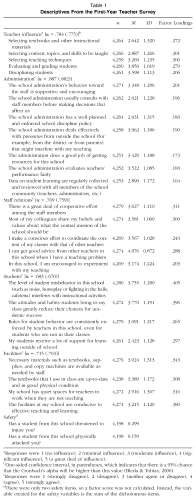
Responses were 1 (no influence), 2 (minimal influence), 3 (moderate influence), 4 (significant influence), 5 (a great deal of influence).
One-sided confidence interval, in parentheses, which indicates that there is a 95% chance that the Cronbach’s alpha will be higher than this value (Bleda & Tobias, 2000).
Responses were 1 (strongly disagree), 2 (disagree), 3 (neither agree or disagree), 4 (agree), 5 (strongly agree).
There were only two safety items, so a factor score was not calculated. Instead, the variable created for the safety variables is the sum of the dichotomous items.
Follow-Up Surveys
The concerns and views of first-year teachers might differ from those of more experienced teachers, so in the spring of 2006 we administered two follow-up surveys. The first was a survey for those teachers who completed the first-year survey who remained in teaching for a second year (Teacher Policy Research, 2007a). In this follow-up survey, teachers were asked about their teaching experiences, their views concerning those experiences, and their future plans. In this study, we focus on items from the follow-up survey that asked teachers who had at some point considered leaving their first teaching positions in New York City about the factors that caused them to consider leaving and their dissatisfaction with different aspects of teaching, such as teaching assignments and school facilities. The survey had a 72% response rate (n = 1,587). A second follow-up survey about reasons for leaving teaching was administered to all teachers who left teaching in New York City after the 2004–2005 school year (Teacher Policy Research, 2007b). The response rate on this survey was 61% (n = 368). We describe responses on these surveys to two sets of questions, one asking teachers about the factors influencing their decisions to leave and another asking them the degree to which their dissatisfaction with different aspects of teaching influenced their retention decisions. Similar to the development and validation process for the survey of first-year teachers, both of these follow-up surveys are based on the SASS, on the research literature, on prior experiences, and on consultation with school district personnel.
Administrative Data on Teachers and Schools
We matched survey responses to administrative data provided by the New York City Department of Education (NYCDOE) and New York State Education Department (NYSED) using unique teacher identification numbers. The administrative data include information on the teachers and the student demographics at their schools. The data on teachers include demographic (gender, ethnicity, age), background (initial pathway into teaching and certification exam scores), and retention data from NYCDOE and NYSED. We define teachers’ initial pathways into teaching using five categories: college recommended, temporary license, NYCTF, TFA, and other. NYCTF and TFA are early entry or alternative routes into teaching. A temporary license pathway indicates that the individual failed to complete one or more requirements for a teaching certificate but was allowed to teach under the temporary license provisions, whereby a school district can request NYSED to allow a specific individual to teach in a specific school for a temporary period. The “other” category includes all other pathways to teaching, such as internship certificates and certification through reciprocity agreements with other states. This information was not available in prior research on school working conditions (e.g., Allensworth et al., 2009), but research on teacher retention indicates that this is a strong predictor of retention decisions (see, e.g., Boyd et al., 2005).
As part of New York State certification requirements, teachers must pass the Liberal Arts and Science Test (LAST), which consists of a multiple-choice component and a written component, intended to “measure knowledge and skills in the liberal arts and sciences, in teaching theory and practice, and in the content area of the certificate title” (NYSED, 2008). There are five subareas in the LAST multiple-choice component: scientific, mathematical, and technological processes; historical and social scientific awareness; artistic expression and humanities; communication and research skills; and written analysis and expression. The written component requires test takers to prepare a written response to an assigned topic that is judged on focus and unity; appropriateness; reason and organization; support and development; and structure and conventions (Pearson Education, 2006). In the analysis, we use scores on the LAST exam and whether teachers passed the multiple-choice and written components on their first attempt.
Table 2 provides descriptive statistics for the analysis variables for schools and for first-year teachers. (Descriptive statistics on all New York City teachers are available upon request.) Three quarters of the first-year teachers are female, 12% Black, 10% Hispanic, and 70% White. They are 30 years of age, on average, and 91% passed the general knowledge certification exam on their first attempt. Approximately 40% entered teaching through a traditional education program, while another approximately 40% entered the profession through one of the two large early entry programs, NYCTF or TFA. On average, the schools where these first-year teachers work serve just over 70% students eligible for subsidized lunch, 36% Black students, and 41% Hispanic students.
Descriptive Statistics for First-Year Teachers and Schools
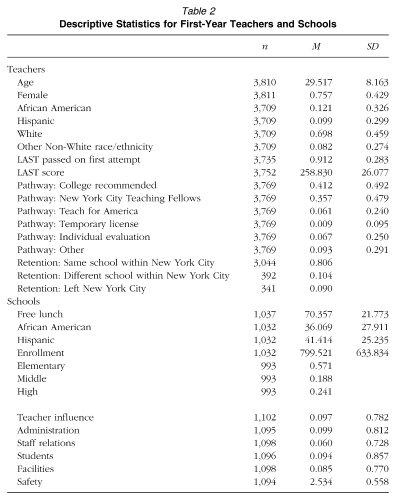
Using data on job assignments, we are able to create measures of teacher attrition, our dependent variable in the analyses below. Table 2 shows that 80% of first-year teachers who responded to our survey remained in the same school the following year, while 10% changed schools within New York City, and 9% left teaching in New York City. The same statistics for the full sample of New York City teachers (not shown in the table) are 82% staying in the same school, 8% switching schools, and 10% leaving the district.
Method
We use multinomial logistic regression to estimate the relationship between teacher and school characteristics and teacher retention decisions. The dependent variable is a three-level measure indicating whether in the following school year the teacher (a) stayed at the same school, (b) transferred to another school in New York City, or (c) left New York City schools. The models control for teacher background characteristics, including initial pathway into teaching, gender, ethnicity, age, whether the teacher passed the LAST exam on the first attempt, and score on the LAST exam. The models also include controls for school characteristics that might affect teacher retention—the proportion of students eligible for subsidized lunch, student ethnicity, grade level, and enrollment. After controlling for these teacher and school characteristics, we explore whether the school contextual factors are predictive of teacher retention decisions.
Our variables of interest are the six school contextual factors (teacher influence, administration, staff relations, students, facilities, and safety) derived from the survey of first-year teachers. We look at the contribution of each factor separately and then simultaneously include all six factors in the models. In the first set of analyses, we model the relationship between first-year teachers’ assessments of these school factors and their own retention a year later. We then use first-year teachers’ survey responses aggregated at the school level to model the retention of all teachers in New York City who did not fill out the survey. In other words, we use the evaluations of school working conditions by one set of teachers (first-year teachers) to predict the retention of other teachers at that school. As discussed above, in this way we remove the part of reporting error by first-year teachers that reflects individual satisfaction with teaching. Finally, we run a further check on the relationship between school context and teacher attrition by examining teacher responses on the follow-up surveys. Using basic descriptive statistics, we assess teachers’ responses to questions addressing why they left or why they considered leaving the schools that they were teaching in during the spring of their first year of teaching in New York City.
Results
Teachers’ Assessments of School Contextual Factors
As described above and in Table 1, we use first-year teachers’ survey responses to create six measures of school contextual factors: teacher influence, administration, staff relations, students, facilities, and safety. Each factor has a mean of 0 and a standard deviation of 1 and is the product of a principal components factor analysis that analyzes the total variance for each factor and not the common variance. Table 3 reports the correlations among the factors aggregated to the school level to create school-level averages. Not surprisingly, schools with more positive working conditions on one dimension also tend to have more positive working conditions on the other dimensions. The administration factor is particularly highly correlated with both the students and the facilities factors.
Correlations Between School Context Measures (n = 1,350)
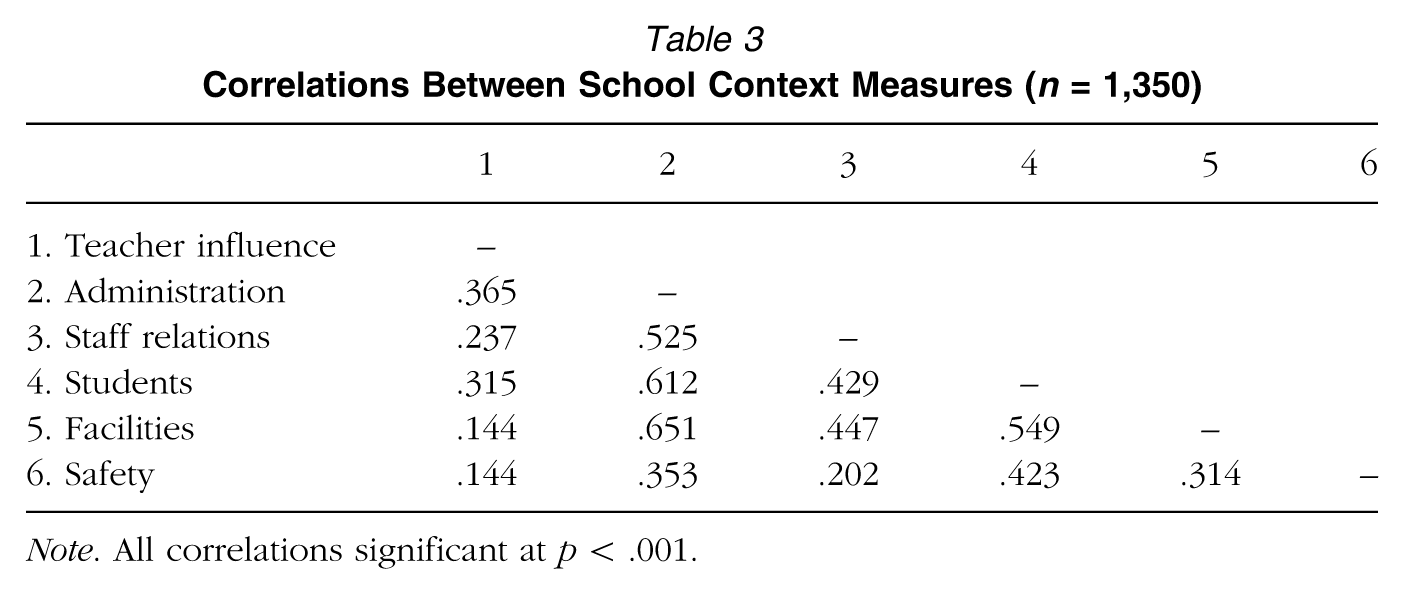
Note. All correlations significant at p < .001.
Table 4 gives the correlation between each of these measures and school characteristics. Each of the school characteristics is measured as a percentile within the distribution of all schools in the city that serve the same or similar grade range (elementary, middle, or high school). We use the within-level percentiles because of differences in the distribution of students across schools. We do not want to confound school level with student attributes in the interpretation of the correlations. By using the within-level percentiles we take out the differences across levels and focus on the relationship between the school contextual factors and school characteristics within each of the levels.
Correlations Between School Context Measures and School Characteristics by Level
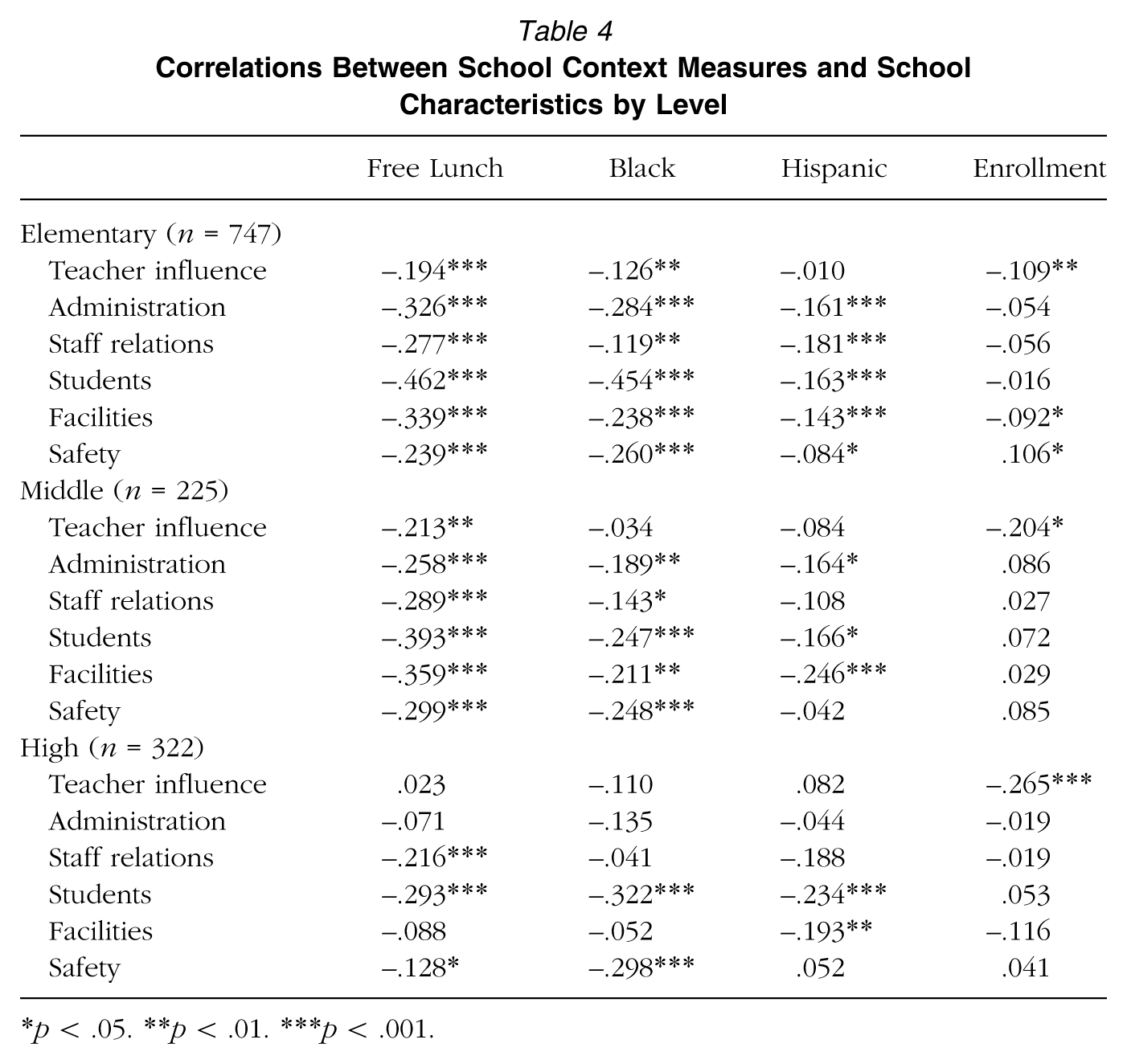
p < .05. **p < .01. ***p < .001.
Almost completely across the board, schools with a lower proportion of students eligible for subsidized lunch demonstrate strong teacher-reported working conditions. High schools are an exception to this pattern; however, the percentage of students eligible for subsidized lunch is an inaccurate proxy for poverty in high schools because the stigma associated with participating in this opt-in program might be greater in high schools than in elementary and middle schools. Generally, a similar pattern holds for schools, as measured by the percentage of Black students and Hispanic students—the greater the percentage of Black or Hispanic students at a school, the lower the average ratings of working conditions across the six factors. There are a few exceptions where the relationship between student ethnicity and perceived working conditions is not significant, such as the proportion of Black students and teacher influence in middle schools; however, the prevalence of common trends is striking. Significant relationships between school context factors and enrollment are less prevalent. Not surprisingly, larger elementary, middle, and high schools tend to have less teacher influence. Elementary schools with more students tend to have poorer facilities, according to the first-year teachers surveyed. Surprisingly, larger elementary schools appear to have more positive safety ratings. With the exception of teacher influence, the school context measures do not have a strong relationship with school size at the middle and high school levels.
School Contextual Factors and Teacher Retention
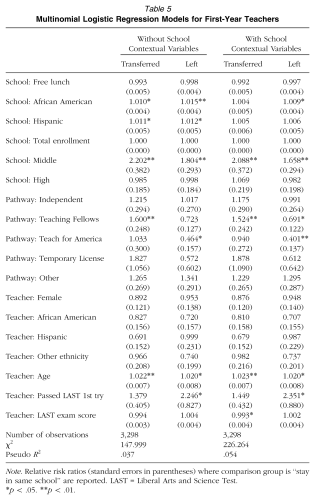
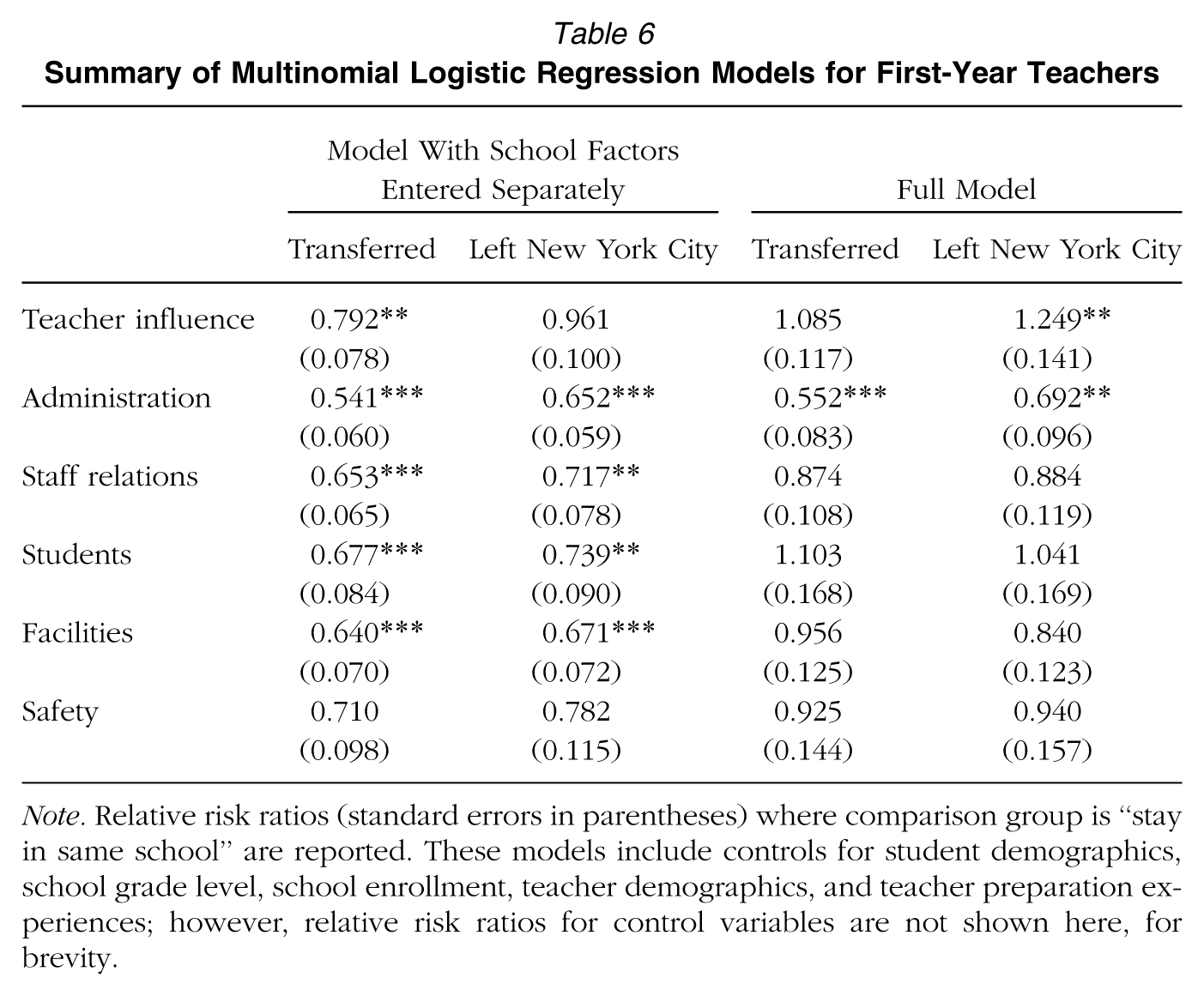
We use multinomial logistic regression to examine the relationship between the six school contextual factors and teacher retention decisions. Table 5 presents the results for first-year teachers with and without school contextual factors but including teacher characteristics and student demographics. Table 6 includes the estimates with each factor entered separately and a full model with all factors entered together. We present both sets of results because of the relatively high correlation among the measures of school context. Conceptually, the effects of these school context factors are not independent. For example, we might expect that effective principals are able to maintain a safe school environment. While conceptually there are concerns about a lack of independence, we statistically checked for multicollinearity among the school context factors by looking at how the odds of leaving change when all of the context measures are 1 standard deviation above, at, or below the mean. Odds were calculated as compared to a White, female teacher of average age who passed the LAST exam with an average LAST score and came from a college-recommended route who teaches at a school with the mean percentage of students receiving free lunch, mean percentage African American students, mean percentage Hispanic students, and mean school enrollment. We find no differences in the odds for 1 standard deviation above or below the mean and conclude that, while multicollinearity may be a conceptual concern, it is not a statistical problem. Tables 5 and 6 both report the results as relative risk ratios, the odds of transferring or quitting relative to the odds of remaining in the same school.
Multinomial Logistic Regression Models for First-Year Teachers
Note. Relative risk ratios (standard errors in parentheses) where comparison group is “stay in same school” are reported. LAST = Liberal Arts and Science Test.
p < .05. **p < .01.
Summary of Multinomial Logistic Regression Models for First-Year Teachers
Note. Relative risk ratios (standard errors in parentheses) where comparison group is “stay in same school” are reported. These models include controls for student demographics, school grade level, school enrollment, teacher demographics, and teacher preparation experiences; however, relative risk ratios for control variables are not shown here, for brevity.
p < .05. ***p < .001.
The base model with only teacher characteristics and student demographics shows that, consistent with prior research, teachers are more likely to leave schools with a higher proportion of Black and Hispanic students, both to transfer and to leave the district. NYCTF teachers are more likely to transfer across schools than are teachers from other routes, and teachers who passed the teacher certification exam on their first attempt are far more likely to leave teaching in New York City than are those who failed on their first attempt. Older teachers are also more likely to transfer to other schools and to leave teaching. The second set of columns in Table 5 show that once we control for school context factors (presented in Table 6) the coefficients on the proportion of Black students and on the proportion of Hispanic students drop meaningfully in magnitude. In addition, the point estimates are no longer statistically distinguishable from 1 (no effect) for the Hispanic student concentration and are only distinguishable from 1 for the Black student concentration for leaving New York City schools, not for transferring across schools.
Table 6 presents the results for specifications in which the six school context factors are added to the model, first separately and then simultaneously. All of the variables in Table 5 are included in the models reported in Table 6, but the relative risk ratios associated with these variables are omitted for brevity. When we add each school contextual factor separately to this model, we find that all of the factors except safety significantly predict teachers’ retention decisions. More specifically, in these estimates we find the effect of respondents’ perceptions of teachers’ influence is related to decisions of the respondent to transfer but not to leave teaching in New York City, while their perceptions of administration, staff relations, students, and facilities are related to both their decisions to transfer and to leave teaching. In all cases, the relationships are negative—that is, the more positively the teachers perceive these school contextual factors, the less likely they are to transfer to another school or to leave teaching altogether.
In the full model, including all six school contextual factors and the controls, the administration factor is the only one that significantly predicts teacher retention decisions after controlling for other school and teacher characteristics. Teachers who have less positive perceptions of their school administrators are more likely to transfer to another school and to leave teaching in New York City. A standard deviation increase in a teacher’s assessment of the administration decreases his or her likelihood of transferring by approximately 44% relative to staying in the same school and decreases his or her likelihood of leaving teaching in New York City by approximately 28% relative to staying in the same school. We use the coefficients in this model to predict the probability of a teacher transferring under different working conditions. For example, we estimate that if all the working conditions measures were average, a White, female teacher from a college-recommended route in a school with average student composition would have a 7.6% probability of leaving and a 10.0% probability of transferring. If the working conditions measures were 1 standard deviation above average, these probabilities would drop to 4.1% and 6.7%, whereas if the working conditions measures were 1 standard deviation below average, these probabilities would increase to 13.5% and 14.8%. Working conditions and, especially, administrative support account for large differences in attrition rates.
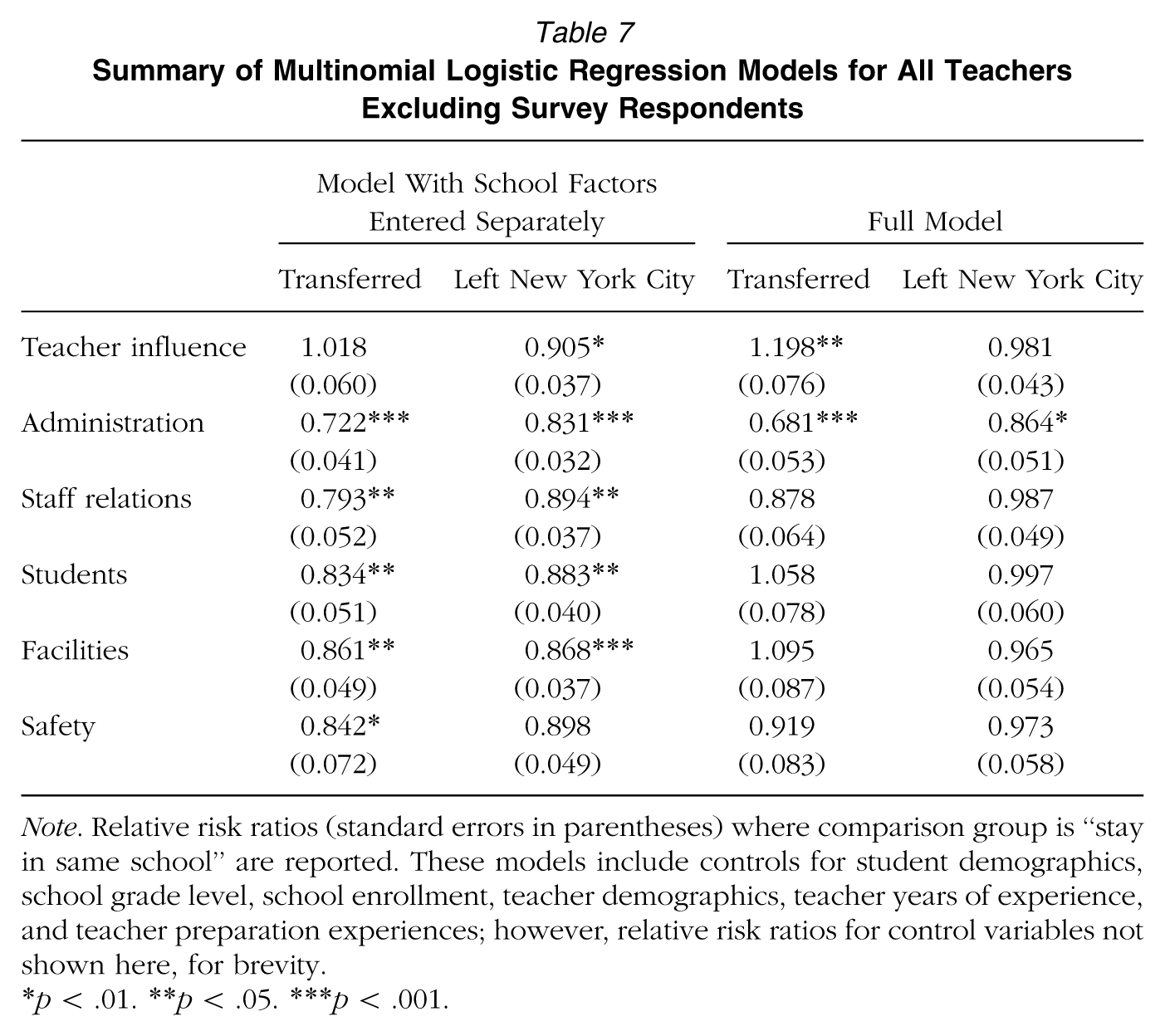
To separate the effects of these school contextual factors from teacher characteristics, we also predict the retention of all other teachers at the school, using the perceptions of the first-year teachers. More specifically, we use a school-level average for each factor, based on the first-year teachers’ survey responses to predict teacher retention decision for all teachers at the school, excluding the first-year teacher respondents. Table 7 presents these results and shows that, similar to our previous analyses, when each school contextual factor is included separately, the administration, staff relations, students, and facilities factors significantly predict decisions to transfer and to leave teaching in New York City. The more positive first-year teachers’ assessments of these factors, the more likely other teachers at the school are to stay. Unlike the results for first-year teachers, perceptions of teacher influence significantly relate to decisions to leave teaching but not to transfer within New York City, and perceptions of safety relate to transferring but not to leaving. In the model including all school context factors and controls, teacher influence is somewhat surprisingly positively associated with teachers’ decisions to transfer across schools. However, here again, administration emerges as the strongest predictor of retention relative to both transferring and leaving.
Summary of Multinomial Logistic Regression Models for All Teachers Excluding Survey Respondents
Note. Relative risk ratios (standard errors in parentheses) where comparison group is “stay in same school” are reported. These models include controls for student demographics, school grade level, school enrollment, teacher demographics, teacher years of experience, and teacher preparation experiences; however, relative risk ratios for control variables not shown here, for brevity.
p < .01. **p < .05. ***p < .001.
Teachers’ Stated Reasons for Leaving or Considering Leaving
The analyses presented above demonstrate that a teacher’s reporting of working conditions predicts his or her own attrition in the following year as well as the attrition of other teachers in the school. The support of administrators emerges as a particularly important factor in retention decisions. While this type of longitudinal analysis reduces potential biases resulting from self-reports of working conditions linked to concurrent self-reports of satisfaction or plans for the future—data that many previous studies have used (see, e.g., Ingersoll, 2001; Johnson & Birkeland, 2003)—it is worth comparing these results to teachers’ direct answers when asked why they left or why they considered leaving.
In surveys during the fall of 2005, we asked former teachers (who had left teaching after their first year, 2004–2005) why they left, and we asked current teachers (now in their second year of teaching) who indicated that they considered leaving their schools about factors that led them to consider leaving. Each group of teachers was asked four questions. The first asked them to indicate how important each of 12 factors was in their decisions to leave their 2004–2005 New York City teaching positions, using a 5-point scale ranging from not important to extremely important. (These factors are listed in Figure 1.) The second asked them to choose the one factor from this list that was their most important consideration. The third question asked them to indicate how important their dissatisfaction with each of 12 aspects of their job was in their decision to leave the New York City school where they taught in 2004–2005. (These aspects are listed in Figure 2.) Again, they were asked to rate each using a 5-point scale ranging from not important to extremely important. The fourth question was a follow-up to the third, asking them to choose the one aspect from this list that they considered the most important in their decision to leave.
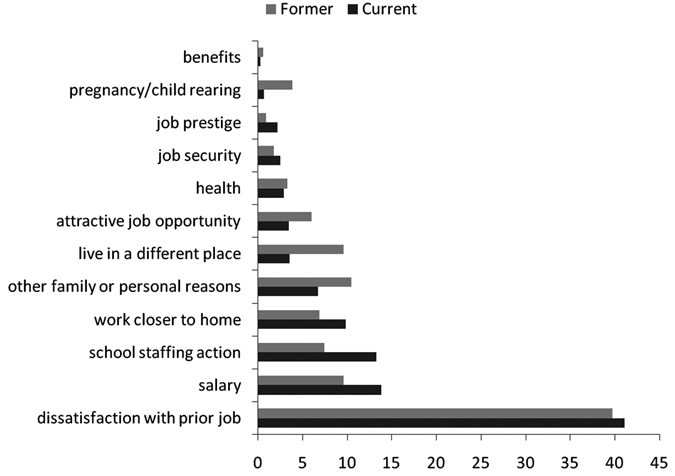
Most important factor in decisions to leave teaching for former (n = 386) and current (n = 1,587) teachers.
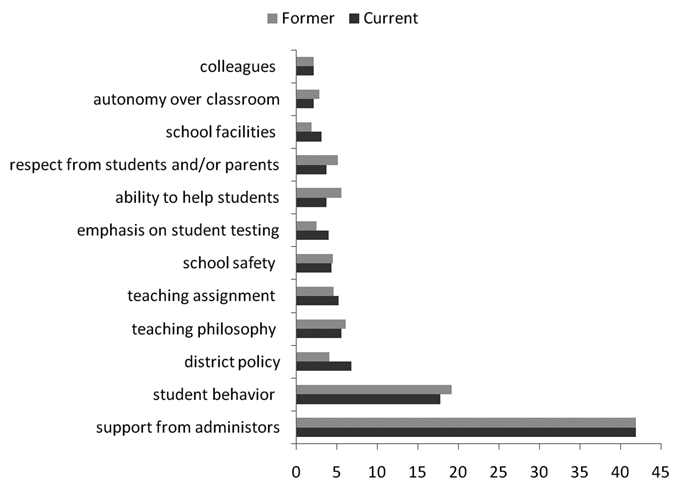
Most important aspect of job influencing decisions to leave teaching for former (n = 386) and current (n = 1,587) teachers.
Dissatisfaction with job is the main factor that teachers cite for leaving or considering leaving. Figure 1 shows that for both sets of teachers, dissatisfaction with their jobs is by far the most important factor, with more than 30% of both groups citing it as the most important reason for leaving or considering leaving. A fair number of former teachers also report the most important factor in their leaving was because they moved (living in a different place), because of other family or personal reasons, and because of other attractive job opportunities. These factors were not as important considerations for teachers who were still teaching but had considered leaving. The next set of questions provides further insights into this job dissatisfaction factor, unpacking which aspects of their jobs were particularly dissatisfying and influential in their decisions to leave.
Each set of teachers was asked what aspect of their jobs most influenced their decisions to leave or consider leaving. Figure 2 presents these results, and the dominance of dissatisfaction with administrative support is striking. Hardly any teachers cited dissatisfaction with colleagues, autonomy over the classroom, school facilities, respect from students and/or parents, ability to help students, emphasis on student testing, school safety, teaching assignment, teaching philosophy, or district policies as the primary reason for leaving or considering leaving. While a bit over 15% of both groups reported dissatisfaction with student behavior as the most important factor influencing their decisions to leave their schools, well over 40% of both groups identified dissatisfaction with the administration as the most important factor.
Other questions in the survey of former teachers also shed light on the importance of administrative support. In one question (not presented in the figures), former teachers on average indicated that they currently receive much more recognition and support from their administrators or managers than they had as teachers. Another set of questions asked the former teachers about the behaviors of their former principals. Fewer than 10% found their principals to be exceptional in communicating respect or appreciation for teachers, encouraging teachers to change teaching methods if students were not doing well, working with teaching staff to solve school or departmental problems, encouraging staff to use student assessment results in planning curriculum and instruction, or working to develop broad agreement among teaching staff about the school’s mission. Additionally, almost 20% of the former teachers reported that their principals never worked with staff to meet curriculum standards, and 30% stated that their principals did not encourage professional collaboration among teachers. Administration emerged as the main factor in teacher attrition in these surveys, just as it did in the analysis of actual attrition behavior above.
Discussion
Overall, teacher attrition may not be substantially higher than attrition from other professions (Henke, Zahn, & Carroll, 2001). However, attrition at some schools is very high—high enough to disrupt instructional cohesion and likely disadvantage students. Prior research has shown clearly that these high-turnover schools are likely to serve large populations of low-performing, non-White, and low-income students, just the students likely to be most in need of a consistent and supportive school experience (Boyd et al., 2005; Carroll et al., 2000; Hanushek et al., 2004; Scafidi et al., 2005). While this previous research has identified the problem, it has done less to clarify why there is higher turnover at these schools and to identify fruitful avenues for reform.
There are indications that working conditions, aside from those directly resulting from student composition, affect teachers’ career decisions. A relatively large literature has used cross-sectional data to link teachers’ self-reports of school working conditions to measures of their own satisfaction and plans for the future. This approach has the potential bias that less satisfied teachers will misrepresent school working conditions, and consequently the correlations between working conditions and satisfaction will reflect only reporting bias and not true working conditions. A set of studies using the SASS has estimated the relationship between self-reported working conditions and attrition (see Grissom, in press; Ingersoll, 2001; Weiss, 1999), but even there, lack of controls for inaccurate self-reporting may bias the findings.
This study uses first-year teachers’ reports of working conditions to assess the effect of working conditions on the turnover behavior of other teachers in the school. Since the reporting teachers and the teachers for whom we model turnover are not the same, we reduce the problem of self-reporting bias that is correlated with career decisions. We also triangulate our findings with teachers’ own reports, in a follow-up survey, of why they left or considered leaving. While we address multiple measures of school context—including teachers’ influence over school policy, the effectiveness of the school administration, staff relations, student behavior, facilities, and safety—the results of both analyses point to the importance of working conditions and particularly of administrative support in teacher retention.
The importance of administration and school leadership is not surprising. A substantial research literature provides evidence that school leaders matter for teachers and students. While only a small body of research links principals directly to student achievement (Branch, Hanushek, & Rivkin, 2009; Hallinger & Heck, 1996), a much larger research base documents principals’ effects on school operations through motivating teachers and students, identifying and articulating vision and goals, developing high performance expectations, fostering communication, allocating resources, and developing organizational structures to support instruction and learning (Knapp, Copland, Plecki, & Portin, 2006; Lee, Bryk, & Smith, 1993; Leithwood et al., 2004). Principals also affect the instructional quality of schools through the recruitment, development, and retention of teachers (Harris, Rutledge, Ingle, & Thompson, 2010).
It is also not surprising that working conditions explain at least part of the higher attrition of teachers serving non-White, low-performing, and low-income students. First, school leaders are subject to many of the same labor market dynamics as are teachers. Loeb, Kalogrides, and Horng (in press) find, for example, that principals express preferences for schools with higher performing students and lower concentrations of students in poverty and that principals, like teachers, move toward these more desirable schools when given the opportunity. In addition, the job of principal is likely to be more difficult in these difficult-to-staff schools with higher teacher turnover and greater accountability pressures. Thus, schools with high proportions of low-income, non-White, and low-performing students tend to have principals who are in less demand, such as new principals (Loeb etal., in press).
In many ways, the importance of working conditions separate from student-body characteristics is good news from a policy perspective, since it is the job of schools to serve all students, but other working conditions are amenable to policy change. This study suggests that policies aimed at improving school administration may be effective at reducing teacher turnover. How to improve school leadership is a more difficult question. Current reforms aim to recruit high-potential leaders, provide apprenticeship experiences for prospective leaders, and to provide supports for principals while in the job. Improving administrative support in high-turnover schools in particular may require both more effective leaders, overall, and incentives (not necessarily monetary) so that administrative positions in these schools become more appealing.
This study is clearly just a step in understanding the role of administration and of school context, more generally, in teacher career decisions. It is imperfect in many ways. In particular, while we provide evidence that the school administration is an important factor in teacher retention decisions, our data do not provide enough richness about the role of administration to determine how or why administrative support affects teachers, nor do the data allow us to identify clear policy levers for reform. For example, one of the survey items asked teachers to rate the statement: “The school administration’s behavior toward the staff is supportive and encouraging.” Perhaps they consider “supportive and encouraging” administrators ones who promptly respond to teachers’ requests for classroom supplies or maybe ones who effectively handle student discipline issues. Additionally, what teachers consider “supportive and encouraging” may vary—for one teacher it may be being generally left alone and trusted with autonomy, while for another it may be administrators who frequently visit the classroom and provide feedback on instruction.
Follow-up studies are necessary to investigate why administrative support is important to teachers and what in particular the administration does or does not do that influences a teacher to stay or leave. There is also a need to investigate other school contextual factors not included in this study that are likely to be important to teachers—such as teachers’ opportunities for collaboration, staff development, teacher autonomy, and school neighborhood characteristics. In addition, this study does not address the relationship between teacher retention decisions and teacher quality. Future research that allows for the investigation of this link will contribute to a better understanding of the factors that influence teacher career decisions.