







Abstract
This study focuses on the substitute labor market in Michigan and how substitutes navigate it using a survey of a random sample of the population of substitute teachers and interviews with district administrators, principals, and substitute teachers. Leaders in varied locales and contexts report increasing problems with substitute coverage and teacher absenteeism and leveraged higher pay and community connections to address it. Substitute survey and interview data find that the most important factors in attracting and retaining substitute teachers are pay, flexibility, working conditions, the psychological rewards of teaching, and support or respect. Findings point to a segmented substitute labor market, with highly varied preferences for flexibility and pay, and suggest important parallels and differences compared with teacher labor markets.
Keywords
Introduction
Substitute teachers play a critical role in the functioning of schools, yet the role of substitutes in the education labor market has attracted little attention to date compared with the role of teachers. In part, the need for substitutes reflects the problem of teacher absenteeism, with teachers out of the classroom on average 11 days a year (Joseph et al., 2014). However, even in districts with lower-than-average rates of teacher absenteeism, schools require a ready supply of available substitute teachers to accommodate personal and workplace obligations that require teachers to miss classroom time (Gonzales, 2017). Unlike many other jobs, a classroom cannot function without a suitable replacement. Without one, schools must resort to other classroom coverage strategies, such as reassigning other staff (e.g., interventionists, paraprofessionals, and administrators) to provide classroom instruction or redistributing students across other teachers’ classrooms. Resorting to these strategies can negatively affect students and staff. Students miss crucial continuity of instruction, and by providing classroom coverage beyond their regular obligations, staff are dedicating significant energy and resources that otherwise could be directed to more productive ends (Burroughs et al., 2019; Henderson et al., 2002; Zuo et al., 2023). Despite the role of substitutes in the functioning of schools, little data and few rigorous studies elaborate the supply, demand, or impact of substitutes (Reupert et al., 2023).
The importance of substitute teachers is well known among K–12 leaders. In a nationally representative survey of principals, Zuo et al. (2023) found that the strongest concern about staffing shortages by far was the availability of substitute teachers, not teacher vacancies. These concerns are corroborated by national data that show a substantial decline in the number of substitutes. According to the National Center for Education Statistics (2024), the number of substitutes declined nearly 34% from 2016 to 2022, dropping from 535,540 in 2016 to 353,390 in 2022. Michigan represents one typical case where the number of substitute teachers has declined, and a number of stakeholders in the state have sounded the alarm in recent years. Survey results from a sample of Michigan districts in 2019 indicated that the majority of respondents (64%) reported being unable to find enough substitutes multiple times a week (Burroughs et al., 2019). Additionally, since at least late 2016, Michigan teacher preparation programs (TPPs) and districts have begun to report a substitute teacher shortage (Higgins, 2016). For years, the Michigan Department of Education's (MDE’s) Critical Shortage List included substitute teachers in all content areas and at all grade levels for multiple districts (Michigan Department of Education, 2019).
To our knowledge, there is no research that helps explain the root causes of the recent and substantial declines in substitutes. There are only theories that require further investigation. One theory is that substitute teachers are increasingly being tapped to fill full-time teaching positions and vacancies despite lacking the appropriate certifications. For example, according to data from Michigan's Office for Educator Excellence, more than 2,500 Michigan classrooms were led by long-term substitutes who were not certified teachers in 2018–19, which represented a 10-fold increase since 2013 (Wilkinson & French, 2019). Thus, substitute supply could be adversely affected by increases in teacher vacancies. Other theories that require empirical validation are that the position of substitute teaching has become less attractive to past and prospective substitutes over time, because (a) other jobs that are similarly contingent in nature have become more attractive relative to substitute positions, (b) there is lower interest in teaching in general (Kraft & Lyon, 2024), and (c) schools have increasingly difficult working conditions, making substitutes more selective about whether and where to work.
Because the substitute labor market and employment practices are necessarily local, we have focused our research on one state—Michigan—where a perceived substitute shortage has been a salient issue. Using a mixed-methods approach and leveraging primary and secondary data from surveys, administrative records, and interviews with district administrators, school principals, and substitute teachers, we asked the following research questions:
How did school and district leaders understand, explain, and respond to declines in substitute quantity and retention?
Why do substitute teachers choose these jobs, and how/why do these choices vary?
What features of the substitute teaching job and organizational working conditions of schools are most challenging and why?
How do substitute teacher preferences for features of the job and working conditions in schools influence their job/assignment decisions?
Literature Review
The substitute teacher research literature is decidedly sparse, as recent scholars have noted (Kraft et al., 2022; Reupert et al., 2023; Topchyan & Woehler, 2021). Although much prior literature was produced by and for practitioners (Boyer, 1998; Cardon, 2002), past upticks in substitute teacher research seem to have occur alongside periodic attention to apparent teacher shortages, including during the mid-1980s (Clifton & Rambaran, 1987) and the turn of the millennium (Dorward et al., 2000; Griswold, 2001; Weems, 2003).
Literature focused specifically on substitute teacher preferences and labor markets is even rarer and is exploratory, employing convenience sampling or focusing on districts as cases. For instance, Strauss and Strauss (2003) estimated teacher absentee rates and substitute coverage rates for the 2001–02 school year through a review of state administrative data and surveys sent to district leaders, teachers, and substitutes in 102 southwestern Pennsylvania districts. They found that teacher absenteeism rates had increased by “at least 8.5% to 9%” (pp. 2–3). Researchers reported issues with low pay, long commutes, and limited teaching experience. Substitute survey respondents indicated that the top five most important characteristics of an assignment were daily pay (39.7% of respondents), advancing professional career (15.4%), discipline in school (9.6%), safety in school (7.1%), and availability of health benefits (5.87%).
Coverdill and Oulevey (2007) interviewed 30 substitute teachers in 2003 to study substitute teacher preferences and how assignments were filled. The researchers found that substitutes’ motivations included exploring or preparing for a full-time teaching career, work schedule control and flexibility, and a desire to work with children in a familiar setting. Some substitutes leveraged their relationships with teachers, in effect, to “game” the assignment system to obtain assignments that they found more favorable. This indirectly pointed to their preferred working conditions: Substitutes obtained assignments through teacher colleagues because this method greatly reduced the three “tribulations” substitutes might otherwise face in accepting a purely automated assignment: uncertainty about the degree of teacher, school, and classroom organization and preparation, the unpredictable and disruptive behavior of unruly students, and the absence of respect and recognition for their work.
Using a quasi-experimental design, Gershenson (2012) used substitute assignment data from a randomized automated calling system to model the determinants of substitute acceptance decisions. He found that higher-paying jobs were generally preferred to lower-paying shorter jobs and that nonwage characteristics such as commute time, school type/quality, subject, day of the week, and timing of the offer all significantly affected acceptance probability. While methodologically rigorous, this study did not assess the logic behind these decisions, such as how substitutes might weigh tradeoffs among factors (e.g., pay rate vs. commute time) or the relative importance of different factors depending on the individual or organizational context.
These findings are consistent with more recent research. In the only systematic review we could locate, Reupert et al. (2023) identified, reviewed, and synthesized 31 pertinent research publications from 2010 to about 2023. According to their review, substitutes were less likely to accept assignments in schools serving low-income families and students with special needs. They preferred assignments where they felt supported and respected by students, teachers, and administrators, finding the presence (or not) of positive relationships with these groups to be a determinative factor in deciding which assignments to accept. Relatedly, substitute experiences within the classroom focused on issues with student behavior, challenges in developing relationships with students, and struggles with implementing curriculum. Finally, examining experiences as members of school communities, they reported feelings of marginalization and surveillance as well as the quality of staff relationships in the school as important themes. They concluded in part that the degree of choice in the substitute labor market might affect how positively the job is experienced, with those choosing it for flexibility being more satisfied than those with more constrained choices, such as being unable to find other forms of employment.
Finally, two recent rigorous studies of substitutes’ decision making used district case studies to examine substitute coverage, preferences, and the impact of pay. First, Liu et al. (2022) used administrative data in addition to surveys of teachers and substitutes to investigate substitute teacher coverage and preferences. They found that half of schools in a large urban district in California consistently failed to find substitute teachers when needed. Substitutes failed to cover teacher absences in 7.5% of cases, with statistically significantly lower fill rates in high-minority, high-poverty, and lower-achieving schools. Survey evidence pointed to two key factors driving discrepancies among school fill rates—namely substitutes’ preference for schools with fewer challenges managing student behavior and those with stronger administrative support. Michigan has similarly struggled with substitute coverage. 1
Second, Kraft et al. (2022) conducted quasi-experimental research assessing the impact of a targeted bonus-pay program to incentivize substitutes to accept assignments in a group of Chicago public schools with low fill rates, demonstrating that school characteristics such as student demographics and achievement are deterministic of substitute choices but can be mediated by increases in pay. To evaluate the impact of an incentive intervention, these authors used a regression discontinuity design and found that increased substitute incentive pay helped close the yawning coverage gap and even marginally increased student achievement in the most racially segregated high-poverty schools with historically low coverage rates.
Despite the methodologic power of recent studies, this line of work remains an evolving project. At least one throughline appears: Researchers and practitioners seem to conceptualize substitute teachers as fundamentally a subset of the regular teacher labor market, and yet, at the same time, the undeniable distinction between radically differing employment relationships—contingent or not—shapes the decisive labor market supply and demand determinants.
Conceptual Framework: Contingent Work and Motivation to Substitute Teach
Research on contingent workers has suggested that they comprise roughly 10% of workers in Europe and the United States (Retkowsky et al., 2023). To clarify and classify different jobs and employment patterns, economists at the Bureau of Labor Statistics proposed a definition of contingent work as “any job in which an individual does not have an explicit or implicit contract for long-term employment or one in which the minimum hours worked can vary in a nonsystematic manner” (Polivka & Nardone, 1989, p. 11). The economists proposed two main characteristics of contingent work: job (in)security and variability/unpredictability of hours. Contingency is mainly defined as on-demand employment, in which there is no explicit or implicit commitment for long-term employment between the employee and employer—there is a reasonable degree of uncertainty about its continuation even if the job lasts for long periods of time (Polivka & Nardone, 1989). Second, contingent work is characterized by the idea that the number and timing of hours can be changed by either the employee or the employer.
Importantly, both employers and employees may have reasons to prefer (or not prefer) contingent work. Employers’ reasons vary from reducing costs, being able to cover certain functions when unplanned circumstances arise, their inability to attract qualified permanent workers, and using contingent arrangements to screen prospective candidates before entering more permanent arrangements (Polivka & Nardone, 1989). However, although workers may dislike features of contingent work and be forced to accept them, some may prefer these arrangements because they need flexible schedules due to personal commitments (e.g., school or child or elder care), being uncertain of commitment to a field, and using these jobs as sources of supplementary income (Polivka & Nardone, 1989). Reviews of contingent work research characterize these motives as push/pull factors, highlighting the need for more research on person/career fit—understanding how jobs align with needs and values (Retkowsky et al., 2023).
These characteristics of contingent work—including the reasons why employers and employees like or dislike these arrangements—are crucial to consider when determining whether, where, and why substitute teachers work. For example, a college student who wants supplementary income and is exploring teaching may prefer contingent work because of its flexibility, whereas someone who relies on substitute teaching as their main source of income may have very different motivations and preferences. As we point out in the next section, it is also unclear to what extent employee motivations that are typical in the teacher labor market are similar or different compared with substitute teachers.
Motivation to Teach: What Are Substitute Teacher Preferences?
Research on teacher labor markets has pointed to multiple reasons why teachers are attracted to the job and stay or leave their positions. While there is extensive research on the causes and effects of teacher mobility and turnover, there has been little effort to integrate substitutes within this framework or consider how contingent work theories may differentially shape motivation. Although some K–12 teachers (particularly teachers of color) choose to work in high-poverty schools because of a humanistic commitment to low-income students or students of color (Achinstein et al., 2010), most have strong preferences about where they teach, electing to work near where they grew up, in districts similar to those they attended (Boyd et al., 2005), or in high-achieving schools (Boyd et al., 2010). These preferences systematically disadvantage urban high-poverty school districts. Districts with high-poverty/high-minority and low-achieving students often have the least effective teachers because those schools often have higher turnover, offer lower salaries, and have much more challenging working conditions (e.g., Goldhaber et al., 2015; Holme et al., 2017; Lankford et al., 2002; Loeb & Reininger, 2004).
The inequitable effects of teacher mobility among schools and districts might be extended to the operation of substitute teacher labor markets, but evidence is needed to substantiate this. For example, substitute pay is not subject to collective bargaining, and substitutes are typically not offered a benefits package, meaning that district administrators could be more flexible about substitute compensation. There is also much more daily job variation and choice for substitute teachers. Typically, on entering the pool of available substitutes, prospective substitute teachers are free to accept or reject assignments on a case-by-case basis. There is some evidence that substitutes’ preferences for certain kinds of assignments parallel those of regular teachers. For example, Gershenson (2012) found that factors such as school quality, commute time, and pay were strongly related to acceptance of a placement offer—all factors that are affected by the relative resources of wealthy districts compared with low-income districts, with higher-income districts typically having an advantage in terms of perceived working conditions and pay (Guarino et al., 2011). To the extent that prospective substitutes live in more advantaged areas where workers can afford to work on a contingent basis (e.g., stay-at-home parents, higher-income retirees, and those with working partners), low-income schools may be further disadvantaged by having to recruit substitutes that face longer commute times. However, there could be important differences. It is possible that substitute teaching for residents in lower-income neighborhoods is more accessible and appealing because of its flexibility and because there are fewer barriers to entry compared with becoming a fully certified K–12 teacher.
Finally, it is less clear why substitutes enter teaching and whether/how this varies. Whereas K–12 teachers typically enter teaching because of the psychic rewards they expect or experience from helping students and families (Johnson et al., 2004; Lortie, 1975), we do not know the extent to which these motivations are similar for substitute teachers. Some substitute teachers may be more motivated by flexibility (e.g., leisure time and schedule constraints) and could be more open to other jobs depending on economic and personal factors—particularly because these jobs do not offer stability and job security. In contrast, recent work has suggested that others use substitute teaching as a pathway into teaching—one case study of a midsized urban district showed that 16% of all newly hired teachers in 2023 were substitutes in the district (Kistler et al., 2024). More research is needed to understand these nuances in the substitute teacher labor market.
Methods
We designed a mixed-methods study using a “triangulation design: convergence model” (Creswell & Plano Clark, 2007, p. 63) that involved collecting both qualitative (interview) and quantitative (survey) data in the same timeframe and then comparing the separate results from each dataset. Doing so allowed us to understand both the prevalence of phenomena (quantitative) and why/how perspectives varied depending on the context (qualitative).
Policy Context
There were several contextual policy factors that could have affected substitute supply and demand in recent years. First, the federal government allocated nearly $200 billion in Elementary and Secondary School Emergency Relief funds to K–12 education (Addonizio, 2021). This helped districts in terms of flexibility to spend the Elementary and Secondary School Emergency Relief funds on personnel, including substitute teacher pay. To address noted struggles with substitute supply, Michigan reduced educational requirement qualifications from 90 to 60 credit hours in 2018, passed a state law in 2021 allowing school support staff with a high school or equivalent degree to substitute teach, and in 2023 allowed retirees to be employed in a district without waiting 9 months. As in teacher labor market policy, some of these changes prompted debates about sacrificing substitute quality for quantity.
Quantitative Data Collection: Substitute Survey
We conducted a randomized survey of individuals who had served as substitute teachers in Michigan public schools during the 2018–19, 2019–20, and 2020–21 school years. Information on Michigan's substitute teachers and assignments was drawn from the MDE Registry of Educational Personnel data. Districts are required to report information on all educational personnel to the Center for Educational Performance and Information annually, including their assignment type and how the position was funded. The dataset included all assignments explicitly classified as substitutes (i.e., the assignment code was 00SUB, day-to-day or short-term substitute teacher) as well as assignments whose funded position status indicates that the assignment was not a regular filled position (i.e., a long-term substitute). The MDE Registry of Educational Personnel dataset included all unique substitute assignments reported by districts, along with a personnel identification code. The data included information on demographic characteristics; thus, we were able to compare the demographic characteristics of the survey respondents with those in the substitute teacher population.
The survey was conducted in the spring of 2023, with recipient contact information acquired from the Center for Educational Performance and Information. From 36,144 individuals who held substitute assignments during these years with valid contact information, 4,969 were randomly selected and invited to complete the survey. The bounce/opt-out rate was 5.4%, so 4,700 invitations were successfully sent. A required screener question ensured that only individuals who ever worked as a substitute teacher in a K–12 school in Michigan were able to complete the survey (13 deemed ineligible). After data cleaning, there were 525 valid and complete responses, comprising both current and former substitutes. This represents a response rate of 11.1%, a comparable level to many post-COVID opinion surveys. The respondent pool closely reflected the characteristics of the state's substitute population along most dimensions, being predominantly White (82%) and female (72%; see Table 1). However, the respondent pool skewed older—a small number of substitutes were 18–24 years of age (1%) compared with the sample universe (19%).
Demographic Characteristics (Race, Gender, Age, Education) of Individuals Assigned as Substitute Teachers in Michigan in the 2018–19, 2019–20, and 2020–21 School Years
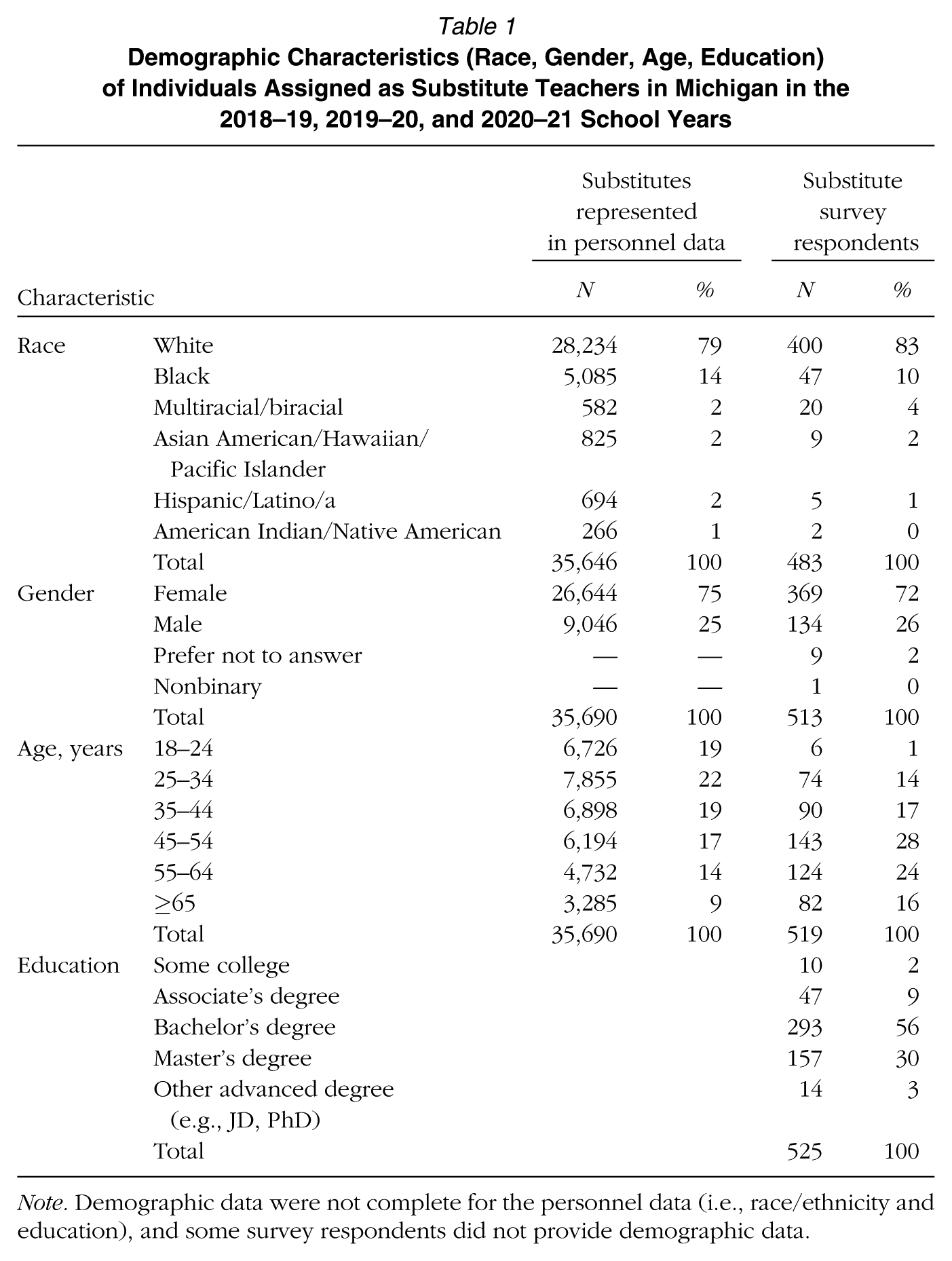
Note. Demographic data were not complete for the personnel data (i.e., race/ethnicity and education), and some survey respondents did not provide demographic data.
Qualitative Data Collection: Substitute Teacher, District Leader, and Principal Interviews
When the substitute survey was distributed, participants were asked if they would be willing to participate in a follow-up interview, and 148 Michigan-based respondents volunteered to be contacted for such a follow-up interview. They provided their preferred contact information along with the name of the district(s) in which they worked, and 20 interviews were conducted. Interviewees were all substitute teachers who had worked in Michigan in the 2022–23 school year. They were offered a $50 gift card for participation in a 60-minute semistructured interview about their experiences with substitute teaching. Interviews were transcribed and uploaded to Dedoose qualitative data software for analysis.
Interview protocols asked participants questions about their work history, decisions to substitute, experiences with subbing, perceptions of working conditions, and how they made decisions about where to accept (or not accept) assignments. Protocols were designed to first ask open-ended questions about participants’ experiences so as not to be leading and to allow perceptions/experiences that were salient to the participant to emerge. However, the protocol also included categories of possible probing follow-up questions that were aligned with preexisting constructs in the literature/surveys (e.g., perceptions of compensation/working conditions) and the conceptual framework to make cross-case comparisons for issues of known salience possible.
When recruiting the 20 interviewees from the list of volunteers, we aimed for maximum variation sampling, contacting substitute teachers who varied in terms of their race, gender, type of assignment (e.g., daily vs. long term), personal background (e.g., retiree, prospective teacher, student, stay-at-home parent, etc.), and the type of district worked in (see Table 2).
Substitute Teacher Interview Demographic and Assignment Characteristics
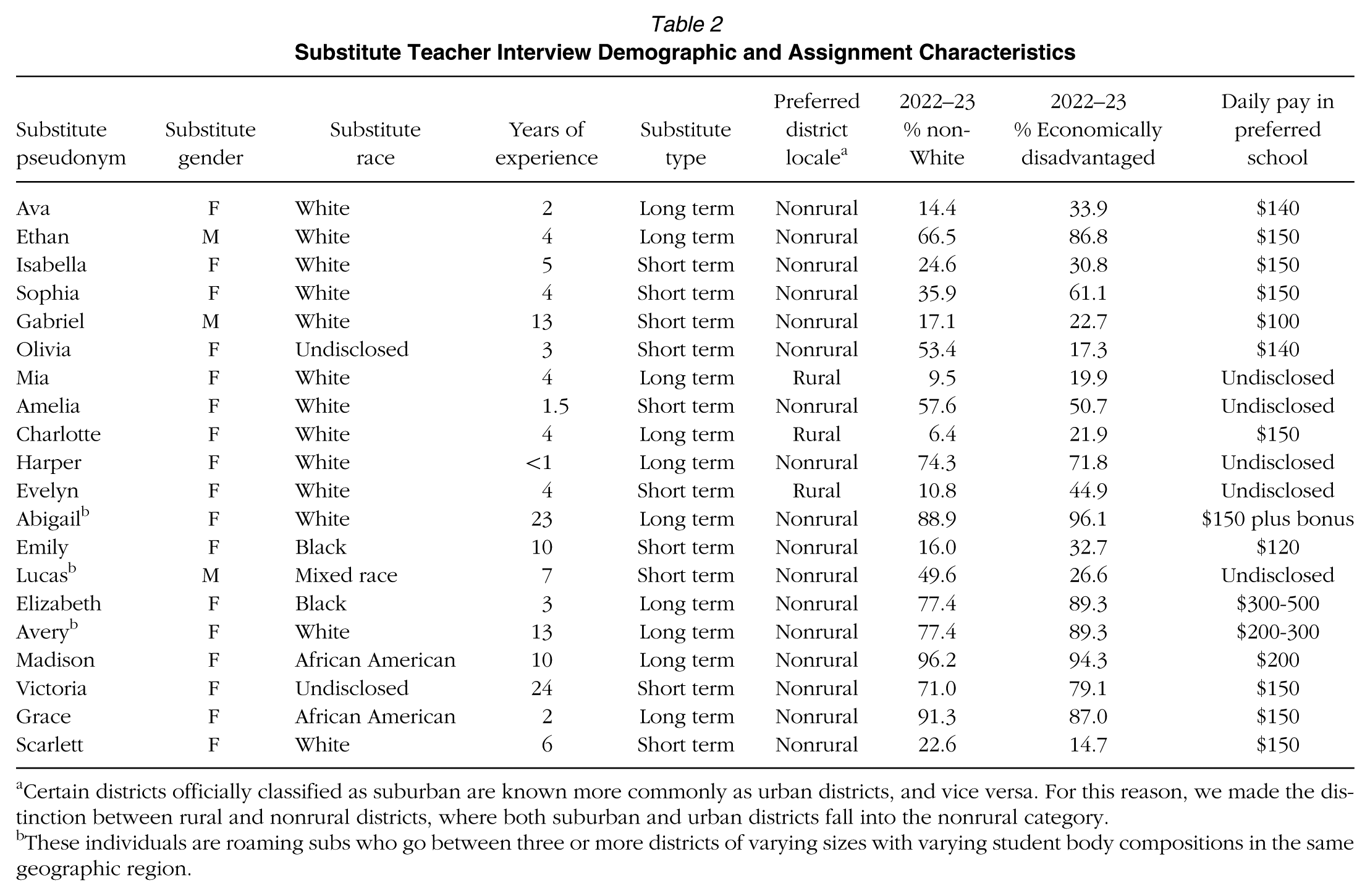
Certain districts officially classified as suburban are known more commonly as urban districts, and vice versa. For this reason, we made the distinction between rural and nonrural districts, where both suburban and urban districts fall into the nonrural category.
These individuals are roaming subs who go between three or more districts of varying sizes with varying student body compositions in the same geographic region.
Maximum-variation sampling involves identifying “widely varying instances of [a] phenomenon” (Merriam & Tisdell, 2016, p. 98) such that categories, themes, patterns, and variations could be explained and emerge out of heterogeneity (Patton, 2015). For example, prior literature and experience suggested that substitute teacher preferences for assignments might vary depending on their personal circumstances, motivations, preferences, and location (Gershenson, 2012). To achieve maximum variation, we paid attention to variation during data collection in terms of individual characteristics and organizational factors such as preferences for pay, flexibility, district/school type, and so on as each interview was conducted.
There was initially less variation along the lines of the race of substitutes and where they worked (e.g., most worked in high-income districts and were White). At this point, we contacted substitutes who worked in lower-income districts, yielding interviews with substitutes who varied in terms of race, age, gender, and district type. We continued interviewing until data were saturated (Merriam & Tisdell, 2016), which involves sampling a highly varied range of participants until the responses received to common interview questions yield both similar patterns and reasons for differences across the sample. This allowed us to test what substitutes liked or disliked about their jobs, why they would or would not work in districts with difficult working conditions, and how working conditions and pay mattered depending on the context.
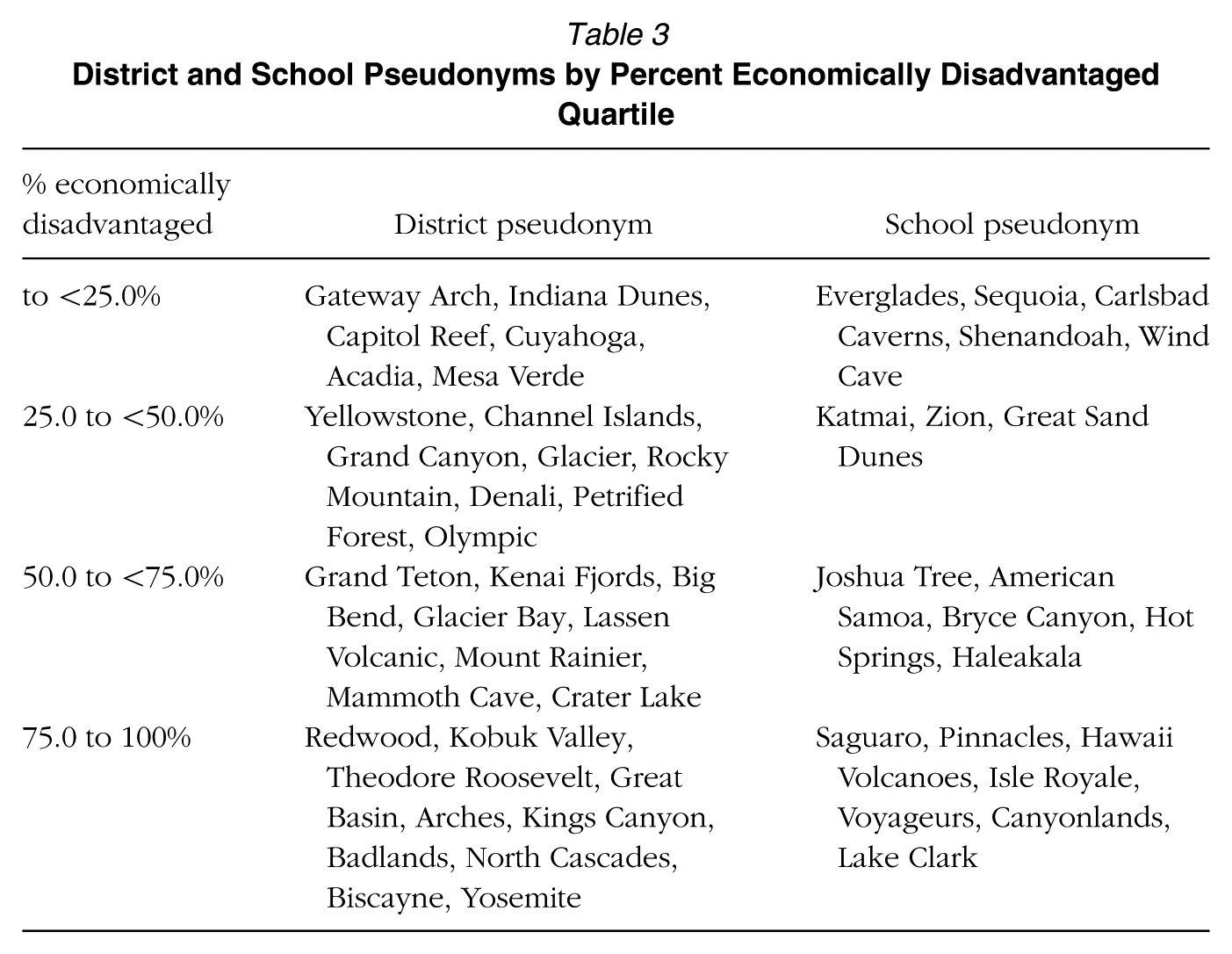
We also drew on interviews conducted with 32 district administrators, including superintendents and human resources leaders who were closest to the hiring and staffing data/processes, and 20 building principals about their experiences with the substitute labor market (see Table 3). We similarly used maximum-variation sampling, interviewing leaders in districts serving a variety of students that varied widely in terms of socioeconomic status, race, and geography (i.e., rural, suburban, and urban) until we achieved saturation. For instance, Table 3 shows wide variation in the socioeconomic status of each school or district.
District and School Pseudonyms by Percent Economically Disadvantaged Quartile
The beginning of the data-analysis process involved reading the transcripts for data familiarity and initial memoing about substitute characteristics and preferences. The first round of coding for substitute interviews was deductive, and 21 codes were developed based on the categories of questions and the study's conceptual framework (e.g., preferences for flexibility, district type, and orientations toward contingent work). This allowed us to reduce the most important data in alignment with the study's research questions (Deterding & Waters, 2021). Two researchers coded transcripts until interrater reliability of coded excerpts and code definitions was achieved. At this point, one team member coded the remainder, collaborating when necessary on uncertain cases. Although codes varied, the same process was used for the analysis of leader interviews, focusing on perceptions of teacher supply and coverage.
The second round of coding involved organizing first-round codes aligned with the study's research questions (e.g., how they made decisions to substitute, challenges, and placement decision making) into an Excel matrix with rows as participants and columns as codes. At this stage, we used pattern coding (Saldaña, 2015) and thematic analysis (Lochmiller, 2021) to surface important categories and relationships. For example, the first cycle of coding identified compensation both as a challenge to subbing and of varied importance to decision making about where to substitute. Thus, pattern codes (e.g., high, moderate, and low pay dependency) were assigned to explain the differences in perceptions of pay and its role in their decision making. To categorize individuals’ level of pay dependency, those who prioritized working conditions and said that the level of pay was not important for their decisions for where to work were categorized as low pay dependency, whereas those who made decisions about where to work primarily based on pay and regardless of difficult working conditions were categorized as high pay dependency. Themes and thematic statements were generated to answer research questions by examining patterns and variations within and across the codes/categories (Lochmiller, 2021).
Results
Leaders’ Perspectives on the Quantity, Quality, Recruitment, and Retention of Substitutes
We interviewed district administrators and principals across the state of Michigan in a variety of contexts (e.g., urban, rural, and suburban) about staffing shortages, including their perceptions about substitute teachers, changes in the substitute teacher labor market, and how they were impacted by and responded to those dynamics. Their perspectives provided crucial context for understanding the substitute teacher labor market because these leaders were responsible for substitute staffing, recruitment, and retention, and they saw the impacts on instruction and operations firsthand.
In terms of changes in quantity, quality, and retention of substitutes in recent years (Research Question 1), district and school leaders often reported that finding a substitute for a vacancy was something they struggled with daily and took a toll on the climate and culture of the buildings faced with the vacancies. Although some leaders pointed to the pandemic as worsening the substitute market, others reported that the substitute market had been challenging for years. A principal at Voyageurs, a high-poverty rural school, explained that they have “always struggled to get subs,” suggesting that securing substitutes was hard even before the pandemic. This account aligns with research prior to the pandemic, where Michigan's district administrators were already reporting acute challenges with finding substitutes (Burroughs et al., 2019).
A leader in Yosemite, a midsize urban district, likened the problem to how “crabs have disappeared [from some nice restaurants],” and added, “It’s the same with substitutes.” When asked about fill rates, or the number of times that a sub position needed to be filled but was not, the district administrator of North Cascades explained: “Six years ago, I could actually get substitute teachers. [Today] I can barely, my fill rate is like 10%. I cannot even get subs now.” These leaders reported that subs were not just hard to find, they were also hard to keep, as the school leader of Pinnacles explained: “So, as I said, all those lower-level positions have the highest turnover. So paraprofessionals, substitute teachers.. .”
Leader interviews highlighted common explanations for why this was the case and underscored substitute teachers’ preferences and motivations for whether and where to work (Research Questions 3 and 4). Their experiences surfaced several common patterns/explanations for difficulty finding substitutes: increased teacher absenteeism post-COVID, difficulty finding substitutes through the third-party system, difficulty staffing on specific days (especially Monday and Friday), and changes in the broader teacher labor market that affected who is available to substitute teach.
Increased Teacher Absenteeism
Responses from district leaders about substitute supply highlighted the fact that—compared with teacher labor markets—needs are much more dynamic and fluctuate on a weekly basis depending on teacher absences. Several leaders noted increases in teacher absences over the years. For instance, the district administrator of Kobuk Valley said that there were significant increases in teacher absences due to “stress” in recent years because teachers “[are] dealing with students who have had traumatic experiences as a result of the pandemic whose needs have significantly increased.” The administrator added, “So we track that data, and in the month of December [2022] we had 325 teacher absence days.” The principal of Saguaro, a small low-income rural school, explained, “I have had 13 days in my building for the whole entire year that I have had every single person in my building who's supposed to have been at work.” These comments underscore the idea that supply was not only perceived as very low, but teacher absenteeism exacerbated the problem by simultaneously increasing the demand for substitutes. These concerns demonstrate how absences and work-related stress may exacerbate problems with obtaining sufficient substitute coverage.
Decline in Quality and the Role of Teacher Labor Markets
Other leaders raised issues of substitute quality that underscored a relationship to teacher labor markets. For instance, the principal of Wind Cave, a predominantly White suburban middle school, explained that in the early stages of their career it was much easier to find quality substitutes because teacher labor markets were stronger and prospective teachers often needed to substitute teach: That is different than it was since the beginning of my career. Substitute teachers now are people that will just meet that threshold of having the credits. It's not a pool of, “Hey, I want to become a teacher, or I just graduated and there's not a job open.” Before it used to be [that] they were people that wanted to become teachers. Now, we have retired people that, “Hey, I have whatever that 70 credit hours or something, I'll go and get paid to be a substitute teacher.” It's not a recruiting tool anymore where you had a really good sub, I've had good subs, “Oh, I want to hire you.”. .. We're not getting that anymore. We're getting people that just meet that minimum requirement to be a substitute, not to be a teacher, basically.
This principal explained that prospective teachers used to be not only more available to substitute teach but also represented a pipeline for future vacancies. This also raises questions about incentives: Whereas young prospective teachers might be more willing to substitute for experience despite low pay, if retirees or other contingent workers represent more of the substitute labor market, this may contribute to prioritizing flexibility and higher pay, which are factors we later explore in the substitute survey and interview data.
Barriers to Supply: Third-Party Staffing Systems and Preferred Workdays
Many other leaders highlighted barriers to recruiting daily substitutes, starting with the fact that third-party staffing systems were often ineffective at helping them acquire coverage. The leaders of Hot Springs and Biscayne both noted how rare it was for the system to work in their favor. The principal of rural Hot Springs said: “I think this year, maybe twice, we've actually gotten someone through there. In the last two days, we've put an absence in there and have not gotten anyone from it.” A district administrator at Biscayne described fill rates as awful and explained that they needed to hire subs outside of these systems. The principal of Wind Cave attributed some of this to administrative burden. They explained: “There’s a lot of hoop jumping, so I hear people say, ‘Oh, I would become a sub,’ someone who'd, like, recently retired 2 or 3 years ago, ‘but I don't want to do all that junk through EduStaff.’” Several leaders explained that Mondays and Fridays were especially difficult because of the increased likelihood of teacher absences on those days and because of substitutes’ preferences not to work on those days.
Strategies to Address Substitute Shortages: Pay and Relationships
Others pointed out that they were increasingly hiring long-term substitutes who could work full time to fill day-to-day coverage needs, which worked out for those willing to sacrifice scheduling flexibility for higher pay and benefits. However, this was often ineffective at covering all the district's or school's needs, and many also raised pay to attract daily subs. The district administrator of Biscayne explained: “I think we went almost $50 up one year and we're going to have to do that again. It's kind of become a jockeying game between districts now to see $25 higher than the other people to attract the subs and we're no different. We've got to play that game.. .. We pay $130 for a daily rate, and the long term is $220.” The principal of Bryce Canyon noted that this year was better because they bumped pay up to “$150 or $160.” Both leaders highlighted the competitive pressure between districts to increase pay to attract substitutes. However, some districts were unable to be competitive with pay, particularly small rural districts. The principal of American Samoa explained: “We’re pretty far out and we're bordering these districts that pay quite a bit more.. .. So, we are not a destination that you are going to make money or [where] someone who doesn't have a direct connection.” As this principal and others (i.e., Sequoia) explained, smaller districts often had to rely on developing or drawing on relationships with people from the community, especially when they were unable to compete with pay.
Why They Substitute: Substitute Teachers’ Views on Flexibility and Motivation to Teach
Leaders’ perspectives on substitute teachers’ motivations and decisions often were reinforced by substitute teachers’ actual experiences and stated preferences, such as a desire for flexibility and higher pay. However, other themes also emerged related to workplace climate and culture. When asked about their decisions about whether, where, and why they work as a substitute teacher, one unifying theme was looking for work settings and people that would help them feel successful with students. This desire to help students, however, was balanced against their desire for flexibility driven by a range of personal preferences and fixed obligations.
Although popular culture often portrays substitute teachers in an unflattering light, our findings revealed their desire to engage in the work because of the psychological rewards of teaching (Johnson et al., 2004; Lortie, 1975). This search for success is best summed up in the words of Madison, an African American substitute with 10 years of subbing experience, who said, “I made sure that I took the assignments [where] I knew I would be successful.”
Figures 1 and 2 show substitute teachers citing contributions to community and kids as important reasons for their decision to substitute teach. Substitutes generally emphasized the importance of flexibility, the opportunity to work with children, and community engagement in their decision to work as substitutes. Further analysis of open-ended responses 2 (n = 47) indicated a strong helping orientation, with responses generally related to the desire to work in teaching, affection for children, and a desire to contribute to schools or the community as a whole.
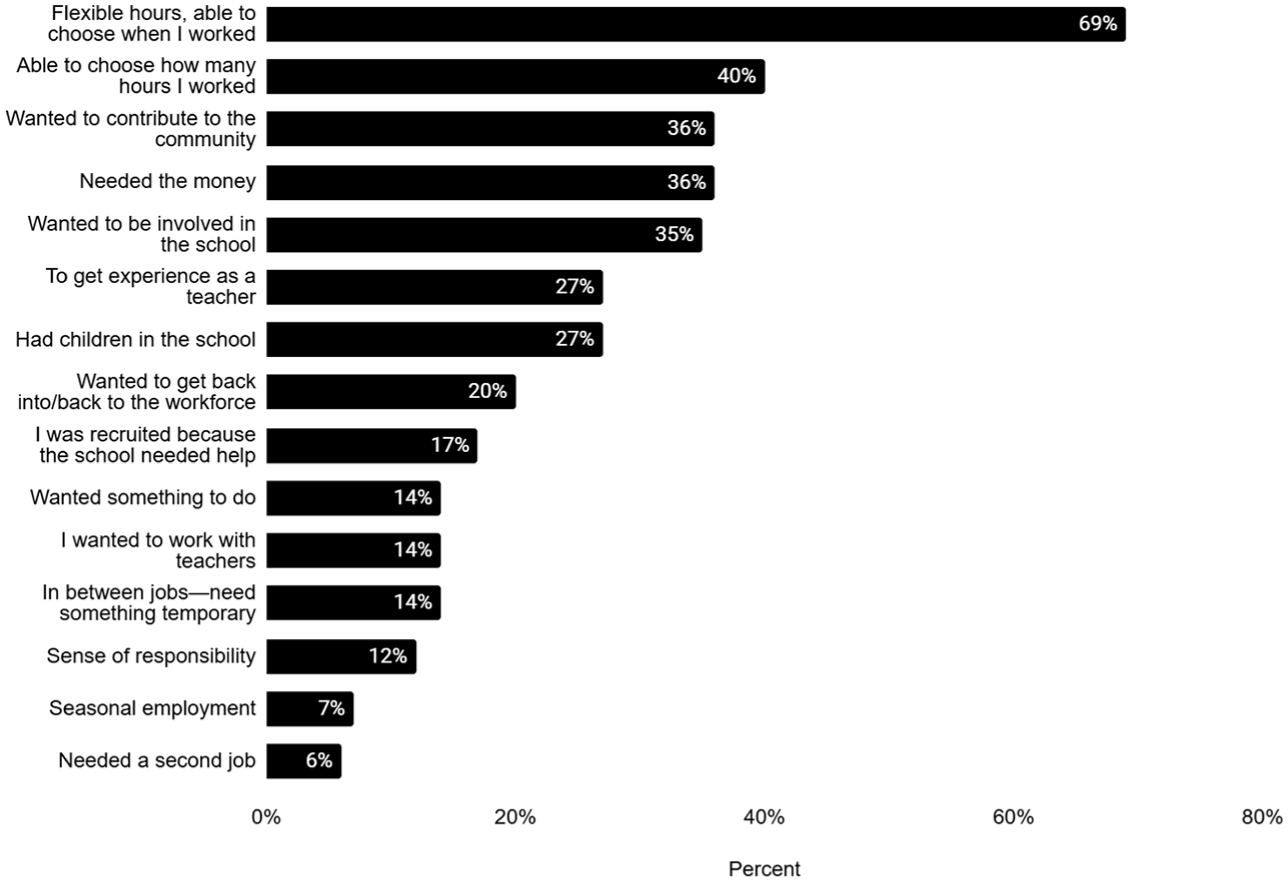
Reasons survey respondents became a substitute.
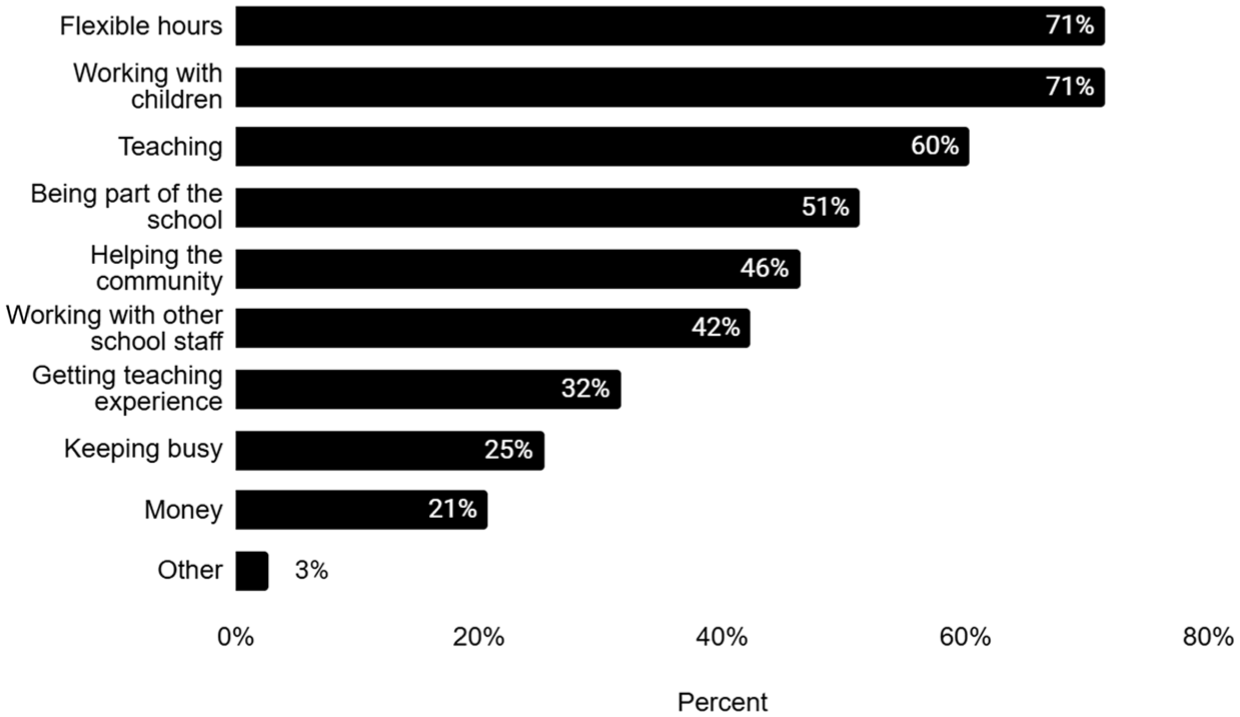
Aspects survey respondents like about being a substitute.
Whether they felt the job was rewarding drove nearly all the interviewed substitutes to or from teaching: When asked what they liked most about substitute teaching, most responded that they appreciated feeling satisfied by the relational, instructional, or both aspects of the job. Some broadly noted learning that they “really liked kids,” as Olivia explained: “I was interested in it because I learned that I really liked kids.. .. They're happy, they're fun to be around, they need good positive guidance.” Others emphasized the importance of connecting relationally with students. For example, Harper explained that the ability to build relationships with students was a reason she preferred long-term substitute positions to day-to-day substitute teaching: The short-term subbing, I would say the difficult thing is not having that rapport built with the kids. In the long-term subbing, I can build that rapport. Which is such a powerful tool, I guess, for the classroom. And you just don't have that pull with the students. And not that that's always a bad thing, that's fine if you're just there for one day or whatever, but it definitely makes a difference and it really facilitates learning.
Although Harper explained how building rapport was easier to do when being a long-term substitute, day-to-day substitutes were similarly driven by the relational elements of the work. For example, Emily explained: “[Subbing] just gives me a feeling of being wanted and a feeling of being needed, and most importantly, that I'm helping, even if it's just one student, to understand.” Others, such as Madison, noted that they liked how subbing helped them feel connected to the community. Although most noted these relational aspects, a subset was driven more by instructional aspects of the job. Lucas explained: I like the interactions with the schools and the teachers knowing just how they set their programs, having that experience in the multiple schools that I go to. I find that enjoyable, ideas in lesson plans. So, as I said, I like teaching, I just don't like the discipline part of dealing with kids.
Lucas specifically emphasized teaching and “ideas in lesson plans” but, like some others, strongly disliked the “discipline part of dealing with kids,” a theme we turn to in the next section.
Figures 1 and 2 show how more than two thirds of respondents in the substitute survey cited flexible hours as a reason for becoming a substitute and what they like about the job. Nearly all substitutes who were interviewed preferred or needed flexibility and said that this was a characteristic of the job that they appreciated. When asked why, responses ranged in terms of personal preferences and various fixed caregiving obligations. For instance, two categories of responses reflected caregiving preferences and flexibility for personal activities or leisure. These responses typically were given by stay-at-home parents and retirees. For instance, Evelyn (a retiree) said, “I enjoy just working when I feel like it.” Abigail explained shifting to substitute teaching to align her time with her kids’ schedule and have flexibility to care for them: I kind of left my profession because I wanted to be home with [my kids], and I was in the medical profession. I was on call. I worked off shifts, and I was never around. So I wanted to be home when they were home.. .. [With subbing], I like the fact that if I really need flexibility, it's there for me. If I need a day off, it's there. I don't have to worry about finding somebody to work for me, or getting myself covered.. .. I always liked the fact when my kids were home in the summer that I was home in the summer with them.
Responses like these reflect a preference for contingent work in which choices were not strongly constrained by a need for pay and benefits. We termed these substitutes financially stable choosers (see next section)—people not dependent on subbing for pay and benefits, and their willingness to engage in the job depends on the package of working conditions and psychic rewards. By contrast, a few substitutes said that they might have preferred full-time jobs but had personal health considerations (Victoria) or obligations such as caregiving for an elderly family member (Lucas, Avery, and Isabella). Although some said that they would prefer jobs in their chosen field (e.g., engineering), substitute teaching was one of few jobs that allowed them the necessary flexibility. By contrast, some viewed this as a steppingstone into full-time work: Figure 1 shows that 27% said that they subbed to get experience as a teacher, pointing to some subs who might prefer full-time teaching.
Finally, one last category of flexibility involved a desire to choose when and where they would work. Emily explained, “[If I] have a bad experience, there's so many schools around here, I can always move to another one.” This included preferences for the kind of assignment, in which some substitutes enjoyed having a variety of grade levels and subject areas because it added variety in daily experience, or they sought very specific assignments in subjects or grades that they preferred (e.g., high school, special education, physical education, etc.). In sum, flexibility in hours was a dominant theme in the survey and interview data, but there was variation in whether these employees simply preferred this flexibility or needed/tolerated it because it allowed them to juggle other life obligations that other jobs would not.
Substitute Teachers and Pay Dependency
While flexibility was cited as one of the best parts of the job, this came with significant tradeoffs for many. Nearly two thirds of substitute survey respondents cited low pay as the worst feature of being a substitute. A large proportion (41%) of those who were no longer working as a substitute did so because of low pay (see Figure 4). For context, the principal of Zion explained that “we were only paying 85 to 90 bucks a day up until last year.”
Given these survey results, we argue that many substitute teachers—in urban and rural settings—may be pay dependent or counting on income from these jobs to help cover their living expenses. To further refine this argument, substitutes were asked about their orientation toward pay. We found four categories of pay dependency: experience-driven contributors, financially stable choosers, financially driven explorers, and financially dependent choosers.
Financially Stable Choosers
Less than half of interviewees were financially stable choosers, whose willingness to work had little to do with pay, and thus, the jobs they took were conditioned on whether working conditions were favorable (e.g., retiree or stay-at-home parent with dual incomes). Stated differently, if certain substitutes could bear lower pay, they preferred qualities such as location/convenience and working conditions to a district that could pay them more. For example, one retiree (Emily) who did the job for supplemental income explained: “The student behavior takes precedence over the pay for me. Because I do have an income. I'm not relying on this.. .. I would rather go to work and work in a classroom where the students listen to you.” Another retiree, Evelyn, explained that easier commutes and schools that had more support for student behavior were more important than pay. She explained that money “doesn’t matter at all.. .. I don't really have to work. So this is just to help me pay for things that I want to do, like I just went to Europe.”
Financially Dependent Choosers
By contrast, several participants chose jobs primarily based on the level of pay, even enduring working conditions that were less than ideal to do so. These participants needed as much income as possible to support themselves and/or their families. Avery worked in a low-income school that paid a high rate (>$200 a day) because of the district's struggles to find subs. Avery explained that this could be the difference between being “able to pick up a pizza” or not: The other reason why I pick [this urban district] is it's totally the opposite reason [of] your heart. They were paying $200 a day. That changed my life. I went from when I started being a substitute teacher, they're paying $70 a day. Somebody told me they've been paying $70 a day for 10 or 15 years, and they never raised it. I just got so disgusted after about 5 years. I said to my husband, “I can make so much more money if I go to fast food.” I love being a substitute, but it makes me sick that I have to be fingerprinted. I have to do background checks. I have to pay for fingerprints. I have to pay for my license every year. I get no benefits whatsoever. I mean, it's a time where [I] finally can, if you're tired and you're coming home, you can pick up a pizza. But at $70 a day, you can't pick up a pizza. You've got to cook every meal yourself because that money is just horrible.
Abigail, who worked at a township and private school as a substitute, agreed that pay was sometimes prohibitive and directly influenced her decision to leave those jobs: Well, I think that's why I left the township and the parochial [school] because I wasn't even making minimum wage when I was at those two locations. So, that deterred me from wanting to stick around because I just didn't feel like it was worth my while. The places that I chose to continue with have made it more worth my while than the others. We're still underpaid; we don't make nearly what we probably should.
Ava also had high pay dependency and explained: “It definitely puts a very big, thick, heavy boot on the neck of life when I am not working. Because if I don't work, I do not get paid.” When asked how this affected which substitute jobs she would accept, she explained that the pay and her son being nearby kept her there despite not liking the job: The only thing was the pay.. .. If [the district I used to work at with good working conditions] were to offer me a job that compared [in terms of] pay. .. Gosh. .. I actually reached out to [my old district] and said, “You know, I wish I never left… And if there is anything that I can do with these credentials, please consider me for it.” And they were like, “Absolutely.” So that's there. I don't like [the district I'm currently subbing in].. .. Quite frankly, if it was not for the money, if it was not for my son attending [school here], I would not work [here].
Financially Driven Explorers and Experience-Driven Contributors
Most substitutes were somewhere in the middle in terms of orientations toward pay. Some substitutes were categorized as financially driven explorers: Pay still mattered to them but was not always the most important driver. They were willing to explore different situations for the sake of pay, but conditions such as commuting and support had to be manageable. For example, Sophia was willing to explore a more diverse district with a slightly longer commute because it was “$30 more a day to do the same thing.” However, she added that it was because the job was reasonably similar and explained, “If there was no extra money going [there], I wouldn't go there.” Isabella described pay as “somewhat important” as a supplement to her household income, particularly at times such as when her children were in college. When asked about other preferred jobs, she explained, “If I could get a government job [e.g., Homeland Security], I would definitely do that.” She went on to describe frustration with substitute pay: “It’s really embarrassing to have to tell people that I make the same as somebody at McDonald's.. .. I can actually make more working at McDonald's than I do a lot of the time here.” She described being willing to drive a little further to take jobs that paid “$25 extra.” Pay mattered a great deal for the jobs she was willing to explore, whether within or outside of substitute teaching, but was not as crucial compared with financially dependent choosers. Finally, experience-driven contributors sought work experience more so than overall pay as a way to access future jobs. Typically, these were college students or others interested in becoming teachers. For example, one college student, Harper, fell into this category and added that pay was actually better than most college jobs: “It was something I could do with my flexible schedule, but still have a little bit higher scale paycheck than I would just from a typical college evening job.”
Challenges with Student Behavior
Mirroring the quantitative results and in nearly equal importance to pay (see Figure 3), substitutes who were interviewed consistently cited student behavior as a quality of the job they disliked and as a key factor in deciding whether and where they would work. Several explained a preference for different grade levels (e.g., elementary vs. middle/high school) in terms of whether they would go back to particular school buildings. For example, Emily preferred high school because she felt that the students were easier to manage and explained: “Elementary students, you have to threaten to take their recess from them. For me, it's just really difficult for me to sit back and see students who are so young that are that rebellious.” Preferences were related not just to misbehavior but also to student engagement. For instance, although some preferred following substitute plans and having generally quiet high school classrooms where students would go about their own business, others sought out elementary classrooms where they felt like they could actively instruct students and thereby make a difference.
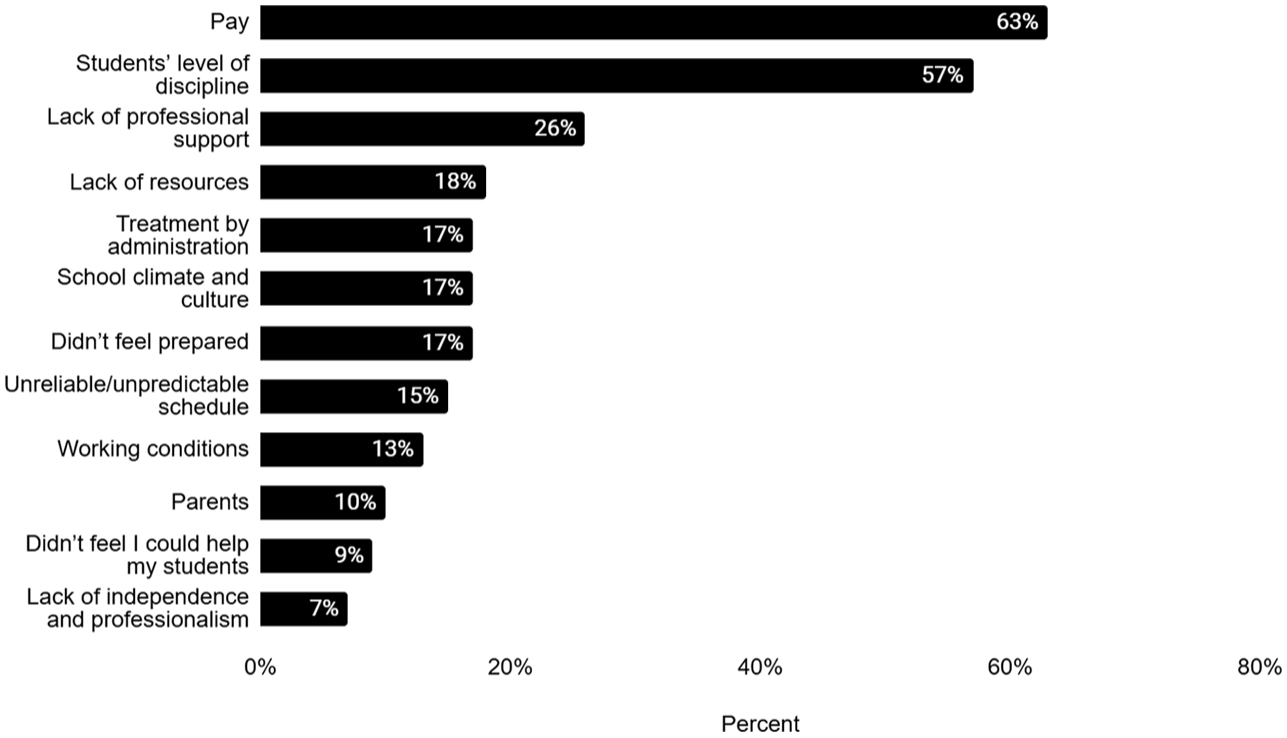
Aspects survey respondents did not like about being a substitute.
A second clear finding was related to racial equity. Those who were not highly dependent on pay and had many choices often said that they avoided low-income districts, especially those serving students of color, because they perceived the conditions to be more difficult and student behavior more difficult to manage. Lucas explained: There are some school districts that are not in good areas, meaning that my day is going to be rough.. .. We're talking about two or three fights in the classroom at the same time. Unruly kids and security guards had to be brought in because of unruly kids. Just really rough. Just no sense of control. And then there are other school districts where there is a lot of discipline and my day's easy, right? So you take [three wealthier, Whiter districts]. There's an infrastructure within the school that can deal with discipline properly. A lot of times it's when a teacher is accommodated with an assistant, like a TA or something, in the classroom. That makes it a lot easier when there's more than one adult in the classroom.
Abigail echoed this sentiment: “Some of the public schools are very rough in [this urban district], and they probably don't take safety and security as strongly as they should.” Scarlett added that she felt ill prepared to deal with “discipline [in] inner-city schools”: It’s just an environment that myself, I don't think I would do very well in.. .. We've lived in suburbia, and in farming communities and stuff. So I'm just used to a noncity life, and I don't know that I would be the right candidate to be working with just different disciplinary and problems or issues.
These quotes illustrate deficit perspectives about urban schools that are perceived as unsafe and unruly, including feeling ill prepared to deal with students and having few supports.
Working Conditions: Treatment by Staff and Administration
A final theme from the survey and qualitative data that clearly impacted substitute teachers’ decisions about where to work was treatment by school building staff and administration. Figure 3 shows how the qualities of the job they most disliked after pay/discipline had to do with lack of support, resources, school climate, and treatment by administration. Treatment from adults was also one of the top reasons why surveyed substitutes left (see Figure 4). These clear themes were similarly reflected in the interview data. Some felt so strongly about how they were treated that they said things like “I won't go back” or “If they're mean to me, I will probably stay away from the building.”
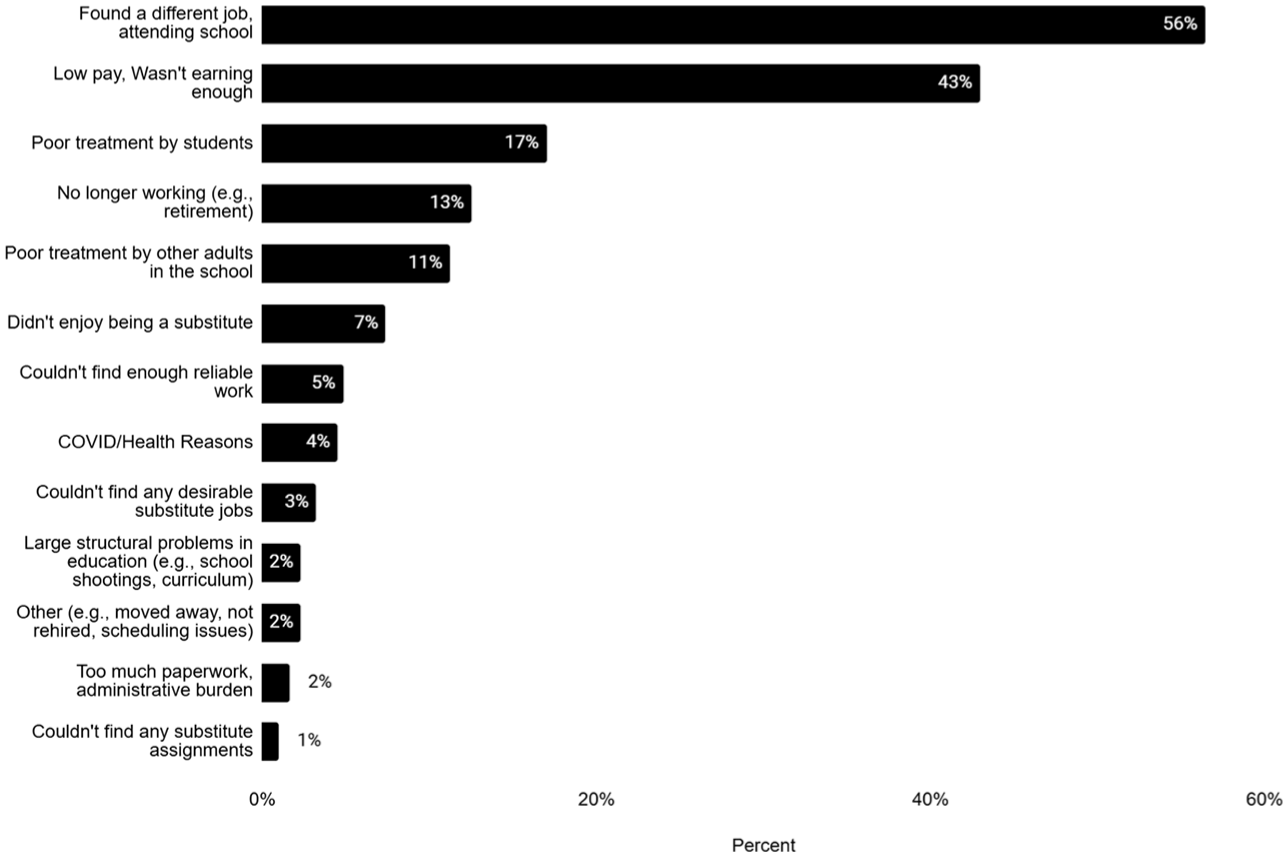
Reasons survey respondents were no longer working as substitute.s
While a common understanding of substitute support has to do with providing clear plans and assistance when needed during the day, the most common pattern we found in interviews had to do with feeling invisible, like an outsider, and being treated coldly. Their experiences ranged from relatively modest (e.g., simply being acknowledged) to more extreme (e.g., not being allowed to leave to handle an emergency or having an assignment switched on to them). At least six substitutes commented extensively on these perceptions. On the modest end, some felt ignored or like an outsider. Sophia explained: I’ll be honest, you are not treated as an equal at all. It does sometimes bother me.. .. If they'll have staff luncheons or something, sometimes they'll mention it to me, but I feel like most times they don't.. .. Even if I'll be there for an entire week, and then I'm there three more days the next week, I definitely feel like an outsider. Today, the school I was at [a middle school] and the secretaries, honestly, they were rude.. .. I actually called my sister as soon as I got in the car. I was like, “Wow, they are so unfriendly there... .” Those schools I won't go back.
Emily expressed a similar sentiment when referencing why she wouldn't return to certain schools, saying, “At some schools, they don't even speak to you.. .. It's like, you don't even exist, you just fill in an empty space here, and that's it.” Avery added: “If they're mean to me, I probably will stay away from the building. Not for sure, but I'm less likely to want to go there.” Isabella expressed resentment at the idea that they needed substitutes but didn't value her. She recalled a time when teachers had a union lunch and didn't share any food or drink with her: A lot of times, they barely even speak to you.. .. I did not like it.. .. They say, “We’re so glad you're here because we really need subs.” They complain about not having subs. But then when you substitute for them, they don't make you feel like a part of the team. You're the hired help. Or they'll say you're a warm body that's holding the chair down.
On the more extreme end, assignments were switched on substitutes, meaning that they signed up for one job, and when they arrived, they were assigned to a different job that they disliked. Elizabeth explained talking to a fellow substitute teacher about their experience: [They told me] “Yeah, I signed up to teach in a second-grade classroom, but then when I got here, they were like, no, we're going to put you in the eighth grade classroom.. .. I would not have signed up if I had known they were trying to put me in the eighth grade classroom.” And so, I just said, “Well, sometimes, you just have to look at them and say: No, that's not what I agreed. That's not what I agreed to, and that's not what I signed up for. I signed up for second grade.” I don't know, I'm just the type of person.. .. Don't ever allow people to make you feel like you don't have a choice.. .. The decent and respectful thing would be to call, and say, “Hey, would you mind?” But no, our office staff, and our principal have not done that. She'll just switch people, and unfortunately, people have left. They like, “Oh, then I'm canceling. I'll go to a different building.”
Looking across the various experiences and perceptions shared illustrates how something as simple as being welcoming to subs could make a difference in substitutes’ decisions about where to work. Some felt treated poorly and invisible. Some actions—such as switching an assignment they had specifically picked—generated especially strong reactions from those who really preferred to teach certain grade levels or content areas.
Discussion
Substitute teachers play a crucial role in how schools can function, yet little research has focused on understanding the contours of the labor market. Our findings reinforce several prior trends in existing work: in particular, the crucial role of pay, flexibility, working conditions, and collegial relations in attracting and retaining substitute teachers. We also extended this work in distinct ways. Qualitative analyses added a more nuanced understanding of whether, why, and in what contexts structural factors (e.g., pay) or working conditions matter. Interviews with leaders offered a unique look at whether and how substitute labor market challenges are experienced, what affects those challenges, and how they are being dealt with. Finally, using a random-sample survey and maximum-variation interview sampling, we were able to take an in-depth look at variation in perceptions and conditions across a state to understand challenges with the substitute labor market along with substitute teacher motivations and preferences and how this affects their decision making across diverse contexts.
Although the survey response rate was low and we do not claim that it is representative of the population, it helped us develop profiles of substitute types and complemented the qualitative data in terms of identifying the most prevalent motivators and challenges. Importantly, the survey sample differed from the state population in terms of age: Younger substitutes (aged 18–24 years) were underrepresented, whereas older substitutes were overrepresented. Young substitutes may value career development, experience, and opportunities more than pay and flexibility. Older substitutes who have families, are retired, or who have greater financial obligations may value pay and flexibility more than younger ones. As with much survey research, there is also the possibility of other sources of bias; for instance, different types of substitutes may be more or less likely to respond to a survey (e.g., those with more than one job and more or less satisfied employees) compared with others. Therefore, results should be interpreted with appropriate caveats, and we encourage replication aimed at generating a representative sample and understanding the motivations/preferences of younger substitutes.
Interviews with district administrators and principals across the state of Michigan provided context that is crucial yet underexplored in the current literature for understanding the substitute labor markets because these leaders are responsible for substitute staffing, recruitment, and retention, and they see the impacts on instruction and operations firsthand. Although some leaders pointed to the pandemic as worsening the substitute market, others reported that the substitute market had been challenging for years. Their perspectives also pointed to important and unique contextual factors that influence substitute labor markets, such as increased teacher absenteeism post-COVID, difficulty finding subs through the third-party system, difficulty staffing on specific days (especially Monday and Friday), and changes in the broader teacher labor market that affected who is available to substitute teach. Future research should more systematically investigate whether, how, why, and under what conditions these factors are influencing substitute shortages.
Qualitative and survey data generated themes on what substitute teachers like and dislike about their jobs. First, surveyed substitutes said that they wanted to help the community, work with children, and be involved in the school as important reasons for becoming a substitute, highlighting the importance of feeling successful and making an impact (Lortie, 1975; Reupert et al., 2023). Most interviewed substitutes explained why and how building relationships with students was motivating to them. This is similar to what motivates full-time K–12 teachers (Johnson et al., 2004) and is counter to stereotypes about contingent work and substitutes as uncaring babysitters. Second, flexibility was the top-ranked feature of the job, with nearly 70% of surveyed participants saying that this was an important reason for becoming a substitute. The degree of choice affects how positively the substitute job is experienced (Reupert et al., 2023), and this was reflected in how some interviewed substitutes needed the flexibility because of obligations such as caregiving and those who simply preferred it for personal activities or leisure (e.g., retirees).
Prior studies found that pay was one of the most important drivers of substitute teachers’ decisions about whether and where to work (Gershenson, 2012; Kraft et al., 2022; Strauss & Strauss, 2003). Our survey and interview data supported and extended this: Survey data showed that low pay was ranked as either the first or second most important factor in terms of what substitutes disliked about the job (63%) and why they were no longer working as a substitute (43%). This is true despite recent increases in pay that many districts made to address substitute shortages. Interview data illuminated a range of different preferences and needs around pay, where we discovered four categories of substitutes: financially stable vs. financially dependent choosers as well as financially driven and experience-driven explorers. Pay mattered far less to experience-driven explorers and financially stable choosers because they were either able to rely on other sources of income or were seeking experience as a bridge to a full-time job. Pay mattered a great deal to financially driven explorers and was a factor in their decisions, but working conditions mattered as much or more so. Financially dependent choosers who relied on substitute teaching as a primary source of income were most likely to center pay in making decisions about where to work. Future research should examine whether these categories are systematically linked to characteristics of substitute teachers, such as household income, age, race, and gender. Given the survey results, these categories also raise important questions about the degree to which substitute labor markets are financially driven and/or dependent. Additionally, needs around flexibility and pay point to ideas of a segmented substitute labor market (Jabbar et al., 2019), in which one portion prefers characteristics of contingent work because they do not need to rely on pay and benefits (a primary sector) and those who have fewer choices and a secondary market comprised of those who rely on substitute teaching to make a living (Polivka & Nardone, 1989). These different pathways and motivations within the substitute labor market imply that effective strategies for recruitment and retention are context dependent.
Finally, as in research on teacher labor markets, working conditions matter (Merrill, 2021). Consistent with prior research (Coverdill & Oulevey, 2007; Reupert et al., 2023), support and respect from students, leadership, and staff were very important to substitute teachers and cited by many interviewees as a reason to return to an assignment or not. Problems with student discipline and treatment by students ranked as some of the top factors substitute teachers disliked and why they were no longer working. Qualitative data suggest that these issues disproportionately impacted urban and low-income schools, which has equity implications that we explore in the last section. Last, accounts of invisibility, feeling like an outsider, and being treated rudely or coldly were prevalent in interviews, and treatment by adults was rated highly in surveys. Although supporting substitutes is often thought about in terms of things like providing robust coverage plans, these findings suggest that the interpersonal interactions in schools matter a great deal and are easily within the locus of control for school leaders, staff, and educators.
Implications for Policy, Practice, and Research
Substitute teachers are necessary for a functional education ecosystem. Yet, this study revealed that there are many challenges to the labor market for substitute teachers, including low pay, dealing with challenging student behavior, and unsupportive working conditions. High-poverty, high-minority districts are often disproportionately impacted by these challenges when it comes to finding substitute teachers (Reupert et al., 2023). However, some substitutes in our study noted the appeal of large increases in pay in some urban districts to address substitute shortages, and strong evidence has suggested that increased pay can mediate these challenges for high-poverty districts (Kraft et al., 2022). To the extent that large proportions of substitutes are highly dependent on pay, findings from this study have implications for recruitment and retention of the substitute workforce. Comparing qualitative analyses with the survey results, pay was the number one thing that they disliked about the job, and over a third said that they subbed because they needed the money. This suggests that a sizable portion of the substitute teacher workforce has moderate or high levels of pay dependency, and districts and policymakers can respond by raising wages, particularly for districts struggling with shortages.
Challenges with discipline were equally important equity issues because substitute teachers were driven away from urban/low-income districts due to perceptions about unruly behavior, and a majority White substitute teaching force coupled with increased diversity in Michigan public schools makes this dynamic more likely (Reupert et al., 2023). Policymakers and district leaders should consider providing additional resources to low-income schools with difficult working conditions, including added preparation and training for substitutes, allocating teaching assistants to assist substitutes, and recruitment strategies or incentives that increase racial diversity.
Finally, gender equity is important to consider because it shapes the broader labor market and who is willing and available to substitute. Women represent the majority of teachers and substitutes, and their participation in the labor market was negatively impacted by the pandemic due to inadequate childcare and other obligations disproportionately impacting women, which likely had an adverse effect on substitute shortages and teacher absences (Gardner & Torres, 2025; Hegewisch et al., 2025). This gender-equity issue suggests that structural supports for such things as childcare are needed to address shortages.
In terms of implications for policy and practice, we found that districts and substitutes preferred different kinds of arrangements depending on the context: Long-term substitute jobs were preferred by both employers and employees for consistency, and short-term subs often valued or needed flexibility. A diversified approach to recruiting and retaining these substitute types might involve identifying preferences (i.e., pay, flexibility/scheduling, and support needed), offering pay incentives for hard-to-staff jobs, and building relationships with short-term substitutes. For instance, districts have sought to make the job more appealing through increased pay and high-quality training (Vialet & von Moos, 2021). For long-term subs, focusing on pay, benefits, training, and career pathways might be even more promising. Reform proposals have argued for the professionalization of substitute teachers generally (National Education Association, 2017; Zubrzycki, 2012), which could appeal to substitutes who do not prefer contingent work, and a starting point could involve investing in paid professional development for substitute teachers, developing networks for support and collaboration, and expanding high-quality pathways to teaching for those interested in becoming a full-time teacher. Because low-income districts suffer disproportionately from substitute shortages, they could be provided with increased support, pooled grant funding, or a consortium of substitute teachers on which they may draw.
There are numerous lines of inquiry and questions to pursue that are raised by existing work and this study. First, research and practice should attend to the differing motivations in the substitute teacher labor market because different strategies will work to recruit and retain substitutes depending on the individual's context. For example, those who have a lot of choice and flexibility are least likely to go to schools with difficult working conditions. Understanding how the substitute labor market is segmented between individuals who prefer features of contingent work and those who tolerate or dislike those features is important (Polivka & Nardone, 1989). Related, we were unable to systematically assess the root causes of the decline in substitute teachers. For instance, researchers should investigate movement into teaching versus other jobs and how they perceive these varied options. Other limitations should be considered when interpreting the results from the study. For example, there is always the possibility of selection bias. We were transparent in our attempts to address this, for example, by iteratively adapting recruitment approaches for interviews and comparing demographic characteristics of the sample with demographics of the population of substitutes. Additionally, while this research looked across the state of Michigan, it is exploratory and descriptive. We were unable to address issues of substitute teacher quality and did not systematically test for differences in context, such as differences in pay rates between rural and urban districts. Future research should link teacher absenteeism and substitute coverage data to study equity in student outcomes as well as linking survey with administrative district personnel data.
More research is necessary around mobility/turnover, its causes and impacts, and variations in where it occurs. Researchers could examine substitute retention differently than researchers who study teacher retention by looking at how often a substitute returned to a given school or district within each school year, which would require more granular data. In addition, districts vary in their need for substitute teachers. Coverage may be necessary to fill in for teacher absences, but these rates vary by locale, and other reasons include coverage for teacher collaboration, professional development, and so on. Therefore, assessing the organizational impact of turnover is complicated and conceptually different from existing research on teacher turnover.
Given the importance of pay and working conditions such as support and perceptions of student behavior, studies should document how these conditions vary across districts and schools and how they affect recruitment and retention. Finally, research on substitute quality and teacher absences is important. There are no studies we are aware of that have examined the question of substitute quality. Calls for increased pay or greater professionalization understandably will generate questions about quality and return on investment. In some ways, questions of quality are a tangential concern when there is a deep shortage and schools are unable to cover teacher absences. This begs the question of teacher absenteeism and the need for more research on rates of teacher absence and the degree to which organizational factors contribute to absenteeism (Gardner & Torres, 2025). It is clear that this line of research raises more questions than answers, and researchers would be wise to follow up given the alarms that leaders and schools are raising about this as a teacher shortage issue over the years (Higgins, 2016; Zuo et al., 2023).
Footnotes
Acknowledgements
We thank the Michigan Alliance for Student Opportunity, Public Policy Associates, and the Michigan Department of Education for their support in producing this research, particularly Peter Spadafore (MASO) and Dan Quinn (PPA). We also give our heartfelt appreciation to the many district administrators, school leaders, and substitute teachers who participated in the interviews and surveys for this study.

Funding
The authors disclosed receipt of the following financial support for the research, authorship, and/or publication of this article: Section 27f of the 2022 School Aid Act, Public Act No. 144 (July 14, 2022).
Declaration of Conflicting Interests
The authors declared no potential conflicts of interest with respect to the research, authorship, and/or publication of this article.
Notes
A. C
N
R
D
C
J